

The DOI matches its Crossref record; 38 of the 38 references it cites were found in a registry or an index.
Transcriptional oscillation of canonical clock genes in mouse peripheral tissues
Open accessAbstract
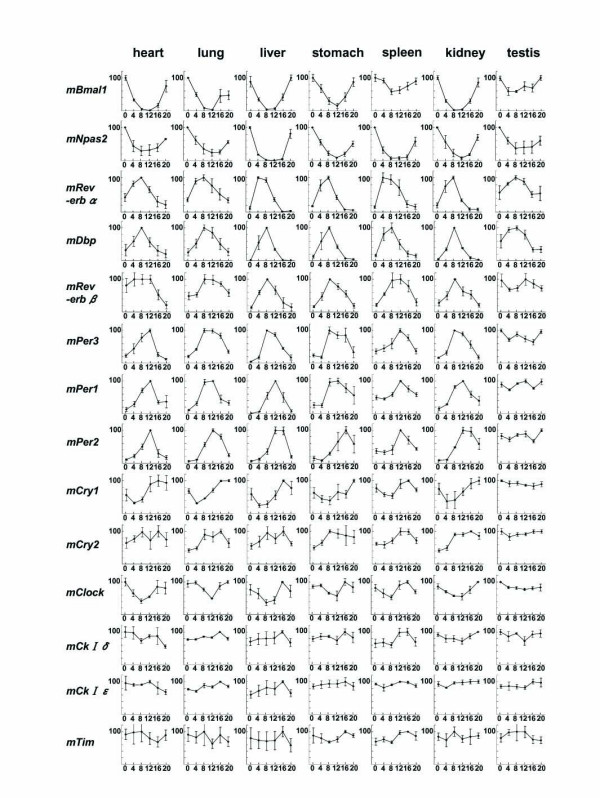
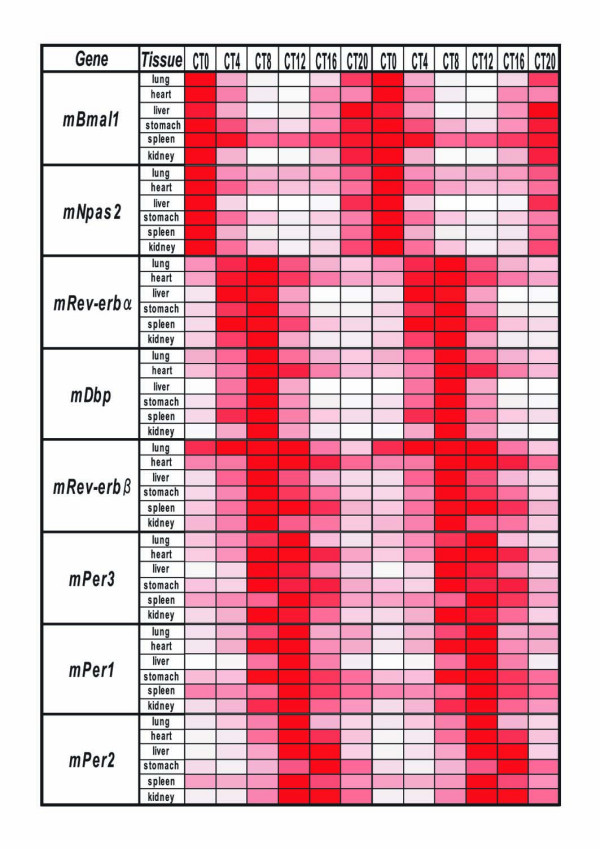
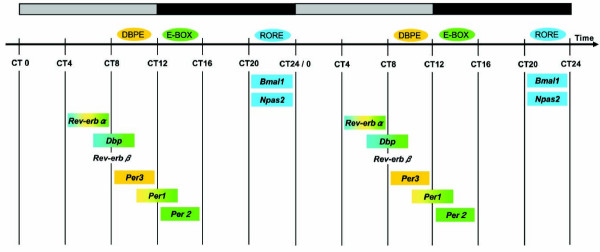
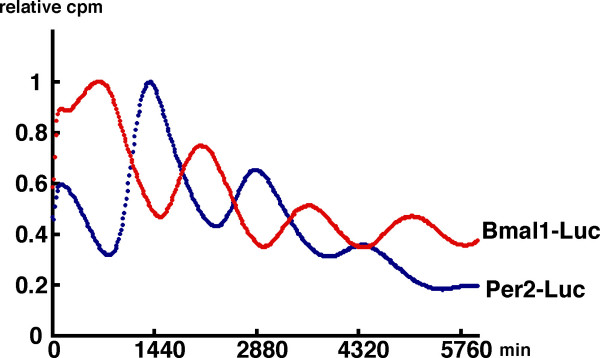
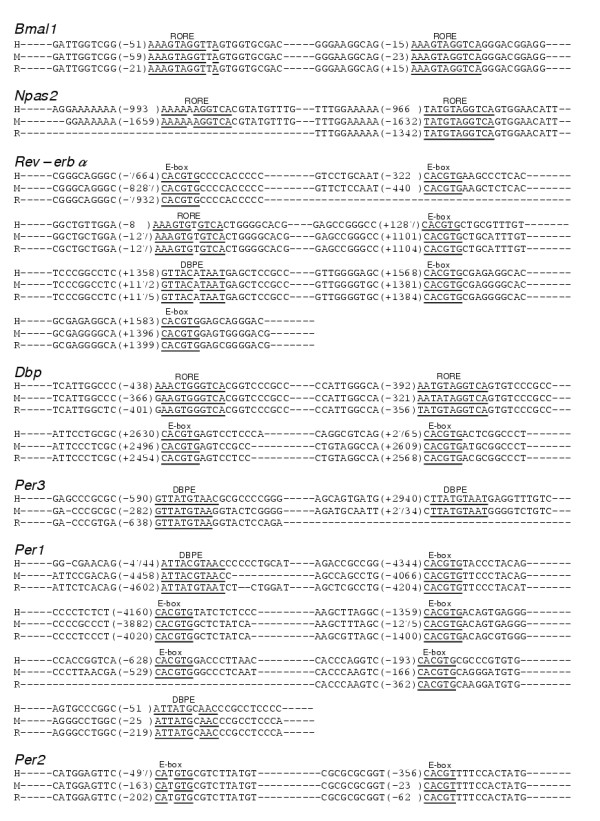
BACKGROUND: The circadian rhythm of about 24 hours is a fundamental physiological function observed in almost all organisms from prokaryotes to humans. Identification of clock genes has allowed us to study the molecular bases for circadian behaviors and temporal physiological processes such as hormonal secretion, and has prompted the idea that molecular clocks reside not only in a central pacemaker, the suprachiasmatic nuclei (SCN) of hypothalamus in mammals, but also in peripheral tissues, even in immortalized cells. Furthermore, previous molecular dissection revealed that the mechanism of circadian oscillation at a molecular level is based on transcriptional regulation of clock and clock-controlled genes. RESULTS: We systematically analyzed the mRNA expression of clock and clock-controlled genes in mouse peripheral tissues. Eight genes (mBmal1, mNpas2, mRev-erbalpha, mDbp, mRev-erbbeta, mPer3, mPer1 and mPer2; given in the temporal order of the rhythm peak) showed robust circadian expressions of mRNAs in all tissues except testis, suggesting that these genes are core molecules of the molecular biological clock. The bioinformatics analysis revealed that these genes have one or a combination of 3 transcriptional elements (RORE, DBPE, and E-box), which are conserved among human, mouse, and rat genome sequences, and indicated that these 3 elements may be responsible for the biological timing of expression of canonical clock genes. CONCLUSIONS: The observation of oscillatory profiles of canonical clock genes is not only useful for physiological and pathological examination of the circadian clock in various organs but also important for systematic understanding of transcriptional regulation on a genome-wide basis. Our finding of the oscillatory expression of canonical clock genes with a temporal order provides us an interesting hypothesis, that cyclic timing of all clock and clock-controlled genes may be dependent on several transcriptional elements including 3 known elements, E-box, RORE, and DBPE.
Overview
The claims and statistics of this paper haven’t been checked yet.
Run the check — free, no account needed. It reads the open-access text and checks the sources it cites.
Integrity signals
Registry
Cites
Statistics
Figures
Verification
Claims the paper makes
The claims and statistics of this paper haven’t been checked yet.
Run the check — free, no account needed. It reads the open-access text and checks the sources it cites.
Claims other papers make about this one
Each is checked against this paper’s own text: does it say what the citing paper says it does?
In the citing paper
“suggesting that the cardiovascular system could be influenced by the circadian timing system at the local level in addition to input from the central pacemaker”
From The impact of the circadian timing system on cardiovascular and metabolic function (2012) · cites this paper as Yamamoto et al., 2004
Self-check
Percentages, sums and reported differences re-computed from the paper’s own numbers.
The self-check needs the paper’s full text.
Citations
Cites
Coordination of circadian timing in mammals
Reppert, S. M., & Weaver, D. R. (2002) · Nature · doi:10.1038/nature00965 · Cited by 4,379
Molecular Bases for Circadian Clocks
Dunlap, J. C. (1999) · Cell · doi:10.1016/s0092-8674(00)80566-8 · Cited by 2,900
Yoo, S.-H., Yamazaki, S., Lowrey, P. L., Shimomura, K., Ko, C. H., Buhr, E. D., Siepka, S. M., Hong, H.-K., Oh, W. J., Yoo, O. J., et al. (2004) · Proceedings of the National Academy of Sciences · doi:10.1073/pnas.0308709101 · Cited by 2,329
Coordinated Transcription of Key Pathways in the Mouse by the Circadian Clock
Panda, S., Antoch, M. P., Miller, B. H., Su, A. I., Schook, A. C., Straume, M., Schultz, P. G., Kay, S. A., Takahashi, J. S., & Hogenesch, J. B. (2002) · Cell · doi:10.1016/s0092-8674(02)00722-5 · Cited by 2,310
Clock Mutants of Drosophila melanogaster
Konopka, R. J., & Benzer, S. (1971) · Proceedings of the National Academy of Sciences · doi:10.1073/pnas.68.9.2112 · Cited by 2,287
Preitner, N., Damiola, F., Luis-Lopez-Molina, Zakany, J., Duboule, D., Albrecht, U., & Schibler, U. (2002) · Cell · doi:10.1016/s0092-8674(02)00825-5 · Cited by 2,198
Role of the CLOCK Protein in the Mammalian Circadian Mechanism
Gekakis, N., Staknis, D., Nguyen, H. B., Davis, F. C., Wilsbacher, L. D., King, D. P., Takahashi, J. S., & Weitz, C. J. (1998) · Science · doi:10.1126/science.280.5369.1564 · Cited by 2,035
mCRY1 and mCRY2 are essential components of the negative limb of the circadian clock feedback loop
Kume, K., Zylka, M. J., Sriram, S., Shearman, L. P., Weaver, D. R., Jin, X., Maywood, E. S., Hastings, M. H., & Reppert, S. M. (1999) · Cell · doi:10.1016/s0092-8674(00)81014-4 · Cited by 1,617
Extensive and divergent circadian gene expression in liver and heart
Storch, K.-F., Lipan, O., Leykin, I., Viswanathan, N., Davis, F. C., Wong, W. H., & Weitz, C. J. (2002) · Nature · doi:10.1038/nature744 · Cited by 1,509
An h Per2 Phosphorylation Site Mutation in Familial Advanced Sleep Phase Syndrome
Toh, K. L., Jones, C. R., He, Y., Eide, E. J., Hinz, W. A., Virshup, D. M., Ptáček, L. J., & Fu, Y.-H. (2001) · Science · doi:10.1126/science.1057499 · Cited by 1,460
Cited by
Sorted by citations
Items 201–300 of 306
Environmental light exposure and mealtime regularity: Implications for human health
Ng, C. M., & Kaur, S. (2022) · Chronobiology International · doi:10.1080/07420528.2022.2093212 · Cited by 16
Self-sustained circadian rhythm in cultured human mononuclear cells isolated from peripheral blood
Ebisawa, T., Numazawa, K., Shimada, H., Izutsu, H., Sasaki, T., Kato, N., Tokunaga, K., Mori, A., Honma, K., Honma, S., et al. (2009) · Neuroscience Research · doi:10.1016/j.neures.2009.10.007 · Cited by 16
Klose, M., Grote, K., & Lerchl, A. (2010) · Biology of Reproduction · doi:10.1095/biolreprod.110.085126 · Cited by 16
CHRONO integrates behavioral stress and epigenetic control of metabolism
Hatanaka, F., & Takumi, T. (2016) · Annals of Medicine · doi:10.1080/07853890.2016.1276301 · Cited by 15
Self-citationA polymorphic GGC repeat in the NPAS2 gene and its association with melanoma
Franzoni, A., Markova-Car, E., Pavlić, S. D., Jurišić, D., Puppin, C., Mio, C., Luca, M. D., Petruz, G., Damante, G., & Pavelić, S. K. (2017) · Experimental Biology and Medicine · doi:10.1177/1535370217724093 · Cited by 13
Circadian alignment in a foster mother improves the offspring's pathological phenotype
Olejníková, L., Polidarová, L., Behuliak, M., Sládek, M., & Sumová, A. (2018) · The Journal of Physiology · doi:10.1113/jp275585 · Cited by 14
Lechtken, A., Zündorf, I., Dingermann, T., Firla, B., & Steinhilber, D. (2006) · Protein Expression and Purification · doi:10.1016/j.pep.2006.03.012 · Cited by 14
Ebisawa, T. (2013) · Molecular Genetics and Genomics · doi:10.1007/s00438-013-0745-9 · Cited by 13
Vitaterna, M. H., & Turek, F. W. (2011) · Elsevier eBooks · doi:10.1016/b978-1-4160-6645-3.00012-8 · Cited by 16
Ushijima, K., Suzuki, C., Kitamura, H., Shimada, K., Kawata, H., Tanaka, A., Horie, H., Hosoya, Y., Imai, Y., Yamashita, C., et al. (2020) · BMJ Open Diabetes Research & Care · doi:10.1136/bmjdrc-2020-001465 · Cited by 13
Evidence for species-specific clock gene expression patterns in hamster peripheral tissues
Meyer, V., & Lerchl, A. (2014) · Gene · doi:10.1016/j.gene.2014.07.019 · Cited by 13
Circadian rhythms disruption in cancer
Lopes‐Júnior, L. C., & Veronez, L. C. (2021) · Biological Rhythm Research · doi:10.1080/09291016.2021.1951470 · Cited by 15
Sládek, M., Houdek, P., Myung, J., Semenovykh, K., Dočkal, T., & Sumová, A. (2024) · Fluids and Barriers of the CNS · doi:10.1186/s12987-024-00547-3 · Cited by 12
Ning, G., Li, B.-N., Wu, H. B. K., Shi, R.-B., Peng, A.-J., Wang, H., & Zhou, X. W. (2025) · Asian Journal of Andrology · doi:10.4103/aja20258 · Cited by 13
Congruent biospheric and solar-terrestrial cycles
Cornélissen, G., Grambsch, P. M., Sothern, R. B., Katinas, G., Otsuka, K., & Franz Halberg, A. (2010) · Journal of Applied Biomedicine · doi:10.2478/v10136-009-0023-7 · Cited by 12
The interplay between retinoic acid receptor-related orphan receptors and human diseases
Ranhotra, H. S. (2012) · Journal of Receptors and Signal Transduction · doi:10.3109/10799893.2012.692120 · Cited by 12
Tissue-specific modification of clock methylation in aging mice.
Zhang, L., Ql, L., Lu, L., Cc, Y., Yl, L., Fl, S., Dh, W., Yn, C., & Li, L. (2013) · PubMed · Cited by 11
Bmal1-deficient mouse fibroblast cells do not provide premature cellular senescence in vitro
Nakahata, Y., Yasukawa, S., Khaidizar, F. D., Shimba, S., Matsui, T., & Bessho, Y. (2018) · Chronobiology International · doi:10.1080/07420528.2018.1430038 · Cited by 11
Self-citationLi, G. H., Katakura, M., Maruyama, M., Enhkjargal, B., Matsuzaki, K., Hashimoto, M., & Shido, O. (2008) · European Journal of Applied Physiology · doi:10.1007/s00421-008-0772-0 · Cited by 10
Touitou, Y., Cermakian, N., & Touitou, C. (2024) · Chronobiology International · doi:10.1080/07420528.2024.2353857 · Cited by 12
Matsumura, R., Matsubara, C., Node, K., Takumi, T., & Akashi, M. (2013) · Journal of Biological Chemistry · doi:10.1074/jbc.m113.517235 · Cited by 10
Self-citationPeripheral Circadian Clocks—A Conserved Phenotype?
Weigl, Y., Harbour, V. L., Robinson, B., Dufresne, L., & Amir, S. (2013) · Chronobiology International · doi:10.3109/07420528.2012.754451 · Cited by 10
Saleh, M., Jürchott, K., Oberland, S., Neuhaus, E. M., Kramer, A., & Abraham, U. (2015) · Journal of Biological Rhythms · doi:10.1177/0748730415610197 · Cited by 10
Effect of fasting on the peripheral circadian gene expression in rats
Dong, Y., Wu, T., Ni, Y., Kato, H., & Fu, Z. (2009) · Biological Rhythm Research · doi:10.1080/09291010902863289 · Cited by 10
He, M., Liu, K., Cao, J., & Chen, Q. (2023) · Reviews in Endocrine and Metabolic Disorders · doi:10.1007/s11154-022-09783-0 · Cited by 9
The Circadian Clock Is Sustained in the Thyroid Gland of VIP Receptor 2 Deficient Mice
Georg, B., Fahrenkrug, J., Jørgensen, H. L., & Hannibal, J. (2021) · Frontiers in Endocrinology · doi:10.3389/fendo.2021.737581 · Cited by 9
Ando, Y., Sakurai, T., Koida, K., Tei, H., Hida, A., Nakao, K., Natsume, M., & Numano, R. (2016) · Biomedical Optics Express · doi:10.1364/boe.7.000963 · Cited by 10
Yoshida, K., He, P. J., Yamauchi, N., Hashimoto, S., & Hattori, M. A. (2009) · Molecular and Cellular Biochemistry · doi:10.1007/s11010-009-0238-7 · Cited by 9
Modeling and analysis of the impacts of jet lag on circadian rhythm and its role in tumor growth
Hassan, A., Ahmad, J., Ashraf, H., & Ali, A. (2018) · PeerJ · doi:10.7717/peerj.4877 · Cited by 8
Traumatic brain injury-induced disruption of the circadian clock
Kuo, L., Lu, H., & Chen, Y.-H. (2024) · Journal of Molecular Medicine · doi:10.1007/s00109-024-02416-w · Cited by 8
Yang, H. M., Zhao, G., Lu, Y., Ma, K., Gao, X., She, X., Zhu, Y., Wang, K., Du, L., Wang, Y., et al. (2024) · The FASEB Journal · doi:10.1096/fj.202302233rr · Cited by 8
Circadian transcription profile of mouse breast cancer under light-dark and dark-dark conditions.
Oh, E.-Y., Yang, X., Friedman, A., Ansell, C. M., Du‐Quiton, J., Quiton, D. F. T., Wood, P. A., & Hrushesky, W. J. M. (2010) · PubMed · Cited by 8
Bafna, A., Banks, G. T., Hastings, M. H., & Nolan, P. M. (2023) · Genome Research · doi:10.1101/gr.277581.122 · Cited by 13
Li, Q., Chao, T., Wang, Y., Xuan, R., Guo, Y., He, P., Zhang, L., & Wang, J. (2024) · International Journal of Molecular Sciences · doi:10.3390/ijms251810055 · Cited by 7
Modulation of OGG1 enzymatic activity by the cellular machinery – have all the boxes been ticked?
Eddershaw, A., Rudolfová, N., Dawson, H., Benitéz‐Buelga, C., & Michel, M. (2025) · DNA repair · doi:10.1016/j.dnarep.2025.103904 · Cited by 9
Nakamaru, E., Seki, K., Shirahata, Y., Adachi, M., Sakabe, N., Matsuo, T., Tsukamoto, D., & Takamatsu, N. (2025) · Scientific Reports · doi:10.1038/s41598-025-87299-8 · Cited by 7
Irradiation with X-rays phase-advances the molecular clockwork in liver, adrenal gland and pancreas
Müller, M. H., Rödel, F., Rüb, U., & Korf, H. (2014) · Chronobiology International · doi:10.3109/07420528.2014.949735 · Cited by 7
Prentice, M. B., Bowman, J., Lalor, J. L., McKay, M. M., Thomson, L. A., Watt, C., McAdam, A. G., Murray, D. L., & Wilson, P. J. (2017) · Ecology and Evolution · doi:10.1002/ece3.3223 · Cited by 7
Obesity Disrupts Rhythmic Clock Gene Expression in Maternal Adipose Tissue during Rat Pregnancy
Crew, R. C., Mark, P. J., & Waddell, B. J. (2018) · Journal of Biological Rhythms · doi:10.1177/0748730418772499 · Cited by 7
Nature’s Timepiece—Molecular Coordination of Metabolism and Its Impact on Aging
Bednářová, A., Kodrík, D., & Krishnan, N. (2013) · International Journal of Molecular Sciences · doi:10.3390/ijms14023026 · Cited by 7
Paulus, E. V., & Mintz, E. M. (2015) · Brain Research · doi:10.1016/j.brainres.2015.10.044 · Cited by 7
Feedback loops interlocked at competitive binding sites amplify and facilitate genetic oscillations
Uriu, K., & Tei, H. (2017) · Journal of Theoretical Biology · doi:10.1016/j.jtbi.2017.06.005 · Cited by 7
Colonic inflammation modulates the intestinal circadian landscape
Butler, T. D., Downton, P. J., Dickson, S. H., Luengas‐Martinez, A., Simpkins, D., Khoo, I., Veal, S., West, A. C., Adamson, A. D., Bechtold, D. A., et al. (2025) · iScience · doi:10.1016/j.isci.2025.113183 · Cited by 6
Diurnal and seasonal molecular rhythms in the human brain and their relation to Alzheimer disease
Lim, A. S. P. (2021) · Handbook of clinical neurology · doi:10.1016/b978-0-12-819975-6.00017-0 · Cited by 6
Learning and memory in a rat model of social jetlag that also incorporates mealtime
Lewis, L. M., Deibel, S. H., Cleary, J., Viguers, K. B., Jones, K. A., Skinner, D. M., Hallett, D., & Thorpe, C. M. (2020) · Biological Rhythm Research · doi:10.1080/09291016.2020.1716557 · Cited by 6
Hamada, K., Oota, A., Ito, R., Kasahara, S., Nakajima, K., Kikuchi, Y., Sutherland, K. L., Ishikawa, M., Shirato, H., Ozaki, M., et al. (2020) · Biochemical and Biophysical Research Communications · doi:10.1016/j.bbrc.2020.05.224 · Cited by 6
Rodríguez-Muñoz, M. D. L. P., & Escamilla‐Chimal, E. G. (2015) · Chronobiology International · doi:10.3109/07420528.2015.1071385 · Cited by 6
Equine Neutrophils Respond to PGE2 by Activating Expression of Core Circadian Clock Genes
Murphy, B. A., Mérant, C., Vick, M. M., Cook, R. F., Brooks, S. A., Horohov, D. W., & Fitzgerald, B. P. (2008) · The Open Veterinary Science Journal · doi:10.2174/1874318800802010096 · Cited by 6
Regulation of Cerebral Blood Flow: Response to Cytochrome P450 Lipid Metabolites
Harder, D. R., Rarick, K. R., Gebremedhin, D., & Cohen, S. S. (2018) · Comprehensive physiology · doi:10.1002/cphy.c170025 · Cited by 7
Environmental endocrine disrupting chemicals: Disruptors of central and peripheral clock systems
Cai, B., Sun, Q., Li, S., Xu, Y., & Wang, Y. (2025) · Neuroscience & Biobehavioral Reviews · doi:10.1016/j.neubiorev.2025.106370 · Cited by 5
The role and implications of mammalian cellular circadian entrainment
Crosby, P. (2025) · FEBS Letters · doi:10.1002/1873-3468.70223 · Cited by 5
Biological Rhythms of the Mouse
Steinlechner, S. (2012) · Elsevier eBooks · doi:10.1016/b978-0-12-382008-2.00017-9 · Cited by 6
Time after time – circadian clocks through the lens of oscillator theory
del Olmo, M., Ector, C., & Herzel, H. (2026) · FEBS Letters · doi:10.1002/1873-3468.70257 · Cited by 5
Wilson, D. W. (2011) · The Open Nutraceuticals Journal · doi:10.2174/1876396001104010213 · Cited by 4
Luo, X., Yang, X., Yang, Y., Li, H., Cui, H., & Cao, X. (2020) · Archives of Physiology and Biochemistry · doi:10.1080/13813455.2020.1782435 · Cited by 4
Characterizing Animal Development with Genetic Regulatory Mechanisms
Théry, F. (2011) · Biological Theory · doi:10.1007/s13752-011-0004-4 · Cited by 4
The Circadian Timing System and Endocrine Physiology
Sellix, M. T. (2016) · Springer eBooks · doi:10.1007/978-1-4939-3450-8_2 · Cited by 3
Biological rhythms and fertility: the hypothalamus–pituitary–ovary axis
Partonen, T., Toffol, E., & Heikinheimo, O. (2016) · ChronoPhysiology and Therapy · doi:10.2147/cpt.s84855 · Cited by 4
Circadian Influences on the Auditory System
Cederroth, C. R., Basinou, V., Park, J., & Canlon, B. (2017) · Springer eBooks · doi:10.1007/978-3-319-58397-6_4 · Cited by 4
Resuehr, D., Resuehr, H. E. S., & Olcese, J. (2006) · Journal of Neuroendocrinology · doi:10.1111/j.1365-2826.2006.01414.x · Cited by 3
Crosstalk between Circadian Rhythm and Neuroinflammation
Mei, G., Pan, H., Zheng, J., Chen, K., Zheng, W., Xu, H., Liu, Z., Lin, Lin, Z., & Zhang, M. (2026) · Neuroendocrinology · doi:10.1159/000551312 · Cited by 4
Thyroid hormones and metabolic flexibility: tissue-specific control of energy homeostasis
Cicatiello, A. G., Miro, C., Sagliocchi, S., Nappi, A., & Dentice, M. (2026) · Frontiers in Physiology · doi:10.3389/fphys.2026.1882438 · Cited by 2
Influence of circadian rhythm on drug metabolism in 3D hepatic spheroids
Narayanan, V., Rodrigues, A. L., & Dordick, J. S. (2022) · Biotechnology and Bioengineering · doi:10.1002/bit.28180 · Cited by 2
Dynamical mechanism of Bmal1/Rev-erbα loop in circadian clock
Li, Y., & Liu, Z. (2015) · Physica A Statistical Mechanics and its Applications · doi:10.1016/j.physa.2015.02.091 · Cited by 2
Detection of the CLOCK/BMAL1 heterodimer using a nucleic acid probe with cycling probe technology
Nakagawa, K., Yamamoto, T., & Yasuda, A. (2010) · Analytical Biochemistry · doi:10.1016/j.ab.2010.05.024 · Cited by 2
Self-citationCircadian Effects on Retinal Light Damage
WONG, P. W. K., Organisciak, D. T., Ziesel, A., Chrenek, M. A., & Patterson, M. L. (2013) · Springer eBooks · doi:10.1007/978-1-4614-9613-7_8 · Cited by 2
Circadian Regulation of Endocrine Functions
Butler, M. P., Karatsoreos, I. N., Kriegsfeld, L. J., & Silver, R. (2016) · Elsevier eBooks · doi:10.1016/b978-0-12-803592-4.00012-2 · Cited by 2
Circadian Clock, Cell Cycle and Cancer Circadian Rhythm and Cell Growth Regulation
Zhao, Z.-Y., & Lee, C. C. (2010) · doi:10.1007/978-1-4419-1262-6-6 · Cited by 2
Ritmos circadianos, genes reloj y cáncer
Hernández-Rosas, F., & Santiago-Garcı́a, J. (2010) · Dialnet (Universidad de la Rioja) · Cited by 2
Circadian Clock, Cell Cycle and Cancer
Zhao, Z.-Y., & Lee, C. C. (2010) · Springer eBooks · doi:10.1007/978-1-4419-1262-6_6 · Cited by 6
Stem Cells Run Like Clockwork for Stroke Therapeutics
Bourgade, P. A., Putthanbut, N., Lee, J.-Y., & Borlongan, C. V. (2025) · Stem Cell Reviews and Reports · doi:10.1007/s12015-025-10895-8 · Cited by 1
Hormonal Regulation of Circadian Pacemaker in Ovary and Uterus
Hattori, M. (2011) · InTech eBooks · doi:10.5772/18003 · Cited by 1
Otsuka, T., Mitsuishi, H., Onishi, H., & Yayota, M. (2025) · Reproductive Biology · doi:10.1016/j.repbio.2025.101056 · Cited by 1
Chibisov, S. M., Katinas, G., Brodskaya, I., Ertman, A., Алексеевич, Г. Г., Конради, А. О., Mamontov, O. V., Меркурьева, А. Б., Polunicheva, E., Shlyakhto, E. V., et al. (2013) · Cardiology Research and Practice · doi:10.1155/2013/490705 · Cited by 1
Per3 expression in different tissues of Cebus apella
Sabino, F. C., de Oliveira, J. A., & Pedrazzoli, M. (2016) · Sleep Science · doi:10.1016/j.slsci.2016.12.002 · Cited by 1
Toward Multi-Input Control: A Dual-Feedback Loop Model of the Mammalian Circadian Clock
Brown, L. S., & Doyle, F. J. (2018) · IFAC-PapersOnLine · doi:10.1016/j.ifacol.2018.09.022 · Cited by 1
Almeida, S. J. F. (2018) · theses.fr (ABES) · doi:10.70675/d7f43940zfb09z447az8fcez09de3d68881f · Cited by 1
The role of adipose tissue circadian clocks in metabolic maintenance
Shostak, A. (2013) · eDiss (Georg-August-Universität Göttingen) · doi:10.53846/goediss-3955
CIRCADIAN AND HOMEOSTATIC REGULATION OF SLEEP IN CAST/EiJ AND C57BL/6J MICE
Jiang, P. (2011) · UKnowledge (University of Kentucky)
Cailotto, C. (2006) · UvA-DARE (University of Amsterdam)
INVESTIGATIONS OF CIRCADIAN REGULATION AND IMMUNE-CIRCADIAN INTERACTION IN THE HORSE
Murphy, B. A. (2007) · UKnowledge (University of Kentucky)
Genomics of the Circadian Clock
Murphy, B. A. (2013) · Wiley eBooks · doi:10.1002/9781118522158.ch18
Rosahl, A. L. (2015) · edoc Publication server (Humboldt University of Berlin) · doi:10.18452/17113
Circadian Clock Genes and the Regulation of Sleep
Curie, T., & Franken, P. (2012) · Springer eBooks · doi:10.1007/978-1-4614-3492-4_1
Time-dependent clock gene expression in mouse and human stem and progenitor cells
Tsinkalovsky, O. (2007) · NORA - Norwegian Open Research Archives
Shende, V. R. (2012) · OakTrust (Texas A&M University Libraries)
Protein Phosphatase 4 ist ein neuer Regulator der circadianen Uhr in Säugern
Mathematisch-naturwissenschaftlichen Fakultät, I. (2014)
THE CIRCADIAN CLOCK AND SKELETAL MUSCLE FUNCTION
Miyazaki, M. (2010) · 体力科學 · doi:10.7600/jspfsm.59.233
Analysis of Circadian Cellular Bioluminescence Recordings using a Kalman Smoother
Ananthasubramaniam, B. (2016) · IFAC-PapersOnLine · doi:10.1016/j.ifacol.2016.12.124
Circadian Disruption, Diet, and Exercise
Topacio, T. (2013) · OhioLink ETD Center (Ohio Library and Information Network)
Expression and function of Npas4 during early development.
Klarić, T. (2012) · Adelaide Research & Scholarship (AR&S) (University of Adelaide)
Lopes, L. C. (2019) · Digital Library of Theses and Dissertations (Universidade de São Paulo) · doi:10.11606/t.22.2019.tde-31072019-125447
Cerliani, M. B. (2017) · El Servicio de Difusión de la Creación Intelectual (National University of La Plata) · doi:10.35537/10915/99293
Eri, F., Kento, K., Kayier, M., Fujiwara, M., & Takagi, M. (2021) · Cytotechnology · doi:10.1007/s10616-021-00505-z
Metabolic synchronization of the liver circadian clock
Landgraf, D. (2012) · eDiss (Georg-August-Universität Göttingen) · doi:10.53846/goediss-1435
BMAL1 and MEX3A co-regulate intestinal stem cell successionPreprint
Chang, F., Wang, C., Chou, Y., Chen, T.-J., Wu, Y., Sridharan, S., Hsu, P., & Hwang‐Verslues, W. W. (2022) · bioRxiv (Cold Spring Harbor Laboratory) · doi:10.1101/2022.03.08.483537
Bafna, A., Banks, G. T., Hastings, M. H., & Nolan, P. M. (2022) · bioRxiv (Cold Spring Harbor Laboratory) · doi:10.1101/2022.11.15.515402
The effects of the noradrenaline reuptake inhibitor atomoxetine on circadian rhythms in mice.
O'Keeffe, S. (2010) · Maynooth University ePrints and eTheses Archive (Maynooth University)
Rôle du long ARN non codant Neat1 dans la rythmicité circadienne hypophysaire
Torres, M. (2018) · theses.fr (ABES) · doi:10.70675/0be62982z380ez416dzbc04zb92ab61b6e88
Metadata
- Authors
- Yamamoto, T., Nakahata, Y., Soma, H., Akashi, M., Mamine, T., & Takumi, T.
- Affiliations
- Osaka City University (JP)
- Life Science Institute (JP)
- Corresponding author
- Takumi, Toru
- Venue
- BMC Molecular Biology
- Published
- 2004-10-09
- Volume
- 5
- Issue
- 1
- Pages
- 18-18
- ISSN
- 1471-2199 (ISSN-L)
- PMC
- PMC535906
- OpenAlex
- W1878038567
- Cited by
- 308
- References
- 38
- Citations by year
- 2026: 7 · 2025: 9 · 2024: 6 · 2023: 5 · 2022: 10 · 2021: 13 · 2020: 9 · 2019: 6 · 2018: 13 · 2017: 11 · 2016: 12 · 2015: 12 · 2014: 14 · 2013: 20 · 2012: 23
- FWCI
- 6.74
- Type
- journal article
- Language
- en
- Open access
- hybrid
- doi.org
- Licence
- cc-by
- Locations
- BMC Molecular Biology (publishedVersion, cc-by)
- PubMed Central (publishedVersion, cc-by)
- PubMed (publishedVersion)
- DOAJ (DOAJ: Directory of Open Access Journals) (submittedVersion)
- Funders
- Ministry of Education, Culture, Sports, Science and Technology
- Japan Society for the Promotion of Science
- Topics
- Life Sciences › Neuroscience › Endocrine and Autonomic Systems › Circadian rhythm and melatonin
- Life Sciences › Agricultural and Biological Sciences › Plant Science › Plant Molecular Biology Research
- Social Sciences › Psychology › Experimental and Cognitive Psychology › Sleep and Work-Related Fatigue
- Keywords
- circadian clock, clock genes, transcriptional oscillations, peripheral circadian rhythms, clock-controlled genes, Bmal1, NPAS2, NR1D1, DBP, REV-ERBβ, Per1, Per2, E-box, mRNA expression, mouse tissues
- MeSH terms
- Animals, Base Sequence, Cell Line, Circadian Rhythm, DNA-Binding Proteins, Enhancer Elements, Genetic, Gene Expression Regulation, Male, Mice, Inbred BALB C, Molecular Sequence Data, Nerve Tissue Proteins, Nuclear Proteins, Organ Specificity, Transcription Factors, Transcription, Genetic, Receptors, Cytoplasmic and Nuclear, Cell Cycle Proteins, Computational Biology, NIH 3T3 Cells, Mice, Basic Helix-Loop-Helix Transcription Factors, Basic Helix-Loop-Helix Proteins, ARNTL Transcription Factors, Period Circadian Proteins, Nuclear Receptor Subfamily 1, Group D, Member 1
About these checks
Registry, retraction, Cites and statistics results are computed, not judged, with one exception: a printed reference that no index lists is read once by a model before it counts as a citation error. Claims are extracted by a model and kept only when their quote appears verbatim in the text; each cited source is then checked, with a model’s help, for whether it says what the claim relies on. Those verdicts can be wrong — read the claim’s quote and the cited source before relying on one.
Statistics and arithmetic are recomputed, not judged.
Confidence bands are shown only for fields calibrated on our annotated test set. None is calibrated yet, so no band is shown.
What counts as a claim ›How we measure confidence ›How we check this ›
Are you an author, or do you see a problem with this page? Request a review
