

The DOI matches its Crossref record; 38 of the 38 references it cites were found in a registry or an index.
Transcriptional oscillation of canonical clock genes in mouse peripheral tissues
Open accessAbstract
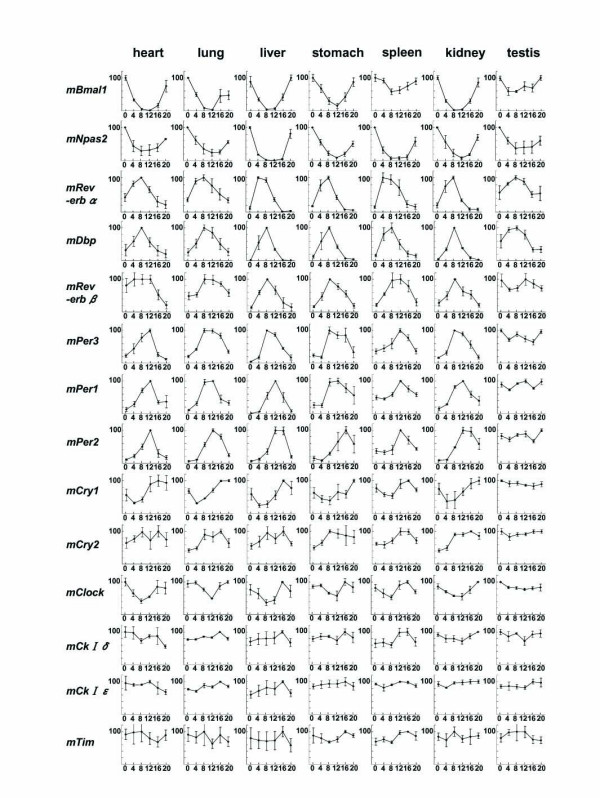
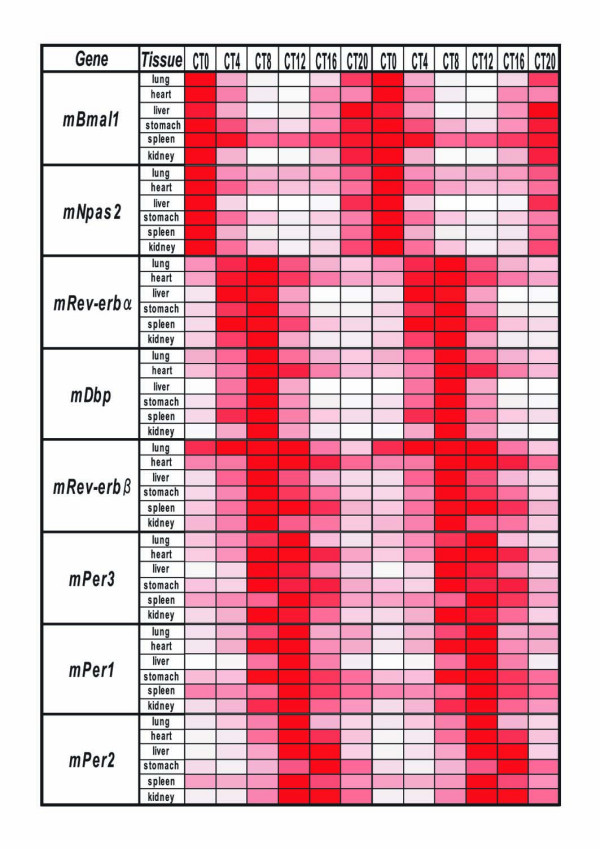
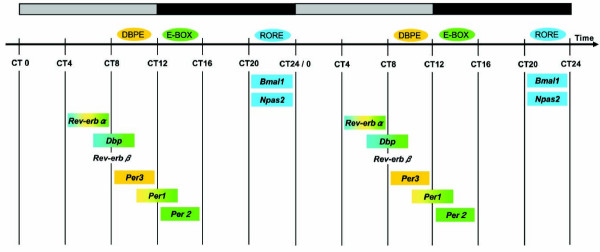
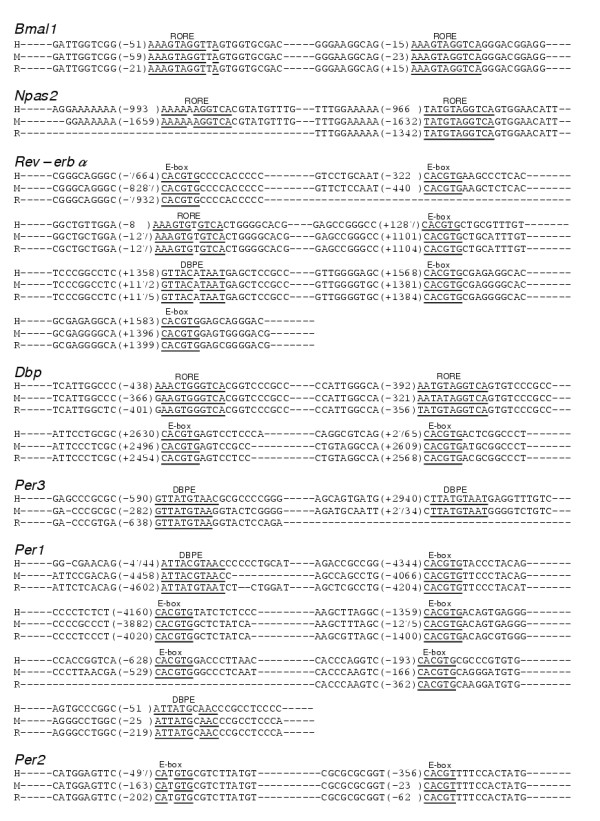
BACKGROUND: The circadian rhythm of about 24 hours is a fundamental physiological function observed in almost all organisms from prokaryotes to humans. Identification of clock genes has allowed us to study the molecular bases for circadian behaviors and temporal physiological processes such as hormonal secretion, and has prompted the idea that molecular clocks reside not only in a central pacemaker, the suprachiasmatic nuclei (SCN) of hypothalamus in mammals, but also in peripheral tissues, even in immortalized cells. Furthermore, previous molecular dissection revealed that the mechanism of circadian oscillation at a molecular level is based on transcriptional regulation of clock and clock-controlled genes. RESULTS: We systematically analyzed the mRNA expression of clock and clock-controlled genes in mouse peripheral tissues. Eight genes (mBmal1, mNpas2, mRev-erbalpha, mDbp, mRev-erbbeta, mPer3, mPer1 and mPer2; given in the temporal order of the rhythm peak) showed robust circadian expressions of mRNAs in all tissues except testis, suggesting that these genes are core molecules of the molecular biological clock. The bioinformatics analysis revealed that these genes have one or a combination of 3 transcriptional elements (RORE, DBPE, and E-box), which are conserved among human, mouse, and rat genome sequences, and indicated that these 3 elements may be responsible for the biological timing of expression of canonical clock genes. CONCLUSIONS: The observation of oscillatory profiles of canonical clock genes is not only useful for physiological and pathological examination of the circadian clock in various organs but also important for systematic understanding of transcriptional regulation on a genome-wide basis. Our finding of the oscillatory expression of canonical clock genes with a temporal order provides us an interesting hypothesis, that cyclic timing of all clock and clock-controlled genes may be dependent on several transcriptional elements including 3 known elements, E-box, RORE, and DBPE.
Overview
The claims and statistics of this paper haven’t been checked yet.
Run the check — free, no account needed. It reads the open-access text and checks the sources it cites.
Integrity signals
Registry
Cites
Statistics
Figures
Verification
Claims the paper makes
The claims and statistics of this paper haven’t been checked yet.
Run the check — free, no account needed. It reads the open-access text and checks the sources it cites.
Claims other papers make about this one
Each is checked against this paper’s own text: does it say what the citing paper says it does?
In the citing paper
“suggesting that the cardiovascular system could be influenced by the circadian timing system at the local level in addition to input from the central pacemaker”
From The impact of the circadian timing system on cardiovascular and metabolic function (2012) · cites this paper as Yamamoto et al., 2004
Self-check
Percentages, sums and reported differences re-computed from the paper’s own numbers.
The self-check needs the paper’s full text.
Citations
Cites
Coordination of circadian timing in mammals
Reppert, S. M., & Weaver, D. R. (2002) · Nature · doi:10.1038/nature00965 · Cited by 4,379
Molecular Bases for Circadian Clocks
Dunlap, J. C. (1999) · Cell · doi:10.1016/s0092-8674(00)80566-8 · Cited by 2,900
Yoo, S.-H., Yamazaki, S., Lowrey, P. L., Shimomura, K., Ko, C. H., Buhr, E. D., Siepka, S. M., Hong, H.-K., Oh, W. J., Yoo, O. J., et al. (2004) · Proceedings of the National Academy of Sciences · doi:10.1073/pnas.0308709101 · Cited by 2,329
Coordinated Transcription of Key Pathways in the Mouse by the Circadian Clock
Panda, S., Antoch, M. P., Miller, B. H., Su, A. I., Schook, A. C., Straume, M., Schultz, P. G., Kay, S. A., Takahashi, J. S., & Hogenesch, J. B. (2002) · Cell · doi:10.1016/s0092-8674(02)00722-5 · Cited by 2,310
Clock Mutants of Drosophila melanogaster
Konopka, R. J., & Benzer, S. (1971) · Proceedings of the National Academy of Sciences · doi:10.1073/pnas.68.9.2112 · Cited by 2,287
Preitner, N., Damiola, F., Luis-Lopez-Molina, Zakany, J., Duboule, D., Albrecht, U., & Schibler, U. (2002) · Cell · doi:10.1016/s0092-8674(02)00825-5 · Cited by 2,198
Role of the CLOCK Protein in the Mammalian Circadian Mechanism
Gekakis, N., Staknis, D., Nguyen, H. B., Davis, F. C., Wilsbacher, L. D., King, D. P., Takahashi, J. S., & Weitz, C. J. (1998) · Science · doi:10.1126/science.280.5369.1564 · Cited by 2,035
mCRY1 and mCRY2 are essential components of the negative limb of the circadian clock feedback loop
Kume, K., Zylka, M. J., Sriram, S., Shearman, L. P., Weaver, D. R., Jin, X., Maywood, E. S., Hastings, M. H., & Reppert, S. M. (1999) · Cell · doi:10.1016/s0092-8674(00)81014-4 · Cited by 1,617
Extensive and divergent circadian gene expression in liver and heart
Storch, K.-F., Lipan, O., Leykin, I., Viswanathan, N., Davis, F. C., Wong, W. H., & Weitz, C. J. (2002) · Nature · doi:10.1038/nature744 · Cited by 1,509
An h Per2 Phosphorylation Site Mutation in Familial Advanced Sleep Phase Syndrome
Toh, K. L., Jones, C. R., He, Y., Eide, E. J., Hinz, W. A., Virshup, D. M., Ptáček, L. J., & Fu, Y.-H. (2001) · Science · doi:10.1126/science.1057499 · Cited by 1,460
Cited by
Sorted by citations
Dibner, C., Schibler, U., & Albrecht, U. (2010) · Annual Review of Physiology · doi:10.1146/annurev-physiol-021909-135821 · Cited by 2,421
Nakahata, Y., Kaluzova, M., Grimaldi, B., Sahar, S., Hirayama, J., Chen, D., Guarente, L. P., & Sassone-Corsi, P. (2008) · Cell · doi:10.1016/j.cell.2008.07.002 · Cited by 1,427
Self-citationA circadian clock in macrophages controls inflammatory immune responses
Keller, M., Mazuch, J., Abraham, U., Eom, G. D., Herzog, E. D., Volk, H.-D., Kramer, A., & Maier, B. (2009) · Proceedings of the National Academy of Sciences · doi:10.1073/pnas.0906361106 · Cited by 843
Differential Control of Bmal1 Circadian Transcription by REV-ERB and ROR Nuclear Receptors
Guillaumond, F., Dardente, H., Giguère, V., & Cermakian, N. (2005) · Journal of Biological Rhythms · doi:10.1177/0748730405277232 · Cited by 790
Procedures for numerical analysis of circadian rhythms
Refinetti, R., Cornélissen, G., & Franz Halberg, A. (2007) · Biological Rhythm Research · doi:10.1080/09291010600903692 · Cited by 751
The orphan nuclear receptor RORα regulates circadian transcription of the mammalian core-clock Bmal1
Akashi, M., & Takumi, T. (2005) · Nature Structural & Molecular Biology · doi:10.1038/nsmb925 · Cited by 501
Self-citationModeling of a Human Circadian Mutation Yields Insights into Clock Regulation by PER2
Xu, Y., Toh, K. L., Jones, C. R., Shin, J., Fu, Y., & Ptáček, L. J. (2007) · Cell · doi:10.1016/j.cell.2006.11.043 · Cited by 409
Ando, H., Yanagihara, H., Hayashi, Y., Obi, Y., Tsuruoka, S., Takamura, T., Kaneko, S., & Fujimura, A. (2005) · Endocrinology · doi:10.1210/en.2005-0771 · Cited by 315
Yamamoto, T., Nakahata, Y., Tanaka, M., Yoshida, M., Soma, H., Shinohara, K., Yasuda, A., Mamine, T., & Takumi, T. (2005) · Journal of Biological Chemistry · doi:10.1074/jbc.m509600200 · Cited by 309
Self-citationCircadian clock genes and sleep homeostasis
Franken, P., & Dijk, D. (2009) · European Journal of Neuroscience · doi:10.1111/j.1460-9568.2009.06723.x · Cited by 316
A noncanonical E-box enhancer drives mouse Period2 circadian oscillations in vivo
Yoo, S. H., Ko, C. H., Lowrey, P. L., Buhr, E. D., Song, E.-J., Chang, S., Yoo, O. J., Yamazaki, S., Lee, C., & Takahashi, J. S. (2005) · Proceedings of the National Academy of Sciences · doi:10.1073/pnas.0409763102 · Cited by 307
Molecular Circadian Rhythms in Central and Peripheral Clocks in Mammals
Dardente, H., Dardente, H., & Cermakian, N. (2007) · Chronobiology International · doi:10.1080/07420520701283693 · Cited by 289
Hoogerwerf, W. A., Hellmich, H. L., Cornélissen, G., Franz Halberg, A., Shahinian, V. B., Bostwick, J., Savidge, T., & Cassone, V. M. (2007) · Gastroenterology · doi:10.1053/j.gastro.2007.07.009 · Cited by 268
Circadian clock regulates the host response to Salmonella
Bellet, M. M., Deriu, E., Liu, J. Z., Grimaldi, B., Blaschitz, C., Zeller, M., Edwards, R. A., Sahar, S., Dandekar, S., Baldi, P., et al. (2013) · Proceedings of the National Academy of Sciences · doi:10.1073/pnas.1120636110 · Cited by 260
Circadian clocks: setting time by food
Mendoza, J. (2007) · Journal of Neuroendocrinology · doi:10.1111/j.1365-2826.2006.01510.x · Cited by 257
Mammalian circadian clock and metabolism – the epigenetic link
Bellet, M. M., & Sassone‐Corsi, P. (2010) · Journal of Cell Science · doi:10.1242/jcs.051649 · Cited by 240
Clock is important for food and circadian regulation of macronutrient absorption in mice
Pan, X., & Hussain, M. M. (2009) · Journal of Lipid Research · doi:10.1194/jlr.m900085-jlr200 · Cited by 226
Circadian regulation of depression: A role for serotonin
Daut, R. A., & Fonken, L. K. (2019) · Frontiers in Neuroendocrinology · doi:10.1016/j.yfrne.2019.04.003 · Cited by 237
Bray, M. S., & Young, M. E. (2007) · Obesity Reviews · doi:10.1111/j.1467-789x.2006.00277.x · Cited by 213
The impact of the circadian timing system on cardiovascular and metabolic function
Morris, C. J., Yang, J. N., & Scheer, F. A. J. L. (2012) · Progress in Brain Research · doi:10.1016/b978-0-444-59427-3.00019-8 · Cited by 215
Nakahata, Y., Yoshida, M., Takano, A., Soma, H., Yamamoto, T., Yasuda, A., Nakatsu, T., & Takumi, T. (2008) · BMC Molecular Biology · doi:10.1186/1471-2199-9-1 · Cited by 204
Self-citationA model of the cell-autonomous mammalian circadian clock
Mirsky, H. P., Liu, A. C., Welsh, D. K., Kay, S. A., & Doyle, F. J. (2009) · Proceedings of the National Academy of Sciences · doi:10.1073/pnas.0904837106 · Cited by 197
Cailotto, C., La Fleur, S. E., Van Heijningen, C., Wortel, J., Kalsbeek, A., Feenstra, M., Pévet, P., & Buijs, R. M. (2005) · European Journal of Neuroscience · doi:10.1111/j.1460-9568.2005.04439.x · Cited by 191
Circadian organization of the mammalian retina
Ruan, G.-X., Zhang, D.-Q., Zhou, T., Yamazaki, S., & McMahon, D. G. (2006) · Proceedings of the National Academy of Sciences · doi:10.1073/pnas.0601940103 · Cited by 191
Diurnal Regulation of MTP and Plasma Triglyceride by CLOCK Is Mediated by SHP
Pan, X., Zhang, Y., Wang, L., & Hussain, M. M. (2010) · Cell Metabolism · doi:10.1016/j.cmet.2010.05.014 · Cited by 180
The trouble with circadian clock dysfunction: Multiple deleterious effects on the brain and body
Zelinski, E. L., Deibel, S. H., & McDonald, R. J. (2014) · Neuroscience & Biobehavioral Reviews · doi:10.1016/j.neubiorev.2014.01.007 · Cited by 189
An Autonomous Circadian Clock in the Inner Mouse Retina Regulated by Dopamine and GABA
Ruan, G.-X., Allen, G. C., Yamazaki, S., & McMahon, D. G. (2008) · PLoS Biology · doi:10.1371/journal.pbio.0060249 · Cited by 173
Impairment of Peripheral Circadian Clocks Precedes Metabolic Abnormalities in ob/ob Mice
Ando, H., Kumazaki, M., Motosugi, Y., Ushijima, K., Maekawa, T., Ishikawa, E., & Fujimura, A. (2011) · Endocrinology · doi:10.1210/en.2010-1068 · Cited by 166
BMAL1 Shuttling Controls Transactivation and Degradation of the CLOCK/BMAL1 Heterodimer
Kwon, I., Lee, J., Chang, S. H., Jung, N. C., Lee, B. J., Son, G. H., Kim, K., & Lee, K. H. (2006) · Molecular and Cellular Biology · doi:10.1128/mcb.00337-06 · Cited by 165
Yang, X., Wood, P. A., Oh, E.-Y., Du‐Quiton, J., Ansell, C. M., & Hrushesky, W. J. M. (2008) · Breast Cancer Research and Treatment · doi:10.1007/s10549-008-0133-z · Cited by 165
Research Resource: Genome-Wide Profiling of Progesterone Receptor Binding in the Mouse Uterus
Rubel, C. A., Lanz, R. B., Kommagani, R., Franco, H. L., Lydon, J. P., & DeMayo, F. J. (2012) · Molecular Endocrinology · doi:10.1210/me.2011-1355 · Cited by 162
Insight Into the Circadian Clock Within Rat Colonic Epithelial Cells
Sládek, M., Rybová, M., Jindráková, Z., Zemanová, Z., Polidarová, L., Mrnka, L., O'Neill, J. S., Pácha, J., & Sumová, A. (2007) · Gastroenterology · doi:10.1053/j.gastro.2007.05.053 · Cited by 159
A Novel Protein, CHRONO, Functions as a Core Component of the Mammalian Circadian Clock
Goriki, A., Hatanaka, F., Myung, J., Kim, J. K., Yoritaka, T., Tanoue, S., Abe, T., Kiyonari, H., Fujimoto, K., Kato, Y., et al. (2014) · PLoS Biology · doi:10.1371/journal.pbio.1001839 · Cited by 159
Self-citationArcher, S. N., Viola, A., Kyriakopoulou, V., von Schantz, M., & Dijk, D. (2008) · SLEEP · doi:10.1093/sleep/31.5.608 · Cited by 156
Circadian Clock Gene Expression in the Ovary: Effects of Luteinizing Hormone1
Karman, B. N., & Tischkau, S. A. (2006) · Biology of Reproduction · doi:10.1095/biolreprod.106.050732 · Cited by 149
Hatanaka, F., Matsubara, C., Myung, J., Yoritaka, T., Kamimura, N., Tsutsumi, S., Kanai, A., Suzuki, Y., Sassone‐Corsi, P., Aburatani, H., et al. (2010) · Molecular and Cellular Biology · doi:10.1128/mcb.00781-10 · Cited by 140
Self-citationA non-circadian role for clock-genes in sleep homeostasis:a strain comparison
Franken, P., Thomason, R. G., Heller, H. C., & O’Hara, B. F. (2007) · BMC Neuroscience · doi:10.1186/1471-2202-8-87 · Cited by 141
AMPK Regulates Circadian Rhythms in a Tissue- and Isoform-Specific Manner
Um, J.-H., Pendergast, J. S., Springer, D., Foretz, M., Viollet, B., Brown, A. L., Kim, M. K., Yamazaki, S., & Chung, J. H. (2011) · PLoS ONE · doi:10.1371/journal.pone.0018450 · Cited by 146
Maternal Melatonin Effects on Clock Gene Expression in a Nonhuman Primate Fetus
Torres‐Farfan, C., Rocco, V., Monso, C., Valenzuela, F. J., Campino, C., Germaín, A., Torrealba, F., Valenzuela, G. J., & Serón‐Ferré, M. (2006) · Endocrinology · doi:10.1210/en.2006-0628 · Cited by 139
Archer, S. N., Carpen, J. D., Gibson, M., Lim, G. H., Johnston, J. D., Skene, D. J., & von Schantz, M. (2010) · SLEEP · doi:10.1093/sleep/33.5.695 · Cited by 134
Cailotto, C., Lei, J., van der Vliet, J., Heijningen, C. L. V., van Eden, C. G., Kalsbeek, A., Pévet, P., & Buijs, R. M. (2009) · PLoS ONE · doi:10.1371/journal.pone.0005650 · Cited by 136
Suter, M., Bocock, P. N., Showalter, L., Hu, M., Shope, C. D., McKnight, R. A., Grove, K. L., Lane, R. H., & Aagaard-Tillery, K. M. (2010) · The FASEB Journal · doi:10.1096/fj.10-172080 · Cited by 136
Timing the Microbes: The Circadian Rhythm of the Gut Microbiome
Liang, X., & FitzGerald, G. A. (2017) · Journal of Biological Rhythms · doi:10.1177/0748730417729066 · Cited by 132
Ligand modulation of REV-ERBα function resets the peripheral circadian clock in a phasic manner
Meng, Q., McMaster, A., Beesley, S., Lu, W., Gibbs, J. E., Parks, D. J., Collins, J. L., Farrow, S. N., Donn, R. P., Ray, D. W., et al. (2008) · Journal of Cell Science · doi:10.1242/jcs.035048 · Cited by 130
Quantitative Analyses of Circadian Gene Expression in Mammalian Cell Cultures
Izumo, M., Sato, T., Straume, M., & Johnson, C. H. (2006) · PLoS Computational Biology · doi:10.1371/journal.pcbi.0020136 · Cited by 121
Expression and Rhythmic Modulation of Circulating MicroRNAs Targeting the Clock Gene Bmal1 in Mice
Shende, V. R., Goldrick, M. M., Ramani, S., & Earnest, D. J. (2011) · PLoS ONE · doi:10.1371/journal.pone.0022586 · Cited by 121
Yang, X., Wood, P. A., Ansell, C. M., Quiton, D. F. T., Oh, E.-Y., Du‐Quiton, J., & Hrushesky, W. J. M. (2009) · Chronobiology International · doi:10.3109/07420520903431301 · Cited by 120
Mongrain, V., La Spada, F., Curie, T., & Franken, P. (2011) · PLoS ONE · doi:10.1371/journal.pone.0026622 · Cited by 118
Oscillations and temporal signalling in cells
Tiana, G., Krishna, S., Simone Pigolotti, A., Jensen, M. H., & Sneppen, K. (2007) · Physical Biology · doi:10.1088/1478-3975/4/2/r01 · Cited by 123
Lipids around the Clock: Focus on Circadian Rhythms and Lipid Metabolism
Gnocchi, D., Pedrelli, M., Hurt-Camejo, E., & Parini, P. (2015) · Biology · doi:10.3390/biology4010104 · Cited by 115
Tumor Suppression and Circadian Function
Chen‐Goodspeed, M., & Lee, C. C. (2007) · Journal of Biological Rhythms · doi:10.1177/0748730407303387 · Cited by 110
Circadian expression of clock genes and clock-controlled genes in the rat retina
Kamphuis, W., Cailotto, C., Dijk, F., Bergen, A. A. B., & Buijs, R. M. (2005) · Biochemical and Biophysical Research Communications · doi:10.1016/j.bbrc.2005.02.118 · Cited by 107
Beker, M. Ç., Çağlayan, B., Yalçın, E., Çağlayan, A. B., Türkseven, Ş., Gürel, B., Keleştemur, T., Sertel, E., Şahin, Z., Kutlu, S., et al. (2017) · Molecular Neurobiology · doi:10.1007/s12035-017-0524-4 · Cited by 106
Atypical patterns of circadian clock gene expression in human peripheral blood mononuclear cells
Teboul, M., Barrat-Petit, M.-A., Li, X. M., Claustrat, B., Formento, J., Delaunay, F., Lévi, F., & Milano, G. A. (2005) · Journal of Molecular Medicine · doi:10.1007/s00109-005-0697-6 · Cited by 108
Chun, L. E., Woodruff, E. R., Morton, S. J., Hinds, L. R., & Spencer, R. L. (2015) · Journal of Biological Rhythms · doi:10.1177/0748730415598608 · Cited by 116
Genomic Convergence among ERRα, PROX1, and BMAL1 in the Control of Metabolic Clock Outputs
Dufour, C. R., Levasseur, M.-P., Pham, N. H. H., Eichner, L. J., Wilson, B. J., Charest-Marcotte, A., Duguay, D., Poirier-Héon, J.-F., Cermakian, N., & Giguère, V. (2011) · PLoS Genetics · doi:10.1371/journal.pgen.1002143 · Cited by 107
The Circadian Gene NPAS2, a Putative Tumor Suppressor, Is Involved in DNA Damage Response
Hoffman, A. E., Zheng, T., Ba, Y., & Zhu, Y. L. (2008) · Molecular Cancer Research · doi:10.1158/1541-7786.mcr-07-2094 · Cited by 104
Tripathi, M., Yen, P. M., & Singh, B. K. (2020) · International Journal of Molecular Sciences · doi:10.3390/ijms21051645 · Cited by 98
Coupled network of the circadian clocks: a driving force of rhythmic physiology
Finger, A., Dibner, C., & Kramer, A. (2020) · FEBS Letters · doi:10.1002/1873-3468.13898 · Cited by 101
Postnatal ontogenesis of the circadian clock within the rat liver
Sládek, M., Jindráková, Z., Bendová, Z., & Sumová, A. (2006) · American Journal of Physiology-Regulatory, Integrative and Comparative Physiology · doi:10.1152/ajpregu.00184.2006 · Cited by 96
Koyanagi, S., Okazawa, S., Kuramoto, Y., Ushijima, K., Shimeno, H., Soeda, S., Okamura, H., & Ohdo, S. (2005) · Molecular Endocrinology · doi:10.1210/me.2005-0165 · Cited by 93
Circadian effects in cancer-relevant psychoneuroendocrine and immune pathways
Eismann, E. A., Cash, E. D., & Sephton, S. E. (2010) · Psychoneuroendocrinology · doi:10.1016/j.psyneuen.2009.12.011 · Cited by 96
Feedback Loops of the Mammalian Circadian Clock Constitute Repressilator
Pett, J. P., Korenčič, A., Wesener, F., Kramer, A., & Herzel, H. (2016) · PLoS Computational Biology · doi:10.1371/journal.pcbi.1005266 · Cited by 87
James, F. O., Boivin, D. B., Charbonneau, S., Bélanger, V., & Cermakian, N. (2007) · Chronobiology International · doi:10.1080/07420520701800736 · Cited by 90
Expression profiles of 10 circadian clock genes in human peripheral blood mononuclear cells
Kusanagi, H., Hida, A., Satoh, K., Echizenya, M., Shimizu, T., Pendergast, J. S., Yamazaki, S., & Mishima, K. (2008) · Neuroscience Research · doi:10.1016/j.neures.2008.01.012 · Cited by 89
Liu, S., Cai, Y., Sothern, R. B., Guan, Y., & Chan, P. (2007) · Chronobiology International · doi:10.1080/07420520701672556 · Cited by 88
Exploiting endogenous anti-apoptotic proteins for novel therapeutic strategies in cerebral ischemia
Rami, A., Bechmann, I., & Stehle, J. H. (2008) · Progress in Neurobiology · doi:10.1016/j.pneurobio.2008.04.003 · Cited by 91
Molecular basis for rhythmic expression of CYP3A4 in serum-shocked HepG2 cells
Takiguchi, T., Tomita, M., Matsunaga, N., Nakagawa, H., Koyanagi, S., & Ohdo, S. (2007) · Pharmacogenetics and Genomics · doi:10.1097/fpc.0b013e3282f12a61 · Cited by 87
The Thymus Is Similar to the Testis in Its Pattern of Circadian Clock Gene Expression
Alvarez, J. D., & Sehgal, A. (2005) · Journal of Biological Rhythms · doi:10.1177/0748730404274078 · Cited by 86
Circadian regulation of reproduction: From gamete to offspring
Boden, M. J., Varcoe, T. J., & Kennaway, D. J. (2013) · Progress in Biophysics and Molecular Biology · doi:10.1016/j.pbiomolbio.2013.01.003 · Cited by 90
A New Perspective for Parkinson’s Disease: Circadian Rhythm
Li, S., Wang, Y., Wang, F., Hu, L., & Liu, C. (2016) · Neuroscience Bulletin · doi:10.1007/s12264-016-0089-7 · Cited by 86
Coupling the Circadian Clock to Homeostasis: The Role of Period in Timing Physiology
Kim, P., Oster, H., Lehnert, H., Schmid, S. M., Salamat, N., Barclay, J. L., Maronde, E., Inder, W. J., & Rawashdeh, O. (2018) · Endocrine Reviews · doi:10.1210/er.2018-00049 · Cited by 87
Differential Expression of the Circadian Clock in Maternal and Embryonic Tissues of Mice
Dolatshad, H., Cary, A. J., & Davis, F. C. (2010) · PLoS ONE · doi:10.1371/journal.pone.0009855 · Cited by 81
Mechanism for 12 Hr Rhythm Generation by the Circadian Clock
Westermark, P. O., & Herzel, H. (2013) · Cell Reports · doi:10.1016/j.celrep.2013.03.013 · Cited by 77
Su, W., Xie, Z., Guo, Z., Duncan, M. J., Lutshumba, J., & Gong, M. C. (2011) · American Journal of Physiology-Heart and Circulatory Physiology · doi:10.1152/ajpheart.00825.2011 · Cited by 82
Gonadotropic regulation of circadian clockwork in rat granulosa cells
He, P., Hirata, M., Yamauchi, N., Hashimoto, S., & Hattori, M. (2007) · Molecular and Cellular Biochemistry · doi:10.1007/s11010-007-9432-7 · Cited by 76
The Interplay of cis-Regulatory Elements Rules Circadian Rhythms in Mouse Liver
Korenčič, A., Bordyugov, G., Košir, R., Rozman, D., Goličnik, M., & Herzel, H. (2012) · PLoS ONE · doi:10.1371/journal.pone.0046835 · Cited by 79
Behavioral Changes and Dopaminergic Dysregulation in Mice Lacking the Nuclear Receptor Rev-erbα
Jager, J., O’Brien, W. T., Manlove, J., Krizman, E. N., Fang, B., Gerhart‐Hines, Z., Robinson, M. B., Klein, P. S., & Lazar, M. A. (2014) · Molecular Endocrinology · doi:10.1210/me.2013-1351 · Cited by 76
Yang, X., Wood, P. A., Ansell, C. M., Ohmori, M., Oh, E.-Y., Xiong, Y., Berger, F. G., Pena, M. M., & Hrushesky, W. J. M. (2008) · The Journal of Biochemistry · doi:10.1093/jb/mvn167 · Cited by 73
Lee, S. M., Zhang, Y., Tsuchiya, H., Smalling, R. V., Jetten, A. M., & Wang, L. (2014) · Hepatology · doi:10.1002/hep.27437 · Cited by 69
Akashi, M., Ichise, T., Mamine, T., & Takumi, T. (2005) · Molecular Biology of the Cell · doi:10.1091/mbc.e05-05-0396 · Cited by 67
Self-citationDiurnal and seasonal molecular rhythms in human neocortex and their relation to Alzheimer’s disease
Lim, A. S. P., Klein, H., Yu, L., Chibnik, L. B., Ali, S., Xu, J., Bennett, D. A., & Jager, P. L. D. (2017) · Nature Communications · doi:10.1038/ncomms14931 · Cited by 66
Fan, Y., Hida, A., Anderson, D. A., Izumo, M., & Johnson, C. H. (2007) · Current Biology · doi:10.1016/j.cub.2007.05.048 · Cited by 67
Effects of light cues on re-entrainment of the food-dominated peripheral clocks in mammals
Wu, T., Jin, Y., Ni, Y., Zhang, D., Kato, H., & Fu, Z. (2008) · Gene · doi:10.1016/j.gene.2008.04.010 · Cited by 65
Deletion of thePER3Gene on Chromosome 1p36 in Recurrent ER-Positive Breast Cancer
Climent, J., Pérez‐Losada, J., Quigley, D. A., Kim, I.-J., Delrosario, R., Jen, K., Bosch, A., Lluch, A. M., Mao, J., & Balmain, A. (2010) · Journal of Clinical Oncology · doi:10.1200/jco.2009.27.0215 · Cited by 65
He, P., Hirata, M., Yamauchi, N., Hashimoto, S., & Hattori, M. (2007) · Journal of Endocrinology · doi:10.1677/joe-07-0044 · Cited by 64
Regulatory mechanism governing the diurnal rhythm of intestinal H+/peptide cotransporter 1 (PEPT1)
Saito, H., Terada, T., Shimakura, J., Katsura, T., & Inui, K. (2008) · American Journal of Physiology-Gastrointestinal and Liver Physiology · doi:10.1152/ajpgi.90317.2008 · Cited by 64
The choroid plexus as a sex hormone target: Functional implications
Santos, C. R. A., Duarte, A. C., Quintela, T., Tomás, J., Albuquerque, T., Marques, F., Palha, J. A., & Gonçalves, I. (2016) · Frontiers in Neuroendocrinology · doi:10.1016/j.yfrne.2016.12.002 · Cited by 71
Zhao, Y., Zhang, K., & Fent, K. (2017) · Environmental Pollution · doi:10.1016/j.envpol.2017.09.057 · Cited by 63
Adipocyte NR1D1 dictates adipose tissue expansion during obesity
Hunter, L., Pelekanou, C. E., Barron, N. J., Northeast, R. C., Grudzien, M., Adamson, A. D., Downton, P. J., Cornfield, T., Cunningham, P. S., Billaud, J.-N., et al. (2021) · eLife · doi:10.7554/elife.63324 · Cited by 59
Circadian rhythm of the Leydig cells endocrine function is attenuated during aging
Baburski, A. Z., Sokanovic, S. J., Bjelic, M. M., Pletikosic, S. M. R., Andrić, S. A., & Kostic, T. S. (2015) · Experimental Gerontology · doi:10.1016/j.exger.2015.11.002 · Cited by 62
Sajan, S. A., Warchol, M. E., & Lovett, M. (2007) · Genetics · doi:10.1534/genetics.107.078584 · Cited by 62
Up-regulation of Per1 expression by estradiol and progesterone in the rat uterus
He, P., Hirata, M., Yamauchi, N., & Hattori, M. (2007) · Journal of Endocrinology · doi:10.1677/joe-07-0172 · Cited by 62
Nuclear receptor REVERBα is a state-dependent regulator of liver energy metabolism
Hunter, A. L., Pelekanou, C. E., Adamson, A., Downton, P., Barron, N. J., Cornfield, T., Poolman, T. M., Humphreys, N., Cunningham, P. S., Hodson, L., et al. (2020) · Proceedings of the National Academy of Sciences · doi:10.1073/pnas.2005330117 · Cited by 54
Zhang, J., Li, H., Teng, H., Zhang, T., Luo, Y., Zhao, M., Li, Y., & Sun, Z. S. (2012) · Anesthesiology · doi:10.1097/aln.0b013e31825b4fc1 · Cited by 60
Carver, K. A., Lourim, D., Tryba, A. K., & Harder, D. R. (2014) · American Journal of Physiology-Cell Physiology · doi:10.1152/ajpcell.00401.2013 · Cited by 59
Nishide, S., Honma, S., Nakajima, Y., Ikeda, M., Baba, K., Ohmiya, Y., & Honma, K. (2006) · Genes to Cells · doi:10.1111/j.1365-2443.2006.01015.x · Cited by 58
Circadian Variations in Clock Gene Expression of Human Bone Marrow CD34+ Cells
Tsinkalovsky, O., Smaaland, R., Rosenlund, B., Sothern, R. B., Hirt, A., Steine, S. J., Badiee, A., Abrahamsen, J. F., Eiken, H. G., & Lærum, O. D. (2007) · Journal of Biological Rhythms · doi:10.1177/0748730406299078 · Cited by 56
Circadian regulation of electrolyte absorption in the rat colon
Soták, M., Polidarová, L., Musı́lková, J., Hock, M., Sumová, A., & Pácha, J. (2011) · American Journal of Physiology-Gastrointestinal and Liver Physiology · doi:10.1152/ajpgi.00256.2011 · Cited by 56
Gender associated circadian oscillations of the clock genes in rat choroid plexus
Quintela, T., Sousa, C., Patriarca, F. M., Gonçalves, I., & Santos, C. R. A. (2014) · Brain Structure and Function · doi:10.1007/s00429-014-0720-1 · Cited by 56
Metadata
- Authors
- Yamamoto, T., Nakahata, Y., Soma, H., Akashi, M., Mamine, T., & Takumi, T.
- Affiliations
- Osaka City University (JP)
- Life Science Institute (JP)
- Corresponding author
- Takumi, Toru
- Venue
- BMC Molecular Biology
- Published
- 2004-10-09
- Volume
- 5
- Issue
- 1
- Pages
- 18-18
- ISSN
- 1471-2199 (ISSN-L)
- PMC
- PMC535906
- OpenAlex
- W1878038567
- Cited by
- 308
- References
- 38
- Citations by year
- 2026: 7 · 2025: 9 · 2024: 6 · 2023: 5 · 2022: 10 · 2021: 13 · 2020: 9 · 2019: 6 · 2018: 13 · 2017: 11 · 2016: 12 · 2015: 12 · 2014: 14 · 2013: 20 · 2012: 23
- FWCI
- 6.74
- Type
- journal article
- Language
- en
- Open access
- hybrid
- doi.org
- Licence
- cc-by
- Locations
- BMC Molecular Biology (publishedVersion, cc-by)
- PubMed Central (publishedVersion, cc-by)
- PubMed (publishedVersion)
- DOAJ (DOAJ: Directory of Open Access Journals) (submittedVersion)
- Funders
- Ministry of Education, Culture, Sports, Science and Technology
- Japan Society for the Promotion of Science
- Topics
- Life Sciences › Neuroscience › Endocrine and Autonomic Systems › Circadian rhythm and melatonin
- Life Sciences › Agricultural and Biological Sciences › Plant Science › Plant Molecular Biology Research
- Social Sciences › Psychology › Experimental and Cognitive Psychology › Sleep and Work-Related Fatigue
- Keywords
- circadian clock, clock genes, transcriptional oscillations, peripheral circadian rhythms, clock-controlled genes, Bmal1, NPAS2, NR1D1, DBP, REV-ERBβ, Per1, Per2, E-box, mRNA expression, mouse tissues
- MeSH terms
- Animals, Base Sequence, Cell Line, Circadian Rhythm, DNA-Binding Proteins, Enhancer Elements, Genetic, Gene Expression Regulation, Male, Mice, Inbred BALB C, Molecular Sequence Data, Nerve Tissue Proteins, Nuclear Proteins, Organ Specificity, Transcription Factors, Transcription, Genetic, Receptors, Cytoplasmic and Nuclear, Cell Cycle Proteins, Computational Biology, NIH 3T3 Cells, Mice, Basic Helix-Loop-Helix Transcription Factors, Basic Helix-Loop-Helix Proteins, ARNTL Transcription Factors, Period Circadian Proteins, Nuclear Receptor Subfamily 1, Group D, Member 1
About these checks
Registry, retraction, Cites and statistics results are computed, not judged, with one exception: a printed reference that no index lists is read once by a model before it counts as a citation error. Claims are extracted by a model and kept only when their quote appears verbatim in the text; each cited source is then checked, with a model’s help, for whether it says what the claim relies on. Those verdicts can be wrong — read the claim’s quote and the cited source before relying on one.
Statistics and arithmetic are recomputed, not judged.
Confidence bands are shown only for fields calibrated on our annotated test set. None is calibrated yet, so no band is shown.
What counts as a claim ›How we measure confidence ›How we check this ›
Are you an author, or do you see a problem with this page? Request a review
