

Do Couple-Based Interventions Make a Difference for Couples Affected by Cancer?: A Systematic Review
Open accessThe DOI matches its Crossref record; 81 of the 82 references it cites were found in a registry or an index.
Abstract
BACKGROUND: With the growing recognition that patients and partners react to a cancer diagnosis as an interdependent system and increasing evidence that psychosocial interventions can be beneficial to both patients and partners, there has been a recent increase in the attention given to interventions that target couples. The aim of this systematic review was to identify existing couple-based interventions for patients with cancer and their partners and explore the efficacy of these interventions (including whether there is added value to target the couple versus individuals), the content and delivery of couple-based interventions, and to identify the key elements of couple-based interventions that promote improvement in adjustment to cancer diagnosis. METHOD: A systematic review of the cancer literature was performed to identify experimental and quasi-experimental couple-based interventions published between 1990 and 2011. To be considered for this review, studies had to test the efficacy of a psychosocial intervention for couples affected by cancer. Studies were excluded if they were published in a language other than English or French, focused on pharmacological, exercise, or dietary components combined with psychosocial components, or did not assess the impact of the intervention on psychological distress (e.g., depression, anxiety) or quality of life. Data were extracted using a standardised data collection form, and were analysed independently by three reviewers. RESULTS: Of the 709 articles screened, 23 were included in this review. Couple-based interventions were most efficacious in improving couple communication, psychological distress, and relationship functioning. Interventions had a limited impact on physical distress and social adjustment. Most interventions focused on improving communication and increasing understanding of the cancer diagnosis within couples. Interventions were most often delivered by masters-level nurses or clinical psychologists. Although most were delivered in person, few were telephone-based. No difference in efficacy was noted based on mode of delivery. Factors associated with uptake and completion included symptom severity, available time and willingness to travel. CONCLUSION: Given effect sizes of couple-based interventions are similar to those reported in recent meta-analyses of patient-only and caregiver-only interventions (~d=.35-.45), it appears couple-based interventions for patients with cancer and their partners may be at least as efficacious as patient-only and caregiver-only interventions. Despite evidence that couple-based interventions enhance psycho-social adjustment for both patients and partners, these interventions have not yet been widely adopted. Although more work is needed to facilitate translation to routine practice, evidence reviewed is promising in reducing distress and improving coping and adjustment to a cancer diagnosis or to cancer symptoms.
Overview
The claims and statistics of this paper haven’t been checked yet.
Free: it reads the open-access text and checks the first 5 claims that cite a source we can check. Create a free account to check every claim.
Integrity signals
Registry
Cites
Statistics
Figures
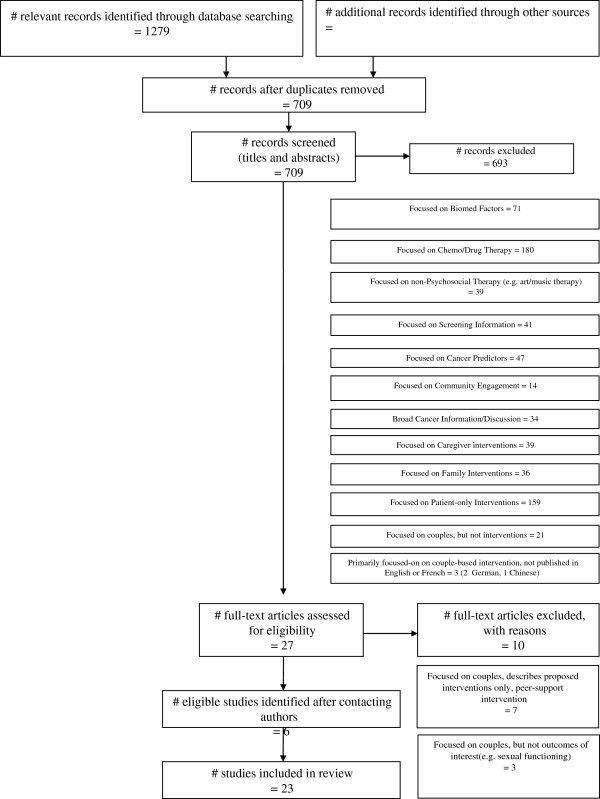
Verification
Claims the paper makes
The claims and statistics of this paper haven’t been checked yet.
Free: it reads the open-access text and checks the first 5 claims that cite a source we can check. Create a free account to check every claim.
Claims other papers make about this one
Each is checked against this paper’s own text: does it say what the citing paper says it does?
The source backs part of the claim, not all of it — or backs it for a different population, condition or comparison.
In the citing paper
“A previous systematic review 74 by our team showed that dyadic caregiver interventions are more efficacious than caregiver-only intervention.”
From Non-pharmacological Interventions for Caregivers with Depression and Caregivers of Care Recipients with Co-morbid Depression: Systematic Review and Meta-analysis (2021) · cites this paper as [74]
Experimental — accuracy not yet measured
Self-check
Percentages, sums and reported differences re-computed from the paper’s own numbers.
The self-check needs the paper’s full text.
Citations
Cites
Preferred Reporting Items for Systematic Reviews and Meta-Analyses: the PRISMA statement
Moher, D., Liberati, A., Tetzlaff, J., Altman, D. G., & for the PRISMA Group (2009) · BMJ · doi:10.1136/bmj.b2535 · Cited by 83,823
Preferred Reporting Items for Systematic Reviews and Meta-Analyses: The PRISMA Statement
Moher, D., Liberati, A., Tetzlaff, J., Altman, D. G., & The PRISMA Group (2009) · PLoS Medicine · doi:10.1371/journal.pmed.1000097 · Cited by 64,042 · cited 1×
“To maximise methodological quality, this review was conducted in accordance with the guidelines suggested by the Preferred Reporting Items for Systematic Reviews and Metaanalyses (PRISMA) [41].”
MethodPreferred reporting items for systematic reviews and meta-analyses: the PRISMA Statement.
(2009) · PubMed Central · Cited by 44,859
Eysenck, H. J. (1985) · Behaviour Research and Therapy · doi:10.1016/0005-7967(85)90087-7 · Cited by 31,975
“Stress: appraisal and coping,”
Folkman, S. (2013) · Encyclopedia of Behavioral Medicine · doi:10.1007/978-1-4419-1005-9_215 · Cited by 27,833
Borenstein, M., Hedges, L. V., Higgins, J. P. T., & Rothstein, H. R. (2009) · doi:10.1002/9780470743386 · Cited by 14,225
Borenstein, M., Hedges, L. V., Higgins, J. P. T., & Rothstein, H. R. (2021) · doi:10.1002/9781119558378 · Cited by 9,799
Cohen, J. (1992) · Psychological Bulletin · doi:10.1037//0033-2909.112.1.155 · Cited by 8,771
Evaluating non-randomised intervention studies
Deeks, J., Dinnes, J., D'Amico, R., Sowden, A., Sakarovitch, C., Song, F., Petticrew, M., & Altman, D. (2003) · Health Technology Assessment · doi:10.3310/hta7270 · Cited by 2,907 · cited 1×
“[44,45].”
Danaei, G., Ding, E. L., Mozaffarian, D., Taylor, B., Rehm, J., Murray, C. J. L., & Ezzati, M. (2009) · PLoS Medicine · doi:10.1371/journal.pmed.1000058 · Cited by 2,860
Thomas, B. H., Ciliska, D., Dobbins, M., & Micucci, S. (2004) · Worldviews on Evidence-Based Nursing · doi:10.1111/j.1524-475x.2004.04006.x · Cited by 2,118
Meaning in the context of stress and coping
Park, C. L., & Folkman, S. (1997) · Review of General Psychology · doi:10.1037/1089-2680.1.2.115 · Cited by 1,821 · cited 1×
“Meaning-making coping was later added to the framework as a means of reconciling an appraisal of a stressor that is incongruent with one’s personal beliefs and goals [7].”
BackgroundSanderson, S., Tatt, I. D., & Higgins, J. P. (2007) · International Journal of Epidemiology · doi:10.1093/ije/dym018 · Cited by 1,531
How to Select, Calculate, and Interpret Effect Sizes
Durlak, J. A. (2009) · Journal of Pediatric Psychology · doi:10.1093/jpepsy/jsp004 · Cited by 1,446 · cited 1×
“Effect size) was calculated using the difference in mean scores between the intervention and control group (for patients and partners separately) at specified time-points, divided by the pooled sample standard deviation [68].”
MethodHigh levels of untreated distress and fatigue in cancer patients
Carlson, L. E., Angen, M., Cullum, J., Goodey, E., Koopmans, J., Lamont, L., MacRae, J. H., Martin, M., Pelletier, G., Robinson, J., et al. (2004) · British Journal of Cancer · doi:10.1038/sj.bjc.6601887 · Cited by 939
Dyadic Coping and Its Significance for Marital Functioning.
Bodenmann, G. (2005) · Couples coping with stress: Emerging perspectives on dyadic coping. · doi:10.1037/11031-002 · Cited by 934 · cited 1×
“This is consistent with the majority of interventions reviewed here, and with widely accepted definitions of dyadic coping [76].”
BackgroundInterventions with Family Caregivers of Cancer Patients: Meta-Analysis of Randomized Trials
Northouse, L. L., Katapodi, M. C., Song, L., Zhang, L., & Mood, D. W. (2010) · CA: A Cancer Journal for Clinicians · doi:10.3322/caac.20081 · Cited by 857 · cited 4×
“Recent reviews and meta-analyses suggest that interventions targeting caregivers (who are often the partners of patients with cancer) can significantly improve coping ability, QoL, communication, sexual functioning, and self-efficacy, and can significantly reduce caregiver burden [24-29].”
BackgroundResultInfluentialHagedoorn, M., Sanderman, R., Bolks, H. N., Tuinstra, J., & Coyne, J. C. (2008) · Psychological Bulletin · doi:10.1037/0033-2909.134.1.1 · Cited by 777 · cited 2×
“The ability of patients and their partners to manage cancer challenges has been shown to impact on their short and long-term adjustment to the disease [2].”
BackgroundMeyer, T. J., & Mark, M. M. (1995) · Health Psychology · doi:10.1037/0278-6133.14.2.101 · Cited by 689 · cited 4×
“There is growing evidence demonstrating the efficacy of patient-only and caregiver/partner-only interventions in reducing psychological distress and improving QoL, and longer-term improvements in sexual functioning and body image when partners actively participate in interventions [9-13,25-28,38].”
BackgroundInfluentialOsborn, R. L., Demoncada, A. C., & Feuerstein, M. (2006) · The International Journal of Psychiatry in Medicine · doi:10.2190/eufn-rv1k-y3tr-fk0l · Cited by 621 · cited 5×
“A meta-analysis by Osborne, Demoncada, and Feuerstein [10] compared psycho-education interventions with Cognitive Behavioural Therapy (CBT) interventions on measures of anxiety and depression.”
BackgroundMethodResultInfluentialNewell, S. A. (2002) · CancerSpectrum Knowledge Environment · doi:10.1093/jnci/94.8.558 · Cited by 591
Sheard, T., & Maguire, P. (1999) · British Journal of Cancer · doi:10.1038/sj.bjc.6690596 · Cited by 533 · cited 8×
“The effect sizes reported are similar to those reported in meta-analyses of patient-only and partner/caregiver-only interventions [10,12,13,28].”
BackgroundMethodResultInfluentialA Guide to the Development, Implementation and Evaluation of Clinical Practice Guidelines
(1999) · PsycEXTRA Dataset · doi:10.1037/e508692012-001 · Cited by 527
Rehse, B., & Pukrop, R. (2003) · Patient Education and Counseling · doi:10.1016/s0738-3991(02)00149-0 · Cited by 485
Health Technology Assessment (HTA)
Greiner, W. (2008) · Gesundheitsökonomische Evaluationen · doi:10.1007/978-3-540-49559-8_19 · Cited by 462
Clinical practice guidelines for the psychosocial care of adults with cancer
Turner, J., Zapart, S., Pedersen, K., Rankin, N., Luxford, K., & Fletcher, J. (2005) · Psycho-Oncology · doi:10.1002/pon.897 · Cited by 451
Self-citationIntimacy and relationship processes in couples' psychosocial adaptation to cancer
Manne, S., & Badr, H. (2008) · Cancer · doi:10.1002/cncr.23450 · Cited by 447
Harding, R., & Higginson, I. J. (2003) · Palliative Medicine · doi:10.1191/0269216303pm667oa · Cited by 398
Coyne, J. C., & Racioppo, M. W. (2000) · American Psychologist · doi:10.1037//0003-066x.55.6.655 · Cited by 390 · cited 1×
“Coyne and Racioppo [8] highlighted that understanding coping and coping styles has not necessarily improved researchers’ understanding of the efficacy of psychosocial interventions aimed at increasing coping.”
BackgroundTatrow, K., & Montgomery, G. H. (2006) · Journal of Behavioral Medicine · doi:10.1007/s10865-005-9036-1 · Cited by 349
Northouse, L., Kershaw, T., Mood, D., & Schafenacker, A. (2005) · Psycho-Oncology · doi:10.1002/pon.871 · Cited by 338 · cited 20×
“Included depression, anxiety, distress, or QoL as an outcome measure.”
BackgroundMethodInfluentialRandomized clinical trial of a family intervention for prostate cancer patients and their spouses
Northouse, L. L., Mood, D. W., Schafenacker, A., Montie, J. E., Sandler, H. M., Forman, J. D., Hussain, M., Pienta, K. J., Smith, D. C., & Kershaw, T. (2007) · Cancer · doi:10.1002/cncr.23114 · Cited by 335 · cited 18×
“Included depression, anxiety, distress, or QoL as an outcome measure.”
BackgroundMethodResultInfluentialScott, J. L., Halford, W. K., & Ward, B. G. (2004) · Journal of Consulting and Clinical Psychology · doi:10.1037/0022-006x.72.6.1122 · Cited by 324
Nezu, A. M., Nezu, C. M., Felgoise, S. H., McClure, K. S., & Houts, P. S. (2003) · Journal of Consulting and Clinical Psychology · doi:10.1037/0022-006x.71.6.1036 · Cited by 323 · cited 9×
“Three of these interventions were classified as ‘coaching’ interventions [48,50,59], as they tended to”
BackgroundMethodResultInfluentialCouples coping with stress: emerging perspectives on dyadic coping
(2005) · Choice Reviews Online · doi:10.5860/choice.43-1876 · Cited by 303
Couples coping with stress: Emerging perspectives on dyadic coping.
(2005) · American Psychological Association eBooks · doi:10.1037/11031-000 · Cited by 251
Northouse, L. L., Mood, D. W., Schafenacker, A., Kalemkerian, G., Zalupski, M., LoRusso, P., Hayes, D. F., Hussain, M., Ruckdeschel, J., Fendrick, A. M., et al. (2013) · Psycho-Oncology · doi:10.1002/pon.3036 · Cited by 235 · cited 17×
“Of the four studies that assessed self-efficacy [52,54,56,59], one study reported greater improvements for intervention patients compared to control patients immediately following the intervention and at the final follow-up point [54], and another study reported greater improvements for intervention partners compared…”
BackgroundMethodResultInfluentialMishel, M. H., Belyea, M., Germino, B. B., Stewart, J. L., Bailey, D. E., Robertson, C., & Mohler, J. (2002) · Cancer · doi:10.1002/cncr.10390 · Cited by 211
Depression and Anxiety in Women With Breast Cancer and Their Partners
Badger, T., Segrin, C., Dorros, S. M., Meek, P., & Lopez, A. M. (2007) · Nursing Research · doi:10.1097/00006199-200701000-00006 · Cited by 208 · cited 9×
“Seven interventions were delivered by psychologists or clinical psychology doctoral students [4,47,49,56,58,62,64], one was delivered by PhD level psychologists and licensed clinical social workers [65], three were delivered by masters-level therapists from psychology or social work backgrounds [50,53,60], six were de…”
BackgroundMethodResultInfluentialA couple‐based intervention for female breast cancer
Baucom, D. H., Porter, L. S., Kirby, J. S., Gremore, T. M., Wiesenthal, N., Aldridge, W., Fredman, S. J., Stanton, S. E., Scott, J. L., Halford, K. W., et al. (2009) · Psycho-Oncology · doi:10.1002/pon.1395 · Cited by 202 · cited 9×
“Seven interventions were delivered by psychologists or clinical psychology doctoral students [4,47,49,56,58,62,64], one was delivered by PhD level psychologists and licensed clinical social workers [65], three were delivered by masters-level therapists from psychology or social work backgrounds [50,53,60], six were de…”
BackgroundMethodResultInfluentialCampbell, L. C., Keefe, F. J., Scipio, C., McKee, D. C., Edwards, C. L., Herman, S. H., Johnson, L. E., Colvin, O. M., McBride, C. M., & Donatucci, C. (2007) · Cancer · doi:10.1002/cncr.22355 · Cited by 169
Couple-Focused Group Intervention for Women With Early Stage Breast Cancer.
Manne, S. L., Ostroff, J. S., Winkel, G., Fox, K., Grana, G., Miller, E., Ross, S., & Frazier, T. (2005) · Journal of Consulting and Clinical Psychology · doi:10.1037/0022-006x.73.4.634 · Cited by 163 · cited 3×
“Therefore, reducing psychological distress, increasing coping ability, and improving the quality of life (QoL) of individuals with cancer and their partners or caregivers are priorities for researchers and clinicians [3,4].”
BackgroundWilson, H. A., & Gutierrez, L. (2014) · Criminal Justice and Behavior · doi:10.1177/0093854813500958 · Cited by 159
McLean, L. M., Walton, T., Rodin, G., Esplen, M. J., & Jones, J. M. (2013) · Psycho-Oncology · doi:10.1002/pon.2046 · Cited by 158
Pascoe, S., Edelman, S., & Kidman, A. (2000) · Australian and New Zealand Journal of Psychiatry · doi:10.1046/j.1440-1614.2000.00817.x · Cited by 157 · cited 1×
“The utilisation of psychosocial services by patients following a cancer diagnosis is low, with evidence suggesting that less than 20% of patients actively engage with cancer support services [69,70].”
BackgroundKuijer, R. G., Buunk, B. P., de Jong, G. M., Ybema, J. F., & Sanderman, R. (2004) · Psycho-Oncology · doi:10.1002/pon.749 · Cited by 154 · cited 10×
“Furthermore, some studies suggested participants were more likely to drop out if they had late-stage cancer, lung cancer, poor physical functioning at baseline, or poor emotional connection or warmth to their partner at baseline [4,58,59], though none of the studies reported any pattern of systematic attrition.”
BackgroundMethodResultInfluentialPorter, L. S., Keefe, F. J., Baucom, D. H., Hurwitz, H., Moser, B., Patterson, E., & Kim, H. J. (2009) · Cancer · doi:10.1002/cncr.24578 · Cited by 146 · cited 9×
“Of the nine studies that assessed relationship functioning [4749,58,60,61,63,64,66], five reported greater improvements for intervention patients compared to control patients immediately following the intervention [4749,58,60,63].”
BackgroundMethodResultInfluentialAppraisals and coping in people living with cancer: a meta‐analysis
Franks, H. M., & Roesch, S. C. (2006) · Psycho-Oncology · doi:10.1002/pon.1043 · Cited by 134
McLean, L. M., Jones, J. M., Rydall, A. C., Walsh, A., Esplen, M. J., Zimmermann, C., & Rodin, G. M. (2008) · Psycho-Oncology · doi:10.1002/pon.1319 · Cited by 127 · cited 10×
“Seven interventions were delivered by psychologists or clinical psychology doctoral students [4,47,49,56,58,62,64], one was delivered by PhD level psychologists and licensed clinical social workers [65], three were delivered by masters-level therapists from psychology or social work backgrounds [50,53,60], six were de…”
BackgroundMethodResultInfluentialKurtz, M. E., Kurtz, J. C., Given, C. W., & Given, B. A. (2005) · Journal of Pain and Symptom Management · doi:10.1016/j.jpainsymman.2005.02.008 · Cited by 126 · cited 10×
“Furthermore, some studies suggested participants were more likely to drop out if they had late-stage cancer, lung cancer, poor physical functioning at baseline, or poor emotional connection or warmth to their partner at baseline [4,58,59], though none of the studies reported any pattern of systematic attrition.”
BackgroundMethodResultInfluentialKalaitzi, C., Papadopoulos, V. P., Michas, K., Vlasis, K., Skandalakis, P., & Filippou, D. (2007) · Journal of Surgical Oncology · doi:10.1002/jso.20811 · Cited by 125 · cited 1×
“Moreover, the authors also included studies that did not report partner outcomes [3,33], and one case study [34].”
BackgroundKozachik, S., Given, C. W., Given, B. A., Pierce, S. J., Azzouz, F., Rawl, S. M., & Champion, V. L. (2001) · PubMed · Cited by 124
Scott, J. L., & Kayser, K. (2009) · The Cancer Journal · doi:10.1097/ppo.0b013e31819585df · Cited by 115 · cited 2×
“Finally, Scott and Kayser recently undertook a review of couple-based interventions to improve sexuality and body image for women with cancer [38].”
BackgroundSelf-citationA review of distress and its management in couples facing end‐of‐life cancer
McLean, L. M., & Jones, J. M. (2007) · Psycho-Oncology · doi:10.1002/pon.1196 · Cited by 110 · cited 1×
“McLean and Jones found some evidence to support to use of a couple-based intervention for palliative care patients, though cited a lack of studies to make concrete recommendations [31].”
BackgroundZimmermann, T., Heinrichs, N., & Baucom, D. H. (2007) · Annals of Behavioral Medicine · doi:10.1007/bf02874548 · Cited by 107
Badger, T. A., Segrin, C., Figueredo, A. J., Harrington, J., Sheppard, K., Passalacqua, S., Pasvogel, A., & Bishop, M. (2011) · Quality of Life Research · doi:10.1007/s11136-010-9822-2 · Cited by 105
Spousal Responses to Prostate Cancer: An Integrative Review
Resendes, L. A., & McCorkle, R. (2006) · Cancer Investigation · doi:10.1080/07357900500524652 · Cited by 99 · cited 1×
“Patients and partners often describe similar reactions to a cancer diagnosis, including shock [16-18], distress [19-21], anxiety [16,17,20], depression [16,17,20], fear and uncertainty [17,18,22], and denial [17].”
BackgroundHopkinson, J. B., Brown, J. C., Okamoto, I., & Addington-Hall, J. M. (2012) · Journal of Pain and Symptom Management · doi:10.1016/j.jpainsymman.2011.03.013 · Cited by 96 · cited 1×
“Hopkinson and colleagues undertook a review of couple-based interventions and their impact on symptom management and other health behaviours [35].”
BackgroundCaregivers of Cancer Survivors: The State of the Field
Girgis, A., & Lambert, S. (2009) · Figshare · Cited by 88
Self-citationMcCorkle, R. C., Siefert, M. L., Dowd, M. F. E., Robinson, J. P., & Pickett, M. (2007) · PubMed · Cited by 81
Budin, W. C., Hoskins, C. N., Haber, J., Sherman, D. W., Maislin, G., Cater, J. R., Cartwright-Alcarese, F., Kowalski, M. O., McSherry, C. B., Fuerbach, R., et al. (2008) · Nursing Research · doi:10.1097/01.nnr.0000319496.67369.37 · Cited by 72 · cited 10×
“Seven interventions were delivered by psychologists or clinical psychology doctoral students [4,47,49,56,58,62,64], one was delivered by PhD level psychologists and licensed clinical social workers [65], three were delivered by masters-level therapists from psychology or social work backgrounds [50,53,60], six were de…”
BackgroundMethodResultInfluentialBaik, O. M., & Adams, K. B. (2011) · Journal of Marital and Family Therapy · doi:10.1111/j.1752-0606.2010.00217.x · Cited by 72 · cited 1×
“A review of couple-based interventions by Baik and Adams included 14 studies, and concluded that couple-based interventions can lead to improvements in dyadic-level adjustment [32].”
BackgroundCurry, C., Cossich, T., Matthews, J., Beresford, J., & McLachlan, S. (2002) · Supportive Care in Cancer · doi:10.1007/s00520-002-0371-2 · Cited by 72
Moderators of an Uncertainty Management Intervention: For Men With Localized Prostate Cancer
Mishel, M. H., Germino, B. B., Belyea, M., Stewart, J. L., Bailey, Mohler, J., & Robertson, C. (2003) · Nursing Research · doi:10.1097/00006199-200303000-00005 · Cited by 71 · cited 1×
“Hopkinson and colleagues also included studies that did not report partner outcomes, and in some cases did not require a partner to be involved in the intervention [36,37].”
BackgroundA pilot study of Interpersonal Psychotherapy by telephone with cancer patients and their partners
Donnelly, J. M., Kornblith, A. B., Fleishman, S., Zuckerman, E., Raptis, G., Hudis, C. A., Hamilton, N., Payne, D., Massie, M. J., Norton, L., et al. (2000) · Psycho-Oncology · doi:10.1002/(sici)1099-1611(200001/02)9:1 · Cited by 65
Kayser, K., Feldman, B. N., Borstelmann, N. A., & Daniels, A. A. (2010) · Social Work Research · doi:10.1093/swr/34.1.20 · Cited by 60
Self-citationA Pilot Study of an Intervention for Breast Cancer Survivors and Their Spouses
Shields, C. G., & Rousseau, S. J. (2004) · Family Process · doi:10.1111/j.1545-5300.2004.04301008.x · Cited by 59 · cited 9×
“Of the nine studies that assessed relationship functioning [4749,58,60,61,63,64,66], five reported greater improvements for intervention patients compared to control patients immediately following the intervention [4749,58,60,63].”
BackgroundMethodResultInfluentialCherny, N. I., Abernethy, A. P., Strasser, F., Sapir, R., Currow, D. C., & Zafar, S. Y. (2009) · Journal of Clinical Oncology · doi:10.1200/jco.2009.21.9592 · Cited by 54
Partner's Adjustment to Breast Cancer: A Critical Analysis of Intervention Studies.
Cochrane, B. B., & Lewis, F. M. (2005) · Health Psychology · doi:10.1037/0278-6133.24.3.327 · Cited by 53
Patient and Partner Quality of Life and Psychosocial Adjustment Following Radical Prostatectomy
Thornton, A. A., Perez, M. A., & Meyerowitz, B. E. (2004) · Journal of Clinical Psychology in Medical Settings · doi:10.1023/b:jocs.0000016266.06253.95 · Cited by 51 · cited 11×
“Of the nine studies that assessed relationship functioning [4749,58,60,61,63,64,66], five reported greater improvements for intervention patients compared to control patients immediately following the intervention [4749,58,60,63].”
BackgroundMethodResultInfluentialUssher, J. M., Perz, J., Hawkins, Y., & Brack, M. (2009) · Health Psychology Review · doi:10.1080/17437190903033401 · Cited by 50 · cited 1×
“Recent reviews and meta-analyses suggest that interventions targeting caregivers (who are often the partners of patients with cancer) can significantly improve coping ability, QoL, communication, sexual functioning, and self-efficacy, and can significantly reduce caregiver burden [24-29].”
BackgroundHelping Couples Cope with Women's Cancers: An Evidence-Based Approach for Practitioners
Kayser, K., & Scott, J. L. (2008) · eCite Digital Repository (University of Tasmania) · Cited by 50
Self-citationHudson, P. (2004) · Journal of Psychosocial Oncology · doi:10.1300/j077v22n04_05 · Cited by 46
Couples therapy at end of life
Mohr, D. C., Moran, P. J., Kohn, C., Hart, S., Armstrong, K., Dias, R., Bergsland, E., & Folkman, S. (2003) · Psycho-Oncology · doi:10.1002/pon.746 · Cited by 46 · cited 9×
“Seven interventions were delivered by psychologists or clinical psychology doctoral students [4,47,49,56,58,62,64], one was delivered by PhD level psychologists and licensed clinical social workers [65], three were delivered by masters-level therapists from psychology or social work backgrounds [50,53,60], six were de…”
BackgroundMethodResultInfluentialCaress, A., Chalmers, K. I., & Luker, K. A. (2009) · International Journal of Nursing Studies · doi:10.1016/j.ijnurstu.2009.03.008 · Cited by 43 · cited 2×
“Recent reviews and meta-analyses suggest that interventions targeting caregivers (who are often the partners of patients with cancer) can significantly improve coping ability, QoL, communication, sexual functioning, and self-efficacy, and can significantly reduce caregiver burden [24-29].”
BackgroundPersonal control after a breast cancer diagnosis: stability and adaptive value
Henselmans, I., Sanderman, R., Baas, P. C., Smink, A., & Ranchor, A. V. (2009) · Psycho-Oncology · doi:10.1002/pon.1333 · Cited by 41 · cited 1×
“Patients, partners, and families often highlight the period immediately following diagnosis as being the most emotionally taxing [71].”
BackgroundMCWILLIAMS, A. E. (2004) · European Journal of Cancer Care · doi:10.1111/j.1365-2354.2004.00547.x · Cited by 21 · cited 1×
“Moreover, the authors also included studies that did not report partner outcomes [3,33], and one case study [34].”
BackgroundPsychosocial response to cancer diagnosis and treatment.
Meyerowitz, B. E., & Oh, S. (2009) · American Psychological Association eBooks · doi:10.1037/14499-020 · Cited by 14
Family care during cancer care.
Given, B. A., Sherwood, P. R., & Given, C. W. (2009) · American Psychological Association eBooks · doi:10.1037/14499-022 · Cited by 9
The prevalence of psychological distress by cancer site
Zabora, J., BrintzenhofeSzoc, K., Curbow, B., Hooker, C., & Piantadosi, S. (2001) · Psycho-Oncology · doi:10.1002/1099-1611(200101/02)10:1<19::aid-pon501>3.0.co;2-6 · cited 1×
“Patients and partners often describe similar reactions to a cancer diagnosis, including shock [16-18], distress [19-21], anxiety [16,17,20], depression [16,17,20], fear and uncertainty [17,18,22], and denial [17].”
Background(1984) · Medical Entomology and Zoology
Research works printed but not linked: 4
- Australian Institute of Health and Welfare (AIHW) Australasian Association of Cancer Registries (AACR) Cancer in Australia: an overview, 2008. Cancer series no. 46 2008 AIHW, Canberra
- Regan T Lambert S Girgis A When two halves are better than one: A systematic review of the efficacy of couple-based interventions vs. patient-only interventions Asia-Pac JClin Oncol 2010 6 S.3 200
- Centre NBC Initiative NCC Clinical practice guidelines for the psychosocial care of adults with cancer 2003 In. Edited by Centre NBC, Camperdown, NSW
- Lambert S Girgis A Chambers SK Sundquist K Coping-Together: Development and pilot pesting of a self-directed coping skills intervention for patients-primary support person dyads Psycho-Oncology 2010 19 Suppl. 2 S259
Cited by
Distress Management, Version 3.2019, NCCN Clinical Practice Guidelines in Oncology
Riba, M. B., Donovan, K. A., Andersen, B., Braun, I., Breitbart, W. S., Brewer, B. W., Buchmann, L. O., Clark, M. M., Collins, M., Corbett, C., et al. (2019) · Journal of the National Comprehensive Cancer Network · doi:10.6004/jnccn.2019.0048 · Cited by 871
Sklenarova, H., Krümpelmann, A., Haun, M. W., Friederich, H., Huber, J., Thomas, M., Winkler, E. C., Herzog, W., & Hartmann, M. (2015) · Cancer · doi:10.1002/cncr.29223 · Cited by 438
“In fact, dyadic interventions are reported to be at least as efficacious as patient-only and caregiver-only interventions.(26) Caregiver distress was found to be associated with a higher need for support in the domains of health care service and information, emotional and psychological needs, and work and social secur…”
BackgroundDyadic coping and relationship functioning in couples coping with cancer: A systematic review
Traa, M. J., De Vries, J., Bodenmann, G., & Den Oudsten, B. L. (2015) · British Journal of Health Psychology · doi:10.1111/bjhp.12094 · Cited by 367
“Several reviews already reported on the potential of couple-based interventions to improve the dyadic coping of couples coping with cancer and on the beneficial effects of this coping on the psychosocial adjustment and relationship functioning of patients and partners (e.g., Badr & Krebs, 2012; Martire, Shulz, Helgeso…”
BackgroundInfluentialA systematic review and meta‐analysis of psychosocial interventions for couples coping with cancer
Badr, H., & Krebs, P. (2013) · Psycho-Oncology · doi:10.1002/pon.3200 · Cited by 330
“Although there have been several notable reviews in this area [1,8–13], none have evaluated the efficacy of couplebased interventions on multiple aspects of QOL for both members of the couple.”
BackgroundA review of family caregiving intervention trials in oncology
Ferrell, B., & Wittenberg, E. (2017) · CA: A Cancer Journal for Clinicians · doi:10.3322/caac.21396 · Cited by 256
Metadata
- Authors
- Regan, T. W., Lambert, S. D., Girgis, A., Kelly, B., Kayser, K., & Turner, J.
- Affiliations
- University of Newcastle Australia (AU)
- UNSW Sydney (AU)
- University of Louisville (US)
- The University of Queensland (AU)
- Corresponding author
- Regan, Tim W
- Venue
- BMC Cancer
- Published
- 2012-07-06
- Volume
- 12
- Issue
- 1
- Pages
- 279-279
- ISSN
- 1471-2407 (ISSN-L)
- PMC
- PMC3464780
- OpenAlex
- W2079094414
- Semantic Scholar
- 5ec519ee55f679f46a684284deaf067b464e2ed3
- Cited by
- 185
- References
- 82
- Citations by year
- 2026: 6 · 2025: 9 · 2024: 9 · 2023: 13 · 2022: 18 · 2021: 18 · 2020: 14 · 2019: 12 · 2018: 12 · 2017: 15 · 2016: 12 · 2015: 22 · 2014: 13 · 2013: 9 · 2012: 3
- FWCI
- 1.55
- Type
- journal article
- Language
- en
- Open access
- gold
- doi.org
- Licence
- Locations
- BMC Cancer (publishedVersion, cc-by)
- Europe PMC (PubMed Central) (publishedVersion, cc-by)
- PubMed Central (publishedVersion, cc-by)
- PubMed (publishedVersion)
- DOAJ (DOAJ: Directory of Open Access Journals) (submittedVersion)
- NOVA (University of Newcastle Australia) (submittedVersion)
- Funders
- Australian Government
- Topics
- Health Sciences › Medicine › Oncology › Cancer survivorship and care
- Social Sciences › Psychology › Social Psychology › Attachment and Relationship Dynamics
- Health Sciences › Nursing › Research and Theory › Nursing care and research
- Keywords
- couple-based interventions, cancer, partners of cancer patients, psychosocial interventions, couple communication, psychological distress, relationship functioning, caregiver burden, intervention delivery
- MeSH terms
- Adaptation, Psychological, Family Characteristics, Humans, Interpersonal Relations, Neoplasms, Problem Solving, Prognosis, Quality of Life, Social Adjustment, Stress, Psychological, Cognitive Behavioral Therapy, Sexuality, Self Efficacy
About these checks
Registry, retraction, Cites and statistics results are computed, not judged, with one exception: a printed reference that no index lists is read once by a model before it counts as a citation error. Claims are extracted by a model and kept only when their quote appears verbatim in the text; each cited source is then checked, with a model’s help, for whether it says what the claim relies on. Those verdicts can be wrong — read the claim’s quote and the cited source before relying on one.
Statistics and arithmetic are recomputed, not judged.
Confidence bands are shown only for fields calibrated on our annotated test set. None is calibrated yet, so no band is shown.
What counts as a claim ›How we measure confidence ›How we check this ›
Are you an author, or do you see a problem with this page? Request a review
Data sources
Bibliographic data: Semantic Scholar, OpenAlex, Crossref.
Contains information from the Semantic Scholar Academic Graph Datasets, made available under the ODC Attribution License (ODC-BY 1.0).
Semantic Scholar’s data is described in: Kinney, R., et al. (2023). The Semantic Scholar Open Data Platform. arXiv:2301.10140.
