

The DOI matches its Crossref record; 60 of the 60 references it cites were found in a registry or an index.
Genome-wide identification of FoxO-dependent gene networks in skeletal muscle during C26 cancer cachexia
Open accessAbstract
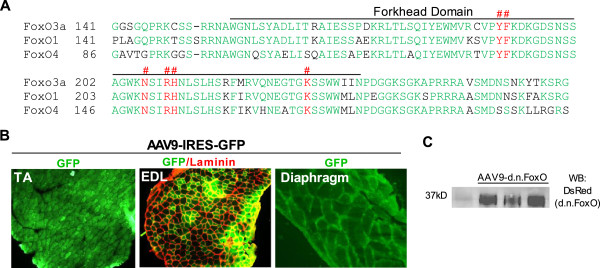
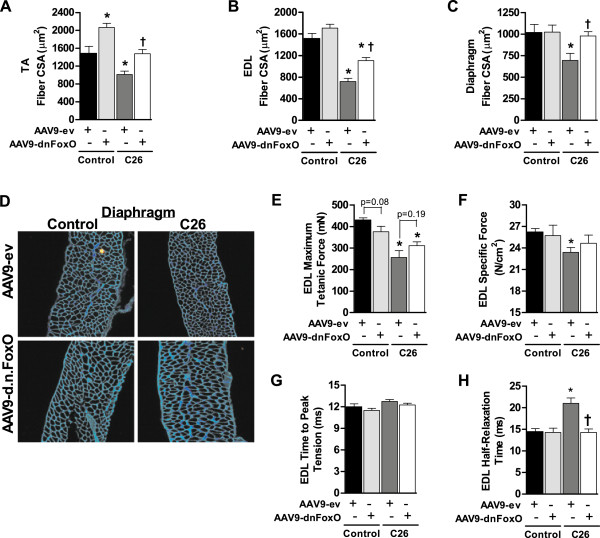
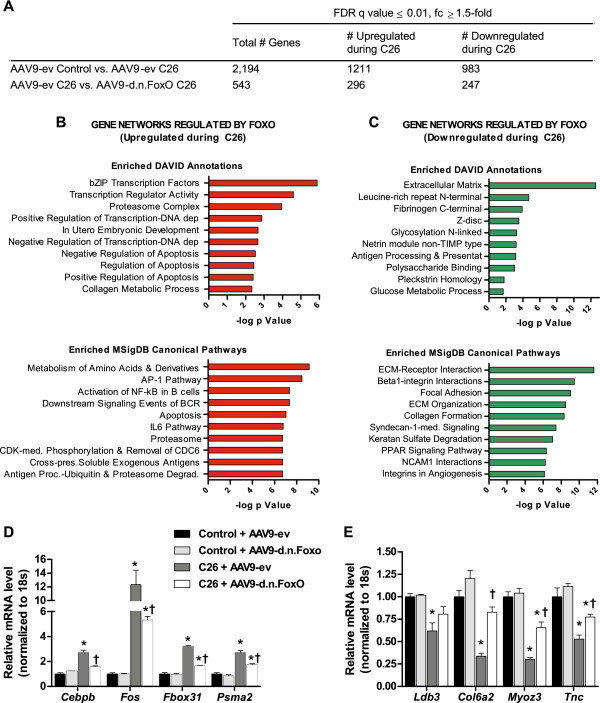
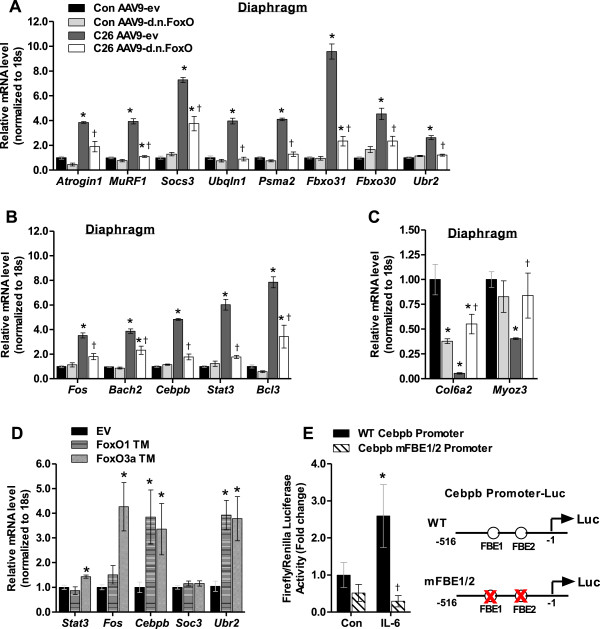
BACKGROUND: Evidence from cachectic cancer patients and animal models of cancer cachexia supports the involvement of Forkhead box O (FoxO) transcription factors in driving cancer-induced skeletal muscle wasting. However, the genome-wide gene networks and associated biological processes regulated by FoxO during cancer cachexia are unknown. We hypothesize that FoxO is a central upstream regulator of diverse gene networks in skeletal muscle during cancer that may act coordinately to promote the wasting phenotype. METHODS: To inhibit endogenous FoxO DNA-binding, we transduced limb and diaphragm muscles of mice with AAV9 containing the cDNA for a dominant negative (d.n.) FoxO protein (or GFP control). The d.n.FoxO construct consists of only the FoxO3a DNA-binding domain that is highly homologous to that of FoxO1 and FoxO4, and which outcompetes and blocks endogenous FoxO DNA binding. Mice were subsequently inoculated with Colon-26 (C26) cells and muscles harvested 26 days later. RESULTS: Blocking FoxO prevented C26-induced muscle fiber atrophy of both locomotor muscles and the diaphragm and significantly spared force deficits. This sparing of muscle size and function was associated with the differential regulation of 543 transcripts (out of 2,093) which changed in response to C26. Bioinformatics analysis of upregulated gene transcripts that required FoxO revealed enrichment of the proteasome, AP-1 and IL-6 pathways, and included several atrophy-related transcription factors, including Stat3, Fos, and Cebpb. FoxO was also necessary for the cancer-induced downregulation of several gene transcripts that were enriched for extracellular matrix and sarcomere protein-encoding genes. We validated these findings in limb muscles and the diaphragm through qRT-PCR, and further demonstrate that FoxO1 and/or FoxO3a are sufficient to increase Stat3, Fos, Cebpb, and the C/EBPβ target gene, Ubr2. Analysis of the Cebpb proximal promoter revealed two bona fide FoxO binding elements, which we further establish are necessary for Cebpb promoter activation in response to IL-6, a predominant cytokine in the C26 cancer model. CONCLUSIONS: These findings provide new evidence that FoxO-dependent transcription is a central node controlling diverse gene networks in skeletal muscle during cancer cachexia, and identifies novel candidate genes and networks for further investigation as causative factors in cancer-induced wasting.
Overview
The claims and statistics of this paper haven’t been checked yet.
Run the check — free, no account needed. It reads the open-access text and checks the sources it cites.
Integrity signals
Registry
Cites
Statistics
Figures
Verification
Claims the paper makes
The claims and statistics of this paper haven’t been checked yet.
Run the check — free, no account needed. It reads the open-access text and checks the sources it cites.
Claims other papers make about this one
Each is checked against this paper’s own text: does it say what the citing paper says it does?
In the citing paper
“Muscle-specific inhibition of FoxOs protects from cancer cachexia-, fasting-, hindlimb suspension- or denervation-induced atrophy [16–18].”
From The connection between the dynamic remodeling of the mitochondrial network and the regulation of muscle mass (2021) · cites this paper as [17]
Self-check
Percentages, sums and reported differences re-computed from the paper’s own numbers.
The self-check needs the paper’s full text.
Citations
Cites
Subramanian, A., Tamayo, P., Mootha, V. K., Mukherjee, S., Ebert, B. L., Gillette, M. A., Paulovich, A., Pomeroy, S. L., Golub, T. R., Lander, E. S., et al. (2005) · Proceedings of the National Academy of Sciences · doi:10.1073/pnas.0506580102 · Cited by 53,625
Systematic and integrative analysis of large gene lists using DAVID bioinformatics resources
Huang, D. W., Sherman, B. T., & Lempicki, R. A. (2009) · Nature Protocols · doi:10.1038/nprot.2008.211 · Cited by 35,890
Huang, D. W., Sherman, B. T., & Lempicki, R. A. (2009) · Nucleic Acids Research · doi:10.1093/nar/gkn923 · Cited by 14,108
Bolstad, B. M., Irizarry, R. A., Åstrand, M., & Speed, T. P. (2003) · Bioinformatics · doi:10.1093/bioinformatics/19.2.185 · Cited by 8,328
Sandri, M., Sandri, C., Gilbert, A., Skurk, C., Calabria, E., Picard, A., Walsh, K., Schiaffino, S., Lecker, S. H., & Goldberg, A. L. (2004) · Cell · doi:10.1016/s0092-8674(04)00400-3 · Cited by 3,012
FoxO3 Controls Autophagy in Skeletal Muscle In Vivo
Mammucari, C., Milan, G., Romanello, V., Masiero, E., Rudolf, R., Del Piccolo, P., Burden, S. J., Di Lisi, R., Sandri, C., Zhao, J., et al. (2007) · Cell Metabolism · doi:10.1016/j.cmet.2007.11.001 · Cited by 1,953
Evolving gene/transcript definitions significantly alter the interpretation of GeneChip data
Dai, M. (2005) · Nucleic Acids Research · doi:10.1093/nar/gni179 · Cited by 1,807
Multiple types of skeletal muscle atrophy involve a common program of changes in gene expression
Lecker, S. H., Jagoe, R. T., Gilbert, A., Gomes, M., Baracos, V., Bailey, J., Price, S. R., Mitch, W. E., & Goldberg, A. L. (2004) · The FASEB Journal · doi:10.1096/fj.03-0610com · Cited by 1,539 · cited 1×
“Many of the upregulated genes identified as downstream targets of FoxO in muscles of C26 tumor-bearing mice are involved in protein degradation, and are coordinately upregulated during multiple wasting conditions [48-50].”
Zhao, J., Brault, J. J., Schild, A., Cao, P., Sandri, M., Schiaffino, S., Lecker, S. H., & Goldberg, A. L. (2007) · Cell Metabolism · doi:10.1016/j.cmet.2007.11.004 · Cited by 1,489
IKKβ/NF-κB Activation Causes Severe Muscle Wasting in Mice
Cai, D., Frantz, J. D., Tawa, N. E., Melendez, P. A., Oh, B.-C., Lidov, H. G. W., Hasselgren, P.-O., Frontera, W. R., Lee, J., Glass, D. J., et al. (2004) · Cell · doi:10.1016/j.cell.2004.09.027 · Cited by 1,367
Research works printed but not linked: 1
- NCBI Gene Expression Omnibus. http://www.ncbi.nlm.nih.gov/geo/query/acc.cgi?token=cbafomemplujfgp&acc=GSE56555 ,
Cited by
Sorted by citations
Mitochondrial quality control and muscle mass maintenance.
Romanello, V., & Sandri, M. (2016) · Frontiers in Physiology · doi:10.3389/fphys.2015.00422 · Cited by 434
Cancer cachexia: molecular mechanisms and treatment strategies
Setiawan, T., Sari, I. N., Wijaya, Y. T., Julianto, N. M., Muhammad, J. A., Lee, H., Chae, J. H., & Kwon, H. Y. (2023) · Journal of Hematology & Oncology · doi:10.1186/s13045-023-01454-0 · Cited by 342
Skeletal Muscle Wasting and Renewal: A Pivotal Role of Myokine IL-6
Belizário, J. E., Fontes-Oliveira, C. C., Borges, J. P., Kashiabara, J. A., & Vannier, E. (2016) · SpringerPlus · doi:10.1186/s40064-016-2197-2 · Cited by 244
STAT3 in the systemic inflammation of cancer cachexia
Zimmers, T. A., Fishel, M. L., & Bonetto, A. (2016) · Seminars in Cell and Developmental Biology · doi:10.1016/j.semcdb.2016.02.009 · Cited by 231
Signaling Pathways That Control Muscle Mass
Vainshtein, A., & Sandri, M. (2020) · International Journal of Molecular Sciences · doi:10.3390/ijms21134759 · Cited by 222
Romanello, V., & Sandri, M. (2021) · Cellular and Molecular Life Sciences · doi:10.1007/s00018-020-03662-0 · Cited by 197
Modeling Human Cancer-induced Cachexia
Talbert, E. E., Cuitiño, M. C., Ladner, K. J., Rajasekerea, P. V., Siebert, M., Shakya, R., Leone, G. W., Ostrowski, M. C., Paleo, B. J., Weisleder, N. L., et al. (2019) · Cell Reports · doi:10.1016/j.celrep.2019.07.016 · Cited by 151
The JAK/STAT Pathway in Skeletal Muscle Pathophysiology
Moresi, V., Adamo, S., & Berghella, L. (2019) · Frontiers in Physiology · doi:10.3389/fphys.2019.00500 · Cited by 145
Protein breakdown in cancer cachexia
Sandri, M. (2016) · Seminars in Cell & Developmental Biology · doi:10.1016/j.semcdb.2015.11.002 · Cited by 134
A Key Role for Leukemia Inhibitory Factor in C26 Cancer Cachexia
Seto, D. N., Kandarian, S. C., & Jackman, R. W. (2015) · Journal of Biological Chemistry · doi:10.1074/jbc.m115.638411 · Cited by 123
Self-citationBohnert, K. R., Gallot, Y. S., Sato, S., Xiong, G., Hindi, S. M., & Kumar, A. (2016) · The FASEB Journal · doi:10.1096/fj.201600250rr · Cited by 127
Hyatt, H. W., & Powers, S. K. (2021) · Antioxidants · doi:10.3390/antiox10040588 · Cited by 134
Martin, A., Gallot, Y. S., & Freyssenet, D. G. (2023) · Journal of Cachexia Sarcopenia and Muscle · doi:10.1002/jcsm.13073 · Cited by 127
The Colon-26 Carcinoma Tumor-bearing Mouse as a Model for the Study of Cancer Cachexia
Bonetto, A., Rupert, J. E., Barreto, R., & Zimmers, T. A. (2016) · Journal of Visualized Experiments · doi:10.3791/54893 · Cited by 113
Epigenetic targeting of bromodomain protein BRD4 counteracts cancer cachexia and prolongs survival
Segatto, M., Fittipaldi, R., Pin, F., Sartori, R., Dae Ko, K., Zare, H., Fenizia, C., Zanchettin, G., Pierobon, E. S., Hatakeyama, S., et al. (2017) · Nature Communications · doi:10.1038/s41467-017-01645-7 · Cited by 101
Martin, A., & Freyssenet, D. G. (2021) · Journal of Cachexia Sarcopenia and Muscle · doi:10.1002/jcsm.12678 · Cited by 100
Kandarian, S. C., Nosacka, R. L., Delitto, A. E., Judge, A. R., Judge, S. M., Ganey, J. D., Moreira, J. D., & Jackman, R. W. (2018) · Journal of Cachexia Sarcopenia and Muscle · doi:10.1002/jcsm.12346 · Cited by 94
Self-citationSkeletal muscle fibrosis in pancreatic Cancer patients with respect to survival
Judge, S. M., Nosacka, R. L., Delitto, D., Gerber, M. H., Cameron, M. E., Trevino, J. G., & Judge, A. R. (2018) · JNCI Cancer Spectrum · doi:10.1093/jncics/pky043 · Cited by 91
Self-citationA Key Role for the Ubiquitin Ligase UBR4 in Myofiber Hypertrophy in Drosophila and Mice
Hunt, L. C., Stover, J., Haugen, B., Shaw, T. I., Li, Y., Pagala, V. R., Finkelstein, D., Barton, E. R., Fan, Y., Labelle, M., et al. (2019) · Cell Reports · doi:10.1016/j.celrep.2019.06.094 · Cited by 90
Cancer-induced cardiac cachexia: Pathogenesis and impact of physical activity
Belloum, Y., Rannou‐Bekono, F., & Favier, F. B. (2017) · Oncology Reports · doi:10.3892/or.2017.5542 · Cited by 90
Mitochondrial dynamics in cancer-induced cachexia
van der Ende, M., Grefte, S., Plas, R., Meijerink, J., Witkamp, R. F., Keijer, J., & van Norren, K. (2018) · Biochimica et Biophysica Acta (BBA) - Reviews on Cancer · doi:10.1016/j.bbcan.2018.07.008 · Cited by 87
PDK4 drives metabolic alterations and muscle atrophy in cancer cachexia
Pin, F., Novinger, L. J., Huot, J. R., Harris, R. A., Couch, M. E., O'Connell, T. M., & Bonetto, A. (2019) · The FASEB Journal · doi:10.1096/fj.201802799r · Cited by 81
Activation of Akt–mTORC1 signalling reverts cancer‐dependent muscle wasting
Geremia, A., Sartori, R., Baraldo, M., Nogara, L., Balmaceda, V., Dumitras, A. G., Ciciliot, S., Scalabrin, M., Nolte, H., & Blaauw, B. (2021) · Journal of Cachexia Sarcopenia and Muscle · doi:10.1002/jcsm.12854 · Cited by 79
Re Cecconi, A. D., Forti, M., Chiappa, M., Zhu, Z., Zingman, L. V., Cervo, L., Beltrame, L., Marchini, S., & Piccirillo, R. (2019) · Cancers · doi:10.3390/cancers11101541 · Cited by 66
Johns, N., Stretch, C., Tan, B. H. L., Solheim, T. S., Sørhaug, S., Stephens, N. A., Gioulbasanis, I., Skipworth, R. J. E., Deans, D. A. C., Vigano, A. A. L., et al. (2016) · Journal of Cachexia Sarcopenia and Muscle · doi:10.1002/jcsm.12138 · Cited by 66
Molecular mechanisms of cancer cachexia‑induced muscle atrophy (Review)
Yang, W., Huang, J., Wu, H., Wang, Y., Du, Z., Ling, Y., Wang, W., Wu, Q., & Gao, W. (2020) · Molecular Medicine Reports · doi:10.3892/mmr.2020.11608 · Cited by 67
Ebert, S. M., Bullard, S. A., Basisty, N., Marcotte, G. R., Skopec, Z. P., Dierdorff, J. M., Al‐Zougbi, A., Tomcheck, K. C., DeLau, A. D., Rathmacher, J. A., et al. (2020) · Journal of Biological Chemistry · doi:10.1074/jbc.ra119.012095 · Cited by 65
The Impact of Immune Cells on the Skeletal Muscle Microenvironment During Cancer Cachexia
VanderVeen, B. N., Murphy, E. A., & Carson, J. A. (2020) · Frontiers in Physiology · doi:10.3389/fphys.2020.01037 · Cited by 61
Callaway, C. S., Delitto, A. E., D’Lugos, A. C., Patel, R., Nosacka, R. L., Delitto, D., Deyhle, M. R., Trevino, J. G., Judge, S. M., & Judge, A. R. (2019) · Cancers · doi:10.3390/cancers11121863 · Cited by 61
Self-citationRegulation of glucose uptake and inflammation markers by FOXO1 and FOXO3 in skeletal muscle
Lundell, L. S., Massart, J., Altıntaş, A., Krook, A., & Zierath, J. R. (2018) · Molecular Metabolism · doi:10.1016/j.molmet.2018.09.011 · Cited by 57
Judge, S. M., Deyhle, M. R., Neyroud, D., Nosacka, R. L., D’Lugos, A. C., Cameron, M. E., Vohra, R., Smuder, A. J., Roberts, B. M., Callaway, C. S., et al. (2020) · Cancer Research · doi:10.1158/0008-5472.can-19-1558 · Cited by 52
Self-citationBohnert, K. R., Goli, P., Roy, A., Sharma, A. K., Xiong, G., Gallot, Y. S., & Kumar, A. (2019) · Molecular and Cellular Biology · doi:10.1128/mcb.00184-19 · Cited by 52
Gellhaus, B., Böker, K. O., Schilling, A. F., & Saul, D. (2023) · Cells · doi:10.3390/cells12242787 · Cited by 54
Vaes, R. D. W., van Dijk, D. P. J., Welbers, T. T. J., Blok, M. J., Aberle, M. R., Heij, L. R., Boj, S. F., Damink, S. W. M. O., & Rensen, S. S. (2020) · Journal of Cachexia Sarcopenia and Muscle · doi:10.1002/jcsm.12627 · Cited by 48
Permpoon, U., Moon, J., Kim, C. Y., & Nam, T. (2025) · International Journal of Molecular Sciences · doi:10.3390/ijms26157616 · Cited by 58
A clinically applicable muscular index predicts long-term survival in resectable pancreatic cancer
Delitto, D., Judge, S. M., George, T. J., Sarosi, G. A., Thomas, R. M., Behrns, K. E., Hughes, S. J., Judge, A. R., & Trevino, J. G. (2016) · Surgery · doi:10.1016/j.surg.2016.09.038 · Cited by 46
Self-citationde Moraes, L. N., Fernández, G. J., Vechetti, I. J., Freire, P. P., de Souza, R. W. A., Villacis, R. A. R., Rogatto, S. R., Reis, P. P., Dal‐Pai‐Silva, M., & Carvalho, R. F. (2017) · Scientific Reports · doi:10.1038/s41598-017-07236-2 · Cited by 45
Okada, R., Fujita, S.-I., Suzuki, R., Hayashi, T., Tsubouchi, H., Kato, C., Sadaki, S., Kanai, M., Fuseya, S., Inoue, Y., et al. (2021) · Scientific Reports · doi:10.1038/s41598-021-88392-4 · Cited by 48
IMB0901 inhibits muscle atrophy induced by cancer cachexia through MSTN signaling pathway
Liu, D., Qiao, X., Ge, Z., Shang, Y., Li, Y., Wang, W., Chen, M., Si, S., & Chen, S. (2019) · Skeletal Muscle · doi:10.1186/s13395-019-0193-2 · Cited by 42
Nosacka, R. L., Delitto, A. E., Delitto, D., Patel, R., Judge, S. M., Trevino, J. G., & Judge, A. R. (2020) · Journal of Cachexia Sarcopenia and Muscle · doi:10.1002/jcsm.12550 · Cited by 41
Self-citationNeyroud, D., Laitano, O., Dasgupta, A., Lopez, C., Schmitt, R. E., Schneider, J. Z., Hammers, D. W., Sweeney, H. L., Walter, G. A., Doles, J. D., et al. (2023) · Communications Biology · doi:10.1038/s42003-023-04902-2 · Cited by 41
Self-citationHuman pancreatic cancer xenografts recapitulate key aspects of cancer cachexia
Delitto, D., Judge, S. M., Delitto, A. E., Nosacka, R. L., Rocha, F. R. G., DiVita, B. B., Gerber, M. H., George, T. J., Behrns, K. E., Hughes, S. J., et al. (2016) · Oncotarget · doi:10.18632/oncotarget.13593 · Cited by 40
Self-citationCriado‐Mesas, L., Ballester, M., Crespo‐Piazuelo, D., Castelló, A., Fernández, A. I., & Folch, J. M. (2020) · Scientific Reports · doi:10.1038/s41598-020-67015-4 · Cited by 43
Neyroud, D., Nosacka, R. L., Callaway, C. S., Trevino, J. G., Hu, H., Judge, S. M., & Judge, A. R. (2021) · Journal of Cachexia Sarcopenia and Muscle · doi:10.1002/jcsm.12666 · Cited by 35
Self-citationCardiac and skeletal muscles show molecularly distinct responses to cancer cachexia
Shum, A. M. Y., Fung, D. C. Y., Corley, S., McGill, M. C., Bentley, N. L., Tan, T. C., Wilkins, M. R., & Polly, P. (2015) · Physiological Genomics · doi:10.1152/physiolgenomics.00128.2014 · Cited by 38
Neyroud, D., Nosacka, R. L., Judge, A. R., & Hepple, R. T. (2019) · Journal of Muscle Research and Cell Motility · doi:10.1007/s10974-019-09510-4 · Cited by 35
Self-citationThe role of IL-1 in adipose browning and muscle wasting in CKD-associated cachexia
Cheung, W. W., Zheng, R., Sheng, H., Wang, Z., Gonzalez, A., Zhou, P. H., Hoffman, H. M., & MAK, R. H. K. (2021) · Scientific Reports · doi:10.1038/s41598-021-94565-y · Cited by 36
Gao, S., Zhang, G., Zhang, Z., Zhu, J. Z., Li, L., Zhou, Y., Rodney, G. G., Abo‐Zahrah, R., Anderson, L. J., Garcia, J. M., et al. (2022) · Proceedings of the National Academy of Sciences · doi:10.1073/pnas.2200215119 · Cited by 31
Luan, Y., Zhang, Y., Yu, S., You, M., Xu, P. C., Chung, S., Kurita, T., Zhu, J., & Kim, S. (2022) · Journal of Cachexia Sarcopenia and Muscle · doi:10.1002/jcsm.12864 · Cited by 31
Fernández, G. J., Ferreira, J. H., Vechetti, I. J., de Moraes, L. N., Cury, S. S., Freire, P. P., Gutiérrez, J., Ferretti, R., Dal‐Pai‐Silva, M., Rogatto, S. R., et al. (2020) · Frontiers in Genetics · doi:10.3389/fgene.2020.00541 · Cited by 29
Omics/systems biology and cancer cachexia
Gallagher, I. J., Jacobi, C., Tardif, N., Rooyackers, O., & Fearon, K. (2016) · Seminars in Cell and Developmental Biology · doi:10.1016/j.semcdb.2015.12.022 · Cited by 28
Graça, F. A., Sheffield, N., Puppa, M., Finkelstein, D., Hunt, L. C., & Demontis, F. (2021) · PLoS Genetics · doi:10.1371/journal.pgen.1009926 · Cited by 27
REDD1 deletion attenuates cancer cachexia in mice
Hain, B. A., Xu, H., VanCleave, A. M., Gordon, B. S., Kimball, S. R., & Waning, D. L. (2021) · Journal of Applied Physiology · doi:10.1152/japplphysiol.00536.2021 · Cited by 24
Kunz, H., Dorschner, J. M., Berent, T. E., Meyer, T., Wang, X., Jatoi, A., Kumar, R., & Lanza, I. R. (2020) · Journal of Biological Chemistry · doi:10.1074/jbc.ra120.014884 · Cited by 23
Addinsall, A. B., Cacciani, N., Akkad, H., Salah, H. A., Tchkonia, T., Kirkland, J. L., & Larsson, L. (2021) · The Journal of Physiology · doi:10.1113/jp281220 · Cited by 23
Cunnington, J. H., Lawrie, A. C., & Pascoe, I. G. (2004) · RMIT Research Repository (RMIT University Library) · Cited by 22
Yang, J., Wang, B., Chen, H., Chen, X., Li, J., Chen, Y., Yuan, D., & Zheng, S. (2018) · Cell Proliferation · doi:10.1111/cpr.12560 · Cited by 21
Sin, T. K., Zhang, G., Zhang, Z., Gao, S., Li, M., & Li, Y. (2019) · Cancers · doi:10.3390/cancers11091272 · Cited by 22
Emerging Mechanisms of Skeletal Muscle Homeostasis and Cachexia: The SUMO Perspective
Khan, B., Gand, L. V., Amrute‐Nayak, M., & Nayak, A. (2023) · Cells · doi:10.3390/cells12040644 · Cited by 19
Foxo3 Knockdown Mediates Decline of Myod1 and Myog Reducing Myoblast Conversion to Myotubes
Gellhaus, B., Böker, K. O., Gsaenger, M., Rodenwaldt, E., Hüser, M. A., Schilling, A. F., & Saul, D. (2023) · Cells · doi:10.3390/cells12172167 · Cited by 19
Marked Increased Production of Acute Phase Reactants by Skeletal Muscle during Cancer Cachexia
Massart, I. S., Paulissen, G., Loumaye, A., Lause, P., Pötgens, S. A., Thibaut, M. M., Balan, E., Deldicque, L., Atfi, A., Louis, E. J., et al. (2020) · Cancers · doi:10.3390/cancers12113221 · Cited by 21
Molecular Basis for the Therapeutic Effects of Exercise on Mitochondrial Defects
Memme, J. M., & Hood, D. A. (2021) · Frontiers in Physiology · doi:10.3389/fphys.2020.615038 · Cited by 19
Baptista, I. L., Silvestre, J. G., Silva, W. J., Labeit, S., & Moriscot, A. S. (2017) · Cell and Tissue Research · doi:10.1007/s00441-017-2614-z · Cited by 19
Involvement of the gut microbiota in cancer cachexia
VanderVeen, B. N., Cardaci, T. D., Bullard, B. M., Madden, M., Li, J., Velázquez, K. T., Kubinak, J. L., Fan, D., & Murphy, E. A. (2024) · American Journal of Physiology-Cell Physiology · doi:10.1152/ajpcell.00327.2024 · Cited by 18
Carraro, U., & Yablonka‐Reuveni, Z. (2021) · European Journal of Translational Myology · doi:10.4081/ejtm.2021.9743 · Cited by 18
Zhou, Y., Zhang, S., Qiu, G., Wang, X., Yonemura, A., Xu, H., Cui, G., Deng, S., Chun, J., Chen, N., et al. (2024) · Journal of Clinical Investigation · doi:10.1172/jci174415 · Cited by 17
Mitochondrial fusion and altered beta-oxidation drive muscle wasting in a Drosophila cachexia model
Dark, C., Ali, N., Golenkina, S., Dhyani, V., Blazev, R., Parker, B. L., Murphy, K. T., Lynch, G. S., Senapati, T., Millard, S. S., et al. (2024) · EMBO Reports · doi:10.1038/s44319-024-00102-z · Cited by 17
Self-citationRosa-Caldwell, M. E., Benson, C. A., Lee, D. E., Brown, J. L., Washington, T. A., Greene, N. P., & Wiggs, M. P. (2020) · International Journal of Molecular Sciences · doi:10.3390/ijms21217841 · Cited by 13
Do neurogenic and cancer-induced muscle atrophy follow common or divergent paths?
Bouché, M., Lozanoska‐Ochser, B., Proietti, D., & Madaro, L. (2018) · European Journal of Translational Myology · doi:10.4081/ejtm.2018.7931 · Cited by 14
The E3 ligase UBR2 regulates cell death under caspase deficiency via Erk/MAPK pathway
Villa, E., Paul, R., Meynet, O., Volturo, S., Pinna, G., & Ricci, J. (2020) · Cell Death and Disease · doi:10.1038/s41419-020-03258-3 · Cited by 12
Park, M. A., Whelan, C. J., Ahmed, S., Boeringer, T., Brown, J. S., Carson, T., Crowder, S. L., Gage, K. L., Gregg, C. J., Jeong, D. K., et al. (2024) · Cancers · doi:10.3390/cancers16132364 · Cited by 12
Self-citationSong, G., Park, W. Y., Jiao, W., Park, J. Y., Jung, S. J., Ma, S., Lee, J., Lee, K. Y., Choe, S., Park, J., et al. (2024) · Biochimica et Biophysica Acta (BBA) - Molecular Cell Research · doi:10.1016/j.bbamcr.2024.119670 · Cited by 12
Luu, B. E., Zhang, Y., & Storey, K. B. (2020) · Cell Stress and Chaperones · doi:10.1007/s12192-020-01123-y · Cited by 14
Exercise-modulated IL-6 in cancer cachexia: molecular mechanisms and therapeutic potential
Wei, S., Lv, X., Xu, Y., & Ding, S. (2026) · Journal of Translational Medicine · doi:10.1186/s12967-026-07690-5 · Cited by 12
Targeting Epigenetic Regulators with HDAC and BET Inhibitors to Modulate Muscle Wasting
Nevi, L., Pöllänen, N., Penna, F., & Caretti, G. (2023) · International Journal of Molecular Sciences · doi:10.3390/ijms242216404 · Cited by 11
Baumfalk, D. R., Opoku‐Acheampong, A. B., Caldwell, J. T., Ade, C. J., Copp, S. W., Musch, T. I., & Behnke, B. J. (2018) · Journal of Applied Physiology · doi:10.1152/japplphysiol.00829.2018 · Cited by 15
Song, J., Duivenvoorde, L. P. M., Grefte, S., Kuda, O., Martínez-Ramírez, F., van der Stelt, I., Mastorakou, D., van Schothorst, E. M., & Keijer, J. (2023) · Pflügers Archiv - European Journal of Physiology · doi:10.1007/s00424-023-02854-4 · Cited by 9
Tsitkanou, S., da Silva, F. M., Cabrera, A. R., Schrems, E. R., Murach, K. A., Washington, T. A., Rosa‐Caldwell, M. E., & Greene, N. P. (2023) · American Journal of Physiology-Cell Physiology · doi:10.1152/ajpcell.00352.2023 · Cited by 8
Zuloaga, R., Aravena-Canales, D., Aedo, J. E., Osorio‐Fuentealba, C., Molina, A., & Valdés, J. A. (2023) · Genes · doi:10.3390/genes14020512 · Cited by 8
Immunosenescence in skeletal muscle: The role-play in cancer cachexia chessboard
Giovarelli, M., Mocciaro, E., Carnovale, C., Cervia, D., Perrotta, C., & Clementi, E. (2025) · Seminars in Cancer Biology · doi:10.1016/j.semcancer.2025.02.012 · Cited by 8
Kesharwani, D., Kumar, A., Poojary, M., Scaria, V., & Datta, M. (2021) · Bioscience Reports · doi:10.1042/bsr20210495 · Cited by 9
Wu, Z., Li, W., Yang, Y., Zheng, Y., Zhou, M., Li, Y., Li, H. Z., Wu, H., & Du, L. (2023) · Molecular Nutrition & Food Research · doi:10.1002/mnfr.202300033 · Cited by 8
Lee, S. H., Kim, H., Kim, S.-W., Lee, H., Jung, D., & Williams, D. R. (2025) · EMBO Molecular Medicine · doi:10.1038/s44321-025-00234-2 · Cited by 7
Effects of high-intensity training on prostate cancer-induced cardiac atrophy.
Baumfalk, D. R., Opoku‐Acheampong, A. B., Caldwell, J. T., Butenas, A. L. E., Horn, A. G., Kunkel, O. N., Copp, S. W., Ade, C. J., Musch, T. I., & Behnke, B. J. (2021) · Europe PMC (PubMed Central) · Cited by 7
Brown, A., Collao, N., Saleh, A., Strong, N., Lisio, M. D., & Wiper‐Bergeron, N. (2026) · Journal of Cachexia Sarcopenia and Muscle · doi:10.1002/jcsm.70260 · Cited by 5
Role of myofiber-specific FoxP1 in pancreatic cancer-induced muscle wasting
Schonk, M. M., Ducharme, J. B., Neyroud, D., Nosacka, R. L., Tucker, H. O., Judge, S. M., & Judge, A. R. (2024) · American Journal of Physiology-Cell Physiology · doi:10.1152/ajpcell.00701.2024 · Cited by 5
Self-citationBartlett, S. T., Santi, I., Hachaj, G., Wilund, K. R., Tzvetanov, I. G., Spaggiari, M., Almario, J., Cocco, P. D., Bianco, F. M., Hajjiri, Z., et al. (2025) · Kidney Medicine · doi:10.1016/j.xkme.2025.100978 · Cited by 3
Leucine and Its Importance for Cell Signalling Pathways in Cancer Cachexia-Induced Muscle Wasting
de Oliveira, A. G., Cruz, B., de Oliveira, S. C. P., Viana, L. R., Miyaguti, N. A. D. S., Ramos, L., Valentim, R. R., & Gomes‐Marcondes, M. C. C. (2020) · IntechOpen eBooks · doi:10.5772/intechopen.78990 · Cited by 3
Advancing cancer cachexia diagnosis with -omics technology and exercise as molecular medicine
Hesketh, S. J. (2024) · Sports Medicine and Health Science · doi:10.1016/j.smhs.2024.01.006 · Cited by 3
Puppa, M., & Carson, J. A. (2025) · Advances in experimental medicine and biology · doi:10.1007/978-3-031-88361-3_12 · Cited by 2
Animal models of cancer-associated cachexia
Shukla, S. K., & Singh, P. K. (2019) · Elsevier eBooks · doi:10.1016/b978-0-12-814704-7.00001-5 · Cited by 2
Mitochondrial fusion and altered beta-oxidation drive muscle wasting in a Drosophila cachexia modelPreprint
Dark, C., Ali, N., Golenkina, S., Blazev, R., Parker, B. L., Murphy, K., Lynch, G. S., Senapati, T., Millard, S. S., Judge, S. M., et al. (2023) · bioRxiv (Cold Spring Harbor Laboratory) · doi:10.1101/2023.06.23.546217 · Cited by 2
Self-citationAn alternative pocket for binding the N‐degrons by the UBR1 and UBR2 ubiquitin E3 ligases
Huang, S., Chen, D., Ren, T., Thomas, N., Wu, J., Sankaran, B., Jones, R., Taylor, S. S., & Chen, Y. (2025) · Protein Science · doi:10.1002/pro.70248 · Cited by 1
Tumor-Secreted ADAMTSL4 Activates Latent TGFβ1 to Drive Cancer Cachexia
Machado, J., Karthikaisamy, V., Mohr, H., Kaltenecker, D., Benedikt, P., Morigny, P., Mhamane, A., Geppert, J., Fumo, A. R., Haase, K., et al. (2026) · Cancer Discovery · doi:10.1158/2159-8290.cd-26-0045 · Cited by 1
Plas, R. L. C., Hooiveld, G. J. E. J., Witkamp, R. F., & van Norren, K. (2020) · Research Square · doi:10.21203/rs.3.rs-56696/v1 · Cited by 1
Neyroud, D., Laitano, O., Dasgupta, A., Lopez, C., Schmitt, R. E., Schneider, J., Hammers, D. W., Sweeney, H. L., Walter, G. A., Doles, J. D., et al. (2023) · Research Square · doi:10.21203/rs.3.rs-2524562/v1 · Cited by 1
Self-citationUnfolded protein response pathways in skeletal muscle homeostasis.
Bohnert, K. R. (2018) · doi:10.18297/etd/3033
Zhang, Y., Zhu, J., Kim, S., Romero, M. M., Even, K. A., Kurita, T., & Woodruff, T. K. (2020) · bioRxiv (Cold Spring Harbor Laboratory) · doi:10.1101/2020.06.16.154385
Ji, L. L. (2021) · Faculty Opinions – Post-Publication Peer Review of the Biomedical Literature · doi:10.3410/f.738789048.793582075
Metadata
- Authors
- Judge, S. M., Wu, C.-L., Beharry, A. W., Roberts, B. M., Ferreira, L. F., Kandarian, S. C., & Judge, A. R.
- Affiliations
- University of Florida Health (US)
- Boston University (US)
- University of Florida (US)
- Corresponding author
- Judge, Andrew R
- Venue
- BMC Cancer
- Published
- 2014-12
- Volume
- 14
- Issue
- 1
- Pages
- 997-997
- ISSN
- 1471-2407 (ISSN-L)
- PMC
- PMC4391468
- OpenAlex
- W1564746483
- Cited by
- 111
- References
- 59
- Citations by year
- 2026: 7 · 2025: 8 · 2024: 8 · 2023: 14 · 2022: 2 · 2021: 14 · 2020: 20 · 2019: 12 · 2018: 8 · 2017: 5 · 2016: 9 · 2015: 3
- FWCI
- 2.32
- Type
- journal article
- Language
- en
- Open access
- gold
- doi.org
- Licence
- Locations
- BMC Cancer (publishedVersion, cc-by)
- PubMed Central (publishedVersion, cc-by)
- PubMed (publishedVersion)
- University of Florida Digital Collections (University of Florida) (submittedVersion)
- OpenBU (Boston University) (submittedVersion, cc-by)
- Funders
- National Heart, Lung, and Blood Institute (R00HL098453)
- National Institute of Arthritis and Musculoskeletal and Skin Diseases (R01AR060217, R01AR060209)
- Eunice Kennedy Shriver National Institute of Child Health and Human Development (T32HD043730)
- Topics
- Life Sciences › Biochemistry, Genetics and Molecular Biology › Molecular Biology › Muscle Physiology and Disorders
- Life Sciences › Biochemistry, Genetics and Molecular Biology › Molecular Biology › FOXO transcription factor regulation
- Health Sciences › Medicine › Physiology (medical) › Nutrition and Health in Aging
- Keywords
- FOXO transcription factors, cancer cachexia, skeletal muscle atrophy, C26 colon carcinoma, FOXO1, FOXO3, gene regulatory networks, muscle fiber atrophy, diaphragm, limb muscles, STAT3, FOS, CEBPB, UBR2, IL-6 signaling, proteasome pathway, extracellular matrix genes, sarcomere proteins
- MeSH terms
- Dependovirus, Amino Acid Sequence, Animals, Cachexia, Colonic Neoplasms, Disease Models, Animal, Extracellular Matrix, Gene Expression Regulation, Genetic Vectors, Humans, Male, Molecular Sequence Data, Transcription Factors, Transduction, Genetic, Reproducibility of Results, Sequence Alignment, Muscle, Skeletal, Gene Expression Profiling, Proteasome Endopeptidase Complex, Mice, Forkhead Transcription Factors, Gene Regulatory Networks, Genome-Wide Association Study, Heterografts
About these checks
Registry, retraction, Cites and statistics results are computed, not judged, with one exception: a printed reference that no index lists is read once by a model before it counts as a citation error. Claims are extracted by a model and kept only when their quote appears verbatim in the text; each cited source is then checked, with a model’s help, for whether it says what the claim relies on. Those verdicts can be wrong — read the claim’s quote and the cited source before relying on one.
Statistics and arithmetic are recomputed, not judged.
Confidence bands are shown only for fields calibrated on our annotated test set. None is calibrated yet, so no band is shown.
What counts as a claim ›How we measure confidence ›How we check this ›
Are you an author, or do you see a problem with this page? Request a review
