

Warwick-Edinburgh Mental Well-being Scale (WEMWBS): Validated for teenage school students in England and Scotland. A mixed methods assessment
Open accessThe DOI matches its Crossref record; 39 of the 41 references it cites were found in a registry or an index.
Abstract
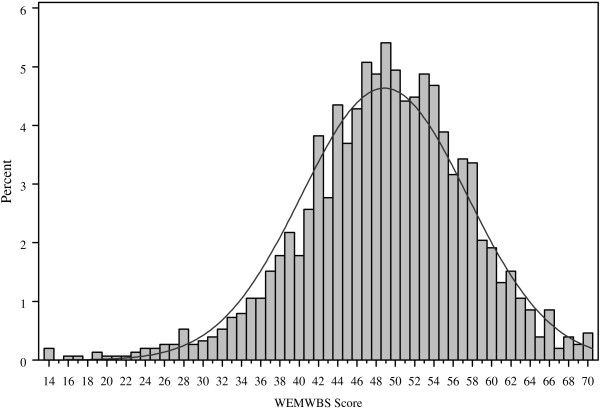
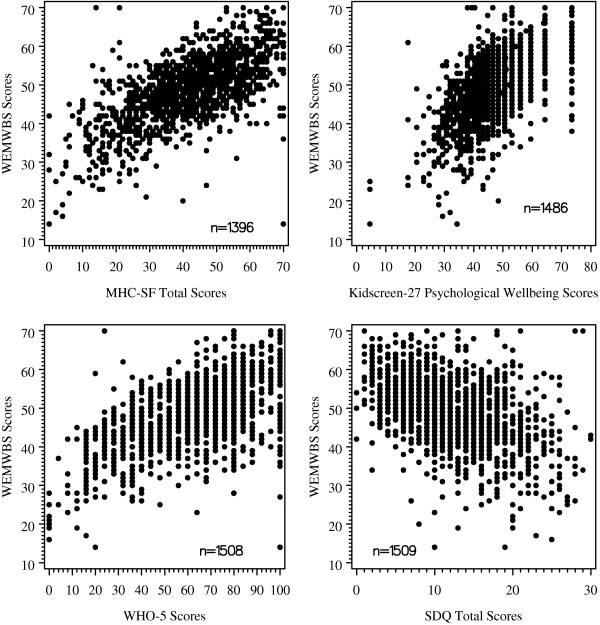
BACKGROUND: Understanding and measuring mental health and wellbeing amongst teenagers has recently become a priority. The Warwick-Edinburgh Mental Well-being Scale (WEMWBS) is validated for measuring mental wellbeing in populations aged 16 years and over in the UK. We report here a study designed to establish the validity and reliability of WEMWBS in teenagers in the UK. METHODS: WEMWBS and comparator scales, together with socio-demographic information and self-reported health, were incorporated into a self-administered questionnaire given to pupils aged 13 to 16 years in six schools in Scotland and England. Psychometric properties including internal consistency, correlations with comparator scales, test-retest stability and unidimensionality were investigated for WEMWBS. Twelve focus groups were undertaken to assess acceptability and comprehensibility of WEMWBS and were taped, transcribed and analysed thematically. RESULTS: A total of 1,650 teenagers completed the questionnaire (response rate 80.8%). Mean WEMWBS score was 48.8 (SD 6.8; median 49). Response scores covered the full range (from 14 to 70). WEMWBS demonstrated strong internal consistency and a high Cronbach's alpha of 0.87 (95% CI (0.85-0.88), n = 1517). Measures of construct validity gave values as predicted. The correlation coefficient for WEMWBS total score and psychological wellbeing domain of the Kidscreen-27 was 0.59 (95% CI [0.55; 0.62]); for the Mental Health Continuum Short Form (MHC-SF) was 0.65, 95% CI [0.62; 0.69]; and for the WHO (WHO-5) Well-being Index 0.57 (95% CI [0.53; 0.61]). The correlation coefficient for the Strengths and Difficulties Questionnaire (SDQ) was -0.44 (95% CI [-0.49; -0.40]) and for the 12-item General Health Questionnaire (GHQ12) -0.45 (95% CI [-0.49; -0.40]). Test-retest reliability was acceptable (Intraclass correlation coefficient (ICC) 0.66 (95% CI [0.59; 0.72] n = 212)). Confirmatory factor analysis demonstrated one underlying factor. WEMWBS was significantly associated with the Family Affluence Score (WEMWBS increased with increasing household socio-economic status) and had a positive association with the physical health dimension of the Kidscreen-27, but was unrelated to age, gender or location/school. Eighty students took part in focus groups. In general, although some students considered some items open to misunderstanding or misinterpretation, WEMWBS was received positively and was considered comprehensible, and acceptable. CONCLUSIONS: WEMWBS is a psychometrically strong population measure of mental wellbeing, and can be used for this purpose in teenagers aged 13 and over.
Overview
The claims and statistics of this paper haven’t been checked yet.
Free: it reads the open-access text and checks the first 5 claims that cite a source we can check. Create a free account to check every claim.
Integrity signals
Registry
Cites
Statistics
Figures
Verification
Claims the paper makes
The claims and statistics of this paper haven’t been checked yet.
Free: it reads the open-access text and checks the first 5 claims that cite a source we can check. Create a free account to check every claim.
Claims other papers make about this one
Each is checked against this paper’s own text: does it say what the citing paper says it does?
The source backs part of the claim, not all of it — or backs it for a different population, condition or comparison.
In the citing paper
“Psychometric data of the measure on the original WEMWBS for adolescents has indicated satisfactory to high internal consistency (r=.87) and the short version has acceptable test-retest reliability (r=.66, 95% CI 0.59-0.72) [44,45].”
From Feasibility and effectiveness of a web-based positive psychology program for youth mental health: Randomized controlled trial (2014) · cites this paper as [45]
Experimental — accuracy not yet measuredThe source backs part of the claim, not all of it — or backs it for a different population, condition or comparison.
In the citing paper
“to high internal consistency (r=.87) and the short version has acceptable test-retest reliability (r=.66, 95% CI 0.59-0.72) [44,45].”
From Feasibility and effectiveness of a web-based positive psychology program for youth mental health: Randomized controlled trial (2014) · cites this paper as [45]
Experimental — accuracy not yet measuredThe cited source says what the claim attributes to it.
In the citing paper
“Participants provided demographic information (age, gender, ethnicity and postcode) and completed the Warwick–Edinburgh Mental Wellbeing scale (WEMWBS), validated for use with young people [22,23].”
Self-check
Percentages, sums and reported differences re-computed from the paper’s own numbers.
The self-check needs the paper’s full text.
Citations
Cites
Coefficient Alpha and the Internal Structure of Tests
Cronbach, L. J. (1951) · Psychometrika · doi:10.1007/bf02310555 · Cited by 43,931 · cited 2×
“7, demonstrating satisfactory to high internal consistency [32].”
BackgroundMethodOn Happiness and Human Potentials: A Review of Research on Hedonic and Eudaimonic Well-Being
Ryan, R. M., & Deci, E. L. (2001) · Annual Review of Psychology · doi:10.1146/annurev.psych.52.1.141 · Cited by 11,567 · cited 1×
“In adults, mental wellbeing is regarded as covering both hedonic (happiness, subjective wellbeing) and eudaimonic (positive functioning) wellbeing [14].”
BackgroundPharmacological interventions for somatoform disorders in adults
Kleinstäuber, M., Witthöft, M., Steffanowski, A., van Marwijk, H., Hiller, W., & Lambert, M. J. (2014) · Cochrane Database of Systematic Reviews · doi:10.1002/14651858.cd010628.pub2 · Cited by 11,335
Bootstrap Methods and their Application
Davison, A. C., & Hinkley, D. V. (1997) · doi:10.1017/cbo9780511802843 · Cited by 7,350
Psychometric properties of the strengths and difficulties questionnaire
GOODMAN, R. (2001) · Journal of the American Academy of Child & Adolescent Psychiatry · doi:10.1097/00004583-200111000-00015 · Cited by 6,813 · cited 10×
“We found very little difference between age groups when correlations between WEMWBS and GHQ12, WHO-5, SDQ, MHC-SF and Kidscreen-27 were repeated for those aged 14 years and younger versus those aged 15 years and older.”
BackgroundInfluentialThe cochrane database of systematic reviews
Geddes, J. (1996) · Journal of Psychosomatic Research · doi:10.1016/s0022-3999(96)90063-x · Cited by 5,989
Bootstrap Methods and Their Application
Loughin, T. M., Davison, A. C., & Hinkley, D. V. (1999) · Journal of the American Statistical Association · doi:10.2307/2669707 · Cited by 5,418
The Warwick-Edinburgh Mental Well-being Scale (WEMWBS): development and UK validation
Tennant, R., Hiller, L., Fishwick, R., Platt, S., Joseph, S., Weich, S., Parkinson, J., Secker, J., & Stewart-Brown, S. (2007) · Health and Quality of Life Outcomes · doi:10.1186/1477-7525-5-63 · Cited by 5,031 · cited 4×
“Discussion WEMWBS is a population measure of mental wellbeing, validated for use in adults aged 16 years and over in the UK [20,21].”
BackgroundMethodInfluentialSelf-citationQualitative data analysis for applied policy research
(2002) · Analyzing Qualitative Data · doi:10.4324/9780203413081-14 · Cited by 4,964 · cited 1×
“Analysis was undertaken using an adapted Framework Approach [37] suitable where a framework for analysis already exists.”
MethodCochrane Database of Systematic Reviews
(2008) · Encyclopedia of Public Health · doi:10.1007/978-1-4020-5614-7_436 · Cited by 4,527
Research works printed but not linked: 7
- Currie C Roberts C Morgan A Smith R Settertobulte W Samdal O Barnekow Rasmussen V Young People's Health in Context: international report from the HBSC 2001/02 survey, (Health Policy for Children and Adolescents, No.4) 2004 WHO Regional Office for Europe, Copenhagen
- Department for Children, Schools and Families Every Child Matters Green Paper 2003 CM5860. Crown Copyright
- National Institute for Health and Clinical Excellence Public Health Guidance No 12 Promoting Children's Social and Emotional Wellbeing in Primary Education 2008
- Ofsted Indicators of a school's contribution to well-being 2008 HMI 080195
- Scottish Government Towards a Mentally Flourishing Scotland: Policy and Action Plan 2009-2011 2009 Edinburgh, Scottish Government
- Tennant R Fishwick R Platt S Joseph S Stewart-Brown S Monitoring positive mental health in Scotland: validating the Affectometer 2 scale and developing the Warwick-Edinburgh Mental Well-being scale for the UK 2006 Glasgow, NHS Health Scotland
- Clarke A Putz R Friede T Ashdown J Adi Y Martin S Flynn P Blake A Stewart-Brown S Platt S Warwick-Edinburgh Mental Well-being Scale (WEMWBS) acceptability and validation in English and Scottish secondary school students (The WAVES Project) 2010 Glasgow, NHS Health Scotland
Cited by
Items 201–300 of 492
Vedøy, I. B., Skulberg, K. R., Anderssen, S. A., Fagerland, M. W., Tjomsland, H. E., & Thurston, M. N. (2021) · International Journal of Behavioral Nutrition and Physical Activity · doi:10.1186/s12966-021-01211-x · Cited by 23
“The scale is validated for use among adolescents from 13 years of age and onwards [29] including Norwegian adolescents [30].”
BackgroundProportionate methods for evaluating a simple digital mental health tool
Davies, E. B., Craven, M. P., Martin, J. L., & Simons, L. (2017) · Evidence Based Mental Health · doi:10.1136/eb-2017-102755 · Cited by 15
Jiang, Y., Guo, L., Lai, W., Li, Y., Sun, X., Zhao, H. F., Shi, J., Zhang, C., Huang, X., Lu, C., et al. (2023) · Journal of Affective Disorders · doi:10.1016/j.jad.2023.02.136 · Cited by 18
Hunter, S. C., Seth, R., Houghton, S. J., Lawrence, D. M., Zadow, C., Rosenberg, M., Wood, L. J., Qualter, P., & Shilton, T. (2023) · Journal of Youth and Adolescence · doi:10.1007/s10964-023-01925-0 · Cited by 27
“Positive mental wellbeing is neither the polar opposite, nor absence, of psychological maladjustment (World Health Organisation WHO (2004)) and includes both hedonic (i.e., happiness, subjective well-being) and eudemonic (i.e., positive functioning) aspects of wellbeing (Clarke et al., 2011).”
BackgroundQureshi, F. H., Khawaja, S., Sokić, K., Bach, M. P., & Meško, M. (2024) · Systems · doi:10.3390/systems12080281 · Cited by 49
Merrick, H., King, C., McConachie, H., Parr, J. R., & Couteur, A. S. L. (2020) · BJPsych Open · doi:10.1192/bjo.2020.41 · Cited by 17
Wu, Q., Ying, O., & Jordan, L. P. (2020) · Children and Youth Services Review · doi:10.1016/j.childyouth.2020.105775 · Cited by 15
Papola, D., Prina, E., Ceccarelli, C., Gastaldon, C., Tol, W. A., van Ommeren, M., Barbui, C., & Purgato, M. (2022) · Cochrane Database of Systematic Reviews · doi:10.1002/14651858.cd014300 · Cited by 14
Zayed, K. N., Omara, E. N., Al-Shamli, A., Al-Rawahi, N., Haramlah, A. A., Al-Attiyah, A. A., Al-Hadabi, B., Al-Yarobi, A., Al-Busafi, M., & Al-Jadidi, K. (2023) · BMC Psychology · doi:10.1186/s40359-023-01443-5 · Cited by 18
“The WEMWBS was found to have substantial moderate to high positive correlations with domains such as positive affect, life satisfaction, and overall health, as well as a significant negative correlation with symptoms of anxiety and depression in earlier investigations [11, 30–33].”
BackgroundThornton, E., Petersen, K. J., Marquez, J., & Humphrey, N. (2024) · Journal of Youth and Adolescence · doi:10.1007/s10964-024-01950-7 · Cited by 21
“…wellbeing (covariate at T1; outcome variable at T2) Mental wellbeing was measured using the Short Warwick-Edinburgh Mental Wellbeing Scale (SWEMWBS; Clarke et al., 2011), which is a 7-item scale (sample item: “ I ’ ve been feeling useful ” ) with responses as follows: (1) None of the time; (2)…”
MethodEather, N., Miller, A. A., Jones, B., & Morgan, P. J. (2020) · International Journal of Sports Science & Coaching · doi:10.1177/1747954120976966 · Cited by 16
Barbour, N., & van Meggelen, D. (2023) · European Journal of Engineering Education · doi:10.1080/03043797.2023.2201189 · Cited by 15
“Clarke et al. (2011) acknowledged that while the de fi nitions of mental illness have been the subject of much investigation, the de fi nitions of mental well-being are less researched.”
BackgroundMethodInfluentialPrice, M., Hidalgo, J. E., Bird, Y. M., Bloomfield, L. S. P., Buck, C., Cerutti, J., Dodds, P. S., Fudolig, M. I., Gehman, R. M., Hickok, M., et al. (2023) · Contemporary Clinical Trials · doi:10.1016/j.cct.2023.107338 · Cited by 21
Coulton, S., Stockdale, K. J., Marchand, C., Hendrie, N., Billings, J. R., Boniface, S., Butler, S., Deluca, P., Drummond, C., Newbury‐Birch, D., et al. (2017) · BMC Public Health · doi:10.1186/s12889-017-4170-6 · Cited by 18
Davison, B., Nagel, T. M., & Singh, G. (2017) · Journal of Developmental Origins of Health and Disease · doi:10.1017/s2040174417000162 · Cited by 15
“Although there is a scarcity of research available from Australia, this scale has been used widely in the United Kingdom and Scotland in teenagers and young adults.(32,34) Participants were asked ‘how often they felt happy about the future; useful; relaxed; dealt with problems well; thought clearly; close to other peo…”
MethodShiue, I. (2016) · Environmental Science and Pollution Research · doi:10.1007/s11356-016-6354-5 · Cited by 14
“Both of them have been used and validated in many study populations over the last decades (Farmer and Harvey 1975; Clarke et al. 2011).”
BackgroundA Pragmatic Randomized Controlled Trial Targeting Perfectionism in Young Adolescents
Osenk, I., Johnson, C., & Wade, T. D. (2022) · School Mental Health · doi:10.1007/s12310-022-09540-3 · Cited by 18
Gardner, L. A., Rowe, A., Stockings, E., Champion, K. E., Hides, L. M., MCBRIDE, N. T., ALLSOP, S. J., O’Dean, S., Sunderland, M., Lee, Y. Y., et al. (2023) · BMC Public Health · doi:10.1186/s12889-023-15609-8 · Cited by 17
“The Short Warwick–Edinburgh Mental Well-being Scale [54] will be used to assess mental wellbeing.”
Juul, L., Frydenberg, M., Beck, M. S., & Fjorback, L. O. (2021) · BMC Psychology · doi:10.1186/s40359-021-00530-9 · Cited by 13
“Clarke A, Friede T, Putz R, Ashdown J, Martin S, Blake A, et al. WarwickEdinburgh Mental Well-being Scale (WEMWBS): validated for teenage school students in England and Scotland.”
BackgroundA review of mental health and wellbeing measures for universal secondary school screening
Waite, M., & Atkinson, C. (2021) · Emotional and Behavioural Difficulties · doi:10.1080/13632752.2021.1939997 · Cited by 15
“66 Test-retest (Clarke et al. 2011) No information is available in the references reviewed.”
BackgroundJob demands and well‐being in universities in the pandemic: A longitudinal study
Wood, S. (2022) · Industrial Relations Journal · doi:10.1111/irj.12376 · Cited by 14
Promoting mental wellbeing: developing a theoretically and empirically sound complex intervention
Millar, S., & Donnelly, M. (2013) · Journal of Public Health · doi:10.1093/pubmed/fdt075 · Cited by 17
Gray, S. G., Cheetham, T. D., McConachie, H., Mann, K. D., Parr, J. R., Pearce, M. S., Colver, A. F., & the Transition Collaborative Group (2018) · Diabetic Medicine · doi:10.1111/dme.13698 · Cited by 15
Lohmann, J., John, D., & Dzay, A. (2019) · Systematic Reviews · doi:10.1186/s13643-019-1201-7 · Cited by 13
Clarke, J., Vatiliotis, V., Verge, C. F., Holmes-Walker, D. J., Campbell, L. V., Wilhelm, K. A., & Proudfoot, J. G. (2015) · JMIR Research Protocols · doi:10.2196/resprot.4032 · Cited by 14
“The Warwick-Edinburgh Mental Well-being Scale (WEMWBS) [41] is a 14-item scale that measures mental well-being through the concepts of positive affect, psychological functioning, and interpersonal relationships, and is validated for measuring mental well-being in young people aged ≥ 16 years [42].”
Civic engagement and mental health trajectories in Norwegian youth
Wiium, N., Kristensen, S. M., Årdal, E., Bøe, T., Gaspar de Matos, M., Karhina, K., Larsen, T. M. B., Urke, H. B., & Wold, B. (2023) · Frontiers in Public Health · doi:10.3389/fpubh.2023.1214141 · Cited by 12
The mental health and wellbeing of care-experienced young people during early and later adolescence
Carter, B., Shelton, K. H., Holmes, L., Sprecher, E. A., Javed, M., Macleod, J., Park, J.-E., Selwyn, J., Siraj, I., Robinson, C., et al. (2025) · Clinical Child Psychology and Psychiatry · doi:10.1177/13591045251333028 · Cited by 17
“Self-reported wellbeing was particularly poor in our older sample, suggesting a faster trajectory of worsening wellbeing than might be expected in the general population of older teens (Clarke et al., 2011; Morey et al., 2016; Sadler et al., 2018).”
Mack, D. E., Vo, K. T., & Wilson, P. M. (2024) · Journal of Happiness Studies · doi:10.1007/s10902-024-00715-0 · Cited by 17
“Further evidence for the unidimensional factor structure has been forthcoming (e.g., Clarke et al., 2011 ; López et al., 2013).”
Lam, J. R., Park, H. R. P., & Gatt, J. M. (2024) · Frontiers in Psychiatry · doi:10.3389/fpsyt.2024.1333828 · Cited by 19
Newbury‐Birch, D., Scott, S., O'Donnell, A. J., Coulton, S., Howel, D., McColl, E., Stamp, E., Graybill, E., Gilvarry, E. A., Laing, K., et al. (2014) · Public Health Research · doi:10.3310/phr02060 · Cited by 13
“This is comparative to other studies with young people aged 13–16 years (median ‘49’).(161) Twelve young people scored the minimum of ‘14’ (1.”
MethodResultInfluentialPapola, D., Prina, E., Ceccarelli, C., Cadorin, C., Gastaldon, C., Ferreira, M. C., Tol, W. A., van Ommeren, M., Barbui, C., & Purgato, M. (2024) · Cochrane Database of Systematic Reviews · doi:10.1002/14651858.cd014300.pub2 · Cited by 23
Wilson, C., & Sharpe, D. M. (2017) · Journal of Applied Arts and Health · doi:10.1386/jaah.8.1.39_1 · Cited by 13
“The WEMWBS has demonstrated high validity and reliability (e.g. Tennant et al., 2007; Stewart-Brown et al., 2009; Clarke et al., 2011).”
MethodMental wellbeing in non-ambulant youth with neuromuscular disorders: What makes the difference?
Travlos, V., Downs, J. A., Wilson, A. C., Hince, D., & Patman, S. M. (2018) · Neuromuscular Disorders · doi:10.1016/j.nmd.2018.08.013 · Cited by 12
“chronic physical conditions such as cerebral palsy and diabetes [34] and higher than reported in typically developing youth [23] and youth with autism spectrum disorder [34].”
BackgroundMethodResultInfluentialThe Scottish Health Survey Topic Report: Mental Health and Wellbeing; 2015
Wilson, M., Kellock, C., Adams, D., & Landsberg, J. (2015) · Stirling Online Research Repository (University of Stirling) · Cited by 17
Monitoring health and health behaviors among adolescents in Central Catalonia: DESKcohort protocol
Rogés, J., González-Casals, H., Bosque‐Prous, M., Folch, C., Colom, J., Casabona, J., Drou-Roget, G., Teixidó‐Compañó, E., Fernández, E., Vives‐Cases, C., et al. (2023) · Gaceta Sanitaria · doi:10.1016/j.gaceta.2023.102316 · Cited by 12
Rose‐Clarke, K., Rimal, D., Morrison, J., Pradhan, I., Hodsoll, J. P., Jaoude, G. J. A., Moore, B., Banham, L., Richards, J. A., Jordans, M. J. D., et al. (2023) · Pilot and Feasibility Studies · doi:10.1186/s40814-023-01324-z · Cited by 11
Edge, D., Watkins, E. R., Newbold, A., Ehring, T. W., Frost, M. M., & Rosenkranz, T. (2024) · JMIR mhealth and uhealth · doi:10.2196/51932 · Cited by 18
Kidger, J., Evans, R., Bell, S. L., Fisher, H., Turner, N. L., Hollingworth, W., Harding, S., Powell, J., Brockman, R., Copeland, L., et al. (2021) · Public Health Research · doi:10.3310/phr09120 · Cited by 22
The Loss of a Service Dog Through Death or Retirement: Experiences and Impact on Partners
Kogan, L. R., Packman, W. L., Currin-McCulloch, J. A., Bussolari, C. J., & Erdman, P. (2021) · Illness Crisis & Loss · doi:10.1177/10541373211054168 · Cited by 15
“The Warwick-Edinburgh Mental Well-Being Scale is a short and psychometrically robust scale that has been used to assess wellbeing in general populations worldwide (Clarke et al., 2011; Hunter et al., 2015; López et al., 2013; Tennant et al., 2007).”
MethodLåftman, S. B., Modin, B., Saminathen, M. G., Östberg, V., Löfstedt, P., & Rajaleid, K. (2023) · International Journal of Public Health · doi:10.3389/ijph.2022.1605167 · Cited by 19
Smith, N. R., Clark, C., Smuk, M., Cummins, S., & Stansfeld, S. A. (2015) · Social Psychiatry and Psychiatric Epidemiology · doi:10.1007/s00127-015-1098-y · Cited by 14
“It has been validated in adolescents [23] and cross culturally [24] and was introduced as a core module to the national Health Survey for England in 2010 [25].”
BackgroundAlderson, H., Kaner, E., Brown, R., Howel, D., McColl, E., Smart, D., Copello, A. G., Fouweather, T., McGovern, R., Brown, H., et al. (2020) · Public Health Research · doi:10.3310/phr08130 · Cited by 12
“White British 38 (100) 34 (89) 34 (94) 106 (95)”
BackgroundRoquet, C. D., & Sas, C. (2021) · JMIR Research Protocols · doi:10.2196/20819 · Cited by 15
Davison, J., Bunting, B. P., Connolly, P., Lloyd, K., Dunne, L., & Stewart-Knox, B. J. (2022) · Child Indicators Research · doi:10.1007/s12187-022-09924-6 · Cited by 15
“The findings confirmed results of previous research (Booker et al., 2018; Burke & Minton, 2019; Chen & VanderWeele, 2018; Clarke et al., 2011), wellbeing declined between the ages of 13 and 16 years in both sexes.”
MethodResultInfluentialWilson, C., Secker, J., Kent, L., & Keay, J. (2017) · International Journal of Mental Health Promotion · doi:10.1080/14623730.2017.1345688 · Cited by 17
“This scale has demonstrated high internal consistency, construct validity, discriminant validity and test–retest reliability (e.g. Bartram, Yadegarfer, Sinclair, & Baldwin, 2011; Clarke et al., 2011; Tennant et al., 2007).”
BackgroundNguyen, L., Phillips, C. V., Rodriguez, A., Young, A. R., & Ramdass, J. V. (2022) · Journal of Applied Social Psychology · doi:10.1111/jasp.12921 · Cited by 20
Oyebode, O. O., Torres-Sahli, M., Kapinga, D., Bruno‐McClung, E., Willans, R. M., Shah, N., Wilbard, L., Banham, L., & Stewart-Brown, S. L. (2023) · Health and Quality of Life Outcomes · doi:10.1186/s12955-023-02119-9 · Cited by 16
Self-citationKristensen, S. M., & Jeno, L. M. (2024) · Social Psychology of Education · doi:10.1007/s11218-024-09923-1 · Cited by 17
“Mental well-being was measured using an adapted short version of the Warwick Edinburgh Mental Well-being Scale (WEMWBS: Clarke et al., 2011).”
Froud, R., Grant, M., Burton, K. A., Foss, J. G. K., Ellard, D. R., Seers, K., Smith, D., Barillec, M., Patel, S., Haywood, K. L., et al. (2020) · Pilot and Feasibility Studies · doi:10.1186/s40814-020-00581-6 · Cited by 10
Crawford, M., Thana, L., Parker, J., Turner, O., Xing, K. P., McMurran, M., Moran, P., Weaver, T. D., Barrett, B. M., Claringbold, A., et al. (2018) · Trials · doi:10.1186/s13063-018-2920-0 · Cited by 12
“Study participants will be asked to complete the following outcome measures: (1) The Work and Social Adjustment Scale (a short validated assessment of social functioning) [34]; (2) The Warwick and Edinburgh Well-Being Schedule – a seven-item questionnaire which provides a reliable assessment of mental wellbeing [35, 3…”
MethodBerry, V., Wilkinson, K., Farr, N., & Stimson, A. (2019) · Journal of Family Violence · doi:10.1007/s10896-019-00042-6 · Cited by 10
Recovery is no laughing matter – or is it?
Barker, A. B., & Winship, G. (2016) · Mental Health and Social Inclusion · doi:10.1108/mhsi-02-2016-0006 · Cited by 10
Davies, C., Budgeon, C. A., Murray, K., Hunter, M. L., & Knuiman, M. W. (2023) · Frontiers in Public Health · doi:10.3389/fpubh.2023.1288760 · Cited by 19
Oti-Boadi, M., Andoh–Arthur, J., Abekah‐Carter, K., & Abukuri, D. N. (2024) · International Journal of Social Psychiatry · doi:10.1177/00207640241227128 · Cited by 16
“Cronbach alpha for this scale is .87 (Clarke, 2011).”
BackgroundLambert, J. D., Loades, M. E., Marshall, N., Higson‐Sweeney, N., Chan, S. W. Y., Mahmud, A., Pile, V., Maity, A., Adam, H., Sung, B., et al. (2025) · Journal of Medical Internet Research · doi:10.2196/58164 · Cited by 13
“The Warwick-Edinburgh Mental Well-Being Scale (WEMWBS), a commonly used measure of well-being [42], was used in this study.”
Meléndez‐Torres, G. J., Allen, E., Viner, R., & Bonell, C. P. (2021) · Prevention Science · doi:10.1007/s11121-021-01237-4 · Cited by 12
“Finally, for mental wellbeing, we used the Short Warwick-Edinburgh Mental Wellbeing Scale, which has been validated for use in this age group (Clarke et al., 2011).”
MethodBrough, N., Stewart-Brown, S. L., Parsons, H. M., & Perera, C. (2021) · European Journal of Integrative Medicine · doi:10.1016/j.eujim.2021.101375 · Cited by 9
Self-citationGrummitt, L. R., Bailey, S., Birrell, L., Kelly, E. V., Gardner, L. A., Champion, K. E., Chapman, C., Andrews, J. L., Halladay, J. E., Teesson, M., et al. (2023) · Mental Health & Prevention · doi:10.1016/j.mhp.2023.200277 · Cited by 9
Urke, H. B., Kristensen, S. M., Bøe, T., de Matos, M. G., Wiium, N., Årdal, E., & Larsen, T. B. (2023) · Applied Developmental Science · doi:10.1080/10888691.2023.2275574 · Cited by 18
“To measure the students’ mental well-being, we used an adapted short version of the Warwick-Edinburgh Mental Well-being Scale (SWEMWBS) (Clarke et al., 2011; Ringdal et al., 2018; Tennant et al., 2007).”
Loucas, C. E., Sclare, I., Stahl, D. R., & Michelson, D. (2019) · Behavioural and Cognitive Psychotherapy · doi:10.1017/s1352465819000286 · Cited by 11
O’Neil, S., Coulton, S., Deluca, P., Deverill, M., Drummond, C., Gilvarry, E. A., Graybill, E., Harle, C., Howel, D., Kaner, E., et al. (2012) · Trials · doi:10.1186/1745-6215-13-166 · Cited by 12
Giles, E. L., Coulton, S., Deluca, P., Drummond, C., Howel, D., Kaner, E., McColl, E., McGovern, R., Scott, S., Stamp, E., et al. (2016) · BMJ Open · doi:10.1136/bmjopen-2016-012474 · Cited by 9
Alderson, H., McGovern, R., Brown, R., Howel, D., Becker, F., Carr, L. J., Copello, A. G., Fouweather, T., Kaner, E., McArdle, P., et al. (2017) · Pilot and Feasibility Studies · doi:10.1186/s40814-017-0138-7 · Cited by 12
Shackleton, N., Allen, E., Bevilacqua, L., Viner, R., & Bonell, C. P. (2018) · British Educational Research Journal · doi:10.1002/berj.3455 · Cited by 9
Lingam, R., Smithers‐Sheedy, H., Hodgson, S., Hutchinson, K., Morris, T. M., Hu, N., Nassar, N., Schroeder, L., Rana, R. H., Dickins, E., et al. (2023) · International Journal of Integrated Care · doi:10.5334/ijic.7008 · Cited by 9
Nurture-U student mental health longitudinal survey: a study protocol
Marshall, E., Duffy, A. C., Chamberlain, S. R., Dooley, J., Dorey, L., Forty, L., Matlock, K., Newbold, A., Quinn, A., Rees, S., et al. (2025) · BMJ Open · doi:10.1136/bmjopen-2024-098413 · Cited by 10
Kliem, S., Lohmann, A., Fischer, S., Baier, D., Clemens, V., Sachser, C., Kampling, H., Brähler, E., & Fegert, J. M. (2025) · Frontiers in Psychology · doi:10.3389/fpsyg.2025.1592614 · Cited by 12
Petrogiannis, K., Sangeorzan, I., & Andriopoulou, P. (2024) · Adversity and Resilience Science · doi:10.1007/s42844-024-00134-3 · Cited by 10
“Supported by NHS Scotland, it was developed and validated through a collaborative effort between the Universities of Warwick and Edinburgh and grounded in a mixed methods study of English and Scottish students (Clarke et al., 2010, 2011).”
InfluentialGross‐Manos, D. (2017) · Children and Youth Services Review · doi:10.1016/j.childyouth.2017.05.018 · Cited by 9
“FAS was further found to be associated with eudemonic and hedonic aspects of a well-being in adolescents from England and Scotland (Clarke et al., 2011), and with measure of life satisfaction in cross-national studies (Levin et al., 2010; Zambon et al., 2006).”
Giles, E. L., McGeechan, G., Coulton, S., Deluca, P., Drummond, C., Howel, D., Kaner, E., McColl, E., McGovern, R., Scott, S., et al. (2019) · Public Health Research · doi:10.3310/phr07090 · Cited by 10
Sasseville, M., Chouinard, M., & Fortin, M. (2021) · Health and Quality of Life Outcomes · doi:10.1186/s12955-021-01689-w · Cited by 11
Well-Slept Children and Teens are Happier and More Hopeful with Fewer Emotional Problems
Lau, E. Y. Y., Lam, Y. C., & Lee, J. C. (2021) · Child Indicators Research · doi:10.1007/s12187-021-09823-2 · Cited by 8
“It serves as a protective factor for a range of health outcomes, educational attainment and occupational functioning in children and adults (Clarke et al., 2011).”
BackgroundMental well-being among health science specialty female students in Riyadh, Saudi Arabia
Alshehri, E. (2021) · Middle East Current Psychiatry · doi:10.1186/s43045-021-00096-7 · Cited by 9
Lee, Y., Kim, E. H., & Seo, E. (2022) · Journal of Research on Adolescence · doi:10.1111/jora.12765 · Cited by 12
“Similar items have been used to assess individuals’ mental health in prior research (e.g., Clarke et al., 2011; e.g., “I’ve been feeling relaxed,” and “I’ve been feeling cheerful”).”
MethodBadesha, K., Wilde, S., & Dawson, D. L. (2022) · Psychology and Psychotherapy Theory Research and Practice · doi:10.1111/papt.12436 · Cited by 15
“87(Clarke et al., 2011) ‘I've been feeling optimistic about the future’”
BackgroundMethodInfluentialKelly-Hedrick, M., Lhaksampa, T. C., Chisolm, M. S., & Miller, L. (2022) · Clinical Child Psychology and Psychiatry · doi:10.1177/13591045221143898 · Cited by 9
“Of those, only one used cognitive testing to ensure acceptability among adolescents (Clarke et al., 2011), suggesting a need for well-studied measures of positive mental health validated with cognitive testing methods (Orth & Van Wyk, 2021).”
Method“Care About us First”: Israeli Youths’ Perspectives on Child Neglect
Gross‐Manos, D., Marey‐Sarwan, I., Barnea, O., & Cohen, A. (2023) · Journal of Interpersonal Violence · doi:10.1177/08862605231180211 · Cited by 9
“This theoretical discourse indicates that children are knowledgeable regarding their worldviews and the contexts in which they live, thus, their views must be heard (Clarke et al., 2011; Marey-Sarwan, 2019).”
BackgroundMilligan, G., Bernard, A., Dowthwaite, L., Vallejos, E. P., Davis, J. N., Salhi, L., & Goulding, J. (2024) · Counselling and Psychotherapy Research · doi:10.1002/capr.12766 · Cited by 7
Rogés, J., Bosque‐Prous, M., Folch, C., Teixidó‐Compañó, E., González-Casals, H., Colom, J., Lafon-Guasch, A., Fortes-Muñoz, P., & Espelt, A. (2024) · PLoS ONE · doi:10.1371/journal.pone.0309320 · Cited by 7
“In the case of alcohol consumption, validated tests and instruments used in other surveys were used [21–25], and have high validity and reliability [26–29].”
MethodPsychometric properties of the Warwick Edinburgh Mental Well-being Scale: a systematic review
Perera, R., Wickremasinghe, R., & Za, T. A. P. D. (2025) · Systematic Reviews · doi:10.1186/s13643-025-02897-x · Cited by 11
“Both the WEMWBS and SWEMWBS are self-administered scales administered through a paper-based survey (either face-to-face or by post) [2, 6, 14, 17, 18, 41, 50].”
InfluentialBuzzi, M., Minary, L., Kestens, Y., Agrinier, N., Ricci, L., & Epstein, J. (2022) · Quality of Life Research · doi:10.1007/s11136-021-03077-9 · Cited by 9
“Concurrent validity The Warwick-Edinburgh Mental Wellbeing Scale (WEMWBS) was selected for comparison because it has good psychometric properties [17], has been validated in adolescents [5], has been translated in French [45], and explores both hedonic and eudemonic aspects of well-being.”
MethodLisk, S. C., Carter, B., James, K., Stallard, P. N., Deighton, J., Yarrum, J., Fonagy, P., Day, C., Byford, S., Shearer, J., et al. (2022) · Trials · doi:10.1186/s13063-022-06830-8 · Cited by 7
“This will be assessed using the Warwick Edinburgh Mental Wellbeing scale (WEMWBS) [44], a 14-item self-report measure of mental well-being, successfully used with adolescents [45].”
MethodAl‐Wattary, N., Mollazehi, M., Al-Jubouri, A. M., Al-Qahtani, N., Jolo, L., Badr, A. A., Arif, M., ElTantawi, N., & Al-Kuwari, M. S. (2023) · Mental Health Science · doi:10.1002/mhs2.18 · Cited by 8
Suicidal behaviours among deaf adolescents in Ghana: a cross-sectional study
Quarshie, E. N., Fobi, D., Acheampong, E. K., Honu-Mensah, C. M., Fobi, J., Appau, O., Andoh–Arthur, J., & Asante, K. O. (2021) · Journal of Public Health · doi:10.1093/pubmed/fdab076 · Cited by 8
Schlier, B., Ellett, L., Thompson, E., Gaudiano, B. A., Krkovic, K., & Kingston, J. L. (2024) · Research on Child and Adolescent Psychopathology · doi:10.1007/s10802-024-01187-9 · Cited by 8
“Reliability (α = .87) and good criterion and factorial validity has been demonstrated in a large sample of adolescents (Clarke et al., 2011).”
BackgroundJani, S., Molaee, M., Gojebiglou, S. J., & Pouresmali, A. (2014) · journal of ilam university of medical sciences · Cited by 17
Michelson, D., Sclare, I., Stahl, D. R., Morant, N. J., Bonin, E., & Brown, J. S. L. (2016) · Contemporary Clinical Trials · doi:10.1016/j.cct.2016.02.003 · Cited by 7
Marquez, J., Panayiotou, M., Farzinnia, R., Cheng, Q., & Humphrey, N. (2025) · Quality of Life Research · doi:10.1007/s11136-025-03894-2 · Cited by 8
Husain, W., Ammar, A., Trabelsi, K., AlSaleh, A. F. F., & Jahrami, H. (2025) · European Journal of Investigation in Health Psychology and Education · doi:10.3390/ejihpe15060114 · Cited by 7
Boumparis, N., Schulte, M. H. J., Kleiboer, A. M., Huizink, A. C., & Riper, H. M. (2021) · JMIR Research Protocols · doi:10.2196/29750 · Cited by 7
“The Warwick-Edinburgh Mental Wellbeing Scale (WEMWBS) [56] is a 14-item self-report scale that measures positive mental well-being.”
Newlands, F., Rojas, N. K., Nugawela, M. D., Pereira, S. M. P., Buszewicz, M., Chalder, T., Cheung, E. Y., Dalrymple, E., Ford, T. J., Heyman, I., et al. (2023) · Journal of Adolescent Health · doi:10.1016/j.jadohealth.2023.01.026 · Cited by 7
“These measures are all validated and have been shown to have good psychometric properties [25, 27, 29-34].”
Mental Well-Being in Adolescence: A Systematic Review
EKİNCİ, N. (2023) · Psikiyatride Guncel Yaklasimlar - Current Approaches in Psychiatry · doi:10.18863/pgy.1315698 · Cited by 17
Factors associated with high and low mental well-being in Spanish university students
Navarra‐Ventura, G., Serra, P. R., Roca, M., Gili, M., García-Toro, M., Vilagut, G., Alayo, I., Ballester, L., Blasco, M. J., Castellví, P., et al. (2024) · Journal of Affective Disorders · doi:10.1016/j.jad.2024.04.056 · Cited by 16
Jones, R. M., Andrews, J., Dalton, A. F., Dixon, B. E., Dzomba, B. J., Fernando, S. I., Pogreba-Brown, K., Ortiz, M. R., Sharma, V., Simmons, N., et al. (2024) · BMC Public Health · doi:10.1186/s12889-024-19772-4 · Cited by 7
Chen, S., Chen, W., Li, Y., Yu, Y., Chen, Q., Jiao, L., Huang, K., Tong, X., Geldsetzer, P., Bunker, A., et al. (2024) · Digital Health · doi:10.1177/20552076241277650 · Cited by 5
Bergen, P. V., Evans, T., Harris, C. B., Branagh, E., Macabulos, P., & Barnier, A. J. (2024) · Memory Mind & Media · doi:10.1017/mem.2024.19 · Cited by 7
“Responses were given on a five-point Likert scale where 1 = none of the time and 5 = all of the time (see Clarke et al .”
Owens, M., Leivang, R., & Bunce, H. L. I. (2024) · Ecopsychology · doi:10.1089/eco.2024.0031 · Cited by 8
“The Warwick Edinburgh Mental Well-Being Scale (WEMWBS) is a well-validated measure of well-being (Clarke et al., 2011) and sensitive to change in mental well-being interventions (Shah, Cader, Andrews, McCabe, & Stewart-Brown, 2021).”
Peitz, D., Thom, J., Walther, L., Hoelling, H., & Cohrdes, C. (2024) · Health and Quality of Life Outcomes · doi:10.1186/s12955-024-02304-4 · Cited by 9
“The mean values of the (S)WEMWBS were similar to those of other European countries [14].”
BackgroundResultEffects of Companion Dogs on Adult Attachment, Emotion Regulation, and Mental Wellbeing in Hong Kong
Chan, H. W., & Wong, D. F. K. (2022) · Society and Animals · doi:10.1163/15685306-bja10091 · Cited by 6
Rocliffe, P., O’Keeffe, B. T., Sherwin, I., McNamara, P., & MacDonncha, C. (2023) · Youth · doi:10.3390/youth3040084 · Cited by 13
Metadata
- Authors
- Clarke, A., Friede, T., Putz, R., Ashdown, J., Martin, S., Blake, A., Adi, Y., Parkinson, J., Flynn, P., Platt, S., & Stewart-Brown, S.
- Affiliations
- University of Warwick (GB)
- Universitätsmedizin Göttingen (DE)
- National Health Service (GB)
- Coventry and Warwickshire Partnership NHS Trust (GB)
- King Saud University (SA)
- Public Health Scotland (GB)
- University of Stirling (GB)
- University of Edinburgh (GB)
- Corresponding author
- Clarke, Aileen
- ORCID
- Venue
- BMC Public Health
- Published
- 2011-06-21
- Volume
- 11
- Issue
- 1
- Pages
- 487-487
- ISSN
- 1471-2458 (ISSN-L)
- PMC
- PMC3141456
- OpenAlex
- W2043602673
- Cited by
- 493
- References
- 41
- Citations by year
- 2026: 33 · 2025: 40 · 2024: 51 · 2023: 69 · 2022: 51 · 2021: 45 · 2020: 35 · 2019: 38 · 2018: 27 · 2017: 29 · 2016: 16 · 2015: 32 · 2014: 12 · 2013: 7 · 2012: 6
- FWCI
- 11.73
- Type
- journal article
- Language
- en
- Open access
- gold
- doi.org
- Licence
- Locations
- BMC Public Health (publishedVersion, cc-by)
- PubMed Central (publishedVersion, cc-by)
- PubMed (publishedVersion)
- Warwick Research Archive Portal (University of Warwick) (acceptedVersion)
- GoeScholar The Publication Server of the Georg-August-Universität Göttingen (Georg-August-Universität Göttingen) (acceptedVersion, other-oa)
- DOAJ (DOAJ: Directory of Open Access Journals) (submittedVersion, cc-by-sa)
- GRO (submittedVersion, cc-by)
- University of Birmingham Research Portal (University of Birmingham) (submittedVersion)
- Edinburgh Research Explorer (University of Edinburgh) (submittedVersion, cc-by)
- Funders
- NHS Health Scotland
- Topics
- Social Sciences › Decision Sciences › Management Science and Operations Research › Psychometric Methodologies and Testing
- Social Sciences › Psychology › Social Psychology › Psychological Well-being and Life Satisfaction
- Health Sciences › Nursing › Research and Theory › Health Education and Validation
- Keywords
- Warwick-Edinburgh Mental Well-being Scale, adolescent psychological well-being, psychometric validation, school pupils, test-retest reliability, internal consistency, construct validity, unidimensionality, questionnaire acceptability, Strengths and Difficulties Questionnaire, Mental Health Continuum-Short Form, KIDSCREEN-27, WHO-5 Well-Being Index, General Health Questionnaire, self-reported health, mental health
- MeSH terms
- Adolescent, England, Female, Humans, Male, Mental Health, Personal Satisfaction, Psychometrics, Surveys and Questionnaires, Scotland, Focus Groups
About these checks
Registry, retraction, Cites and statistics results are computed, not judged, with one exception: a printed reference that no index lists is read once by a model before it counts as a citation error. Claims are extracted by a model and kept only when their quote appears verbatim in the text; each cited source is then checked, with a model’s help, for whether it says what the claim relies on. Those verdicts can be wrong — read the claim’s quote and the cited source before relying on one.
Statistics and arithmetic are recomputed, not judged.
Confidence bands are shown only for fields calibrated on our annotated test set. None is calibrated yet, so no band is shown.
What counts as a claim ›How we measure confidence ›How we check this ›
Are you an author, or do you see a problem with this page? Request a review
Data sources
Bibliographic data: Semantic Scholar, OpenAlex, Crossref.
Contains information from the Semantic Scholar Academic Graph Datasets, made available under the ODC Attribution License (ODC-BY 1.0).
Semantic Scholar’s data is described in: Kinney, R., et al. (2023). The Semantic Scholar Open Data Platform. arXiv:2301.10140.
