

Impact of maternal education about complementary feeding and provision of complementary foods on child growth in developing countries
Open accessThe DOI matches its Crossref record; 44 of the 45 references it cites were found in a registry or an index.
Abstract
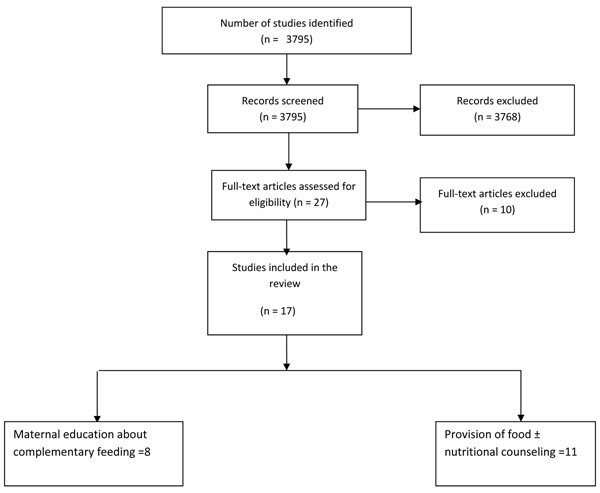
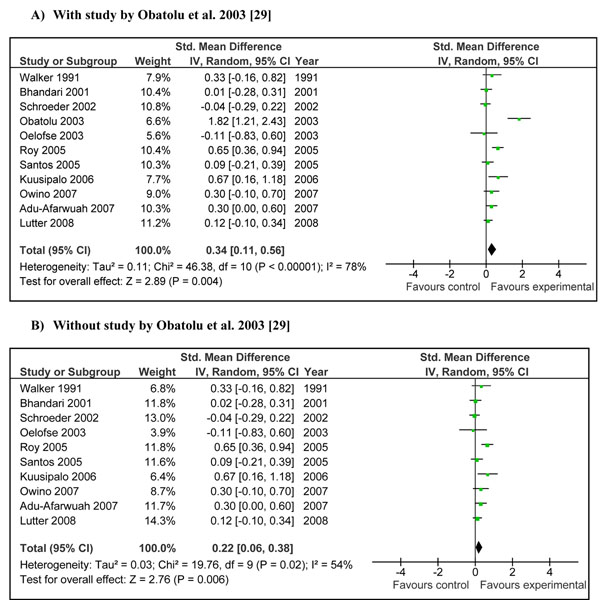
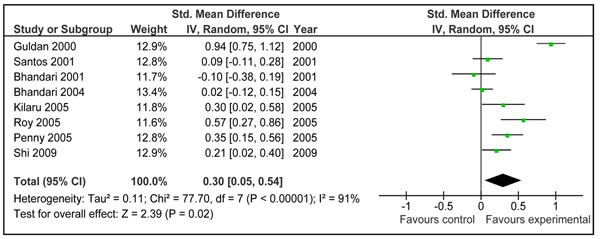
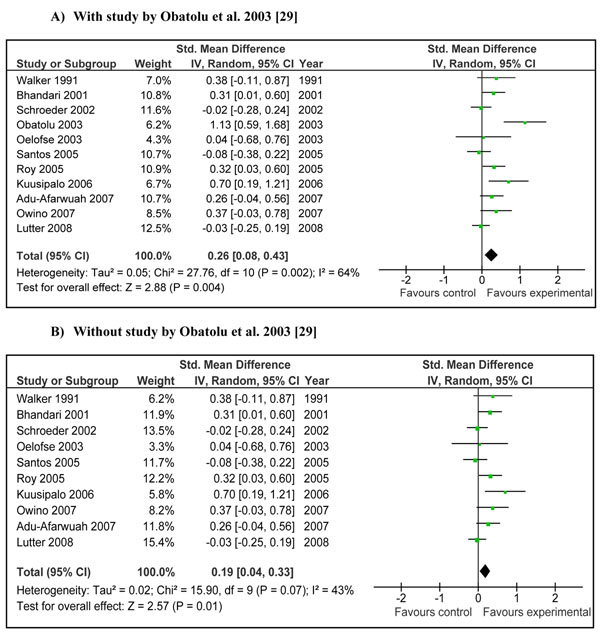
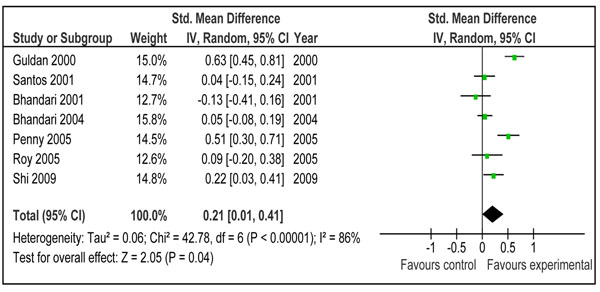
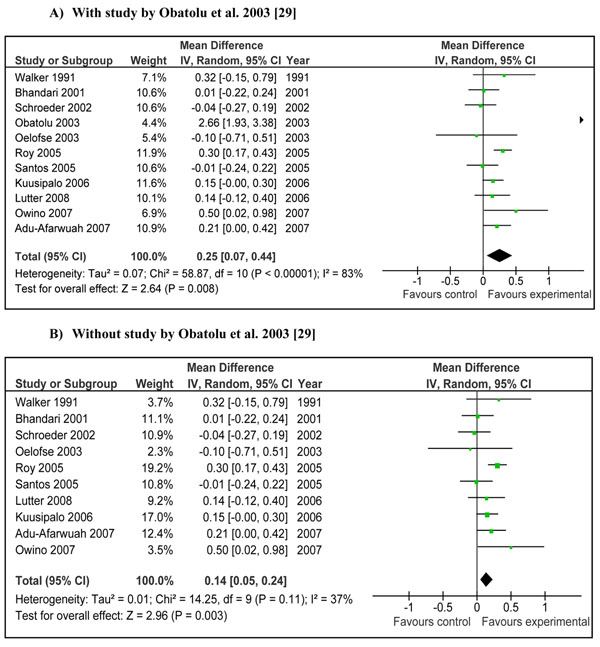
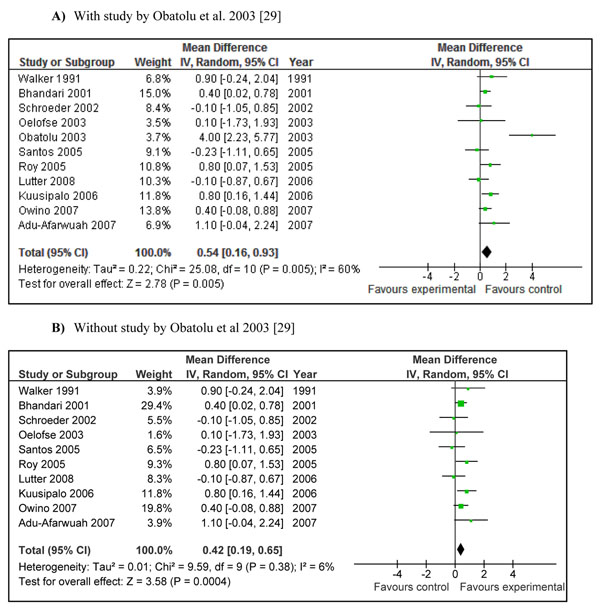
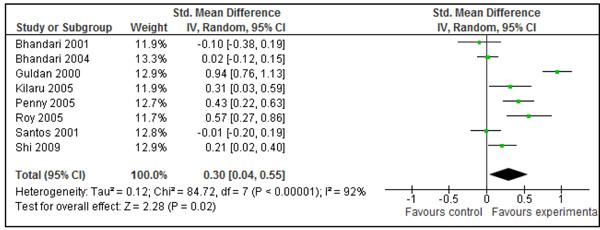
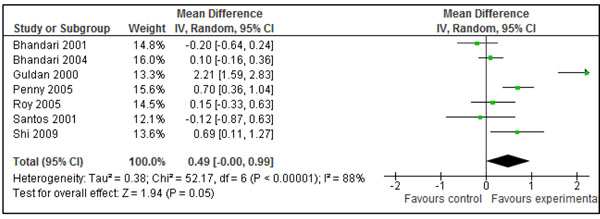
Background: Childhood undernutrition is prevalent in low and middle income countries. It is an important indirect cause of child mortality in these countries. According to an estimate, stunting (height for age Z score < -2) and wasting (weight for height Z score < -2) along with intrauterine growth restriction are responsible for about 2.1 million deaths worldwide in children < 5 years of age. This comprises 21 % of all deaths in this age group worldwide. The incidence of stunting is the highest in the first two years of life especially after six months of life when exclusive breastfeeding alone cannot fulfill the energy needs of a rapidly growing child. Complementary feeding for an infant refers to timely introduction of safe and nutritional foods in addition to breast-feeding (BF) i.e. clean and nutritionally rich additional foods introduced at about six months of infant age. Complementary feeding strategies encompass a wide variety of interventions designed to improve not only the quality and quantity of these foods but also improve the feeding behaviors. In this review, we evaluated the effectiveness of two most commonly applied strategies of complementary feeding i.e. timely provision of appropriate complementary foods (± nutritional counseling) and education to mothers about practices of complementary feeding on growth. Recommendations have been made for input to the Lives Saved Tool (LiST) model by following standardized guidelines developed by Child Health Epidemiology Reference Group (CHERG). Methods: We conducted a systematic review of published randomized and quasi-randomized trials on PubMed, Cochrane Library and WHO regional databases. The included studies were abstracted and graded according to study design, limitations, intervention details and outcome effects. The primary outcomes were change in weight and height during the study period among children 6-24 months of age. We hypothesized that provision of complementary food and education of mother about complementary food would significantly improve the nutritional status of the children in the intervention group compared to control. Meta-analyses were generated for change in weight and height by two methods. In the first instance, we pooled the results to get weighted mean difference (WMD) which helps to pool studies with different units of measurement and that of different duration. A second meta-analysis was conducted to get a pooled estimate in terms of actual increase in weight (kg) and length (cm) in relation to the intervention, for input into the LiST model. Results: After screening 3795 titles, we selected 17 studies for inclusion in the review. The included studies evaluated the impact of provision of complementary foods (±nutritional counseling) and of nutritional counseling alone. Both these interventions were found to result in a significant increase in weight [WMD 0.34 SD, 95% CI 0.11 – 0.56 and 0.30 SD, 95 % CI 0.05-0.54 respectively) and linear growth [WMD 0.26 SD, 95 % CI 0.08-0.43 and 0.21 SD, 95 % CI 0.01-0.41 respectively]. Pooled results for actual increase in weight in kilograms and length in centimeters showed that provision of appropriate complementary foods (±nutritional counseling) resulted in an extra gain of 0.25kg (±0.18) in weight and 0.54 cm (±0.38) in height in children aged 6-24 months. The overall quality grades for these estimates were that of ‘moderate’ level. These estimates have been recommended for inclusion in the Lives Saved Tool (LiST) model. Education of mother about complementary feeding led to an extra weight gain of 0.30 kg (±0.26) and a gain of 0.49 cm (±0.50) in height in the intervention group compared to control. These estimates had been recommended for inclusion in the LiST model with an overall quality grade assessment of ‘moderate’ level. Conclusion: Provision of appropriate complementary food, with or without nutritional education, and maternal nutritional counseling alone lead to significant increase in weight and height in children 6-24 months of age. These interventions can significantly reduce the risk of stunting in developing countries and are recommended for inclusion in the LiST tool.
Overview
The claims and statistics of this paper haven’t been checked yet.
Free: it reads the open-access text and checks the first 5 claims that cite a source we can check. Create a free account to check every claim.
Integrity signals
Registry
Cites
Statistics
Figures
Verification
Claims the paper makes
The claims and statistics of this paper haven’t been checked yet.
Free: it reads the open-access text and checks the first 5 claims that cite a source we can check. Create a free account to check every claim.
Claims other papers make about this one
Each is checked against this paper’s own text: does it say what the citing paper says it does?
The source backs part of the claim, not all of it — or backs it for a different population, condition or comparison.
In the citing paper
“Nutrition education on appropriate feeding and hygiene practices that target mothers of infants and young children has been reported to significantly improve knowledge, nutritional status, and minimize disease [16].”
From Effect of a Nutrition Education Intervention on Food Safety Knowledge, Attitudes and Practices of Mothers of Children under 5 Years in the Peri-Urban Areas of Bobo-Dioulasso: Before and after Study (2024) · cites this paper as [16]
Experimental — accuracy not yet measured
Self-check
Percentages, sums and reported differences re-computed from the paper’s own numbers.
The self-check needs the paper’s full text.
Citations
Cites
Statistical Power Analysis for the Behavioral Sciences
Muller, K. (1989) · Technometrics · doi:10.1080/00401706.1989.10488618 · Cited by 99,167
Statistical power analysis for the behavioral sciences
(1990) · Computers, Environment and Urban Systems · doi:10.1016/0198-9715(90)90050-4 · Cited by 65,269
Cochrane Handbook for Systematic Reviews of Interventions: Cochrane Book Series
(2008) · doi:10.1002/9780470712184 · Cited by 25,048
Grading quality of evidence and strength of recommendations
(2004) · BMJ · doi:10.1136/bmj.328.7454.1490 · Cited by 8,477 · cited 2×
“The available evidence was graded according to the Child Health Epidemiology Reference Group (CHERG) adaptation of the GRADE technique [8].”
MethodMaternal and child undernutrition: global and regional exposures and health consequences
Black, R. E., Allen, L. H., Bhutta, Z. A., Caulfield, L. E., de Onis, M., Ezzati, M., Mathers, C., & Rivera, J. (2008) · The Lancet · doi:10.1016/s0140-6736(07)61690-0 · Cited by 6,443 · cited 3×
“This comprises 21 % of all deaths in this age group worldwide [1].”
BackgroundSelf-citationMethods of Meta-Analysis: Correcting Error and Bias in Research Findings
Schmidt, F. L., & Hunter, J. E. (2015) · doi:10.4135/9781483398105 · Cited by 5,542
Methods of Meta-Analysis: Correcting Error and Bias in Research Findings.
Raudenbush, S. W., Hunter, J. E., & Schmidt, F. L. (1991) · Journal of the American Statistical Association · doi:10.2307/2289738 · Cited by 2,327
What works? Interventions for maternal and child undernutrition and survival
Bhutta, Z. A., Ahmed, T., Black, R. E., Cousens, S., Dewey, K., Giugliani, E., Haider, B. A., Kirkwood, B., Morris, S. S., Sachdev, H., et al. (2008) · The Lancet · doi:10.1016/s0140-6736(07)61693-6 · Cited by 2,258 · cited 7×
“In this way more studies were included compared to studies included in the review published in Lancet Under-nutrition Series [7].”
BackgroundResultInfluentialSelf-citationMeta-Analysis: Quantitative Methods for Research Synthesis
Rosenthal, R., & Wolf, F. M. (1987) · Contemporary Sociology · doi:10.2307/2071646 · Cited by 1,371
Dewey, K. G., & Adu‐Afarwuah, S. (2008) · Maternal & Child Nutrition · doi:10.1111/j.1740-8709.2007.00124.x · Cited by 948 · cited 7×
“These include nutritional counseling to mothers designed to promote healthy feeding practices, provision of complementary foods and supplementation with foods either fortified with multiple micronutrients or with increased energy content [3,6].”
BackgroundResultInfluential
Research works printed but not linked: 2
- WHO Report of Informal Meeting to Review and Develop Indicators for Complementary Feeding 2002 Washington, D.C.
- Guyon A Quinn V Rambeloson Z Hainsworth M Using the Essential Nutrition Actions approach to improve the nutritional practices of women and children atscale in Antananarivo and Fianarantsoa provinces of Madagascar: results and trends 2000-2005. Final Report 2006 AED, LINKAGES
Cited by
Items 301–369 of 369
Khatun, S., Khatun, S., Biswas, H. B., & Anowar, M. N. (2025) · International Journal of Advance Research in Nursing · doi:10.33545/nursing.2025.v8.i1.a.437 · Cited by 1
“Infant & young children’s nutrition, growth, development & survival depend on appropriate feeding practices (Imdad, Yakoob, & Bhutta, 2011) [16] .”
Priority interventions for reducing stunting in the complementary feeding age group in South Africa
Burger, R., du Plessis, L., Trust Gangaidzo, Sadan, M., Slemming, W., & Wills, G. (2025) · Development Southern Africa · doi:10.1080/0376835x.2025.2596786 · Cited by 4
“Systematic reviews and meta-analyses by Manley et al. (2020; 2022) find that cash-trans-fer programmes have a modest impact on children’s HAZ scores and lower stunting, yet they have no consistent effect on weight-for-age or wasting.”
InfluentialCost analysis of nutrition messaging intervention through community-led videos in Odisha
Khurana, K., Bhat, R., Gandhi, R., & Koniz‐Booher, P. (2015) · International Conference on Information and Communication Technologies and Development (ICTD) · doi:10.1145/2737856.2737895 · Cited by 1
“As a result, the cost-effectiveness ratio was found to be $2.47 (95% CI 2.38- 2.56) per individual retention of an improved MIYCN behavior.”
BackgroundInfluentialAssociation of Maternal Education with the Neuroblastoma Susceptibility in Children: A Meta-Analysis
Wang, P., Liao, N., Liao, X., Liang, B., Huang, C., & Li, W. (2012) · Pediatric Hematology and Oncology · doi:10.3109/08880018.2012.742605 · Cited by 1
“Imdad et al [13] performed a systematic review and meta-analysis and found that provision of appropriate complementary food, with or without nutritional education, led to significant increase in weight and height in children 6–24 months of age.”
BackgroundExperıenced Dıffıcultıes Of Mothers In Complementary Feedıng Process: A Qualıtatıve Study
Taplak, A. Ş., Polat, S., & Erdem, E. (2020) · Journal of Academic Research in Nursing · doi:10.5222/jaren.2020.80775 · Cited by 7
Hambayi, M. N., Groot, W. N. J., & Tirivayi, N. (2015) · RePEc: Research Papers in Economics · Cited by 1
Nutrition and Vulnerable Groups
Devine, A., & Lawlis, T. (2019) · MDPI eBooks · doi:10.3390/books978-3-03921-121-0 · Cited by 2
BİR- İKİ YAŞ DÖNEMİNDEKİ ÇOCUKLARIN BESLENME DURUMU VE BESİN ÇEŞİTLİLİĞİNİN DEĞERLENDİRİLMESİ
ŞİMŞEK, T., Güldemir, H. H., & Garıpağaoğlu, M. (2022) · Sağlık Bilimleri Dergisi · doi:10.34108/eujhs.978480 · Cited by 1
Idowu, A., Kayode, G. A., & Adekanmbi, V. (2022) · Roczniki Państwowego Zakładu Higieny · doi:10.32394/rpzh.2022.0234 · Cited by 3
“There is considerable evidence that receiving nutrition counselling on infant and young child feeding (IYCF) practices from trained health workers can effectively improve complementary feeding practices, and consequently the child’s nutritional status [11, 26, 28, 32].”
BackgroundMaidelwita, Y., Sansuwito, T. B., Arifin, Y., & Poddar, S. (2022) · The Malaysian Journal of Nursing · doi:10.31674/mjn.2022.v14i02.004 · Cited by 1
Sanghvi, T. G., Homan, R. K., Nguyen, T. T., Mahmud, Z., Walissa, T., Nersesyan, M., Preware, P., Frongillo, E. A., & Matheson, R. (2025) · Globalization and Health · doi:10.1186/s12992-025-01118-3 · Cited by 1
“To improve deleterious CF practices, several interventions have been developed and assessed [21–24].”
Rasheed, M. A., Tabussum, G., Habib, Z., & Yousafzai, A. K. (2017) · Child Care Health and Development · doi:10.1111/cch.12450 · Cited by 3
The Effect of Education Based on BASNEF Model on Introduction of Complementary Feeding
Amini, R. (2018) · doi:10.30699/sjhnmf.26.5.4 · Cited by 1
Breastfeeding and infant/young child feeding in Nepal
Shah, S. K., & Simões, J. A. (2018) · International Journal of Community Medicine and Public Health · doi:10.18203/2394-6040.ijcmph20185226 · Cited by 1
“5 percent of the mothers said they breastfed on demand which is recommended by the WHO for the child to have adequate nutrition.(4) The frequency of breastfeeding during the day time varied from 3 to 9.”
BackgroundJarole, S., Gupta, S. S., Mehendale, A. M., & Raut, A. V. (2019) · International Journal of Community Medicine and Public Health · doi:10.18203/2394-6040.ijcmph20190175 · Cited by 1
Annelere Verilen Eğitimin Tamamlayıcı Beslenme Üzerine Etkisi
Şahin, G. A., Kaya, N., & Kondolot, M. (2019) · Journal of Nutrition and Dietetics · doi:10.33076/2020.bdd.1257 · Cited by 2
Edukasi MP ASI, Sikap Ibu dan Tingkat Konsumsi Energi Protein Baduta Stunting Usia 7 sampai 24 Bulan
Ilmanisak, R., Pudjirahaju, A., & Aswin, A. A. (2017) · Jurnal Pendidikan Kesehatan · doi:10.31290/jpk.v(6)i(1)y(2017).page:16-26 · Cited by 1
Complementary feeding plactices of indigenous mothers in rural Bolivia
Mattiasson, A., & Ottosson, E. (2012) · Gothenburg University Publications Electronic Archive (Gothenburg University) · Cited by 1
Kumwenda, W. (2017) · UpSpace Institutional Repository (University of Pretoria) · Cited by 2
de Araújo, T. S. (2017) · Digital Library of Theses and Dissertations (Universidade de São Paulo) · doi:10.11606/t.6.2017.tde-26072017-112844 · Cited by 2
Relvas, G. R. B. (2018) · Digital Library of Theses and Dissertations (Universidade de São Paulo) · doi:10.11606/t.6.2018.tde-16082018-105841 · Cited by 2
Sarfo, J. (2023) · eDiss (Georg-August-Universität Göttingen) · doi:10.53846/goediss-9968 · Cited by 2
Efeito de alimentos e bebidas no esmalte dental decíduo após desafio erosivo com ácido clorídrico
Guimarães, K. S. F. D. M. (2012) · doi:10.11606/d.58.2012.tde-04072012-115105
“Iogurte de morango 297,65 (44,72) Ba 232,92 (38,69) Ab 265,55 (57,77) ABb 241,88 (40,25) Ab 229,65 (36,39) Abc 229,25 (51,34) Abc Papinha de maçã 283,53 (56,37) Ba 191,67 (50,20) Aa 223,55 (34,71) Aa 211,23 (48,57) Ab 196,55 (29,22) Ab 200,20 (35,24) Ab Suco de laranja 318,84 (59,22) Ca 222,88 (60,15) Bab 199,33 (36,6…”
Maternal Dietary Counselling and Children’s Diet Quality
Vítolo, M. R., Louzada, M. L. D. C., & Rauber, F. (2013) · Springer eBooks · doi:10.1007/978-1-4614-7339-8_8
Phukan, P., Jagtap, A., & Nagaraj, S. (2014) · International Journal of Medical Science and Public Health · doi:10.5455/ijmsph.2014.180620141
“It has been suggested that in addition to disease prevention strategies, complementary feeding interventions targeting this “critical window” of 6-24 months aged children are most efficient in reducing malnutrition and promoting adequate growth and development.[14]”
BackgroundOverlooked aspects of nutritional status
Roy, M. P. (2015) · Indian Journal of Child Health · doi:10.32677/ijch.2015.v02.i04.020
Lourenço, B. H. (2014) · Digital Library of Theses and Dissertations (Universidade de São Paulo) · doi:10.11606/t.6.2014.tde-04112014-083150
Onyeka, C. C., & Mezie-Okoye, M. (2017) · Asian Journal of Medicine and Health · doi:10.9734/ajmah/2017/33668
Gamboa-Delgado, E. M., de Cossío, T. G., & Colchero‐Aragonés, A. (2016)
A tall order: improving child linear growth
Nseluke (2018) · Research Publications (Maastricht University) · doi:10.26481/dis.20180619mn · Cited by 1
Ombogo, J. O. (2018) · Global Journal of Endocrinological Metabolism · doi:10.31031/gjem.2018.02.000533
Diana, A. (2018) · Otago University Research Archive (University of Otago)
Abebe, Z., Tariku, A., Bikes, G. A., Wassie, M. M., Abdella, K., Awoke, T., Gebeye, E., Atenafu, A., Yesuf, M. E., Kebede, Y., et al. (2019) · bioRxiv (Cold Spring Harbor Laboratory) · doi:10.1101/553875
Jaiswal, P. K., Gupta, S. A., & Verma, N. (2019) · International Journal of Community Medicine and Public Health · doi:10.18203/2394-6040.ijcmph20192323
Alimentação complementar: barreiras e facilitadores sob a ótica de cuidadores
Sorrentino, E. (2019) · Digital Library of Theses and Dissertations (Universidade de São Paulo) · doi:10.11606/d.6.2019.tde-19062019-105013 · Cited by 1
Common Complementary Feeding Practices Among Under-Five Children: The Case of Zambia
Mugode, R., Musonda, M., & Mweemba, O. (2019) · International Journal Of Nutrition · doi:10.14302/issn.2379-7835.ijn-19-2721
Essays on food, nutrition, health and development in northern Ghana
Sienso, G. (2019) · ThinkTech (Texas Tech University) · Cited by 1
Zheng, X., Wu, Q., Weng, D., Fu, Y., Yue, D., & Wang, Y. (2020) · Journal of International Medical Research · doi:10.1177/0300060520969311
“Maternal education more than 12 years was also a protective factor that had impact on BAZ growth in this low-income area, as in studies conducted in other developing parts of the world.(51) There are some limitations in the study.”
ResultInfant Feeding Practices in a Rural Muslim Community in Malda District of West Bengal
Yeasmin, N., & Mandal, N. K. (2020) · Journal of Comprehensive Health · doi:10.53553/jch.v08i02.005
“Education of mother about complementary feeding led to an extra weight [18] gain in the intervention group compared to control.”
ResultMan, X., Liu, J., & Huang, R. (2021) · Research Square · doi:10.21203/rs.3.rs-736404/v1
Dhakad, K., Gogia, P., & Tripathi, P. (2022) · GLOBAL JOURNAL FOR RESEARCH ANALYSIS · doi:10.36106/gjra/3707483
Metwally, A. M., Sallam, S. F., Alian, K. M., Elshaarawy, G. A., Hasanin, H. M., Mawla, M. A. A., Kamal, A. N., Amer, H., Hanna, C., Shebini, S. M. E., et al. (2022) · Research Square · doi:10.21203/rs.3.rs-877499/v1
Falivene, M. (2014) · Universidad Nacional de Lanús. Maestría en Epidemiología, Gestión y Políticas de Salud eBooks · doi:10.18294/rdi.2017.173206
Shinsugi, C., Matsumura, M., Karama, M., Tanaka, J., Changoma, M., & Kaneko, S. (2016) · doi:10.1201/9781315365749-7
Kebede, D., Aragaw, H., & Worku, E. (2020) · Research Square · doi:10.21203/rs.3.rs-69254/v1
“1 million deaths in under- ve children that contain 21% of all deaths [7].”
BackgroundINFANT AND YOUNG CHILD FEEDING PRACTICES IN SELECTED RURAL COMMUNITY
NIPSOM, Rashid, M., Rahman, M., NIPSOM, Dev, O., & NIPSOM (2022) · International conference on public health · doi:10.17501/24246735.2022.7117
Yakubu, N. (2023) · Texila international journal of public health · doi:10.21522/tijph.2013.11.03.art002
CEGAH STUNTING DENGAN PEMBERIAN MP-ASI YANG BERAGAM DAN BERGIZI
Hubaedah, A., Nuraini, I., Andarwulan, S., & Ningrum, N. P. (2023) · Jurnal Penamas Adi Buana · doi:10.36456/penamas.vol7.no01.a7866
“Hasil kegiatan dinilai dari tingkat keberhasilan setiap tahapan pelaksanaan pengabdian kepada masyarakat, adapun hasil pengabdian sebagai berikut: diberikan edukasi gizi (Imdad et al., 2011).”
BackgroundQuality evaluation of child feeding related websites on complementary feeding in Malaysia
Lim, Z. J. (2023) · International e-Journal of Science Medicine & Education · doi:10.56026/imu.17.2.27
Okorie, I., Nwofia, B. K., Ngonadi, C., Okorie, A. C., & Nnam, N. M. (2024) · BMC Nutrition · doi:10.1186/s40795-024-00832-2
“The result further suggests that dysfunctional eating habits could be significantly linked with gender, which is in line with the study by Lipowska et al. [14].”
ResultMeraj, S., & Nuraj, S. (2024) · The Columbia University Journal of Global Health · doi:10.52214/cujgh.v14i1.12398
Takawira, D., Zuma, M. K., & Mbhenyane, X. G. (2024) · PLoS ONE · doi:10.1371/journal.pone.0308012
Mwesigwa, C. L., Nabaggala, G. S., Nakyonyi, M. G., Ndagire, B., Kalanzi, D., Kutesa, A. M., & Naidoo, S. (2024) · Research Square · doi:10.21203/rs.3.rs-5380882/v1 · Cited by 1
Henry, C. J., Elabor-Idemudia, P., Beyene, S., Whiting, S. J., & Regassa, N. (2016) · Journal of Nursing Social Studies Public Health and Rehabilitation · doi:10.32725/jnss.2016.004
“Recent systematic reviews have demonstrated that Behaviour Change Intervention (BCI) has the potential to improve child feeding practices and nutritional status (Imdad et al. 2011, Bhutta et al. 2013).”
Determining the minimum data elements to develop a child malnutrition registry system
Sadeghi, M., Langarizadeh, M., Olang, B., Sayadi, M., & Sheikhtaheri, A. (2024) · BMC Medical Informatics and Decision Making · doi:10.1186/s12911-024-02771-1 · Cited by 1
“Nutritional surveillance and intervention programs in different countries can reduce the number of mal-nourished children [19, 20].”
Arslanbaş, C., & Okburan, G. (2025) · Ecology of Food and Nutrition · doi:10.1080/03670244.2025.2454702
“These foods should meet the growth and developmental needs of infants, have appropriate nutritional value, and the diversity of nutrients selected for complementary feeding should be of the right consistency and amount (Imdad, Yakoob, and Bhutta 2011).”
Imdad, A., Fatima, A., & Rani, U. (2025) · Springer eBooks · doi:10.1007/978-3-031-95721-5_10
Self-citationDeterminants of weaning and its impact on child growth
Japa, P., & Munga, D. K. (2025) · Wadia Journal of Women and Child Health · doi:10.25259/wjwch_52_2024
Nurturing the Future: Complementary Feeding Practices in India
Verma, L., Bakshi, A., Devi, H. M., & Natarajan, N. (2025) · Health and population. Perspectives and issues · doi:10.5005/hppi-11041-0006
Kelcey, B., Cunningham, K., & Frongillo, E. A. (2026) · Journal of Nutrition · doi:10.1016/j.tjnut.2026.101657
Nousiainen, S. (2014) · Helda - University of Helsinki Institutional Repository · Cited by 4
Kambale, R., Ngaboyeka, G. A., Kasengi, J. B., Niyitegeka, S., Cinkenye, B. R., Baruti, A., Mutuga, K. C., & Van der Linden, D. (2021) · Figshare · doi:10.6084/m9.figshare.14623511
Winters, S., Martinez, S., & Johannsen, J. (2024) · Figshare · doi:10.6084/m9.figshare.26702818
Nyirenda, H. T., Mulenga, D., Nyirenda, T. C., Sinyangwe, T., Choka, N., & Nyambe-Silavwe, H. (2026) · BMC Public Health · doi:10.1186/s12889-026-26835-1
Local food-based interventions for malnutrition in under 5 children ‒ A systematic literature review
Ibrahim, S. Z., Hadju, V., & Khuzaimah, A. (2026) · Nutrición Hospitalaria · doi:10.20960/nh.06790
Nurwahidah, N., Syaiful, S., Fajlurrahman, I., Pratama, I. F., Kemalahayati, A. D., & Fahrurrahman, M. (2026) · International Journal of Scientific Research and Management (IJSRM) · doi:10.18535/ijsrm/v14i09.mp03
Metadata
- Authors
- Imdad, A., Yakoob, M. Y., & Bhutta, Z. A.
- Affiliations
- Aga Khan University (PK)
- Corresponding author
- Bhutta, Zulfiqar A
- Venue
- BMC Public Health
- Published
- 2011-04-13
- Volume
- 11
- Issue
- S3
- Pages
- S25-S25
- ISSN
- 1471-2458 (ISSN-L)
- PMC
- PMC3231899
- OpenAlex
- W2170491934
- Cited by
- 370
- References
- 45
- Citations by year
- 2026: 4 · 2025: 9 · 2024: 17 · 2023: 18 · 2022: 27 · 2021: 24 · 2020: 31 · 2019: 42 · 2018: 34 · 2017: 45 · 2016: 33 · 2015: 21 · 2014: 26 · 2013: 20 · 2012: 16
- FWCI
- 19.19
- Type
- journal article
- Language
- en
- Open access
- gold
- doi.org
- Licence
- cc-by
- Locations
- BMC Public Health (publishedVersion, cc-by)
- Europe PMC (PubMed Central) (publishedVersion, cc-by)
- PubMed Central (publishedVersion, cc-by)
- PubMed (publishedVersion)
- eCommons - AKU (Aga Khan University) (submittedVersion)
- DOAJ (DOAJ: Directory of Open Access Journals) (submittedVersion, cc-by-sa)
- Funders
- Bill and Melinda Gates Foundation
- UNICEF
- Topics
- Health Sciences › Nursing › Nutrition and Dietetics › Child Nutrition and Water Access
- Health Sciences › Medicine › Epidemiology › Breastfeeding Practices and Influences
- Health Sciences › Medicine › Pediatrics, Perinatology and Child Health › Global Maternal and Child Health
- Keywords
- complementary feeding, maternal education, child growth, child undernutrition, stunting, wasting, infant and young child nutrition, nutrition counseling, child mortality, low- and middle-income countries, 6-month-old infants
- MeSH terms
- Body Height, Body Weight, Developing Countries, Humans, Infant, Infant Nutritional Physiological Phenomena, Health Knowledge, Attitudes, Practice, Mothers, Randomized Controlled Trials as Topic, Directive Counseling
About these checks
Registry, retraction, Cites and statistics results are computed, not judged, with one exception: a printed reference that no index lists is read once by a model before it counts as a citation error. Claims are extracted by a model and kept only when their quote appears verbatim in the text; each cited source is then checked, with a model’s help, for whether it says what the claim relies on. Those verdicts can be wrong — read the claim’s quote and the cited source before relying on one.
Statistics and arithmetic are recomputed, not judged.
Confidence bands are shown only for fields calibrated on our annotated test set. None is calibrated yet, so no band is shown.
What counts as a claim ›How we measure confidence ›How we check this ›
Are you an author, or do you see a problem with this page? Request a review
Data sources
Bibliographic data: Semantic Scholar, OpenAlex, Crossref.
Contains information from the Semantic Scholar Academic Graph Datasets, made available under the ODC Attribution License (ODC-BY 1.0).
Semantic Scholar’s data is described in: Kinney, R., et al. (2023). The Semantic Scholar Open Data Platform. arXiv:2301.10140.
