

Systematic review on what works, what does not work and why of implementation of mobile health (mHealth) projects in Africa
Open accessThe DOI matches its Crossref record; 58 of the 60 references it cites were found in a registry or an index.
Abstract
BACKGROUND: Access to mobile phone technology has rapidly expanded in developing countries. In Africa, mHealth is a relatively new concept and questions arise regarding reliability of the technology used for health outcomes. This review documents strengths, weaknesses, opportunities, and threats (SWOT) of mHealth projects in Africa. METHODS: A systematic review of peer-reviewed literature on mHealth projects in Africa, between 2003 and 2013, was carried out using PubMed and OvidSP. Data was synthesized using a SWOT analysis methodology. Results were grouped to assess specific aspects of project implementation in terms of sustainability and mid/long-term results, integration to the health system, management process, scale-up and replication, and legal issues, regulations and standards. RESULTS: Forty-four studies on mHealth projects in Africa were included and classified as: "patient follow-up and medication adherence" (n = 19), "staff training, support and motivation" (n = 2), "staff evaluation, monitoring and guidelines compliance" (n = 4), "drug supply-chain and stock management" (n = 2), "patient education and awareness" (n = 1), "disease surveillance and intervention monitoring" (n = 4), "data collection/transfer and reporting" (n = 10) and "overview of mHealth projects" (n = 2). In general, mHealth projects demonstrate positive health-related outcomes and their success is based on the accessibility, acceptance and low-cost of the technology, effective adaptation to local contexts, strong stakeholder collaboration, and government involvement. Threats such as dependency on funding, unclear healthcare system responsibilities, unreliable infrastructure and lack of evidence on cost-effectiveness challenge their implementation. mHealth projects can potentially be scaled-up to help tackle problems faced by healthcare systems like poor management of drug stocks, weak surveillance and reporting systems or lack of resources. CONCLUSIONS: mHealth in Africa is an innovative approach to delivering health services. In this fast-growing technological field, research opportunities include assessing implications of scaling-up mHealth projects, evaluating cost-effectiveness and impacts on the overall health system.
Overview
The claims and statistics of this paper haven’t been checked yet.
Free: it reads the open-access text and checks the first 5 claims that cite a source we can check. Create a free account to check every claim.
Integrity signals
Registry
Cites
Statistics
Figures
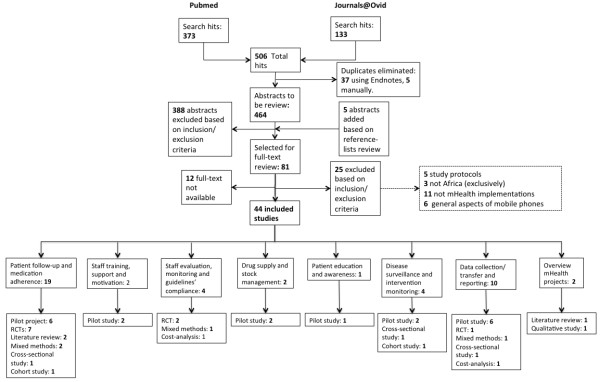
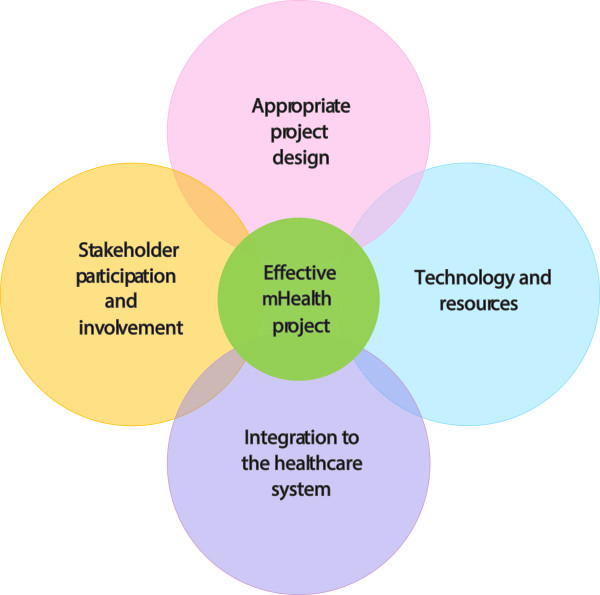
Verification
Claims the paper makes
The claims and statistics of this paper haven’t been checked yet.
Free: it reads the open-access text and checks the first 5 claims that cite a source we can check. Create a free account to check every claim.
Claims other papers make about this one
Each is checked against this paper’s own text: does it say what the citing paper says it does?
The source backs part of the claim, not all of it — or backs it for a different population, condition or comparison.
In the citing paper
“and the accommodation of local language and preferences in message content [3].”
From Development of a Culturally Tailored Text Message Maternal Health Program: TextMATCH (2017) · cites this paper as [3]
Experimental — accuracy not yet measuredThe source backs part of the claim, not all of it — or backs it for a different population, condition or comparison.
In the citing paper
“In instances where perceptions of culturally adapted mHealth interventions have been described, these perceptions are positive [3,4,6,15-18].”
From Development of a Culturally Tailored Text Message Maternal Health Program: TextMATCH (2017) · cites this paper as [3]
Experimental — accuracy not yet measuredThe source backs part of the claim, not all of it — or backs it for a different population, condition or comparison.
In the citing paper
“(2) the low cost of mHealth interventions make mHealth interventions feasible in low-resource environments”
From Development of a Culturally Tailored Text Message Maternal Health Program: TextMATCH (2017) · cites this paper as [3]
Experimental — accuracy not yet measuredThe source backs part of the claim, not all of it — or backs it for a different population, condition or comparison.
In the citing paper
“Adapting effective mHealth programs for multiple minority populations requires attention to relevant cultural characteristics [2-4,6,9,10].”
From Development of a Culturally Tailored Text Message Maternal Health Program: TextMATCH (2017) · cites this paper as [3]
Experimental — accuracy not yet measuredThe source backs part of the claim, not all of it — or backs it for a different population, condition or comparison.
In the citing paper
“There is an increasing recognition of the importance of studying implementation/process as a way to achieve sustained improvements in health outcomes [12, 17, 18, 42–44].”
From Understanding the barriers to successful adoption and use of a mobile health information system in a community health center in São Paulo, Brazil: a cohort study (2016) · cites this paper as [42]
Experimental — accuracy not yet measured
17 more claims about this paper
Create a free account to see every claim other papers make about this one.
Self-check
Percentages, sums and reported differences re-computed from the paper’s own numbers.
The self-check needs the paper’s full text.
Citations
Cites
The Impact of eHealth on the Quality and Safety of Health Care: A Systematic Overview
Black, A. D., Car, J., Pagliari, C., Anandan, C., Cresswell, K., Bokun, T., McKinstry, B., Procter, R., Majeed, A., & Sheikh, A. (2011) · PLoS Medicine · doi:10.1371/journal.pmed.1000387 · Cited by 1,442
Lester, R. T., Ritvo, P., Mills, E. J., Kariri, A., Karanja, S., Chung, M. H., Jack, W., Habyarimana, J., Sadatsafavi, M., Najafzadeh, M., et al. (2010) · The Lancet · doi:10.1016/s0140-6736(10)61997-6 · Cited by 1,278 · cited 8×
“airtime credit) allows high response rate to the project [21,22] -Costs and logistics affect text messaging responding on time [14,33,61] -Reporting transparency for donors and stakeholders [37]”
BackgroundInfluentialSWOT analysis: It's time for a product recall
Hill, T., & Westbrook, R. (1997) · Long Range Planning · doi:10.1016/s0024-6301(96)00095-7 · Cited by 1,047
Pop-Eleches, C., Thirumurthy, H., Habyarimana, J. P., Zivin, J. G., Goldstein, M. P., de Walque, D., MacKeen, L., Haberer, J., Kimaiyo, S., Sidle, J., et al. (2011) · AIDS · doi:10.1097/qad.0b013e32834380c1 · Cited by 982 · cited 10×
“airtime credit) allows high response rate to the project [21,22] -Costs and logistics affect text messaging responding on time [14,33,61] -Reporting transparency for donors and stakeholders [37]”
BackgroundResultInfluentialScaling Up mHealth: Where Is the Evidence?
Tomlinson, M., Rotheram-Borus, M. J., Swartz, L., & Tsai, A. C. (2013) · PLoS Medicine · doi:10.1371/journal.pmed.1001382 · Cited by 673 · cited 1×
“cently published a review where they discuss the lack of evidence regarding mHealth effectiveness and efficacy [64].”
Backgrounde-Health technologies show promise in developing countries
Blaya, J. A., Fraser, H. S. F., & Holt, B. (2010) · Health Affairs · doi:10.1377/hlthaff.2009.0894 · Cited by 581
Horvath, T., Azman, H., Kennedy, G. E., & Rutherford, G. W. (2012) · Cochrane Database of Systematic Reviews · doi:10.1002/14651858.cd009756 · Cited by 428 · cited 9×
“Other findings included a cross-sectional study exploring the feasibility of using mobile phones for sending reminders to patients regarding their medications and appointments in an antiretroviral treatment (ART) health facility [28], a review to determine effectiveness of SMS on patient adherence to ART [29], a cohor…”
BackgroundInfluentialZurovac, D., Sudoi, R. K., Akhwale, W. S., Ndiritu, M., Hamer, D. H., Rowe, A. K., & Snow, R. W. (2011) · The Lancet · doi:10.1016/s0140-6736(11)60783-6 · Cited by 403
The use of mobile phones as a data collection tool: A report from a household survey in South Africa
Tomlinson, M., Solomon, W., Singh, Y., Doherty, T., Chopra, M., Ijumba, P., Tsai, A. C., & Jackson, D. (2009) · BMC Medical Informatics and Decision Making · doi:10.1186/1472-6947-9-51 · Cited by 340 · cited 10×
“Legal issues, regulations and standards -Coded information contributes to data security and confidentiality [63] -Privacy concerns raised when using mobile phones, particularly if not owned by the patient [34,56] Not mentioned -No minimum number of critical surveillance parameters to be reported has been established […”
BackgroundInfluential(2012) · PubMed Central · doi:10.11604/pamj.2012.13.31.1864 · Cited by 259
Lund, S., Hemed, M., Nielsen, B., Said, A., Said, K., Makungu, M., & Rasch, V (2012) · BJOG: An International Journal of Obstetrics & Gynaecology · doi:10.1111/j.1471-0528.2012.03413.x · Cited by 228
Mbuagbaw, L., Thabane, L., Ongolo-Zogo, P., Lester, R. T., Mills, E. J., Smieja, M., Dolovich, L., & Kouanfack, C. (2012) · PLoS ONE · doi:10.1371/journal.pone.0046909 · Cited by 224
Leon, N., Schneider, H., & Daviaud, E. (2012) · BMC Medical Informatics and Decision Making · doi:10.1186/1472-6947-12-123 · Cited by 200 · cited 18×
“-Public-private partnerships proved to work effectively in these projects [25,37] -mHealth projects are unlikely to prove effective in poorly performing systems [63] -Improved adherence to clinical guidelines by health workers is required [52] -Unknown health systems complexities for large scale implementation of mHea…”
BackgroundInfluentialMahmud, N., Rodriguez, J., & Nesbit, J. (2010) · Technology and Health Care · doi:10.3233/thc-2010-0576 · Cited by 185
Chang, L. W., Kagaayi, J., Arem, H., Nakigozi, G., Ssempijja, V., Serwadda, D., Quinn, T. C., Gray, R. H., Bollinger, R. C., & Reynolds, S. J. (2011) · AIDS and Behavior · doi:10.1007/s10461-011-9995-x · Cited by 184 · cited 17×
“-Public-private partnerships proved to work effectively in these projects [25,37] -mHealth projects are unlikely to prove effective in poorly performing systems [63] -Improved adherence to clinical guidelines by health workers is required [52] -Unknown health systems complexities for large scale implementation of mHea…”
BackgroundResultInfluentialMobile Direct Observation Treatment for Tuberculosis Patients
Hoffman, J. A., Cunningham, J. R., Suleh, A. J., Sundsmo, A., Dekker, D. K., Vago, F., Munly, K., Igonya, E. K., & Hunt-Glassman, J. (2010) · American Journal of Preventive Medicine · doi:10.1016/j.amepre.2010.02.018 · Cited by 173
Barrington, J., Wereko-Brobby, O., Ward, P., Mwafongo, W., & Kungulwe, S. (2010) · Malaria Journal · doi:10.1186/1475-2875-9-298 · Cited by 163
Haberer, J. E., Kiwanuka, J., Nansera, D., Wilson, I. B., & Bangsberg, D. R. (2010) · AIDS and Behavior · doi:10.1007/s10461-010-9720-1 · Cited by 158 · cited 19×
“Other findings included a cross-sectional study exploring the feasibility of using mobile phones for sending reminders to patients regarding their medications and appointments in an antiretroviral treatment (ART) health facility [28], a review to determine effectiveness of SMS on patient adherence to ART [29], a cohor…”
BackgroundInfluentialWakadha, H., Chandir, S., Were, E. V., Rubin, A., Obor, D., Levine, O. S., Gibson, D. G., Odhiambo, F., Laserson, K. F., & Feikin, D. R. (2013) · Vaccine · doi:10.1016/j.vaccine.2012.11.093 · Cited by 149 · cited 15×
“) [18] -High access and rapid expansion of mobile network coverage, availability of inexpensive handsets, and decreasing costs of mobile phone services and rapidly-growing technological field [14-19,22,26,28,31,34,37,40,43,49,56,62] -High phone theft and limited electricity to charge phones [38]”
BackgroundInfluentialEvaluation of an Android-based mHealth system for population surveillance in developing countries
Rajput, Z. A., Mbugua, S., Amadi, D., Chepngeno, V., Saleem, J. J., Anokwa, Y., Hartung, C., Borriello, G., Mamlin, B. W., Ndege, S. K., et al. (2012) · Journal of the American Medical Informatics Association · doi:10.1136/amiajnl-2011-000476 · Cited by 139 · cited 6×
“existing networks, reducing phone costs) [18,22,26,49,50,56,58,59,62,63], and is easy to use [43] -Limited text capacity of mobile phones and text messages (e.”
BackgroundInfluentialMobile Phone Text Messaging: Tool for Malaria Control in Africa
Zurovac, D., Talisuna, A. O., & Snow, R. W. (2012) · PLoS Medicine · doi:10.1371/journal.pmed.1001176 · Cited by 135 · cited 9×
“existing networks, reducing phone costs) [18,22,26,49,50,56,58,59,62,63], and is easy to use [43] -Limited text capacity of mobile phones and text messages (e.”
BackgroundInfluentialMobile cell-phones (M-phones) in telemicroscopy: increasing connectivity of isolated laboratories
Bellina, L., & Missoni, E. (2009) · Diagnostic Pathology · doi:10.1186/1746-1596-4-19 · Cited by 128
Asiimwe, C., Gelvin, D., Lee, E., Amor, Y. B., Quinto, E., Katureebe, C., Sundaram, L., Bell, D., & Berg, M. (2011) · The American Society of Tropical Medicine and Hygiene · doi:10.4269/ajtmh.2011.10-0528 · Cited by 123
Crankshaw, T., Corless, I. B., Giddy, J., Nicholas, P. K., Eichbaum, Q., & Butler, L. M. (2010) · AIDS Patient Care and STDs · doi:10.1089/apc.2010.0146 · Cited by 119 · cited 4×
“Other findings included a cross-sectional study exploring the feasibility of using mobile phones for sending reminders to patients regarding their medications and appointments in an antiretroviral treatment (ART) health facility [28], a review to determine effectiveness of SMS on patient adherence to ART [29], a cohor…”
BackgroundInfluentialEarly infant diagnosis of HIV infection in Zambia through mobile phone texting of blood test results
Seidenberg, P., Nicholson, S., Schaefer, M., Semrau, K., Bweupe, M., Masese, N., Bonawitz, R., Chitembo, L., Goggin, C., & Thea, D. (2012) · Bulletin of the World Health Organization · doi:10.2471/blt.11.100032 · Cited by 117
L’Engle, K. L., Vahdat, H. L., Ndakidemi, E., Lasway, C., & Zan, T. (2012) · Contraception · doi:10.1016/j.contraception.2012.07.009 · Cited by 115
Use of Mobile Learning by Resident Physicians in Botswana
Chang, A. Y., Ghose, S., Littman-Quinn, R., Anolik, R. B., Kyer, A., Mazhani, L., Seymour, A. K., & Kovarik, C. L. (2012) · Telemedicine and e-Health · doi:10.1089/tmj.2011.0050 · Cited by 109 · cited 10×
“airtime credit) allows high response rate to the project [21,22] -Costs and logistics affect text messaging responding on time [14,33,61] -Reporting transparency for donors and stakeholders [37]”
BackgroundInfluentialDiabetes Buddies: Peer Support Through a Mobile Phone Buddy System
Rotheram-Borus, M. J., Tomlinson, M., Gwegwe, M., Comulada, W. S., Kaufman, N., & Keim, M. (2012) · The Diabetes Educator · doi:10.1177/0145721712444617 · Cited by 108 · cited 9×
“existing networks, reducing phone costs) [18,22,26,49,50,56,58,59,62,63], and is easy to use [43] -Limited text capacity of mobile phones and text messages (e.”
Influentialde Tolly, K., Skinner, D., Nembaware, V., & Benjamin, P. (2012) · Telemedicine and e-Health · doi:10.1089/tmj.2011.0058 · Cited by 100
Siedner, M. J., Haberer, J. E., Bwana, M. B., Ware, N. C., & Bangsberg, D. R. (2012) · BMC Medical Informatics and Decision Making · doi:10.1186/1472-6947-12-56 · Cited by 98
Jones, C. O. H., Wasunna, B., Sudoi, R., Githinji, S., Snow, R. W., & Zurovac, D. (2012) · PLoS ONE · doi:10.1371/journal.pone.0038636 · Cited by 92 · cited 7×
“into the healthcare system and, particularly, when there are unclear roles and responsibilities at the various different hierarchical levels (government to managers to health workers) involved in implementation and operation [45].”
BackgroundInfluentialGithinji, S., Kigen, S., Memusi, D., Nyandigisi, A., Mbithi, A. M., Wamari, A., Muturi, A. N., Jagoe, G., Barrington, J., Snow, R. W., et al. (2013) · PLoS ONE · doi:10.1371/journal.pone.0054066 · Cited by 90
Cell phone usage among adolescents in Uganda: acceptability for relaying health information
Mitchell, K. J., Bull, S., Kiwanuka, J., & Ybarra, M. L. (2011) · Health Education Research · doi:10.1093/her/cyr022 · Cited by 89
Kamanga, A., Moono, P., Stresman, G., Mharakurwa, S., & Shiff, C. (2010) · Malaria Journal · doi:10.1186/1475-2875-9-96 · Cited by 88 · cited 9×
“Integration into the health system -Support patient management [20] -Unclear roles, responsibilities, actions, boundaries and responses needed at different levels of healthcare system (government) for project implementation and scale-up [45] -Existing communication gap between health workers, managers and patients [63…”
BackgroundInfluentialUsing cell phones to collect postpartum hemorrhage outcome data in rural Ghana
Andreatta, P., Debpuur, D., Danquah, A., & Perosky, J. (2011) · International Journal of Gynecology & Obstetrics · doi:10.1016/j.ijgo.2010.11.020 · Cited by 88
Cell phones: tightening the communication gap in resource-limited antiretroviral programmes?
Lester, R. T., Gelmon, L., & Plummer, F. A. (2006) · AIDS · doi:10.1097/qad.0b013e3280108508 · Cited by 88
Zurovac, D., Larson, B. A., Sudoi, R. K., & Snow, R. W. (2012) · PLoS ONE · doi:10.1371/journal.pone.0052045 · Cited by 76 · cited 4×
“Scale-up and replication -Allows monitoring and impact assessment prior to scaling-up [27] -No assessment has been performed to know if an effective implementation for one disease works for other diseases [24,40,44,54,62] -Cost-effective implementation of m-Health programmes (e.”
BackgroundMethodInfluentialRotheram-Borus, M.-J., Richter, L., Van Rooyen, H., van Heerden, A., Tomlinson, M., Stein, A., Rochat, T., de Kadt, J., Mtungwa, N., Mkhize, L., et al. (2011) · Trials · doi:10.1186/1745-6215-12-2 · Cited by 75
Mobile Device for Disease Diagnosis and Data Tracking in Resource-Limited Settings
Chin, C. D., Cheung, Y. K., Laksanasopin, T., Modena, M. M., Chin, S. Y., Sridhara, A. A., Steinmiller, D., Linder, V., Mushingantahe, J., Umviligihozo, G., et al. (2013) · Clinical Chemistry · doi:10.1373/clinchem.2012.199596 · Cited by 75 · cited 7×
“Use of SMS as a data collection tool was reported as feasible for delivery of information in real time, to improve information quality, reduce data losses and reporting errors, and reduce data uploading difficulties [40,55-58].”
BackgroundInfluentialThe mobile phone as a tool in improving cancer care in Nigeria
Odigie, V. I., Yusufu, L. M. D., Dawotola, D. A., Ejagwulu, F., Abur, P., Mai, A., Ukwenya, Y., Garba, E. S., Rotibi, B. B., & Odigie, E. C. (2012) · Psycho-Oncology · doi:10.1002/pon.1894 · Cited by 74
Chang, L. W., Kagaayi, J., Nakigozi, G., Packer, A. H., Serwadda, D., Quinn, T. C., Gray, R. H., Bollinger, R. C., & Reynolds, S. J. (2008) · AIDS Patient Care and STDs · doi:10.1089/apc.2007.0234 · Cited by 68 · cited 10×
“existing networks, reducing phone costs) [18,22,26,49,50,56,58,59,62,63], and is easy to use [43] -Limited text capacity of mobile phones and text messages (e.”
BackgroundInfluentialvan Heerden, A., Norris, S., Tollman, S., Richter, L., & Rotheram-Borus, M. J. (2013) · Journal of Medical Internet Research · doi:10.2196/jmir.2207 · Cited by 66
Weinberg, J. L., Kaddu, S., Gabler, G., & Kovarik, C. (2009) · PubMed Central · Cited by 63
Kirigia, J. M., Seddoh, A., Gatwiri, D., Muthuri, L. H., & Seddoh, J. (2005) · BMC Public Health · doi:10.1186/1471-2458-5-137 · Cited by 59
Implementing school malaria surveys in Kenya: towards a national surveillance system
Gitonga, C. W., Karanja, P. N., Kihara, J., Mwanje, M., Juma, E., Snow, R. W., Noor, A. M., & Brooker, S. (2010) · Malaria Journal · doi:10.1186/1475-2875-9-306 · Cited by 59
van der Kop, M. L., Karanja, S., Thabane, L., Marra, C., Chung, M. H., Gelmon, L., Kimani, J., & Lester, R. T. (2012) · PLoS ONE · doi:10.1371/journal.pone.0046033 · Cited by 58 · cited 8×
“-Public-private partnerships proved to work effectively in these projects [25,37] -mHealth projects are unlikely to prove effective in poorly performing systems [63] -Improved adherence to clinical guidelines by health workers is required [52] -Unknown health systems complexities for large scale implementation of mHea…”
BackgroundResultInfluentialColven, R., Shim, M.-H. M., Brock, D., & Todd, G. (2011) · Telemedicine and e-Health · doi:10.1089/tmj.2010.0163 · Cited by 52 · cited 1×
“These projects show that mHealth could benefit developing countries by accessing clinical information in rural areas and, transferring clinical data and build capacity [40-42].”
BackgroundAzfar, R. S., Weinberg, J. L., Cavric, G., Lee-Keltner, I. A., Bilker, W. B., Gelfand, J. M., & Kovarik, C. L. (2011) · Journal of Telemedicine and Telecare · doi:10.1258/jtt.2011.110115 · Cited by 51 · cited 2×
“In Botswana and Uganda for example, the technology was highly accepted and project outcomes were valued positively overall [34,35].”
BackgroundNsanzimana, S., Ruton, H., Lowrance, D. W., Cishahayo, S., Nyemazi, J. P., Muhayimpundu, R., Karema, C., Raghunathan, P. L., Binagwaho, A., & Riedel, D. J. (2012) · JAIDS Journal of Acquired Immune Deficiency Syndromes · doi:10.1097/qai.0b013e31823e2278 · Cited by 48 · cited 5×
“-Public-private partnerships proved to work effectively in these projects [25,37] -mHealth projects are unlikely to prove effective in poorly performing systems [63] -Improved adherence to clinical guidelines by health workers is required [52] -Unknown health systems complexities for large scale implementation of mHea…”
BackgroundInfluentialCell Phones to Collect Pregnancy Data From Remote Areas in Liberia
Lori, J. R., Munro, M. L., Boyd, C. J., & Andreatta, P. (2012) · Journal of Nursing Scholarship · doi:10.1111/j.1547-5069.2012.01451.x · Cited by 44
Roux, P., Kouanfack, C., Cohen, J., Marcellin, F., Boyer, S., Delaporte, E., Carrieri, P., Laurent, C., & Spire, B. (2011) · JAIDS Journal of Acquired Immune Deficiency Syndromes · doi:10.1097/qai.0b013e318222b5c2 · Cited by 43
Telemedicine in Primary Health: The Virtual Doctor Project Zambia
Mupela, E., Mustarde, P., & Jones, H. (2011) · Philosophy Ethics and Humanities in Medicine · doi:10.1186/1747-5341-6-9 · Cited by 34
Adedeji, A. A., Sanusi, B., Tella, A., Akinsanya, M., Ojo, O. T., Akinwunmi, M. O., Tikare, O., Ogunwande, I. A., Ogundahunsi, O. A., Ayilara, O. O., et al. (2011) · Malaria Journal · doi:10.1186/1475-2875-10-230 · Cited by 34
Gabler, G., Kaddu, S., Weinberg, J. L., & Kovarik, C. (2009) · DOAJ (DOAJ: Directory of Open Access Journals) · Cited by 28
Development of a mobile phone based ophthalmoscope for telemedicine
Blanckenberg, M., Worst, C., & Scheffer, C. (2011) · Annual International Conference of the IEEE Engineering in Medicine and Biology Society (EMBC) · doi:10.1109/iembs.2011.6091295 · Cited by 25
Jian, W.-S., Hsu, M.-H., Sukati, H., Syed-Abdul, S., Scholl, J., Dube, N., Hsu, C.-K., Wu, T.-J., Lin, V., Chi, T., et al. (2012) · PLoS ONE · doi:10.1371/journal.pone.0044462 · Cited by 24 · cited 7×
“-Public-private partnerships proved to work effectively in these projects [25,37] -mHealth projects are unlikely to prove effective in poorly performing systems [63] -Improved adherence to clinical guidelines by health workers is required [52] -Unknown health systems complexities for large scale implementation of mHea…”
BackgroundInfluentialTelephone delivered interventions for preventing HIV infection in HIV-negative persons
van Velthoven, M. H., Car, L. T., Gentry, S. V., & Car, J. (2013) · Cochrane Database of Systematic Reviews · doi:10.1002/14651858.cd009190.pub2 · Cited by 21
Telemedicine and primary health: The virtual doctor project ZambiaPreprint
Mupela, E., Mustarde, P., & Jones, H. (2011) · RePEc: Research Papers in Economics · Cited by 5
Research works printed but not linked: 8
- ITU: Key statistical highlights: ITU data release June 2012. 2012, Geneva: International Telecommunication Union
- ITU: The World in 2013: ICT Facts and Figures. 2013, Geneva: International Telecommunication Union
- WEF & mHealth Alliance: Amplifying the Impact: Examining the Intersection of Mobile Health and Mobile Finance: A discussion guide for collaborative insight presented by the World Economic Forum, in partnership with the mHealth Alliance. 2011, Geneva: World Economic Forum
- WHO: mHealth: New horizons for health through mobile technologies: second global survey on eHealth. 2011, Geneva: World Health Organization
- Lasica JD: The mobile generation: Global transformations at the cellular level: A report of the fifteeth annual Aspen roundtable on Information Technologies. 2007, Washington, D.C: The Aspen Institute
- Mechael P, Batavia H, Kaonga N, Searle S, Kwan A, Goldberg A, Fu L, Ossman J: Barriers and gaps affecting mHealth in Low and Middle Income Countries: Policy white paper. 2010, New York: Center for Global Health and Economic Development Earth Institute, Columbia University
- WHO: Telemedicine: opportunities and developments in Member States: report on the second global survey on eHealth. Global Observatory for eHealth series. 2010, Geneva: World Health Organization, 2
- Gehrman E: Wanted: Doctors for Africa: lecturer says the need is great, but training lacking. Havard Gazette. 2009, Cambridge, MA: Harvard Public Affairs and Communications
Cited by
The impact of mHealth interventions: systematic review of systematic reviews
Marcolino, M. S., Oliveira, J. A. Q., D'Agostino, M., Ribeiro, A. L., Alkmim, M. B. M., & Novillo-Ortiz, D. (2018) · JMIR mHealth and uHealth · doi:10.2196/mhealth.8873 · Cited by 1,163
m-Health adoption by healthcare professionals: a systematic review
Gagnon, M.-P., Ngangue, P., Payne-Gagnon, J., & Desmartis, M. (2016) · Journal of the American Medical Informatics Association · doi:10.1093/jamia/ocv052 · Cited by 622
Iribarren, S. J., Cato, K., Falzon, L., & Stone, P. W. (2017) · PLOS ONE · doi:10.1371/journal.pone.0170581 · Cited by 519
Lee, S. H., Nurmatov, U. B., Nwaru, B. I., Mukherjee, M., Grant, L., & Pagliari, C. (2016) · Journal of Global Health · doi:10.7189/jogh.06.010401 · Cited by 456
Sondaal, S. F. V., Browne, J. L., Amoakoh-Coleman, M., Borgstein, A., Miltenburg, A. S., Verwijs, M., & Klipstein-Grobusch, K. (2016) · PLOS ONE · doi:10.1371/journal.pone.0154664 · Cited by 441
“The rationale behind conducting a SWOT analysis was the analytical framework that it provides for the identification of internal (strengths and weaknesses) and external factors (opportunities and threats) that influence the effect and possible scale-up of mHealth interventions [18,22].”
Background
Metadata
- Authors
- Aranda-Jan, C. B., Mohutsiwa-Dibe, N., & Loukanova, S.
- Affiliations
- University of Cambridge (GB)
- Heidelberg University (DE)
- Corresponding author
- Loukanova, Svetla
- Venue
- BMC Public Health
- Published
- 2014-02-21
- Volume
- 14
- Issue
- 1
- Pages
- 188-188
- ISSN
- 1471-2458 (ISSN-L)
- PMC
- PMC3942265
- OpenAlex
- W2016378685
- Cited by
- 644
- References
- 60
- Citations by year
- 2026: 37 · 2025: 52 · 2024: 41 · 2023: 36 · 2022: 50 · 2021: 73 · 2020: 65 · 2019: 84 · 2018: 60 · 2017: 54 · 2016: 54 · 2015: 27 · 2014: 11
- FWCI
- 8.28
- Type
- journal article
- Language
- en
- Open access
- gold
- doi.org
- Licence
- Locations
- BMC Public Health (publishedVersion, cc-by)
- Europe PMC (PubMed Central) (publishedVersion, cc-by)
- PubMed Central (publishedVersion, cc-by)
- PubMed (publishedVersion)
- Cambridge University Engineering Department Publications Database (submittedVersion)
- Topics
- Health Sciences › Health Professions › General Health Professions › Mobile Health and mHealth Applications
- Physical Sciences › Computer Science › Information Systems › ICT in Developing Communities
- Health Sciences › Medicine › Public Health, Environmental and Occupational Health › Telemedicine and Telehealth Implementation
- Keywords
- mobile health, Africa, project sustainability, health system integration, scale-up, replication, stakeholder collaboration, government involvement, drug stock management, disease surveillance, medication adherence, patient follow-up, data collection and reporting, cost-effectiveness
- MeSH terms
- Africa, Community Health Services, Developing Countries, Humans, Medical Informatics, Reproducibility of Results, Telemedicine, Cell Phone
About these checks
Registry, retraction, Cites and statistics results are computed, not judged, with one exception: a printed reference that no index lists is read once by a model before it counts as a citation error. Claims are extracted by a model and kept only when their quote appears verbatim in the text; each cited source is then checked, with a model’s help, for whether it says what the claim relies on. Those verdicts can be wrong — read the claim’s quote and the cited source before relying on one.
Statistics and arithmetic are recomputed, not judged.
Confidence bands are shown only for fields calibrated on our annotated test set. None is calibrated yet, so no band is shown.
What counts as a claim ›How we measure confidence ›How we check this ›
Are you an author, or do you see a problem with this page? Request a review
Data sources
Bibliographic data: Semantic Scholar, OpenAlex, Crossref.
Contains information from the Semantic Scholar Academic Graph Datasets, made available under the ODC Attribution License (ODC-BY 1.0).
Semantic Scholar’s data is described in: Kinney, R., et al. (2023). The Semantic Scholar Open Data Platform. arXiv:2301.10140.
