

Factors influencing psychological distress during a disease epidemic: Data from Australia’s first outbreak of equine influenza
Open accessThe DOI matches its Crossref record; 23 of the 23 references it cites were found in a registry or an index.
Abstract
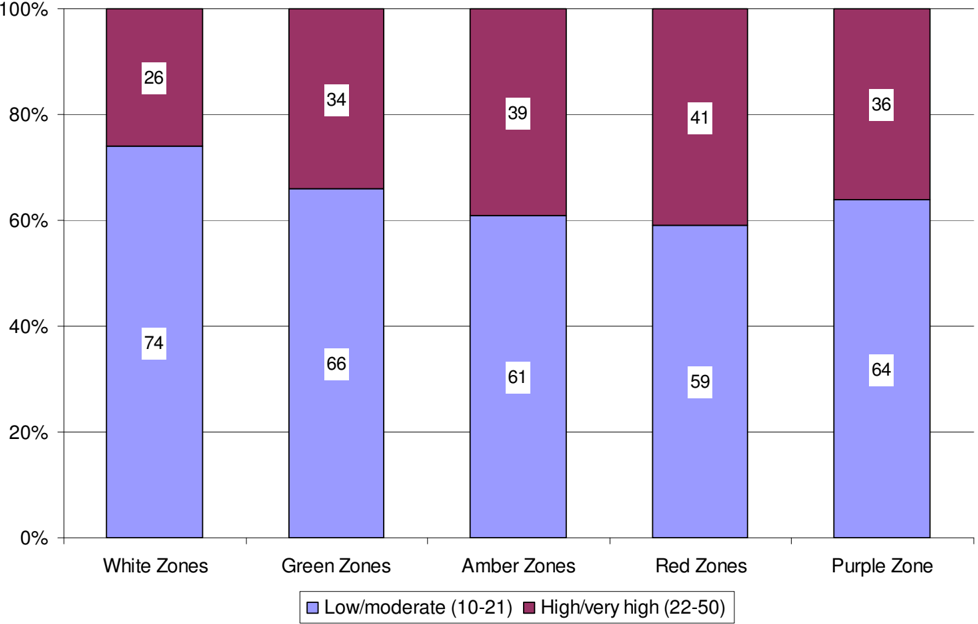
BACKGROUND: In 2007 Australia experienced its first outbreak of highly infectious equine influenza. Government disease control measures were put in place to control, contain, and eradicate the disease; these measures included movement restrictions and quarantining of properties. This study was conducted to assess the psycho-social impacts of this disease, and this paper reports the prevalence of, and factors influencing, psychological distress during this outbreak. METHODS: Data were collected using an online survey, with a link directed to the affected population via a number of industry groups. Psychological distress, as determined by the Kessler 10 Psychological Distress Scale, was the main outcome measure. RESULTS: In total, 2760 people participated in this study. Extremely high levels of non-specific psychological distress were reported by respondents in this study, with 34% reporting high psychological distress (K10 > 22), compared to levels of around 12% in the Australian general population. Analysis, using backward stepwise binary logistic regression analysis, revealed that those living in high risk infection (red) zones (OR = 2.00; 95% CI: 1.57-2.55; p < 0.001) and disease buffer (amber) zones (OR = 1.83; 95% CI: 1.36-2.46; p < 0.001) were at much greater risk of high psychological distress than those living in uninfected (white zones). Although prevalence of high psychological distress was greater in infected EI zones and States, elevated levels of psychological distress were experienced in horse-owners nationally. Statistical analysis indicated that certain groups were more vulnerable to high psychological distress; specifically younger people, and those with lower levels of formal educational qualifications. Respondents whose principal source of income was from horse-related industry were more than twice as likely to have high psychological distress than those whose primary source of income was not linked to horse-related industry (OR = 2.23; 95% CI: 1.82-2.73; p < 0.001). CONCLUSION: Although, methodologically, this study had good internal validity, it has limited generalisability because it was not possible to identify, bound, or sample the target population accurately. However, this study is the first to collect psychological distress data from an affected population during such a disease outbreak and has potential to inform those involved in assessing the potential psychological impacts of human infectious diseases, such as pandemic influenza.
Overview
The claims and statistics of this paper haven’t been checked yet.
Free: it reads the open-access text and checks the first 5 claims that cite a source we can check. Create a free account to check every claim.
Integrity signals
Registry
Cites
Statistics
Figures
Verification
Claims the paper makes
The claims and statistics of this paper haven’t been checked yet.
Free: it reads the open-access text and checks the first 5 claims that cite a source we can check. Create a free account to check every claim.
Claims other papers make about this one
Each is checked against this paper’s own text: does it say what the citing paper says it does?
The source backs part of the claim, not all of it — or backs it for a different population, condition or comparison.
In the citing paper
“Several studies already showed that adolescent age is a risk factor for diverse mental health problems, especially during epidemic outbreaks [e.g., (4–10)].”
From Digital Media Use and Adolescents' Mental Health During the Covid-19 Pandemic: A Systematic Review and Meta-Analysis (2022) · cites this paper as [9]
Experimental — accuracy not yet measuredThe source backs part of the claim, not all of it — or backs it for a different population, condition or comparison.
In the citing paper
“Taylor et al. (2008) revealed that those who were living in red zones, which were highly infectious zones during the equine influenza (OR: = 2.00; 95%, CI: 1.57–2.55), and the amber or buffer zones (OR: = 1.83; 95% CI: 1.36–2.46) were more prone to psychological distress than those who lived in white zones, which were unaffected [20].”
From Mental Health of Children and Adolescents Amidst COVID-19 and Past Pandemics: A Rapid Systematic Review (2021) · cites this paper as Taylor et al. (2008)
Experimental — accuracy not yet measuredThe source backs part of the claim, not all of it — or backs it for a different population, condition or comparison.
In the citing paper
“Taylor et al. (2008) revealed that those who were living in red zones, which were highly infectious zones during the equine influenza (OR: = 2.00; 95%, CI: 1.57–2.55), and the amber or buffer zones (OR: = 1.83; 95% CI: 1.36–2.46) were more prone to psychological distress than those who lived in white zones, which were unaffected [20].”
From Mental Health of Children and Adolescents Amidst COVID-19 and Past Pandemics: A Rapid Systematic Review (2021) · cites this paper as [20]
Experimental — accuracy not yet measured
7 more claims about this paper
Create a free account to see every claim other papers make about this one.
Self-check
Percentages, sums and reported differences re-computed from the paper’s own numbers.
The self-check needs the paper’s full text.
Citations
Cites
KESSLER, R. C., ANDREWS, G., COLPE, L. J., HIRIPI, E., MROCZEK, D. K., NORMAND, S.-L. T., WALTERS, E. E., & ZASLAVSKY, A. M. (2002) · Psychological Medicine · doi:10.1017/s0033291702006074 · Cited by 10,327
Screening for serious mental illness in the general population
Kessler, R. C., Barker, P. R., Colpe, L. J., Epstein, J. F., Gfroerer, J. C., Hiripi, E., Howes, M. J., Normand, S.-L. T., Manderscheid, R. W., Walters, E. E., et al. (2003) · Archives of General Psychiatry · doi:10.1001/archpsyc.60.2.184 · Cited by 5,692
Interpreting scores on the Kessler Psychological Distress Scale (K10)
Andrews, G., & Slade, T. (2001) · Australian and New Zealand Journal of Public Health · doi:10.1111/j.1467-842x.2001.tb00310.x · Cited by 2,021 · cited 1×
“Scores on the K10 are subsequently categorized into four levels: low (scores of 10–15); moderate (scores of 16–21); 'high' (scores of 22–29) and 'very high' (scores of 30–50) [ 27 ].”
BackgroundFURUKAWA, T. A., KESSLER, R. C., SLADE, T., & ANDREWS, G. (2003) · Psychological Medicine · doi:10.1017/s0033291702006700 · Cited by 1,570 · cited 1×
“The K10 is also able to discriminate between DSM-IV cases and non-cases, and is felt to be an appropriate screening instrument for identifying likely cases of anxiety and depression in the population providing a strong marker for a possible mental health disorder [21-23].”
BackgroundAustralian Journal of Emergency Management
(2021) · Australian Journal of Emergency Management · doi:10.47389/13241540 · Cited by 1,308
Handbook on animal-assisted therapy. Theoretical foundations and guidelines for practice
Fine, A. H. (2010) · Zurich Open Repository and Archive (University of Zurich) · doi:10.5167/uzh-46614 · Cited by 762
Maunder, R. G., Lancee, W. J., Rourke, S., Hunter, J. J., Goldbloom, D., Balderson, K., Petryshen, P., Steinberg, R., Wasylenki, D., Koh, D., et al. (2004) · Psychosomatic Medicine · doi:10.1097/01.psy.0000145673.84698.18 · Cited by 368
SARS-related Perceptions in Hong Kong
Lau, J. T. F., Yang, X., Pang, E., Tsui, H. Y., Wong, E., & Wing, Y. K. (2005) · Emerging Infectious Diseases · doi:10.3201/eid1103.040675 · Cited by 357
Cairney, J., Veldhuizen, S., Wade, T. J., Kurdyak, P., & Streiner, D. L. (2007) · The Canadian Journal of Psychiatry · doi:10.1177/070674370705200209 · Cited by 226
Fear of Severe Acute Respiratory Syndrome (SARS) Among Health Care Workers.
Ho, S. M. Y., Kwong-Lo, R. S. Y., Mak, C. W. Y., & Wong, J. S. (2005) · Journal of Consulting and Clinical Psychology · doi:10.1037/0022-006x.73.2.344 · Cited by 214
Research works printed but not linked: 8
- 2. Australian Horse Industry Council: Equine Influenza Impact Study Results. 2007 [http://www.horsecouncil.org.au/_upload/files/ EI%20Impact%20Report.pdf].
- 3. Australian Horse Industry Council: Follow-up Equine Influenza Impact Study. 2008 [http://www.horsecouncil.org.au/_upload/files/ Follow%20Up%20EI%20Impact%20Report.pdf].
- 13. Centre for Epidemiology and Research: 2006 Report on Adult Health from the New South Wales Population Health Sur- vey. Sydney. NSW Department of Health; 2007.
- Victorian Population Health Survey 2005: Department of Human Services, Victoria. 2006
- 14. Population Research and Outcome Studies Unit: The Health Status of People Living in South Australian Divisions of General Practice: South Australian Monitoring and Surveillance Sys- tem (SAMSS). In Health Intelligence South Australian Department of Health; 2007.
- 15. Draper G, Coddle JP: Our State of Health 2004: An overview of the health of the people of Western Australia. Health Informa- tion Centre, Department of Health, Western Australia 2004.
- 16. Australian Bureau of Statistics: National Survey of Mental Health and Well-being of Adults, Canberra. 1999.
- 21. Centre for Epidemiology and Research: 2007 Summary report on adult health by area health service from the New South Wales Population Health Survey. In Sydney NSW Department of Health; 2008.
Cited by
Items 401–500 of 544
Bireylerin Covid-19 Sürecindeki Sigara Bırakma Başarılarının Bazı Değişkenler Bağlamında İncelenmesi
Çıtak, Ş. (2021) · Gümüşhane Üniversitesi Sağlık Bilimleri Dergisi · doi:10.37989/gumussagbil.887762 · Cited by 2
Covid-19 Sürecinde Hemşirelerin Sağlık Anksiyete Düzeylerini Etkileyen Faktörlerin Belirlenmesi
Gülbetekin, E., Can, F. G., & Tunç, Y. (2022) · Black Sea Journal of Health Science · doi:10.19127/bshealthscience.1037604 · Cited by 2
Arteaga, B. K. D., Garduño‐García, J. D. J., Romero, M. D. S. C., Camarillo-Romero, E. D. S., Huitrón-Bravo, G. G., & Morales, L. P. M. (2021) · Revista Española de Nutrición Humana y Dietética · doi:10.14306/renhyd.25.s2.1361 · Cited by 4
The COVID-19 lockdown promotes changes in sleep habits in the Croatian general population
Pecotić, R., Dodig, I. P., Kalcina, L. L., Demirović, S., Madirazza, K., Valić, M., & Đogaš, Z. (2022) · Croatian Medical Journal · doi:10.3325/cmj.2022.63.352 · Cited by 2
Jiao, W., Xiang, Y., & Chang, A. (2022) · Nutrients · doi:10.3390/nu14214702 · Cited by 2
“Six standard questions were used to gauge reported symptoms of psychological distress during times of stress [33,34], including Hopelessness, restlessness, everything that needs to be done, a sense of worthlessness, tension, and sadness.”
El impacto de la epidemia Covid-19 en los pediatras: factores estresantes y sus consecuencias
Lozón, A. M., García, A. R., Vives, L. G., López, M. C. M., Blanco, A. J., & García‐Loygorri, C. F. (2022) · Andes pediatrica · doi:10.32641/andespediatr.v93i6.4127 · Cited by 2
''Fighting an Octopus''- Experiences of Nurses Working in the COVID-19 Ward: A Qualitative Study
Özkan, Z., UÇAN, H., Özparlak, A., Karakaya, D., & DEMİREL, M. O. (2022) · Turkiye Klinikleri Journal of Nursing Sciences · doi:10.5336/nurses.2022-89167 · Cited by 2
Abdelsattar, N. K., Alrawi, A. G., Abdelraoof, M. I., Zaazouee, M. S., Elsayed, S. M., Farhat, A. M., Elshafea, M., Abdeltawab, A. K., Ali, M. S., Madeeh, A. K., et al. (2023) · Indian Journal of Psychiatry · doi:10.4103/indianjpsychiatry.indianjpsychiatry_202_22 · Cited by 2
Student Stress Detection in Online Learning During Outbreak
Ray, A., Goyal, V., & Bandyopadhyay, S. K. (2023) · Springer eBooks · doi:10.1007/978-981-99-6637-0_13 · Cited by 3
Adaptation d’un programme thérapeutique pendant le confinement du COVID-19
Chilla, C., Zosso, G., Cogordan, A., & Sentissi, O. (2021) · Swiss Archives of Neurology Psychiatry and Psychotherapy · doi:10.4414/sanp.2021.03168 · Cited by 2
Flórez, J. F. M., Isaza, I., & Osorio, J. D. G. (2021) · Pensamiento Psicológico · doi:10.11144/javerianacali.ppsi19.epas · Cited by 4
The clinical features, pathobiology, and epidemiology of influenza infections in horses
Landolt, G. A., & Chambers, T. M. (2016) · doi:10.1002/9781118924341.ch20 · Cited by 2
Effect of Social Media Use on Mental Health during Lockdown in IndiaPreprint
Swarnam, S. (2021) · arXiv (Cornell University) · doi:10.48550/arxiv.2102.09369 · Cited by 6
Sultana, S., Khan, A. H., Hossain, S., Ansar, A., Sikder, M. T., & Hasan, M. T. (2020) · doi:10.31234/osf.io/289uf · Cited by 2
Stress Level of University Students in West Java Indonesia During Early Covid-19 Pandemic
Mamlukah, M., & Kumalasari, I. (2022) · Journal of Educational Health and Community Psychology · doi:10.12928/jehcp.v11i2.23887 · Cited by 3
Depression and anxiety among quarantined population during the COVID-19 outbreak in central Ethiopia
Abraha, M., Ayano, G., Demissie, D. B., Getachew, A., Bekele, M., Getnet, M., Seyum, M., Defar, A., Demelash, S., Akalu, G. T., et al. (2022) · PLOS Global Public Health · doi:10.1371/journal.pgph.0000115 · Cited by 2
“The discrepancy in the finding of the current study and the previous studies could be the difference in factors influencing the prevalence of anxiety such as sample size and instrument used [14,16,17,29,31,32]and differences in characteristics of the study participant across the studies [14,31,32].”
InfluentialSayılan, G., İkizer, G., Aldemir, İ. D., & Sanli, A. M. (2024) · Türk Psikoloji Dergisi · doi:10.31828/turkpsikoloji.1351067 · Cited by 2
Assessing SARS-CoV-2 Testing Adherence in a University Town: Recurrent Event Modeling Analysis
García, Y. E., Schmidt, A. J., Solis, L. J., Daza–Torres, M. L., Montesinos-López, J. C., Pollock, B. H., & Nuno, M. A. (2024) · JMIR Public Health and Surveillance · doi:10.2196/48784 · Cited by 1
Arkan, B., Bostanlı, A., & Bektaş, M. (2025) · Ordu Üniversitesi Hemşirelik Çalışmaları Dergisi · doi:10.38108/ouhcd.1409918 · Cited by 1
“Quarantine/lockdown decisions and restrictions due to the COVID-19 pandemic caused various psychological problems in individuals (Taylor et al., 2008; Zhua et al., 2020; Losada-Baltar et al., 2021).”
InfluentialChen, M., Xin, Z., He, M., Wang, Z., Li, Y., Hofmann, S. G., & Liu, X. (2025) · Mindfulness · doi:10.1007/s12671-025-02656-y · Cited by 1
“To be eligible for the trials, participants needed to be between 18 and 65 years old and exhibit high levels of emotional distress (K10 score ≥ 22; Andrews & Slade, 2001; Taylor et al., 2008).”
Domínguez‐Alarcón, P., Sánchez‐Queija, I., & Jiménez, Á. P. (2026) · Frontiers in Psychology · doi:10.3389/fpsyg.2026.1739488 · Cited by 1
“Previous studies have also shown that the impact of crises such as natural disasters or pandemics, may vary according to sociodemo-graphic factors as gender (Neumayer and Plümper, 2007; Taylor et al., 2008).”
Bolukçu, F., Yucel, S., & Yücel, R. (2026) · BMC Psychology · doi:10.1186/s40359-026-04957-w · Cited by 1
“Fear of contracting COVID-19 has become wide-spread throughout society, and increases in anxiety levels have been observed, particularly among individuals with chronic diseases (such as cardiovascular disease, diabetes, asthma and cancer) [3, 4].”
Pérez, L. V., Contreras-Cortés, G. A., Nava, R. G. S., & Salazar, J. C. (2009) · Medicina Interna de México · Cited by 1
Should COVID-19 be considered an adverse child experience?
Duncan, D. (2021) · British Journal of Child Health · doi:10.12968/chhe.2021.2.2.95 · Cited by 1
Silva, R. B., Segovia-Lagos, P., & Carter, C. (2021) · Religación · doi:10.46652/rgn.v6i30.855 · Cited by 1
Özkan, E., Kulakaç, N., & Çilingir, D. (2022) · Acibadem Universitesi Saglik Bilimleri Dergisi · doi:10.31067/acusaglik.896764 · Cited by 1
Depression, Anxiety and Stress among General Public during COVID-19 Pandemic
Bukhari, S. R. (2022) · Journal of Professional & Applied Psychology · doi:10.52053/jpap.v3i1.91 · Cited by 1
“Research evidence suggested that individuals experienced much stress, depression, anxiety, psychosis, trauma, suicidal thoughts, panic and anxiety (Taylor et al., 2008).”
sharifi, M., & Ghorbani, M. (2021) · خانواده پژوهی · doi:10.52547/jfr.17.3.407 · Cited by 1
Alzahrani, M. A., Alkhamees, M. A., Almutairi, S., Abumelha, S. M., Khan, M. A., AL-Jaziri, Z. Y., Althunayyan, F. A., Hakami, B., & Ahmad, M. S. (2022) · Healthcare · doi:10.3390/healthcare10091663 · Cited by 1
“Individuals may exhibit signs of psychosis, anxiety, trauma, suicidal thoughts, and panic attacks, according to evidence [21,22].”
BackgroundImpact of Virtual Learning on Mothers With Children in Elementary School: A Psychosocial Viewpoint
Aljaffer, M. A., AlZahrani, M. T., & Shehadah, A. E. (2022) · Cureus · doi:10.7759/cureus.30257 · Cited by 1
Effects of Lockdown during COVID-19 pandemic on Psychosocial and Financial wellbeing
Joseph, S., Jiby, A., Athira, M., Pradeep, B. V., George, L., Shaju, N., & Sreelakshmi, R. (2022) · Asian Journal of Nursing Education and Research · doi:10.52711/2349-2996.2022.00078 · Cited by 1
Vaidya, G., Kumbhar, V., Naik, S., & Hukare, V. (2022) · International Journal of Advanced Computer Science and Applications · doi:10.14569/ijacsa.2022.0130949 · Cited by 1
“Reynolds and Melanie studied the problems, compliance, and psychological impact of the quarantine experience during the SARS pandemic, and the findings imply that quarantine implementation should be evaluated [5],[6].”
BackgroundÇAĞATAY, A., TOPAL, A., & ARSLAN, Ü. (2023) · International Journal of Health Management and Tourism · doi:10.31201/ijhmt.1252536 · Cited by 1
Zeybek, K., Sever, M., & Esatoğlu, A. E. (2023) · Ankara sağlık bilimleri dergisi · doi:10.46971/ausbid.1156648 · Cited by 1
Salcan, S., & Ezmeci, T. (2023) · Journal of Surgery and Medicine · doi:10.28982/josam.7705 · Cited by 1
Impact of covid-19 pandemic on patients seeking prosthodontic treatment- A cross sectional Study
Francis, L., & Deepthi, V. S. (2023) · The Journal of Prosthetic and Implant Dentistry · doi:10.55231/jpid.2023.v07.i01.04 · Cited by 1
Quarantine, Lockdown, and Isolation in the COVID-19 Pandemic
Brooks, S. K., Webster, R., Smith, L., Woodland, L., & Greenberg, N. L. (2024) · Cambridge University Press eBooks · doi:10.1017/9781009019330.034 · Cited by 3
The Relationship Between Depression and Resilience in Young Adults During the COVID-19 Pandemic
Kühne, M. A., Barbosa, M. L. L., Lucini, T. C. G., de Oliveira, C. C., Souza, R. R., & Machado, V. (2024) · Revista de Gestão Social e Ambiental · doi:10.24857/rgsa.v18n11-184 · Cited by 1
Shehryar, M., Shahid, R., Zeb, S., Umar, M., Raza, M. R., Ahmad, T., Ali, S. M. S., & Ahmad, H. A. (2020) · Journal of medical case reports and reviews · Cited by 1
Psychological Impacts of COVID-19
Singh, S., Dubey, S., Kumar, N., Goyal, M. K., & Pal, I. (2020) · Disaster Resilience and Green Growth · doi:10.1007/978-981-15-7679-9_7 · Cited by 2
City, Media and Pandemic Stress
Dimitricheva, O. I., Савченко, І., & Pikunov, O. I. (2020) · Теория и практика общественного развития · doi:10.24158/tipor.2020.11.1 · Cited by 1
Beichi, O. A. A. (2021) · Psychology and Education Journal · doi:10.17762/pae.v58i2.1066 · Cited by 1
Adhena, G., & Temesgen, T. (2020) · Science Journal of Public Health · doi:10.11648/j.sjph.20200806.11 · Cited by 2
Psychological Effects of Quarantine During Covid-19: Students Attitude Towards Their Academics
(2021) · İlköğretim Online · doi:10.17051/ilkonline.2021.03.09 · Cited by 1
“Severe Acute Respiratory Syndrome (SARS) and equine influenza was recorded which camouflaged with other ailments thus giving psychological stress to students (Rith-Najarian, Boustani, Chorpita, 2019; Sprang & Silman, 2013; Taylor et al., 2008).”
BackgroundÖzdemir, İ., & Hergül, G. Ö. (2021) · Journal of Cognitive-Behavioral Psychotherapy and Research · doi:10.5455/jcbpr.83146 · Cited by 2
Effect of COVID-19 anxiety on perceived risks and avoidance behaviors
Çınar, F., Çapar, H., & Ekinci, G. (2021) · The Annals of Clinical and Analytical Medicine · doi:10.4328/acam.20463 · Cited by 1
“Researches conducted in the past show that the anxiety of the public and health professionals has increased during epidemics [5,6].”
BackgroundGuallart, M., Laborda, J. L. A., Salavera, C., Tuquet, H., & Gracia‐García, P. (2021) · Studies in Psychology Estudios de Psicología · doi:10.1080/02109395.2021.1974673 · Cited by 1
“Este grupo parece especialmente vulnerable y coincide con otros estudios consultados (Becerra-García et al., 2020; Sim et al., 2010; Taylor et al., 2008), lo que podría estar influido por la incertidumbre académica (Cornine, 2020) y el futuro laboral (Wang, Pan, Wan, Tan, Xu, McIntyre et al., 2020)…”
BackgroundResultالتأثير النفسي وحالة الصحة النفسية خلال جائحة فيروس كورونا -19 لدى عينة من طلبة الجامعات الأردنية
(2021) · Jordan Journal of Educational Sciences · doi:10.47015/17.3.9 · Cited by 1
Omer, W., Janjua, R. S., Riaz, J., Jawed, S., & Iqbal, M. (2021) · Khyber Medical University Journal · doi:10.35845/kmuj.2021.21172 · Cited by 1
Influences of COVID-19 on Environment
Ayub, H. (2021) · Middle East Research Journal of Agriculture and Food Science · doi:10.36348/merjafs.2021.v01i01.005 · Cited by 1
Maepa, M. P., Kleinhans, A. V., & Lentoor, A. G. (2023) · The Open Public Health Journal · doi:10.2174/18749445-v16-e230116-2022-106 · Cited by 2
Okoro, J., Odionye, T., Nweze, B., Onuoha, M., Ezeonwuka, C., Owoh, J., & Nkire, J. (2020) · Emerald Open Research · doi:10.1108/eor-02-2023-0008 · Cited by 1
Manyweathers, J. (2017) · UWA Profiles and Research Repository (University of Western Australia) · Cited by 1
Vythilingam, D. I., & Atiomo, W. (2021) · medRxiv · doi:10.1101/2021.11.28.21266956 · Cited by 1
Mir, M. S., Sidana, K., Sharan, U., Kumar, R., Vibhore, A., Kumar, L., Singh, O., & Kumar, S. (2022) · Research Square · doi:10.21203/rs.3.rs-1793809/v1 · Cited by 1
Haghparast, Z., Taghizadeh, Z., & Bagheri, A. (2022) · Research Square · doi:10.21203/rs.3.rs-2283414/v1 · Cited by 1
Psychosocial Response to Animal Disease: Australia's First Outbreak of Equine Influenza
Taylor, M. R., Agho, K., Raphael, B., & Stevens, G. J. (2009) · ANU Open Research (Australian National University)
Self-citationChapter 63 – International movement of athletic horses – quarantine and regulatory controls
Ellis, P., & Stewart, B. D. (2014)
Storr, C. L., Lakin, D. P., & Tol, W. A. (2019) · Oxford University Press eBooks · doi:10.1093/oso/9780190916602.003.0013
International movement of athletic horses
Ellis, P. M., & Stewart, B. D. (2013) · Elsevier eBooks · doi:10.1016/b978-0-7020-4771-8.00061-2
Khanra, S., Sahoo, R. R., Bose, S., Kumari, R., Khess, C. R. J., & Munda, S. K. (2020) · Asian Journal of Psychiatry · doi:10.1016/j.ajp.2020.102462
RetractedCompare the vital concepts of mother of all pandemic Spanish flu and COVID-19: A promising review
Swaminathan, G., Jupudi, S., Sathish, R., Roshan, N. S., Gowramma, B., & Rajagopal, K. (2020) · European Journal of Molecular & Clinical Medicine · Cited by 1
Impact of Covid-19 Pandemic and Conspiracy Belief on Psychological Distress in University Students
Rafique, N. (2021) · Pakistan Social Sciences Review · doi:10.35484/pssr.2021(5-i)13
“It is noticeable that numerous changes affect undergraduate students such as they are frequent social media users, facing lockdown, attending online classes, no social interaction, universities are closed, and in this situation believe in conspiracies contributes in psychological distress among them (Lu et al., 2020;…”
BackgroundPSIHOLOŠKI EFEKTI KARANTENE U VRIJEME PANDEMIJE COVID-19
Aziraj-Smajić, V., & Mujagić, M. (2020) · Zbornik radova Islamskog pedagoškog fakulteta u Bihaću · doi:10.52535/27441695.2020.12.199-216
This is how India reacted to lockdown during COVID-19 pandemic: an online survey
Upreti, G., Upreti, I. C., & Lohani, P. C. (2021) · International Journal of Community Medicine and Public Health · doi:10.18203/2394-6040.ijcmph20211981
“However, a study of quarantined following an outbreak of equine influenza identified lower age (16-24 years) and lower formal educational qualification as factors associated with negative psychological impact.(12)”
BackgroundResultInfluentialPOSLU, M., Bahçecitapar, M. K., & Aktaş, S. (2021) · Bilecik Şeyh Edebali Üniversitesi Fen Bilimleri Dergisi · doi:10.35193/bseufbd.906268
العودات, م. ع. ا., & المواجدة, م. ع. (2021) · التربية (الأزهر) مجلة علمية محکمة للبحوث التربوية والنفسية والاجتماعية) · doi:10.21608/jsrep.2021.166964
Screening for Mental Health Problems in Epidemics: Is It Justifiable?
Sharifi, V., & Mohammadjafari, A. (2021) · Archives of Iranian Medicine · doi:10.34172/aim.2021.91
Singh, S., Datta, M., Gupta, P. K., Batra, S., Tripathi, R. K., Mahour, P., Arya, A., Tripathi, A., Gupta, B., Agarwal, M., et al. (2021) · Research Square · doi:10.21203/rs.3.rs-789569/v1
CORRELATOS PSICOSOCIALES DE LA CUARENTENA DEBIDO AL COVID-19 EN ADULTOS ARGENTINOS Y ECUATORIANOS
Resett, S. A., & Ramos, C. G. (2021) · Investigación y Desarrollo · doi:10.31243/id.v14.2021.1331
Covid-19 Pandemic Impact in Pediatricians: Stress Factors and their ConsequencesPreprint
Lozón, A. M., García, A. R., Vives, L. G., López, M. C. M., Blanco, A. J., & García‐Loygorri, C. F. (2021) · Research Square · doi:10.21203/rs.3.rs-906083/v1
Psychological Effect of Coronavirus on Females: A Case Study of Balochistan
Baloch, F. M., Alizai, S. H., & Dostain, A. (2021) · Pakistan Journal of International Affairs · doi:10.52337/pjia.v4i2.188
Emerging Evidence, Lessons, and a Look Ahead
Ramana, G. N. V., Mutasa, R. U., Mohammed, S. K., Nandraj, S., Jammy, G. R., & Smith, O. (2021) · The World Bank Open Knowledge Repository (World Bank) · doi:10.1596/36298
Bazán-Riverón, G. E., Guzmán, M. O., Romero, C. P., Martínez, J., & Ocampo-Jasso, J. A. (2021) · Psicología Iberoamericana · doi:10.48102/pi.v29i3.330
“…dada la vulnerabilidad e incertidumbre que genera la pandemia (Díaz et al., 2007; Jacques et al., 2019; Rada et al., 2005; Sadati et al., 2020; Taylor et al., 2008), ambos fenómenos están presentes aunque se manifiestan moderadamente, ya que los participantes observan la necesidad de consumir…”
COVID-19 Risk Perceptions, Concerns and Factors Affecting College Students
Çaşkurlu, H., & İkiışık, H. (2021) · European Journal of Clinical Medicine · doi:10.24018/clinicmed.2021.2.6.108
Nair, A. N. K. K., Nair, J. V. R., Swarnabai, S. V., Sudha, R., Mendez, A. M., & Amma, L. I. (2020) · Indian journal of clinical medicine · doi:10.1177/26339447211058643
(2020) · International Journal of Humanities Social Sciences and Education · doi:10.20431/2349-0381.0708007
Heuristic “Bottom-up”: COVID-19
Duggal, T., Sundriyal2, A., Kakkar2, A., & Mittal, N. (2020) · Indian Journal of Forensic Medicine & Toxicology · doi:10.37506/ijfmt.v14i4.13196
“Trauma, panic, anxiety, and suicidal thoughts during an outbreak of such disease are common psychological distress caused in an individual (Tucci et al., 2017; Taylor et al., 2008).”
BackgroundInfluences of COVID-19 on Environment
(2021) · Integrative Journal of Veterinary Biosciences · doi:10.31038/ijvb.2021513
(2022) · Presses universitaires du Septentrion eBooks · doi:10.4000/books.septentrion.127582
KOÇ, H., & Karadağ, A. (2022) · Spor Bilimleri Araştırmaları Dergisi · doi:10.25307/jssr.1016296
دور التفاؤل کمتغیر مُعدل للعلاقة بین القلق النفسی و الأرق الناتجین عن انتشار وباء کورونا
العشری, ح. (2022) · دراسات نفسية · doi:10.21608/psj.2022.94345.1037
Khalil, R. B., Dagher, R., Zarzour, M., Abi-Akl, H., Sleilaty, G., Kallab, M., & Richa, S. (2020) · doi:10.2196/preprints.24082
Specificity and dynamics of psychological adaptation during the COVID-19 pandemic
Makaricheva, E. V., & Burguvan, M. S. (2022) · Neurology Bulletin · doi:10.17816/nb106247 · Cited by 2
Empathic abilities, personal strength and depressive mood in spanish population in time of COVID-19
de Madrid, U. C., González, D., García, E. M., de Madrid, U. C., Elez, P. D. L. P., & Mancha, U. D. C. L. (2022) · Ehquidad Revista Internacional de Políticas de Bienestar y Trabajo Social · doi:10.15257/ehquidad.2022.0013
The Mental Health Of Turkish Society During The COVID-19 Pandemic
Kaçer, İ., Çağlar, A., Öztürk, B., & Hacımustafaoğlu, M. (2022) · Journal of Contemporary Medicine · doi:10.16899/jcm.1057608
Hooı, L. B., Siong, C. N., Camarador, R. A., Khoa, P. T. A., & Sumartiningsih, S. (2022) · International Journal of Health Sciences · doi:10.53730/ijhs.v6ns5.11582
Mental Health Issues and Service Delivery in COVID-19 Quarantine Facilities: A Qualitative Study
Chandra, M., SenGupta, G., Rai, C. B., & Sharma, S. (2022) · Journal of Psychiatry Spectrum · doi:10.4103/jopsys.jopsys_29_22
Μαντόγλου, Ά., Καλαμαράς, Δ., & Σινάκου, Ε. (2022) · Psychology the Journal of the Hellenic Psychological Society · doi:10.12681/psy_hps.28860 · Cited by 1
Lee, D., Lee, J. H., Hyun, S. Y., Kim, C. H., Kim, W. J., Kim, K., Oh, E., Ha, J. H., Jeon, K., & Sim, M. (2022) · 신경정신의학 · doi:10.4306/jknpa.2022.61.3.143
Koç, E., Bal, S., Başgöl, Ş., & Karakaya, N. (2022) · Africa Journal of Nursing and Midwifery · doi:10.25159/2520-5293/11512 · Cited by 1
Ratobimanankasina, H. H., Randrianarivo, R. F., RAJAONARISON, B. H., & RAHARIVELO, A. (2022) · World Journal of Advanced Research and Reviews · doi:10.30574/wjarr.2022.16.2.1081 · Cited by 1
Golga, D. N., Kassaw, E. S., & Midakso, B. (2022) · Education and human development · doi:10.5772/intechopen.108505
The Effects Of Covid-19 Quarantine On Young Adults In San Francisco Bay Area
Alaçam, B. (2022) · SOCIAL MENTALITY AND RESEARCHER THINKERS JOURNAL · doi:10.29228/smryj.66078
TEMÜR, K., GÜMÜŞ, G., SARI, S. P., & VERİMER, T. (2015) · AYDIN SAĞLIK DERGİSİ · doi:10.17932/iau.asd.2015.007/asd_v08i3004
Depremzedelerde Covid-19 Kaygısı ve Sağlıklı Beslenme
Küçükarslan, M., & Çakır, E. (2022) · Akademisyen Kitabevi eBooks · doi:10.37609/akya.2135
A Comparative Study of Anxiety Levels in EFL Classrooms Before and After the Covid-19 Lockdown
Massri, R. A. (2023) · Journal of Arts, Literature, Humanities and Social Sciences · doi:10.33193/jalhss.88.2023.797 · Cited by 1
Kim, K. M., Jeong, H. S., Chung, U., Lee, I. J., & Lee, J. J. (2023) · Research Square · doi:10.21203/rs.3.rs-2625312/v1
COVID 19:Mental Health of the Patient and Family Members
Gopalan, R. T., & Fayed, G. A. K. (2021) · Al-Mağallah Al-ʿilmiyyaẗ Li Kulliyyaẗ Al-Tarbiyyaẗ Lil Ṭifūlaẗ Al-Mubakiraẗ - Ǧāmiʿaẗ Al-Manṣūraẗ · doi:10.21608/maml.2021.290363
“These thoughts can leads to increased stress and mental health issue such as depression and anxiety which further lower his immunity and thus may further deteriorate his health condition.”
Background
Metadata
- Authors
- Taylor, M. R., Agho, K. E., Stevens, G. J., & Raphael, B.
- Affiliations
- Western Sydney University (AU)
- Corresponding author
- Taylor, Melanie R
- Venue
- BMC Public Health
- Published
- 2008-10-03
- Volume
- 8
- Issue
- 1
- Pages
- 347-347
- ISSN
- 1471-2458 (ISSN-L)
- PMC
- PMC2571100
- OpenAlex
- W1990329824
- Cited by
- 544
- References
- 23
- Citations by year
- 2026: 8 · 2025: 9 · 2024: 27 · 2023: 51 · 2022: 96 · 2021: 165 · 2020: 160 · 2019: 1 · 2018: 1 · 2017: 5 · 2016: 1 · 2015: 2 · 2014: 1 · 2013: 4 · 2012: 5
- FWCI
- 2.60
- Type
- journal article
- Language
- en
- Open access
- gold
- doi.org
- Licence
- cc-by
- creativecommons.org/licenses/by/2.0 (tdm)
- Locations
- BMC Public Health (publishedVersion, cc-by)
- PubMed Central (publishedVersion, cc-by)
- PubMed (publishedVersion)
- DOAJ (DOAJ: Directory of Open Access Journals) (submittedVersion, cc-by-sa)
- Topics
- Social Sciences › Psychology › Clinical Psychology › COVID-19 and Mental Health
- Health Sciences › Medicine › Epidemiology › Influenza Virus Research Studies
- Health Sciences › Medicine › Psychiatry and Mental health › Mental Health Treatment and Access
- Keywords
- psychological distress, equine influenza, outbreak, horse owners, quarantine, horse industry, economic impact of disease, pandemic influenza
- MeSH terms
- Workforce, Adolescent, Adult, Animals, Animal Husbandry, Anxiety, Australia, Human-Animal Bond, Depression, Disasters, Disease Outbreaks, Female, Horses, Humans, Male, Middle Aged, Orthomyxoviridae Infections, Psychometrics, Quarantine, Risk Factors, Stress, Psychological, Prevalence, Multivariate Analysis, Risk Assessment
About these checks
Registry, retraction, Cites and statistics results are computed, not judged, with one exception: a printed reference that no index lists is read once by a model before it counts as a citation error. Claims are extracted by a model and kept only when their quote appears verbatim in the text; each cited source is then checked, with a model’s help, for whether it says what the claim relies on. Those verdicts can be wrong — read the claim’s quote and the cited source before relying on one.
Statistics and arithmetic are recomputed, not judged.
Confidence bands are shown only for fields calibrated on our annotated test set. None is calibrated yet, so no band is shown.
What counts as a claim ›How we measure confidence ›How we check this ›
Are you an author, or do you see a problem with this page? Request a review
Data sources
Bibliographic data: Semantic Scholar, OpenAlex, Crossref.
Contains information from the Semantic Scholar Academic Graph Datasets, made available under the ODC Attribution License (ODC-BY 1.0).
Semantic Scholar’s data is described in: Kinney, R., et al. (2023). The Semantic Scholar Open Data Platform. arXiv:2301.10140.
