

Physical activity and mental health in women with Polycystic Ovary Syndrome
Open accessThe DOI matches its Crossref record; 55 of the 56 references it cites were found in a registry or an index.
Abstract
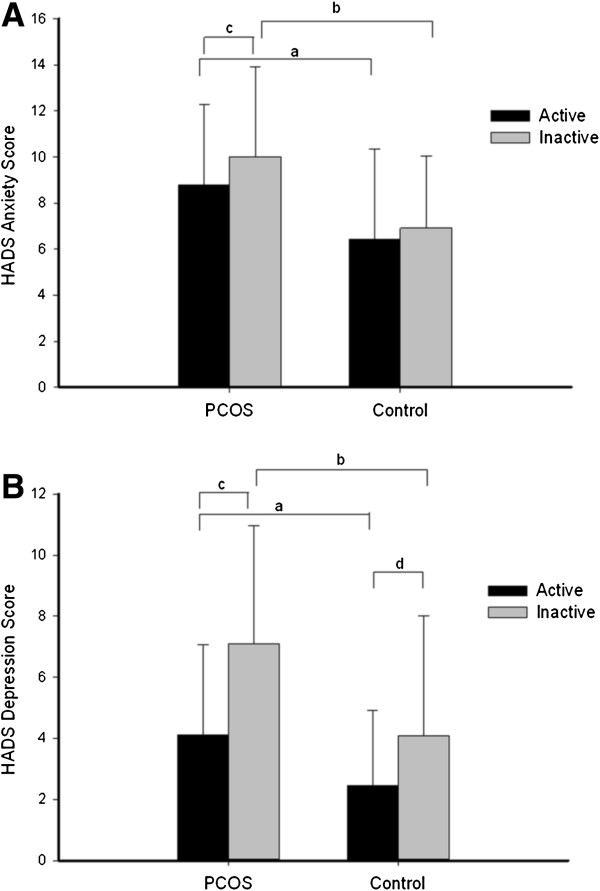
BACKGROUND: Physical activity is prescribed as a component of primary management for Polycystic Ovary Syndrome (PCOS). This study investigates the association between physical activity and mental health as well as the exercise barriers, motivators and support providers for younger women with and without PCOS to assist in physical activity uptake and prescription for these women. METHODS: Women aged 18-50 years with (n = 153) and without PCOS (n = 64) completed a questionnaire at one time point. The questionnaire included the Hospital Anxiety and Depression Scale and a survey regarding levels of physical activity, physical activity barriers, motivators and supports. A MANCOVA assessed associations between physical activity, PCOS and mental health (specifically depression and anxiety). Descriptive and Chi square goodness of fit statistics assessed the differences in perceived barriers, motivators and support providers amongst women with and without PCOS. RESULTS: Women with PCOS displayed higher severity of depression (F(1,210) = 8.32, p = 0.004) and anxiety (F(1,210) = 17.37, p < 0.001) symptoms compared to controls. Overall, for physically active women, depression was significantly less severe than in their inactive counterparts (F(2,210) = 13.62, p < 0.001). There were no differences in anxiety by physical activity status and no interaction effects between PCOS and activity status for depression or anxiety. Women with PCOS were more likely to report a lack of confidence about maintaining physical activity (Χ2 = 3.65; p = 0.046), fear of injury (Χ2 = 4.08; p = 0.043) and physical limitations (Χ2 = 11.92; p = 0.001) as barriers to physical activity and were more likely to be motivated to be active to control a medical condition (Χ2 = 7.48; p = 0.006). Women with PCOS identified more sources of support compared to women without PCOS. CONCLUSIONS: Physical activity is associated with lower depression in women with PCOS and differences exist in the self-reported physical activity barriers, motivators and support providers, compared to controls. Being more active may offer mental health benefits in managing PCOS. Prescribing physical activity to women with PCOS should be individualized and consider both common and PCOS-specific barriers and motivators for successful engagement.
Overview
The claims and statistics of this paper haven’t been checked yet.
Free: it reads the open-access text and checks the first 5 claims that cite a source we can check. Create a free account to check every claim.
Integrity signals
Registry
Cites
Statistics
Figures
Verification
Claims the paper makes
The claims and statistics of this paper haven’t been checked yet.
Free: it reads the open-access text and checks the first 5 claims that cite a source we can check. Create a free account to check every claim.
Claims other papers make about this one
Each is checked against this paper’s own text: does it say what the citing paper says it does?
The cited source says what the claim attributes to it.
In the citing paper
“This is evidenced by previous research reporting that a major barrier to physical activity adoption among women with PCOS is the perceived barrier that exercise is tiring and hard work [121], and fear of injury [72].”
From Providing lifestyle advice to women with PCOS: an overview of practical issues affecting success (2021) · cites this paper as [72]
In the citing paper
“Women with PCOS are more likely to report a lack of confidence about maintaining physical activity [72] which may be related to negative body image, and feelings of shame and worthlessness [73].”
From Providing lifestyle advice to women with PCOS: an overview of practical issues affecting success (2021) · cites this paper as [72]
Self-check
Percentages, sums and reported differences re-computed from the paper’s own numbers.
The self-check needs the paper’s full text.
Citations
Cites
1 retracted
Shaw, L. J., Bairey Merz, C. N., Azziz, R., Stanczyk, F. Z., Sopko, G., Braunstein, G. D., Kelsey, S. F., Kip, K. E., Cooper-DeHoff, R. M., Johnson, B. D., et al. (2008) · The Journal of Clinical Endocrinology & Metabolism · doi:10.1210/jc.2007-0425 · Cited by 427 · cited 1×
“PCOS has reproductive, psychological and cardio-metabolic features [3-7] and is associated with many long term adverse health problems including increased risk of obesity [4,8,9], type 2 diabetes and metabolic impairments [10-13], and cardiovascular risk factors [14,15].”
BackgroundRetractedThe Hospital Anxiety and Depression Scale
Zigmond, A. S., & Snaith, R. P. (1983) · Acta Psychiatrica Scandinavica · doi:10.1111/j.1600-0447.1983.tb09716.x · Cited by 47,139
Stages and processes of self-change of smoking: Toward an integrative model of change.
Prochaska, J. O., & DiClemente, C. C. (1983) · Journal of Consulting and Clinical Psychology · doi:10.1037/0022-006x.51.3.390 · Cited by 9,098 · cited 2×
“A simple, devised measure based on the trans-theoretical model TTM; [40] was used to assess participants’ physical activity levels.”
Method(2004) · Fertility and Sterility · doi:10.1016/j.fertnstert.2003.10.004 · Cited by 9,050
Depression, chronic diseases, and decrements in health: results from the World Health Surveys
Moussavi, S., Chatterji, S., Verdes, E., Tandon, A., Patel, V., & Ustun, B. (2007) · The Lancet · doi:10.1016/s0140-6736(07)61415-9 · Cited by 4,070 · cited 1×
“Many chronic illnesses have mental health impacts and are associated with reduction in quality of life and increases in depressive symptoms [21-24].”
BackgroundFranks, S. (1995) · New England Journal of Medicine · doi:10.1056/nejm199509283331307 · Cited by 2,463
Men at risk: occupation and male infertility
Claman, P. (2004) · Fertility and Sterility · doi:10.1016/s0015-0282(03)01188-9 · Cited by 2,387
March, W. A., Moore, V. M., Willson, K. J., Phillips, D. I. W., Norman, R. J., & Davies, M. J. (2010) · Human Reproduction · doi:10.1093/humrep/dep399 · Cited by 1,799
Global strategy on diet, physical activity and health
Samuelson, G. (2004) · Scandinavian Journal of Nutrition · doi:10.1080/11026480410034349 · Cited by 1,720
Teede, H., Deeks, A., & Moran, L. (2010) · BMC Medicine · doi:10.1186/1741-7015-8-41 · Cited by 1,565 · cited 2×
“PCOS has reproductive, psychological and cardio-metabolic features [3-7] and is associated with many long term adverse health problems including increased risk of obesity [4,8,9], type 2 diabetes and metabolic impairments [10-13], and cardiovascular risk factors [14,15].”
Self-citation
Research works printed but not linked: 1
- Australian Bureau of Statistics Physical Activity: Main barriers and motivators report 4177.0 - Participation in Sports and Physical Recreation 2007 Australia: Australian Bureau of Statistics; Canberra
Cited by
Exercise as a treatment for depression: A meta-analysis
Kvam, S., Kleppe, C. L., Nordhus, I. H., & Hovland, A. (2016) · Journal of Affective Disorders · doi:10.1016/j.jad.2016.03.063 · Cited by 837
“70 MDD, Major depressive disorder; NICE, National Institute for Health and Care Excellence; CBT, cognitive behavior stic and Statistical Manual of Mental Disorders; ICD, the International Classification of Diseases; RCTs, randomized ; BDNF, brain-derived neurotrophic factor”
BackgroundInfluentialObesity and Polycystic Ovary Syndrome: Implications for Pathogenesis and Novel Management Strategies
Barber, T. M., Hanson, P., Weickert, M. O., & Franks, S. (2019) · Clinical Medicine Insights: Reproductive Health · doi:10.1177/1179558119874042 · Cited by 411
“Encouragingly however, physically active women (regardless of PCOS status) experienced less severe depression than that in their inactive counterparts (104).”
BackgroundResultDokras, A., Stener-Victorin, E., Yildiz, B. O., Li, R., Ottey, S., Shah, D., Epperson, N., & Teede, H. (2018) · Fertility and Sterility · doi:10.1016/j.fertnstert.2018.01.038 · Cited by 285
Self-citationMetabolic risk in PCOS: Phenotype and adiposity impact
Moran, L. J., Norman, R. J., & Teede, H. J. (2015) · Trends in Endocrinology & Metabolism · doi:10.1016/j.tem.2014.12.003 · Cited by 245
Self-citationThe mental health of women with polycystic ovary syndrome: a systematic review and meta-analysis
Yin, X., Ji, Y., Chan, C., & Chan, C. (2020) · Archives of Women s Mental Health · doi:10.1007/s00737-020-01043-x · Cited by 171
“…rate Adali et al. (2008) * * * * ** * * – 8 Akdag et al. (2016) * * – * ** * * – 7 Asik et al. (2015) * – – * ** * * – 6 Balikci et al. (2014) * – – * ** * * – 6 Banting et al. (2014) * – – * ** * * – 6 Battaglia et al. (2008) * – – * ** * * – 6 Benetti-Pinto et al. (2015) * – – * * * * – 5…”
InfluentialFernandez, R., Moore, V., Van Ryswyk, E., Varcoe, T., Rodgers, R., March, W., Moran, L., Avery, J., McEvoy, D., & Davies, M. (2018) · Nature and Science of Sleep · doi:10.2147/nss.s127475 · Cited by 137
“Women with PCOS are less physically active than other women and may have difficulty in sustaining engagement in physical activity over the long term.(148) When interventions to improve physical activity among women with PCOS have been trialed, attrition rates have been high.”
BackgroundA Systematic Review of the Effects of Exercise on Hormones in Women with Polycystic Ovary Syndrome
Shele, G., Genkil, J., & Speelman, D. (2020) · Journal of Functional Morphology and Kinesiology · doi:10.3390/jfmk5020035 · Cited by 115
Lin, A. W., Kazemi, M., Jarrett, B. Y., Vanden Brink, H., Hoeger, K. M., Spandorfer, S. D., & Lujan, M. E. (2019) · Nutrients · doi:10.3390/nu11112711 · Cited by 110
Lim, S., Smith, C. A., Costello, M. F., MacMillan, F., Moran, L., & Ee, C. (2019) · BMC Endocrine Disorders · doi:10.1186/s12902-019-0434-8 · Cited by 105
“Feelings of tiredness and fatigue have been previously described as one of the experiences of living with PCOS [8, 22, 29].”
BackgroundResultPrediction of PCOS and Mental Health Using Fuzzy Inference and SVM
Kodipalli, A., & Devi, S. (2021) · Frontiers in Public Health · doi:10.3389/fpubh.2021.789569 · Cited by 105
“Banting et al. (20), in their research along with the association of mental health and PCOS, also investigated physical inactivity, motivators, and support providers for women with and without PCOS.”
BackgroundKazemi, M., Kim, J. Y., Wan, C., Xiong, J. D., Michalak, J., Xavier, I. B., Ganga, K., Tay, C. T., Grieger, J. A., Parry, S. A., et al. (2022) · Human Reproduction Update · doi:10.1093/humupd/dmac023 · Cited by 89
Moran, L. J., Tassone, E. C., Boyle, J., Brennan, L., Harrison, C. L., Hirschberg, A. L., Lim, S., Marsh, K., Misso, M. L., Redman, L., et al. (2020) · Obesity Reviews · doi:10.1111/obr.13046 · Cited by 84
Self-citationVizza, L., Smith, C. A., Swaraj, S., Agho, K., & Cheema, B. S. (2016) · BMC Sports Science, Medicine and Rehabilitation · doi:10.1186/s13102-016-0039-8 · Cited by 74
“The psychological benefits of exercise or physical activity in women with PCOS have been noted previously and are clinically relevant [85, 86].”
BackgroundBenham, J. L., Booth, J. E., Corenblum, B., Doucette, S., Friedenreich, C. M., Rabi, D. M., & Sigal, R. J. (2021) · Clinical Endocrinology · doi:10.1111/cen.14452 · Cited by 63
Almhmoud, H., Alatassi, L., Baddoura, M., Sandouk, J., Alkayali, M. Z., Najjar, H., & Zaino, B. (2024) · Medicine · doi:10.1097/md.0000000000038647 · Cited by 91
“[75,89] 8”
BackgroundAerobic Training Improves Quality of Life in Women with Polycystic Ovary Syndrome
COSTA, E. C., DE SÁ, J. C. F., STEPTO, N. K., COSTA, I. B. B., FARIAS-JUNIOR, L. F., MOREIRA, S. D. N. T., SOARES, E. M. M., LEMOS, T. M. A. M., BROWNE, R. A. V., & AZEVEDO, G. D. (2018) · Medicine & Science in Sports & Exercise · doi:10.1249/mss.0000000000001579 · Cited by 71
Self-citationProviding lifestyle advice to women with PCOS: an overview of practical issues affecting success
Ee, C., Pirotta, S., Mousa, A., Moran, L., & Lim, S. (2021) · BMC Endocrine Disorders · doi:10.1186/s12902-021-00890-8 · Cited by 70
“This is evidenced by previous research reporting that a major barrier to physical activity adoption among women with PCOS is the perceived barrier that exercise is tiring and hard work [121], and fear of injury [72].”
BackgroundExercise and Polycystic Ovary Syndrome
Woodward, A., Klonizakis, M., & Broom, D. R. (2020) · Advances in experimental medicine and biology · doi:10.1007/978-981-15-1792-1_8 · Cited by 77
Mental Health and Physical Activity in Women with Polycystic Ovary Syndrome: A Brief Review
Conte, F., Banting, L., Teede, H. J., & Stepto, N. K. (2015) · Sports Medicine · doi:10.1007/s40279-014-0291-6 · Cited by 64
“It has been shown that active women with PCOS report fewer depressive symptoms than women with PCOS who are inactive, although active women with PCOS still report more depressive symptoms than active women without PCOS [49].”
BackgroundSelf-citationCurrent and experimental drug therapy for the treatment of polycystic ovarian syndrome
Corte, L. D., Foreste, V., Barra, F., Gustavino, C., Alessandri, F., Centurioni, M. G., Ferrero, S., Bifulco, G., & Giampaolino, P. (2020) · Expert Opinion on Investigational Drugs · doi:10.1080/13543784.2020.1781815 · Cited by 72
Moran, L. J., Brown, W. J., McNaughton, S. A., Joham, A. E., & Teede, H. J. (2017) · Human Reproduction · doi:10.1093/humrep/dew348 · Cited by 59
“Young women also have a preference for dietary versus physical activity-based approaches for weight management (Lombard et al., 2010) and barriers for increasing physical activity are even more pronounced in PCOS (Banting et al., 2014).”
BackgroundSelf-citationThomson, R. L., Buckley, J. D., & Brinkworth, G. D. (2016) · BMC Women's Health · doi:10.1186/s12905-016-0292-8 · Cited by 60
“In a recent study, women with PCOS reported their motivators for physical activity were to control weight, improve health and increase energy [11].”
BackgroundResultInfluentialSabag, A., Patten, R. K., Moreno‐Asso, A., Colombo, G. E., Bouzo, X. D., Moran, L., Harrison, C. L., Kazemi, M., Mousa, A., Tay, C. T., et al. (2024) · Journal of science and medicine in sport · doi:10.1016/j.jsams.2024.05.015 · Cited by 68
Self-citationPatten, R. K., Pascoe, M. C., Moreno‐Asso, A., Boyle, R. A., Stepto, N. K., & Parker, A. G. (2021) · BMC Public Health · doi:10.1186/s12889-021-12280-9 · Cited by 66
“Fears regarding infertility, body image concerns, low self-esteem and coping with the condition may all contribute to poorer mental health among these women [16].”
BackgroundSelf-citationDepression and anxiety in women with polycystic ovarian syndrome: a literature survey
Zehravi, M., Maqbool, M., & Ara, I. (2021) · International Journal of Adolescent Medicine and Health · doi:10.1515/ijamh-2021-0092 · Cited by 92
Patten, R. K., McIlvenna, L. C., Moreno‐Asso, A., Hiam, D., Stepto, N. K., Rosenbaum, S., & Parker, A. G. (2023) · Scientific Reports · doi:10.1038/s41598-023-29503-1 · Cited by 70
Self-citationThe effects of aerobic physical exercises on body image among women with polycystic ovary syndrome
Kogure, G. S., Lopes, I. P., Ribeiro, V. B., Mendes, M. C., Kodato, S., Furtado, C. L. M., Silva de Sá, M. F., Ferriani, R. A., Lara, L. A. D. S., & Reis, R. M. D. (2020) · Journal of Affective Disorders · doi:10.1016/j.jad.2019.11.025 · Cited by 53
Lara, L. A. D. S., Ramos, F. K. P., Kogure, G. S., Costa, R. S., de Sá, M. F. S., Ferriani, R. A., & dos Reis, R. M. (2015) · The Journal of Sexual Medicine · doi:10.1111/jsm.12909 · Cited by 58
Butt, M. S., Saleem, J., Zakar, R., Aiman, S., Khan, M. Z., & Fischer, F. (2023) · BMC Public Health · doi:10.1186/s12889-023-15730-8 · Cited by 52
“In addition to enhancing reproductive and self-esteem in PCOS women, physical activity has positive effects on mental health [34].”
BackgroundCannioto, R. A., & Moysich, K. B. (2015) · Gynecologic Oncology · doi:10.1016/j.ygyno.2015.03.016 · Cited by 59
Exercise Recommendations for Women with Polycystic Ovary Syndrome: Is the Evidence Enough?
Stepto, N. K., Patten, R. K., Tassone, E. C., Misso, M. L., Brennan, L., Boyle, J. A., Boyle, R. A., Harrison, C. L., Hirschberg, A. L., Marsh, K. A., et al. (2019) · Sports Medicine · doi:10.1007/s40279-019-01133-6 · Cited by 55
“Additionally, in terms of psychological health, community-based/epidemiological studies have demonstrated a positive association of self-reported physical activity levels and improved mental health status [37, 38].”
InfluentialSelf-citationQuality of life and sexual function in women with polycystic ovary syndrome: a comprehensive review
Castelo‐Branco, C., & Naumova, I. (2019) · Gynecological Endocrinology · doi:10.1080/09513590.2019.1670788 · Cited by 54
“which is an important component of self-esteem and a healthy lifestyle for patients in this category [24,64].”
BackgroundRamos, F., Lara, L., Kogure, G., Silva, R., Ferriani, R., Silva de Sá, M., & Reis, R. (2016) · Revista Brasileira de Ginecologia e Obstetrícia / RBGO Gynecology and Obstetrics · doi:10.1055/s-0036-1585457 · Cited by 37
“10 Physical activity is associat-edwithlowerdepression inwomenwithPCOS, 11 and is likely to be bene fi cial to their mental health.”
Papalou, O., & Diamanti-Kandarakis, E. (2017) · Expert Review of Endocrinology & Metabolism · doi:10.1080/17446651.2017.1266250 · Cited by 47
Blackshaw, L. C. D., Chhour, I., Stepto, N. K., & Lim, S. S. (2019) · Medical Sciences · doi:10.3390/medsci7070076 · Cited by 40
“Life stage-specific factors and priorities have been barriers for younger participants adhering to lifestyle interventions [58,59].”
BackgroundSelf-citationMcGowan, M., Garad, R. M., Wadhwani, G., Torkel, S., Rao, V. S., Maunder, A., Osei‐Safo, E. K., Moran, L., & Cowan, S. (2024) · Obesity Reviews · doi:10.1111/obr.13854 · Cited by 44
“45,48,49,56 49, 56 Similarly , social pressures and Emotional support, comfort, and reassurance came from three different types of people for those with PCOS; peers with PCOS, 46,48,50,54 – 57,63,66,67,85,92 family 47,56,79,92 and friends.”
Transtheoretical model-based mobile health application for PCOS
Wang, L., Liu, Y., Tan, H., & Huang, S. (2022) · Reproductive Health · doi:10.1186/s12978-022-01422-w · Cited by 38
“Women with PCOS might experience complications associated with their reproductive system in addition to a range of metabolic and psychological consequences (depression, anxiety and lower health-related quality of life) [5], including increased risk of type 2 diabetes (T2D), glucose intolerance, and metabolic syndrome…”
BackgroundRajoo, Y., Wong, J., Cooper, G., Raj, I. S., Castle, D. J., Chong, A. H., Green, J., & Kennedy, G. A. (2019) · BMC Psychology · doi:10.1186/s40359-019-0324-x · Cited by 37
Pandurevic, S., Mancini, I., Mitselman, D., Magagnoli, M., Teglia, R., Fazzeri, R., Dionese, P., Cecchetti, C., Caprio, M., Moretti, C., et al. (2023) · Endocrine Connections · doi:10.1530/ec-22-0536 · Cited by 36
Selvaraj, V., Vanitha, J., Dhanaraj, F. M., Sekar, P., & Babu, A. R. (2020) · Health Science Reports · doi:10.1002/hsr2.212 · Cited by 39
“However, studies showed that anxiety level and the depression among women with PCOS is more common.(31,52) If left unattended it can worsen the quality of life, poor academic performance, and can also later lead to chronic psychiatric problems.”
BackgroundMohseni, M., Eghbali, M., Bahrami, H., Dastaran, F., & Amini, L. (2021) · Evidence-based Complementary and Alternative Medicine · doi:10.1155/2021/5564824 · Cited by 40
“Physical activity along with weight loss can reduce the level of insulin as well as androgens and can improve the patients’ symptoms [11].”
BackgroundBalkrishna, A., Rana, M., Mishra, S., Srivastava, D., Bhardwaj, R., Singh, S., Rajput, S. K., & Arya, V. (2023) · Evidence-based Complementary and Alternative Medicine · doi:10.1155/2023/3705508 · Cited by 39
“PCOS considerably lessens the feelings of anxiety than a physical exercise regimen [54].”
BackgroundHiam, D., Patten, R. K., Gibson‐Helm, M. E., Moreno‐Asso, A., McIlvenna, L. C., Levinger, I., Harrison, C. L., Moran, L., Joham, A. E., Parker, A. G., et al. (2019) · Trials · doi:10.1186/s13063-019-3313-8 · Cited by 29
“HIIT has been shown to be acceptable and safe and may assist in addressing barriers reported in women of reproductive age, including time limitations and competing commitments and PCOS-specific barriers such as low confidence and physical limitations [14, 15].”
BackgroundSelf-citationZareMobini, F., Kazemi, A., & Farajzadegan, Z. (2018) · Reproductive Health · doi:10.1186/s12978-018-0488-5 · Cited by 27
“Many chronic illnesses have mental health impacts [25].”
BackgroundPolycystic Ovary Syndrome: Features, Diagnostic Criteria and Treatments
Gullo, G. (2014) · Endocrinology & Metabolic Syndrome · doi:10.4172/2161-1017.1000136 · Cited by 29
Wahid, S., Ramli, M. D. C., Fazleen, N. E., Naim, R. M., & Mokhtar, M. H. (2024) · Life · doi:10.3390/life14010150 · Cited by 26
“Lack of physical activity and excess bodyweight can negatively affect lipid levels [65].”
BackgroundEe, C., Smith, C. A., Costello, M., MacMillan, F., Moran, L., Baylock, B., & Teede, H. J. (2018) · BMC Complementary and Alternative Medicine · doi:10.1186/s12906-018-2358-7 · Cited by 24
Self-citationExercise in polycystic ovarian syndrome: An evidence-based review
Chandrasekaran, B., Shetty, D. R., Singh, A., & Oliverraj, J. (2017) · Saudi Journal of Sports Medicine · doi:10.4103/sjsm.sjsm_10_17 · Cited by 28
Lin, A., Siscovick, D. S., Sternfeld, B., Schreiner, P. J., Lewis, C. E., Wang, E. T., Merkin, S. S., Wellons, M., Steffen, L. M., Calderon‐Margalit, R., et al. (2021) · BMC Public Health · doi:10.1186/s12889-020-10028-5 · Cited by 23
“, diabetes mellitus) that do not necessarily account for the unique biology and/or psychosocial variables associated with PCOS [6, 7].”
BackgroundMoran, L., Tan, Z.-Q., Bayer, S., Boyle, J. A., Robinson, T., & Lim, S. S. (2021) · Journal of the Academy of Nutrition and Dietetics · doi:10.1016/j.jand.2021.11.013 · Cited by 23
Colombo, G. E., Bouzo, X. D., Patten, R. K., Mousa, A., Tay, C. T., Pattuwage, L., Teede, H. J., Redman, L. M., Hirschberg, A. L., & Sabag, A. (2023) · JSAMS Plus · doi:10.1016/j.jsampl.2023.100024 · Cited by 30
“One of the most common barriers to exercise reported in individuals with PCOS is a lack of time [35].”
Self-citationEvidence-Based Management of Infertility in Women With Polycystic Ovary Syndrome
Bergh, C., Moore, M., & Gundell, C. (2015) · Journal of Obstetric, Gynecologic & Neonatal Nursing · doi:10.1016/j.jogn.2015.10.001 · Cited by 28
“In most cases, women with PCOS become more motivated to initiate and maintain physical activity when they understand the medical benefits of these measures as they relate to PCOS (Banting et al., 2014).”
BackgroundCosta, E. C., de Sá, J. C. F., Costa, I. B. B., Meireles, R. D. S. R. V., Lemos, T. M. A. M., Elsangedy, H. M., Krinski, K., & Azevedo, G. D. (2015) · Gynecological Endocrinology · doi:10.3109/09513590.2015.1092132 · Cited by 27
“4,6], metabolic [3,5–8], reproductive [9–12] and psychological [13,14] health of women with PCOS.”
BackgroundPirotta, S., Joham, A. E., Moran, L., Skouteris, H., & Lim, S. S. (2021) · Nutrition & Dietetics · doi:10.1111/1747-0080.12670 · Cited by 23
Copp, T., Cvejic, E., McCaffery, K. J., Hersch, J. K., Doust, J. A., Mol, B. W., Dokras, A., Mishra, G. D., & Jansen, J. (2020) · Human Reproduction · doi:10.1093/humrep/dez274 · Cited by 21
“lifestyle changes (Banting et al., 2014), reducing the potential risks of long-term consequences, such as insulin resistance, obesity and type II diabetes (Cooney and Dokras, 2018; Gibson-Helm et al.”
BackgroundFerreira, P. B., Diniz, A. F. A., Júnior, F. F. L., Silva, M. D. C. C., Cardoso, G. A., Silva, A. S., & da Silva, B. A. (2021) · Nutrients · doi:10.3390/nu13113763 · Cited by 18
Health literacy needs in weight management of women with Polycystic Ovary Syndrome
Lim, S., Smith, C. A., Costello, M. F., MacMillan, F., Moran, L., Teede, H., & Ee, C. (2021) · Health Promotion Journal of Australia · doi:10.1002/hpja.349 · Cited by 14
Self-citationBest (2017) · doi:10.1093/humrep/dex313 · Cited by 14
“, 2014) were lack of time and fatigue, and their main physical activity supports were their partners (Banting et al., 2014).”
BackgroundInfluentialHu, R., Geng, Y., Huang, Y., Liu, Z., Li, F., Dong, H., Ma, W., Song, K., Zhang, M., Zhang, Z., et al. (2023) · International Journal of Gynecology & Obstetrics · doi:10.1002/ijgo.14988 · Cited by 17
“9,167 In addition, patients with psychiatric disorders tend to have a higher risk of cardiovascular disease, and are reluctant to seek medical treatment, and comply with prescriptions and follow up on schedule, which make the PCOS treatment more challenging.”
BackgroundDutkowska, A., Konieczna, A., Breska-Kruszewska, J., Krzyczkowska-Sendrakowska, M., Kowalska, I., & Rachoń, D. (2019) · Endokrynologia Polska · doi:10.5603/ep.a2019.0006 · Cited by 20
Rissanen, A., Koskela-Koivisto, T., Hägglund, H., Koponen, A. S., Aho, J. M., Pöyhönen‐Alho, M., Tiitinen, A. E., Tikkanen, H. O., & Peltonen, J. E. (2016) · Physiological Reports · doi:10.14814/phy2.12719 · Cited by 18
“This is relevant as a confidence in the ability to maintain exercise might be impaired in PCOS due to diminished mental health often related to the syndrome (Banting et al. 2014).”
BackgroundGuo, Y., Liu, Y., Yan, X., Ding, R., & Wang, L. (2022) · Frontiers in Psychology · doi:10.3389/fpsyg.2022.918991 · Cited by 15
Patten, R. K., Bourke, M., McIlvenna, L. C., Moreno‐Asso, A., Woessner, M. N., Stepto, N. K., & Parker, A. G. (2022) · Psychology of sport and exercise · doi:10.1016/j.psychsport.2022.102325 · Cited by 14
Self-citationStefanaki, C., Bacopoulou, F., Kandaraki, E., Boschiero, D., & Diamanti‐Kandarakis, E. (2019) · Nutrients · doi:10.3390/nu11092055 · Cited by 16
“Another potential contributor to the decreased muscle mass in PCOS patients might be the general lack of physical exercise, possibly associated with the depressive symptomatology of these patients [60] or with their obstructive sleep apnea, as shown in some studies [61].”
ResultPsychological Experiences in Women with Polycystic Ovary Syndrome: A Qualitative Study
Farajzadegan, Z., Kazemi, A., Salehi, M., & ZareMobini, F. (2023) · Iranian Journal of Nursing and Midwifery Research · doi:10.4103/ijnmr.ijnmr_139_22 · Cited by 15
“However, psychological health is closely related to managing PCOS, and it is a vital component in adopting a healthy lifestyle.[15] On the other hand, lifestyle interventions are the first line of PCOS management.”
BackgroundKite, C., Lahart, I. M., Randeva, H. S., Kyrou, I., & Brown, J. E. P. (2024) · Women s Reproductive Health · doi:10.1080/23293691.2023.2293968 · Cited by 12
Shishehgar, F., Tehrani, F. R., Mirmiran, P., Hajian, S., Baghestani, A. R., & Moslehi, N. (2016) · Global Journal of Health Science · doi:10.5539/gjhs.v8n10p127 · Cited by 14
University Students with PCOS Demonstrate Limited Nutrition Knowledge
Douglas, C. C., Jones, R., Green, R., Brown, K., Yount, G., & Williams, R. G. (2021) · American Journal of Health Education · doi:10.1080/19325037.2021.1877218 · Cited by 14
Bahreiny, S. S., Harooni, E., Dabbagh, M. R., & Ebrahimi, R. (2023) · International Journal of Reproductive BioMedicine (IJRM) · doi:10.18502/ijrm.v21i5.13470 · Cited by 17
“The risk of depression and its symptoms appears to be higher in women with PCOS, which may be related to factors such as hyperinsulinemia, hyperandrogenism, and increased levels of inflammation (4, 5).”
BackgroundLim, S., Wright, B., Savaglio, M., Goodwin, D., Pirotta, S., & Moran, L. (2021) · Seminars in Reproductive Medicine · doi:10.1055/s-0041-1735575 · Cited by 10
Gomaa, M. A., Desoky, A. A., Amer, D. A., Alaa, D., & Khalil, M. A. E. F. (2023) · Middle East Current Psychiatry · doi:10.1186/s43045-023-00386-2 · Cited by 12
“Many studies reported that females with PCOS suffer more depression and lower quality of life than other women [24–26].”
BackgroundGenetic and Environmental Factors in the Etiology of Polycystic Ovary Syndrome
Barber, T. M., & Franks, S. (2018) · Elsevier eBooks · doi:10.1016/b978-0-12-813209-8.00027-3 · Cited by 13
Shah, R. D. (2019) · Children · doi:10.3390/children6080089 · Cited by 9
“Physical activity itself has been shown to decrease depression and increase QOL in PCOS [51,52].”
BackgroundLiteratur Review: Faktor Resiko Sindrom Ovarium Polikistik pada Remaja
Salsabila, W. Q., Adyani, K., & Realita, F. (2024) · Journal of Health (JoH) · doi:10.30590/joh.v11n2.832 · Cited by 8
A Review on Acupuncture Efficiency in Human Polycystic Ovary/Ovarian Syndrome
de Oliveira, N. M., Machado, J. P., Lopes, L. T., & Criado, M. B. (2023) · Journal of pharmacopuncture · doi:10.3831/kpi.2023.26.2.105 · Cited by 8
“In vivo and in vitro preclinical studies were ruled out as PCOS in humans has high emotional and psychiatric components with social implications [76].”
BackgroundSíndrome de ovario poliquístico y complicaciones metabólicas: más allá del exceso de andrógenos
García, A. F.-L., Pérez-Palacio, M. I., Molina-Valencia, J. L., & Sánchez, L. M. M. (2015) · Revista chilena de obstetricia y ginecología · doi:10.4067/s0717-75262015000600013 · Cited by 31
Gibbons, C., del Pozo, G. B., Andrés, J., Lobstein, T., Manco, M., Lewy, H., Bergman, E., O'Callaghan, D., Doherty, G. J., Kudrautseva, O., et al. (2016) · JMIR Research Protocols · doi:10.2196/resprot.6589 · Cited by 7
“There is evidence suggesting positive effects of exercise on depression in intervention [19,20], cross-sectional [21], population-based [22], and cohort studies [23-25], indicating that participation in exercise could be an important target of mental health treatments.”
Łagowska, K., & Pieczyńska-Zając, J. M. (2022) · Women & Health · doi:10.1080/03630242.2022.2106529 · Cited by 7
“Unfortunately, we also noticed an increase in the consumption of alcoholic beverages, products which are a source of animal fat and fruit juices, which reveals a need for educational activities for women with PCOS regarding the appropriate composition of a low GI diet (Banting et al. 2014; Chavarro et al. 2008).”
BackgroundResultWoodward, A., Klonizakis, M., Broom, D. R., Cholerton, R., & Piercy, H. (2024) · Health Education Research · doi:10.1093/her/cyae040 · Cited by 17
Lifestyle management of polycystic ovary syndrome: a single-center study in Bosnia and Herzegovina
Djedjibegovíc, J., Marjanović, A., Kobilica, I., Turalić, A., Lugusić, A., & Šober, M. (2020) · AIMS Public Health · doi:10.3934/publichealth.2020041 · Cited by 6
“…modifications on mental health in PCOS is still modest, there is some evidence that regular exercising is associated with fewer symptoms of anxiety and depression [27], and patients who reported to have at least 150 minutes of moderate exercise each week were less likely to be depressed [28].”
Pesonen, E., Farrahi, V., Brakenridge, C. J., Ollila, M., Morin-Papunen, L. C., Nurkkala, M., Jämsä, T. J., Korpelainen, R., Moran, L., Piltonen, T., et al. (2024) · Human Reproduction · doi:10.1093/humrep/deae232 · Cited by 8
“For this population, it is essential to address barriers, including fatigue, body image concerns, and psychological distress, and to provide practical support to create, achieve, and sustain realistic physical activity goals (Banting et al. , 2014; Colombo et al. , 2023).”
Kiel, I. A., Lionett, S., Parr, E. B., Jones, H., Røset, M. A., Salvesen, Ø. O., Hawley, J. A., Vanky, E., & Moholdt, T. T. (2022) · PubMed · doi:10.1249/mss.0000000000002849 · Cited by 15
“HIT, being more time-efficient than moderate-intensity continuous training, has the potential to overcome the barrier “lack of time,”which is commonly stated as a reason to not exercise among women with PCOS (18).”
BackgroundDiet and exercise in the management of PCOS: Starting from the basics
Markantes, G. Κ., Tsichlia, G., & Georgopoulos, N. A. (2021) · Elsevier eBooks · doi:10.1016/b978-0-12-823045-9.00010-9 · Cited by 7
The effect of polycystic ovarian syndrome on the mental health of women of reproductive age
Adebisi, O. D., Denwigwe-aggrey, B. C., Tairu, A. B., Ozoemena, N., David, J. F., & Monday, E. O. (2021) · International Journal of Research in Medical Sciences · doi:10.18203/2320-6012.ijrms20212245 · Cited by 6
“Lifestyle changes like a healthy diet and physical changes are advised as first-line treatment options for PCOS, both interventions have been linked to a reduction in depression and elevated quality of life.(24) Physical activity reduces insulin resistance, improves body image and the metabolic and reproductive featur…”
BackgroundBone mass density in lean and overweight women with polycystic ovary syndrome
Mørch, N. F., Aziz, M., & Svendsen, P. F. (2022) · Scandinavian Journal of Clinical and Laboratory Investigation · doi:10.1080/00365513.2022.2049359 · Cited by 4
“Differences in levels of exercise [30] or fat distribution between women with PCOS and healthy control women could be considered as explaining factors, but seems unlikely reasons for this degree of regional variation.”
BackgroundDuman, M., & Ozan, Y. D. (2020) · Journal of Health Research · doi:10.1108/jhr-08-2019-0189 · Cited by 5
Gender differences in depression: Symptoms, causes and treatments
Pătrașcu, C., Oroian, B. A., Soveja, A., Marusic, R.-I., Cozmin, M., Crețu, O., & Nechita, P. (2024) · Bulletin of Integrative Psychiatry · doi:10.36219/bpi.2024.1.10 · Cited by 4
Shehata, M. M. A., ElHameed, M. A., Grase, M. O., Ahmed, Y. A., & Ebrashy, M. H. E. (2024) · Advances in Rehabilitation · doi:10.5114/areh.2024.140488 · Cited by 3
“…exercise [10], it may be a favorable option for patients with PCOS to overcome their most reported barriers, viz. fatigue and lack of time, fear of injury, and physical limitations [15]; indeed, there is a need to finding a way that addresses these barriers while improving the patient’s condition.”
BackgroundEffect of Yoga on Management of Polycystic Ovarian Syndrome (PCOS): A Systematic Review
Singh, D., Chaturvedi, K. K., Singh, S., & Kandhan, S. L. (2022) · Journal of Complementary and Alternative Medical Research · doi:10.9734/jocamr/2022/v20i4420 · Cited by 3
Mohamed, N. A., Alanzi, A. R. A., Azizan, N. A., Azizan, S. A., Samsudin, N., & Jenatabadi, H. S. (2023) · Frontiers in Psychology · doi:10.3389/fpsyg.2023.1060963 · Cited by 5
“The validity of this method has been verified in previous studies (Sanchez et al., 2010; Banting et al., 2014).”
MethodPsychiatric disorders in women with polycystic ovary syndrome
Maliszewska, B., Tokarzewska, A., Łasica, M., Małyszek, M., Łaba, Ł., Dziurda, S., Łomża-Łaba, A. W., & Łuczyński, D. (2024) · Journal of Pre-Clinical and Clinical Research · doi:10.26444/jpccr/192128 · Cited by 4
“F Identification and exploration of these limitations may be an important starting point in the development of support strategies for women in order to help them sustain physical activity adjusted to their physical fitness, and adhere to a healthy lifestyle [39].”
BackgroundWayadande, A., & Honklas, P. (2023) · Journal of Ecophysiology and Occupational Health · doi:10.18311/jeoh/2023/35375 · Cited by 2
Liu, Y., Guo, Y., Ding, R., Yan, X., Tan, H., Wang, X., Wang, Y., & Wang, L. (2023) · BMC Endocrine Disorders · doi:10.1186/s12902-023-01385-4 · Cited by 3
“Consistent with other studies that concluded that health behaviors such as physical activity and diet were poorer in patients with PCOS [36, 37].”
ResultStańczyk, K., Kolmaga, A., & Burzyńska, M. (2021) · Zywnosc-nauka Technologia Jakosc · doi:10.15193/zntj/2021/129/402 · Cited by 2
Lifestyle in Polycystic Ovary Syndrome
Garad, R. M., Lim, S. S., & Moran, L. (2022) · Cambridge University Press eBooks · doi:10.1017/9781108989831.010 · Cited by 3
Prevalence, Risk Factors and Management of Polycystic Ovary Syndrome: A Review with Current Evidence
Memon, S. I., Shakeel, M., Syed, H., Amin, K., Khalil, A. A., & Sulaiman, M. (2024) · Iraq Medical Journal · doi:10.22317/imj.v8i1.1268 · Cited by 3
“36 Lifestyle changes, which primarily target physical activity and diet, are considered the major therapeutic approach for addressing metabolic issues in women with PCOS who are overweight or obese.”
BackgroundInfluence of BMI on Mental Well-being and Physical Activity in PCOS: A Cross-sectional Study
Samaja, Y. S. S., & Srivastava, S. (2025) · Journal of South Asian Federation of Obstetrics and Gynaecology · doi:10.5005/jp-journals-10006-2649 · Cited by 1
Ejercicio físico en el síndrome de ovario poliquístico: recomendaciones desde Atención Primaria
Gallo-Galán, L. M., Gallo-Vallejo, M. Á., & Gallo-Vallejo, J. L. (2026) · Medicina de Familia SEMERGEN · doi:10.1016/j.semerg.2026.102755 · Cited by 1
Exploring lifestyle management in polycystic ovary syndrome through implementation frameworks
Mcgowan, M., Cowan, S., Tay, C. T., McGowan, M. Μ., & Ng, A. H. (2026) · Experimental Physiology · doi:10.1113/ep092880 · Cited by 1
Exercise interventions in women with Polycystic Ovary Syndrome
Moreno‐Asso, A., Patten, R. K., & McIlvenna, L. C. (2022) · Elsevier eBooks · doi:10.1016/b978-0-323-89843-0.00020-9 · Cited by 1
Metadata
- Authors
- Banting, L. K., Gibson-Helm, M., Polman, R., Teede, H. J., & Stepto, N. K.
- Affiliations
- Victoria University (AU)
- Monash Health (AU)
- Monash University (AU)
- Corresponding author
- Stepto, Nigel K
- Venue
- BMC Women's Health
- Published
- 2014-03-27
- Volume
- 14
- Issue
- 1
- Pages
- 51-51
- ISSN
- 1472-6874 (ISSN-L)
- PMC
- PMC3986680
- OpenAlex
- W1982091562
- Cited by
- 121
- References
- 56
- Citations by year
- 2026: 7 · 2025: 2 · 2024: 15 · 2023: 13 · 2022: 13 · 2021: 22 · 2020: 9 · 2019: 14 · 2018: 6 · 2017: 2 · 2016: 10 · 2015: 6 · 2014: 2
- FWCI
- 8.08
- Type
- journal article
- Language
- en
- Open access
- gold
- doi.org
- Licence
- Locations
- BMC Women s Health (publishedVersion, cc-by)
- Europe PMC (PubMed Central) (publishedVersion, cc-by)
- PubMed Central (publishedVersion, cc-by)
- PubMed (publishedVersion)
- Bournemouth University Research Online (Bournemouth University) (acceptedVersion)
- QUT ePrints (Queensland University of Technology) (submittedVersion, cc-by)
- Minerva Access (University of Melbourne) (submittedVersion, cc-by)
- Victoria University Research Repository (Victoria University) (submittedVersion, cc-by)
- Adelaide Research & Scholarship (AR&S) (University of Adelaide) (submittedVersion, cc-by)
- Funders
- Australian Government
- National Health and Medical Research Council
- Topics
- Health Sciences › Medicine › Reproductive Medicine › Ovarian function and disorders
- Health Sciences › Medicine › Public Health, Environmental and Occupational Health › Physical Activity and Health
- Social Sciences › Life-span and Life-course Studies › Recreational Sport and Physical Activity
- Keywords
- polycystic ovary syndrome, physical activity, mental health, depression, anxiety, barriers to exercise, social support, young women, physical activity prescription, fear of injury, physical limitations, self-efficacy, individualized exercise prescription, exercise adherence
- MeSH terms
- Adolescent, Adult, Anxiety, Cross-Sectional Studies, Depression, Female, Humans, Middle Aged, Motivation, Motor Activity, Polycystic Ovary Syndrome, Psychiatric Status Rating Scales, Surveys and Questionnaires, Social Support, Body Mass Index, Case-Control Studies, Self Efficacy, Young Adult
About these checks
Registry, retraction, Cites and statistics results are computed, not judged, with one exception: a printed reference that no index lists is read once by a model before it counts as a citation error. Claims are extracted by a model and kept only when their quote appears verbatim in the text; each cited source is then checked, with a model’s help, for whether it says what the claim relies on. Those verdicts can be wrong — read the claim’s quote and the cited source before relying on one.
Statistics and arithmetic are recomputed, not judged.
Confidence bands are shown only for fields calibrated on our annotated test set. None is calibrated yet, so no band is shown.
What counts as a claim ›How we measure confidence ›How we check this ›
Are you an author, or do you see a problem with this page? Request a review
Data sources
Bibliographic data: Semantic Scholar, OpenAlex, Crossref.
Contains information from the Semantic Scholar Academic Graph Datasets, made available under the ODC Attribution License (ODC-BY 1.0).
Semantic Scholar’s data is described in: Kinney, R., et al. (2023). The Semantic Scholar Open Data Platform. arXiv:2301.10140.
