

Physical activity and mental health in women with Polycystic Ovary Syndrome
Open accessThe DOI matches its Crossref record; 55 of the 56 references it cites were found in a registry or an index.
Abstract
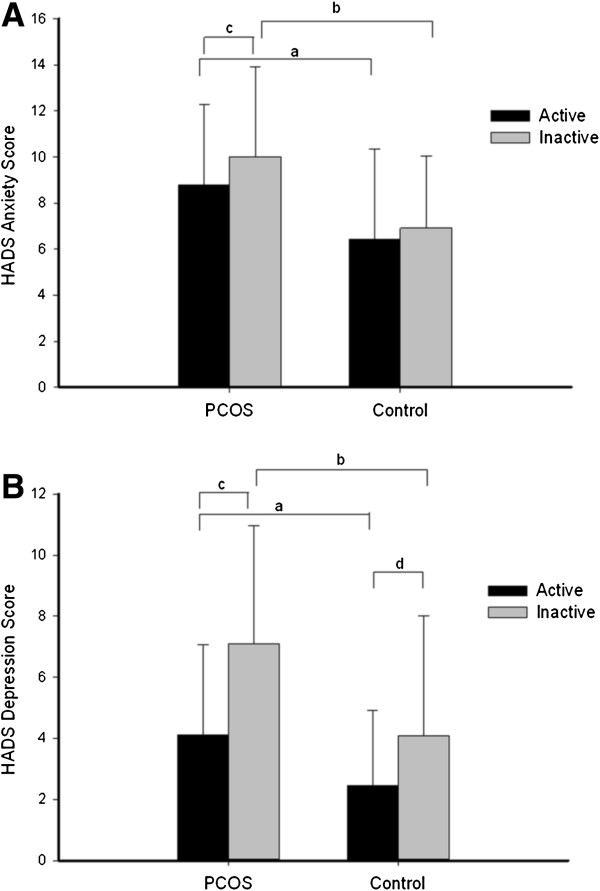
BACKGROUND: Physical activity is prescribed as a component of primary management for Polycystic Ovary Syndrome (PCOS). This study investigates the association between physical activity and mental health as well as the exercise barriers, motivators and support providers for younger women with and without PCOS to assist in physical activity uptake and prescription for these women. METHODS: Women aged 18-50 years with (n = 153) and without PCOS (n = 64) completed a questionnaire at one time point. The questionnaire included the Hospital Anxiety and Depression Scale and a survey regarding levels of physical activity, physical activity barriers, motivators and supports. A MANCOVA assessed associations between physical activity, PCOS and mental health (specifically depression and anxiety). Descriptive and Chi square goodness of fit statistics assessed the differences in perceived barriers, motivators and support providers amongst women with and without PCOS. RESULTS: Women with PCOS displayed higher severity of depression (F(1,210) = 8.32, p = 0.004) and anxiety (F(1,210) = 17.37, p < 0.001) symptoms compared to controls. Overall, for physically active women, depression was significantly less severe than in their inactive counterparts (F(2,210) = 13.62, p < 0.001). There were no differences in anxiety by physical activity status and no interaction effects between PCOS and activity status for depression or anxiety. Women with PCOS were more likely to report a lack of confidence about maintaining physical activity (Χ2 = 3.65; p = 0.046), fear of injury (Χ2 = 4.08; p = 0.043) and physical limitations (Χ2 = 11.92; p = 0.001) as barriers to physical activity and were more likely to be motivated to be active to control a medical condition (Χ2 = 7.48; p = 0.006). Women with PCOS identified more sources of support compared to women without PCOS. CONCLUSIONS: Physical activity is associated with lower depression in women with PCOS and differences exist in the self-reported physical activity barriers, motivators and support providers, compared to controls. Being more active may offer mental health benefits in managing PCOS. Prescribing physical activity to women with PCOS should be individualized and consider both common and PCOS-specific barriers and motivators for successful engagement.
Overview
The claims and statistics of this paper haven’t been checked yet.
Free: it reads the open-access text and checks the first 5 claims that cite a source we can check. Create a free account to check every claim.
Integrity signals
Registry
Cites
Statistics
Figures
Verification
Claims the paper makes
The claims and statistics of this paper haven’t been checked yet.
Free: it reads the open-access text and checks the first 5 claims that cite a source we can check. Create a free account to check every claim.
Claims other papers make about this one
Each is checked against this paper’s own text: does it say what the citing paper says it does?
The cited source says what the claim attributes to it.
In the citing paper
“This is evidenced by previous research reporting that a major barrier to physical activity adoption among women with PCOS is the perceived barrier that exercise is tiring and hard work [121], and fear of injury [72].”
From Providing lifestyle advice to women with PCOS: an overview of practical issues affecting success (2021) · cites this paper as [72]
In the citing paper
“Women with PCOS are more likely to report a lack of confidence about maintaining physical activity [72] which may be related to negative body image, and feelings of shame and worthlessness [73].”
From Providing lifestyle advice to women with PCOS: an overview of practical issues affecting success (2021) · cites this paper as [72]
Self-check
Percentages, sums and reported differences re-computed from the paper’s own numbers.
The self-check needs the paper’s full text.
Citations
Cites
1 retracted
Shaw, L. J., Bairey Merz, C. N., Azziz, R., Stanczyk, F. Z., Sopko, G., Braunstein, G. D., Kelsey, S. F., Kip, K. E., Cooper-DeHoff, R. M., Johnson, B. D., et al. (2008) · The Journal of Clinical Endocrinology & Metabolism · doi:10.1210/jc.2007-0425 · Cited by 427 · cited 1×
“PCOS has reproductive, psychological and cardio-metabolic features [3-7] and is associated with many long term adverse health problems including increased risk of obesity [4,8,9], type 2 diabetes and metabolic impairments [10-13], and cardiovascular risk factors [14,15].”
BackgroundRetractedThe Hospital Anxiety and Depression Scale
Zigmond, A. S., & Snaith, R. P. (1983) · Acta Psychiatrica Scandinavica · doi:10.1111/j.1600-0447.1983.tb09716.x · Cited by 47,139
Stages and processes of self-change of smoking: Toward an integrative model of change.
Prochaska, J. O., & DiClemente, C. C. (1983) · Journal of Consulting and Clinical Psychology · doi:10.1037/0022-006x.51.3.390 · Cited by 9,098 · cited 2×
“A simple, devised measure based on the trans-theoretical model TTM; [40] was used to assess participants’ physical activity levels.”
Method(2004) · Fertility and Sterility · doi:10.1016/j.fertnstert.2003.10.004 · Cited by 9,050
Depression, chronic diseases, and decrements in health: results from the World Health Surveys
Moussavi, S., Chatterji, S., Verdes, E., Tandon, A., Patel, V., & Ustun, B. (2007) · The Lancet · doi:10.1016/s0140-6736(07)61415-9 · Cited by 4,070 · cited 1×
“Many chronic illnesses have mental health impacts and are associated with reduction in quality of life and increases in depressive symptoms [21-24].”
BackgroundFranks, S. (1995) · New England Journal of Medicine · doi:10.1056/nejm199509283331307 · Cited by 2,463
Men at risk: occupation and male infertility
Claman, P. (2004) · Fertility and Sterility · doi:10.1016/s0015-0282(03)01188-9 · Cited by 2,387
March, W. A., Moore, V. M., Willson, K. J., Phillips, D. I. W., Norman, R. J., & Davies, M. J. (2010) · Human Reproduction · doi:10.1093/humrep/dep399 · Cited by 1,799
Global strategy on diet, physical activity and health
Samuelson, G. (2004) · Scandinavian Journal of Nutrition · doi:10.1080/11026480410034349 · Cited by 1,720
Teede, H., Deeks, A., & Moran, L. (2010) · BMC Medicine · doi:10.1186/1741-7015-8-41 · Cited by 1,565 · cited 2×
“PCOS has reproductive, psychological and cardio-metabolic features [3-7] and is associated with many long term adverse health problems including increased risk of obesity [4,8,9], type 2 diabetes and metabolic impairments [10-13], and cardiovascular risk factors [14,15].”
Self-citationFranks, S. (1997) · Archives of Disease in Childhood · doi:10.1136/adc.77.1.89 · Cited by 806
Exercise for the treatment of depression and anxiety
Carek, P. J., Laibstain, S. E., & Carek, S. M. (2011) · The International Journal of Psychiatry in Medicine · doi:10.2190/pm.41.1.c · Cited by 797 · cited 1×
“Reductions in depression and elevations in quality of life have been observed in combined physical activity and dietary interventions in PCOS [31] and specific physical activity interventions have been found to be effective in reducing mild-moderate depression [32,33] and anxiety [34] in the general population.”
BackgroundStepto, N. K., Cassar, S., Joham, A. E., Hutchison, S. K., Harrison, C. L., Goldstein, R. F., & Teede, H. J. (2013) · Human Reproduction · doi:10.1093/humrep/des463 · Cited by 747 · cited 1×
“PCOS has reproductive, psychological and cardio-metabolic features [3-7] and is associated with many long term adverse health problems including increased risk of obesity [4,8,9], type 2 diabetes and metabolic impairments [10-13], and cardiovascular risk factors [14,15].”
BackgroundSelf-citationMoorey, S., Greer, S., Watson, M., Gorman, C., Rowden, L., Tunmore, R., Robertson, B., & Bliss, J. (1991) · British Journal of Psychiatry · doi:10.1192/bjp.158.2.255 · Cited by 654
Clark, A. M., Ledger, W., Galletly, C., Tomlinson, L., Blaney, F., Wang, X., & Norman, R. J. (1995) · Human Reproduction · doi:10.1093/oxfordjournals.humrep.a135772 · Cited by 642 · cited 1×
“Physical activity is an effective therapeutic option for the reproductive [27,28] and metabolic features [29] of PCOS.”
BackgroundPrevalence and predictors of dyslipidemia in women with polycystic ovary syndrome
Legro, R. S., Kunselman, A. R., & Dunaif, A. (2001) · The American Journal of Medicine · doi:10.1016/s0002-9343(01)00948-2 · Cited by 622 · cited 1×
“PCOS has reproductive, psychological and cardio-metabolic features [3-7] and is associated with many long term adverse health problems including increased risk of obesity [4,8,9], type 2 diabetes and metabolic impairments [10-13], and cardiovascular risk factors [14,15].”
BackgroundBooth, M. L., Bauman, A., Owen, N., & Gore, C. J. (1997) · Preventive Medicine · doi:10.1006/pmed.1996.9982 · Cited by 588 · cited 1×
“We expected some barriers and motivators to differ between women with and without PCOS and that they may vary according to age [36].”
BackgroundCONWAY, G. S., HONOUR, J. W., & JACOBS, H. S. (1989) · Clinical Endocrinology · doi:10.1111/j.1365-2265.1989.tb00446.x · Cited by 445 · cited 1×
“PCOS has reproductive, psychological and cardio-metabolic features [3-7] and is associated with many long term adverse health problems including increased risk of obesity [4,8,9], type 2 diabetes and metabolic impairments [10-13], and cardiovascular risk factors [14,15].”
BackgroundDepression and anxiety among US adults: associations with body mass index
Zhao, G., Ford, E. S., Dhingra, S., Li, C., Strine, T. W., & Mokdad, A. H. (2009) · International Journal of Obesity · doi:10.1038/ijo.2008.268 · Cited by 423 · cited 2×
“A higher BMI was associated with greater anxiety which is consistent with previous research [46].”
Result‘The thief of womanhood’: women's experience of polycystic ovarian syndrome
Kitzinger, C., & Willmott, J. (2002) · Social Science & Medicine · doi:10.1016/s0277-9536(01)00034-x · Cited by 392 · cited 2×
“Coping with the condition itself, fears regarding infertility, loss of femininity and sexuality, body image concerns and lower self-worth may all contribute to poorer mental health outcomes [7,18,25].”
BackgroundQuality of life and psychological well being in polycystic ovary syndrome
Barnard, L., Ferriday, D., Guenther, N., Strauss, B., Balen, A. H., & Dye, L. (2007) · Human Reproduction · doi:10.1093/humrep/dem108 · Cited by 388 · cited 1×
“We and others have shown that diminished mental health is related to PCOS, including depression, anxiety and lower quality of life [16-18].”
BackgroundAssessment and management of polycystic ovary syndrome: Summary of an evidence-based guideline
Teede, H. J., Misso, M. L., Deeks, A. A., Moran, L. J., Stuckey, B. G. A., Wong, J. L. A., Norman, R. J., Costello, M. F., & Groups, O. B. O. T. G. D. (2011) · Medical Journal of Australia · doi:10.5694/mja11.10915 · Cited by 379 · cited 3×
“Therefore optimisation of physical activity as a treatment for PCOS, as recommended by the first Evidence based Guideline for the Assessment and Management of PCOS [26], should consider the mental health status of women with PCOS and the interactions with physical activity.”
BackgroundMethodInfluentialSelf-citationKIDDY, D. S., SHARP, P. S., WHITE, D. M., SCANLON, M. F., MASON, H. D., BRAY, C. S., POLSON, D. W., REED, M. J., & FRANKS, S. (1990) · Clinical Endocrinology · doi:10.1111/j.1365-2265.1990.tb00857.x · Cited by 364 · cited 1×
“PCOS has reproductive, psychological and cardio-metabolic features [3-7] and is associated with many long term adverse health problems including increased risk of obesity [4,8,9], type 2 diabetes and metabolic impairments [10-13], and cardiovascular risk factors [14,15].”
BackgroundMetabolic features of the reproductive phenotypes of polycystic ovary syndrome
Moran, L., & Teede, H. (2009) · Human Reproduction Update · doi:10.1093/humupd/dmp008 · Cited by 362 · cited 1×
“PCOS has reproductive, psychological and cardio-metabolic features [3-7] and is associated with many long term adverse health problems including increased risk of obesity [4,8,9], type 2 diabetes and metabolic impairments [10-13], and cardiovascular risk factors [14,15].”
BackgroundSelf-citationTeede, H. J., Joham, A. E., Paul, E., Moran, L. J., Loxton, D., Jolley, D., & Lombard, C. (2013) · Obesity · doi:10.1002/oby.20213 · Cited by 351 · cited 1×
“This is despite the fact that women with PCOS have a higher mean BMI and greater risk of diabetes and cardio-metabolic risk factors [50].”
BackgroundSelf-citationNorman, R. J., Masters, L., Milner, C. R., Wang, J. X., & Davies, M. J. (2001) · Human Reproduction · doi:10.1093/humrep/16.9.1995 · Cited by 341 · cited 1×
“PCOS has reproductive, psychological and cardio-metabolic features [3-7] and is associated with many long term adverse health problems including increased risk of obesity [4,8,9], type 2 diabetes and metabolic impairments [10-13], and cardiovascular risk factors [14,15].”
BackgroundDefects in insulin receptor signaling in vivo in the polycystic ovary syndrome (PCOS)
Dunaif, A., Wu, X., Lee, A., & Diamanti-Kandarakis, E. (2001) · American Journal of Physiology-Endocrinology and Metabolism · doi:10.1152/ajpendo.2001.281.2.e392 · Cited by 337 · cited 1×
“PCOS has reproductive, psychological and cardio-metabolic features [3-7] and is associated with many long term adverse health problems including increased risk of obesity [4,8,9], type 2 diabetes and metabolic impairments [10-13], and cardiovascular risk factors [14,15].”
BackgroundAnxiety and depression in polycystic ovary syndrome: a systematic review and meta-analysis
Barry, J. A., Kuczmierczyk, A. R., & Hardiman, P. J. (2011) · Human Reproduction · doi:10.1093/humrep/der197 · Cited by 336 · cited 1×
“We and others have shown that diminished mental health is related to PCOS, including depression, anxiety and lower quality of life [16-18].”
BackgroundSusan Hedayati, S., Yalamanchili, V., & Finkelstein, F. O. (2012) · Kidney International · doi:10.1038/ki.2011.358 · Cited by 319
Overweight Women with Polycystic Ovary Syndrome Have Evidence of Subclinical Cardiovascular Disease
Meyer, C., McGrath, B. P., & Teede, H. J. (2005) · The Journal of Clinical Endocrinology & Metabolism · doi:10.1210/jc.2005-0011 · Cited by 273 · cited 1×
“PCOS has reproductive, psychological and cardio-metabolic features [3-7] and is associated with many long term adverse health problems including increased risk of obesity [4,8,9], type 2 diabetes and metabolic impairments [10-13], and cardiovascular risk factors [14,15].”
BackgroundSelf-citationExercise therapy in polycystic ovary syndrome: a systematic review
Harrison, C. L., Lombard, C. B., Moran, L. J., & Teede, H. J. (2011) · Human Reproduction Update · doi:10.1093/humupd/dmq045 · Cited by 267 · cited 2×
“Despite the positive physical effects of exercise [35], the inherent symptoms and co-morbidities associated with PCOS may present barriers to engagement in physical activity and may impact on typically positive psychological responses to being physically active.”
BackgroundSelf-citationPrevalence and correlates of DSM-IV major depression in an Australian national survey
Wilhelm, K., Mitchell, P., Slade, T., Brownhill, S., & Andrews, G. (2003) · Journal of Affective Disorders · doi:10.1016/s0165-0327(02)00040-x · Cited by 243 · cited 1×
“Many chronic illnesses have mental health impacts and are associated with reduction in quality of life and increases in depressive symptoms [21-24].”
BackgroundThomson, R. L., Buckley, J. D., Lim, S. S., Noakes, M., Clifton, P. M., Norman, R. J., & Brinkworth, G. D. (2010) · Fertility and Sterility · doi:10.1016/j.fertnstert.2009.11.001 · Cited by 207 · cited 3×
“Current results also strengthen claims that participation in physical activity programs may be associated with lower depressive symptoms and improvements in quality of life [31,47] and indicate the value of exploring these associations further using interventional and longitudinal research.”
BackgroundDeeks, A. A., Gibson-Helm, M. E., Paul, E., & Teede, H. J. (2011) · Human Reproduction · doi:10.1093/humrep/der071 · Cited by 202
Self-citationHerring, M. P., Jacob, M. L., Suveg, C., Dishman, R. K., & O’Connor, P. J. (2012) · Psychotherapy and Psychosomatics · doi:10.1159/000327898 · Cited by 200 · cited 1×
“Reductions in depression and elevations in quality of life have been observed in combined physical activity and dietary interventions in PCOS [31] and specific physical activity interventions have been found to be effective in reducing mild-moderate depression [32,33] and anxiety [34] in the general population.”
BackgroundHutchison, S. K., Stepto, N. K., Harrison, C. L., Moran, L. J., Strauss, B. J., & Teede, H. J. (2011) · The Journal of Clinical Endocrinology & Metabolism · doi:10.1210/jc.2010-0828 · Cited by 192 · cited 2×
“Physical activity is an effective therapeutic option for the reproductive [27,28] and metabolic features [29] of PCOS.”
BackgroundSelf-citationButt, J., Weinberg, R. S., Breckon, J. D., & Claytor, R. P. (2011) · Journal of Physical Activity and Health · doi:10.1123/jpah.8.8.1074 · Cited by 191 · cited 1×
“In future research, investigation of barriers and motivators specifically related to PCOS would add value as it has been shown that hirsutism and acne can result in a negative self-image [25,51] which is a significant barrier to physical activity [52].”
BackgroundKrul, A. J., Daanen, H. A. M., & Choi, H. (2011) · The European Journal of Public Health · doi:10.1093/eurpub/ckp228 · Cited by 190 · cited 1×
“This population (adult women) is known to typically underestimate their weight and overestimate their height (therefore reducing estimated BMI) [39], however, any adjustments required would be common to both groups.”
BackgroundNeuroimmunological effects of physical exercise in depression
Eyre, H., & Baune, B. T. (2012) · Brain, Behavior, and Immunity · doi:10.1016/j.bbi.2011.09.015 · Cited by 187 · cited 1×
“Reductions in depression and elevations in quality of life have been observed in combined physical activity and dietary interventions in PCOS [31] and specific physical activity interventions have been found to be effective in reducing mild-moderate depression [32,33] and anxiety [34] in the general population.”
BackgroundMishra, G. D., & Kuh, D. (2012) · BMJ · doi:10.1136/bmj.e402 · Cited by 161 · cited 2×
“Only the women aged 18- 50 years were included for analysis to reduce any potential confounding effects of menopause (average age of onset is 51 years) which is associated with mental health outcomes [38].”
BackgroundMethodMoran, L., Gibson-Helm, M., Teede, H., & Deeks, A. (2010) · Journal of Psychosomatic Obstetrics & Gynecology · doi:10.3109/01674820903477593 · Cited by 127 · cited 1×
“These mental health differences are noted across the lifespan, including adolescents, and across the different PCOS phenotypes [19,20].”
BackgroundSelf-citationHealth-related quality of life among adolescents with polycystic ovary syndrome
Jones, G. L., Hall, J. M., Lashen, H. L., Balen, A. H., & Ledger, W. L. (2011) · Journal of Obstetric, Gynecologic & Neonatal Nursing · doi:10.1111/j.1552-6909.2011.01279.x · Cited by 124 · cited 2×
“The physical symptoms, in addition to an increased prevalence of obesity in this population have been found to be associated with an increased level of self-consciousness during physical activity [51].”
BackgroundWood, B. M., Nicholas, M. K., Blyth, F., Asghari, A., & Gibson, S. (2010) · Pain Medicine · doi:10.1111/j.1526-4637.2010.01005.x · Cited by 108 · cited 1×
“Age and BMI were used as covariates given the significant role each variable has been shown to have on mental health [38,45].”
MethodPolycystic ovary syndrome - an update.
Boyle, J. A., & Teede, H. J. (2012) · PubMed · Cited by 99
Self-citationMishra, R., Hoop, C. L., Kodali, R., Sahoo, B., van der Wel, P. C. A., & Wetzel, R. (2012) · Journal of Molecular Biology · doi:10.1016/j.jmb.2012.09.011 · Cited by 90
Psychological parameters in the reproductive phenotypes of polycystic ovary syndrome
Moran, L. J., Deeks, A. A., Gibson-Helm, M. E., & Teede, H. J. (2012) · Human Reproduction · doi:10.1093/humrep/des114 · Cited by 85 · cited 3×
“Unsurprisingly, both BMI and PCOS were significantly associated with depression as has been found in previous research [19,46].”
BackgroundResultSelf-citationManagement of obesity: attitudes and practices of Australian dietitians
Campbell, K. J., & Crawford, D. A. (2000) · International Journal of Obesity · doi:10.1038/sj.ijo.0801226 · Cited by 82 · cited 3×
“Having a positive attitude towards physical activity is insufficient for long-term physical activity engagement, as positive attitudes towards physical activity do not correspond with actual increases in physically active behaviour [49].”
BackgroundInfluentialLamb, J. D., Johnstone, E. B., Rousseau, J.-A., Jones, C. L., Pasch, L. A., Cedars, M. I., & Huddleston, H. G. (2011) · American Journal of Obstetrics and Gynecology · doi:10.1016/j.ajog.2010.12.006 · Cited by 70
Harris-Glocker, M., Davidson, K., Kochman, L., Guzick, D., & Hoeger, K. (2010) · Fertility and Sterility · doi:10.1016/j.fertnstert.2009.08.006 · Cited by 66 · cited 1×
“Current results also strengthen claims that participation in physical activity programs may be associated with lower depressive symptoms and improvements in quality of life [31,47] and indicate the value of exploring these associations further using interventional and longitudinal research.”
BackgroundMoran, L., Harrison, C., Hutchison, S., Stepto, N., Strauss, B., & Teede, H. (2011) · Hormone and Metabolic Research · doi:10.1055/s-0031-1291208 · Cited by 49 · cited 1×
“Physical activity is an effective therapeutic option for the reproductive [27,28] and metabolic features [29] of PCOS.”
BackgroundSelf-citationMidtgaard, J., Stage, M., Møller, T., Andersen, C., Quist, M., Rørth, M., Herrstedt, J., Vistisen, K., Christiansen, B., & Adamsen, L. (2011) · Acta Oncologica · doi:10.3109/0284186x.2010.543145 · Cited by 37
Greater Exercise Sweating in Obese Women with Polycystic Ovary Syndrome Compared with Obese Controls
Stachenfeld, N. S., Yeckel, C. W., & Taylor, H. S. (2010) · Medicine & Science in Sports & Exercise · doi:10.1249/mss.0b013e3181d8cf68 · Cited by 28
Health-related quality of life in PCOS and related infertility: How can we assess this?
Jones, G. L., Balen, A. H., & Ledger, W. J. (2008) · Human Fertility · doi:10.1080/14647270802078179 · Cited by 23 · cited 1×
“PCOS has reproductive, psychological and cardio-metabolic features [3-7] and is associated with many long term adverse health problems including increased risk of obesity [4,8,9], type 2 diabetes and metabolic impairments [10-13], and cardiovascular risk factors [14,15].”
BackgroundDepression and Sleep Disturbance in Patients with Chronic Obstructive Pulmonary Disease
Lee, H., Kim, I., Lim, Y., Jung, H. Y., & Park, H. (2011) · Geriatric Nursing · doi:10.1016/j.gerinurse.2011.08.002 · Cited by 16 · cited 1×
“Many chronic illnesses have mental health impacts and are associated with reduction in quality of life and increases in depressive symptoms [21-24].”
BackgroundObesity Management in Women with Polycystic Ovary Syndrome
Lim, S. S., Clifton, P. M., Noakes, M., & Norman, R. J. (2007) · Women s Health · doi:10.2217/17455057.3.1.73 · Cited by 13 · cited 1×
“PCOS has reproductive, psychological and cardio-metabolic features [3-7] and is associated with many long term adverse health problems including increased risk of obesity [4,8,9], type 2 diabetes and metabolic impairments [10-13], and cardiovascular risk factors [14,15].”
Background
Research works printed but not linked: 1
- Australian Bureau of Statistics Physical Activity: Main barriers and motivators report 4177.0 - Participation in Sports and Physical Recreation 2007 Australia: Australian Bureau of Statistics; Canberra
Cited by
Exercise as a treatment for depression: A meta-analysis
Kvam, S., Kleppe, C. L., Nordhus, I. H., & Hovland, A. (2016) · Journal of Affective Disorders · doi:10.1016/j.jad.2016.03.063 · Cited by 837
“70 MDD, Major depressive disorder; NICE, National Institute for Health and Care Excellence; CBT, cognitive behavior stic and Statistical Manual of Mental Disorders; ICD, the International Classification of Diseases; RCTs, randomized ; BDNF, brain-derived neurotrophic factor”
BackgroundInfluentialObesity and Polycystic Ovary Syndrome: Implications for Pathogenesis and Novel Management Strategies
Barber, T. M., Hanson, P., Weickert, M. O., & Franks, S. (2019) · Clinical Medicine Insights: Reproductive Health · doi:10.1177/1179558119874042 · Cited by 411
“Encouragingly however, physically active women (regardless of PCOS status) experienced less severe depression than that in their inactive counterparts (104).”
BackgroundResultDokras, A., Stener-Victorin, E., Yildiz, B. O., Li, R., Ottey, S., Shah, D., Epperson, N., & Teede, H. (2018) · Fertility and Sterility · doi:10.1016/j.fertnstert.2018.01.038 · Cited by 285
Self-citationMetabolic risk in PCOS: Phenotype and adiposity impact
Moran, L. J., Norman, R. J., & Teede, H. J. (2015) · Trends in Endocrinology & Metabolism · doi:10.1016/j.tem.2014.12.003 · Cited by 245
Self-citationThe mental health of women with polycystic ovary syndrome: a systematic review and meta-analysis
Yin, X., Ji, Y., Chan, C., & Chan, C. (2020) · Archives of Women s Mental Health · doi:10.1007/s00737-020-01043-x · Cited by 171
“…rate Adali et al. (2008) * * * * ** * * – 8 Akdag et al. (2016) * * – * ** * * – 7 Asik et al. (2015) * – – * ** * * – 6 Balikci et al. (2014) * – – * ** * * – 6 Banting et al. (2014) * – – * ** * * – 6 Battaglia et al. (2008) * – – * ** * * – 6 Benetti-Pinto et al. (2015) * – – * * * * – 5…”
Influential
Metadata
- Authors
- Banting, L. K., Gibson-Helm, M., Polman, R., Teede, H. J., & Stepto, N. K.
- Affiliations
- Victoria University (AU)
- Monash Health (AU)
- Monash University (AU)
- Corresponding author
- Stepto, Nigel K
- Venue
- BMC Women's Health
- Published
- 2014-03-27
- Volume
- 14
- Issue
- 1
- Pages
- 51-51
- ISSN
- 1472-6874 (ISSN-L)
- PMC
- PMC3986680
- OpenAlex
- W1982091562
- Cited by
- 121
- References
- 56
- Citations by year
- 2026: 7 · 2025: 2 · 2024: 15 · 2023: 13 · 2022: 13 · 2021: 22 · 2020: 9 · 2019: 14 · 2018: 6 · 2017: 2 · 2016: 10 · 2015: 6 · 2014: 2
- FWCI
- 8.08
- Type
- journal article
- Language
- en
- Open access
- gold
- doi.org
- Licence
- Locations
- BMC Women s Health (publishedVersion, cc-by)
- Europe PMC (PubMed Central) (publishedVersion, cc-by)
- PubMed Central (publishedVersion, cc-by)
- PubMed (publishedVersion)
- Bournemouth University Research Online (Bournemouth University) (acceptedVersion)
- QUT ePrints (Queensland University of Technology) (submittedVersion, cc-by)
- Minerva Access (University of Melbourne) (submittedVersion, cc-by)
- Victoria University Research Repository (Victoria University) (submittedVersion, cc-by)
- Adelaide Research & Scholarship (AR&S) (University of Adelaide) (submittedVersion, cc-by)
- Funders
- Australian Government
- National Health and Medical Research Council
- Topics
- Health Sciences › Medicine › Reproductive Medicine › Ovarian function and disorders
- Health Sciences › Medicine › Public Health, Environmental and Occupational Health › Physical Activity and Health
- Social Sciences › Life-span and Life-course Studies › Recreational Sport and Physical Activity
- Keywords
- polycystic ovary syndrome, physical activity, mental health, depression, anxiety, barriers to exercise, social support, young women, physical activity prescription, fear of injury, physical limitations, self-efficacy, individualized exercise prescription, exercise adherence
- MeSH terms
- Adolescent, Adult, Anxiety, Cross-Sectional Studies, Depression, Female, Humans, Middle Aged, Motivation, Motor Activity, Polycystic Ovary Syndrome, Psychiatric Status Rating Scales, Surveys and Questionnaires, Social Support, Body Mass Index, Case-Control Studies, Self Efficacy, Young Adult
About these checks
Registry, retraction, Cites and statistics results are computed, not judged, with one exception: a printed reference that no index lists is read once by a model before it counts as a citation error. Claims are extracted by a model and kept only when their quote appears verbatim in the text; each cited source is then checked, with a model’s help, for whether it says what the claim relies on. Those verdicts can be wrong — read the claim’s quote and the cited source before relying on one.
Statistics and arithmetic are recomputed, not judged.
Confidence bands are shown only for fields calibrated on our annotated test set. None is calibrated yet, so no band is shown.
What counts as a claim ›How we measure confidence ›How we check this ›
Are you an author, or do you see a problem with this page? Request a review
Data sources
Bibliographic data: Semantic Scholar, OpenAlex, Crossref.
Contains information from the Semantic Scholar Academic Graph Datasets, made available under the ODC Attribution License (ODC-BY 1.0).
Semantic Scholar’s data is described in: Kinney, R., et al. (2023). The Semantic Scholar Open Data Platform. arXiv:2301.10140.
