

Rethinking the patient: using Burden of Treatment Theory to understand the changing dynamics of illness
Open accessThe DOI matches its Crossref record; 77 of the 77 references it cites were found in a registry or an index.
Abstract
BACKGROUND: In this article we outline Burden of Treatment Theory, a new model of the relationship between sick people, their social networks, and healthcare services. Health services face the challenge of growing populations with long-term and life-limiting conditions, they have responded to this by delegating to sick people and their networks routine work aimed at managing symptoms, and at retarding - and sometimes preventing - disease progression. This is the new proactive work of patient-hood for which patients are increasingly accountable: founded on ideas about self-care, self-empowerment, and self-actualization, and on new technologies and treatment modalities which can be shifted from the clinic into the community. These place new demands on sick people, which they may experience as burdens of treatment. DISCUSSION: As the burdens accumulate some patients are overwhelmed, and the consequences are likely to be poor healthcare outcomes for individual patients, increasing strain on caregivers, and rising demand and costs of healthcare services. In the face of these challenges we need to better understand the resources that patients draw upon as they respond to the demands of both burdens of illness and burdens of treatment, and the ways that resources interact with healthcare utilization. SUMMARY: Burden of Treatment Theory is oriented to understanding how capacity for action interacts with the work that stems from healthcare. Burden of Treatment Theory is a structural model that focuses on the work that patients and their networks do. It thus helps us understand variations in healthcare utilization and adherence in different healthcare settings and clinical contexts.
Overview
The claims and statistics of this paper haven’t been checked yet.
Free: it reads the open-access text and checks the first 5 claims that cite a source we can check. Create a free account to check every claim.
Integrity signals
Registry
Cites
Statistics
Figures
Verification
Claims the paper makes
The claims and statistics of this paper haven’t been checked yet.
Free: it reads the open-access text and checks the first 5 claims that cite a source we can check. Create a free account to check every claim.
Claims other papers make about this one
Each is checked against this paper’s own text: does it say what the citing paper says it does?
The cited source says what the claim attributes to it.
In the citing paper
“Burden of treatment also includes the effort needed from the patient to access services (31, 93), which technologies (especially e-consultations) could potentially alleviate.”
From Planning and Evaluating Remote Consultation Services: A New Conceptual Framework Incorporating Complexity and Practical Ethics (2021) · cites this paper as [93]
The cited source says what the claim attributes to it.
In the citing paper
“NPT both can be, and is, applied to those groups.”
From Using Normalization Process Theory in feasibility studies and process evaluations of complex healthcare interventions: a systematic review (2018) · cites this paper as [215]
The cited source says what the claim attributes to it.
In the citing paper
“But as May et al have pointed out in their burden of treatment theory, shifting the work of care from clinic to community places new demands on the sick (and hence raises ethical questions) [75].”
In the citing paper
“A related concept is what May et al. (93) have called burden of treatment—the additional burden placed on the patient when they are asked to “self-manage” —with the sickest and most vulnerable carrying the greatest burden.”
From Planning and Evaluating Remote Consultation Services: A New Conceptual Framework Incorporating Complexity and Practical Ethics (2021) · cites this paper as [93]
In the citing paper
“Work by Kennedy et al. [57] and Gallagher et al. [58], for example, applies NPT to situations in the home and outside of formal healthcare organisations, where ‘contexts’ are not so much organisational as organising and are distributed across informal social networks [59, 60].”
From Implementation, context and complexity (2016) · cites this paper as [59]
Self-check
Percentages, sums and reported differences re-computed from the paper’s own numbers.
The self-check needs the paper’s full text.
Citations
Cites
Granovetter, M. S. (1973) · American Journal of Sociology · doi:10.1086/225469 · Cited by 40,491 · cited 2×
“Following Granovetter [48], this is about the extent to which they can add useful relationships – characterized by weak ties between members – to the core of strong ties through which expectations or obligations of actual material and effective exchange are played out.”
BackgroundSocial Capital: Its Origins and Applications in Modern Sociology
Portes, A. (1998) · Annual Review of Sociology · doi:10.1146/annurev.soc.24.1.1 · Cited by 12,037 · cited 1×
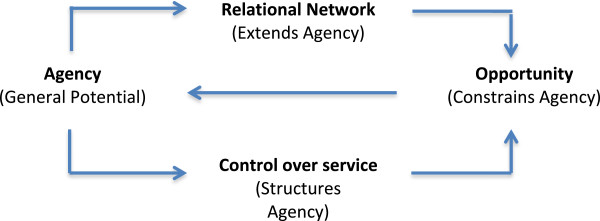
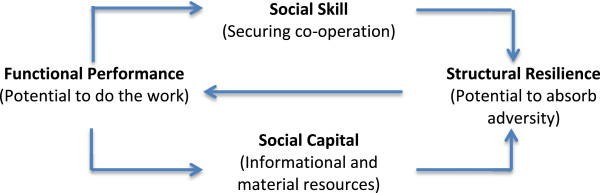
“While functional performance and social skill describe the capacity of a patient and relational network to mobilize themselves and others to utilize healthcare services, access to social capital [47] is also crucial.”
Background(1951) · Cited by 8,693
Barnett, K., Mercer, S. W., Norbury, M., Watt, G., Wyke, S., & Guthrie, B. (2012) · The Lancet · doi:10.1016/s0140-6736(12)60240-2 · Cited by 6,972 · cited 1×
“Unsupported individuals who are isolated from meaningful social networks are not uncommon, especially amongst older people where relational networks are unstable and may diminish towards the end of life [5] but most patients have some kind of mutually supportive social relationships.”
BackgroundOrganizing and the process of sensemaking
Weick, K. E., Sutcliffe, K. M., & Obstfeld, D. (2005) · Organization Science · doi:10.1287/orsc.1050.0133 · Cited by 6,943
Chronic illness as biographical disruption
Bury, M. (1982) · Sociology of Health & Illness · doi:10.1111/1467-9566.ep11339939 · Cited by 3,960 · cited 1×
“By this we mean the extent to which members of the patient’s extended network can capture, possess, and mobilize psychological and social resources to absorb and compensate for – and even thrive – in the face of biographical disruptions [51], adverse path0physiological events and social processes.”
BackgroundImplementing, Embedding, and Integrating Practices: An Outline of Normalization Process Theory
May, C., & Finch, T. (2009) · Sociology · doi:10.1177/0038038509103208 · Cited by 2,115
Self-citationSocial Skill and the Theory of Fields
Fligstein, N. (2001) · Sociological Theory · doi:10.1111/0735-2751.00132 · Cited by 1,624
Development of a theory of implementation and integration: Normalization Process Theory
May, C. R., Mair, F., Finch, T., MacFarlane, A., Dowrick, C., Treweek, S., Rapley, T., Ballini, L., Ong, B. N., Rogers, A., et al. (2009) · Implementation Science · doi:10.1186/1748-5908-4-29 · Cited by 1,409
Self-citationBiocapital: The Constitution of Postgenomic Life
Sunder Rajan, K. (2006) · Duke University Press eBooks · doi:10.1215/9780822388005 · Cited by 1,067
Biocapital: The Constitution of Postgenomic Life
Rajan, K. S. (2006) · DigitalGeorgetown (Georgetown University Library) · Cited by 1,055
Unending Work and Care: Managing Chronic Illness at Home
Kinney, J. M., Kahana, E., Corbin, J. M., & Strauss, A. (1989) · Contemporary Sociology · doi:10.2307/2074227 · Cited by 946
May, C., Finch, T., Mair, F., Ballini, L., Dowrick, C., Eccles, M., Gask, L., MacFarlane, A., Murray, E., Rapley, T., et al. (2007) · BMC Health Services Research · doi:10.1186/1472-6963-7-148 · Cited by 768
Self-citationWe need minimally disruptive medicine
May, C., Montori, V. M., & Mair, F. S. (2009) · BMJ · doi:10.1136/bmj.b2803 · Cited by 734
Self-citationShippee, N. D., Shah, N. D., May, C. R., Mair, F. S., & Montori, V. M. (2012) · Journal of Clinical Epidemiology · doi:10.1016/j.jclinepi.2012.05.005 · Cited by 728 · cited 4×
“Second, Shippee et al’s., Cumulative Complexity Model [15] outlined relations between the work delegated by healthcare systems to patients (their burden of treatment), and the ways in which they can balance these burdens with capacity to meet the demands of delegated work.”
BackgroundInfluentialSelf-citationSocial Emergence: Societies As Complex Systems
Sawyer, R. K. (2005) · Cambridge University Press eBooks · doi:10.1017/cbo9780511734892 · Cited by 724
The Sick Role and the Role of the Physician Reconsidered
Parsons, T. (1975) · The Milbank Memorial Fund Quarterly. Health and Society · doi:10.2307/3349493 · Cited by 624
Beauchamp, D. E. (1983) · Political Science Quarterly · doi:10.2307/2149741 · Cited by 622
SIEGAL, A. (1987) · American Journal of Psychiatry · doi:10.1176/ajp.144.3.373-a · Cited by 605
Large‐System Transformation in Health Care: A Realist Review
BEST, A., GREENHALGH, T., LEWIS, S., SAUL, J. E., CARROLL, S., & BITZ, J. (2012) · The Milbank Quarterly · doi:10.1111/j.1468-0009.2012.00670.x · Cited by 571 · cited 1×
“large scale institutional and professional interests are at stake [65].”
BackgroundBiomedicalization: Technoscientific Transformations of Health, Illness, and U.S. Biomedicine
Clarke, A. E., Shim, J. K., Mamo, L., Fosket, J. R., & Fishman, J. R. (2003) · American Sociological Review · doi:10.1177/000312240306800201 · Cited by 560 · cited 1×
“Being a patient has come to involve managed engagement with multiple healthcare practices that are consequences of the therapeutic revolution of the 1950s and 1960s [36], the emergence of a massive and global biomedical-industrial complex from the 1970s [37], and important developments in the life sciences and technol…”
BackgroundSocial emergence societies as complex systems
Sawyer, R. K. (2005) · Cited by 547
Adapting clinical guidelines to take account of multimorbidity
Guthrie, B., Payne, K., Alderson, P., McMurdo, M. E. T., & Mercer, S. W. (2012) · BMJ · doi:10.1136/bmj.e6341 · Cited by 530 · cited 1×
“This is the burden of treatment it self, as they engage with services and therapeutic modalities aimed at conditions that cannot be cured but must instead be managed [6].”
BackgroundAction Theory and the Human Condition.
Wrong, D. H., & Parsons, T. (1980) · Social Forces · doi:10.2307/2577330 · Cited by 523
Uphoff, E. P., Pickett, K. E., Cabieses, B., Small, N., & Wright, J. (2013) · International Journal for Equity in Health · doi:10.1186/1475-9276-12-54 · Cited by 424 · cited 1×
“The impacts of socio-economic stat us, e hnicity, age, and gender on both gradients of health status and access to services are well established and incontrovertible [52-54].”
BackgroundHard-Earned Lives: Accounts of Health and Illness from East London
Cornwell, J. (1985) · Medical Entomology and Zoology · Cited by 420
Burden of treatment for chronic illness: a concept analysis and review of the literature
Sav, A., King, M. A., Whitty, J. A., Kendall, E., McMillan, S. S., Kelly, F., Hunter, B., & Wheeler, A. J. (2015) · Health Expectations · doi:10.1111/hex.12046 · Cited by 385 · cited 1×
“In turn, this may lead to structurally induced non-compliance and over- or under-utilization of healthcare services as the complexity and weight of these burdens grows over time, as comorbid conditions appear, and as patients’ capacity to meet their demands is overwhelmed [14-20].”
BackgroundGallacher, K., May, C. R., Montori, V. M., & Mair, F. S. (2011) · The Annals of Family Medicine · doi:10.1370/afm.1249 · Cited by 356 · cited 2×
“First, Normalization Process Theory [21,22] characterized the processes by which elements of work become embedded in everyday practice, linked this to the problem of patient contributions to the distribution of illness related work [23-25], and informed the development of the concept of Minimally Disruptive Medicine […”
BackgroundSelf-citationEton, D., Ramalho de Oliveira, D., Egginton, J., Ridgeway, J., Odell, L., May, C., & Montori, V. (2012) · Patient Related Outcome Measures · doi:10.2147/prom.s34681 · Cited by 355 · cited 1×
“The notion of burden of treatment [9,12,14,26,27], has here been useful in conceptualizing the implications of this work.”
BackgroundSelf-citationSupport for self care for patients with chronic disease
Kennedy, A., Rogers, A., & Bower, P. (2007) · BMJ · doi:10.1136/bmj.39372.540903.94 · Cited by 307 · cited 1×
“In turn, this shift in accountability involves adding the burden of treatment to the burden of symptoms, as patients experience new and growing demands to organize and co-ordinate their own care, to comply with complex treatment and self-monitoring regimens, and to meet a whole range of expectations of personal motiva…”
BackgroundSelf-citationPatient Complexity: More Than Comorbidity. The Vector Model of Complexity
Safford, M. M., Allison, J. J., & Kiefe, C. I. (2007) · Journal of General Internal Medicine · doi:10.1007/s11606-007-0307-0 · Cited by 300
Parameter Space Compression Underlies Emergent Theories and Predictive Models
Machta, B. B., Chachra, R., Transtrum, M. K., & Sethna, J. P. (2013) · Science · doi:10.1126/science.1238723 · Cited by 285 · cited 1×
“Research on the structures of theoretical explanation [62], suggests that the most robust and efficient conceptual models tend to focus on a relatively small set of strong primary assumptions about the dynamics of behavior within systems.”
BackgroundTran, V.-T., Montori, V. M., Eton, D. T., Baruch, D., Falissard, B., & Ravaud, P. (2012) · BMC Medicine · doi:10.1186/1741-7015-10-68 · Cited by 275 · cited 1×
“The notion of burden of treatment [9,12,14,26,27], has here been”
BackgroundSelf-citationSocial Network Analysis in Healthcare Settings: A Systematic Scoping Review
Chambers, D., Wilson, P., Thompson, C., & Harden, M. (2012) · PLoS ONE · doi:10.1371/journal.pone.0041911 · Cited by 265 · cited 1×
“Relations within them may become more or less complex, more or less supportive, and exchanges of information and services within them more or less efficient [30,59].”
BackgroundDistributed decision making: the anatomy of decisions‐in‐action
Rapley, T. (2008) · Sociology of Health & Illness · doi:10.1111/j.1467-9566.2007.01064.x · Cited by 240 · cited 1×
“Import antly, decisions about what to do, and how to access services, are often distributed amongst multiple participants in a social process [45].”
BackgroundHandbook of the Sociology of Health, Illness, and Healing: A Blueprint for the 21st Century
(2011) · Handbooks of Sociology and Social Research · doi:10.1007/978-1-4419-7261-3 · Cited by 204
Social Capital: Its Origins and Applications in Modern Sociology
PORTES, A. (2000) · Knowledge and Social Capital · doi:10.1016/b978-0-7506-7222-1.50006-4 · Cited by 203
Sav, A., Kendall, E., McMillan, S. S., Kelly, F., Whitty, J. A., King, M. A., & Wheeler, A. J. (2013) · Health & Social Care in the Community · doi:10.1111/hsc.12052 · Cited by 196
Chronic care infrastructures and the home
Langstrup, H. (2013) · Sociology of Health & Illness · doi:10.1111/1467-9566.12013 · Cited by 195
Gallacher, K., Morrison, D., Jani, B., Macdonald, S., May, C. R., Montori, V. M., Erwin, P. J., Batty, G. D., Eton, D. T., Langhorne, P., et al. (2013) · PLoS Medicine · doi:10.1371/journal.pmed.1001473 · Cited by 192
Self-citationChronic Illness Experience: Insights from a Metastudy
Thorne, S., Paterson, B., Acorn, S., Canam, C., Joachim, G., & Jillings, C. (2002) · Qualitative Health Research · doi:10.1177/104973202129120007 · Cited by 169 · cited 1×
“The burden of ill ess and symptoms has been an important focus of this literature [1-3].”
BackgroundVassilev, I., Rogers, A., Blickem, C., Brooks, H., Kapadia, D., Kennedy, A., Sanders, C., Kirk, S., & Reeves, D. (2013) · PLoS ONE · doi:10.1371/journal.pone.0059723 · Cited by 164 · cited 3×
“Relations within them may become more or less complex, more or less supporti ve, and exchanges of information and services within them more or less efficient [30,59].”
BackgroundSelf-citationCare at a Distance : On the Closeness of Technology
Pols, J. (2012) · doi:10.26530/oapen_413032 · Cited by 151
Technogovernance: Evidence, subjectivity, and the clinical encounter in primary care medicine
May, C., Rapley, T., Moreira, T., Finch, T., & Heaven, B. (2006) · Social Science & Medicine · doi:10.1016/j.socscimed.2005.07.003 · Cited by 144 · cited 1×
“patients are increasingly expected to be more than motivated, but technologically savvy too [42].”
BackgroundSelf-citationBarking up the Wrong Branch: Scientific Alternatives to the Current Model of Sociological Science
Lieberson, S., & Lynn, F. B. (2002) · Annual Review of Sociology · doi:10.1146/annurev.soc.28.110601.141122 · Cited by 139 · cited 1×
“Focusing on generative principles [63] means that we can put aside these factors – which constitute the contingent periphery of explanations – in favor of a set of general and generalizable assumptions about the dynamics of behavior within healthcare systems and of the relationships between capacity, work and healthca…”
BackgroundA systematic review of patient-reported measures of burden of treatment in three chronic diseases
Eton, D., Elraiyah, T. A., Yost, K., Ridgeway, J., Johnson, A., Egginton, J., Mullan, R. J., Murad, M. H., Erwin, P., & Montori, V. (2013) · Patient Related Outcome Measures · doi:10.2147/prom.s44694 · Cited by 135 · cited 1×
“The notion of burden of treatment [9,12,14,26,27], has here been”
BackgroundSelf-citationLay-led self-management in chronic illness: a review of the evidence
Newbould, J., Taylor, D., & Bury, M. (2006) · Chronic Illness · doi:10.1177/17423953060020040401 · Cited by 133
Rogers, A., Vassilev, I., Sanders, C., Kirk, S., Chew-Graham, C., Kennedy, A., Protheroe, J., Bower, P., Blickem, C., Reeves, D., et al. (2011) · Implementation Science · doi:10.1186/1748-5908-6-56 · Cited by 129 · cited 1×
“The intensity, size and complexity of relational networ ks may vary over time according to the affective and material demands made on members, a nd the degree of their discretion in meeting these demands [30,44].”
BackgroundSelf-citationLesser, E. L. (2009) · Routledge eBooks · doi:10.4324/9780080509792 · Cited by 127
Bambra, C. L., Smith, K. E., Garthwaite, K., Joyce, K. E., & Hunter, D. J. (2010) · Journal of Epidemiology & Community Health · doi:10.1136/jech.2010.111195 · Cited by 115 · cited 1×
“The impacts of socio-economic status, ethnicity, age, and gender on both gradients of health status and access to services are well established and incontrovertible [52-54].”
BackgroundDemanding patients? Analysing the use of primary care.
Stott, N. (2000) · Family Practice · doi:10.1093/fampra/17.3.277 · Cited by 111
The Clinical Encounter and the Problem of Context
May, C. (2007) · Sociology · doi:10.1177/0038038507072282 · Cited by 105 · cited 2×
“changes in organizational structure; new patterns of working; and resource allocation) [35].”
BackgroundSelf-citation(1999) · Research Explorer (The University of Manchester) · Cited by 103
Self-citationBlakeman, T., Protheroe, J., Chew-Graham, C., Rogers, A., & Kennedy, A. (2012) · British Journal of General Practice · doi:10.3399/bjgp12x636056 · Cited by 96 · cited 2×
“First, Normalization Process Theory [21,22] characterized the processes by which elements of work become embedded in everyday p actice, linked this to the problem of patient contributions to the distribution of illness rel ated work [23-25], and informed the development of the concept of Minimally Disruptive Medicine…”
BackgroundSelf-citationBohlen, K., Scoville, E., Shippee, N. D., May, C. R., & Montori, V. M. (2012) · Diabetes Care · doi:10.2337/dc11-1082 · Cited by 92
Self-citationSmall-World Networks, Complex Systems and Sociology
Crossley, N. (2008) · Sociology · doi:10.1177/0038038507087353 · Cited by 88 · cited 1×
“Relational networks are inherently unstable, because their achievements are accomplished day by day in competition with other commitments, and because of variations in social and material resources [58].”
BackgroundResnick, B. M., Gwyther, L. P., & Roberto, K. A. (2010) · Springer eBooks · doi:10.1007/978-1-4419-0232-0 · Cited by 78
Future patients? Telehealthcare, roles and responsibilities: Telehealthcare and future patients
Finch, T. L., Mort, M., Mair, F. S., & May, C. R. (2007) · Health & Social Care in the Community · doi:10.1111/j.1365-2524.2007.00726.x · Cited by 69
Self-citationChronic illness and intractability: professional–patient interactions in primary care
May, C. R. (2005) · Chronic Illness · doi:10.1177/17423953050010011201 · Cited by 68 · cited 2×
“ment of life-time illness trajectories (mainly in the community) has profoundly changed the nature of both patient-hood and healthcare provision [7].”
BackgroundSelf-citationBlickem, C., Kennedy, A., Vassilev, I., Morris, R., Brooks, H., Jariwala, P., Blakeman, T., & Rogers, A. (2013) · Health Expectations · doi:10.1111/hex.12088 · Cited by 65 · cited 1×
“, work on demand, self-care, and social networks [28-31], has emphasized the importance of net-”
BackgroundSelf-citationKnowing as practice: Self-care in the case of chronic multi-morbidities
Pickard, S., & Rogers, A. E. (2012) · Social Theory & Health · doi:10.1057/sth.2011.24 · Cited by 64
Self-citationA sociological focus on ‘expert patients’
Lindsay, S., & Vrijhoef, H. J. (2009) · Health Sociology Review · doi:10.5172/hesr.18.2.139 · Cited by 58
Chapple, A., & Rogers, A. (1999) · Health & Social Care in the Community · doi:10.1046/j.1365-2524.1999.00212.x · Cited by 55 · cited 1×
“In turn, this shift in accountability involves adding the burden of treatment to the burden of symptoms, as patients experience new and growing demands to organize and co-ordinate their own care, to comply with complex treatment and self-monitoring regimens, and to meet a whole range of expectations of personal motiva…”
BackgroundSelf-citationNew Directions in the Sociology of Chronic and Disabling Conditions
Scambler, G., & Scambler, S. (2010) · Palgrave Macmillan UK eBooks · doi:10.1057/9780230297432 · Cited by 54
The Transformation of Contemporary Health Care
Moreira, T. (2013) · Routledge eBooks · doi:10.4324/9780203110300 · Cited by 54 · cited 1×
“Being a patient has come to involve managed engagement with multiple healthcare practices that are consequences of the therapeutic revolution of the 1950s and 1960s [36], the emergence of a massive and global biomedical-industrial complex from the 1970s [37], and important developments in the life sciences and technol…”
BackgroundBraithwaite, R. S., & Concato, J. (2008) · Journal of General Internal Medicine · doi:10.1007/s11606-008-0548-6 · Cited by 47
Jani, B., Blane, D., Browne, S., Montori, V., May, C., Shippee, N., & Mair, F. S. (2013) · Current Opinion in Supportive & Palliative Care · doi:10.1097/spc.0b013e32835c071f · Cited by 47 · cited 1×
“The intensity and complexity of these physiological , psychological and social effects may vary over time, limit the extent to which patient s can act independently, and may increase their dependence on others [16,25].”
BackgroundSelf-citationThe Transformation of Contemporary Health Care: The Market, the Laboratory, and the Forum
Moreira, T. (2012) · Medical Entomology and Zoology · Cited by 44
TRIVEDI, R. B., Bosworth, H. B., & Jackson, G. L. (2010) · Springer eBooks · doi:10.1007/978-1-4419-0232-0_12 · Cited by 44 · cited 1×
“Finally, we can here consider the question of resilience [49,50].”
BackgroundAgainst the organization of misery? The Marmot Review of health inequalities
Pickett, K. E., & Dorling, D. (2010) · Social Science & Medicine · doi:10.1016/j.socscimed.2010.07.013 · Cited by 40 · cited 1×
“The impacts of socio-economic status, ethnicity, age, and gender on both gradients of health status and access to services are well established and incontrovertible [52-54].”
BackgroundChapter 9 The Role of Resilience in Chronic Illness and Disability in Older Adults
Rybarczyk, B. D., Emery‐Tiburcio, E. E., Guequierre, L. L., Shamaskin‐Garroway, A., & Behel, J. M. (2012) · Annual Review of Gerontology and Geriatrics · doi:10.1891/0198-8794.32.173 · Cited by 33
Chronic disease and the healthcare crisis
Holman, H. R. (2005) · Chronic Illness · doi:10.1177/17423953050010040601 · Cited by 28
Why Is Modern Medicine Stuck in a Rut?
Mittra, I. (2009) · Perspectives in biology and medicine · doi:10.1353/pbm.0.0131 · Cited by 22 · cited 1×
“Being a patient has come to involve managed engagement with multiple healthcare practices that are consequences of the therapeutic revolution of the 1950s and 1960s [36], the emergence of a massive and global biomedical-industrial complex from the 1970s [37], and important developments in the life sciences and technol…”
BackgroundPatient power needs to be built on strong intellectual foundations: an essay by Nigel Crisp
Crisp, N. (2012) · BMJ · doi:10.1136/bmj.e6177 · Cited by 19 · cited 1×
“Even relatively restricted changes in the organization of clinical practice can lead to a battery of unanticipated consequ ences and perverse incentives [66].”
BackgroundMay, C. R. (2006) · Chronic Illness · doi:10.1177/17423953060020030701 · Cited by 19
Self-citationSelf-management of chronic conditions: re-engineering patient-hood
May, C. R. (2006) · Chronic Illness · doi:10.1177/17423953060020010601 · Cited by 14
Self-citationWhy are healthcare services fuzzy?
Hempe, E. (2013) · Australasian Medical Journal · doi:10.4066/amj.2013.1857 · Cited by 8
Cited by
Greenhalgh, T., Wherton, J., Papoutsi, C., Lynch, J., Hughes, G., A'Court, C., Hinder, S., Fahy, N., Procter, R., & Shaw, S. (2017) · Journal of Medical Internet Research · doi:10.2196/jmir.8775 · Cited by 2,887
“But as May et al have pointed out in their burden of treatment theory, shifting the work of care from clinic to community places new demands on the sick (and hence raises ethical questions) [75].”
Skou, S. T., Mair, F. S., Fortin, M., Guthrie, B., Nunes, B. P., Miranda, J. J., Boyd, C. M., Pati, S., Mtenga, S., & Smith, S. M. (2022) · Nature Reviews Disease Primers · doi:10.1038/s41572-022-00376-4 · Cited by 1,362
Self-citationImplementation, context and complexity
May, C. R., Johnson, M., & Finch, T. (2016) · Implementation Science · doi:10.1186/s13012-016-0506-3 · Cited by 978
“[58], for example, applies NPT to situations in the home and outside of formal healthcare organisations, where ‘contexts’ are not so much organisational as organising and are distributed across informal social networks [59, 60].”
BackgroundSelf-citationMay, C. R., Cummings, A., Girling, M., Bracher, M., Mair, F. S., May, C. M., Murray, E., Myall, M., Rapley, T., & Finch, T. (2018) · Implementation Science · doi:10.1186/s13012-018-0758-1 · Cited by 683
Self-citationLadds, E., Rushforth, A., Wieringa, S., Taylor, S., Rayner, C., Husain, L., & Greenhalgh, T. (2020) · BMC Health Services Research · doi:10.1186/s12913-020-06001-y · Cited by 669
“The study was informed by emerging clinical understandings of long Covid [2] and theories from the social sciences of the narrative nature of human experience [26], lived experience of illness and its links to identity [27–29], stigma [30], burden of illness [31], good professional practice [32–34], access to healthca…”
Method
Metadata
- Authors
- May, C. R., Eton, D. T., Boehmer, K., Gallacher, K., Hunt, K., MacDonald, S., Mair, F. S., May, C. M., Montori, V. M., Richardson, A., Rogers, A. E., & Shippee, N.
- Affiliations
- University of Southampton (GB)
- Mayo Clinic (US)
- University of Glasgow (GB)
- University Hospital Southampton NHS Foundation Trust (GB)
- National Institute for Health and Care Research (GB)
- University of Minnesota (US)
- Corresponding author
- May, Carl R
- May, Christine M
- ORCID
- Venue
- BMC Health Services Research
- Published
- 2014-06-26
- Volume
- 14
- Issue
- 1
- Pages
- 281-281
- ISSN
- 1472-6963 (ISSN-L)
- PMC
- PMC4080515
- OpenAlex
- W2167877406
- Cited by
- 720
- References
- 77
- Citations by year
- 2026: 82 · 2025: 65 · 2024: 96 · 2023: 67 · 2022: 79 · 2021: 69 · 2020: 64 · 2019: 53 · 2018: 45 · 2017: 30 · 2016: 39 · 2015: 27 · 2014: 2
- FWCI
- 24.55
- Type
- journal article
- Language
- en
- Open access
- gold
- doi.org
- Licence
- Locations
- BMC Health Services Research (publishedVersion, cc-by)
- Europe PMC (PubMed Central) (publishedVersion, cc-by)
- PubMed Central (publishedVersion, cc-by)
- PubMed (publishedVersion)
- ENLIGHTEN (Jurnal Bimbingan dan Konseling Islam) (acceptedVersion)
- ePrints Soton (University of Southampton) (acceptedVersion)
- LSHTM Research Online (London School of Hygiene and Tropical Medicine) (acceptedVersion)
- Funders
- Macmillan Cancer Support
- Scottish Government
- National Institute for Health and Care Research
- Topics
- Health Sciences › Medicine › Epidemiology › Chronic Disease Management Strategies
- Health Sciences › Health Professions › General Health Professions › Mental Health and Patient Involvement
- Health Sciences › Nursing › Research and Theory › Nursing care and research
- Keywords
- patient burden, patienthood, illness experience, chronic disease, life-limiting illness, self-care, self-empowerment, social networks, health care utilization, medication adherence, caregiver burden, community-based care, action capacity
- MeSH terms
- Health Services, Humans, Models, Theoretical, Self Care, Social Support, Cost of Illness, Disease Progression
About these checks
Registry, retraction, Cites and statistics results are computed, not judged, with one exception: a printed reference that no index lists is read once by a model before it counts as a citation error. Claims are extracted by a model and kept only when their quote appears verbatim in the text; each cited source is then checked, with a model’s help, for whether it says what the claim relies on. Those verdicts can be wrong — read the claim’s quote and the cited source before relying on one.
Statistics and arithmetic are recomputed, not judged.
Confidence bands are shown only for fields calibrated on our annotated test set. None is calibrated yet, so no band is shown.
What counts as a claim ›How we measure confidence ›How we check this ›
Are you an author, or do you see a problem with this page? Request a review
Data sources
Bibliographic data: Semantic Scholar, OpenAlex, Crossref.
Contains information from the Semantic Scholar Academic Graph Datasets, made available under the ODC Attribution License (ODC-BY 1.0).
Semantic Scholar’s data is described in: Kinney, R., et al. (2023). The Semantic Scholar Open Data Platform. arXiv:2301.10140.
