

The DOI matches its Crossref record; 52 of the 52 references it cites were found in a registry or an index.
Impact of 4 Lactobacillus plantarum capsular polysaccharide clusters on surface glycan composition and host cell signaling
Open accessAbstract
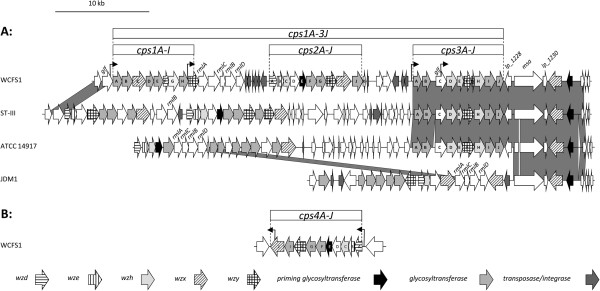
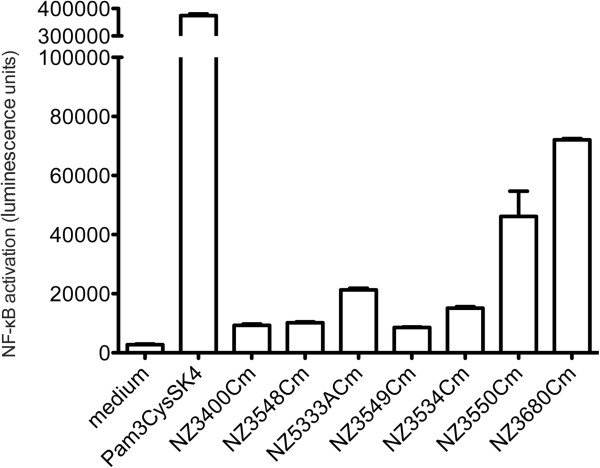
BACKGROUND: Bacterial cell surface-associated polysaccharides are involved in the interactions of bacteria with their environment and play an important role in the communication between pathogenic bacteria and their host organisms. Cell surface polysaccharides of probiotic species are far less well described. Therefore, improved knowledge on these molecules is potentially of great importance to understand the strain-specific and proposed beneficial modes of probiotic action. RESULTS: The Lactobacillus plantarum WCFS1 genome encodes 4 clusters of genes that are associated with surface polysaccharide production. Two of these clusters appear to encode all functions required for capsular polysaccharide formation (cps2A-J and cps4A-J), while the remaining clusters are predicted to lack genes encoding chain-length control functions and a priming glycosyl-transferase (cps1A-I and cps3A-J). We constructed L. plantarum WCFS1 gene deletion mutants that lack individual (Δcps1A-I, Δcps2A-J, Δcps3A-J and Δcps4A-J) or combinations of cps clusters (Δcps1A-3J and Δcps1A-3I, Δcps4A-J) and assessed the genome wide impact of these mutations by transcriptome analysis. The cps cluster deletions influenced the expression of variable gene sets in the individual cps cluster mutants, but also considerable numbers of up- and down-regulated genes were shared between mutants in cps cluster 1 and 2, as well as between mutant in cps clusters 3 and 4. Additionally, the composition of overall cell surface polysaccharide fractions was altered in each mutant strain, implying that despite the apparent incompleteness of cps1A-I and cps3A-J, all clusters are active and functional in L. plantarum. The Δcps1A-I strain produced surface polysaccharides in equal amounts as compared to the wild-type strain, while the polysaccharides were characterized by a reduced molar mass and the lack of rhamnose. The mutants that lacked functional copies of cps2A-J, cps3A-J or cps4A-J produced decreased levels of surface polysaccharides, whereas the molar mass and the composition of polysaccharides was not affected by these cluster mutations. In the quadruple mutant, the amount of surface polysaccharides was strongly reduced. The impact of the cps cluster mutations on toll-like receptor (TLR)-mediated human nuclear factor (NF)-κB activation in host cells was evaluated using a TLR2 reporter cell line. In comparison to a L. plantarum wild-type derivative, TLR2 activation remained unaffected by the Δcps1A-I and Δcps3A-J mutants but appeared slightly increased after stimulation with the Δcps2A-J and Δcps4A-J mutants, while the Δcps1A-3J and Δcps1A-3J, Δcps4A-J mutants elicited the strongest responses and clearly displayed enhanced TLR2 signaling. CONCLUSIONS: Our study reveals that modulation of surface glycan characteristics in L. plantarum highlights the role of these molecules in shielding of cell envelope embedded host receptor ligands. Although the apparently complete cps clusters (cps2A-J and cps4A-J) contributed individually to this shielding, the removal of all cps clusters led to the strongest signaling enhancement. Our findings provide new insights into cell surface glycan biosynthesis in L. plantarum, which bears relevance in the context of host-cell signaling by probiotic bacteria.
Overview
The claims and statistics of this paper haven’t been checked yet.
Run the check — free, no account needed. It reads the open-access text and checks the sources it cites.
Integrity signals
Registry
Cites
Statistics
Figures
Verification
Claims the paper makes
The claims and statistics of this paper haven’t been checked yet.
Run the check — free, no account needed. It reads the open-access text and checks the sources it cites.
Claims other papers make about this one
Each is checked against this paper’s own text: does it say what the citing paper says it does?
The cited source doesn’t support the claim as written.
In the citing paper
“For instance, the sequenced strain WCFS1 harbours four chromosomal clusters of eps genes. Two of them (cps2A-J and cps4A-J) are involved in capsular polysaccharide formation, while cps1A-I and cps3A-J seem to have a regulatory function and encode a priming glycosyl-transferase [18].”
From Lactic Acid Bacteria Exopolysaccharides Producers: A Sustainable Tool for Functional Foods (2021) · cites this paper as [18]
Checked by a reasoning model — may be wrong.
Experimental — accuracy not yet measured
Self-check
Percentages, sums and reported differences re-computed from the paper’s own numbers.
The self-check needs the paper’s full text.
Citations
Cites
Controlling the False Discovery Rate: A Practical and Powerful Approach to Multiple Testing
Benjamini, Y., & Hochberg, Y. (1995) · Journal of the Royal Statistical Society Series B: Statistical Methodology · doi:10.1111/j.2517-6161.1995.tb02031.x · Cited by 109,482
Gene Expression Omnibus: NCBI gene expression and hybridization array data repository
Edgar, R. (2002) · Nucleic Acids Research · doi:10.1093/nar/30.1.207 · Cited by 13,288
Costerton, J. W., Lewandowski, Z., Caldwell, D. E., Korber, D. R., & Lappin-Scott, H. M. (1995) · Annual Review of Microbiology · doi:10.1146/annurev.mi.49.100195.003431 · Cited by 4,921
The Bacterial Cell EnvelopePreprint
Silhavy, T. J., Kahne, D. E., & Walker, S. (2010) · Cold Spring Harbor Perspectives in Biology · doi:10.1101/cshperspect.a000414 · Cited by 3,834
Guidelines for the evaluation of probiotics in food
Who, F. (2002) · Medical Entomology and Zoology · Cited by 1,843
Complete genome sequence of Lactobacillus plantarum WCFS1
Kleerebezem, M., Boekhorst, J., van Kranenburg, R., Molenaar, D., Kuipers, O. P., Leer, R., Tarchini, R., Peters, S. A., Sandbrink, H. M., Fiers, M. W. E. J., et al. (2003) · Proceedings of the National Academy of Sciences · doi:10.1073/pnas.0337704100 · Cited by 1,472
Self-citationFlavour formation by lactic acid bacteria and biochemical flavour profiling of cheese products
Smit, G., Smit, B. A., & Engels, W. J. M. (2005) · FEMS Microbiology Reviews · doi:10.1016/j.fmrre.2005.04.002 · Cited by 949
Should we stay or should we go: mechanisms and ecological consequences for biofilm dispersal
McDougald, D., Rice, S. A., Barraud, N., Steinberg, P. D., & Kjelleberg, S. (2012) · Nature Reviews Microbiology · doi:10.1038/nrmicro2695 · Cited by 881
Heteropolysaccharides from lactic acid bacteria
Vuyst, L. D., & Degeest, B. (1999) · FEMS Microbiology Reviews · doi:10.1111/j.1574-6976.1999.tb00395.x · Cited by 840
Genetic Analysis of the Capsular Biosynthetic Locus from All 90 Pneumococcal Serotypes
Bentley, S. D., Aanensen, D. M., Mavroidi, A., Saunders, D., Rabbinowitsch, E., Collins, M. D., Donohoe, K., Harris, D. J., Murphy, L., Quail, M. A., et al. (2006) · PLoS Genetics · doi:10.1371/journal.pgen.0020031 · Cited by 759
Cited by
Sorted by citations
Hoseinifar, S. H., Sun, Y., Wang, A., & Zhou, Z. (2018) · Frontiers in Microbiology · doi:10.3389/fmicb.2018.02429 · Cited by 627
Cell Wall Structure and Function in Lactic Acid Bacteria
Chapot-Chartier, M.-P., & Kulakauskas, S. (2014) · Microbial Cell Factories · doi:10.1186/1475-2859-13-s1-s9 · Cited by 410
Caggianiello, G., Kleerebezem, M., & Spano, G. (2016) · Applied Microbiology and Biotechnology · doi:10.1007/s00253-016-7471-2 · Cited by 396
Self-citationRegulation of intestinal homeostasis and immunity with probiotic lactobacilli
van Baarlen, P., Wells, J. M., & Kleerebezem, M. (2013) · Trends in Immunology · doi:10.1016/j.it.2013.01.005 · Cited by 378
Self-citationHealth-Promoting Role of Lactiplantibacillus plantarum Isolated from Fermented Foods
García-González, N., Battista, N., Prete, R., & Corsetti, A. (2021) · Microorganisms · doi:10.3390/microorganisms9020349 · Cited by 226
Beyond Heat Stress: Intestinal Integrity Disruption and Mechanism-Based Intervention Strategies
Lian, P., Braber, S., Garssen, J., Wichers, H. J., Folkerts, G., Fink‐Gremmels, J., & Varasteh, S. (2020) · Nutrients · doi:10.3390/nu12030734 · Cited by 207
Lactic Acid Bacteria Exopolysaccharides Producers: A Sustainable Tool for Functional Foods
Prete, R., Alam, M. K., Perpetuini, G., Perla, C., Pittia, P., & Corsetti, A. (2021) · Foods · doi:10.3390/foods10071653 · Cited by 194
Lactobacillus plantarum WCFS 1 and its host interaction: a dozen years after the genome
van den Nieuwboer, M., van Hemert, S., Claassen, E., & de Vos, W. M. (2016) · Microbial Biotechnology · doi:10.1111/1751-7915.12368 · Cited by 138
Intestinal barrier: A gentlemen’s agreement between microbiota and immunity
Caricilli, A. M. (2014) · World Journal of Gastrointestinal Pathophysiology · doi:10.4291/wjgp.v5.i1.18 · Cited by 137
Lee, I.-C., Caggianiello, G., van Swam, I. I., Taverne, N., Meijerink, M., Bron, P. A., Spano, G., & Kleerebezem, M. (2016) · Applied and Environmental Microbiology · doi:10.1128/aem.00306-16 · Cited by 133
Self-citationCross-talk between probiotic lactobacilli and host immune system
Kemgang, T. S., Kapila, S., Shanmugam, V. P., & Kapila, R. (2014) · Journal of Applied Microbiology · doi:10.1111/jam.12521 · Cited by 121
Cell wall homeostasis in lactic acid bacteria: threats and defences
Martínez, B., Rodríguez, A., Kulakauskas, S., & Chapot, M.-P. (2020) · FEMS Microbiology Reviews · doi:10.1093/femsre/fuaa021 · Cited by 113
Soumya, M. P., & Nampoothiri, K. M. (2021) · International Journal of Biological Macromolecules · doi:10.1016/j.ijbiomac.2021.06.131 · Cited by 96
Deo, D., Davray, D., & Kulkarni, R. (2019) · Microorganisms · doi:10.3390/microorganisms7100444 · Cited by 90
Liu, D., Huang, Y., & Liang, M. (2022) · LWT · doi:10.1016/j.lwt.2022.113129 · Cited by 85
Reitermayer, D., Kafka, T. A., Lenz, C. A., & Vogel, R. F. (2018) · BMC Microbiology · doi:10.1186/s12866-018-1203-y · Cited by 87
Cell surface-associated compounds of probiotic lactobacilli sustain the strain-specificity dogma
Bron, P. A., Tomita, S., Mercenier, A., & Kleerebezem, M. (2013) · Current Opinion in Microbiology · doi:10.1016/j.mib.2013.06.001 · Cited by 86
Self-citationA functional and genetic overview of exopolysaccharides produced by Lactobacillus plantarum
Jiang, Y., & Yang, Z. (2018) · Journal of Functional Foods · doi:10.1016/j.jff.2018.05.060 · Cited by 77
Surve, S., Shinde, D. B., & Kulkarni, R. (2022) · Scientific Reports · doi:10.1038/s41598-022-05850-3 · Cited by 74
Interactions of the cell-wall glycopolymers of lactic acid bacteria with their bacteriophages
Chapot, M.-P. (2014) · Frontiers in Microbiology · doi:10.3389/fmicb.2014.00236 · Cited by 60
Sharma, G., Sharma, A., Kim, I., Gon, D., Kim, S., Park, E. S., Noh, J. G., Lee, J.-H., Ku, J. H., Choi, Y. H., et al. (2024) · Nature Immunology · doi:10.1038/s41590-024-01816-x · Cited by 58
Lactobacillus plantarum CIDCA 8327: An α-glucan producing-strain isolated from kefir grains
Gangoiti, M. V., Puertas, A. I., Hamet, M. F., Peruzzo, P. J., Llamas, M. G., Medrano, M., Prieto, A., Dueñas, M. T., & Abraham, A. G. (2017) · Carbohydrate Polymers · doi:10.1016/j.carbpol.2017.04.053 · Cited by 55
García-Vello, P., Sharma, G., Speciale, I., Molinaro, A., Im, S., & Castro, C. D. (2020) · Carbohydrate Polymers · doi:10.1016/j.carbpol.2020.115857 · Cited by 53
Živković, M., Miljković, M., Ruas‐Madiedo, P., Strahinić, I., Tolinački, M., Golić, N., & Kojić, M. (2014) · Applied and Environmental Microbiology · doi:10.1128/aem.03028-14 · Cited by 52
Li, P., Li, X., Gu, Q., Lou, X., Zhang, X., Song, D., & Zhang, C. (2016) · Journal of Zhejiang University SCIENCE B · doi:10.1631/jzus.b1600176 · Cited by 52
García-González, N., Bottacini, F., van Sinderen, D., Gahan, C. G. M., & Corsetti, A. (2022) · Frontiers in Microbiology · doi:10.3389/fmicb.2022.854266 · Cited by 49
Structure characterization of a pyruvated exopolysaccharide from Lactobacillus plantarum AR307
Feng, X., Zhang, H., Lai, P. F. H., Xiong, Z., & Ai, L. (2021) · International Journal of Biological Macromolecules · doi:10.1016/j.ijbiomac.2021.02.119 · Cited by 45
Translating Recent Microbiome Insights in Otitis Media into Probiotic Strategies
van den Broek, M. F. L., Boeck, I. D., Kiekens, F., Boudewyns, A. N., Vanderveken, O. M., & Lebeer, S. (2019) · Clinical Microbiology Reviews · doi:10.1128/cmr.00010-18 · Cited by 46
Wang, Y., Feng, B., Niu, C., Jia, S., Sun, C., Wang, Z., Jiang, Y., Cui, W., Li, G., & Xu, Y. (2019) · Viruses · doi:10.3390/v11060575 · Cited by 43
Isenring, J., Geirnaert, A., Lacroix, C., & Stevens, M. J. A. (2021) · BMC Microbiology · doi:10.1186/s12866-021-02331-x · Cited by 42
Xiong, J., Liu, D., & Huang, Y. (2023) · European Food Research and Technology · doi:10.1007/s00217-023-04237-6 · Cited by 42
Doan, H. V., Soltani, M., & Ringø, E. (2021) · Aquaculture · doi:10.1016/j.aquaculture.2021.736581 · Cited by 41
Xiao, L., Xu, D., Tang, N., Rui, X., Zhang, Q., Chen, X., Dong, M., & Li, W. (2021) · Food Chemistry Molecular Sciences · doi:10.1016/j.fochms.2021.100054 · Cited by 42
In sickness and health: Effects of gut microbial metabolites on human physiology
Glowacki, R. W. P., & Martens, E. C. (2020) · PLoS Pathogens · doi:10.1371/journal.ppat.1008370 · Cited by 40
Bachtarzi, N., Speciale, I., Kharroub, K., Castro, C. D., Ruíz, L., & Ruas‐Madiedo, P. (2020) · Microorganisms · doi:10.3390/microorganisms8081101 · Cited by 37
Butorac, K., Novak, J., Bellich, B., Terán, L. C., Banić, M., Pavunc, A. L., Zjalić, S., Cescutti, P., Šušković, J., & Kos, B. (2021) · Microbial Cell Factories · doi:10.1186/s12934-021-01575-6 · Cited by 37
Li, J., Yu, J., Song, Y., Wang, S., Mu, G., & Tuo, Y. (2024) · Journal of Agricultural and Food Chemistry · doi:10.1021/acs.jafc.4c00460 · Cited by 35
Isolation and identification of exopolysaccharide producer lactic acid bacteria from Turkish yogurt
İspirli, H., & Dertli̇, E. (2017) · Journal of Food Processing and Preservation · doi:10.1111/jfpp.13351 · Cited by 34
Fei, Y., Li, L., Zheng, Y., Liu, D., Zhou, Q., & Fu, L. (2017) · LWT · doi:10.1016/j.lwt.2017.12.028 · Cited by 34
Prechtl, R. M., Wefers, D., Jakob, F., & Vogel, R. F. (2018) · Carbohydrate Polymers · doi:10.1016/j.carbpol.2018.08.115 · Cited by 32
Reverón, I., Rodrı́guez, H., Campos, G., Curiel, J. A., Ascaso, C., Carrascosa, A. V., Prieto, A., Rivas, B. D. L., Múñoz, R., & de Felipe, F. L. (2013) · PLoS ONE · doi:10.1371/journal.pone.0066473 · Cited by 31
Plasmids encode niche-specific traits in Lactobacillaceae
Davray, D., Deo, D., & Kulkarni, R. S. (2020) · Microbial Genomics · doi:10.1099/mgen.0.000472 · Cited by 30
de Felipe, F. L., Rivas, B. D. L., & Múñoz, R. (2021) · Antioxidants · doi:10.3390/antiox11010018 · Cited by 32
Liu, Y., Liu, Q., Zhao, J., Zhang, H., Zhai, Q., & Chen, W. (2022) · International Journal of Biological Macromolecules · doi:10.1016/j.ijbiomac.2022.09.136 · Cited by 29
Kewcharoen, W., & Srisapoome, P. (2022) · Fish & Shellfish Immunology · doi:10.1016/j.fsi.2022.07.017 · Cited by 26
The role of natural products on the immune status of freshwater fish
Awad, E. (2025) · Aquaculture International · doi:10.1007/s10499-025-02035-3 · Cited by 25
Capsular polysaccarides of probiotics and their immunomodulatory roles
Li, J., Feng, S., Yu, L., Zhao, J., Tian, F., Chen, W., & Zhai, Q. (2022) · Food Science and Human Wellness · doi:10.1016/j.fshw.2022.04.003 · Cited by 25
Castro-Bravo, N., Margollés, A., Wells, J. M., & Ruas‐Madiedo, P. (2019) · Anaerobe · doi:10.1016/j.anaerobe.2019.02.014 · Cited by 24
Self-citationLactic Acid Bacteria: Lactobacillus plantarum
Mayo, B., & Flórez, A. B. (2015) · Elsevier eBooks · doi:10.1016/b978-0-08-100596-5.00856-8 · Cited by 24
Molina, D., Marinaș, I. C., Angamarca, E., Hanganu, A., Stan, M. S., Chifiriuc, M. C., & Tenea, G. N. (2025) · Antibiotics · doi:10.3390/antibiotics14030318 · Cited by 23
Noda, M., Shiraga, M., Kumagai, T., Danshiitsoodol, N., & Sugiyama, M. (2018) · Biological and Pharmaceutical Bulletin · doi:10.1248/bpb.b17-00840 · Cited by 23
Gao, Y.-Q., Niu, M., Yu, X., Bao, T., Wu, Z., & Zhao, X. (2021) · Frontiers in Microbiology · doi:10.3389/fmicb.2021.692957 · Cited by 23
Lactiplantibacillus plantarum, the Integral Member of Vegetable Fermentations
Paramithiotis, S. (2025) · Applied Biosciences · doi:10.3390/applbiosci4010007 · Cited by 21
Cui, Y., Dong, S., & Qu, X. (2023) · World Journal of Microbiology and Biotechnology · doi:10.1007/s11274-023-03756-4 · Cited by 23
Arena, M. P., Spano, G., & Fiocco, D. (2017) · American Journal of Immunology · doi:10.3844/ajisp.2017.34.44 · Cited by 21
Noda, M., Sugimoto, S., Hayashi, I., Danshiitsoodol, N., Fukamachi, M., & Sugiyama, M. (2018) · The Journal of Biochemistry · doi:10.1093/jb/mvy048 · Cited by 21
Lipoproteins Contribute to the Anti-inflammatory Capacity of Lactobacillus plantarum WCFS1
Lee, I.-C., van Swam, I. I., Boeren, S. A., Vervoort, J. J. M., Meijerink, M., Taverne, N., Starrenburg, M. J. C., Bron, P. A., & Kleerebezem, M. (2020) · Frontiers in Microbiology · doi:10.3389/fmicb.2020.01822 · Cited by 22
Self-citationAlbarracín, L., Tonetti, F. R., Fukuyama, K., Suda, Y., Zhou, B., Baillo, A. A., Fadda, S., Saavedra, L., Kurata, S., Hebert, E. M., et al. (2022) · Bacteria · doi:10.3390/bacteria1030012 · Cited by 20
Meng, F., Lyu, Y., Zhao, H., Lyu, F., Bie, X., Lu, Y., Zhao, M., Chen, Y., & Lu, Z. (2022) · International Journal of Biological Macromolecules · doi:10.1016/j.ijbiomac.2022.11.180 · Cited by 20
Binding Mechanism of the Peptidoglycan Hydrolase Acm2: Low Affinity, Broad Specificity
Beaussart, A., Rolain, T., Duchêne, M.-C., El‐Kirat‐Chatel, S., André, G., Pascal Hols, A., & Dufrêne, Y. F. (2013) · Biophysical Journal · doi:10.1016/j.bpj.2013.06.035 · Cited by 19
de Veen, H. V. B., Smelt, M. J., Wels, M., van Hijum, S. A. F. T., de Vos, P., Kleerebezem, M., & Bron, P. A. (2013) · Biotechnology Journal · doi:10.1002/biot.201200259 · Cited by 19
Self-citationLópez‐García, E., Benítez‐Cabello, A., Ramiro‐Garcia, J., Ladero, V., & Arroyo‐López, F. N. (2023) · Foods · doi:10.3390/foods12050938 · Cited by 18
Isenring, J., Geirnaert, A., Hall, A. R., Jans, C., Lacroix, C., & Stevens, M. J. A. (2021) · mSystems · doi:10.1128/msystems.01085-20 · Cited by 17
Yang, X., Yang, Z., Wang, Y., Zeng, H., & Wang, B. (2025) · Food Chemistry · doi:10.1016/j.foodchem.2025.143431 · Cited by 17
Transcriptional analysis of exopolysaccharides biosynthesis gene clusters in Lactobacillus plantarum
Vastano, V., Perrone, F., Marasco, R., Sacco, M., & Muscariello, L. (2015) · Archives of Microbiology · doi:10.1007/s00203-015-1169-1 · Cited by 17
Ramírez, M. D. F., Groot, M. N. N., Smid, E. J., Pascal Hols, A., Kleerebezem, M., & Abee, T. (2018) · International Journal of Food Microbiology · doi:10.1016/j.ijfoodmicro.2018.02.013 · Cited by 17
Self-citationDo, T. B. T., Tran, B.-K., Trần, T. V. T., Hiếu, L. T., Cnockaert, M. C., Vandamme, P. A. R., Nguyen, T. H. C., Nguyen, C. C., Hong, S. H., Kim, S. Y., et al. (2020) · ACS Omega · doi:10.1021/acsomega.0c05256 · Cited by 16
Bachtarzi, N., Gomri, M. A., Meradji, M., Gil‐Cardoso, K., Ortega-Olivé, N., Chomiciute, G., Bas-Prior, J. M. D., López, Q., Martínez, V. B., & Kharroub, K. (2023) · International Microbiology · doi:10.1007/s10123-023-00387-5 · Cited by 15
Unlocking Potential Benefits on Applications of Probiotics in Inland Aquaculture Industry: A Review
Vulla, K. E., Mmanda, F. P., Nyangoko, B. P., & Makule, E. E. (2024) · Aquaculture Fish and Fisheries · doi:10.1002/aff2.70027 · Cited by 15
Golomb, B. L., Hirao, L. A., Dandekar, S., & Marco, M. L. (2016) · Scientific Reports · doi:10.1038/srep24723 · Cited by 15
Wang, G., Li, J., Xie, S., Zhai, Z., & Hao, Y. (2020) · PeerJ · doi:10.7717/peerj.8524 · Cited by 14
Xiao, L., Zhao, X., Lin, L., Mahsa, G. C., Ma, K., Zhang, C., Rui, X., & Li, W. (2024) · Journal of Agricultural and Food Chemistry · doi:10.1021/acs.jafc.4c04256 · Cited by 13
Isenring, J., Stevens, M. J. A., Jans, C., Lacroix, C., & Geirnaert, A. (2022) · Frontiers in Microbiology · doi:10.3389/fmicb.2022.910609 · Cited by 13
Suzuki, M., Albarracín, L., TSUJIKAWA, Y., Fukuyama, K., Sakane, I., Villena, J., & Kitazawa, H. (2022) · Foods · doi:10.3390/foods11203257 · Cited by 13
Oleksy, M., & Klewicka, E. (2017) · Probiotics and Antimicrobial Proteins · doi:10.1007/s12602-017-9295-5 · Cited by 13
Ma, D., Cheng, H., Zhang, H., Wang, S., Shi, X., Wang, X., & Gong, D. (2024) · Carbohydrate Polymers · doi:10.1016/j.carbpol.2024.122951 · Cited by 12
Zhou, Y., Cui, Y., & Qu, X. (2022) · Journal of the Science of Food and Agriculture · doi:10.1002/jsfa.11886 · Cited by 12
Kudo, H., Miyanaga, K., & Yamamoto, N. (2022) · Food & Function · doi:10.1039/d2fo02927h · Cited by 12
Llamas-Arriba, M. G., Pérez-Ramos, A., Puertas, A. I., López, P., Dueñas, M. T., & Prieto, A. (2018) · Frontiers in Microbiology · doi:10.3389/fmicb.2018.02041 · Cited by 13
Oleuropein Transcriptionally Primes Lactobacillus plantarum to Interact With Plant Hosts
Santamaría, L., Reverón, I., Plaza‐Vinuesa, L., Oliveros, J. C., Rivas, B. D. L., Múñoz, R., & de Felipe, F. L. (2019) · Frontiers in Microbiology · doi:10.3389/fmicb.2019.02177 · Cited by 12
Zheng, Y., Zhang, Y., Zhao, Y., Wu, X., Wang, H., Zhao, H., Liu, J., Liu, B., Liu, L., & Song, W. (2024) · BMC Microbiology · doi:10.1186/s12866-024-03498-9 · Cited by 11
Huang, T., Peng, Z., Hu, M., Xiao, Y., Liu, Z.-G., Guan, Q., Xie, M., & Xiong, T. (2020) · Genomics · doi:10.1016/j.ygeno.2020.04.008 · Cited by 11
Nabgan, M., Shariatifar, N., & Zeinali, T. (2025) · Journal of Food Measurement & Characterization · doi:10.1007/s11694-025-03259-w · Cited by 10
Impact of ∼omics in the detection and validation of potential anti-infective drugs
Maldonado-Carmona, N., Vázquez‐Hernández, M., Patiño-Chávez, O. J., Rodríguez-Luna, S. D., Rodríguez, O. J., Sánchez, S., & Ceapă, C. D. (2019) · Current Opinion in Pharmacology · doi:10.1016/j.coph.2019.02.008 · Cited by 10
Tlaskalová-Hogenová, H., Kverka, M., Verdu, E. F., & Wells, J. M. (2015) · Elsevier eBooks · doi:10.1016/b978-0-12-415847-4.00008-2 · Cited by 10
Self-citationPiard, J.-C., & Briandet, R. (2015) · Wiley eBooks · doi:10.1002/9781118868386.ch20 · Cited by 10
Meng, F., Lyu, Y., Chen, X., Lü, F., Zhao, H., Lu, Y., Zhao, M., & Lu, Z. (2023) · Journal of Agricultural and Food Chemistry · doi:10.1021/acs.jafc.2c07880 · Cited by 9
Croatti, V., Dricot, C. E. M. K., Eilers, T., Dillen, J., Rillaer, T. V., Cauwenberghs, E., Tente, I. V., Bakelants, S., Vandenheuvel, D., Allonsius, C. N., et al. (2026) · npj Biofilms and Microbiomes · doi:10.1038/s41522-026-00937-5 · Cited by 6
Self-citationCheng, Z., He, X., Wu, Z., & Weng, P. (2022) · Journal of Food Biochemistry · doi:10.1111/jfbc.14181 · Cited by 6
Liu, S., Wang, Y., Lin, T., Zhang, X., Lin, Y., Xu, C., Ma, K., Zhang, C., Geng, S., Mahsa, G. C., et al. (2025) · ACS Food Science & Technology · doi:10.1021/acsfoodscitech.5c00210 · Cited by 5
Kudo, H., Nakano, M., Kikuchi, A., Fujisawa, M., Suzuki, S., Sekiguchi, R., Yamamoto, N., Fujiwara, S., & Sasaki, Y. (2023) · International Dairy Journal · doi:10.1016/j.idairyj.2023.105827 · Cited by 5
Molecular Cloning, Expression and Characterization of Oenococcus oeni Priming Glycosyltransferases
Dimopoulou, M., Claisse, O., Dutilh, L., Miot‐Sertier, C., Ballestra, P., Lucas, P., & Dols‐Lafargue, M. (2017) · Molecular Biotechnology · doi:10.1007/s12033-017-0021-z · Cited by 5
Regulation of Vaginal Microbiome by Nitric Oxide
Yeruva, T., & Lee, C. H. (2019) · Current Pharmaceutical Biotechnology · doi:10.2174/1389201020666190207092850 · Cited by 6
An, J., Zhang, Y., Zhao, Z., Huan, R., Yi, H., Wang, H., Luan, C., Feng, S., Huang, H., Li, S., et al. (2023) · Microbiology Spectrum · doi:10.1128/spectrum.04150-22 · Cited by 5
Puertas, A. I., Llamas-Arriba, M. G., Etxebeste, O., Berregi, I., Pardo, M. Á., Prieto, A., López, P., & Dueñas, M. T. (2023) · International Journal of Food Microbiology · doi:10.1016/j.ijfoodmicro.2023.110199 · Cited by 5
Luo, M., Zhou, W., Tao, W., Xing, J., Li, J., Yang, Y., & Guo, Y. (2023) · Fermentation · doi:10.3390/fermentation9120996 · Cited by 5
Arena, M. P., Russo, P., Fiocco, D., Capozzi, V., & Spano, G. (2015) · Elsevier eBooks · doi:10.1016/b978-0-12-802189-7.00028-9 · Cited by 5
NF-κB in Anti-Inflammatory Activity of Probiotics: An Update
Rodriguez, A. V., & Griet, M. (2016) · Current Immunology Reviews · doi:10.2174/1573395512666160108000446 · Cited by 5
Barati, A., & Sani, A. M. (2017) · Journal of Essential Oil Bearing Plants · doi:10.1080/0972060x.2017.1329668 · Cited by 5
Adebayo‐Tayo, B. C., Agidigbi, O., & Alao, S. O. (2017) · Trakia Journal of Sciences · doi:10.15547/tjs.2017.01.006 · Cited by 5
Metadata
- Authors
- Remus, D. M., van Kranenburg, R., van Swam, I. I., Taverne, N., Bongers, R. S., Wels, M., Wells, J. M., Bron, P. A., & Kleerebezem, M.
- Affiliations
- TiFN (NL)
- Corresponding author
- Kleerebezem, Michiel
- Venue
- Microbial Cell Factories
- Published
- 2012-11-21
- Volume
- 11
- Issue
- 1
- Pages
- 149-149
- ISSN
- 1475-2859 (ISSN-L)
- PMC
- PMC3539956
- OpenAlex
- W2097092342
- Cited by
- 131
- References
- 52
- Citations by year
- 2026: 15 · 2025: 10 · 2024: 9 · 2023: 9 · 2022: 15 · 2021: 12 · 2020: 11 · 2019: 8 · 2018: 8 · 2017: 8 · 2016: 10 · 2015: 5 · 2014: 5 · 2013: 5
- FWCI
- 7.38
- Type
- journal article
- Language
- en
- Open access
- gold
- doi.org
- Licence
- cc-by
- Locations
- Microbial Cell Factories (publishedVersion, cc-by)
- PubMed Central (publishedVersion, cc-by)
- PubMed (publishedVersion)
- Socio-Environmental Systems Modeling (acceptedVersion)
- DOAJ (DOAJ: Directory of Open Access Journals) (submittedVersion, cc-by-sa)
- Data Archiving and Networked Services (DANS) (submittedVersion, other-oa)
- Topics
- Life Sciences › Agricultural and Biological Sciences › Food Science › Probiotics and Fermented Foods
- Life Sciences › Biochemistry, Genetics and Molecular Biology › Genetics › Bacterial Genetics and Biotechnology
- Life Sciences › Agricultural and Biological Sciences › Food Science › Polysaccharides Composition and Applications
- Keywords
- Lactobacillus plantarum WCFS1, capsular polysaccharide, deletion mutants, transcriptome, host cell signaling, NF-κB activation, TLR2, probiotic bacteria, rhamnose, molar mass, host-pathogen interaction
- MeSH terms
- Bacterial Proteins, Multigene Family, Humans, Mutation, Polysaccharides, Bacterial, Signal Transduction, NF-kappa B, Glycosyltransferases, Gene Deletion, Gene Expression Profiling, Lactobacillus plantarum, Lactiplantibacillus plantarum, Toll-Like Receptor 2, HEK293 Cells
About these checks
Registry, retraction, Cites and statistics results are computed, not judged, with one exception: a printed reference that no index lists is read once by a model before it counts as a citation error. Claims are extracted by a model and kept only when their quote appears verbatim in the text; each cited source is then checked, with a model’s help, for whether it says what the claim relies on. Those verdicts can be wrong — read the claim’s quote and the cited source before relying on one.
Statistics and arithmetic are recomputed, not judged.
Confidence bands are shown only for fields calibrated on our annotated test set. None is calibrated yet, so no band is shown.
What counts as a claim ›How we measure confidence ›How we check this ›
Are you an author, or do you see a problem with this page? Request a review
