

Phase I safety trial of intravenous ascorbic acid in patients with severe sepsis.
Open accessThe DOI matches its Crossref record; 37 of the 38 references it cites were found in a registry or an index.
Abstract
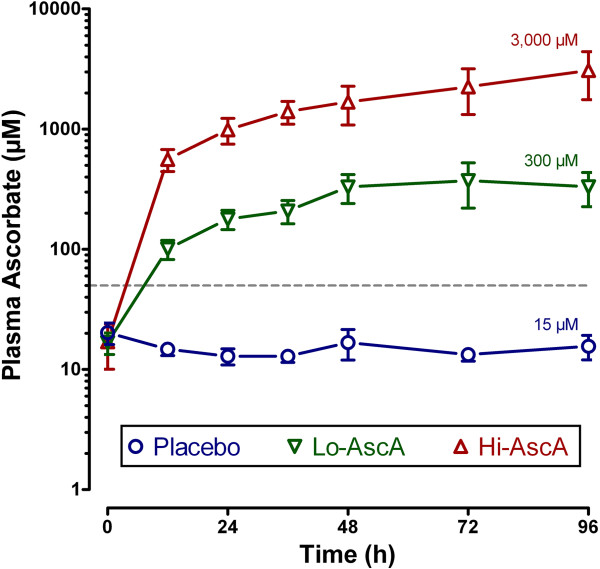
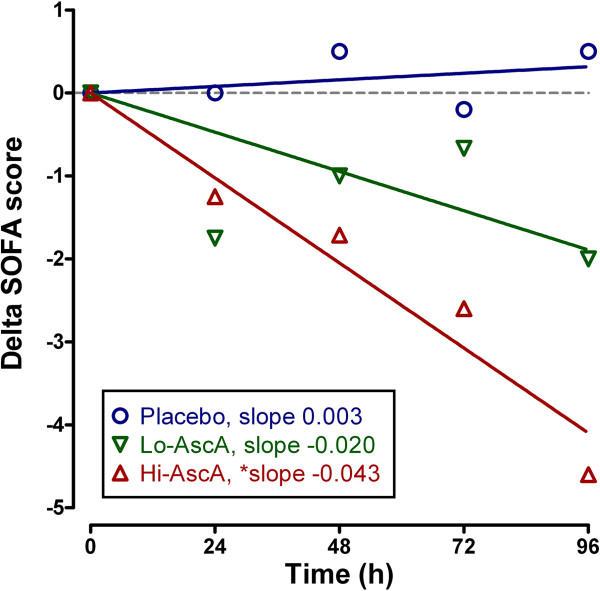
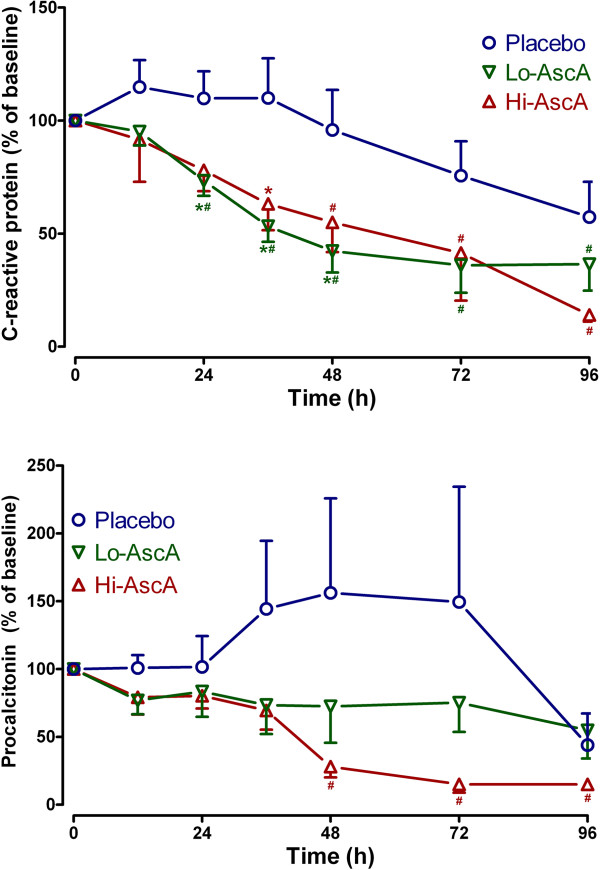
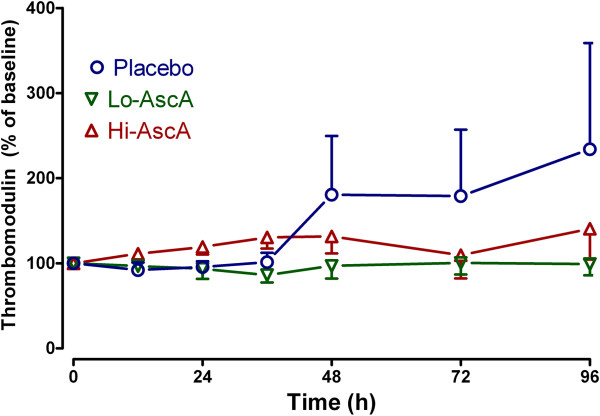
BACKGROUND: Parenterally administered ascorbic acid modulates sepsis-induced inflammation and coagulation in experimental animal models. The objective of this randomized, double-blind, placebo-controlled, phase I trial was to determine the safety of intravenously infused ascorbic acid in patients with severe sepsis. METHODS: Twenty-four patients with severe sepsis in the medical intensive care unit were randomized 1:1:1 to receive intravenous infusions every six hours for four days of ascorbic acid: Lo-AscA (50 mg/kg/24 h, n = 8), or Hi-AscA (200 mg/kg/24 h, n = 8), or Placebo (5% dextrose/water, n = 8). The primary end points were ascorbic acid safety and tolerability, assessed as treatment-related adverse-event frequency and severity. Patients were monitored for worsened arterial hypotension, tachycardia, hypernatremia, and nausea or vomiting. In addition Sequential Organ Failure Assessment (SOFA) scores and plasma levels of ascorbic acid, C-reactive protein, procalcitonin, and thrombomodulin were monitored. RESULTS: Mean plasma ascorbic acid levels at entry for the entire cohort were 17.9 ± 2.4 μM (normal range 50-70 μM). Ascorbic acid infusion rapidly and significantly increased plasma ascorbic acid levels. No adverse safety events were observed in ascorbic acid-infused patients. Patients receiving ascorbic acid exhibited prompt reductions in SOFA scores while placebo patients exhibited no such reduction. Ascorbic acid significantly reduced the proinflammatory biomarkers C-reactive protein and procalcitonin. Unlike placebo patients, thrombomodulin in ascorbic acid infused patients exhibited no significant rise, suggesting attenuation of vascular endothelial injury. CONCLUSIONS: Intravenous ascorbic acid infusion was safe and well tolerated in this study and may positively impact the extent of multiple organ failure and biomarkers of inflammation and endothelial injury. TRIAL REGISTRATION: ClinicalTrials.gov identifier NCT01434121.
Overview
The claims and statistics of this paper haven’t been checked yet.
Free: it reads the open-access text and checks the first 5 claims that cite a source we can check. Create a free account to check every claim.
Integrity signals
Registry
Cites
Statistics
Figures
Verification
Claims the paper makes
The claims and statistics of this paper haven’t been checked yet.
Free: it reads the open-access text and checks the first 5 claims that cite a source we can check. Create a free account to check every claim.
Claims other papers make about this one
Each is checked against this paper’s own text: does it say what the citing paper says it does?
The source backs part of the claim, not all of it — or backs it for a different population, condition or comparison.
In the citing paper
“First, CITRIS-ALI as proposed was based on a previously performed phase 1 safety trial of vitamin C administered to patients in the very early stages of severe sepsis, not ARDS.15”
From Effect of Vitamin C Infusion on Organ Failure and Biomarkers of Inflammation and Vascular Injury in Patients With Sepsis and Severe Acute Respiratory Failure (2019) · cites this paper as [15]
Experimental — accuracy not yet measuredThe source backs part of the claim, not all of it — or backs it for a different population, condition or comparison.
In the citing paper
“The one study in septic patients included in this meta-analysis showed a positive impact of vitamin C on the extent of organ failure, biomarkers of inflammation and endothelial injury [82].”
From Nutrition in Sepsis: A Bench-to-Bedside Review. (2020) · cites this paper as [82]
Experimental — accuracy not yet measuredThe cited source says what the claim attributes to it.
In the citing paper
“Delayed quantification of these biomarkers in CITRIS-ALI compared with early vitamin C infusion in severe sepsis may explain results discordant with those of previous studies of vitamin C in severe sepsis.15”
From Effect of Vitamin C Infusion on Organ Failure and Biomarkers of Inflammation and Vascular Injury in Patients With Sepsis and Severe Acute Respiratory Failure (2019) · cites this paper as [15]
Experimental — accuracy not yet measuredThe cited source says what the claim attributes to it.
In the citing paper
“The selection of the primary outcomes was based on a previously performed phase 1 trial.15”
The check wasn’t confident either way, so it gives no verdict — never disputed.
In the citing paper
“In accordance with these calculations, CITRIS-ALI enrolled 170 patients (85 per group) to allow for 10% dropouts, providing a statistical power of 80%, with an α < .05.”
From Effect of Vitamin C Infusion on Organ Failure and Biomarkers of Inflammation and Vascular Injury in Patients With Sepsis and Severe Acute Respiratory Failure (2019) · cites this paper as [15]
Experimental — accuracy not yet measured
1 more claim about this paper
Create a free account to see every claim other papers make about this one.
Self-check
Percentages, sums and reported differences re-computed from the paper’s own numbers.
The self-check needs the paper’s full text.
Citations
Cites
Harris, P. A., Taylor, R., Thielke, R., Payne, J., Gonzalez, N., & Conde, J. G. (2009) · Journal of Biomedical Informatics · doi:10.1016/j.jbi.2008.08.010 · Cited by 51,384 · cited 5×
“Patients were screened and enrolled following admission to the Medical Respiratory Intensive Care Unit in the VCU Medical Center, Richmond, Virginia.”
MethodInfluentialVincent, J. L., Moreno, R., Takala, J., Willatts, S., De Mendonça, A., Bruining, H., Reinhart, C. K., Suter, P. M., & Thijs, L. G. (1996) · Intensive Care Medicine · doi:10.1007/bf01709751 · Cited by 11,674
The epidemiology of sepsis in the United States from 1979 through 2000
Martin, G. S., Mannino, D. M., Eaton, S., & Moss, M. (2003) · New England Journal of Medicine · doi:10.1056/nejmoa022139 · Cited by 5,841
Serial Evaluation of the SOFA Score to Predict Outcome in Critically Ill Patients
Ferreira, F. L. (2001) · JAMA · doi:10.1001/jama.286.14.1754 · Cited by 2,862
Sepsis in European intensive care units: Results of the SOAP study*
Vincent, J.-L., Sakr, Y., Sprung, C. L., Ranieri, V. M., Reinhart, K., Gerlach, H., Moreno, R., Carlet, J., Le Gall, J.-R., & Payen, D. (2006) · Critical Care Medicine · doi:10.1097/01.ccm.0000194725.48928.3a · Cited by 2,836 · cited 1×
“Tens of thousands of lives are lost across the world annually due to severe sepsis [1,38-40].”
BackgroundDrotrecogin Alfa (Activated) in Adults with Septic Shock
Ranieri, V. M., Thompson, B. T., Barie, P. S., Dhainaut, J.-F., Douglas, I. S., Finfer, S., Gårdlund, B., Marshall, J. C., Rhodes, A., Artigas, A., et al. (2012) · New England Journal of Medicine · doi:10.1056/nejmoa1202290 · Cited by 1,309
Moreno, R., Vincent, J.-L., Matos, R., Mendonça, A., Cantraine, F., Thijs, L., Takala, J., Sprung, C., Antonelli, M., Bruining, H., et al. (1999) · Intensive Care Medicine · doi:10.1007/s001340050931 · Cited by 1,058
Vitamin C pharmacokinetics: Implications for oral and intravenous use
Padayatty, S. J., Sun, H., Wang, Y., Riordan, H. D., Hewitt, S. M., Katz, A., Wesley, R. A., & Levine, M. (2004) · Annals of Internal Medicine · doi:10.7326/0003-4819-140-7-200404060-00010 · Cited by 992 · cited 2×
“Padayatty and colleagues showed that high-level ascorbic acid plasma concentrations could only be achieved by intravenous administration [15].”
BackgroundRandomized, Prospective Trial of Antioxidant Supplementation in Critically Ill Surgical Patients
Nathens, A. B., Neff, M. J., Jurkovich, G. J., Klotz, P., Farver, K., Ruzinski, J. T., Radella, F., Garcia, I., & Maier, R. V. (2002) · Annals of Surgery · doi:10.1097/00000658-200212000-00014 · Cited by 536
C-Reactive Protein Levels Correlate With Mortality and Organ Failure in Critically Ill Patientsa
Lobo, S. M. A., Lobo, F. R. M., Bota, D. P., Lopes-Ferreira, F., Soliman, H. M., Meélot, C., & Vincent, J.-L. (2003) · Chest · doi:10.1378/chest.123.6.2043 · Cited by 448 · cited 1×
“reported that patients with CRP levels greater than 10 mg/dL at ICU admission exhibited significantly higher rates of multiple organ failure as well as higher mortality rates [34].”
Background
Research works printed but not linked: 3
- Sawyer MAJ, Mike JJ, Chavin K: Antioxidant therapy and survival in ARDS [abstract]. Crit Care Med. 1989, 17: S153-
- Fowler AA, Fisher BJ, DeWilde C, Priday A, Syed A, Farthing CA, Larus TL, Knowlson S, Natarajan R: Parenteral vitamin C attenuates markers of organ injury and inflammation in severe sepsis [abstract]. Am J Respir Crit Care Med. 2012, 185 (2012): A6718-
- Urbaniak GC, Plous S: Research randomizer (version 3.0). 2010, http://www.randomizer.org ,
Cited by
Items 201–300 of 573
Novel insights into peptide amidation and amidating activity in the human circulation
Kaufmann, P., Bergmann, A., & Melander, O. (2021) · Scientific Reports · doi:10.1038/s41598-021-95305-y · Cited by 28
Yin, N., Wu, G., Cai, J.-J., Zhang, R., Yang, Z., Liu, J.-Q., Yang, X., Yang, X. F., Shen, Y., Lai, J.-M., et al. (2022) · International Journal of Biological Sciences · doi:10.7150/ijbs.74430 · Cited by 26
“Pharmacological dosing of ascorbate has been emerged as a safe, low-toxic and tolerable therapeutic regimen for sepsis in randomized, double-blind trials of human subjects and preclinical studies of mice [8-12].”
BackgroundSae‐khow, K., Charoensappakit, A., Chiewchengchol, D., & Leelahavanichkul, A. (2022) · Biomedicines · doi:10.3390/biomedicines11010051 · Cited by 26
“Due to the reduced ascorbate level during sepsis and stresses [47,93] and the attenuation of several factors with the restoration of physiologic vitamin C concentrations, including capillary blood flow, microvascular barrier function, vasopressor responsiveness, microvasculature, and endothelial injury with safe and b…”
BackgroundInfluentialImpact of Vitamin C and Thiamine Administration on Delirium-Free Days in Patients with Septic Shock
Park, J. E., Shin, T. G., Jo, I. J., Jeon, K., Suh, G. Y., Park, M., Won, H., Chung, C. R., & Hwang, S. Y. (2020) · Journal of Clinical Medicine · doi:10.3390/jcm9010193 · Cited by 23
Vitamin C and thiamine are associated with lower mortality in sepsis
Byerly, S. E., Parreco, J. P., Soe-Lin, H., Parks, J. J., Lee, E. E., Shnaydman, I., Mantero, A. M. A., Yeh, D. D., Namias, N., & Rattan, R. (2020) · The Journal of Trauma: Injury, Infection, and Critical Care · doi:10.1097/ta.0000000000002613 · Cited by 25
“In a 24-patient cohort, Fowler et al.26 found decreased SOFA score and attenuated inflammatory response in patients randomized to vitamin C compared with placebo though no significant improvement in organ dysfunction scores or markers of inflammation and vascular © 2020 Wolters Kluwer Health, Inc.”
MethodVitamin C Intervention for Critical COVID-19: A Pragmatic Review of the Current Level of Evidence
Holford, P., Carr, A. C., Zawari, M., & Vizcaychipi, M. P. (2021) · Life · doi:10.3390/life11111166 · Cited by 25
“This premise is supported by trials which have shown dose-dependent effects of vitamin C administration [58].”
ResultThe protective role of vitamin C in the management of COVID-19: A Review
Uddin, M. S., Millat, M. S., Baral, P. K., Ferdous, M., Uddin, M. G., Sarwar, M. S., & Islam, M. S. (2021) · Journal of the Egyptian Public Health Association · doi:10.1186/s42506-021-00095-w · Cited by 32
“A pilot study on 24 critically ill patients with sepsis revealed that intravenous (IV) vitamin C administration reduces the Sequential Organ Failure Assessment (SOFA) scores and levels of proinflammatory markers (Table 1) significantly over the 4day study period in patients who received 50 and 200 mg/kg per day vitami…”
BackgroundAschauer, S., Gouya, G., Klickovic, U., Storka, A., Weisshaar, S., Vollbracht, C., Krick, B., Weiss, G., & Wolzt, M. (2014) · Vascular Pharmacology · doi:10.1016/j.vph.2014.01.007 · Cited by 23
How to Give Vitamin C a Cautious but Fair Chance in Severe Sepsis
Straaten, H. M. O., Elbers, P., & de Man, A. (2017) · CHEST Journal · doi:10.1016/j.chest.2017.01.008 · Cited by 24
Intravenous Immunoglobulin for Heparin-Induced Thrombocytopenia
Ibrahim, I. F., & Rice, L. (2017) · CHEST Journal · doi:10.1016/j.chest.2017.05.043 · Cited by 23
Golder, J. E., Bauer, J. D., Barker, L. A., Lemoh, C. N., Gibson, S., & Davidson, Z. E. (2024) · Nutrition Reviews · doi:10.1093/nutrit/nuad157 · Cited by 25
Zhan, J., Wei, J., Liu, Y., Wang, P.-X., & Zhu, X. (2025) · International Journal of Biological Macromolecules · doi:10.1016/j.ijbiomac.2025.139548 · Cited by 29
Coloretti, I., Biagioni, E., Venturelli, S., Munari, E., Tosi, M., Roat, E., Brugioni, L., Gelmini, R., Venturelli, C., & Girardis, M. (2020) · Journal of Critical Care · doi:10.1016/j.jcrc.2020.04.014 · Cited by 25
McCune, T. R., Toepp, A. J., Sheehan, B. E., Sherani, M. S. K., Petr, S. T., & Dodani, S. (2021) · BMC Nephrology · doi:10.1186/s12882-021-02599-1 · Cited by 23
Impact of Intravenous Ascorbic Acid Infusion on Novel Biomarkers in Patients with Severe Sepsis
Natarajan, R. (2014) · Journal of Pulmonary & Respiratory Medicine · doi:10.4172/2161-105x.1000214 · Cited by 25
“The goal of the study was to examine potential mechanisms by which intravenous ascorbic acid could alter biomarkers of sepsis in order to attenuate the observed multiple organ dysfunction and mortality in a previously conducted Phase I safety trial [9].”
BackgroundMethodResultSelf-citationParenteral high‑dose ascorbate - A possible approach for the treatment of glioblastoma (Review)
Renner, O., Burkard, M., Michels, H., Vollbracht, C., Sinnberg, T. W., & Venturelli, S. (2021) · International Journal of Oncology · doi:10.3892/ijo.2021.5215 · Cited by 26
Vitamin C and its therapeutic potential in the management of COVID19
Neethu, R. S., Reddy, M. V. N. J., Batra, S., Srivastava, S. K., & Syal, K. (2022) · Clinical Nutrition ESPEN · doi:10.1016/j.clnesp.2022.05.026 · Cited by 24
Lin, Y., Alhaskawi, A., Chen, L., & Moqbel, S. A. A. (2025) · Frontiers in Pharmacology · doi:10.3389/fphar.2025.1695992 · Cited by 27
Yelle, S., & Rajyalakshmi, B. (2020) · Indian Journal of Critical Care Medicine · doi:10.5005/jp-journals-10071-23515 · Cited by 23
Li, T., Zeng, J., Li, D.-H., Yang, G., Wang, K., Deng, H., & Jiang, H. (2021) · The American Journal of Emergency Medicine · doi:10.1016/j.ajem.2021.08.012 · Cited by 22
Ascorbic Acid Attenuates Hyperoxia-Compromised Host Defense against Pulmonary Bacterial Infection
Patel, V., Sampat, V., Espey, M. G., Sitapara, R. A., Wang, H., Yang, X., Ashby, C. R., Thomas, D. D., & Mantell, L. L. (2016) · American Journal of Respiratory Cell and Molecular Biology · doi:10.1165/rcmb.2015-0310oc · Cited by 21
A Cecal Slurry Mouse Model of Sepsis Leads to Acute Consumption of Vitamin C in the Brain
Consoli, D. C., Jesse, J. J., Klimo, K. R., Tienda, A. A., Putz, N. D., Bastarache, J. A., & Harrison, F. E. (2020) · Nutrients · doi:10.3390/nu12040911 · Cited by 25
“Lower plasma levels of ASC are also associated with increased incidence of multiple organ failure and decreased survival [11].”
BackgroundKalil, A. C. (2020) · JAMA · doi:10.1001/jama.2019.22438 · Cited by 21
Nutritional Influences on Immunity and Infection
Noland, J., & Noland, D. (2020) · Springer eBooks · doi:10.1007/978-3-030-30730-1_20 · Cited by 22
Yanase, F., Raman, S., Naorungroj, T., McCarthy, A., Cree, M., Schlapbach, L. J., & Bellomo, R. (2021) · Pediatric Critical Care Medicine · doi:10.1097/pcc.0000000000002686 · Cited by 21
Rozemeijer, S., van der Horst, F. A. L., & de Man, A. (2021) · Critical Care · doi:10.1186/s13054-021-03670-x · Cited by 23
Vitamin C conveys geroprotection on primate ovaries
Jing, Y., Lu, H., Li, J., He, Z., Zhao, L., Zhang, C., Huang, Z., Liu, L., Sun, S., Ma, S., et al. (2025) · Cell stem cell · doi:10.1016/j.stem.2025.09.008 · Cited by 19
Grzych, G., Pekar, J. D., Curt, M. J.-C., Decoin, R., Vergriete, P., Henry, H., Odou, P., Maboudou, P., Brousseau, T., & Vamecq, J. (2021) · Clinical Biochemistry · doi:10.1016/j.clinbiochem.2021.03.007 · Cited by 20
Current role of high dose vitamin C in sepsis management: A concise review
Juneja, D., Nasa, P., & Jain, R. (2022) · World Journal of Critical Care Medicine · doi:10.5492/wjccm.v11.i6.349 · Cited by 30
Üstündağ, H., Demir, Ö., Çiçek, B., Huyut, M. T., Yüce, N., & Tavacı, T. (2023) · Clinical and Experimental Pharmacology and Physiology · doi:10.1111/1440-1681.13780 · Cited by 23
“It is known that protective antioxidants and vitamin C levels are low in many critical diseases and especially sepsis.(21,22) Animal studies using experimental sepsis models show that vitamin C supplementation prevents”
BackgroundBelousovienė, E., Pranskūnienė, Ž., Vaitkaitienė, E., Pilvinis, V., & Pranskūnas, A. (2023) · BMC Anesthesiology · doi:10.1186/s12871-023-02265-z · Cited by 22
“However, the level of ascorbic acid decreases in critical illnesses such as sepsis [10, 11].”
BackgroundResultInfluentialIV Vitamin C in Sepsis: A Latest Systematic Review and Meta-Analysis
Wen, C., Li, Y., Hu, Q., Liu, H., Xu, X., & Lü, M. (2023) · International Journal of Clinical Practice · doi:10.1155/2023/6733465 · Cited by 23
The Japanese Clinical Practice Guidelines for Management of Sepsis and Septic Shock 2024
Shime, N., Nakada, T., Yatabe, T., Yamakawa, K., Aoki, Y., Inoue, S., Iba, T., Ogura, H., Kawai, Y., Kawaguchi, A., et al. (2025) · Acute Medicine & Surgery · doi:10.1002/ams2.70037 · Cited by 27
Martimbianco, A. L. C., Pacheco, R. L., Bagattini, Â. M., Moreira, R. D. F. C., Azevedo, L. C. P., & Riera, R. (2022) · Journal of Critical Care · doi:10.1016/j.jcrc.2022.154099 · Cited by 19
Qi, M., Yao, Y., Xie, R., Sun, S., Sun, W., Wang, J., Chen, Y., Zhao, B., Chen, E., & Mao, E. (2018) · Biochemical and Biophysical Research Communications · doi:10.1016/j.bbrc.2018.04.111 · Cited by 20
McNamara, R., Deane, A. M., Anstey, J. R., & Bellomo, R. (2018) · Critical Care and Resuscitation · doi:10.1016/s1441-2772(23)00687-7 · Cited by 21
Angiotensin II in Decompensated Cirrhosis Complicated by Septic Shock
Coleman, P. J., Nissen, A. P., Kim, D. E., Ainsworth, C., McCurdy, M. T., Mazzeffi, M. A., & Chow, J. H. (2019) · Seminars in Cardiothoracic and Vascular Anesthesia · doi:10.1177/1089253219877876 · Cited by 18
“Ascorbic acid is involved as a cofactor in 2 steps of endogenous catecholamine synthesis, and ascorbic acid levels are frequently depleted by up to 70% in septic shock.(15,43,44) Marik and colleagues found that, after propensity matching, HAT therapy resulted in significant improvements in SOFA score, duration of vaso…”
BackgroundRossetti, M., Martucci, G., Starchl, C., & Amrein, K. (2021) · Medicina · doi:10.3390/medicina57050419 · Cited by 21
“This hypothesis has a strong pathophysiological plausibility and relies mainly on a small and controversial before-after retrospective study [53].”
BackgroundCITRIS-ALI: How statistics were used to obfuscate the true findings
Marik, P. E., & Payen, D. M. (2019) · Anaesthesia Critical Care & Pain Medicine · doi:10.1016/j.accpm.2019.10.004 · Cited by 18
Vitamin C for Sepsis and Acute Respiratory Failure
Hager, D. N., Hinson, J. S., & Rothman, R. E. (2020) · JAMA · doi:10.1001/jama.2019.21984 · Cited by 18
Ascorbic acid attenuates activation and cytokine production in sepsis-like monocytes
Schmidt, T., Kahn, R., & Kahn, F. (2022) · Journal of Leukocyte Biology · doi:10.1002/jlb.4ab0521-243r · Cited by 18
“High dose ascorbic acid (AA) / Vitamin C has emerged as a potential treatment and has showed early promising results (1, 2).”
BackgroundOmer, A. K., Khorshidi, S., Mortazavi, N., & Rahman, H. S. (2022) · International Journal of General Medicine · doi:10.2147/ijgm.s361001 · Cited by 24
Adjunctive Therapies for Community-Acquired Pneumonia
Ceccato, A., Ferrer, M., Barbeta, E., & Torres, A. (2018) · Clinics in Chest Medicine · doi:10.1016/j.ccm.2018.07.008 · Cited by 21
Nagel, S. S., Radu, C. A., Kremer, T. L., Meess, D., Horter, J., Ziegler, B., Hirche, C. R., Schmidt, V. J., Kneser, U., & Hundeshagen, G. (2020) · Journal of Burn Care & Research · doi:10.1093/jbcr/iraa041 · Cited by 18
Ascorbic Acid in the Acute Care Setting
Kressin, C., Pandya, K. A., Magnuson, B. L., Donaldson, C., & Flannery, A. H. (2021) · Journal of Parenteral and Enteral Nutrition · doi:10.1002/jpen.2102 · Cited by 17
Role of ascorbic acid infusion in critically ill patients with transfusion‐related acute lung injury
Kassem, A. B., Ahmed, I., Omran, G. A., Megahed, M., & Habib, T. N. (2022) · British Journal of Clinical Pharmacology · doi:10.1111/bcp.15167 · Cited by 18
“All possible adverse events were monitored such as nausea, vomiting, hypersensitivity, AKI and hyperoxaluria.(35,36)”
BackgroundThe Role and Efficacy of Vitamin C in Sepsis: A Systematic Review and Meta-Analysis
Muhammad, M., Jahangir, A., Kassem, A., Sattar, S. B. A., Jahangir, A., Sahra, S., Niazi, M. R. K., Mustafa, A., Zia, Z., Siddiqui, F. S., et al. (2022) · Advances in respiratory medicine · doi:10.3390/arm90040038 · Cited by 25
“Fowler III, 2014 phase I [16] 24 Monotherapy Presence of a SIRS, suspected or proven infection, presence of sepsis-induced organ dysfunction Terminal Cancer or Expected Survival < 24 h Ascorbic acid safety and tolerability Days on vasopressor, ventilator-free days, ICU length of stay, 28-day mortality”
BackgroundAn update of the effects of vitamins D and C in critical illness
Hill, A., Starchl, C., Dresen, E., Stoppe, C., & Amrein, K. (2023) · Frontiers in Medicine · doi:10.3389/fmed.2022.1083760 · Cited by 23
“showed a reduction of inflammatory markers and organ dysfunction in septic patients (120), as well as a significant reduction of mortality in patients with ARDS (acute respiratory distress syndrome) in a large randomized controlled study, the “CITRIS-ALI”-trial (105) in the respective vitamin C groups.”
BackgroundKamiński, M., Kręgielska-Narożna, M., Soczewka, M., Wesołek, A., Rosiejka, P., Szuman, S., & Bogdański, P. (2020) · Nutrients · doi:10.3390/nu12123614 · Cited by 16
“Among them, there were clinical studies investigating the effects of intravenous vitamin C on the quality of life of individuals with malignancy [28,29], cancer markers [30,31], sepsis [32,33], and C-reactive protein level in hemodialysis patients [34].”
BackgroundDriny, W. A. E., Esmat, I. M., Shaheen, S. M., & Sabri, N. A. (2022) · Anesthesiology Research and Practice · doi:10.1155/2022/4057215 · Cited by 18
“reported that the administration of various vitamin C doses did not result in any serious adverse events [22, 33].”
BackgroundMethodInfluentialMay, C. N., Ow, C. P. C., Pustovit, R. V., Lane, D. J. R., Jufar, A. H., Trask-Marino, A. L., Peiris, R. M., Gunn, A. P., Booth, L. C., Plummer, M. P., et al. (2024) · British Journal of Anaesthesia · doi:10.1016/j.bja.2024.04.058 · Cited by 19
Abellán-Llobregat, A., Ayán-Varela, M., Vidal, L., Paredes, J. I., Villar-Rodil, S., Canals, A., & Morallón, E. (2016) · Journal of Electroanalytical Chemistry · doi:10.1016/j.jelechem.2016.10.055 · Cited by 16
Vitamin C and thiamine in critical illness
de Man, A., Straaten, H. M. O., & Elbers, P. (2019) · BJA Education · doi:10.1016/j.bjae.2019.05.005 · Cited by 16
“In patientswith sepsis, a dose of 200mgkg 1 day 1 for 4 days produced plasma concentrations of 5,700 mmol L 1 on Day 4.(9) It is not yet established whether supraphysiological concentrations are better, or what the optimal plasma concentrations and duration of therapy are in critically ill patients.”
BackgroundEarly ascorbic acid administration prevents vascular endothelial cell damage in septic mice
Madokoro, Y., Kamikokuryo, C., Niiyama, S., Ito, T., Hara, S., Ichinose, H., & Kakihana, Y. (2022) · Frontiers in Pharmacology · doi:10.3389/fphar.2022.929448 · Cited by 17
Vitamin C as a treatment for organ failure in sepsis
Wang, Z., Liu, L., & Liu, L. (2023) · European journal of medical research · doi:10.1186/s40001-023-01183-7 · Cited by 18
Vitamin C: New Biochemical and Functional Insights
Chen, Q., & Vissers, M. C. M. (2020) · CRC Press eBooks · doi:10.1201/9780429442025 · Cited by 18
Mitochondria at the Heart of Sepsis: Mechanisms, Metabolism, and Sex Differences
Yap, J. Q., Nikouee, A., Lau, J. E., Walsh, G., & Zang, Q. S. (2025) · International Journal of Molecular Sciences · doi:10.3390/ijms26094211 · Cited by 17
“Furthermore, two small clinical trials [130,131], one phase 1 trial involving 24 patients with severe sepsis [131] and another involving 28 patients with septic shock [130], showed that high-dose intravenous vitamin D administration significantly decreased 28-day mortality.”
Vandervelden, S., Cortens, B., Fieuws, S., Eegdeman, W., Malinverni, S., Vanhove, P., Monsieurs, K. G., Breuls, J., Hubloue, I., Stifkens, F., et al. (2025) · Critical Care · doi:10.1186/s13054-025-05383-x · Cited by 19
“Unfortunately, all the following randomized controlled trials (RCT) of HAT therapy, vitamin C and thiamine in combination or vitamin C alone did not show any significant benefit [7–23].”
InfluentialHe, J., Zheng, G., Qian, X., Sheng, H., Chen, B., Zhao, B., Chen, E., Mao, E., & Bian, X. (2021) · Current Medical Research and Opinion · doi:10.1080/03007995.2021.1887832 · Cited by 15
Trace Minerals, Vitamins and Nutraceuticals in Prevention and Treatment of COVID-19
Srivastava, A., Gupta, R. C., Doss, R. B., & Lall, R. (2021) · Journal of Dietary Supplements · doi:10.1080/19390211.2021.1890662 · Cited by 18
“Several studies have revealed its beneficial role in preventing pneumonia and sepsis (Fowler et al. 2014, 2019).”
BackgroundSystemic inflammatory response in cardiac surgery
Krichevskiy, L. А., Rybakov, V. Y., Dvoryadkin, A. A., & Николаевич, П. Д. (2021) · Russian Journal of Anesthesiology and Reanimatology · doi:10.17116/anaesthesiology202103194 · Cited by 17
Levine, M. N., Ebenuwa, I., & Violet, P.-C. (2020) · Elsevier eBooks · doi:10.1016/b978-0-12-805378-2.00018-8 · Cited by 19
Ascorbic acid in solid organ transplantation: A literature review
Gori, F., Fumagalli, J., Lonati, C., Caccialanza, R., Zanella, A., & Grasselli, G. (2022) · Clinical Nutrition · doi:10.1016/j.clnu.2022.04.004 · Cited by 17
COVID-19: Reducing the risk via diet and lifestyle
Campbell, J. L. (2022) · Journal of Chinese Integrative Medicine · doi:10.1016/j.joim.2022.10.001 · Cited by 16
Unwinding the potentials of vitamin C in COVID-19 and other diseases: An updated review
Mehta, N., Pokharna, P., & Shetty, S. R. (2022) · Nutrition and Health · doi:10.1177/02601060221139628 · Cited by 16
Zeng, Y., Liu, Z., Xu, F., & Tang, Z. (2023) · Medicine · doi:10.1097/md.0000000000035648 · Cited by 16
“[10,15,16,18,19] The data was pooled from the above studies, and it was found that high-dose vitamin C was significantly associated with a shorter duration of vasoactive drug use in 3 RCTs of patients enrolled with sepsis (SMD: −0.59, 95% CI: −0.99–0.19, P = .004, I 2 = 27%), but not in 2 RCTs of…”
BackgroundResultInfluentialHonoré, P. M., Jacobs, R., Hendrickx, I., Waele, E. D., & Spapen, H. D. (2016) · Journal of Thoracic Disease · doi:10.21037/jtd.2016.08.60 · Cited by 17
“As compared with placebo, patients receiving ascorbic acid exhibited less inflammation and prompt reduction of organ failure (12).”
BackgroundResultCurrent Controversies in Sepsis Management
Moss, S. R., & Prescott, H. C. (2019) · Seminars in Respiratory and Critical Care Medicine · doi:10.1055/s-0039-1696981 · Cited by 15
High-Dose Intravenous Ascorbic Acid: Ready for Prime Time in Traumatic Brain Injury?
Leichtle, S. W., Sarma, A. K., Strein, M., Yajnik, V., Rivet, D. J., Sima, A. P., & Brophy, G. M. (2019) · Neurocritical Care · doi:10.1007/s12028-019-00829-x · Cited by 19
A Systematic Review and Meta-Analysis on Possible Role of Vitamin C in Sepsis
Brown, J. L., Robertson, C., Sevilla, L., Garza, J., Rashid, H., Benitez, A. C., Shipotko, M., & Ali, Z. (2022) · Cureus · doi:10.7759/cureus.32886 · Cited by 17
“Rapid correction of hypovitaminosis C through intravenous administration has been found to decrease the risk of organ failure and lower pro-inflammatory markers in septic patients [10].”
BackgroundLabbani‐Motlagh, Z., Amini, S., Aliannejad, R., Sadeghı, A., Shafiee, G., Heshmat, R., Jafary, M., Talaschian, M., Akhtari, M., Jamshidi, A., et al. (2022) · Journal of Research in Pharmacy Practice · doi:10.4103/jrpp.jrpp_30_22 · Cited by 17
“3 score increase in the placebo group in another trial.[14] Therefore, to have an 80% power to see such an effect at an alpha of 5% and a withdrawal rate of 20%, 35 patients would have to be randomized in each group.”
BackgroundResultInfluentialMcCully, S. P., Martin, D. T., Cook, M. R., Gordon, N. T., McCully, B. H., Lee, T. H., Dean, R. K., Rick, E. A., Moren, A. M., Fair, K. A., et al. (2015) · The Journal of Trauma: Injury, Infection, and Critical Care · doi:10.1097/ta.0000000000000684 · Cited by 14
“In a Phase 1 safety trial, Fowler et al.(30) treated patientswith severe sepsis (systemic inflammatory response syndrome criteria plus organ dysfunction) with infusions of low AA (50 mg/kg/d) or high AA (200 mg/kg/d) versus placebo (5% dextrose in water) and measured Sequential Organ Failure Assessment scores, biomark…”
MethodLin, J., Li, H., Wen, Y. L., & Zhang, M. (2018) · Open Journal of Internal Medicine · doi:10.4236/ojim.2018.82015 · Cited by 16
Angiostatic effects of ascorbic acid: current status and future perspectives
Islam, M. T. (2020) · Angiogenesis · doi:10.1007/s10456-020-09719-9 · Cited by 14
High-dose vitamin C ameliorates cardiac injury in COVID-19 pandemic: a retrospective cohort study
Xia, G., Qin, B., Ma, C., Zhu, Y., & Zheng, Q. (2021) · Aging · doi:10.18632/aging.203503 · Cited by 14
Sindel, A. D., Taylor, T. M., Chesney, A. E., Clark, W., Fowler, A. A., & Toor, A. A. (2019) · European Journal Of Haematology · doi:10.1111/ejh.13248 · Cited by 14
Self-citationEnhanced Resorption of Liposomal Packed Vitamin C Monitored by Ultrasound
Prantl, L., Eigenberger, A., Gehmert, S., Haerteis, S., Aung, T., Rachel, R., Jung, E. M., & Felthaus, O. (2020) · Journal of Clinical Medicine · doi:10.3390/jcm9061616 · Cited by 15
“limitations when trying to reach and maintain saturated plasma levels [10,28,32].”
BackgroundEffect of vitamin C in critically ill patients with sepsis and septic shock: A meta-analysis
Feng, F., Yang, H., Yang, W., Li, M., Chang, X., & Chen, Y. (2021) · Science Progress · doi:10.1177/0036850421998175 · Cited by 15
Liu, C., Cai, Y., Ma, Q., & Sun, W. (2026) · Frontiers in Immunology · doi:10.3389/fimmu.2026.1731995 · Cited by 16
“Early, small phase I studies suggested that high-dose intravenous vitamin C was generally well tolerated in critically ill patients with sepsis (192).”
Yao, R.-Q., Zhu, Y., Yu, Y. S., Li, Z., Wang, L., Zheng, L., Li, J., Huang, H., Wu, G., Zhu, F., et al. (2021) · Burns & Trauma · doi:10.1093/burnst/tkab040 · Cited by 15
“These findings are in keeping with the results of a clinical study that reported a significant improvement in organ injuries, procalcitonin and inflammation in septic patients who received ascorbic acid [59].”
Pham, T.-P.-T., Le, T.-H.-T., Pham, H.-T.-X., Tran, T.-T., Pham, V.-T., Mafruhah, O. R., & Ha, H. (2024) · Heliyon · doi:10.1016/j.heliyon.2024.e31447 · Cited by 14
Marik, P. E. (2018) · Surgical Infections · doi:10.1089/sur.2018.111 · Cited by 14
Masood, H., Burki, A. M., Sultan, A., Sharif, H., Ghauri, A., Khan, S., Qureshi, M. S. S., Qadeer, A., & Rasheed, G. (2019) · Cureus · doi:10.7759/cureus.5016 · Cited by 14
The effectiveness of vitamin C for patients with severe viral pneumonia in respiratory failure
Lee, S., Lim, C., Koh, Y., Huh, J. W., Lee, J. S., & Hong, S. (2021) · Journal of Thoracic Disease · doi:10.21037/jtd-20-1306 · Cited by 17
Rozemeijer, S., de Grooth, H., Elbers, P., Girbes, A. R. J., den Uil, C. A., Dubois, E. A., Wils, E., Rettig, T. C. D., van Zanten, A. R. H., Vink, R., et al. (2021) · Trials · doi:10.1186/s13063-021-05483-3 · Cited by 14
“High-dose intravenous vitamin C alone [17, 18], or in combination with thiamine and hydrocortisone [19, 20], improved organ failure recovery, shock reversal, and survival.”
BackgroundNandhini, N., Malviya, D., Parashar, S., Pandey, C., Nath, S. S., & Tripathi, M. K. (2022) · International Journal of Critical Illness and Injury Science · doi:10.4103/ijciis.ijciis_107_21 · Cited by 16
“Baseline SOFA scores of our study groups were similar to that of a few studies reported previously.[16,18] Donnino et al.”
BackgroundResultXu, C., Yi, T., Tan, S., Xu, H., Hu, Y., Ma, J., & Xu, J. (2023) · Nutrients · doi:10.3390/nu15081848 · Cited by 14
“Other mortality included RCTs about patients with severe head injury [41], severe pneumonia [27], pressure ulcers [28], critical illness [56], severe burns [60], transfusionrelated acute lung injury [59], and tetanus [30].”
BackgroundKato, T., MIZUNO, T., NAKANISHI, M., Lee, J. K., Yamada, S., Tsuboi, N., & Takahashi, K. (2023) · In Vivo · doi:10.21873/invivo.13200 · Cited by 16
Yousefichaijan, P., Goudarzi, A. A., Rezagholizamenjany, M., Kahbazi, M., Rafeie, M., Shabestari, A. A., Shariatmadari, F., & Taherahmadi, H. (2018) · Archives of Pediatric Infectious Diseases · doi:10.5812/pedinfect.57071 · Cited by 13
Stability of intravenous vitamin C solutions: a technical report
Carr, A. C., Wohlrab, C., Young, P. J., & Bellomo, R. (2018) · Critical Care and Resuscitation · doi:10.1016/s1441-2772(23)00688-9 · Cited by 13
Rasheed, M., Simmons, G. L., Fisher, B., Leslie, K. A., Reed, J. C., Roberts, C. H., Natarajan, R., Fowler, A. A., & Toor, A. A. (2019) · European Journal Of Haematology · doi:10.1111/ejh.13287 · Cited by 13
Self-citationKawade, N., Tokuda, Y., 辻野, 祥., Aoyama, H., Kobayashi, M., Murai, A., & Horio, F. (2018) · Journal of Nutritional Science and Vitaminology · doi:10.3177/jnsv.64.404 · Cited by 13
Cui, Y., Tian, N., Luo, Y.-H., Zhao, J., Bi, C.-F., Gou, Y., Liu, J., Feng, K., & Zhang, J. (2024) · Aging · doi:10.18632/aging.205735 · Cited by 28
Clinical course of COVID-19 patients treated with ECMO: A multicenter study in Daegu, South Korea
Jang, W. S., Kim, J.-B., Baek, J. H., Jung, H., Jang, J. S., Park, J. S., Oh, T.-H., Jang, S. Y., Kim, Y. S., & Kwon, Y. S. (2020) · Heart & Lung · doi:10.1016/j.hrtlng.2020.10.010 · Cited by 14
Vitamin C for Sepsis and Septic Shock
Ammar, M. A., Ammar, A. A., Condeni, M. S., & Bell, C. M. (2021) · American Journal of Therapeutics · doi:10.1097/mjt.0000000000001423 · Cited by 16
Bias against Vitamin C in Mainstream Medicine: Examples from Trials of Vitamin C for Infections
Hemilä, H., & Chalker, E. (2022) · Life · doi:10.3390/life12010062 · Cited by 15
San‐Martín‐Martinez, D., Serrano-Lemus, D., Cornejo, V., Gajardo, A. I. J., & Rodrigo, R. (2022) · Clinical Pharmacokinetics · doi:10.1007/s40262-022-01151-0 · Cited by 14
“patients in the context of sepsis and cancer [60, 61].”
BackgroundLauer, A., Burkard, M., Niessner, H., Leischner, C., Renner, O., Vollbracht, C., Michels, H., Busch, C., Sinnberg, T. W., & Venturelli, S. (2021) · Nutrients · doi:10.3390/nu13072366 · Cited by 14
“[33], the timing seems to be a decisive matter (time from diagnosis to therapy should be <6 h) and also dosage is an important factor as studies showed higher effectiveness of higher dosages (200 mg/kg/day) [36].”
BackgroundFujii, T., Udy, A. A., & Venkatesh, B. (2019) · Critical Care and Resuscitation · doi:10.1016/s1441-2772(23)00521-5 · Cited by 11
Oxygen therapy for sepsis and prevention of complications
Minasyan, H. A. (2022) · Acute and Critical Care · doi:10.4266/acc.2021.01200 · Cited by 20
“Humans cannot synthesize vitamin C, while other animals rapidly increase their production during oxidative stress [120].”
Background
Metadata
- Authors
- Nursing, M. R. I. C. U., Fowler, A. A., Syed, A. A., Knowlson, S., Sculthorpe, R., Farthing, D., DeWilde, C., Farthing, C. A., Larus, T. L., Martin, E., Brophy, D. F., Gupta, S., Fisher, B. J., & Natarajan, R.
- Affiliations
- Virginia Commonwealth University (US)
- Corresponding author
- Fowler, Alpha A
- ORCID
- Venue
- Journal of Translational Medicine
- Published
- 2014-01-31
- Volume
- 12
- Issue
- 1
- Pages
- 32-32
- ISSN
- 1479-5876 (ISSN-L)
- PMC
- PMC3937164
- OpenAlex
- W2152465977
- Semantic Scholar
- 646231fa09c1477bfe965e9d2db97391ffe0d727
- Cited by
- 573
- References
- 38
- Citations by year
- 2026: 16 · 2025: 30 · 2024: 38 · 2023: 52 · 2022: 76 · 2021: 105 · 2020: 94 · 2019: 58 · 2018: 46 · 2017: 26 · 2016: 13 · 2015: 13 · 2014: 4
- FWCI
- 17.39
- Type
- journal article
- Language
- en
- Open access
- gold
- doi.org
- Licence
- cc-by
- creativecommons.org/licenses/by/2.0 (tdm)
- Locations
- Journal of Translational Medicine (publishedVersion, cc-by)
- Europe PMC (PubMed Central) (publishedVersion, cc-by)
- PubMed Central (publishedVersion, cc-by)
- PubMed (publishedVersion)
- VCU Scholars Compass (Virginia Commonwealth University) (submittedVersion, cc-by)
- Funders
- Thomas F. and Kate Miller Jeffress Memorial Trust
- National Institutes of Health (UL1TR000058)
- National Heart, Lung, and Blood Institute (UM1HL116885)
- National Center for Advancing Translational Sciences
- Topics
- Health Sciences › Nursing › Nutrition and Dietetics › Vitamin C and Antioxidants Research
- Health Sciences › Medicine › Critical Care and Intensive Care Medicine › Sepsis Diagnosis and Treatment
- Health Sciences › Nursing › Nutrition and Dietetics › Clinical Nutrition and Gastroenterology
- Keywords
- intravenous ascorbic acid, severe sepsis, vitamin C, drug safety and tolerability, plasma ascorbic acid levels, SOFA score, C-reactive protein, procalcitonin, thrombomodulin, endothelial injury, inflammation, multiple organ failure
- MeSH terms
- Adult, Aged, Aged, 80 and over, Ascorbic Acid, C-Reactive Protein, Calcitonin, Demography, Female, Humans, Infusions, Intravenous, Male, Middle Aged, Multiple Organ Failure, Placebos, Protein Precursors, Biomarkers, Calcitonin Gene-Related Peptide, Thrombomodulin, Sepsis
About these checks
Registry, retraction, Cites and statistics results are computed, not judged, with one exception: a printed reference that no index lists is read once by a model before it counts as a citation error. Claims are extracted by a model and kept only when their quote appears verbatim in the text; each cited source is then checked, with a model’s help, for whether it says what the claim relies on. Those verdicts can be wrong — read the claim’s quote and the cited source before relying on one.
Statistics and arithmetic are recomputed, not judged.
Confidence bands are shown only for fields calibrated on our annotated test set. None is calibrated yet, so no band is shown.
What counts as a claim ›How we measure confidence ›How we check this ›
Are you an author, or do you see a problem with this page? Request a review
Data sources
Bibliographic data: Semantic Scholar, OpenAlex, Crossref.
Contains information from the Semantic Scholar Academic Graph Datasets, made available under the ODC Attribution License (ODC-BY 1.0).
Semantic Scholar’s data is described in: Kinney, R., et al. (2023). The Semantic Scholar Open Data Platform. arXiv:2301.10140.
