

Phase I safety trial of intravenous ascorbic acid in patients with severe sepsis.
Open accessThe DOI matches its Crossref record; 37 of the 38 references it cites were found in a registry or an index.
Abstract
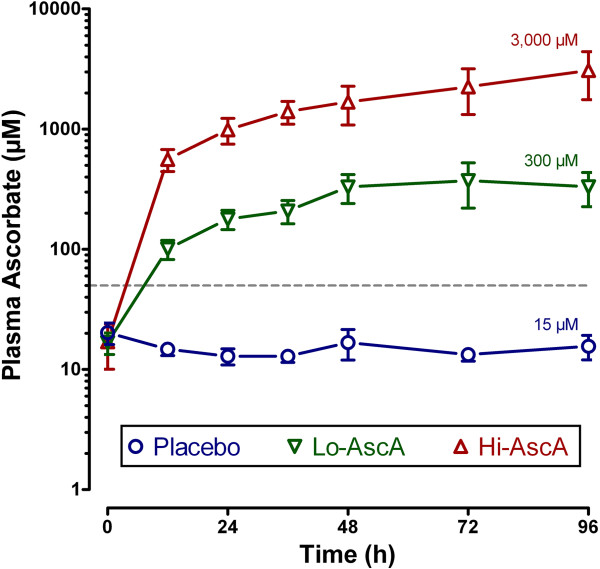
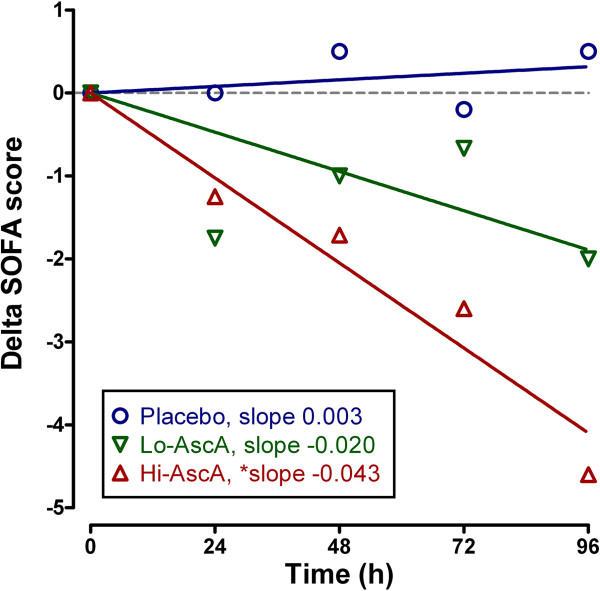
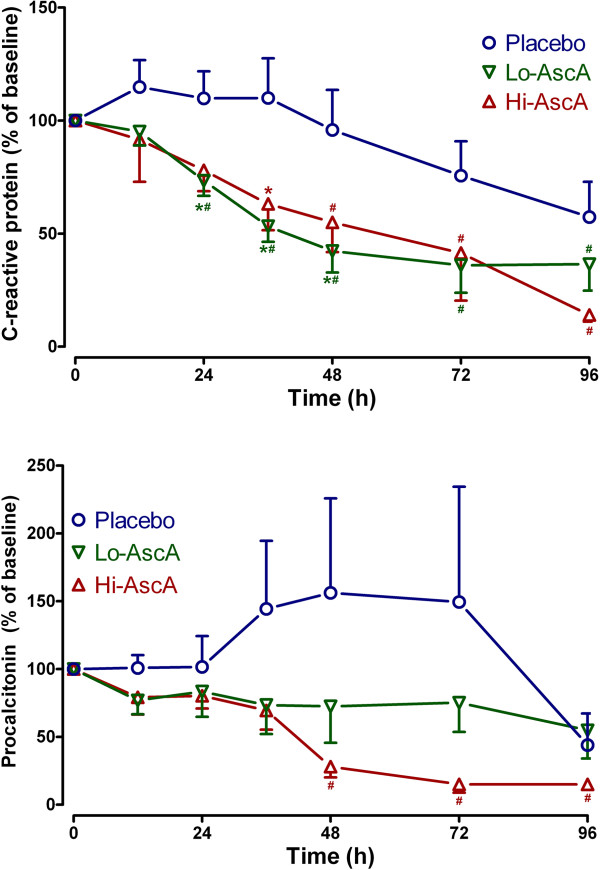
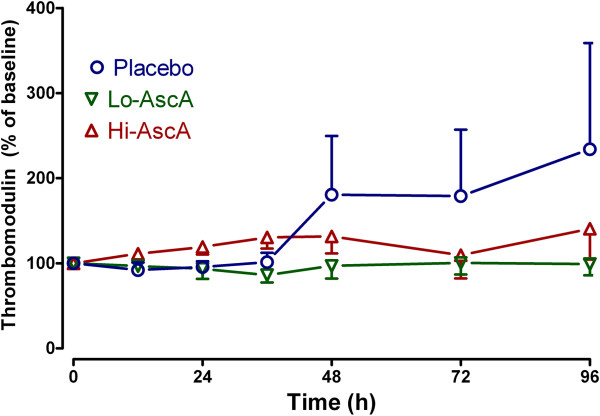
BACKGROUND: Parenterally administered ascorbic acid modulates sepsis-induced inflammation and coagulation in experimental animal models. The objective of this randomized, double-blind, placebo-controlled, phase I trial was to determine the safety of intravenously infused ascorbic acid in patients with severe sepsis. METHODS: Twenty-four patients with severe sepsis in the medical intensive care unit were randomized 1:1:1 to receive intravenous infusions every six hours for four days of ascorbic acid: Lo-AscA (50 mg/kg/24 h, n = 8), or Hi-AscA (200 mg/kg/24 h, n = 8), or Placebo (5% dextrose/water, n = 8). The primary end points were ascorbic acid safety and tolerability, assessed as treatment-related adverse-event frequency and severity. Patients were monitored for worsened arterial hypotension, tachycardia, hypernatremia, and nausea or vomiting. In addition Sequential Organ Failure Assessment (SOFA) scores and plasma levels of ascorbic acid, C-reactive protein, procalcitonin, and thrombomodulin were monitored. RESULTS: Mean plasma ascorbic acid levels at entry for the entire cohort were 17.9 ± 2.4 μM (normal range 50-70 μM). Ascorbic acid infusion rapidly and significantly increased plasma ascorbic acid levels. No adverse safety events were observed in ascorbic acid-infused patients. Patients receiving ascorbic acid exhibited prompt reductions in SOFA scores while placebo patients exhibited no such reduction. Ascorbic acid significantly reduced the proinflammatory biomarkers C-reactive protein and procalcitonin. Unlike placebo patients, thrombomodulin in ascorbic acid infused patients exhibited no significant rise, suggesting attenuation of vascular endothelial injury. CONCLUSIONS: Intravenous ascorbic acid infusion was safe and well tolerated in this study and may positively impact the extent of multiple organ failure and biomarkers of inflammation and endothelial injury. TRIAL REGISTRATION: ClinicalTrials.gov identifier NCT01434121.
Overview
The claims and statistics of this paper haven’t been checked yet.
Free: it reads the open-access text and checks the first 5 claims that cite a source we can check. Create a free account to check every claim.
Integrity signals
Registry
Cites
Statistics
Figures
Verification
Claims the paper makes
The claims and statistics of this paper haven’t been checked yet.
Free: it reads the open-access text and checks the first 5 claims that cite a source we can check. Create a free account to check every claim.
Claims other papers make about this one
Each is checked against this paper’s own text: does it say what the citing paper says it does?
The source backs part of the claim, not all of it — or backs it for a different population, condition or comparison.
In the citing paper
“First, CITRIS-ALI as proposed was based on a previously performed phase 1 safety trial of vitamin C administered to patients in the very early stages of severe sepsis, not ARDS.15”
From Effect of Vitamin C Infusion on Organ Failure and Biomarkers of Inflammation and Vascular Injury in Patients With Sepsis and Severe Acute Respiratory Failure (2019) · cites this paper as [15]
Experimental — accuracy not yet measuredThe source backs part of the claim, not all of it — or backs it for a different population, condition or comparison.
In the citing paper
“The one study in septic patients included in this meta-analysis showed a positive impact of vitamin C on the extent of organ failure, biomarkers of inflammation and endothelial injury [82].”
From Nutrition in Sepsis: A Bench-to-Bedside Review. (2020) · cites this paper as [82]
Experimental — accuracy not yet measuredThe cited source says what the claim attributes to it.
In the citing paper
“Delayed quantification of these biomarkers in CITRIS-ALI compared with early vitamin C infusion in severe sepsis may explain results discordant with those of previous studies of vitamin C in severe sepsis.15”
From Effect of Vitamin C Infusion on Organ Failure and Biomarkers of Inflammation and Vascular Injury in Patients With Sepsis and Severe Acute Respiratory Failure (2019) · cites this paper as [15]
Experimental — accuracy not yet measuredThe cited source says what the claim attributes to it.
In the citing paper
“The selection of the primary outcomes was based on a previously performed phase 1 trial.15”
The check wasn’t confident either way, so it gives no verdict — never disputed.
In the citing paper
“In accordance with these calculations, CITRIS-ALI enrolled 170 patients (85 per group) to allow for 10% dropouts, providing a statistical power of 80%, with an α < .05.”
From Effect of Vitamin C Infusion on Organ Failure and Biomarkers of Inflammation and Vascular Injury in Patients With Sepsis and Severe Acute Respiratory Failure (2019) · cites this paper as [15]
Experimental — accuracy not yet measured
1 more claim about this paper
Create a free account to see every claim other papers make about this one.
Self-check
Percentages, sums and reported differences re-computed from the paper’s own numbers.
The self-check needs the paper’s full text.
Citations
Cites
Harris, P. A., Taylor, R., Thielke, R., Payne, J., Gonzalez, N., & Conde, J. G. (2009) · Journal of Biomedical Informatics · doi:10.1016/j.jbi.2008.08.010 · Cited by 51,384 · cited 5×
“Patients were screened and enrolled following admission to the Medical Respiratory Intensive Care Unit in the VCU Medical Center, Richmond, Virginia.”
MethodInfluentialVincent, J. L., Moreno, R., Takala, J., Willatts, S., De Mendonça, A., Bruining, H., Reinhart, C. K., Suter, P. M., & Thijs, L. G. (1996) · Intensive Care Medicine · doi:10.1007/bf01709751 · Cited by 11,674
The epidemiology of sepsis in the United States from 1979 through 2000
Martin, G. S., Mannino, D. M., Eaton, S., & Moss, M. (2003) · New England Journal of Medicine · doi:10.1056/nejmoa022139 · Cited by 5,841
Serial Evaluation of the SOFA Score to Predict Outcome in Critically Ill Patients
Ferreira, F. L. (2001) · JAMA · doi:10.1001/jama.286.14.1754 · Cited by 2,862
Sepsis in European intensive care units: Results of the SOAP study*
Vincent, J.-L., Sakr, Y., Sprung, C. L., Ranieri, V. M., Reinhart, K., Gerlach, H., Moreno, R., Carlet, J., Le Gall, J.-R., & Payen, D. (2006) · Critical Care Medicine · doi:10.1097/01.ccm.0000194725.48928.3a · Cited by 2,836 · cited 1×
“Tens of thousands of lives are lost across the world annually due to severe sepsis [1,38-40].”
BackgroundDrotrecogin Alfa (Activated) in Adults with Septic Shock
Ranieri, V. M., Thompson, B. T., Barie, P. S., Dhainaut, J.-F., Douglas, I. S., Finfer, S., Gårdlund, B., Marshall, J. C., Rhodes, A., Artigas, A., et al. (2012) · New England Journal of Medicine · doi:10.1056/nejmoa1202290 · Cited by 1,309
Moreno, R., Vincent, J.-L., Matos, R., Mendonça, A., Cantraine, F., Thijs, L., Takala, J., Sprung, C., Antonelli, M., Bruining, H., et al. (1999) · Intensive Care Medicine · doi:10.1007/s001340050931 · Cited by 1,058
Vitamin C pharmacokinetics: Implications for oral and intravenous use
Padayatty, S. J., Sun, H., Wang, Y., Riordan, H. D., Hewitt, S. M., Katz, A., Wesley, R. A., & Levine, M. (2004) · Annals of Internal Medicine · doi:10.7326/0003-4819-140-7-200404060-00010 · Cited by 992 · cited 2×
“Padayatty and colleagues showed that high-level ascorbic acid plasma concentrations could only be achieved by intravenous administration [15].”
BackgroundRandomized, Prospective Trial of Antioxidant Supplementation in Critically Ill Surgical Patients
Nathens, A. B., Neff, M. J., Jurkovich, G. J., Klotz, P., Farver, K., Ruzinski, J. T., Radella, F., Garcia, I., & Maier, R. V. (2002) · Annals of Surgery · doi:10.1097/00000658-200212000-00014 · Cited by 536
C-Reactive Protein Levels Correlate With Mortality and Organ Failure in Critically Ill Patientsa
Lobo, S. M. A., Lobo, F. R. M., Bota, D. P., Lopes-Ferreira, F., Soliman, H. M., Meélot, C., & Vincent, J.-L. (2003) · Chest · doi:10.1378/chest.123.6.2043 · Cited by 448 · cited 1×
“reported that patients with CRP levels greater than 10 mg/dL at ICU admission exhibited significantly higher rates of multiple organ failure as well as higher mortality rates [34].”
Background
Research works printed but not linked: 3
- Sawyer MAJ, Mike JJ, Chavin K: Antioxidant therapy and survival in ARDS [abstract]. Crit Care Med. 1989, 17: S153-
- Fowler AA, Fisher BJ, DeWilde C, Priday A, Syed A, Farthing CA, Larus TL, Knowlson S, Natarajan R: Parenteral vitamin C attenuates markers of organ injury and inflammation in severe sepsis [abstract]. Am J Respir Crit Care Med. 2012, 185 (2012): A6718-
- Urbaniak GC, Plous S: Research randomizer (version 3.0). 2010, http://www.randomizer.org ,
Cited by
Items 101–200 of 573
Ghalibaf, M. H. E., Kianian, F., Beigoli, S., Behrouz, S., Marefati, N., Boskabady, M., & Boskabady, M. H. (2023) · Inflammopharmacology · doi:10.1007/s10787-023-01169-1 · Cited by 60
Abellán-Llobregat, A., Vidal, L., Rodríguez‐Amaro, R., Berenguer‐Murcia, Á., Canals, A., & Morallón, E. (2016) · Electrochimica Acta · doi:10.1016/j.electacta.2016.12.132 · Cited by 62
Evidence is stronger than you think: a meta-analysis of vitamin C use in patients with sepsis
Li, J. (2018) · Critical Care · doi:10.1186/s13054-018-2191-x · Cited by 66
“[3] did not reach statistical significance.”
BackgroundInfluentialShin, T. G., Kim, Y., Ryoo, S. M., Hwang, S. Y., Jo, I. J., Chung, S. P., Choi, S., Suh, G. J., & Kim, W. Y. (2019) · Journal of Clinical Medicine · doi:10.3390/jcm8010102 · Cited by 60
“performed a pilot study of 24 patients with severe sepsis and septic shock randomized into placebo (n = 8), low-dose intravenous vitamin C (50 mg/kg; n = 8), and high-dose vitamin C (200 mg/kg; n = 8) groups [9].”
Efficacy of vitamin C in patients with sepsis: An updated meta-analysis
Wei, X., Wang, Z., Liao, X., Guo, W., Wen, J., Qin, T., & Wang, S. (2019) · European Journal of Pharmacology · doi:10.1016/j.ejphar.2019.172889 · Cited by 58
Unusual Early Recovery of a Critical COVID-19 Patient After Administration of Intravenous Vitamin C
Khan, H. M. W., Parikh, N. M., Megala, S. M., & Predeteanu, G. (2020) · American Journal of Case Reports · doi:10.12659/ajcr.925521 · Cited by 72
Zhao, B., Ling, Y., Li, J., Peng, Y., HUANG, J. C., Wang, Y., Qu, H., Gao, Y., Li, Y., Hu, B., et al. (2020) · Annals of Palliative Medicine · doi:10.21037/apm-20-1387 · Cited by 57
“CRP level was shown with rapid reduction by HDIVC (200 mg/kg/d) in a previous before after study in a cohort of sepsis patient (21).”
MethodChaturvedi, S., Khan, S., Bhunia, R. K., Kaur, K., & Tiwari, S. (2022) · Physiology and Molecular Biology of Plants · doi:10.1007/s12298-022-01172-w · Cited by 59
“It was reported that the treatment of pineapple and strawberries fruits with 50 and 75 mg/L gibberellic acid, respectively increases the AsA content up to 10.5% in comparison to control fruits (Léchaudel et al. 2018; Taghavi et al. 2019).”
BackgroundInfluentialIV Vitamin C in Critically Ill Patients: A Systematic Review and Meta-Analysis.
Patel, J. J., Ortiz‐Reyes, L., Dhaliwal, R., Clarke, J., Hill, A., Stoppe, C., Lee, Z., & Heyland, D. K. (2022) · PubMed · doi:10.1097/ccm.0000000000005320 · Cited by 29
Tumor necrosis factor alpha reduces intestinal vitamin C uptake: a role for NF-κB-mediated signaling
Subramanian, V. S., Sabui, S., Ganapathy, A. S., Marchant, J. S., & Said, H. M. (2018) · American Journal of Physiology-Gastrointestinal and Liver Physiology · doi:10.1152/ajpgi.00071.2018 · Cited by 62
The LOVIT-COVID Investigators, O. B. O. T. C. C. C. T. G., Florescu, S., Stanciu, D., Zaharia, M., Kosa, A., Codreanu, D., Fareed, K., Kidwai, A., Kaye, C., Coutts, A., et al. (2023) · JAMA · doi:10.1001/jama.2023.21407 · Cited by 55
Self-citationBharara, A., GROSSMAN, C. E., Grinnan, D., Syed, A. A., Fisher, B., DeWilde, C., Natarajan, R., & Fowler, A. A. (2016) · Case Reports in Critical Care · doi:10.1155/2016/8560871 · Cited by 58
“dose intravenous vitamin C exhibit significant reduction in multiple organ injury and reduced inflammatory biomarker levels [4].”
BackgroundMethodSelf-citationVitamin C in Health and Disease: A Companion Animal Focus
Gordon, D. S., Rudinsky, A. J., Guillaumin, J., Parker, V. J., & Creighton, K. J. (2020) · Topics in companion animal medicine · doi:10.1016/j.tcam.2020.100432 · Cited by 65
Pathophysiology, mechanisms, and managements of tissue hypoxia
Mallat, J., Rahman, N., Hamed, F., Glenn Hernández, P., & Fischer, M.-O. (2022) · Anaesthesia Critical Care & Pain Medicine · doi:10.1016/j.accpm.2022.101087 · Cited by 76
Sulaiman, K. A. A., Aljuhani, O. A., Saleh, K. B., Badreldin, H. A., Harthi, A. A., Alenazi, M., Alharbi, A. A., Algarni, R., Harbi, S. A. A., Alhammad, A., et al. (2021) · Scientific Reports · doi:10.1038/s41598-021-96703-y · Cited by 57
Vitamin C Administration to the Critically Ill: A Systematic Review and Meta‐Analysis
Langlois, P. L., Manzanares, W., Adhikari, N. K. J., Lamontagne, F., Stoppe, C., Hill, A., & Heyland, D. K. (2018) · Journal of Parenteral and Enteral Nutrition · doi:10.1002/jpen.1471 · Cited by 57
Preventing the development of severe COVID-19 by modifying immunothrombosis
Morris, G., Bortolasci, C. C., Puri, B. K., OLIVE, L. S., Marx, W., O'Neil, A. E., Athan, E., Carvalho, A. F., Maes, M. H. J., Walder, K. R., et al. (2020) · Life Sciences · doi:10.1016/j.lfs.2020.118617 · Cited by 51
“stress [284,286] and the inhibitory effect of PICs on the sodium dependent Vit C transporter (SVCT) 2 [288,289].”
Bilal, S., Akbar, A., & Shah, A. A. (2019) · Polymers · doi:10.3390/polym11081346 · Cited by 51
“The normal level of AA in human plasma is in between 50 to 70 μM [5].”
BackgroundSato, R., Hasegawa, D., Prasitlumkum, N., Ueoka, M., Nishida, K., Takahashi, K., Nasu, M., & Dugar, S. P. (2021) · Critical Care Medicine · doi:10.1097/ccm.0000000000005263 · Cited by 50
Ascorbic Acid, Thiamine, and Steroids in Septic Shock: Propensity Matched Analysis
Sadaka, F. G., Grady, J., Organti, N. K., Donepudi, B., Korobey, M. J., Tannehill, D., & O’Brien, J. (2019) · Journal of Intensive Care Medicine · doi:10.1177/0885066619864541 · Cited by 51
“Patients who received higher dose ascorbic acid had more rapid clinical improvement.(16) In another study, patients with vasopressor-dependent SS were randomized to 25 mg/kg of ascorbic acid every 6 hours or placebo.”
BackgroundEffect of high-dose vitamin C therapy on severe burn patients: a nationwide cohort study
Nakajima, M., Morita, K., Aso, S., Matsui, H., Fushimi, K., Kaita, Y., Goto, H., Yamaguchi, Y., & Yasunaga, H. (2019) · Critical Care · doi:10.1186/s13054-019-2693-1 · Cited by 52
“and (2) 24 g within 2 days of admission [20, 21].”
BackgroundMaackiain protects against sepsis via activating AMPK/Nrf2/HO-1 pathway
Bai, X., Zhu, Y., Jie, J., Li, D., Song, L., & Luo, J. (2022) · International Immunopharmacology · doi:10.1016/j.intimp.2022.108710 · Cited by 54
(Ascorb)ing Pb Neurotoxicity in the Developing Brain
Ahmad, F., & Liu, P. (2020) · Antioxidants · doi:10.3390/antiox9121311 · Cited by 53
Vitamin C in the critically ill - indications and controversies
Nabzdyk, C. S., & Bittner, E. A. (2018) · World Journal of Critical Care Medicine · doi:10.5492/wjccm.v7.i5.52 · Cited by 53
Chow, J. H., Abuelkasem, E., Sankova, S. K., Henderson, R. A., Mazzeffi, M. A., & Tanaka, K. A. (2019) · Anesthesia & Analgesia · doi:10.1213/ane.0000000000004343 · Cited by 48
Qiao, X., Kashiouris, M. G., L'Heureux, M., Fisher, B. J., Leichtle, S. W., Truwit, J. D., Nanchal, R. S., Hite, R. D., Morris, P. E., Martin, G. S., et al. (2022) · Nutrients · doi:10.3390/nu14204415 · Cited by 48
Self-citationLykkesfeldt, J., Carr, A. C., & Tveden‐Nyborg, P. (2025) · Pharmacological Reviews · doi:10.1016/j.pharmr.2025.100043 · Cited by 56
Vollbracht, C., Raithel, M., Krick, B., Kraft, K., & Hagel, A. (2018) · Journal of International Medical Research · doi:10.1177/0300060518777044 · Cited by 48
Patterson, T., Isales, C. M., & Fulzele, S. (2021) · Aging and Disease · doi:10.14336/ad.2020.0918 · Cited by 46
“The beneficial role of vitamin C as an antioxidant and anti-inflammatory is well known [56].”
BackgroundInfluentialThe Japanese Clinical Practice Guidelines for Management of Sepsis and Septic Shock 2024
Shime, N., Nakada, T.-A., Yatabe, T., Yamakawa, K., Aoki, Y., Inoue, S., Iba, T., Ogura, H., Kawai, Y., Kawaguchi, A., et al. (2025) · Journal of Intensive Care · doi:10.1186/s40560-025-00776-0 · Cited by 52
Vitamins, supplements and COVID-19: a review of currently available evidence
Speakman, L., Michienzi, S. M., & Badowski, M. E. (2021) · Drugs in Context · doi:10.7573/dic.2021-6-2 · Cited by 53
Vitamin C improves microvascular reactivity and peripheral tissue perfusion in septic shock patients
Lavillegrand, J., Raia, L., Urbina, T., Hariri, G., Gabarre, P., Bonny, V., Bigé, N., Baudel, J.-L., Bruneel, A., Dupré, T., et al. (2022) · Critical Care · doi:10.1186/s13054-022-03891-8 · Cited by 44
Parenteral Vitamin C in Patients with Severe Infection: A Systematic Review
Agarwal, A., Basmaji, J., Fernando, S. M., Ge, F. Z., Xiao, Y., Faisal, H., Honarmand, K., Hylands, M., Lau, V. I., Lewis, K. A., et al. (2022) · NEJM Evidence · doi:10.1056/evidoa2200105 · Cited by 48
Mechanisms of SARS-CoV-2 Infection-Induced Kidney Injury: A Literature Review
He, W., Liu, X., Hu, B., Li, D., Chen, L., Li, Y., Tu, Y., Xiong, S., Wang, G., Deng, J., et al. (2022) · Frontiers in Cellular and Infection Microbiology · doi:10.3389/fcimb.2022.838213 · Cited by 50
Zhao, B., Liu, M., Liu, P., Peng, Y., HUANG, J. C., Li, M., Wang, Y., Xu, L., Sun, S., Qi, X., et al. (2021) · Frontiers in Pharmacology · doi:10.3389/fphar.2021.638556 · Cited by 40
“CRP levels were shown to be reduced rapidly by HDIVC (200 mg/kg/day) in a previous before-after study in a cohort of sepsis patients (Fowler et al., 2014).”
ResultRETRACTED ARTICLE: Early use of high-dose vitamin C is beneficial in treatment of sepsis
Lv, S., Guo-hu, Z., Xia, J., Yu, H., & Zhao, F. (2020) · Irish Journal of Medical Science (1971 -) · doi:10.1007/s11845-020-02394-1 · Cited by 46
RetractedZayed, Y., Alzghoul, B. N., Banifadel, M., Venigandla, H., Hyde, R., Sutchu, S., Khasawneh, M., Borok, Z., Urbine, D., Jantz, M. A., et al. (2021) · Journal of Intensive Care Medicine · doi:10.1177/0885066620987809 · Cited by 40
Micronutrient deficiencies in critical illness
Koekkoek, W. A. C., Hettinga, K. A., de Vries, J. H. M., & van Zanten, A. R. H. (2021) · Clinical Nutrition · doi:10.1016/j.clnu.2021.05.003 · Cited by 42
Liang, B., Su, J., Shao, H., Chen, H., & Xie, B. (2023) · Critical Care · doi:10.1186/s13054-023-04392-y · Cited by 43
“Early studies confirmed IV vitamin C (IVVC) is associated with decreased inflammatory response and ameliorated outcomes in sepsis [7, 8].”
BackgroundCovid 19: Diet Composition and Health
Skrajnowska, D., Brumer, M., Kankowska, S., Matysek, M., Miazio, N., & Bobrowska‐Korczak, B. (2021) · Nutrients · doi:10.3390/nu13092980 · Cited by 39
Emerging drugs for acute lung injury
Impellizzeri, D., Bruschetta, G., Esposito, E., & Cuzzocrea, S. (2015) · Expert Opinion on Emerging Drugs · doi:10.1517/14728214.2015.1000299 · Cited by 40
“Moreover, a recent randomized, double-blind, placebo-controlled, Phase I trial reported the safe effects of intravenously infused ascorbic acid in patients with severe sepsis (Table 1) [84].”
BackgroundYanase, F., Bitker, L., Hessels, L., Osawa, E., Naorungroj, T., Cutuli, S. L., Young, P. J., Ritzema, J., Hill, G., Latimer-Bell, C., et al. (2019) · Journal of Cardiothoracic and Vascular Anesthesia · doi:10.1053/j.jvca.2019.08.034 · Cited by 40
Sepsis 2019: What Surgeons Need to Know
Ho, V. P., Kaafarani, H. M. A., Rattan, R., Namias, N., Evans, H. L., & Zakrison, T. L. (2020) · Surgical Infections · doi:10.1089/sur.2019.126 · Cited by 43
SARS-CoV-2: Pathogenesis, and Advancements in Diagnostics and Treatment
Khalaf, K., Papp, N., Chou, J. T.-T., Hana, D., Mackiewicz, A. A., & Kaczmarek, M. (2020) · Frontiers in Immunology · doi:10.3389/fimmu.2020.570927 · Cited by 47
“There were also no adverse events observed with the vitamin C group (175).”
BackgroundNabil Habib, T., & Ahmed, I. (2017) · International Journal of Microbiology & Advanced Immunology · doi:10.19070/2329-9967-1700015 · Cited by 45
“They compared it with placebo, vitamin C showed less inflammation and reduction of organ failure [13].”
BackgroundAhn, J. H., Oh, D. K., Huh, J. W., Lim, C., Koh, Y., & Hong, S. (2019) · Journal of Thoracic Disease · doi:10.21037/jtd.2019.03.03 · Cited by 36
“Hepatobiliary/intra-abdominal 14 [19] 4 [11] 10 [25]”
Vitamin C measurement in critical illness: challenges, methodologies and quality improvements
Collie, J. T. B., Greaves, R. F., Jones, O. A. H., Eastwood, G. M., & Bellomo, R. (2019) · Clinical Chemistry and Laboratory Medicine (CCLM) · doi:10.1515/cclm-2019-0912 · Cited by 38
“It is unclear whether this bias would increase at levels >133 μmol/L as these concentrations are likely to be observed in high-dose vitamin C trials [14, 52, 78].”
BackgroundMethodInfluentialMorris-Blanco, K. C., Chokkalla, A. K., Kim, T., Bhatula, S., Bertogliat, M. J., Gaillard, A. B., & Vemuganti, R. (2022) · Translational Stroke Research · doi:10.1007/s12975-022-01007-6 · Cited by 40
Hudson, E. P., Collie, J. T. B., Fujii, T., Luethi, N., Udy, A. A., Doherty, S., Eastwood, G. M., Yanase, F., Naorungroj, T., Bitker, L., et al. (2019) · Critical Care and Resuscitation · doi:10.1016/s1441-2772(23)00548-3 · Cited by 44
Moore, A., & Khanna, D. (2023) · Cureus · doi:10.7759/cureus.33740 · Cited by 43
“Their findings included a reduction in SOFA scores and decreased vascular injury compared to a placebo control group, all while showing minimal adverse side effects [75].”
BackgroundResolution of Sterile Inflammation: Role for Vitamin C
Mohammed, B. M., Fisher, B. J., Huynh, Q. K., Wijesinghe, D. S., Chalfant, C. E., Brophy, D. F., Fowler, A. A., & Natarajan, R. (2014) · Mediators of Inflammation · doi:10.1155/2014/173403 · Cited by 38
“We further showed that parenteral VitC attenuates proinflammatory biomarkers and reduces mortality in human sepsis [29].”
BackgroundInfluentialSelf-citationWald, E., Badke, C. M., Hintz, L. K., Spewak, M. B., & Sanchez-Pinto, L. N. (2021) · Pediatric Research · doi:10.1038/s41390-021-01673-6 · Cited by 41
Drug safety of frequently used drugs and substances for self-medication in COVID-19
Baracaldo-Santamaría, D., Pabón-Londoño, S., & Rojas-Rodríguez, L. C. (2022) · Therapeutic Advances in Drug Safety · doi:10.1177/20420986221094141 · Cited by 40
Therapeutic potential of megadose vitamin C to reverse organ dysfunction in sepsis and COVID‐19
May, C. N., Bellomo, R., & Lankadeva, Y. R. (2021) · British Journal of Pharmacology · doi:10.1111/bph.15579 · Cited by 38
“…(RCT) showed that intravenous vitamin C reduced inflam-matory biomarkers and reduced sequential organ failure assessment (SOFA) scores (50, 100, 200 mg/kg/day, n=24) (Fowler et al., 2014) and improved vasopressor sensitivity (2 g 4 times/day, n=28) (Zabet, Moham-madi, Ramezani & Khalili, 2016).”
BackgroundRousseau, A., & Martindale, R. G. (2024) · Annals of Intensive Care · doi:10.1186/s13613-024-01350-x · Cited by 42
“Used alone, in a small cohort of patients with severe sepsis, intravenous high dose of vitamin C significantly reduced inflammatory biomarkers [99].”
BackgroundGudivada, K. K., Kumar, A. R., Shariff, M., Sampath, S., Varma, M. M. K., Sivakoti, S., & Krishna, B. (2020) · Clinical Nutrition · doi:10.1016/j.clnu.2020.06.033 · Cited by 35
Hunter, J., Leach, M., Braun, L. A., & Bensoussan, A. (2017) · BMC Complementary and Alternative Medicine · doi:10.1186/s12906-017-1613-7 · Cited by 39
“Very low quality evidence for intravenous silibinin for life-threatening amatoxin mushroom poisoning [91, 92], or intravenous ascorbate for life-threatening viral infections [93, 94].”
BackgroundVitamin C and Helicobacter pylori Infection: Current Knowledge and Future Prospects
Mei, H., & Tu, H. (2018) · Frontiers in Physiology · doi:10.3389/fphys.2018.01103 · Cited by 38
“4 g over 1 h to 14 g/day over 4 days, increases total plasma nitrite, heart rate, cardiac index, and decreases the levels of pro-inflammatory biomarkers, SOFA scores, and mortality of ICU stay (Table 5; Galley et al., 1996; Fowler et al., 2014; Zabet et al., 2016; Marik et al., 2017).”
BackgroundHigh-dose vitamin C infusion for the treatment of critically ill COVID-19Preprint
Zhang, J., Rao, X., Li, Y., Zhu, Y., Liu, F., Guo, G., Luo, G., Meng, Z., Backer, D. D., Xiang, H., et al. (2020) · Research Square · doi:10.21203/rs.3.rs-52778/v1 · Cited by 37
“The results showed that HDIVC was safe for critically ill patients and signi cantly reduced vasopressor support[24], limited organ injury[25], shortened the duration of mechanical ventilation[26] and ICU stay[27], and improved survival rates[18].”
BackgroundKory, P., Meduri, G. U., Iglesias, J., Varon, J., & Marik, P. E. (2021) · Journal of Intensive Care Medicine · doi:10.1177/0885066620973585 · Cited by 32
“The hemodynamic effects of AA have been demonstrated in septic shock, trauma, and burns where administration of ascorbic acid reduced vasopressor and volume resuscitation requirement.(47,49,62,63) Marik et al, in a propensity adjusted study of patients with sepsis, administered intravenous AA, hydrocortisone, and thia…”
BackgroundRetractedVitamin C in Pneumonia and Sepsis
Carr, A. C. (2020) · CRC Press eBooks · doi:10.1201/9780429442025-7 · Cited by 45
Kwak, S. G., Choo, Y. J., & Chang, M. C. (2021) · Complementary Therapies in Medicine · doi:10.1016/j.ctim.2021.102797 · Cited by 36
Hung, K., Chuang, M., Chen, J., Hsu, C., Chiu, C., Chang, Y.-J., Lee, C., Chen, I., & Sun, C. (2023) · Frontiers in Nutrition · doi:10.3389/fnut.2023.1094757 · Cited by 31
Vitamin C for the critically ill: Is the evidence strong enough?
Langlois, P. L., & Lamontagne, F. (2018) · Nutrition · doi:10.1016/j.nut.2018.10.009 · Cited by 35
Honoré, P. M., Spapen, H. D., Marik, P. E., Boer, W., & Straaten, H. M. O. (2020) · Annals of Intensive Care · doi:10.1186/s13613-020-0640-6 · Cited by 32
“Indeed, the authors have recalculated the Sequential Organ Failure Assessment (SOFA) score as several errors did occur like for instance imputing the SOFA score prior to death in those patients who died prior to 96 h [5].”
BackgroundDual Role of Hydrogen Peroxide as an Oxidant in Pneumococcal Pneumonia
Mraheil, M. A., Toque, H. A., Pietra, L. L., Hamacher, J., Phanthok, T., Verin, A. D., Gonzales, J., Su, Y., Fulton, D. J., Eaton, D. C., et al. (2020) · Antioxidants and Redox Signaling · doi:10.1089/ars.2019.7964 · Cited by 32
Neuroprotective Properties of Vitamin C: A Scoping Review of Pre-Clinical and Clinical Studies
Kangisser, L., Tan, E., Bellomo, R., Deane, A. M., & Plummer, M. P. (2021) · Journal of Neurotrauma · doi:10.1089/neu.2020.7443 · Cited by 35
“56 Similarly, in a nested cohort study of 21 patients with septic shock, nearly half of the study cohort had either vitamin C deficiency or hypovitaminosis C at baseline, and 1.5g of intravenous vitamin C every 6h was required to maintain normal or supranormal vitamin C levels.”
Hui, L. L., Nelson, E. A. S., Lin, S.-J., & Zhao, J. V. (2021) · European Journal of Clinical Nutrition · doi:10.1038/s41430-021-00993-4 · Cited by 31
Vitamin C in Critically Ill Patients: An Updated Systematic Review and Meta-Analysis
Shrestha, D. B., Budhathoki, P., Sedhai, Y. R., Mandal, S. K., Shikhrakar, S., Karki, S., Baniya, R. K., Kashiouris, M. G., Qiao, X., & Fowler, A. A. (2021) · Nutrients · doi:10.3390/nu13103564 · Cited by 32
“[3] in 2014, vitamin C decreased the risk of organ failure in patients with a critical illness.”
BackgroundInfluentialSelf-citationTehrani, S., Yadegarynia, D., Abrishami, A., Moradi, H., Gharaei, B., Rauofi, M., Nejad, F. M., Sali, S., Khabiri, N., & Abolghasemi, S. (2022) · Urology journal./Urology jornal. · doi:10.22037/uj.v18i.6863 · Cited by 31
Is High-Dose Vitamin C Beneficial for Patients With Sepsis?
Brant, E. B., & Angus, D. C. (2019) · JAMA · doi:10.1001/jama.2019.11643 · Cited by 29
Vitamin C for Sepsis and Acute Respiratory Failure—Reply
Fowler, A. A., Fisher, B. J., & Kashiouris, M. G. (2020) · JAMA · doi:10.1001/jama.2019.21987 · Cited by 29
Self-citationThe Use of Intravenous Vitamin C as a Supportive Therapy for a Patient with Glioblastoma Multiforme
Baillie, N., Carr, A. C., & Peng, S. (2018) · Antioxidants · doi:10.3390/antiox7090115 · Cited by 31
Pharmacologic Treatments for Acute Respiratory Distress Syndrome
Qadir, N., & Chang, S. Y. (2021) · Critical Care Clinics · doi:10.1016/j.ccc.2021.05.009 · Cited by 34
Aisa-Álvarez, A., Pérez-Torres, I., Guarner‐Lans, V., Manzano-Pech, L., Cruz-Soto, R., Márquez-Velasco, R., Cásarez-Alvarado, S., Franco-Granillo, J., Núñez-Martínez, M. E., & Soto, M. E. (2023) · Cells · doi:10.3390/cells12091330 · Cited by 32
“It suggested the inclusion of 11 patients in each group for a desired 80% power and an alpha error of p < 0.05 based on a previous reference [35].”
MethodInfluentialMetabolic support in sepsis: corticosteroids and vitamins: the why, the when, the how
Fujii, T., Deane, A. M., & Nair, P. (2020) · Current Opinion in Critical Care · doi:10.1097/mcc.0000000000000736 · Cited by 31
“Patients receiving either dose exhibited a greater decrease in sequential organ failure assessment (SOFA) scores over 96 h than those receiving placebo, and the reduction was the greatest in patients who received the 200 mg/kg/24 h dose [17].”
BackgroundMethodInfluentialChang, C., Chen, J., Chen, S.-H., Cheng, T., Lin, M., & Hu, M. (2015) · Free Radical Biology and Medicine · doi:10.1016/j.freeradbiomed.2015.12.017 · Cited by 29
Hudson, E. P., Collie, J. T. B., Fujii, T., Luethi, N., Udy, A. A., Doherty, S., Eastwood, G. M., Yanase, F., Naorungroj, T., Bitker, L., et al. (2020) · Critical Care and Resuscitation · doi:10.51893/2020.2.err2 · Cited by 28
Safety of vitamin C in sepsis: a neglected topic
Rad, N. K., & Khalili, H. (2019) · Current Opinion in Critical Care · doi:10.1097/mcc.0000000000000622 · Cited by 31
“During the phase 1 trial in severe sepsis testing very high (200 mg/kg) and high (25 mg/kg) doses of intravenous vitamin C delivered for 4 days, no identifiable side effect was detected in two cohorts of eight patients [43].”
BackgroundObi, J., Pastores, S. M., Ramanathan, L. V., Yang, J. C., & Halpern, N. (2020) · Journal of Critical Care · doi:10.1016/j.jcrc.2019.12.011 · Cited by 30
Vitamin C for sepsis intervention: from redox biochemistry to clinical medicine
Li, Y. R., & Zhu, H. (2021) · Molecular and Cellular Biochemistry · doi:10.1007/s11010-021-04240-z · Cited by 30
Potential Antioxidant Multitherapy against Complications Occurring in Sepsis
Abelli, J., Méndez-Valdés, G., Gómez-Hevia, F., Bragato, M. C., Chichiarelli, S., Saso, L., & Rodrigo, R. (2022) · Biomedicines · doi:10.3390/biomedicines10123088 · Cited by 32
Mohamed, A., Abdelaty, M. A., Saad, M. O., Shible, A. A., Mitwally, H., Akkari, A. M., Elbuzidi, A. A. S., Bintaher, A., Hashim, A., Abdelrahim, M., et al. (2023) · Shock · doi:10.1097/shk.0000000000002110 · Cited by 29
Lee, Z., Ortiz‐Reyes, L., Lew, C. C. H., Hasan, M. S., Ke, L., Patel, J. J., Stoppe, C., & Heyland, D. K. (2023) · Annals of Intensive Care · doi:10.1186/s13613-023-01116-x · Cited by 32
“3 μmol/L) in which patients in six studies were considered vitamin C deficient (range: 10–22 μmol/L) [11, 19, 27, 36, 41], one study had a very borderline vitamin C level (median: 22 μmol/L) and we also considered the patients were deficit in vitamin C [38], and one study had normal baseline vitamin C levels [26].”
BackgroundMetabolic Resuscitation Strategies to Prevent Organ Dysfunction in Sepsis
Reitsema, V. A., Star, B. S., de Jager, V. D., van Meurs, M., Henning, R. H., & Bouma, H. R. (2019) · Antioxidants and Redox Signaling · doi:10.1089/ars.2018.7537 · Cited by 28
“…and procalcitonin), leading to preservation of organ function, as demonstrated by reduced SOFA scores (12.5 or 50 mg/kg every 6 hours for 4 days) (57) and a reduction in vasopressor need and 28-day mortality in patients with septic shock, without affecting length of ICU stay (25 mg/kg every 6…”
InfluentialLessening Organ dysfunction with VITamin C (LOVIT): protocol for a randomized controlled trial
on behalf of the Canadian Critical Care Trials Group, Masse, M.-H., Ménard, J., Sprague, S., Battista, M., Cook, D. J., Guyatt, G. H., Heyland, D. K., Kanji, S., Pinto, R. L., et al. (2020) · Trials · doi:10.1186/s13063-019-3834-1 · Cited by 28
“We selected a high-dose vitamin C regimen since this may be associated with the highest likelihood of demonstrating an effect, if one exists [17].”
MethodŞahin, E., Orhan, C., Uckun, F. M., & Şahin, K. (2020) · Frontiers in Nutrition · doi:10.3389/fnut.2020.580504 · Cited by 30
“In a randomized, double-blind, placebo-controlled, phase I trial, ascorbic acid infusion rapidly increased plasma ascorbic acid concentration and reduced the pro-inflammatory biomarkers C-reactive protein (CRP) and procalcitonin levels, prevented an increase in thrombomodulin levels consistent with reduced vascular da…”
BackgroundMigliorini, F., Vaishya, R., Eschweiler, J., Oliva, F., Hildebrand, F., & Maffulli, N. (2022) · Medicina · doi:10.3390/medicina58070941 · Cited by 29
Yanase, F., Spano, S., Maeda, A., Chaba, A., Naorungroj, T., Ow, C. P. C., Lankadeva, Y. R., May, C. N., Betrie, A. H., Lane, D. J. R., et al. (2023) · Critical Care · doi:10.1186/s13054-023-04644-x · Cited by 27
Kale, R. A., Dhawale, S. C., Mulik, B. B., Adhikari, A., & Sathe, B. R. (2024) · Journal of Industrial and Engineering Chemistry · doi:10.1016/j.jiec.2024.02.004 · Cited by 26
Impact of high dose vitamin C on platelet function
Mohammed, B. M., Sanford, K., Fisher, B. J., Martin, E. J., Contaifer, D., Warncke, U. O., Wijesinghe, D. S., Chalfant, C. E., Brophy, D. F., Fowler, A. A., et al. (2017) · World Journal of Critical Care Medicine · doi:10.5492/wjccm.v6.i1.37 · Cited by 31
Self-citationReynolds, P. S., Fisher, B. J., McCarter, J., Sweeney, C., Martin, E. J., Middleton, P., Ellenberg, M., Fowler, E., Brophy, D. F., Fowler, A. A., et al. (2018) · The Journal of Trauma: Injury, Infection, and Critical Care · doi:10.1097/ta.0000000000001844 · Cited by 25
Self-citationNunnally, M., & Patel, A. (2019) · Current Opinion in Anaesthesiology · doi:10.1097/aco.0000000000000707 · Cited by 27
Vitamin C levels amongst initial survivors of out of hospital cardiac arrest
Gardner, R. M., Liu, X., Wang, Y., Cole, A. C., Heydrick, S. J., Donnino, M. W., & Moskowitz, A. L. (2020) · Resuscitation · doi:10.1016/j.resuscitation.2020.09.005 · Cited by 27
Novel and Controversial Therapies in COVID-19
Singh, R., Shaik, L., Mehra, I., Kashyap, R., & Surani, S. (2020) · The Open Respiratory Medicine Journal · doi:10.2174/1874306402014010079 · Cited by 26
Prolonged Reactive Oxygen Species Production following Septic Insult
Jensen, I. J., McGonagill, P. W., Berton, R. R., Wagner, B. A., Silva, E. E., Buettner, G. R., Griffith, T. S., & Badovinac, V. P. (2021) · ImmunoHorizons · doi:10.4049/immunohorizons.2100027 · Cited by 26
Gudivada, K. K., Kumar, A. R., Sriram, K., Baby, J., Shariff, M., Sampath, S., Sivakoti, S., & Krishna, B. (2021) · Clinical Nutrition ESPEN · doi:10.1016/j.clnesp.2021.12.015 · Cited by 27
Influence of Vitamin C on Antioxidant Capacity of In Vitro Perfused Porcine Kidneys
Bleilevens, C., Doorschodt, B. M., Fechter, T., Grzanna, T., Theißen, A., Liehn, E. A., Breuer, T., Tolba, R. H., Rossaint, R., Stoppe, C., et al. (2019) · Nutrients · doi:10.3390/nu11081774 · Cited by 26
“Vitamin C is known to restore vascular responsiveness to vasoconstrictors [18], ameliorates microcirculatory blood flow, preserves endothelial barriers [19], prevents apoptosis and augments the bacterial defense [20].”
BackgroundHigh-dose intravenous vitamin C attenuates hyperinflammation in severe coronavirus disease 2019
Xia, G., Fan, D., He, Y., Zhu, Y., & Zheng, Q. (2021) · Nutrition · doi:10.1016/j.nut.2021.111405 · Cited by 29
“This was further strengthened by the fact that HIVC has been used in the treatment of sepsis and has shown beneficial efficacy in reduction of systemic inflammation by inhibiting the cytokine surge [16,17].”
Backgroundfor the Korean Shock Society (KoSS) Investigators, Hwang, S. Y., Park, J. E., Jo, I. J., Kim, S., Chung, S. P., Kong, T., Shin, J., Lee, H. J., You, K. M., et al. (2019) · Trials · doi:10.1186/s13063-019-3542-x · Cited by 24
Metadata
- Authors
- Nursing, M. R. I. C. U., Fowler, A. A., Syed, A. A., Knowlson, S., Sculthorpe, R., Farthing, D., DeWilde, C., Farthing, C. A., Larus, T. L., Martin, E., Brophy, D. F., Gupta, S., Fisher, B. J., & Natarajan, R.
- Affiliations
- Virginia Commonwealth University (US)
- Corresponding author
- Fowler, Alpha A
- ORCID
- Venue
- Journal of Translational Medicine
- Published
- 2014-01-31
- Volume
- 12
- Issue
- 1
- Pages
- 32-32
- ISSN
- 1479-5876 (ISSN-L)
- PMC
- PMC3937164
- OpenAlex
- W2152465977
- Semantic Scholar
- 646231fa09c1477bfe965e9d2db97391ffe0d727
- Cited by
- 573
- References
- 38
- Citations by year
- 2026: 16 · 2025: 30 · 2024: 38 · 2023: 52 · 2022: 76 · 2021: 105 · 2020: 94 · 2019: 58 · 2018: 46 · 2017: 26 · 2016: 13 · 2015: 13 · 2014: 4
- FWCI
- 17.39
- Type
- journal article
- Language
- en
- Open access
- gold
- doi.org
- Licence
- cc-by
- creativecommons.org/licenses/by/2.0 (tdm)
- Locations
- Journal of Translational Medicine (publishedVersion, cc-by)
- Europe PMC (PubMed Central) (publishedVersion, cc-by)
- PubMed Central (publishedVersion, cc-by)
- PubMed (publishedVersion)
- VCU Scholars Compass (Virginia Commonwealth University) (submittedVersion, cc-by)
- Funders
- Thomas F. and Kate Miller Jeffress Memorial Trust
- National Institutes of Health (UL1TR000058)
- National Heart, Lung, and Blood Institute (UM1HL116885)
- National Center for Advancing Translational Sciences
- Topics
- Health Sciences › Nursing › Nutrition and Dietetics › Vitamin C and Antioxidants Research
- Health Sciences › Medicine › Critical Care and Intensive Care Medicine › Sepsis Diagnosis and Treatment
- Health Sciences › Nursing › Nutrition and Dietetics › Clinical Nutrition and Gastroenterology
- Keywords
- intravenous ascorbic acid, severe sepsis, vitamin C, drug safety and tolerability, plasma ascorbic acid levels, SOFA score, C-reactive protein, procalcitonin, thrombomodulin, endothelial injury, inflammation, multiple organ failure
- MeSH terms
- Adult, Aged, Aged, 80 and over, Ascorbic Acid, C-Reactive Protein, Calcitonin, Demography, Female, Humans, Infusions, Intravenous, Male, Middle Aged, Multiple Organ Failure, Placebos, Protein Precursors, Biomarkers, Calcitonin Gene-Related Peptide, Thrombomodulin, Sepsis
About these checks
Registry, retraction, Cites and statistics results are computed, not judged, with one exception: a printed reference that no index lists is read once by a model before it counts as a citation error. Claims are extracted by a model and kept only when their quote appears verbatim in the text; each cited source is then checked, with a model’s help, for whether it says what the claim relies on. Those verdicts can be wrong — read the claim’s quote and the cited source before relying on one.
Statistics and arithmetic are recomputed, not judged.
Confidence bands are shown only for fields calibrated on our annotated test set. None is calibrated yet, so no band is shown.
What counts as a claim ›How we measure confidence ›How we check this ›
Are you an author, or do you see a problem with this page? Request a review
Data sources
Bibliographic data: Semantic Scholar, OpenAlex, Crossref.
Contains information from the Semantic Scholar Academic Graph Datasets, made available under the ODC Attribution License (ODC-BY 1.0).
Semantic Scholar’s data is described in: Kinney, R., et al. (2023). The Semantic Scholar Open Data Platform. arXiv:2301.10140.
