

Phase I safety trial of intravenous ascorbic acid in patients with severe sepsis.
Open accessThe DOI matches its Crossref record; 37 of the 38 references it cites were found in a registry or an index.
Abstract
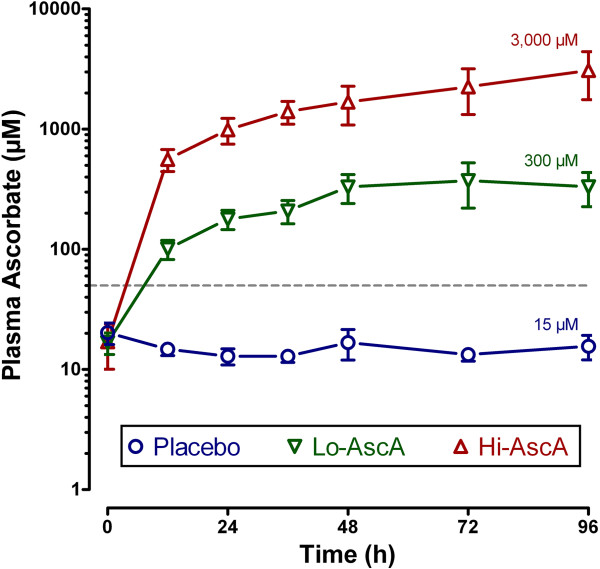
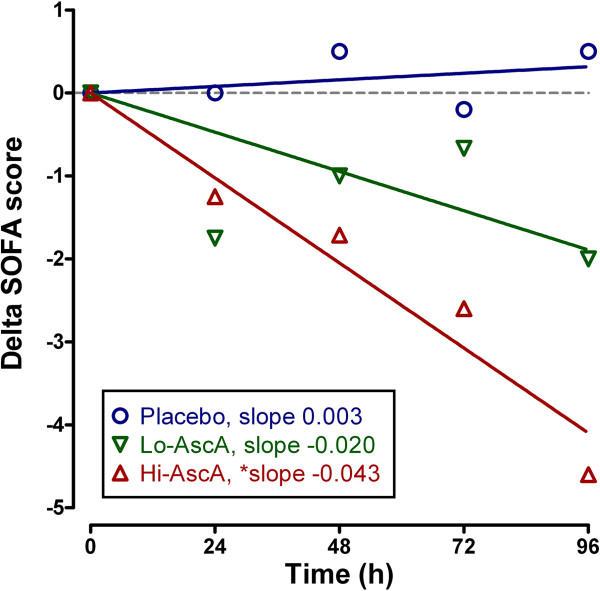
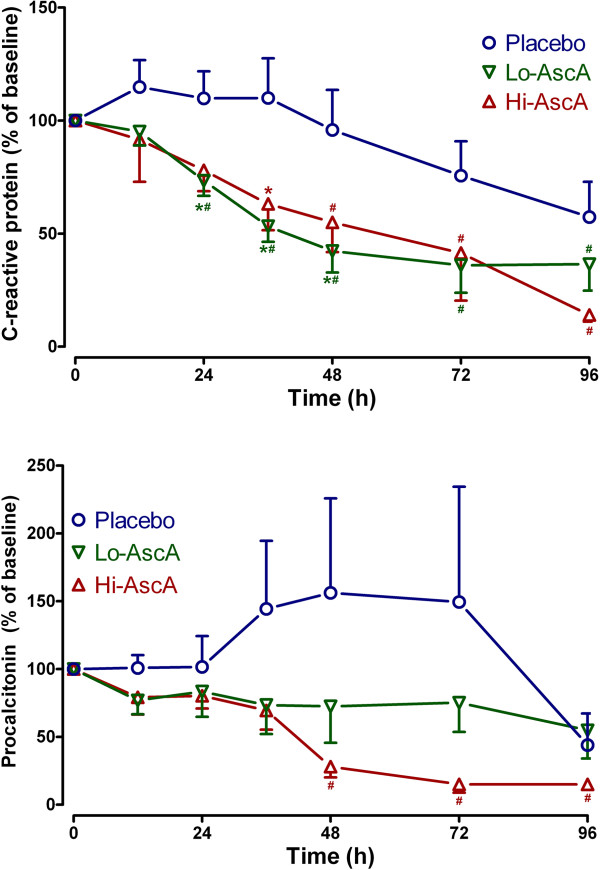
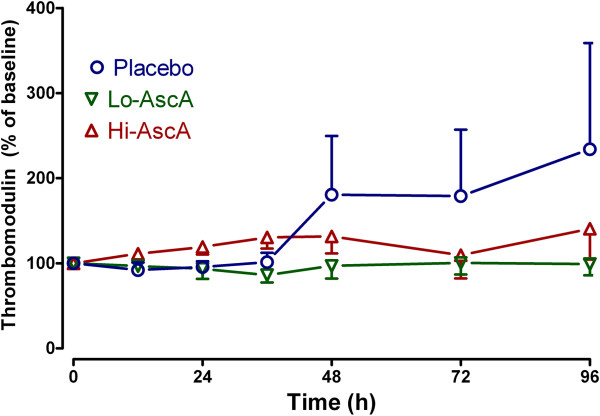
BACKGROUND: Parenterally administered ascorbic acid modulates sepsis-induced inflammation and coagulation in experimental animal models. The objective of this randomized, double-blind, placebo-controlled, phase I trial was to determine the safety of intravenously infused ascorbic acid in patients with severe sepsis. METHODS: Twenty-four patients with severe sepsis in the medical intensive care unit were randomized 1:1:1 to receive intravenous infusions every six hours for four days of ascorbic acid: Lo-AscA (50 mg/kg/24 h, n = 8), or Hi-AscA (200 mg/kg/24 h, n = 8), or Placebo (5% dextrose/water, n = 8). The primary end points were ascorbic acid safety and tolerability, assessed as treatment-related adverse-event frequency and severity. Patients were monitored for worsened arterial hypotension, tachycardia, hypernatremia, and nausea or vomiting. In addition Sequential Organ Failure Assessment (SOFA) scores and plasma levels of ascorbic acid, C-reactive protein, procalcitonin, and thrombomodulin were monitored. RESULTS: Mean plasma ascorbic acid levels at entry for the entire cohort were 17.9 ± 2.4 μM (normal range 50-70 μM). Ascorbic acid infusion rapidly and significantly increased plasma ascorbic acid levels. No adverse safety events were observed in ascorbic acid-infused patients. Patients receiving ascorbic acid exhibited prompt reductions in SOFA scores while placebo patients exhibited no such reduction. Ascorbic acid significantly reduced the proinflammatory biomarkers C-reactive protein and procalcitonin. Unlike placebo patients, thrombomodulin in ascorbic acid infused patients exhibited no significant rise, suggesting attenuation of vascular endothelial injury. CONCLUSIONS: Intravenous ascorbic acid infusion was safe and well tolerated in this study and may positively impact the extent of multiple organ failure and biomarkers of inflammation and endothelial injury. TRIAL REGISTRATION: ClinicalTrials.gov identifier NCT01434121.
Overview
The claims and statistics of this paper haven’t been checked yet.
Free: it reads the open-access text and checks the first 5 claims that cite a source we can check. Create a free account to check every claim.
Integrity signals
Registry
Cites
Statistics
Figures
Verification
Claims the paper makes
The claims and statistics of this paper haven’t been checked yet.
Free: it reads the open-access text and checks the first 5 claims that cite a source we can check. Create a free account to check every claim.
Claims other papers make about this one
Each is checked against this paper’s own text: does it say what the citing paper says it does?
The source backs part of the claim, not all of it — or backs it for a different population, condition or comparison.
In the citing paper
“First, CITRIS-ALI as proposed was based on a previously performed phase 1 safety trial of vitamin C administered to patients in the very early stages of severe sepsis, not ARDS.15”
From Effect of Vitamin C Infusion on Organ Failure and Biomarkers of Inflammation and Vascular Injury in Patients With Sepsis and Severe Acute Respiratory Failure (2019) · cites this paper as [15]
Experimental — accuracy not yet measuredThe source backs part of the claim, not all of it — or backs it for a different population, condition or comparison.
In the citing paper
“The one study in septic patients included in this meta-analysis showed a positive impact of vitamin C on the extent of organ failure, biomarkers of inflammation and endothelial injury [82].”
From Nutrition in Sepsis: A Bench-to-Bedside Review. (2020) · cites this paper as [82]
Experimental — accuracy not yet measuredThe cited source says what the claim attributes to it.
In the citing paper
“Delayed quantification of these biomarkers in CITRIS-ALI compared with early vitamin C infusion in severe sepsis may explain results discordant with those of previous studies of vitamin C in severe sepsis.15”
From Effect of Vitamin C Infusion on Organ Failure and Biomarkers of Inflammation and Vascular Injury in Patients With Sepsis and Severe Acute Respiratory Failure (2019) · cites this paper as [15]
Experimental — accuracy not yet measuredThe cited source says what the claim attributes to it.
In the citing paper
“The selection of the primary outcomes was based on a previously performed phase 1 trial.15”
The check wasn’t confident either way, so it gives no verdict — never disputed.
In the citing paper
“In accordance with these calculations, CITRIS-ALI enrolled 170 patients (85 per group) to allow for 10% dropouts, providing a statistical power of 80%, with an α < .05.”
From Effect of Vitamin C Infusion on Organ Failure and Biomarkers of Inflammation and Vascular Injury in Patients With Sepsis and Severe Acute Respiratory Failure (2019) · cites this paper as [15]
Experimental — accuracy not yet measured
1 more claim about this paper
Create a free account to see every claim other papers make about this one.
Self-check
Percentages, sums and reported differences re-computed from the paper’s own numbers.
The self-check needs the paper’s full text.
Citations
Cites
Harris, P. A., Taylor, R., Thielke, R., Payne, J., Gonzalez, N., & Conde, J. G. (2009) · Journal of Biomedical Informatics · doi:10.1016/j.jbi.2008.08.010 · Cited by 51,384 · cited 5×
“Patients were screened and enrolled following admission to the Medical Respiratory Intensive Care Unit in the VCU Medical Center, Richmond, Virginia.”
MethodInfluentialVincent, J. L., Moreno, R., Takala, J., Willatts, S., De Mendonça, A., Bruining, H., Reinhart, C. K., Suter, P. M., & Thijs, L. G. (1996) · Intensive Care Medicine · doi:10.1007/bf01709751 · Cited by 11,674
The epidemiology of sepsis in the United States from 1979 through 2000
Martin, G. S., Mannino, D. M., Eaton, S., & Moss, M. (2003) · New England Journal of Medicine · doi:10.1056/nejmoa022139 · Cited by 5,841
Serial Evaluation of the SOFA Score to Predict Outcome in Critically Ill Patients
Ferreira, F. L. (2001) · JAMA · doi:10.1001/jama.286.14.1754 · Cited by 2,862
Sepsis in European intensive care units: Results of the SOAP study*
Vincent, J.-L., Sakr, Y., Sprung, C. L., Ranieri, V. M., Reinhart, K., Gerlach, H., Moreno, R., Carlet, J., Le Gall, J.-R., & Payen, D. (2006) · Critical Care Medicine · doi:10.1097/01.ccm.0000194725.48928.3a · Cited by 2,836 · cited 1×
“Tens of thousands of lives are lost across the world annually due to severe sepsis [1,38-40].”
BackgroundDrotrecogin Alfa (Activated) in Adults with Septic Shock
Ranieri, V. M., Thompson, B. T., Barie, P. S., Dhainaut, J.-F., Douglas, I. S., Finfer, S., Gårdlund, B., Marshall, J. C., Rhodes, A., Artigas, A., et al. (2012) · New England Journal of Medicine · doi:10.1056/nejmoa1202290 · Cited by 1,309
Moreno, R., Vincent, J.-L., Matos, R., Mendonça, A., Cantraine, F., Thijs, L., Takala, J., Sprung, C., Antonelli, M., Bruining, H., et al. (1999) · Intensive Care Medicine · doi:10.1007/s001340050931 · Cited by 1,058
Vitamin C pharmacokinetics: Implications for oral and intravenous use
Padayatty, S. J., Sun, H., Wang, Y., Riordan, H. D., Hewitt, S. M., Katz, A., Wesley, R. A., & Levine, M. (2004) · Annals of Internal Medicine · doi:10.7326/0003-4819-140-7-200404060-00010 · Cited by 992 · cited 2×
“Padayatty and colleagues showed that high-level ascorbic acid plasma concentrations could only be achieved by intravenous administration [15].”
BackgroundRandomized, Prospective Trial of Antioxidant Supplementation in Critically Ill Surgical Patients
Nathens, A. B., Neff, M. J., Jurkovich, G. J., Klotz, P., Farver, K., Ruzinski, J. T., Radella, F., Garcia, I., & Maier, R. V. (2002) · Annals of Surgery · doi:10.1097/00000658-200212000-00014 · Cited by 536
C-Reactive Protein Levels Correlate With Mortality and Organ Failure in Critically Ill Patientsa
Lobo, S. M. A., Lobo, F. R. M., Bota, D. P., Lopes-Ferreira, F., Soliman, H. M., Meélot, C., & Vincent, J.-L. (2003) · Chest · doi:10.1378/chest.123.6.2043 · Cited by 448 · cited 1×
“reported that patients with CRP levels greater than 10 mg/dL at ICU admission exhibited significantly higher rates of multiple organ failure as well as higher mortality rates [34].”
Background
Research works printed but not linked: 3
- Sawyer MAJ, Mike JJ, Chavin K: Antioxidant therapy and survival in ARDS [abstract]. Crit Care Med. 1989, 17: S153-
- Fowler AA, Fisher BJ, DeWilde C, Priday A, Syed A, Farthing CA, Larus TL, Knowlson S, Natarajan R: Parenteral vitamin C attenuates markers of organ injury and inflammation in severe sepsis [abstract]. Am J Respir Crit Care Med. 2012, 185 (2012): A6718-
- Urbaniak GC, Plous S: Research randomizer (version 3.0). 2010, http://www.randomizer.org ,
Cited by
Items 301–400 of 573
Equey, L., Agyeman, P., Veraguth, R., Rezzi, S., Schlapbach, L. J., Giannoni, É., & for the Swiss Pediatric Sepsis Study Group (2022) · Pediatric Critical Care Medicine · doi:10.1097/pcc.0000000000002911 · Cited by 14
Notarbartolo, V., Montante, C., Ferrante, G., & Giuffrè, M. (2022) · Antioxidants · doi:10.3390/antiox11091638 · Cited by 12
Sun, L., Zhao, J.-H., Fan, W.-Y., Feng, B., Liu, W., Chen, R.-Q., Ban, C., Dang, A.-G., Wang, M., Luo, K., et al. (2023) · Nutrition Reviews · doi:10.1093/nutrit/nuad105 · Cited by 13
A current appraisal of evidence for the approach to sepsis and septic shock
Varon, J., & Baron, R. M. (2019) · Therapeutic Advances in Infectious Disease · doi:10.1177/2049936119856517 · Cited by 12
Making Sense of Early High-dose Intravenous Vitamin C in Ischemia/Reperfusion Injury
de Man, A., Elbers, P., & Straaten, H. M. O. (2018) · Annual update in intensive care and emergency medicine · doi:10.1007/978-3-319-73670-9_11 · Cited by 11
Intravenous vitamin C for vasoplegia: A double-blinded randomised clinical trial (VALENCIA trial)
Anstey, M., Aljeaidi, M. S., Palmer, R. N., Jacques, A., Mevavala, B. V., Litton, E., & Wibrow, B. A. (2023) · Journal of Critical Care · doi:10.1016/j.jcrc.2023.154369 · Cited by 10
Karimpour, H., Bahrami, A., Amini, S., Rezaei, M., Saman, J. A., & Shahbazi, F. (2019) · Journal of Pharmaceutical Research International · doi:10.9734/jpri/2019/v29i530248 · Cited by 10
“vitamin C concentrations without significant adverse events [8].”
BackgroundResultInfluentialThe effect of vitamin C on procalcitonin biomarker in community‐acquired pneumonia
Nikzad, M., Banafshe, H. R., Momen–Heravi, M., Kashani, H. H., & Shiehmorteza, M. (2021) · Clinical and Molecular Allergy · doi:10.1186/s12948-021-00140-1 · Cited by 11
“This study showed that ascorbic acid receiving can lead to a rapid decrease of inflammatory biomarkers in severe sepsis [18].”
BackgroundAn Enzyme-Free Photoelectrochemical Sensor Platform for Ascorbic Acid Detection in Human Urine
Zhao, Z., Han, D., Xiao, R., Wang, T., Liang, Z., Wu, Z., Han, F., Han, D., Ma, Y., & Niu, L. (2022) · Chemosensors · doi:10.3390/chemosensors10070268 · Cited by 10
Zhu, H., Xu, X., Zhang, K., & Ye, Q. (2022) · Frontiers in Nutrition · doi:10.3389/fnut.2022.964484 · Cited by 11
“(28) Double-blind, randomized placebo-controlled trial Total: 24 (Intervention: 16; Control: 8) Adult patients with severe sepsis in the ICU Intervention: vitamin C (50 mg/kg/day or 200 mg/kg/day) for 4 days; Control: 5% dextrose Baseline: Low dose: 17 (14, 28) High dose: 17 (11, 50) Placebo: 20 (11, 45); 96 h: Low do…”
BackgroundInfluentialZhang, X., Ji, W., Deng, X., & Bo, L. (2023) · Inflammopharmacology · doi:10.1007/s10787-023-01319-5 · Cited by 11
“However, high-dose (e.g., 3 g and above) or even mega-dose intravenous ascorbic acid has been widely accepted in clinical trials (Fowler et al. 2014; Fujii et al. 2022; Wang et al. 2019).”
Vitamin C in burns, sepsis, and trauma
Anand, T., & Skinner, R. (2018) · The Journal of Trauma: Injury, Infection, and Critical Care · doi:10.1097/ta.0000000000002042 · Cited by 11
“The patients receiving ascorbic acid had significant reductions in Sequential Organ Failure Assessment scores and inflammatory markers compared with the control group.(19,35) A retrospective study by Marik et al.”
ResultTrankle, C. R., Puckett, L. M. B., Swift‐Scanlan, T., DeWilde, C., Priday, A. G., Sculthorpe, R., Ellenbogen, K. A., Fowler, A. A., & Koneru, J. N. (2020) · Journal of the American Heart Association · doi:10.1161/jaha.119.014213 · Cited by 10
Self-citationTrace element and vitamin deficiency: quantum medicine or essential prescription?
Berger, M. M., & Ben‐Hamouda, N. (2020) · Current Opinion in Critical Care · doi:10.1097/mcc.0000000000000737 · Cited by 11
“[34] were not by chance but were based on a prior dose finding safety trial, which showed that this higher dose was required to increase circulating ascorbic acid concentration.”
Gao, L., Chong, E., Pendharkar, S. A., Phillips, A., Ke, L., Li, W., & Windsor, J. A. (2021) · Frontiers in Nutrition · doi:10.3389/fnut.2021.734558 · Cited by 11
“In a phase I study on high-dose intravenous AA for patients with sepsis, a total dose of 200 mg/kg/day, given in four infusions per 6 h, rapidly led to plasma AA concentrations higher than 1,000 μmol/L (67).”
BackgroundGlucometry When Using Vitamin C in Sepsis
Hager, D. N., Martin, G. S., Sevransky, J., & Hooper, M. H. (2018) · CHEST Journal · doi:10.1016/j.chest.2018.03.018 · Cited by 10
de Man, A., de Grooth, H., Elbers, P., & Straaten, H. M. O. (2018) · Critical Care · doi:10.1186/s13054-018-2200-0 · Cited by 10
“Up to now, only one small trial in septic patients compared two different doses: 200 mg/kg/day (~ 16 g/ day) seemed superior to 50 mg/kg/day (~ 4 g/day) [2].”
BackgroundCudjoe, E. K., Hassan, Z. H., Kang, L., Reynolds, P. S., Fisher, B. J., McCarter, J., Sweeney, C., Martin, E. J., Middleton, P., Ellenberg, M., et al. (2019) · Journal of Thrombosis and Haemostasis · doi:10.1111/jth.14580 · Cited by 9
Self-citationVitamins C and E protect from sepsis-induced lung damage in rat and CT correlation
Canbolat, N., Özkul, B., Sever, İ. H., Söğüt, İ., Eroğlu, E., Uyanıkgil, Y., & Erbaş, O. (2022) · Bratislavské lekárske listy/Bratislava medical journal · doi:10.4149/bll_2022_132 · Cited by 10
Jackson, K. E., & Semler, M. W. (2022) · Clinics in Chest Medicine · doi:10.1016/j.ccm.2022.05.003 · Cited by 11
LOVIT or leave it: The vitamin C debate continues
Lankadeva, Y. R., Lane, D. J. R., Ow, C. P. C., Story, D., Plummer, M. P., & May, C. N. (2023) · Critical Care and Resuscitation · doi:10.1016/j.ccrj.2023.05.001 · Cited by 9
The effect of vitamin C in adults with sepsis: a meta-analysis of randomized controlled trials
Luo, X., Zhu, Y., Zhang, R., Zhu, J., Kuang, H., Shao, Y., Guo, X., & Ning, B. (2023) · Frontiers in Medicine · doi:10.3389/fmed.2023.1244484 · Cited by 10
“One trial included a low-dose vitamin C group (less than or equal to 100 mg/kg/day) and a highdose vitamin C group (greater than 100 mg/kg/day) (22).”
BackgroundInfluentialABC’s of Vitamin Supplementation in Critical Illness
Chudow, M. B., & Adams, B. (2020) · Journal of Pharmacy Practice · doi:10.1177/0897190020958234 · Cited by 11
“Patients who received vitamin C demonstrated reductions in SOFA, C-reactive protein (CRP), and procalcitonin and increased vitamin C levels without any documented adverse events.(21) The recent VITAMINS trial published in January 2020 was a larger scale, prospective randomized controlled trial, which demonstrated conf…”
ResultDonovan, K., Shah, A., Day, J., & McKechnie, S. (2021) · Anaesthesia · doi:10.1111/anae.15369 · Cited by 11
“[53] Single-centre RCT USA Severe sepsis, as definedby the Surviving Sepsis Campaign n = 24 Lowdose group: VitaminC 50 mg.”
MethodAny Role of High-Dose Vitamin C for Septic Shock in 2021?
Agarwal, A., Hager, D. N., & Sevransky, J. (2021) · Seminars in Respiratory and Critical Care Medicine · doi:10.1055/s-0041-1733986 · Cited by 9
Update on vitamin C administration in critical illness
Fujii, T., Lankadeva, Y. R., & Bellomo, R. (2022) · Current Opinion in Critical Care · doi:10.1097/mcc.0000000000000951 · Cited by 11
“Plasma vitamin C levels were below normal at baseline and rose rapidly to the supraphysiological levels with low or high-dose vitamin C [8].”
BackgroundNew Coronavirus (2019-nCoV/COVID-19) and Vitamin C
Hançer, A. T., YILMAZ, P., & Yılmaz, M. (2020) · Turkiye Klinikleri Journal of Medical Sciences · doi:10.5336/medsci.2020-76024 · Cited by 10
Nutrition in the Surgical Patient
Kozar, R. A., & Schwartz, D. A. (2013) · Springer eBooks · doi:10.1007/978-1-4614-6123-4_9 · Cited by 9
Flannery, A. H., Bastin, M. L. T., Magee, C. A., & Bensadoun, E. (2017) · CHEST Journal · doi:10.1016/j.chest.2017.05.023 · Cited by 9
Effect of intravenous vitamin C on adult septic patients: a systematic review and meta-analysis
Liang, H., Mu, Q., Sun, W., Liu, L., Qiu, S., Xu, Z., Cui, Y., Yan, Y., & Sun, T. (2023) · Frontiers in Nutrition · doi:10.3389/fnut.2023.1211194 · Cited by 10
“Furthermore, some randomized controlled trials (RCTs) have further confirmed the therapeutic efficacy of IVVC for sepsis compared to placebo (15–17).”
BackgroundMethodInfluentialYong, S., Suping, L., Peng, Z., Dong, L., & Qing, W. (2024) · Medicine · doi:10.1097/md.0000000000037420 · Cited by 10
The effects of antioxidant supplementation on short-term mortality in sepsis patients
Pei, H., Qu, J., Chen, J., Zhang, Y.-L., Zhang, M., Zhao, G., & Lu, Z. (2024) · Heliyon · doi:10.1016/j.heliyon.2024.e29156 · Cited by 10
Vitamin C, Thiamine, and Steroids in the Sepsis Conquest: Replete to Defeat
Guirguis, E. H., Grace, Y., Maarsingh, H., Tran, T. C., & Tkachuk, E. (2019) · Journal of Pharmacy Practice · doi:10.1177/0897190019851923 · Cited by 8
“Serum ascorbic acid deficiency is considered <23 mmol/L.(5,6,28) The results suggest that high-dose ascorbic acid (25 mg/kg IV every 6 hours for 72 hours) may be considered as an effective and safe adjuvant therapy in critically ill surgical patients with septic shock.”
BackgroundMethodInfluentialWong, D. M., Young, L. R., & Dembek, K. A. (2021) · Journal of Veterinary Internal Medicine · doi:10.1111/jvim.16188 · Cited by 10
Lessening Organ Dysfunction With Vitamin C (LOVIT) Trial: Statistical Analysis Plan
Adhikari, N. K. J., Pinto, R. L., Day, A. G., Masse, M.-H., Ménard, J., Sprague, S., Annane, D., Arabi, Y. M., Battista, M., Cohen, D., et al. (2022) · JMIR Research Protocols · doi:10.2196/36261 · Cited by 12
“Endothelial injury at days 1, 3, and 7, assessed by serum thrombomodulin [11] and angiopoietin-2 levels [12], measured by Luminex.”
Feng, F., Yang, H., Yang, W., Li, M., & Chen, Y. (2023) · Open Medicine · doi:10.1515/med-2023-0637 · Cited by 8
Kory, P. D., Meduri, G. U., Iglesias, J. I., Varón, J., Cadegiani, F., & Marik, P. E. (2022) · Journal of Clinical Medicine Research · doi:10.14740/jocmr4658 · Cited by 10
“The hemodynamic effects of AA have been demonstrated in septic shock, trauma, and burns where administration of AA reduced vasopressor and volume resuscitation requirement [55, 57, 76, 77].”
BackgroundLLL 44-4 : Micronutrients in acute disease and critical illness
de Man, A., Amrein, K., Casaer, M. P., Dizdar, O. S., van Zanten, A. R. H., Gündoğan, K., Lepp, H.-L., Rezzi, S., Shenkin, A., & Berger, M. M. (2024) · Clinical Nutrition ESPEN · doi:10.1016/j.clnesp.2024.04.011 · Cited by 9
Supplementierung von Vitamin C und D bei kritisch Kranken
Hill, A., Starchl, C., Dresen, E., Stoppe, C., & Amrein, K. (2023) · Medizinische Klinik - Intensivmedizin und Notfallmedizin · doi:10.1007/s00063-022-00986-6 · Cited by 6
“, die eine Reduktion von Entzündungsmarkern und Organversagen bei SepsispatientInnen [13] sowie eine Reduktion der Mortalität bei ARDS-PatientInnen („CITRIS-ALI“Studie; [14]) in den jeweiligen Vitamin-CGruppen zeigte.”
Prado, Y., Echeverría, C., Feijóo, C. G., Riedel, C. A., Cabello‐Verrugio, C., Santibanez, J. F., & Simón, F. (2023) · Antioxidants · doi:10.3390/antiox12030659 · Cited by 9
“Interestingly, a phase I trial of intravenous ascorbic acid infusion in patients with severe sepsis showed a positive impact on multiple organ failure, reduced proinflammation biomarkers, and attenuation of vascular endothelial injury [76].”
BackgroundVitamin C Inhibited Pulmonary Metastasis through Activating Nrf2/HO‐1 Pathway
Man, S., Bi, J., Liu, F., Xie, W., & Ma, L. (2024) · Molecular Nutrition & Food Research · doi:10.1002/mnfr.202300706 · Cited by 7
Carr, A. C., Vlasiuk, E., Zawari, M., & Lunt, H. (2024) · Nutrition Research · doi:10.1016/j.nutres.2024.08.001 · Cited by 8
Kyriazopoulou, E., & Giamarellos‐Bourboulis, E. J. (2019) · Expert Opinion on Pharmacotherapy · doi:10.1080/14656566.2019.1589451 · Cited by 7
Xing, X., Xu, M., Yang, L., Zhang, W., Niu, X., & Gao, D. (2021) · Clinical Nutrition · doi:10.1016/j.clnu.2021.03.007 · Cited by 7
Rozemeijer, S., Smit, B., Elbers, P., Girbes, A. R. J., Straaten, H. M. O., & de Man, A. (2021) · Intensive Care Medicine Experimental · doi:10.1186/s40635-021-00403-w · Cited by 7
Vitamin C and the management of diabetic foot ulcers: a literature review
Tong, K. P. S., Intine, R. V. A., & Wu, S. (2022) · Journal of Wound Care · doi:10.12968/jowc.2022.31.sup9.s33 · Cited by 8
Wei, Z., Liu, Y., Mei, X., Zhong, J., & Huang, F. (2024) · Frontiers in Genetics · doi:10.3389/fgene.2024.1353118 · Cited by 7
Duration of intravenous vitamin C therapy is a critical consideration
Carr, A. C. (2019) · Critical Care and Resuscitation · doi:10.1016/s1441-2772(23)00530-6 · Cited by 7
Borran, M., Dashti‐Khavidaki, S., Alamdari, A., Naderi, N., & Minoo, F. (2020) · Renal Replacement Therapy · doi:10.1186/s41100-020-00279-8 · Cited by 7
“It can be provided by fixed doses [10] or weight-based doses in the range of 50-200 mg/kg [26].”
BackgroundAdding vitamin C to hydrocortisone lacks benefit in septic shock: a historical cohort study
Chang, K. L., Harbin, M., Shuster, C., Griesdale, D. E. G., Foster, D., Sweet, D. D., Wood, M. D., & Dhingra, V. K. (2020) · Canadian Journal of Anesthesia/Journal canadien d anesthésie · doi:10.1007/s12630-020-01814-1 · Cited by 7
Safety of High-Dose Vitamin C in Critically Ill Patients: A Systematic Review and Meta-analysisPreprint
Shrestha, D. B., Budhathoki, P., Sedhai, Y. R., Mandal, S. K., Shikhrakar, S., Karki, S., Baniya, R. K., Kashiouris, M. G., Qiao, X., & Fowler, A. A. (2021) · Research Square · doi:10.21203/rs.3.rs-766215/v1 · Cited by 7
Self-citationMeduri, G. U., Psarra, A. G., Amrein, K., & Chrousos, G. P. (2023) · Elsevier eBooks · doi:10.1016/b978-0-12-817558-3.00022-6 · Cited by 8
You, S., Kweon, O. J., Jung, S., Baek, M. S., & Kim, W. (2023) · Acute and Critical Care · doi:10.4266/acc.2023.00507 · Cited by 6
Gajardo, A. I. J., Lillo‐Moya, J., San‐Martín‐Martinez, D., Pozo-Martínez, J., Morales, P. E., Prieto, J. C., Aguayo, R., Puentes, Á., Ramos, C., Silva, S., et al. (2024) · Clinical Pharmacology in Drug Development · doi:10.1002/cpdd.1443 · Cited by 6
“Previous studies using doses of AA similar to or higher than the current study did not report serious AEs in patients with colon cancer 41 or sepsis, 42 which is concordant with the good safety profile reported for AA in high doses.”
New randomized controlled trials on micronutrients in critical care nutrition: A narrative review
Halim, Z., Huang, Y., Lee, Z., & Lew, C. C. H. (2024) · Nutrition in Clinical Practice · doi:10.1002/ncp.11195 · Cited by 7
Reevaluating vitamin C in sepsis and septic shock: a potential benefit in severe cases?
Alissa, A. S., Alrashed, M. A., Alshaya, A. I., Sulaiman, K. A. A., & Alharbi, S. (2024) · Frontiers in Medicine · doi:10.3389/fmed.2024.1476242 · Cited by 8
“…or as part of a metabolic resuscitation cocktail besides hydrocortisone and thiamin for sepsis and septic patients with inconsistent findings (18, 24–30 Research has shown that administering vitamin C at a dose of 6 g per day is safe and free of side effects, with even higher doses of…”
InfluentialBertozzi, G., Ferrara, M., Calvano, M., Pascale, N., & Fazio, A. D. (2024) · Medicina · doi:10.3390/medicina60121949 · Cited by 6
Barberán, J., Restrepo, R. D., & Cardinal‐Fernández, P. (2020) · Revista Española de Quimioterapia · doi:10.37201/req/114.2020 · Cited by 6
Vandervelden, S., Wauters, L., Breuls, J., Fieuws, S., Vanhove, P., Hubloue, I., Bartiaux, M., Créteur, J., Stifkens, F., Monsieurs, K. G., et al. (2021) · PLoS ONE · doi:10.1371/journal.pone.0259699 · Cited by 6
“In 2014, Fowler et al. performed a single center Randomized Controlled Trial (RCT) involving the administration of two different doses of Vitamin C to patients with severe sepsis [9].”
Kaur, K. K., Allahbadia, G., & Singh, M. (2022) · Journal of Clinical Nephrology · doi:10.29328/journal.jcn.1001084 · Cited by 9
“2 small, single-center randomized clinical trials (RCT; n = 24 & n = 28), demonstrated, that intravenous infusion of ascorbic acid, at dosages varying from 50 - 200 mg/kg/day, caused a reduction in in lammatory markers, as well as, sequential organ failure assessment (SOFA) scores [101] along with enhancement of vasop…”
BackgroundYoung, P. J., Lamontagne, F., & Fujii, T. (2022) · Intensive Care Medicine · doi:10.1007/s00134-022-06822-x · Cited by 6
A novel vital sign pattern predicts sepsis-related myocardial injury mortality
Liu, W., Dai, J., Zhang, P., Ni, M., Zhang, Y., Fang, H., & Zhang, Z. (2024) · iScience · doi:10.1016/j.isci.2024.110787 · Cited by 7
Matsuoka, T., Shinozaki, H., Ozawa, S., Izawa, Y., Koyanagi, K., Lefor, A. K., & Kobayashi, K. (2019) · Annals of Thoracic and Cardiovascular Surgery · doi:10.5761/atcs.oa.19-00202 · Cited by 7
Alzaben, A. S. (2020) · Current Research in Nutrition and Food Science Journal · doi:10.12944/crnfsj.8.3.04 · Cited by 6
Park, J. E., Jo, Y. H., Hwang, S. Y., Kim, W. Y., Ryoo, S. M., Jang, D.-H., Kim, T., Kim, Y.-J., Kim, S., Cho, H., et al. (2021) · Shock · doi:10.1097/shk.0000000000001850 · Cited by 7
“Among studies measuring biomarkers, in a phase I safety trial (n1⁄4 24), vitamin C reduced the pro-inflammatory biomarkers CRP, procalcitonin, and thrombomodulin, suggesting attenuation of vascular endothelial injury (25), as well as mitochondrial DNA, but the reductions were not significant (27).”
BackgroundBeyond the bundle: Clinical controversies in the management of sepsis in emergency medicine patients
Krishnan, K., Wassermann, T. B., Tednes, P., Bonderski, V. A., & Rech, M. A. (2021) · The American Journal of Emergency Medicine · doi:10.1016/j.ajem.2021.11.003 · Cited by 7
Role of high dose vitamin C in management of hospitalised COVID-19 patients: A minireview
Juneja, D., Gupta, A., Kataria, S., & Singh, O. (2022) · World Journal of Virology · doi:10.5501/wjv.v11.i5.300 · Cited by 6
An overview on role of nutrition on COVID-19 immunity: Accumulative review from available studies
Mohammadi, A. H., Behjati, M., Karami, M., Abari, A. H., Nasab, A. S., Rourani, H. A., Hazrati, E., Mirghazanfari, S. M., Hadi, V., Hadi, S., et al. (2022) · Clinical Nutrition Open Science · doi:10.1016/j.nutos.2022.11.001 · Cited by 11
Bozkurt, E. U., Özel, A., Erol, M., Tenekecigil, A., Gayret, Ö. B., Büke, Ö., & Tosun, V. (2023) · Bratislavské lekárske listy/Bratislava medical journal · doi:10.4149/bll_2023_118 · Cited by 6
Vitamin C and inflammatory cytokine levels in elective total knee arthroplasty
Shah, S., Brown, C., Owen, J. R., Fisher, B., Natarajan, R., & Kates, S. L. (2020) · Nutrition and Health · doi:10.1177/0260106020910632 · Cited by 6
Self-citationArgano, C., Orlando, V., Maggio, D., Pollicino, C., Torres, A., Cangialosi, V., Manno, S. B., & Corrao, S. (2025) · Metabolites · doi:10.3390/metabo15120773 · Cited by 6
Early high-dose vitamin C for out-of-hospital cardiac arrest: the VITaCCA randomized clinical trial
Rozemeijer, S., Dubois, E. A., de Grooth, H., den Uil, C. A., Rettig, T. C. D., Rijpstra, T. A., van den Bogaard, B., van Zanten, Bosman, R. J., Elbers, P., et al. (2026) · Intensive Care Medicine · doi:10.1007/s00134-026-08492-5 · Cited by 7
“We chose 10 g vitamin C as a pharmacological regimen since this leads to supraphysiological plasma concentrations [5], and since it is between the 6 g and 16 g doses used in previous studies [20, 24–28].”
Khattak, N. S., Ara, L., Shah, L. A., Ullah, R., & Rehman, T. U. (2024) · Inorganic Chemistry Communications · doi:10.1016/j.inoche.2024.113386 · Cited by 5
Kochetkova, M., Timofeeva, I. I., Frolova, D., & Bulatov, A. V. (2024) · Journal of Food Composition and Analysis · doi:10.1016/j.jfca.2024.106920 · Cited by 7
The roles of vitamin C in infectious diseases: A comprehensive review
Li, R., Guan, L., Liu, Y., Hu, Z., Liu, J., Li, C., & Min, H. (2025) · Nutrition · doi:10.1016/j.nut.2025.112733 · Cited by 7
Loss of vitamin C biosynthesis protects from the pathology of a parasitic infection
Chen, G., Jun, J. H., Wijshake, T., Kwarteng, E. O., Li, Y., Yuan, M., Rose, J., Li, S., Cobb, S. A., Serpa, W., et al. (2025) · Proceedings of the National Academy of Sciences · doi:10.1073/pnas.2517730122 · Cited by 5
Japanese Society of Intensive Care Medicine, Egi, M., & Ogura, H. (2022) · Journal of Intensive Care · doi:10.1186/s40560-022-00641-4 · Cited by 7
HAT therapy for sepsis: A review of the therapeutic rationale and current clinical evaluation status
Sun, Y., Yang, Y., Ye, Z., & Sun, T. (2023) · Journal of Intensive Medicine · doi:10.1016/j.jointm.2023.04.003 · Cited by 5
Corrao, S., Raspanti, M., Agugliaro, F., Gervasi, F., Bernardo, F. D., Natoli, G., & Argano, C. (2024) · Journal of Clinical Medicine · doi:10.3390/jcm13133987 · Cited by 9
“Various clinical studies evaluating high-dose intravenous vitamin C administration in patients with severe sepsis, acute lung injury, and acute respiratory distress syndrome admitted to intensive care units have shown mixed results regarding laboratory and clinical outcomes [30–32].”
ResultEmerging Adjunctive Approach for the Treatment of Sepsis
Badeaux, J. E., & Martin, J. B. (2018) · Critical Care Nursing Clinics of North America · doi:10.1016/j.cnc.2018.05.002 · Cited by 7
Korenč, M., Zieleskiewicz, L., Pintarič, T. S., Blajić, I., Ambrožič, J., & Lučovnik, M. (2021) · Anaesthesia Critical Care & Pain Medicine · doi:10.1016/j.accpm.2021.100800 · Cited by 5
Chen, H., Lee, C., Cheng, C., Hsueh, Y., Chang, C., & Wu, W. (2022) · Medicina · doi:10.3390/medicina58101367 · Cited by 6
“In systemic diseases, intravenous AA has proven as an effective and safety management agent in the retardation of severe sepsis and the extent of multiple organ failure [15].”
BackgroundVlasiuk, E., Rosengrave, P., Roberts, E., Boden, J. M., Shaw, G. M., & Carr, A. C. (2022) · Nutrition Research · doi:10.1016/j.nutres.2022.10.010 · Cited by 5
Vitamin C: a misunderstood ally?
Ren, J., Jin, X., Gao, Y., Li, R., Li, J., Zhang, J., Wang, X., & Wang, G. (2020) · Critical Care · doi:10.1186/s13054-020-2725-x · Cited by 5
Sanchez-Pinto, L. N., & Wald, E. (2021) · Pediatric Critical Care Medicine · doi:10.1097/pcc.0000000000002718 · Cited by 5
The physiological functions of ascorbate in the development of cancer
Agathocleous, M. (2025) · Disease Models & Mechanisms · doi:10.1242/dmm.052201 · Cited by 5
Bishop, M. S., Lane, D. J. R., Ayton, S., May, C. N., Plummer, M. P., & Lankadeva, Y. R. (2026) · Critical Care · doi:10.1186/s13054-025-05831-8 · Cited by 7
“Ascorbate is an essential micronutrient and is the primary antioxidant used and depleted during oxidative stress [6, 31, 32].”
Prasad, N., Grossestreuer, A. V., Meyer, N. J., Perman, S. M., Mikkelsen, M. E., Hollander, J. E., & Gaieski, D. F. (2021) · Scientific Reports · doi:10.1038/s41598-021-94473-1 · Cited by 5
Liu, X., Chi, Y.-F., Wu, Y., & Chai, J. (2024) · Burns · doi:10.1016/j.burns.2024.04.012 · Cited by 4
Antioxidants as adjuvant therapy in the treatment of community-acquired pneumonia
Youssef, F. M., Elmokadem, E. M., Samy, A. E. H., & Ateyya, H. (2024) · Future Journal of Pharmaceutical Sciences · doi:10.1186/s43094-024-00674-6 · Cited by 6
Qin, M., Xu, K., Chen, Z., Wen, X., Tang, Y., Gao, Y., Zhang, H., & Ma, X. (2024) · Nutrition Reviews · doi:10.1093/nutrit/nuae154 · Cited by 6
Targeting sepsis through inflammation and oxidative metabolism
Jacob, S., Jacob, S. A., & Thoppil, J. J. (2024) · World Journal of Critical Care Medicine · doi:10.5492/wjccm.v14.i1.101499 · Cited by 7
Early, very high-dose, and prolonged vitamin C administration in murine sepsis
Kim, O., Kim, T. W., Kang, H., Jeon, T. J., Chang, E. S., Lee, H. J., & Kim, W. (2025) · Scientific Reports · doi:10.1038/s41598-025-02622-7 · Cited by 5
“In addition to these mechanisms, preclinical studies have indicated that vitamin C protects against sepsis-induced coagulopathy 21 .”
Martín, L. G., de la Hoz, I., Martín, M., Fernández, C., Grande, A. M., Roux, D. P., Villahoz, J., Gómez, M., Espiño, M., Pastor, Ó., et al. (2025) · Hepatology Communications · doi:10.1097/hc9.0000000000000777 · Cited by 4
“[24] Never-theless, high enteral doses (3 – 5 g/day) may cause gastrointestinal discomfort and osmotic diarrhea due to a lack of absorption, while symptomatic kidney stones have been associated with intravenous AA supplementation due to calcium oxalate precipitation.”
Vitamin C Infusion for Gastric Acid Aspiration-Induced Acute Respiratory Distress Syndrome (ARDS)
Kim, C., Debesa, O., Nicolato, P., Fisher, B., Natarajan, R., & Fowler, A. A. (2017) · Pulmonary Research and Respiratory Medicine - Open Journal · doi:10.17140/prrmoj-4-136 · Cited by 5
Self-citationAl‐Subu, A. M., Long, M. T., Nelson, K. L., Amond, K., Lasarev, M. R., Ferrazzano, P. A., Lushaj, E. B., & Anagnostopoulos, P. V. (2023) · Pediatric Cardiology · doi:10.1007/s00246-023-03243-5 · Cited by 6
The nitric oxide pathway antagonists in septic shock: Meta-analysis of controlled clinical trials
Pascual-Ramírez, J., & Koutrouvelis, A. P. (2019) · Journal of Critical Care · doi:10.1016/j.jcrc.2019.01.013 · Cited by 4
Surgical Infection Society Research Priorities: A Narrative Review of Fourteen Years of Progress
Mele, T. S., Kaafarani, H. M. A., Guidry, C. A., Loor, M. M., Machado-Aranda, D., Mendoza, A. E., Morris‐Stiff, G. J., Rattan, R., Schubl, S. D., & Barie, P. S. (2020) · Surgical Infections · doi:10.1089/sur.2020.309 · Cited by 6
“A Phase 1 RCT of vitamin C given to 24 patients with severe sepsis demonstrated a rapid reduction in the Sequential Organ Failure Assessment (SOFA) score, as well as reduced concentrations of CRP and PCT [120].”
Taylor, S. D., Hart, K. A., Vaughn, S. A., Giancola, S. C., Serpa, P. B. S., & dos Santos, A. P. (2023) · Journal of Veterinary Internal Medicine · doi:10.1111/jvim.16934 · Cited by 4
“24,25 However, the impact of AA on survival in humans with sepsis is variable.”
BackgroundUnderstanding Vitamin C in Critical Illness: A Focus on Dose, Route, and Disease*
Hooper, M. H., & Hager, D. N. (2019) · Critical Care Medicine · doi:10.1097/ccm.0000000000003718 · Cited by 5
Metadata
- Authors
- Nursing, M. R. I. C. U., Fowler, A. A., Syed, A. A., Knowlson, S., Sculthorpe, R., Farthing, D., DeWilde, C., Farthing, C. A., Larus, T. L., Martin, E., Brophy, D. F., Gupta, S., Fisher, B. J., & Natarajan, R.
- Affiliations
- Virginia Commonwealth University (US)
- Corresponding author
- Fowler, Alpha A
- ORCID
- Venue
- Journal of Translational Medicine
- Published
- 2014-01-31
- Volume
- 12
- Issue
- 1
- Pages
- 32-32
- ISSN
- 1479-5876 (ISSN-L)
- PMC
- PMC3937164
- OpenAlex
- W2152465977
- Semantic Scholar
- 646231fa09c1477bfe965e9d2db97391ffe0d727
- Cited by
- 573
- References
- 38
- Citations by year
- 2026: 16 · 2025: 30 · 2024: 38 · 2023: 52 · 2022: 76 · 2021: 105 · 2020: 94 · 2019: 58 · 2018: 46 · 2017: 26 · 2016: 13 · 2015: 13 · 2014: 4
- FWCI
- 17.39
- Type
- journal article
- Language
- en
- Open access
- gold
- doi.org
- Licence
- cc-by
- creativecommons.org/licenses/by/2.0 (tdm)
- Locations
- Journal of Translational Medicine (publishedVersion, cc-by)
- Europe PMC (PubMed Central) (publishedVersion, cc-by)
- PubMed Central (publishedVersion, cc-by)
- PubMed (publishedVersion)
- VCU Scholars Compass (Virginia Commonwealth University) (submittedVersion, cc-by)
- Funders
- Thomas F. and Kate Miller Jeffress Memorial Trust
- National Institutes of Health (UL1TR000058)
- National Heart, Lung, and Blood Institute (UM1HL116885)
- National Center for Advancing Translational Sciences
- Topics
- Health Sciences › Nursing › Nutrition and Dietetics › Vitamin C and Antioxidants Research
- Health Sciences › Medicine › Critical Care and Intensive Care Medicine › Sepsis Diagnosis and Treatment
- Health Sciences › Nursing › Nutrition and Dietetics › Clinical Nutrition and Gastroenterology
- Keywords
- intravenous ascorbic acid, severe sepsis, vitamin C, drug safety and tolerability, plasma ascorbic acid levels, SOFA score, C-reactive protein, procalcitonin, thrombomodulin, endothelial injury, inflammation, multiple organ failure
- MeSH terms
- Adult, Aged, Aged, 80 and over, Ascorbic Acid, C-Reactive Protein, Calcitonin, Demography, Female, Humans, Infusions, Intravenous, Male, Middle Aged, Multiple Organ Failure, Placebos, Protein Precursors, Biomarkers, Calcitonin Gene-Related Peptide, Thrombomodulin, Sepsis
About these checks
Registry, retraction, Cites and statistics results are computed, not judged, with one exception: a printed reference that no index lists is read once by a model before it counts as a citation error. Claims are extracted by a model and kept only when their quote appears verbatim in the text; each cited source is then checked, with a model’s help, for whether it says what the claim relies on. Those verdicts can be wrong — read the claim’s quote and the cited source before relying on one.
Statistics and arithmetic are recomputed, not judged.
Confidence bands are shown only for fields calibrated on our annotated test set. None is calibrated yet, so no band is shown.
What counts as a claim ›How we measure confidence ›How we check this ›
Are you an author, or do you see a problem with this page? Request a review
Data sources
Bibliographic data: Semantic Scholar, OpenAlex, Crossref.
Contains information from the Semantic Scholar Academic Graph Datasets, made available under the ODC Attribution License (ODC-BY 1.0).
Semantic Scholar’s data is described in: Kinney, R., et al. (2023). The Semantic Scholar Open Data Platform. arXiv:2301.10140.
