

Phase I safety trial of intravenous ascorbic acid in patients with severe sepsis.
Open accessThe DOI matches its Crossref record; 37 of the 38 references it cites were found in a registry or an index.
Abstract
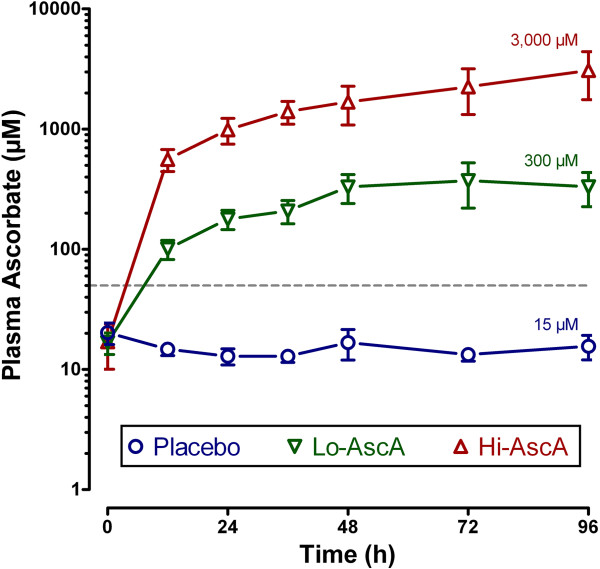
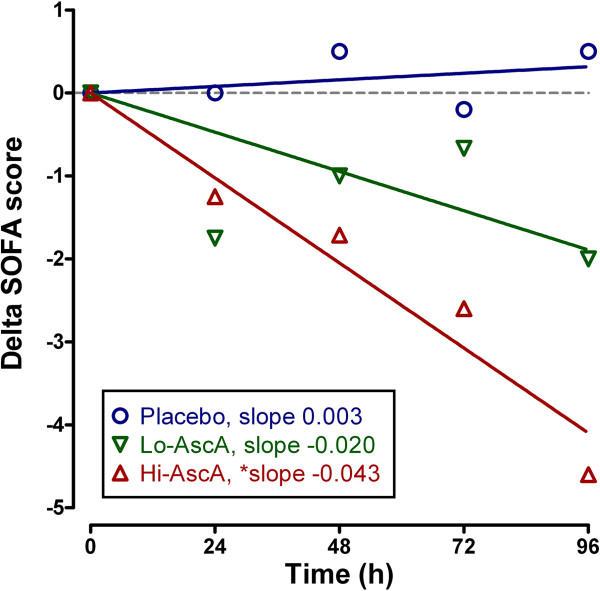
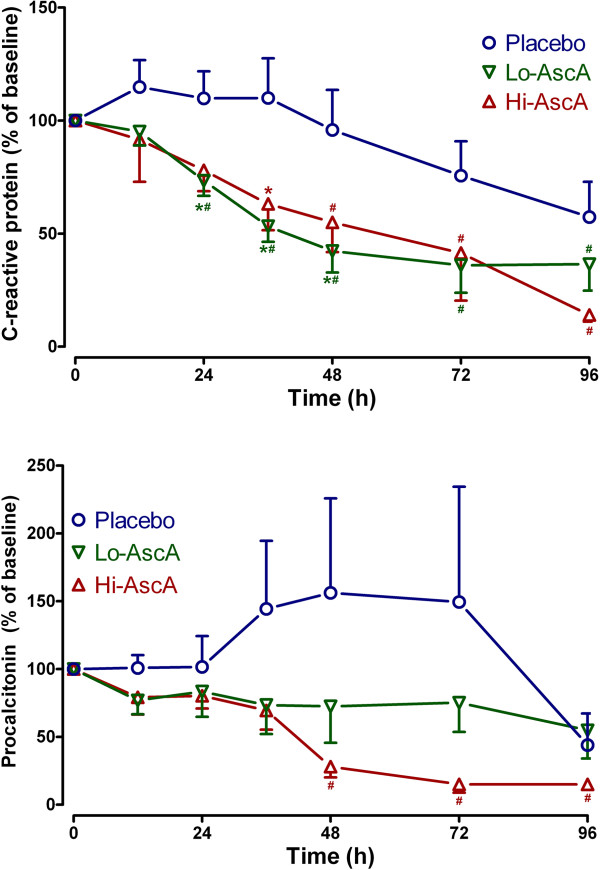
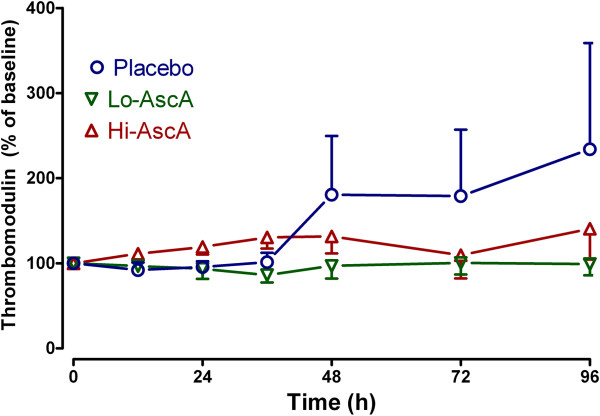
BACKGROUND: Parenterally administered ascorbic acid modulates sepsis-induced inflammation and coagulation in experimental animal models. The objective of this randomized, double-blind, placebo-controlled, phase I trial was to determine the safety of intravenously infused ascorbic acid in patients with severe sepsis. METHODS: Twenty-four patients with severe sepsis in the medical intensive care unit were randomized 1:1:1 to receive intravenous infusions every six hours for four days of ascorbic acid: Lo-AscA (50 mg/kg/24 h, n = 8), or Hi-AscA (200 mg/kg/24 h, n = 8), or Placebo (5% dextrose/water, n = 8). The primary end points were ascorbic acid safety and tolerability, assessed as treatment-related adverse-event frequency and severity. Patients were monitored for worsened arterial hypotension, tachycardia, hypernatremia, and nausea or vomiting. In addition Sequential Organ Failure Assessment (SOFA) scores and plasma levels of ascorbic acid, C-reactive protein, procalcitonin, and thrombomodulin were monitored. RESULTS: Mean plasma ascorbic acid levels at entry for the entire cohort were 17.9 ± 2.4 μM (normal range 50-70 μM). Ascorbic acid infusion rapidly and significantly increased plasma ascorbic acid levels. No adverse safety events were observed in ascorbic acid-infused patients. Patients receiving ascorbic acid exhibited prompt reductions in SOFA scores while placebo patients exhibited no such reduction. Ascorbic acid significantly reduced the proinflammatory biomarkers C-reactive protein and procalcitonin. Unlike placebo patients, thrombomodulin in ascorbic acid infused patients exhibited no significant rise, suggesting attenuation of vascular endothelial injury. CONCLUSIONS: Intravenous ascorbic acid infusion was safe and well tolerated in this study and may positively impact the extent of multiple organ failure and biomarkers of inflammation and endothelial injury. TRIAL REGISTRATION: ClinicalTrials.gov identifier NCT01434121.
Overview
The claims and statistics of this paper haven’t been checked yet.
Free: it reads the open-access text and checks the first 5 claims that cite a source we can check. Create a free account to check every claim.
Integrity signals
Registry
Cites
Statistics
Figures
Verification
Claims the paper makes
The claims and statistics of this paper haven’t been checked yet.
Free: it reads the open-access text and checks the first 5 claims that cite a source we can check. Create a free account to check every claim.
Claims other papers make about this one
Each is checked against this paper’s own text: does it say what the citing paper says it does?
The source backs part of the claim, not all of it — or backs it for a different population, condition or comparison.
In the citing paper
“First, CITRIS-ALI as proposed was based on a previously performed phase 1 safety trial of vitamin C administered to patients in the very early stages of severe sepsis, not ARDS.15”
From Effect of Vitamin C Infusion on Organ Failure and Biomarkers of Inflammation and Vascular Injury in Patients With Sepsis and Severe Acute Respiratory Failure (2019) · cites this paper as [15]
Experimental — accuracy not yet measuredThe source backs part of the claim, not all of it — or backs it for a different population, condition or comparison.
In the citing paper
“The one study in septic patients included in this meta-analysis showed a positive impact of vitamin C on the extent of organ failure, biomarkers of inflammation and endothelial injury [82].”
From Nutrition in Sepsis: A Bench-to-Bedside Review. (2020) · cites this paper as [82]
Experimental — accuracy not yet measuredThe cited source says what the claim attributes to it.
In the citing paper
“Delayed quantification of these biomarkers in CITRIS-ALI compared with early vitamin C infusion in severe sepsis may explain results discordant with those of previous studies of vitamin C in severe sepsis.15”
From Effect of Vitamin C Infusion on Organ Failure and Biomarkers of Inflammation and Vascular Injury in Patients With Sepsis and Severe Acute Respiratory Failure (2019) · cites this paper as [15]
Experimental — accuracy not yet measuredThe cited source says what the claim attributes to it.
In the citing paper
“The selection of the primary outcomes was based on a previously performed phase 1 trial.15”
The check wasn’t confident either way, so it gives no verdict — never disputed.
In the citing paper
“In accordance with these calculations, CITRIS-ALI enrolled 170 patients (85 per group) to allow for 10% dropouts, providing a statistical power of 80%, with an α < .05.”
From Effect of Vitamin C Infusion on Organ Failure and Biomarkers of Inflammation and Vascular Injury in Patients With Sepsis and Severe Acute Respiratory Failure (2019) · cites this paper as [15]
Experimental — accuracy not yet measured
1 more claim about this paper
Create a free account to see every claim other papers make about this one.
Self-check
Percentages, sums and reported differences re-computed from the paper’s own numbers.
The self-check needs the paper’s full text.
Citations
Cites
Harris, P. A., Taylor, R., Thielke, R., Payne, J., Gonzalez, N., & Conde, J. G. (2009) · Journal of Biomedical Informatics · doi:10.1016/j.jbi.2008.08.010 · Cited by 51,384 · cited 5×
“Patients were screened and enrolled following admission to the Medical Respiratory Intensive Care Unit in the VCU Medical Center, Richmond, Virginia.”
MethodInfluentialVincent, J. L., Moreno, R., Takala, J., Willatts, S., De Mendonça, A., Bruining, H., Reinhart, C. K., Suter, P. M., & Thijs, L. G. (1996) · Intensive Care Medicine · doi:10.1007/bf01709751 · Cited by 11,674
The epidemiology of sepsis in the United States from 1979 through 2000
Martin, G. S., Mannino, D. M., Eaton, S., & Moss, M. (2003) · New England Journal of Medicine · doi:10.1056/nejmoa022139 · Cited by 5,841
Serial Evaluation of the SOFA Score to Predict Outcome in Critically Ill Patients
Ferreira, F. L. (2001) · JAMA · doi:10.1001/jama.286.14.1754 · Cited by 2,862
Sepsis in European intensive care units: Results of the SOAP study*
Vincent, J.-L., Sakr, Y., Sprung, C. L., Ranieri, V. M., Reinhart, K., Gerlach, H., Moreno, R., Carlet, J., Le Gall, J.-R., & Payen, D. (2006) · Critical Care Medicine · doi:10.1097/01.ccm.0000194725.48928.3a · Cited by 2,836 · cited 1×
“Tens of thousands of lives are lost across the world annually due to severe sepsis [1,38-40].”
BackgroundDrotrecogin Alfa (Activated) in Adults with Septic Shock
Ranieri, V. M., Thompson, B. T., Barie, P. S., Dhainaut, J.-F., Douglas, I. S., Finfer, S., Gårdlund, B., Marshall, J. C., Rhodes, A., Artigas, A., et al. (2012) · New England Journal of Medicine · doi:10.1056/nejmoa1202290 · Cited by 1,309
Moreno, R., Vincent, J.-L., Matos, R., Mendonça, A., Cantraine, F., Thijs, L., Takala, J., Sprung, C., Antonelli, M., Bruining, H., et al. (1999) · Intensive Care Medicine · doi:10.1007/s001340050931 · Cited by 1,058
Vitamin C pharmacokinetics: Implications for oral and intravenous use
Padayatty, S. J., Sun, H., Wang, Y., Riordan, H. D., Hewitt, S. M., Katz, A., Wesley, R. A., & Levine, M. (2004) · Annals of Internal Medicine · doi:10.7326/0003-4819-140-7-200404060-00010 · Cited by 992 · cited 2×
“Padayatty and colleagues showed that high-level ascorbic acid plasma concentrations could only be achieved by intravenous administration [15].”
BackgroundRandomized, Prospective Trial of Antioxidant Supplementation in Critically Ill Surgical Patients
Nathens, A. B., Neff, M. J., Jurkovich, G. J., Klotz, P., Farver, K., Ruzinski, J. T., Radella, F., Garcia, I., & Maier, R. V. (2002) · Annals of Surgery · doi:10.1097/00000658-200212000-00014 · Cited by 536
C-Reactive Protein Levels Correlate With Mortality and Organ Failure in Critically Ill Patientsa
Lobo, S. M. A., Lobo, F. R. M., Bota, D. P., Lopes-Ferreira, F., Soliman, H. M., Meélot, C., & Vincent, J.-L. (2003) · Chest · doi:10.1378/chest.123.6.2043 · Cited by 448 · cited 1×
“reported that patients with CRP levels greater than 10 mg/dL at ICU admission exhibited significantly higher rates of multiple organ failure as well as higher mortality rates [34].”
Background
Research works printed but not linked: 3
- Sawyer MAJ, Mike JJ, Chavin K: Antioxidant therapy and survival in ARDS [abstract]. Crit Care Med. 1989, 17: S153-
- Fowler AA, Fisher BJ, DeWilde C, Priday A, Syed A, Farthing CA, Larus TL, Knowlson S, Natarajan R: Parenteral vitamin C attenuates markers of organ injury and inflammation in severe sepsis [abstract]. Am J Respir Crit Care Med. 2012, 185 (2012): A6718-
- Urbaniak GC, Plous S: Research randomizer (version 3.0). 2010, http://www.randomizer.org ,
Cited by
Items 401–500 of 573
Patel, A., & Nunnally, M. (2020) · Anesthesiology Clinics · doi:10.1016/j.anclin.2020.08.004 · Cited by 5
Role of vitamin C in diabetic ketoacidosis: Is it ready for prime time?
Casillas, S., Pomerantz, A., Surani, S., & Varón, J. (2018) · World Journal of Diabetes · doi:10.4239/wjd.v9.i12.206 · Cited by 4
Multi-component metabolite electrochemical detection and analysis based on machine learning
Shen, J., Zhang, B., Xue, T., Zhang, Y., & Zhu, G. (2025) · Analytical Methods · doi:10.1039/d5ay00431d · Cited by 3
Velayati, A., Vafa, M., Yadollahzadeh, M., panahi, Z. V. S., Sarbakhsh, P., & salemi, H. (2025) · Nutrition Journal · doi:10.1186/s12937-025-01214-5 · Cited by 3
“Moreover, a notable decline in vitamin C levels was observed during the patients' stay in the ICU [16, 40, 41].”
Ow, C. P. C., Peiris, R. M., Trask-Marino, A. L., Hood, S. G., Betrie, A. H., Lane, D. J. R., Bellomo, R., Plummer, M. P., May, C. N., & Lankadeva, Y. R. (2025) · Critical Care · doi:10.1186/s13054-025-05799-5 · Cited by 7
“In patients with septic shock, infusion of vitamin C at 200 mg/kg/h increased plasma ascorbate concentrations to 3.08 mmol/L, and after 1.5 g every 6-h, the median peak plasma concentration was 0.37 mmol/L [7, 27].”
InfluentialImmunological responses of septic rats to combination therapy with thymosin α1 and vitamin C
Zhang, D., Wang, L., Wang, Z., Shi, X., Tang, W. H., Jiang, L., Yi, B. Y. C. H. B. R., Lv, X., Hu, C., & Xiao, D. (2023) · Open Life Sciences · doi:10.1515/biol-2022-0551 · Cited by 4
Chelly, J., Peres, N., Sboui, G., Maizel, J., Beuzelin, M., Nigeon, O., Préau, S., Vong, L. V., Tamion, F., Lambiotte, F., et al. (2024) · BMJ Open · doi:10.1136/bmjopen-2024-087303 · Cited by 3
Vitamin C Versus Placebo in Pediatric Septic Shock (VITACiPS) - A Randomised Controlled Trial
Sankar, J., Manoharan, A., Lodha, R., Sharma, H. P., & Kabra, S. (2025) · Journal of Intensive Care Medicine · doi:10.1177/08850666251362121 · Cited by 4
“While some adult studies, such as that by Fowler et al, 34 have demonstrated that in adults with severe sepsis, Vitamin C was well tolerated and accompanied by a signi fi cant reduction in the SOFA score with a high dose of Vitamin C (200 mg/kg/day), other reports have raised concerns about potential harm at very high…”
InfluentialNiveles de ascorbato en pacientes quemados durante la fase aguda
Romero, L. M. M., Garcell, R. R., Mondragón, M., Jaramillo, M. A. O., & Roche, L. D. (2021) · Cirugía Plástica Ibero-Latinoamericana · doi:10.4321/s0376-78922021000200014 · Cited by 5
Plasma Ascorbic Acid Levels in Critically Ill Pediatric Patients
Choi, D. H., Basu, S., Levine, M., & Steinhorn, D. M. (2022) · Journal of Pediatric Intensive Care · doi:10.1055/s-0041-1741401 · Cited by 3
Berger, M. M. (2016) · Springer eBooks · doi:10.1007/978-3-319-27687-8_10 · Cited by 3
Harnessing Antioxidants to Counter Oxidative Stress-Induced Apoptosis
Yiran, D., Jiayi, W., & Lifang, M. (2024) · Biochemistry · doi:10.5772/intechopen.1004460 · Cited by 4
Briegel, J. (2019) · Der Anaesthesist · doi:10.1007/s00101-019-00705-5 · Cited by 4
Immunonutrition and Supplementation: Pathways, Promise, and Pessimism
Tully, A., Kramer, K. Z., & Poulakidas, S. J. (2020) · Springer eBooks · doi:10.1007/978-3-030-39781-4_14 · Cited by 3
The use of vitamin C in the intensive care unit during the COVID-19 pandemic
Özgünay, Ş. E., Ceylan, İ., Ökmen, K., Sayan, H. E., Eminoğlu, Ş., Karasu, D., & Yavuz, Ş. (2021) · The European Research Journal · doi:10.18621/eurj.938778 · Cited by 3
“Although the optimal dosages are not known, high doses of vitamin C have been used for many years for preventing and reducing the severity of respiratory infections without reports regarding serious adverse side effects [1, 7, 14, 18, 19].”
BackgroundMeduri, G. U., & Chrousos, G. P. (2020) · Vide Leaf, Hyderabad eBooks · doi:10.37247/paendo.1.2020.10 · Cited by 3
Lines of Treatment of COVID-19 Infection
ElGoly, A. (2021) · Elsevier eBooks · doi:10.1016/b978-0-323-90595-4.00002-9 · Cited by 3
Anand, T., Roller, L. K., & Jurkovich, G. J. (2019) · Current Opinion in Critical Care · doi:10.1097/mcc.0000000000000666 · Cited by 4
“com amount and duration of vasopressor support [25,26].”
BackgroundFundamental role of Warburg effect in various pathophysiological processesPreprint
Vasanthakumar, N. (2017) · OSF Preprints (OSF Preprints) · doi:10.31219/osf.io/gq8hx · Cited by 3
Nutrition in the critically ill patient
Koekkoek, W. A. C. (2023) · Utrecht University Repository (Utrecht University) · doi:10.33540/1675 · Cited by 3
Baljinnyam, T., Fukuda, S., Niimi, Y., Prough, D. S., & Enkhbaatar, P. (2024) · Laboratory Animal Research · doi:10.1186/s42826-024-00213-7 · Cited by 2
“Due to its antioxidant property, vitamin C usage has been considered for sepsis treatment and its positive effect for septic patients have been previously reported [16, 17].”
BackgroundReinert, J. P., Becker, K., & Ohlinger, M. J. (2025) · Journal of Pharmacy Technology · doi:10.1177/87551225251320873 · Cited by 3
“10 The results of trials evaluating thiamine monotherapy in this population are similarly varied, making it difficult to ascertain a confirmed role of thiamine supplementation in sepsis and septic shock.”
Vitamin C for sepsis: from mechanisms to individualized therapy
Xiao, Y., Gong, F., Zhang, L., & Gui, C. (2025) · Frontiers in Medicine · doi:10.3389/fmed.2025.1700351 · Cited by 2
Spielen Vitamine bei der Pathogenese und Therapie der Sepsis eine Rolle?
Häussler, U., Rießen, R., & Haap, M. M. (2018) · DMW - Deutsche Medizinische Wochenschrift · doi:10.1055/a-0661-1112 · Cited by 2
“[17] Fowler AA 3rd, Syed AA, Knowlson S et al.”
BackgroundInfluentialAscorbic acid prevents stress-induced hypercoagulability in overweight and obese individuals
Rocha, H. N. M., Velasco, L. L., Batista, G. M. S., Storch, A. S., Garcia, V. P., Teixeira, G. F., Mentzinger, J., da Nóbrega, A. C. L., & Rocha, N. G. (2024) · Scientific Reports · doi:10.1038/s41598-024-53794-7 · Cited by 2
Carr, A. C. (2017) · Antioxidants · doi:10.3390/antiox6040094 · Cited by 2
Fundamental role of warburg effect in various pathophysiological processes
Vasanthakumar, N. (2018) · International Journal of Clinical and Experimental Physiology · doi:10.4103/ijcep.ijcep_55_17 · Cited by 3
“Use of ascorbic acid in sepsis and in many pathologies has been already shown[14,81,82] 2.”
BackgroundThe critical care literature 2019
Winters, M. E., Hu, K. M., Martinez, J. P., Mallemat, H. A., & Brady, W. J. (2020) · The American Journal of Emergency Medicine · doi:10.1016/j.ajem.2020.09.059 · Cited by 3
COVID-19 Tedavisinde Vitamin C ve D
Ünal, O. (2021) · SDÜ Tıp Fakültesi Dergisi · doi:10.17343/sdutfd.903824 · Cited by 3
Choi, D. H., Violet, P.-C., Majumdar, S., & Levine, M. (2023) · Journal of Pediatric Hematology/Oncology · doi:10.1097/mph.0000000000002631 · Cited by 2
Kočica, M. K., Ristić, A. D., Soldatović, I., Lazović, D. M., Čumić, J., Grujić, M., Karan, R., Terzić, D., Palibrk, I., Kočica, M. J., et al. (2024) · Nutrients · doi:10.3390/nu16060761 · Cited by 4
“A trial with the same dose of parenteral VitC as ours, given for 96 h, in patients with severe sepsis, has proven its benefits in the dynamics of the inflammatory markers and SOFA score [44].”
BackgroundMethodChanges in 2015 Canadian Clinical Practice Guidelines
Lee, D.-S. (2015) · Journal of Clinical Nutrition · doi:10.15747/jcn.2015.7.3.70 · Cited by 2
Bet 2: Does intravenous vitamin C improve mortality in patients with severe sepsis?
Sheikh, M., & Horner, D. E. (2018) · Emergency Medicine Journal · doi:10.1136/emermed-2018-207608.3 · Cited by 2
Michailides, C., & Velissaris, D. (2021) · Monaldi Archives for Chest Disease · doi:10.4081/monaldi.2021.1808 · Cited by 2
Zhao, B., Li, M., Sun, W., Li, J., Liu, L., Wang, Y., Sun, S., Xu, L., Qi, X., Xie, M., et al. (2022) · Frontiers in Medicine · doi:10.3389/fmed.2022.950246 · Cited by 2
“Its beneficial effect in critical illness has been demonstrated by several small-scale clinical trials and animal studies, such as severe burn (7), severe acute pancreatitis (8), ischemic reperfusion injury (9–11), and sepsis (12).”
BackgroundMethodGajate, L., de la Hoz, I., Espiño, M., Gonzalez, M., Martín, C. F., Martín-Grande, A., Roux, D. P., Pastor, Ó., Villahoz, J., Rodríguez-Gandía, M. Á., et al. (2023) · JMIR Research Protocols · doi:10.2196/50091 · Cited by 2
“Fowler et al [32] conducted a safety study of intravenous ascorbic acid in 24 patients with severe sepsis (low dose 12.5 mg/kg every 6 hours vs high dose 50 mg/kg intravenously every 6 hours).”
BackgroundInfluentialAdjunctive Therapies in the Management of Septic Shock
Parikh, R., Belok, S. H., Swamy, L., & Reardon, C. C. (2019) · American Journal of Respiratory and Critical Care Medicine · doi:10.1164/rccm.201810-1991rr · Cited by 2
Vitamin C and corticosteroids in viral pneumonia
Anstey, M., Luu, J., Myers, E., Palmer, R. N., Wibrow, B. A., & Ho, K. M. (2021) · Acute and Critical Care · doi:10.4266/acc.2020.01081 · Cited by 2
Immunomodulator Vitamin C: An Adjuvant Therapy in Second Wave of Coronavirus Disease 2019
Kumar, P., Verma, M., Sharma, R., Agrawal, R., Singh, S. P., Jaiswal, A., Prakash, O., Soni, N. O., Verma, P., Siddiqui, A. H., et al. (2022) · Journal of Pure and Applied Microbiology · doi:10.22207/jpam.16.3.46 · Cited by 2
Self-citationNutrition Considerations in Emergency Surgery
Douglas, M. J., Khurrum, M., & Joseph, B. A. (2022) · Springer eBooks · doi:10.1007/978-3-031-07881-1_36 · Cited by 2
Hydrocortisone, Vitamin C and Thiamine for Sepsis
Michelow, I. C., Alhinai, Z., & Dennehy, P. H. (2017) · CHEST Journal · doi:10.1016/j.chest.2017.06.032 · Cited by 2
Torun, A. N. İ. (2020) · International Journal for Vitamin and Nutrition Research · doi:10.1024/0300-9831/a000670 · Cited by 2
Sulaiman, K. A. A., Juhani, O. A., Salah, K. B., Badreldin, H. A., Harthi, A. A., Alenazi, M., Alharbi, A. A., Algarni, R., Harbi, S. A. A., Alhammad, A., et al. (2021) · Research Square · doi:10.21203/rs.3.rs-354711/v1 · Cited by 2
“Ascorbic acid use showed a reduction in sequential organ failure assessment (SOFA) score and proin ammatory biomarkers while being well-tolerated (7).”
Therapeutic potential of mega-dose vitamin C to reverse organ dysfunction in sepsis and COVID-19Preprint
May, C. N., Bellomo, R., & Lankadeva, Y. R. (2021) · Authorea · doi:10.22541/au.161632383.34100016/v1 · Cited by 2
Vitamin C for sepsis: Questions remain
Fujii, T., Udy, A. A., & Lankadeva, Y. R. (2022) · Anaesthesia Critical Care & Pain Medicine · doi:10.1016/j.accpm.2022.101151 · Cited by 3
Olsen, E., Witonsky, S. G., Wong, D., van Galen, G., Feary, D., Agne, G. F., Gold, J. R., Kopper, J. J., Madrigal, R., Ruby, R. E., et al. (2024) · Wiley eBooks · doi:10.1002/9781119617228.ch32 · Cited by 2
Sudaryadi, S., Harijanto, E., & Mulyono, I. (2023) · Open Access Macedonian Journal of Medical Sciences · doi:10.3889/oamjms.2023.9952 · Cited by 1
Yang, W., He, Z., Liang, Z., Sun, Z., & Han, D. (2025) · New Journal of Chemistry · doi:10.1039/d5nj01019e · Cited by 1
Li, J., Li, F., Luo, D., Liu, E., & Lan, H. (2025) · Food Science & Nutrition · doi:10.1002/fsn3.71263 · Cited by 1
“…trial demonstrated that aggressive supplementation with plasma ascorbate in patients with severe sepsis reduced the severity of multiorgan failure (as measured by SOFA score) and decreased levels of circulating injury biomarkers (such as C-reactive protein and procalcitonin) (Fowler et al. 2014).”
High Dose Intravenous Vitamin C as Adjunctive Therapy for COVID-19 Patients with Cancer: Two Cases
Guo, G., Chen, Q., Luo, G., Meng, Z., Pan, L., Chen, P., & Drisko, J. (2022) · Life · doi:10.3390/life12030335 · Cited by 1
“Further, it is reported that in septic and ARDS patients, vitamin C is depleted [12], and the high IV dose may reverse depletion.”
BackgroundChen, Y., Lu, M., Shi, X., Feng, F., & Zhou, J. (2026) · International Journal for Vitamin and Nutrition Research · doi:10.31083/ijvnr38770 · Cited by 1
“…small-scale (n = 24 and n = 28), single-center randomized clinical trials demonstrated that intravenous vitamin C doses of between 50 and 200 mg/kg/day led to a reduction in inflammatory biomarkers and SOFA scores [22] and improved patient sensitivity to vasoactive drugs (25 mg/kg every 6 h) [23].”
Kanji, S., Hernández-Mitre, M. P., Blain, H., Adhikari, N. K. J., Lamontagne, F., Battista, M., Ménard, J., Sprague, S., Masse, M.-H., Roberts, J. A., et al. (2026) · Clinical Pharmacokinetics · doi:10.1007/s40262-026-01648-y · Cited by 2
“Intensive care unit (ICU) patients are often deficient in vitamin C, and sepsis appears to further deplete vitamin C stores [2, 3].”
Şahin, M. (2020) · Internal and Emergency Medicine · doi:10.1007/s11739-020-02488-9 · Cited by 1
“But there is still debate over combination treatments [4].”
BackgroundKerget, F., Kerget, B., Aksakal, A., & Koçak, A. O. (2021) · European Journal of Medical and Health Sciences · doi:10.24018/ejmed.2021.3.2.745 · Cited by 1
“It attenuates the stress response in sepsis patients and exerts antiviral activity through supporting lymphocyte activity, enhancing interferon-α production, modulating cytokines, decreasing inflammation, improving endothelium dysfunction, and restoring mitochondrial function [7].”
BackgroundBenefits of High-Dose Vitamin C in Patients with Sepsis: An Evidence-Based Case Report
Mahen, M., Hasan, N., & Maria, S. (2022) · eJournal Kedokteran Indonesia · doi:10.23886/ejki.10.83.151-61 · Cited by 1
Yüksel, R. C., Yildirim, F., Kıraklı, C., Temel, Ş., Güzeldağ, S., Gullu, Z., EREN, E. E., Şimşek, M., Sipahioğlu, H., İnci, K., et al. (2023) · Journal of Critical and Intensive Care · doi:10.37678/dcybd.2023.3215 · Cited by 1
Wisudanti, D. D., Kusumasari, N. L. N. S., Handoko, A., Abrori, C., & Raharjo, A. M. (2023) · Jurnal Respirologi Indonesia · doi:10.36497/jri.v43i2.341 · Cited by 1
Abdo, M. S., Kohaf, N. A., Hammad, M. A., & Ping, C. C. (2023) · Cureus · doi:10.7759/cureus.49868 · Cited by 1
The Obese Gunshot Patient: Injury and Septic Shock
Ettinger, S. E. (2016) · Elsevier eBooks · doi:10.1016/b978-0-12-803013-4.00002-8 · Cited by 1
Znaczenie witaminy C dla organizmu człowieka
Zawada, K. D. (2016) · HERBALISM · doi:10.12775/herb.2016.002 · Cited by 4
Vitamin C May Not Help Your Cold, but Can It Treat Sepsis and Acute Respiratory Distress Syndrome?
Zaatari, S., Radecki, R. P., & Spiegel, R. J. (2020) · Annals of Emergency Medicine · doi:10.1016/j.annemergmed.2020.01.014 · Cited by 1
Wibudi, A. (2020) · World Nutrition Journal · doi:10.25220/wnj.v04.s3.0015 · Cited by 1
Vitamin C: Current Concepts in Human Physiology
Carr, A. C., & Natarajan, R. (2018) · MDPI eBooks · doi:10.3390/books978-3-03897-295-2 · Cited by 1
Self-citationMetabolic Resuscitation Therapy for Sepsis: Where to Go
Liu, Z., & Chang, P. (2021) · Intensive Care Research · doi:10.2991/icres.k.210622.002 · Cited by 1
“Two small-sample RCTs showed that vitamin C could positively impact organ function and reverse shock [6,7].”
Rozemeijer, S., van der Horst, F. A. L., & de Man, A. (2021) · Annual update in intensive care and emergency medicine · doi:10.1007/978-3-030-73231-8_3 · Cited by 1
Guideline Committee of The Japanese Clinical Practice Guidelines for Management of Sepsis and Septic Shock 2020 (2022) · Acute Medicine & Surgery · doi:10.1002/ams2.801 · Cited by 1
Coşkun, N., Altınay, M., Türk, H. Ş., Peker, N., İslamoğlu, S., Çınar, A. S., & Ozkan, M. T. (2022) · SiSli Etfal Hastanesi Tip Bulteni / The Medical Bulletin of Sisli Hospital · doi:10.14744/semb.2022.66742 · Cited by 1
Vitamin C (l-ascorbic acid) in brain injury
Leichtle, S. W., Almohaish, S., Sandler, M., Yajnik, V., Rivet, D. J., Kashiouris, M. G., Fowler, A. A., & Brophy, G. M. (2023) · Elsevier eBooks · doi:10.1016/b978-0-323-89835-5.00040-5 · Cited by 1
Self-citationRevisiting the Role of Vitamin C in Sepsis. Is it a Forlorn Hope or is there Still Dearth of data?
Surani, S., & Sharma, M. (2019) · The Open Respiratory Medicine Journal · doi:10.2174/1874306401913010055 · Cited by 2
Aisa-Álvarez, A., Pérez-Torres, I., Camarena-Alejo, G., Franco-Granillo, J., Martínez-Rodríguez, E. A., Gamboa, R., Guarner‐Lans, V., & Soto, M. E. (2020) · Research Square · doi:10.21203/rs.3.rs-52169/v1 · Cited by 1
“Vit C therapy decreases SOFA scores, PCT, C-reactive protein (CRP) and thrombomodulin leading to a lower mortality rate (20).”
BackgroundOrange You Wishing There Were Definitive Randomized Controlled Trials Already?*
Hager, D. N., Agarwal, A., & Rochwerg, B. (2021) · Critical Care Medicine · doi:10.1097/ccm.0000000000005319 · Cited by 1
Phase 2 Vitamin C Sepsis Trials: Another Brick in the (Evidence) Wall?*
Agarwal, A., Oczkowski, S. J. W., & Sevransky, J. (2022) · Critical Care Medicine · doi:10.1097/ccm.0000000000005432 · Cited by 1
Vasanthakumar, N. (2017) · OSF Preprints (OSF Preprints) · doi:10.31219/osf.io/4pjye · Cited by 1
Vitamin C: A potential regulator of inflammatory response
Mohammed, B. M. (2015) · VCU Scholars Compass (Virginia Commonwealth University) · doi:10.25772/0kbv-0h96
The Pro and Con Argument for use of VitaminC in Critically Ill Patients
Allen, K. S. (2018) · Nutrition & Food Science International journal · doi:10.19080/nfsij.2018.05.555654
The Role of Mitochondrial Dysfunction in Sepsis: What Is New?
Wang, Y., Chakraborty, M., & McLean, A. S. (2019) · Annual update in intensive care and emergency medicine · doi:10.1007/978-3-030-06067-1_41
Jarczak, D., & Nierhaus, A. (2019) · Springer eBooks · doi:10.1007/978-3-030-17148-3_23
Методичні рекомендації ESPEN щодо клінічного харчування у відділенні інтенсивної терапії
Singer, P., Blaser, A. R., Berger, M. M., Alhazzani, W. A., Calder, P. C., Casaer, M. P., Hiesmayr, M., Mayer, K., Montejo, J. C., Pichard, C., et al. (2019) · Pain anesthesia and intensive care · doi:10.25284/2519-2078.2(87).2019.171009
Научное обоснование применения аскорбиновой кислоты у больных с термической травмой
Lytovchenko, A., Олейник, Г. А., & Lytovchenko, Y. Y. (2019) · EMERGENCY MEDICINE · doi:10.22141/2224-0586.4.99.2019.173948 · Cited by 1
Étude CITRIS-ALI : comment un résultat principal peut dissimuler un résultat majeur
Marik, P. E., & Payen, D. M. (2019) · Anesthésie & Réanimation · doi:10.1016/j.anrea.2019.11.022
Lipidomics: Clinical Application
Noland, D. (2020) · Springer eBooks · doi:10.1007/978-3-030-30730-1_11
Nutrition support in critically ill adults and children
Irving, S. Y., McKeever, L., Srinivasan, V., & Compher, C. W. (2020) · Elsevier eBooks · doi:10.1016/b978-0-12-818460-8.00032-0
Ko, H. J., Jung, M. J., Kim, J. S., Son, E. S., & Yu, Y. M. (2020) · Korean Journal of Clinical Pharmacy · doi:10.24304/kjcp.2020.30.3.161
تقییم السلوک الغذائی والصحی للأشخاص المتعافین من COVID19 المعالجین فی المنزل.
القطری, م. س. (2020) · مجلة البحوث فی مجالات التربیة النوعیة · doi:10.21608/jedu.2020.48306.1111
FLCCC Alliance MATH+ ascorbic acid and I-MASK+ ivermectin protocols for COVID-19 – A Brief ReviewPreprint
Turkia, M. (2020) · SSRN Electronic Journal · doi:10.2139/ssrn.3723854
Stem Cell Therapy and Medications That Could Be Alternative to the Current COVID-19 Management
Bahçecíoğlu, Ö. F., Gök, S., & Arısoy, S. (2020) · Journal of Literature Pharmacy Sciences · doi:10.5336/pharmsci.2020-76186
Should ascorbic acid be a primary therapy for sepsis in prehospital settings?
Law, A. (2021) · Journal of Paramedic Practice · doi:10.12968/jpar.2021.13.1.33
Fujii, T., & Udy, A. A. (2021) · Anaesthesia Critical Care & Pain Medicine · doi:10.1016/j.accpm.2021.100806
The vitamin C, thiamine and steroids (VICTAS) in sepsis
Akkaya, P. N. (2020) · Demiroglu Science University Florence Nightingale Transplantation Journal · doi:10.5606/dsufnjt.2020.011
“critically ill patients has shown positive effects in the literature,[13-21] this study is the first to use”
BackgroundResultInfluentialVitamina C, tiamina e hidrocortisona en choque séptico (protocolo VITHA): estudio de cohortes
Ocampo, C. P. C., Gómez, J. F., Gómez, G. A. M., García, A. M., Cadavid, C. M. S., & Quiñones, E. (2021) · Acta Colombiana de Cuidado Intensivo · doi:10.1016/j.acci.2021.01.001
Витамин С при критических состояниях: от эксперимента к клинике (часть 2)
Чуклін, С. М., & Chuklin, S. S. (2021) · EMERGENCY MEDICINE · doi:10.22141/2224-0586.17.1.2021.225708
DIDELIŲ DOZIŲ C, D VITAMINŲ IR CINKO NAUDA, GYDANT COVID-19 SERGANČIUS PACIENTUS
Žiogaitė, R., Misevičiūtė, G., Šimonytė, L., & Macas, A. (2021) · Health Sciences · doi:10.35988/sm-hs.2021.063 · Cited by 1
Therapeutic potential of mega-dose vitamin C to reverse organ dysfunction in sepsis and COVID-19Preprint
May, C. N., Bellomo, R., & Lankadeva, Y. R. (2021) · Authorea · doi:10.22541/au.161632383.34100016/v2
Vitamin C – neue Therapiemöglichkeit bei Sepsis?
Müller, S., Wiesmann, T., Wulf, H., & Arndt, C. (2021) · AINS - Anästhesiologie · Intensivmedizin · Notfallmedizin · Schmerztherapie · doi:10.1055/a-1109-4363
La vitamine C et le SARS Cov-2
Scudeller, G. (2021) · HEGEL - HEpato-GastroEntérologie Libérale · doi:10.3917/heg.112.0132
Wali, H., Malik, W., & Mayette, J. (2021) · Research Square · doi:10.21203/rs.3.rs-487165/v1
The Effects of Ascorbic Acid Over Sepsis: Meta-analysis With Trial Sequential AnalysisPreprint
Wang, Y., Zhuo, H., & Lin, J. (2020) · Research Square · doi:10.21203/rs.3.rs-95522/v1
“After reviewing the full texts, 12 records [18-30] met the inclusion criteria and were nally included (Table 1).”
MethodKashiouris, M. G. (2021) · Research Square · doi:10.21203/rs.3.rs-764236/v1
Chen, H.-B., Chen, P., Li, K., & Shao, J. (2021) · Research Square · doi:10.21203/rs.3.rs-850576/v1
“…interquartile range (IQR): for one article [15], we recalculated the mean and standard deviation (SD) from the original data in the supplementary materials; for the other [32], we did not get the original data, so we estimated the mean and SD in reference to recently established methods [33, 34].”
InfluentialImantalab, V., Ghanaie, M. M., Sorouri, Z. R., Jouryabi, A. M., Tehran, S. G., Fayazi, H. S., Biazar, G., & Noroozshamsi, M. (2021) · Anesthesiology and Pain Medicine · doi:10.5812/aapm.119332
“This could be justified by the difference between studies regarding the higher dosage and longer duration of infusion (38).”
Result
Metadata
- Authors
- Nursing, M. R. I. C. U., Fowler, A. A., Syed, A. A., Knowlson, S., Sculthorpe, R., Farthing, D., DeWilde, C., Farthing, C. A., Larus, T. L., Martin, E., Brophy, D. F., Gupta, S., Fisher, B. J., & Natarajan, R.
- Affiliations
- Virginia Commonwealth University (US)
- Corresponding author
- Fowler, Alpha A
- ORCID
- Venue
- Journal of Translational Medicine
- Published
- 2014-01-31
- Volume
- 12
- Issue
- 1
- Pages
- 32-32
- ISSN
- 1479-5876 (ISSN-L)
- PMC
- PMC3937164
- OpenAlex
- W2152465977
- Semantic Scholar
- 646231fa09c1477bfe965e9d2db97391ffe0d727
- Cited by
- 573
- References
- 38
- Citations by year
- 2026: 16 · 2025: 30 · 2024: 38 · 2023: 52 · 2022: 76 · 2021: 105 · 2020: 94 · 2019: 58 · 2018: 46 · 2017: 26 · 2016: 13 · 2015: 13 · 2014: 4
- FWCI
- 17.39
- Type
- journal article
- Language
- en
- Open access
- gold
- doi.org
- Licence
- cc-by
- creativecommons.org/licenses/by/2.0 (tdm)
- Locations
- Journal of Translational Medicine (publishedVersion, cc-by)
- Europe PMC (PubMed Central) (publishedVersion, cc-by)
- PubMed Central (publishedVersion, cc-by)
- PubMed (publishedVersion)
- VCU Scholars Compass (Virginia Commonwealth University) (submittedVersion, cc-by)
- Funders
- Thomas F. and Kate Miller Jeffress Memorial Trust
- National Institutes of Health (UL1TR000058)
- National Heart, Lung, and Blood Institute (UM1HL116885)
- National Center for Advancing Translational Sciences
- Topics
- Health Sciences › Nursing › Nutrition and Dietetics › Vitamin C and Antioxidants Research
- Health Sciences › Medicine › Critical Care and Intensive Care Medicine › Sepsis Diagnosis and Treatment
- Health Sciences › Nursing › Nutrition and Dietetics › Clinical Nutrition and Gastroenterology
- Keywords
- intravenous ascorbic acid, severe sepsis, vitamin C, drug safety and tolerability, plasma ascorbic acid levels, SOFA score, C-reactive protein, procalcitonin, thrombomodulin, endothelial injury, inflammation, multiple organ failure
- MeSH terms
- Adult, Aged, Aged, 80 and over, Ascorbic Acid, C-Reactive Protein, Calcitonin, Demography, Female, Humans, Infusions, Intravenous, Male, Middle Aged, Multiple Organ Failure, Placebos, Protein Precursors, Biomarkers, Calcitonin Gene-Related Peptide, Thrombomodulin, Sepsis
About these checks
Registry, retraction, Cites and statistics results are computed, not judged, with one exception: a printed reference that no index lists is read once by a model before it counts as a citation error. Claims are extracted by a model and kept only when their quote appears verbatim in the text; each cited source is then checked, with a model’s help, for whether it says what the claim relies on. Those verdicts can be wrong — read the claim’s quote and the cited source before relying on one.
Statistics and arithmetic are recomputed, not judged.
Confidence bands are shown only for fields calibrated on our annotated test set. None is calibrated yet, so no band is shown.
What counts as a claim ›How we measure confidence ›How we check this ›
Are you an author, or do you see a problem with this page? Request a review
Data sources
Bibliographic data: Semantic Scholar, OpenAlex, Crossref.
Contains information from the Semantic Scholar Academic Graph Datasets, made available under the ODC Attribution License (ODC-BY 1.0).
Semantic Scholar’s data is described in: Kinney, R., et al. (2023). The Semantic Scholar Open Data Platform. arXiv:2301.10140.
