

Phase I safety trial of intravenous ascorbic acid in patients with severe sepsis.
Open accessThe DOI matches its Crossref record; 37 of the 38 references it cites were found in a registry or an index.
Abstract
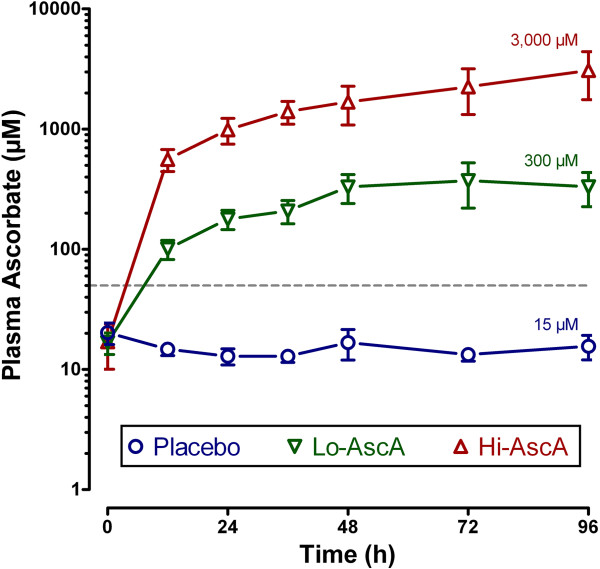
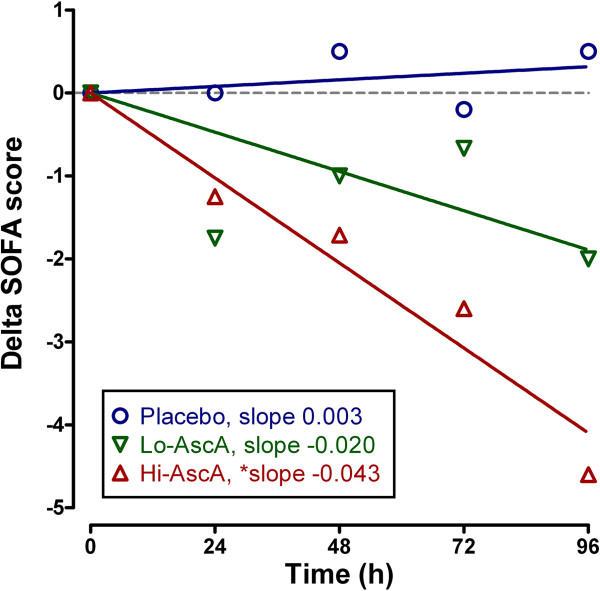
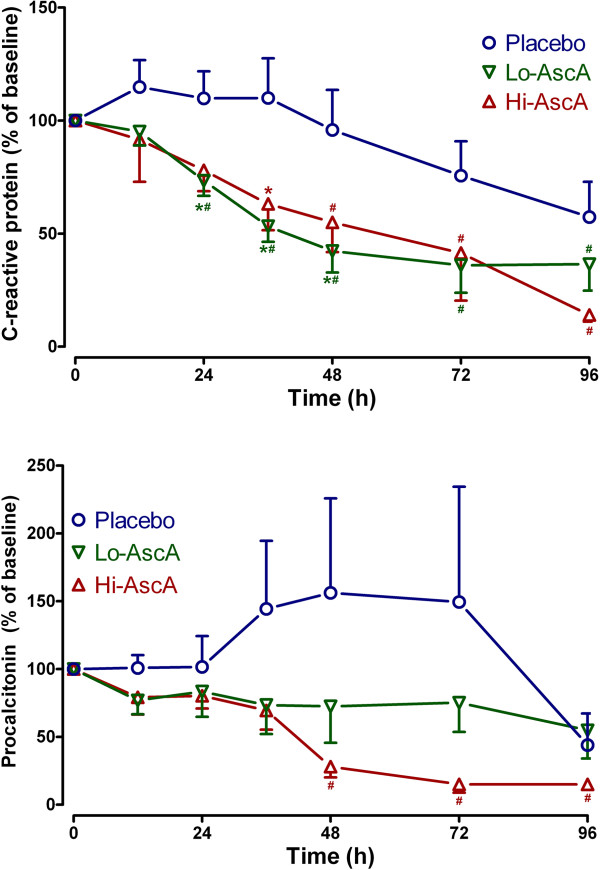
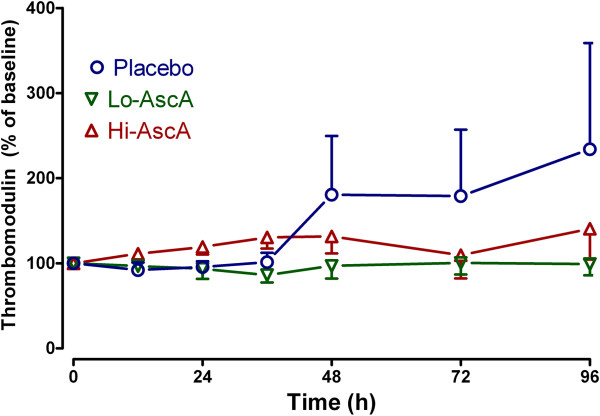
BACKGROUND: Parenterally administered ascorbic acid modulates sepsis-induced inflammation and coagulation in experimental animal models. The objective of this randomized, double-blind, placebo-controlled, phase I trial was to determine the safety of intravenously infused ascorbic acid in patients with severe sepsis. METHODS: Twenty-four patients with severe sepsis in the medical intensive care unit were randomized 1:1:1 to receive intravenous infusions every six hours for four days of ascorbic acid: Lo-AscA (50 mg/kg/24 h, n = 8), or Hi-AscA (200 mg/kg/24 h, n = 8), or Placebo (5% dextrose/water, n = 8). The primary end points were ascorbic acid safety and tolerability, assessed as treatment-related adverse-event frequency and severity. Patients were monitored for worsened arterial hypotension, tachycardia, hypernatremia, and nausea or vomiting. In addition Sequential Organ Failure Assessment (SOFA) scores and plasma levels of ascorbic acid, C-reactive protein, procalcitonin, and thrombomodulin were monitored. RESULTS: Mean plasma ascorbic acid levels at entry for the entire cohort were 17.9 ± 2.4 μM (normal range 50-70 μM). Ascorbic acid infusion rapidly and significantly increased plasma ascorbic acid levels. No adverse safety events were observed in ascorbic acid-infused patients. Patients receiving ascorbic acid exhibited prompt reductions in SOFA scores while placebo patients exhibited no such reduction. Ascorbic acid significantly reduced the proinflammatory biomarkers C-reactive protein and procalcitonin. Unlike placebo patients, thrombomodulin in ascorbic acid infused patients exhibited no significant rise, suggesting attenuation of vascular endothelial injury. CONCLUSIONS: Intravenous ascorbic acid infusion was safe and well tolerated in this study and may positively impact the extent of multiple organ failure and biomarkers of inflammation and endothelial injury. TRIAL REGISTRATION: ClinicalTrials.gov identifier NCT01434121.
Overview
The claims and statistics of this paper haven’t been checked yet.
Free: it reads the open-access text and checks the first 5 claims that cite a source we can check. Create a free account to check every claim.
Integrity signals
Registry
Cites
Statistics
Figures
Verification
Claims the paper makes
The claims and statistics of this paper haven’t been checked yet.
Free: it reads the open-access text and checks the first 5 claims that cite a source we can check. Create a free account to check every claim.
Claims other papers make about this one
Each is checked against this paper’s own text: does it say what the citing paper says it does?
The source backs part of the claim, not all of it — or backs it for a different population, condition or comparison.
In the citing paper
“First, CITRIS-ALI as proposed was based on a previously performed phase 1 safety trial of vitamin C administered to patients in the very early stages of severe sepsis, not ARDS.15”
From Effect of Vitamin C Infusion on Organ Failure and Biomarkers of Inflammation and Vascular Injury in Patients With Sepsis and Severe Acute Respiratory Failure (2019) · cites this paper as [15]
Experimental — accuracy not yet measuredThe source backs part of the claim, not all of it — or backs it for a different population, condition or comparison.
In the citing paper
“The one study in septic patients included in this meta-analysis showed a positive impact of vitamin C on the extent of organ failure, biomarkers of inflammation and endothelial injury [82].”
From Nutrition in Sepsis: A Bench-to-Bedside Review. (2020) · cites this paper as [82]
Experimental — accuracy not yet measuredThe cited source says what the claim attributes to it.
In the citing paper
“Delayed quantification of these biomarkers in CITRIS-ALI compared with early vitamin C infusion in severe sepsis may explain results discordant with those of previous studies of vitamin C in severe sepsis.15”
From Effect of Vitamin C Infusion on Organ Failure and Biomarkers of Inflammation and Vascular Injury in Patients With Sepsis and Severe Acute Respiratory Failure (2019) · cites this paper as [15]
Experimental — accuracy not yet measuredThe cited source says what the claim attributes to it.
In the citing paper
“The selection of the primary outcomes was based on a previously performed phase 1 trial.15”
The check wasn’t confident either way, so it gives no verdict — never disputed.
In the citing paper
“In accordance with these calculations, CITRIS-ALI enrolled 170 patients (85 per group) to allow for 10% dropouts, providing a statistical power of 80%, with an α < .05.”
From Effect of Vitamin C Infusion on Organ Failure and Biomarkers of Inflammation and Vascular Injury in Patients With Sepsis and Severe Acute Respiratory Failure (2019) · cites this paper as [15]
Experimental — accuracy not yet measured
1 more claim about this paper
Create a free account to see every claim other papers make about this one.
Self-check
Percentages, sums and reported differences re-computed from the paper’s own numbers.
The self-check needs the paper’s full text.
Citations
Cites
Harris, P. A., Taylor, R., Thielke, R., Payne, J., Gonzalez, N., & Conde, J. G. (2009) · Journal of Biomedical Informatics · doi:10.1016/j.jbi.2008.08.010 · Cited by 51,384 · cited 5×
“Patients were screened and enrolled following admission to the Medical Respiratory Intensive Care Unit in the VCU Medical Center, Richmond, Virginia.”
MethodInfluentialVincent, J. L., Moreno, R., Takala, J., Willatts, S., De Mendonça, A., Bruining, H., Reinhart, C. K., Suter, P. M., & Thijs, L. G. (1996) · Intensive Care Medicine · doi:10.1007/bf01709751 · Cited by 11,674
The epidemiology of sepsis in the United States from 1979 through 2000
Martin, G. S., Mannino, D. M., Eaton, S., & Moss, M. (2003) · New England Journal of Medicine · doi:10.1056/nejmoa022139 · Cited by 5,841
Serial Evaluation of the SOFA Score to Predict Outcome in Critically Ill Patients
Ferreira, F. L. (2001) · JAMA · doi:10.1001/jama.286.14.1754 · Cited by 2,862
Sepsis in European intensive care units: Results of the SOAP study*
Vincent, J.-L., Sakr, Y., Sprung, C. L., Ranieri, V. M., Reinhart, K., Gerlach, H., Moreno, R., Carlet, J., Le Gall, J.-R., & Payen, D. (2006) · Critical Care Medicine · doi:10.1097/01.ccm.0000194725.48928.3a · Cited by 2,836 · cited 1×
“Tens of thousands of lives are lost across the world annually due to severe sepsis [1,38-40].”
BackgroundDrotrecogin Alfa (Activated) in Adults with Septic Shock
Ranieri, V. M., Thompson, B. T., Barie, P. S., Dhainaut, J.-F., Douglas, I. S., Finfer, S., Gårdlund, B., Marshall, J. C., Rhodes, A., Artigas, A., et al. (2012) · New England Journal of Medicine · doi:10.1056/nejmoa1202290 · Cited by 1,309
Moreno, R., Vincent, J.-L., Matos, R., Mendonça, A., Cantraine, F., Thijs, L., Takala, J., Sprung, C., Antonelli, M., Bruining, H., et al. (1999) · Intensive Care Medicine · doi:10.1007/s001340050931 · Cited by 1,058
Vitamin C pharmacokinetics: Implications for oral and intravenous use
Padayatty, S. J., Sun, H., Wang, Y., Riordan, H. D., Hewitt, S. M., Katz, A., Wesley, R. A., & Levine, M. (2004) · Annals of Internal Medicine · doi:10.7326/0003-4819-140-7-200404060-00010 · Cited by 992 · cited 2×
“Padayatty and colleagues showed that high-level ascorbic acid plasma concentrations could only be achieved by intravenous administration [15].”
BackgroundRandomized, Prospective Trial of Antioxidant Supplementation in Critically Ill Surgical Patients
Nathens, A. B., Neff, M. J., Jurkovich, G. J., Klotz, P., Farver, K., Ruzinski, J. T., Radella, F., Garcia, I., & Maier, R. V. (2002) · Annals of Surgery · doi:10.1097/00000658-200212000-00014 · Cited by 536
C-Reactive Protein Levels Correlate With Mortality and Organ Failure in Critically Ill Patientsa
Lobo, S. M. A., Lobo, F. R. M., Bota, D. P., Lopes-Ferreira, F., Soliman, H. M., Meélot, C., & Vincent, J.-L. (2003) · Chest · doi:10.1378/chest.123.6.2043 · Cited by 448 · cited 1×
“reported that patients with CRP levels greater than 10 mg/dL at ICU admission exhibited significantly higher rates of multiple organ failure as well as higher mortality rates [34].”
Background
Research works printed but not linked: 3
- Sawyer MAJ, Mike JJ, Chavin K: Antioxidant therapy and survival in ARDS [abstract]. Crit Care Med. 1989, 17: S153-
- Fowler AA, Fisher BJ, DeWilde C, Priday A, Syed A, Farthing CA, Larus TL, Knowlson S, Natarajan R: Parenteral vitamin C attenuates markers of organ injury and inflammation in severe sepsis [abstract]. Am J Respir Crit Care Med. 2012, 185 (2012): A6718-
- Urbaniak GC, Plous S: Research randomizer (version 3.0). 2010, http://www.randomizer.org ,
Cited by
Items 501–573 of 573
Loomis, K. H., Rockwell, C. E., Sternard, H., & Novy, R. E. (2007) · Journal of Biomolecular Techniques JBT
Reitsema, V. A. (2021) · University of Groningen research database (University of Groningen / Centre for Information Technology) · doi:10.33612/diss.194860187
RETRACTED ARTICLE: The Role of Vitamin C in the Treatment of Sepsis
Vitiello, A., Porta, R. L., & Ferrara, F. (2022) · Drugs & Therapy Perspectives · doi:10.1007/s40267-022-00895-w
RetractedNutrition in the Surgical Patient
Kozar, R. A., Tannous, A., & Schwartz, D. A. (2016) · Springer eBooks · doi:10.1007/978-3-319-42792-8_10 · Cited by 1
Typpo, K., & Doctor, A. (2017) · Pediatric Critical Care Medicine · doi:10.1097/pcc.0000000000001214
Marik, P. E., Hooper, M. H., Khangoora, V. S., Rivera, R., & Catravas, J. D. (2017) · CHEST Journal · doi:10.1016/j.chest.2017.04.182
Marik, P. E., Hooper, M. H., Khangoora, V. S., Rivera, R., & Catravas, J. D. (2017) · CHEST Journal · doi:10.1016/j.chest.2017.06.031
Limón, J. D. D. J. M., Plata, A. E. H., Bravo-Santibáñez, E., & Hernández, M. A. (2021) · Medicina Crítica · doi:10.35366/100002 · Cited by 2
Gale, S. E. (2017) · The American Pharmacists Association eBooks · doi:10.21019/pharmacotherapyfirst.shock_overview
Marik, P. E., & Hooper, M. H. (2017) · CHEST Journal · doi:10.1016/j.chest.2017.06.041 · Cited by 1
Marik, P. E., Rivera, R., Hooper, M. H., Khangoora, V. S., & Catravas, J. D. (2017) · CHEST Journal · doi:10.1016/j.chest.2017.05.026
Spiess, B. (2019) · Faculty Opinions – Post-Publication Peer Review of the Biomedical Literature · doi:10.3410/f.733722280.793565778
Recent recommendations in Nutritional support to patients with sepsis in ICU
El-Maqsoud, A., Shabob, I. A., & El-Sayed, M. A. (2022) · Benha Journal of Applied Sciences · doi:10.21608/bjas.2022.244799
Beneficios del uso de las nuevas terapias con ácido ascórbico en los pacientes con sepsis
Kabbabe, R. S., & Reyes, M. S. (2022) · Revista de la Facultad de Medicina de la Universidad de lberoamérica · doi:10.54376/rcmui.v2i2.131
The effect of high-dose vitamin C on renal functions in COVID–19 patients
Özgültekin, A., Karayel, A., Yanatma, S., & Ekinci, O. (2022) · Kastamonu Medical Journal · doi:10.51271/kmj-0059
“A number of sepsis studies have reported that 4-6 grams/day of vitamin C for five days is safe (1-12, 25, 26).”
Backgroundvan Gorkom, G. N. Y. (2022) · Research Publications (Maastricht University) · doi:10.26481/dis.20220616gg
Tsao, S. Y. (2022) · Clinical and Translational Discovery · doi:10.1002/ctd2.128
Плоткин, Л. Л., & Artamonov, V. A. (2022) · Messenger of Anesthesiology and Resuscitation · doi:10.21292/2078-5658-2022-19-5-102-110
Ascorbic Acid in Sepsis and Septic Shock
Stamouli, A., Stamouli, A., Voulgaris, S., & Marvaki, C. (2024) · IntechOpen eBooks · doi:10.5772/intechopen.109515
Нутритивная терапия при сепсисе у пациентов в критическом состоянии
Бокерия, Л. А., Абдулгасанов, Р. А., Гасымов, Э. Г., & Абдулгасанова, М. Р. (2022) · The Bulletin of Bakoulev Center Cardiovascular Diseases · doi:10.24022/1810-0694-2022-23-5-491-501
Currently available COVID-19 management options
Ludhiadch, A., Yadav, U. P., & Munshi, A. (2023) · Elsevier eBooks · doi:10.1016/b978-0-323-91794-0.00001-9
Nava, V. M. S., & Garcia, H. A. R. (2023) · Elsevier eBooks · doi:10.1016/b978-0-323-88271-2.00025-0
Казмирчук, А. П., Бережанська, Ю. М., Сидорова, Н. М., Третяк, Д. Д., Боднарчук, Н. А., Семенець, О. Л., & Царалунга, В. М. (2023) · Current aspects of military medicine Сучасні аспекти військової медицини · doi:10.32751/2310-4910-2023-30-1-16 · Cited by 1
Legouis, D., Ourahmoune, A., Sgardello, S. D., Sangla, F., & Criton, G. (2023) · medRxiv · doi:10.1101/2023.04.14.23288576
“While some authors observed decreased ICU length of stay[36] and mortality[37], improved SOFA score[38] and lowered vasopressor requirements[36,37,39] in septic patients treated with vitamin C, these studies were limited by their small size and their unblinded design.”
ResultResearch Progress of Vitamin-Assisted Treatment of Sepsis and Septic Shock
曹, 志. (2023) · Advances in Clinical Medicine · doi:10.12677/acm.2023.1351225
Vitamina C en el manejo de la sepsis
Rodríguez-Vélez, J., Rivera-Diaz, A., Báez-Gutiérrez, P., Fonseca-Ferrer, V., & Rodríguez-Cintrón, W. (2023) · Revista de Educación en Cuidados Críticos (REduCrític) · doi:10.24875/recc.23000006
Role of micronutrients in inflammatory bowel disease
Song, W.-X., Yu, Z., Ren, X.-F., Chen, J., & Chen, X. (2023) · World Chinese Journal of Digestology · doi:10.11569/wcjd.v31.i17.711
Karami, A., Fallahpour, F., Motamed, N., & Jafari, M. R. (2023) · Journal of Advances in Medical and Biomedical Research · doi:10.30699/jambs.31.147.364
Analysis of serum vitamin C and nitric oxide in children with septic shock
Yunarto, Y., Ratih, D., & Wistiani, W. (2023) · Paediatrica Indonesiana · doi:10.14238/pi63.6.2023.425-32
“32 Blood gas analysis was performed in all subjects to assess acid-base conditions that occurred in septic shock.”
BackgroundMethodGhiasi, B., Khalighi, Z., Hashemi, M. S., Mirzaei, A., Abbasi, N., & Mozafari, A. (2024) · international journal high risk behaviors & addiction · doi:10.5812/ijhrba-140167
THERAPEUTIC ROLE OF ASCORBIC ACID AS AN ADJUNCT IN SEPSIS: A PROSPECTIVE RANDOMIZED CLINICAL STUDY
Rekhi, B. K., Kumar, P., Diksha, D., GARG, L. K., & Cathrine, P. (2024) · PARIPEX-INDIAN JOURNAL OF RESEARCH · doi:10.36106/paripex/9500798
Utami, W., & FARRAS, N. (2024) · International Journal of Applied Pharmaceutics · doi:10.22159/ijap.2024v16s5.52474
“…controlled trial (RCT) in acute respiratory distress syndrome (ARDS) patients revealed that administering vitamin C at a dose of 200 mg/kgBW per day for 4 days resulted in 30% patient mortality data in patients taking vitamin C than patients given placebo with a higher mortality rate of 46% [106].”
JPEN Journal Club 92. Adjusting randomized trials
Koretz, R. L. (2025) · Journal of Parenteral and Enteral Nutrition · doi:10.1002/jpen.2750
Artamonov, V. A. (2025) · Современные проблемы науки и образования · doi:10.17513/spno.34047
Ascorbate for Organ Dysfunction in Critically Ill Patients With Sepsis
Files, D. C., Matthay, M. A., Ware, L. B., Brower, R. G., Aggarwal, N. R., Brown, S. M., Chang, S. Y., Douglas, I. S., Duggal, A., Gibbs, K. W., et al. (2025) · CHEST Critical Care · doi:10.1016/j.chstcc.2025.100168
“23 Therefore, we were concerned about the use of point-of-care glucometers resulting in occult hypoglycemia and harm.”
Self-citationScanlan, N. (2025) · Veterinary Clinics of North America Small Animal Practice · doi:10.1016/j.cvsm.2025.06.015
Effects of different vitamins on individuals with septic shock: a Bayesian NMA of RCTs
Tian, J., Long, L., Li, D., Liang, Y., Sun, G., Song, W., Yue, X., Shen, L., Zhao, H., & Ren, S. (2025) · Frontiers in Nutrition · doi:10.3389/fnut.2025.1566422
Oropharyngeal Dysphagia and Odynophagia in Patients with Thermal Burn Injuries
Nourmohammadi, F., Rahimzadegan-Marefat, S., Ghoreishi, Z. S., Bakhtiyari, J., & Ghanbari, S. (2025) · Dysphagia · doi:10.1007/s00455-025-10878-4
Elmesiry, A., El-Sheikh, M. R., Elshimy, K. M., & Abotaleb, A. M. (2025) · European Journal of Pediatrics · doi:10.1007/s00431-025-06625-4
Chan, K., Ali, S., & Bashir, A. H. (2025) · A&A Practice · doi:10.1213/xaa.0000000000002127
Additional file 1 of Mortality in septic patients treated with vitamin C: a systematic meta-analysis
Scholz, S. S., Borgstedt, R., Ebeling, N., Menzel, L. C., Jansen, G., & Rehberg, S. (2021) · Figshare · doi:10.6084/m9.figshare.13535783
Yanase, F., Spano, S., Maeda, A., Chaba, A., Naorungroj, T., Ow, C. P. C., Lankadeva, Y. R., May, C. N., Betrie, A. H., Lane, D. J. R., et al. (2024) · Figshare · doi:10.6084/m9.figshare.26620210
Rosengrave, P., Spencer, E. S., Williman, J., Mehrtens, J. E., Morgan, S., Doyle, T., Heyden, K. V. D., Morris, A., Shaw, G. M., & Carr, A. C. (2022) · Figshare · doi:10.6084/m9.figshare.19029579
Rozemeijer, S., de Grooth, H., Elbers, P., Girbes, A. R. J., den Uil, C. A., Dubois, E. A., Wils, E.-J., Rettig, T. C. D., van Zanten, A. R. H., Vink, R., et al. (2021) · Figshare · doi:10.6084/m9.figshare.15253638
Rozemeijer, S., de Grooth, H., Elbers, P., Girbes, A. R. J., den Uil, C. A., Dubois, E. A., Wils, E.-J., Rettig, T. C. D., van Zanten, A. R. H., Vink, R., et al. (2021) · Figshare · doi:10.6084/m9.figshare.15253641
Rozemeijer, S., Smit, B., Elbers, P., Girbes, A. R. J., Straaten, H. M. O., & de Man, A. (2021) · Figshare · doi:10.6084/m9.figshare.15132736
Lee, Z.-Y., Ortiz‐Reyes, L., Lew, C. C. H., Hasan, M. S., Ke, L., Patel, J. J., Stoppe, C., & Heyland, D. K. (2024) · Figshare · doi:10.6084/m9.figshare.26573512
Rozemeijer, S., Smit, B., Elbers, P., Girbes, A. R. J., Straaten, H. M. O., & de Man, A. (2021) · Figshare · doi:10.6084/m9.figshare.15132730
Liang, B., Su, J., Shao, H., Chen, H., & Xie, B. (2024) · Figshare · doi:10.6084/m9.figshare.26574941
敗血症マウスにおける早期アスコルビン酸投与による血管内皮細胞障害の抑制
政所祐太郎, & Madokoro, Y. (2023) · Kagoshima University Repository
Gong, R., Huang, Z., Zhao, J., Tang, M., Mu, F., Sun, K., Cui, C., Yan, Z., & Wang, J. (2025) · BMC Infectious Diseases · doi:10.1186/s12879-025-12377-1
Oropello, J. M. (2026) · Critical Care Medicine · doi:10.1097/ccm.0000000000007046
Александрович, А. В., & Львович, П. Л. (2025) · Современные проблемы науки и образования · doi:10.17513/spno.34420
Auezova, R., Adirakhan, A. M., Mussabekova, K., Ibatova, S., Akshulakov, S., & Auezova, L. (2026) · EXPLORE · doi:10.1016/j.explore.2026.103398
Popov, S. V., Guseinov, R. G., Сивак, К. В., Lelyavina, Т. А., Beshtoev, A. H., Malyshev, E. A., Grushevskiy, R. O., & Akkuzyev, D. S. (2026) · Russian Journal of Transplantology and Artificial Organs · doi:10.15825/1995-1191-2026-1-181-196
Xie, F., Sun, Y., Wei, X., Zhang, W., Luo, W., Huang, J., Fang, S., Zhang, X., Qiu, H., & Chao, J. (2026) · Science China Life Sciences · doi:10.1007/s11427-025-3274-2
“…cofactor required for collagen maturation (Davidson et al., 1997; Paz and Gallop, 1975), and has demonstrated clinical benefit in sepsis (Fowler III et al., 2014; Fujii et al., 2022; Sevransky et al., 2021; Williams Roberson et al., 2023), to examine whether enhanced collagen deposition…”
Bajić, D., Andrijević, L., Todorović, N., Lalic-Popovic, M. N., Zarić, B., Dimić, S., Maletić, J. S., Lendak, D. F., Milijašević, B., & Milosevic, N. P. (2026) · Medical Sciences · doi:10.3390/medsci14030400
“…hoc analyses of the CITRIS-ALI trial, intravenous vitamin C was associated with reductions in biomarkers of endothelial injury, including syndecan-1 and circulating cell-free DNA, alongside improvements in oxygenation indices, suggesting effects on vascular integrity and pulmonary function [34].”
Vitamin C deficiency and its effect as adjuvant therapy in sepsis patients
Abdelhady, E., Shawky, M. A., Nour, M. K., & Faris, F. (2026) · The Egyptian Journal of Critical Care Medicine · doi:10.1007/s44349-026-00059-z
Cai, B., Xiao, Q., Xia, Y., Yu, X., Xian, X., Liu, L., Dai, Y., & He, B. (2026) · Frontiers in Nutrition · doi:10.3389/fnut.2026.1905726
“Seven studies (20, 21, 24, 26, 28, 29, 32) involving 439 patients reported vitamin C levels before and after treatment.”
InfluentialIshiguro, M., Suzuki, Y., Kobayashi, K., Koga, R., Tsuchida, T., Hanawa, T., Shitanda, I., & Goto, S. (2026) · Journal of Molecular Structure · doi:10.1016/j.molstruc.2026.147751
Selected list of papers that cite the Karlowski (1975) trial on vitamin C and the common cold
Hemilä, H. (2026) · Zenodo (CERN European Organization for Nuclear Research) · doi:10.5281/zenodo.20204507
Misleading and erroneous papers on vitamin C: A list of critiques by Harri Hemilä
Hemilä, H. (2026) · Zenodo (CERN European Organization for Nuclear Research) · doi:10.5281/zenodo.19791426
Hemilä, H. (2026) · Zenodo (CERN European Organization for Nuclear Research) · doi:10.5281/zenodo.20344539
Biased editorial on vitamin C in JAMA by Brant and Angus (2019)
Hemilä, H. (2020) · doi:10.5281/zenodo.20157034 · Cited by 1
Statistical problems in a meta-analysis on vitamin C and critically ill patients by Putzu (2019)
Hemilä, H. (2019) · doi:10.5281/zenodo.19856112 · Cited by 1
Ascorbate and TET2 couple balanced hematopoiesis to disease tolerancePreprint
Wijshake, T., Rose, J., Jun, J. H., Zielke, J., Li, L., Takahashi, J. S., Rijo‐Ferreira, F., & Agathocleous, M. (2026) · bioRxiv (Cold Spring Harbor Laboratory) · doi:10.64898/2026.10.27.762224
Effect of Ascorbate on Coagulation and Fibrinolytic Factors in the Septic Microvasculature
Swarbreck, S. B. (2014) · Scholarship@Western (Western University)
Metadata
- Authors
- Nursing, M. R. I. C. U., Fowler, A. A., Syed, A. A., Knowlson, S., Sculthorpe, R., Farthing, D., DeWilde, C., Farthing, C. A., Larus, T. L., Martin, E., Brophy, D. F., Gupta, S., Fisher, B. J., & Natarajan, R.
- Affiliations
- Virginia Commonwealth University (US)
- Corresponding author
- Fowler, Alpha A
- ORCID
- Venue
- Journal of Translational Medicine
- Published
- 2014-01-31
- Volume
- 12
- Issue
- 1
- Pages
- 32-32
- ISSN
- 1479-5876 (ISSN-L)
- PMC
- PMC3937164
- OpenAlex
- W2152465977
- Semantic Scholar
- 646231fa09c1477bfe965e9d2db97391ffe0d727
- Cited by
- 573
- References
- 38
- Citations by year
- 2026: 16 · 2025: 30 · 2024: 38 · 2023: 52 · 2022: 76 · 2021: 105 · 2020: 94 · 2019: 58 · 2018: 46 · 2017: 26 · 2016: 13 · 2015: 13 · 2014: 4
- FWCI
- 17.39
- Type
- journal article
- Language
- en
- Open access
- gold
- doi.org
- Licence
- cc-by
- creativecommons.org/licenses/by/2.0 (tdm)
- Locations
- Journal of Translational Medicine (publishedVersion, cc-by)
- Europe PMC (PubMed Central) (publishedVersion, cc-by)
- PubMed Central (publishedVersion, cc-by)
- PubMed (publishedVersion)
- VCU Scholars Compass (Virginia Commonwealth University) (submittedVersion, cc-by)
- Funders
- Thomas F. and Kate Miller Jeffress Memorial Trust
- National Institutes of Health (UL1TR000058)
- National Heart, Lung, and Blood Institute (UM1HL116885)
- National Center for Advancing Translational Sciences
- Topics
- Health Sciences › Nursing › Nutrition and Dietetics › Vitamin C and Antioxidants Research
- Health Sciences › Medicine › Critical Care and Intensive Care Medicine › Sepsis Diagnosis and Treatment
- Health Sciences › Nursing › Nutrition and Dietetics › Clinical Nutrition and Gastroenterology
- Keywords
- intravenous ascorbic acid, severe sepsis, vitamin C, drug safety and tolerability, plasma ascorbic acid levels, SOFA score, C-reactive protein, procalcitonin, thrombomodulin, endothelial injury, inflammation, multiple organ failure
- MeSH terms
- Adult, Aged, Aged, 80 and over, Ascorbic Acid, C-Reactive Protein, Calcitonin, Demography, Female, Humans, Infusions, Intravenous, Male, Middle Aged, Multiple Organ Failure, Placebos, Protein Precursors, Biomarkers, Calcitonin Gene-Related Peptide, Thrombomodulin, Sepsis
About these checks
Registry, retraction, Cites and statistics results are computed, not judged, with one exception: a printed reference that no index lists is read once by a model before it counts as a citation error. Claims are extracted by a model and kept only when their quote appears verbatim in the text; each cited source is then checked, with a model’s help, for whether it says what the claim relies on. Those verdicts can be wrong — read the claim’s quote and the cited source before relying on one.
Statistics and arithmetic are recomputed, not judged.
Confidence bands are shown only for fields calibrated on our annotated test set. None is calibrated yet, so no band is shown.
What counts as a claim ›How we measure confidence ›How we check this ›
Are you an author, or do you see a problem with this page? Request a review
Data sources
Bibliographic data: Semantic Scholar, OpenAlex, Crossref.
Contains information from the Semantic Scholar Academic Graph Datasets, made available under the ODC Attribution License (ODC-BY 1.0).
Semantic Scholar’s data is described in: Kinney, R., et al. (2023). The Semantic Scholar Open Data Platform. arXiv:2301.10140.
