

Effects of β-alanine supplementation and high-intensity interval training on endurance performance and body composition in men; a double-blind trial
Open accessThe DOI matches its Crossref record; 59 of the 59 references it cites were found in a registry or an index.
Abstract
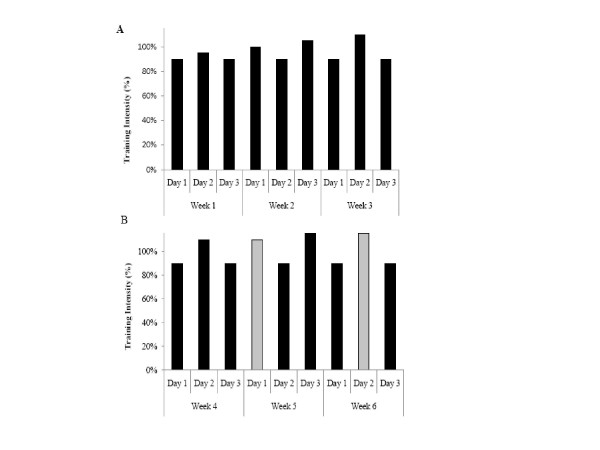
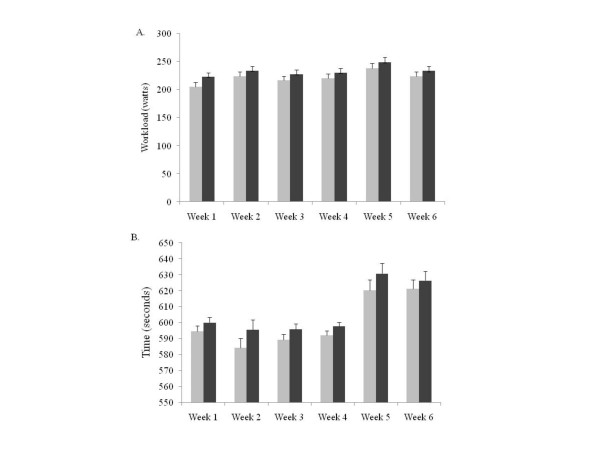
BACKGROUND: Intermittent bouts of high-intensity exercise result in diminished stores of energy substrates, followed by an accumulation of metabolites, promoting chronic physiological adaptations. In addition, beta-alanine has been accepted has an effective physiological hydrogen ion (H+) buffer. Concurrent high-intensity interval training (HIIT) and beta-alanine supplementation may result in greater adaptations than HIIT alone. The purpose of the current study was to evaluate the effects of combining beta-alanine supplementation with high-intensity interval training (HIIT) on endurance performance and aerobic metabolism in recreationally active college-aged men. METHODS: Forty-six men (Age: 22.2 +/- 2.7 yrs; Ht: 178.1 +/- 7.4 cm; Wt: 78.7 +/- 11.9; VO2peak: 3.3 +/- 0.59 l.min-1) were assessed for peak O2 utilization (VO2peak), time to fatigue (VO2TTE), ventilatory threshold (VT), and total work done at 110% of pre-training VO2peak (TWD). In a double-blind fashion, all subjects were randomly assigned into one either a placebo (PL - 16.5 g dextrose powder per packet; n = 18) or beta-alanine (BA - 1.5 g beta-alanine plus 15 g dextrose powder per packet; n = 18) group. All subjects supplemented four times per day (total of 6 g/day) for the first 21-days, followed by two times per day (3 g/day) for the subsequent 21 days, and engaged in a total of six weeks of HIIT training consisting of 5-6 bouts of a 2:1 minute cycling work to rest ratio. RESULTS: Significant improvements in VO2peak, VO2TTE, and TWD after three weeks of training were displayed (p < 0.05). Increases in VO2peak, VO2TTE, TWD and lean body mass were only significant for the BA group after the second three weeks of training. CONCLUSION: The use of HIIT to induce significant aerobic improvements is effective and efficient. Chronic BA supplementation may further enhance HIIT, improving endurance performance and lean body mass.
Overview
The claims and statistics of this paper haven’t been checked yet.
Free: it reads the open-access text and checks the first 5 claims that cite a source we can check. Create a free account to check every claim.
Integrity signals
Registry
Cites
Statistics
Figures
Verification
Claims the paper makes
The claims and statistics of this paper haven’t been checked yet.
Free: it reads the open-access text and checks the first 5 claims that cite a source we can check. Create a free account to check every claim.
Claims other papers make about this one
Each is checked against this paper’s own text: does it say what the citing paper says it does?
The cited source says what the claim attributes to it.
In the citing paper
“Other studies have shown that ß-alanine supplementation can increase the number of repetitions one can do [421], increase lean body mass [422], increase knee extension torque [423], and increase training volume [421].”
From ISSN exercise & sports nutrition review update: research & recommendations (2018) · cites this paper as [422]
Self-check
Percentages, sums and reported differences re-computed from the paper’s own numbers.
The self-check needs the paper’s full text.
Citations
Cites
The American Journal of Physiology
(1899) · The American Naturalist · doi:10.1086/277182 · Cited by 5,654
Skeletal muscle fatigue: cellular mechanisms
Allen, D. G., Lamb, G. D., & Westerblad, H. (2008) · Physiological Reviews · doi:10.1152/physrev.00015.2007 · Cited by 2,495
DENSITOMETRIC ANALYSIS OF BODY COMPOSITION: REVISION OF SOME QUANTITATIVE ASSUMPTIONS*
Brožek, J., Grande, F., Anderson, J. T., & Keys, A. (1963) · Annals of the New York Academy of Sciences · doi:10.1111/j.1749-6632.1963.tb17079.x · Cited by 1,531
Aerobic High-Intensity Intervals Improve V˙O2max More Than Moderate Training
HELGERUD, J., HØYDAL, K., WANG, E., KARLSEN, T., BERG, P., BJERKAAS, M., SIMONSEN, T., HELGESEN, C., HJORTH, N., BACH, R., et al. (2007) · Medicine & Science in Sports & Exercise · doi:10.1249/mss.0b013e3180304570 · Cited by 1,332
Biochemistry of exercise-induced metabolic acidosis
Robergs, R. A., Ghiasvand, F., & Parker, D. (2004) · American Journal of Physiology-Regulatory, Integrative and Comparative Physiology · doi:10.1152/ajpregu.00114.2004 · Cited by 1,304
Laursen, P. B., & Jenkins, D. G. (2002) · Sports Medicine · doi:10.2165/00007256-200232010-00003 · Cited by 1,011
Human muscle metabolism during intermittent maximal exercise
Gaitanos, G. C., Williams, C., Boobis, L. H., & Brooks, S. (1993) · Journal of Applied Physiology · doi:10.1152/jappl.1993.75.2.712 · Cited by 967
Rognmo, Ø., Hetland, E., Helgerud, J., Hoff, J., & Slørdahl, S. A. (2004) · European Journal of Cardiovascular Prevention & Rehabilitation · doi:10.1097/01.hjr.0000131677.96762.0c · Cited by 703
Harris, R. C., Tallon, M. J., Dunnett, M., Boobis, L., Coakley, J., Kim, H. J., Fallowfield, J. L., Hill, C. A., Sale, C., & Wise, J. A. (2006) · Amino Acids · doi:10.1007/s00726-006-0299-9 · Cited by 534 · cited 6×
“While carnosine is synthesized in the muscle from its two constituents, β-alanine and histidine [19], synthesis is limited by the availability of β-alanine [18,20].”
InfluentialThe maximally attainable V̇o2during exercise in humans: the peak vs. maximum issue
Day, J. R., Rossiter, H. B., Coats, E. M., Skasick, A., & Whipp, B. J. (2003) · Journal of Applied Physiology · doi:10.1152/japplphysiol.00024.2003 · Cited by 447
Hill, C. A., Harris, R. C., Kim, H. J., Harris, B. D., Sale, C., Boobis, L. H., Kim, C. K., & Wise, J. A. (2007) · Amino Acids · doi:10.1007/s00726-006-0364-4 · Cited by 445
Talanian, J. L., Galloway, S. D. R., Heigenhauser, G. J. F., Bonen, A., & Spriet, L. L. (2007) · Journal of Applied Physiology · doi:10.1152/japplphysiol.01098.2006 · Cited by 441
Abe, H. (2000) · PubMed · Cited by 353
Derave, W., Özdemir, M. S., Harris, R. C., Pottier, A., Reyngoudt, H., Koppo, K., Wise, J. A., & Achten, E. (2007) · Journal of Applied Physiology · doi:10.1152/japplphysiol.00397.2007 · Cited by 324
Muscle glycogenolysis and H+ concentration during maximal intermittent cycling.
Spriet, L. L., Lindinger, M. I., McKelvie, R. S., Heigenhauser, G. J., & Jones, N. L. (1989) · Journal of Applied Physiology · doi:10.1152/jappl.1989.66.1.8 · Cited by 294
Weston, A. R., Myburgh, K. H., Lindsay, F. H., Dennis, S. C., Noakes, T. D., & Hawley, J. A. (1996) · European Journal of Applied Physiology · doi:10.1007/s004210050119 · Cited by 281
Effect of high-intensity intermittent training on lactate and H+ release from human skeletal muscle
Juel, C., Klarskov, C., Nielsen, J. J., Krustrup, P., Mohr, M., & Bangsbo, J. (2004) · American Journal of Physiology-Endocrinology and Metabolism · doi:10.1152/ajpendo.00303.2003 · Cited by 245
A short training programme for the rapid improvement of both aerobic and anaerobic metabolism
Rodas, G., Ventura, J. L., Cadefau, J. A., Cussó, R., & Parra, J. (2000) · European Journal of Applied Physiology · doi:10.1007/s004210000223 · Cited by 235
Bicarbonate buffering of lactic acid generated during exercise
Beaver, W. L., Wasserman, K., & Whipp, B. J. (1986) · Journal of Applied Physiology · doi:10.1152/jappl.1986.60.2.472 · Cited by 219
The buffering of muscle in rigor; protein, phosphate and carnosine
Smith, E. C. B. (1938) · The Journal of Physiology · doi:10.1113/jphysiol.1938.sp003605 · Cited by 205
Harmer, A. R., McKenna, M. J., Sutton, J. R., Snow, R. J., Ruell, P. A., Booth, J., Thompson, M. W., Mackay, N. A., Stathis, C. G., Crameri, R. M., et al. (2000) · Journal of Applied Physiology · doi:10.1152/jappl.2000.89.5.1793 · Cited by 195
Nielsen, J. J., Mohr, M., Klarskov, C., Kristensen, M., Krustrup, P., Juel, C., & Bangsbo, J. (2004) · The Journal of Physiology · doi:10.1113/jphysiol.2003.050658 · Cited by 195
Acid-Base Balance during Repeated Bouts of Exercise: Influence of HCO3
Costill, D., Verstappen, F., Kuipers, H., Janssen, E., & Fink, W. (1984) · International Journal of Sports Medicine · doi:10.1055/s-2008-1025910 · Cited by 187
Stout, J. R., Cramer, J. T., Zoeller, R. F., Torok, D., Costa, P., Hoffman, J. R., Harris, R. C., & O’Kroy, J. (2007) · Amino Acids · doi:10.1007/s00726-006-0474-z · Cited by 186
Self-citationThe effects of training intensity on muscle buffer capacity in females
Edge, J., Bishop, D., & Goodman, C. (2006) · European Journal of Applied Physiology · doi:10.1007/s00421-005-0068-6 · Cited by 181
Kendrick, I. P., Harris, R. C., Kim, H. J., Kim, C. K., Dang, V. H., Lam, T. Q., Bui, T. T., Smith, M., & Wise, J. A. (2008) · Amino Acids · doi:10.1007/s00726-007-0008-3 · Cited by 163
A computer linear regression model to determine ventilatory anaerobic threshold
Orr, G. W., Green, H. J., Hughson, R. L., & Bennett, G. W. (1982) · Journal of Applied Physiology · doi:10.1152/jappl.1982.52.5.1349 · Cited by 160
Hoffman, J., Ratamess, N., Kang, J., Mangine, G., Faigenbaum, A., & Stout, J. (2006) · International Journal of Sport Nutrition and Exercise Metabolism · doi:10.1123/ijsnem.16.4.430 · Cited by 151
Self-citationMessonnier, L., Kristensen, M., Juel, C., & Denis, C. (2007) · Journal of Applied Physiology · doi:10.1152/japplphysiol.00691.2006 · Cited by 150
Krustrup, P., Hellsten, Y., & Bangsbo, J. (2004) · The Journal of Physiology · doi:10.1113/jphysiol.2004.062232 · Cited by 139
Regulation of pH in human skeletal muscle: adaptations to physical activity
Juel, C. (2008) · Acta Physiologica · doi:10.1111/j.1748-1716.2008.01840.x · Cited by 135
Hoffman, J. R., Ratamess, N. A., Faigenbaum, A. D., Ross, R., Kang, J., Stout, J. R., & Wise, J. A. (2008) · Nutrition Research · doi:10.1016/j.nutres.2007.11.004 · Cited by 135 · cited 1×
“[53,54] reported significantly higher training volume for athletes consuming β-alanine during resistance training sessions, which they hypothesized lead to significant increases in lean body mass.”
Self-citationInfluence of Continuous and Interval Training on Oxygen Uptake On-Kinetics
BERGER, N. J. A., TOLFREY, K., WILLIAMS, A. G., & JONES, A. M. (2006) · Medicine & Science in Sports & Exercise · doi:10.1249/01.mss.0000191418.37709.81 · Cited by 126
Suzuki, Y., Ito, O., Mukai, N., Takahashi, H., & Takamatsu, K. (2002) · The Japanese Journal of Physiology · doi:10.2170/jjphysiol.52.199 · Cited by 119
Zoeller, R. F., Stout, J. R., OʼKroy, J. A., Torok, D. J., & Mielke, M. M. (2006) · Amino Acids · doi:10.1007/s00726-006-0399-6 · Cited by 113
Self-citationEffects of Physical Training on the Metabolism of Skeletal Muscle
Henriksson, J. (1992) · Diabetes Care · doi:10.2337/diacare.15.11.1701 · Cited by 112
STOUT, J. R., CRAMER, J. T., MIELKE, M., OʼKROY, J., TOROK, D. J., & ZOELLER, R. F. (2006) · Journal of Strength and Conditioning Research · doi:10.1519/00124278-200611000-00033 · Cited by 108
Self-citationEffects of chronic bicarbonate ingestion on the performance of high-intensity work
McNaughton, L., Backx, K., Palmer, G., & Strange, N. (1999) · European Journal of Applied Physiology and Occupational Physiology · doi:10.1007/s004210050600 · Cited by 103
The effects of continuous and interval training in women and men
Eddy, D. O., Sparks, K., & Adelizi, D. A. (1977) · European Journal of Applied Physiology · doi:10.1007/bf00421694 · Cited by 74
Control of muscle protein kinetics by acid-base balance
Caso, G., & Garlick, P. J. (2005) · Current Opinion in Clinical Nutrition and Metabolic Care · doi:10.1097/00075197-200501000-00011 · Cited by 69
Plasma glucose kinetics during exercise in subjects with high and low lactate thresholds
Coggan, A. R., Kohrt, W. M., Spina, R. J., Kirwan, J. P., Bier, D. M., & Holloszy, J. O. (1992) · Journal of Applied Physiology · doi:10.1152/jappl.1992.73.5.1873 · Cited by 66
Transport of β‐alanine and biosynthesis of carnosine by skeletal muscle cells in primary culture
Bakardjiev, A., & Bauer, K. (1994) · European Journal of Biochemistry · doi:10.1111/j.1432-1033.1994.00617.x · Cited by 65
Carnosine and Anserine Ingestion Enhances Contribution of Nonbicarbonate Buffering
SUZUKI, Y., NAKAO, T., MAEMURA, H., SATO, M., KAMAHARA, K., MORIMATSU, F., & TAKAMATSU, K. (2006) · Medicine & Science in Sports & Exercise · doi:10.1249/01.mss.0000185108.63028.04 · Cited by 63
Dunnett, M., Harris, R. C., Soliman, M. Z., & Suwar, A. A. S. (1997) · Research in Veterinary Science · doi:10.1016/s0034-5288(97)90192-2 · Cited by 62
Comparison of effects of two interval-training programmes on lactate and ventilatory thresholds.
Burke, J., Thayer, R., & Belcamino, M. (1994) · British Journal of Sports Medicine · doi:10.1136/bjsm.28.1.18 · Cited by 62
Nordsborg, N., Bangsbo, J., & Pilegaard, H. (2003) · Journal of Applied Physiology · doi:10.1152/japplphysiol.00257.2003 · Cited by 55
Physiological Responses to Interval Training Sessions at Velocities Associated With &Vdot;o2max
Rozenek, R., Funato, K., Kubo, J., Hoshikawa, M., & Matsuo, A. (2007) · The Journal of Strength and Conditioning Research · doi:10.1519/r-19325.1 · Cited by 53
The effects of buffer ingestion on metabolic factors related to distance running performance
Potteiger, J. A., Webster, M. J., Nickel, G. L., Haub, M. D., & Palmer, R. J. (1996) · European Journal of Applied Physiology · doi:10.1007/bf00599698 · Cited by 52
Harris, J. E., Fernandez‐Vilaseca, M., Elkington, P. T. G., Horncastle, D. E., Graeber, M. B., & Friedland, J. S. (2007) · The FASEB Journal · doi:10.1096/fj.06-6925com · Cited by 50
Effects of high-intensity interval training on the response during severe exercise
Duffield, R., Edge, J., & Bishop, D. J. (2006) · Journal of science and medicine in sport · doi:10.1016/j.jsams.2006.03.014 · Cited by 48
Effects of different running programs on VO2 max, percent fat, and plasma lipids.
Thomas, T. R., Adeniran, S. B., & Etheridge, G. L. (1984) · PubMed · Cited by 46
Demarle, A., Heugas, A. M., SLAWINSKI, J. S., Tricot, V., Koralsztein, J. P., & Billat, V. L. (2003) · Archives of Physiology and Biochemistry · doi:10.1076/apab.111.2.167.14003 · Cited by 42
Periodization Essentials and Innovations in Resistance Training Protocols
Brown, L. E., & Greenwood, M. (2005) · Strength and Conditioning Journal · doi:10.1519/00126548-200508000-00014 · Cited by 40
The Effect of an Aerobic Interval Training Program on Intermittent Anaerobic Performance
Gaiga, M. C., & Docherty, D. (1995) · Canadian Journal of Applied Physiology · doi:10.1139/h95-036 · Cited by 35
Influence of acidosis on protein metabolism.
Ballmer, P. E., & Imoberdorf, R. (1995) · PubMed · Cited by 22
Kristensen, M. (2004) · The Journal of Physiology · Cited by 15
Kim, H. J., Kim, C., Lee, Y., Harris, R., Sale, C., Harris, D. B., & Wise, J. (2006) · Nottingham Trent University's Institutional Repository (Nottingham Trent Repository) · Cited by 3
Kristensen, M. (2007) · Journal of Applied Physiology · Cited by 2
Harris, R. C., Edge, J., Kendrick, I. P., Bishop, D. J., Goodman, C., & Wise, J. A. (2007) · The FASEB Journal · doi:10.1096/fasebj.21.6.a944 · Cited by 1
Cited by
ISSN exercise & sports nutrition review update: research & recommendations
Kerksick, C. M., Wilborn, C. D., Roberts, M. D., Smith-Ryan, A., Kleiner, S. M., Jäger, R., Collins, R., Cooke, M., Davis, J. N., Galvan, E., et al. (2018) · Journal of the International Society of Sports Nutrition · doi:10.1186/s12970-018-0242-y · Cited by 945
“tation can increase the number of repetitions one can do [421], increase lean body mass [422], increase knee extension torque [423], and increase training volume [421].”
BackgroundISSN exercise & sport nutrition review: research & recommendations
Kreider, R. B., Wilborn, C. D., Taylor, L., Campbell, B., Almada, A. L., Collins, R., Cooke, M., Earnest, C. P., Greenwood, M., Kalman, D. S., et al. (2010) · Journal of the International Society of Sports Nutrition · doi:10.1186/1550-2783-7-7 · Cited by 428
“There are other studies that show no performance benefits [425,429]”
BackgroundResultEffects of β-alanine supplementation on exercise performance: a meta-analysis
Hobson, R. M., Saunders, B., Ball, G., Harris, R. C., & Sale, C. (2012) · Amino Acids · doi:10.1007/s00726-011-1200-z · Cited by 303
“…hang C 2 Footballers 90 flexed-arm hang C 1 Sale et al. 2011 Cycle capacity at 110% Powermax Total work done C 2 Cycle time to exhaustion C 2 Smith et al. 2009a (3w) Cycle capacity at 110% VO2peak Total work done C 3 Cycle time to exhaustion C 3 VO2peak C 3 Ventilatory threshold 3 Smith et…”
BackgroundMethodInfluentialInternational society of sports nutrition position stand: Beta-Alanine
Trexler, E. T., Smith-Ryan, A. E., Stout, J. R., Hoffman, J. R., Wilborn, C. D., Sale, C., Kreider, R. B., Jäger, R., Earnest, C. P., Bannock, L., et al. (2015) · Journal of the International Society of Sports Nutrition · doi:10.1186/s12970-015-0090-y · Cited by 315
“[59] demonstrated larger improvements in TTE in a graded exercise test with beta-alanine supplementation compared to placebo.”
BackgroundSelf-citationVO2max Trainability and High Intensity Interval Training in Humans: A Meta-Analysis
Bacon, A. P., Carter, R. E., Ogle, E. A., & Joyner, M. J. (2013) · PLoS ONE · doi:10.1371/journal.pone.0073182 · Cited by 311
Metadata
- Authors
- Smith, A. E., Walter, A. A., Graef, J. L., Kendall, K. L., Moon, J. R., Lockwood, C. M., Fukuda, D. H., Beck, T. W., Cramer, J. T., & Stout, J. R.
- Affiliations
- Metabolic and Body Composition Laboratory, Department of Health and Exercise ScienceUniversity of Oklahoma 73019 Norman OK USA
- University of Oklahoma (US)
- Corresponding author
- Stout, Jeffrey R
- Venue
- Journal of the International Society of Sports Nutrition
- Publisher
- Informa UK Limited
- Published
- 2009-01-06
- Volume
- 6
- Issue
- 1
- Pages
- 5-5
- ISSN
- 1550-2783 (ISSN-L)
- PMC
- PMC2649036
- OpenAlex
- W2158014084
- Cited by
- 123
- References
- 58
- Citations by year
- 2026: 2 · 2025: 2 · 2024: 4 · 2023: 4 · 2022: 5 · 2021: 8 · 2020: 6 · 2019: 8 · 2018: 8 · 2017: 3 · 2016: 5 · 2015: 17 · 2014: 17 · 2013: 14 · 2012: 7
- FWCI
- 4.42
- Type
- journal article
- Language
- en
- Open access
- gold
- doi.org
- Licence
- Locations
- Journal of the International Society of Sports Nutrition (publishedVersion, cc-by)
- PubMed Central (publishedVersion, cc-by)
- PubMed (publishedVersion)
- Lincoln (University of Nebraska) (submittedVersion)
- DOAJ (DOAJ: Directory of Open Access Journals) (submittedVersion)
- KU ScholarWorks (University of Kansas) (submittedVersion, cc-by)
- Topics
- Health Sciences › Medicine › Physiology (medical) › Biochemical effects in animals
- Health Sciences › Medicine › Physiology (medical) › Cardiovascular and exercise physiology
- Health Sciences › Nursing › Nutrition and Dietetics › Muscle metabolism and nutrition
- Keywords
- beta-alanine supplementation, high-intensity interval training, endurance performance, cardiorespiratory fitness, peak oxygen uptake, ventilatory threshold, time to exhaustion, lean body mass, hydrogen ion buffering, cycling, recreational athletes, men
About these checks
Registry, retraction, Cites and statistics results are computed, not judged, with one exception: a printed reference that no index lists is read once by a model before it counts as a citation error. Claims are extracted by a model and kept only when their quote appears verbatim in the text; each cited source is then checked, with a model’s help, for whether it says what the claim relies on. Those verdicts can be wrong — read the claim’s quote and the cited source before relying on one.
Statistics and arithmetic are recomputed, not judged.
Confidence bands are shown only for fields calibrated on our annotated test set. None is calibrated yet, so no band is shown.
What counts as a claim ›How we measure confidence ›How we check this ›
Are you an author, or do you see a problem with this page? Request a review
Data sources
Bibliographic data: Semantic Scholar, OpenAlex, Crossref.
Contains information from the Semantic Scholar Academic Graph Datasets, made available under the ODC Attribution License (ODC-BY 1.0).
Semantic Scholar’s data is described in: Kinney, R., et al. (2023). The Semantic Scholar Open Data Platform. arXiv:2301.10140.
