

Efficacy of phosphatidic acid ingestion on lean body mass, muscle thickness and strength gains in resistance-trained men
Open accessThe DOI matches its Crossref record; 34 of the 34 references it cites were found in a registry or an index.
Abstract
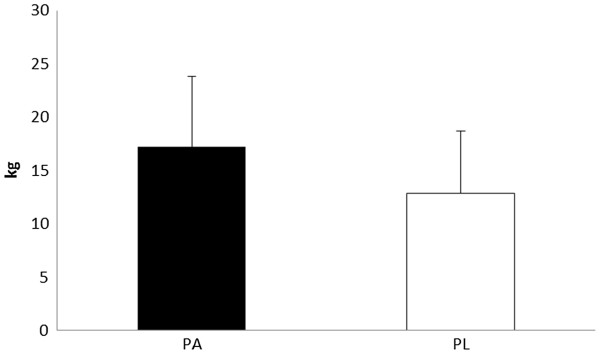
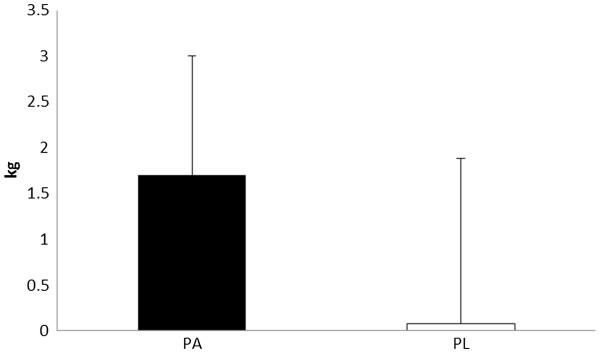
BACKGROUND: Phosphatidic acid (PA) has been reported to activate the mammalian target of rapamycin (mTOR) signaling pathway and is thought to enhance the anabolic effects of resistance training. The purpose of this pilot study was to examine if oral phosphatidic acid administration can enhance strength, muscle thickness and lean tissue accruement during an 8-week resistance training program. METHODS: Sixteen resistance-trained men were randomly assigned to a group that either consumed 750 mg of PA (n = 7, 23.1 ± 4.4 y; 176.7 ± 6.7 cm; 86.5 ± 21.2 kg) or a placebo (PL, n = 9, 22.5 ± 2.0 y; 179.8 ± 5.4 cm; 89.4 ± 13.6 kg) group. During each testing session subjects were assessed for strength (one repetition maximum [1-RM] bench press and squat) and body composition. Muscle thickness and pennation angle were also measured in the vastus lateralis of the subject's dominant leg. RESULTS: Subjects ingesting PA demonstrated a 12.7% increase in squat strength and a 2.6% increase in LBM, while subjects consuming PL showed a 9.3% improvement in squat strength and a 0.1% change in LBM. Although parametric analysis was unable to demonstrate significant differences, magnitude based inferences indicated that the Δ change in 1-RM squat showed a likely benefit from PA on increasing lower body strength and a very likely benefit for increasing lean body mass (LBM). CONCLUSIONS: Results of this study suggest that a combination of a daily 750 mg PA ingestion, combined with a 4-day per week resistance training program for 8-weeks appears to have a likely benefit on strength improvement, and a very likely benefit on lean tissue accruement in young, resistance trained individuals.
Overview
The claims and statistics of this paper haven’t been checked yet.
Free: it reads the open-access text and checks the first 5 claims that cite a source we can check. Create a free account to check every claim.
Integrity signals
Registry
Cites
Statistics
Figures
Verification
Claims the paper makes
The claims and statistics of this paper haven’t been checked yet.
Free: it reads the open-access text and checks the first 5 claims that cite a source we can check. Create a free account to check every claim.
Claims other papers make about this one
Each is checked against this paper’s own text: does it say what the citing paper says it does?
The cited source doesn’t support the claim as written.
In the citing paper
“the fact that PA has also been reported to have no effect on resistance training [183]”
From New strategies in sport nutrition to increase exercise performance (2016) · cites this paper as [183]
Checked by a reasoning model — may be wrong.
Experimental — accuracy not yet measuredThe cited source says what the claim attributes to it.
In the citing paper
“Hoffman et al. [261] reported that PA supplementation increased whole-body lean body mass (LBM) by 1.7 kg, whereas the placebo group demonstrated no relative change in LBM (0.1 kg; p = 0.065 between groups).”
From ISSN exercise & sports nutrition review update: research & recommendations (2018) · cites this paper as [261]
The cited source says what the claim attributes to it.
In the citing paper
“and a 2.6% increase in LBM in the PA group”
From New strategies in sport nutrition to increase exercise performance (2016) · cites this paper as [183]
The cited source says what the claim attributes to it.
In the citing paper
“and a 0.1% change in LBM in the placebo group.”
From New strategies in sport nutrition to increase exercise performance (2016) · cites this paper as [183]
In the citing paper
“compared to a 9.3% improvement in squat strength”
From New strategies in sport nutrition to increase exercise performance (2016) · cites this paper as [183]
1 more claim about this paper
Create a free account to see every claim other papers make about this one.
Self-check
Percentages, sums and reported differences re-computed from the paper’s own numbers.
The self-check needs the paper’s full text.
Citations
Cites
Progressive Statistics for Studies in Sports Medicine and Exercise Science
HOPKINS, W. G., MARSHALL, S. W., BATTERHAM, A. M., & HANIN, J. (2009) · Medicine & Science in Sports & Exercise · doi:10.1249/mss.0b013e31818cb278 · Cited by 9,128
Making Meaningful Inferences About Magnitudes
Batterham, A. M., & Hopkins, W. G. (2006) · International Journal of Sports Physiology and Performance · doi:10.1123/ijspp.1.1.50 · Cited by 2,183 · cited 2×
“To make inferences on true effects of PA on strength and body composition, a published spreadsheet using the unequal variances t-statistic was used [19].”
BackgroundMethodPhosphatidic Acid-Mediated Mitogenic Activation of mTOR Signaling
Fang, Y., Vilella-Bach, M., Bachmann, R., Flanigan, A., & Chen, J. (2001) · Science · doi:10.1126/science.1066015 · Cited by 1,055 · cited 2×
“One of the signaling proteins that PA has been suggested to stimulate is mammalian target of rapamycin (mTOR) [8,9], a serine threonine kinase that integrates metabolic signals from various factors including protein metabolism and cytoskeleton organization that controls cell growth [10].”
BackgroundUsing SPSS for Windows: Analyzing and Understanding Data
Green, S. B., Salkind, N. J., & Jones, T. M. (1997) · Medical Entomology and Zoology · Cited by 810
Biolo, G., Maggi, S. P., Williams, B. D., Tipton, K. D., & Wolfe, R. R. (1995) · American Journal of Physiology-Endocrinology and Metabolism · doi:10.1152/ajpendo.1995.268.3.e514 · Cited by 713 · cited 1×
“The mechanical stimulus of resistance training has been demonstrated to be a potent stimulus for increasing protein synthesis [23,24].”
BackgroundREGULATION OF EUKARYOTIC PHOSPHATIDYLINOSITOL-SPECIFIC PHOSPHOLIPASE C AND PHOSPHOLIPASE D
Singer, W. D., Brown, H. A., & Sternweis, P. C. (1997) · Annual Review of Biochemistry · doi:10.1146/annurev.biochem.66.1.475 · Cited by 401
McDermott, M., Wakelam, M. J. O., & Morris, A. J. (2004) · Biochemistry and Cell Biology · doi:10.1139/o03-079 · Cited by 333
Churchward‐Venne, T. A., Burd, N. A., Mitchell, C. J., West, D. W. D., Philp, A., Marcotte, G. R., Baker, S. K., Baar, K., & Phillips, S. M. (2012) · The Journal of Physiology · doi:10.1113/jphysiol.2012.228833 · Cited by 314 · cited 1×
“Recent evidence has suggested that leucine, even in low dosages, may be very effective in stimulating muscle protein synthesis [26].”
BackgroundHornberger, T. A., Chu, W. K., Mak, Y. W., Hsiung, J. W., Huang, S. A., & Chien, S. (2006) · Proceedings of the National Academy of Sciences · doi:10.1073/pnas.0600678103 · Cited by 312
Training-Specific Muscle Architecture Adaptation after 5-wk Training in Athletes
BLAZEVICH, A. J., GILL, N. D., BRONKS, R., & NEWTON, R. U. (2003) · Medicine & Science in Sports & Exercise · doi:10.1249/01.mss.0000099092.83611.20 · Cited by 278 · cited 2×
“The lack of any significant changes in pennation angle for either group may also be related to resistance training experience, as experience does appear to impact the magnitude of change in pennation angle [31].”
BackgroundResultMaximum Strength-Power-Performance Relationships in Collegiate Throwers
STONE, M. H., SANBORN, K., OʼBRYANT, H. S., HARTMAN, M., STONE, M. E., PROULX, C., WARD, B., & HRUBY, J. (2003) · Journal of Strength and Conditioning Research · doi:10.1519/00124278-200311000-00019 · Cited by 254
Self-citationExercise, Protein Metabolism, and Muscle Growth
Tipton, K. D., & Wolfe, R. R. (2001) · International Journal of Sport Nutrition and Exercise Metabolism · doi:10.1123/ijsnem.11.1.109 · Cited by 253 · cited 1×
“If protein or essential amino acids are ingested either before or following a workout, the effect on muscle protein synthesis appears to be magnified [25].”
BackgroundO’Neil, T. K., Duffy, L. R., Frey, J. W., & Hornberger, T. A. (2009) · The Journal of Physiology · doi:10.1113/jphysiol.2009.173609 · Cited by 227
Norms for fitness, performance, and health
(2007) · Choice Reviews Online · doi:10.5860/choice.45-0859 · Cited by 214
Relationship Between Sprint Performance and Muscle Fascicle Length in Female Sprinters.
Abe, T., Fukashiro, S., Harada, Y., & Kawamoto, K. (2001) · Journal of PHYSIOLOGICAL ANTHROPOLOGY and Applied Human Science · doi:10.2114/jpa.20.141 · Cited by 177 · cited 1×
“Pennation angle was determined by the angle between the deep aponeurosis and the fascicles [17].”
BackgroundThe role of phosphatidic acid in the regulation of the Ras/MEK/Erk signaling cascade
Andresen, B. T., Rizzo, M. A., Shome, K., & Romero, G. (2002) · FEBS Letters · doi:10.1016/s0014-5793(02)03483-x · Cited by 168 · cited 1×
“Phosphatidic acid (PA) or 1,2-diacyl-sn-glycero-3-phosphate is a phospholipid that makes up a small percentage of the total phospholipid pool [3-5].”
BackgroundThe effect of ultrasound probe orientation on muscle architecture measurement
Klimstra, M. D., Dowling, J. J., Durkin, J. L., & MacDonald, M. J. (2006) · Journal of Electromyography and Kinesiology · doi:10.1016/j.jelekin.2006.04.011 · Cited by 167 · cited 1×
“Images were obtained, as previously described [16], by the same technician for all tests using longitudinal probe positioning.”
MethodLim, H.-K., Choi, Y.-A., Park, W., Lee, T., Ryu, S. H., Kim, S.-Y., Kim, J.-R., Kim, J.-H., & Baek, S.-H. (2003) · Journal of Biological Chemistry · doi:10.1074/jbc.m303789200 · Cited by 143
Key factors in mTOR regulation
Bai, X., & Jiang, Y. (2009) · Cellular and Molecular Life Sciences · doi:10.1007/s00018-009-0163-7 · Cited by 138 · cited 1×
“One of the signaling proteins that PA has been suggested to stimulate is mammalian target of rapamycin (mTOR) [8,9], a serine threonine kinase that integrates metabolic signals from various factors including protein metabolism and cytoskeleton organization that controls cell growth [10].”
BackgroundEarp, J. E., Kraemer, W. J., Newton, R. U., Comstock, B. A., Fragala, M. S., Dunn‐Lewis, C., Solomon-Hill, G., Penwell, Z. R., Powell, M. D., Volek, J. S., et al. (2010) · The Journal of Strength and Conditioning Research · doi:10.1519/jsc.0b013e3181d32c04 · Cited by 113
Self-citationLehman, N., Ledford, B., Fulvio, M. D., Frondorf, K., McPhail, L. C., & Gomez-Cambronero, J. (2007) · The FASEB Journal · doi:10.1096/fj.06-6652com · Cited by 106 · cited 1×
“Interestingly, the binding of PA to S6 kinase may occur independently of mTOR [12], suggesting that PA may augment the signaling response when mTOR is activated by exercise.”
BackgroundStrength, Speed and Endurance Changes During the Course of a Division I Basketball Season
Hoffman, J. R., Fry, A. C., Howard, R., Maresh, C. M., & Kraemer, W. J. (1991) · Journal of Strength and Conditioning Research · doi:10.1519/00124278-199108000-00006 · Cited by 101
Self-citationOvertraining: A Review of the Signs, Symptoms and Possible Causes
Stone, M. H., Keith, R. E., Kearney, J. T., Fleck, S. J., Wilson, G., & Triplett, N. T. (1991) · The Journal of Strength and Conditioning Research · Cited by 94
Phospholipids and sports performance
Jäger, R., Purpura, M., & Kingsley, M. (2007) · Journal of the International Society of Sports Nutrition · doi:10.1186/1550-2783-4-5 · Cited by 89
Self-citationPhosphatidic acid mediates activation of mTORC1 through the ERK signaling pathway
Winter, J. N., Fox, T. E., Kester, M., Jefferson, L. S., & Kimball, S. R. (2010) · American Journal of Physiology-Cell Physiology · doi:10.1152/ajpcell.00039.2010 · Cited by 82 · cited 1×
“Since PA is thought to act on a parallel pathway to a protein stimulus (specifically leucine) on activating the mTOR pathway [8,27], the greater benefit towards increases in lower body strength and lean body mass in PA suggests that the ingestion of this supplement may enhance lean tissue accruement and lower body str…”
BackgroundHoffman, J. R., Kraemer, W. J., Fry, A. C., Deschenes, M., & Kemp, M. (1990) · Journal of Strength and Conditioning Research · doi:10.1519/00124278-199008000-00003 · Cited by 64
Self-citationSanttila, M., Kyröläinen, H., & Häkkinen, K. (2009) · The Journal of Strength and Conditioning Research · doi:10.1519/jsc.0b013e3181a884bc · Cited by 63 · cited 1×
“The results observed in vastus lateralis thickness are similar to those reported by Blazevich and colleagues [31] following 5-weeks of training in competitive athletes, but greater than those reported by Santilla and colleagues [32] following 8-weeks of training in tactical athletes.”
ResultA Review: The Effects of Combined Strength and Endurance Training on Strength Development
Chromiak, J. A., & Mulvaney, D. R. (1990) · The Journal of Strength and Conditioning Research · doi:10.1519/1533-4287(1990)004<0047:rbrasp>2.3.co;2 · Cited by 47
Macronutrient intake and whole body protein metabolism following resistance exercise
ROY, B. D., FOWLES, J. R., HILL, R., & TARNOPOLSKY, M. A. (2000) · Medicine & Science in Sports & Exercise · doi:10.1097/00005768-200008000-00009 · Cited by 46 · cited 1×
“The mechanical stimulus of resistance training has been demonstrated to be a potent stimulus for increasing protein synthesis [23,24].”
BackgroundMiletello, W. M., Beam, J. R., & Zachary, C. (2009) · The Journal of Strength and Conditioning Research · doi:10.1519/jsc.0b013e3181a3c6ef · Cited by 41 · cited 1×
“Considering the skill and technique necessary for performing the squat exercise, many competitive and recreational resistance trained athletes do not perform this exercise correctly [30].”
BackgroundPhospholipids as dynamic participants in biological processes
Hanahan, D. J., & Nelson, D. R. (1984) · Journal of Lipid Research · doi:10.1016/s0022-2275(20)34428-x · Cited by 38
Activation of mTOR signaling by novel fluoromethylene phosphonate analogues of phosphatidic acid
Xu, Y., Fang, Y., Chen, J., & Prestwich, G. D. (2004) · Bioorganic & Medicinal Chemistry Letters · doi:10.1016/j.bmcl.2004.01.020 · Cited by 28 · cited 2×
“; licensee BioMed Centr Commons Attribution License (http://creativec reproduction in any medium, provided the or several kinases and phosphatases [3,6,7].”
BackgroundKoopman, R. (2007) · International Journal of Sport Nutrition and Exercise Metabolism · doi:10.1123/ijsnem.17.s1.s47 · Cited by 13 · cited 1×
“One of the signaling proteins that PA has been suggested to stimulate is mammalian target of rapamycin (mTOR) [8,9], a serine threonine kinase that integrates metabolic signals from various factors including protein metabolism and cytoskeleton organization that controls cell growth [10].”
BackgroundRasmussen, B. B. (2009) · The Journal of Physiology · doi:10.1113/jphysiol.2009.176453 · Cited by 7
Research works printed but not linked: 1
- Hoffman JR Wendell M Cooper J Kang J Comparison between linear and nonlinear inseason training programs in freshman football players J Strength Cond Res 2003 17 561 565 12930187
Cited by
ISSN exercise & sports nutrition review update: research & recommendations
Kerksick, C. M., Wilborn, C. D., Roberts, M. D., Smith-Ryan, A., Kleiner, S. M., Jäger, R., Collins, R., Cooke, M., Davis, J. N., Galvan, E., et al. (2018) · Journal of the International Society of Sports Nutrition · doi:10.1186/s12970-018-0242-y · Cited by 945
“[261] reported that PA supplementation increased whole-body lean body mass (LBM) by 1.”
BackgroundSelf-citationNew strategies in sport nutrition to increase exercise performance
Close, G. L., Hamilton, D. L., Philp, A., Burke, L. M., & Morton, J. P. (2016) · Free Radical Biology and Medicine · doi:10.1016/j.freeradbiomed.2016.01.016 · Cited by 221
“Recently, Hoffman et al. (2012) examined whether the oral ingestion (750mg/day) of a commercially available PA supplement (MediatorTM: Chemi Nutra, USA) could enhance adaptation to an 8-week resistance-training program [183].”
BackgroundResultInfluentialSkeletal muscle homeostasis and plasticity in youth and ageing: impact of nutrition and exercise
Brook, M. S., Wilkinson, D. J., Phillips, B. E., Perez‐Schindler, J., Philp, A., Smith, K., & Atherton, P. J. (2016) · Acta Physiologica · doi:10.1111/apha.12532 · Cited by 191
“…and the discovery of a number of potential novel targeted pharmaconutrients [ursolic acid (UA), HMB, PA, etc. (Vukovich et al. 2001, Kunkel et al. 2011, Hoffman et al. 2012)], RE with appropriate supportive nutrition remains the current most effective and safe means by which to © 2015 The Authors.”
BackgroundAlhajj, M. J., Montero, N., Yarce, C. J., & Salamanca, C. H. (2020) · Cosmetics · doi:10.3390/cosmetics7040087 · Cited by 109
Supplements with purported effects on muscle mass and strength
Valenzuela, P. L., Morales, J. S., Emanuele, E., Pareja-Galeano, H., & Lucia, A. (2019) · European Journal of Nutrition · doi:10.1007/s00394-018-1882-z · Cited by 92
Metadata
- Authors
- Hoffman, J. R., Stout, J. R., Williams, D. R., Wells, A. J., Fragala, M. S., Mangine, G. T., Gonzalez, A. M., Emerson, N. S., McCormack, W. P., Scanlon, T. C., Purpura, M., & Jäger, R.
- Affiliations
- University of Central Florida (US)
- Increnovo LLC (United States) (US)
- Corresponding author
- Hoffman, Jay R
- ORCID
- Venue
- Journal of the International Society of Sports Nutrition
- Publisher
- Informa UK Limited
- Published
- 2012-02-06
- Volume
- 9
- Issue
- 1
- Pages
- 47-47
- ISSN
- 1550-2783 (ISSN-L)
- PMC
- PMC3506449
- OpenAlex
- W2133261837
- Cited by
- 43
- References
- 33
- Citations by year
- 2026: 1 · 2025: 1 · 2024: 3 · 2023: 2 · 2022: 2 · 2021: 2 · 2020: 5 · 2019: 2 · 2018: 7 · 2017: 4 · 2016: 7 · 2015: 4 · 2014: 3
- FWCI
- 1.06
- Type
- journal article
- Language
- en
- Open access
- gold
- doi.org
- Licence
- Locations
- Journal of the International Society of Sports Nutrition (publishedVersion, cc-by)
- Europe PMC (PubMed Central) (publishedVersion, cc-by)
- PubMed Central (publishedVersion, cc-by)
- PubMed (publishedVersion)
- Journal of International Crisis and Risk Communication Research (submittedVersion)
- DOAJ (DOAJ: Directory of Open Access Journals) (submittedVersion, cc-by-sa)
- Topics
- Health Sciences › Nursing › Nutrition and Dietetics › Muscle metabolism and nutrition
- Health Sciences › Medicine › Orthopedics and Sports Medicine › Sports Performance and Training
- Life Sciences › Biochemistry, Genetics and Molecular Biology › Molecular Biology › Muscle Physiology and Disorders
- Keywords
- phosphatidic acid, resistance training, lean body mass, muscle thickness, muscle strength, mTOR signaling, squat strength, one-repetition maximum, body composition, resistance-trained men
About these checks
Registry, retraction, Cites and statistics results are computed, not judged, with one exception: a printed reference that no index lists is read once by a model before it counts as a citation error. Claims are extracted by a model and kept only when their quote appears verbatim in the text; each cited source is then checked, with a model’s help, for whether it says what the claim relies on. Those verdicts can be wrong — read the claim’s quote and the cited source before relying on one.
Statistics and arithmetic are recomputed, not judged.
Confidence bands are shown only for fields calibrated on our annotated test set. None is calibrated yet, so no band is shown.
What counts as a claim ›How we measure confidence ›How we check this ›
Are you an author, or do you see a problem with this page? Request a review
Data sources
Bibliographic data: Semantic Scholar, OpenAlex, Crossref.
Contains information from the Semantic Scholar Academic Graph Datasets, made available under the ODC Attribution License (ODC-BY 1.0).
Semantic Scholar’s data is described in: Kinney, R., et al. (2023). The Semantic Scholar Open Data Platform. arXiv:2301.10140.
