

Efficacy of phosphatidic acid ingestion on lean body mass, muscle thickness and strength gains in resistance-trained men
Open accessThe DOI matches its Crossref record; 34 of the 34 references it cites were found in a registry or an index.
Abstract
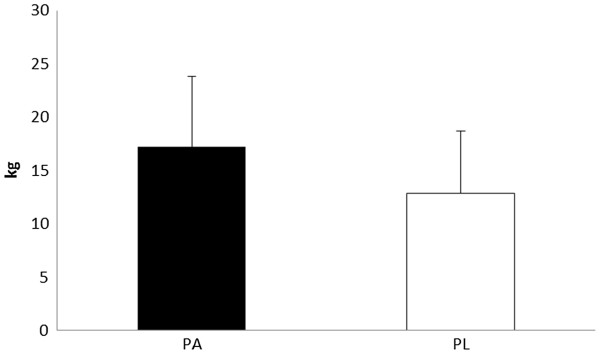
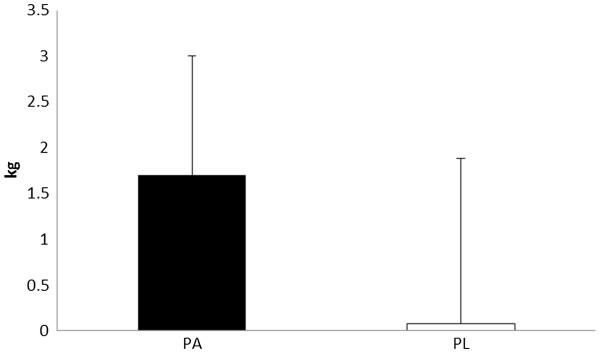
BACKGROUND: Phosphatidic acid (PA) has been reported to activate the mammalian target of rapamycin (mTOR) signaling pathway and is thought to enhance the anabolic effects of resistance training. The purpose of this pilot study was to examine if oral phosphatidic acid administration can enhance strength, muscle thickness and lean tissue accruement during an 8-week resistance training program. METHODS: Sixteen resistance-trained men were randomly assigned to a group that either consumed 750 mg of PA (n = 7, 23.1 ± 4.4 y; 176.7 ± 6.7 cm; 86.5 ± 21.2 kg) or a placebo (PL, n = 9, 22.5 ± 2.0 y; 179.8 ± 5.4 cm; 89.4 ± 13.6 kg) group. During each testing session subjects were assessed for strength (one repetition maximum [1-RM] bench press and squat) and body composition. Muscle thickness and pennation angle were also measured in the vastus lateralis of the subject's dominant leg. RESULTS: Subjects ingesting PA demonstrated a 12.7% increase in squat strength and a 2.6% increase in LBM, while subjects consuming PL showed a 9.3% improvement in squat strength and a 0.1% change in LBM. Although parametric analysis was unable to demonstrate significant differences, magnitude based inferences indicated that the Δ change in 1-RM squat showed a likely benefit from PA on increasing lower body strength and a very likely benefit for increasing lean body mass (LBM). CONCLUSIONS: Results of this study suggest that a combination of a daily 750 mg PA ingestion, combined with a 4-day per week resistance training program for 8-weeks appears to have a likely benefit on strength improvement, and a very likely benefit on lean tissue accruement in young, resistance trained individuals.
Overview
The claims and statistics of this paper haven’t been checked yet.
Free: it reads the open-access text and checks the first 5 claims that cite a source we can check. Create a free account to check every claim.
Integrity signals
Registry
Cites
Statistics
Figures
Verification
Claims the paper makes
The claims and statistics of this paper haven’t been checked yet.
Free: it reads the open-access text and checks the first 5 claims that cite a source we can check. Create a free account to check every claim.
Claims other papers make about this one
Each is checked against this paper’s own text: does it say what the citing paper says it does?
The cited source doesn’t support the claim as written.
In the citing paper
“the fact that PA has also been reported to have no effect on resistance training [183]”
From New strategies in sport nutrition to increase exercise performance (2016) · cites this paper as [183]
Checked by a reasoning model — may be wrong.
Experimental — accuracy not yet measuredThe cited source says what the claim attributes to it.
In the citing paper
“Hoffman et al. [261] reported that PA supplementation increased whole-body lean body mass (LBM) by 1.7 kg, whereas the placebo group demonstrated no relative change in LBM (0.1 kg; p = 0.065 between groups).”
From ISSN exercise & sports nutrition review update: research & recommendations (2018) · cites this paper as [261]
The cited source says what the claim attributes to it.
In the citing paper
“and a 2.6% increase in LBM in the PA group”
From New strategies in sport nutrition to increase exercise performance (2016) · cites this paper as [183]
The cited source says what the claim attributes to it.
In the citing paper
“and a 0.1% change in LBM in the placebo group.”
From New strategies in sport nutrition to increase exercise performance (2016) · cites this paper as [183]
In the citing paper
“compared to a 9.3% improvement in squat strength”
From New strategies in sport nutrition to increase exercise performance (2016) · cites this paper as [183]
1 more claim about this paper
Create a free account to see every claim other papers make about this one.
Self-check
Percentages, sums and reported differences re-computed from the paper’s own numbers.
The self-check needs the paper’s full text.
Citations
Cites
Progressive Statistics for Studies in Sports Medicine and Exercise Science
HOPKINS, W. G., MARSHALL, S. W., BATTERHAM, A. M., & HANIN, J. (2009) · Medicine & Science in Sports & Exercise · doi:10.1249/mss.0b013e31818cb278 · Cited by 9,128
Making Meaningful Inferences About Magnitudes
Batterham, A. M., & Hopkins, W. G. (2006) · International Journal of Sports Physiology and Performance · doi:10.1123/ijspp.1.1.50 · Cited by 2,183 · cited 2×
“To make inferences on true effects of PA on strength and body composition, a published spreadsheet using the unequal variances t-statistic was used [19].”
BackgroundMethodPhosphatidic Acid-Mediated Mitogenic Activation of mTOR Signaling
Fang, Y., Vilella-Bach, M., Bachmann, R., Flanigan, A., & Chen, J. (2001) · Science · doi:10.1126/science.1066015 · Cited by 1,055 · cited 2×
“One of the signaling proteins that PA has been suggested to stimulate is mammalian target of rapamycin (mTOR) [8,9], a serine threonine kinase that integrates metabolic signals from various factors including protein metabolism and cytoskeleton organization that controls cell growth [10].”
BackgroundUsing SPSS for Windows: Analyzing and Understanding Data
Green, S. B., Salkind, N. J., & Jones, T. M. (1997) · Medical Entomology and Zoology · Cited by 810
Biolo, G., Maggi, S. P., Williams, B. D., Tipton, K. D., & Wolfe, R. R. (1995) · American Journal of Physiology-Endocrinology and Metabolism · doi:10.1152/ajpendo.1995.268.3.e514 · Cited by 713 · cited 1×
“The mechanical stimulus of resistance training has been demonstrated to be a potent stimulus for increasing protein synthesis [23,24].”
BackgroundREGULATION OF EUKARYOTIC PHOSPHATIDYLINOSITOL-SPECIFIC PHOSPHOLIPASE C AND PHOSPHOLIPASE D
Singer, W. D., Brown, H. A., & Sternweis, P. C. (1997) · Annual Review of Biochemistry · doi:10.1146/annurev.biochem.66.1.475 · Cited by 401
McDermott, M., Wakelam, M. J. O., & Morris, A. J. (2004) · Biochemistry and Cell Biology · doi:10.1139/o03-079 · Cited by 333
Churchward‐Venne, T. A., Burd, N. A., Mitchell, C. J., West, D. W. D., Philp, A., Marcotte, G. R., Baker, S. K., Baar, K., & Phillips, S. M. (2012) · The Journal of Physiology · doi:10.1113/jphysiol.2012.228833 · Cited by 314 · cited 1×
“Recent evidence has suggested that leucine, even in low dosages, may be very effective in stimulating muscle protein synthesis [26].”
BackgroundHornberger, T. A., Chu, W. K., Mak, Y. W., Hsiung, J. W., Huang, S. A., & Chien, S. (2006) · Proceedings of the National Academy of Sciences · doi:10.1073/pnas.0600678103 · Cited by 312
Training-Specific Muscle Architecture Adaptation after 5-wk Training in Athletes
BLAZEVICH, A. J., GILL, N. D., BRONKS, R., & NEWTON, R. U. (2003) · Medicine & Science in Sports & Exercise · doi:10.1249/01.mss.0000099092.83611.20 · Cited by 278 · cited 2×
“The lack of any significant changes in pennation angle for either group may also be related to resistance training experience, as experience does appear to impact the magnitude of change in pennation angle [31].”
BackgroundResult
Research works printed but not linked: 1
- Hoffman JR Wendell M Cooper J Kang J Comparison between linear and nonlinear inseason training programs in freshman football players J Strength Cond Res 2003 17 561 565 12930187
Cited by
ISSN exercise & sports nutrition review update: research & recommendations
Kerksick, C. M., Wilborn, C. D., Roberts, M. D., Smith-Ryan, A., Kleiner, S. M., Jäger, R., Collins, R., Cooke, M., Davis, J. N., Galvan, E., et al. (2018) · Journal of the International Society of Sports Nutrition · doi:10.1186/s12970-018-0242-y · Cited by 945
“[261] reported that PA supplementation increased whole-body lean body mass (LBM) by 1.”
BackgroundSelf-citationNew strategies in sport nutrition to increase exercise performance
Close, G. L., Hamilton, D. L., Philp, A., Burke, L. M., & Morton, J. P. (2016) · Free Radical Biology and Medicine · doi:10.1016/j.freeradbiomed.2016.01.016 · Cited by 221
“Recently, Hoffman et al. (2012) examined whether the oral ingestion (750mg/day) of a commercially available PA supplement (MediatorTM: Chemi Nutra, USA) could enhance adaptation to an 8-week resistance-training program [183].”
BackgroundResultInfluentialSkeletal muscle homeostasis and plasticity in youth and ageing: impact of nutrition and exercise
Brook, M. S., Wilkinson, D. J., Phillips, B. E., Perez‐Schindler, J., Philp, A., Smith, K., & Atherton, P. J. (2016) · Acta Physiologica · doi:10.1111/apha.12532 · Cited by 191
“…and the discovery of a number of potential novel targeted pharmaconutrients [ursolic acid (UA), HMB, PA, etc. (Vukovich et al. 2001, Kunkel et al. 2011, Hoffman et al. 2012)], RE with appropriate supportive nutrition remains the current most effective and safe means by which to © 2015 The Authors.”
BackgroundAlhajj, M. J., Montero, N., Yarce, C. J., & Salamanca, C. H. (2020) · Cosmetics · doi:10.3390/cosmetics7040087 · Cited by 109
Supplements with purported effects on muscle mass and strength
Valenzuela, P. L., Morales, J. S., Emanuele, E., Pareja-Galeano, H., & Lucia, A. (2019) · European Journal of Nutrition · doi:10.1007/s00394-018-1882-z · Cited by 92
Creatine monohydrate supplementation on lower-limb muscle power in Brazilian elite soccer players
Claudino, J. G., Mezêncio, B., Amaral, S., Zanetti, V., Benatti, F., Roschel, H., Gualano, B., Amadio, A. C., & Serrão, J. C. (2014) · Journal of the International Society of Sports Nutrition · doi:10.1186/1550-2783-11-32 · Cited by 78
“In addition, jumping performance data were analyzed using a contemporary magnitudebased inferences approach [29] in order to detect small effects of practical importance in an applied setting, a technique which is becoming increasingly common in an exercise performance research [30-33].”
MethodPhosphatidic acid enhances mTOR signaling and resistance exercise induced hypertrophy
Joy, J. M., Gundermann, D. M., Lowery, R. P., Jäger, R., McCleary, S. A., Purpura, M., Roberts, M. D., Wilson, S. M., Hornberger, T. A., & Wilson, J. M. (2014) · Nutrition & Metabolism · doi:10.1186/1743-7075-11-29 · Cited by 76
“While a pilot study [18] found that changes in LBM were likely enhanced by PA supplementation, they did not find as robust of an effect as the present study in either the control or experimental conditions.”
BackgroundResultInfluentialSelf-citation“Nutraceuticals” in relation to human skeletal muscle and exercise
Deane, C. S., Wilkinson, D. J., Phillips, B. E., Smith, K., Etheridge, T., & Atherton, P. J. (2017) · American Journal of Physiology-Endocrinology and Metabolism · doi:10.1152/ajpendo.00230.2016 · Cited by 73
“6%) in lean body mass, despite utilizing a 839 similar RET and supplementation programme (115).”
MethodBenito, P. J., Cupeiro, R., Ramos-Campo, D. J., Alcaraz, P. E., & Rubio-Arias, J. Á. (2020) · International Journal of Environmental Research and Public Health · doi:10.3390/ijerph17041285 · Cited by 71
“…3.13] Harber et al., 2004 [92] 67.3 3.4 8 65.4 3.4 8 1.1% 1.90 [−1.43, 5.23] Hoffman et al., 2009_3 [93] 77.0 14.3 7 76.6 13.3 7 0.1% 0.40 [−14.07, 14.87] Hoffman et al., 2012 [94] 65.6 2.2 9 65.5 1.9 9 3.3% 0.10 [−1.80, 2.00] Ihalainen et al., 2018_1 [95] 62.5 6.1 37 61.3 6.1 37 1.5% 1.20…”
InfluentialToohey, J. C., Townsend, J. R., Johnson, S. B., Toy, A. M., Vantrease, W. C., Bender, D., Crimi, C. C., Stowers, K. L., Ruiz, M. D., VanDusseldorp, T. A., et al. (2020) · Journal of Strength and Conditioning Research · doi:10.1519/jsc.0000000000002675 · Cited by 62
“Conversely, previous work has shown improvements in both RF and VL thickness after strength training programs of various lengths (5,9).”
MethodSelf-citationVastus lateralis exhibits non‐homogenous adaptation to resistance training
Wells, A. J., Fukuda, D. H., Hoffman, J. R., Gonzalez, A. M., Jajtner, A. R., Townsend, J. R., Mangine, G. T., Fragala, M. S., & Stout, J. R. (2014) · Muscle & Nerve · doi:10.1002/mus.24222 · Cited by 55
Self-citationSystematic review of the use of “magnitude-based inference” in sports science and medicine
Lohse, K. R., Sainani, K. L., Taylor, J. A., Butson, M. L., Knight, E., & Vickers, A. J. (2020) · PLoS ONE · doi:10.1371/journal.pone.0235318 · Cited by 54
Rindom, E., & Vissing, K. (2016) · Frontiers in Physiology · doi:10.3389/fphys.2016.00547 · Cited by 43
“With regards to human studies, one resistance exercise training study has employed oral supplementation of PA, producing an increase in lean body mass compared to placebo (Hoffman et al., 2012).”
BackgroundEma, R., Akagi, R., Wakahara, T., & Kawakami, Y. (2016) · The Journal of Physical Fitness and Sports Medicine · doi:10.7600/jpfsm.5.37 · Cited by 51
The mechanistic and ergogenic effects of phosphatidic acid in skeletal muscle
Shad, B. J., Smeuninx, B., Atherton, P. J., & Breen, L. (2015) · Applied Physiology, Nutrition, and Metabolism · doi:10.1139/apnm-2015-0350 · Cited by 31
“Oral PA supplementation did not enhance “gains” in muscle strength or lean body mass (LBM) over the course of training compared with a placebo (Hoffman et al. 2012).”
BackgroundMethodResultInfluentialBond, P. (2017) · Nutrition & Metabolism · doi:10.1186/s12986-017-0166-6 · Cited by 38
“ran a pilot study with sixteen resistancetrained men [22].”
BackgroundEscalante, G., Alencar, M., Haddock, B., & Harvey, P. (2016) · Journal of the International Society of Sports Nutrition · doi:10.1186/s12970-016-0135-x · Cited by 32
Manipulation of Dietary Intake on Changes in Circulating Testosterone Concentrations
Zamir, A., Ben‐Zeev, T., & Hoffman, J. R. (2021) · Nutrients · doi:10.3390/nu13103375 · Cited by 29
“, phosphatidic acid) reported an increase in both strength and muscle thickness in young, healthy men [62].”
BackgroundSelf-citationMobley, C. B., Hornberger, T. A., Fox, C. D., Healy, J. C., Ferguson, B. S., Lowery, R. P., McNally, R. M., Lockwood, C. M., Stout, J. R., Kavazis, A. N., et al. (2015) · Journal of the International Society of Sports Nutrition · doi:10.1186/s12970-015-0094-7 · Cited by 23
“These data complement the two human studies suggesting that 8 weeks of PA supplementation increases skeletal muscle mass [11, 12].”
BackgroundResultSelf-citationWang, T., Wang, X., Zhou, H., Jiang, H., Mai, K., & He, G. (2018) · Frontiers in Endocrinology · doi:10.3389/fendo.2018.00221 · Cited by 23
“Oral administration of PA stimulated muscle protein synthesis in rat (39) and enhanced muscle thickness in resistance-trained individuals (36).”
BackgroundGonzalez, A. M., Sell, K. M., Ghigiarelli, J. J., Kelly, C. F., Shone, E. W., Accetta, M. R., Baum, J. B., & Mangine, G. T. (2017) · Applied Physiology, Nutrition, and Metabolism · doi:10.1139/apnm-2016-0564 · Cited by 21
Self-citationBradley, R. M., Bloemberg, D., Henao, J. J. A., Hashemi, A., Mitchell, A. S., Fajardo, V. A., Bellissimo, C. A., Mardian, E. B., Bombardier, É., Paré, M., et al. (2018) · Biochimica et Biophysica Acta (BBA) - Molecular and Cell Biology of Lipids · doi:10.1016/j.bbalip.2018.04.001 · Cited by 18
Systematic Review of the use of “Magnitude-Based Inference” in Sports Science and MedicinePreprint
Lohse, K. R., Sainani, K. L., Taylor, J. A., Butson, M. L., Knight, E., & Vickers, A. J. (2020) · SportRxiv (OSF Preprints) · doi:10.31236/osf.io/wugcr · Cited by 16
Smeuninx, B., Nishimura, Y., McKendry, J., Limb, M. C., Smith, K., Atherton, P. J., & Breen, L. (2018) · Clinical Nutrition · doi:10.1016/j.clnu.2018.06.963 · Cited by 14
Medvedeva, S., Morozova, K. N., Snytnikova, O. A., Morozova, M. V., Boldyreva, L. V., Владимировна, К. Е., Tsentalovich, Y. P., & Kozhevnikova, E. N. (2023) · International Journal of Molecular Sciences · doi:10.3390/ijms24021788 · Cited by 11
“5 g/day as in the case of PA intake by bodybuilders and sportsmen as per vendors’ recommendations, even though the tested safe dose is about 750 mg per day [68].”
BackgroundSOCIO-DEMOGRAPHIC FACTORS ASSOCIATED WITH DIETARY BEHAVIOUR AMONG YOUNG GHANAIANS AGED 15–34 YEARS
Amoateng, A. Y., Doegah, P. T., & Udomboso, C. G. (2016) · Journal of Biosocial Science · doi:10.1017/s0021932016000456 · Cited by 11
The mTOR Conundrum: Essential for Muscle Function, but Dangerous for Survival
Morley, J. E. (2016) · Journal of the American Medical Directors Association · doi:10.1016/j.jamda.2016.09.001 · Cited by 10
Li, L., Mao, X., Deng, F., Wang, Y., & Wang, F. (2022) · International Journal of Molecular Sciences · doi:10.3390/ijms231911319 · Cited by 11
“PA can also be applied as a dietary supplement to augment muscle strength for athletes and elderly people [22].”
BackgroundEmerging Nutritional Supplements for Strength and Hypertrophy: An Update of the Current Literature
Gonzalez, A. M., Church, D. D., Townsend, J. R., & Bagheri, R. (2020) · Strength and conditioning journal · doi:10.1519/ssc.0000000000000552 · Cited by 11
“Two studies (2,60) found no significant benefit of 8 weeks of PA supplementation but reported small ergogenic effects using the magnitude-based inference statistical procedure.”
BackgroundMethodInfluentialSelf-citationSobotik, E. B., Lee, J. T., Hagerman, S., & Archer, G. S. (2018) · Animals · doi:10.3390/ani8060087 · Cited by 9
Lestari, S., Yuliantini, E., & Suryani, D. (2024) · Jurnal Ilmiah Kesehatan (JIKA) · doi:10.36590/jika.v6i3.727 · Cited by 6
Phospholipid supplementation inhibits male and female odor discrimination in mice
Morozova, M. V., Andrejeva, J., Snytnikova, O. A., Boldyreva, L. V., Tsentalovich, Y. P., & Kozhevnikova, E. N. (2024) · Frontiers in Behavioral Neuroscience · doi:10.3389/fnbeh.2024.1397284 · Cited by 3
Nutraceuticals Present in Edible Oils
Mukhopadhyay, R., & Kabra, S. (2024) · Wiley eBooks · doi:10.1002/9781394241576.ch14 · Cited by 5
The effects of phosphatidic acid on performance and body composition - a scoping review
Teixeira, F. J., Tavares, N. R., Matias, C. N., & Phillips, S. M. (2021) · Journal of Sports Sciences · doi:10.1080/02640414.2021.1994769 · Cited by 2
“In all three studies increases in strength were observed in the lower body as were the increases in LBM, compared with the placebo group (Damas et al., 2016; Lim et al., 2003; You et al., 2014).”
BackgroundMethodResultInfluentialWang, F., Mao, X., Deng, F., Cui, R., Li, L., Liu, S., Yang, B., Lan, D., & Wang, Y. (2022) · International Journal of Molecular Sciences · doi:10.3390/ijms231911633 · Cited by 3
Patel, R., Gujja, A., Bawaskar, P., & Yadav, A. (2025) · Open Access Journal of Clinical Trials · doi:10.2147/oajct.s546033 · Cited by 1
“This finding aligns with research by Hoffman JR et al, 37 which demonstrated an increase of 2.6% in lean body mass after 8 weeks of phosphatidic acid supplementation combined with a 4-day-per-week resistance training program, compared to a 0.1% increase in the placebo group.”
InfluentialChowaniec, P., Miedziaszczyk, M., Kucia, M., Konieczny, M., & Idasiak‐Piechocka, I. (2026) · Cureus · doi:10.7759/cureus.104852 · Cited by 1
“It has been shown that PA supplementation combined with resistance training may lead to increased skeletal muscle hypertrophy and gains in muscle strength [22].”
Willoughby, D. S. (2015) · International Journal of Food and Nutritional Science · doi:10.15436/2377-0619.15.011 · Cited by 2
“Consequently, this leads to an increase in PLD1 activity[54-56].”
BackgroundNew Development of Functionality in Phospholipid and Glycolipid
Ryoji, S. O. N. O. (2019) · Oleoscience · doi:10.5650/oleoscience.19.423 · Cited by 1
PGE2 and other lipids in rheumatic diseases
Raouf, J. (2017) · Figshare
Nutritional Considerations for Concurrent Training
Etheridge, T., & Atherton, P. J. (2018) · Springer eBooks · doi:10.1007/978-3-319-75547-2_16
Aspekte der Ernährung bei kombiniertem Ausdauer- und Krafttraining
Etheridge, T., & Atherton, P. J. (2023) · Springer eBooks · doi:10.1007/978-3-031-36310-8_16
Charcharis, G. (2023) · edoc Publication server (Humboldt University of Berlin) · doi:10.18452/26112 · Cited by 1
Metadata
- Authors
- Hoffman, J. R., Stout, J. R., Williams, D. R., Wells, A. J., Fragala, M. S., Mangine, G. T., Gonzalez, A. M., Emerson, N. S., McCormack, W. P., Scanlon, T. C., Purpura, M., & Jäger, R.
- Affiliations
- University of Central Florida (US)
- Increnovo LLC (United States) (US)
- Corresponding author
- Hoffman, Jay R
- ORCID
- Venue
- Journal of the International Society of Sports Nutrition
- Publisher
- Informa UK Limited
- Published
- 2012-02-06
- Volume
- 9
- Issue
- 1
- Pages
- 47-47
- ISSN
- 1550-2783 (ISSN-L)
- PMC
- PMC3506449
- OpenAlex
- W2133261837
- Cited by
- 43
- References
- 33
- Citations by year
- 2026: 1 · 2025: 1 · 2024: 3 · 2023: 2 · 2022: 2 · 2021: 2 · 2020: 5 · 2019: 2 · 2018: 7 · 2017: 4 · 2016: 7 · 2015: 4 · 2014: 3
- FWCI
- 1.06
- Type
- journal article
- Language
- en
- Open access
- gold
- doi.org
- Licence
- Locations
- Journal of the International Society of Sports Nutrition (publishedVersion, cc-by)
- Europe PMC (PubMed Central) (publishedVersion, cc-by)
- PubMed Central (publishedVersion, cc-by)
- PubMed (publishedVersion)
- Journal of International Crisis and Risk Communication Research (submittedVersion)
- DOAJ (DOAJ: Directory of Open Access Journals) (submittedVersion, cc-by-sa)
- Topics
- Health Sciences › Nursing › Nutrition and Dietetics › Muscle metabolism and nutrition
- Health Sciences › Medicine › Orthopedics and Sports Medicine › Sports Performance and Training
- Life Sciences › Biochemistry, Genetics and Molecular Biology › Molecular Biology › Muscle Physiology and Disorders
- Keywords
- phosphatidic acid, resistance training, lean body mass, muscle thickness, muscle strength, mTOR signaling, squat strength, one-repetition maximum, body composition, resistance-trained men
About these checks
Registry, retraction, Cites and statistics results are computed, not judged, with one exception: a printed reference that no index lists is read once by a model before it counts as a citation error. Claims are extracted by a model and kept only when their quote appears verbatim in the text; each cited source is then checked, with a model’s help, for whether it says what the claim relies on. Those verdicts can be wrong — read the claim’s quote and the cited source before relying on one.
Statistics and arithmetic are recomputed, not judged.
Confidence bands are shown only for fields calibrated on our annotated test set. None is calibrated yet, so no band is shown.
What counts as a claim ›How we measure confidence ›How we check this ›
Are you an author, or do you see a problem with this page? Request a review
Data sources
Bibliographic data: Semantic Scholar, OpenAlex, Crossref.
Contains information from the Semantic Scholar Academic Graph Datasets, made available under the ODC Attribution License (ODC-BY 1.0).
Semantic Scholar’s data is described in: Kinney, R., et al. (2023). The Semantic Scholar Open Data Platform. arXiv:2301.10140.
