

Cilia, calcium and the basis of left-right asymmetry
Open accessThe DOI matches its Crossref record; 58 of the 58 references it cites were found in a registry or an index.
Abstract
The clockwise rotation of cilia in the developing mammalian embryo drives a leftward flow of liquid; this genetically regulated biophysical force specifies left-right asymmetry of the mammalian body. How leftward flow is interpreted and information propagated to other tissues is the subject of debate. Four recent papers have shed fresh light on the possible mechanisms.
Overview
The claims and statistics of this paper haven’t been checked yet.
Free: it reads the open-access text and checks the first 5 claims that cite a source we can check. Create a free account to check every claim.
Integrity signals
Registry
Cites
Statistics
Figures
Verification
Claims the paper makes
The claims and statistics of this paper haven’t been checked yet.
Free: it reads the open-access text and checks the first 5 claims that cite a source we can check. Create a free account to check every claim.
Claims other papers make about this one
Each is checked against this paper’s own text: does it say what the citing paper says it does?
The source backs part of the claim, not all of it — or backs it for a different population, condition or comparison.
In the citing paper
“The physiological importance of the polycystins is underscored by the fact that mutations in the corresponding genes lead to ADPKD — a disease characterized by the adult-onset development of kidney and liver cysts 85, 86.”
From Cellular signalling by primary cilia in development, organ function and disease (2019) · cites this paper as [86]
Experimental — accuracy not yet measured
Self-check
Percentages, sums and reported differences re-computed from the paper’s own numbers.
The self-check needs the paper’s full text.
Citations
Cites
Purcell, E. M. (1977) · American Journal of Physics · doi:10.1119/1.10903 · Cited by 4,360 · cited 3×
“Purcell EM: Life at low Reynolds number.”
BackgroundInfluentialNonaka, S., Tanaka, Y., Okada, Y., Takeda, S., Harada, A., Kanai, Y., Kido, M., & Hirokawa, N. (1998) · Cell · doi:10.1016/s0092-8674(00)81705-5 · Cited by 1,617 · cited 1×
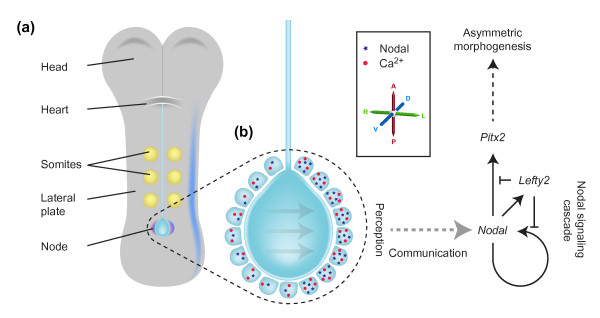
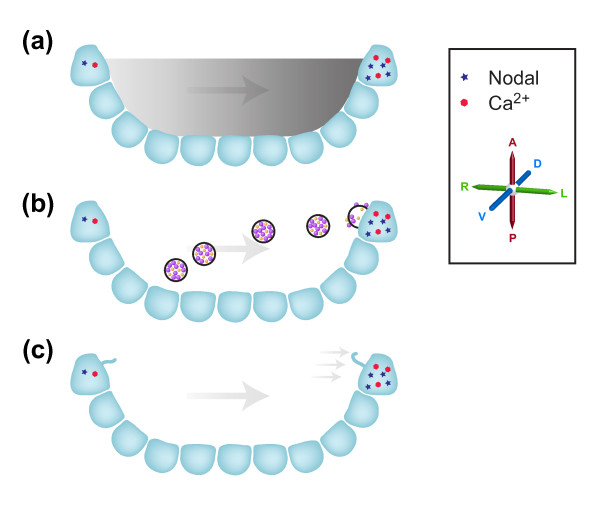
“Th e ‘morphogen hypothesis’ argues that a shortlived mole cule becomes enriched on the left side of the node in response to nodal fl ow and that this higher concentration on the left is detected, leading to a LR asymmetric signal [8].”
Harris, P. C., & Torres, V. E. (2009) · Annual Review of Medicine · doi:10.1146/annurev.med.60.101707.125712 · Cited by 801
Two Populations of Node Monocilia Initiate Left-Right Asymmetry in the Mouse
McGrath, J., Somlo, S., Makova, S., Tian, X., & Brueckner, M. (2003) · Cell · doi:10.1016/s0092-8674(03)00511-7 · Cited by 797 · cited 4×
“Currently, only the twocilia hypo thesis (and the known function of Pkd1l1/Pkd2) provides a mechanism to explain how this signal might be generated [17].”
BackgroundInfluentialDepletion of definitive gut endoderm in Sox17 -null mutant mice
Kanai-Azuma, M., Kanai, Y., Gad, J. M., Tajima, Y., Taya, C., Kurohmaru, M., Sanai, Y., Yonekawa, H., Yazaki, K., Tam, P. P. L., et al. (2002) · Development · doi:10.1242/dev.129.10.2367 · Cited by 704
Determination of left–right patterning of the mouse embryo by artificial nodal flow
Nonaka, S., Shiratori, H., Saijoh, Y., & Hamada, H. (2002) · Nature · doi:10.1038/nature00849 · Cited by 682 · cited 1×
“Nodal flow has been shown to be both necessary and sufficient to define the left side of the mouse embryo [13,14].”
BackgroundKramer-Zucker, A. G., Olale, F., Haycraft, C. J., Yoder, B. K., Schier, A. F., & Drummond, I. A. (2005) · Development · doi:10.1242/dev.01772 · Cited by 669
Tanaka, Y., Okada, Y., & Hirokawa, N. (2005) · Nature · doi:10.1038/nature03494 · Cited by 535 · cited 1×
“A second hypothesis, the ‘nodal vesicular parcel (NVP) hypothesis’ posits the presence of membrane bounded vesicles that are carried leftwards, breaking in a ciliadependent fashion on the left side of the node where they deliver a cargo of morphogens [30].”
BackgroundPitx2 determines left–right asymmetry of internal organs in vertebrates
Ryan, A. K., Blumberg, B., Rodriguez-Esteban, C., Yonei-Tamura, S., Tamura, K., Tsukui, T., de la Peña, J., Sabbagh, W., Greenwald, J., Choe, S., et al. (1998) · Nature · doi:10.1038/29004 · Cited by 533
Self-citationMechanism of Nodal Flow: A Conserved Symmetry Breaking Event in Left-Right Axis Determination
Okada, Y., Takeda, S., Tanaka, Y., Belmonte, J.-C. I., & Hirokawa, N. (2005) · Cell · doi:10.1016/j.cell.2005.04.008 · Cited by 489 · cited 1×
“molecules between 15 and 50 kDa in size, although the nature of the morphogen and the receptors are unknown [28,29].”
BackgroundLeft–right asymmetry in embryonic development: a comprehensive review
Levin, M. (2005) · Mechanisms of Development · doi:10.1016/j.mod.2004.08.006 · Cited by 461 · cited 3×
“The presence of very early LR asymmetry, established by the initial cleavage of the embryo, has been strongly argued in Xenopus [55].”
BackgroundInfluentialLogan, M., Pagán-Westphal, S. M., Smith, D. M., Paganessi, L., & Tabin, C. J. (1998) · Cell · doi:10.1016/s0092-8674(00)81474-9 · Cited by 455 · cited 1×
“Th is has led to the proposition that Pitx2 is the ultimate eff ector of leftness [25].”
BackgroundAbnormal Nodal Flow Precedes Situs Inversus in iv and inv mice
Okada, Y., Nonaka, S., Tanaka, Y., Saijoh, Y., Hamada, H., & Hirokawa, N. (1999) · Molecular Cell · doi:10.1016/s1097-2765(00)80197-5 · Cited by 426 · cited 1×
“Nodal flow has been shown to be both necessary and sufficient to define the left side of the mouse embryo [13,14].”
BackgroundThe Ion Channel Polycystin-2 Is Required for Left-Right Axis Determination in Mice
Pennekamp, P., Karcher, C., Fischer, A., Schweickert, A., Skryabin, B., Horst, J., Blum, M., & Dworniczak, B. (2002) · Current Biology · doi:10.1016/s0960-9822(02)00869-2 · Cited by 425 · cited 1×
“Although Pkd1 is not required for LR determination [33], both Pkd2 and the Pkd1 homologue Pkd1like 1 (Pkd1l1) are involved in LR patterning, being needed for the embryo to respond to nodal fl ow [34,35].”
BackgroundDifferential Diffusivity of Nodal and Lefty Underlies a Reaction-Diffusion Patterning System
Müller, P., Rogers, K. W., Jordan, B. M., Lee, J. S., Robson, D., Ramanathan, S., & Schier, A. F. (2012) · Science · doi:10.1126/science.1221920 · Cited by 381
Conserved function for embryonic nodal cilia
Essner, J. J., Vogan, K. J., Wagner, M. K., Tabin, C. J., Yost, H. J., & Brueckner, M. (2002) · Nature · doi:10.1038/418037a · Cited by 375
Yoshioka, H., Meno, C., Koshiba, K., Sugihara, M., Itoh, H., Ishimaru, Y., Inoue, T., Ohuchi, H., Semina, E. V., Murray, J. C., et al. (1998) · Cell · doi:10.1016/s0092-8674(00)81473-7 · Cited by 369
Early Asymmetry of Gene Transcription in Embryonic Human Left and Right Cerebral Cortex
Sun, T., Patoine, C., Abu-Khalil, A., Visvader, J., Sum, E., Cherry, T. J., Orkin, S. H., Geschwind, D. H., & Walsh, C. A. (2005) · Science · doi:10.1126/science.1110324 · Cited by 352 · cited 2×
“Intriguingly, expression of the mouse Lmo4 locus, while also asymmetrical, appears to be random, with individual embryos demonstrating a left or a rightsided preference in their expression [57].”
BackgroundPitx2 Participates in the Late Phase of the Pathway Controlling Left-Right Asymmetry
Piedra, M. E., Icardo, J. M., Albajar, M., Rodriguez-Rey, J. C., & Ros, M. A. (1998) · Cell · doi:10.1016/s0092-8674(00)81475-0 · Cited by 336
Cilia at the Node of Mouse Embryos Sense Fluid Flow for Left-Right Determination via Pkd2
Yoshiba, S., Shiratori, H., Kuo, I. Y., Kawasumi, A., Shinohara, K., Nonaka, S., Asai, Y., Sasaki, G., Belo, J. A., Sasaki, H., et al. (2012) · Science · doi:10.1126/science.1222538 · Cited by 306 · cited 1×
“[42]) have addressed aspects of the mechanism down stream of nodal flow.”
BackgroundNodal activity in the node governs left-right asymmetry
Brennan, J., Norris, D. P., & Robertson, E. J. (2002) · Genes & Development · doi:10.1101/gad.1016202 · Cited by 298 · cited 1×
“In contrast, Hamada and colleagues built on two other facts: that Nodal expression at the node is required for Nodal activation in the LPM [44,45]; and the recognized ability of Nodal to activate its own expression [46,47].”
BackgroundSelf-citationRegressive Evolution in Astyanax Cavefish
Jeffery, W. R. (2009) · Annual Review of Genetics · doi:10.1146/annurev-genet-102108-134216 · Cited by 298 · cited 1×
“Unused function tends to be lost when evolutionary selection pressure is removed, as in the case of eye and pigment loss in cavedwelling animals [41].”
BackgroundA defect in a novel Nek-family kinase causes cystic kidney disease in the mouse and in zebrafish
Liu, S., Lu, W., Obara, T., Kuida, S., Lehoczky, J., Dewar, K., Drummond, I. A., & Beier, D. R. (2002) · Development · doi:10.1242/dev.00173 · Cited by 249
Planar polarization of node cells determines the rotational axis of node cilia
Hashimoto, M., Shinohara, K., Wang, J., Ikeuchi, S., Yoshiba, S., Meno, C., Nonaka, S., Takada, S., Hatta, K., Wynshaw-Boris, A., et al. (2010) · Nature Cell Biology · doi:10.1038/ncb2020 · Cited by 219 · cited 1×
“used an approach called particle image velocimetry (PIV), which they have customized for nodalfl ow analysis [38].”
MethodLiu, C., Liu, W., Palie, J., Lu, M. F., Brown, N. A., & Martin, J. F. (2002) · Development · doi:10.1242/dev.129.21.5081 · Cited by 212
Regulation of left-right asymmetry by thresholds of Pitx2c activity
Liu, C., Liu, W., Lu, M.-F., Brown, N. A., & Martin, J. F. (2001) · Development · doi:10.1242/dev.128.11.2039 · Cited by 207
Bonnafe, E., Touka, M., AitLounis, A., Baas, D., Barras, E., Ucla, C., Moreau, A., Flamant, F., Dubruille, R., Couble, P., et al. (2004) · Molecular and Cellular Biology · doi:10.1128/mcb.24.10.4417-4427.2004 · Cited by 206 · cited 1×
“The Rfx3 locus encodes a transcription factor required for normal ciliogenesis in the node; muta tion of this gene leads to a massive reduction in nodal cilia number and to embryos demonstrating overt LR patterning defects [39].”
BackgroundRamsdell, A. F. (2005) · Developmental Biology · doi:10.1016/j.ydbio.2005.07.038 · Cited by 204 · cited 2×
“Defects in situs determination are rare, but when they do occur they are particularly asso ciated with congenital heart disease (CHD) [2].”
BackgroundSakuma, R., Ohnishi, Y., Meno, C., Fujii, H., Juan, H., Takeuchi, J., Ogura, T., Li, E., Miyazono, K., & Hamada, H. (2002) · Genes to Cells · doi:10.1046/j.1365-2443.2002.00528.x · Cited by 196
Fluid-dynamical basis of the embryonic development of left-right asymmetry in vertebrates
Cartwright, J. H. E., Piro, O., & Tuval, I. (2004) · Proceedings of the National Academy of Sciences · doi:10.1073/pnas.0402001101 · Cited by 190
Norris, D. P., & Robertson, E. J. (1999) · Genes & Development · doi:10.1101/gad.13.12.1575 · Cited by 186 · cited 1×
“In contrast, Hamada and colleagues built on two other facts: that Nodal expression at the node is required for Nodal activation in the LPM [44,45]; and the recognized ability of Nodal to activate its own expression [46,47].”
BackgroundSelf-citationPkd1l1 establishes left-right asymmetry and physically interacts with Pkd2
Field, S., Riley, K.-L., Grimes, D. T., Hilton, H., Simon, M., Powles-Glover, N., Siggers, P., Bogani, D., Greenfield, A., & Norris, D. P. (2011) · Development · doi:10.1242/dev.058149 · Cited by 179
Self-citationFranco, D. (2003) · Trends in Cardiovascular Medicine · doi:10.1016/s1050-1738(03)00039-2 · Cited by 175 · cited 1×
“Indeed, it has been argued that very minor situs defects may mani fest solely as cardiac defects, suggesting that the heart is more sensitive to situs defects than the other organs [3,4].”
BackgroundLeft–right patterning of the mouse lateral plate requires nodal produced in the node
Saijoh, Y., Oki, S., Oh‐ishi, S., & Hamada, H. (2003) · Developmental Biology · doi:10.1016/s0012-1606(02)00121-5 · Cited by 161 · cited 1×
“In contrast, Hamada and colleagues built on two other facts: that Nodal expression at the node is required for Nodal activation in the LPM [44,45]; and the recognized ability of Nodal to activate its own expression [46,47].”
BackgroundLeft-right patterning: conserved and divergent mechanisms
Nakamura, T., & Hamada, H. (2012) · Development · doi:10.1242/dev.061606 · Cited by 161 · cited 1×
“Strong associations are also seen between LR defects and many ciliopathies (diseases resulting from defective cilia); this association is due to a requirement for both motile and immotile cilia in LR determination [5,6].”
BackgroundShinohara, K., Kawasumi, A., Takamatsu, A., Yoshiba, S., Botilde, Y., Motoyama, N., Reith, W., Durand, B., Shiratori, H., & Hamada, H. (2012) · Nature Communications · doi:10.1038/ncomms1624 · Cited by 157
Diffusion of Nodal Signaling Activity in the Absence of the Feedback Inhibitor Lefty2
Meno, C., Takeuchi, J., Sakuma, R., Koshiba‐Takeuchi, K., Oh‐ishi, S., Saijoh, Y., Miyazaki, J., ten Dijke, P., Ogura, T., & Hamada, H. (2001) · Developmental Cell · doi:10.1016/s1534-5807(01)00006-5 · Cited by 152 · cited 1×
“Once Nodal is expressed in the left LPM, the resultant production of Lefty2 sup presses the Nodal cascade in the right LPM, helping to lock in asymmetry [21].”
BackgroundPkd1l1 complexes with Pkd2 on motile cilia and functions to establish the left-right axis
Kamura, K., Kobayashi, D., Uehara, Y., Koshida, S., Iijima, N., Kudō, A., Yokoyama, T., & Takeda, H. (2011) · Development · doi:10.1242/dev.058271 · Cited by 148 · cited 1×
“Clearly, Pkd1l1 must be a prime candidate for performing this function, although it remains to be established whether Pkd1l1 responds to a morphogen or to fl ow [34,43].”
BackgroundAdachi, H., Saijoh, Y., Mochida, K., Ohishi, S., Hashiguchi, H., Hirao, A., & Hamada, H. (1999) · Genes & Development · doi:10.1101/gad.13.12.1589 · Cited by 126 · cited 1×
“In contrast, Hamada and colleagues built on two other facts: that Nodal expression at the node is required for Nodal activation in the LPM [44,45]; and the recognized ability of Nodal to activate its own expression [46,47].”
BackgroundKathiriya, I. S., & Srivastava, D. (2000) · American Journal of Medical Genetics · Cited by 119
Heterotaxia, Congenital Heart Disease, and Primary Ciliary Dyskinesia
Brueckner, M. K. (2007) · Circulation · doi:10.1161/circulationaha.107.699256 · Cited by 111 · cited 1×
“The high incidence of LR patterning defects in humans with immotile cilia suggests that the same is true in humans [15]; approxi mately 50% of patients with immotile or abnormally Abstract”
BackgroundCilia functions in development
Drummond, I. A. (2012) · Current Opinion in Cell Biology · doi:10.1016/j.ceb.2011.12.007 · Cited by 110 · cited 1×
“Strong associations are also seen between LR defects and many ciliopathies (diseases resulting from defective cilia); this association is due to a requirement for both motile and immotile cilia in LR determination [5,6].”
BackgroundCarmi, R., Magee, C. A., Neill, C. A., & Karrer, F. M. (1993) · American Journal of Medical Genetics · doi:10.1002/ajmg.1320450606 · Cited by 109 · cited 1×
“LR patterning defects also occur at a significant frequency in patients with extrahepatic biliary atresia [7].”
BackgroundThree types of cilia including a novel 9+4 axoneme on the notochordal plate of the rabbit embryo
Feistel, K., & Blum, M. (2006) · Developmental Dynamics · doi:10.1002/dvdy.20986 · Cited by 99
Oki, S., Hashimoto, R., Okui, Y., Shen, M. M., Mekada, E., Otani, H., Saijoh, Y., & Hamada, H. (2007) · Development · doi:10.1242/dev.009464 · Cited by 90 · cited 3×
“Oki and colleagues’ analyses [48] argue that Nodal protein itself travels leftwards through an extracellular, but”
BackgroundInfluentialSitus Inversus in Dpcd/Poll –/– , Nme7 –/– , and Pkd1l1 –/– Mice
Vogel, P., Read, R. W., Hansen, G. M., Freay, L. C., Zambrowicz, B., & Sands, A. (2010) · Veterinary Pathology · doi:10.1177/0300985809353553 · Cited by 80 · cited 1×
“Loss of the Dpcd (deleted in primary ciliary dyskinesia) locus similarly results in LR patterning defects [40].”
BackgroundCilia, KIF3 molecular motor and nodal flow
Hirokawa, N., Tanaka, Y., & Okada, Y. (2012) · Current Opinion in Cell Biology · doi:10.1016/j.ceb.2012.01.002 · Cited by 73
Karcher, C., Fischer, A., Schweickert, A., Bitzer, E., Horie, S., Witzgall, R., & Blum, M. (2005) · Differentiation · doi:10.1111/j.1432-0436.2005.00048.x · Cited by 66 · cited 1×
“Although Pkd1 is not required for LR determination [33], both Pkd2 and the Pkd1 homologue Pkd1like 1 (Pkd1l1) are involved in LR patterning, being needed for the embryo to respond to nodal fl ow [34,35].”
BackgroundMarjoram, L., & Wright, C. V. E. (2011) · Development · doi:10.1242/dev.056010 · Cited by 57
Role of the Gut Endoderm in Relaying Left-Right Patterning in Mice
Viotti, M., Niu, L., Shi, S.-H., & Hadjantonakis, A.-K. (2012) · PLoS Biology · doi:10.1371/journal.pbio.1001276 · Cited by 56 · cited 2×
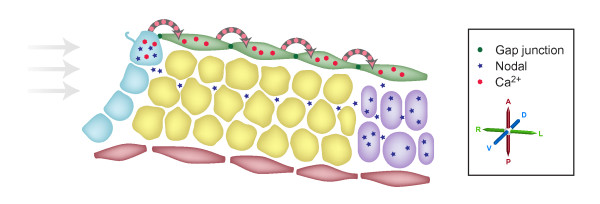
“Viotti and colleagues’ [49] and Saund and colleagues’ work [51] argues that calcium signaling, via gap junctions, carries signals from the node”
BackgroundSchneider, H. E., & Brueckner, M. K. (2000) · American Journal of Medical Genetics · doi:10.1002/1096-8628(200024)97:4<258::aid-ajmg1276>3.0.co;2-8 · Cited by 51
Saund, R. S., Kanai‐Azuma, M., Kanai, Y., Kim, I., Lucero, M. T., & Saijoh, Y. (2012) · Development · doi:10.1242/dev.079921 · Cited by 37 · cited 2×
“[51]) have independently identified the role of Sox17 and the definitive endoderm in LR patterning [51].”
BackgroundFluid dynamics of nodal flow and left–right patterning in development
Cartwright, J. H. E., Piro, N., Piro, O., & Tuval, I. (2008) · Developmental Dynamics · doi:10.1002/dvdy.21672 · Cited by 32 · cited 1×
“Although very appealing, elements of this hypothesis (such as the mecha nism of NVP breaking) clearly need to be modifi ed [31].”
BackgroundGardner, R. L. (2010) · PLoS ONE · doi:10.1371/journal.pone.0009610 · Cited by 28 · cited 2×
“The one exception is a purely embryological study by Gardner [56], which revealed that manipulation of the early blastomeres can affect the direction of embryonic axial rotation, but not other aspects of situs.”
BackgroundFrom Cilia Hydrodynamics to Zebrafish Embryonic Development
Supatto, W., & Vermot, J. (2011) · Current topics in developmental biology/Current Topics in Developmental Biology · doi:10.1016/b978-0-12-385065-2.00002-5 · Cited by 24 · cited 1×
“However, whether nodal fl ow pushing outwards on the lefthand side of the node can truly be diff erentiated from the pull exerted by nodal fl ow on the righthand side of the node, a requirement of the two cilia model, has been questioned [36].”
BackgroundSchweickert, A., Deißler, K., Britsch, S., Albrecht, M., Ehmann, H., Mauch, V., Gaio, U., & Blum, M. (2008) · Developmental Dynamics · doi:10.1002/dvdy.21638 · Cited by 16 · cited 1×
“Moreover, both galanin (Gal), a neuropeptide with a role in neuronal inhibition, and Pitx2 retain LR asymmetric expression in early cardiac tissue (at the anterior end of the LPM) in the absence of the Nodal coreceptor Cryptic, which is required for Nodal expression in the LPM [54].”
BackgroundStevens, J. L., Ermakov, A. S., Bragança, J., Hilton, H., Underhill, P., Bhattacharya, S., Brown, N. A., & Norris, D. P. (2010) · BMC Developmental Biology · doi:10.1186/1471-213x-10-54 · Cited by 14 · cited 1×
“However, arguments also exist for Nodalindependent asymmetric gene expression in the LPM: analysis of the Ablim1 locus reveals it to be asymmetrically expressed in the left but not right LPM in the absence of Nodal expression [53].”
BackgroundSelf-citationSakuma, R. (2002) · Cited by 4
Research works printed but not linked: 2
- 1. Neville AC: Animal asymmetry. Studies Biol 1976, 67.
- 16. Kartagener M, Horlacher A: Bronchiektasen bei Situs viscerum inversus. Scweiz Med Wochenschr 1935, 16:782-784.
Cited by
Cellular signalling by primary cilia in development, organ function and disease
Anvarian, Z., Mykytyn, K., Mukhopadhyay, S., Pedersen, L. B., & Christensen, S. T. (2019) · Nature Reviews Nephrology · doi:10.1038/s41581-019-0116-9 · Cited by 845
Brain Lateralization: A Comparative Perspective
Güntürkün, O., Ströckens, F., & Ocklenburg, S. (2020) · Physiological Reviews · doi:10.1152/physrev.00006.2019 · Cited by 484
Left–Right Patterning: Breaking Symmetry to Asymmetric Morphogenesis
Grimes, D. T., & Burdine, R. D. (2017) · Trends in Genetics · doi:10.1016/j.tig.2017.06.004 · Cited by 165
“These and other data led to an intriguing hypothesis being proposed: Ca[285_TD$DIFF] spreading through gap junctions in endodermal cells (potentially via purinergic wave propagation) results in increased secretion of sGAGs, which then aids in the transfer of NODAL protein [81,88].”
ResultVandenberg, L. N., & Levin, M. (2013) · Developmental Biology · doi:10.1016/j.ydbio.2013.03.021 · Cited by 159
“In summary, high-resolution studies support a role for cilia movement in asymmetry of mice (Norris, 2012; Shinohara et al., 2012; Yoshiba et al., 2012) and frogs (Blum et al., 2009; Schweickert et al., 2012).”
BackgroundThe genetic architecture of structural left–right asymmetry of the human brain
Sha, Z., Schijven, D., Carrión-Castillo, A., Joliot, M., Mazoyer, B. M., Fisher, S. E., Crivello, F., & Francks, C. (2021) · Nature Human Behaviour · doi:10.1038/s41562-021-01069-w · Cited by 156
Metadata
- Authors
- Norris, D. P.
- Affiliations
- Medical Research Council (GB)
- Corresponding author
- Norris, Dominic P
- ORCID
- Norris, Dominic P
- Venue
- BMC Biology
- Published
- 2012-12
- Volume
- 10
- Issue
- 1
- Pages
- 102-102
- ISSN
- 1741-7007 (ISSN-L)
- PMC
- PMC3527145
- OpenAlex
- W2070033951
- Cited by
- 73
- References
- 57
- Citations by year
- 2026: 1 · 2025: 2 · 2024: 5 · 2023: 2 · 2022: 4 · 2021: 5 · 2020: 10 · 2019: 7 · 2018: 9 · 2017: 3 · 2016: 6 · 2015: 1 · 2014: 12 · 2013: 6
- FWCI
- 3.66
- Type
- journal article
- Language
- en
- Open access
- gold
- doi.org
- Licence
- cc-by
- creativecommons.org/licenses/by/2.0 (tdm)
- Locations
- BMC Biology (publishedVersion, cc-by)
- PubMed Central (publishedVersion, cc-by)
- PubMed (publishedVersion)
- DOAJ (DOAJ: Directory of Open Access Journals) (submittedVersion, cc-by-sa)
- Funders
- Medical Research Council
- Topics
- Life Sciences › Biochemistry, Genetics and Molecular Biology › Genetics › Genetic and Kidney Cyst Diseases
- Health Sciences › Medicine › Pulmonary and Respiratory Medicine › Cystic Fibrosis Research Advances
- Life Sciences › Biochemistry, Genetics and Molecular Biology › Molecular Biology › Developmental Biology and Gene Regulation
- Keywords
- left-right asymmetry, cilia, calcium signaling, leftward flow, mammalian embryo development
- MeSH terms
- Animals, Calcium, Cell Communication, Cilia, Mammals, Models, Biological, Signal Transduction, Body Patterning
About these checks
Registry, retraction, Cites and statistics results are computed, not judged, with one exception: a printed reference that no index lists is read once by a model before it counts as a citation error. Claims are extracted by a model and kept only when their quote appears verbatim in the text; each cited source is then checked, with a model’s help, for whether it says what the claim relies on. Those verdicts can be wrong — read the claim’s quote and the cited source before relying on one.
Statistics and arithmetic are recomputed, not judged.
Confidence bands are shown only for fields calibrated on our annotated test set. None is calibrated yet, so no band is shown.
What counts as a claim ›How we measure confidence ›How we check this ›
Are you an author, or do you see a problem with this page? Request a review
Data sources
Bibliographic data: Semantic Scholar, OpenAlex, Crossref.
Contains information from the Semantic Scholar Academic Graph Datasets, made available under the ODC Attribution License (ODC-BY 1.0).
Semantic Scholar’s data is described in: Kinney, R., et al. (2023). The Semantic Scholar Open Data Platform. arXiv:2301.10140.
