

Brief psychological therapies for anxiety and depression in primary care: meta-analysis and meta-regression
Open accessThe DOI matches its Crossref record; 89 of the 91 references it cites were found in a registry or an index.
Abstract
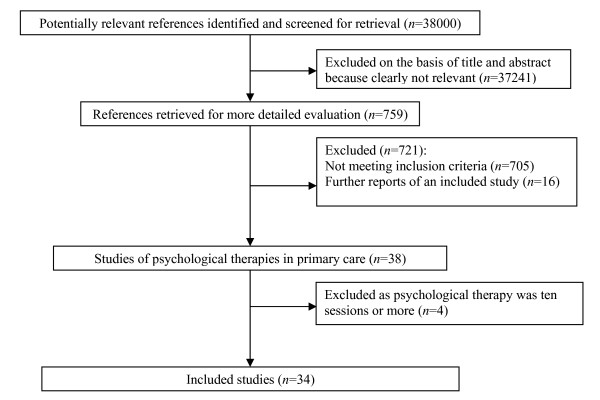
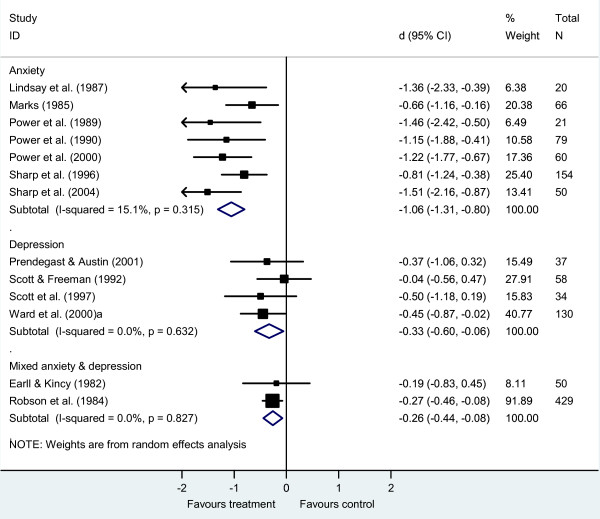
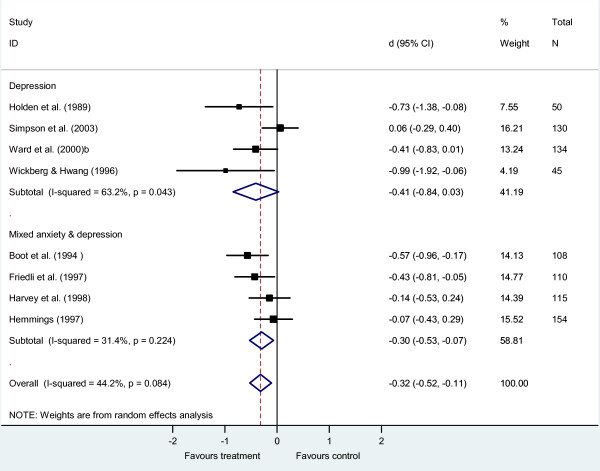
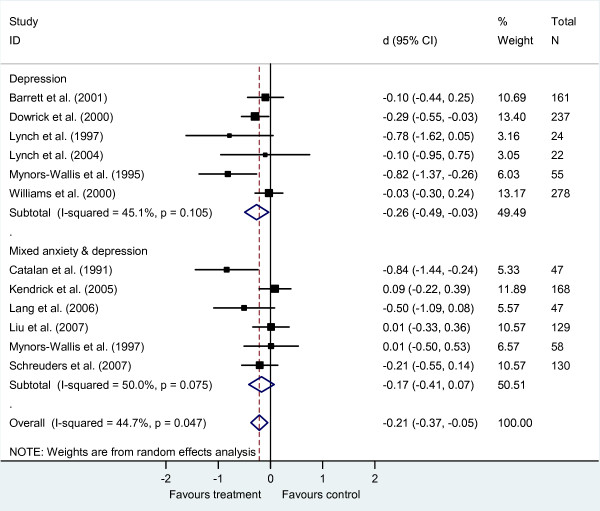
BACKGROUND: Psychological therapies provided in primary care are usually briefer than in secondary care. There has been no recent comprehensive review comparing their effectiveness for common mental health problems. We aimed to compare the effectiveness of different types of brief psychological therapy administered within primary care across and between anxiety, depressive and mixed disorders. METHODS: Meta-analysis and meta-regression of randomized controlled trials of brief psychological therapies of adult patients with anxiety, depression or mixed common mental health problems treated in primary care compared to primary care treatment as usual. RESULTS: Thirty-four studies, involving 3962 patients, were included. Most were of brief cognitive behaviour therapy (CBT; n = 13), counselling (n = 8) or problem solving therapy (PST; n = 12). There was differential effectiveness between studies of CBT, with studies of CBT for anxiety disorders having a pooled effect size [d -1.06, 95% confidence interval (CI) -1.31 to -0.80] greater than that of studies of CBT for depression (d -0.33, 95% CI -0.60 to -0.06) or studies of CBT for mixed anxiety and depression (d -0.26, 95% CI -0.44 to -0.08). Counselling for depression and mixed anxiety and depression (d -0.32, 95% CI -0.52 to -0.11) and problem solving therapy (PST) for depression and mixed anxiety and depression (d -0.21, 95% CI -0.37 to -0.05) were also effective. Controlling for diagnosis, meta-regression found no difference between CBT, counselling and PST. CONCLUSIONS: Brief CBT, counselling and PST are all effective treatments in primary care, but effect sizes are low compared to longer length treatments. The exception is brief CBT for anxiety, which has comparable effect sizes.
Overview
The claims and statistics of this paper haven’t been checked yet.
Free: it reads the open-access text and checks the first 5 claims that cite a source we can check. Create a free account to check every claim.
Integrity signals
Registry
Cites
Statistics
Figures
Verification
Claims the paper makes
The claims and statistics of this paper haven’t been checked yet.
Free: it reads the open-access text and checks the first 5 claims that cite a source we can check. Create a free account to check every claim.
Claims other papers make about this one
Each is checked against this paper’s own text: does it say what the citing paper says it does?
The source backs part of the claim, not all of it — or backs it for a different population, condition or comparison.
In the citing paper
“while 2 other meta-analyses looking at brief (8 or fewer sessions) of CBT, MBCT, and PST noted significant efficacy in symptom reduction.82,83”
From Canadian Network for Mood and Anxiety Treatments (CANMAT) 2016 Clinical Guidelines for the Management of Adults with Major Depressive Disorder (2016) · cites this paper as [82]
Experimental — accuracy not yet measuredThe source backs part of the claim, not all of it — or backs it for a different population, condition or comparison.
In the citing paper
“For instance, the meta-analysis conducted by Cape et al. (2010) revealed that, although brief interventions provided in primary care had similar efficacy than longer treatments for anxiety disorders, the effect sizes obtained for depression and mixed anxiety and depression were considerably smaller (d = 0.33 and 0.26, respectively).”
From A Multiple-Baseline Evaluation of Acceptance and Commitment Therapy Focused on Repetitive Negative Thinking for Comorbid Generalized Anxiety Disorder and Depression (2020) · cites this paper as Cape et al. (2010)
Experimental — accuracy not yet measuredThe source backs part of the claim, not all of it — or backs it for a different population, condition or comparison.
In the citing paper
“Specifically, the empirical evidence shows that brief interventions tested for this problem in primary care have obtained small effect sizes (e.g. Cape et al., 2010).”
From A Multiple-Baseline Evaluation of Acceptance and Commitment Therapy Focused on Repetitive Negative Thinking for Comorbid Generalized Anxiety Disorder and Depression (2020) · cites this paper as Cape et al., 2010
Experimental — accuracy not yet measured
Self-check
Percentages, sums and reported differences re-computed from the paper’s own numbers.
The self-check needs the paper’s full text.
Citations
Cites
Measuring inconsistency in meta-analyses
Higgins, J. P. T., Thompson, S. G., Deeks, J. J., & Altman, D. G. (2003) · BMJ · doi:10.1136/bmj.327.7414.557 · Cited by 63,139 · cited 2×
“We used I2 and the Q test of heterogeneity [37,38] to examine among-study variation in the meta-analysis.”
BackgroundMethodBias in meta-analysis detected by a simple, graphical test
Egger, M., Smith, G. D., Schneider, M., & Minder, C. (1997) · BMJ · doi:10.1136/bmj.315.7109.629 · Cited by 56,722 · cited 1×
“To check for publication bias, CMA was used to generate funnel plots and Egger's regression asymmetry test [39].”
MethodQuantifying heterogeneity in a meta‐analysis
Higgins, J. P. T., & Thompson, S. G. (2002) · Statistics in Medicine · doi:10.1002/sim.1186 · Cited by 36,763 · cited 1×
“We used I2 and the Q test of heterogeneity [ 37 ,38] to examine among-study variation in the meta-analysis.”
MethodHamilton, M. (1960) · Journal of Neurology, Neurosurgery & Psychiatry · doi:10.1136/jnnp.23.1.56 · Cited by 32,817 · cited 4×
“3 point difference between groups on the Hamilton Rating Scale for Depression [79] while the effect size for CBT for anxiety was equivalent to 7.”
BackgroundInfluentialKessler, R. C., Chiu, W. T., Demler, O., & Walters, E. E. (2005) · Archives of General Psychiatry · doi:10.1001/archpsyc.62.6.617 · Cited by 12,052 · cited 1×
“Although studies of psychological therapies in primary care frequently include patients with both anxiety and depression, reflecting the heterogeneous patient presentations in primary care where mixed anxiety and depression is the most common diagnosis [20-22], such studies are excluded when the selection criteria for…”
BackgroundThe assessment of anxiety states by rating
HAMILTON, M. (1959) · British Journal of Medical Psychology · doi:10.1111/j.2044-8341.1959.tb00467.x · Cited by 11,455 · cited 4×
“Anxiety and depressive disorders are common, with estimated combined prevalence varying between countries but over 10% in most Western countries [1-4].”
BackgroundInfluentialThe empirical status of cognitive-behavioral therapy: A review of meta-analyses
Butler, A. C., Chapman, J. E., Forman, E. M., & Beck, A. T. (2006) · Clinical Psychology Review · doi:10.1016/j.cpr.2005.07.003 · Cited by 3,215 · cited 4×
“Brief CBT for anxiety disorders was the exception, with effect sizes in the present review comparable to those obtained in reviews of longer secondary care based treatments [12,13].”
BackgroundResultInfluentialA Nonparametric “Trim and Fill” Method of Accounting for Publication Bias in Meta-Analysis
Duval, S., & Tweedie, R. (2000) · Journal of the American Statistical Association · doi:10.1080/01621459.2000.10473905 · Cited by 2,955 · cited 1×
“Where asymmetry was detected, we assessed the potential impact of the publication bias using the Duval and Tweedie nonparametric 'trim and fill' method [40].”
MethodImproved tests for a random effects meta‐regression with a single covariate
Knapp, G., & Hartung, J. (2003) · Statistics in Medicine · doi:10.1002/sim.1482 · Cited by 2,075 · cited 1×
“We used the metareg command in Stata, to conduct random-effects meta-regression analyses with restricted maximum likelihood estimation and the improved variance estimator of Knapp and Hartung [ 41 ].”
Method
Research works printed but not linked: 3
- Scottish Intercollegiate Guidelines Network SIGN 50: A Guideline Developer's Handbook 2004 Edinburgh: SIGN
- Borenstein M Hedges L Higgins J Rothstein H Comprehensive Meta-analysis Version 2 [Computer software] 2005 Englewood, NJ: Biostat
- StataCorp Stata Statistical Software: Release 9.2 [Computer software] 2007 College Station, TX: StataCorp
Cited by
Items 101–200 of 345
Schick, M. R., Kirk‐Provencher, K. T., Goldstein, S. C., Nalven, T., & Spillane, N. S. (2021) · Prevention Science · doi:10.1007/s11121-021-01282-z · Cited by 27
“Further, brief interventions are comparable in effectiveness to longer courses of treatment (Cape et al., 2010), and effects persist over time (Tanner-Smith & Lipsey, 2015).”
BackgroundCarta, M. G., Tondo, L., Balestrieri, M., Caraci, F., Dell’Osso, L., Sciascio, G. D., Faravelli, C., Hardoy, M. C., Lecca, M. E., Moro, M. F., et al. (2011) · BMC Psychiatry · doi:10.1186/1471-244x-11-164 · Cited by 26
“Similarly a brief psychological therapies were effective for anxiety [33].”
BackgroundCorpas, J., Moriana, J. A., Martínez, J. F. V., & Gálvez‐Lara, M. (2020) · International Journal of Clinical and Health Psychology · doi:10.1016/j.ijchp.2020.11.002 · Cited by 27
Satre, D. D., Anderson, A. N., Leibowitz, A., Levine‐Hall, T., Slome, S. B., Flamm, J., Hare, C. B., McNeely, J., Weisner, C. M., Horberg, M. A., et al. (2019) · Contemporary Clinical Trials · doi:10.1016/j.cct.2019.105833 · Cited by 24
“Intervention has no specific time limits, but MI and brief CBT can be effectively delivered in less than 6 sessions [65, 66], and we will examine BHS utilization and time demands in our analysis.”
Aguilera‐Martín, Á., Gálvez‐Lara, M., Cuadrado, F., Moreno, E. M., García‐Torres, F., Martínez, J. F. V., Corpas, J., Jurado-González, F. J., Muñoz‐Navarro, R., González‐Blanch, C., et al. (2022) · BMC Psychiatry · doi:10.1186/s12888-022-03726-4 · Cited by 24
“Moreover, psychotherapy can save costs since it can be abbreviated when the patient or the context requires it, as happens in primary care [20].”
BackgroundAdapting empirically supported treatments in the era of integrated care: A roadmap for success.
Strosahl, K. D., & Robinson, P. J. (2018) · Clinical Psychology Science and Practice · doi:10.1111/cpsp.12246 · Cited by 24
Northwood, A. K., Vukovich, M. M., Beckman, A., Walter, J. P., Josiah, N., Hudak, L., Burrows, K. O., Letts, J., & Danner, C. C. (2020) · BMC Family Practice · doi:10.1186/s12875-020-1090-9 · Cited by 24
Levine, D. S., McCarthy, J. F., Cornwell, B. L., Brockmann, L. M., & Pfeiffer, P. N. (2017) · Psychiatric Services · doi:10.1176/appi.ps.201600186 · Cited by 23
Muschalla, B. (2017) · European Journal of Work and Organizational Psychology · doi:10.1080/1359432x.2017.1384378 · Cited by 24
“for work-coping development, at least more than four sessions (Cape et al., 2010).”
BackgroundIntervención psicológica escalonada con trastornos mentales comunes en Atención Primaria.
García-Sancho, J. C. M., Puerto, A. G., Egea, C., Diaz, G., Campillo, M.-J., & Espinosa, R. M. (2017) · Anales de Psicología · doi:10.6018/analesps.34.1.281491 · Cited by 22
Antidepressants overuse in primary care: Prescription trends between 2010 and 2019 in Catalonia
Anmella, G., Sanabra, M., Primé‐Tous, M., Segú, X., Solanes, A., Ruíz, V., Morilla, I., Fontanet, A. A., Sant, E., Murgui, S., et al. (2022) · Revista de Psiquiatría y Salud Mental · doi:10.1016/j.rpsm.2022.12.001 · Cited by 21
Anxiety Disorders in Primary Care
Metzler, D. H., Mahoney, D., & Freedy, J. R. (2016) · Primary Care Clinics in Office Practice · doi:10.1016/j.pop.2016.02.002 · Cited by 23
“usual duration of psychotherapy treatment in the United Kingdom in a primary care setting is roughly 6 sessions, as compared to well-studied and efficacious 12 to 24 sessions.(41) A meta-analysis found that brief CBT for anxiety disorders was comparable to the effectiveness of longer treatments in primary care.”
BackgroundMethodInfluentialShepardson, R. L., Funderburk, J. S., & Weisberg, R. B. (2016) · Families, Systems, & Health · doi:10.1037/fsh0000175 · Cited by 20
Collaborative care for refugees and torture survivors: Key findings from the literature.
Esala, J. J., Vukovich, M. M., Hanbury, A., Kashyap, S., & Joscelyne, A. (2018) · Traumatology An International Journal · doi:10.1037/trm0000143 · Cited by 21
Lee, A. A., Sripada, R. K., Hale, A. C., Ganoczy, D. A., TRIVEDI, R. B., Arnow, B. A., & Pfeiffer, P. N. (2021) · Journal of Consulting and Clinical Psychology · doi:10.1037/ccp0000645 · Cited by 20
Potential for substitution of mental health care towards family practices: an observational study
Magnée, T., Beurs, D. P. D., Boxem, R., de Bakker, D. H., & Verhaak, P. F. M. (2017) · BMC Family Practice · doi:10.1186/s12875-017-0586-4 · Cited by 20
The acceptability of therapist-assisted, internet-delivered treatment for college students
Travers, M. F., & Benton, S. A. (2014) · Journal of College Student Psychotherapy · doi:10.1080/87568225.2014.854676 · Cited by 19
Lopez-Montoyo, A., Quero, S., Montero-Marin, J., Barcelo-Soler, A., Beltran, M., Campos, D., & Garcia-Campayo, J. (2019) · BMC Psychiatry · doi:10.1186/s12888-019-2298-x · Cited by 19
"Depresión": Imprecisión diagnóstica y terapéutica. Importantes consecuencias en la práctica clínica
Terrazas, E. E., López, A. G., de Neira, M. D., & Barquero, M. J. G. (2011) · Revista de la Asociación Española de Neuropsiquiatría · doi:10.4321/s0211-57352011000300005 · Cited by 19
Kohtala, A., Muotka, J. S., & Lappalainen, R. I. (2018) · Revista internacional de psicología y terapia psicológica/Revista internacional de psicología y terapia psicológica · Cited by 18
(2012) · Papeles del Psicólogo - Psychologist Papers · Cited by 17
Perceived stress mediates the longitudinal effect of sleep quality on internalizing symptoms
Meng, R., Xu, J., Luo, Y., Mastrotheodoros, S., Jiang, C., Garofalo, C., Mazzeschi, C., Nielsen, T., Fong, D., Dzierzewski, J. M., et al. (2024) · Journal of Affective Disorders · doi:10.1016/j.jad.2024.12.046 · Cited by 17
Evaluation of a primary care adult mental health service: Year 2.
McHugh, P., Brennan, J. M., Galligan, N., McGonagle, C., & Byrne, M. (2013) · PubMed · Cited by 17
Bosmans, J. E., Schreuders, B., van Marwijk, H. W., Smit, J. H., van Oppen, P., & van Tulder, M. W. (2012) · BMC Family Practice · doi:10.1186/1471-2296-13-98 · Cited by 16
“A recent review showed that PST is more effective in comparison with GP care for depression, and mixed anxiety and depression [39].”
BackgroundKohtala, A., Muotka, J., & Lappalainen, R. (2017) · Journal of Contextual Behavioral Science · doi:10.1016/j.jcbs.2017.03.003 · Cited by 16
академія», Н. У. «. Ю. (2024) · Electronic Archive of the National University "Odessa Law Academy" (Scientific Library of the Odessa Law Academy) · doi:10.32837/11300.27749 · Cited by 17
Vogel, M., Ebert, C., Gensichen, J. S., Applis, H., Hasan, A., & Lochbühler, K. (2024) · General Hospital Psychiatry · doi:10.1016/j.genhosppsych.2024.11.003 · Cited by 16
Baron, K. G., Lattie, E. G., Ho, J., & Mohr, D. C. (2011) · International Journal of Behavioral Medicine · doi:10.1007/s12529-011-9211-4 · Cited by 17
McCay, E. A., Frankford, R., Beanlands, H. J., Sidani, S., Gucciardi, E., Blidner, R., Danaher, A., Carter, C., & Aiello, A. (2016) · SAGE Open · doi:10.1177/2158244016669547 · Cited by 17
Rubio-Valera, M., Beneitez, I., Peñarrubia‐María, M. T., Luciano, J. V., Mendive, J. M., McCrone, P., Knapp, M. R. J., Sabés-Figuera, R., Kocyan, K., García‐Campayo, J., et al. (2015) · BMC Psychiatry · doi:10.1186/s12888-015-0448-3 · Cited by 15
Cucciare, M. A., Curran, G. M., Craske, M. G., Abraham, T. H., McCarthur, M. B., Marchant‐Miros, K., Lindsay, J. A., Kauth, M. R., Landes, S. J., & Sullivan, G. (2015) · Implementation Science · doi:10.1186/s13012-016-0432-4 · Cited by 15
“particularly cognitive behavioral therapy (CBT) [1, 2], are highly effective for treating anxiety and depression, the most common mental health disorders in primary care set-”
BackgroundAs you like it: adopting a patient‐led approach to psychological treatments
Carey, T. A. (2011) · Journal of Public Mental Health · doi:10.1108/17465721111134510 · Cited by 15
Vest, B. M., Quigley, B. M., Lillvis, D. F., Horrigan-Maurer, C., Firth, R. S., Curtis, A. B., & Lackner, J. M. (2022) · Journal of General Internal Medicine · doi:10.1007/s11606-021-07303-5 · Cited by 14
Corpas, J., Moriana, J. A., Martínez, J. F. V., & Gálvez‐Lara, M. (2021) · Clinical Psychology Science and Practice · doi:10.1037/cps0000009 · Cited by 14
A utilitarian concept of manas and mental health
Thirunavukarasu, M. (2011) · Indian Journal of Psychiatry · doi:10.4103/0019-5545.82532 · Cited by 14
Magnée, T., Beurs, D. P. D., Schellevis, F., & Verhaak, P. F. M. (2018) · Scandinavian Journal of Primary Health Care · doi:10.1080/02813432.2018.1426145 · Cited by 14
Kaltman, S. I., Watson, M. R., Campoli, M., Serrano, A., Talisman, N. W., Kirkpatrick, L. A., Méte, M., & Green, B. L. (2019) · Cultural Diversity & Ethnic Minority Psychology · doi:10.1037/cdp0000251 · Cited by 14
Brief Psychotherapy for Depression in Primary Care: A Systematic Review of the Evidence
Nieuwsma, J. A., TRIVEDI, R. B., McDuffie, J. R., Kronish, I. M., Benjamin, D., & Williams, J. W. (2011) · PubMed · Cited by 14
Managing Psychological Trauma of Infertility
(2019) · African Journal of Reproductive Health · doi:10.29063/ajrh2019/v23i2.8 · Cited by 12
Gehringer, R., Freytag, A., Krause, M., Schlattmann, P., Schmidt, K. F. R., Schulz, S., Zezulka, S. J., Wolf, F., Grininger, J., Berger, T., et al. (2020) · BMC Family Practice · doi:10.1186/s12875-020-01244-4 · Cited by 12
“tions were effective for anxiety treatment in primary care settings, but results are heterogeneous for the effectiveness of psychotherapies in treating depression in primary care [21, 23, 24, 44].”
BackgroundSujan, A. C., Quinn, P. D., Rickert, M. E., Wiggs, K. K., Larsson, H., Lichtenstein, P., Öberg, A. S., & D'Onofrio, B. M. (2021) · The Journal of Maternal-Fetal & Neonatal Medicine · doi:10.1080/14767058.2021.1875436 · Cited by 12
“brief evidence-based psychological interventions) [29] or make referrals to physicians that offer evidence-based treatment of mental health problems.”
BackgroundMondin, T. C., Cardoso, T. D. A., Jansen, K., da Silva, G. D. G., Souza, L. D. D. M., & da Silva, R. A. (2015) · Journal of Affective Disorders · doi:10.1016/j.jad.2015.08.014 · Cited by 12
Effects of cognitive psychotherapy on the biological rhythm of patients with depression
Mondin, T. C., Cardoso, T. D. A., Jansen, K., Spessato, B. C., Souza, L. D. D. M., & da Silva, R. A. (2013) · Journal of Affective Disorders · doi:10.1016/j.jad.2013.10.039 · Cited by 12
Evaluating brief cognitive behavioural therapy within primary care
McHugh, P., Gordon, M., & Byrne, M. (2014) · Mental Health Review Journal · doi:10.1108/mhrj-02-2014-0004 · Cited by 12
Terapia cognitivo-conductual transdiagnóstica en Atención Primaria: un contexto ideal
González‐Blanch, C., Ruiz-Torres, M., Cordero‐Andrés, P., Umaran‐Alfageme, O., Hernández-Abellán, A., Muñoz‐Navarro, R., & Vindel, A. C. (2018) · Revista de Psicoterapia · doi:10.33898/rdp.v29i110.243 · Cited by 12
“…basados en TCC han demostrado su eficacia en el tratamiento de los síntomas depresivos (Bortolotti et al., 2008; Newby et al., 2016) y de ansiedad (Cape et al., 2010; Newby et al., 2016), con resultados superiores al no tratamiento y al tratamiento habitual (Twomey, O’Reilly y Byrne, 2015) en la…”
BackgroundRoberts, K., Travers-Hill, E., Coker, S., Troup, J., Casey, S., Parkin, K., & Kim, Y. (2021) · The Cognitive Behaviour Therapist · doi:10.1017/s1754470x21000258 · Cited by 11
“A meta-analysis (Cape et al., 2010) also found large effect sizes for brief CBT for anxiety (d= –1.”
MethodEvidence-Based Psychotherapy in Primary Care
Sawchuk, C. N., & Craner, J. R. (2017) · FOCUS The Journal of Lifelong Learning in Psychiatry · doi:10.1176/appi.focus.20170010 · Cited by 11
Wormgoor, M. E. A., Indahl, A., Andersen, E., & Egeland, J. (2019) · Journal of Occupational Rehabilitation · doi:10.1007/s10926-019-09841-6 · Cited by 11
General practitioners’ management of patients with psychological stress: audit results from Denmark
Lykkegaard, J., Prior, A., & Rosendal, M. (2020) · BMC Family Practice · doi:10.1186/s12875-020-01137-6 · Cited by 11
Sawchuk, C. N., Mulholland, H., Trane, S. T., Lebow, J. R., Puspitasari, A. J., & Lombardi, N. (2020) · Cognitive and Behavioral Practice · doi:10.1016/j.cbpra.2020.05.003 · Cited by 11
The prevalence and treatment of mental health conditions documented in general practice in Ireland
O’Doherty, J., Hannigan, A., Hickey, L., Meagher, D. J., Cullen, W., O’Connor, R., & O’Regan, A. (2018) · Irish Journal of Psychological Medicine · doi:10.1017/ipm.2018.48 · Cited by 11
“Of these brief therapies, the evidence is strongest for brief CBT in the management of anxiety (Cape et al. 2010) but the effect sizes were low compared with long-term treatments and the therapies were delivered by a professional other than a GP.”
BackgroundInfluentialCluster randomised controlled trial of a guided self-help mental health intervention in primary care
Mathieson, F. M., Stanley, J., Collings, S. C., Tester, R., & Dowell, A. C. (2019) · BMJ Open · doi:10.1136/bmjopen-2018-023481 · Cited by 10
“These findings are in keeping with other work which demonstrates clinical effectiveness of brief psychological interventions in primary care settings.(39) These results suggest that GPs in both arms were achieving clinical benefit.”
ResultMoore, M. V., Byng, R., Stuart, B. L., Harris, T., & Kendrick, T. (2012) · Journal of Affective Disorders · doi:10.1016/j.jad.2012.04.042 · Cited by 10
Screening Assessment for Anxiety and Depression in Primary Care
Richardson, L. G., & Puskar, K. R. (2012) · The Journal for Nurse Practitioners · doi:10.1016/j.nurpra.2011.10.005 · Cited by 10
Yang, W.-L., Feng, Z., Gao, Y., & Zhang, Q. (2015) · Europe PMC (PubMed Central) · Cited by 10
Joyce, C. T., Schneider, M., Stevans, J. M., & Beneciuk, J. M. (2018) · Physical Therapy · doi:10.1093/ptj/pzy031 · Cited by 9
Gálvez‐Lara, M., Corpas, J., Martínez, J. F. V., & Moriana, J. A. (2019) · Frontiers in Psychology · doi:10.3389/fpsyg.2018.02674 · Cited by 9
Abraham, T. H., Marchant‐Miros, K., McCarther, M. B., Craske, M. G., Curran, G. M., Kearney, L. K., Greene, C. J., Lindsay, J. A., & Cucciare, M. A. (2018) · JMIR Mental Health · doi:10.2196/10277 · Cited by 9
“Ample evidence indicates the effectiveness of evidence-based psychotherapies (EBPs), particularly cognitive behavioral therapy (CBT) [1,2], for treating anxiety and depression, the most common mental health disorders in outpatient health care settings [3-5].”
BackgroundEffects of Problem Solving Therapy in Substance Use Disorder in Adolescents
Kardaş, Ö., Kardaş, B., Saatçioğlu, H., & Yüncü, Z. (2023) · Turkish Journal of Psychiatry · doi:10.5080/u27075 · Cited by 8
Eficacia de la intervención psicológica grupal en atención primaria
Antón-Menárguez, V., Jareño, B., Lara-Espejo, I., Redondo-Jiménez, M., & García-Marín, P. V. (2018) · Medicina de Familia SEMERGEN · doi:10.1016/j.semerg.2018.05.005 · Cited by 8
Anxiety Disorders in Children and Adolescents: Assessment and Treatment
Settipani, C. A., Brodman, D. M., Peterman, J. S., Read, K. L., Hoff, A. L., Swan, A. J., & Kendall, P. C. (2014) · Wiley eBooks · doi:10.1002/9781118775349.ch49 · Cited by 8
Meuldijk, D., Carlier, I. V. E., van Vliet, I. M., Marle, M. E. V. D. A., & Zitman, F. G. (2012) · Contemporary Clinical Trials · doi:10.1016/j.cct.2012.05.002 · Cited by 8
Maljanen, T., Härkänen, T., Virtala, E. T., Lindfors, O., Tillman, P., & Knekt, P. (2014) · Open Journal of Psychiatry · doi:10.4236/ojpsych.2014.43030 · Cited by 8
“Numerous studies have demonstrated that short-term psychotherapies are effective in the treatment of mood and anxiety disorders, and in meta-analyses no significant differences in the effectiveness of different types of shortterm psychotherapies have been observed [1] [2].”
BackgroundFaulkner, J., Prouty, D., Devlin, L., Appleton, D., Roche, M., Below, K., Moffat, J., Snell, D., Williams, M. N., Barker-Collo, S., et al. (2025) · BMJ Open · doi:10.1136/bmjopen-2024-089727 · Cited by 7
TERAPIA COGNITIVO-COMPORTAMENTAL BREVE PARA TRANSTORNO DE ANSIEDADE SOCIAL: ESTUDO DE CASO
de Almeida, E. R., & Moreno, A. L. (2014) · Perspectivas em Psicologia · Cited by 7
Creating a Safe and Caring Health Care Context for Women Who Have Sex With Women
Flemmer, N., Doutrich, D. L., Dekker, L., & Rondeau, D. F. (2012) · The Journal for Nurse Practitioners · doi:10.1016/j.nurpra.2012.01.018 · Cited by 7
Pilot Testing a Brief Partner-Inclusive Hybrid Intervention for Perinatal Mood and Anxiety Disorders
Peifer, J. S., Bradley, E. L. P., & Taasoobshirazi, G. (2022) · Frontiers in Psychiatry · doi:10.3389/fpsyt.2022.735582 · Cited by 8
“Future iterations of the NFWP can be built from interventions in primary care and other settings for brief CBT that have demonstrated promising outcomes related to depression (63, 64).”
BackgroundSebastianski, M., Gates, M., Gates, A., Nuspl, M., Bialy, L. M., Featherstone, R. M., Breault, L. J., Mason-Lai, P., & Hartling, L. (2019) · BMJ Open · doi:10.1136/bmjopen-2018-026847 · Cited by 7
Mokrue, K., & Acri, M. C. (2013) · Journal of College Student Psychotherapy · doi:10.1080/87568225.2013.766114 · Cited by 7
Williams, M. D., Sawchuk, C. N., Shippee, N. D., Somers, K. J., Berg, S. L., Mitchell, J. D., Mattson, A. B., & Katzelnick, D. J. (2018) · BMJ Open Quality · doi:10.1136/bmjoq-2017-000066 · Cited by 7
“CBT for anxiety as delivered in primary care settings has shown the most robust results as compared with other short-term modalities.(5) The primary care setting has advantages (eg, early treatment, reduced stigma) and disadvantages (eg, fast pace, diverse patient population) as a place for incorporating psychotherapy…”
ResultConnors, J. D. N., Kroenke, K., Monahan, P. O., Chernyak, Y., Pettit, K., Hayden, J., Montgomery, C., Brenner, G., Millard, M., Holmes, E., et al. (2022) · Contemporary Clinical Trials · doi:10.1016/j.cct.2022.107020 · Cited by 6
Lindberg, M. S., Lundqvist, J., Brattmyr, M., Solem, S., Hjemdal, O., Roos, E., Björgvinsson, Þ., Cornish, P. A., & Havnen, A. (2025) · Psychotherapy Research · doi:10.1080/10503307.2025.2485165 · Cited by 6
“A meta-analysis of psychological therapies administered at the primary care level demonstrated that brief CBT is more effective in treating anxiety, depression, or a combination of both, compared to usual care from general practitioners (Cape et al., 2010).”
Cardoso, T. D. A., Mondin, T. C., Spessato, B. C., Quevedo, L. D. Á., Souza, L. D. D. M., da Silva, R. A., & Jansen, K. (2014) · Journal of Affective Disorders · doi:10.1016/j.jad.2014.03.034 · Cited by 7
Group Therapy for Patients with Adjustment Disorder in Primary Care
Cruces, J. M. S., Cuenca, I. M. G., Lacomba‐Trejo, L., Adell, M. Á. C., Navarro, I. C., Cortés, M. F., Carreres, E. J., & Álvarez, E. C. (2018) · The Spanish Journal of Psychology · doi:10.1017/sjp.2018.51 · Cited by 6
Konradt, C. E., Vieira, I. S., Cardoso, T. D. A., Zeni, C., Souza, L. D. D. M., da Silva, R. A., & Jansen, K. (2019) · Psychiatry Research · doi:10.1016/j.psychres.2019.02.044 · Cited by 6
Moderators of Outcome in Problem-Solving Therapy for Depression in Primary Care
Schmaling, K. B. (2019) · Psychiatric Services · doi:10.1176/appi.ps.201900100 · Cited by 6
Kapanee, A. R. M., Meena, K. S. M., Nattala, P., Manjunatha, N., & Sudhir, P. M. (2022) · Journal of Family Medicine and Primary Care · doi:10.4103/jfmpc.jfmpc_573_21 · Cited by 6
The influence of family support during endoscopic submucosal dissection on patient's anxiety
Gao, R., Gan, R.-Y., Huang, J.-L., Liu, T., Wu, B.-H., Wang, L., Li, D.-F., & Yao, J. (2022) · Frontiers in Public Health · doi:10.3389/fpubh.2022.992018 · Cited by 6
“In recent years, psychological intervention can significantly reduce the degree of anxiety and depression, resulting in enhanced quality of life of patients (17).”
BackgroundSallay, V., Martos, T., Lucza, L., Papp-Zipernovszky, O., & Csabai, M. (2023) · International Journal of Environmental Research and Public Health · doi:10.3390/ijerph20053900 · Cited by 6
David, D., Matu, S. A., Mogoaşe, C., & Voinescu, B. (2016) · Journal of Rational-Emotive & Cognitive-Behavior Therapy · doi:10.1007/s10942-016-0233-3 · Cited by 6
Anxiety Disorders in Primary Care
Kyrios, M. (2014) · Wiley eBooks · doi:10.1002/9781118775349.ch5 · Cited by 6
Psychological services under Medicare : broken but not beyond repair
King, R. (2013) · QUT ePrints (Queensland University of Technology) · Cited by 6
Zhao, R., Amarnath, A., Karyotaki, E., Struijs, S. Y., & Cuijpers, P. (2022) · Psychological Medicine · doi:10.1017/s0033291722003518 · Cited by 5
Vicente-Escudero, J. L. (2025) · Journal of Technology in Behavioral Science · doi:10.1007/s41347-025-00488-0 · Cited by 5
Treatment of Anxiety for Adults in Primary Care Settings: A Review
Shepardson, R. L., Khan, J. S., Buckheit, K. A., & Funderburk, J. S. (2026) · JAMA Internal Medicine · doi:10.1001/jamainternmed.2026.0395 · Cited by 5
Norwegian general practitioners’ perceptions of their depression care – a national survey
Grung, I., Hjörleifsson, S., Anderssen, N., Bringedal, B. H., Ruths, S., & Hetlevik, Ø. (2024) · BMC Family Practice · doi:10.1186/s12875-024-02434-0 · Cited by 5
“A meta-analysis of randomized controlled trials of brief psychological therapies in primary care indicated that brief psychological therapies by GPs were effective, and emphasized the therapeutic value of a well-functioning GP-patient relationship [10].”
Emotion-Centered Problem-Solving Therapy
Nezu, A. M., Nezu, C. M., Gerber, H. R., & Damico, J. L. (2021) · Elsevier eBooks · doi:10.1016/b978-0-12-818697-8.00201-6 · Cited by 8
Corpas, J., Moriana, J. A., Martínez, J. F. V., & Gálvez‐Lara, M. (2021) · Journal of Mental Health · doi:10.1080/09638237.2021.1922651 · Cited by 6
“Indeed, the abbreviation of traditional psychological treatments seems to be a clinical efficient possibility to treat a whole variety of anxiety and depressive disorders (Cape et al., 2010; Corpas et al., 2021; Saravanan et al., 2017; Shepardson et al., 2016).”
BackgroundDevelopment of a scale to measure shared problem-solving and decision-making in mental healthcare
Shoesmith, W. D., Abdullah, A. C., Tan, B. Y., Kamu, A., Ho, C. M., Giridharan, B., Forman, D., & Fyfe, S. (2022) · Patient Education and Counseling · doi:10.1016/j.pec.2022.01.005 · Cited by 5
Cucciare, M. A., Marchant‐Miros, K., Lindsay, J. A., Craske, M. G., Ecker, A. H., Day, S. C., Hogan, J., Henn, J., LeBeau, R. T., Rabalais, A., et al. (2019) · The Journal of Rural Health · doi:10.1111/jrh.12398 · Cited by 5
Psychothérapie de la dépression en médecine de premier recours
Ambresin, G., de Roten, Y., & Despland, J. (2016) · Swiss Archives of Neurology Psychiatry and Psychotherapy · doi:10.4414/sanp.2016.00393 · Cited by 5
González‐Blanch, C., Barrio‐Martínez, S., Priede, A., Martínez-Gómez, S., Pérez-García-Abad, S., Miras‐Aguilar, M. D. M., José, R.-G., Muñoz‐Navarro, R., Ruiz‐Rodríguez, P., Medrano, L. A., et al. (2023) · PLoS ONE · doi:10.1371/journal.pone.0283104 · Cited by 4
“Moreover, the transdiagnostic approach might further reduce costs by allowing for the simultaneous treatment of patients with different conditions [29].”
BackgroundDiagnostik und Therapie der unipolaren Depression: Ein Update
Messer, T., & Hermann, M. J. (2018) · CME · doi:10.1007/s11298-018-6513-8 · Cited by 4
“Die generelle antidepressive Potenz KVT-basierter Interventionen erwies sich in kurzzeitigen, maximal 9 Sitzungen umfassenden Maßnahmen als wirksamer im Vergleich zu einer TAU („treatment as usual“), sowohl hinsichtlich der depressiven Symptomatik als auch der komorbiden Angstsymptomatik [25].”
BackgroundVictim Counselling and Support: A Review of Police, Community and Therapeutic Interventions
McGuire, J., Evans, E., & Kane, E. (2021) · Springer eBooks · doi:10.1007/978-3-030-76363-3_10 · Cited by 4
Differences between psychotherapy and counselling. Who is looking for and who needs them?
Rakovec, P. (2019) · Research in social change · doi:10.2478/rsc-2019-0001 · Cited by 4
“No significant difference was found between cognitive behavioural therapy, counselling and problem solving therapy outcomes (Cape et al. 2010).”
BackgroundSchermitzler, B. S., Preston, T. J., & Macatee, R. J. (2023) · Policy Insights from the Behavioral and Brain Sciences · doi:10.1177/23727322231195273 · Cited by 4
“Further consideration should also be given to brief, cost-effective interventions for anxiety or depressive disorders, which have shown effectiveness in primary care settings (Cape et al., 2010) and in single-session formats (Schleider & Weisz, 2017).”
Backgroundโกศัลวัฒน์, พ., ต๊ะปินตา, ด., ปฏิพัทธ์ภักดี, ห., & ลี้จงเพิ่มพูน, จ. (2018) · THE JOURNAL OF PSYCHIATRIC NURSING AND MENTAL HEALTH · Cited by 4
Bower, P., & Gilbody, S. M. (2010) · Cambridge University Press eBooks · doi:10.1017/cbo9780511861147.004 · Cited by 4
Mental health care in general practice in the context of a system reform
Magnée, T. (2017) · Data Archiving and Networked Services (DANS) · Cited by 4
Hsu, K. J., Carl, E., DiVita, A., Feldman, T., Foulser, A. A., Freihart, B. K., Madole, J. W., McNamara, M. E., Rubin, M., Stein, A. T., et al. (2021) · Cognitive and Behavioral Practice · doi:10.1016/j.cbpra.2021.02.003 · Cited by 4
Metadata
- Authors
- Cape, J., Whittington, C., Buszewicz, M., Wallace, P., & Underwood, L.
- Affiliations
- St Pancras Hospital (GB)
- University College London (GB)
- King's College London (GB)
- Corresponding author
- Cape, John
- Venue
- BMC Medicine
- Published
- 2010-06-25
- Volume
- 8
- Issue
- 1
- Pages
- 38-38
- ISSN
- 1741-7015 (ISSN-L)
- PMC
- PMC2908553
- OpenAlex
- W2090336640
- Semantic Scholar
- f99936e4dedd3d0d915d221290398eee6f62ff11
- Cited by
- 283
- References
- 91
- Citations by year
- 2026: 12 · 2025: 12 · 2024: 15 · 2023: 8 · 2022: 14 · 2021: 27 · 2020: 14 · 2019: 20 · 2018: 25 · 2017: 27 · 2016: 16 · 2015: 18 · 2014: 22 · 2013: 14 · 2012: 23
- FWCI
- 22.05
- Type
- journal article
- Language
- en
- Open access
- gold
- doi.org
- Licence
- Locations
- BMC Medicine (publishedVersion, cc-by)
- PubMed Central (publishedVersion, cc-by)
- PubMed (publishedVersion)
- DOAJ (DOAJ: Directory of Open Access Journals) (submittedVersion, cc-by-sa)
- UCL Discovery (University College London) (submittedVersion)
- Research Portal (King's College London) (submittedVersion)
- Topics
- Social Sciences › Psychology › Experimental and Cognitive Psychology › Anxiety, Depression, Psychometrics, Treatment, Cognitive Processes
- Social Sciences › Psychology › Clinical Psychology › Psychotherapy Techniques and Applications
- Health Sciences › Medicine › Psychiatry and Mental health › Mental Health Treatment and Access
- Keywords
- primary care, anxiety disorders, depression, mixed anxiety-depressive disorder, cognitive behavioral therapy, counseling, problem-solving therapy, treatment effectiveness, common mental disorders
- MeSH terms
- Adult, Anxiety, Depression, Humans, Primary Health Care, Psychotherapy, Brief, Randomized Controlled Trials as Topic, Treatment Outcome
About these checks
Registry, retraction, Cites and statistics results are computed, not judged, with one exception: a printed reference that no index lists is read once by a model before it counts as a citation error. Claims are extracted by a model and kept only when their quote appears verbatim in the text; each cited source is then checked, with a model’s help, for whether it says what the claim relies on. Those verdicts can be wrong — read the claim’s quote and the cited source before relying on one.
Statistics and arithmetic are recomputed, not judged.
Confidence bands are shown only for fields calibrated on our annotated test set. None is calibrated yet, so no band is shown.
What counts as a claim ›How we measure confidence ›How we check this ›
Are you an author, or do you see a problem with this page? Request a review
Data sources
Bibliographic data: Semantic Scholar, OpenAlex, Crossref.
Contains information from the Semantic Scholar Academic Graph Datasets, made available under the ODC Attribution License (ODC-BY 1.0).
Semantic Scholar’s data is described in: Kinney, R., et al. (2023). The Semantic Scholar Open Data Platform. arXiv:2301.10140.
