

A systematic review on the effect of sweeteners on glycemic response and clinically relevant outcomes
Open accessThe DOI matches its Crossref record; 82 of the 84 references it cites were found in a registry or an index.
Abstract
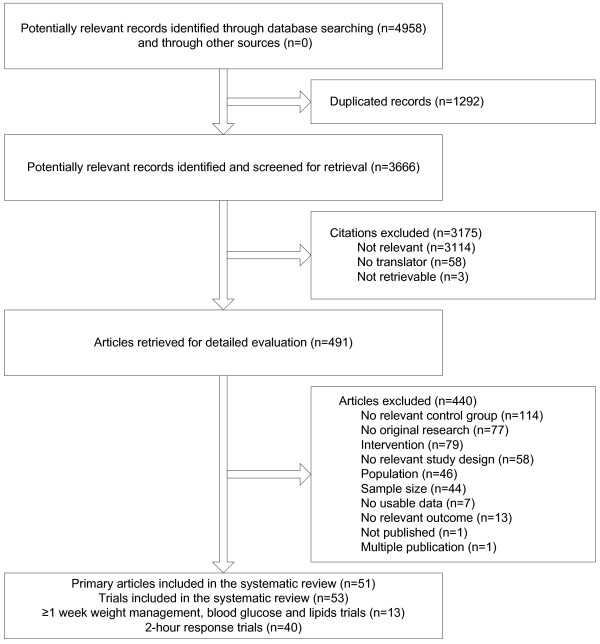
Background: The major metabolic complications of obesity and type 2 diabetes may be prevented and managed with dietary modification. The use of sweeteners that provide little or no calories may help to achieve this objective. Methods: We did a systematic review and network meta-analysis of the comparative effectiveness of sweetener additives using Bayesian techniques. MEDLINE, EMBASE, CENTRAL and CAB Global were searched to January 2011. Randomized trials comparing sweeteners in obese, diabetic, and healthy populations were selected. Outcomes of interest included weight change, energy intake, lipids, glycated hemoglobin, markers of insulin resistance and glycemic response. Evidence-based items potentially indicating risk of bias were assessed. Results: Of 3,666 citations, we identified 53 eligible randomized controlled trials with 1,126 participants. In diabetic participants, fructose reduced 2-hour blood glucose concentrations by 4.81 mmol/L (95% CI 3.29, 6.34) compared to glucose. Two-hour blood glucose concentration data comparing hypocaloric sweeteners to sucrose or high fructose corn syrup were inconclusive. Based on two ≤10-week trials, we found that non-caloric sweeteners reduced energy intake compared to the sucrose groups by approximately 250-500 kcal/day (95% CI 153, 806). One trial found that participants in the non-caloric sweetener group had a decrease in body mass index compared to an increase in body mass index in the sucrose group (-0.40 vs 0.50 kg/m 2, and -1.00 vs 1.60 kg/m 2, respectively). No randomized controlled trials showed that high fructose corn syrup or fructose increased levels of cholesterol relative to other sweeteners. Conclusions: Considering the public health importance of obesity and its consequences; the clearly relevant role of diet in the pathogenesis and maintenance of obesity; and the billions of dollars spent on non-caloric sweeteners, little high-quality clinical research has been done. Studies are needed to determine the role of hypocaloric sweeteners in a wider population health strategy to prevent, reduce and manage obesity and its consequences.
Overview
The claims and statistics of this paper haven’t been checked yet.
Free: it reads the open-access text and checks the first 5 claims that cite a source we can check. Create a free account to check every claim.
Integrity signals
Registry
Cites
Statistics
Figures
Verification
Claims the paper makes
The claims and statistics of this paper haven’t been checked yet.
Free: it reads the open-access text and checks the first 5 claims that cite a source we can check. Create a free account to check every claim.
Self-check
Percentages, sums and reported differences re-computed from the paper’s own numbers.
The self-check needs the paper’s full text.
Citations
Cites
Preferred Reporting Items for Systematic Reviews and Meta-Analyses: the PRISMA statement
Moher, D., Liberati, A., Tetzlaff, J., Altman, D. G., & for the PRISMA Group (2009) · BMJ · doi:10.1136/bmj.b2535 · Cited by 83,823
Bias in meta-analysis detected by a simple, graphical test
Egger, M., Smith, G. D., Schneider, M., & Minder, C. (1997) · BMJ · doi:10.1136/bmj.315.7109.629 · Cited by 56,722 · cited 1×
“with weighted regression [16], however the available”
Preferred reporting items for systematic reviews and meta-analyses: the PRISMA Statement.
(2009) · PubMed Central · Cited by 44,859
Reduction in the incidence of type 2 diabetes with lifestyle intervention or metformin
(2002) · New England Journal of Medicine · doi:10.1056/nejmoa012512 · Cited by 19,011 · cited 1×
“The main metabolic complications of obesity and type 2 diabetes may be prevented and managed in full or in part with dietary modification, including the use of sweeteners that provide little or no calories (hypocaloric sweeteners) [7-10].”
BackgroundAssessing the quality of reports of randomized clinical trials: Is blinding necessary?
Jadad, A. R., Moore, R. A., Carroll, D., Jenkinson, C., Reynolds, D. J. M., Gavaghan, D. J., & McQuay, H. J. (1996) · Controlled Clinical Trials · doi:10.1016/0197-2456(95)00134-4 · Cited by 17,582 · cited 2×
“participants would have been impossible in many of the trials due to taste differences between sweeteners [63], the reporting of important design descriptors were largely absent, indicating a substantial risk for bias [12,13].”
BackgroundMethodBorenstein, M., Hedges, L. V., Higgins, J. P. T., & Rothstein, H. R. (2009) · doi:10.1002/9780470743386 · Cited by 14,225
Tuomilehto, J., Lindström, J., Eriksson, J. G., Valle, T. T., Hämäläinen, H., Ilanne-Parikka, P., Keinänen-Kiukaanniemi, S., Laakso, M., Louheranta, A., Rastas, M., et al. (2001) · New England Journal of Medicine · doi:10.1056/nejm200105033441801 · Cited by 10,873
Borenstein, M., Hedges, L. V., Higgins, J. P. T., & Rothstein, H. R. (2021) · doi:10.1002/9781119558378 · Cited by 9,799
Bariatric Surgery: A Systematic Review and Meta-analysis
Buchwald, H., Avidor, Y., Braunwald, E., Jensen, M. D., Pories, W., Fahrbach, K., & Schoelles, K. (2004) · JAMA · doi:10.1001/jama.292.14.1724 · Cited by 6,800 · cited 1×
“Since even small reductions (as little as 6%) in body-weight can prevent chronic disease [81,82], hypocaloric sweeteners could play an important role in a wider population health strategy to prevent, reduce and manage obesity-related comorbidities.”
BackgroundSchulz (1995) · doi:10.1001/jama.1995.03520290060030 · Cited by 5,634
Research works printed but not linked: 4
- Freedonia Freedonia focus on food and beverage additives 2010 The Freedonia Group I
- Bowker SL Majumdar SR Johnson JA Systematic review of indicators and measurements used in controlled studies of quality improvement for type 2 diabetes Can J Diabetes 2005 29 230 238
- Gougeon R Spidel M Lee K Field CJ Canadian Diabetes Association National Nutrition Committee Technical Review: Non-nutritive Intense Sweeteners in Diabetes Management Can J Diabetes 2004 28 385 399
- Wolever T Barbeau M Charron S Harrigan K Leung S Madrick B Taillefer T Seto C Guidelines for the nutritional management of diabetes mellitus in the new millennium: A position statement by the Canadian Diabetes Association Can J Diabetes Care 1999 23 56 69
Cited by
Nutrition Therapy for Adults With Diabetes or Prediabetes: A Consensus Report
Evert, A. B., Dennison, M., Gardner, C. D., Garvey, W. T., Lau, K. H. K., MacLeod, J., Mitri, J., Pereira, R. F., Rawlings, K., Robinson, S., et al. (2019) · Diabetes Care · doi:10.2337/dci19-0014 · Cited by 1,496
“Currently, there is little research on the potential benefits of sugar alcohols for people with diabetes (217).”
Nutrition therapy recommendations for the management of adults with diabetes
Evert, A. B., Boucher, J. L., Cypress, M., Dunbar, S. A., Franz, M. J., Mayer-Davis, E. J., Neumiller, J. J., Nwankwo, R., Verdi, C. L., Urbanski, P., et al. (2013) · Diabetes Care · doi:10.2337/dc13-2042 · Cited by 1,129
“These conclusions are consistent with a systematic review of hypocaloric sweeteners (including sugar alcohols) that found little evidence that the use of NNSs lead to reductions in body weight (147).”
Nutrition therapy recommendations for the management of adults with diabetes
Evert, A. B., Boucher, J. L., Cypress, M., Dunbar, S. A., Franz, M. J., Mayer-Davis, E. J., Neumiller, J. J., Nwankwo, R., Verdi, C. L., Urbanski, P., et al. (2014) · Diabetes Care · doi:10.2337/dc14-s120 · Cited by 766
Artificial sweeteners produce the counterintuitive effect of inducing metabolic derangements
Swithers, S. E. (2013) · Trends in Endocrinology & Metabolism · doi:10.1016/j.tem.2013.05.005 · Cited by 418
Pérez-Martínez, P., Mikhailidis, D. P., Athyros, V. G., Bullo, M., Couture, P., Covas, M. I., de Koning, L., Delgado-Lista, J., Díaz-López, A., Drevon, C. A., et al. (2017) · Nutrition Reviews · doi:10.1093/nutrit/nux014 · Cited by 410
Rogers, P. J., Hogenkamp, P. S., de Graaf, C., Higgs, S., Lluch, A., Ness, A. R., Penfold, C., Perry, R., Putz, P., Yeomans, M. R., et al. (2016) · International Journal of Obesity · doi:10.1038/ijo.2015.177 · Cited by 358
Toews, I., Lohner, S., Küllenberg de Gaudry, D., Sommer, H., & Meerpohl, J. J. (2019) · BMJ · doi:10.1136/bmj.k4718 · Cited by 264
Debras, C., Chazelas, E., Sellem, L., Porcher, R., Druesne-Pecollo, N., Esseddik, Y., de Edelenyi, F. S., Agaësse, C., De Sa, A., Lutchia, R., et al. (2022) · BMJ · doi:10.1136/bmj-2022-071204 · Cited by 222
“81 82 Most of these studies were conducted among participants with particular conditions (eg, people who were overweight or those with prevalent hypertension) 22 and were of short duration (follow-up around six months), with a level of evidence ranging from very low to moderate.”
Health outcomes of non-nutritive sweeteners: analysis of the research landscape
Lohner, S., Toews, I., & Meerpohl, J. J. (2017) · Nutrition Journal · doi:10.1186/s12937-017-0278-x · Cited by 188
Johnson, R. K., Lichtenstein, A. H., Anderson, C. A. M., Carson, J. A., Després, J.-P., Hu, F. B., Kris-Etherton, P. M., Otten, J. J., Towfighi, A., Wylie-Rosett, J., et al. (2018) · Circulation · doi:10.1161/cir.0000000000000569 · Cited by 176
Dalenberg, J. R., Patel, B. P., Denis, R., Veldhuizen, M. G., Nakamura, Y., Vinke, P. C., Luquet, S., & Small, D. M. (2020) · Cell Metabolism · doi:10.1016/j.cmet.2020.01.014 · Cited by 155
Aspartame—True or False? Narrative Review of Safety Analysis of General Use in Products
Czarnecka, K., Pilarz, A., Rogut, A., Maj, P., Szymańska, J., Olejnik, Ł., & Szymański, P. (2021) · Nutrients · doi:10.3390/nu13061957 · Cited by 185
“Well-designed studies are urgently needed for covering all types of potentially interfering factors and those which play a role in T2D development [40].”
BackgroundTrumbo, P. R., & Rivers, C. R. (2014) · Nutrition Reviews · doi:10.1111/nure.12128 · Cited by 105
Artificially Sweetened Beverages and the Response to the Global Obesity Crisis
Borges, M. C., Louzada, M. L., de Sá, T. H., Laverty, A. A., Parra, D. C., Garzillo, J. M. F., Monteiro, C. A., & Millett, C. (2017) · PLOS Medicine · doi:10.1371/journal.pmed.1002195 · Cited by 103
“Few RCTs have been conducted in the general population, and the results are inconclusive [54].”
Expert consensus on low-calorie sweeteners: facts, research gaps and suggested actions
Ashwell, M., Gibson, S. A., Bellisle, F., Buttriss, J. L., Drewnowski, A., Fantino, M., Gallagher, A. M., de Graaf, K. C., Goscinny, S., Hardman, C. A., et al. (2020) · Nutrition Research Reviews · doi:10.1017/s0954422419000283 · Cited by 108
“(2) Intervention studies have shown that beverages containing LCS have at least a similar effect on appetite and energy intake to water(5,32).”
BackgroundInfluentialRare mono- and disaccharides as healthy alternative for traditional sugars and sweeteners?
van Laar, A., Grootaert, C., & Camp, J. V. (2020) · Critical Reviews in Food Science and Nutrition · doi:10.1080/10408398.2020.1743966 · Cited by 105
Rovenko, B. M., Perkhulyn, N. V., Gospodaryov, D. V., Sanz, A., Lushchak, O. V., & Lushchak, V. I. (2014) · Comparative Biochemistry and Physiology Part A Molecular & Integrative Physiology · doi:10.1016/j.cbpa.2014.11.008 · Cited by 95
“One of the well-characterized aspects of glucose/fructose metabolism in mammals is their different rates of absorption and digestion, and how they differently influence the levels of glucose in the blood (Basciano et al., 2005; Schaefer et al., 2009; Tappy and Lê, 2010; Wiebe et al., 2011).”
BackgroundElnaga, N. I. E. A., Massoud, M., Yousef, M. I., & Mohamed, H. H. (2016) · Annals of Agricultural Science Cairo · doi:10.1016/j.aoas.2015.11.008 · Cited by 92
“This result was in agreement with Williams (1995) who found that the diets given to rats containing stevia extract at levels two 1% and 2% and stevioside at levels 1%, 2% and 3% led to gradual reduction in plasma AST and ALT levels. Other study with Youssef et al. (2007) stated that diets containing S.”
ResultHuang, M., Quddus, A., Stinson, L. J., Shikany, J. M., Howard, B. V., Kutob, R. M., Lü, B., Manson, J. E., & Eaton, C. B. (2017) · American Journal of Clinical Nutrition · doi:10.3945/ajcn.116.145391 · Cited by 85
“In a systematic review and metaanalysis, which compared noncaloric sweeteners and saccharides, 2-h glucose responses were not significantly different based on 3 trials identified, although another 3 trials examined longer-term outcomes and found a significant energy reduction in participants consuming the noncaloric s…”
BackgroundNutritional Strategies for the Management of Type 2 Diabetes Mellitus: A Narrative Review
Minari, T. P., Tácito, L. H. B., Yugar, L. B. T., Ferreira‐Melo, S. E., Manzano, C. F., Pires, A. C., Moreno, H., Vilela-Martin, J. F., Cosenso‐Martin, L. N., & Yugar‐Toledo, J. C. (2023) · Nutrients · doi:10.3390/nu15245096 · Cited by 104
“Currently, there is little research on the benefits of sugar alcohols for people with T2DM [9,124].”
BackgroundSerra‐Majem, L., Raposo, A., Bartrina, J. A., Varela‐Moreiras, G., Logue, C., Laviada‐Molina, H., Socolovsky, S., Pérez‐Rodrigo, C., Aldrete-Velasco, J. A., Sierra, E. M., et al. (2018) · Nutrients · doi:10.3390/nu10070818 · Cited by 92
Sloboda, D. M., Li, M., Patel, R., Clayton, Z. E., Yap, C., & Vickers, M. H. (2014) · Journal of Obesity · doi:10.1155/2014/203474 · Cited by 78
“NALFD) and type 2 diabetes [11, 15, 16], other studies suggest that this relationship is not quite as straightforward as some believe [17, 18].”
BackgroundFructose, pregnancy and later life impacts
Regnault, T. R. H., Gentili, S., Sarr, O., Toop, C. R., & Sloboda, D. M. (2013) · Clinical and Experimental Pharmacology and Physiology · doi:10.1111/1440-1681.12162 · Cited by 76
“or have been inconclusive in attributing a specific fructose effect.(46,47)”
BackgroundEffect of sucralose and aspartame on glucose metabolism and gut hormones
Ahmad, S. Y., Friel, J. K., & MacKay, D. (2020) · Nutrition Reviews · doi:10.1093/nutrit/nuz099 · Cited by 71
Zhang, Y.-B., Jiang, Y.-W., Chen, J.-X., Xia, P.-F., & Pan, A. (2021) · Advances in Nutrition · doi:10.1093/advances/nmaa110 · Cited by 60
“Metaanalyses of randomized controlled trials found that lowcalorie sweeteners modestly but significantly reduced body weight, BMI, fat mass, and waist circumference (23), but had no effects on blood glucose and blood lipids compared with saccharides (39).”
BackgroundO'Connor, D., Pang, M. D., Castelnuovo, G., Finlayson, G., Blaak, E. E., Gibbons, C., Navas‐Carretero, S., Almiron‐Roig, E., Harrold, J. A., Raben, A., et al. (2021) · Food & Function · doi:10.1039/d0fo02424d · Cited by 63
Barrea, L., Vetrani, C., Verde, L., Frías-Toral, E., Ceriani, F., Cernea, S., Docimo, A., Graziadio, C., Tripathy, D., Savastano, S., et al. (2023) · Antioxidants · doi:10.3390/antiox12040904 · Cited by 61
Review of the nutritional benefits and risks related to intense sweeteners
Bruyère, O., Ahmed, S. H., Atlan, C., Belegaud, J., Bortolotti, M., Lavier, M.-C. C., Charrière, S., Girardet, J.-P., Houdart, S., Kalonji, E., et al. (2015) · Archives of Public Health · doi:10.1186/s13690-015-0092-x · Cited by 67
“Two meta-analysis (Table 2) [9, 16], a systematic review [17] and several original articles [18–29]examined the relationship between IS consumption and changes in body composition and weight.”
BackgroundImpact of sugars and sugar taxation on body weight control: A comprehensive literature review
Bes‐Rastrollo, M., Sayón-Orea, C., Ruiz‐Canela, M., & Martínez‐González, M. Á. (2016) · Obesity · doi:10.1002/oby.21535 · Cited by 68
Public health rationale for reducing sugar: Strategies and challenges
Stanner, S. A., & Spiro, A. (2020) · Nutrition Bulletin · doi:10.1111/nbu.12460 · Cited by 64
Bueno-Hernández, N., Esquivel‐Velázquez, M., Alcántara-Suárez, R., Gómez-Arauz, A. Y., Espinosa-Flores, A. J., León-Barrera, K. L., Mendoza-Martínez, V. M., Medina, G. A. S., León-Hernández, M., Ruíz-Barranco, A., et al. (2020) · Nutrition Journal · doi:10.1186/s12937-020-00549-5 · Cited by 58
“Besides, it should be mentioned that our study did not find a beneficial effect of sucralose consumption on BMI, HOMA, cholesterol or triglycerides, which agrees with other studies that reported limited or no effects of NNS consumption on reduction of caloric intake and consequently BMI or other clinical manifestation…”
ResultGreyling, A., Appleton, K. M., Raben, A., & Mela, D. J. (2020) · American Journal of Clinical Nutrition · doi:10.1093/ajcn/nqaa167 · Cited by 57
“A somewhat older network meta-analysis that compared the effects of different caloric and noncaloric sweeteners on 120 min PPG responses concluded that the data were inconclusive (85); however, many relevant trials have been published since that analysis, which included only 2 of the 34 trials here.”
Aspartame intake is associated with greater glucose intolerance in individuals with obesity
Kuk, J. L., & Brown, R. E. (2016) · Applied Physiology, Nutrition, and Metabolism · doi:10.1139/apnm-2015-0675 · Cited by 54
Raben, A., & Richelsen, B. (2012) · Current Opinion in Clinical Nutrition and Metabolic Care · doi:10.1097/mco.0b013e328359678a · Cited by 50
“A systematic review on randomized controlled trials looking at sweeteners and different clinical outcomes was recently published [13].”
BackgroundNasir, A., Sattar, F., Ashfaq, I., Lindemann, S. R., Chen, M., den Ende, W. V., Öner, E. T., Kırtel, O., Khaliq, S., Ghauri, M. A., et al. (2020) · LWT · doi:10.1016/j.lwt.2020.109093 · Cited by 48
Griffioen-Roose, S., Smeets, P. A. M., Weijzen, P. L. G., van Rijn, I., van den Bosch, I., & de Graaf, C. (2013) · PLoS ONE · doi:10.1371/journal.pone.0081924 · Cited by 46
“There is currently still a lot of discussion regarding the role of low-caloric sweeteners in weight management [31-41].”
BackgroundNon-nutritive Sweeteners and Their Associations with Obesity and Type 2 Diabetes
Walbolt, J., & Koh, Y. (2020) · Journal of Obesity & Metabolic Syndrome · doi:10.7570/jomes19079 · Cited by 50
Assessing developmental toxicity of caffeine and sweeteners in medaka (Oryzias latipes)
Lee, W., & Wang, Y.-C. (2015) · SpringerPlus · doi:10.1186/s40064-015-1284-0 · Cited by 47
“2013), clear evidence of safety in long-term use is still lacking (Wiebe et al. 2011; Shankar et al. 2013; Gardner 2014).”
BackgroundAssessment of dietary intake of 10 intense sweeteners by the Italian population
Donne, C. L., Mistura, L., Goscinny, S., Janvier, S., Cuypers, K. F., D’Addezio, L., Sette, S., Catasta, G., Ferrari, M., Piccinelli, R., et al. (2017) · Food and Chemical Toxicology · doi:10.1016/j.fct.2017.02.014 · Cited by 50
Non-nutritive sweeteners and type 2 diabetes: Should we ring the bell?
Daher, M. I., Matta, J. M., & Abdel Nour, A. M. (2019) · Diabetes Research and Clinical Practice · doi:10.1016/j.diabres.2019.107786 · Cited by 43
[A current and global review of sweeteners. Regulatory aspects].
García‐Almeida, J. M., Fdez., G. M. A. C., & García-Alemán, J. (2013) · PubMed · doi:10.3305/nh.2013.28.sup4.6793 · Cited by 40
Schwingshackl, L., Schwarzer, G., Rücker, G., & Meerpohl, J. J. (2019) · Advances in Nutrition · doi:10.1093/advances/nmz036 · Cited by 37
Sucrose, fructose, glucose, and their link to metabolic syndrome and cancer
Das, U. N. (2014) · Nutrition · doi:10.1016/j.nut.2014.05.015 · Cited by 40
Figueiredo, L. D. S., Scapin, T., Fernandes, A. C., & Proença, R. P. D. C. (2017) · Public Health Nutrition · doi:10.1017/s136898001700283x · Cited by 36
“There is scientific evidence pointing to a significant association between the replacement of sugars with LCS in glycaemic responses and weight loss in adults((9,10)).”
BackgroundYan, S., Yan, F., Liu, L., Li, B., Liu, S., & Cui, W. (2022) · Nutrients · doi:10.3390/nu14183742 · Cited by 34
“It also appears to have limited effects on blood glucose and lipids [52].”
BackgroundVillaño, D., Masoodi, H., Marhuenda, J., García‐Viguera, C., & Zafrilla, P. (2021) · LWT · doi:10.1016/j.lwt.2021.111173 · Cited by 34
Possiel, C., Ortiz‐Soto, M. E., Ertl, J., Münch, A., Vogel, A., Schmiedel, R., & Seibel, J. (2019) · Scientific Reports · doi:10.1038/s41598-019-44211-5 · Cited by 30
Ray, J., Kumar, S. A., Laor, D., Shereen, N., Nwamaghinna, F., Thomson, A., Perez, J., Soni, L., & McFarlane, S. I. (2020) · International Journal of Clinical Research & Trials · doi:10.15344/2456-8007/2020/142 · Cited by 35
“were found in other studies, in which rats fed stevia were compared to control subjects who were fed sucrose or water [42,43].”
ResultVargas-García, E. J., Evans, C., & Cade, J. E. (2015) · Systematic Reviews · doi:10.1186/s13643-015-0008-4 · Cited by 29
“However, as the use of any caloric sweetener in beverages appears to have similar acute responses in the body, more robust study designs and data are warranted to determine detrimental health outcomes in the longer term [13-17].”
BackgroundLiu, L., Zhang, P., Wang, Y., Cui, W., & Li, D. (2021) · Food Science & Nutrition · doi:10.1002/fsn3.2395 · Cited by 25
“…to how to reduce energy intake, artificial sweeteners are becoming more and more popular (Sakurai et al., 2014), and their use in food is also increasing, partly because they contain no calories, which can be used to control weight and obesity (Qurrat- ul and Khan, 2015; Wiebe et al., 2011).”
BackgroundChemical, Nutritional and Organoleptical Characteristics of Orange-Based Formulated Low-Calorie Jams
Abolila, R. M., Barakat, H., El-Tanahy, H. A., & El‐Mansy, H. A. (2015) · Food and Nutrition Sciences · doi:10.4236/fns.2015.613129 · Cited by 26
“Low-calorie sweeteners (LCSs) are added to many foods and beverages, for reducing total calories, while maintaining palatability [10].”
BackgroundEl-Lahot, M. A., El-Razek, A. M. A., Massoud, M., & Gomaa, E. (2017) · Journal of Food and Dairy Sciences · doi:10.21608/jfds.2017.37143 · Cited by 26
“However, the non-caloric sweetener group had a decrease in body mass index compared to an increase in body mass index in the sucrose group (Wiebe et al., 2011).”
BackgroundLow-energy sweeteners and body weight: a citation network analysis
Normand, M., Ritz, C., Mela, D. J., & Raben, A. (2021) · BMJ Nutrition Prevention & Health · doi:10.1136/bmjnph-2020-000210 · Cited by 24
“1 10 Given that the same evidence base is available to all reviewers, these different views presumably arise from the selection and importance given to different types of evidence, and potential citation bias in the reviews.”
BackgroundBanjarnahor, R. L., Arjmand, E. J., Onni, A. T., Thomassen, L. M., Perillo, M., Balakrishna, R., Sletten, I. S. K., Lorenzini, A., Plastina, P., & Fadnes, L. T. (2025) · Journal of Nutrition · doi:10.1016/j.tjnut.2025.03.021 · Cited by 26
“However, recent systematic reviews investigating the effect of different sweeteners on glycemic response did not fi nd conclusive evidence indicating fructose is more harmful compared with similar amounts of other sugars like sucrose or glucose [118,119].”
Logue, C., Dowey, L. R. C., Strain, J., Verhagen, H., & Gallagher, A. M. (2016) · Proceedings of The Nutrition Society · doi:10.1017/s0029665115004310 · Cited by 21
Mosdøl, A., Vist, G. E., Svendsen, C., Dirven, H. A. A. M., Lillegaard, I. T., Mathisen, G. H., & Husøy, T. (2018) · PLoS ONE · doi:10.1371/journal.pone.0199558 · Cited by 25
“Four reviews [17, 21, 22, 30] restricted their analyses to controlled trials in humans.”
BackgroundMandal, P., Rai, A., Mishra, S., Tripathi, A., & Das, M. (2017) · Elsevier eBooks · doi:10.1016/b978-0-12-809252-1.00007-9 · Cited by 18
Potential contributions of the methodology to the variability of glycaemic index of foods
Flavel, M., Jois, M., & Kitchen, B. (2021) · World Journal of Diabetes · doi:10.4239/wjd.v12.i2.108 · Cited by 18
Mehat, K., Chen, Y., & Corpe, C. P. (2022) · Advances in Nutrition · doi:10.1093/advances/nmac072 · Cited by 23
“63 for missing Corr values based on an average of the calculated Corr values and from previous literature (9).”
BackgroundMethodResultGil‐Campos, M., González, M. A. S. J., & Díaz, J. J. (2015) · Anales de Pediatría · doi:10.1016/j.anpedi.2015.02.013 · Cited by 17
Bright, O.-J. M., Wang, D. D., Shams‐White, M., Bleich, S. N., Foreyt, J. P., Franz, M. J., Johnson, G., Manning, B. T., Mattes, R. D., Pi‐Sunyer, X., et al. (2017) · Current Developments in Nutrition · doi:10.3945/cdn.117.000547 · Cited by 17
Gil‐Campos, M., González, M. A. S. J., & Díaz, J. J. (2015) · Anales de Pediatría (English Edition) · doi:10.1016/j.anpede.2015.10.002 · Cited by 17
Effects of three intense sweeteners on fat storage in the C. elegans model
Zheng, J., Greenway, F. L., Heymsfield, S. B., Johnson, W. D., King, J. F., King, M. J., Gao, C., Chu, Y., & Finley, J. W. (2014) · Chemico-Biological Interactions · doi:10.1016/j.cbi.2014.02.016 · Cited by 16
Rashad, N. M., Abdelsamad, M. A. E., Amer, A. M., Sitohy, M. Z., & Mousa, M. M. (2019) · The Egyptian Journal of Internal Medicine · doi:10.4103/ejim.ejim_68_18 · Cited by 16
Alsuhaibani, A. M., & Al-Kuraieef, A. N. (2018) · Journal of Food Quality · doi:10.1155/2018/9408715 · Cited by 18
“[33] support the idea that stevia inhibits ATP-sensitive K-channels that increase glucose-stimulated insulin secretion and decrease blood glucose by suppressing glucagon release in diabetic humans and rodents.”
BackgroundBarakat, H., Al-Furaydi, A., Al-Harbi, A., & Al-Shedookhi, A. (2017) · Food and Nutrition Sciences · doi:10.4236/fns.2017.81009 · Cited by 14
Random forest-assisted Raman spectroscopy and rapid detection of sweeteners
Ding, Y., He, X., Zhang, R., Wu, H., & Bu, Y. (2025) · Infrared Physics & Technology · doi:10.1016/j.infrared.2025.105871 · Cited by 12
Choi, J. H., Song, S., Kim, S. K., Cho, J. W., Bae, J. H., Moon, S., Lim, J. H., Lee, Y., Hwang, J., Song, Y., et al. (2026) · Diabetes & Metabolism Journal · doi:10.4093/dmj.2025.0848 · Cited by 11
“…cohort studies link high ASBs consumption to an increased risk of T2DM, comparable to SSBs. Methodological limitations, including reverse causation and residual confounding, likely explain part of this gap [56,57]; however, emerging mechanistic data also suggest direct physiological effects.”
Higgins, K., Rawal, R., Kramer, M., Baer, D. J., Yerke, A. M., & Klurfeld, D. M. (2024) · Advances in Nutrition · doi:10.1016/j.advnut.2024.100239 · Cited by 12
“Two SR established a priori methods to conduct an MA but determined there were an insuf fi cient number of studies to do so [46,51], and 2 SR were designed to only conduct qualitative analysis (i.e., no MA) [31,49].”
InfluentialHigh intensity sweeteners chemicals structure, properties and applications
Ibrahim, O. O. (2015) · Natural Science and Discovery · doi:10.20863/nsd.97334 · Cited by 11
Yazdi, A. P. G., Hojjatoleslamy, M., Keramat, J., Jahadi, M., & Amani, E. (2017) · Food Science & Nutrition · doi:10.1002/fsn3.463 · Cited by 12
“For instance, consumption of these sweeteners may enhance weight loss (Raben, Vasilaras, Moller, & Astrup, 2002), reduced energy intake (Wiebe et al., 2011), and reduced BMI (Wiebe et al., 2011).”
BackgroundShah, S. S. M., Luthfi, A. A. I., Jahim, J. M., Harun, S., & Low, K. O. (2020) · International Journal of Food Engineering · doi:10.1515/ijfe-2019-0230 · Cited by 11
Worldwide Consumption of Sweeteners and Recent Trends
Marriott, B. P., Fink, C. J., & Krakower, T. J. (2014) · Springer eBooks · doi:10.1007/978-1-4899-8077-9_6 · Cited by 11
Quality Characteristics and Glycemic Index of Oatmeal Cookies Made with Artificial Sweeteners
Bang, S. K., Son, E., Kim, H.-J., & Park, S. (2013) · Journal of the Korean Society of Food Science and Nutrition · doi:10.3746/jkfn.2013.42.6.877 · Cited by 10
Singh, S., & Gummadi, S. N. (2024) · Bioresource Technology · doi:10.1016/j.biortech.2024.131469 · Cited by 9
[A general up-to-date and critical approach about the importance of sugar in our food].
Candela, C. G., & Milla, S. P. (2013) · PubMed · doi:10.3305/nh.2013.28.sup4.6791 · Cited by 8
Ayuso‐Yuste, M. C., Calero, F. J. C., García, M. R., Barroso, N. N., Alguijo, M. B. R., Rodríguez, M. J., & Calvo, P. (2024) · Foods · doi:10.3390/foods13244122 · Cited by 7
“Considering the sweetness intensity of each sugar, with sorbitol showing the lowest sweetening power [36], the sugar profile suggests that goji cultivars will have a higher sweetness due to higher fructose and glucose content.”
Barakat, H., Al-Roug, K., Algonaiman, R., Althwab, S. A., Alfheeaid, H. A., Alhomaid, R. M., Almujaydil, M. S., Bushnaq, T., & Ebeid, T. A. (2023) · Molecules · doi:10.3390/molecules28030940 · Cited by 7
“Many foods and drinks use nonnutritive sweeteners (NNSs) to lower calorie counts without sacrificing flavor [6].”
BackgroundGuidance on Healthy Eating Habits from the Medical Student’s Perspective
Rossi, T. C., Bruno, V. H. T., Catarucci, F. M., Beteto, I. D. S., Habimorad, P. H. L., & Patrício, K. P. (2019) · Revista Brasileira de Educação Médica · doi:10.1590/1981-52712015v43n1rb20180112 · Cited by 9
Artificial sweeteners affect the glucose transport rate in the Caco‐2/ NCI‐H716 co‐culture model
Xie, N., Huang, X., Yang, C., Dai, M., Cai, L., Deng, S., Hardiman, P., & Zhou, J. (2020) · Journal of the Science of Food and Agriculture · doi:10.1002/jsfa.10549 · Cited by 8
Sweeteners: Regulatory Aspects
García‐Almeida, J. M., Cornejo-Pareja, I. M., Muñoz‐Garach, A., Gómez‐Pérez, A. M., & García-Alemán, J. (2018) · Reference series in phytochemistry · doi:10.1007/978-3-319-27027-2_12 · Cited by 7
An Evidence Map of Research Linking Dietary Sugars to Potentially Related Health Outcomes
Tybor, D. J., Beauchesne, A. R., Niu, R., Shams‐White, M., & Chung, M. (2018) · Current Developments in Nutrition · doi:10.1093/cdn/nzy059 · Cited by 10
“Not specified 14 (14) 1 (1) 15 (5) Funding source, n (%) Government 26 (27) 39 (19) 65 (22) Industry 23 (24) 24 (12) 47 (16) Nonprofit 21 (22) 31 (15) 52 (17) Government and industry 5 (5) 23 (11%) 28 (9) Government and nonprofit 7 (7) 24 (12) 31 (10) Nonprofit and industry 1 (1) 6 (3) 7 (2) Government, industry, and…”
InfluentialA Review on Induced Mutagenesis of Stevia rebaudiana Bertoni
Chiew, M. S., Lai, K., Hussein, S., & Abdullah, J. O. (2016) · Universiti Putra Malaysia Institutional Repository (Universiti Putra Malaysia) · Cited by 7
Glycemic Impact of Non-Nutritive Sweeteners in Health and Type 2 Diabetes
Rose, B. D., Kreuch, D., Wu, T., Horowitz, Rayner, C. K., Page, A. J., Miller, C., & Young, R. L. (2026) · Nutrition Reviews · doi:10.1093/nutrit/nuaf313 · Cited by 5
Veerapandian, B., Shanmugam, S. R., Krishnan, S., Sivaraman, S., Sriariyanun, M., & Venkatachalam, P. (2023) · E3S Web of Conferences · doi:10.1051/e3sconf/202342802005 · Cited by 5
“Also, these types of polysaccharides have gained noticeable importance, such as the ability to enhance the activity of gut microbiota, low caloric sweeteners, non-toxic, and improve the intestinal immune response [29-31].”
BackgroundWicked Problems and Worthy Pursuits: Resolving to Meet American Heart Association 2020 Impact Goals
Arnett, D. K. (2012) · Circulation · doi:10.1161/circulationaha.112.107813 · Cited by 6
Evans, R. A., Lithander, F. E., Frese, M., Cunningham, J. H., & Mills, K. (2015) · Cochrane Database of Systematic Reviews · doi:10.1002/14651858.cd011840 · Cited by 5
RetractedKnowledge and perceptions of low-calorie sweeteners in an adult population
Logue, C., O'Mahony, M., Phair, E., Dougherty, H., McDaid, C., & Gallagher, A. M. (2017) · Proceedings of The Nutrition Society · doi:10.1017/s0029665117001379 · Cited by 4
Ernährungsempfehlungen bei Diabetes mellitus
Schindler, K., & Ludvik, B. H. (2012) · Wiener klinische Wochenschrift · doi:10.1007/s00508-012-0286-y · Cited by 4
The Efficacy and Safety of Non-Nutritive Sweeteners
Ju, D. L. (2015) · Journal of Korean Diabetes · doi:10.4093/jkd.2015.16.4.281 · Cited by 4
“미국심장학회와 미국당뇨병학회 는 비영양감미료의 사용이 실제적으로 체중이나 심장관련 질환의 위험요소들을 감소시키지는 못하는 것으로 판단하 였으나 칼로리가 있는 감미료 대신 비영양감미료를 사용하 면 전반적인 칼로리와 당질 섭취를 줄이는 데에 도움이 될 수 있는 것으로 보고 있다[3,10].”
Najafi, A., Moghtaderi, F., Seyedjafari, B., Rostampour, K., & Salehi‐Abargouei, A. (2025) · Scientific Reports · doi:10.1038/s41598-025-00612-3 · Cited by 4
Sweeteners: Regulatory Aspects
García‐Almeida, J. M., Cornejo-Pareja, I. M., Muñoz‐Garach, A., Gómez‐Pérez, A. M., & García-Alemán, J. (2016) · Reference series in phytochemistry · doi:10.1007/978-3-319-26478-3_12-1 · Cited by 3
Low‐ or No‐Energy Sweeteners and Body Weight Management: Dissecting a “Minor” Effect
Bellisle, F. (2025) · Obesity Reviews · doi:10.1111/obr.13937 · Cited by 3
Artificial Sweeteners: Implications for Weight Loss in Obesity
Laviada‐Molina, H., Molina-Seguí, F., & Janssen‐Aguilar, R. (2019) · Elsevier eBooks · doi:10.1016/b978-0-12-816093-0.00023-9 · Cited by 2
Hosni, H., Diallo, A., Morcillo, F., Vaissayre, V., Collin, M., Tranchant‐Dubreuil, C., Dussert, S., Joët, T., Castaño, F., Marquínez-Casas, X., et al. (2021) · Annals of Botany · doi:10.1093/aob/mcab060 · Cited by 2
Ernährungsempfehlungen für Menschen mit Diabetes (Update 2023)
Klammer, C., Schindler, K., Bugl, R., Plazek, D., Vötter, M., Kirchner, T., Martino, C., Klammer-Martin, J., Brix, J. M., Dämon, S., et al. (2023) · Wiener klinische Wochenschrift · doi:10.1007/s00508-023-02170-y · Cited by 3
Macronutrients and Nutrition Therapy for Diabetes
MacLeod, J., & Franz, M. J. (2017) · American Diabetes Association eBooks · doi:10.2337/9781580406482.ch02 · Cited by 2
Стрессовая гипергликемия: обсуждение пути ее устранения с помощью применения многоатомных спиртов
Kursov, S. V., & Nіkonov, V. V. (2019) · EMERGENCY MEDICINE · doi:10.22141/2224-0586.4.99.2019.173932 · Cited by 2
O'Niones, K. J. (2014) · UKnowledge (University of Kentucky) · Cited by 1
Ernährungsempfehlungen bei Diabetes mellitus
Schindler, K., Brix, J. M., Dämon, S., Hoppichler, F., Kruschitz, R., Toplak, H., & Ludvik, B. H. (2016) · Wiener klinische Wochenschrift · doi:10.1007/s00508-015-0926-0 · Cited by 1
“Süßstoffe können das Erreichen einer negativen Energiebilanz unterstützen [5].”
Metadata
- Authors
- Wiebe, N., Padwal, R., Field, C., Marks, S., Jacobs, R., & Tonelli, M.
- Affiliations
- University of Alberta (CA)
- Corresponding author
- Tonelli, Marcello
- Venue
- BMC Medicine
- Published
- 2011-11-17
- Volume
- 9
- Issue
- 1
- Pages
- 123-123
- ISSN
- 1741-7015 (ISSN-L)
- PMC
- PMC3286380
- OpenAlex
- W2022894997
- Cited by
- 118
- References
- 84
- Citations by year
- 2026: 5 · 2025: 5 · 2024: 7 · 2023: 5 · 2022: 4 · 2021: 7 · 2020: 14 · 2019: 12 · 2018: 6 · 2017: 13 · 2016: 9 · 2015: 11 · 2014: 7 · 2013: 10 · 2012: 3
- FWCI
- 0.76
- Type
- journal article
- Language
- en
- Open access
- gold
- doi.org
- Licence
- Locations
- BMC Medicine (publishedVersion, cc-by)
- PubMed Central (publishedVersion, cc-by)
- PubMed (publishedVersion)
- DOAJ (DOAJ: Directory of Open Access Journals) (submittedVersion)
- Funders
- Fondation pour la Recherche Médicale
- Alberta Heritage Foundation for Medical Research
- Topics
- Health Sciences › Nursing › Nutrition and Dietetics › Biochemical Analysis and Sensing Techniques
- Health Sciences › Medicine › Endocrinology, Diabetes and Metabolism › Diet, Metabolism, and Disease
- Health Sciences › Medicine › Public Health, Environmental and Occupational Health › Nutritional Studies and Diet
- Keywords
- sweeteners, artificial sweeteners, glycemic response, fructose, high fructose corn syrup, sucrose, energy intake, weight change, body mass index, insulin resistance, HbA1c, obesity, type 2 diabetes, cholesterol, dietary change
- MeSH terms
- Blood Glucose, Cholesterol, Diabetes Mellitus, Type 2, Diet, Humans, Sweetening Agents, Body Mass Index, Randomized Controlled Trials as Topic, Treatment Outcome
About these checks
Registry, retraction, Cites and statistics results are computed, not judged, with one exception: a printed reference that no index lists is read once by a model before it counts as a citation error. Claims are extracted by a model and kept only when their quote appears verbatim in the text; each cited source is then checked, with a model’s help, for whether it says what the claim relies on. Those verdicts can be wrong — read the claim’s quote and the cited source before relying on one.
Statistics and arithmetic are recomputed, not judged.
Confidence bands are shown only for fields calibrated on our annotated test set. None is calibrated yet, so no band is shown.
What counts as a claim ›How we measure confidence ›How we check this ›
Are you an author, or do you see a problem with this page? Request a review
Data sources
Bibliographic data: Semantic Scholar, OpenAlex, Crossref.
Contains information from the Semantic Scholar Academic Graph Datasets, made available under the ODC Attribution License (ODC-BY 1.0).
Semantic Scholar’s data is described in: Kinney, R., et al. (2023). The Semantic Scholar Open Data Platform. arXiv:2301.10140.
