

A systematic review on the effect of sweeteners on glycemic response and clinically relevant outcomes
Open accessThe DOI matches its Crossref record; 82 of the 84 references it cites were found in a registry or an index.
Abstract
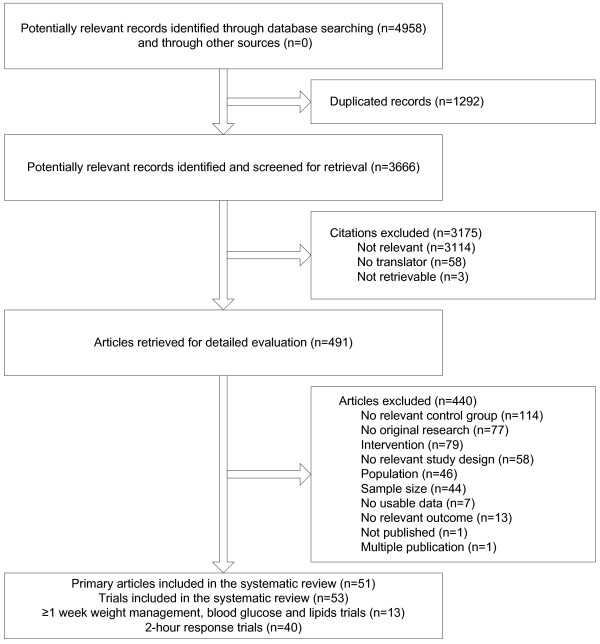
Background: The major metabolic complications of obesity and type 2 diabetes may be prevented and managed with dietary modification. The use of sweeteners that provide little or no calories may help to achieve this objective. Methods: We did a systematic review and network meta-analysis of the comparative effectiveness of sweetener additives using Bayesian techniques. MEDLINE, EMBASE, CENTRAL and CAB Global were searched to January 2011. Randomized trials comparing sweeteners in obese, diabetic, and healthy populations were selected. Outcomes of interest included weight change, energy intake, lipids, glycated hemoglobin, markers of insulin resistance and glycemic response. Evidence-based items potentially indicating risk of bias were assessed. Results: Of 3,666 citations, we identified 53 eligible randomized controlled trials with 1,126 participants. In diabetic participants, fructose reduced 2-hour blood glucose concentrations by 4.81 mmol/L (95% CI 3.29, 6.34) compared to glucose. Two-hour blood glucose concentration data comparing hypocaloric sweeteners to sucrose or high fructose corn syrup were inconclusive. Based on two ≤10-week trials, we found that non-caloric sweeteners reduced energy intake compared to the sucrose groups by approximately 250-500 kcal/day (95% CI 153, 806). One trial found that participants in the non-caloric sweetener group had a decrease in body mass index compared to an increase in body mass index in the sucrose group (-0.40 vs 0.50 kg/m 2, and -1.00 vs 1.60 kg/m 2, respectively). No randomized controlled trials showed that high fructose corn syrup or fructose increased levels of cholesterol relative to other sweeteners. Conclusions: Considering the public health importance of obesity and its consequences; the clearly relevant role of diet in the pathogenesis and maintenance of obesity; and the billions of dollars spent on non-caloric sweeteners, little high-quality clinical research has been done. Studies are needed to determine the role of hypocaloric sweeteners in a wider population health strategy to prevent, reduce and manage obesity and its consequences.
Overview
The claims and statistics of this paper haven’t been checked yet.
Free: it reads the open-access text and checks the first 5 claims that cite a source we can check. Create a free account to check every claim.
Integrity signals
Registry
Cites
Statistics
Figures
Verification
Claims the paper makes
The claims and statistics of this paper haven’t been checked yet.
Free: it reads the open-access text and checks the first 5 claims that cite a source we can check. Create a free account to check every claim.
Self-check
Percentages, sums and reported differences re-computed from the paper’s own numbers.
The self-check needs the paper’s full text.
Citations
Cites
Preferred Reporting Items for Systematic Reviews and Meta-Analyses: the PRISMA statement
Moher, D., Liberati, A., Tetzlaff, J., Altman, D. G., & for the PRISMA Group (2009) · BMJ · doi:10.1136/bmj.b2535 · Cited by 83,823
Bias in meta-analysis detected by a simple, graphical test
Egger, M., Smith, G. D., Schneider, M., & Minder, C. (1997) · BMJ · doi:10.1136/bmj.315.7109.629 · Cited by 56,722 · cited 1×
“with weighted regression [16], however the available”
Preferred reporting items for systematic reviews and meta-analyses: the PRISMA Statement.
(2009) · PubMed Central · Cited by 44,859
Reduction in the incidence of type 2 diabetes with lifestyle intervention or metformin
(2002) · New England Journal of Medicine · doi:10.1056/nejmoa012512 · Cited by 19,011 · cited 1×
“The main metabolic complications of obesity and type 2 diabetes may be prevented and managed in full or in part with dietary modification, including the use of sweeteners that provide little or no calories (hypocaloric sweeteners) [7-10].”
BackgroundAssessing the quality of reports of randomized clinical trials: Is blinding necessary?
Jadad, A. R., Moore, R. A., Carroll, D., Jenkinson, C., Reynolds, D. J. M., Gavaghan, D. J., & McQuay, H. J. (1996) · Controlled Clinical Trials · doi:10.1016/0197-2456(95)00134-4 · Cited by 17,582 · cited 2×
“participants would have been impossible in many of the trials due to taste differences between sweeteners [63], the reporting of important design descriptors were largely absent, indicating a substantial risk for bias [12,13].”
BackgroundMethodBorenstein, M., Hedges, L. V., Higgins, J. P. T., & Rothstein, H. R. (2009) · doi:10.1002/9780470743386 · Cited by 14,225
Tuomilehto, J., Lindström, J., Eriksson, J. G., Valle, T. T., Hämäläinen, H., Ilanne-Parikka, P., Keinänen-Kiukaanniemi, S., Laakso, M., Louheranta, A., Rastas, M., et al. (2001) · New England Journal of Medicine · doi:10.1056/nejm200105033441801 · Cited by 10,873
Borenstein, M., Hedges, L. V., Higgins, J. P. T., & Rothstein, H. R. (2021) · doi:10.1002/9781119558378 · Cited by 9,799
Bariatric Surgery: A Systematic Review and Meta-analysis
Buchwald, H., Avidor, Y., Braunwald, E., Jensen, M. D., Pories, W., Fahrbach, K., & Schoelles, K. (2004) · JAMA · doi:10.1001/jama.292.14.1724 · Cited by 6,800 · cited 1×
“Since even small reductions (as little as 6%) in body-weight can prevent chronic disease [81,82], hypocaloric sweeteners could play an important role in a wider population health strategy to prevent, reduce and manage obesity-related comorbidities.”
BackgroundSchulz (1995) · doi:10.1001/jama.1995.03520290060030 · Cited by 5,634
Guh, D. P., Zhang, W., Bansback, N., Amarsi, Z., Birmingham, C. L., & Anis, A. H. (2009) · BMC Public Health · doi:10.1186/1471-2458-9-88 · Cited by 3,855 · cited 1×
“Since even small reductions (as little as 6%) in body-weight can prevent chronic disease [81,82], hypocaloric sweeteners could play an important role in a wider population health strategy to prevent, reduce and manage obesity-related comorbidities.”
BackgroundChecking consistency in mixed treatment comparison meta-analysis
Dias, S., Welton, N. J., Caldwell, D. M., & Ades, A. E. (2010) · Statistics in Medicine · doi:10.1002/sim.3767 · Cited by 2,521 · cited 1×
“Inconsistency in the network (disagreement between direct and mixed evidence) was measured using back-calculations [21].”
MethodCombination of direct and indirect evidence in mixed treatment comparisons
Lu, G., & Ades, A. E. (2004) · Statistics in Medicine · doi:10.1002/sim.1875 · Cited by 2,166
Teff, K. L., Elliott, S. S., Tschöp, M., Kieffer, T. J., Rader, D., Heiman, M., Townsend, R. R., Keim, N. L., D’Alessio, D., & Havel, P. J. (2004) · The Journal of Clinical Endocrinology & Metabolism · doi:10.1210/jc.2003-031855 · Cited by 742 · cited 2×
“Teff [35] 2004 US General 23 Fructose 30% TID Glucose 30% TID 3 Meals xRCT 2 2d periods (1mo wo) 12 25 100 Unclear 1 Mixed”
BackgroundRaben, A., Vasilaras, T. H., Møller, A. C., & Astrup, A. (2002) · The American Journal of Clinical Nutrition · doi:10.1093/ajcn/76.4.721 · Cited by 667 · cited 10×
“With three exceptions [63,64,66], the doses of sweeteners were at or below current clinical practice guideline (CPG) recommendations (10% of total energy intake (for example, 60 g of sucrose in a 2000 kcal diet) although only three trials [64,65,67] restricted overall energy intake, therefore further sweetener consump…”
BackgroundInfluentialMechanisms for the acute effect of fructose on postprandial lipemia
Chong, M. F.-F., Fielding, B. A., & Frayn, K. N. (2007) · The American Journal of Clinical Nutrition · doi:10.1093/ajcn/85.6.1511 · Cited by 368 · cited 3×
“The other three trials [32,33,46] showed important differences prior to the 2-hour time point (data not shown) but at two hours showed little or no difference between sweeteners.”
How Palatable Food Disrupts Appetite Regulation
Erlanson‐Albertsson, C. (2005) · Basic & Clinical Pharmacology & Toxicology · doi:10.1111/j.1742-7843.2005.pto_179.x · Cited by 330
The Quality of Drug Studies Published in Symposium Proceedings
Cho, M. K., & Bero, L. A. (1996) · Annals of Internal Medicine · doi:10.7326/0003-4819-124-5-199603010-00004 · Cited by 328 · cited 1×
“Source of funding was also extracted given its potential to introduce bias [14].”
BackgroundEffects of dietary fructose on plasma lipids in healthy subjects
Bantle, J. P., Raatz, S. K., Thomas, W., & Georgopoulos, A. (2000) · The American Journal of Clinical Nutrition · doi:10.1093/ajcn/72.5.1128 · Cited by 315 · cited 7×
“With three exceptions [63,64,66], the doses of sweeteners were at or below current clinical practice guideline (CPG) recommendations (10% of total energy intake (for example, 60 g of sucrose in a 2000 kcal diet) although only three trials [64,65,67] restricted overall energy intake, therefore further sweetener consump…”
BackgroundInfluentialBantle, J. P., Laine, D. C., Castle, G. W., Thomas, J. W., Hoogwerf, B. J., & Goetz, F. C. (1983) · New England Journal of Medicine · doi:10.1056/nejm198307073090102 · Cited by 306 · cited 2×
“Bantle [49] 1983 US 31% General/38% DM1/31% DM2 Sucrose 42 g once Fructose 42 g once Glucose 42 g once Meal xRCT 3 1d periods 32 41 56 Unclear 2 Mixed Wiebe et al.”
BackgroundTeff, K. L., Grudziak, J., Townsend, R. R., Dunn, T. N., Grant, R. W., Adams, S. H., Keim, N. L., Cummings, B. P., Stanhope, K. L., & Havel, P. J. (2009) · The Journal of Clinical Endocrinology & Metabolism · doi:10.1210/jc.2008-2192 · Cited by 301 · cited 3×
“Twelve trials included diabetic populations (range mean BMI 23 to 32 kg/m(2)) [25,27-29,36,42,45,4850,56,57], five trials exclusively studied overweight or obese individuals (range mean BMI 28 to 35 kg/m(2)) [30,31,41,45,52], and thirty-five trials included generally healthy individuals (range mean BMI 20 to 26 kg/m(2…”
BackgroundWiebe, N., Vandermeer, B., Platt, R. W., Klassen, T. P., Moher, D., & Barrowman, N. J. (2006) · Journal of Clinical Epidemiology · doi:10.1016/j.jclinepi.2005.08.017 · Cited by 296 · cited 1×
“Missing standard deviations (SDs) were imputed using the maximum value reported in any included study [15].”
MethodSelf-citationStanhope, K. L., Griffen, S. C., Bair, B. R., Swarbrick, M. M., Keim, N. L., & Havel, P. J. (2008) · The American Journal of Clinical Nutrition · doi:10.1093/ajcn/87.5.1194 · Cited by 228
Luo, J., Rizkalla, S., Alamowitch, C., Boussairi, A., Blayo, A., Barry, J., Laffitte, A., Guyon, F., Bornet, F., & Slama, G. (1996) · The American Journal of Clinical Nutrition · doi:10.1093/ajcn/63.6.939 · Cited by 222 · cited 21×
“Two trials reported energy intake (FOS compared with glucose [73] and sucrose [72] respectively, but neither found a significant difference.”
BackgroundInfluentialIntense sweeteners, energy intake and the control of body weight.
Bellisle, F., & Drewnowski, A. (2007) · European Journal of Clinical Nutrition · doi:10.1038/sj.ejcn.1602649 · Cited by 200 · cited 2×
“sources [75,76], or offset by decreases in caloric expen-”
BackgroundYaghoobi, N., Al-Waili, N., Ghayour-Mobarhan, M., Parizadeh, S. M. R., Abasalti, Z., Yaghoobi, Z., Yaghoobi, F., Esmaeili, H., Kazemi-Bajestani, S. M. R., Aghasizadeh, R., et al. (2008) · The Scientific World JOURNAL · doi:10.1100/tsw.2008.64 · Cited by 192
Heterogeneous Effects of Fructose on Blood Lipids in Individuals With Type 2 Diabetes
Sievenpiper, J. L., Carleton, A. J., Chatha, S., Jiang, H. Y., de Souza, R. J., Beyene, J., Kendall, C. W. C., & Jenkins, D. J. A. (2009) · Diabetes Care · doi:10.2337/dc09-0619 · Cited by 176 · cited 1×
“Most recently, fructose (a highly commercially used sweetener used in combination with glucose as high fructose corn syrup (HFCS)) has been controversially linked with hypertriglyceridemia [6].”
BackgroundFunctional magnetic resonance imaging of human hypothalamic responses to sweet taste and calories
Smeets, P. A., de Graaf, C., Stafleu, A., van Osch, M. J., & van der Grond, J. (2005) · The American Journal of Clinical Nutrition · doi:10.1093/ajcn/82.5.1011 · Cited by 173 · cited 1×
“sources [75,76], or offset by decreases in caloric expen-”
BackgroundLuo, J., Van Yperselle, M., Rizkalla, S. W., Rossi, F., Slama, G., & Bornet, F. R. J. (2000) · The Journal of Nutrition · doi:10.1093/jn/130.6.1572 · Cited by 164 · cited 21×
“Two trials reported energy intake (FOS compared with glucose [73] and sucrose [72] respectively, but neither found a significant difference.”
BackgroundInfluentialAlles, M. S., de Roos, N. M., Bakx, J. C., van de Lisdonk, E., Zock, P. L., & Hautvast, J. G. (1999) · The American Journal of Clinical Nutrition · doi:10.1093/ajcn/69.1.64 · Cited by 163 · cited 20×
“Two trials reported energy intake (FOS compared with glucose [73] and sucrose [72] respectively, but neither found a significant difference.”
BackgroundInfluentialComparison of thermogenic effect of fructose and glucose in normal humans
Tappy, L., Randin, J. P., Felber, J. P., Chiolero, R., Simonson, D. C., Jequier, E., & DeFronzo, R. A. (1986) · American Journal of Physiology-Endocrinology and Metabolism · doi:10.1152/ajpendo.1986.250.6.e718 · Cited by 150 · cited 2×
“Tappy [47] 1986 Switzerland General Fructose 75 g once Glucose 75 g once None xRCT 2 1d periods (2d wo) 10 27 65 Unclear 1 Mixed”
BackgroundMelanson, K. J., Zukley, L., Lowndes, J., Nguyen, V., Angelopoulos, T. J., & Rippe, J. M. (2007) · Nutrition · doi:10.1016/j.nut.2006.11.001 · Cited by 147 · cited 2×
“[42,54,55,58], honey [48,57,59], glucose/fructose equivalent honey [59]], isomaltulose [52,56], maltose [53], sucromalt”
BackgroundMetabolic Effects of Dietary Fructose and Sucrose in Types I and II Diabetic Subjects
Bantle, J. P. (1986) · JAMA: The Journal of the American Medical Association · doi:10.1001/jama.1986.03380230065027 · Cited by 147 · cited 6×
“With three exceptions [63,64,66], the doses of sweeteners were at or below current clinical practice guideline (CPG) recommendations (10% of total energy intake (for example, 60 g of sucrose in a 2000 kcal diet) although only three trials [64,65,67] restricted overall energy intake, therefore further sweetener consump…”
BackgroundInfluentialEffects of a short-term overfeeding with fructose or glucose in healthy young males
Ngo Sock, E. T., Lê, K.-A., Ith, M., Kreis, R., Boesch, C., & Tappy, L. (2010) · British Journal of Nutrition · doi:10.1017/s0007114509992819 · Cited by 141
Reid, M., Hammersley, R., Hill, A. J., & Skidmore, P. (2007) · British Journal of Nutrition · doi:10.1017/s0007114507252705 · Cited by 128 · cited 5×
“week trial in healthy participants [61] did not find a significant loss in BMI in non-caloric sweetener recipients (-0.”
BackgroundInfluentialBowen, J., Noakes, M., & Clifton, P. M. (2007) · International Journal of Obesity · doi:10.1038/sj.ijo.0803665 · Cited by 118 · cited 3×
“Bowen [32] 2007 Australia Overweight/ Obese 33 Fructose 50 g once Glucose 50 g once Drink xRCT 2 1d periods (7d wo) 28 57 0 Unclear 4 Mixed”
BackgroundJansen, R. W. M. M., Penterman, B. J. M., van Lier, H. J. J., & Hoefnagels, W. H. L. (1987) · The American Journal of Cardiology · doi:10.1016/0002-9149(87)90358-4 · Cited by 106 · cited 3×
“Jansen [46] 1987 Netherlands General Fructose 75 g once Glucose 75 g once None xRCT 2 1d periods (1wk wo) 20 52 50 Unclear 1 Public”
BackgroundEffects of sugar intake on body weight: a review
Vermunt, S. H. F., Pasman, W. J., Schaafsma, G., & Kardinaal, A. F. M. (2003) · Obesity Reviews · doi:10.1046/j.1467-789x.2003.00102.x · Cited by 97 · cited 1×
“The main metabolic complications of obesity and type 2 diabetes may be prevented and managed in full or in part with dietary modification, including the use of sweeteners that provide little or no calories (hypocaloric sweeteners) [7-10].”
BackgroundSweet-taste receptors, low-energy sweeteners, glucose absorption and insulin release
Renwick, A. G., & Molinary, S. V. (2010) · British Journal of Nutrition · doi:10.1017/s0007114510002540 · Cited by 95
Blaak, E. E., & Saris, W. H. M. (1996) · Metabolism · doi:10.1016/s0026-0495(96)90241-3 · Cited by 93 · cited 2×
“Blaak [39] 1996 Netherlands General Sucrose 75 g once Fructose 75 g once Glucose 75 g once None xRCT 3 1d periods (1wk wo) 10 28 0 Unclear 1 Mixed”
BackgroundUsefulness of Palatinose as a Caloric Sweetener for Diabetic Patients
Kawai, K., Yoshikawa, H., Murayama, Y., Okuda, Y., & Yamashita, K. (1989) · Hormone and Metabolic Research · doi:10.1055/s-2007-1009230 · Cited by 88 · cited 3×
“Kawai [56] 1989 Japan 50% General 20 50% DM2 23 Isomaltulose 50 g once Sucrose 50 g once None xRCT 2 1d periods (2d wo) 20 39 30 Unclear 1 Mixed”
BackgroundModerate intake of sucrose does not impair metabolic control in pump-treated diabetic out-patients
Chantelau, E. A., G�sseringer, G., Sonnenberg, G. E., & Berger, M. (1985) · Diabetologia · doi:10.1007/bf00282233 · Cited by 82 · cited 7×
“Chantelau [62] 1985 Germany DM1 < 25 Cyclamate 348 mg Sucrose 24 Restricted to no other added sweeteners however sucrose-sweetened soft drinks were discouraged xRCT 2 4wk periods 10 Range 2543 80 Unclear 1 -”
BackgroundInfluentialBlack, R. M., Leiter, L. A., & Anderson, G. H. (1993) · Physiology & Behavior · doi:10.1016/0031-9384(93)90139-7 · Cited by 78 · cited 1×
“Furthermore, it has been suggested that the psychobiological signals with noncaloric sweeteners may directly influence physiological regulatory mechanisms and thus further reduce their potential for reducing net energy intake [75,80].”
BackgroundSamanta, A., Burden, A. C., & Jones, A. R. (1985) · Diabetic Medicine · doi:10.1111/j.1464-5491.1985.tb00654.x · Cited by 71 · cited 3×
“Samanta [48] 1985 UK 46% General/31% DM1/23% DM2 Honey 26 g once Sucrose 26 g once Glucose 26 g once None xRCT 3 1d periods 26 40 Unclear 1 -”
BackgroundResponse to Single Dose of Aspartame or Saccharin by NIDDM Patients
Horwitz, D. L., McLane, M., & Kobe, P. (1988) · Diabetes Care · doi:10.2337/diacare.11.3.230 · Cited by 70 · cited 3×
“Twelve trials included diabetic populations (range mean BMI 23 to 32 kg/m(2)) [25,27-29,36,42,45,4850,56,57], five trials exclusively studied overweight or obese individuals (range mean BMI 28 to 35 kg/m(2)) [30,31,41,45,52], and thirty-five trials included generally healthy individuals (range mean BMI 20 to 26 kg/m(2…”
BackgroundThermogenesis in men and women induced by fructose vs glucose added to a meal
Schwarz, J., Schutz, Y., Froidevaux, F., Acheson, K. J., Jeanprêtre, N., Schneider, H. M., Felber, J. P., & Jéquier, E. (1989) · American Journal of Clinical Nutrition · doi:10.1093/ajcn/49.4.667 · Cited by 69 · cited 2×
“Schwarz [44] 1989 Switzerland General 21 Fructose 75 g once Glucose 75 g once Drink xRCT 2 1d periods (4d wo) 20 23 50 Unclear 1 Private”
BackgroundMethodComparison of the metabolic responses to fructose and sucrose sweetened foods
Crapo, P., Scarlett, J. A., & Kolterman, O. G. (1982) · American Journal of Clinical Nutrition · doi:10.1093/ajcn/36.2.256 · Cited by 57 · cited 3×
“Three [36,45,50] were subgroups of diabetic participants; they increased the magnitude of the mean difference.”
Backgroundvan Can, J. G. P., IJzerman, T. H., van Loon, L. J. C., Brouns, F., & Blaak, E. E. (2009) · British Journal of Nutrition · doi:10.1017/s000711450999050x · Cited by 55 · cited 5×
“fructose [that is, sucrose [34,37,39,42,43,48-57], HFCS”
BackgroundInfluentialGougeon, R., Spidel, M., Lee, K., & Field, C. J. (2004) · Cited by 52
Self-citationTam, J., Fukumura, D., & Jain, R. K. (2009) · Cell Metabolism · doi:10.1016/j.cmet.2008.11.005 · Cited by 52
van Can, J. G. P., IJzerman, T. H., van Loon, L. J. C., Brouns, F., & Blaak, E. E. (2009) · British Journal of Nutrition · doi:10.1017/s0007114509990687 · Cited by 47
Nielsen, J. (1993) · Elsevier eBooks · doi:10.1016/b978-0-08-052029-2.50004-8 · Cited by 46
Münstedt, K., Sheybani, B., Hauenschild, A., Brüggmann, D., Bretzel, R. G., & Winter, D. (2008) · Journal of Medicinal Food · doi:10.1089/jmf.2007.0608 · Cited by 42
The effects of drinks made from simple sugars on blood pressure in healthy older people
Visvanathan, R., Chen, R., Garcia, M., Horowitz, M., & Chapman, I. M. (2005) · British Journal Of Nutrition · doi:10.1079/bjn20051401 · Cited by 39
The Application of Statistical Methods to Industrial Standardization and Quality Control.
Wilks, S. S., & Pearson, E. S. (1936) · Journal of the American Statistical Association · doi:10.2307/2278579 · Cited by 39
Vozzo, R., Baker, B., Wittert, G., Wishart, J. M., Morris, H. A., Horowitz, M., & Chapman, I. (2002) · Metabolism · doi:10.1053/meta.2002.34012 · Cited by 38 · cited 4×
“Three [36,45,50] were subgroups of diabetic participants; they increased the magnitude of the mean difference.”
BackgroundInfluentialThe Different Effects of Oral Sucrose and Glucose on Alimentary Lipaemia
Mann, J. I., Truswell, A. S., & Pimstone, B. L. (1971) · Clinical Science · doi:10.1042/cs0410123 · Cited by 38 · cited 2×
“Mann [51] 1971 South Africa General Sucrose 60 g once Glucose 60 g once Meal xRCT 2 1d periods (2d wo) 19 Range 20-58 0 Unclear 1 Public”
BackgroundStewart, S. L., Black, R. M., Wolever, T. M. S., & Anderson, G. H. (1997) · Nutrition Research · doi:10.1016/s0271-5317(97)00108-5 · Cited by 37
Normalization of carbohydrate-induced thermogenesis by fructose in insulin-resistant states
Simonson, D. C., Tappy, L., Jequier, E., Felber, J. P., & DeFronzo, R. A. (1988) · American Journal of Physiology-Endocrinology and Metabolism · doi:10.1152/ajpendo.1988.254.2.e201 · Cited by 37 · cited 4×
“Three [36,45,50] were subgroups of diabetic participants; they increased the magnitude of the mean difference.”
BackgroundInfluentialEffects of sucromalt on postprandial responses in human subjects
Grysman, A., Carlson, T. L., & Wolever, T. M. S. (2007) · European Journal of Clinical Nutrition · doi:10.1038/sj.ejcn.1602890 · Cited by 36 · cited 5×
“Grysman [58] A 2008 Canada General 24 Sucromalt 50 g once HFCS42 50 g once None xRCT 2 1d periods 10 28 30 Unclear 2 Private”
BackgroundInfluentialHassinger, W., Sauer, G., Cordes, U., Krause, U., Beyer, J., & Baessler, K. H. (1981) · Diabetologia · doi:10.1007/bf03216221 · Cited by 35 · cited 4×
“[26,28,29] or sucrose [27]); and thirty-two trials compared”
BackgroundInfluentialSullivan, E. L., & Cameron, J. L. (2010) · American Journal of Physiology-Regulatory, Integrative and Comparative Physiology · doi:10.1152/ajpregu.00617.2009 · Cited by 35 · cited 1×
“diture [77,78].”
Immunoreactive beta-endorphin increases after an aspartame chocolate drink in healthy human subjects
Melchior, J., Rigaud, D., Colas-Linhart, N., Petiet, A., Girard, A., & Apfelbaum, M. (1991) · Physiology & Behavior · doi:10.1016/0031-9384(91)90418-n · Cited by 34 · cited 3×
“charide (fructose [24] or sucrose [22,23]); one trial com-”
BackgroundSweet taste of aspartame and sucrose: effects on diet-induced thermogenesis
Prat‐Larquemin, L., Oppert, J., Bellisle, F., & Guy-grand, B. (2000) · Appetite · doi:10.1006/appe.1999.0310 · Cited by 33
Nguyen, N. U., Dumoulin, G., Henriet, M. T., Berthelay, S., & Regnard, J. (1993) · The Journal of Clinical Endocrinology & Metabolism · doi:10.1210/jcem.77.2.8345042 · Cited by 33 · cited 6×
“Nguyen [26] 1993 France General Lycasin 20 g once Sorbitol 20 g once Xylitol 20 g once Maltitol 20 g once Glucose 20 g once None xRCT 5 1d periods (1wk wo) 10 33 50 Unclear 1 Private”
BackgroundInfluentialThermogenesis in obese women: effect of fructose vs. glucose added to a meal
Schwarz, J., Schutz, Y., Piolino, V., Schneider, H. M., Felber, J. P., & Jéquier, E. (1992) · American Journal of Physiology-Endocrinology and Metabolism · doi:10.1152/ajpendo.1992.262.4.e394 · Cited by 31 · cited 3×
“Twelve trials included diabetic populations (range mean BMI 23 to 32 kg/m(2)) [25,27-29,36,42,45,4850,56,57], five trials exclusively studied overweight or obese individuals (range mean BMI 28 to 35 kg/m(2)) [30,31,41,45,52], and thirty-five trials included generally healthy individuals (range mean BMI 20 to 26 kg/m(2…”
BackgroundOkuno, M., Kim, M.-K., Mizu, M., Mori, M., Mori, H., & Yamori, Y. (2010) · International Journal of Food Sciences and Nutrition · doi:10.3109/09637481003694576 · Cited by 30 · cited 9×
“Okuno [68] 2010 Japan General 23 Isomaltulose/ Sucrose 40 Sucrose 40 Ad lib RCT 12 wk 50 53 80 Unclear 2 Private”
BackgroundInfluentialBoesch, C., Ith, M., Jung, B., Bruegger, K., Erban, S., Diamantis, I. D., Kreis, R., & Bär, A. (2001) · Regulatory Toxicology and Pharmacology · doi:10.1006/rtph.2001.1470 · Cited by 29 · cited 4×
“crossover trials [62,64-67,70-73] and four were parallel”
BackgroundInfluentialRecovery from insulin-induced hypoglycemia after saccharose or glucose administration.
Georgakopoulos, K., Katsilambros, N. L., Fragaki, M., Poulopoulou, Z., Kimbouris, J., Sfikakis, P. P., & Raptis, S. A. (1990) · PubMed · Cited by 25
(2009) · Canadian Journal of Diabetes · doi:10.1016/s1499-2671(09)33011-7 · Cited by 25
Metabolic Response to Oral Challenge of Hydrogenated Starch Hydrolysate Versus Glucose In Diabetes
Wheeler, M. L., Fineberg, S. E., Gibson, R., & Fineberg, N. (1990) · Diabetes Care · doi:10.2337/diacare.13.7.733 · Cited by 24
Maki, K. C., Kanter, M. M., Rains, T. M., Hess, S. P., & Geohas, J. G. (2009) · International Journal of Food Sciences and Nutrition · doi:10.1080/09637480802646923 · Cited by 23 · cited 4×
“[58], trehalose [30], or a mixture of trehalose and fructose”
BackgroundInfluentialAcute effects of fructose and glucose ingestion with and without caffeine in young and old humans
Fukagawa, N. K., Veirs, H., & Langeloh, G. (1995) · Metabolism · doi:10.1016/0026-0495(95)90121-3 · Cited by 23 · cited 2×
“Fukagawa [40] 1995 US General Fructose 75 g once Glucose 75 g once None xRCT 2 1d periods 16 47 38 Unclear 1 Public”
BackgroundParker, K. J. (1978) · Nature · doi:10.1038/271493a0 · Cited by 18
Frozen Desserts and Glycemic Response in Well-Controlled NIDDM Patients
Bukar, J., Mezitis, N. H. E., Saitas, V., & Pi-Sunyer, F. X. (1990) · Diabetes Care · doi:10.2337/diacare.13.4.382 · Cited by 12
Rizkalla, S. W., Luo, J., Wils, D., Bruzzo, F., & Slama, G. (2002) · PubMed · Cited by 11
González-Ortíz, M., Ramos-Zavala, M. G., González-López, R., Robles-Cervantes, J. A., & Martínez‐Abundis, E. (2008) · Journal of Parenteral and Enteral Nutrition · doi:10.1177/0148607108327048 · Cited by 9 · cited 3×
“charide (fructose [24] or sucrose [22,23]); one trial com-”
BackgroundDifferences in body weight loss on diets containing either sucrose or glucose syrup.
Macdonald, I. A., & Taylor, J. (1973) · PubMed · Cited by 8
Powers, M. A., & Crapo, P. A. (1982) · The Science of Diabetes Self-Management and Care · doi:10.1177/014572178200700405 · Cited by 4 · cited 3×
“Aspartame [83-86] Equal, NutraSweet 4 180”
InfluentialGlycaemic effect of mono-, di- and polysaccharides in a mixed meal in diabetic patients.
Erkelens, D. W., Stofkooper, A., van den Bogaard, E., & van der Snoek, B. E. (1985) · PubMed · Cited by 3
Qin, L., Li, J., Wang, Y., Wang, P., Sato, A., & Kaneko, T. (2003) · Eisei kagaku · doi:10.1248/jhs.49.226 · Cited by 1 · cited 2×
“Qin [53] 2003 Japan General 23 Maltose 75 g QIDx4h Sucrose 75 g QIDx4h None xRCT 2 1d periods (1wk wo) 10 22 0 Unclear 1 -”
BackgroundEffects of sun-dried raisins on serum glucose: support for a convenient, plant-based snack food
Spiller, G. A., Moynihan, S., & Butterfield, G. E. (1998) · Cited by 1
Research works printed but not linked: 4
- Freedonia Freedonia focus on food and beverage additives 2010 The Freedonia Group I
- Bowker SL Majumdar SR Johnson JA Systematic review of indicators and measurements used in controlled studies of quality improvement for type 2 diabetes Can J Diabetes 2005 29 230 238
- Gougeon R Spidel M Lee K Field CJ Canadian Diabetes Association National Nutrition Committee Technical Review: Non-nutritive Intense Sweeteners in Diabetes Management Can J Diabetes 2004 28 385 399
- Wolever T Barbeau M Charron S Harrigan K Leung S Madrick B Taillefer T Seto C Guidelines for the nutritional management of diabetes mellitus in the new millennium: A position statement by the Canadian Diabetes Association Can J Diabetes Care 1999 23 56 69
Cited by
Nutrition Therapy for Adults With Diabetes or Prediabetes: A Consensus Report
Evert, A. B., Dennison, M., Gardner, C. D., Garvey, W. T., Lau, K. H. K., MacLeod, J., Mitri, J., Pereira, R. F., Rawlings, K., Robinson, S., et al. (2019) · Diabetes Care · doi:10.2337/dci19-0014 · Cited by 1,496
“Currently, there is little research on the potential benefits of sugar alcohols for people with diabetes (217).”
Nutrition therapy recommendations for the management of adults with diabetes
Evert, A. B., Boucher, J. L., Cypress, M., Dunbar, S. A., Franz, M. J., Mayer-Davis, E. J., Neumiller, J. J., Nwankwo, R., Verdi, C. L., Urbanski, P., et al. (2013) · Diabetes Care · doi:10.2337/dc13-2042 · Cited by 1,129
“These conclusions are consistent with a systematic review of hypocaloric sweeteners (including sugar alcohols) that found little evidence that the use of NNSs lead to reductions in body weight (147).”
Nutrition therapy recommendations for the management of adults with diabetes
Evert, A. B., Boucher, J. L., Cypress, M., Dunbar, S. A., Franz, M. J., Mayer-Davis, E. J., Neumiller, J. J., Nwankwo, R., Verdi, C. L., Urbanski, P., et al. (2014) · Diabetes Care · doi:10.2337/dc14-s120 · Cited by 766
Artificial sweeteners produce the counterintuitive effect of inducing metabolic derangements
Swithers, S. E. (2013) · Trends in Endocrinology & Metabolism · doi:10.1016/j.tem.2013.05.005 · Cited by 418
Pérez-Martínez, P., Mikhailidis, D. P., Athyros, V. G., Bullo, M., Couture, P., Covas, M. I., de Koning, L., Delgado-Lista, J., Díaz-López, A., Drevon, C. A., et al. (2017) · Nutrition Reviews · doi:10.1093/nutrit/nux014 · Cited by 410
Metadata
- Authors
- Wiebe, N., Padwal, R., Field, C., Marks, S., Jacobs, R., & Tonelli, M.
- Affiliations
- University of Alberta (CA)
- Corresponding author
- Tonelli, Marcello
- Venue
- BMC Medicine
- Published
- 2011-11-17
- Volume
- 9
- Issue
- 1
- Pages
- 123-123
- ISSN
- 1741-7015 (ISSN-L)
- PMC
- PMC3286380
- OpenAlex
- W2022894997
- Cited by
- 118
- References
- 84
- Citations by year
- 2026: 5 · 2025: 5 · 2024: 7 · 2023: 5 · 2022: 4 · 2021: 7 · 2020: 14 · 2019: 12 · 2018: 6 · 2017: 13 · 2016: 9 · 2015: 11 · 2014: 7 · 2013: 10 · 2012: 3
- FWCI
- 0.76
- Type
- journal article
- Language
- en
- Open access
- gold
- doi.org
- Licence
- Locations
- BMC Medicine (publishedVersion, cc-by)
- PubMed Central (publishedVersion, cc-by)
- PubMed (publishedVersion)
- DOAJ (DOAJ: Directory of Open Access Journals) (submittedVersion)
- Funders
- Fondation pour la Recherche Médicale
- Alberta Heritage Foundation for Medical Research
- Topics
- Health Sciences › Nursing › Nutrition and Dietetics › Biochemical Analysis and Sensing Techniques
- Health Sciences › Medicine › Endocrinology, Diabetes and Metabolism › Diet, Metabolism, and Disease
- Health Sciences › Medicine › Public Health, Environmental and Occupational Health › Nutritional Studies and Diet
- Keywords
- sweeteners, artificial sweeteners, glycemic response, fructose, high fructose corn syrup, sucrose, energy intake, weight change, body mass index, insulin resistance, HbA1c, obesity, type 2 diabetes, cholesterol, dietary change
- MeSH terms
- Blood Glucose, Cholesterol, Diabetes Mellitus, Type 2, Diet, Humans, Sweetening Agents, Body Mass Index, Randomized Controlled Trials as Topic, Treatment Outcome
About these checks
Registry, retraction, Cites and statistics results are computed, not judged, with one exception: a printed reference that no index lists is read once by a model before it counts as a citation error. Claims are extracted by a model and kept only when their quote appears verbatim in the text; each cited source is then checked, with a model’s help, for whether it says what the claim relies on. Those verdicts can be wrong — read the claim’s quote and the cited source before relying on one.
Statistics and arithmetic are recomputed, not judged.
Confidence bands are shown only for fields calibrated on our annotated test set. None is calibrated yet, so no band is shown.
What counts as a claim ›How we measure confidence ›How we check this ›
Are you an author, or do you see a problem with this page? Request a review
Data sources
Bibliographic data: Semantic Scholar, OpenAlex, Crossref.
Contains information from the Semantic Scholar Academic Graph Datasets, made available under the ODC Attribution License (ODC-BY 1.0).
Semantic Scholar’s data is described in: Kinney, R., et al. (2023). The Semantic Scholar Open Data Platform. arXiv:2301.10140.
