

Divergence of gut permeability and mucosal immune gene expression in two gluten-associated conditions: celiac disease and gluten sensitivity
Open accessThe DOI matches its Crossref record; 48 of the 48 references it cites were found in a registry or an index.
Abstract
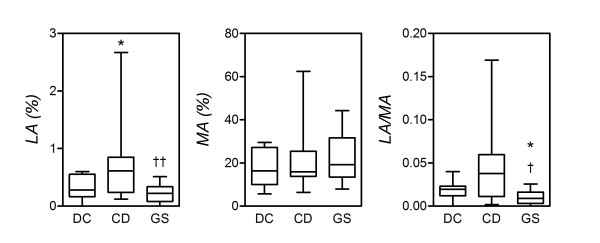
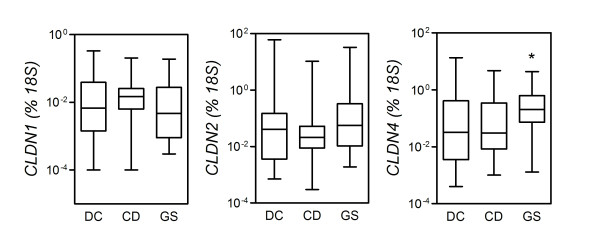
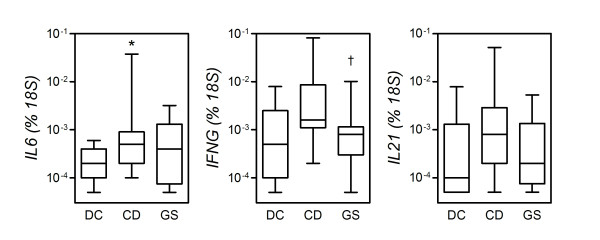
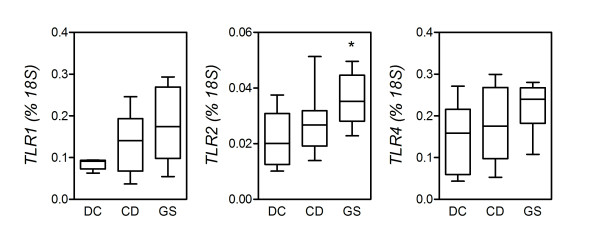
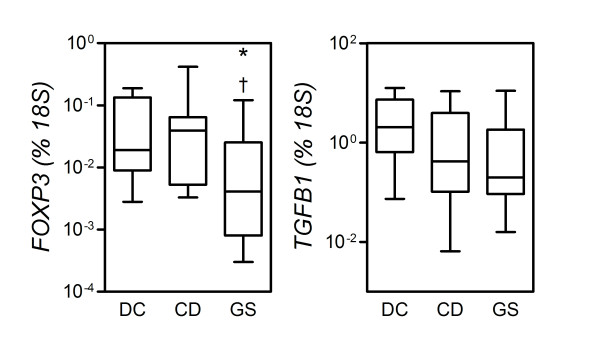
Background: Celiac disease (CD) is an autoimmune enteropathy triggered by the ingestion of gluten. Gluten-sensitive individuals (GS) cannot tolerate gluten and may develop gastrointestinal symptoms similar to those in CD, but the overall clinical picture is generally less severe and is not accompanied by the concurrence of tissue transglutaminase autoantibodies or autoimmune comorbidities. By studying and comparing mucosal expression of genes associated with intestinal barrier function, as well as innate and adaptive immunity in CD compared with GS, we sought to better understand the similarities and differences between these two gluten-associated disorders. Methods: CD, GS and healthy, gluten-tolerant individuals were enrolled in this study. Intestinal permeability was evaluated using a lactulose and mannitol probe, and mucosal biopsy specimens were collected to study the expression of genes involved in barrier function and immunity. Results: Unlike CD, GS is not associated with increased intestinal permeability. In fact, this was significantly reduced in GS compared with controls (P = 0.0308), paralleled by significantly increased expression of claudin (CLDN) 4 (P = 0.0286). Relative to controls, adaptive immunity markers interleukin (IL)-6 (P = 0.0124) and IL-21 (P = 0.0572) were expressed at higher levels in CD but not in GS, while expression of the innate immunity marker Toll-like receptor (TLR) 2 was increased in GS but not in CD (P = 0.0295). Finally, expression of the T-regulatory cell marker FOXP3 was significantly reduced in GS relative to controls (P = 0.0325) and CD patients (P = 0.0293). Conclusions: This study shows that the two gluten-associated disorders, CD and GS, are different clinical entities, and it contributes to the characterization of GS as a condition associated with prevalent gluten-induced activation of innate, rather than adaptive, immune responses in the absence of detectable changes in mucosal barrier function.
Overview
The claims and statistics of this paper haven’t been checked yet.
Free: it reads the open-access text and checks the first 5 claims that cite a source we can check. Create a free account to check every claim.
Integrity signals
Registry
Cites
Statistics
Figures
Verification
Claims the paper makes
The claims and statistics of this paper haven’t been checked yet.
Free: it reads the open-access text and checks the first 5 claims that cite a source we can check. Create a free account to check every claim.
Claims other papers make about this one
Each is checked against this paper’s own text: does it say what the citing paper says it does?
The source backs part of the claim, not all of it — or backs it for a different population, condition or comparison.
In the citing paper
“Some patients with IBS lack tissue transglutaminase antibodies or histological markers of coeliac disease yet still respond symptomatically to a gluten-free diet.”
From Intestinal microbiota in functional bowel disorders: a Rome foundation report (2013) · cites this paper as [158]
Experimental — accuracy not yet measured
Self-check
Percentages, sums and reported differences re-computed from the paper’s own numbers.
The self-check needs the paper’s full text.
Citations
Cites
Green, P. H. R., & Jones, R. (2006) · Cited by 2,453
Decoding the Patterns of Self and Nonself by the Innate Immune System
Medzhitov, R., & Janeway, C. A. (2002) · Science · doi:10.1126/science.1068883 · Cited by 2,154 · cited 1×
“Different combinations of TLRs are expressed in hematopoietic cells and nonhematopoietic cells such as intestinal epithelial cells [42-44].”
BackgroundFuruse, M., Fujita, K., Hiiragi, T., Fujimoto, K., & Tsukita, S. (1998) · The Journal of Cell Biology · doi:10.1083/jcb.141.7.1539 · Cited by 2,095 · cited 2×
“For instance, CLDN1 and CLDN4 are postulated to decrease, whereas CLDN2 is postulated to increase TJ-dependent permeability [35].”
BackgroundIL-17 family cytokines and the expanding diversity of effector T cell lineages
Weaver, C. T., Hatton, R. D., Mangan, P. R., & Harrington, L. E. (2007) · Annual Review of Immunology · doi:10.1146/annurev.immunol.25.022106.141557 · Cited by 1,842 · cited 1×
“This involves the mucosal recruitment and activation of Th1 and Th17 clones and the production of Th1- and Th17-associated cytokines, namely, IFN-g and IL-17A, which contribute to disrupting barrier function and initiating tissue damage [16,18-21,41].”
BackgroundIL-23 is essential for T cell–mediated colitis and promotes inflammation via IL-17 and IL-6
Yen, D., Cheung, J., Scheerens, H., Poulet, F., McClanahan, T., Mckenzie, B., Kleinschek, M. A., Owyang, A., Mattson, J., Blumenschein, W., et al. (2006) · Journal of Clinical Investigation · doi:10.1172/jci21404 · Cited by 1,542 · cited 7×
“Yen D, Cheung J, Scheerens H, Poulet F, McClanahan T, McKenzie B, Kleinschek MA, Owyang A, Mattson J, Blumenschein W, Murphy E, Sathe M, Cua DJ, Kastelein RA, Rennick D: IL-23 is essential for T cell-mediated colitis and promotes inflammation via IL-17 and IL-6.”
BackgroundInfluentialSteinman, L. (2007) · Nature Medicine · doi:10.1038/nm1551 · Cited by 1,376 · cited 2×
“This involves the mucosal recruitment and activation of Th1 and Th17 clones and the production of Th1- and Th17-associated cytokines, namely, IFN-γ and IL17A, which contribute to disrupting barrier function and initiating tissue damage [16, 18-21, 41].”
Recognition of pathogen-associated molecular patterns by TLR family
Akira, S., & Hemmi, H. (2003) · Immunology Letters · doi:10.1016/s0165-2478(02)00228-6 · Cited by 1,150 · cited 1×
“Different combinations of TLRs are expressed in hematopoietic cells and nonhematopoietic cells such as intestinal epithelial cells [42-44].”
BackgroundAlterations in intestinal permeability
Arrieta, M. C., Bistritz, L., & Meddings, J. B. (2006) · Gut · doi:10.1136/gut.2005.085373 · Cited by 634 · cited 1×
“Increased intestinal permeability is thought to be an early biological change that precedes the onset of several autoimmune diseases [32-34].”
BackgroundVan Itallie, C., Rahner, C., & Anderson, J. M. (2001) · Journal of Clinical Investigation · doi:10.1172/jci12464 · Cited by 601 · cited 1×
“associated with marked differences in mucosal barrier function and with apparent differences in the expression of CLDN4, which encodes for a critical TJ component [38].”
BackgroundBrandtzaeg, P., Halstensen, T. S., Kett, K., Krajči, P., Kvale, D., Rognum, T. O., Scott, H., & Sollid, L. M. (1989) · Gastroenterology · doi:10.1016/0016-5085(89)90406-x · Cited by 550 · cited 1×
“These are generally defined as gluten sensitivity (GS) [2-5].”
Background
Cited by
Items 101–200 of 452
Autism spectrum disorder and celiac disease: no evidence for a link
Batista, I. C., Gandolfi, L., Nobrega, Y. K. M., Almeida, R. C., Almeida, L. M., Campos Junior, D., & Pratesi, R. (2012) · Arquivos de Neuro-Psiquiatria · doi:10.1590/s0004-282x2012000100007 · Cited by 65
Gluten Free Wheat: Are We There?
García-Molina, M. D., Giménez, M. J., Sánchez‐León, S., & Barro, F. (2019) · Nutrients · doi:10.3390/nu11030487 · Cited by 72
“Wheat is associated with pathologies such as coeliac disease (CD), which affects about 1% of the population worldwide [6], non-coeliac wheat sensitivity (NCWS) [7] and allergies; baker’s asthma [8] and wheat-dependent exercise-induced anaphylaxis (WDEIA) [9].”
BackgroundIs Gluten a Cause of Gastrointestinal Symptoms in People Without Celiac Disease?
Biesiekierski, J. R., Muir, J. G., & Gibson, P. R. (2013) · Current Allergy and Asthma Reports · doi:10.1007/s11882-013-0386-4 · Cited by 65
“provided evidence that abnormalities of innate immunity without epithelial barrier dysfunction of the intestinal mucosa were found in NCGS in contrast to patients with celiac disease [56].”
ResultIerardi, E., Losurdo, G., Iannone, A., Piscitelli, D., Amoruso, A., Barone, M., Principi, M., Pisani, A., & Leo, A. D. (2017) · Annals of Gastroenterology · doi:10.20524/aog.2017.0165 · Cited by 68
Dietary Patterns and Gut Microbiota: The Crucial Actors in Inflammatory Bowel Disease
He, P., Yu, L., Tian, F., Zhang, H., Chen, W., & Zhai, Q. (2022) · Advances in Nutrition · doi:10.1093/advances/nmac029 · Cited by 73
Coeliac disease and gluten-related disorders in childhood
Vriezinga, S. L., Schweizer, J. J., Koning, F., & Mearin, M. L. (2015) · Nature Reviews Gastroenterology & Hepatology · doi:10.1038/nrgastro.2015.98 · Cited by 74
Non-celiac gluten sensitivity: All wheat attack is not celiac
Igbinedion, S. O., Ansari, J., Vasikaran, A., Gavins, F. N. E., Jordan, P., Boktor, M., & Alexander, J. S. (2017) · World Journal of Gastroenterology · doi:10.3748/wjg.v23.i40.7201 · Cited by 75
Volta, U., GIORGIO, R. D., Caio, G., Uhde, M., Manfredini, R., & Alaedini, A. (2018) · Gastroenterology Clinics of North America · doi:10.1016/j.gtc.2018.09.012 · Cited by 66
“Several studies have identified an altered expression of innate immune components in response to wheat consumption in heterogeneous cohorts of wheatsensitive individuals, including mucosal Toll-like receptor 2 (TLR2) (16,17), PBMC-derived interleukin-10 (IL-10), granulocyte-colony stimulating factor (GCSF), transformi…”
BackgroundResultInfluentialThe relation between celiac disease, nonceliac gluten sensitivity and irritable bowel syndrome
El‐Salhy, M., Hatlebakk, J. G., Gilja, O. H., & Hausken, T. (2015) · Nutrition Journal · doi:10.1186/s12937-015-0080-6 · Cited by 65
“Similar discrepancies have been reported regarding small-intestine permeability [96, 99, 104].”
ResultComani, G. B., Panceri, R., Dinelli, M. E., Biondi, A., Mancuso, C., Meneveri, R., & Barisani, D. (2015) · Genes & Nutrition · doi:10.1007/s12263-015-0482-2 · Cited by 58
“However, we obtained these data in adult patients, and the same miRNAs identified by us as down-regulated in adult CD had not been previously detected as altered in biopsies obtained from CD children (Sapone et al. 2011).”
Absence of somatization in non-coeliac gluten sensitivity
Brottveit, M., Vandvik, P. O., Wojniusz, S., Løvik, A., Lundin, K. E. A., & Boye, B. (2012) · Scandinavian Journal of Gastroenterology · doi:10.3109/00365521.2012.679685 · Cited by 58
“NCGS may be associated with an innate immune response toward gluten [4,5].”
BackgroundGreen Tea Polyphenols Mitigate Gliadin‐Mediated Inflammation and Permeability in Vitro
Buiten, C. B. V., Lambert, J. D., & Elias, R. J. (2018) · Molecular Nutrition & Food Research · doi:10.1002/mnfr.201700879 · Cited by 62
Anti-Gluten Immune Response following Toxoplasma gondii Infection in Mice
Severance, E. G., Kannan, G., Gressitt, K. L., Xiao, J., Alaedini, A., Pletnikov, M. V., & Yolken, R. H. (2012) · PLoS ONE · doi:10.1371/journal.pone.0050991 · Cited by 56
“Sapone et al demonstrated that celiac disease and gluten sensitivity were, in fact, two separate clinical conditions based on standard GI permeability tests, which showed that only celiac disease was associated with GI leakage [60].”
BackgroundValerii, M. C., Ricci, C., Spisni, E., Silvestro, R. D., Fazio, L. D., Cavazza, E., Lanzini, A., Campieri, M., Dalpiaz, A., Pavan, B., et al. (2014) · Food Chemistry · doi:10.1016/j.foodchem.2014.12.061 · Cited by 66
“The molecular mechanisms of NCGS remain for the most part unknown, even if it is widely accepted that the innate immune system plays a major role in the onset of NCGS (Catassi et al., 2013; Sapone et al., 2011).”
BackgroundRecent advances in understanding non-celiac gluten sensitivity
Barbaro, M. R., Cremon, C., Stanghellini, V., & Barbara, G. (2018) · F1000Research · doi:10.12688/f1000research.15849.1 · Cited by 56
“In contrast, no alteration in the lactulose/mannitol test was observed in patients with NCGS 41 .”
BackgroundGeißlitz, S., Longin, C. F. H., Koehler, P., & Scherf, K. A. (2020) · Scientific Reports · doi:10.1038/s41598-020-71413-z · Cited by 62
Mechanisms of innate immune activation by gluten peptide p31-43 in mice
Araya, R. E., Gomez Castro, M. F., Carasi, P., McCarville, J. L., Jury, J., Mowat, A. M., Verdu, E. F., & Chirdo, F. G. (2016) · American Journal of Physiology-Gastrointestinal and Liver Physiology · doi:10.1152/ajpgi.00435.2015 · Cited by 53
“It remains to be determined whether this mechanisms could also have implications for other gluten-related disorders such as non-celiac gluten sensitivity (29).”
BackgroundNon-coeliac gluten/wheat sensitivity: advances in knowledge and relevant questions
Volta, U., Caio, G., Karunaratne, T. B., Alaedini, A., & GIORGIO, R. D. (2016) · Expert Review of Gastroenterology & Hepatology · doi:10.1080/17474124.2017.1260003 · Cited by 66
“In this line, also the frequent identification of serum antibodies to native gliadin (AGA) and to microbial antigens in this syndrome proved in support of adaptive immunity [26,27].”
BackgroundResultInfluentialNonceliac Gluten and Wheat Sensitivity
Khan, A., Suarez, M. G., & Murray, J. A. (2019) · Clinical Gastroenterology and Hepatology · doi:10.1016/j.cgh.2019.04.009 · Cited by 57
Non-celiac gluten sensitivity: A work-in-progress entity in the spectrum of wheat-related disorders
Volta, U., Caio, G., GIORGIO, R. D., Henriksen, C., Skodje, G. I., & Lundin, K. E. A. (2015) · Best Practice & Research Clinical Gastroenterology · doi:10.1016/j.bpg.2015.04.006 · Cited by 59
Popular Exclusionary Diets for Inflammatory Bowel Disease: The Search for a Dietary Culprit
Hwang, C., Ross, V., & Mahadevan, U. (2014) · Inflammatory Bowel Diseases · doi:10.1097/01.mib.0000438427.48726.b0 · Cited by 57
“In addition, it does seem that many food substances, including gluten and some emulsifiers found in processed foods, may affect mucosal barrier function and integrity.(43,78)”
BackgroundNutrition, genetic variation and male fertility
Vanderhout, S. M., Panah, M. R., García‐Bailo, B., Grace-Farfaglia, P., Samsel, K., Dockray, J., Jarvi, K. A., & El‐Sohemy, A. (2021) · Translational Andrology and Urology · doi:10.21037/tau-20-592 · Cited by 67
“Ninety-nine percent of people with CD possess the DQ2 and DQ8 risk variants, which can be determined by 6 SNPs in the HLA gene region, compared with 30% of the general population (179,180).”
BackgroundGenome edited wheat- current advances for the second green revolution
Awan, M. J. A., Pervaiz, K., Rasheed, A., Amin, I. U., Saeed, N. A., Dhugga, K. S., & Mansoor, S. (2022) · Biotechnology Advances · doi:10.1016/j.biotechadv.2022.108006 · Cited by 56
Bonciolini, V., Bianchi, B., BIANCO, E. D., Verdelli, A., & Caproni, M. (2015) · Nutrients · doi:10.3390/nu7095368 · Cited by 51
“One hypothesis, which is based on what has been demonstrated so far, is that NCGS may be characterized by an activation of innate immunity [13,14], but probably all these symptoms may be the result of an exaggerated response of a normal individual to a meal containing gluten.”
BackgroundOntiveros, N., Lopez-Gallardo, J. A., Vergara-Jiménez, M. D. J., & Cabrera‐Chávez, F. (2015) · Nutrients · doi:10.3390/nu7075267 · Cited by 57
“However, other immune mechanisms related to the innate immune system could play a role in this condition, but the precise mechanisms underlying NCGS are not well understood yet [1,3].”
BackgroundThe Gluten Gene: Unlocking the Understanding of Gluten Sensitivity and Intolerance
Asri, N., Rostami‐Nejad, M., Anderson, R. P., & Rostami, K. (2021) · The Application of Clinical Genetics · doi:10.2147/tacg.s276596 · Cited by 60
Gliadin Induces Neutrophil Migration via Engagement of the Formyl Peptide Receptor, FPR1
Lammers, K. M., Chieppa, M., Liu, L., Liu, S., Omatsu, T., Janka-Junttila, M., Casolaro, V., Reinecker, H., Parent, C. A., & Fasano, A. (2015) · PLoS ONE · doi:10.1371/journal.pone.0138338 · Cited by 50
Self-citationGluten Detection Methods and Their Critical Role in Assuring Safe Diets for Celiac Patients
Osorio, C. E., Mejías, J. H., & Rustgi, S. (2019) · Nutrients · doi:10.3390/nu11122920 · Cited by 51
“Different celiac patients show sensitivity to different gluten proteins [9,39].”
BackgroundNon-celiac gluten sensitivity. Is it in the gluten or the grain?
Nijeboer, P., Bontkes, H. J., Mulder, C. J. J., & Bouma, G. (2013) · PubMed · Cited by 62
Gluten-degrading bacteria: availability and applications
Köiv, V., & Tenson, T. (2021) · Applied Microbiology and Biotechnology · doi:10.1007/s00253-021-11263-5 · Cited by 53
“The extensive proline- and glutamine-rich repeated sequences of wheat seed storage proteins are responsible for bread quality, yet unfortunately play a crucial role in triggering hypersensitivity reactions such as celiac disease (CD), wheat allergy (WA), and non-celiac gluten sensitivity (NCGS) (Scherf et al. 2016).”
BackgroundInfluentialGluten and wheat intolerance today: are modern wheat strains involved?
de Lorgeril, M., & Salen, P. (2014) · International Journal of Food Sciences and Nutrition · doi:10.3109/09637486.2014.886185 · Cited by 50
“intolerance when both the auto-immune celiac disease and wheat allergy have been excluded’’ (Sapone et al., 2011).”
BackgroundAn Update on the Diagnostics of Celiac Disease
Lindfors, K., Koskinen, O., & Kaukinen, K. (2011) · International Reviews of Immunology · doi:10.3109/08830185.2011.595854 · Cited by 53
“Whether AGA without EMA and TG2abs can be considered a general marker for gluten sensitivity beyond celiac disease remains to be established [53].”
BackgroundWilms, E., Gerritsen, J., Smidt, H., Besseling-van der Vaart, I., Rijkers, G. T., Garcia Fuentes, A. R., Masclee, A. A. M., & Troost, F. J. (2016) · PLOS ONE · doi:10.1371/journal.pone.0167775 · Cited by 46
Beyond the HLA Genes in Gluten-Related Disorders
Sallese, M., Lopetuso, L. R., Efthymakis, K., & Neri, M. (2020) · Frontiers in Nutrition · doi:10.3389/fnut.2020.575844 · Cited by 48
“Claudin was also upregulated, in agreement with the increase of intestinal barrier function (12).”
BackgroundGoswami, P., Das, P., Verma, A. K., Prakash, S., Das, T., Nag, T. C., Ahuja, V., Gupta, S. D., & Makharia, G. K. (2014) · Archiv für Pathologische Anatomie und Physiologie und für Klinische Medicin · doi:10.1007/s00428-014-1651-1 · Cited by 46
“Interestingly, claudin-4 overexpression was also noted in non-celiac gluten sensitivity [29].”
BackgroundIncreased Prevalence of Transglutaminase 6 Antibodies in Sera From Schizophrenia Patients
Cascella, N. G., Santora, D., Gregory, P., Kelly, D. L., Fasano, A., & Eaton, W. W. (2012) · Schizophrenia Bulletin · doi:10.1093/schbul/sbs064 · Cited by 52
Self-citationLiberto, D. D., Mansueto, P., D’Alcamo, A., Pizzo, M. L., Presti, E. L., Geraci, G., Fayer, F., Guggino, G., Iacono, G., Dieli, F., et al. (2016) · Clinical and Translational Gastroenterology · doi:10.1038/ctg.2016.35 · Cited by 47
AGY, a Novel Egg Yolk-Derived Anti-gliadin Antibody, Is Safe for Patients with Celiac Disease
Sample, D., Sunwoo, H. H., Huynh, H. Q., Rylance, H. L., Robert, C., Xu, B., Kang, S. H., Gujral, N., & Dieleman, L. A. (2016) · Digestive Diseases and Sciences · doi:10.1007/s10620-016-4426-5 · Cited by 50
Cossu, G., Carta, M. G., Contu, F., Mela, Q., Demelia, L., Elli, L., & Dell’Osso, B. M. (2017) · International Review of Psychiatry · doi:10.1080/09540261.2017.1314952 · Cited by 51
“Main extra-intestinal symptoms are headache or migraine, chronic fatigue, joint and muscle pain, tremor of the extremities, numbness of arms or legs, eczema, anaemia, and depression (Sapone et al., 2011; Sapone et al., 2009).”
BackgroundOtero, Y. R., Mañes, J., & Manyes, L. (2018) · Journal of Medicinal Food · doi:10.1089/jmf.2017.0018 · Cited by 46
“These receptors play a key role in the detection of pathogens and in initiation of the innate inflammatory response 13 The gluten gliadin fraction, especially a -gliadin and c - gliadin, is largely responsible for the effects of CD, since most of the T cells specific of HLA-DQ2 or HLA-DQ8 appear to…”
A Population Survey of Dietary Attitudes towards Gluten
Croall, I. D., Trott, N., Rej, A., Aziz, I., O’Brien, D., George, H., Hossain, M. Y., Marks, L., Richardson, J. I., Rigby, R., et al. (2019) · Nutrients · doi:10.3390/nu11061276 · Cited by 42
Rallabhandi, P., Sharma, G. M., Pereira, M., & Williams, K. M. (2015) · Journal of Agricultural and Food Chemistry · doi:10.1021/jf505716p · Cited by 41
Differentiating Food Allergies from Food Intolerances
Guandalini, S., & DeGeeter, C. (2011) · Current Gastroenterology Reports · doi:10.1007/s11894-011-0215-7 · Cited by 56
García-Molina, M. D., & Barro, F. (2017) · Frontiers in Plant Science · doi:10.3389/fpls.2017.00257 · Cited by 41
“Wheat flour is used to make a wide variety of products including cakes, pasta, bread, noodles, and biscuits, which is Abbreviations: CD, celiac disease; GFD, gluten-free diet; HMW-GS, high molecular weight glutenin subunits; LMW-GS, low molecular weight glutenin subunits; LSD, least significant difference; NCGS, non-c…”
BackgroundInfluentialHaro, C., Villatoro, M., Vaquero, L. M., Pastor, J., Giménez, M. J., Ozuna, C. V., Sánchez‐León, S., García-Molina, M. D., Segura, V., Comino, I., et al. (2018) · Nutrients · doi:10.3390/nu10121964 · Cited by 48
Celiac Disease and Non-celiac Wheat Sensitivity: State of Art of Non-dietary Therapies
Serena, G., D’Avino, P., & Fasano, A. (2020) · Frontiers in Nutrition · doi:10.3389/fnut.2020.00152 · Cited by 44
Self-citationIs Gluten the Only Culprit for Non-Celiac Gluten/Wheat Sensitivity?
Mumolo, M. G., Rettura, F., Melissari, S., Costa, F., Ricchiuti, A., Ceccarelli, L., de Bortoli, N., Marchi, S., & Bellini, M. (2020) · Nutrients · doi:10.3390/nu12123785 · Cited by 48
Maternal Antibodies to Dietary Antigens and Risk for Nonaffective Psychosis in Offspring
Karlsson, H., Blomström, Å., Wicks, S., Yang, S., Yolken, R. H., & Dalman, C. (2012) · American Journal of Psychiatry · doi:10.1176/appi.ajp.2012.11081197 · Cited by 40
The microbiota as a component of the celiac disease and non-celiac gluten sensitivity
Nylund, L., Kaukinen, K., & Lindfors, K. (2016) · Clinical Nutrition Experimental · doi:10.1016/j.yclnex.2016.01.002 · Cited by 41
“Previously it has been shown that NCGS patients have normal intestinal permeability, normal expression of tight junction proteins claudin-1 and ZO-1 and significantly higher expression of claudin-4 when compared to celiac disease patients [46].”
BackgroundResultInfluentialDiagnostic accuracy of anti-gliadin antibodies in Non-Celiac Gluten Sensitivity (NCGS) patients
Infantino, M. G., Manfredi, M., Meacci, F., Grossi, V., Severino, M., Benucci, M., Bellio, E., Bellio, V., Nucci, A., Zolfanelli, F., et al. (2015) · Clinica Chimica Acta · doi:10.1016/j.cca.2015.09.017 · Cited by 43
Nonceliac Gluten Sensitivity or Wheat Intolerance Syndrome?
Guandalini, S., & Polanco, I. (2015) · The Journal of Pediatrics · doi:10.1016/j.jpeds.2014.12.039 · Cited by 40
Leccioli, V., Oliveri, M., Romeo, M., Berretta, M., & Rossi, P. (2017) · Nutrients · doi:10.3390/nu9111203 · Cited by 49
“Regarding intestinal permeability, the early belief that it was reduced in NCG/WS [81] has been definitively rejected [9].”
BackgroundGluten sensitivity in Meniere's disease
Berardino, F. D., & Cesarani, A. (2011) · The Laryngoscope · doi:10.1002/lary.22492 · Cited by 40
“GS is a condition associated with prevalent gluten-induced activation of innate, rather than adaptive immune responses in the absence of detectable changes in mucosal barrier function.(20) The overall clinical picture of GS is generally less severe then celiac disease and is not accompanied by the concurrence of tissu…”
BackgroundNutritional Consideration in Celiac Disease and Nonceliac Gluten Sensitivity
Naik, R. D., Seidner, D. L., & Adams, D. W. (2017) · Gastroenterology Clinics of North America · doi:10.1016/j.gtc.2017.09.006 · Cited by 47
Non-Celiac Gluten Sensitivity among Patients Perceiving Gluten-Related Symptoms
Capannolo, A., Viscido, A., Barkad, M. A., Valerii, G., Ciccone, F., Melideo, D., Frieri, G., & Latella, G. (2015) · Digestion · doi:10.1159/000430090 · Cited by 39
Autism and EMF? Plausibility of a pathophysiological link – Part I
Herbert, M. R., & Sage, C. (2013) · Pathophysiology · doi:10.1016/j.pathophys.2013.08.001 · Cited by 42
Wheat‐related disorders: A broad spectrum of ‘evolving’ diseases
Gasbarrini, G. B., & Mangiola, F. (2014) · United European Gastroenterology Journal · doi:10.1177/2050640614535929 · Cited by 39
“has evaluated the differences in gut permeability between coeliac disease and non-coeliac gluten sensitivity.(47) The results did not show alterations in gut permeability in patients with non-coeliac gluten sensitivity, unlike those with coeliac disease.”
BackgroundResultGluten-related disorders: certainties, questions and doubts
Valenti, S., Corica, D., Ricciardi, L., & Romano, C. (2017) · Annals of Medicine · doi:10.1080/07853890.2017.1325968 · Cited by 43
“Contrary to CD, however, most studies show that adaptive immunity markers are not increased in patients with NCGS [93].”
BackgroundResultNon-coeliac gluten sensitivity: A review of the literature
Henggeler, J. C., Veríssimo, M. T., & Ramos, F. (2017) · Trends in Food Science & Technology · doi:10.1016/j.tifs.2017.05.018 · Cited by 39
Tao, Y., Yue, M., Lv, C., Yun, X., Qiao, S., Fang, Y., Wei, Z., Xia, Y., & Dai, Y. (2019) · The FASEB Journal · doi:10.1096/fj.201901638rr · Cited by 38
Cartee, A. K., Choung, R. S., King, K. S., Wang, S., Dzuris, J. L., Anderson, R. P., Dyke, C. T. V., Chadrick, H., Marietta, E. V., Katzka, D. A., et al. (2021) · The American Journal of Gastroenterology · doi:10.14309/ajg.0000000000001565 · Cited by 37
Innate and adaptive immunity in self-reported nonceliac gluten sensitivity versus celiac disease
Sabatino, A. D., Giuffrida, P., Fornasa, G., Salvatore, C., Vanoli, A., Naviglio, S., Leo, L. D., Pasini, A., AMICI, M. D., Alvisi, C., et al. (2016) · Digestive and Liver Disease · doi:10.1016/j.dld.2016.03.024 · Cited by 35
“As regards adaptive immunity, in agreement with Sapone et al. 22,24] we showed no difference in IFN- and IL-17A in selfeported NCGS in comparison to controls, although both these ytokines were significantly up-regulated in untreated CD in comarison to treated CD and controls in keeping with previous tudies [4,5].”
BackgroundResultInfluentialGluten related illnesses and severe mental disorders: a comprehensive review
Brietzke, E. M., Cerqueira, R. O., Mansur, R. B., & McIntyre, R. S. (2017) · Neuroscience & Biobehavioral Reviews · doi:10.1016/j.neubiorev.2017.08.009 · Cited by 42
“From the pathological view, in GS there is no intestinal damage, absense of autoantibodies characteristics of CD (anti-tissue transglutaminase antibodies and anti-endomysial antibodies) and a possible presence of biomarkers of native gluten immune reaction (anti-gliadin antibodies) (Hadjivassiliou et al., 2004; Sapone…”
Celiac Disease and the Risk of Cardiovascular Diseases
Wang, Y., Chen, B., Ciaccio, E. J., Jneid, H. M., Virani, S. S., Lavie, C. J., Lebovits, J., Green, P. H. R., & Krittanawong, C. (2023) · International Journal of Molecular Sciences · doi:10.3390/ijms24129974 · Cited by 38
“The ingestion of gluten in CD patients leads to the activation of the immune system, resulting in the production of proinflammatory cytokines such as tumor necrosis factor-alpha (TNFα), interleukin-1 (IL-1), and IL-6 [65].”
BackgroundEmerging concepts: from coeliac disease to non-coeliac gluten sensitivity
Aziz, I., & Sanders, D. S. (2012) · Proceedings of The Nutrition Society · doi:10.1017/s002966511200081x · Cited by 34
Ortiz, C., Valenzuela, R., & Lucero, Y. (2017) · Revista chilena de pediatría · doi:10.4067/s0370-41062017000300017 · Cited by 40
Karakuła‐Juchnowicz, H., Dzikowski, M., Pelczarska-Jamroga, A., Dzikowska, I., & Juchnowicz, D. (2016) · Psychiatria Polska · doi:10.12740/pp/onlinefirst/45053 · Cited by 40
Corrigendum: Inflammatory and Microbiota-Related Regulation of the Intestinal Epithelial Barrier
Barbara, G., Barbaro, M. R., Fuschi, D., Palombo, M., Falangone, F., Cremon, C., Marasco, G., & Stanghellini, V. (2021) · Frontiers in Nutrition · doi:10.3389/fnut.2021.790387 · Cited by 43
Vojdani, A., Kharrazian, D., & Mukherjee, P. S. (2013) · Nutrients · doi:10.3390/nu6010015 · Cited by 35
“In comparison with CD, NCGS may affect 6% to 7% of the population, [13,14].”
BackgroundNon-celiac gluten sensitivity: Time for sifting the grain
Elli, L., Roncoroni, L., & Bardella, M. T. (2015) · World Journal of Gastroenterology · doi:10.3748/wjg.v21.i27.8221 · Cited by 39
Bardella, M. T., Elli, L., & Ferretti, F. (2016) · Current Gastroenterology Reports · doi:10.1007/s11894-016-0536-7 · Cited by 33
Ozuna, C. V., & Barro, F. (2018) · Molecular Breeding · doi:10.1007/s11032-018-0779-0 · Cited by 40
“…approximately 0.7–2% in the human population, which occurs in a subgroup of genetically predisposed individuals (Rewers 2005); and second, non-celiac wheat sensitivity (NCWS), a newly characterized pathology estimated to occur in about 6% of the population in western countries (Sapone et al. 2011).”
BackgroundInfluentialSensibilidad al gluten no celiaca: una revisión crítica de la evidencia actual
Molina‐Infante, J., Santolaria, S., Montoro, M. A., Esteve, M., & Fernández‐Bañares, F. (2014) · Gastroenterología y Hepatología · doi:10.1016/j.gastrohep.2014.01.005 · Cited by 57
García-Molina, M. D., Muccilli, V., Saletti, R., Foti, S., Masci, S., & Barro, F. (2017) · Journal of Proteomics · doi:10.1016/j.jprot.2017.06.010 · Cited by 36
Immune Activation in Functional Gastrointestinal Disorders.
Burns, G. L., Pryor, J., Holtmann, G., Walker, M. M., Talley, N. J., & Keely, S. (2019) · PubMed Central · Cited by 44
Wu, Q., Chen, T., El-Nezami, H. S., & Savidge, T. (2020) · Trends in Food Science & Technology · doi:10.1016/j.tifs.2020.04.007 · Cited by 34
Tanpowpong, P., Broder‐Fingert, S., Katz, A. J., & Camargo, C. A. (2012) · The Journal of Pediatrics · doi:10.1016/j.jpeds.2012.02.049 · Cited by 36
The Irritable Bowel Syndrome-Celiac Disease Connection
Aziz, I., & Sanders, D. S. (2012) · Gastrointestinal Endoscopy Clinics of North America · doi:10.1016/j.giec.2012.07.009 · Cited by 35
“A recent retrospective review found the serologic pattern of patients with NCGS to be characterized by IgG AGA positivity in more than half of cases associated to IgA AGA in a few patients, but without EMA, tTG, and deamidated gliadin peptide antibodies (DGP-AGA), which are the specific markers of CD and were highly p…”
BackgroundInfluentialRodrigo, L., Hernández‐Lahoz, C., Lauret, E., Rodríguez-Peláez, M., Souček, M., Ciccocioppo, R., & Kružliak, P. (2015) · Immunologic Research · doi:10.1007/s12026-015-8750-1 · Cited by 34
“Although the pathophysiology of NCGS is currently far from clear, the available data support the existence of an immune activation process that is a common factor in CD and NCGS [35–37].”
BackgroundEpithelial barrier hypothesis and the development of allergic and autoimmune diseases
Yazıcı, D., Öğülür, İ., Küçükkase, O. C., Li, M., Rinaldi, A. O., Pat, Y., Wallimann, A., Wawrocki, S., Sözener, Z. Ç., Büyüktiryaki, B., et al. (2022) · Allergo Journal International · doi:10.1007/s40629-022-00211-y · Cited by 35
“Gliadin, the main fraction of gluten, has different effects on the gastrointestinal mucosa, including F-actin content reduction, cell growth inhibition and apoptosis induction [84].”
BackgroundCeliac Disease: A Challenging Disease for Pharmaceutical Scientists
Matoori, S., Fuhrmann, G., & Leroux, J. (2012) · Pharmaceutical Research · doi:10.1007/s11095-012-0951-x · Cited by 33
“, abdominal pain, behavioral changes, bone or joint pain and weight loss) even though CD is diagnostically ruled out (20,22).”
Pistón, F., Gil‐Humanes, J., & Barro, F. (2013) · BMC Plant Biology · doi:10.1186/1471-2229-13-136 · Cited by 30
“Gluten sensitivity is a new pathology of intolerance to gluten [5], which excludes CD and wheat allergy.”
BackgroundSimre, K., Uibo, O., Peet, A., Tillmann, V., Kool, P., Hämäläinen, A., Härkönen, T., Siljander, H., Virtanen, S. M., Ilonen, J., et al. (2016) · Digestive and Liver Disease · doi:10.1016/j.dld.2016.06.029 · Cited by 35
Gluten and Functional Abdominal Pain Disorders in Children
Llanos‐Chea, A., & Fasano, A. (2018) · Nutrients · doi:10.3390/nu10101491 · Cited by 33
“The innate immune system has been proposed as contributing to the pathogenesis of NCGS, as these patients have been found to have increased intestinal mucosa toll-like receptor (TLR) 2 expression when compared to celiac patients [3].”
BackgroundSelf-citationLonardi, S., Villanacci, V., Lorenzi, L., Lanzini, A., Lanzarotto, F., Carabellese, N., Volta, U., & Facchetti, F. (2013) · Archiv für Pathologische Anatomie und Physiologie und für Klinische Medicin · doi:10.1007/s00428-013-1448-7 · Cited by 32
Non‐coeliac gluten or wheat sensitivity: emerging disease or misdiagnosis?
Potter, M. D. E., Walker, M. M., & Talley, N. J. (2017) · The Medical Journal of Australia · doi:10.5694/mja17.00332 · Cited by 31
Heydari, F., Rostami‐Nejad, M., Moheb-Alian, A., Hoseini, M. H. M., Rostami, K., Pourhoseingholi, M. A., Aghamohammadi, E., & Zali, M. R. (2018) · Journal of Gastrointestinal and Liver Diseases · doi:10.15403/jgld.2014.1121.273.hey · Cited by 33
Carroccio, A., Mansueto, P., Soresi, M., Fayer, F., Liberto, D. D., Monguzzi, E., Pizzo, M. L., Blasca, F. L., Geraci, G., Pecoraro, A., et al. (2020) · Nutrients · doi:10.3390/nu12041127 · Cited by 28
“Notably, increased IL-1β and TNF-α+ production by monocytes are considered hallmarks of innate immune activation and consequent inflammation in FMF [18], and possibly also in the pathogenesis of NCWS [19].”
BackgroundPicarelli, A., Borghini, R., Tola, M. D., Marino, M., Urciuoli, C., Isonne, C., Puzzono, M., Porowska, B., Rumi, G., Lonardi, S., et al. (2016) · Journal of Clinical Gastroenterology · doi:10.1097/mcg.0000000000000515 · Cited by 29
T Helper Lymphocyte and Mast Cell Immunohistochemical Pattern in Nonceliac Gluten Sensitivity
Losurdo, G., Piscitelli, D., Pezzuto, F., Fortarezza, F., Covelli, C., Marra, A., Iannone, A., Amoruso, A., Principi, M., Ierardi, E., et al. (2017) · Gastroenterology Research and Practice · doi:10.1155/2017/5023680 · Cited by 29
“Regarding the immune-related cell features, some authors reported in NCGS an intermediate infiltration of CD3 IELs between celiac disease and healthy controls [5], while others did not demonstrate any increase in IELs compared to normal subjects [17].”
BackgroundResultInfluentialEditorial: Non-Celiac Wheat Sensitivity: Separating the Wheat from the Chat!
Sanders, D. S., & Aziz, I. (2012) · The American Journal of Gastroenterology · doi:10.1038/ajg.2012.344 · Cited by 36
Porcelli, B., Verdino, V., Bossini, L., Terzuoli, L., & Fagiolini, A. M. (2014) · Autoimmunity Highlights · doi:10.1007/s13317-014-0064-0 · Cited by 36
“A recent study also demonstrated that gut permeability does not occur in GS, unlike in CD [19].”
BackgroundNew Frontiers: Precise Editing of Allergen Genes Using CRISPR
Brackett, N. F., Pomés, A., & Chapman, M. D. (2022) · Frontiers in Allergy · doi:10.3389/falgy.2021.821107 · Cited by 33
Vázquez‐Roque, M. I., & Oxentenko, A. S. (2015) · Mayo Clinic Proceedings · doi:10.1016/j.mayocp.2015.07.009 · Cited by 34
Celiac disease: Managing a multisystem disorder
Kochhar, G. S., Singh, T., Gill, A., & Kirby, D. F. (2016) · Cleveland Clinic Journal of Medicine · doi:10.3949/ccjm.83a.14158 · Cited by 27
Celiac Disease and Gluten Sensitivity
DeGeorge, K. C., Frye, J., Stein, K. M., Rollins, L. K., & McCarter, D. F. (2017) · Primary Care Clinics in Office Practice · doi:10.1016/j.pop.2017.07.011 · Cited by 70
Functional Dyspepsia and Food: Immune Overlap with Food Sensitivity Disorders
Pryor, J., Burns, G. L., Duncanson, K., Horvat, J. C., Walker, M. M., Talley, N. J., & Keely, S. (2020) · Current Gastroenterology Reports · doi:10.1007/s11894-020-00789-9 · Cited by 31
Tjernberg, A. R., & Ludvigsson, J. F. (2014) · Digestive Diseases and Sciences · doi:10.1007/s10620-014-3046-1 · Cited by 26
Lim, J. E., & Rezaie, A. R. (2023) · Digestive Diseases and Sciences · doi:10.1007/s10620-023-08095-w · Cited by 31
“Markers such as toll-like receptor 2 have been shown to be increased, which is consistent with innate immunity, whereas makers of adaptive immunity such as interleukin-6 and interleukin-21 are not expressed at high levels [64] .”
BackgroundNon-Host Factors Influencing Onset and Severity of Celiac Disease
Galipeau, H. J., Hinterleitner, R., Leonard, M. M., & Caminero, A. (2024) · Gastroenterology · doi:10.1053/j.gastro.2024.01.030 · Cited by 32
Metadata
- Authors
- Sapone, A., Lammers, K. M., Casolaro, V., Cammarota, M., Giuliano, M. T., De Rosa, M., Stefanile, R., Mazzarella, G., Tolone, C., Russo, M. I., Esposito, P., Ferraraccio, F., Cartenì, M., Riegler, G., de Magistris, L., & Fasano, A.
- Affiliations
- University of Maryland, Baltimore (US)
- University of Campania "Luigi Vanvitelli" (IT)
- Institute of Food Science (IT)
- Corresponding author
- Fasano, Alessio
- ORCID
- Venue
- BMC Medicine
- Published
- 2011-03-09
- Volume
- 9
- Issue
- 1
- Pages
- 23-23
- ISSN
- 1741-7015 (ISSN-L)
- PMC
- PMC3065425
- OpenAlex
- W2069634861
- Cited by
- 452
- References
- 48
- Citations by year
- 2026: 6 · 2025: 16 · 2024: 11 · 2023: 8 · 2022: 20 · 2021: 36 · 2020: 36 · 2019: 35 · 2018: 31 · 2017: 39 · 2016: 36 · 2015: 58 · 2014: 39 · 2013: 38 · 2012: 30
- FWCI
- 38.97
- Type
- journal article
- Language
- en
- Open access
- gold
- doi.org
- Licence
- Locations
- BMC Medicine (publishedVersion, cc-by)
- PubMed Central (publishedVersion, cc-by)
- PubMed (publishedVersion)
- DOAJ (DOAJ: Directory of Open Access Journals) (submittedVersion, cc-by-sa)
- Funders
- National Institutes of Health
- National Institute of Diabetes and Digestive and Kidney Diseases (R21DK078699)
- Topics
- Health Sciences › Medicine › Gastroenterology › Celiac Disease Research and Management
- Health Sciences › Medicine › Gastroenterology › Gastrointestinal motility and disorders
- Life Sciences › Agricultural and Biological Sciences › Plant Science › Wheat and Barley Genetics and Pathology
- Keywords
- celiac disease, gluten sensitivity, intestinal permeability, intestinal barrier function, mucosal gene expression, claudin-4, interleukin-6, IL-21, TLR2, Foxp3, regulatory T cells, innate immunity, adaptive immunity, gluten
- MeSH terms
- Adult, Allergens, Celiac Disease, Female, Glutens, Humans, Hypersensitivity, Intestinal Mucosa, Male, Permeability, Gene Expression Profiling
About these checks
Registry, retraction, Cites and statistics results are computed, not judged, with one exception: a printed reference that no index lists is read once by a model before it counts as a citation error. Claims are extracted by a model and kept only when their quote appears verbatim in the text; each cited source is then checked, with a model’s help, for whether it says what the claim relies on. Those verdicts can be wrong — read the claim’s quote and the cited source before relying on one.
Statistics and arithmetic are recomputed, not judged.
Confidence bands are shown only for fields calibrated on our annotated test set. None is calibrated yet, so no band is shown.
What counts as a claim ›How we measure confidence ›How we check this ›
Are you an author, or do you see a problem with this page? Request a review
Data sources
Bibliographic data: Semantic Scholar, OpenAlex, Crossref.
Contains information from the Semantic Scholar Academic Graph Datasets, made available under the ODC Attribution License (ODC-BY 1.0).
Semantic Scholar’s data is described in: Kinney, R., et al. (2023). The Semantic Scholar Open Data Platform. arXiv:2301.10140.
