

Divergence of gut permeability and mucosal immune gene expression in two gluten-associated conditions: celiac disease and gluten sensitivity
Open accessThe DOI matches its Crossref record; 48 of the 48 references it cites were found in a registry or an index.
Abstract
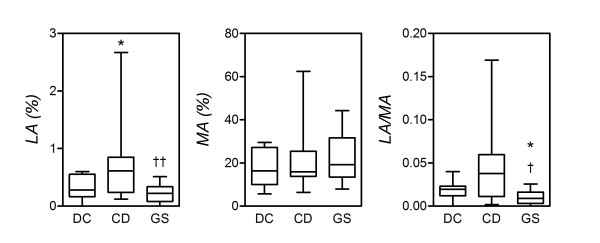
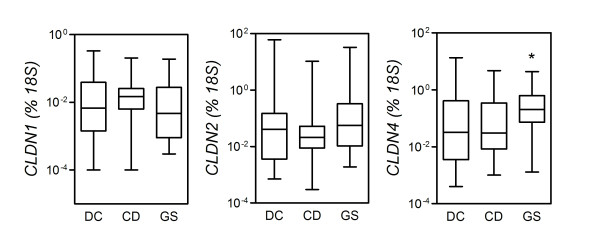
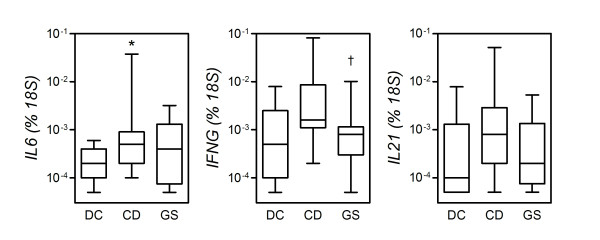
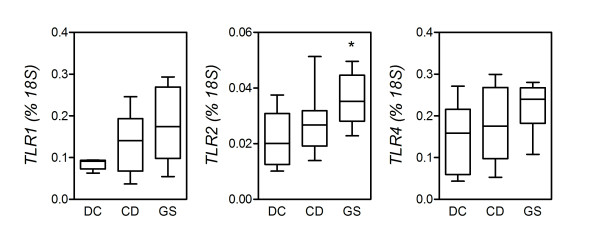
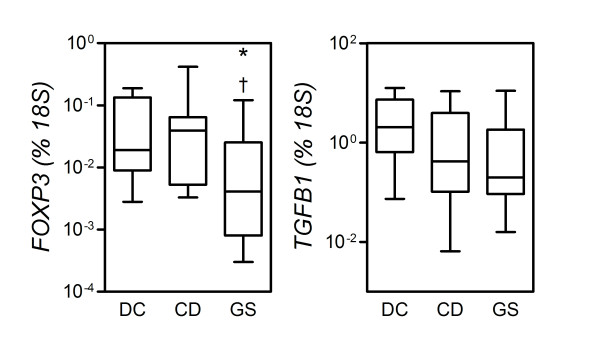
Background: Celiac disease (CD) is an autoimmune enteropathy triggered by the ingestion of gluten. Gluten-sensitive individuals (GS) cannot tolerate gluten and may develop gastrointestinal symptoms similar to those in CD, but the overall clinical picture is generally less severe and is not accompanied by the concurrence of tissue transglutaminase autoantibodies or autoimmune comorbidities. By studying and comparing mucosal expression of genes associated with intestinal barrier function, as well as innate and adaptive immunity in CD compared with GS, we sought to better understand the similarities and differences between these two gluten-associated disorders. Methods: CD, GS and healthy, gluten-tolerant individuals were enrolled in this study. Intestinal permeability was evaluated using a lactulose and mannitol probe, and mucosal biopsy specimens were collected to study the expression of genes involved in barrier function and immunity. Results: Unlike CD, GS is not associated with increased intestinal permeability. In fact, this was significantly reduced in GS compared with controls (P = 0.0308), paralleled by significantly increased expression of claudin (CLDN) 4 (P = 0.0286). Relative to controls, adaptive immunity markers interleukin (IL)-6 (P = 0.0124) and IL-21 (P = 0.0572) were expressed at higher levels in CD but not in GS, while expression of the innate immunity marker Toll-like receptor (TLR) 2 was increased in GS but not in CD (P = 0.0295). Finally, expression of the T-regulatory cell marker FOXP3 was significantly reduced in GS relative to controls (P = 0.0325) and CD patients (P = 0.0293). Conclusions: This study shows that the two gluten-associated disorders, CD and GS, are different clinical entities, and it contributes to the characterization of GS as a condition associated with prevalent gluten-induced activation of innate, rather than adaptive, immune responses in the absence of detectable changes in mucosal barrier function.
Overview
The claims and statistics of this paper haven’t been checked yet.
Free: it reads the open-access text and checks the first 5 claims that cite a source we can check. Create a free account to check every claim.
Integrity signals
Registry
Cites
Statistics
Figures
Verification
Claims the paper makes
The claims and statistics of this paper haven’t been checked yet.
Free: it reads the open-access text and checks the first 5 claims that cite a source we can check. Create a free account to check every claim.
Claims other papers make about this one
Each is checked against this paper’s own text: does it say what the citing paper says it does?
The source backs part of the claim, not all of it — or backs it for a different population, condition or comparison.
In the citing paper
“Some patients with IBS lack tissue transglutaminase antibodies or histological markers of coeliac disease yet still respond symptomatically to a gluten-free diet.”
From Intestinal microbiota in functional bowel disorders: a Rome foundation report (2013) · cites this paper as [158]
Experimental — accuracy not yet measured
Self-check
Percentages, sums and reported differences re-computed from the paper’s own numbers.
The self-check needs the paper’s full text.
Citations
Cites
Green, P. H. R., & Jones, R. (2006) · Cited by 2,453
Decoding the Patterns of Self and Nonself by the Innate Immune System
Medzhitov, R., & Janeway, C. A. (2002) · Science · doi:10.1126/science.1068883 · Cited by 2,154 · cited 1×
“Different combinations of TLRs are expressed in hematopoietic cells and nonhematopoietic cells such as intestinal epithelial cells [42-44].”
BackgroundFuruse, M., Fujita, K., Hiiragi, T., Fujimoto, K., & Tsukita, S. (1998) · The Journal of Cell Biology · doi:10.1083/jcb.141.7.1539 · Cited by 2,095 · cited 2×
“For instance, CLDN1 and CLDN4 are postulated to decrease, whereas CLDN2 is postulated to increase TJ-dependent permeability [35].”
BackgroundIL-17 family cytokines and the expanding diversity of effector T cell lineages
Weaver, C. T., Hatton, R. D., Mangan, P. R., & Harrington, L. E. (2007) · Annual Review of Immunology · doi:10.1146/annurev.immunol.25.022106.141557 · Cited by 1,842 · cited 1×
“This involves the mucosal recruitment and activation of Th1 and Th17 clones and the production of Th1- and Th17-associated cytokines, namely, IFN-g and IL-17A, which contribute to disrupting barrier function and initiating tissue damage [16,18-21,41].”
BackgroundIL-23 is essential for T cell–mediated colitis and promotes inflammation via IL-17 and IL-6
Yen, D., Cheung, J., Scheerens, H., Poulet, F., McClanahan, T., Mckenzie, B., Kleinschek, M. A., Owyang, A., Mattson, J., Blumenschein, W., et al. (2006) · Journal of Clinical Investigation · doi:10.1172/jci21404 · Cited by 1,542 · cited 7×
“Yen D, Cheung J, Scheerens H, Poulet F, McClanahan T, McKenzie B, Kleinschek MA, Owyang A, Mattson J, Blumenschein W, Murphy E, Sathe M, Cua DJ, Kastelein RA, Rennick D: IL-23 is essential for T cell-mediated colitis and promotes inflammation via IL-17 and IL-6.”
BackgroundInfluentialSteinman, L. (2007) · Nature Medicine · doi:10.1038/nm1551 · Cited by 1,376 · cited 2×
“This involves the mucosal recruitment and activation of Th1 and Th17 clones and the production of Th1- and Th17-associated cytokines, namely, IFN-γ and IL17A, which contribute to disrupting barrier function and initiating tissue damage [16, 18-21, 41].”
Recognition of pathogen-associated molecular patterns by TLR family
Akira, S., & Hemmi, H. (2003) · Immunology Letters · doi:10.1016/s0165-2478(02)00228-6 · Cited by 1,150 · cited 1×
“Different combinations of TLRs are expressed in hematopoietic cells and nonhematopoietic cells such as intestinal epithelial cells [42-44].”
BackgroundAlterations in intestinal permeability
Arrieta, M. C., Bistritz, L., & Meddings, J. B. (2006) · Gut · doi:10.1136/gut.2005.085373 · Cited by 634 · cited 1×
“Increased intestinal permeability is thought to be an early biological change that precedes the onset of several autoimmune diseases [32-34].”
BackgroundVan Itallie, C., Rahner, C., & Anderson, J. M. (2001) · Journal of Clinical Investigation · doi:10.1172/jci12464 · Cited by 601 · cited 1×
“associated with marked differences in mucosal barrier function and with apparent differences in the expression of CLDN4, which encodes for a critical TJ component [38].”
BackgroundBrandtzaeg, P., Halstensen, T. S., Kett, K., Krajči, P., Kvale, D., Rognum, T. O., Scott, H., & Sollid, L. M. (1989) · Gastroenterology · doi:10.1016/0016-5085(89)90406-x · Cited by 550 · cited 1×
“These are generally defined as gluten sensitivity (GS) [2-5].”
Background
Cited by
Items 201–300 of 452
Coeliac disease – from genetic and immunological studies to clinical applications
Lundin, K. E. A., Qiao, S., Snir, O., & Sollid, L. M. (2015) · Scandinavian Journal of Gastroenterology · doi:10.3109/00365521.2015.1030766 · Cited by 26
“[80] Sapone A, Lammers KM, Casolaro V, Cammarota M,”
BackgroundGluten-free diet in non-celiac patients: beliefs, truths, advantages and disadvantages
Palmieri, B., Vadalà, M., & Laurino, C. (2019) · Minerva Gastroenterologica e Dietologica · doi:10.23736/s1121-421x.18.02519-9 · Cited by 32
Nylund, L., Hakkola, S., Lahti, L., Salminen, S., Kalliomäki, M. A., Yang, B., & Linderborg, K. M. (2020) · Nutrients · doi:10.3390/nu12092570 · Cited by 26
“These individuals develop adverse reactions such as gastrointestinal and extra-intestinal symptoms after exposure to gluten [1,2].”
BackgroundNon coeliac gluten sensitivity.
Holmes, G. K. T. (2013) · Gastroenterology and hepatology from bed to bench. · Cited by 28
Gluten Intake Is Positively Associated with Plasma α2-Macroglobulin in Young Adults
Jamnik, J., García‐Bailo, B., Borchers, C. H., & El‐Sohemy, A. (2015) · Journal of Nutrition · doi:10.3945/jn.115.212829 · Cited by 27
“It has also been shown that >50% of patients with NCGS carry CD-specific HLA-DQ2 or -DQ8 risk variants (7), which is higher than the;30% prevalence of these alleles in the general population (3).”
BackgroundNon‐celiac gluten sensitivity: clinical relevance and recommendations for future research
Mooney, P. D., Aziz, I., & Sanders, D. S. (2013) · Neurogastroenterology & Motility · doi:10.1111/nmo.12216 · Cited by 31
Adverse Food Reaction and Functional Gastrointestinal Disorders: Role of the Dietetic Approach
Pasqui, F., Poli, C., Colecchia, A., Marasco, G., & Festi, D. (2015) · Journal of Gastrointestinal and Liver Diseases · doi:10.15403/jgld.2014.1121.243.paq · Cited by 26
“Others prefer to state that NCGS is a form of gluten intolerance when both auto-immune CD and WA have been excluded [30].”
BackgroundSpanish Spelt Wheat: From an Endangered Genetic Resource to a Trendy Crop
Álvarez, J. B. (2021) · Plants · doi:10.3390/plants10122748 · Cited by 28
Sudheesh, C., Bhat, Z. R., Aaliya, B., & Sunooj, K. V. (2022) · Elsevier eBooks · doi:10.1016/b978-0-323-89779-2.00010-7 · Cited by 26
Non-Celiac Gluten Sensitivity and Protective Role of Dietary Polyphenols
Calabriso, N., Scoditti, E., Massaro, M., Maffia, M., Chieppa, M., Laddomada, B., & Carluccio, M. A. (2022) · Nutrients · doi:10.3390/nu14132679 · Cited by 29
“In a first study, compared to celiac and dyspeptic control subjects, paracellular permeability appeared to be reduced in NCGS, which is associated with increased mRNA levels of claudin-4, a barrier-forming protein [68].”
ResultAn update on the cutaneous manifestations of coeliac disease and non-coeliac gluten sensitivity
Graziano, M., & Rossi, M. (2018) · International Reviews of Immunology · doi:10.1080/08830185.2018.1533008 · Cited by 28
“Unlike CD, NCGS patients do not have alterations in their intestinal permeability, and the evidence suggests that the immune system should be activated [84,85].”
BackgroundResultInfluentialAn explorative study identifies miRNA signatures for the diagnosis of non-celiac wheat sensitivity
Clemente, E., Efthymakis, K., Carletti, E., Capone, V., Sperduti, S., Bologna, G., Marchisio, M., Nicola, M. D., Neri, M., & Sallese, M. (2019) · PLoS ONE · doi:10.1371/journal.pone.0226478 · Cited by 25
“Only then, symptom recurrence prompted a diagnosis of non-celiac wheat/gluten sensitivity [6, 19, 31].”
BackgroundInfluentialPredictors for Celiac Disease in Adult Cases of Duodenal Intraepithelial Lymphocytosis
Aziz, I., Key, T., Goodwin, J. G., & Sanders, D. S. (2014) · Journal of Clinical Gastroenterology · doi:10.1097/mcg.0000000000000184 · Cited by 27
Celiac disease, non-celiac wheat sensitivity, wheat allergy – clinical and diagnostic aspects
Størdal, K., & Kurppa, K. (2025) · Seminars in Immunology · doi:10.1016/j.smim.2025.101930 · Cited by 32
Ponzo, V., Ferrocino, I., Goitre, I., Pellegrini, M., Bruno, M., Astegiano, M., Cadario, G., Castellana, E., Bioletto, F., Corvaglia, M. R., et al. (2021) · Nutrients · doi:10.3390/nu13041260 · Cited by 22
“Data relative to intestinal permeability are, however, conflicting, since either a lower [5] or a higher permeability with microbial product translocation has been reported [10,52].”
BackgroundWhat role does wheat play in the symptoms of irritable bowel syndrome?
Eswaran, S. L., Goel, A., & Chey, W. D. (2013) · Europe PMC (PubMed Central) · Cited by 31
Assessing of Celiac Disease and Nonceliac Gluten Sensitivity
Ontiveros, N., Hardy, M. Y., & Cabrera‐Chávez, F. (2015) · Gastroenterology Research and Practice · doi:10.1155/2015/723954 · Cited by 25
“It has been proposed that intestinal inflammatory conditions such as Crohn’s disease and ulcerative colitis should also be ruled out before diagnosing NCGS [22, 41].”
BackgroundGarcía-Molina, M. D., García‐Olmo, J., & Barro, F. (2016) · PLoS ONE · doi:10.1371/journal.pone.0152292 · Cited by 24
The Gut Microbiota and the Emergence of Autoimmunity: Relevance to Major Psychiatric Disorders
Severance, E. G., Tveiten, D., Lindström, L., Yolken, R. H., & Reichelt, K. L. (2016) · Current Pharmaceutical Design · doi:10.2174/1381612822666160914183804 · Cited by 22
Sánchez‐León, S., Haro, C., Villatoro, M., Vaquero, L. M., Comino, I., González‐Amigo, A. B., Vivas, S., Pastor, J., Sousa, C., Landa, B. B., et al. (2020) · Journal of the Science of Food and Agriculture · doi:10.1002/jsfa.10982 · Cited by 25
Non-coeliac gluten sensitivity
Biesiekierski, J. R., Jonkers, D. M. A. E., Ciacci, C., & Aziz, I. (2025) · The Lancet · doi:10.1016/s0140-6736(25)01533-8 · Cited by 25
Gluten sensitivity: problems of an emerging condition separate from celiac disease
Brown, A. C. (2011) · Expert Review of Gastroenterology & Hepatology · doi:10.1586/egh.11.79 · Cited by 26
Rostami‐Nejad, M., Karkhane, M., Marzban, A., Mojarad, E. N., & Rostami, K. (2012) · Gastroenterology and hepatology from bed to bench. · Cited by 20
Celiac Disease and Wheat Intolerance Syndrome: A Critical Update and Reappraisal
Jericho, H., Assiri, A. A., & Guandalini, S. (2016) · Journal of Pediatric Gastroenterology and Nutrition · doi:10.1097/mpg.0000000000001312 · Cited by 28
“The pathophysiology remains unclear, but several hypotheses exist including increased small intestine permeability caused by gliadin (69,70), an adaptive immune response suggested by high antigliadin antibodies present in some patients with WIS (71–73) or an innate immune response secondary to findings of increased sm…”
BackgroundCeliac Disease—A Complex Disorder
Koehler, P., Wieser, H., & Konitzer, K. (2014) · Elsevier eBooks · doi:10.1016/b978-0-12-420220-7.00001-8 · Cited by 26
Contact Dermatitis Due to Nickel Allergy in Patients Suffering from Non‐Celiac Wheat Sensitivity
D’Alcamo, A., Mansueto, P., Soresi, M., Iacobucci, R., Blasca, F. L., Geraci, G., Cavataio, F., Fayer, F., Arini, A., Stefano, L. D., et al. (2017) · Nutrients · doi:10.3390/nu9020103 · Cited by 20
Francesco, A. D., Saletti, R., Cunsolo, V., Svensson, B., Muccilli, V., Vita, P. D., & Foti, S. (2019) · Journal of Proteomics · doi:10.1016/j.jprot.2019.103530 · Cited by 19
Diet Associated with Inflammation and Alzheimer’s Disease
Vasefi, M., Hudson, M., & Ghaboolian-Zare, E. (2019) · Journal of Alzheimer s Disease Reports · doi:10.3233/adr-190152 · Cited by 24
Non-Celiac Gluten Sensitivity and Irritable Bowel Disease: Looking for the Culprits
Koumbi, L., Γιουλεμέ, Ό., & Vassilopoulou, Ε. (2020) · Current Developments in Nutrition · doi:10.1093/cdn/nzaa176 · Cited by 21
Intestinal permeability, food antigens and the microbiome: a multifaceted perspective
Valitutti, F., Mennini, M., Monacelli, G., Fagiolari, G., Piccirillo, M., Nardo, G. D., & Cara, G. D. (2025) · Frontiers in Allergy · doi:10.3389/falgy.2024.1505834 · Cited by 29
Does gluten sensitivity in the absence of coeliac disease exist?
Aziz, I., Hadjivassiliou, M., & Sanders, D. S. (2012) · BMJ · doi:10.1136/bmj.e7907 · Cited by 21
Non‐celiac gluten or wheat sensitivity: It's complicated!
Pinto-Sánchez, M. I., & Verdu, E. F. (2018) · Neurogastroenterology & Motility · doi:10.1111/nmo.13392 · Cited by 23
The role of microbiome in the development of gluten-related disorders
Catassi, G. N., Lener, E., Grattagliano, M. M., Motuz, S., Zavarella, M. A., Bibbò, S., Cammarota, G., Gasbarrini, A., Ianiro, G., & Catassi, C. (2024) · Best Practice & Research Clinical Gastroenterology · doi:10.1016/j.bpg.2024.101951 · Cited by 21
Losurdo, G., Giorgio, F., Piscitelli, D., Montenegro, L., Covelli, C., Fiore, M. G., Giangaspero, A., Iannone, A., Principi, M., Amoruso, A., et al. (2016) · World Journal of Gastroenterology · doi:10.3748/wjg.v22.i35.8017 · Cited by 18
Aziz, I., Branchi, F., & Sanders, D. S. (2015) · Proceedings of The Nutrition Society · doi:10.1017/s0029665115000038 · Cited by 33
The overlap of irritable bowel syndrome and noncoeliac gluten sensitivity
Rej, A., & Sanders, D. S. (2019) · Current Opinion in Gastroenterology · doi:10.1097/mog.0000000000000517 · Cited by 18
Moleski, S., Shah, A., Durney, P. A., Matthews, M., Kaushal, G., Smith, C. S., Koons, K. C., Rubin, E., Casey, P. J., Miller, R., et al. (2020) · Nutrition · doi:10.1016/j.nut.2020.110944 · Cited by 21
Mansueto, P., Liberto, D. D., Fayer, F., Soresi, M., Geraci, G., Giannone, A. G., Seidita, A., D’Alcamo, A., Blasca, F. L., Pizzo, M. L., et al. (2020) · American Journal of Physiology-Gastrointestinal and Liver Physiology · doi:10.1152/ajpgi.00104.2020 · Cited by 20
Krzyzanowska, A. K., Haynes, R. A. H., Kovalovsky, D., Lin, H., Osorio, L., Edelblum, K. L., Corcoran, L. M., Rabson, A. B., Denzin, L. K., & Sant’Angelo, D. B. (2022) · Science Immunology · doi:10.1126/sciimmunol.abf3717 · Cited by 17
Biological markers for non-celiac gluten sensitivity: a question awaiting for a convincing answer.
Ierardi, E., Losurdo, G., Piscitelli, D., Giorgio, F., Amoruso, A., Iannone, A., Principi, M., & Leo, A. D. (2018) · Gastroenterology and hepatology from bed to bench. · Cited by 17
Efthymakis, K., Clemente, E., Marchioni, M., Nicola, M. D., Neri, M., & Sallese, M. (2020) · International Journal of Molecular Sciences · doi:10.3390/ijms21061969 · Cited by 23
“In addition, soluble cluster of differentiation 14 (CD14), lipopolysaccharide (LPS)-binding protein, and fatty acid-binding protein 2 were shown to be increased in the plasma on these patients [9,10].”
BackgroundGastroenterology and Neurology
Pfeiffer, R. F. (2017) · CONTINUUM Lifelong Learning in Neurology · doi:10.1212/con.0000000000000484 · Cited by 19
Epithelial Claudin Proteins and Their Role in Gastrointestinal Diseases
Kim, D. Y., Furuta, G. T., Nguyen, N. T., Inage, E., & Masterson, J. C. (2019) · Journal of Pediatric Gastroenterology and Nutrition · doi:10.1097/mpg.0000000000002301 · Cited by 20
Coeliac Disease and Noncoeliac Gluten Sensitivity
Meijer-Boekel, C. R., Shamir, R., & Mearin, M. L. (2015) · Journal of Pediatric Gastroenterology and Nutrition · doi:10.1097/mpg.0000000000000708 · Cited by 16
Non-Celiac Gluten Sensitivity: A Systematic Review
Tanveer, M., & Ahmed, A. (2019) · Journal of College of Physicians And Surgeons Pakistan · doi:10.29271/jcpsp.2019.01.51 · Cited by 23
Liao, Y.-S., Kuo, J.-H., Chen, B., Tsuei, H.-W., Lin, C.-Y., Lin, H. Y., & Cheng, H. (2017) · Food Analytical Methods · doi:10.1007/s12161-017-0827-0 · Cited by 16
Dietary antibodies and gluten related seromarkers in children and young adults with cerebral palsy
Stenberg, R. (2012) · DiVA (Digitala Vetenskapliga Arkivet) · Cited by 20
Castillo-Rodal, A. I., Furuzawa‐Carballeda, J., Peláez‐Luna, M., Castro-Gomez, J. F., López‐Vidal, Y., & Uscanga, L. F. (2020) · BMC Gastroenterology · doi:10.1186/s12876-020-01564-w · Cited by 18
“In all cases, certain components of adaptive immunity may also be involved (21-23).”
BackgroundGluten-related Disorders From Bench to Bedside
Jansson‐Knodell, C. L., & Rubio‐Tapia, A. (2023) · Clinical Gastroenterology and Hepatology · doi:10.1016/j.cgh.2023.09.042 · Cited by 20
Gluten Sensitivity: Not Celiac and Not Certain
Vanga, R. R., & Leffler, D. A. (2013) · Gastroenterology · doi:10.1053/j.gastro.2013.06.027 · Cited by 18
“However, small intestinal permeability has been reported to increase with gluten exposure in some studies,(12) and be unchanged in others.(11,14) Glutencontaining diet has been reported to induce proliferation of peripheral blood monocytes and enhance cytokine production independent of DQ status(12) and to induce baso…”
BackgroundGluten Free Diet for the Management of Non Celiac Diseases: The Two Sides of the Coin
Liberto, D. D., Carlisi, D., D’Anneo, A., Emanuele, S., Giuliano, M., Blasio, A. D., Calvaruso, G., & Lauricella, M. (2020) · Healthcare · doi:10.3390/healthcare8040400 · Cited by 18
“Suggested mechanisms of Gluten toxicity Induction of adaptive immune response [12–14] Increased intestinal permeability [16,17,19] Change in intestinal microbiota [121] Induction of adaptive immune response [57,58] Increased intestinal permeability [73,74] Increased intestinal permeability [94,95] Induction of adaptiv…”
BackgroundSelf-citationExploring the Strange New World of Non-Celiac Gluten Sensitivity
Lebwohl, B., & Leffler, D. A. (2015) · Clinical Gastroenterology and Hepatology · doi:10.1016/j.cgh.2015.03.012 · Cited by 15
Zanini, B., Lanzarotto, F., Villanacci, V., Carabellese, N., Ricci, C., & Lanzini, A. (2014) · Scandinavian Journal of Gastroenterology · doi:10.3109/00365521.2014.919017 · Cited by 14
Jayawardana, I. A., Montoya, C. A., McNabb, W. C., & Boland, M. (2019) · Trends in Food Science & Technology · doi:10.1016/j.tifs.2019.10.003 · Cited by 15
Wheat-related disorders reviewed: making a grain of sense
Beery, R. M. M., & Birk, J. W. (2015) · Expert Review of Gastroenterology & Hepatology · doi:10.1586/17474124.2015.1032252 · Cited by 14
Masaebi, F., Looha, M. A., Rostami‐Nejad, M., Pourhoseingholi, M. A., Mohseni, N., Samaşcă, G., Lupan, I., Rezaei–Tavirani, M., & Zali, M. R. (2020) · Iranian Biomedical Journal · doi:10.29252/ibj.24.6.335 · Cited by 13
“In NCGS, the low level of IL-6 was reported, and its increased level was not sufficiently accurate for detecting CD patients in this study population [28] .”
BackgroundThe Multiomics Analyses of Fecal Matrix and Its Significance to Coeliac Disease Gut Profiling
Gangadoo, S., Rajapaksha, P., Cheeseman, S., Dang, Y., Elbourne, A. J., Cozzolino, D., Latham, K., Truong, V. K., & Chapman, J. (2021) · International Journal of Molecular Sciences · doi:10.3390/ijms22041965 · Cited by 14
Psoriasis as an autoimmune disease
Owczarczyk-Saczonek, A. B., & Placek, W. J. (2014) · Dermatology Review · doi:10.5114/dr.2014.45121 · Cited by 17
Camilleri, M. (2025) · Alimentary Pharmacology & Therapeutics · doi:10.1111/apt.70225 · Cited by 14
Gliadin antibodies in older population and neurological and psychiatric disorders
Ruuskanen, A., Kaukinen, K., Collin, P., Krekelä, I., Patrikainen, H., Tillonen, J., Nyrke, T., Laurila, K., Haimila, K., Partanen, J., et al. (2012) · Acta Neurologica Scandinavica · doi:10.1111/j.1600-0404.2012.01668.x · Cited by 12
“It has recently been shown that gluten sensitivity extends beyond coeliac-type HLA (33, 34), and this should be noted in further studies.”
BackgroundNon-celiac wheat sensitivity: a search for the pathogenesis of a self-reported condition
Mansueto, P., Soresi, M., Iacobucci, R., Blasca, F. L., Romano, G., D’Alcamo, A., & Carroccio, A. (2019) · Italian Journal of Medicine · doi:10.4081/itjm.2019.1070 · Cited by 13
Hoke, A. V., Chakraborty, N., Gautam, A., Hammamieh, R., & Jett, M. (2022) · Frontiers in Cellular and Infection Microbiology · doi:10.3389/fcimb.2022.810815 · Cited by 15
“, 2004), tlr1, tlr2, and tlr4 (Sapone et al., 2011), mmp9 (van Horssen et al.”
Celiac Disease and Concomitant Conditions: A Case-based Review
Lodhi, M. U., Stammann, T., Kuzel, A. R., Syed, I. A., Ishtiaq, R., & Rahim, M. (2018) · Cureus · doi:10.7759/cureus.2143 · Cited by 12
Truzzi, F., Tibaldi, C., Whittaker, A., Dilloo, S., Spisni, E., & Dinelli, G. (2020) · International Journal of Molecular Sciences · doi:10.3390/ijms22010172 · Cited by 12
“Though the pathophysiology of NCWS is still poorly understood, gluten (particularly gliadins) and ATIs are among the proteins implicated in gastrointestinal inflammation [2,4,6,7].”
BackgroundVojdani, A., & Perlmutter, D. (2013) · Case Reports in Immunology · doi:10.1155/2013/248482 · Cited by 12
“While NCGS patients, similar to CD patients, are unable to tolerate gluten and can develop the same or similar sets of gastrointestinal symptoms, in NCGS this immune reaction does not lead to small intestine damage [5, 6].”
BackgroundMethodResultCoeliac disease and the intestinal barrier: mechanisms of disruption and strategies for restoration
Damianos, J., Bledsoe, A. C., Camilleri, M., & Murray, J. A. (2025) · Gut · doi:10.1136/gutjnl-2025-335373 · Cited by 14
Still Waiting for a Definition of Nonceliac Gluten Sensitivity
Sabatino, A. D., Giuffrida, P., & Corazza, G. R. (2013) · Journal of Clinical Gastroenterology · doi:10.1097/mcg.0b013e3182850dfe · Cited by 11
Ierardi, E., Amoruso, A., Giorgio, F., Principi, M., Losurdo, G., Piscitelli, D., Buffelli, F., Fiore, M. G., Mongelli, A., Castellaneta, N. M., et al. (2015) · Saudi Journal of Gastroenterology · doi:10.4103/1319-3767.167189 · Cited by 11
“[30] Since this aspect is not marked in SNCD,[31] the moderately increased IFNγ mucosal levels in this condition could presumably be related to the mild villous degeneration.”
BackgroundInfluentialEnfermedad celíaca y sensibilidad al gluten no celíaca
Rodrigo, L., & Peña, A. S. (2013) · doi:10.3926/oms.16 · Cited by 12
“Por el contrario en estos pacientes se demostró un aumento signifcatvo de la expresión de claudina (CLDN) 4 y un incremento del marcador de la inmunidad innata de los receptores Toll-like (TLR) 2.(21) Estos estudios han sugerido que la diferencia entre estos dos grupos de pacientes se debe a que en la enfermedad celía…”
BackgroundLes pathologies digestives liées au blé ou au gluten : certitudes et doutes
Bouteloup, C. (2016) · Cahiers de Nutrition et de Diététique · doi:10.1016/j.cnd.2016.06.002 · Cited by 17
Certain Aspects of Nutritional Security of People with Gluten-Related Disorders
Siminiuc, R., & Țurcanu, D. (2020) · Food and Nutrition Sciences · doi:10.4236/fns.2020.1111072 · Cited by 17
“Celiac disease can affect any organ or system, with a wide range of clinical manifestations of varying severity [10].”
Immunogenetics of non celiac gluten sensitivity.
Peña, A. S. (2014) · Gastroenterology and hepatology from bed to bench. · Cited by 11
Is CRISPR/Cas9-based multi-trait enhancement of wheat forthcoming?
Haber, Z., Sharma, D., Selvaraj, K. S. V., & Sade, N. (2024) · Plant Science · doi:10.1016/j.plantsci.2024.112021 · Cited by 10
Ruuskanen, A., Luostarinen, L., Collin, P., Krekelä, I., Patrikainen, H., Tillonen, J., Laurila, K., Haimila, K., Partanen, J., Mäki, M., et al. (2011) · Digestive and Liver Disease · doi:10.1016/j.dld.2011.04.025 · Cited by 10
Noncoeliac gluten sensitivity: a diagnostic dilemma
Branchi, F., Aziz, I., Conte, D., & Sanders, D. S. (2015) · Current Opinion in Clinical Nutrition & Metabolic Care · doi:10.1097/mco.0000000000000207 · Cited by 11
“The immunopathogenesis of NCGS is unclear but appears to show at least involvement of the innate immune system [10,11], with reports also suggesting the possibility of adaptive elements [12 & ].”
BackgroundOzuna, C. V., & Barro, F. (2017) · Food and Chemical Toxicology · doi:10.1016/j.fct.2017.06.037 · Cited by 11
Effects of a Gluten-Containing Meal on Gastric Emptying and Gallbladder Contraction
Massironi, S., Branchi, F., Fraquelli, M., Baccarin, A., Somalvico, F., Ferretti, F., Conte, D., & Elli, L. (2018) · Nutrients · doi:10.3390/nu10070910 · Cited by 13
“Although the underlying pathophysiological mechanism is still unknown, these observations could, if substantiated by further studies on patients, explain some of the gluten-related symptoms reported by patients with NCGS and other gastrointestinal disorders, who are improving through GFD. Author Contributions: Concept…”
BackgroundInfluentialGluten-Free Diet: Always as Easy, Useful, and Healthy as People Think?
Quan, C. F., Ferreiro, S. R., & Segarra, Ó. (2018) · Journal of Child Science · doi:10.1055/s-0038-1669381 · Cited by 10
Rej, A., Aziz, I., & Sanders, D. S. (2018) · Proceedings of The Nutrition Society · doi:10.1017/s0029665118002549 · Cited by 11
Losurdo, G., Principi, M., Iannone, A., Giangaspero, A., Piscitelli, D., Ierardi, E., Leo, A. D., & Barone, M. (2018) · Nutrients · doi:10.3390/nu10122001 · Cited by 10
“[12,13] confirmed this hypothesis by showing an increase in mRNA codifying toll like receptors (TLR)-2.”
BackgroundScricciolo, A., Lombardo, V., Elli, L., Bascuñán, K. A., Doneda, L., Rinaldi, F., Pinto, D., Araya, M., Costantino, A., Vecchi, M. L., et al. (2022) · Clinical Nutrition · doi:10.1016/j.clnu.2022.07.029 · Cited by 10
[A review of diseases related to the intake of gluten].
Vaquero, L. M., Álvarez-Cuenllas, B., Rodríguez‐Martín, L., Aparicio, M., Jorquera, F., Olcoz, J. L., & Vivas, S. (2015) · PubMed · doi:10.3305/nh.2015.31.6.8984 · Cited by 25
Altered Esophageal Mucosal Structure in Patients with Celiac Disease
Pinto-Sánchez, M. I., Nachman, F. D., Fuxman, C., Iantorno, G., Hwang, H. J., Ditaranto, A., Costa, F., Longarini, G. I., Wang, X. Y., Huang, X., et al. (2016) · Canadian Journal of Gastroenterology and Hepatology · doi:10.1155/2016/1980686 · Cited by 9
“Furthermore, the majority of patients will not experience a relapse as long as they maintain strict adherence to the diet [6–12].”
Brynychova, I., Hoffmanová, I., Dvořák, M., & Daňková, P. (2016) · Advances in Clinical and Experimental Medicine · doi:10.17219/acem/39940 · Cited by 9
“patients has resulted in inconsistent findings with respect to the type of change as well as disease status [6, 15, 16].”
ResultA study on the association of mood disorders and gluten-related diseases
Porcelli, B., Verdino, V., Ferretti, F., Bizzaro, N., Terzuoli, L., Cinci, F., Bossini, L., & Fagiolini, A. M. (2017) · Psychiatry Research · doi:10.1016/j.psychres.2017.12.008 · Cited by 11
Nutraceutical Food: Composition, Biosynthesis, Therapeutic Properties, and Applications
do Prado, D. Z., Capoville, B. L., Delgado, C. H. O., Athanázio-Heliodoro, J. C., Pivetta, M. R., Pereira, M. S., Zanutto-Elgui, M. R., Novelli, P. K., Francisco, V. C. B., & Fleuri, L. F. (2018) · Elsevier eBooks · doi:10.1016/b978-0-12-811446-9.00004-6 · Cited by 16
Wheat, barley and maize genes editing using the CRISPR/Cas system
Strygina, K., & Хлесткина, Е. К. (2020) · PLANT BIOTECHNOLOGY AND BREEDING · doi:10.30901/2658-6266-2020-1-o2 · Cited by 10
Zimmermann, J., Longin, C. F. H., Schweinlin, A., Basrai, M., & Bischoff, S. C. (2022) · Nutrients · doi:10.3390/nu14142800 · Cited by 10
Stefano, M. D., Maffè, G. C., Bergonzi, M., Mengoli, C., Formagnana, P., Sabatino, A. D., & Corazza, G. R. (2015) · Digestive and Liver Disease · doi:10.1016/j.dld.2015.05.013 · Cited by 11
Non-Celiac Wheat Sensitivity Is Not a New Entity
Rua, E. Á. C., Drut, R., & Peña, A. S. (2013) · The American Journal of Gastroenterology · doi:10.1038/ajg.2013.307 · Cited by 9
Singla, P. (2020) · Springer eBooks · doi:10.1007/978-981-15-9380-2_15 · Cited by 13
Kaliszewska, A., Martínez, V. S., & Laparra, J. M. (2016) · Food and Chemical Toxicology · doi:10.1016/j.fct.2016.06.030 · Cited by 11
Ramedani, N., Seidita, A., Asri, N., Azimirad, M., Yadegar, A., Jahani‐Sherafat, S., Sharifan, A., Mansueto, P., Carroccio, A., & Rostami‐Nejad, M. (2023) · Nutrients · doi:10.3390/nu15122769 · Cited by 8
Immune Response to Rotavirus and Gluten Sensitivity
Puccetti, A., Saverino, D., Opri, R., Gabrielli, O., Zanoni, G., Pelosi, A., Fiore, P. F., Moretta, F., Lunardi, C., & Dolcino, M. (2018) · Journal of Immunology Research · doi:10.1155/2018/9419204 · Cited by 9
“Loss of the intestinal barrier integrity is a typical feature of CD and represents an important mechanism of autoimmunization through the passage of antigens across the intestinal epithelium [29].”
BackgroundResultDieterich, W., Schuster, C., Gundel, P., Scherf, K. A., Pronin, D., Geißlitz, S., Börner, A., Neurath, M. F., & Zopf, Y. (2022) · Nutrients · doi:10.3390/nu14204257 · Cited by 9
“described a reduced expression of FoxP3+ T cell markers in patients with NCGS compared to patients with celiac disease and healthy controls [21].”
BackgroundResultSallese, M., Efthymakis, K., Marchioni, M., Neri, B., Dufrusine, B., Dainese, E., Nicola, M. D., & Neri, M. (2023) · International Journal of Molecular Sciences · doi:10.3390/ijms24097769 · Cited by 10
Definition of Celiac Disease and Gluten Sensitivity
Lammers, K. M., Vasagar, B., & Fasano, A. (2013) · Clinical gastroenterology · doi:10.1007/978-1-4614-8560-5_2 · Cited by 9
Self-citationNon-celiac gluten sensitivity: an emerging syndrome with many unsettled issues
Volta, U., Caio, G., Tovoli, F., & GIORGIO, R. D. (2013) · Italian Journal of Medicine · doi:10.4081/itjm.2013.461 · Cited by 10
Trastornos relacionados con el gluten y enfermedades desmielinizantes
Hernández‐Lahoz, C., & Rodrigo, L. (2012) · Medicina Clínica · doi:10.1016/j.medcli.2012.07.009 · Cited by 12
Ribeiro, P. V. D. M., SANTOS, A. D. P., Andreoli, C. S., Ribeiro, S. M. R., Jorge, M. D. P., & Moreira, A. V. B. (2017) · Revista de Nutrição · doi:10.1590/1678-98652017000100006 · Cited by 8
Metadata
- Authors
- Sapone, A., Lammers, K. M., Casolaro, V., Cammarota, M., Giuliano, M. T., De Rosa, M., Stefanile, R., Mazzarella, G., Tolone, C., Russo, M. I., Esposito, P., Ferraraccio, F., Cartenì, M., Riegler, G., de Magistris, L., & Fasano, A.
- Affiliations
- University of Maryland, Baltimore (US)
- University of Campania "Luigi Vanvitelli" (IT)
- Institute of Food Science (IT)
- Corresponding author
- Fasano, Alessio
- ORCID
- Venue
- BMC Medicine
- Published
- 2011-03-09
- Volume
- 9
- Issue
- 1
- Pages
- 23-23
- ISSN
- 1741-7015 (ISSN-L)
- PMC
- PMC3065425
- OpenAlex
- W2069634861
- Cited by
- 452
- References
- 48
- Citations by year
- 2026: 6 · 2025: 16 · 2024: 11 · 2023: 8 · 2022: 20 · 2021: 36 · 2020: 36 · 2019: 35 · 2018: 31 · 2017: 39 · 2016: 36 · 2015: 58 · 2014: 39 · 2013: 38 · 2012: 30
- FWCI
- 38.97
- Type
- journal article
- Language
- en
- Open access
- gold
- doi.org
- Licence
- Locations
- BMC Medicine (publishedVersion, cc-by)
- PubMed Central (publishedVersion, cc-by)
- PubMed (publishedVersion)
- DOAJ (DOAJ: Directory of Open Access Journals) (submittedVersion, cc-by-sa)
- Funders
- National Institutes of Health
- National Institute of Diabetes and Digestive and Kidney Diseases (R21DK078699)
- Topics
- Health Sciences › Medicine › Gastroenterology › Celiac Disease Research and Management
- Health Sciences › Medicine › Gastroenterology › Gastrointestinal motility and disorders
- Life Sciences › Agricultural and Biological Sciences › Plant Science › Wheat and Barley Genetics and Pathology
- Keywords
- celiac disease, gluten sensitivity, intestinal permeability, intestinal barrier function, mucosal gene expression, claudin-4, interleukin-6, IL-21, TLR2, Foxp3, regulatory T cells, innate immunity, adaptive immunity, gluten
- MeSH terms
- Adult, Allergens, Celiac Disease, Female, Glutens, Humans, Hypersensitivity, Intestinal Mucosa, Male, Permeability, Gene Expression Profiling
About these checks
Registry, retraction, Cites and statistics results are computed, not judged, with one exception: a printed reference that no index lists is read once by a model before it counts as a citation error. Claims are extracted by a model and kept only when their quote appears verbatim in the text; each cited source is then checked, with a model’s help, for whether it says what the claim relies on. Those verdicts can be wrong — read the claim’s quote and the cited source before relying on one.
Statistics and arithmetic are recomputed, not judged.
Confidence bands are shown only for fields calibrated on our annotated test set. None is calibrated yet, so no band is shown.
What counts as a claim ›How we measure confidence ›How we check this ›
Are you an author, or do you see a problem with this page? Request a review
Data sources
Bibliographic data: Semantic Scholar, OpenAlex, Crossref.
Contains information from the Semantic Scholar Academic Graph Datasets, made available under the ODC Attribution License (ODC-BY 1.0).
Semantic Scholar’s data is described in: Kinney, R., et al. (2023). The Semantic Scholar Open Data Platform. arXiv:2301.10140.
