

Divergence of gut permeability and mucosal immune gene expression in two gluten-associated conditions: celiac disease and gluten sensitivity
Open accessThe DOI matches its Crossref record; 48 of the 48 references it cites were found in a registry or an index.
Abstract
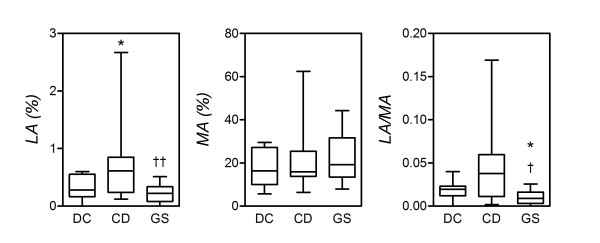
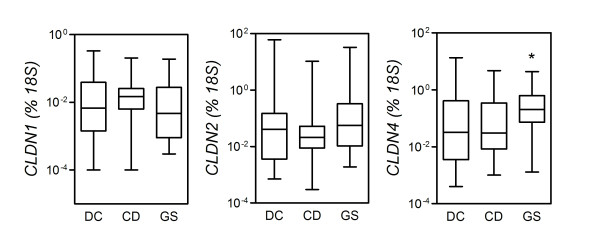
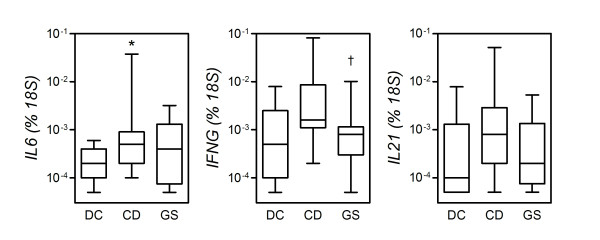
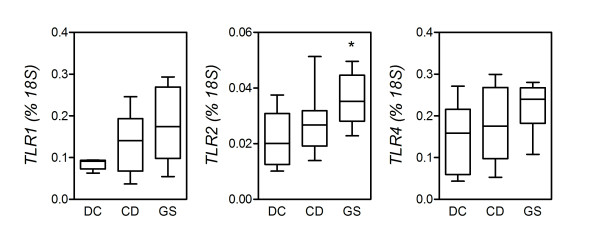
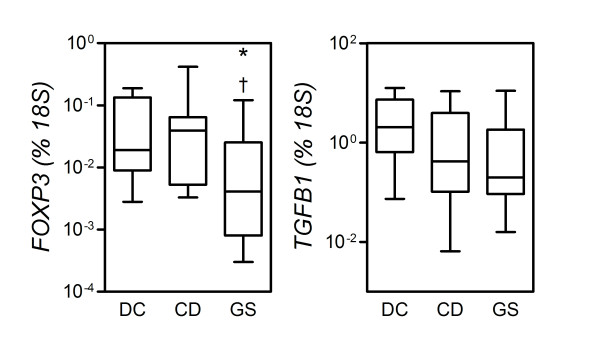
Background: Celiac disease (CD) is an autoimmune enteropathy triggered by the ingestion of gluten. Gluten-sensitive individuals (GS) cannot tolerate gluten and may develop gastrointestinal symptoms similar to those in CD, but the overall clinical picture is generally less severe and is not accompanied by the concurrence of tissue transglutaminase autoantibodies or autoimmune comorbidities. By studying and comparing mucosal expression of genes associated with intestinal barrier function, as well as innate and adaptive immunity in CD compared with GS, we sought to better understand the similarities and differences between these two gluten-associated disorders. Methods: CD, GS and healthy, gluten-tolerant individuals were enrolled in this study. Intestinal permeability was evaluated using a lactulose and mannitol probe, and mucosal biopsy specimens were collected to study the expression of genes involved in barrier function and immunity. Results: Unlike CD, GS is not associated with increased intestinal permeability. In fact, this was significantly reduced in GS compared with controls (P = 0.0308), paralleled by significantly increased expression of claudin (CLDN) 4 (P = 0.0286). Relative to controls, adaptive immunity markers interleukin (IL)-6 (P = 0.0124) and IL-21 (P = 0.0572) were expressed at higher levels in CD but not in GS, while expression of the innate immunity marker Toll-like receptor (TLR) 2 was increased in GS but not in CD (P = 0.0295). Finally, expression of the T-regulatory cell marker FOXP3 was significantly reduced in GS relative to controls (P = 0.0325) and CD patients (P = 0.0293). Conclusions: This study shows that the two gluten-associated disorders, CD and GS, are different clinical entities, and it contributes to the characterization of GS as a condition associated with prevalent gluten-induced activation of innate, rather than adaptive, immune responses in the absence of detectable changes in mucosal barrier function.
Overview
The claims and statistics of this paper haven’t been checked yet.
Free: it reads the open-access text and checks the first 5 claims that cite a source we can check. Create a free account to check every claim.
Integrity signals
Registry
Cites
Statistics
Figures
Verification
Claims the paper makes
The claims and statistics of this paper haven’t been checked yet.
Free: it reads the open-access text and checks the first 5 claims that cite a source we can check. Create a free account to check every claim.
Claims other papers make about this one
Each is checked against this paper’s own text: does it say what the citing paper says it does?
The source backs part of the claim, not all of it — or backs it for a different population, condition or comparison.
In the citing paper
“Some patients with IBS lack tissue transglutaminase antibodies or histological markers of coeliac disease yet still respond symptomatically to a gluten-free diet.”
From Intestinal microbiota in functional bowel disorders: a Rome foundation report (2013) · cites this paper as [158]
Experimental — accuracy not yet measured
Self-check
Percentages, sums and reported differences re-computed from the paper’s own numbers.
The self-check needs the paper’s full text.
Citations
Cites
Green, P. H. R., & Jones, R. (2006) · Cited by 2,453
Decoding the Patterns of Self and Nonself by the Innate Immune System
Medzhitov, R., & Janeway, C. A. (2002) · Science · doi:10.1126/science.1068883 · Cited by 2,154 · cited 1×
“Different combinations of TLRs are expressed in hematopoietic cells and nonhematopoietic cells such as intestinal epithelial cells [42-44].”
BackgroundFuruse, M., Fujita, K., Hiiragi, T., Fujimoto, K., & Tsukita, S. (1998) · The Journal of Cell Biology · doi:10.1083/jcb.141.7.1539 · Cited by 2,095 · cited 2×
“For instance, CLDN1 and CLDN4 are postulated to decrease, whereas CLDN2 is postulated to increase TJ-dependent permeability [35].”
BackgroundIL-17 family cytokines and the expanding diversity of effector T cell lineages
Weaver, C. T., Hatton, R. D., Mangan, P. R., & Harrington, L. E. (2007) · Annual Review of Immunology · doi:10.1146/annurev.immunol.25.022106.141557 · Cited by 1,842 · cited 1×
“This involves the mucosal recruitment and activation of Th1 and Th17 clones and the production of Th1- and Th17-associated cytokines, namely, IFN-g and IL-17A, which contribute to disrupting barrier function and initiating tissue damage [16,18-21,41].”
BackgroundIL-23 is essential for T cell–mediated colitis and promotes inflammation via IL-17 and IL-6
Yen, D., Cheung, J., Scheerens, H., Poulet, F., McClanahan, T., Mckenzie, B., Kleinschek, M. A., Owyang, A., Mattson, J., Blumenschein, W., et al. (2006) · Journal of Clinical Investigation · doi:10.1172/jci21404 · Cited by 1,542 · cited 7×
“Yen D, Cheung J, Scheerens H, Poulet F, McClanahan T, McKenzie B, Kleinschek MA, Owyang A, Mattson J, Blumenschein W, Murphy E, Sathe M, Cua DJ, Kastelein RA, Rennick D: IL-23 is essential for T cell-mediated colitis and promotes inflammation via IL-17 and IL-6.”
BackgroundInfluentialSteinman, L. (2007) · Nature Medicine · doi:10.1038/nm1551 · Cited by 1,376 · cited 2×
“This involves the mucosal recruitment and activation of Th1 and Th17 clones and the production of Th1- and Th17-associated cytokines, namely, IFN-γ and IL17A, which contribute to disrupting barrier function and initiating tissue damage [16, 18-21, 41].”
Recognition of pathogen-associated molecular patterns by TLR family
Akira, S., & Hemmi, H. (2003) · Immunology Letters · doi:10.1016/s0165-2478(02)00228-6 · Cited by 1,150 · cited 1×
“Different combinations of TLRs are expressed in hematopoietic cells and nonhematopoietic cells such as intestinal epithelial cells [42-44].”
BackgroundAlterations in intestinal permeability
Arrieta, M. C., Bistritz, L., & Meddings, J. B. (2006) · Gut · doi:10.1136/gut.2005.085373 · Cited by 634 · cited 1×
“Increased intestinal permeability is thought to be an early biological change that precedes the onset of several autoimmune diseases [32-34].”
BackgroundVan Itallie, C., Rahner, C., & Anderson, J. M. (2001) · Journal of Clinical Investigation · doi:10.1172/jci12464 · Cited by 601 · cited 1×
“associated with marked differences in mucosal barrier function and with apparent differences in the expression of CLDN4, which encodes for a critical TJ component [38].”
BackgroundBrandtzaeg, P., Halstensen, T. S., Kett, K., Krajči, P., Kvale, D., Rognum, T. O., Scott, H., & Sollid, L. M. (1989) · Gastroenterology · doi:10.1016/0016-5085(89)90406-x · Cited by 550 · cited 1×
“These are generally defined as gluten sensitivity (GS) [2-5].”
Background
Cited by
Items 301–400 of 452
Lerner, A., & Matthias, T. (2019) · Elsevier eBooks · doi:10.1016/b978-0-12-814307-0.00032-3 · Cited by 8
The Role of Dietary Energy and Macronutrients Intake in Prevalence of Irritable Bowel Syndromes
Zhang, J., Ma, H., Zhu, J., Lü, C., Yu, C., & Li, Y. (2019) · BioMed Research International · doi:10.1155/2019/8967306 · Cited by 11
Comino, I., & Sousa, C. (2022) · MDPI eBooks · doi:10.3390/books978-3-0365-5104-3 · Cited by 8
Cutaneous Hypersensitivity to Gluten
Tammaro, A., Narcisi, A., Marco, G. D., & Persechino, S. (2012) · Dermatitis · doi:10.1097/der.0b013e318262ca9b · Cited by 8
“Sapone et al in 2011 affirmed that GS could be considered as a condition associated with prevalent activation of an innate immune response associated to detectable changes in mucosal barrier function, with a major permeability to allergens, such as gluten.(5) In our opinion, our results demonstrated that, in celiac pa…”
ResultCha, R. R., & Kim, H. J. (2020) · Korean Journal of Gastroenterology · doi:10.4166/kjg.2020.75.1.11 · Cited by 8
Dale, H. F., Johannessen, J. C., Brønstad, I., & Lied, G. A. (2021) · International Journal of General Medicine · doi:10.2147/ijgm.s333078 · Cited by 7
“The theories about abnormal gut permeability in NCGS are largely based on studies of cell cultures and intestinal tissue samples.(18,31) Thus, it is not certain that the analysis of serum levels is a suitable method for the detection of the investigated gut integrity markers.”
MethodA Scoring System for Identifying Patients Likely to Be Diagnosed with Low-Grade Coeliac Enteropathy
Fernández‐Bañares, F., Carrasco, A., Rosinach, M., Arau, B., García-Puig, R., González, C., Tristán, E., Zabana, Y., & Esteve, M. (2019) · Nutrients · doi:10.3390/nu11051050 · Cited by 8
“In this sense, it has been described that the number of TCR γδ + IELs, a typical feature of CD histopathology, is only elevated in CD subjects, while in NCGS patients, the number of TCR γδ + IELs is similar to that in controls [31].”
Bayrak, N. A., & Volkan, B. (2021) · Digestive Diseases · doi:10.1159/000514276 · Cited by 8
Fernández‐Bañares, F., Arau, B., Raga, A., Aceituno, M., Tristán, E., Carrasco, A., Ruiz, L., Martín‐Cardona, A., Ruiz-Ramírez, P., & Esteve, M. (2021) · Nutrients · doi:10.3390/nu13061812 · Cited by 10
“It has been described that the number of TCRγδ+ IELs is only elevated in CD subjects, while in NCGS patients, the number of TCRγδ+ IELs is similar to that in controls [23].”
ResultEvidence-Based and Emerging Diet Recommendations for Small Bowel Disorders
Rej, A., Potter, M. D. E., Talley, N. J., Shah, A., Holtmann, G., & Sanders, D. S. (2022) · The American Journal of Gastroenterology · doi:10.14309/ajg.0000000000001764 · Cited by 8
“be increased in NCG/WS consistent with innate immunity, with adaptive markers such as interleukin-6 and interleukin-21 not being expressed at high levels (11).”
BackgroundA Clinical Update: Nonceliac Gluten Sensitivity—Is It Really the Gluten?
Capili, B., Chang, M., & Anastasi, J. K. (2014) · The Journal for Nurse Practitioners · doi:10.1016/j.nurpra.2014.07.036 · Cited by 10
Coeliac Disease in the 21st Century: No Longer “Kids’ Stuff”
Lucendo, A. J. (2011) · Gastroenterology Research · doi:10.4021/gr376e · Cited by 8
“The response to a GFD is clearly positive in gluten sensitivity, but a positive serological test, mucosal alterations and altered biochemical nutritional markers use to be absent [14, 15].”
BackgroundSazzini, M., Fanti, S. D., Cherubini, A., Quagliariello, A., Profiti, G., Martelli, P. L., Casadio, R., Ricci, C., Campieri, M., Lanzini, A., et al. (2016) · Genes & Nutrition · doi:10.1186/s12263-016-0532-4 · Cited by 7
Duodenal and Rectal Eosinophilia Are New Biomarkers of Nonceliac Gluten Sensitivity
Jarbrink-Sehgal, M. E., & Talley, N. J. (2018) · Clinical Gastroenterology and Hepatology · doi:10.1016/j.cgh.2018.11.039 · Cited by 8
Rezaei-Tavirani, S., Rostami‐Nejad, M., Vafaee, R., Khalkhal, E., Keramatinia, A., Ehsani-Ardakani, M. J., & Razzaghi, M. R. (2019) · Gastroenterology and hepatology from bed to bench. · Cited by 8
Molina‐Infante, J., Santolaria, S., & Fernández‐Bañares, F. (2015) · doi:10.3926/oms.261 · Cited by 7
Hossain, M. E., Munni, M. B., & Islam, S. (2025) · Poultry Science · doi:10.1016/j.psj.2025.106117 · Cited by 19
“The effects of gliadin include agglutinating activity, decreased F-actin content, inhibition of cell development, induction of apoptosis, modification of redox equilibrium, and cytoskeleton rearrangement through the zonulin pathway and TJ (TJ) loss (Sapone et al., 2011).”
Gambino, C. M., Agnello, L., Vidali, M., Sasso, B. L., Mansueto, P., Seidita, A., Giuliano, A., Scazzone, C., Massa, D., Masucci, A., et al. (2024) · Clinical Chemistry and Laboratory Medicine (CCLM) · doi:10.1515/cclm-2024-0034 · Cited by 6
Łukowski, W. (2025) · Frontiers in Endocrinology · doi:10.3389/fendo.2025.1576419 · Cited by 9
Kvehaugen, A. S., Tveiten, D., & Farup, P. G. (2018) · BMC Gastroenterology · doi:10.1186/s12876-018-0750-x · Cited by 6
“Although not specific for the condition, anti-gliadin antibodies, in particular of the IgG sub-class, has been reported as a frequent serological marker in non-celiac gluten sensitivity in several studies [32, 36, 37].”
BackgroundResultGluten and its main food sources and other components of grains that may impact on health
Bold, J. (2021) · Elsevier eBooks · doi:10.1016/b978-0-12-821846-4.00007-3 · Cited by 8
Food -related strategies towards reduction of gluten intolerance and gluten sensitivity
Gilissen, L. J. W. J., van den Broeck, H. C., Londoño, D. M. M., Salentijn, E. M. J., Koning, F., Meer, I. M. V. D., & SMULDERS, M. J. M. (2011) · Socio-Environmental Systems Modeling · Cited by 6
Zimmermann, J., Fazio, L. D., Kaden-Volynets, V., Hitzmann, B., & Bischoff, S. C. (2022) · Digestive Diseases and Sciences · doi:10.1007/s10620-022-07462-3 · Cited by 8
“CD and WA are immunological diseases [4] while the origin of NCWS is unclear at present, but an involvement of the immune system and an impaired intestinal barrier are assumed to play a role [5, 6].”
BackgroundEffect of dietary gluten content on small intestinal inflammatory response of broilers
Kang, D., Belal, S. A., Tian, W., Park, B. Y., Choe, H. S., & Shim, K. S. (2019) · Archiv für Geflügelkunde · doi:10.1399/eps.2019.285 · Cited by 6
Histopathology of non-coeliac gluten sensitivity
Kırmızı, A., Salman, F. G., Savaş, B., Kalkan, Ç., Soykan, İ., & Ensarı, A. (2022) · Archiv für Pathologische Anatomie und Physiologie und für Klinische Medicin · doi:10.1007/s00428-021-03257-5 · Cited by 5
Diploid Wheats: Are They Less Immunogenic for Non-Celiac Wheat Sensitive Consumers?
Aufiero, V. R., Sapone, A., & Mazzarella, G. (2022) · Cells · doi:10.3390/cells11152389 · Cited by 6
“In 2011, we observed that small intestine expression of toll like receptor (TLR) 2 and, to a lesser extent, TLR1, was increased in NCWS subjects, compared to CD or controls, whereas there were no differences in markers of adaptive immunity [7].”
BackgroundSelf-citationRoyston, L., Isnard, S., Berini, C. A., Bu, S., Lakatos, P. L., Bessissow, T., Chomont, N., Klein, M. B., Lebouché, B., de Pokomandy, A., et al. (2023) · BMJ Open · doi:10.1136/bmjopen-2022-067640 · Cited by 5
Arabpour, E., Alijanzadeh, D., Sadeghi, A., Khoshdel, S., Hekmatdoost, A., Kord‐Varkaneh, H., & Abdehagh, M. (2023) · Frontiers in Nutrition · doi:10.3389/fnut.2023.1273629 · Cited by 9
Salvestrini, C., Lucas, M., Lionetti, P., Torrente, F., James, S. G., Phillips, A. D., & MURCH, S. H. (2014) · PLoS ONE · doi:10.1371/journal.pone.0106005 · Cited by 6
“Increased expression of various potentially matrix-shaping cytokines, including IFN-c, TNF-a, and IL-6 has been reported in coeliac disease [1,16].”
BackgroundMearin, F., & Montoro, M. A. (2013) · Medicina Clínica · doi:10.1016/j.medcli.2013.06.006 · Cited by 5
Anderson, B., & Pitsinger, A. (2014) · Journal of Chiropractic Medicine · doi:10.1016/j.jcm.2014.01.002 · Cited by 5
Precision medicine, agriculture, and genome editing: science and ethics
Moscoso, C. G., Potz, K. R., Tan, S., Jacobson, P. A., Berger, K. M., & Steer, C. J. (2019) · Annals of the New York Academy of Sciences · doi:10.1111/nyas.14266 · Cited by 6
(2021) · Elsevier eBooks · doi:10.1016/c2019-0-03279-7 · Cited by 5
Food Intolerance: Immune Activation Through Diet-associated Stimuli in Chronic Disease.
Pietschmann, N. (2015) · PubMed · Cited by 5
Immunology of Celiac Disease by Focused on Vaccine Therapy
Rostami‐Nejad, M. (2016) · International Journal of Celiac Disease · doi:10.12691/ijcd-3-4-4 · Cited by 5
“On the other hands, it was shown that increased levels of adaptive immune markers such as IFN-gamma, IL-17A, IL-6 and IL-21 in the small intestinal mucosa of CD patients, are triggered by DQ2 DQ8 bounded tTG-deamidated gluten peptides and associated with TH1- and TH17associated cytokine production and/or clone activat…”
BackgroundD’Angelo, S., & Cusano, P. (2020) · Journal of Physical Education and Sport · doi:10.7752/jpes.2020.s4314 · Cited by 10
Avanaki, F. A., Daryani, N. E., Aletaha, N., Hesabgar, N., Zavareh, M. S. R., & Hadi, R. (2024) · Arab Journal of Gastroenterology · doi:10.1016/j.ajg.2024.01.009 · Cited by 4
The Role of the Gluten-Derived Peptide Gliadin in Celiac Disease
Willoughby, D. S. (2014) · Journal of Nutritional Health & Food Engineering · doi:10.15406/jnhfe.2014.01.00036 · Cited by 4
“As such, gluten sensitivity typically results in gastrointestinal symptoms similar to those in celiac disease, but from the overall clinical perspective, it presents with a lessened severity and is not accompanied by the concurrence of tTG autoantibodies or autoimmune comorbidities that are associated with celiac dise…”
BackgroundFormulation of a Gluten-free Cookie with Prebiotics and an Edible Cover Enriched with Probiotics
(2021) · Letters in Applied NanoBioScience · doi:10.33263/lianbs112.34593469 · Cited by 4
The Genetic Variability of Wheat Can Ensure Safe Products for Celiac Disease Patients?
Ribeiro, M., Poeta, P. A. C. Q. D., & Igrejas, G. (2016) · International Journal of Celiac Disease · doi:10.12691/ijcd-2-1-7 · Cited by 4
“6%), specifically about 1% of the Western world [5], and iii) gluten sensitivity, a pathology of intolerance to gluten that has been recently rediscovered [6], which excludes CD and wheat allergy, with an estimated prevalence of 6% for the USA population.”
BackgroundLa sensibilité au gluten non maladie cœliaque. Où en sommes-nous en 2016 ?
Molkhou, P. (2016) · Revue française d'allergologie · doi:10.1016/j.reval.2016.10.006 · Cited by 4
Food allergy and food hypersensitivity
Singh, P., & Makharia, G. K. (2019) · Elsevier eBooks · doi:10.1016/b978-0-12-813037-7.00027-3 · Cited by 4
Is it time to rethink the burden of non-coeliac gluten sensitivity? A systematic review
ANDREIS, F. B. D., Schiepatti, A., Gibiino, G., FABBRI, C., Baiardi, P., & Biagi, F. (2021) · Minerva Gastroenterology · doi:10.23736/s2724-5985.21.03077-1 · Cited by 6
The many faces of the problem of intolerance to gluten.
Livzan, M. A., Осипенко, М. Ф., Заякина, Н. В., & Сергеевна, К. Т. (2018) · Clinical Medicine (Russian Journal) · doi:10.18821/0023-2149-2018-96-2-123-128 · Cited by 7
Peña-Bautista, R. J., Braun, H., & Mollins, J. (2014) · Cited by 5
Development of a Platform for Lateral Flow Test Devices with the Capability of Using Multiple Fluids
Föllscher, W. (2013) · doi:10.23860/thesis-follscher-wilke-2013 · Cited by 4
“People having gluten sensitivity (around 6 to 7 % of population) need to be able to determine whether food contains gluten or not, since already small doses can be life-threatening [37].”
BackgroundRecent Development in Celiac Disease: Pathophysiology, Animal Models and Treatments
PATEL, V. G., Joharapurkar, A. A., & Jain, M. R. (2025) · Drug Development Research · doi:10.1002/ddr.70149 · Cited by 3
“Expression of claudin ‐ 2, 4, and 15 is increased, while that of claudins 3, 5, and 7 is decreased in CD patients (Sapone et al. 2011).”
A comprehensive review of biochemical, functional, and dietary implications of Gluten
Banu, Z., Somraj, B., Geetha, A., Khan, A. A., Srinu, B., Vamshi, J., Karunakar, J., & Saidaiah, P. (2024) · Annals of Phytomedicine An International Journal · doi:10.54085/ap.2024.13.1.19 · Cited by 10
“Innate immunological activation in NCWGS is indicated by increased expression of toll-like receptors (TLRs) in the small intestine, specifically TLR2, TLR1, and TLR4 (Sapone et al ., 2011).”
Yılmaz, F., & Atay, K. (2024) · Annals of Diagnostic Pathology · doi:10.1016/j.anndiagpath.2024.152393 · Cited by 3
Hemat, M., Ghafari, S. R., Feng, H., Ullah, I., Zhou, Q., Wang, X., Cai, J., Fahad, S., Fan, J., & Jiang, D. (2025) · Journal of Cereal Science · doi:10.1016/j.jcs.2025.104151 · Cited by 3
Non-celiac gluten hypersensitivity
Ashat, M., & Kochhar, R. (2014) · Tropical Gastroenterology · doi:10.7869/tg.184 · Cited by 3
“All this evidence supports the hypothesis that NCGS is marked by decreased intestinal permeability.(24) In contrast, claudin-1 and ZO-1 are seen elevated in CD with increased epithelial permeability.”
BackgroundResultInfluentialGluten and gluten-dependent diseases
Strońska-Pluta, A., Pluta, W. W., Lalko, A., & Lubkowska, A. (2021) · Journal of Education Health and Sport · doi:10.12775/jehs.2021.11.03.003 · Cited by 3
“The available evidence suggests that several mechanisms play an important role in the development of NCGS, such as activation of the innate immune response [22], changing the barrier function of the intestinal mucosa [18],”
BackgroundGreuter, T., Schmidlin, S., Lattmann, J., Stotz, M., Lehmann, R., Zeitz, J., Scharl, M. M., Misselwitz, B., Pohl, D., Fried, M., et al. (2016) · Digestive and Liver Disease · doi:10.1016/j.dld.2016.11.016 · Cited by 3
Self-citationElevated anti-gliadin IgG antibodies are related to treatment resistance in schizophrenia
Motoyama, M., Yamada, H., Motonishi, M., & Matsunaga, H. (2019) · Comprehensive Psychiatry · doi:10.1016/j.comppsych.2019.05.002 · Cited by 3
Does Celiac Disease Influence Survival in Sepsis? A Nationwide Longitudinal Study
Tjernberg, A. R., Bonnedahl, J., & Ludvigsson, J. F. (2016) · PLoS ONE · doi:10.1371/journal.pone.0154663 · Cited by 3
Manifestations digestives des intolérances au blé
Saintot, M., Flabbee, J., Ziegler, O., Schmutz, J. ‐., & Barbaud, A. M. (2017) · Revue française d'allergologie · doi:10.1016/j.reval.2016.12.002 · Cited by 3
Celiac Disease and Gluten-Related Disorders
Larretxi, I., Navarro, V., & Churruca, I. (2017) · SpringerBriefs in food, health and nutrition · doi:10.1007/978-3-319-53342-1_1 · Cited by 3
A Comparative Study of Modern and Heirloom Wheat on Indicators of Gastrointestinal Health
Keirns, B. H., Anderson, K. L., Ojo, B. A., Washburn, K. F., El-Rassi, G. D., Lightfoot, S. A., Carver, B. F., Lucas, E. A., & Smith, B. J. (2019) · Journal of Agricultural and Food Chemistry · doi:10.1021/acs.jafc.9b05851 · Cited by 3
Stein, R. A., & Katz, D. H. (2017) · Elsevier eBooks · doi:10.1016/b978-0-12-385007-2.00024-3 · Cited by 3
Wieser, H., Koehler, P., & Scherf, K. A. (2020) · Elsevier eBooks · doi:10.1016/b978-0-12-821715-3.00010-1 · Cited by 4
Gluten affects behaviors related to activity and anxiety in mice fed high-fat diets
Schurdak, J. D., Benoit, S. C., & Woollett, L. A. (2025) · Journal of Neurophysiology · doi:10.1152/jn.00285.2025 · Cited by 2
Inflammation and Microbiota and Gut Reconditioning
Bengmark, S. (2017) · Wiley-VCH eBooks · doi:10.1002/9783527692156.ch64 · Cited by 2
CRISPR and Food Security: Applications in Cereal Crops
Rai, M., Magudeeswari, P., & Tyagi, W. (2020) · Concepts and strategies in plant sciences · doi:10.1007/978-3-030-42022-2_3 · Cited by 5
Improving the Diagnosis of Dermatitis Herpetiformis Using the Intraepithelial Lymphogram
Fernández‐Bañares, F., Crespo, L., Planella, M., Farráis, S., Izquierdo, S., López‐Palacios, N., Roy, G., Vidal, J., & Núñez, C. (2024) · Nutrients · doi:10.3390/nu16020232 · Cited by 2
“In addition, it would rule out non-celiac gluten sensitivity, in which there is no increase in intraepithelial TCR γδ + cells [41].”
BackgroundCeliac Treatments, Adjuvant Therapies and Alternatives to the Gluten-Free Diet
McCarville, J. L., Caminero, A., & Verdu, E. F. (2015) · doi:10.3926/oms.254 · Cited by 2
Epithelial barrier hypothesis and the development of allergic and autoimmune diseases
Yazıcı, D., Öğülür, İ., Küçükkase, O. C., Li, M., Rinaldi, A. O., Pat, Y., Wallimann, A., Wawrocki, S., Sözener, Z. Ç., Büyüktiryaki, B., et al. (2022) · Allergo Journal · doi:10.1007/s15007-022-5033-8 · Cited by 2
Specific carbohydrate diet: irritable bowel syndrome patient case study
O'Dwyer, D. D., & Darville, R. L. (2015) · Nutrition & Food Science · doi:10.1108/nfs-05-2015-0056 · Cited by 3
“…been found in 30-75% D ow nl oa de d by W or ce st er P ol yt ec hn ic I ns tit ut e A t 1 0: 39 0 9 O ct ob er 2 01 5 (P T ) of irritable bowel sufferers (Anderson et al., 2010; Ewaschuk et al., 2008; Lin, 2004; Lupascu et al., 2005; Pimentel et al., 2003; Sapone et al., 2011; Ukena et al., 2007).”
BackgroundImmunologic Reactions to Wheat
Pietzak, M. M. (2014) · Elsevier eBooks · doi:10.1016/b978-0-12-401716-0.00011-8 · Cited by 2
Is the diet important for psoriasis?
Owczarczyk-Saczonek, A. B., & Placek, W. J. (2014) · Dermatology Review · doi:10.5114/dr.2014.45127 · Cited by 2
Celiac Disease in Multiple Sclerosis: A Controversial Issue
Salvatore, S. (2014) · International Journal of Neurology and Neurotherapy · doi:10.23937/2378-3001/1/1/1006 · Cited by 2
“Intestinal and extra intestinal symptoms, response to gluten free diet, and positive HLA-DQ2 (in 50% of these patients) may be present in this other disorder of the “gluten spectrum” [23], although immune (anti-endomysial and tTG negative tests) and histological features, such as normal villi and lamina propria, diffe…”
BackgroundTuppin, P., Moysan, V., de Peretti, C., Schnitzler, A., Féry-Lemonnier, É., & Woimant, F. (2012) · Revue Neurologique · doi:10.1016/j.neurol.2012.04.002 · Cited by 2
Wheat - A Precious Nutrient That Can Become Harmful: Wheat/Gluten Related Disorders
Bonvicini, F., Simeoni, F., Gasbarrini, G., Gasbarrini, A., & Gasbarrini, A. (2017) · Journal of Clinical Gastroenterology and Hepatology · doi:10.21767/2575-7733.1000013 · Cited by 2
“As to NCGS, the results are controversial [15].”
BackgroundResultGenome Editing: Mechanism and Utilization in Plant Breeding
Awan, M. J. A., Anjum, N., Pervaiz, K., Ijaz, M. U., Khan, M. Z., Amin, I. U., & Mansoor, S. (2023) · Springer eBooks · doi:10.1007/978-3-031-28146-4_16 · Cited by 2
Innate immune system: the no man's land where discover new biomarkers for gluten-related-disorders.
Assandri, R., Monari, M., Colombo, A. A., & Montanelli, A. (2015) · Gastroenterology and hepatology from bed to bench. · Cited by 2
Diagnosis of gluten-related disorders
Danciu, M., & Negură, I. (2021) · Elsevier eBooks · doi:10.1016/b978-0-12-821846-4.00013-9 · Cited by 2
Plant Genome Editing for Nutritional Improvement
Khalid, S., Shaheen, S., Iqbal, S., Naeem, N., & Wajid, T. (2025) · CABI eBooks · doi:10.1079/9781800622517.0012 · Cited by 1
Carroccio, A., Rostami, K., Fasano, A., Giuliano, A., & Catassi, C. (2025) · Gastrointestinal Endoscopy Clinics of North America · doi:10.1016/j.giec.2025.02.010 · Cited by 2
Self-citationPiotin, A., & Frederic de, B. L. A. Y. (2025) · Clinical Reviews in Allergy & Immunology · doi:10.1007/s12016-025-09106-6 · Cited by 2
“Indeed, studies have shown that NCWS patients can present with reduced intestinal permeability and higher claudin-4 expression than both CD and healthy subjects [79].”
Sensibilidad al gluten no celíaca: ¿una verdadera entidad o solo una quimera?
Hernández, E. T., & Ruiz, A. C. (2014) · Medicina Clínica · doi:10.1016/j.medcli.2014.07.003 · Cited by 1
The effect of a gluten-free diet on a patient complaining of severe tinnitus
Barozzi, S., Bo, L. D., & Cesarani, A. (2013) · The International Tinnitus Journal · doi:10.5935/0946-5448.20130016 · Cited by 1
Disturbi dell’umore e patologie glutine correlate
Porcelli, B., Verdino, V., Ferretti, F., Bizzaro, N., Fagiolini, A. M., Terzuoli, L., Cinci, F., & Bossini, L. (2017) · La Rivista Italiana della Medicina di Laboratorio - Italian Journal of Laboratory Medicine · doi:10.1007/s13631-016-0141-7 · Cited by 1
“ascrivibili alla gluten sensitivity [24], che risultava signifi-”
BackgroundZöliakie, Getreideallergie, Weizensensitivität: Glutenfreie Ernährungstherapie
Zopf, Y., Schink, M., & Dieterich, W. (2017) · Aktuelle Ernährungsmedizin · doi:10.1055/s-0043-115208 · Cited by 1
“Andere Untersuchungen weisen auf eine erhöhte Expression des Toll-like-Rezeptor 2 (TLR-2) [44] sowie erhöhte Serumlevel an löslichem CD14 und dem LPS-bindenden (LPS: Lipopolysaccharid) Proteins hin.”
BackgroundReacciones adversas a los alimentos: ¿Cuál es el papel de los microorganismos?
Caminero, A. (2021) · Acta gastroenteorológica latinoamericana/Acta gastroenterológica latinoamericana · doi:10.52787/ntec5426 · Cited by 1
Saneifard, H., Sheikhy, A., Karbasian, F., Eslamian, G., Shakiba, M., & Babaie, D. (2021) · Gastroenterology and hepatology from bed to bench. · Cited by 1
From Ptolemaus to Copernicus: The Evolving System of Gluten-Related Disorder
Catassi, C., & Fasano, A. (2018) · MDPI eBooks · doi:10.3390/books978-3-03842-732-2 · Cited by 1
Self-citationCложности дифференциальной диагностики атопического дерматита у детей
Беш, О., Matsyura, O. I., Lishchuk-Yakymovych, K., Pukalyak, R., & Lugovskyi, S. V. (2018) · CHILD`S HEALTH · doi:10.22141/2224-0551.13.6.2018.143161 · Cited by 1
Tolerance and Efficacy of Glutalytic™: A Randomized, Double-Blind, Placebo-Controlled Study
Deaton, J. G., Cuentas, A., & Starnes, J. (2018) · Journal of Nutrition & Food Sciences · doi:10.4172/2155-9600.1000727 · Cited by 1
Difficulties in differential diagnosis of skin allergies in children
Беш, О., Matsyura, O. I., Lishchuk-Yakymovych, H., Pukalyak, R., & Lugovskyi, S. V. (2019) · Advanced Studies in Medical Sciences · doi:10.12988/asms.2019.912 · Cited by 1
“Table 2 shows the differential diagnosis of various conditions associated with gluten intolerance [1, 8].”
BackgroundNon-celiac gluten/wheat sensitivity: still more questions than answers
Hoffmanová, I. (2019) · Vnitřní lékařství · doi:10.36290/vnl.2019.005 · Cited by 1
Molecular triggers of non-celiac wheat sensitivity
Alaedini, A. (2021) · Elsevier eBooks · doi:10.1016/b978-0-12-821594-4.00010-4 · Cited by 1
Therapeutic targets based on the modulation of immune function by gut bacteria
Caminero, A., & Verdu, E. F. (2021) · Elsevier eBooks · doi:10.1016/b978-0-12-821594-4.00004-9 · Cited by 1
Celiac crisis in patients with celiac disease. Case report
Babanova, A. V., Krums, L. M., Владимировна, Б. С., Parfenov, A. I., Dudina, G. A., Ea, S., Хомерики, С. Г., Lesko, K. A., & Романовна, Д. С. (2021) · Terapevticheskii arkhiv · doi:10.26442/00403660.2021.08.200972 · Cited by 1
“считают, что причиной сепсиса при целиакии являются повышение проницаемости, уменьшение барьерной функции СОТК [6].”
Inflammatory Bowel Disease and Celiac Disease: Environmental Risks Factors and Consequences
Dietert, R. R. (2012) · Molecular and integrative toxicology · doi:10.1007/978-1-61779-812-2_12
Ayala, L. M. V. (2014) · Buleria (Universidad de León) · doi:10.18002/10612/3506 · Cited by 2
Mucosal expression of claudins in children with celiac disease
Veres, G., Nagy‐Szakal, D., Gyrffy, H., Molnr, K., Mller, K., Papp, M., & Arat, A. (2012) · InTech eBooks · doi:10.5772/50175
“Deterioration of intestinal barrier function is one of the most important steps in the pathomechanism of celiac disease (Sapone et al, 2011).”
Sensibilidad al gluten no celíaca: realidad o ficción
Allué, I. P., & Nodal, E. M.-O. (2014) · Anales de Pediatría Continuada · doi:10.1016/s1696-2818(14)70206-9 · Cited by 3
“Los genotipos HLA-DQ2 y/o HLA-DQ8 son positivos en el 40% de los pacientes, co-mo se ha expuesto con anterioridad 3,11,23 .”
BackgroundGluten Sensitivity in Pediatrics: A Clinical Conundrum
Cristofori, F., Arezzo, F., Gentile, A., & Francavilla, R. (2014) · Current Pediatrics Reports · doi:10.1007/s40124-014-0053-9
Annals of Pediatrics & Child Health
Naon, H. (2015)
Batista, I. C., Gandolfi, L., Karla, Y., Nobrega, M., de Almeida, R. C., Almeida, L. M., Campos, D., & Pratesi, R. (2011)
GLUTEN RELATED DISORDERS (REVIEW ARTICLE)
Mohammad, R. N., Karkhane, M., Marzban, A., Ehsan, N. M., & Rostami, K. (2012)
Metadata
- Authors
- Sapone, A., Lammers, K. M., Casolaro, V., Cammarota, M., Giuliano, M. T., De Rosa, M., Stefanile, R., Mazzarella, G., Tolone, C., Russo, M. I., Esposito, P., Ferraraccio, F., Cartenì, M., Riegler, G., de Magistris, L., & Fasano, A.
- Affiliations
- University of Maryland, Baltimore (US)
- University of Campania "Luigi Vanvitelli" (IT)
- Institute of Food Science (IT)
- Corresponding author
- Fasano, Alessio
- ORCID
- Venue
- BMC Medicine
- Published
- 2011-03-09
- Volume
- 9
- Issue
- 1
- Pages
- 23-23
- ISSN
- 1741-7015 (ISSN-L)
- PMC
- PMC3065425
- OpenAlex
- W2069634861
- Cited by
- 452
- References
- 48
- Citations by year
- 2026: 6 · 2025: 16 · 2024: 11 · 2023: 8 · 2022: 20 · 2021: 36 · 2020: 36 · 2019: 35 · 2018: 31 · 2017: 39 · 2016: 36 · 2015: 58 · 2014: 39 · 2013: 38 · 2012: 30
- FWCI
- 38.97
- Type
- journal article
- Language
- en
- Open access
- gold
- doi.org
- Licence
- Locations
- BMC Medicine (publishedVersion, cc-by)
- PubMed Central (publishedVersion, cc-by)
- PubMed (publishedVersion)
- DOAJ (DOAJ: Directory of Open Access Journals) (submittedVersion, cc-by-sa)
- Funders
- National Institutes of Health
- National Institute of Diabetes and Digestive and Kidney Diseases (R21DK078699)
- Topics
- Health Sciences › Medicine › Gastroenterology › Celiac Disease Research and Management
- Health Sciences › Medicine › Gastroenterology › Gastrointestinal motility and disorders
- Life Sciences › Agricultural and Biological Sciences › Plant Science › Wheat and Barley Genetics and Pathology
- Keywords
- celiac disease, gluten sensitivity, intestinal permeability, intestinal barrier function, mucosal gene expression, claudin-4, interleukin-6, IL-21, TLR2, Foxp3, regulatory T cells, innate immunity, adaptive immunity, gluten
- MeSH terms
- Adult, Allergens, Celiac Disease, Female, Glutens, Humans, Hypersensitivity, Intestinal Mucosa, Male, Permeability, Gene Expression Profiling
About these checks
Registry, retraction, Cites and statistics results are computed, not judged, with one exception: a printed reference that no index lists is read once by a model before it counts as a citation error. Claims are extracted by a model and kept only when their quote appears verbatim in the text; each cited source is then checked, with a model’s help, for whether it says what the claim relies on. Those verdicts can be wrong — read the claim’s quote and the cited source before relying on one.
Statistics and arithmetic are recomputed, not judged.
Confidence bands are shown only for fields calibrated on our annotated test set. None is calibrated yet, so no band is shown.
What counts as a claim ›How we measure confidence ›How we check this ›
Are you an author, or do you see a problem with this page? Request a review
Data sources
Bibliographic data: Semantic Scholar, OpenAlex, Crossref.
Contains information from the Semantic Scholar Academic Graph Datasets, made available under the ODC Attribution License (ODC-BY 1.0).
Semantic Scholar’s data is described in: Kinney, R., et al. (2023). The Semantic Scholar Open Data Platform. arXiv:2301.10140.
