

Divergence of gut permeability and mucosal immune gene expression in two gluten-associated conditions: celiac disease and gluten sensitivity
Open accessThe DOI matches its Crossref record; 48 of the 48 references it cites were found in a registry or an index.
Abstract
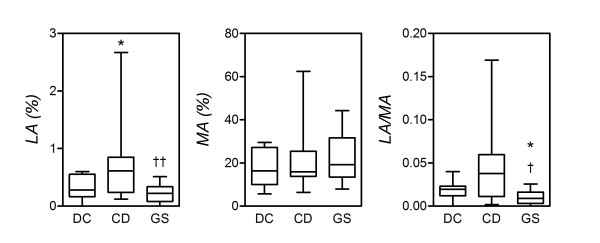
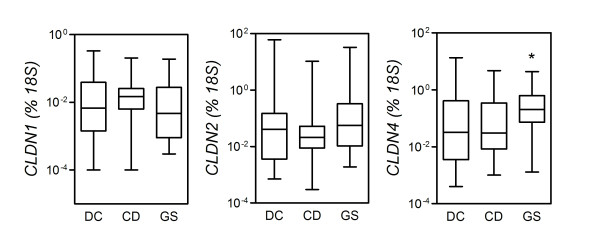
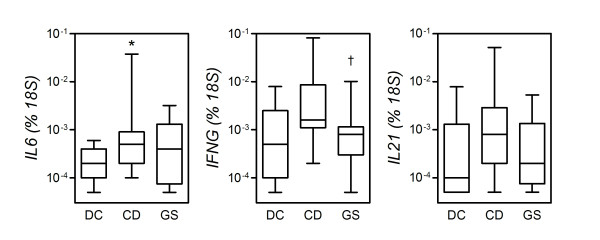
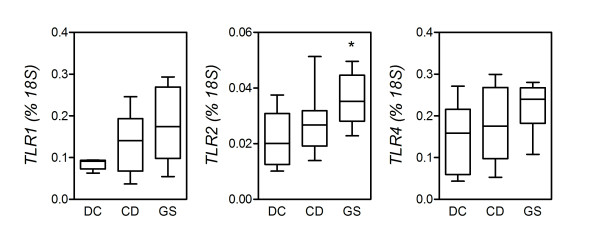
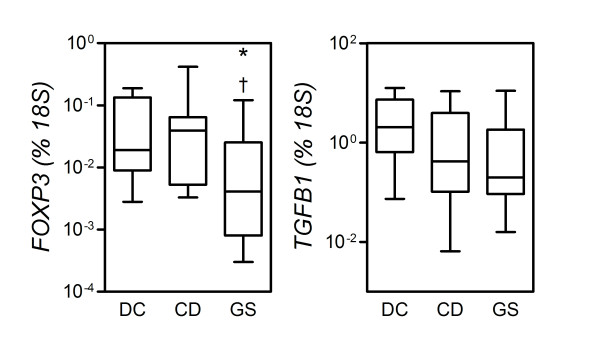
Background: Celiac disease (CD) is an autoimmune enteropathy triggered by the ingestion of gluten. Gluten-sensitive individuals (GS) cannot tolerate gluten and may develop gastrointestinal symptoms similar to those in CD, but the overall clinical picture is generally less severe and is not accompanied by the concurrence of tissue transglutaminase autoantibodies or autoimmune comorbidities. By studying and comparing mucosal expression of genes associated with intestinal barrier function, as well as innate and adaptive immunity in CD compared with GS, we sought to better understand the similarities and differences between these two gluten-associated disorders. Methods: CD, GS and healthy, gluten-tolerant individuals were enrolled in this study. Intestinal permeability was evaluated using a lactulose and mannitol probe, and mucosal biopsy specimens were collected to study the expression of genes involved in barrier function and immunity. Results: Unlike CD, GS is not associated with increased intestinal permeability. In fact, this was significantly reduced in GS compared with controls (P = 0.0308), paralleled by significantly increased expression of claudin (CLDN) 4 (P = 0.0286). Relative to controls, adaptive immunity markers interleukin (IL)-6 (P = 0.0124) and IL-21 (P = 0.0572) were expressed at higher levels in CD but not in GS, while expression of the innate immunity marker Toll-like receptor (TLR) 2 was increased in GS but not in CD (P = 0.0295). Finally, expression of the T-regulatory cell marker FOXP3 was significantly reduced in GS relative to controls (P = 0.0325) and CD patients (P = 0.0293). Conclusions: This study shows that the two gluten-associated disorders, CD and GS, are different clinical entities, and it contributes to the characterization of GS as a condition associated with prevalent gluten-induced activation of innate, rather than adaptive, immune responses in the absence of detectable changes in mucosal barrier function.
Overview
The claims and statistics of this paper haven’t been checked yet.
Free: it reads the open-access text and checks the first 5 claims that cite a source we can check. Create a free account to check every claim.
Integrity signals
Registry
Cites
Statistics
Figures
Verification
Claims the paper makes
The claims and statistics of this paper haven’t been checked yet.
Free: it reads the open-access text and checks the first 5 claims that cite a source we can check. Create a free account to check every claim.
Claims other papers make about this one
Each is checked against this paper’s own text: does it say what the citing paper says it does?
The source backs part of the claim, not all of it — or backs it for a different population, condition or comparison.
In the citing paper
“Some patients with IBS lack tissue transglutaminase antibodies or histological markers of coeliac disease yet still respond symptomatically to a gluten-free diet.”
From Intestinal microbiota in functional bowel disorders: a Rome foundation report (2013) · cites this paper as [158]
Experimental — accuracy not yet measured
Self-check
Percentages, sums and reported differences re-computed from the paper’s own numbers.
The self-check needs the paper’s full text.
Citations
Cites
Green, P. H. R., & Jones, R. (2006) · Cited by 2,453
Decoding the Patterns of Self and Nonself by the Innate Immune System
Medzhitov, R., & Janeway, C. A. (2002) · Science · doi:10.1126/science.1068883 · Cited by 2,154 · cited 1×
“Different combinations of TLRs are expressed in hematopoietic cells and nonhematopoietic cells such as intestinal epithelial cells [42-44].”
BackgroundFuruse, M., Fujita, K., Hiiragi, T., Fujimoto, K., & Tsukita, S. (1998) · The Journal of Cell Biology · doi:10.1083/jcb.141.7.1539 · Cited by 2,095 · cited 2×
“For instance, CLDN1 and CLDN4 are postulated to decrease, whereas CLDN2 is postulated to increase TJ-dependent permeability [35].”
BackgroundIL-17 family cytokines and the expanding diversity of effector T cell lineages
Weaver, C. T., Hatton, R. D., Mangan, P. R., & Harrington, L. E. (2007) · Annual Review of Immunology · doi:10.1146/annurev.immunol.25.022106.141557 · Cited by 1,842 · cited 1×
“This involves the mucosal recruitment and activation of Th1 and Th17 clones and the production of Th1- and Th17-associated cytokines, namely, IFN-g and IL-17A, which contribute to disrupting barrier function and initiating tissue damage [16,18-21,41].”
BackgroundIL-23 is essential for T cell–mediated colitis and promotes inflammation via IL-17 and IL-6
Yen, D., Cheung, J., Scheerens, H., Poulet, F., McClanahan, T., Mckenzie, B., Kleinschek, M. A., Owyang, A., Mattson, J., Blumenschein, W., et al. (2006) · Journal of Clinical Investigation · doi:10.1172/jci21404 · Cited by 1,542 · cited 7×
“Yen D, Cheung J, Scheerens H, Poulet F, McClanahan T, McKenzie B, Kleinschek MA, Owyang A, Mattson J, Blumenschein W, Murphy E, Sathe M, Cua DJ, Kastelein RA, Rennick D: IL-23 is essential for T cell-mediated colitis and promotes inflammation via IL-17 and IL-6.”
BackgroundInfluentialSteinman, L. (2007) · Nature Medicine · doi:10.1038/nm1551 · Cited by 1,376 · cited 2×
“This involves the mucosal recruitment and activation of Th1 and Th17 clones and the production of Th1- and Th17-associated cytokines, namely, IFN-γ and IL17A, which contribute to disrupting barrier function and initiating tissue damage [16, 18-21, 41].”
Recognition of pathogen-associated molecular patterns by TLR family
Akira, S., & Hemmi, H. (2003) · Immunology Letters · doi:10.1016/s0165-2478(02)00228-6 · Cited by 1,150 · cited 1×
“Different combinations of TLRs are expressed in hematopoietic cells and nonhematopoietic cells such as intestinal epithelial cells [42-44].”
BackgroundAlterations in intestinal permeability
Arrieta, M. C., Bistritz, L., & Meddings, J. B. (2006) · Gut · doi:10.1136/gut.2005.085373 · Cited by 634 · cited 1×
“Increased intestinal permeability is thought to be an early biological change that precedes the onset of several autoimmune diseases [32-34].”
BackgroundVan Itallie, C., Rahner, C., & Anderson, J. M. (2001) · Journal of Clinical Investigation · doi:10.1172/jci12464 · Cited by 601 · cited 1×
“associated with marked differences in mucosal barrier function and with apparent differences in the expression of CLDN4, which encodes for a critical TJ component [38].”
BackgroundBrandtzaeg, P., Halstensen, T. S., Kett, K., Krajči, P., Kvale, D., Rognum, T. O., Scott, H., & Sollid, L. M. (1989) · Gastroenterology · doi:10.1016/0016-5085(89)90406-x · Cited by 550 · cited 1×
“These are generally defined as gluten sensitivity (GS) [2-5].”
Background
Cited by
The Oslo definitions for coeliac disease and related terms
Ludvigsson, J. F., Leffler, D. A., Bai, J. C., Biagi, F., Fasano, A., Green, P. H. R., Hadjivassiliou, M., Kaukinen, K., Kelly, C. P., Leonard, J. N., et al. (2013) · Gut · doi:10.1136/gutjnl-2011-301346 · Cited by 1,721
Self-citationMedicine & science in sports & exercise
(1994) · Journal of the American Dietetic Association · doi:10.1016/0002-8223(94)92575-5 · Cited by 1,303
Spectrum of gluten-related disorders: consensus on new nomenclature and classification
Sapone, A., Bai, J. C., Ciacci, C., Dolinsek, J., Green, P. H., Hadjivassiliou, M., Kaukinen, K., Rostami, K., Sanders, D. S., Schumann, M., et al. (2012) · BMC Medicine · doi:10.1186/1741-7015-10-13 · Cited by 1,140
“Therefore, it is not surprising that during the past 50 years we have witnessed an ‘epidemic’ of CD [68,69] and the surging of new gluten-related disorders, including the most recently described GS [44,62].”
BackgroundSelf-citationIntestinal microbiota in functional bowel disorders: a Rome foundation report
Simrén, M., Barbara, G., Flint, H. J., Spiegel, B. M. R., Spiller, R. C., Vanner, S., Verdu, E. F., Whorwell, P. J., & Zoetendal, E. G. (2013) · Gut · doi:10.1136/gutjnl-2012-302167 · Cited by 939
Human Intestinal Barrier Function in Health and Disease
König, J., Wells, J., Cani, P. D., García-Ródenas, C. L., MacDonald, T., Mercenier, A., Whyte, J., Troost, F., & Brummer, R.-J. (2016) · Clinical and Translational Gastroenterology · doi:10.1038/ctg.2016.54 · Cited by 780
“Sapone et al.126 did not find an increased intestinal permeability in the small bowel Clinical and Translational Gastroenterology of non-celiac gluten-sensitive individuals (n= 13) using the lactulose/mannitol test compared with dyspeptic controls (n=14), whereas celiac disease patients (n= 11) had a significantly inc…”
BackgroundInfluentialLow‐gluten, nontransgenic wheat engineered with CRISPR/Cas9
Sánchez‐León, S., Gil‐Humanes, J., Ozuna, C. V., Giménez, M. J., Sousa, C., Voytas, D. F., & Barro, F. (2018) · Plant Biotechnology Journal · doi:10.1111/pbi.12837 · Cited by 587
“Amongst these, the a-gliadin family is the main protein group associated with the development of coeliac disease and noncoeliac gluten sensitivity, which affect more than 7% of the Western population (Mustalahti et al., 2010; Sapone et al., 2011).”
BackgroundDiagnosis of Non-Celiac Gluten Sensitivity (NCGS): The Salerno Experts’ Criteria
Catassi, C., Elli, L., Bonaz, B., Bouma, G., Carroccio, A., Castillejo, G., Cellier, C., Cristofori, F., De Magistris, L., Dolinsek, J., et al. (2015) · Nutrients · doi:10.3390/nu7064966 · Cited by 568
“Preliminary data observed in intestinal biopsies of NCGS patients showed an increase of intraepithelial lymphocytes (Marsh I) as well as the presence of markers associated with innate, rather than adaptive, immunity [2,23].”
BackgroundSelf-citationCell–Cell Junctions Organize Structural and Signaling Networks
Garcia, M. A., Nelson, W. J., & Chavez, N. (2018) · Cold Spring Harbor Perspectives in Biology · doi:10.1101/cshperspect.a029181 · Cited by 503
“Claudins expressed in the human small intestine include claudin 1, 2, 3, 4, 5, 7, 8, 12, and 15 (Szaka´l et al. 2010; Sapone et al. 2011; Lameris et al. 2013; Lu et al. 2013).”
BackgroundLerner, A., & Matthias, T. (2015) · Autoimmunity Reviews · doi:10.1016/j.autrev.2015.01.009 · Cited by 475
“Evidence exists that intestinal barrier defects have a role in initiating celiac disease [72,86,87].”
BackgroundVazquez–Roque, M. I., Camilleri, M., Smyrk, T., Murray, J. A., Marietta, E., O'Neill, J., Carlson, P., Lamsam, J., Janzow, D., Eckert, D., et al. (2013) · Gastroenterology · doi:10.1053/j.gastro.2013.01.049 · Cited by 451
Skodje, G. I., Sarna, V. K., Minelle, I. H., Rolfsen, K. L., Muir, J. G., Gibson, P. R., Veierød, M. B., Henriksen, C., & Lundin, K. E. A. (2018) · Gastroenterology · doi:10.1053/j.gastro.2017.10.040 · Cited by 427
Inflammatory and Microbiota-Related Regulation of the Intestinal Epithelial Barrier
Barbara, G., Barbaro, M. R., Fuschi, D., Palombo, M., Falangone, F., Cremon, C., Marasco, G., & Stanghellini, V. (2021) · Frontiers in Nutrition · doi:10.3389/fnut.2021.718356 · Cited by 403
The Essentiality of Arachidonic Acid in Infant Development
Hadley, K., Ryan, A., Forsyth, S., Gautier, S., & Salem, N. (2016) · Nutrients · doi:10.3390/nu8040216 · Cited by 373
“Notably, Th17 cytokines were initially identified as key factors in the induction of inflammation and tissue destruction associated with a variety of autoimmune response such as multiple sclerosis, arthritis, colitis, celiac disease, and gluten sensitivity [275,276].”
BackgroundPartners in Leaky Gut Syndrome: Intestinal Dysbiosis and Autoimmunity
Kinashi, Y., & Hase, K. (2021) · Frontiers in Immunology · doi:10.3389/fimmu.2021.673708 · Cited by 356
Fasano, A., Sapone, A., Zevallos, V., & Schuppan, D. (2015) · Gastroenterology · doi:10.1053/j.gastro.2014.12.049 · Cited by 325
Self-citationCeliac disease and non-celiac gluten sensitivity
Lebwohl, B., Ludvigsson, J. F., & Green, P. H. R. (2015) · BMJ · doi:10.1136/bmj.h4347 · Cited by 308
Review article: the diagnosis and management of food allergy and food intolerances
Turnbull, J. L., Adams, H. N., & Gorard, D. A. (2015) · Alimentary Pharmacology & Therapeutics · doi:10.1111/apt.12984 · Cited by 306
“However gluten sensitivity may possibly be associated with innate rather than adaptive mucosal immune responses.(152)”
BackgroundClaudins in intestines: Distribution and functional significance in health and diseases
Lu, Z., Ding, L., Lu, Q., & Chen, Y.-H. (2013) · Tissue Barriers · doi:10.4161/tisb.24978 · Cited by 266
Gut microbiota, immune development and function
Bengmark, S. (2013) · Pharmacological Research · doi:10.1016/j.phrs.2012.09.002 · Cited by 262
“In these individuals, neither allergic nor autoimmune mechanisms seem to be involved, particularly when exposed to wheat, but also to rye and barley [56].”
BackgroundSeverance, E. G., Yolken, R. H., & Eaton, W. W. (2016) · Schizophrenia Research · doi:10.1016/j.schres.2014.06.027 · Cited by 253
“GI inflammation, barrier permeability changes and intestinal dysbioses are all thought to contribute to the pathogenesis of this non-celiac disease gluten intolerance (Catassi et al., 2013; Kabbani et al., 2014; Sapone et al., 2011).”
BackgroundBalakireva, A., & Zamyatnin, A. (2016) · Nutrients · doi:10.3390/nu8100644 · Cited by 251
“Gluten only triggered an innate immune response in NCGS and provoked an additional adaptive immune response with increased expression of IL-6, IL-21, IL-17 and IFN-γ [106].”
BackgroundSerological Tests in Gluten Sensitivity (Nonceliac Gluten Intolerance)
Volta, U., Tovoli, F., Cicola, R., Parisi, C., Fabbri, A., Piscaglia, M., Fiorini, E., & Caio, G. (2012) · Journal of Clinical Gastroenterology · doi:10.1097/mcg.0b013e3182372541 · Cited by 253
“Differently from celiac disease, GS patients do not display significant autoimmune comorbidities.(19) In our series, only 1 GS patient (1.”
BackgroundCatassi, C., Alaedini, A., Bojarski, C., Bonaz, B., Bouma, G., Carroccio, A., Castillejo, G., De Magistris, L., Dieterich, W., Di Liberto, D., et al. (2017) · Nutrients · doi:10.3390/nu9111268 · Cited by 240
“An increase in mucosal lymphocytes has been reported in a consistent percentage of patients with NCGS diagnosed by DBPC challenge [25,27], and in general most of the studies on NCGS showed that about half of the patients have a raised IELs count >25 per 100 enterocytes [23,28,29].”
BackgroundSelf-citationUhde, M., Ajamian, M., Caio, G., De Giorgio, R., Indart, A., Green, P. H., Verna, E. C., Volta, U., & Alaedini, A. (2016) · Gut · doi:10.1136/gutjnl-2016-311964 · Cited by 231
“…intraepithelial and lamina propria eosinophil in fi ltration 5 and enhanced expression of intestinal tight junction protein claudin 4, 16 Toll-like receptor 2 (TLR2) 16 or interferon gamma (IFN γ ), 17 suggesting intercellular junction and immune abnormalities in subsets of affected individuals.”
BackgroundHollon, J., Puppa, E., Greenwald, B., Goldberg, E., Guerrerio, A., & Fasano, A. (2015) · Nutrients · doi:10.3390/nu7031565 · Cited by 217
“While the frequency of the HLA DQ2/8 genes is higher in GS than the general population, presence of these genes, unlike in CD, is not a prerequisite [6,8].”
BackgroundMethodSelf-citationThe Dietary Intake of Wheat and other Cereal Grains and Their Role in Inflammation
De Punder, K., & Pruimboom, L. (2013) · Nutrients · doi:10.3390/nu5030771 · Cited by 204
“histopathology, but does present the same symptoms and shows improvements when following a gluten-free diet [12,13].”
BackgroundGluten-related disorders: Celiac disease, wheat allergy, and nonceliac gluten sensitivity
Cabanillas, B. (2020) · Critical Reviews in Food Science and Nutrition · doi:10.1080/10408398.2019.1651689 · Cited by 202
Health Benefits and Adverse Effects of a Gluten-Free Diet in Non-Celiac Disease Patients.
Niland, B. R., & Cash, B. D. (2018) · Europe PMC (PubMed Central) · Cited by 291
Sharma, N., Bhatia, S., Chunduri, V., Kaur, S., Sharma, S., Kapoor, P., Kumari, A., & Garg, M. (2020) · Frontiers in Nutrition · doi:10.3389/fnut.2020.00006 · Cited by 198
Effects of dietary components on intestinal permeability in health and disease
Khoshbin, K., & Camilleri, M. (2020) · American Journal of Physiology-Gastrointestinal and Liver Physiology · doi:10.1152/ajpgi.00245.2020 · Cited by 195
Gluten and wheat sensitivities – An overview
Scherf, K. A., Koehler, P., & Wieser, H. (2016) · Journal of Cereal Science · doi:10.1016/j.jcs.2015.07.008 · Cited by 197
Food Components and Irritable Bowel Syndrome
Gibson, P. R., Varney, J., Malakar, S., & Muir, J. G. (2015) · Gastroenterology · doi:10.1053/j.gastro.2015.02.005 · Cited by 195
Steenstra, I. A., Munhall, C., Irvin, E., Oranye, N., Passmore, S., Van Eerd, D., Mahood, Q., & Hogg-Johnson, S. (2017) · Journal of Occupational Rehabilitation · doi:10.1007/s10926-016-9666-x · Cited by 193
Sensitivity to wheat, gluten and FODMAPs in IBS: facts or fiction?
De Giorgio, R., Volta, U., & Gibson, P. R. (2016) · Gut · doi:10.1136/gutjnl-2015-309757 · Cited by 191
Hayden, J. A., Wilson, M. N., Riley, R. D., Iles, R., Pincus, T., & Ogilvie, R. (2019) · Cochrane Database of Systematic Reviews · doi:10.1002/14651858.cd011284.pub2 · Cited by 185
Brottveit, M., Beitnes, A.-C. R., Tollefsen, S., Bratlie, J. E., Jahnsen, F. L., Johansen, F.-E., Sollid, L. M., & Lundin, K. E. A. (2013) · American Journal of Gastroenterology · doi:10.1038/ajg.2013.91 · Cited by 187
Overview on the General Approaches to Improve Gluten-Free Pasta and Bread
Padalino, L., Conte, A., & Del Nobile, M. (2016) · Foods · doi:10.3390/foods5040087 · Cited by 182
“The molecular mechanisms of NCGS have not been fully understood, although it is widely accepted that the innate immune system plays a key role in the onset of NCGS [5,6].”
BackgroundCaio, G., Lungaro, L., Segata, N., Guarino, M., Zoli, G., Volta, U., & De Giorgio, R. (2020) · Nutrients · doi:10.3390/nu12061832 · Cited by 176
Di Sabatino, A., Volta, U., Salvatore, C., Biancheri, P., Caio, G., De Giorgio, R., Di Stefano, M., & Corazza, G. R. (2015) · Clinical Gastroenterology and Hepatology · doi:10.1016/j.cgh.2015.01.029 · Cited by 174
Cereals for developing gluten-free products and analytical tools for gluten detection
Rosell, C. M., Barro, F., Sousa, C., & Mena, M. C. (2014) · Journal of Cereal Science · doi:10.1016/j.jcs.2013.10.001 · Cited by 169
“, 2011), and iii) gluten sensitivity, a pathology of intolerance to gluten that has been recently rediscovered (Sapone et al., 2011), which excludes CD and wheat allergy, with an estimated prevalence of 6% for the USA population.”
InfluentialSofi, S. A., Ahmed, N., Farooq, A., Rafiq, S., Zargar, S. M., Kamran, F., Dar, T. A., Mir, S. A., Dar, B. N., & Mousavi Khaneghah, A. (2023) · Food Science & Nutrition · doi:10.1002/fsn3.3166 · Cited by 162
“…acid Buckwheat bread Buckwheat tea Buckwheat honey Dziedzic et al. (2018), SzawaraNowak et al. (2014), Deng et al. (2018) p- Hydroxy- benzaldehyde p- Coumaric acid Ferulic acid Swertiamacroside Vitexin Hyperin (Continues) wheat- based products (Allai et al., 2022; Sapone et al., 2012).”
BackgroundAn updated overview of spectrum of gluten-related disorders: clinical and diagnostic aspects
Taraghikhah, N., Ashtari, S., Asri, N., Shahbazkhani, B., Aldulaimi, D., Rostami‐Nejad, M., Rezaei–Tavirani, M., Razzaghi, M. R., & Zali, M. R. (2020) · BMC Gastroenterology · doi:10.1186/s12876-020-01390-0 · Cited by 179
Tuck, C. J., Biesiekierski, J. R., Schmid-Grendelmeier, P., & Pohl, D. (2019) · Nutrients · doi:10.3390/nu11071684 · Cited by 142
“Mechanistic studies have hinted at various roles for gluten’s action including, but not limited to, increased lipopolysaccharide-binding protein [46], increased eosinophils [47], both innate [48] and adaptive [49] immune activation, increased intestinal permeability and gut microbiota changes [50].”
BackgroundThe Gluten-Free Diet: Recognizing Fact, Fiction, and Fad
Reilly, N. R. (2016) · The Journal of Pediatrics · doi:10.1016/j.jpeds.2016.04.014 · Cited by 161
Molina‐Infante, J., & Carroccio, A. (2016) · Clinical Gastroenterology and Hepatology · doi:10.1016/j.cgh.2016.08.007 · Cited by 158
Non coeliac gluten sensitivity – A new disease with gluten intolerance
Czaja‐Bulsa, G. (2014) · Clinical Nutrition · doi:10.1016/j.clnu.2014.08.012 · Cited by 154
“Contrary to CD, where the secondary immune response is upregulation, the NCGS patients demonstrate mainly up-regulation of the primary response [10,21].”
BackgroundCash, B. D., Rubenstein, J. H., Young, P. E., Gentry, A., Nojkov, B., Lee, D., Andrews, A. H., Dobhan, R., & Chey, W. D. (2011) · Gastroenterology · doi:10.1053/j.gastro.2011.06.084 · Cited by 132
Management Options for Irritable Bowel Syndrome
Camilleri, M. (2018) · Mayo Clinic Proceedings · doi:10.1016/j.mayocp.2018.04.032 · Cited by 109
“org relative to controls and patients with celiac disease.(42) Because wheat contains high levels of fructans in addition to gluten, a trial examined the combination of a low FODMAPs diet and a GFD(43) and found no additive effect of the GFD, suggesting that reduction in fructans may partly explain the effectiveness o…”
Zanini, B., Baschè, R., Ferraresi, A., Ricci, C., Lanzarotto, F., Marullo, M., Villanacci, V., Hidalgo, A., & Lanzini, A. (2015) · Alimentary Pharmacology & Therapeutics · doi:10.1111/apt.13372 · Cited by 125
Non-celiac gluten sensitivity: questions still to be answered despite increasing awareness
Volta, U., Caio, G., Tovoli, F., & GIORGIO, R. D. (2013) · Cellular and Molecular Immunology · doi:10.1038/cmi.2013.28 · Cited by 125
Intestinal Barrier Function in Gluten-Related Disorders
da Silva, D. C., Delbue, D., Itzlinger, A., Moerkens, R., Withoff, S., Branchi, F., & Schümann, M. (2019) · Nutrients · doi:10.3390/nu11102325 · Cited by 152
Peters, S., Biesiekierski, J. R., Yelland, G. W., Muir, J. G., & Gibson, P. R. (2014) · Alimentary Pharmacology & Therapeutics · doi:10.1111/apt.12730 · Cited by 139
“including the present study, have failed to observe this interaction.(7) We have hypothesised that the reason why patients might feel better on the GFD is that gluten is having a detrimental effect on their mental state and the”
BackgroundResultRole of Corticotropin-releasing Factor in Gastrointestinal Permeability
Rodiño-Janeiro, B. K., Alonso-Cotoner, C., Pigrau, M., Lobo, B., Vicario, M., & Santos, J. (2015) · Journal of Neurogastroenterology and Motility · doi:10.5056/jnm14084 · Cited by 118
“Moreover, unlike celiac disease, gluten sensitivity is not associated with increased intestinal permeability.(139) Increased intestinal permeability has also been described in”
BackgroundMalmuthuge, N., Li, M., Goonewardene, L. A., Oba, M., & Guan, L. L. (2013) · Journal of Dairy Science · doi:10.3168/jds.2012-6200 · Cited by 114
Freire, R. H., Ingano, L. A. M., Serena, G., Çetinbaş, M., Anselmo, A. N., Sapone, A., Sadreyev, R. I., Fasano, A., & Senger, S. (2019) · Scientific Reports · doi:10.1038/s41598-019-43426-w · Cited by 128
Self-citationNew understanding of gluten sensitivity
Volta, U., & GIORGIO, R. D. (2012) · Nature Reviews Gastroenterology & Hepatology · doi:10.1038/nrgastro.2012.15 · Cited by 113
The gluten‐free diet and its current application in coeliac disease and dermatitis herpetiformis
Ciacci, C., Ciclitira, P., Hadjivassiliou, M., Kaukinen, K., Ludvigsson, J. F., McGough, N., Sanders, D. S., Woodward, J., Leonard, J. N., & Swift, G. L. (2015) · United European Gastroenterology Journal · doi:10.1177/2050640614559263 · Cited by 114
“These include a direct effect on enterocytes leading to interleukin-15 secretion and a ‘stress’ response,150,151 and upregulation of zonulin – an endogenous mediator of tight junction permeability – by a mechanism that involves recognition of a gliadin peptide fragment by enterocyte surface chemokine receptors.152 Int…”
BackgroundNon-Celiac Gluten Sensitivity: Literature Review
Mansueto, P., Seidita, A., D’Alcamo, A., & Carroccio, A. (2014) · Journal of the American College of Nutrition · doi:10.1080/07315724.2014.869996 · Cited by 118
“, OCLN and TJP-1) did not appear to be expressed differently in NCGS and CD mucosa [63].”
BackgroundResultInfluentialRecent developments in the pathophysiology of irritable bowel syndrome
El-Salhy, M. (2015) · World Journal of Gastroenterology · doi:10.3748/wjg.v21.i25.7621 · Cited by 111
Systematic review: noncoeliac gluten sensitivity
Molina‐Infante, J., Santolaria, S., Sanders, D. S., & Fernández‐Bañares, F. (2015) · Alimentary Pharmacology & Therapeutics · doi:10.1111/apt.13155 · Cited by 127
Non-Celiac Gluten Sensitivity: An Update
Cárdenas-Torres, F. I., Cabrera‐Chávez, F., Figueroa-Salcido, O. G., & Ontiveros, N. (2021) · Medicina · doi:10.3390/medicina57060526 · Cited by 111
“Evidence also suggests that wheat components other than gluten, such as FODMAPs, and amylase and trypsin inhibitors (ATIs), could also act as triggers of some clinical manifestations in NCGS cases, either intestinal or extraintestinal or both [13,14].”
BackgroundInfluentialKalliomäki, M., Satokari, R., Lähteenoja, H., Vähämiko, S., Grönlund, J., Routi, T., & Salminen, S. (2012) · Journal of Pediatric Gastroenterology and Nutrition · doi:10.1097/mpg.0b013e318241cfa8 · Cited by 110
Diet in irritable bowel syndrome
El‐Salhy, M., & Gundersen, D. (2015) · Nutrition Journal · doi:10.1186/s12937-015-0022-3 · Cited by 127
“There is disagreement as to whether or not NCGS patients have low-grade inflammation and abnormal intestinal permeability [74,77-82].”
BackgroundLundin, K. E. A., & Alaedini, A. (2012) · Gastrointestinal Endoscopy Clinics of North America · doi:10.1016/j.giec.2012.07.006 · Cited by 117
The Overlap between Irritable Bowel Syndrome and Non-Celiac Gluten Sensitivity: A Clinical Dilemma
Makharia, A., Catassi, C., & Makharia, G. K. (2015) · Nutrients · doi:10.3390/nu7125541 · Cited by 122
“Furthermore while both adaptive and innate immune responses are involved in CeD, in NCGS, innate immune response to gluten peptides may be the predominant immune reaction [17,18,22,31,32].”
BackgroundGil‐Humanes, J., Pistón, F., Altamirano‐Fortoul, R., Real, A., Comino, I., Sousa, C., Rosell, C. M., & Barro, F. (2014) · PLoS ONE · doi:10.1371/journal.pone.0090898 · Cited by 113
“of CD or wheat allergy [8], with an estimated prevalence of 6% in the USA population.”
BackgroundExtra-intestinal manifestations of non-celiac gluten sensitivity: An expanding paradigm
Losurdo, G., Principi, M., Iannone, A., Amoruso, A., Ierardi, E., Leo, A. D., & Barone, M. (2018) · World Journal of Gastroenterology · doi:10.3748/wjg.v24.i14.1521 · Cited by 115
Improving Nutritional and Functional Quality by Genome Editing of Crops: Status and Perspectives
Ku, H.-K., & Ha, S. (2020) · Frontiers in Plant Science · doi:10.3389/fpls.2020.577313 · Cited by 113
Nonceliac Gluten Sensitivity: Sense or Sensibility?
Di Sabatino, A., & Corazza, G. R. (2012) · Annals of Internal Medicine · doi:10.7326/0003-4819-156-4-201202210-00010 · Cited by 102
“One hypothesis is that unlike celiac disease, which is characterized by a predominant adaptive immune pathway (1), nonceliac gluten sensitivity is characterized by an activation of the innate stress response (10, 11).”
BackgroundA Comprehensive Review of Celiac Disease/Gluten-Sensitive Enteropathies
McAllister, B. P., Williams, E., & Clarke, K. (2018) · Clinical Reviews in Allergy & Immunology · doi:10.1007/s12016-018-8691-2 · Cited by 110
“For completeness of diagnosis, there must be an absence of wheat allergy [6, 7].”
BackgroundLerner, A., & Matthias, T. (2015) · Nutrition Reviews · doi:10.1093/nutrit/nuv011 · Cited by 98
Celiac Disease, Wheat Allergy, and Gluten Sensitivity: When Gluten Free Is Not a Fad
Pietzak, M. M., & Kerner, J. A. (2012) · Journal of Parenteral and Enteral Nutrition · doi:10.1177/0148607111426276 · Cited by 123
Wheat/Gluten-Related Disorders and Gluten-Free Diet Misconceptions: A Review
Sabença, C., Ribeiro, M., de Sousa, T., Poeta, P. A. C. Q. D., Bagulho, A. S., & Igrejas, G. (2021) · Foods · doi:10.3390/foods10081765 · Cited by 121
Carroccio, A., D’Alcamo, A., Cavataio, F., Soresi, M., Seidita, A., Sciumè, C., Geraci, G., Iacono, G., & Mansueto, P. (2015) · Gastroenterology · doi:10.1053/j.gastro.2015.05.040 · Cited by 100
Does wheat make us fat and sick?
Brouns, F. J. P. H., van Buul, V. J., & Shewry, P. R. (2013) · Journal of Cereal Science · doi:10.1016/j.jcs.2013.06.002 · Cited by 117
“A recent study (Sapone et al., 2011) evaluated possible mechanisms underlying gluten sensitivity.”
BackgroundNon-Celiac Wheat Sensitivity as an Allergic Condition: Personal Experience and Narrative Review
Carroccio, A., Mansueto, P., D’Alcamo, A., & Iacono, G. (2013) · The American Journal of Gastroenterology · doi:10.1038/ajg.2013.353 · Cited by 96
The relationship of autism and gluten
Buie, T. (2013) · Clinical Therapeutics · doi:10.1016/j.clinthera.2013.04.011 · Cited by 91
Non‐coeliac gluten sensitivity: piecing the puzzle together
Biesiekierski, J. R., & Iven, J. (2015) · United European Gastroenterology Journal · doi:10.1177/2050640615578388 · Cited by 91
“Currently, there is some evidence in patients believed to have NCGS of gluten-induced activation of innate immunity in the absence of detectable changes in intestinal barrier function.(31) Furthermore, in an Italian study, positive coeliac serology (IgG AGA) was shown in more than half of cases but mostly without spec…”
BackgroundHåkansson, Å., Aronsson, C. A., Brundin, C., Oscarsson, E., Molin, G., & Agardh, D. (2019) · Nutrients · doi:10.3390/nu11081925 · Cited by 90
“The infiltration of HLA-DQ2 or HLA-DQ8 restricted gliadin-specific CD4+ and CD8+ lymphocytes in the intestinal mucosa [17,18] lead to destruction of the intestinal villi and increased intestinal permeability [21].”
BackgroundBarro, F., Iehisa, J. C. M., Giménez, M. J., García-Molina, M. D., Ozuna, C. V., Comino, I., Sousa, C., & Gil‐Humanes, J. (2015) · Plant Biotechnology Journal · doi:10.1111/pbi.12455 · Cited by 88
“(Abadie et al., 2011; Mustalahti et al., 2010), and (ii) noncoeliac gluten sensitivity, a newly recognized pathology of intolerance to gluten (Sapone et al., 2011) with an estimated prevalence of 6% for the USA population.”
BackgroundOzuna, C. V., Iehisa, J. C. M., Giménez, M. J., Álvarez, J. B., Sousa, C., & Barro, F. (2015) · The Plant Journal · doi:10.1111/tpj.12851 · Cited by 83
“with an estimated prevalence of 6% in the USA population (Sapone et al., 2011).”
BackgroundInfluentialThe spectrum of noncoeliac gluten sensitivity
Aziz, I., Hadjivassiliou, M., & Sanders, D. S. (2015) · Nature Reviews Gastroenterology & Hepatology · doi:10.1038/nrgastro.2015.107 · Cited by 94
Clinical, Serologic, and Histologic Features of Gluten Sensitivity in Children
Francavilla, R., Cristofori, F., Castellaneta, S. P., Polloni, C., Albano, V., Dellatte, S., Indrio, F., Cavallo, L., & Catassi, C. (2013) · The Journal of Pediatrics · doi:10.1016/j.jpeds.2013.10.007 · Cited by 83
Salden, B. N., Monserrat, V.-T. C., Troost, F. J., Bruins, M. J., Edens, L., Bartholomé, R., Haenen, G. R. M. M., Winkens, B., Koning, F., & Masclee, A. (2015) · Alimentary Pharmacology & Therapeutics · doi:10.1111/apt.13266 · Cited by 80
Wheat ATIs: Characteristics and Role in Human Disease
Geißlitz, S., Shewry, P. R., Brouns, F. J. P. H., America, A. H. P., Caio, G., Daly, M. E., D’Amico, S., GIORGIO, R. D., Gilissen, L. J. W., Grausgruber, H., et al. (2021) · Frontiers in Nutrition · doi:10.3389/fnut.2021.667370 · Cited by 88
“Other observations lead to the conclusion that the degree of increased small bowel permeability in NCWS patients is low compared with that of CD patients and healthy controls (95).”
ResultPronin, D., Börner, A., Weber, H. H., & Scherf, K. A. (2020) · Journal of Agricultural and Food Chemistry · doi:10.1021/acs.jafc.0c02815 · Cited by 82
Going Gluten Free: the History and Nutritional Implications of Today’s Most Popular Diet
Newberry, C. A., McKnight, C. L., Sarav, M., & Pickett‐Blakely, O. (2017) · Current Gastroenterology Reports · doi:10.1007/s11894-017-0597-2 · Cited by 92
Antibodies against Food Antigens in Patients with Autistic Spectrum Disorders
de Magistris, L., Picardi, A., Siniscalco, D., Riccio, M. P., Sapone, A., Cariello, R., Abbadessa, S., Medici, N., Lammers, K. M., Schiraldi, C., et al. (2013) · BioMed Research International · doi:10.1155/2013/729349 · Cited by 73
“It is therefore conceivable that gluten could be responsible for causing immunemediated gastrointestinal symptoms also in ASDs patients without CD, although the exact mechanisms through which this immune response is elicited are still unclear [40, 41].”
BackgroundSelf-citationNo Effects of a Short-Term Gluten-free Diet on Performance in Nonceliac Athletes
LIS, D., STELLINGWERFF, T., KITIC, C. M., AHUJA, K. D. K., & FELL, J. (2015) · Medicine & Science in Sports & Exercise · doi:10.1249/mss.0000000000000699 · Cited by 72
Microbes and Viruses Are Bugging the Gut in Celiac Disease. Are They Friends or Foes?
Lerner, A., Arleevskaya, M. I., Schmiedl, A., & Matthias, T. (2017) · Frontiers in Microbiology · doi:10.3389/fmicb.2017.01392 · Cited by 83
“At that the subjects with latent CD have an abnormal permeability (Peña and Crusius, 1998; Sapone et al., 2011) The abnormal mucosal permeability increases the gluten availability for the gluten-specific lymphocyte clones in the Peyer’s Plaques.”
BackgroundDietary Proteins and Functional Gastrointestinal Disorders
Boettcher, E., & Crowe, S. E. (2013) · American Journal of Gastroenterology · doi:10.1038/ajg.2013.97 · Cited by 73
Bucci, C., Zingone, F., Russo, I., Morra, I., Tortora, R., Pogna, N. E., Scalia, G., Iovino, P., & Ciacci, C. (2013) · Clinical Gastroenterology and Hepatology · doi:10.1016/j.cgh.2013.04.022 · Cited by 72
Dietary Triggers in Irritable Bowel Syndrome: Is There a Role for Gluten?
Volta, U., Pinto-Sánchez, M. I., Boschetti, E., Caio, G., GIORGIO, R. D., & Verdu, E. F. (2016) · Journal of Neurogastroenterology and Motility · doi:10.5056/jnm16069 · Cited by 77
“system in the pathogenesis of non-celiac reactions to gluten or other wheat components.(49) Other studies have shown that monocytes from HLA-DQ2+ non-celiac individuals spontaneously release”
BackgroundResultInfluentialUS perspective on gluten-related diseases
Vasagar, B., & Leonard, M. M. (2014) · Clinical and Experimental Gastroenterology · doi:10.2147/ceg.s54567 · Cited by 81
Aziz, I., Branchi, F., Pearson, K., Priest, J., & Sanders, D. S. (2015) · Inflammatory Bowel Diseases · doi:10.1097/mib.0000000000000335 · Cited by 68
“Therefore, future studies assessing the benefits of a GFD on disease activity are needed, as the mechanism of dietary-related gastrointestinal symptoms currently encompasses both theories with antigenic stimuli known to induce inflammation, alter gut microbiota, and cause luminal distention.18,24,25 For example, in th…”
BackgroundInfluentialNon-Celiac Gluten Sensitivity in the Context of Functional Gastrointestinal Disorders
Barbaro, M. R., Cremon, C., Wrona, D., Fuschi, D., Marasco, G., Stanghellini, V., & Barbara, G. (2020) · Nutrients · doi:10.3390/nu12123735 · Cited by 66
“In contrast, the evaluation of in vivo permeability by lactulose/mannitol test resulted to be normal [65].”
BackgroundResultSergi, C. M., Villanacci, V., & Carroccio, A. (2021) · BMC Gastroenterology · doi:10.1186/s12876-020-01568-6 · Cited by 80
Lundin, K. E. A., & Sollid, L. M. (2014) · Current Opinion in Gastroenterology · doi:10.1097/mog.0000000000000041 · Cited by 71
“Data on mucosal immunopathology show conflicting results [83,84].”
BackgroundVazquez-Roque, M. I., Camilleri, M., Smyrk, T., Murray, J. A., O'Neill, J., Carlson, P., Lamsam, J., Eckert, D., Janzow, D., Burton, D., et al. (2012) · American Journal of Physiology-Gastrointestinal and Liver Physiology · doi:10.1152/ajpgi.00294.2012 · Cited by 67
Martínez, M., Gómez-Cabellos, S., Giménez, M. J., Barro, F., Díaz, I., & Díaz‐Mendoza, M. (2019) · Frontiers in Plant Science · doi:10.3389/fpls.2019.00721 · Cited by 70
Metadata
- Authors
- Sapone, A., Lammers, K. M., Casolaro, V., Cammarota, M., Giuliano, M. T., De Rosa, M., Stefanile, R., Mazzarella, G., Tolone, C., Russo, M. I., Esposito, P., Ferraraccio, F., Cartenì, M., Riegler, G., de Magistris, L., & Fasano, A.
- Affiliations
- University of Maryland, Baltimore (US)
- University of Campania "Luigi Vanvitelli" (IT)
- Institute of Food Science (IT)
- Corresponding author
- Fasano, Alessio
- ORCID
- Venue
- BMC Medicine
- Published
- 2011-03-09
- Volume
- 9
- Issue
- 1
- Pages
- 23-23
- ISSN
- 1741-7015 (ISSN-L)
- PMC
- PMC3065425
- OpenAlex
- W2069634861
- Cited by
- 452
- References
- 48
- Citations by year
- 2026: 6 · 2025: 16 · 2024: 11 · 2023: 8 · 2022: 20 · 2021: 36 · 2020: 36 · 2019: 35 · 2018: 31 · 2017: 39 · 2016: 36 · 2015: 58 · 2014: 39 · 2013: 38 · 2012: 30
- FWCI
- 38.97
- Type
- journal article
- Language
- en
- Open access
- gold
- doi.org
- Licence
- Locations
- BMC Medicine (publishedVersion, cc-by)
- PubMed Central (publishedVersion, cc-by)
- PubMed (publishedVersion)
- DOAJ (DOAJ: Directory of Open Access Journals) (submittedVersion, cc-by-sa)
- Funders
- National Institutes of Health
- National Institute of Diabetes and Digestive and Kidney Diseases (R21DK078699)
- Topics
- Health Sciences › Medicine › Gastroenterology › Celiac Disease Research and Management
- Health Sciences › Medicine › Gastroenterology › Gastrointestinal motility and disorders
- Life Sciences › Agricultural and Biological Sciences › Plant Science › Wheat and Barley Genetics and Pathology
- Keywords
- celiac disease, gluten sensitivity, intestinal permeability, intestinal barrier function, mucosal gene expression, claudin-4, interleukin-6, IL-21, TLR2, Foxp3, regulatory T cells, innate immunity, adaptive immunity, gluten
- MeSH terms
- Adult, Allergens, Celiac Disease, Female, Glutens, Humans, Hypersensitivity, Intestinal Mucosa, Male, Permeability, Gene Expression Profiling
About these checks
Registry, retraction, Cites and statistics results are computed, not judged, with one exception: a printed reference that no index lists is read once by a model before it counts as a citation error. Claims are extracted by a model and kept only when their quote appears verbatim in the text; each cited source is then checked, with a model’s help, for whether it says what the claim relies on. Those verdicts can be wrong — read the claim’s quote and the cited source before relying on one.
Statistics and arithmetic are recomputed, not judged.
Confidence bands are shown only for fields calibrated on our annotated test set. None is calibrated yet, so no band is shown.
What counts as a claim ›How we measure confidence ›How we check this ›
Are you an author, or do you see a problem with this page? Request a review
Data sources
Bibliographic data: Semantic Scholar, OpenAlex, Crossref.
Contains information from the Semantic Scholar Academic Graph Datasets, made available under the ODC Attribution License (ODC-BY 1.0).
Semantic Scholar’s data is described in: Kinney, R., et al. (2023). The Semantic Scholar Open Data Platform. arXiv:2301.10140.
