

Divergence of gut permeability and mucosal immune gene expression in two gluten-associated conditions: celiac disease and gluten sensitivity
Open accessThe DOI matches its Crossref record; 48 of the 48 references it cites were found in a registry or an index.
Abstract
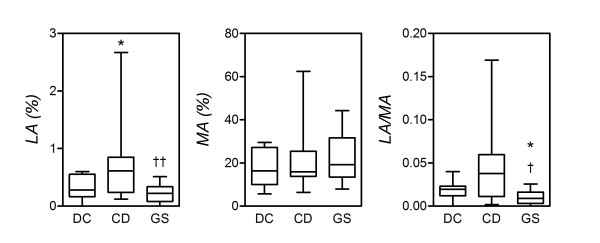
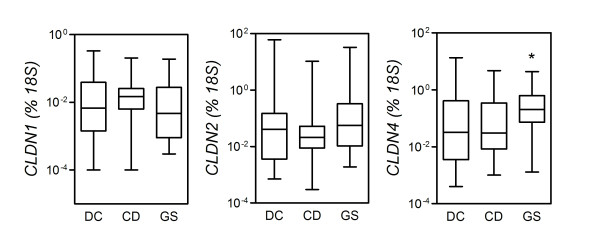
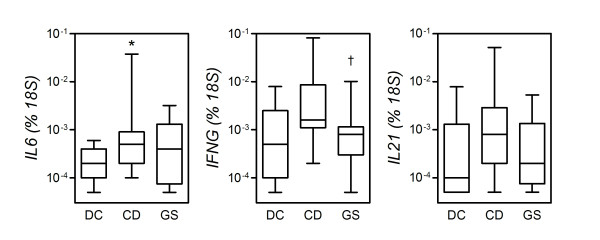
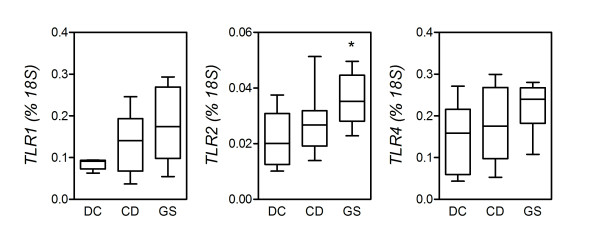
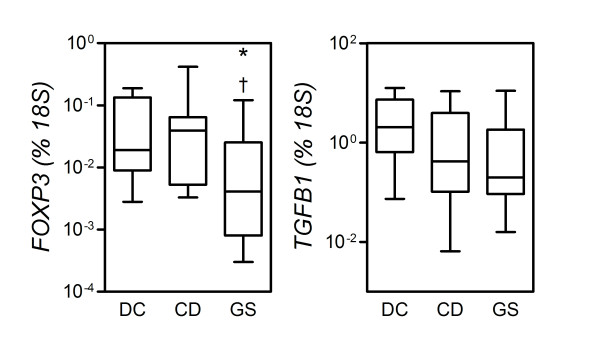
Background: Celiac disease (CD) is an autoimmune enteropathy triggered by the ingestion of gluten. Gluten-sensitive individuals (GS) cannot tolerate gluten and may develop gastrointestinal symptoms similar to those in CD, but the overall clinical picture is generally less severe and is not accompanied by the concurrence of tissue transglutaminase autoantibodies or autoimmune comorbidities. By studying and comparing mucosal expression of genes associated with intestinal barrier function, as well as innate and adaptive immunity in CD compared with GS, we sought to better understand the similarities and differences between these two gluten-associated disorders. Methods: CD, GS and healthy, gluten-tolerant individuals were enrolled in this study. Intestinal permeability was evaluated using a lactulose and mannitol probe, and mucosal biopsy specimens were collected to study the expression of genes involved in barrier function and immunity. Results: Unlike CD, GS is not associated with increased intestinal permeability. In fact, this was significantly reduced in GS compared with controls (P = 0.0308), paralleled by significantly increased expression of claudin (CLDN) 4 (P = 0.0286). Relative to controls, adaptive immunity markers interleukin (IL)-6 (P = 0.0124) and IL-21 (P = 0.0572) were expressed at higher levels in CD but not in GS, while expression of the innate immunity marker Toll-like receptor (TLR) 2 was increased in GS but not in CD (P = 0.0295). Finally, expression of the T-regulatory cell marker FOXP3 was significantly reduced in GS relative to controls (P = 0.0325) and CD patients (P = 0.0293). Conclusions: This study shows that the two gluten-associated disorders, CD and GS, are different clinical entities, and it contributes to the characterization of GS as a condition associated with prevalent gluten-induced activation of innate, rather than adaptive, immune responses in the absence of detectable changes in mucosal barrier function.
Overview
The claims and statistics of this paper haven’t been checked yet.
Free: it reads the open-access text and checks the first 5 claims that cite a source we can check. Create a free account to check every claim.
Integrity signals
Registry
Cites
Statistics
Figures
Verification
Claims the paper makes
The claims and statistics of this paper haven’t been checked yet.
Free: it reads the open-access text and checks the first 5 claims that cite a source we can check. Create a free account to check every claim.
Claims other papers make about this one
Each is checked against this paper’s own text: does it say what the citing paper says it does?
The source backs part of the claim, not all of it — or backs it for a different population, condition or comparison.
In the citing paper
“Some patients with IBS lack tissue transglutaminase antibodies or histological markers of coeliac disease yet still respond symptomatically to a gluten-free diet.”
From Intestinal microbiota in functional bowel disorders: a Rome foundation report (2013) · cites this paper as [158]
Experimental — accuracy not yet measured
Self-check
Percentages, sums and reported differences re-computed from the paper’s own numbers.
The self-check needs the paper’s full text.
Citations
Cites
Green, P. H. R., & Jones, R. (2006) · Cited by 2,453
Decoding the Patterns of Self and Nonself by the Innate Immune System
Medzhitov, R., & Janeway, C. A. (2002) · Science · doi:10.1126/science.1068883 · Cited by 2,154 · cited 1×
“Different combinations of TLRs are expressed in hematopoietic cells and nonhematopoietic cells such as intestinal epithelial cells [42-44].”
BackgroundFuruse, M., Fujita, K., Hiiragi, T., Fujimoto, K., & Tsukita, S. (1998) · The Journal of Cell Biology · doi:10.1083/jcb.141.7.1539 · Cited by 2,095 · cited 2×
“For instance, CLDN1 and CLDN4 are postulated to decrease, whereas CLDN2 is postulated to increase TJ-dependent permeability [35].”
BackgroundIL-17 family cytokines and the expanding diversity of effector T cell lineages
Weaver, C. T., Hatton, R. D., Mangan, P. R., & Harrington, L. E. (2007) · Annual Review of Immunology · doi:10.1146/annurev.immunol.25.022106.141557 · Cited by 1,842 · cited 1×
“This involves the mucosal recruitment and activation of Th1 and Th17 clones and the production of Th1- and Th17-associated cytokines, namely, IFN-g and IL-17A, which contribute to disrupting barrier function and initiating tissue damage [16,18-21,41].”
BackgroundIL-23 is essential for T cell–mediated colitis and promotes inflammation via IL-17 and IL-6
Yen, D., Cheung, J., Scheerens, H., Poulet, F., McClanahan, T., Mckenzie, B., Kleinschek, M. A., Owyang, A., Mattson, J., Blumenschein, W., et al. (2006) · Journal of Clinical Investigation · doi:10.1172/jci21404 · Cited by 1,542 · cited 7×
“Yen D, Cheung J, Scheerens H, Poulet F, McClanahan T, McKenzie B, Kleinschek MA, Owyang A, Mattson J, Blumenschein W, Murphy E, Sathe M, Cua DJ, Kastelein RA, Rennick D: IL-23 is essential for T cell-mediated colitis and promotes inflammation via IL-17 and IL-6.”
BackgroundInfluentialSteinman, L. (2007) · Nature Medicine · doi:10.1038/nm1551 · Cited by 1,376 · cited 2×
“This involves the mucosal recruitment and activation of Th1 and Th17 clones and the production of Th1- and Th17-associated cytokines, namely, IFN-γ and IL17A, which contribute to disrupting barrier function and initiating tissue damage [16, 18-21, 41].”
Recognition of pathogen-associated molecular patterns by TLR family
Akira, S., & Hemmi, H. (2003) · Immunology Letters · doi:10.1016/s0165-2478(02)00228-6 · Cited by 1,150 · cited 1×
“Different combinations of TLRs are expressed in hematopoietic cells and nonhematopoietic cells such as intestinal epithelial cells [42-44].”
BackgroundAlterations in intestinal permeability
Arrieta, M. C., Bistritz, L., & Meddings, J. B. (2006) · Gut · doi:10.1136/gut.2005.085373 · Cited by 634 · cited 1×
“Increased intestinal permeability is thought to be an early biological change that precedes the onset of several autoimmune diseases [32-34].”
BackgroundVan Itallie, C., Rahner, C., & Anderson, J. M. (2001) · Journal of Clinical Investigation · doi:10.1172/jci12464 · Cited by 601 · cited 1×
“associated with marked differences in mucosal barrier function and with apparent differences in the expression of CLDN4, which encodes for a critical TJ component [38].”
BackgroundBrandtzaeg, P., Halstensen, T. S., Kett, K., Krajči, P., Kvale, D., Rognum, T. O., Scott, H., & Sollid, L. M. (1989) · Gastroenterology · doi:10.1016/0016-5085(89)90406-x · Cited by 550 · cited 1×
“These are generally defined as gluten sensitivity (GS) [2-5].”
Background
Cited by
Items 401–452 of 452
Inmunogenética de la enfermedad celiaca: papel de la IL-15 y su receptor
Escudero‐Hernández, C. (2015) · UVaDOC UVaDOC University of Valladolid Documentary Repository (University of Valladolid) · doi:10.35376/10324/16087 · Cited by 1
Oral Pathology in Celiac Disease: What ’ s New?
Salvatore, S. (2013) · JBR Journal of Interdisciplinary Medicine and Dental Science · doi:10.4172/2376-032x.1000105
“Differences in immune and histological features between these two entities have been showed [13,14].”
BackgroundTwo cases of suspected food allergies
Zepeda, V. J. (2014) · JAAPA · doi:10.1097/01.jaa.0000453873.23313.2e
Exploring the link between mental health and functional gastrointestinal disorders
Peters, S. (2017) · Figshare · doi:10.4225/03/58b789d4cecec
Nieceliakalna nadwrażliwość na gluten – charakterystyka i leczenie
Akutko, K., Pytrus, T., & Iwańczak, B. M. (2016) · Pediatria Polska · doi:10.1016/j.pepo.2016.04.004
Nutrigenomics and Public Health
Agelli, M., & Milner, J. A. (2013) · CRC Press eBooks · doi:10.1201/b15369-26 · Cited by 2
Syndrome de sensibilité au gluten non cœliaque
Khater, S., Malamut, G., & Cellier, C. (2017) · Elsevier eBooks · doi:10.1016/b978-2-294-74931-5.00014-1
Gluten and the Gut: A Brief Review of Gluten-Related Gastrointestinal Disorders
Shah, N. J. (2017) · SOJ Immunology · doi:10.15226/2372-0948/5/2/00160
Overlap-синдром целіакії з атиповим аутизмом у дитини: клінічний випадок
Zavhorodnia, N. Y., Lukianenko, O. Y., Zhigir, N. O., & Gajdar, Y. A. (2021) · CHILD`S HEALTH · doi:10.22141/2224-0551.13.0.2018.131190
Gluten-Related Disorders in a Population of Canadian Adults
Jamnik, J. (2017) · TSpace (University of Toronto)
Gaby, A. R. (2017) · Elsevier eBooks · doi:10.1016/b978-0-323-35868-2.00031-1 · Cited by 2
Hypersensibilité au gluten/au blé non cœliaque : mode ou réalité ?
Caron, N. (2019) · Revue française d'allergologie · doi:10.1016/j.reval.2019.02.205
Sensibilidade não-celíaca ao glúten
Boarim, D. (2018) · International Journal of Nutrology · doi:10.1055/s-0039-1681015 · Cited by 2
Has Genetic Improvement of Wheat Resulted in Negative Effects on Gut Health
Keirns, B. H. (2019) · SHAREOK (University of Oklahoma; Oklahoma State University; Central Oklahoma University)
Une femme allaitante présentant une sensibilité au gluten
Soulez, T. (2020) · Pratiques en nutrition · doi:10.1016/j.pranut.2020.03.013
Human Leukocyte Antigen and its Association with Celiac Disease and Associated Autoimmune Diseases
Ahmed, A., Pramanik, A., & Singh, A. (2020) · Journal of Gastroenterology and Hepatology Research · doi:10.17554/j.issn.2224-3992.2020.09.909
“GRD includes Celiac disease (CeD), Non-Celiac Gluten Sensitivity (NCGS), Dermatitis herpetiformis (DH), Gluten ataxia (GA), Wheat allergy (WA), and among these disorders, CeD is the most studied disorder and its pathophysiology is comprehensively explained[5].”
InfluentialUnderstanding Gluten Sensitivity and Celiac Disease
MEYER, S. E., Shelnutt, K. P., & KAUWELL, G. P. A. (2013) · EDIS · doi:10.32473/edis-fy1369-2013
Genetics Of Gluten Intolerance
Antonova, O. (2020) · Annual for Hospital Pharmacy · doi:10.14748/ahp.v6i1.7158
Epidemiology and pathogenesis of celiac disease and non-celiac gluten (wheat) sensitivity
Fasano, A., Valitutti, F., Sapone, A., & Carroccio, A. (2021) · Elsevier eBooks · doi:10.1016/b978-0-12-821594-4.00006-2
Self-citationSensibilidade ao glúten e tireoidite de Hashimoto: uma interação viável
Franco, L. B. P., Pinto, F. N., & Bento, C. T. (2021) · Revista Científica Multidisciplinar Núcleo do Conhecimento · doi:10.32749/nucleodoconhecimento.com.br/nutricao/tireoidite-de-hashimoto
Rostami‐Nejad, M., & Asri, N. (2021) · Elsevier eBooks · doi:10.1016/b978-0-12-821846-4.00015-2
Pathomechanism of gluten-related disorders
Rej, A., & Sanders, D. S. (2021) · Elsevier eBooks · doi:10.1016/b978-0-12-821846-4.00014-0
Gluten-related disorders: an evolving story
Holmes, G. K. T. (2021) · Elsevier eBooks · doi:10.1016/b978-0-12-821846-4.00016-4
Histopathologic aspects of gluten-related disorders
Ensarı, A., Ersöz, C. C., Kırmızı, A., & Kiremitçi, S. (2021) · Elsevier eBooks · doi:10.1016/b978-0-12-821846-4.00002-4
Holmes, G. K. T. (2021) · Elsevier eBooks · doi:10.1016/b978-0-12-821846-4.00004-8
Pediatric noncoeliac gluten sensitivity
Carroccio, A., Mansueto, P., & Seidita, A. (2021) · Elsevier eBooks · doi:10.1016/b978-0-12-821571-5.00006-4
Assche, G. V. (2013) · Faculty Opinions – Post-Publication Peer Review of the Biomedical Literature · doi:10.3410/f.717976585.793478200
Long, T., & Wagner, L. (2020) · Springer eBooks · doi:10.1007/978-3-030-30730-1_42
Pizzorno, L. (2020) · Elsevier eBooks · doi:10.1016/b978-0-323-43044-9.00203-x
Next generation strategies to recover immunological tolerance in celiac disease
Treppiccione, L., Luongo, D., Maurano, F., & Rossi, M. (2022) · International Reviews of Immunology · doi:10.1080/08830185.2022.2044807 · Cited by 2
“therapeutics could positively target specific events like gluten degradation [47–50], the mucosal barrier [51, 52] or the immune response [9].”
BackgroundDetection and quantification of gluten as allergen in whisky samples by validated immunoassay method
Gupta, A. K., & Das, N. G. (2022) · International journal of applied research · doi:10.22271/allresearch.2022.v8.i2f.9473
Quigley, E. M. M. (2013) · Faculty Opinions – Post-Publication Peer Review of the Biomedical Literature · doi:10.3410/f.717976585.793477137
Ikke-cøliakisk glutensensitivitet
Pedersen, L. F. (2014) · Norsk tidsskrift for ernæring · doi:10.18261/ntfe.12.1.5
Effect on functional properties of gluten-free pasta enriched with cereal brans
Islam, R. U., Ashfaq, A., Anjum, Z., Khursheed, N., Junaid, P. M., & Manzoor, A. (2024) · Elsevier eBooks · doi:10.1016/b978-0-443-13238-4.00004-6
Nonceliac gluten-related disorders
Seidita, A., Mansueto, P., Giuliano, A., & Carroccio, A. (2024) · Elsevier eBooks · doi:10.1016/b978-0-443-13359-6.00022-4
NECELIJAČNA GLUTENSKA SENZITIVNOST – DIJAGNOSTIČKI I TERAPIJSKI IZAZOV
Markovic, D., Bjelakovic, B. B., Jović, M., Ilić, D., & Popović, D. (2018) · Preventive Paediatrics · doi:10.46793/pp180314002m
Zöliakieforschung : eine szientometrische Analyse
Schug, T. (2024) · Publication Server of Goethe University Frankfurt am Main (Goethe University Frankfurt) · doi:10.21248/gups.83170
Chapter 31: Common Comorbidities
Cypress, M., & Spollett, G. R. (2017) · American Diabetes Association eBooks · doi:10.2337/9781580405690.ch31
Pryor, J. C., Hoedt, E. C., Soh, W. S., Fowler, S., Caban, S., Minahan, K., Sherwin, S. K., Nieva, C., McCarthy, H., Horvat, J. C., et al. (2025) · bioRxiv (Cold Spring Harbor Laboratory) · doi:10.1101/2025.04.22.649964
Gluten Is a Nutritional Adjuvant That Fulfils ASIA Syndrome Criteria
Lerner, A., Benzvi, C., & Vojdani, A. (2025) · Journal of Mosaic of Autoimmunity · doi:10.53941/jmai.2025.100008 · Cited by 2
Pryor, J. C., Hoedt, E. C., Soh, W. S., Fowler, S., Caban, S., Minahan, K., Sherwin, S. K., Nieva, C., McCarthy, H., Horvat, J. C., et al. (2025) · American Journal of Physiology-Gastrointestinal and Liver Physiology · doi:10.1152/ajpgi.00159.2025
Tammaro, A., Narcisi, A., Persechino, S., & Gaspari, A. A. (2012) · Springer eBooks · doi:10.1007/978-88-470-2507-3_25
Angelopoulou, T., & Bobetsis, Y. A. (2026) · Journal of Clinical Medicine · doi:10.3390/jcm15082828
“…absence of celiac-specific serology and immune-mediated villous atrophy [36,44–49], while HLA-DQ2 and HLA-DQ8 haplotypes are detected in a subset of patients at frequencies slightly exceeding those of the general population and histological alterations, if present, are typically mild [46,50–54].”
Sensibilidad al gluten no celíaca: equilibrio entre la moda y la cruda realidad
Molina‐Infante, J., & Esteve, M. (2026) · Medicina Clínica · doi:10.1016/j.medcli.2026.107516
Psychiatric Symptoms Associated with Non-Celiac Gluten Sensitivity: A Focused Narrative Review
Pavlovic, D., Gazdic, M., Papic, D., Kastratović, N., Jovic, N., Protrka, S., Janjic, V. S., & Ljujić, B. (2026) · Nutrients · doi:10.3390/nu18142272
“A diminished expression of forkhead box P3 (FOXP3) has been observed in intestinal biopsies from patients with NCGS compared to healthy individuals and those with CD [32–35].”
Non-celiac gluten sensitivity: balance between hype and hard reality
Molina‐Infante, J., & Esteve, M. (2026) · Medicina Clínica (English Edition) · doi:10.1016/j.medcle.2026.107516
Manai, F., & Amadio, M. (2026) · Frontiers in Pharmacology · doi:10.3389/fphar.2026.1900029
“Intestinal biopsies from NCGS patients show increased expression of Toll-like receptors (TLR1 and TLR2) and reduced expression of the Treg marker FOXP3, supporting the involvement of innate immunity (Sapone et al., 2011).”
Alromayan, R., Alshihri, R., Aljohani, N., Alyahya, D., Qadi, N., & Shosha, E. (2026) · Nutrients · doi:10.3390/nu18193190
“Gluten-related disorders can have extra-intestinal neurological manifestations [24,25], but these observations do not establish a gluten-driven mechanism in MS.”
The Clinical Relevance of Anti-Gliadin Antibodies in the Ageing Population
Ruuskanen, A. (2014) · Tampere University Institutional Repository (Tampere University)
Impact of Whole Grain Consumption Compliance on Gluten Sensitivity and Bowel Health
Roberts, S. (2015) · ScholarWorks (Walden University) · doi:10.13140/rg.2.1.2016.7849
Estudo da possível associação entre a doença celíaca e as desordens do espectro autista
Batista, I. C. (2011) · Americanae (AECID Library) · Cited by 1
Metadata
- Authors
- Sapone, A., Lammers, K. M., Casolaro, V., Cammarota, M., Giuliano, M. T., De Rosa, M., Stefanile, R., Mazzarella, G., Tolone, C., Russo, M. I., Esposito, P., Ferraraccio, F., Cartenì, M., Riegler, G., de Magistris, L., & Fasano, A.
- Affiliations
- University of Maryland, Baltimore (US)
- University of Campania "Luigi Vanvitelli" (IT)
- Institute of Food Science (IT)
- Corresponding author
- Fasano, Alessio
- ORCID
- Venue
- BMC Medicine
- Published
- 2011-03-09
- Volume
- 9
- Issue
- 1
- Pages
- 23-23
- ISSN
- 1741-7015 (ISSN-L)
- PMC
- PMC3065425
- OpenAlex
- W2069634861
- Cited by
- 452
- References
- 48
- Citations by year
- 2026: 6 · 2025: 16 · 2024: 11 · 2023: 8 · 2022: 20 · 2021: 36 · 2020: 36 · 2019: 35 · 2018: 31 · 2017: 39 · 2016: 36 · 2015: 58 · 2014: 39 · 2013: 38 · 2012: 30
- FWCI
- 38.97
- Type
- journal article
- Language
- en
- Open access
- gold
- doi.org
- Licence
- Locations
- BMC Medicine (publishedVersion, cc-by)
- PubMed Central (publishedVersion, cc-by)
- PubMed (publishedVersion)
- DOAJ (DOAJ: Directory of Open Access Journals) (submittedVersion, cc-by-sa)
- Funders
- National Institutes of Health
- National Institute of Diabetes and Digestive and Kidney Diseases (R21DK078699)
- Topics
- Health Sciences › Medicine › Gastroenterology › Celiac Disease Research and Management
- Health Sciences › Medicine › Gastroenterology › Gastrointestinal motility and disorders
- Life Sciences › Agricultural and Biological Sciences › Plant Science › Wheat and Barley Genetics and Pathology
- Keywords
- celiac disease, gluten sensitivity, intestinal permeability, intestinal barrier function, mucosal gene expression, claudin-4, interleukin-6, IL-21, TLR2, Foxp3, regulatory T cells, innate immunity, adaptive immunity, gluten
- MeSH terms
- Adult, Allergens, Celiac Disease, Female, Glutens, Humans, Hypersensitivity, Intestinal Mucosa, Male, Permeability, Gene Expression Profiling
About these checks
Registry, retraction, Cites and statistics results are computed, not judged, with one exception: a printed reference that no index lists is read once by a model before it counts as a citation error. Claims are extracted by a model and kept only when their quote appears verbatim in the text; each cited source is then checked, with a model’s help, for whether it says what the claim relies on. Those verdicts can be wrong — read the claim’s quote and the cited source before relying on one.
Statistics and arithmetic are recomputed, not judged.
Confidence bands are shown only for fields calibrated on our annotated test set. None is calibrated yet, so no band is shown.
What counts as a claim ›How we measure confidence ›How we check this ›
Are you an author, or do you see a problem with this page? Request a review
Data sources
Bibliographic data: Semantic Scholar, OpenAlex, Crossref.
Contains information from the Semantic Scholar Academic Graph Datasets, made available under the ODC Attribution License (ODC-BY 1.0).
Semantic Scholar’s data is described in: Kinney, R., et al. (2023). The Semantic Scholar Open Data Platform. arXiv:2301.10140.
