

The DOI matches its Crossref record; 83 of the 85 references it cites were found in a registry or an index.
CD200-CD200R dysfunction exacerbates microglial activation and dopaminergic neurodegeneration in a rat model of Parkinson's disease
Open accessAbstract
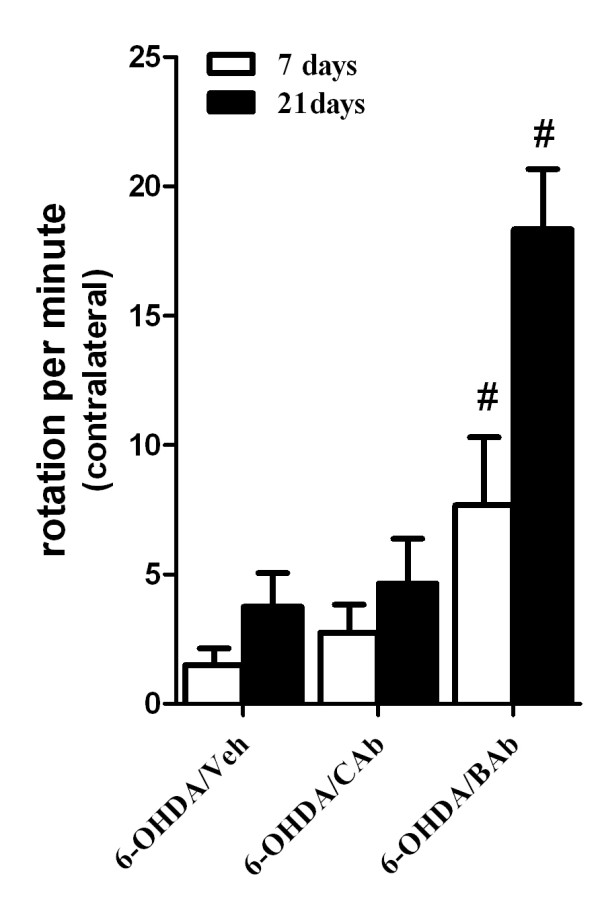
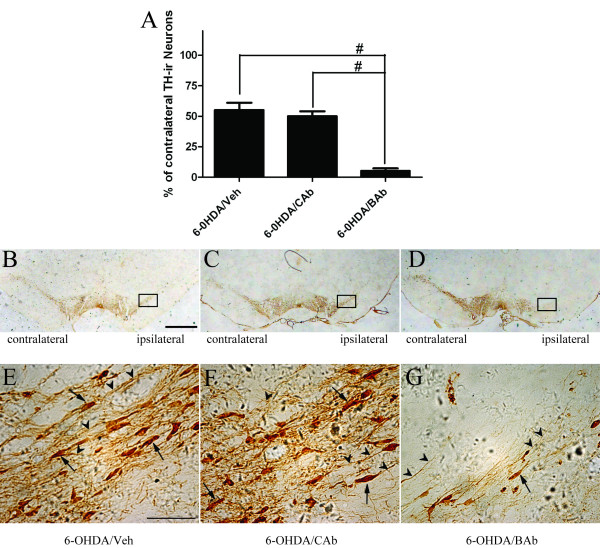
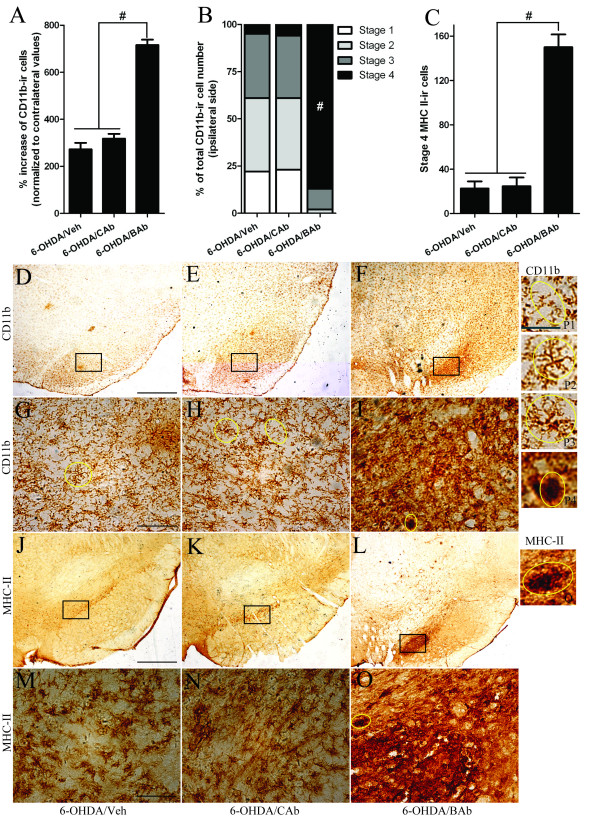
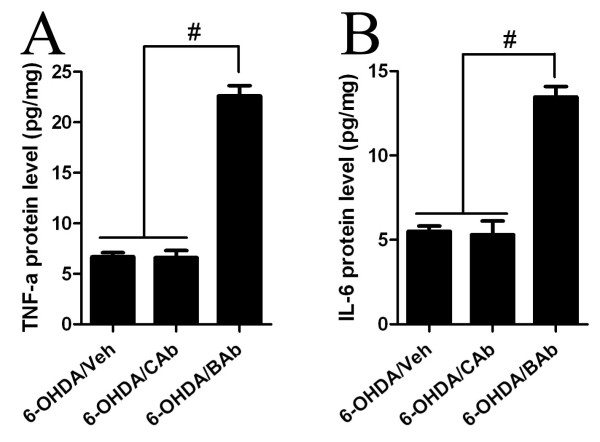
BACKGROUND: Increasing evidence suggests that microglial activation may participate in the aetiology and pathogenesis of Parkinson's disease (PD). CD200-CD200R signalling has been shown to be critical for restraining microglial activation. We have previously shown that expression of CD200R in monocyte-derived macrophages, induced by various stimuli, is impaired in PD patients, implying an intrinsic abnormality of CD200-CD200R signalling in PD brain. Thus, further in vivo evidence is needed to elucidate the role of malfunction of CD200-CD200R signalling in the pathogenesis of PD. METHODS: 6-hydroxydopamine (6-OHDA)-lesioned rats were used as an animal model of PD. CD200R-blocking antibody (BAb) was injected into striatum to block the engagement of CD200 and CD200R. The animals were divided into three groups, which were treated with 6-OHDA/Veh (PBS), 6-OHDA/CAb (isotype control antibody) or 6-OHDA/BAb, respectively. Rotational tests and immunohistochemistry were employed to evaluate motor deficits and dopaminergic neurodegeneration in animals from each group. HPLC analysis was used to measure monoamine levels in striatum. Morphological analysis and quantification of CD11b- (or MHC II-) immunoreactive cells were performed to investigate microglial activation and possible neuroinflammation in the substantia nigra (SN). Finally, ELISA was employed to assay protein levels of proinflammatory cytokines. RESULTS: Compared with 6-OHDA/CAb or 6-OHDA/Veh groups, rats treated with 6-OHDA/BAb showed a significant increase in counts of contralateral rotation and a significant decrease in TH-immunoreactive (TH-ir) neurons in SN. A marked decrease in monoamine levels was also detected in 6-OHDA/BAb-treated rats, in comparison to 6-OHDA/Veh-treated ones. Furthermore, remarkably increased activation of microglia as well as up-regulation of proinflammatory cytokines was found concomitant with dopaminergic neurodegeneration in 6-OHDA/BAb-treated rats. CONCLUSIONS: This study shows that deficits in the CD200-CD200R system exacerbate microglial activation and dopaminergic neurodegeneration in a 6-OHDA-induced rat model of PD. Our results suggest that dysfunction of CD200-CD200R signalling may be involved in the aetiopathogenesis of PD.
Overview
The claims and statistics of this paper haven’t been checked yet.
Run the check — free, no account needed. It reads the open-access text and checks the sources it cites.
Integrity signals
Registry
Cites
Statistics
Figures
Verification
Claims the paper makes
The claims and statistics of this paper haven’t been checked yet.
Run the check — free, no account needed. It reads the open-access text and checks the sources it cites.
Claims other papers make about this one
Each is checked against this paper’s own text: does it say what the citing paper says it does?
In the citing paper
“In rat PD models, both deficiency CX3CL1 or CX3CR1 as well as the dysfunction of CD200-CD200R signaling have been shown to increase microglial activation and the degeneration of DA neurons (Wang et al., 2011; Zhang et al., 2011).”
From The role of microglia in retinal neurodegeneration: Alzheimer’s disease, parkinson, and glaucoma. (2017) · cites this paper as Zhang et al., 2011
Self-check
Percentages, sums and reported differences re-computed from the paper’s own numbers.
The self-check needs the paper’s full text.
Citations
Cites
PROTEIN MEASUREMENT WITH THE FOLIN PHENOL REAGENT
Lowry, O. H., Rosebrough, N., Farr, A. L., & Randall, R. (1951) · Journal of Biological Chemistry · doi:10.1016/s0021-9258(19)52451-6 · Cited by 316,394 · cited 2×
“The protein contents were determined in pellet fractions by the method described by Lowry [45], and expressed as ng/g wet weight of tissue (ng/g WW).”
MethodStaging of brain pathology related to sporadic Parkinson’s disease
Braak, H., Tredici, K. D., Rüb, U., de Vos, R. A. I., Jansen Steur, E. N. H., & Braak, E. (2003) · Neurobiology of Aging · doi:10.1016/s0197-4580(02)00065-9 · Cited by 10,777 · cited 1×
“Parkinson’s disease (PD) is the second most common neurodegenerative disease in the world, and is characterized by dopaminergic neuron loss in the substantia nigra pars compacta (SNpc) [1].”
BackgroundMicroglia: a sensor for pathological events in the CNS
Kreutzberg, G. W. (1996) · Trends in Neurosciences · doi:10.1016/0166-2236(96)10049-7 · Cited by 4,396 · cited 7×
“Kyrkanides S, O’Banion MK, Whiteley PE, Daeschner JC, Olschowka JA: Enhanced glial activation and expression of specific CNS inflammationrelated molecules in aged versus young rats following cortical stab injury.”
BackgroundMethodInfluentialWest, M. J., Slomianka, L., & Gundersen, H. J. G. (1991) · The Anatomical Record · doi:10.1002/ar.1092310411 · Cited by 2,994 · cited 1×
“Unbiased stereological estimates of DA (TH-positive cell) neuron numbers were performed using StereoInvestigator analysis software (MicroBrightField, Williston, VT), combined with a Nikon Eclipse E600 microscope, and the optical fractionator method according to previously published reports [42,43].”
MethodMcGeer, P. L., Itagaki, S., Boyes, B. E., & McGeer, E. G. (1988) · Neurology · doi:10.1212/wnl.38.8.1285 · Cited by 2,990 · cited 2×
“Molecules related to neuroinflammation, such as tumor necrosis factor-alpha (TNF-a), IL-6, IL-1b, interferongamma (IFN-g), and superoxide, have been found colocalized with microglia in brain, and in cerebrospinal fluid and serum of PD patients as well [6,7,14-22].”
BackgroundUngerstedt, U., & Arbuthnott, G. W. (1970) · Brain Research · doi:10.1016/0006-8993(70)90187-3 · Cited by 1,995 · cited 1×
“Rotational behaviour was tested in rotometer bowls [47].”
MethodNeuroinflammation in Parkinson’s disease: A target for neuroprotection?
Hirsch, E. C., & Hunot, S. (2009) · The Lancet Neurology · doi:10.1016/s1474-4422(09)70062-6 · Cited by 1,984 · cited 1×
“To further confirm a relationship between CD200CD200R signalling and neuroinflammation in PD, we assayed several molecules that would be secreted by activated microglia in the proinflammatory stage [10,55-59].”
MethodThe role of inflammation in CNS injury and disease
Lucas, S., Rothwell, N. J., & Gibson, R. M. (2006) · British Journal of Pharmacology · doi:10.1038/sj.bjp.0706400 · Cited by 1,272 · cited 1×
“To further confirm a relationship between CD200CD200R signalling and neuroinflammation in PD, we assayed several molecules that would be secreted by activated microglia in the proinflammatory stage [10,55-59].”
MethodIn vivo imaging of microglial activation with [11C](R)-PK11195 PET in idiopathic Parkinson's disease
Gerhard, A., Pavese, N., Hotton, G., Turkheimer, F., Es, M., Hammers, A., Eggert, K., Oertel, W., Banati, R. B., & Brooks, D. J. (2006) · Neurobiology of Disease · doi:10.1016/j.nbd.2005.08.002 · Cited by 1,200 · cited 1×
“Activated microglia are found in the SN of mesencephalon in the brain of PD patients [5-8] and of parkinsonian animal models [9-13].”
BackgroundDown-Regulation of the Macrophage Lineage Through Interaction with OX2 (CD200)
Hoek, R. M., Ruuls, S. R., Murphy, C. A., Wright, G. J., Goddard, R., Zurawski, S. M., Blom, B., Homola, M. E., Streit, W. J., Brown, M. H., et al. (2000) · Science · doi:10.1126/science.290.5497.1768 · Cited by 1,022 · cited 7×
“In addition, preventing CD200CD200R interactions with CD200R-blocking antibodies also induces augmented microglial activation in EAE rats [32,33].”
BackgroundInfluentialMogi, M., Harada, M., Riederer, P., Narabayashi, H., Fujita, K., & Nagatsu, T. (1994) · Neuroscience Letters · doi:10.1016/0304-3940(94)90746-3 · Cited by 986 · cited 1×
“Molecules related to neuroinflammation, such as tumor necrosis factor-alpha (TNF-a), IL-6, IL-1b, interferongamma (IFN-g), and superoxide, have been found colocalized with microglia in brain, and in cerebrospinal fluid and serum of PD patients as well [6,7,14-22].”
BackgroundMicroglial activation and dopamine terminal loss in early Parkinson's disease
Ouchi, Y., Yoshikawa, E., Sekine, Y., Futatsubashi, M., Kanno, T., Ogusu, T., & Torizuka, T. (2005) · Annals of Neurology · doi:10.1002/ana.20338 · Cited by 869 · cited 1×
“Activated microglia are found in the SN of mesencephalon in the brain of PD patients [5-8] and of parkinsonian animal models [9-13].”
BackgroundMogi, M., Harada, M., Kondo, T., Riederer, P., Inagaki, H., Minami, M., & Nagatsu, T. (1994) · Neuroscience Letters · doi:10.1016/0304-3940(94)90508-8 · Cited by 855 · cited 1×
“Molecules related to neuroinflammation, such as tumor necrosis factor-alpha (TNF-a), IL-6, IL-1b, interferongamma (IFN-g), and superoxide, have been found colocalized with microglia in brain, and in cerebrospinal fluid and serum of PD patients as well [6,7,14-22].”
BackgroundSauer, H., & Oertel, W. H. (1994) · Neuroscience · doi:10.1016/0306-4522(94)90605-x · Cited by 817 · cited 1×
“[71], Depino AM et al.”
Modeling Parkinson's Disease in Rats: An Evaluation of 6-OHDA Lesions of the Nigrostriatal Pathway
Deumens, R., Blokland, A., & Prickaerts, J. (2002) · Experimental Neurology · doi:10.1006/exnr.2002.7891 · Cited by 760 · cited 1×
“Beside this, the small volume of the SN makes it hard to inject any reagent precisely into the SN [80,81].”
BackgroundGao, H., Jiang, J., Wilson, B. C., Zhang, W., Hong, J., & Liu, B. (2002) · Journal of Neurochemistry · doi:10.1046/j.1471-4159.2002.00928.x · Cited by 690
Diagnosis and treatment of Parkinson disease: molecules to medicine
Savitt, J. M. (2006) · Journal of Clinical Investigation · doi:10.1172/jci29178 · Cited by 660 · cited 1×
“However, emerging investigations suggest that multiple factors, both genetic and acquired, contribute to the loss of dopaminergic cells in the substantia nigra (SN) of these patients [2-4].”
BackgroundInflammation and neurodegeneration in Parkinson's disease
McGeer, P. L., & McGeer, E. G. (2004) · Parkinsonism & Related Disorders · doi:10.1016/j.parkreldis.2004.01.005 · Cited by 632 · cited 1×
“To further confirm a relationship between CD200CD200R signalling and neuroinflammation in PD, we assayed several molecules that would be secreted by activated microglia in the proinflammatory stage [10,55-59].”
MethodImmunocytochemical analysis of tumor necrosis factor and its receptors in Parkinson's disease
Boka, G., Anglade, P., Wallach, D., Javoy-Agid, F., Agid, Y., & Hirsch, É. C. (1994) · Neuroscience Letters · doi:10.1016/0304-3940(94)90684-x · Cited by 600 · cited 1×
“Molecules related to neuroinflammation, such as tumor necrosis factor-alpha (TNF-a), IL-6, IL-1b, interferongamma (IFN-g), and superoxide, have been found colocalized with microglia in brain, and in cerebrospinal fluid and serum of PD patients as well [6,7,14-22].”
BackgroundChanges in cytokines and neurotrophins in Parkinson’s disease
Nagatsu, T., Mogi, M., Ichinose, H., & Togari, A. (2000) · Springer eBooks · doi:10.1007/978-3-7091-6301-6_19 · Cited by 518 · cited 1×
“To further confirm a relationship between CD200CD200R signalling and neuroinflammation in PD, we assayed several molecules that would be secreted by activated microglia in the proinflammatory stage [10,55-59].”
MethodHunot, S., Dugas, N., Faucheux, B. A., Hartmann, A., Tardieu, M., Debré, P., Agid, Y., Dugas, B., & Hirsch, É. C. (1999) · Journal of Neuroscience · doi:10.1523/jneurosci.19-09-03440.1999 · Cited by 473
Characterization of the CD200 Receptor Family in Mice and Humans and Their Interactions with CD200
Wright, G. J., Cherwinski, H. M., Foster‐Cuevas, M., Brooke, G. P., Puklavec, M. J., Bigler, M., Song, Y., Jenmalm, M. C., Gorman, D., McClanahan, T., et al. (2003) · The Journal of Immunology · doi:10.4049/jimmunol.171.6.3034 · Cited by 434 · cited 7×
“Kyrkanides S, O’Banion MK, Whiteley PE, Daeschner JC, Olschowka JA: Enhanced glial activation and expression of specific CNS inflammationrelated molecules in aged versus young rats following cortical stab injury.”
BackgroundInfluentialWright, G. J., Puklavec, M. J., Willis, A. C., Hoek, R. M., Sedgwick, J. D., Brown, M. H., & Barclay, A. N. (2000) · Immunity · doi:10.1016/s1074-7613(00)00023-6 · Cited by 388
Mirza, B., Hadberg, H., Thomsen, P., & Moos, T. (1999) · Neuroscience · doi:10.1016/s0306-4522(99)00455-8 · Cited by 327 · cited 1×
“Activated microglia are found in the SN of mesencephalon in the brain of PD patients [5-8] and of parkinsonian animal models [9-13].”
BackgroundThe role of glial cells in Parkinsonʼs disease
Vila, M., Jackson-Lewis, V., Guégan, C., Chu Wu, D., Teismann, P., Choi, D.-K., Tieu, K., & Przedborski, S. (2001) · Current Opinion in Neurology · doi:10.1097/00019052-200108000-00009 · Cited by 326 · cited 2×
“To further confirm a relationship between CD200CD200R signalling and neuroinflammation in PD, we assayed several molecules that would be secreted by activated microglia in the proinflammatory stage [10,55-59].”
BackgroundMethodBrodacki, B., Staszewski, J., Toczyłowska, B., Kozłowska, E., Drela, N., Chalimoniuk, M., & Stępien, A. (2008) · Neuroscience Letters · doi:10.1016/j.neulet.2008.06.040 · Cited by 316 · cited 1×
“Molecules related to neuroinflammation, such as tumor necrosis factor-alpha (TNF-a), IL-6, IL-1b, interferongamma (IFN-g), and superoxide, have been found colocalized with microglia in brain, and in cerebrospinal fluid and serum of PD patients as well [6,7,14-22].”
BackgroundMogi, M., Togari, A., Kondo, T., Mizuno, Y., Komure, O., Kuno, S., Ichinose, H., & Nagatsu, T. (2000) · Journal of Neural Transmission · doi:10.1007/s007020050028 · Cited by 294 · cited 1×
“Molecules related to neuroinflammation, such as tumor necrosis factor-alpha (TNF-a), IL-6, IL-1b, interferongamma (IFN-g), and superoxide, have been found colocalized with microglia in brain, and in cerebrospinal fluid and serum of PD patients as well [6,7,14-22].”
BackgroundHartmann, A., Troadec, J., Hunot, S., Kikly, K., Faucheux, B. A., Prigent, A., Ruberg, M., Agid, Y., & Hirsch, É. C. (2001) · Journal of Neuroscience · doi:10.1523/jneurosci.21-07-02247.2001 · Cited by 274 · cited 1×
“Molecules related to neuroinflammation, such as tumor necrosis factor-alpha (TNF-a), IL-6, IL-1b, interferongamma (IFN-g), and superoxide, have been found colocalized with microglia in brain, and in cerebrospinal fluid and serum of PD patients as well [6,7,14-22].”
BackgroundWalker, D. G., Dalsing-Hernandez, J. E., Campbell, N. A., & Lue, L. (2008) · Experimental Neurology · doi:10.1016/j.expneurol.2008.09.003 · Cited by 270 · cited 2×
“Interestingly, decreased expression of CD200 and CD200R have also been found in hippocampus and inferior temporal gyrus of patients suffering from Alzheimer’s disease [36].”
BackgroundInflammation in Traumatic Brain Injury: Role of Cytokines and Chemokines
Ghirnikar, R. S., Lee, Y. L., & Eng, L. F. (1998) · Neurochemical Research · doi:10.1023/a:1022453332560 · Cited by 261 · cited 1×
“According to previous studies, the bolus administration of any substance into cerebrum may cause mechanical damage to neurons [73,74] and subsequent adjacent activation of microglia [74-79].”
Midbrain dopaminergic neurons (nuclei A8, A9, and A10): Three‐dimensional reconstruction in the rat
German, D. C., & Manaye, K. F. (1993) · The Journal of Comparative Neurology · doi:10.1002/cne.903310302 · Cited by 255 · cited 1×
“Boundaries in the SN were defined according to previously defined anatomical analysis in the rat [44] and cells were counted from every sixth 25-μm section (~24 sections) along the entire SN (to ensure coefficient of errors <0.”
MethodMolecular Pathogenesis of Parkinson Disease
Eriksen, J. L., Wszołek, Z. K., & Petrucelli, L. (2005) · Archives of Neurology · doi:10.1001/archneur.62.3.353 · Cited by 253 · cited 1×
“However, emerging investigations suggest that multiple factors, both genetic and acquired, contribute to the loss of dopaminergic cells in the substantia nigra (SN) of these patients [2-4].”
BackgroundIravani, M. M., Kashefi, K., Mander, P., Rose, S., & Jenner, P. (2002) · Neuroscience · doi:10.1016/s0306-4522(01)00562-0 · Cited by 247 · cited 1×
“Molecules related to neuroinflammation, such as tumor necrosis factor-alpha (TNF-a), IL-6, IL-1b, interferongamma (IFN-g), and superoxide, have been found colocalized with microglia in brain, and in cerebrospinal fluid and serum of PD patients as well [6,7,14-22].”
BackgroundBarclay, A. N. (1981) · PubMed · Cited by 240
Depino, A. M., Earl, C. D., Kaczmarczyk, E., Ferrari, C. C., Besedovsky, H. O., del Rey, A., Pitossi, F. J., & Oertel, W. H. (2003) · European Journal of Neuroscience · doi:10.1111/j.1460-9568.2003.03014.x · Cited by 237 · cited 1×
“Activated microglia are found in the SN of mesencephalon in the brain of PD patients [5-8] and of parkinsonian animal models [9-13].”
BackgroundPartial lesion of the substantia nigra: relation between extent of lesion and rotational behavior
Carman, L. S., Gage, F. H., & Shults, C. W. (1991) · Brain Research · doi:10.1016/0006-8993(91)90835-j · Cited by 231 · cited 1×
“Beside this, the small volume of the SN makes it hard to inject any reagent precisely into the SN [80,81].”
BackgroundMicroglial Response to Brain Injury: A Brief Synopsis
Streit, W. J. (2000) · Toxicologic Pathology · doi:10.1177/019262330002800104 · Cited by 230 · cited 1×
“To further confirm a relationship between CD200CD200R signalling and neuroinflammation in PD, we assayed several molecules that would be secreted by activated microglia in the proinflammatory stage [10,55-59].”
MethodWright, G. J., Jones, M., Puklavec, M. J., Brown, M. H., & Barclay, A. N. (2001) · Immunology · doi:10.1046/j.1365-2567.2001.01163.x · Cited by 217 · cited 1×
“CD200R, an important inhibitory receptor present on microglia [23], actively maintains microglia in a quiescent state through its interaction with CD200, a transmembrane glycoprotein expressed on neurons [24-29].”
BackgroundFerrari, C. C., Depino, A. M., Prada, F., Muraro, N. I., Campbell, S. J., Podhajcer, O. L., Perry, V. H., Anthony, D. C., & Pitossi, F. J. (2004) · American Journal Of Pathology · doi:10.1016/s0002-9440(10)63438-4 · Cited by 204 · cited 1×
“Activated microglia are found in the SN of mesencephalon in the brain of PD patients [5-8] and of parkinsonian animal models [9-13].”
BackgroundBiochemistry of postmortem brains in Parkinson’s disease: historical overview and future prospects
Nagatsu, T., & Sawada, M. (2007) · Springer eBooks · doi:10.1007/978-3-211-73574-9_14 · Cited by 187 · cited 1×
“Molecules related to neuroinflammation, such as tumor necrosis factor-alpha (TNF-a), IL-6, IL-1b, interferongamma (IFN-g), and superoxide, have been found colocalized with microglia in brain, and in cerebrospinal fluid and serum of PD patients as well [6,7,14-22].”
BackgroundDownregulation of macrophage inhibitory molecules in multiple sclerosis lesions
Koning, N., Bö, L., Hoek, R. M., & Huitinga, I. (2007) · Annals of Neurology · doi:10.1002/ana.21220 · Cited by 186 · cited 1×
“Down-regulation of CD200 has also been detected in brain of multiple sclerosis (MS) patients [37].”
BackgroundFerrer, I., Blanco, R. E., Carmona, M., Puig, B., Barrachina, M., Gómez, C., & Ambrosio, S. (2001) · Journal of Neural Transmission · doi:10.1007/s007020100015 · Cited by 173 · cited 1×
“Molecules related to neuroinflammation, such as tumor necrosis factor-alpha (TNF-a), IL-6, IL-1b, interferongamma (IFN-g), and superoxide, have been found colocalized with microglia in brain, and in cerebrospinal fluid and serum of PD patients as well [6,7,14-22].”
BackgroundLong Term Potentiation Is Impaired in Membrane Glycoprotein CD200-deficient Mice
Costello, D. A., Lyons, A., Denieffe, S., Browne, T. C., Cox, F., & Lynch, M. A. (2011) · Journal of Biological Chemistry · doi:10.1074/jbc.m111.280826 · Cited by 145
Systemic Inflammation Modulates Fc Receptor Expression on Microglia during Chronic Neurodegeneration
Lunnon, K., Teeling, J. L., Tutt, A. L., Cragg, M. S., Glennie, M. J., & Perry, V. H. (2011) · The Journal of Immunology · doi:10.4049/jimmunol.0903833 · Cited by 138 · cited 1×
“There is no report about the expression levels of CD200R or CD200 in patients with prion disease, but activated microglia are thought to be related to upregulation of CD200R4 in a mouse model of prion disease [70].”
BackgroundCopland, D. A., Calder, C. J., Raveney, B. J. E., Nicholson, L. B., Phillips, J. H., Cherwinski, H. M., Jenmalm, M. C., Sedgwick, J. D., & Dick, A. D. (2007) · American Journal Of Pathology · doi:10.2353/ajpath.2007.070272 · Cited by 138 · cited 1×
“Conversely, CD200 mice receiving exogenous CD200R agonist, including CD200 antigen [34] or an agonist anti-CD200R antibody [35], are resistant to the induction of experimental autoimmune uveoretinitis (EAU).”
BackgroundTopiramate inhibits cortical spreading depression in rat and cat: impact in migraine aura
Akerman, S., & Goadsby, P. J. (2005) · Neuroreport · doi:10.1097/01.wnr.0000175250.33159.a9 · Cited by 138 · cited 1×
“According to previous studies, the bolus administration of any substance into cerebrum may cause mechanical damage to neurons [73,74] and subsequent adjacent activation of microglia [74-79].”
CD200 Is a Ligand for All Members of the CD200R Family of Immunoregulatory Molecules
Gorczynski, R. M., Chen, Z., Yu, K., Lee, L., Wong, S. Y. C., & Marsden, P. A. (2004) · The Journal of Immunology · doi:10.4049/jimmunol.172.12.7744 · Cited by 130
Kyrkanides, S., O’Banion, M. K., Whiteley, P. E., Daeschner, J., & Olschowka, J. A. (2001) · Journal of Neuroimmunology · doi:10.1016/s0165-5728(01)00404-0 · Cited by 118
Kojima, T., Obata‐Ninomiya, K., Mukai, K., Sato, S., Takai, T., Minegishi, Y., & Karasuyama, H. (2007) · The Journal of Immunology · doi:10.4049/jimmunol.179.10.7093 · Cited by 116
Localisation of the MRC OX‐2 Glycoprotein on the Surfaces of Neurones
Webb, M. H., & Barclay, A. N. (1984) · Journal of Neurochemistry · doi:10.1111/j.1471-4159.1984.tb12844.x · Cited by 114 · cited 1×
“CD200R, an important inhibitory receptor present on microglia [23], actively maintains microglia in a quiescent state through its interaction with CD200, a transmembrane glycoprotein expressed on neurons [24-29].”
BackgroundCD200 and its receptors as targets for immunoregulation.
Gorczynski, R. M. (2005) · PubMed · Cited by 109
Wang, X.-J., Zhang, S., Yan, Z.-Q., Zhao, Y.-X., Zhou, H.-Y., Wang, Y., Lu, G.-Q., & Zhang, J.-D. (2011) · Free Radical Biology and Medicine · doi:10.1016/j.freeradbiomed.2011.01.032 · Cited by 108 · cited 2×
“We also found that blocking CD200-CD200R engagement dramatically exacerbates dopaminergic neurodegeneration in a primary neuron/ microglia co-culture system [41].”
BackgroundResultSelf-citationMufson, E. J., Kroin, J. S., Sobreviela, T., Burke, M. A., Kordower, J. H., Penn, R. D., & Miller, J. A. (1994) · Experimental Neurology · doi:10.1006/exnr.1994.1143 · Cited by 102
Rödter, A., Winkler, C., Samii, M., Walter, G. F., Brandis, A., & Nikkhah, G. (2001) · The Journal of Comparative Neurology · doi:10.1002/cne.1098 · Cited by 90
Cortical cell death induced by IL-1 is mediated via actions in the hypothalamus of the rat
Allan, S. M., Parker, L. C., Collins, B., Davies, R., Luheshi, G. N., & Rothwell, N. J. (2000) · Proceedings of the National Academy of Sciences · doi:10.1073/pnas.090464197 · Cited by 87 · cited 1×
“According to previous studies, the bolus administration of any substance into cerebrum may cause mechanical damage to neurons [73,74] and subsequent adjacent activation of microglia [74-79].”
CD200R1 Agonist Attenuates Mechanisms of Chronic Disease in a Murine Model of Multiple Sclerosis
Liu, Y., Bandô, Y., Vargas-Lowy, D., Elyaman, W., Khoury, S. J., Huang, T., Reif, K., & Chitnis, T. (2010) · Journal of Neuroscience · doi:10.1523/jneurosci.4272-09.2010 · Cited by 85 · cited 4×
“Liu Y, Bando Y, Vargas-Lowy D, Elyaman W, Khoury SJ, Huang T, Reif K, Chitnis T: CD200R1 agonist attenuates mechanisms of chronic disease in a murine model of multiple sclerosis.”
BackgroundInfluentialDeckert, M., Sedgwick, J. D., Fischer, E., & Schlüter, D. (2006) · Acta Neuropathologica · doi:10.1007/s00401-006-0062-z · Cited by 82 · cited 1×
“Moreover, this increased microglial response is substantiated by enhanced expression of Class II major histocompatibility complex (MHC II), TNF-a and inducible nitric oxide synthetase (iNOS) [31].”
BackgroundGolovina, V. A., Bambrick, L. L., Yarowsky, P., Krueger, B. K., & Blaustein, M. P. (1996) · Glia · doi:10.1002/(sici)1098-1136(199604)16:4 · Cited by 80
Putting the brakes on innate immunity: a regulatory role for CD200?
Nathan, C., & Müller, W. A. (2001) · Nature Immunology · doi:10.1038/83124 · Cited by 78
Barclay, A. N., & Ward, H. A. (1982) · European Journal of Biochemistry · doi:10.1111/j.1432-1033.1982.tb07070.x · Cited by 76
Boudakov, I., Liu, J., Fan, N., Gulay, P., Wong, K. K. W., & Gorczynski, R. (2007) · Transplantation · doi:10.1097/01.tp.0000269795.04592.cc · Cited by 73 · cited 4×
“Liu Y, Bando Y, Vargas-Lowy D, Elyaman W, Khoury SJ, Huang T, Reif K, Chitnis T: CD200R1 agonist attenuates mechanisms of chronic disease in a murine model of multiple sclerosis.”
BackgroundInfluentialCD200–CD200R Regulation of Microglia Activation in the Pathogenesis of Parkinson’s Disease
Wang, X., Ye, M., Zhang, Y., & Chen, S. (2007) · Journal of Neuroimmune Pharmacology · doi:10.1007/s11481-007-9075-1 · Cited by 71 · cited 1×
“These results suggest that a deficient CD200-CD200R system may be involved in the progression of various neurological disorders [38,39].”
BackgroundSelf-citationMultiple striatal representation in primate substantia nigra
Parent, A., & Hazrati, L. (1994) · The Journal of Comparative Neurology · doi:10.1002/cne.903440211 · Cited by 71 · cited 1×
“Phaseolus vulgarisleucoagglutinin and biocytin, injected into striatum, can later be found in substantia nigra pars reticulate (SNpr) and substantia nigra pars compacta (SNpc) in squirrel monkeys [82].”
BackgroundAnti-CD200R Ameliorates Collagen-Induced Arthritis in Mice
Gorczynski, R. M., Chen, Z., Lee, L., Yu, K., & Hu, J. (2002) · Clinical Immunology · doi:10.1006/clim.2002.5232 · Cited by 68 · cited 1×
“[32], and later by many other investigators [33,41,48-51].”
ResultGorczynski, R. M., Yu, K., & Clark, D. A. (2000) · The Journal of Immunology · doi:10.4049/jimmunol.165.9.4854 · Cited by 68 · cited 1×
“[32], and later by many other investigators [33,41,48-51].”
ResultRecombinant CD200 Protein Does Not Bind Activating Proteins Closely Related to CD200 Receptor
Hatherley, D., Cherwinski, H. M., Moshref, M., & Barclay, A. N. (2005) · The Journal of Immunology · doi:10.4049/jimmunol.175.4.2469 · Cited by 65 · cited 1×
“However there are two different CD200Rs in mice [54,60,63,64]; an inhibitory receptor CD200R1 [48,65-68] and an activating receptor CD200R2-4 [69].”
BackgroundGorczynski, R. M., Chen, Z., Clark, D. A., Yu, K., Lee, L., Nachman, J., Wong, S. Y. C., & Marsden, P. A. (2004) · American Journal of Reproductive Immunology · doi:10.1111/j.1600-0897.2004.00192.x · Cited by 53
Banerjee, D., & Dick, A. D. (2004) · Ocular Immunology and Inflammation · doi:10.1080/09273940490895326 · Cited by 47 · cited 2×
“In addition, preventing CD200CD200R interactions with CD200R-blocking antibodies also induces augmented microglial activation in EAE rats [32,33].”
BackgroundResultGorczynski, R., Khatri, I. A., Lee, L., & Boudakov, I. (2008) · The Journal of Immunology · doi:10.4049/jimmunol.180.9.5946 · Cited by 46
Luo, X., Zhang, J.-J., Zhang, C., Liu, R., Zheng, L., Wang, X., Chen, S., & Ding, J. (2009) · Neurochemical Research · doi:10.1007/s11064-009-0094-6 · Cited by 42
Self-citationMcCluskey, L., Campbell, S. J., Anthony, D. C., & Allan, S. M. (2008) · Journal of Neuroimmunology · doi:10.1016/j.jneuroim.2007.11.009 · Cited by 42 · cited 1×
“According to previous studies, the bolus administration of any substance into cerebrum may cause mechanical damage to neurons [73,74] and subsequent adjacent activation of microglia [74-79].”
Pan, J., Zhao, Y.-X., Wang, Z., Jin, L., Sun, Z.-K., & Chen, S.-D. (2007) · Neuroscience Letters · doi:10.1016/j.neulet.2007.09.032 · Cited by 42 · cited 3×
“0 turns/min could be regarded as successfully induced hemiparkinsonian rats [43,52].”
BackgroundMethodInfluentialSelf-citationPan, J., Wang, G., Yang, H., Hong, Z., Xiao, Q., Ren, R., Zhou, H., Bai, L., & Chen, S. (2007) · Molecular Pharmacology · doi:10.1124/mol.107.038463 · Cited by 40
Self-citationCharacterization of human cd200 glycoprotein receptor gene located on chromosome 3q12-13
Vieites, J. M., de la Torre, R., Ortega, M. A., Montero, T. D., Peco, J. M., Sánchez–Pozo, A., Gil, Á., & Suárez, A. (2003) · Gene · doi:10.1016/s0378-1119(03)00562-6 · Cited by 33 · cited 1×
“CD200R, an important inhibitory receptor present on microglia [23], actively maintains microglia in a quiescent state through its interaction with CD200, a transmembrane glycoprotein expressed on neurons [24-29].”
BackgroundTaylor, N. A., McConnachie, K., Calder, C. J., Dawson, R., Dick, A. D., Sedgwick, J. D., & Liversidge, J. (2005) · The Journal of Immunology · doi:10.4049/jimmunol.174.1.143 · Cited by 32
Etiopathogenesis and treatment of Parkinson's disease.
Gallagher, D. A., & Schapira, A. H. V. (2009) · PubMed · Cited by 29
THE ORIGIN OF BRAIN MACROPHAGES – SOME CONSIDERATIONS ON THE MICROGLIA THEORY OF DEL RIO‐HORTEGA –
Kitamura, T. (1973) · Acta Pathologica Japonica · doi:10.1111/j.1440-1827.1973.tb00770.x · Cited by 29 · cited 6×
“Kyrkanides S, O’Banion MK, Whiteley PE, Daeschner JC, Olschowka JA: Enhanced glial activation and expression of specific CNS inflammationrelated molecules in aged versus young rats following cortical stab injury.”
BackgroundInfluentialRestoring immune suppression in the multiple sclerosis brain
Koning, N., Uitdehaag, B. M. J., Huitinga, I., & Hoek, R. M. (2009) · Progress in Neurobiology · doi:10.1016/j.pneurobio.2009.09.005 · Cited by 28 · cited 1×
“These results suggest that a deficient CD200-CD200R system may be involved in the progression of various neurological disorders [38,39].”
Background柴山, 美., Kuchiwaki, H., INAO, S., Yoshida, K., & Ito, M. (1996) · Journal of Neurotrauma · doi:10.1089/neu.1996.13.801 · Cited by 25 · cited 1×
“According to previous studies, the bolus administration of any substance into cerebrum may cause mechanical damage to neurons [73,74] and subsequent adjacent activation of microglia [74-79].”
CD200R1 regulates the severity of arthritis but has minimal impact on the adaptive immune response
Šimelyte, E., Alzabin, S., Boudakov, I., & Williams, R. O. (2010) · Clinical & Experimental Immunology · doi:10.1111/j.1365-2249.2010.04227.x · Cited by 24 · cited 4×
“Liu Y, Bando Y, Vargas-Lowy D, Elyaman W, Khoury SJ, Huang T, Reif K, Chitnis T: CD200R1 agonist attenuates mechanisms of chronic disease in a murine model of multiple sclerosis.”
BackgroundInfluentialHeterogeneity in the CD200R paired receptor family
Akkaya, M., & Barclay, A. N. (2009) · Immunogenetics · doi:10.1007/s00251-009-0415-6 · Cited by 19 · cited 1×
“However there are two different CD200Rs in mice [54,60,63,64]; an inhibitory receptor CD200R1 [48,65-68] and an activating receptor CD200R2-4 [69].”
BackgroundMasocha, W. (2010) · Journal of Neuroimmunology · doi:10.1016/j.jneuroim.2010.05.033 · Cited by 3
Cited by
Sorted by citations
Microglia in neurodegenerative diseases: mechanism and potential therapeutic targets
Gao, C., Jiang, J., Tan, Y., & Chen, S. (2023) · Signal Transduction and Targeted Therapy · doi:10.1038/s41392-023-01588-0 · Cited by 1,616
“253 Besides, CB1 receptors are abundant in neurons, while CB2 receptors are primarily expressed in microglia in the brain.”
BackgroundSelf-citationMicroglia development and function
Nayak, D., Roth, T. L., & McGavern, D. B. (2014) · Annual Review of Immunology · doi:10.1146/annurev-immunol-032713-120240 · Cited by 1,154
Neuroinflammation in Parkinson's disease and its potential as therapeutic target
Wang, Q., Liu, Y., & Zhou, J. (2015) · Translational Neurodegeneration · doi:10.1186/s40035-015-0042-0 · Cited by 884
“Likewise, dysfunction of CD200-CD200R signaling also increases the activation of microglia and exacerbates the degeneration of DA neurons in rat PD models [30, 31].”
BackgroundPerry, V. H., & Teeling, J. L. (2013) · Seminars in Immunopathology · doi:10.1007/s00281-013-0382-8 · Cited by 638
The role of microglia in retinal neurodegeneration: Alzheimer’s disease, parkinson, and glaucoma.
Ramirez, A. I., de Hoz, R., Salobrar-Garcia, E., Salazar, J. J., Rojas, B., Ajoy, D., López-Cuenca, I., Rojas, P., Triviño, A., & Ramírez, J. M. (2017) · Frontiers in Aging Neuroscience · doi:10.3389/fnagi.2017.00214 · Cited by 466
“In rat PD models, both deficiency CX3CL1 or CX3CR1 as well as the dysfunction of CD200CD200R signaling have been shown to increase microglial activation and the degeneration of DA neurons (Wang et al., 2011; Zhang et al., 2011).”
Background
Metadata
- Authors
- Zhang, S., Wang, X.-J., Tian, L.-P., Pan, J., Lu, G.-Q., Zhang, Y.-J., Ding, J.-Q., & Chen, S.-D.
- Affiliations
- Shanghai Jiao Tong University (CN)
- ORCID
- Pan, Jing
- Venue
- Journal of Neuroinflammation
- Published
- 2011-11-06
- Volume
- 8
- Issue
- 1
- Pages
- 154-154
- ISSN
- 1742-2094 (ISSN-L)
- PMC
- PMC3226566
- OpenAlex
- W2033271712
- Cited by
- 154
- References
- 85
- Citations by year
- 2026: 3 · 2025: 7 · 2024: 13 · 2023: 12 · 2022: 8 · 2021: 11 · 2020: 10 · 2019: 13 · 2018: 10 · 2017: 8 · 2016: 10 · 2015: 8 · 2014: 16 · 2013: 16 · 2012: 8
- FWCI
- 7.24
- Type
- journal article
- Language
- en
- Open access
- gold
- doi.org
- Licence
- cc-by
- Locations
- Journal of Neuroinflammation (publishedVersion, cc-by)
- PubMed Central (publishedVersion, cc-by)
- PubMed (publishedVersion)
- DOAJ (DOAJ: Directory of Open Access Journals) (submittedVersion, cc-by-sa)
- Topics
- Life Sciences › Neuroscience › Neurology › Neuroinflammation and Neurodegeneration Mechanisms
- Health Sciences › Medicine › Clinical Neurology › Parkinson's Disease Mechanisms and Treatments
- Life Sciences › Biochemistry, Genetics and Molecular Biology › Molecular Biology › Nuclear Receptors and Signaling
- Keywords
- Parkinson's disease, microglial activation, dopaminergic neuron loss, 6-hydroxydopamine lesion, substantia nigra, neuroinflammation, inflammatory cytokines, monoamine levels, motor impairment, striatum, neuroprotection, rat model
- MeSH terms
- Animals, Behavior, Animal, Disease Models, Animal, Dopamine, Humans, Male, Nerve Degeneration, Receptors, Immunologic, Antigens, CD, Oxidopamine, Rats, Sprague-Dawley, Microglia, Antibodies, Blocking, Parkinsonian Disorders, Rats, Dopaminergic Neurons
About these checks
Registry, retraction, Cites and statistics results are computed, not judged, with one exception: a printed reference that no index lists is read once by a model before it counts as a citation error. Claims are extracted by a model and kept only when their quote appears verbatim in the text; each cited source is then checked, with a model’s help, for whether it says what the claim relies on. Those verdicts can be wrong — read the claim’s quote and the cited source before relying on one.
Statistics and arithmetic are recomputed, not judged.
Confidence bands are shown only for fields calibrated on our annotated test set. None is calibrated yet, so no band is shown.
What counts as a claim ›How we measure confidence ›How we check this ›
Are you an author, or do you see a problem with this page? Request a review
