

Systematic review of Kinect applications in elderly care and stroke rehabilitation
Open accessThe DOI matches its Crossref record; 117 of the 117 references it cites were found in a registry or an index.
Abstract
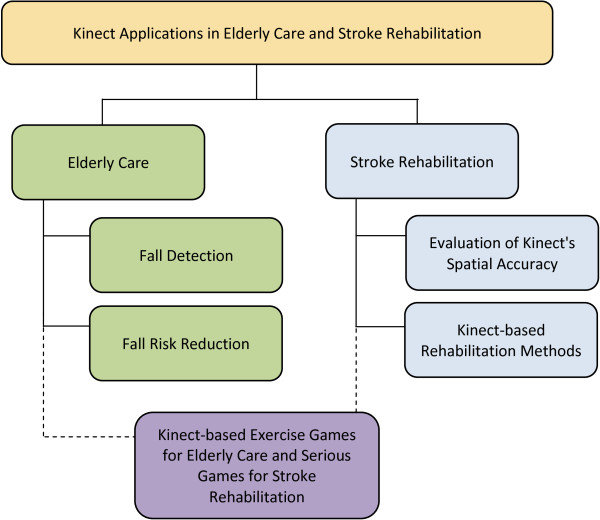
In this paper we present a review of the most current avenues of research into Kinect-based elderly care and stroke rehabilitation systems to provide an overview of the state of the art, limitations, and issues of concern as well as suggestions for future work in this direction. The central purpose of this review was to collect all relevant study information into one place in order to support and guide current research as well as inform researchers planning to embark on similar studies or applications. The paper is structured into three main sections, each one presenting a review of the literature for a specific topic. Elderly Care section is comprised of two subsections: Fall detection and Fall risk reduction. Stroke Rehabilitation section contains studies grouped under Evaluation of Kinect's spatial accuracy, and Kinect-based rehabilitation methods. The third section, Serious and exercise games, contains studies that are indirectly related to the first two sections and present a complete system for elderly care or stroke rehabilitation in a Kinect-based game format. Each of the three main sections conclude with a discussion of limitations of Kinect in its respective applications. The paper concludes with overall remarks regarding use of Kinect in elderly care and stroke rehabilitation applications and suggestions for future work. A concise summary with significant findings and subject demographics (when applicable) of each study included in the review is also provided in table format.
Overview
The claims and statistics of this paper haven’t been checked yet.
Free: it reads the open-access text and checks the first 5 claims that cite a source we can check. Create a free account to check every claim.
Integrity signals
Registry
Cites
Statistics
Figures
Verification
Claims the paper makes
The claims and statistics of this paper haven’t been checked yet.
Free: it reads the open-access text and checks the first 5 claims that cite a source we can check. Create a free account to check every claim.
Claims other papers make about this one
Each is checked against this paper’s own text: does it say what the citing paper says it does?
In the citing paper
“Another application area of CV is assisted living or rehabilitation, such as continuous sign language recognition to assist people with communication difficulties 139 , and monitoring of physiotherapy exercises for stroke rehabilitation 140 .”
From Deep learning-enabled medical computer vision (2021) · cites this paper as [140]
Self-check
Percentages, sums and reported differences re-computed from the paper’s own numbers.
The self-check needs the paper’s full text.
Citations
Cites
Greedy function approximation: A gradient boosting machine
Friedman, J. H. (2001) · The Annals of Statistics · doi:10.1214/aos/1013203451 · Cited by 30,731 · cited 1×
“[25] developed a method of full body gait analysis through the use of Kinect-based data and a multiple additive regression tree algorithm [51,52].”
MethodA Tutorial on Support Vector Machines for Pattern Recognition
Burges, C. J. C. (1998) · Data Mining and Knowledge Discovery · doi:10.1023/a:1009715923555 · Cited by 16,429 · cited 1×
“[26] demonstrated that variables of Kinect-based posture and gait recognition can also be accurately acquired (up to 99%) through the use of the specific biomechanic and algorithmic parameters of: height/shoulder width, arms’ coordinates, and c-support vector machine scaling (for an optimal hyper-plane [53]).”
MethodDowns, S. H., & Black, N. (1998) · Journal of Epidemiology and Community Health · doi:10.1136/jech.52.6.377 · Cited by 8,252 · cited 1×
“Contingency bias Initially, we planned to assess study quality with the Downs and Black check-list [47]; however, based on the observation that current systems developed utilizing the Kinect are often at an immature ‘proof of concept’ state, this approach was deemed unfruitful.”
MethodFriedman, J. H. (2002) · Computational Statistics & Data Analysis · doi:10.1016/s0167-9473(01)00065-2 · Cited by 7,067 · cited 1×
“[25] developed a method of full body gait analysis through the use of Kinect-based data and a multiple additive regression tree algorithm [51,52].”
MethodRisk Factors for Falls among Elderly Persons Living in the Community
Tinetti, M. E., Speechley, M., & Ginter, S. F. (1988) · New England Journal of Medicine · doi:10.1056/nejm198812293192604 · Cited by 6,509 · cited 2×
“These alert systems focus on reducing the probability a fall incident will occur; a leading cause of injury, emotional distress, and financial burden to the elderly [7-17].”
BackgroundInternational Classification of Functioning Disability and Health (ICF)
Battistella, L. R., & Brito, C. M. M. D. (2002) · Acta Fisiátrica · doi:10.5935/0104-7795.20020003 · Cited by 4,446
Performance‐Oriented Assessment of Mobility Problems in Elderly Patients
Tinetti, M. E. (1986) · Journal of the American Geriatrics Society · doi:10.1111/j.1532-5415.1986.tb05480.x · Cited by 3,352 · cited 1×
“Assessment was with the Berg balance scale (BBS) [4]; The balance subscale of the Tinetti performance oriented mobility assessment (POBMAb) [5], and the Brunnel balance assessment (BBA) [6].”
MethodFalls in older people: epidemiology, risk factors and strategies for prevention
Rubenstein, L. Z. (2006) · Age and Ageing · doi:10.1093/ageing/afl084 · Cited by 3,287 · cited 2×
“These alert systems focus on reducing the probability a fall incident will occur; a leading cause of injury, emotional distress, and financial burden to the elderly [7-17].”
BackgroundAgeing populations: the challenges ahead
Christensen, K., Doblhammer, G., Rau, R., & Vaupel, J. W. (2009) · The Lancet · doi:10.1016/s0140-6736(09)61460-4 · Cited by 3,011 · cited 1×
“Introduction The median age of the general population is projected to significantly rise in the upcoming years [1].”
BackgroundMeasuring balance in the elderly: validation of an instrument.
Berg, K., Wood-Dauphinée, S., Williams, J. I., & Maki, B. E. (1992) · PubMed · Cited by 2,961
Research works printed but not linked: 2
- Heyn P, Abreu BC, Ottenbacher KJ: The effects of exercise training on elderly persons with cognitive impairment and dementia: a meta-analysis. Arch Phys Med Rehabil 2004, 85(10):1694-1704.
- Gerling K, Masuch M: When gaming is not suitable for everyone: playtesting wii games with frail elderly. In 1st Workshop on Game Accessibility: Xtreme Interaction Design (GAXID'11): ACM; 2011.
Cited by
Deep learning-enabled medical computer vision
Esteva, A., Chou, K., Yeung, S., Naik, N., Madani, A., Mottaghi, A., Liu, Y., Topol, E., Dean, J., & Socher, R. (2021) · npj Digital Medicine · doi:10.1038/s41746-020-00376-2 · Cited by 1,406
Virtual reality for stroke rehabilitation
Laver, K. E., George, S., Thomas, S., Deutsch, J. E., & Crotty, M. (2015) · Cochrane Database of Systematic Reviews · doi:10.1002/14651858.cd008349.pub3 · Cited by 1,131
Virtual reality for stroke rehabilitation
Laver, K. E., Lange, B., George, S., Deutsch, J. E., Saposnik, G., & Crotty, M. (2017) · Cochrane Database of Systematic Reviews · doi:10.1002/14651858.cd008349.pub4 · Cited by 800
Wade, L., Needham, L., McGuigan, P., & Bilzon, J. (2022) · PeerJ · doi:10.7717/peerj.12995 · Cited by 384
“…several in-depth reviews of these systems (Clark et al. 2019; Garcia-Agundez et al. 2019; Knippenberg et al. 2017; Mousavi Hondori & Khademi 2014; Webster & Celik 2014) and while depth cameras are still an active area of research, this review will focus on single and multi-camera markerless…”
BackgroundHome-based technologies for stroke rehabilitation: A systematic review
Chen, Y., Abel, K. T., Janecek, J. T., Chen, Y., Zheng, K., & Cramer, S. C. (2019) · International Journal of Medical Informatics · doi:10.1016/j.ijmedinf.2018.12.001 · Cited by 328
Chae, S. H., Kim, Y., Lee, K.-S., & Park, H.-S. (2020) · JMIR mHealth and uHealth · doi:10.2196/17216 · Cited by 235
“The vision-based approach (eg, interactive television or Kinect) could be easier to use since it does not require any wearing of devices [17-21].”
MethodSuccess factors for serious games to enhance learning: a systematic review
Ravyse, W. S., Seugnet Blignaut, A., Leendertz, V., & Woolner, A. (2017) · Virtual Reality · doi:10.1007/s10055-016-0298-4 · Cited by 231
“…(Dondlinger 2007); (d) lists and compares games within a specific field, without an in-depth analysis or discussion of the game elements (Bhoopathi et al. 2007; Rodriguez et al. 2014); or (e) deliberates on implementation strategies for serious games (Blakely et al. 2009; Webster and Celik 2014).”
BackgroundEvaluation of Pose Tracking Accuracy in the First and Second Generations of Microsoft Kinect
Wang, Q., Kurillo, G., Ofli, F., & Bajcsy, R. (2015) · IEEE International Conference on Healthcare Informatics (ICHI) · doi:10.1109/ichi.2015.54 · Cited by 199
“…real-time 3D acquisition capabilities and provided skeletal tracking, such as in physical therapy and rehabilitation [3], fall detection [4] and exercise in elderly [5], [6], ergonomics [7], [8] and anthropometry [9], computer vision [10], and many This research was supported by the National…”
The Present and Future of Robotic Technology in Rehabilitation
Laut, J., Porfiri, M., & Raghavan, P. (2016) · Current Physical Medicine and Rehabilitation Reports · doi:10.1007/s40141-016-0139-0 · Cited by 179
Choi, S. D., Guo, L., Kang, D., & Xiong, S. (2017) · Applied Ergonomics · doi:10.1016/j.apergo.2016.10.013 · Cited by 179
Fall Prediction and Prevention Systems: Recent Trends, Challenges, and Future Research Directions
Rajagopalan, R., Litvan, I., & Jung, T.-P. (2017) · Sensors · doi:10.3390/s17112509 · Cited by 174
“It has been demonstrated that gaming applications are widely accepted by aging adults for promoting targeted exercises [77].”
BackgroundZahedian-Nasab, N., Jaberi, A., Shirazi, F., & Kavousipor, S. (2021) · BMC Geriatrics · doi:10.1186/s12877-021-02462-w · Cited by 202
“suitable for patients with severe disabilities [29].”
BackgroundInfluentialA review of computer vision-based approaches for physical rehabilitation and assessment
Debnath, B., O'Brien, M. R., Yamaguchi, M., & Behera, A. (2021) · Multimedia Systems · doi:10.1007/s00530-021-00815-4 · Cited by 185
Goršič, M., Cikajlo, I., & Novak, D. (2017) · Journal of NeuroEngineering and Rehabilitation · doi:10.1186/s12984-017-0231-4 · Cited by 171
“Several technologies, ranging from consumer devices such as the Microsoft Kinect [5] to complex exoskeletons [6], have been deployed for motor rehabilitation at home.”
BackgroundKnippenberg, E., Verbrugghe, J., Lamers, I., Palmaers, S., Timmermans, A. A. A., & Spooren, A. I. F. (2017) · Journal of NeuroEngineering and Rehabilitation · doi:10.1186/s12984-017-0270-x · Cited by 162
“[44] reviewed the applications specifically with Kinect in elderly care and stroke rehabilitation [27].”
BackgroundInfluentialImproving fall detection by the use of depth sensor and accelerometer
Kwolek, B., & Kępski, M. (2015) · Neurocomputing · doi:10.1016/j.neucom.2015.05.061 · Cited by 163
“In contrast to the existing approaches [4], we extract the features not only in depth maps but we also process point clouds to extract very discriminative fall descriptor.”
BackgroundMethodA Review of Telepresence, Virtual Reality, and Augmented Reality Applied to Clinical Care
Hilty, D. M., Randhawa, K., Maheu, M. M., McKean, A. J. S., Pantera, R. L., Mishkind, M. C., & Rizzo, A. (2020) · Journal of Technology in Behavioral Science · doi:10.1007/s41347-020-00126-x · Cited by 170
“Kinect-based stroke rehabilitation applications may be used for guided interactive rehabilitation and virtualized therapists, since therapist-assisted daily practice is both impractical and expensive (Webster and Celik 2014).”
BackgroundSelf-directed arm therapy at home after stroke with a sensor-based virtual reality training system
Wittmann, F., Held, J. P. O., Lambercy, O., Starkey, M. L., Curt, A. E. P., Höver, R., Gassert, R., Luft, A. R., & Gonzenbach, R. R. (2016) · Journal of NeuroEngineering and Rehabilitation · doi:10.1186/s12984-016-0182-1 · Cited by 161
“Self-directed home therapy, supported by dedicated instrumented devices [5–7] or virtual reality gaming platforms [8–13], could help to increase the dose of rehabilitation at low cost without the need for direct supervision by a therapist.”
BackgroundA Human-AI Collaborative Approach for Clinical Decision Making on Rehabilitation Assessment
Lee, M. H., Siewiorek, D. P., Smailagic, A., Bernardino, A., & Bermúdez i Badia, S. B. (2021) · Proceedings of the 2021 CHI Conference on Human Factors in Computing Systems · doi:10.1145/3411764.3445472 · Cited by 137
“To address this challenge, researchers explored the feasibility of technology-assisted systems for rehabilitation [35, 62].”
BackgroundInfluentialA Rehabilitation-Internet-of-Things in the Home to Augment Motor Skills and Exercise Training
Dobkin, B. H. (2017) · Neurorehabilitation and Neural Repair · doi:10.1177/1545968316680490 · Cited by 127
Virtual reality experiences, embodiment, videogames and their dimensions in neurorehabilitation
Pérez-Marcos, D. (2018) · Journal of NeuroEngineering and Rehabilitation · doi:10.1186/s12984-018-0461-0 · Cited by 163
A systematic review of gamification techniques applied to elderly care
Martinho, D., Carneiro, J., Corchado, J. M., & Marreiros, G. (2020) · Artificial Intelligence Review · doi:10.1007/s10462-020-09809-6 · Cited by 147
“These services can bring innovative and cost-effective solutions and treatments to the most fragile and isolated groups in our society which correspond to elderly people and/or those suffering from chronic diseases (Kappen et al. 2019; Webster and Celik 2014).”
BackgroundEffectiveness of virtual reality-based exercise therapy in rehabilitation: A scoping review
Asadzadeh, A., Samad‐Soltani, T., Salahzadeh, Z., & Rezaei‐Hachesu, P. (2021) · Informatics in Medicine Unlocked · doi:10.1016/j.imu.2021.100562 · Cited by 149
Abedi, A., Colella, T. J. F., Pakosh, M. T., & Khan, S. S. (2024) · npj Digital Medicine · doi:10.1038/s41746-024-00998-w · Cited by 157
“Several recent reviews have been conducted on the applications of AI in the rehabilitation of different populations 8,10,18,19,44 – 46 as well as VRehab or telerehabilitation 9,47 – 50 .”
BackgroundMilosevic, B., Leardini, A., & Farella, E. (2020) · BioMedical Engineering OnLine · doi:10.1186/s12938-020-00762-7 · Cited by 116
A Skeleton-Free Fall Detection System From Depth Images Using Random Decision Forest
Abobakr, A., Hossny, M., & Nahavandi, S. (2017) · IEEE Systems Journal · doi:10.1109/jsyst.2017.2780260 · Cited by 109
“Webster and Celik [6] systematically reviewed and demonstrated the use of Kinect in elderly care and stroke rehabilitation [7].”
BackgroundVirtual reality for stroke rehabilitation
Laver, K., Lange, B. S., George, S., Deutsch, J. E., Saposnik, G., Chapman, M., & Crotty, M. (2025) · Cochrane Database of Systematic Reviews · doi:10.1002/14651858.cd008349.pub5 · Cited by 163
Chen, T., Or, C. K., & Chen, J. (2020) · Journal of the American Medical Informatics Association · doi:10.1093/jamia/ocaa282 · Cited by 107
The Potential of Computer Vision-Based Marker-Less Human Motion Analysis for Rehabilitation
Hellstén, T., Karlsson, J., Shamsuzzaman, M., & Pulkkis, G. (2021) · Rehabilitation Process and Outcome · doi:10.1177/11795727211022330 · Cited by 128
Sardari, S., Sharifzadeh, S., Daneshkhah, A., Nakisa, B., Loke, S. W., Palade, V., & Duncan, M. J. (2023) · Computers in Biology and Medicine · doi:10.1016/j.compbiomed.2023.106835 · Cited by 118
“In 2014, Webster et al. [54] investigated the applications of Microsoft Kinect sensors in elderly care, stroke rehabilitation, fall detection, and Kinect-based gaming.”
BackgroundSousa, A. S. P., Moreira, J., Silva, C., Mesquita, I., Macedo, R., Silva, A., & Santos, R. S. (2022) · Sensors · doi:10.3390/s22041409 · Cited by 102
AI-Driven Stroke Rehabilitation Systems and Assessment: A Systematic Review
Rahman, S., Sarker, S. C., Haque, A. K. M. N., Uttsha, M. M., Islam, M. F., & Deb, S. (2022) · IEEE Transactions on Neural Systems and Rehabilitation Engineering · doi:10.1109/tnsre.2022.3219085 · Cited by 111
“Webster and Celik [20] conducted a comprehensive assessment of the literature on the use of the Kinect in elderly care and exercise monitoring (e.g., fall detection and risk reduction), as well as exercise games.”
Ayed, I., Ghazel, A., Jaume-i-Capó, A., Moyà-Alcover, G., Varona, J., & Martínez-Bueso, P. (2019) · International Journal of Medical Informatics · doi:10.1016/j.ijmedinf.2019.06.016 · Cited by 108
Adomavičienė, A., Daunoravičienė, K., Kubilius, R., Varžaitytė, L., & Raistenskis, J. (2019) · Medicina · doi:10.3390/medicina55040098 · Cited by 83
“Patients interacted with displayed images, moved and manipulated virtual objects, and performed other actions in a way that attempted to “immerse” them in the simulated environment, thereby engendering a feeling of presence in the virtual world, and encouraging reflection, copying, repetition, and prediction [21,25].”
BackgroundResultMultiple Kinect based system to monitor and analyze key performance indicators of physical training
Ryselis, K., Petkus, T., Blažauskas, T., Maskeliūnas, R., & Damaševičius, R. (2020) · Human-centric Computing and Information Sciences · doi:10.1186/s13673-020-00256-4 · Cited by 85
“…the accuracy of movements [52], perform gait analysis for "Get Up and Go Test" in rehabilitation [9], capture long-term trends in human physical fitness [10], and perform ergonomic studies [50] as well as to facilitate in rehabilitation of stroke patients [64] and to recognize hand gestures [63].”
Fuzzy inference-based fall detection using kinect and body-worn accelerometer
Kwolek, B., & Kępski, M. (2015) · Applied Soft Computing · doi:10.1016/j.asoc.2015.11.031 · Cited by 84
“However, the early approaches to fall detection using Kinect used simple cues [10], like distance of the person’s gravity center to the floor [18], and in consequence they trigger too much false alarms.”
BackgroundMethodEvaluation of Kinect 3D Sensor for Healthcare Imaging
Pöhlmann, S. T. L., Harkness, E. F., Taylor, C., & Astley, S. (2016) · Journal of Medical and Biological Engineering · doi:10.1007/s40846-016-0184-2 · Cited by 82
“, student volunteers), recent papers have evaluated their systems using specific patient groups [17, 38].”
BackgroundGamified Neurorehabilitation Strategies for Post-stroke Motor Recovery: Challenges and Advantages
Tosto-Mancuso, J. M., TABACOF, L. R., Herrera, J. E., Breyman, E., Dewil, S., Cortes, M., Correa-esnard, L., Kellner, C. P., Dangayach, N. S., & Putrino, D. F. (2022) · Current Neurology and Neuroscience Reports · doi:10.1007/s11910-022-01181-y · Cited by 99
Virtual Reality Design for Stroke Rehabilitation
Charles, D. K., Holmes, D., Charles, T., & McDonough, S. (2020) · Advances in experimental medicine and biology · doi:10.1007/978-3-030-37639-0_4 · Cited by 75
Barrett, N., Swain, I., Gatzidis, C., & Mecheraoui, C. (2016) · Journal of Rehabilitation and Assistive Technologies Engineering · doi:10.1177/2055668316643644 · Cited by 92
“67 One trial did evaluate the games Kinect Sports (Rare) and Kinect Adventures!”
BackgroundOzturk, A., Tartar, A., Hüseyinsinoğlu, B. E., & Ertas, A. H. (2015) · Measurement · doi:10.1016/j.measurement.2015.11.026 · Cited by 73
Virtual Reality in the Rehabilitation of Patients with Injuries and Diseases of Upper Extremities
Tokgöz, P., Stampa, S., Wähnert, D., Vordemvenne, T., & Dockweiler, C. (2022) · Healthcare · doi:10.3390/healthcare10061124 · Cited by 75
“VR is also generally commercially available and can be used for home-based rehabilitation [10,11].”
BackgroundKutlu, M., Freeman, C. T., Hallewell, E., Hughes, A., & Laila, D. S. (2016) · Medical Engineering & Physics · doi:10.1016/j.medengphy.2016.01.004 · Cited by 61
Castillo, J. F. V., Montoya, M. F., Muñoz, J. E., Lopez, D., Quiñones, L., Henao, O. A., & Lopez, J. F. (2024) · JMIR Serious Games · doi:10.2196/48900 · Cited by 68
Lee, M. H., Siewiorek, D. P., Smailagic, A., Bernardino, A. J. M., & Badia, S. B. I. (2022) · International Journal of Social Robotics · doi:10.1007/s12369-022-00883-0 · Cited by 74
“coaches [13,30] can guide patient’s rehabilitation through automatically monitoring patient’s exercises [54,26] and providing feedback on whether a patient performs wellbeing-related or rehabilitation exercises correctly or not”
InfluentialKinect-Based Virtual Game for the Elderly that Detects Incorrect Body Postures in Real Time
Sáenz-de-Urturi, Z., & García-Zapirain, B. (2016) · Sensors · doi:10.3390/s16050704 · Cited by 61
“Serious games create stimulating methods to maintain an active lifestyle tailored to the specific physiological and psychological requirements of the elderly and disabled while providing the benefits of physical exercise routines [13].”
BackgroundHoward, M. C., & Davis, M. M. (2022) · Computers in Human Behavior · doi:10.1016/j.chb.2022.107197 · Cited by 71
“On the other hand, researchers have observed that many MR programs developed for alternative purposes may be effective for rehabilitation, as they require many of the same movements as standard rehabilitation programs (Chang et al., 2011; Da Gama et al., 2015; Webster & Celik, 2014).”
BackgroundThe Paradigm Shift to Multimodality in Contemporary Computer Interfaces
Oviatt, S. L., & Cohen, P. R. (2015) · Synthesis lectures on human-centered informatics · doi:10.2200/s00636ed1v01y201503hci030 · Cited by 78
Virtual reality games for rehabilitation of upper extremities in stroke patients
Shahmoradi, L., Almasi, S., Ahmadi, H., Bashiri, A., Azadi, T., Mirbagherie, A., Ansari, N. N., & Honarpishe, R. (2020) · Journal of Bodywork and Movement Therapies · doi:10.1016/j.jbmt.2020.10.006 · Cited by 58
Lee, M. H., Siewiorek, D. P., Smailagic, A., Bernardino, A., & Bermúdez i Badia, S. (2020) · Proceedings of the ACM on Human-Computer Interaction · doi:10.1145/3415227 · Cited by 57
“Given human motion data of a motion tracking technique, decision support systems simply process data to provide quantitative measurements or apply motion analysis techniques to recognize and assess symptoms of a chronic disease [34, 63].”
BackgroundBurdea, G., Grampurohit, N., Kim, N., Polistico, K., Kadaru, A., Pollack, S. Z., Oh‐Park, M., Barrett, A. M., Kaplan, E. H., Masmela, J. R., et al. (2019) · Topics in Stroke Rehabilitation · doi:10.1080/10749357.2019.1701178 · Cited by 63
“However, most off-the-shelf games lack adaptability for people with motor impairments.(16,17) Unfortunately, if game difficulty is set too high, it can lead to frustration and abandonment by players with disabilities .”
BackgroundMethodAssessment-driven arm therapy at home using an IMU-based virtual reality system
Wittmann, F., Lambercy, O., Gonzenbach, R. R., van Raai, M. A., Höver, R., Held, J. P. O., Starkey, M. L., Curt, A. E. P., Luft, A. R., & Gassert, R. (2015) · International Conference on Rehabilitation Robotics · doi:10.1109/icorr.2015.7281284 · Cited by 56
Music Games: Potential Application and Considerations for Rhythmic Training
Bégel, V., Loreto, I. D., Seilles, A., & Bella, S. D. (2017) · Frontiers in Human Neuroscience · doi:10.3389/fnhum.2017.00273 · Cited by 73
“In particular, movement-based rehabilitation games exploiting motion capture devices such as the Wii or the Kinect are a promising way to use technology in the context of re-education (for a review see Webster and Celik, 2014).”
BackgroundMethodWochatz, M., Tilgner, N., Mueller, S., Rabe, S., Eichler, S., John, M., Völler, H., & Mayer, F. (2019) · Gait & Posture · doi:10.1016/j.gaitpost.2019.03.020 · Cited by 64
Guo, L., Wang, J., Wu, Q., Li, X., Zhang, B., Zhou, L., & Xiong, D. (2023) · JMIR mHealth and uHealth · doi:10.2196/40416 · Cited by 48
“Webster and Celik [24] summarized the application of Kinect in geriatric care and stroke rehabilitation, based on which it was pointed out that the current application should be simulated toward the real situation, there was the need to capture obscuring movements, and in addition, the Kinect…”
Exergames for motor rehabilitation in older adults: an umbrella review
Reis, E. S., Postolache, G. B., Teixeira, L., Arriaga, P., Lima, M. L., & Postolache, O. A. (2019) · Physical Therapy Reviews · doi:10.1080/10833196.2019.1639012 · Cited by 51
Chen, M., Tang, Q., Xu, S., Leng, P., & Pan, Z. (2020) · International Journal of Environmental Research and Public Health · doi:10.3390/ijerph17197208 · Cited by 56
RGB-D Fall Detection via Deep Residual Convolutional LSTM Networks
Abobakr, A., Hossny, M., Abdelkader, H., & Nahavandi, S. (2018) · International Conference on Digital Image Computing: Techniques and Applications (DICTA) · doi:10.1109/dicta.2018.8615759 · Cited by 55
“Further, Webster and Celik [16] demonstrated the use of Kinect in elderly care and stroke rehabilitation [17].”
BackgroundIm, D. J., Ku, J., Kim, Y. J., Cho, S., Cho, Y. K., Lim, T., Lee, H. S., Kim, H. J., & Kang, Y. J. (2015) · Annals of Rehabilitation Medicine · doi:10.5535/arm.2015.39.3.462 · Cited by 46
“[38], The Kinect sensor does not require attachment of any other device to the user’s body to track objects in 3D space, and the sensor recognizes motion effectively.”
BackgroundPasquier, P., Merat, S., Malgras, B., Petit, L., Queran, X., Bay, C., Boutonnet, M., Jault, P., Ausset, S., Auroy, Y., et al. (2016) · JMIR Serious Games · doi:10.2196/games.5340 · Cited by 46
“numerous settings, including trauma, surgery, anesthesia, emergency medicine, women’s health care, and even patients’ education [19-27].”
Eldo-care: EEG with Kinect sensor based telehealthcare for the disabled and the elderly
Das, S., Adhikary, A., Laghari, A. A., & Mitra, S. (2023) · Neuroscience Informatics · doi:10.1016/j.neuri.2023.100130 · Cited by 53
Menychtas, D., Petrou, N., Kansizoglou, I., Γιαννακού, Ε., Gkrekidis, A., Gasteratos, A. C., Gourgoulis, V., Δούδα, Ε., Smilios, I., Michalopoulou, M., et al. (2023) · Frontiers in Rehabilitation Sciences · doi:10.3389/fresc.2023.1238134 · Cited by 59
“However, it soon found its place as an affordable biomechanics motion tracker in multiple projects that range from ergonomic assessment to biomimetic robotics (5 – 12)).”
Virtual rehabilitation: What are the practical barriers for home-based research?
Threapleton, K., Drummond, A. E., & Standen, P. (2016) · Digital Health · doi:10.1177/2055207616641302 · Cited by 51
Human-computer interaction based on machine vision of a smart assembly workbench
Wu, S., Wang, Z., Shen, B., Wang, J., & Li, D. (2020) · Assembly Automation · doi:10.1108/aa-10-2018-0170 · Cited by 44
Home-Based Physical Therapy with an Interactive Computer Vision System
Gu, Y., Pandit, S., Saraee, E., Nordahl, T. J., Ellis, T. D., & Betke, M. (2019) · IEEE International Conference on Computer Vision Workshops · doi:10.1109/iccvw.2019.00320 · Cited by 44
“They have been reviewed for physical therapy in either therapeutic settings or daily life [1, 9, 23, 29, 37, 44, 45].”
BackgroundGamified In-Home Rehabilitation for Stroke Survivors: Analytical Review
Tamayo-Serrano, P., Garbaya, S., & Blazevic, P. (2018) · International Journal of Serious Games · doi:10.17083/ijsg.v5i1.224 · Cited by 40
“Competition being a strong conduct as most of the humans strive to show that they are better than another, if not the best of all [24].”
BackgroundInfluentialVirtual Reality for Sensorimotor Rehabilitation Post Stroke: Design Principles and Evidence
Badia, S. B. I., Fluet, G. G., Lloréns, R., & Deutsch, J. E. (2016) · Springer eBooks · doi:10.1007/978-3-319-28603-7_28 · Cited by 52
Biomedical Serious Game System for Balance Rehabilitation of Hemiparetic Stroke Patients
Noveletto, F., Soares, A. V., Mello, B., Sevegnani, C. N., Eichinger, F. L. F., Hounsell, M. D. S., & Bertemes-Filho, P. (2018) · IEEE Transactions on Neural Systems and Rehabilitation Engineering · doi:10.1109/tnsre.2018.2876670 · Cited by 43
“VR systems for balance rehabilitation can include specific systems, which usually are expensive for mass implementation, and commercial videogame consoles, which are a low-cost solution [9].”
BackgroundBeshara, P., Anderson, D., Pelletier, M. H., & Walsh, W. R. (2021) · Sensors · doi:10.3390/s21248186 · Cited by 43
Rhythm Workers: A music-based serious game for training rhythm skills
Bégel, V., Seilles, A., & Bella, S. D. (2018) · Music & Science · doi:10.1177/2059204318794369 · Cited by 63
“Several studies proved that serious games involving motor exercises have beneficial effects on movement capacities in stroke (Friedmann et al., 2014; Webster & Celik, 2014), in Parkinson’s disease (Barry, Galna, & Rochester, 2014; Harris, Rantalainen, Muthalib, Johnson, & Teo, 2015; Mendes et al.,…”
BackgroundLee, M. H., Siewiorek, D. P., Smailagic, A., Bernardino, A., & Bermúdez i Badia, S. (2020) · Proceedings of the ACM Conference on Health, Inference, and Learning · doi:10.1145/3368555.3384452 · Cited by 35
“• present an interactive hybrid, machine learning approach that can identify salient features for assessment and present a user-specific analysis to iteratively accommodate expert’s feedback for personalized rehabilitation • describe the evaluation of our approach with therapists to explore whether therapists can accu…”
BackgroundInfluentialKinect‐Based Rehabilitation Systems for Stroke Patients: A Scoping Review
Almasi, S., Ahmadi, H., Asadi, F., Shahmoradi, L., Arji, G., Alizadeh, M., & Kolivand, H. (2022) · BioMed Research International · doi:10.1155/2022/4339054 · Cited by 44
“By providing exciting and innovative rehabilitation methods, Kinect enhances adherence to treatment through adding entertaining features to the treatment, less-ening costs compared to traditional rehabilitation, and making rehabilitation more accessible [17, 22].”
Comparison of two difficulty adaptation strategies for competitive arm rehabilitation exercises
Goršič, M., Darzi, A., & Novak, D. (2017) · International Conference on Rehabilitation Robotics · doi:10.1109/icorr.2017.8009320 · Cited by 41
Muñoz, J. E., Gonçalves, A., Gouveia, É. R., Cameirão, M. S., & Badia, S. B. I. (2019) · Games for Health Journal · doi:10.1089/g4h.2018.0028 · Cited by 41
“33 In addition, since the older adult population is very heterogeneous in terms of needs, deficits, and comorbidities, Exergames need to be specifically tailored to each individual to maximize the impact in their health.”
Wentink, M. M., van Bodegom‐Vos, L., Brouns, B., Arwert, H. J., Houdijk, S., Kewalbansing, P., Boyce, L. W., Vlieland, T. P. M. V., de Kloet, A. J., & Meesters, J. J. L. (2019) · BMC Medical Informatics and Decision Making · doi:10.1186/s12911-019-0871-3 · Cited by 44
Goršič, M., & Novak, D. (2016) · Annual International Conference of the IEEE Engineering in Medicine and Biology Society (EMBC) · doi:10.1109/embc.2016.7591774 · Cited by 41
“Several technologies have been deployed for arm rehabilitation at home, from inexpensive devices like the Microsoft Kinect [3] to complex exoskeletons [4].”
MethodDynamic difficulty adjustment in exer-games for rehabilitation: a mixed approach
Pezzera, M., & Borghese, N. A. (2020) · 2020 IEEE 8th International Conference on Serious Games and Applications for Health (SeGAH) · doi:10.1109/segah49190.2020.9201871 · Cited by 35
Wiloth, S., Lemke, N. C., Werner, C., & Hauer, K. A. (2016) · JMIR Serious Games · doi:10.2196/games.5696 · Cited by 44
“Some reviews reported that exergames that combine physical activity with digital gaming have also been found wide application in healthy [3], disabled older adults [4], and in people with cognitive impairment or dementia [5-7].”
Herne, R., Shiratuddin, M. F., Rai, S., Blacker, D., & Laga, H. (2022) · IEEE Access · doi:10.1109/access.2022.3169286 · Cited by 35
“disabilities like Parkinson’s disease [30], acquired brain injury [31], and stroke [13-16]).”
BackgroundMethodMusic and movement: Towards a translational approach
Bella, S. D. (2018) · Neurophysiologie Clinique · doi:10.1016/j.neucli.2018.10.067 · Cited by 44
A robotic platform for customized and interactive rehabilitation of persons with disabilities
Gomez‐Donoso, F., Orts‐Escolano, S., García-García, A., García‐Rodríguez, J., Castro-Vargas, J. A., Ovidiu-Oprea, S., & Cazorla, M. (2017) · Pattern Recognition Letters · doi:10.1016/j.patrec.2017.05.027 · Cited by 34
Assistive game controller for artificial intelligence-enhanced telerehabilitation post-stroke
Burdea, G., Kim, N., Polistico, K., Kadaru, A., Grampurohit, N., Roll, D., & Damiani, F. (2019) · Assistive Technology · doi:10.1080/10400435.2019.1593260 · Cited by 42
“However, adaptability is currently lacking in off-the-shelf video games (Cheok, Tan, Low, & Hewitt, 2015; Webster & Celik, 2014).”
BackgroundNew Approaches to Exciting Exergame-Experiences for People with Motor Function Impairments
Eckert, M., Gómez-Martinho, I., Meneses, J., & Martínez-Ortega, J.-F. (2017) · Sensors · doi:10.3390/s17020354 · Cited by 34
“- . . . are mostly addressed to user groups of elderly patients, which are the main affected group by stroke and Parkinson’s [2,7,12,13,34,35], to the detriment of children and adolescents [4,14,36], who form a group likely to be more easily responsive to gaming.”
BackgroundInfluentialPasinetti, S., Hassan, M. M., Eberhardt, J., Lancini, M., Docchio, F., & Sansoni, G. (2019) · IEEE Transactions on Instrumentation and Measurement · doi:10.1109/tim.2018.2889233 · Cited by 33
“Elderly care and disease rehabilitation, often in the form of serious and exercise games [20], [21],”
BackgroundSensor Fusion Used in Applications for Hand Rehabilitation: A Systematic Review
Herrera-Luna, I., Rechy-Ramirez, E. J., Ríos-Figueroa, H. V., & Marín-Hernández, A. (2019) · IEEE Sensors Journal · doi:10.1109/jsen.2019.2897083 · Cited by 37
“sensor can be found in the following reviews: [15]–[17].”
Embedded system for fall detection using body-worn accelerometer and depth sensor
Kępski, M., & Kwolek, B. (2015) · IEEE International Conference on Intelligent Data Acquisition and Advanced Computing Systems: Technology and Applications (IDAACS) · doi:10.1109/idaacs.2015.7341404 · Cited by 39
“A recent survey on the use of Kinect in fall detection systems can be found in [9].”
BackgroundA Novel Human-Robot Cooperative Method for Upper Extremity Rehabilitation
Bai, J., Song, A., Bao-guo, X., Nie, J., & Li, H. (2017) · International Journal of Social Robotics · doi:10.1007/s12369-016-0393-4 · Cited by 34
“Among the recent academic studies, Microsoft Kinect has been used as an engaging and accurate markerless motion capture tool and controller interface in stroke rehabilitation [15,16].”
MethodInteraction Modalities Used on Serious Games for Upper Limb Rehabilitation: A Systematic Review
Aguilar-Lazcano, C. A., Rechy-Ramirez, E. J., Hu, H., Ríos-Figueroa, H. V., & Marı́n-Hernández, A. (2019) · Games for Health Journal · doi:10.1089/g4h.2018.0129 · Cited by 32
Kim, Y., Jung, H.-T., Park, J., Kim, Y., Ramasarma, N., Bonato, P., Choe, E. K., & Lee, S. I. (2019) · Proceedings of the ACM on Interactive Mobile Wearable and Ubiquitous Technologies · doi:10.1145/3369817 · Cited by 42
“, Microsoft Kinect) [46, 74], (3) augmented or virtual reality-based [57, 63], and (4) robot-assisted approaches [30, 78].”
BackgroundA Vision-Based Approach for Building Telecare and Telerehabilitation Services
Barriga, A., Conejero, J. M., Hernández, J., Jurado, E., Moguel, E., & Sánchez-Figueroa, F. (2016) · Sensors · doi:10.3390/s16101724 · Cited by 32
“An extensive review of other Kinect applications in elderly care and stroke rehabilitation may be found in [27].”
BackgroundPfitzner, C., May, S., & Nüchter, A. (2018) · Sensors · doi:10.3390/s18051311 · Cited by 31
“Multiple approaches with 3D sensors are being tested in the field of elder care, especially since the release of the low-cost Microsoft Kinect camera [9].”
BackgroundContent-Based Management of Human Motion Data: Survey and Challenges
Sedmidubský, J., Eliáš, P., Budíková, P., & Zezula, P. (2021) · IEEE Access · doi:10.1109/access.2021.3075766 · Cited by 32
“Other works map the action recognition methods in specific application domains, e.g., gait recognition [11], martial arts [13], rehabilitation [14], or sports [15].”
BackgroundLee, S.-H., Cui, J., Liu, L., Su, M., Zheng, L., & Yeh, S. (2021) · IEEE Access · doi:10.1109/access.2021.3075778 · Cited by 32
Mateo, F., Soria‐Olivas, E., Carrasco, J. J., Bonanad, S., Querol, F., & Pérez‐Alenda, S. (2018) · Sensors · doi:10.3390/s18082439 · Cited by 30
Effect of Virtual Reality Therapy on Quality of Life and Self-Sufficiency in Post-Stroke Patients
Dąbrowská, M., Pastucha, D., Janura, M., Tomášková, H., Honzíková, L., Baníková, Š., Filip, M., & Fiedorová, I. (2023) · Medicina · doi:10.3390/medicina59091669 · Cited by 33
“However, its combination with conventional therapy may be useful in improving upper extremity function and activities of daily living [21].”
BackgroundGritsenko, V., Dailey, E., Kyle, N., Taylor, M., Whittacre, S., & Swisher, A. K. (2015) · PLoS ONE · doi:10.1371/journal.pone.0128809 · Cited by 30
“Other studies have developed algorithms to use motion capture data from the Kinect sensor to detect falls in elderly [19,26].”
BackgroundEvent‐driven system for fall detection using body‐worn accelerometer and depth sensor
Kępski, M., & Kwolek, B. (2017) · IET Computer Vision · doi:10.1049/iet-cvi.2017.0119 · Cited by 31
“Since in the relevant literature [37][14] there is no detailed comparison of approaches for fall detection on the basis of ceiling-mounted and wall-mounted cameras, we discuss algorithms for both approaches as well as present experimental results on freely available fall detection dataset.”
BackgroundMethodInfluentialUpper Limb Home-Based Robotic Rehabilitation During COVID-19 Outbreak
Manjunatha, H., Pareek, S., Jujjavarapu, S. S., Ghobadi, M., Kesavadas, T., & Esfahani, E. T. (2021) · Frontiers in Robotics and AI · doi:10.3389/frobt.2021.612834 · Cited by 35
“Commercially available VR headsets (Oculus Rift R©, Microsoft HoloLens R©, HTC Vive R©, and the Samsung Gear VR R©) have added additional dimensions and intuitiveness to the VR technology (Webster and Celik, 2014).”
BackgroundImpact of commercial sensors in human computer interaction: a review
Rechy-Ramirez, E. J., Marı́n-Hernández, A., & Ríos-Figueroa, H. V. (2017) · Journal of Ambient Intelligence and Humanized Computing · doi:10.1007/s12652-017-0568-3 · Cited by 29
“As several reviews have been already written about potential uses of Microsoft Kinect (e.g. Han et al. 2013; Mousavi Hondori and Khademi 2014; Da Gama et al. 2015; Webster and Celik 2014), this sensor is not included in this review.”
BackgroundElderly user experience to improve a Kinect-based game playability
Sáenz-de-Urturi, Z., García-Zapirain, B., & Zorrilla, A. M. (2015) · Behaviour and Information Technology · doi:10.1080/0144929x.2015.1077889 · Cited by 30
“A review of existing Kinect-based studies provides evidence for Kinect’s usefulness in physical rehabilitation and AR systems for patients, aimed at physical tasks and exercise to stroke victims and the elderly (Webster and Celik, 2014).”
Background
Metadata
- Authors
- Webster, D., & Celik, O.
- Affiliations
- San Francisco State University (US)
- Venue
- Journal of NeuroEngineering and Rehabilitation
- Published
- 2014
- Volume
- 11
- Issue
- 1
- Pages
- 108
- ISSN
- 1743-0003 (ISSN-L)
- PMC
- PMC4094409
- OpenAlex
- W2114222512
- Cited by
- 436
- References
- 117
- Citations by year
- 2026: 7 · 2025: 19 · 2024: 15 · 2023: 27 · 2022: 42 · 2021: 36 · 2020: 57 · 2019: 51 · 2018: 43 · 2017: 50 · 2016: 51 · 2015: 36 · 2014: 1
- FWCI
- 5.74
- Type
- journal article
- Language
- en
- Open access
- gold
- doi.org
- Licence
- cc-by
- Locations
- Journal of NeuroEngineering and Rehabilitation (publishedVersion, cc-by)
- Europe PMC (PubMed Central) (publishedVersion, cc-by)
- PubMed Central (publishedVersion, cc-by)
- PubMed (publishedVersion)
- Funders
- San Francisco State University
- Topics
- Health Sciences › Medicine › Rehabilitation › Stroke Rehabilitation and Recovery
- Physical Sciences › Computer Science › Computer Vision and Pattern Recognition › Context-Aware Activity Recognition Systems
- Health Sciences › Medicine › Geriatrics and Gerontology › Technology Use by Older Adults
- Keywords
- Kinect sensor, elderly care, stroke rehabilitation, fall detection, fall risk reduction, spatial accuracy, serious games, exercise games
- MeSH terms
- Stroke Rehabilitation, Aged, Exercise Therapy, Humans
About these checks
Registry, retraction, Cites and statistics results are computed, not judged, with one exception: a printed reference that no index lists is read once by a model before it counts as a citation error. Claims are extracted by a model and kept only when their quote appears verbatim in the text; each cited source is then checked, with a model’s help, for whether it says what the claim relies on. Those verdicts can be wrong — read the claim’s quote and the cited source before relying on one.
Statistics and arithmetic are recomputed, not judged.
Confidence bands are shown only for fields calibrated on our annotated test set. None is calibrated yet, so no band is shown.
What counts as a claim ›How we measure confidence ›How we check this ›
Are you an author, or do you see a problem with this page? Request a review
Data sources
Bibliographic data: Semantic Scholar, OpenAlex, Crossref.
Contains information from the Semantic Scholar Academic Graph Datasets, made available under the ODC Attribution License (ODC-BY 1.0).
Semantic Scholar’s data is described in: Kinney, R., et al. (2023). The Semantic Scholar Open Data Platform. arXiv:2301.10140.
