

Comparison of energy-restricted very low-carbohydrate and low-fat diets on weight loss and body composition in overweight men and women
Open accessThe DOI matches its Crossref record; 38 of the 38 references it cites were found in a registry or an index.
Abstract
Objective: To compare the effects of isocaloric, energy-restricted very low-carbohydrate ketogenic (VLCK) and low-fat (LF) diets on weight loss, body composition, trunk fat mass, and resting energy expenditure (REE) in overweight/obese men and women. Design: Randomized, balanced, two diet period clinical intervention study. Subjects were prescribed two energy-restricted (-500 kcal/day) diets: a VLCK diet with a goal to decrease carbohydrate levels below 10% of energy and induce ketosis and a LF diet with a goal similar to national recommendations (%carbohydrate:fat:protein = ~60:25:15%). Subjects: 15 healthy, overweight/obese men (mean ± s.e.m.: age 33.2 ± 2.9 y, body mass 109.1 ± 4.6 kg, body mass index 34.1 ± 1.1 kg/m 2) and 13 premenopausal women (age 34.0 ± 2.4 y, body mass 76.3 ± 3.6 kg, body mass index 29.6 ± 1.1 kg/m 2). Measurements: Weight loss, body composition, trunk fat (by dual-energy X-ray absorptiometry), and resting energy expenditure (REE) were determined at baseline and after each diet intervention. Data were analyzed for between group differences considering the first diet phase only and within group differences considering the response to both diets within each person. Results: Actual nutrient intakes from food records during the VLCK (%carbohydrate:fat:protein = ~9:63:28%) and the LF (~58:22:20%) were significantly different. Dietary energy was restricted, but was slightly higher during the VLCK (1855 kcal/day) compared to the LF (1562 kcal/day) diet for men. Both between and within group comparisons revealed a distinct advantage of a VLCK over a LF diet for weight loss, total fat loss, and trunk fat loss for men (despite significantly greater energy intake). The majority of women also responded more favorably to the VLCK diet, especially in terms of trunk fat loss. The greater reduction in trunk fat was not merely due to the greater total fat loss, because the ratio of trunk fat/total fat was also significantly reduced during the VLCK diet in men and women. Absolute REE (kcal/day) was decreased with both diets as expected, but REE expressed relative to body mass (kcal/kg), was better maintained on the VLCK diet for men only. Individual responses clearly show the majority of men and women experience greater weight and fat loss on a VLCK than a LF diet. Conclusion: This study shows a clear benefit of a VLCK over LF diet for short-term body weight and fat loss, especially in men. A preferential loss of fat in the trunk region with a VLCK diet is novel and potentially clinically significant but requires further validation. These data provide additional support for the concept of metabolic advantage with diets representing extremes in macronutrient distribution.
Overview
The claims and statistics of this paper haven’t been checked yet.
Free: it reads the open-access text and checks the first 5 claims that cite a source we can check. Create a free account to check every claim.
Integrity signals
Registry
Cites
Statistics
Figures
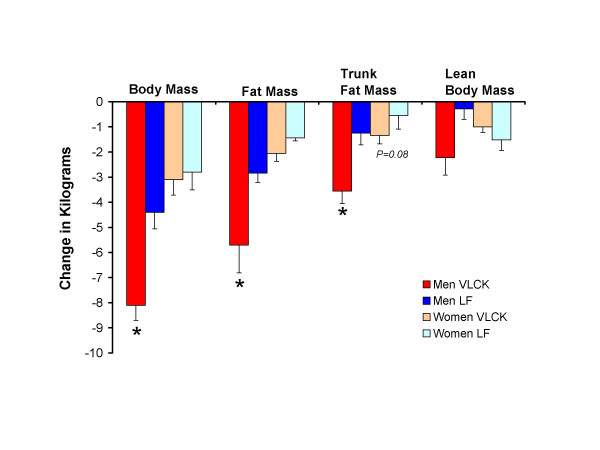
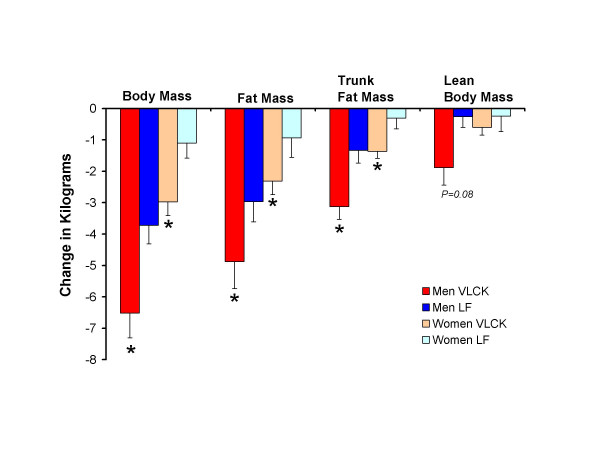
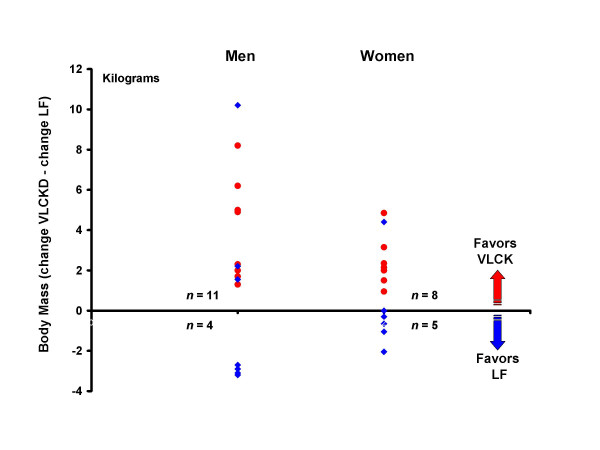
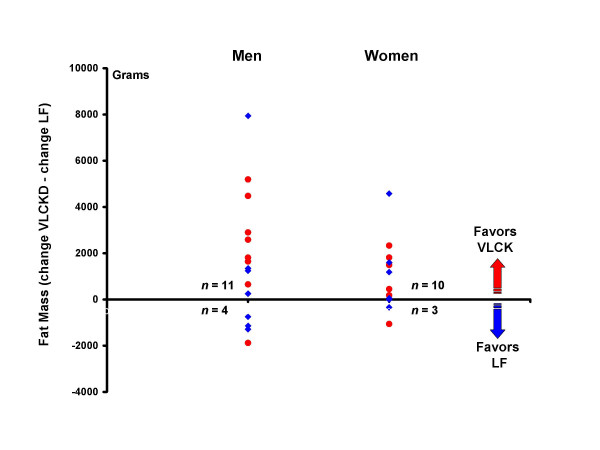
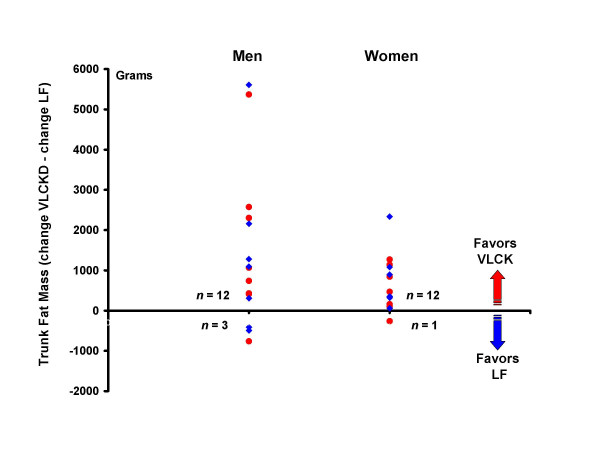
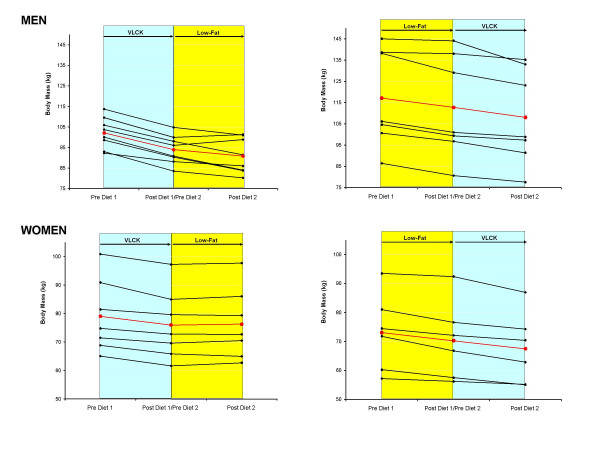
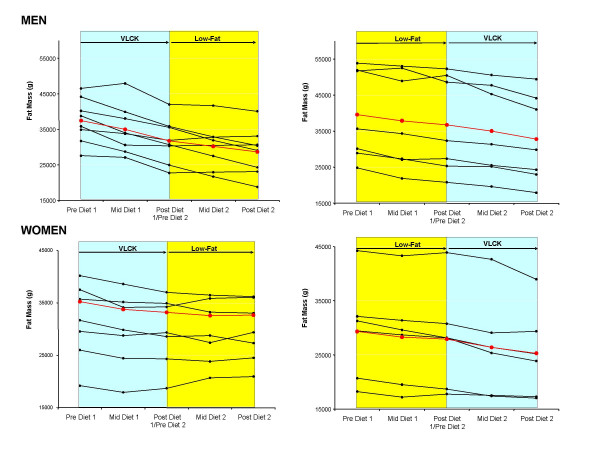
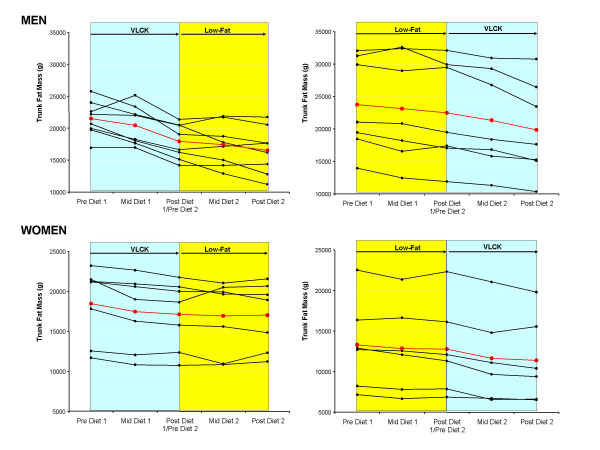
Verification
Claims the paper makes
The claims and statistics of this paper haven’t been checked yet.
Free: it reads the open-access text and checks the first 5 claims that cite a source we can check. Create a free account to check every claim.
Claims other papers make about this one
Each is checked against this paper’s own text: does it say what the citing paper says it does?
The source backs part of the claim, not all of it — or backs it for a different population, condition or comparison.
In the citing paper
“In a recent study [21], for example, significantly greater weight loss was demonstrated with low carbohydrate intervention (< 10% calories from carbohydrates) despite higher caloric intake (1855 kcal/day) compared to high carbohydrate (60% calories from carbohydrates) with lower caloric intake (1562 kcal/day).”
From The case for low carbohydrate diets in diabetes management (2005) · cites this paper as [21]
Experimental — accuracy not yet measuredThe source backs part of the claim, not all of it — or backs it for a different population, condition or comparison.
In the citing paper
“Numerous studies have shown that, although initial alteration in body water with carbohydrate restriction is possible, the new equilibrium state is achieved in 2–3 weeks, followed by active loss of fat mass [8,20,21,26,29,73].”
From The case for low carbohydrate diets in diabetes management (2005) · cites this paper as [21]
Experimental — accuracy not yet measuredThe source backs part of the claim, not all of it — or backs it for a different population, condition or comparison.
In the citing paper
“We did not confirm previous findings that low-carbohydrate or high-protein diets caused increased weight loss at 6 months3–12 and that the advantage of these diets usually eroded by 12 months, with weight loss that was nearly or fully equivalent to that with low-fat diets6,11,18 or other diets.12”
From Comparison of Weight-Loss Diets with Different Compositions of Fat, Protein, and Carbohydrates (2009) · cites this paper as [9]
Experimental — accuracy not yet measuredThe cited source says what the claim attributes to it.
In the citing paper
“Several trials showed that low-carbohydrate, high-protein diets resulted in more weight loss over the course of 3 to 6 months than conventional high-carbohydrate, low-fat diets,4–12 but other studies did not show this effect.13–17”
From Comparison of Weight-Loss Diets with Different Compositions of Fat, Protein, and Carbohydrates (2009) · cites this paper as [9]
In the citing paper
“Comparisons of isocaloric diets of different macronutrient composition frequently show no difference in effectiveness but there are several examples where distinct advantages accrue to one of the diets, usually the low carbohydrate arm [21-25].”
From The case for low carbohydrate diets in diabetes management (2005) · cites this paper as [21]
1 more claim about this paper
Create a free account to see every claim other papers make about this one.
Self-check
Percentages, sums and reported differences re-computed from the paper’s own numbers.
The self-check needs the paper’s full text.
Citations
Cites
New methods for calculating metabolic rate with special reference to protein metabolism
Weir, J. B. D. V. (1949) · The Journal of Physiology · doi:10.1113/jphysiol.1949.sp004363 · Cited by 5,603 · cited 14×
“Energy levels were assigned to the nearest 200 kcal increment based on REE obtained using indirect calorimetry at the start of the study and appropriate activity factors.”
InfluentialA Randomized Trial of a Low-Carbohydrate Diet for Obesity
Foster, G. D., Wyatt, H. R., Hill, J. O., McGuckin, B. G., Brill, C., Mohammed, B. S., Szapary, P. O., Rader, D. J., Edman, J. S., & Klein, S. (2003) · New England Journal of Medicine · doi:10.1056/nejmoa022207 · Cited by 1,794
A Low-Carbohydrate as Compared with a Low-Fat Diet in Severe Obesity
Samaha, F. F., Iqbal, N., Seshadri, P., Chicano, K. L., Daily, D. A., McGrory, J., Williams, T., Williams, M., Gracely, E. J., & Stern, L. (2003) · New England Journal of Medicine · doi:10.1056/nejmoa022637 · Cited by 1,267 · cited 1×
“Introduction Recent reports showing a greater weight loss with a freeliving very low-carbohydrate ketogenic (VLCK) than a low-fat diet after 3 and 6 months [1-5] has generated interest in mechanisms that may account for these responses.”
Yancy, W. S., Olsen, M. K., Guyton, J. R., Bakst, R. P., & Westman, E. C. (2004) · Annals of Internal Medicine · doi:10.7326/0003-4819-140-10-200405180-00006 · Cited by 946
Brehm, B. J., Seeley, R. J., Daniels, S. R., & D’Alessio, D. A. (2003) · The Journal of Clinical Endocrinology & Metabolism · doi:10.1210/jc.2002-021480 · Cited by 830
Dr. Atkins' New Diet Revolution
Atkins, R. C. (1973) · Cited by 467
Freedman, M. R., King, J., & Kennedy, E. (2001) · Obesity Research · doi:10.1038/oby.2001.113 · Cited by 421 · cited 1×
“Volek and Westman [16] have reviewed the potential favorable effects of VLCK diets while other reviews that have focused on the potential adverse effects of VLCK diets caution to avoid or limit their use [17-19].”
Garrow, J. S., & Summerbell, C. (1995) · PubMed · Cited by 415
THE TREATMENT OF OBESITY BY THE "HIGH-FAT" DIET
Yudkin, J., & Carey, M. (1960) · The Lancet · doi:10.1016/s0140-6736(60)92019-5 · Cited by 389 · cited 1×
“One argument is that the greater weight loss on ad libitum VLCK diets is a result of spontaneously reducing energy intake [31], and this has been reported previously [32].”
A ketogenic diet favorably affects serum biomarkers for cardiovascular disease in normal-weight men
Sharman, M. J., Kraemer, W. J., Love, D. M., Avery, N. G., Gómez, A. L., Scheett, T. P., & Volek, J. S. (2002) · The Journal of Nutrition · doi:10.1093/jn/132.7.1879 · Cited by 312 · cited 2×
“We previously reported that a VLCK diet has favorable effects on biomarkers for cardiovascular disease [20-22].”
Self-citation
Cited by
Items 101–188 of 188
Dietary Patterns and Risk of Type 2 Diabetes: A Systematic Review
Boushey, C. J., Ard, J. D., Bazzano, L., Heymsfield, S. B., Mayer‐Davis, E. J., Sabaté, J., Snetselaar, L., Horn, L. V., Schneeman, B. O., English, L., et al. (2020) · doi:10.52570/nesr.dgac2020.sr0103 · Cited by 20
Ojo, E. A., Beeson, W. L., SCHULZ, E. E., Firek, A. F., León, M. A. D., Balcázar, H., & Cordero‐MacIntyre, Z. (2010) · PubMed · Cited by 9
Are all calories created equal? Emerging issues in weight management
Hollis, J., & Mattes, R. D. (2005) · Current Diabetes Reports · doi:10.1007/s11892-005-0096-y · Cited by 9
When is a high fat diet not a high fat diet?
Feinman, R. D. (2005) · Nutrition & Metabolism · doi:10.1186/1743-7075-2-27 · Cited by 9
“Several studies in the literature have demonstrated that in isocaloric comparisons, the replacement of dietary carbohydrate with fat leads to greater weight loss [15-19], that is, the absence of the fuse prevents an explosive effect of dietary fat on body mass.”
Metabolic advantage of low-carbohydrate diets: a calorie is still not a calorie
Manninen, A. H. (2006) · American Journal of Clinical Nutrition · doi:10.1093/ajcn/83.6.1442 · Cited by 10
“For example, a recent randomized, balanced, 2-diet study compared the effects of isocaloric and energy-restricted very-lowcarbohydrate (ketogenic) and low-fat diets on weight loss and body composition in overweight and obese men and women ( 6 ).”
Sutherland, K., Chapman, J. L., Cayanan, E. A., Lowth, A. B., WONG, K. K. H., Yee, B. J., Grunstein, R. R., Marshall, N. S., & Cistulli, P. A. (2019) · Sleep And Breathing · doi:10.1007/s11325-019-01826-2 · Cited by 9
Hermanussen, M., & Tresguerres, J. (2007) · human_ontogenetics · doi:10.1002/huon.200700004 · Cited by 11
Obesity, waist‐hip ratio and hunter‐gatherers
Feinman, R. (2006) · BJOG An International Journal of Obstetrics & Gynaecology · doi:10.1111/j.1471-0528.2006.01151.x · Cited by 8
Bhandarkar, N. S., Shetty, K. B., Shetty, N., Shetty, K., Kiran, A., Pindipappanahalli, N., Shetty, R., & Ghosh, A. (2024) · Frontiers in Nutrition · doi:10.3389/fnut.2024.1394298 · Cited by 8
Kackley, M. L., Buga, A., Brownlow, M. L., O’Connor, A., Sapper, T. N., Crabtree, C. D., Robinson, B. T., Stoner, J. T., Decker, D. D., Soma, L., et al. (2024) · PLoS ONE · doi:10.1371/journal.pone.0293670 · Cited by 7
Self-citationCardoso, D., de Moraes, G. M., Rosa, G., & Moreira, A. S. B. (2015) · PubMed · doi:10.3305/nh.2015.32.3.9175 · Cited by 12
The effect of high‐fat versus high‐carb diet on body composition in strength‐trained males
Wrzosek, M., Woźniak, J., & Włodarek, D. (2021) · Food Science & Nutrition · doi:10.1002/fsn3.2204 · Cited by 7
“…effectiveness of the HFLC and HCLF diets in terms of the body mass reduction and body fat index is concerned, the examined participants often consume different amounts of proteins (the protein intake in HFLC diets is often higher) (Volek et al., 2004; Forsythe et al., 2008; Samaha et al., 2003).”
Effects of a Low Carbohydrate Weight Loss Diet on Exercise Capacity and Tolerance in Obese Subjects
Brinkworth, G. D., Noakes, M., Clifton, P. M., & Buckley, J. D. (2009) · Obesity · doi:10.1038/oby.2008.559 · Cited by 7
Cabler, S., Agarwal, A. K., & du Plessis, S. S. (2012) · Springer eBooks · doi:10.1007/978-1-4614-3335-4_33 · Cited by 6
The 2012 University of Cape Town Faculty of Health Sciences centenary debate
Noakes, T. D. (2015) · South African Journal of Clinical Nutrition · doi:10.1080/16070658.2015.11734522 · Cited by 8
Ruxton, C. H. S., Hinton, F., & Evans, C. (2005) · Nutrition & Food Science · doi:10.1108/00346650510625494 · Cited by 6
“, 2004), while another showed that men were better at maintaining resting energy expenditure while dieting (Volek et al., 2004).”
Gougeon, R., Carrington, M., & Field, C. J. (2006) · Canadian Journal of Diabetes · doi:10.1016/s1499-2671(06)03004-8 · Cited by 8
Westman, E. C., Volek, J. S., & Feinman, R. D. (2006) · American Journal of Clinical Nutrition · doi:10.1093/ajcn/84.6.1549 · Cited by 7
Self-citationChronic carbohydrate restriction improves endurance capacity and body composition in men and women
O'Connor, W., O'Connor, E., Barnes, M. J., Miller, M. W., Gardener, H., & Stannard, S. R. (2022) · Journal Of Science & Cycling · doi:10.28985/1322.jsc.04 · Cited by 5
Meirelles, C., & Gomes, P. S. C. (2016) · Revista de Nutrição · doi:10.1590/1678-98652016000400009 · Cited by 6
Effects of a Low-carbohydrate, High-fat Diet
Kim, J. H. (2016) · The Korean Journal of Obesity · doi:10.7570/kjo.2016.25.4.176 · Cited by 6
Effect of Adding Exercise to a Diet Containing Glucomannan
Vingren, J. L., Silvestre, R., Hatfield, D. L., Spiering, B. A., Fragala, M. S., Ho, J., Maresh, C. M., Volek, J. S., DeFreitas, J. M., Puglisi, M. J., et al. (2007) · The FASEB Journal · doi:10.1096/fasebj.21.5.a578-d · Cited by 5
“Excess waist circumference [36,37] and abdominal fat are associated with numerous cardiovascular risk factors [38,39]; the apparent added reduction in fat by exercise might have important clinical implications for overweight individuals beyond those examined in this study.”
Self-citationGene–Nutrient and Gene–Physical Activity Summary—Genetics Viewpoint
Warden, C. H., & Fisler, J. S. (2008) · Obesity · doi:10.1038/oby.2008.519 · Cited by 6
Hao, L., & Bello, N. T. (2023) · Nutrients · doi:10.3390/nu15071630 · Cited by 4
Liao, T. V., Su, J., Quan, T., Luo, Y., Zeng, Y., Chen, D., & Tang, H. (2024) · Medicine · doi:10.1097/md.0000000000039749 · Cited by 6
Klonek, G., Zydek, G., Roczniok, R., Panek, M., Zając, A., & Michalczyk, M. M. (2024) · Nutrients · doi:10.3390/nu16234218 · Cited by 5
Hallberg, S. J. (2018) · British Journal of Sports Medicine · doi:10.1136/bjsports-2017-098500 · Cited by 4
The Ketogenic Diet for Bodybuilders and Physique Athletes
Tzur, A., & Roberts, B. M. (2020) · Strength and conditioning journal · doi:10.1519/ssc.0000000000000573 · Cited by 8
Martins, C., Nymo, S., Aukan, M. I., Roekenes, J. A., Coutinho, S. R., Hunter, G. R., & Gower, B. A. (2023) · Journal of Nutrition · doi:10.1016/j.tjnut.2023.05.010 · Cited by 4
Analysis of dietary interventions. A simple payoff matrix for display of comparative dietary trials
Feinman, R. D., Fine, E. J., & Volek, J. S. (2008) · Nutrition Journal · doi:10.1186/1475-2891-7-24 · Cited by 3
“Volek's experiment [3] had a second phase in which subjects switched diets allowing a test of the matrix method, that is, one can ask how the actual within-subject comparisons compare to the anticipated outcomes of the matrix presentation.”
Self-citationSex-specific resilience of neocortex to food restriction
Padamsey, Z., Katsanevaki, D., Maeso, P. A., Rizzi, M., Osterweil, E. K., & Rochefort, N. L. (2024) · eLife · doi:10.7554/elife.93052 · Cited by 4
Biochemical and anthropometrical parameters and physical activity of women - a short report.
Przybyłowicz, K. E., & Wądołowska, L. (2009) · Polish Journal of Food and Nutrition Sciences · Cited by 3
Chronic positive mass balance is the actual etiology of obesity: A living review
Manninen, A. H. (2023) · Global Translational Medicine · doi:10.36922/gtm.222 · Cited by 4
The effect of dietary protein intake on coronary heart disease risk
Papakonstantinou, E., & Zampelas, A. (2008) · Nutrition Bulletin · doi:10.1111/j.1467-3010.2008.00729.x · Cited by 3
- Chromium (III) in Promoting Weight Loss and Lean Body Mass
Bagchi, D., & Preuss, H. G. (2012) · CRC Press eBooks · doi:10.1201/b12261-32 · Cited by 2
Graybeal, A. J., & Willis, J. L. (2020) · British Journal Of Nutrition · doi:10.1017/s0007114520004419 · Cited by 2
“Diets that replace carbohydrates with fat have had success during weight loss interventions in the short-medium term when compared to diets that restrict fat ((8,9)), most likely due to passively decreasing caloric intake or increased fat”
Effects of Incremental Dietary Macronutrient Changes on Fat Oxidation and Body Composition
Kunces, L. J., Volk, B. M., Freidenreich, D. J., Saenz, C., Fernandez, M. L., Maresh, C. M., Kraemer, W. J., Phinney, S. D., & Volek, J. S. (2015) · Medicine & Science in Sports & Exercise · doi:10.1249/01.mss.0000478989.59886.fa · Cited by 2
Self-citationDing, M., & Liu, L. (2024) · Iranian Journal of Public Health · doi:10.18502/ijph.v53i8.16275 · Cited by 1
Musharbash, R., Elsahoryi, N. A., Awies, M. R., & Areen, H. (2025) · Journal of Food Innovation, Nutrition, and Environmental Sciences · doi:10.70851/jfines.2025.2(2).81.97 · Cited by 1
Low-carbohydrate ketogenic diet in Mc Ardle’s disease: a single-blinded randomized controlled trial
Martinuzzi, A., Musumeci, O., Stefan, C., Vinante, E., Ferrati, A., Perillo, C., Pesenti, N., & Toscano, A. (2025) · Journal of Neurology · doi:10.1007/s00415-025-13405-5 · Cited by 1
“A side effect expected and welcomed by the patients is the significant reduction in BMI a frequently reported phenomenon in subjects following LCKD [33].”
He, Y., Dai, Z.-H., Yu, A. P., Wong, S. H., & Poon, E. T. (2025) · Diabetes Obesity and Metabolism · doi:10.1111/dom.70379 · Cited by 1
“58 61 Although the participants in this study had metabolic abnormalities, no between-group difference was observed in LDL-C and TC levels, which may be influenced by multiple factors.”
Djazayery, A., Maddah, M., & Eshraghian, M. (2010) · Proceedings of The Nutrition Society · doi:10.1017/s0029665109993259 · Cited by 1
“Low-energy diets are popular weight-reducing diets (Volek et al. , 2004).”
Sunarti, S., Kusuma, R. J., Rubi, D. S., & Sinorita, H. (2014) · Pakistan Journal of Nutrition · doi:10.3923/pjn.2014.415.421 · Cited by 1
Síndrome do ovário poliquístico – do diagnóstico ao tratamento
Souto, S. B., Carvalho Braga, D., & Medina, J. L. (2008) · Revista Portuguesa de Endocrinologia Diabetes e Metabolismo · doi:10.26497/2008.000017.000308 · Cited by 4
Trexler, E. T., Smith‐Ryan, A. E., Wingfield, H. L., Blue, M. N. M., Roelofs, E. J., & Hirsch, K. R. (2017) · The Journal of Sports Medicine and Physical Fitness · doi:10.23736/s0022-4707.16.06284-8 · Cited by 2
تأثير النظام الغذائي منخفض السعرات في إنقاص وزن السمنة
المعطى, ع. ع., & امام, م. (2015) · Mağallaẗ Al-Iqtiṣād Al-Manzilī - Ǧāmiʿaẗ Al-Munūfiyyaẗ · doi:10.21608/mkas.2015.171288 · Cited by 1
The Impact of Carbohydrate Restriction and Nutritional Ketosis on Cardiovascular Health
Lowe, D. A., Corbit, K. C., & Weiss, E. J. (2021) · Contemporary cardiology · doi:10.1007/978-3-030-78177-4_5 · Cited by 1
Recomandation For A Better Control Of The Body Weight
Mănescu, D. C. (2012) · RePEc: Research Papers in Economics · Cited by 1
Dietary proteins and energy balance
Veldhorst, M. A. B. (2009) · Research Publications (Maastricht University) · doi:10.26481/dis.20091030mv · Cited by 1
Eating to Improve Body Composition
António, J., & Manninen, A. H. (2009) · Humana Press eBooks · doi:10.1007/978-1-59745-302-8_26 · Cited by 1
McSwiney, T. (2018) · SETU Waterford Libraries - Open Access Repository · Cited by 1
Physiological aspects of weight loss in obesity
Patel, K. (2011) · Nottingham ePrints (University of Nottingham)
Martínez-Riquelme, A., Sajoux, I., & Fondevila, J. (2014) · PubMed · doi:10.3305/nh.2014.29.2.7086 · Cited by 3
Vilaça, C. (2008) · Portuguese National Funding Agency for Science, Research and Technology (RCAAP Project by FCT)
Chatterton, S. (2015) · Tuwhera (Auckland University of Technology)
Valek, J. S., & Forsythe, C. E. (2009) · Humana Press eBooks · doi:10.1007/978-1-59745-302-8_25
Metabolic Advantage of Low-carbohydrate Diets
Manninen, A. H. (2006) · Journal of the American College of Nutrition · doi:10.1080/07315724.2006.10719557
Volek, J. S. (2005) · Diabetologia · doi:10.1007/s00125-005-1778-3
“It thus seems that the most important result from this study was that the absolute fat loss was greater on the low-carbohydrate diet, a finding consistent with other studies that used a more precise method of measuring body composition, dual-energy X-ray absorptiometry [4, 5].”
Self-citationThomas, A. S. (2010) · Cardinal Scholar (Ball State University) · Cited by 1
Parente, E. B. (2009) · Digital Library of Theses and Dissertations (Universidade de São Paulo) · doi:10.11606/t.5.2009.tde-31082009-152055
Initial body composition and sex affects to the velocity of body weight loss: a PRONAF study
Rojo‐Tirado, M. Á., Peinado, P. J. B., Lozano, A. B. P., Revenga, J. B., & Montero, F. J. C. (2015) · Journal of Human Sport and Exercise · doi:10.14198/jhse.2015.104.04 · Cited by 1
“Moreover, Volek et al. (2004) affirmed that there was a preferential loss of fat in the trunk region in both men and women.”
Baker, B. (2016) · ScholarWorks@UMassAmherst (University of Massachusetts Amherst) · doi:10.7275/8485414
Cardiovascular/haematological systems
Galvin, K., & Bishop, M. (2011) · Elsevier eBooks · doi:10.1016/b978-0-7295-3955-5.10007-1
Nonalcoholic Fatty Liver Disease and Steatohepatitis
McCarthy, E. M., & Rinella, M. E. (2016) · Springer eBooks · doi:10.1007/978-3-319-24687-1_29
Exercise and nutrient interactions: Effects on skeletal muscle and body fat mass
Parr, E. B. (2015) · Research Bank (Australian Catholic University) · doi:10.4226/66/5a9cbd34b0b99
“Diets with a greater CHO content (>40-45% of EI) have been shown to reduce the extent of body mass loss and associated loss of body fat (Abete, Astrup, Martínez, Thorsdottir, & Zulet, 2010; Volek et al., 2004).”
Woodward, J. (2016) · UKnowledge (University of Kentucky) · doi:10.13023/etd.2016.521
“…Brehm et al., 2005, Brinkworth, et al., 2009, Foster et al., 2010, Gardner et al., 2007, Guldbrand, H. et al., 2014, Lindeberg et al., 2007, Samaha et al., 2003, Shai et al., 2008, Shea et al., 2011, Siri-Tarino, Sun, Hu, & Krauss, 2010, Stern et al., 2004, Volek et al., 2004, Yancy et al., 2004).”
The efficacy of meal replacement programs for weight loss
Alkhamash, M. O., Attar, R., Wafi, A. Y., Almalki, H. A., Gaafer, A. H., & Alswat, K. (2020) · Gazzetta Medica Italiana Archivio per le Scienze Mediche · doi:10.23736/s0393-3660.18.03979-7
The effect of a low-carbohydrate high-fat breakfast on glycemic control in type 2 diabetes
Chang, C. R. (2018) · cIRcle (University of British Columbia) · doi:10.14288/1.0362309
Inflammation in Prediabetes and Type 2 Diabetes: A Potential Target to Improve Outcomes
Missel, A. L. (2020) · Deep Blue (University of Michigan)
Lipocalin 2 Deficiency Diminishes the Metabolic Effect of Ketogenic Diet in Female Mice
Floyd, T., Lin, T., & Chen, X. (2021) · The FASEB Journal · doi:10.1096/fasebj.2021.35.s1.04250
Galvin, K., & Bishop, M. (2011) · Elsevier eBooks · doi:10.1016/b978-0-7295-3955-5.10004-6
Faculty Opinions recommendation of Quantification of the effect of energy imbalance on bodyweight.
Müller, M. M. (2011) · Faculty Opinions – Post-Publication Peer Review of the Biomedical Literature · doi:10.3410/f.13242957.14701106
Sex-specific resilience of neocortex to food restrictionPreprint
Padamsey, Z., Katsanevaki, D., Maeso, P. A., Rizzi, M., Osterweil, E. K., & Rochefort, N. L. (2023) · eLife · doi:10.7554/elife.93052.1 · Cited by 1
Journal of Survey in Fisheries Sciences
Al-Mutairi, S. S., Almutairi, A. A. A., Alqahtani, S. M. R., Al-Bahdal, F. A. H., Khowisah, F. S. I., & Alharbi, A. (2023) · Journal of Survey in Fisheries Sciences · doi:10.53555//sfs.v10i6.2271
Sex-specific resilience of neocortex to food restrictionPreprint
Padamsey, Z., Katsanevaki, D., Maeso, P. A., Rizzi, M., Osterweil, E. K., & Rochefort, N. L. (2024) · eLife · doi:10.7554/elife.93052.2
Effect of long-term ketogenic diet on mouse body weight, adipose tissue, and gut microbiotaPreprint
Smolensky, I. V., Zajac-Bakri, K., Tofani, G. S. S., Kipar, A., O’Riordan, K. J., Tremblay, M., Wölnerhanssen, B. K., Meyer‐Gerspach, A. C., Timper, K., Guzman, R. G., et al. (2025) · Research Square · doi:10.21203/rs.3.rs-7573540/v1 · Cited by 1
Mining for Fitness: Analytical Models That Fit You so You Can Be Fit
Asterino, W., & Campbell, K. (2020) · Emerald Group Publishing Limited eBooks · doi:10.1108/978-1-64802-145-920251009
DeLegge, M. H., & Keith, J. N. (2012) · Springer eBooks · doi:10.1007/978-1-4419-1710-2_3 · Cited by 1
LA DIETA CHETOGENICA NEL TRATTAMENTO DELL'OBESITA'
DANIELE, F. (2017) · Electronic Theses and Dissertations Repository (University of Pisa)
Plant-based dietary patterns and the risk of breast cancer in the E3N Cohort
Shah, S. (2023) · theses.fr (ABES) · doi:10.70675/d9479ad5z9c48z482bz84a9z332d80c8b3e8 · Cited by 1
Sex-specific systemic and brain metabolic responses to a standardized ketogenic diet in mice
Lorin, C., Diaceri, G., Garcia, M., Logette, E., Markram, H., & Keller, D. (2026) · Lab Animal · doi:10.1038/s41684-026-01732-7
Predictors of overweight and obesity among urban office workers in the Philippines
Oliveira, M. R. D. J. (2016) · doi:10.63201/nsep8898
Grabowski, M., Grabowska, K., Klonek, G., Michalczyk, M., Klonek, G., Panek, M., Małecki, A., & Nowacka-Chmielewska, M. M. (2026) · Scientific Reports · doi:10.21203/rs.3.rs-10240595/v1
Ketone ester supplementation in aged mice produces sex-specific cognitive and metabolic effects
Roslund, K. J., Coates, L. C., Sultani, S. S., Hayes, D., Diaz, S., Rutkowsky, J. M., Zhou, Z., Ramsey, J. J., Taha, A. Y., & Slupsky, C. M. (2026) · GeroScience · doi:10.1007/s11357-026-02546-8
Rice, S. M., Buchanan, L., Calkins, M. W., Cucuzzella, M. T., Cywes, R., Devine, P. L., Kalamian, M., Kalayjian, T., Reynolds, D. B., & Westman, E. C. (2026) · Journal of Metabolic Health · doi:10.4102/jmh.v9i1.152
Metadata
- Authors
- Volek, J., Sharman, M., Gómez, A., Judelson, D., Rubin, M., Watson, G., Sokmen, B., Silvestre, R., French, D., & Kraemer, W.
- Affiliations
- University of Connecticut (US)
- Corresponding author
- Volek, JS
- ORCID
- Watson, G
- Venue
- Nutrition & Metabolism
- Published
- 2004-11-08
- Volume
- 1
- Issue
- 1
- Pages
- 13-13
- ISSN
- 1743-7075 (ISSN-L)
- PMC
- PMC538279
- OpenAlex
- W2171105624
- Semantic Scholar
- 3ad0d4daa09129e7e69d8d1078b613676895fa29
- Cited by
- 175
- References
- 38
- Citations by year
- 2026: 4 · 2025: 5 · 2024: 8 · 2023: 10 · 2022: 7 · 2021: 6 · 2020: 10 · 2019: 4 · 2018: 4 · 2017: 8 · 2016: 8 · 2015: 9 · 2014: 4 · 2013: 4 · 2012: 5
- FWCI
- 6.80
- Type
- journal article
- Language
- en
- Open access
- gold
- doi.org
- Licence
- cc-by
- creativecommons.org/licenses/by/2.0/ (tdm)
- creativecommons.org/licenses/by/2.0/ (vor)
- Locations
- Nutrition & Metabolism (publishedVersion, cc-by)
- PubMed Central (publishedVersion, cc-by)
- PubMed (publishedVersion)
- Australasian Journal of Paramedicine (submittedVersion, cc-by)
- eCite Digital Repository (University of Tasmania) (submittedVersion, cc-by)
- DOAJ (DOAJ: Directory of Open Access Journals) (submittedVersion, cc-by-sa)
- Figshare (submittedVersion)
- Topics
- Health Sciences › Medicine › Physiology (medical) › Diet and metabolism studies
- Health Sciences › Medicine › Physiology (medical) › Dietary Effects on Health
- Health Sciences › Nursing › Nutrition and Dietetics › Muscle metabolism and nutrition
- Keywords
- low-fat diet, caloric restriction, weight loss, body composition, trunk fat, resting energy expenditure, obesity, overweight, sex differences, fat loss, isocaloric diet, ketosis, macronutrient composition, premenopausal women, menopause, postmenopausal women
About these checks
Registry, retraction, Cites and statistics results are computed, not judged, with one exception: a printed reference that no index lists is read once by a model before it counts as a citation error. Claims are extracted by a model and kept only when their quote appears verbatim in the text; each cited source is then checked, with a model’s help, for whether it says what the claim relies on. Those verdicts can be wrong — read the claim’s quote and the cited source before relying on one.
Statistics and arithmetic are recomputed, not judged.
Confidence bands are shown only for fields calibrated on our annotated test set. None is calibrated yet, so no band is shown.
What counts as a claim ›How we measure confidence ›How we check this ›
Are you an author, or do you see a problem with this page? Request a review
Data sources
Bibliographic data: Semantic Scholar, OpenAlex, Crossref.
Contains information from the Semantic Scholar Academic Graph Datasets, made available under the ODC Attribution License (ODC-BY 1.0).
Semantic Scholar’s data is described in: Kinney, R., et al. (2023). The Semantic Scholar Open Data Platform. arXiv:2301.10140.
