

Comparison of energy-restricted very low-carbohydrate and low-fat diets on weight loss and body composition in overweight men and women
Open accessThe DOI matches its Crossref record; 38 of the 38 references it cites were found in a registry or an index.
Abstract
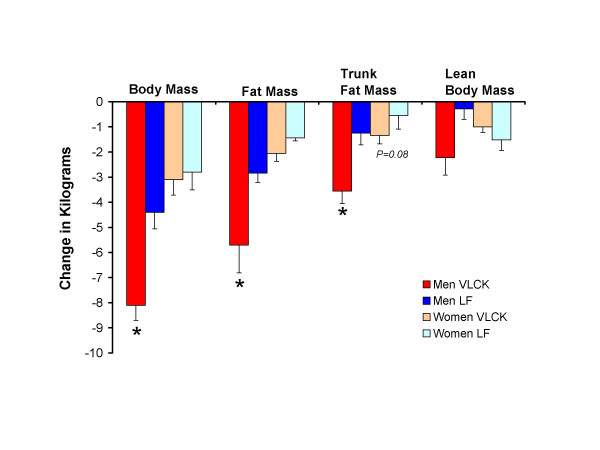
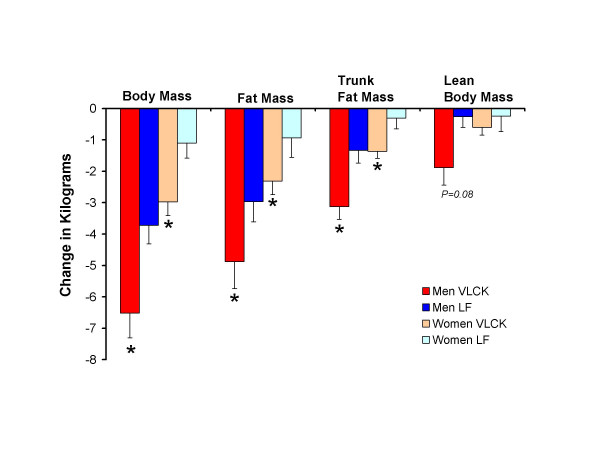
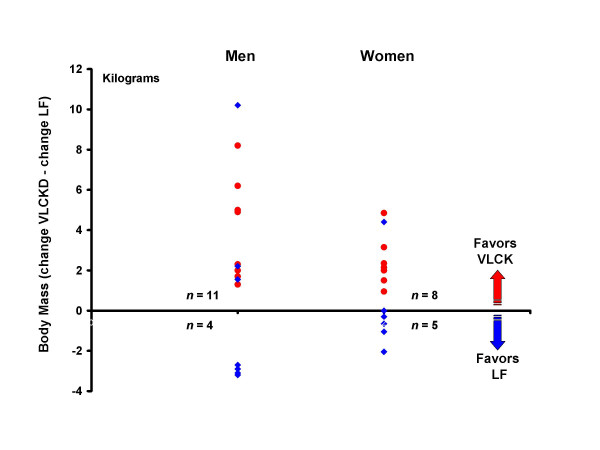
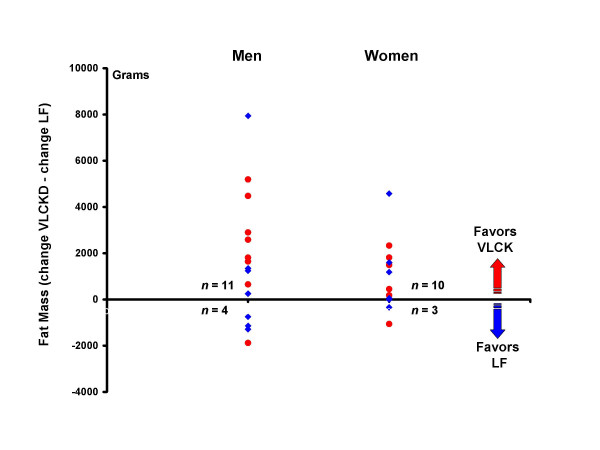
Objective: To compare the effects of isocaloric, energy-restricted very low-carbohydrate ketogenic (VLCK) and low-fat (LF) diets on weight loss, body composition, trunk fat mass, and resting energy expenditure (REE) in overweight/obese men and women. Design: Randomized, balanced, two diet period clinical intervention study. Subjects were prescribed two energy-restricted (-500 kcal/day) diets: a VLCK diet with a goal to decrease carbohydrate levels below 10% of energy and induce ketosis and a LF diet with a goal similar to national recommendations (%carbohydrate:fat:protein = ~60:25:15%). Subjects: 15 healthy, overweight/obese men (mean ± s.e.m.: age 33.2 ± 2.9 y, body mass 109.1 ± 4.6 kg, body mass index 34.1 ± 1.1 kg/m 2) and 13 premenopausal women (age 34.0 ± 2.4 y, body mass 76.3 ± 3.6 kg, body mass index 29.6 ± 1.1 kg/m 2). Measurements: Weight loss, body composition, trunk fat (by dual-energy X-ray absorptiometry), and resting energy expenditure (REE) were determined at baseline and after each diet intervention. Data were analyzed for between group differences considering the first diet phase only and within group differences considering the response to both diets within each person. Results: Actual nutrient intakes from food records during the VLCK (%carbohydrate:fat:protein = ~9:63:28%) and the LF (~58:22:20%) were significantly different. Dietary energy was restricted, but was slightly higher during the VLCK (1855 kcal/day) compared to the LF (1562 kcal/day) diet for men. Both between and within group comparisons revealed a distinct advantage of a VLCK over a LF diet for weight loss, total fat loss, and trunk fat loss for men (despite significantly greater energy intake). The majority of women also responded more favorably to the VLCK diet, especially in terms of trunk fat loss. The greater reduction in trunk fat was not merely due to the greater total fat loss, because the ratio of trunk fat/total fat was also significantly reduced during the VLCK diet in men and women. Absolute REE (kcal/day) was decreased with both diets as expected, but REE expressed relative to body mass (kcal/kg), was better maintained on the VLCK diet for men only. Individual responses clearly show the majority of men and women experience greater weight and fat loss on a VLCK than a LF diet. Conclusion: This study shows a clear benefit of a VLCK over LF diet for short-term body weight and fat loss, especially in men. A preferential loss of fat in the trunk region with a VLCK diet is novel and potentially clinically significant but requires further validation. These data provide additional support for the concept of metabolic advantage with diets representing extremes in macronutrient distribution.
Overview
The claims and statistics of this paper haven’t been checked yet.
Free: it reads the open-access text and checks the first 5 claims that cite a source we can check. Create a free account to check every claim.
Integrity signals
Registry
Cites
Statistics
Figures
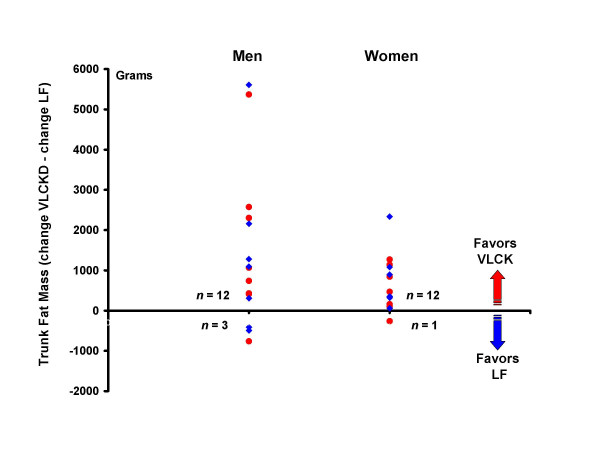
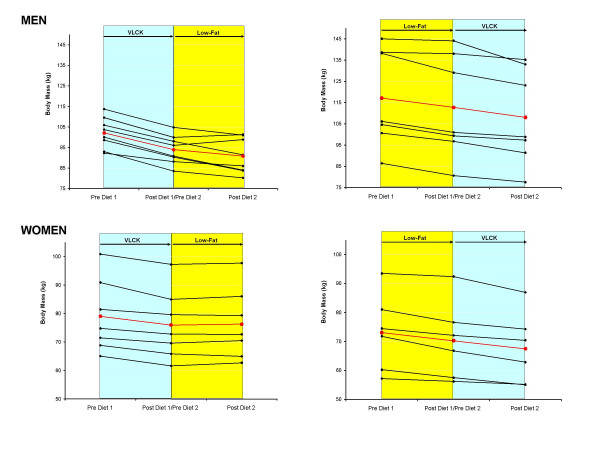
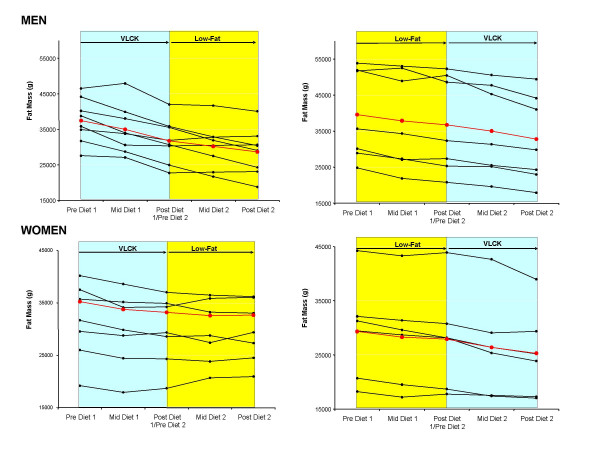
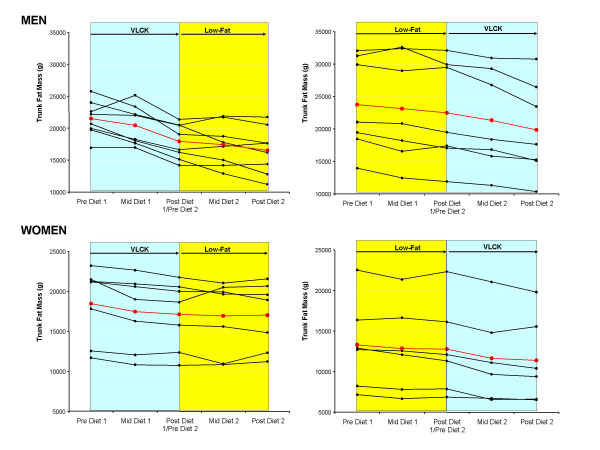
Verification
Claims the paper makes
The claims and statistics of this paper haven’t been checked yet.
Free: it reads the open-access text and checks the first 5 claims that cite a source we can check. Create a free account to check every claim.
Claims other papers make about this one
Each is checked against this paper’s own text: does it say what the citing paper says it does?
The source backs part of the claim, not all of it — or backs it for a different population, condition or comparison.
In the citing paper
“In a recent study [21], for example, significantly greater weight loss was demonstrated with low carbohydrate intervention (< 10% calories from carbohydrates) despite higher caloric intake (1855 kcal/day) compared to high carbohydrate (60% calories from carbohydrates) with lower caloric intake (1562 kcal/day).”
From The case for low carbohydrate diets in diabetes management (2005) · cites this paper as [21]
Experimental — accuracy not yet measuredThe source backs part of the claim, not all of it — or backs it for a different population, condition or comparison.
In the citing paper
“Numerous studies have shown that, although initial alteration in body water with carbohydrate restriction is possible, the new equilibrium state is achieved in 2–3 weeks, followed by active loss of fat mass [8,20,21,26,29,73].”
From The case for low carbohydrate diets in diabetes management (2005) · cites this paper as [21]
Experimental — accuracy not yet measuredThe source backs part of the claim, not all of it — or backs it for a different population, condition or comparison.
In the citing paper
“We did not confirm previous findings that low-carbohydrate or high-protein diets caused increased weight loss at 6 months3–12 and that the advantage of these diets usually eroded by 12 months, with weight loss that was nearly or fully equivalent to that with low-fat diets6,11,18 or other diets.12”
From Comparison of Weight-Loss Diets with Different Compositions of Fat, Protein, and Carbohydrates (2009) · cites this paper as [9]
Experimental — accuracy not yet measuredThe cited source says what the claim attributes to it.
In the citing paper
“Several trials showed that low-carbohydrate, high-protein diets resulted in more weight loss over the course of 3 to 6 months than conventional high-carbohydrate, low-fat diets,4–12 but other studies did not show this effect.13–17”
From Comparison of Weight-Loss Diets with Different Compositions of Fat, Protein, and Carbohydrates (2009) · cites this paper as [9]
In the citing paper
“Comparisons of isocaloric diets of different macronutrient composition frequently show no difference in effectiveness but there are several examples where distinct advantages accrue to one of the diets, usually the low carbohydrate arm [21-25].”
From The case for low carbohydrate diets in diabetes management (2005) · cites this paper as [21]
1 more claim about this paper
Create a free account to see every claim other papers make about this one.
Self-check
Percentages, sums and reported differences re-computed from the paper’s own numbers.
The self-check needs the paper’s full text.
Citations
Cites
New methods for calculating metabolic rate with special reference to protein metabolism
Weir, J. B. D. V. (1949) · The Journal of Physiology · doi:10.1113/jphysiol.1949.sp004363 · Cited by 5,603 · cited 14×
“Energy levels were assigned to the nearest 200 kcal increment based on REE obtained using indirect calorimetry at the start of the study and appropriate activity factors.”
InfluentialA Randomized Trial of a Low-Carbohydrate Diet for Obesity
Foster, G. D., Wyatt, H. R., Hill, J. O., McGuckin, B. G., Brill, C., Mohammed, B. S., Szapary, P. O., Rader, D. J., Edman, J. S., & Klein, S. (2003) · New England Journal of Medicine · doi:10.1056/nejmoa022207 · Cited by 1,794
A Low-Carbohydrate as Compared with a Low-Fat Diet in Severe Obesity
Samaha, F. F., Iqbal, N., Seshadri, P., Chicano, K. L., Daily, D. A., McGrory, J., Williams, T., Williams, M., Gracely, E. J., & Stern, L. (2003) · New England Journal of Medicine · doi:10.1056/nejmoa022637 · Cited by 1,267 · cited 1×
“Introduction Recent reports showing a greater weight loss with a freeliving very low-carbohydrate ketogenic (VLCK) than a low-fat diet after 3 and 6 months [1-5] has generated interest in mechanisms that may account for these responses.”
Yancy, W. S., Olsen, M. K., Guyton, J. R., Bakst, R. P., & Westman, E. C. (2004) · Annals of Internal Medicine · doi:10.7326/0003-4819-140-10-200405180-00006 · Cited by 946
Brehm, B. J., Seeley, R. J., Daniels, S. R., & D’Alessio, D. A. (2003) · The Journal of Clinical Endocrinology & Metabolism · doi:10.1210/jc.2002-021480 · Cited by 830
Dr. Atkins' New Diet Revolution
Atkins, R. C. (1973) · Cited by 467
Freedman, M. R., King, J., & Kennedy, E. (2001) · Obesity Research · doi:10.1038/oby.2001.113 · Cited by 421 · cited 1×
“Volek and Westman [16] have reviewed the potential favorable effects of VLCK diets while other reviews that have focused on the potential adverse effects of VLCK diets caution to avoid or limit their use [17-19].”
Garrow, J. S., & Summerbell, C. (1995) · PubMed · Cited by 415
THE TREATMENT OF OBESITY BY THE "HIGH-FAT" DIET
Yudkin, J., & Carey, M. (1960) · The Lancet · doi:10.1016/s0140-6736(60)92019-5 · Cited by 389 · cited 1×
“One argument is that the greater weight loss on ad libitum VLCK diets is a result of spontaneously reducing energy intake [31], and this has been reported previously [32].”
A ketogenic diet favorably affects serum biomarkers for cardiovascular disease in normal-weight men
Sharman, M. J., Kraemer, W. J., Love, D. M., Avery, N. G., Gómez, A. L., Scheett, T. P., & Volek, J. S. (2002) · The Journal of Nutrition · doi:10.1093/jn/132.7.1879 · Cited by 312 · cited 2×
“We previously reported that a VLCK diet has favorable effects on biomarkers for cardiovascular disease [20-22].”
Self-citation
Cited by
Comparison of Weight-Loss Diets with Different Compositions of Fat, Protein, and Carbohydrates
Sacks, F. M., Bray, G. A., Carey, V. J., Smith, S. R., Ryan, D. H., Anton, S. D., McManus, K., Champagne, C. M., Bishop, L. M., Laranjo, N., et al. (2009) · New England Journal of Medicine · doi:10.1056/nejmoa0804748 · Cited by 1,966
Quantification of the effect of energy imbalance on bodyweight
Hall, K. D., Sacks, G., Chandramohan, D., Chow, C. C., Wang, Y. C., Gortmaker, S. L., & Swinburn, B. A. (2011) · The Lancet · doi:10.1016/s0140-6736(11)60812-x · Cited by 1,165
Dietary ketosis enhances memory in mild cognitive impairment
Krikorian, R., Shidler, M. D., Dangelo, K., Couch, S. C., Benoit, S. C., & Clegg, D. J. (2012) · Neurobiology of Aging · doi:10.1016/j.neurobiolaging.2010.10.006 · Cited by 361
Accurso, A., Bernstein, R. K., Dahlqvist, A., Draznin, B., Feinman, R. D., Fine, E. J., Gleed, A., Jacobs, D. B., Larson, G., Lustig, R. H., et al. (2008) · Nutrition & Metabolism · doi:10.1186/1743-7075-5-9 · Cited by 263
“[8,62,63] A reduced carbohydrate diet may show significant per cent increase in fat, but there may be no change in the absolute amount consumed.”
Self-citationObesity: Prevalence, Theories, Medical Consequences, Management, and Research Directions
Wilborn, C., Beckham, J., Campbell, B., Harvey, T., Galbreath, M., La Bounty, P., Nassar, E., Wismann, J., & Kreider, R. (2005) · Journal of the International Society of Sports Nutrition · doi:10.1186/1550-2783-2-2-4 · Cited by 239
Williams, R. L., Wood, L. G., Collins, C. E., & Callister, R. (2015) · Obesity Reviews · doi:10.1111/obr.12241 · Cited by 235
Volek, J. S., & Feinman, R. D. (2005) · Nutrition & Metabolism · doi:10.1186/1743-7075-2-31 · Cited by 226
Self-citationTargeting the Warburg effect for cancer treatment: Ketogenic diets for management of glioma
Poff, A., Koutnik, A. P., Egan, K. M., Sahebjam, S., D’Agostino, D., & Kumar, N. B. (2019) · Seminars in Cancer Biology · doi:10.1016/j.semcancer.2017.12.011 · Cited by 203
Poff, A. M., Ari, C., Seyfried, T. N., & D’Agostino, D. P. (2013) · PLoS ONE · doi:10.1371/journal.pone.0065522 · Cited by 191
“Ketogenic diets also suppress appetite naturally thus producing some body weight loss [19,20,21,22].”
Baer, D. J., Stote, K. S., Paul, D. R., Harris, G. K., Rumpler, W. V., & Clevidence, B. A. (2011) · The Journal of Nutrition · doi:10.3945/jn.111.139840 · Cited by 169
“In most interventions, the source of dietary protein is typically not described (3,5,7,10,11,19) or is from mixed sources (6,8,12,13).”
Prevalence, predisposition and prevention of type II diabetes
Cheng, D. (2005) · Nutrition & Metabolism · doi:10.1186/1743-7075-2-29 · Cited by 158
“traditional diets [68-70] although their acceptance among official agencies is limited at best.”
Weight loss strategies and the risk of skeletal muscle mass loss
McCarthy, D., & Berg, A. (2021) · Nutrients · doi:10.3390/nu13072473 · Cited by 163
“Volek et al. (2004) compared a very-low carbohydrate/ketogenic diet against a more conventional low-fat diet in a group of 28 volunteers aged 20–55 y. FFM preservation was better in the males following the low-fat diet, whereas in females, the reverse was observed.”
Mutungi, G., Ratliff, J. C., Puglisi, M. J., Torres‐Gonzalez, M., Vaishnav, U., Leite, J. O. M., Quann, E. E., Volek, J. S., & Fernández, M. L. (2008) · Journal of Nutrition · doi:10.1093/jn/138.2.272 · Cited by 170
Self-citationNoakes, M., Foster, P. R., Keogh, J. B., James, A. P., Mamo, J. C., & Clifton, P. M. (2006) · Nutrition & Metabolism · doi:10.1186/1743-7075-3-7 · Cited by 141
“Volek et al [23] observed an increase in lean mass in a small study in normal weight men on a VLCARB in energy balance but a subsequent study by the same author in overweight subjects using VLCARB in energy restriction showed no greater lean mass preservation [ 24 ].”
Krebs, N. F., Gao, D., Gralla, J., Collins, J. S., & Johnson, S. L. (2010) · The Journal of Pediatrics · doi:10.1016/j.jpeds.2010.02.010 · Cited by 107
“Limitations of dietary data notwithstanding, our findings are similar to those of several other investigations in which ad lib energy intakes with carbohydrate restriction to approximately 10% of energy were associated with greater weight loss despite similar or higher mean energy intakes.(5,21,22) These and other obs…”
Ciarlone, S. L., Grieco, J. C., D’Agostino, D. P., & Weeber, E. J. (2016) · Neurobiology of Disease · doi:10.1016/j.nbd.2016.08.002 · Cited by 116
Douris, N., Melman, T., Pecherer, J. M., Pissios, P., Flier, J. S., Cantley, L. C., Locasale, J. W., & Maratos-Flier, E. (2015) · Biochimica et Biophysica Acta (BBA) - Molecular Basis of Disease · doi:10.1016/j.bbadis.2015.07.009 · Cited by 100
Dyson, P. A., Beatty, S., & Matthews, D. R. (2007) · Diabetic Medicine · doi:10.1111/j.1464-5491.2007.02290.x · Cited by 105
Ketogenic diets for weight loss: A review of their principles, safety and efficacy
Sumithran, P., & Proietto, J. (2008) · Obesity Research & Clinical Practice · doi:10.1016/j.orcp.2007.11.003 · Cited by 119
The case for low carbohydrate diets in diabetes management
Arora, S. K., & McFarlane, S. I. (2005) · Nutrition & Metabolism · doi:10.1186/1743-7075-2-16 · Cited by 102
“Numerous studies have shown that, although initial alteration in body water with carbohydrate restriction is possible, the new equilibrium state is achieved in 2–3 weeks, followed by active loss of fat mass [8,20, 21 ,26,29,73].”
InfluentialKetogenic diets, physical activity and body composition: a review
Ashtary-Larky, D., Bagheri, R., Bavi, H., Baker, J. S., Moro, T., Mancin, L., & Paoli, A. (2022) · British Journal of Nutrition · doi:10.1017/s0007114521002609 · Cited by 100
“tion, the findings of a well-designed randomised controlled trial found preferential FM loss in the trunk region with a KD, which was approximately 3-fold greater than an LFD(167), which may have important implications for CVD treatment.”
‘Sarcobesity’: A metabolic conundrum
Parr, E. B., Coffey, V. G., & Hawley, J. A. (2013) · Maturitas · doi:10.1016/j.maturitas.2012.10.014 · Cited by 95
Diet and Exercise for Weight Loss: A Review of Current Issues
Volek, J. S., VanHeest, J. L., & Forsythe, C. E. (2005) · Sports Medicine · doi:10.2165/00007256-200535010-00001 · Cited by 117
Self-citationWilson, J. M., Lowery, R. P., Roberts, M. D., Sharp, M. H., Joy, J. M., Shields, K. A., Partl, J. M., Volek, J. S., & D'Agostino, D. P. (2020) · Journal of Strength and Conditioning Research · doi:10.1519/jsc.0000000000001935 · Cited by 89
“A great deal of research during weight loss studies demonstrates that KD appears to provide a metabolic advantage over carbohydrate based diets (28, 29).”
Self-citationRiazi, K., Raman, M., Taylor, L., Swain, M. G., & Shaheen, A. A. (2019) · Nutrients · doi:10.3390/nu11122878 · Cited by 94
“The ketogenic diet (8% carbohydrate, 30% protein, and 61% fat) is a severely carbohydrate-restricted diet and induces weight loss, decreases serum TG levels, and increases HDL levels compared to a high-carbohydrate diet (in the short term), especially in men [79,80].”
Wood, R. J., Fernandez, M. L., Sharman, M. J., Silvestre, R., Greene, C. M., Zern, T. L., Shrestha, S., Judelson, D. A., Gomez, A. L., Kraemer, W. J., et al. (2007) · Metabolism · doi:10.1016/j.metabol.2006.08.021 · Cited by 87
“After recruitment, all subjects attended a group meeting where registered dietitians provided instructions about how to keep diet records and how to follow a CRD similar to those used in our previous studies [9,17].”
Self-citationEffects of a carbohydrate-restricted diet on emerging plasma markers for cardiovascular disease
Wood, R. J., Volek, J. S., Davis, S. R., Dell'Ova, C., & Fernandez, M. L. (2006) · Nutrition & Metabolism · doi:10.1186/1743-7075-3-19 · Cited by 71
“Also, CRD appear to be particularly effective in reducing intra-abdominal fat, which is known to correlate with numerous cardiovascular risk factors [ 3 ].”
Self-citationEffect of low-carbohydrate diets on cardiometabolic risk, insulin resistance, and metabolic syndrome
O’Neill, B. J. (2020) · Current Opinion in Endocrinology, Diabetes & Obesity · doi:10.1097/med.0000000000000569 · Cited by 71
“The dysfunctional metabolic abnormalities induced by VAT increase throughout the range of carbohydraterestricted [36,44,63,64].”
Dietary strategies with anti-aging potential: Dietary patterns and supplements
Duan, H., Pan, J., Guo, M., Li, J., Yu, L., & Fan, L. (2022) · Food Research International · doi:10.1016/j.foodres.2022.111501 · Cited by 77
Nonequilibrium thermodynamics and energy efficiency in weight loss diets
Feinman, R. D., & Fine, E. J. (2007) · Theoretical Biology and Medical Modelling · doi:10.1186/1742-4682-4-27 · Cited by 67
“In the context of obesity, diabetes and related pathologic states, it is argued by many researchers that the level of carbohydrate, by its hormonal effects, controls the disposition of nutrient intake beyond simple caloric balance [1-11].”
Extended Ketogenic Diet and Physical Training Intervention in Military Personnel
LaFountain, R. A., Miller, V. J., Barnhart, E. C., Hyde, P. N., Crabtree, C. D., McSwiney, F. T., Beeler, M. K., Buga, A., Sapper, T. N., Short, J. A., et al. (2019) · Military Medicine · doi:10.1093/milmed/usz046 · Cited by 68
Self-citationBenjaminov, O., Beglaibter, N., Gindy, L., Spivak, H., Singer, P., Wienberg, M., Stark, A., & Rubin, M. (2007) · Surgical Endoscopy · doi:10.1007/s00464-006-9182-8 · Cited by 71
“[20] reported that a low-carbohydrate diet had a greater effect than a low-fat diet on weight loss and body composition in overweight patients.”
Self-citationHelou, N., Obeid, O., Azar, S. T., & Hwalla, N. (2008) · Annals of Nutrition and Metabolism · doi:10.1159/000138122 · Cited by 68
Nonalcoholic Fatty Liver Disease and Low-Carbohydrate Diets
York, L. W., Puthalapattu, S., & Wu, G. Y. (2009) · Annual Review of Nutrition · doi:10.1146/annurev-nutr-070208-114232 · Cited by 68
Michalczyk, M. M., Klonek, G., Maszczyk, A., & Zajac, A. (2020) · Nutrients · doi:10.3390/nu12061854 · Cited by 60
Aronica, L., Rigdon, J., Offringa, L. C., Stefanick, M. L., & Gardner, C. D. (2021) · International Journal of Obesity · doi:10.1038/s41366-020-00708-y · Cited by 54
“Our findings are consistent with previous reports that a low carb diet may produce more effective weight loss in men than women [9, 16, 17].”
Very-low-carbohydrate diets and preservation of muscle mass
Manninen, A. H. (2006) · Nutrition & Metabolism · doi:10.1186/1743-7075-3-9 · Cited by 56
Fernández, M. L. (2008) · Nutrition Reviews · doi:10.1111/j.1753-4887.2007.tb00325.x · Cited by 65
White, A. M., Johnston, C. S., Swan, P. D., Tjonn, S. L., & Sears, B. (2007) · Journal of the American Dietetic Association · doi:10.1016/j.jada.2007.07.009 · Cited by 66
Boushey, C. J., Ard, J. D., Bazzano, L., Heymsfield, S. B., Mayer‐Davis, E. J., Sabaté, J., Snetselaar, L., Horn, L. V., Schneeman, B. O., English, L., et al. (2020) · doi:10.52570/nesr.dgac2020.sr0101 · Cited by 65
Fad Diets: Lifestyle Promises and Health Challenges
Khawandanah, J., & Tewfik, I. (2016) · Journal of Food Research · doi:10.5539/jfr.v5n6p80 · Cited by 59
“Low-carbohydrate diets have also a great potential in eliminating a larger proportion of abdominal fat (Volek et al., 2004).”
Effect of adding exercise to a diet containing glucomannan
Kraemer, W. J., Vingren, J. L., Silvestre, R., Spiering, B. A., Hatfield, D. L., Ho, J., Fragala, M. S., Maresh, C. M., & Volek, J. S. (2007) · Metabolism · doi:10.1016/j.metabol.2007.04.010 · Cited by 61
Self-citationPapakonstantinou, E., Triantafillidou, D., Panagiotakos, D. B., Koutsovasilis, A., Saliaris, M., Manolis, A., Melidonis, A., & Zampelas, A. (2010) · European Journal of Clinical Nutrition · doi:10.1038/ejcn.2010.29 · Cited by 52
“Studies have reported that dietary protein causes a moderate decrease in postprandial glucose levels of diabetic subjects (Sharman et al., 2004; Volek et al., 2004), which may be due to a synergistic Received 13 September 2009; revised 16 January 2010; accepted 22 January 2010 Correspondence: Dr A Zampelas, Department…”
Effects of a Low Carbohydrate Weight Loss Diet on Exercise Capacity and Tolerance in Obese Subjects
Brinkworth, G. D., Noakes, M., Clifton, P. M., & Buckley, J. D. (2009) · Obesity · doi:10.1038/oby.2009.134 · Cited by 52
“This magnitude of effect is similar to that observed in a previous smaller study (23), that also reported greater reductions in body and fat mass in men after an LC diet compared with an HC diet.”
Johnstone, A. M., Lobley, G. E., Horgan, G. W., Bremner, D. M., Fyfe, C. L., Morrice, P. C., & Duthie, G. G. (2011) · British Journal of Nutrition · doi:10.1017/s0007114511000092 · Cited by 48
“Volek et al.(19) concluded that LC diets favour the preservation of lean body mass, a finding supported by the present study.”
Gregory, R. M. (2017) · International Journal of Sports and Exercise Medicine · doi:10.23937/2469-5718/1510054 · Cited by 48
“extensively outlined in the literature (6, 14, 19, 24-26, 32, 39, 42).”
Cardiovascular and Hormonal Aspects of Very‐Low‐Carbohydrate Ketogenic Diets
Volek, J. S., & Sharman, M. J. (2004) · Obesity Research · doi:10.1038/oby.2004.276 · Cited by 49
Self-citationRatliff, J. C., Mutungi, G., Puglisi, M. J., Volek, J. S., & Fernández, M. L. (2009) · Nutrition Research · doi:10.1016/j.nutres.2009.03.007 · Cited by 55
“In the short term, a CRD has been shown to be more effective at weight loss and reducing body fat than a low-fat diet [7,8].”
Self-citationVeldhorst, M. A. B., Westerterp, K. R., van Vught, A. J. A. H., & Westerterp-Plantenga, M. S. (2010) · British Journal of Nutrition · doi:10.1017/s0007114510002060 · Cited by 50
Ashtary-Larky, D., Bagheri, R., Asbaghi, O., Tinsley, G. M., Kooti, W., Abbasnezhad, A., Afrisham, R., & Wong, A. (2022) · Critical Reviews in Food Science and Nutrition · doi:10.1080/10408398.2021.1890689 · Cited by 50
A review of low and reduced carbohydrate diets and weight loss in type 2 diabetes
Dyson, P. A. (2008) · Journal of Human Nutrition and Dietetics · doi:10.1111/j.1365-277x.2008.00896.x · Cited by 49
“There is now substantial evidence from randomized controlled trials for the positive effect of low carbohydrate diets for weight loss in people without diabetes over the short term (Foster et al., 2003; Samaha et al., 2003; Stern et al., 2004; Volek et al., 2004; Yancy et al., 2004), but there is limited evidence for…”
Very Low Calorie Diets for Weight Loss in Obese Older Adults—A Randomized Trial
Haywood, C. J., Prendergast, L. A., Purcell, K., Le Fevre, L., Lim, W. K., Galea, M., & Proietto, J. (2018) · The Journals of Gerontology: Series A · doi:10.1093/gerona/glx012 · Cited by 48
“It is unclear whether these body composition changes will have occurred with the same degree of weight loss on a higher carbohydrate diet, though low carbohydrate diets may be superior to higher carbohydrates diets in reducing visceral fat and improving insulin resistance (25).”
Brain and behavioral perturbations in rats following Western diet access
Hargrave, S. L., Davidson, T. L., Lee, T.-J., & Kinzig, K. P. (2015) · Appetite · doi:10.1016/j.appet.2015.03.037 · Cited by 53
“A uthor M anuscript A uthor M anuscript A uthor M anuscript A uthor M anuscript Volek et al., 2004).”
Meat in the post-truth era: Mass media discourses on health and disease in the attention economy
Leroy, F., Brengman, M., Ryckbosch, W., & Scholliers, P. (2018) · Appetite · doi:10.1016/j.appet.2018.02.028 · Cited by 48
“Finally, in “Low carbs diet could slim beer bellies” (#326154), a financial proAtkins interest was evoked by stating that a study on the positive effect of the diet on weight loss (Volek et al., 2004) “was partly funded by the Robert C.”
Romon, M., Gomila, S., Hincker, P., Soudan, B., & Dallongeville, J. (2006) · The Journal of Clinical Endocrinology & Metabolism · doi:10.1210/jc.2005-1050 · Cited by 40
Low carbohydrate diets in family practice: what can we learn from an internet-based support group
Feinman, R. D., Vernon, M. C., & Westman, E. C. (2006) · Nutrition Journal · doi:10.1186/1475-2891-5-26 · Cited by 40
“Whereas the obesity epidemic is prima facie evidence for the limitations of traditional approaches and published studies continue to bring out the efficacy and safety of low carbohydrate diets [1-7], official agencies and the media offer little support for the family physician and the individual patient considering su…”
Morales, F. E., Tinsley, G. M., & Gordon, P. M. (2017) · Journal of the American College of Nutrition · doi:10.1080/07315724.2016.1274691 · Cited by 38
Short-Term Ketogenic Diet Improves Abdominal Obesity in Overweight/Obese Chinese Young Females
Kong, Z., Sun, S., Shi, Q., Zhang, H., Tong, T. K., & Nie, J. (2020) · Frontiers in Physiology · doi:10.3389/fphys.2020.00856 · Cited by 41
“It has been revealed that, in comparison with low-fat diets, low-carbohydrate diets resulted in greater weight reduction (Sharman et al., 2004; Volek et al., 2004a) and led to more favorable alterations in blood lipids (Sharman et al., 2004; Brinkworth et al., 2009a) and glucose regulation (Sharman…”
InfluentialDouris, N., Desai, B. N., Fisher, F. M., Cisu, T., Fowler, A. J., Zarebidaki, E., Nguyen, N. L. T., Morgan, D. A., Bartness, T. J., Rahmouni, K., et al. (2017) · Molecular Metabolism · doi:10.1016/j.molmet.2017.05.017 · Cited by 42
“In humans, ketogenic diets have generated interest as a dietary intervention for both weight loss [4,13,14] and the management of type II diabetes [15].”
Abete, I., Parra, D., De Morentin, B. M., & Alfredo Martínez, J. (2009) · International Journal of Food Sciences and Nutrition · doi:10.1080/09637480802232625 · Cited by 37
“On the other hand, a decrease in insulin concentration and an improvement in the HOMA index have been reported after the consumption of HP-diets (Bisschop et al. 2001; Volek et al. 2004).”
Buga, A., Kackley, M. L., Crabtree, C. D., Sapper, T. N., Mccabe, L., Fell, B., LaFountain, R. A., Hyde, P. N., Martini, E. R., Bowman, J., et al. (2021) · Frontiers in Nutrition · doi:10.3389/fnut.2021.618520 · Cited by 38
Self-citationEl Ghoch, M., Calugi, S., & Dalle Grave, R. (2016) · Nutrients · doi:10.3390/nu8070402 · Cited by 36
Iacovides, S., Maloney, S. K., Bhana, S., Angamia, Z., & Meiring, R. M. (2022) · PLoS ONE · doi:10.1371/journal.pone.0269440 · Cited by 38
“While some argue that a reduction in carbohydrate intake leads to the mobilization of adipose tissue, thus preserving lean body tissue [3,14], others argue that carbohydrate restriction may lead to the preferential loss of lean body tissue [51].”
Exercise and Dietary-Mediated Reductions in Postprandial Lipemia
Plaisance, E. P., & Fisher, G. (2014) · Journal of Nutrition and Metabolism · doi:10.1155/2014/902065 · Cited by 38
Insulin, carbohydrate restriction, metabolic syndrome and cancer
Fine, E. J., & Feinman, R. D. (2014) · Expert Review of Endocrinology & Metabolism · doi:10.1586/17446651.2014.960392 · Cited by 39
Low-carbohydrate, high-protein diet score and risk of incident cancer; a prospective cohort study
Nilsson, L. M., Winkvist, A., Johansson, I., Lindahl, B., Hallmans, G., Lenner, P., & Guelpen, B. R. V. (2013) · Nutrition Journal · doi:10.1186/1475-2891-12-58 · Cited by 36
“E% carbohydrates/protein/fat = 9/28/63 [4], and 44/ 18/38 [5], respectively) have been found to be at least as”
The metabolic effects of low‐carbohydrate diets and incorporation into a biochemistry course
Pogozelski, W. K., Arpaia, N., & Priore, S. F. (2005) · Biochemistry and Molecular Biology Education · doi:10.1002/bmb.2005.494033022445 · Cited by 34
“mals and humans shows that ketogenic diets are characterized by increased rates of fat loss [37, 38].”
Soltani, S., Jayedi, A., Abdollahi, S., Vasmehjani, A. A., Meshkini, F., & Shab-Bidar, S. (2023) · Frontiers in Nutrition · doi:10.3389/fnut.2023.1287987 · Cited by 32
Parry, H. A., Kephart, W. C., Mumford, P. W., Romero, M. A., Mobley, C. B., Zhang, Y., Roberts, M. D., & Kavazis, A. N. (2018) · Heliyon · doi:10.1016/j.heliyon.2018.e00975 · Cited by 36
Physiogenomic analysis of weight loss induced by dietary carbohydrate restriction
Ruaño, G., Windemuth, A., Kocherla, M., Holford, T. R., Fernández, M. L., Forsythe, C. E., Wood, R. J., Kraemer, W. J., & Volek, J. S. (2006) · Nutrition & Metabolism · doi:10.1186/1743-7075-3-20 · Cited by 34
“The subjects included 10 normal weight women studied over 4 weeks [21], 15 overweight men and 13 overweight women studied over 4–6 wk [20], 28 overweight men studied over 12 wk [22], and 10 overweight men and 10 overweight women with metabolic syndrome studied over 12 wk (unpublished).”
Self-citationPapakonstantinou, E., Triantafillidou, D., Panagiotakos, D. B., Iraklianou, S., Berdanier, C. D., & Zampelas, A. (2010) · Journal of Human Nutrition and Dietetics · doi:10.1111/j.1365-277x.2009.01020.x · Cited by 29
Sexual dimorphism in the context of nutrition and health
Pontifex, M. G., Vauzour, D., & Müller, M. M. (2023) · Proceedings of The Nutrition Society · doi:10.1017/s0029665123003610 · Cited by 29
Wood, R. J., & Fernández, M. L. (2009) · Nutrition Reviews · doi:10.1111/j.1753-4887.2009.00186.x · Cited by 32
Good Calories, Bad Calories by Gary Taubes; New York: AA Knopf
Bray, G. A. (2008) · Obesity Reviews · doi:10.1111/j.1467-789x.2008.00476.x · Cited by 30
“Truby (62) 6.0 kg 6.6 kg 6.3 kg 4.9 kg Volek ( 63 ) Males 4.3 kg 8.1 kg”
InfluentialPérez-Rodríguez, M., Huertas, J. R., Villalba, J. M., & Casuso, R. A. (2022) · Metabolism · doi:10.1016/j.metabol.2022.155336 · Cited by 27
Obesity and Low Back Pain: Is There a Weight of Evidence to Support a Positive Relationship?
Roffey, D. M., Budiansky, A. S., Coyle, M. J., & Wai, E. K. (2013) · Current Obesity Reports · doi:10.1007/s13679-013-0058-7 · Cited by 29
Low‐carbohydrate High‐fat Diets: Regulation of Energy Balance and Body Weight Regain in Rats
Caton, S. J., Yinglong, B., Burget, L., Spangler, L. J., Tschöp, M. H., & Bidlingmaier, M. (2008) · Obesity · doi:10.1038/oby.2008.529 · Cited by 32
“(14) reported that 20% of males and 30% of females actually regained more body weight than they had lost when the diet was changed from a very low-CHO diet to a low-fat diet despite no difference in energy intake.”
Arefhosseini, S. R., Ebrahimi‐Mameghani, M., Farsad-Naeimi, A., Khoshbaten, M., & rashid, J. (2011) · Europe PMC (PubMed Central) · doi:10.5681/hpp.2011.016 · Cited by 25
“low carbohydrate diet has shown greater weight loss with low carbohydrate diet [16, 17].”
Tang, M., Leidy, H. J., & Campbell, W. W. (2013) · Nutrition Research · doi:10.1016/j.nutres.2013.05.012 · Cited by 22
“In addition, men have more appendicular lean mass and are more likely to store fat in the trunk region than women [12] and may respond differently to weight loss compared with women in terms of body composition changes [13].”
Currenti, W., Losavio, F., Quiete, S., Alanazi, A. M., Messina, G., Polito, R., Ciolli, F., Zappalà, R. S., Galvano, F., & Cincione, R. I. (2023) · Nutrients · doi:10.3390/nu16010095 · Cited by 23
“The decreased insulin levels promote the activation of hormone-sensitive li-Nutrients pase (HSL) that facilitates the breakdown of stored triglycerides in adipose tissue, releasing fatty acids into the bloodstream for energy utilization [64,65].”
Pilis, K., Pilis, A., Stec, K., Pilis, W., Langfort, J., Letkiewicz, S., Michalski, C., Czuba, M., Zych, M., & Chalimoniuk, M. (2018) · Nutrients · doi:10.3390/nu10121914 · Cited by 23
Decker, D. D., Patel, R., Cheavens, J. S., Hayes, S. M., Whitted, W. M., Lee, A. J., Buga, A., Robinson, B. T., Crabtree, C. D., Kackley, M. L., et al. (2025) · Translational Psychiatry · doi:10.1038/s41398-025-03544-8 · Cited by 23
“Therefore, conclusions regarding the ef fi cacy of the WFKD alone to improve depression or cognitive function remain speculative.”
Self-citationPhysiogenomic comparison of human fat loss in response to diets restrictive of carbohydrate or fat
Seip, R. L., Volek, J. S., Windemuth, A., Kocherla, M., Fernández, M. L., Kraemer, W. J., & Ruaño, G. (2008) · Nutrition & Metabolism · doi:10.1186/1743-7075-5-4 · Cited by 23
Self-citationElidottir, A. S., Halldorsson, T. I., Gunnarsdottir, I., & Ramel, A. (2016) · PLOS ONE · doi:10.1371/journal.pone.0156655 · Cited by 18
François, M. E., Gillen, J. B., & Little, J. P. (2017) · Frontiers in Nutrition · doi:10.3389/fnut.2017.00049 · Cited by 22
“In comparison with standard low-fat caloric restrictive dietary interventions, energy-matched diets that restrict carbohydrates to <30 g/day have been shown to result in greater reductions in HbA1c and fat mass (22, 23), as well as superior improvements in the blood lipid profile (24, 25).”
Carbohydrate versus Energy Restriction: Effects on Weight Loss, Body Composition and Metabolism
Williams, E. A., Perkins, S. N., Smith, N. C. P., Hursting, S. D., & Lane, M. A. (2007) · Annals of Nutrition and Metabolism · doi:10.1159/000104143 · Cited by 21
“Statistical Analysis All values shown are mean ± SEM. All statistical analyses were conducted using SPSS (Apache Software Foundation, Wilmington, Del., USA, version 12.0 for Windows). Statistically significant values for body weight and energy intake were determined using the Proc GLM Multivariate ANOVA analysis for r…”
InfluentialLow-Carbohydrate Diets Promote a More Favorable Body Composition Than Low-Fat Diets
Volek, J. S., Quann, E. E., & Forsythe, C. E. (2010) · Strength & Conditioning Journal · doi:10.1519/ssc.0b013e3181c16c41 · Cited by 14
Self-citationIs a Calorie Really a Calorie? Metabolic Advantage of Low-Carbohydrate Diets
Manninen, A. H. (2004) · Journal of the International Society of Sports Nutrition · doi:10.1186/1550-2783-1-2-21 · Cited by 21
Weber, A. J., Medak, K. D., Townsend, L. K., & Wright, D. C. (2022) · The Journal of Physiology · doi:10.1113/jp283469 · Cited by 19
“Diet trials lasting from several weeks to months have reported KD-induced weight loss and improvements in indices of glucose metabolism in participants with overweight or obesity (Hall et al., 2016, 2021; Volek et al., 2004; Yancy et al., 2005).”
Adherence to the low carbohydrate diet and the risk of breast Cancer in Iran
Sasanfar, B., Toorang, F., Esmaillzadeh, A., & Zendehdel, K. (2019) · Nutrition Journal · doi:10.1186/s12937-019-0511-x · Cited by 19
Ketogenic diet for mood disorders from animal models to clinical application
Smolensky, I. V., Zajac-Bakri, K., Gass, P., & Inta, D. (2023) · Journal of Neural Transmission · doi:10.1007/s00702-023-02620-x · Cited by 18
Added sugar intake is associated with pericardial adipose tissue volume
Yi, S.-Y. Y., Steffen, L. M., Terry, J. G., Jacobs, D. R., Duprez, D. A., Steffen, B. T., Zhou, X., Shikany, J. M., Harnack, L., & Carr, J. J. (2020) · European Journal of Preventive Cardiology · doi:10.1177/2047487320931303 · Cited by 18
Millis, R. M., Austin, R. E., Bond, V., Faruque, M. U., Goring, K. L., Hickey, B. M., Blakely, R. L., & DeMeersman, R. E. (2009) · Life Sciences · doi:10.1016/j.lfs.2009.05.006 · Cited by 20
Kinzig, K. P., Honors, M. A., Hargrave, S. L., Davenport, B. M., Strader, A. D., & Wendt, D. (2010) · Neuroendocrinology · doi:10.1159/000314180 · Cited by 16
Effect of Whey Protein in Conjunction With a Caloric-Restricted Diet and Resistance Training
Dudgeon, W. D., Kelley, E. P., & Scheett, T. P. (2017) · Journal of Strength and Conditioning Research · doi:10.1519/jsc.0000000000001196 · Cited by 14
Sex differences in ketogenic diet: are men more likely than women to lose weight?
Jiao, Y., Chen, X., Liu, L., Lu, Y., Gao, M., Wang, Q., Chi, X., & Mo, Y. (2025) · Frontiers in Nutrition · doi:10.3389/fnut.2025.1600927 · Cited by 16
Bowler, A.-L. M., & Polman, R. C. J. (2020) · Sports · doi:10.3390/sports8100131 · Cited by 18
Shon, J., Han, Y., & Park, Y. J. (2022) · Nutrients · doi:10.3390/nu14030478 · Cited by 15
Gaspa, G., Naciu, A. M., Rosa, C. D., Lattanzi, G., Beato, I., MICHELI, V., TURRIZIANI, C., Khazrai, Y. M., & CESAREO, R. (2022) · Minerva Endocrinology · doi:10.23736/s2724-6507.22.03922-7 · Cited by 13
Metadata
- Authors
- Volek, J., Sharman, M., Gómez, A., Judelson, D., Rubin, M., Watson, G., Sokmen, B., Silvestre, R., French, D., & Kraemer, W.
- Affiliations
- University of Connecticut (US)
- Corresponding author
- Volek, JS
- ORCID
- Watson, G
- Venue
- Nutrition & Metabolism
- Published
- 2004-11-08
- Volume
- 1
- Issue
- 1
- Pages
- 13-13
- ISSN
- 1743-7075 (ISSN-L)
- PMC
- PMC538279
- OpenAlex
- W2171105624
- Semantic Scholar
- 3ad0d4daa09129e7e69d8d1078b613676895fa29
- Cited by
- 175
- References
- 38
- Citations by year
- 2026: 4 · 2025: 5 · 2024: 8 · 2023: 10 · 2022: 7 · 2021: 6 · 2020: 10 · 2019: 4 · 2018: 4 · 2017: 8 · 2016: 8 · 2015: 9 · 2014: 4 · 2013: 4 · 2012: 5
- FWCI
- 6.80
- Type
- journal article
- Language
- en
- Open access
- gold
- doi.org
- Licence
- cc-by
- creativecommons.org/licenses/by/2.0/ (tdm)
- creativecommons.org/licenses/by/2.0/ (vor)
- Locations
- Nutrition & Metabolism (publishedVersion, cc-by)
- PubMed Central (publishedVersion, cc-by)
- PubMed (publishedVersion)
- Australasian Journal of Paramedicine (submittedVersion, cc-by)
- eCite Digital Repository (University of Tasmania) (submittedVersion, cc-by)
- DOAJ (DOAJ: Directory of Open Access Journals) (submittedVersion, cc-by-sa)
- Figshare (submittedVersion)
- Topics
- Health Sciences › Medicine › Physiology (medical) › Diet and metabolism studies
- Health Sciences › Medicine › Physiology (medical) › Dietary Effects on Health
- Health Sciences › Nursing › Nutrition and Dietetics › Muscle metabolism and nutrition
- Keywords
- low-fat diet, caloric restriction, weight loss, body composition, trunk fat, resting energy expenditure, obesity, overweight, sex differences, fat loss, isocaloric diet, ketosis, macronutrient composition, premenopausal women, menopause, postmenopausal women
About these checks
Registry, retraction, Cites and statistics results are computed, not judged, with one exception: a printed reference that no index lists is read once by a model before it counts as a citation error. Claims are extracted by a model and kept only when their quote appears verbatim in the text; each cited source is then checked, with a model’s help, for whether it says what the claim relies on. Those verdicts can be wrong — read the claim’s quote and the cited source before relying on one.
Statistics and arithmetic are recomputed, not judged.
Confidence bands are shown only for fields calibrated on our annotated test set. None is calibrated yet, so no band is shown.
What counts as a claim ›How we measure confidence ›How we check this ›
Are you an author, or do you see a problem with this page? Request a review
Data sources
Bibliographic data: Semantic Scholar, OpenAlex, Crossref.
Contains information from the Semantic Scholar Academic Graph Datasets, made available under the ODC Attribution License (ODC-BY 1.0).
Semantic Scholar’s data is described in: Kinney, R., et al. (2023). The Semantic Scholar Open Data Platform. arXiv:2301.10140.
