

Comparison of energy-restricted very low-carbohydrate and low-fat diets on weight loss and body composition in overweight men and women
Open accessThe DOI matches its Crossref record; 38 of the 38 references it cites were found in a registry or an index.
Abstract
Objective: To compare the effects of isocaloric, energy-restricted very low-carbohydrate ketogenic (VLCK) and low-fat (LF) diets on weight loss, body composition, trunk fat mass, and resting energy expenditure (REE) in overweight/obese men and women. Design: Randomized, balanced, two diet period clinical intervention study. Subjects were prescribed two energy-restricted (-500 kcal/day) diets: a VLCK diet with a goal to decrease carbohydrate levels below 10% of energy and induce ketosis and a LF diet with a goal similar to national recommendations (%carbohydrate:fat:protein = ~60:25:15%). Subjects: 15 healthy, overweight/obese men (mean ± s.e.m.: age 33.2 ± 2.9 y, body mass 109.1 ± 4.6 kg, body mass index 34.1 ± 1.1 kg/m 2) and 13 premenopausal women (age 34.0 ± 2.4 y, body mass 76.3 ± 3.6 kg, body mass index 29.6 ± 1.1 kg/m 2). Measurements: Weight loss, body composition, trunk fat (by dual-energy X-ray absorptiometry), and resting energy expenditure (REE) were determined at baseline and after each diet intervention. Data were analyzed for between group differences considering the first diet phase only and within group differences considering the response to both diets within each person. Results: Actual nutrient intakes from food records during the VLCK (%carbohydrate:fat:protein = ~9:63:28%) and the LF (~58:22:20%) were significantly different. Dietary energy was restricted, but was slightly higher during the VLCK (1855 kcal/day) compared to the LF (1562 kcal/day) diet for men. Both between and within group comparisons revealed a distinct advantage of a VLCK over a LF diet for weight loss, total fat loss, and trunk fat loss for men (despite significantly greater energy intake). The majority of women also responded more favorably to the VLCK diet, especially in terms of trunk fat loss. The greater reduction in trunk fat was not merely due to the greater total fat loss, because the ratio of trunk fat/total fat was also significantly reduced during the VLCK diet in men and women. Absolute REE (kcal/day) was decreased with both diets as expected, but REE expressed relative to body mass (kcal/kg), was better maintained on the VLCK diet for men only. Individual responses clearly show the majority of men and women experience greater weight and fat loss on a VLCK than a LF diet. Conclusion: This study shows a clear benefit of a VLCK over LF diet for short-term body weight and fat loss, especially in men. A preferential loss of fat in the trunk region with a VLCK diet is novel and potentially clinically significant but requires further validation. These data provide additional support for the concept of metabolic advantage with diets representing extremes in macronutrient distribution.
Overview
The claims and statistics of this paper haven’t been checked yet.
Free: it reads the open-access text and checks the first 5 claims that cite a source we can check. Create a free account to check every claim.
Integrity signals
Registry
Cites
Statistics
Figures
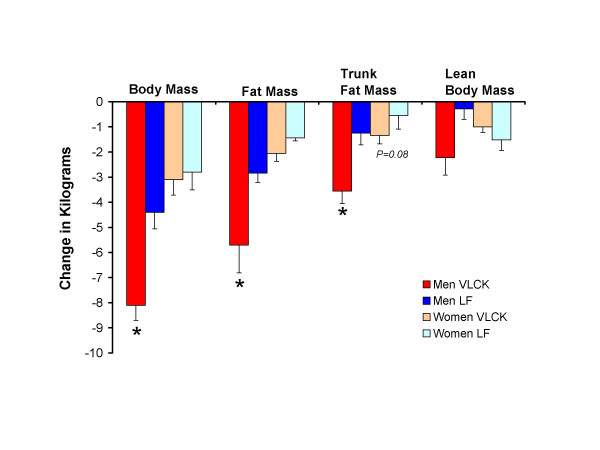
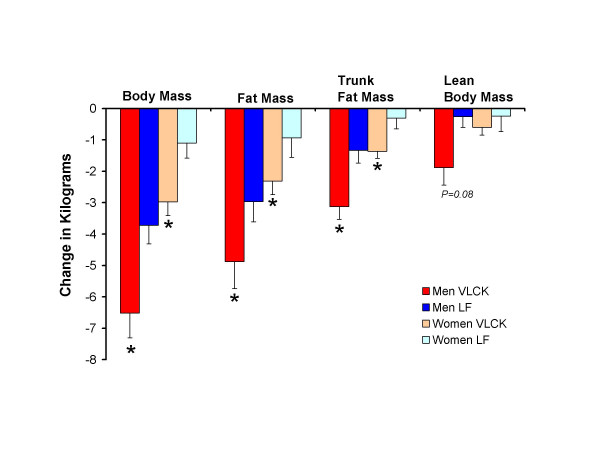
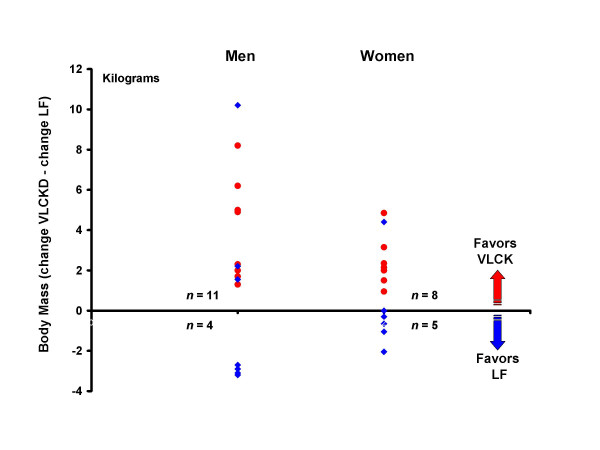
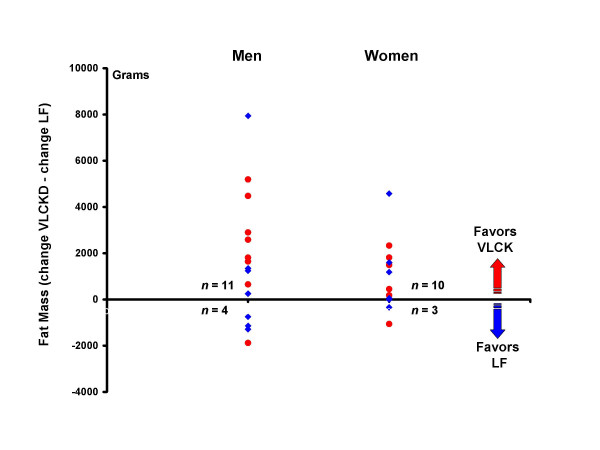
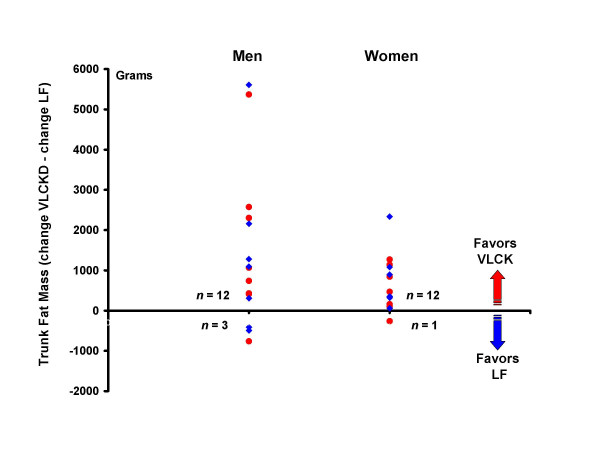
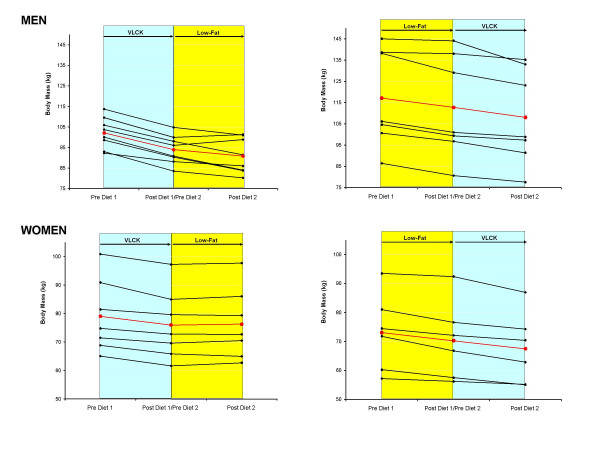
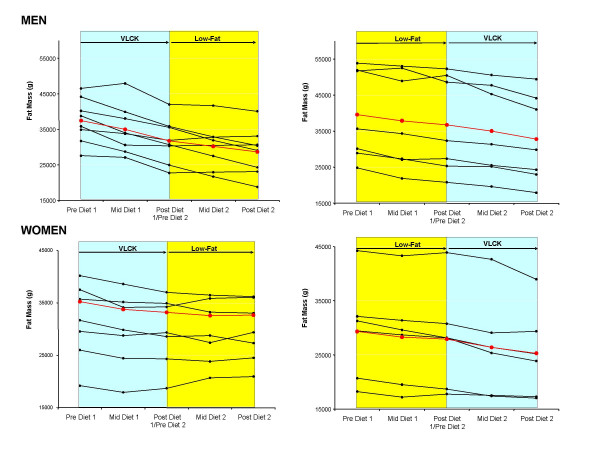
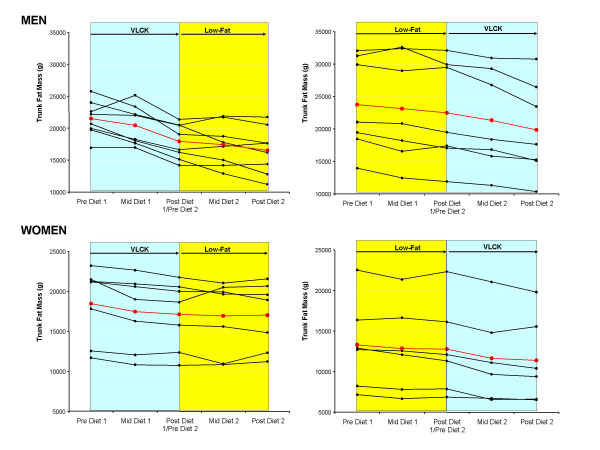
Verification
Claims the paper makes
The claims and statistics of this paper haven’t been checked yet.
Free: it reads the open-access text and checks the first 5 claims that cite a source we can check. Create a free account to check every claim.
Claims other papers make about this one
Each is checked against this paper’s own text: does it say what the citing paper says it does?
The source backs part of the claim, not all of it — or backs it for a different population, condition or comparison.
In the citing paper
“In a recent study [21], for example, significantly greater weight loss was demonstrated with low carbohydrate intervention (< 10% calories from carbohydrates) despite higher caloric intake (1855 kcal/day) compared to high carbohydrate (60% calories from carbohydrates) with lower caloric intake (1562 kcal/day).”
From The case for low carbohydrate diets in diabetes management (2005) · cites this paper as [21]
Experimental — accuracy not yet measuredThe source backs part of the claim, not all of it — or backs it for a different population, condition or comparison.
In the citing paper
“Numerous studies have shown that, although initial alteration in body water with carbohydrate restriction is possible, the new equilibrium state is achieved in 2–3 weeks, followed by active loss of fat mass [8,20,21,26,29,73].”
From The case for low carbohydrate diets in diabetes management (2005) · cites this paper as [21]
Experimental — accuracy not yet measuredThe source backs part of the claim, not all of it — or backs it for a different population, condition or comparison.
In the citing paper
“We did not confirm previous findings that low-carbohydrate or high-protein diets caused increased weight loss at 6 months3–12 and that the advantage of these diets usually eroded by 12 months, with weight loss that was nearly or fully equivalent to that with low-fat diets6,11,18 or other diets.12”
From Comparison of Weight-Loss Diets with Different Compositions of Fat, Protein, and Carbohydrates (2009) · cites this paper as [9]
Experimental — accuracy not yet measuredThe cited source says what the claim attributes to it.
In the citing paper
“Several trials showed that low-carbohydrate, high-protein diets resulted in more weight loss over the course of 3 to 6 months than conventional high-carbohydrate, low-fat diets,4–12 but other studies did not show this effect.13–17”
From Comparison of Weight-Loss Diets with Different Compositions of Fat, Protein, and Carbohydrates (2009) · cites this paper as [9]
In the citing paper
“Comparisons of isocaloric diets of different macronutrient composition frequently show no difference in effectiveness but there are several examples where distinct advantages accrue to one of the diets, usually the low carbohydrate arm [21-25].”
From The case for low carbohydrate diets in diabetes management (2005) · cites this paper as [21]
1 more claim about this paper
Create a free account to see every claim other papers make about this one.
Self-check
Percentages, sums and reported differences re-computed from the paper’s own numbers.
The self-check needs the paper’s full text.
Citations
Cites
New methods for calculating metabolic rate with special reference to protein metabolism
Weir, J. B. D. V. (1949) · The Journal of Physiology · doi:10.1113/jphysiol.1949.sp004363 · Cited by 5,603 · cited 14×
“Energy levels were assigned to the nearest 200 kcal increment based on REE obtained using indirect calorimetry at the start of the study and appropriate activity factors.”
InfluentialA Randomized Trial of a Low-Carbohydrate Diet for Obesity
Foster, G. D., Wyatt, H. R., Hill, J. O., McGuckin, B. G., Brill, C., Mohammed, B. S., Szapary, P. O., Rader, D. J., Edman, J. S., & Klein, S. (2003) · New England Journal of Medicine · doi:10.1056/nejmoa022207 · Cited by 1,794
A Low-Carbohydrate as Compared with a Low-Fat Diet in Severe Obesity
Samaha, F. F., Iqbal, N., Seshadri, P., Chicano, K. L., Daily, D. A., McGrory, J., Williams, T., Williams, M., Gracely, E. J., & Stern, L. (2003) · New England Journal of Medicine · doi:10.1056/nejmoa022637 · Cited by 1,267 · cited 1×
“Introduction Recent reports showing a greater weight loss with a freeliving very low-carbohydrate ketogenic (VLCK) than a low-fat diet after 3 and 6 months [1-5] has generated interest in mechanisms that may account for these responses.”
Yancy, W. S., Olsen, M. K., Guyton, J. R., Bakst, R. P., & Westman, E. C. (2004) · Annals of Internal Medicine · doi:10.7326/0003-4819-140-10-200405180-00006 · Cited by 946
Brehm, B. J., Seeley, R. J., Daniels, S. R., & D’Alessio, D. A. (2003) · The Journal of Clinical Endocrinology & Metabolism · doi:10.1210/jc.2002-021480 · Cited by 830
Dr. Atkins' New Diet Revolution
Atkins, R. C. (1973) · Cited by 467
Freedman, M. R., King, J., & Kennedy, E. (2001) · Obesity Research · doi:10.1038/oby.2001.113 · Cited by 421 · cited 1×
“Volek and Westman [16] have reviewed the potential favorable effects of VLCK diets while other reviews that have focused on the potential adverse effects of VLCK diets caution to avoid or limit their use [17-19].”
Garrow, J. S., & Summerbell, C. (1995) · PubMed · Cited by 415
THE TREATMENT OF OBESITY BY THE "HIGH-FAT" DIET
Yudkin, J., & Carey, M. (1960) · The Lancet · doi:10.1016/s0140-6736(60)92019-5 · Cited by 389 · cited 1×
“One argument is that the greater weight loss on ad libitum VLCK diets is a result of spontaneously reducing energy intake [31], and this has been reported previously [32].”
A ketogenic diet favorably affects serum biomarkers for cardiovascular disease in normal-weight men
Sharman, M. J., Kraemer, W. J., Love, D. M., Avery, N. G., Gómez, A. L., Scheett, T. P., & Volek, J. S. (2002) · The Journal of Nutrition · doi:10.1093/jn/132.7.1879 · Cited by 312 · cited 2×
“We previously reported that a VLCK diet has favorable effects on biomarkers for cardiovascular disease [20-22].”
Self-citationSondike, S. B., Copperman, N., & Jacobson, M. S. (2003) · The Journal of Pediatrics · doi:10.1067/mpd.2003.4 · Cited by 311 · cited 1×
“Introduction Recent reports showing a greater weight loss with a freeliving very low-carbohydrate ketogenic (VLCK) than a low-fat diet after 3 and 6 months [1-5] has generated interest in mechanisms that may account for these responses.”
St. Jeor, S. T., Howard, B. V., Prewitt, T. E., Bovee, V., Bazzarre, T., Eckel, R. H., & for the AHA Nutrition Committee (2001) · Circulation · doi:10.1161/hc4001.096152 · Cited by 292 · cited 1×
“Volek and Westman [16] have reviewed the potential favorable effects of VLCK diets while other reviews that have focused on the potential adverse effects of VLCK diets caution to avoid or limit their use [17-19].”
Body composition and hormonal responses to a carbohydrate-restricted diet
Volek, J. S., Sharman, M. J., Love, D. M., Avery, N. G., G[oacute]mez, A. L., Scheett, T. P., & Kraemer, W. J. (2002) · Metabolism · doi:10.1053/meta.2002.32037 · Cited by 250 · cited 2×
“In accordance with this notion, we recently reported that a free-living 6-week VLCK diet prescribed to be isoenergetic resulted in significant decreases in fat mass and increases in lean body mass in normal-weight men [13].”
Self-citationJéquier, E. (2002) · International Journal of Obesity · doi:10.1038/sj.ijo.0802123 · Cited by 249 · cited 1×
“Metabolic advantage may occur on a VLCK diet due to the demand on protein turnover for gluconeogenesis [35], greater thermogenic effect of protein and loss of energy as heat [36,37], and/or excretion of energy in the form of ketones via urine, feces, and/or sweat.”
24-hour energy expenditure and the menstrual cycle
Webb, P. (1986) · The American Journal of Clinical Nutrition · doi:10.1093/ajcn/44.5.614 · Cited by 237 · cited 1×
“Men consumed each diet for 50 days whereas women consumed the diets for approximately 30 days in order to control for possible effects of menstrual phase on some of the dependent variables measured in this study [23,24].”
Meckling, K. A., O’Sullivan, C., & Saari, D. (2004) · The Journal of Clinical Endocrinology & Metabolism · doi:10.1210/jc.2003-031606 · Cited by 233 · cited 1×
“Not all studies have shown greater weight loss with a VLCK diet [30] and the specific conditions that are required to elicit a metabolic advantage remain unknown.”
Buchholz, A. C., & Schoeller, D. A. (2004) · The American Journal of Clinical Nutrition · doi:10.1093/ajcn/79.5.899s · Cited by 197 · cited 1×
“Given such evidence, it is difficult to understand the alternate position claiming a calorie must be a calorie in order to satisfy the first law of thermodynamics [29].”
Sharman, M. J., Gómez, A. L., Kraemer, W. J., & Volek, J. S. (2004) · The Journal of Nutrition · doi:10.1093/jn/134.4.880 · Cited by 167 · cited 1×
“Discussion We previously reported superior responses with a VLCK over a LF diet in a number of cardiovascular risk factors in these subjects [25,27].”
Self-citationVolek, J. S., Sharman, M. J., Gómez, A. L., DiPasquale, C., Roti, M., Pumerantz, A., & Kraemer, W. J. (2004) · Journal of the American College of Nutrition · doi:10.1080/07315724.2004.10719359 · Cited by 164 · cited 2×
“We have found this to be a very sensitive indicator of carbohydrate restriction and compliance to a VLCK diet in our prior studies [13,21,22,25].”
Self-citationWilli, S. M., Oexmann, M. J., Wright, N. M., Collop, N. A., & Key, L. L. (1998) · Pediatrics · doi:10.1542/peds.101.1.61 · Cited by 159 · cited 2×
“[11] showed that an 8 week VLCK diet (2.”
Blood glucose patterns and appetite in time-blinded humans: carbohydrate versus fat
Melanson, K. J., Westerterp-Plantenga, M. S., Saris, W. H. M., Smith, F. J., & Campfield, L. A. (1999) · American Journal of Physiology-Regulatory, Integrative and Comparative Physiology · doi:10.1152/ajpregu.1999.277.2.r337 · Cited by 155
Volek, J. S., Sharman, M. J., Gómez, A. L., Kraemer, W. J., & Scheett, T. P. (2003) · Journal of Nutrition · doi:10.1093/jn/133.9.2756 · Cited by 141 · cited 2×
“We previously reported that a VLCK diet has favorable effects on biomarkers for cardiovascular disease [20-22].”
Self-citationIntracerebroventricular infusions of 3-OHB and insulin in a rat model of dietary obesity
Arase, K., Fisler, J. S., Shargill, N. S., York, D. A., & Bray, G. A. (1988) · American Journal of Physiology-Regulatory, Integrative and Comparative Physiology · doi:10.1152/ajpregu.1988.255.6.r974 · Cited by 132 · cited 1×
“Ketone levels increase several-fold on a VLCK diet, and β-hydroxybutyrate (the major circulating ketone body) has been shown to directly inhibit appetite [33].”
BENOIT, F. L., MARTIN, R. L., & WATTEN, R. H. (1965) · Annals of Internal Medicine · doi:10.7326/0003-4819-63-4-604 · Cited by 111 · cited 2×
“[10] showed that a 10 day VLCK diet (4.”
Metabolic impact of body fat distribution
Gasteyger, C., & Tremblay, A. (2002) · Journal of Endocrinological Investigation · doi:10.1007/bf03344051 · Cited by 107 · cited 1×
“Since accumulation of fat in the abdominal area is associated with insulin resistance, diabetes, dyslipidemias and atherosclerosis [15], demonstration of the effects of a VLCK diet on regional fat distribution is important.”
"A calorie is a calorie" violates the second law of thermodynamics
Feinman, R. D., & Fine, E. J. (2004) · Nutrition Journal · doi:10.1186/1475-2891-3-9 · Cited by 104
Thermodynamics and Metabolic Advantage of Weight Loss Diets
Feinman, R. D., & Fine, E. J. (2003) · Metabolic Syndrome and Related Disorders · doi:10.1089/154041903322716688 · Cited by 98
Bisschop, P. H. (2000) · Journal of Clinical Endocrinology & Metabolism · doi:10.1210/jc.85.5.1963 · Cited by 93 · cited 1×
“Metabolic advantage may occur on a VLCK diet due to the demand on protein turnover for gluconeogenesis [35], greater thermogenic effect of protein and loss of energy as heat [36,37], and/or excretion of energy in the form of ketones via urine, feces, and/or sweat.”
Volek, J. S., Gómez, A. L., & Kraemer, W. J. (2000) · Journal of the American College of Nutrition · doi:10.1080/07315724.2000.10718935 · Cited by 84 · cited 1×
“We previously reported that a VLCK diet has favorable effects on biomarkers for cardiovascular disease [20-22].”
Self-citationVery-low-carbohydrate weight-loss diets revisited.
Volek, J. S., & Westman, E. C. (2002) · Cleveland Clinic Journal of Medicine · doi:10.3949/ccjm.69.11.849 · Cited by 77
Self-citationYoung, C. M., SCANLAN, S. S., Im, H. S., & Lutwak, L. (1971) · American Journal of Clinical Nutrition · doi:10.1093/ajcn/24.3.290 · Cited by 73 · cited 2×
“[9] compared the effects of three isoenergetic (7.”
Meckling, K. A., Gauthier, M., Grubb, R., & Sanford, J. (2002) · Canadian Journal of Physiology and Pharmacology · doi:10.1139/y02-140 · Cited by 68 · cited 2×
“An 8-week VLCK diet in overweight women resulted in a decrease in body mass of -5 kg, 80% of which was fat mass [12].”
Protein sparing during treatment of obesity: ketogenic versus nonketogenic very low calorie diet
Vazquez, J. A., & Adibi, S. A. (1992) · Metabolism · doi:10.1016/0026-0495(92)90076-m · Cited by 67 · cited 1×
“However, other studies have not shown a preferential loss of fat on a VLCK diet [14].”
Low-Carbohydrate Diets and Realities of Weight Loss
Bray, G. A. (2003) · JAMA · doi:10.1001/jama.289.14.1853 · Cited by 63 · cited 1×
“One argument is that the greater weight loss on ad libitum VLCK diets is a result of spontaneously reducing energy intake [31], and this has been reported previously [32].”
Physician's guide to popular low-carbohydrate weight-loss diets.
Blackburn, G. L., Phillips, J. C., & Morreale, S. (2001) · Cleveland Clinic Journal of Medicine · doi:10.3949/ccjm.68.9.761 · Cited by 60 · cited 1×
“Volek and Westman [16] have reviewed the potential favorable effects of VLCK diets while other reviews that have focused on the potential adverse effects of VLCK diets caution to avoid or limit their use [17-19].”
Serum leptin levels during the menstrual cycle of healthy fertile women.
Quinton, N. D., Laird, S. M., Okon, M. A., Li, T. C., Smith, R. F., Ross, R. J. M., & Blakemore, A. I. F. (1999) · PubMed · Cited by 54
Response of body weight to a low carbohydrate, high fat diet in normal and obese subjects
Kasper, H., Thiel, H., & Ehl, M. (1973) · American Journal of Clinical Nutrition · doi:10.1093/ajcn/26.2.197 · Cited by 50 · cited 1×
“Metabolic advantage may occur on a VLCK diet due to the demand on protein turnover for gluconeogenesis [35], greater thermogenic effect of protein and loss of energy as heat [36,37], and/or excretion of energy in the form of ketones via urine, feces, and/or sweat.”
Rabast, U., Schönborn, J., & Kasper, H. (1979) · PubMed · Cited by 35
Cited by
Comparison of Weight-Loss Diets with Different Compositions of Fat, Protein, and Carbohydrates
Sacks, F. M., Bray, G. A., Carey, V. J., Smith, S. R., Ryan, D. H., Anton, S. D., McManus, K., Champagne, C. M., Bishop, L. M., Laranjo, N., et al. (2009) · New England Journal of Medicine · doi:10.1056/nejmoa0804748 · Cited by 1,966
Quantification of the effect of energy imbalance on bodyweight
Hall, K. D., Sacks, G., Chandramohan, D., Chow, C. C., Wang, Y. C., Gortmaker, S. L., & Swinburn, B. A. (2011) · The Lancet · doi:10.1016/s0140-6736(11)60812-x · Cited by 1,165
Dietary ketosis enhances memory in mild cognitive impairment
Krikorian, R., Shidler, M. D., Dangelo, K., Couch, S. C., Benoit, S. C., & Clegg, D. J. (2012) · Neurobiology of Aging · doi:10.1016/j.neurobiolaging.2010.10.006 · Cited by 361
Accurso, A., Bernstein, R. K., Dahlqvist, A., Draznin, B., Feinman, R. D., Fine, E. J., Gleed, A., Jacobs, D. B., Larson, G., Lustig, R. H., et al. (2008) · Nutrition & Metabolism · doi:10.1186/1743-7075-5-9 · Cited by 263
“[8,62,63] A reduced carbohydrate diet may show significant per cent increase in fat, but there may be no change in the absolute amount consumed.”
Self-citationObesity: Prevalence, Theories, Medical Consequences, Management, and Research Directions
Wilborn, C., Beckham, J., Campbell, B., Harvey, T., Galbreath, M., La Bounty, P., Nassar, E., Wismann, J., & Kreider, R. (2005) · Journal of the International Society of Sports Nutrition · doi:10.1186/1550-2783-2-2-4 · Cited by 239
Metadata
- Authors
- Volek, J., Sharman, M., Gómez, A., Judelson, D., Rubin, M., Watson, G., Sokmen, B., Silvestre, R., French, D., & Kraemer, W.
- Affiliations
- University of Connecticut (US)
- Corresponding author
- Volek, JS
- ORCID
- Watson, G
- Venue
- Nutrition & Metabolism
- Published
- 2004-11-08
- Volume
- 1
- Issue
- 1
- Pages
- 13-13
- ISSN
- 1743-7075 (ISSN-L)
- PMC
- PMC538279
- OpenAlex
- W2171105624
- Semantic Scholar
- 3ad0d4daa09129e7e69d8d1078b613676895fa29
- Cited by
- 175
- References
- 38
- Citations by year
- 2026: 4 · 2025: 5 · 2024: 8 · 2023: 10 · 2022: 7 · 2021: 6 · 2020: 10 · 2019: 4 · 2018: 4 · 2017: 8 · 2016: 8 · 2015: 9 · 2014: 4 · 2013: 4 · 2012: 5
- FWCI
- 6.80
- Type
- journal article
- Language
- en
- Open access
- gold
- doi.org
- Licence
- cc-by
- creativecommons.org/licenses/by/2.0/ (tdm)
- creativecommons.org/licenses/by/2.0/ (vor)
- Locations
- Nutrition & Metabolism (publishedVersion, cc-by)
- PubMed Central (publishedVersion, cc-by)
- PubMed (publishedVersion)
- Australasian Journal of Paramedicine (submittedVersion, cc-by)
- eCite Digital Repository (University of Tasmania) (submittedVersion, cc-by)
- DOAJ (DOAJ: Directory of Open Access Journals) (submittedVersion, cc-by-sa)
- Figshare (submittedVersion)
- Topics
- Health Sciences › Medicine › Physiology (medical) › Diet and metabolism studies
- Health Sciences › Medicine › Physiology (medical) › Dietary Effects on Health
- Health Sciences › Nursing › Nutrition and Dietetics › Muscle metabolism and nutrition
- Keywords
- low-fat diet, caloric restriction, weight loss, body composition, trunk fat, resting energy expenditure, obesity, overweight, sex differences, fat loss, isocaloric diet, ketosis, macronutrient composition, premenopausal women, menopause, postmenopausal women
About these checks
Registry, retraction, Cites and statistics results are computed, not judged, with one exception: a printed reference that no index lists is read once by a model before it counts as a citation error. Claims are extracted by a model and kept only when their quote appears verbatim in the text; each cited source is then checked, with a model’s help, for whether it says what the claim relies on. Those verdicts can be wrong — read the claim’s quote and the cited source before relying on one.
Statistics and arithmetic are recomputed, not judged.
Confidence bands are shown only for fields calibrated on our annotated test set. None is calibrated yet, so no band is shown.
What counts as a claim ›How we measure confidence ›How we check this ›
Are you an author, or do you see a problem with this page? Request a review
Data sources
Bibliographic data: Semantic Scholar, OpenAlex, Crossref.
Contains information from the Semantic Scholar Academic Graph Datasets, made available under the ODC Attribution License (ODC-BY 1.0).
Semantic Scholar’s data is described in: Kinney, R., et al. (2023). The Semantic Scholar Open Data Platform. arXiv:2301.10140.
