

Minimal nutrition intervention with high-protein/low-carbohydrate and low-fat, nutrient-dense food supplement improves body composition and exercise benefits in overweight adults: A randomized controlled trial
Open accessThe DOI matches its Crossref record; 42 of the 42 references it cites were found in a registry or an index.
Abstract
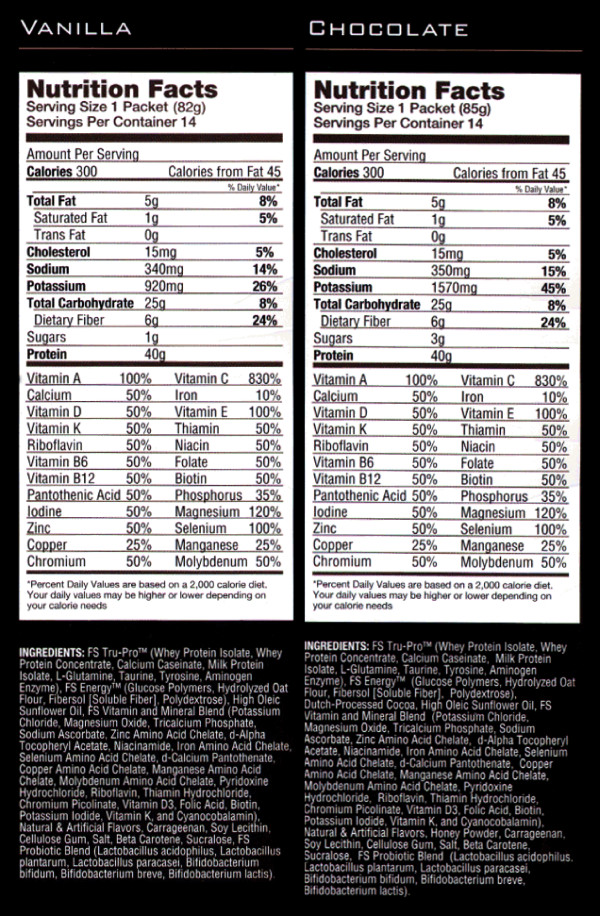
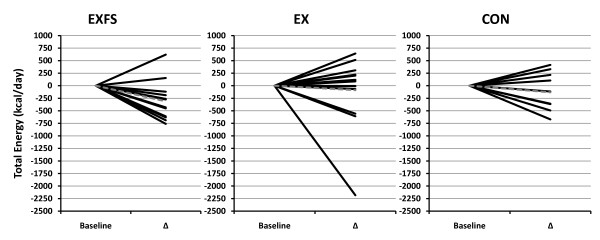
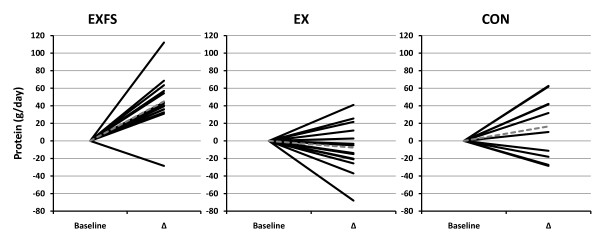
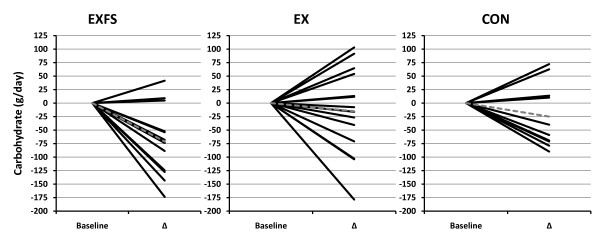
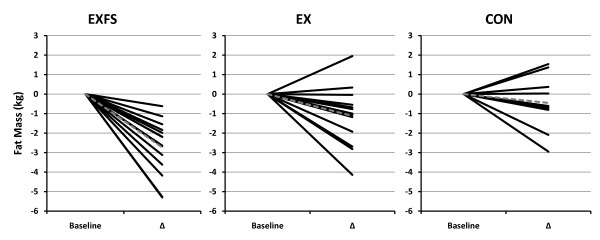
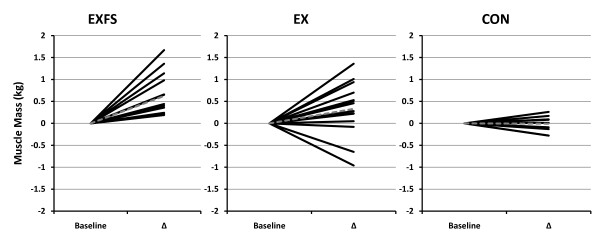
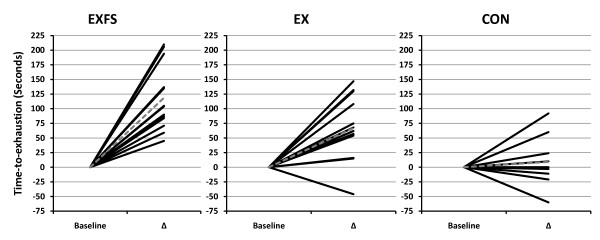
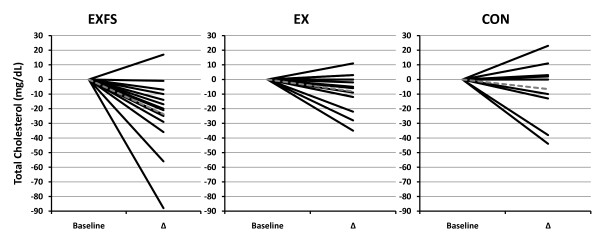
Background: Exercise and high-protein/reduced-carbohydrate and -fat diets have each been shown separately, or in combination with an energy-restricted diet to improve body composition and health in sedentary, overweight (BMI > 25) adults. The current study, instead, examined the physiological response to 10 weeks of combined aerobic and resistance exercise (EX) versus exercise + minimal nutrition intervention designed to alter the macronutrient profile, in the absence of energy restriction, using a commercially available high-protein/low-carbohydrate and low-fat, nutrient-dense food supplement (EXFS); versus control (CON). Methods: Thirty-eight previously sedentary, overweight subjects (female = 19; male = 19) were randomly assigned to either CON (n = 10), EX (n = 14) or EXFS (n = 14). EX and EXFS participated in supervised resistance and endurance training (2× and 3×/wk, respectively); EXFS consumed 1 shake/d (weeks 1 and 2) and 2 shakes/d (weeks 3–10). Results: EXFS significantly decreased total energy, carbohydrate and fat intake (-14.4%, -27.2% and -26.7%, respectively; p < 0.017), and increased protein and fiber intake (+52.1% and +21.2%, respectively; p < 0.017). EX and EXFS significantly decreased fat mass (-4.6% and -9.3%, respectively; p < 0.017), with a greater (p < 0.05) decrease in EXFS than EX and CON. Muscle mass increase only reached significance in EXFS (+2.3%; p < 0.017), which was greater (p < 0.05) than CON but not EX (+1.1%). Relative VO 2 max improved in both exercise groups (EX = +5.0% and EXFS = +7.9%; p < 0.017); however, only EXFS significantly improved absolute VO 2 max (+6.2%; p = 0.001). Time-to-exhaustion during treadmill testing increased in EX (+9.8%) but was significantly less (p < 0.05) than in EXFS (+21.2%). Total cholesterol and LDL decreased only in the EXFS (-12.0% and -13.3%, respectively; p < 0.017). Total cholesterol-to-HDL ratio, however, decreased significantly (p < 0.017) in both exercise groups. Conclusion: Absent energy restriction or other dietary controls, provision of a high-protein/low-carbohydrate and -fat, nutrient-dense food supplement significantly, 1) modified ad libitum macronutrient and energy intake (behavior effect), 2) improved physiological adaptations to exercise (metabolic advantage), and 3) reduced the variability of individual responses for fat mass, muscle mass and time-to-exhaustion – all three variables improving in 100% of EXFS subjects.
Overview
The claims and statistics of this paper haven’t been checked yet.
Free: it reads the open-access text and checks the first 5 claims that cite a source we can check. Create a free account to check every claim.
Integrity signals
Registry
Cites
Statistics
Figures
Verification
Claims the paper makes
The claims and statistics of this paper haven’t been checked yet.
Free: it reads the open-access text and checks the first 5 claims that cite a source we can check. Create a free account to check every claim.
Claims other papers make about this one
Each is checked against this paper’s own text: does it say what the citing paper says it does?
In the citing paper
“Age may impair the acute anabolic response to protein with resistance exercise [35], although this finding is not universal [36] and could also be complicated by protein type.”
From Dietary protein to maximize resistance training: a review and examination of protein spread and change theories (2012) · cites this paper as [35]
Self-check
Percentages, sums and reported differences re-computed from the paper’s own numbers.
The self-check needs the paper’s full text.
Citations
Cites
QUANTIFYING TEST-RETEST RELIABILITY USING THE INTRACLASS CORRELATION COEFFICIENT AND THE SEM
WEIR, J. P. (2005) · Journal of Strength and Conditioning Research · doi:10.1519/00124278-200502000-00038 · Cited by 4,842
Dietary Fiber and Weight Regulation
Howarth, N. C., Saltzman, E., & Roberts, S. B. (2009) · Nutrition Reviews · doi:10.1111/j.1753-4887.2001.tb07001.x · Cited by 1,060
The Effects of High Protein Diets on Thermogenesis, Satiety and Weight Loss: A Critical Review
Halton, T. L., & Hu, F. B. (2004) · Journal of the American College of Nutrition · doi:10.1080/07315724.2004.10719381 · Cited by 822
Weigle, D. S., Breen, P. A., Matthys, C. C., Callahan, H. S., Meeuws, K. E., Burden, V. R., & Purnell, J. Q. (2005) · The American Journal of Clinical Nutrition · doi:10.1093/ajcn/82.1.41 · Cited by 774
Appropriate Intervention Strategies for Weight Loss and Prevention of Weight Regain for Adults
JAKICIC (CHAIR), J. M., CLARK, K., COLEMAN, E., DONNELLY, J. E., FOREYT, J., MELANSON, E., VOLEK, J., & VOLPE, S. L. (2001) · Medicine & Science in Sports & Exercise · doi:10.1097/00005768-200112000-00026 · Cited by 752
Total-body skeletal muscle mass: Estimation by a new dual-energy X-ray absorptiometry method
Kim, J., Wang, Z., Heymsfield, S. B., Baumgartner, R. N., & Gallagher, D. (2002) · The American Journal of Clinical Nutrition · doi:10.1093/ajcn/76.2.378 · Cited by 737
Slentz, C. A., Duscha, B. D., Johnson, J. L., Ketchum, K., Aiken, L. B., Samsa, G. P., Houmard, J. A., Bales, C. W., & Kraus, W. E. (2004) · Archives of Internal Medicine · doi:10.1001/archinte.164.1.31 · Cited by 656
Weight management using a meal replacement strategy: meta and pooling analysis from six studies.
Heymsfield, S. B., van Mierlo, C. A. J., van der Knaap, H. C. M., Heo, M., & Frier, H. I. (2003) · International Journal of Obesity · doi:10.1038/sj.ijo.0802258 · Cited by 557 · cited 4×
“Such results, however, have been found to be significantly and positively related solely to the hypocaloric state characteristic of said meal replacement interventions [10].”
BackgroundInfluentialLayman, D. K., Boileau, R. A., Erickson, D. J., Painter, J. E., Shiue, H., Sather, C., & Christou, D. D. (2003) · The Journal of Nutrition · doi:10.1093/jn/133.2.411 · Cited by 541
Krieger, J. W., Sitren, H. S., Daniels, M. J., & Langkamp-Henken, B. (2006) · The American Journal of Clinical Nutrition · doi:10.1093/ajcn/83.2.260 · Cited by 466
Cited by
Systematic review and meta-analysis of the effects of high protein oral nutritional supplements
Cawood, A. L., Elia, M., & Stratton, R. J. (2012) · Ageing Research Reviews · doi:10.1016/j.arr.2011.12.008 · Cited by 376
Lopez, P., Taaffe, D. R., Galvão, D. A., Newton, R. U., Nonemacher, E. R., Wendt, V. M., Bassanesi, R. N., Turella, D. J. P., & Rech, A. (2022) · Obesity Reviews · doi:10.1111/obr.13428 · Cited by 210
Kerksick, C. M., Wismann-Bunn, J., Fogt, D., Thomas, A. R., Taylor, L., Campbell, B. I., Wilborn, C. D., Harvey, T., Roberts, M. D., La Bounty, P., et al. (2010) · Nutrition Journal · doi:10.1186/1475-2891-9-59 · Cited by 86
“While much research has been conducted highlighting the benefits of even modest amounts of physical activity, a small number of studies have reported upon the impact of an exercise program with various dietary interventions of which can include caloric restriction and alterations in the ratio of dietary protein and di…”
BackgroundProposed Role of Calcium and Dairy Food Components in Weight Management and Metabolic Health
Zemel, M. B. (2009) · The Physician and Sportsmedicine · doi:10.3810/psm.2009.06.1707 · Cited by 81
Williamson, P., Atkinson, G., & Batterham, A. M. (2018) · Obesity Reviews · doi:10.1111/obr.12682 · Cited by 64
Hartono, F. A., Martin-Arrowsmith, P. W., Peeters, W., & Churchward‐Venne, T. A. (2022) · Sports Medicine · doi:10.1007/s40279-021-01620-9 · Cited by 53
Lockwood, C. M., Roberts, M. D., Dalbo, V. J., Smith-Ryan, A. E., Kendall, K. L., Moon, J. R., & Stout, J. R. (2017) · Journal of the American College of Nutrition · doi:10.1080/07315724.2016.1140094 · Cited by 47
“Notably, the different whey protein supplements did not affect serum creatinine levels, which, like other literature [49,50], continues to suggest that shorter-term protein supplementation does not adversely affect this biomarker reflective of kidney function.”
BackgroundSelf-citationBosse, J. D., & Dixon, B. M. (2012) · Journal of the International Society of Sports Nutrition · doi:10.1186/1550-2783-9-42 · Cited by 42
“Age may impair the acute anabolic response to protein with resistance exercise [35], although this finding is not universal [36] and could also be complicated by protein type.”
BackgroundWaters, L., George, A. S., Chey, T., & Bauman, A. E. (2012) · BMC Medical Research Methodology · doi:10.1186/1471-2288-12-120 · Cited by 38
Jung, H., Shin, G., Park, S. B., Jegal, J., Park, S., Park, J., Oh, D. X., & Kim, H. J. (2023) · Waste Management · doi:10.1016/j.wasman.2023.09.027 · Cited by 37
Dietary protein in weight management: a review proposing protein spread and change theories
Bosse, J. D., & Dixon, B. M. (2012) · Nutrition & Metabolism · doi:10.1186/1743-7075-9-81 · Cited by 31
“Evidence weighs heavily toward studies showing anthropometric benefits of increased protein intake [2,11-44].”
BackgroundLockwood, C. M., Moon, J. R., Smith, A. E., Tobkin, S. E., Kendall, K. L., Graef, J. L., Cramer, J. T., & Stout, J. R. (2010) · Journal of Strength and Conditioning Research · doi:10.1519/jsc.0b013e3181aeb0cf · Cited by 29
Self-citationAntonio, J., Evans, C., Ferrando, A. A., Stout, J. R., Antonio, B., Cintineo, H. P., Harty, P., Arent, S. M., Candow, D. G., Forbes, S. C., et al. (2024) · Journal of the International Society of Sports Nutrition · doi:10.1080/15502783.2024.2341903 · Cited by 27
Self-citationEffects of voluntary exercise on apoptosis and cortisol after chronic restraint stress in mice
Seo, H.-B., Park, C.-H., Choi, S., Kim, W., Jeon, B.-D., & Ryu, S. (2016) · Physical Activity and Nutrition · doi:10.20463/jenb.2016.09.20.3.3 · Cited by 27
Investigating web search strategies and forum use to support diet and weight loss
schraefel, M. C., White, R. W., André, P., & Tan, D. S. (2009) · CHI Conference Extended Abstracts on Human Factors in Computing Systems (CHI EA) · doi:10.1145/1520340.1520579 · Cited by 22
LOPEZ, P., RADAELLI, R., TAAFFE, D. R., GALVÃO, D. A., NEWTON, R. U., NONEMACHER, E. R., WENDT, V. M., BASSANESI, R. N., TURELLA, D. J. P., & RECH, A. (2022) · Medicine & Science in Sports & Exercise · doi:10.1249/mss.0000000000002984 · Cited by 21
Active Women Across the Lifespan: Nutritional Ingredients to Support Health and Wellness
Smith‐Ryan, A. E., Cabre, H. E., & Moore, S. R. (2022) · Sports Medicine · doi:10.1007/s40279-022-01755-3 · Cited by 22
Functional Foods, Beverages, and Ingredients in Athletics
Spano, M. (2010) · Strength and conditioning journal · doi:10.1519/ssc.0b013e3181c20d1c · Cited by 22
Kain, J., Galván, M., Marcela Taibo, G., Corvalán, C., Lydia Lera, M., & Uauy, R. D. (2025) · Archivos Latinoamericanos de Nutrición · doi:10.37527/2010.60.2.007 · Cited by 21
Oh, E. G., Chu, S. H., Bang, S. Y., Lee, M. K., Kim, S. H., Hyun, S. S., Jeon, J. Y., Im, J. A., & Lee, J. E. (2010) · Biological Research For Nursing · doi:10.1177/1099800410383305 · Cited by 18
The effects of the 'omnibus' aerobics application on women's body composition
Stojiljković, S., Mandarić, S., Todorović, K., & Mitić, D. (2010) · Fizicka kultura · Cited by 14
Effect of Protein, Dairy Components and Energy Balance in Optimizing Body Composition
Phillips, S. M., & Zemel, M. B. (2011) · Nestlé Nutrition Institute Workshop Series · doi:10.1159/000329288 · Cited by 13
Poole, C. N., Roberts, M. D., Dalbo, V. J., Tucker, P. S., Sunderland, K., DeBolt, N. D., Billbe, B. W., & Kerksick, C. M. (2010) · The Journal of Strength and Conditioning Research · doi:10.1519/jsc.0b013e3181fee4aa · Cited by 13
Self-citationReljic, D., Zieseniss, N., Herrmann, H. J., Neurath, M. F., & Zopf, Y. (2024) · Nutrients · doi:10.3390/nu16162713 · Cited by 12
Smith‐Ryan, A. E., Hirsch, K. R., Blue, M. N. M., Mock, M. G., & Trexler, E. T. (2019) · Nutrients · doi:10.3390/nu11040865 · Cited by 11
EFFICIENCY OF STEP AEROBIC PROGRAM IN YOUNGER WOMEN
Nikić, N., & Milenković, D. (2013) · Acta Medica Medianae · doi:10.5633/amm.2013.0304 · Cited by 11
Hirsch, K. R., Tweedell, A. J., Kleinberg, C. R., Gerstner, G. R., Barnette, T. J., Mota, J. A., Smith‐Ryan, A. E., & Ryan, E. D. (2018) · Journal of the American College of Nutrition · doi:10.1080/07315724.2018.1455071 · Cited by 10
Xiao, Y., Deng, Z., Sun, W., Li, J., & Gao, W. (2025) · Frontiers in Nutrition · doi:10.3389/fnut.2025.1663860 · Cited by 10
Thompson, B. J., Ryan, E. D., Sobolewski, E. J., & Smith‐Ryan, A. E. (2015) · Nutrition Research · doi:10.1016/j.nutres.2015.02.003 · Cited by 9
Effects of indoor cycling associated with diet on body composition and serum lipids
Valle, V., de Mello, D., Fortes, M. D. S. R., & Dantas, E. H. M. (2009) · Biomedical Human Kinetics · doi:10.2478/v10101-009-0004-z · Cited by 9
Vaclavik, V. A., & Christian, E. W. (2007) · Springer eBooks · doi:10.1007/978-0-387-69940-0_10 · Cited by 9
Blake, D. T., Hamane, C., Pacheco, C., Henselmans, M., Tinsley, G. M., Costa, P. B., Coburn, J. W., Campidell, T., & Galpin, A. J. (2025) · Journal of the International Society of Sports Nutrition · doi:10.1080/15502783.2025.2492184 · Cited by 7
Smith‐Ryan, A. E., Weaver, M. A., Viera, A. J., Weinberger, M., Blue, M. N. M., & Hirsch, K. R. (2021) · Frontiers in Sports and Active Living · doi:10.3389/fspor.2021.690243 · Cited by 5
Efectividad del uso de suplementos de proteína en entrenamientos de fuerza: Revisión sistemática
Armendariz-Anguiano, A. L., Jiménez–Cruz, A., Bacardí‐Gascón, M., & Morales, M. A. E. P. (2025) · Archivos Latinoamericanos de Nutrición · doi:10.37527/2010.60.2.001 · Cited by 4
Social Interaction around Diet Applications: An Initial Study
Gao, F., & schraefel, M. C. (2011) · International Conference on Pervasive Computing Technologies for Healthcare · doi:10.4108/icst.pervasivehealth.2011.246015 · Cited by 3
Kuroda, L. K., da Fonseca, C. C., Bon, A., Dacar, M., & Setaro, L. (2012) · LA Referencia (Red Federada de Repositorios Institucionales de Publicaciones Científicas) · Cited by 2
Serrano, J. A. (2016) · Jyväskylä University Digital Archive (University of Jyväskylä) · Cited by 1
Validity of a Generalized Equation for Setting Target Body Weight
Siconolfi, S. F., Guan, H., & Westcott, W. (2010) · Journal of Exercise Science & Fitness · doi:10.1016/s1728-869x(10)60013-5 · Cited by 1
Body Composition, Dietary Habits, and Rowing Performance ofMale Collegiate Club Rowers
Zorn, S. P. (2017) · OhioLink ETD Center (Ohio Library and Information Network) · Cited by 1
Quantifying the Inter-Individual Variation in Response to Exercise Interventions
Williamson, P. (2018)
Mughal, S. A. (2021) · The Shield - Research Journal of Physical Education & Sports Science. · doi:10.57038/theshield.v15i0.3069
Metadata
- Authors
- Lockwood, C. M., Moon, J. R., Tobkin, S. E., Walter, A. A., Smith, A. E., Dalbo, V. J., Cramer, J. T., & Stout, J. R.
- Affiliations
- University of Oklahoma (US)
- Corresponding author
- Stout, Jeffrey R
- Venue
- Nutrition & Metabolism
- Published
- 2008-04-21
- Volume
- 5
- Issue
- 1
- Pages
- 11-11
- ISSN
- 1743-7075 (ISSN-L)
- PMC
- PMC2383912
- OpenAlex
- W1972879029
- Cited by
- 38
- References
- 42
- Citations by year
- 2025: 2 · 2024: 2 · 2023: 1 · 2022: 4 · 2021: 1 · 2019: 1 · 2018: 3 · 2016: 2 · 2015: 2 · 2013: 1 · 2012: 4
- FWCI
- 2.04
- Type
- journal article
- Language
- en
- Open access
- gold
- doi.org
- Licence
- cc-by
- Locations
- Nutrition & Metabolism (publishedVersion, cc-by)
- PubMed Central (publishedVersion, cc-by)
- PubMed (publishedVersion)
- Lincoln (University of Nebraska) (submittedVersion)
- DOAJ (DOAJ: Directory of Open Access Journals) (submittedVersion)
- Figshare (submittedVersion)
- Topics
- Health Sciences › Nursing › Nutrition and Dietetics › Muscle metabolism and nutrition
- Health Sciences › Medicine › Physiology (medical) › Diet and metabolism studies
- Health Sciences › Medicine › Physiology (medical) › Dietary Effects on Health
- Keywords
- dietary supplements, high-protein diet, low-carbohydrate diet, low-fat diet, macronutrient composition, body composition, fat mass, muscle mass, aerobic exercise, resistance training, VO2max, time to exhaustion, cholesterol, LDL cholesterol, overweight adults, sedentary adults, energy intake, dietary protein, dietary fiber
About these checks
Registry, retraction, Cites and statistics results are computed, not judged, with one exception: a printed reference that no index lists is read once by a model before it counts as a citation error. Claims are extracted by a model and kept only when their quote appears verbatim in the text; each cited source is then checked, with a model’s help, for whether it says what the claim relies on. Those verdicts can be wrong — read the claim’s quote and the cited source before relying on one.
Statistics and arithmetic are recomputed, not judged.
Confidence bands are shown only for fields calibrated on our annotated test set. None is calibrated yet, so no band is shown.
What counts as a claim ›How we measure confidence ›How we check this ›
Are you an author, or do you see a problem with this page? Request a review
Data sources
Bibliographic data: Semantic Scholar, OpenAlex, Crossref.
Contains information from the Semantic Scholar Academic Graph Datasets, made available under the ODC Attribution License (ODC-BY 1.0).
Semantic Scholar’s data is described in: Kinney, R., et al. (2023). The Semantic Scholar Open Data Platform. arXiv:2301.10140.
