

Towards a general theory of implementation
Open accessThe DOI matches its Crossref record; 97 of the 98 references it cites were found in a registry or an index.
Abstract
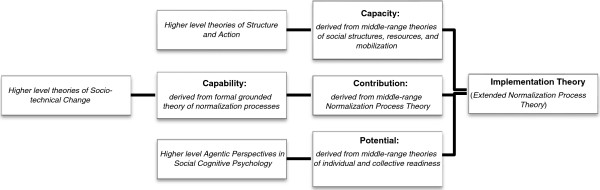
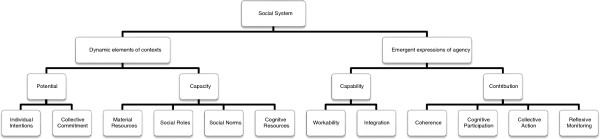
Understanding and evaluating the implementation of complex interventions in practice is an important problem for healthcare managers and policy makers, and for patients and others who must operationalize them beyond formal clinical settings. It has been argued that this work should be founded on theory that provides a foundation for understanding, designing, predicting, and evaluating dynamic implementation processes. This paper sets out core constituents of a general theory of implementation, building on Normalization Process Theory and linking it to key constructs from recent work in sociology and psychology. These are informed by ideas about agency and its expression within social systems and fields, social and cognitive mechanisms, and collective action. This approach unites a number of contending perspectives in a way that makes possible a more comprehensive explanation of the implementation and embedding of new ways of thinking, enacting and organizing practice.
Overview
The claims and statistics of this paper haven’t been checked yet.
Free: it reads the open-access text and checks the first 5 claims that cite a source we can check. Create a free account to check every claim.
Integrity signals
Registry
Cites
Statistics
Figures
Verification
Claims the paper makes
The claims and statistics of this paper haven’t been checked yet.
Free: it reads the open-access text and checks the first 5 claims that cite a source we can check. Create a free account to check every claim.
Claims other papers make about this one
Each is checked against this paper’s own text: does it say what the citing paper says it does?
The source backs part of the claim, not all of it — or backs it for a different population, condition or comparison.
In the citing paper
“The development of NPT first involved the iterative development of a robust generic theory of implementation [5–9, 11, 12].”
From Using Normalization Process Theory in feasibility studies and process evaluations of complex healthcare interventions: a systematic review (2018) · cites this paper as [9]
Experimental — accuracy not yet measuredThe source backs part of the claim, not all of it — or backs it for a different population, condition or comparison.
In the citing paper
“NPT is a theory of implementation that focuses on what people—both individuals and groups—do rather than what they believe or intend, and it has been built up from studies of practice in many different healthcare systems.”
From Using Normalization Process Theory in feasibility studies and process evaluations of complex healthcare interventions: a systematic review (2018) · cites this paper as [9]
Experimental — accuracy not yet measuredThe cited source says what the claim attributes to it.
In the citing paper
“For example, eight frameworks did not explicitly mention stages [13,15,42,44,46,49,50,64,74]”
From A systematic review of implementation frameworks of innovations in healthcare and resulting generic implementation framework (2015) · cites this paper as [49]
The cited source says what the claim attributes to it.
In the citing paper
“May’s [49] framework described only two domains (agency and context)”
From A systematic review of implementation frameworks of innovations in healthcare and resulting generic implementation framework (2015) · cites this paper as [49]
10 more claims about this paper
Create a free account to see every claim other papers make about this one.
Self-check
Percentages, sums and reported differences re-computed from the paper’s own numbers.
The self-check needs the paper’s full text.
Citations
Cites
The theory of planned behavior
Ajzen, I. (1991) · Organizational Behavior and Human Decision Processes · doi:10.1016/0749-5978(91)90020-t · Cited by 90,587
User Acceptance of Information Technology: Toward A Unified View1
Venkatesh, V., Morris, M. G., Davis, G. B., & Davis, F. D. (2003) · MIS Quarterly · doi:10.2307/30036540 · Cited by 45,035 · cited 1×
“[22] also added a group of ‘diffusion’ constructs to those proposed by the Theory of Planned Behavior [23].”
BackgroundSelf-efficacy: Toward a unifying theory of behavioral change
Bandura, A. (1977) · Psychological Review · doi:10.1037/0033-295x.84.2.191 · Cited by 43,925
Reassembling the Social: An Introduction to Actor-Network-Theory
Latour, B. (2005) · doi:10.1093/oso/9780199256044.001.0001 · Cited by 16,778
(1990) · Choice Reviews Online · doi:10.5860/choice.27-6637 · Cited by 16,594
Social Cognitive Theory: An Agentic Perspective
Bandura, A. (2001) · Annual Review of Psychology · doi:10.1146/annurev.psych.52.1.1 · Cited by 15,510
Damschroder, L. J., Aron, D. C., Keith, R. E., Kirsh, S. R., Alexander, J. A., & Lowery, J. C. (2009) · Implementation Science · doi:10.1186/1748-5908-4-50 · Cited by 14,496 · cited 2×
“Some existing frameworks have uti lized workability constructs from diffusion of innovations theory [20,24,53], setting out, for exa mple, ideas about ‘trialability’ and ‘ease of use’ as being important component s of such models.”
BackgroundSelf-efficacy: Toward a unifying theory of behavioral change
Bandura, A. (1978) · Advances in Behaviour Research and Therapy · doi:10.1016/0146-6402(78)90002-4 · Cited by 10,586
Reassembling the social: An introduction to actor‐network‐theory
Turnbull, J. (2008) · New Zealand Geographer · doi:10.1111/j.1745-7939.2008.00151_4.x · Cited by 7,617
Motivational beliefs, values, and goals
Eccles, J. S., & Wigfield, A. (2002) · Annual Review of Psychology · doi:10.1146/annurev.psych.53.100901.135153 · Cited by 7,587 · cited 1×
“Here, potential agency [14] and motivation [68] are themselves necessary antecedents for the dynamic and emergent conditions that follow.”
Background
Research works printed but not linked: 5
- Mingers J Explanatory Mechanisms: The contribution of Critical Realism and Systems Thinking/Cybernetics 2011 Working paper. University of Kent: Canterbury
- Smith A Pope C Goodwin D Mort M 'Contested conversations': an observational study of patient handovers in the recovery room Acta Anaesth Scand 2007 51 18 19
- Winner L Autonomous technologies 1977 Cambridge: MIT Press
- Fishbein M Bandura A Triandis H Kanfer F Becker M Middlestadt S Eichler A Factors influencing behavior and behavior change: Final report-Theorist's Workshop 1992 Rockville (MD): National Institute of Mental Health
- Bandura A Marsh H, Craven RG, McInerney DM Toward an Agentic Theory of the Self., Advances in Self Research, Vol. 3: Self-processes, learning, and enabling human potential (pp. 15-49) 2008 Charlotte, NC: Information Age Publishing
Cited by
Items 201–300 of 723
Duke, S., Campling, N. C., May, C. R., Lund, S., Lunt, N. T., Bartlett, G., Harris, L., Flannery, E., Connolly, M., Booth, P., et al. (2020) · BMC Palliative Care · doi:10.1186/s12904-020-00647-5 · Cited by 24
“The study was informed by Normalization Process Theory (NPT), a structured and theoretically robust approach to understanding the factors that promote and inhibit implementation [33, 34].”
MethodSelf-citationPublic policies and health systems in Sahelian Africa: theoretical context and empirical specificity
de Sardan, J. O., & Ridde, V. (2015) · BMC Health Services Research · doi:10.1186/1472-6963-15-s3-s3 · Cited by 29
“of many logics and various stakeholders, including users and frontline bureaucrats, feedback, and informal process of negotiation and bargaining [18-21].”
BackgroundMeiksin, R., Allen, E., Crichton, J., Morgan, G. S., Barter, C., Elbourne, D. R., Hunt, K., Meléndez‐Torres, G. J., Morris, S., Reyes, H. L. M. N., et al. (2019) · Pilot and Feasibility Studies · doi:10.1186/s40814-019-0391-z · Cited by 23
Mammen, J. R., Java, J., Halterman, J. S., Berliant, M. N., Crowley, A., Frey, S. M., Reznik, M., Feldman, J. M., Schoonmaker, J. D., & Arcoleo, K. J. (2019) · Journal of Telemedicine and Telecare · doi:10.1177/1357633x19870025 · Cited by 23
“Use of focus groups, interviews, community engagement studios, and close collaboration with key stakeholders are important precursors to developing a clinically sustainable intervention.(27) Additionally, careful negotiation of institutional practices for new EMR build and IT and administrative support will be essenti…”
BackgroundDe-adoption and exnovation in the use of carotid revascularization: retrospective cohort study
Bekelis, K., Skinner, J., Gottlieb, D. J., & Goodney, P. P. (2017) · BMJ · doi:10.1136/bmj.j4695 · Cited by 26
Cancelliere, C., Sutton, D. A., Côté, P., French, S. D., Taylor-Vaisey, A. L., & Mior, S. A. (2019) · Implementation Science · doi:10.1186/s13012-019-0931-1 · Cited by 23
study, O. B. O. T. A., Salmon, V. E., Hay‐Smith, J., Jarvie, R., Dean, S. G., Oborn, E., Bayliss, S. E., Bick, D., Davenport, C. F., Ismail, K., et al. (2017) · Systematic Reviews · doi:10.1186/s13643-017-0420-z · Cited by 22
“To help structure our inquiry into how professionals in complex organizational environments engage with, implement and sustain novel interventions, we will use May’s extended Normalization Process Theory (NPT) [26, 27] to provide an initial framework for the organisation and analysis of implementation issues.”
MethodMunroe, B., Curtis, K. A., Buckley, T. A., Lewis, M. J., & Atkins, L. (2017) · Journal of Clinical Nursing · doi:10.1111/jocn.13932 · Cited by 25
Tilahun, B. C., Smillie, K., Bardosh, K., Murray, M. C. M., Fitzgerald, M., Cook, V. J., Poureslami, I. M., Forrest, J. I., & Lester, R. T. (2018) · JMIR Research Protocols · doi:10.2196/resprot.9633 · Cited by 24
Lohan, M., Aventin, Á., Clarke, M. J., Curran, R. M., Maguire, L. K., Hunter, R. M., McDowell, C., McDaid, L. M., Young, H., White, J., et al. (2018) · BMJ Open · doi:10.1136/bmjopen-2018-022128 · Cited by 22
Gilbert, A. W., Jones, J., Jaggi, A., & May, C. R. (2020) · BMJ Open · doi:10.1136/bmjopen-2019-036197 · Cited by 23
Self-citationNilsen, P., Potthoff, S., & Birken, S. A. (2022) · Frontiers in Health Services · doi:10.3389/frhs.2021.795144 · Cited by 25
“Normalisation Process Theory is noteworthy for its focus on collective behaviours and the “collective action” that practitioners do when they implement a new intervention, programme or service (76).”
BackgroundA multidomain decision support tool to prevent falls in older people: the FinCH cluster RCT
Logan, P., Horne, J. C., Allen, F., Armstrong, S., Clark, A., Conroy, S., Darby, J., Fox, C., Gladman, J. R. F., Godfrey, M., et al. (2022) · Health Technology Assessment · doi:10.3310/cwib0236 · Cited by 23
The expression of ‘policy’ in palliative care: A critical review
Whitelaw, S., Bell, A., & Clark, D. (2022) · Health Policy · doi:10.1016/j.healthpol.2022.06.010 · Cited by 25
Engelhart, A., Mason, S., Nwaozuru, U., Obiezu‐Umeh, C., Carter, V., Shato, T., Gbaja-Biamila, T. A., Oladele, D. A., & Iwelunmor, J. (2022) · Frontiers in Health Services · doi:10.3389/frhs.2022.889390 · Cited by 24
Ponsford, R., Falconer, J., Meléndez‐Torres, G. J., & Bonell, C. P. (2022) · BMC Public Health · doi:10.1186/s12889-022-14544-4 · Cited by 22
“This stage of analysis was informed by May’s General Theory of Implementation as a sensitising device [15].”
MethodInfluentialBakelants, H., Vanderstichelen, S., Chambaere, K., Droogenbroeck, F. V., Donder, L. D., Deliëns, L., Dury, S., & Cohen, J. (2022) · Palliative Medicine · doi:10.1177/02692163221146589 · Cited by 25
Ewertowski, H., Tetzlaff, F., Stiel, S., Schneider, N., & Jünger, S. (2018) · BMC Palliative Care · doi:10.1186/s12904-018-0276-6 · Cited by 22
“Following the principles of organizational health services research [26, 27] and implementation science [37, 50], significant results and knowledge gain of this project are expected at different stages of the research process and on different levels of changes in practice.”
BackgroundChanging Behavior Using Social Identity Processes
Reynolds, K. J., Branscombe, N. R., Subašić, E., & Willis, L. (2020) · Cambridge University Press eBooks · doi:10.1017/9781108677318.016 · Cited by 24
Musa, M. K., Akdur, G., Hanratty, B., Kelly, S., Gordon, A. L., Peryer, G., Spilsbury, K., Killett, A., Burton, J. K., Meyer, J. E., et al. (2020) · BMJ Open · doi:10.1136/bmjopen-2020-040397 · Cited by 24
Huang, W., Chang, C., Stuart, E. A., Daumit, G. L., Wang, N., McGinty, E. E., Dickerson, F., & Igusa, T. (2021) · Implementation Research and Practice · doi:10.1177/26334895211010664 · Cited by 23
“…e ff e c t s o f p ee r i n f l u e n c e a n d s m o ke r p o pu l a r i t y t h r o u g h s i m u l a t i o n s ( S c h a e f e r e t a l., 2012 , 2013 ) A t w o - p l a y e r a pp r o a c h i s p r o p o s e d f o r m o d e li n g t h e u t ili t y - m a x i m i z i n g i n t e r a c t i o n s…”
BackgroundMethodInfluentialMartindale, A.-M., Pilbeam, C., Mableson, H., Tonkin-Crine, S., Atkinson, P., Borek, A., Lant, S., Gobat, N., Solomon, T., & Sheard, S. (2021) · BMC Public Health · doi:10.1186/s12889-021-11285-8 · Cited by 20
“We also selected normalisation process theory (NPT) as a complementary framework to further highlight finer detail in two of the seven NASSS domains, as NPT is a social action theory, concerned with the different types of work that people do when implementing an initiative [27].”
MethodFarmer, A. A., Allen, J., Bartlett, Y. K., Bower, P., Yuan, C., French, D., Gudgin, B., Holmes, E. A. F., Horne, R., Hughes, D. A., et al. (2019) · BMJ Open · doi:10.1136/bmjopen-2019-033504 · Cited by 20
Engagement of Stakeholders in the Design, Evaluation, and Implementation of Complex Interventions
Hudson, J. L., Moon, Z., Hughes, L. D., & Moss-Morris, R. E. (2020) · Cambridge University Press eBooks · doi:10.1017/9781108677318.024 · Cited by 29
Jones, A., Maben, J., Adams, M., Mannion, R., Banks, C., Blake, J., Job, K., & Kelly, D. M. (2022) · Health and Social Care Delivery Research · doi:10.3310/guws9067 · Cited by 22
Stuermer, N., Gani, S. M. D., Beese, A.-S., Evack, J. G., Jaks, R., & Nicca, D. (2022) · International Journal of Environmental Research and Public Health · doi:10.3390/ijerph192315916 · Cited by 20
Impact case studies submitted to REF 2014: The hidden impact of nursing research
Kelly, D. M., Kent, B., McMahon, A., Taylor, J. S., & Traynor, M. (2016) · Journal of research in nursing · doi:10.1177/1744987116646153 · Cited by 20
“These are beyond the scope of this article, but we suggest that the relationship between nursing research and impact needs more fuller exploration and debate than may have been provided to date (May, 2013).”
BackgroundRostami, P., Ashcroft, D. M., & Tully, M. P. (2018) · PLoS ONE · doi:10.1371/journal.pone.0192224 · Cited by 21
Rivas, C. A., Tkacz, D., Antao, L., Mentzakis, E., Gordon, M., Anstee, S., & Giordano, R. (2019) · Health Services and Delivery Research · doi:10.3310/hsdr07230 · Cited by 32
Mike, B., & May, C. R. (2019) · Studies in health technology and informatics · doi:10.3233/shti190121 · Cited by 23
Self-citationGneezy, U., Kajackaite, A., & Meier, S. (2020) · Cambridge University Press eBooks · doi:10.1017/9781108677318.036 · Cited by 28
Ruiter, R. A. C., Crutzen, R., de Leeuw, E., & Kok, G. (2020) · Cambridge University Press eBooks · doi:10.1017/9781108677318.018 · Cited by 22
Bacchus, L., Alkaiyat, A. S., Shaheen, A. A., Alkhayyat, A. S., Owda, H., Halaseh, R., Jeries, I., Feder, G. S., Sandouka, R., & Colombini, M. (2021) · BMC Family Practice · doi:10.1186/s12875-020-01338-z · Cited by 22
“Implementation processes are emergent, in that they unfold over time and are shaped by diverse factors [6, 11].”
BackgroundJeffries, M., Salema, N.-E., Laing, L., Shamsuddin, A., Sheikh, A., Avery, A. J., Chuter, A., Waring, J. J., & Keers, R. N. (2021) · PLoS ONE · doi:10.1371/journal.pone.0250946 · Cited by 21
Macabasag, R. L. A., Mallari, E. U., Pascual, P. J. C., & Fernandez–Marcelo, P. H. (2022) · Social Science & Medicine · doi:10.1016/j.socscimed.2022.115182 · Cited by 19
Ponsford, R., Meléndez‐Torres, G. J., Miners, A. H., Falconer, J., & Bonell, C. P. (2024) · Public Health Research · doi:10.3310/dwtr3299 · Cited by 27
Gilbert, A. W., Jaggi, A., & May, C. R. (2018) · Shoulder & Elbow · doi:10.1177/1758573218796815 · Cited by 20
Self-citationRussell-Westhead, M., O’Brien, N., Goff, I., Coulson, E., Pape, J., & Birrell, F. N. (2020) · Rheumatology Advances in Practice · doi:10.1093/rap/rkaa003 · Cited by 21
Herepath, A., Kitchener, M., & Waring, J. J. (2015) · Health Services and Delivery Research · doi:10.3310/hsdr03400 · Cited by 24
Mountifield, C. (2025) · Frontiers in Sports and Active Living · doi:10.3389/fspor.2025.1529906 · Cited by 18
David, P., & Schiff, M. (2017) · Journal of Evidence-Informed Social Work · doi:10.1080/23761407.2017.1298072 · Cited by 19
“…frameworks describing the implementation process (for some examples, see Chambers, 2008; Fixsen, Naoom, Blase, Friedman, & Wallace, 2005; May, 2013; Murray et al., 2010; Wandersman et al., 2008), and research attesting to the different factors promoting or impeding RSI implementation…”
BackgroundGilbert, A. W., Hauptmannova, I., & Jaggi, A. (2018) · BMC Musculoskeletal Disorders · doi:10.1186/s12891-018-2042-6 · Cited by 19
Purcell, C., McDaid, L. M., Forsyth, R., Simpson, S. A., Elliott, L., Bailey, J., Moore, L., & Mitchell, K. R. (2023) · BMC Public Health · doi:10.1186/s12889-023-15541-x · Cited by 18
“Diffusion of innovation theory [21], which was the basis for ASSIST, provided the overall theoretical grounding for STASH, while implementation theory [35] identified the particular elements on which the intervention should build to optimise sustainability.”
BackgroundMay, C. R., Masters, J., Welch, L., Hunt, K. J., Pope, C. J., Myall, M., Griffiths, P., Roderick, P. J., Glanville, J., & Richardson, A. M. (2015) · BMJ Open · doi:10.1136/bmjopen-2014-007372 · Cited by 19
Self-citationErvin, K. E., Newton, J., & Phillips, J. (2021) · Australian Journal of Primary Health · doi:10.1071/py20182 · Cited by 19
Frennert, S., Erlingsdóttir, G., Muhic, M., Rydenfält, C., Nymberg, V. M., & Ekman, B. (2022) · JMIR Formative Research · doi:10.2196/30527 · Cited by 20
Knowledge Translation Capacity of Arts-informed Dissemination: A Narrative Study
Lapum, J. L., Liu, L. L., Church, K., Hume, S., Harding, B., Wang, S., Nguyen, M., Cohen, G. N., & Yau, T. M. (2016) · Art/Research International A Transdisciplinary Journal · doi:10.18432/r2bc7h · Cited by 21
“May (2013) described research implementation “as a complex bundle … an ensemble of material and cognitive practices” (p. 2).”
Situational analysis of breast health care systems: Why context matters
Duggan, C. R., Dvaladze, A. L., Scheel, J. R., Stevens, L. M., & Anderson, B. O. (2020) · Cancer · doi:10.1002/cncr.32899 · Cited by 19
“The dynamic aspects of context also should be acknowledged, recognizing that implementing EBPs into health systems takes place within complex organizational and clinical environments.(60) Assessment resources such as those developed by BHGI, IAEA, and others provide policymakers and program planners with valuable tool…”
BackgroundChami, M. F., & Kajiru, E. J. (2023) · Cogent Arts and Humanities · doi:10.1080/23311983.2023.2254044 · Cited by 17
“It is suggested that if these action plans from the developed model or policy are not followed appropriately, there is a big chance for the plan to be implemented poorly (May, 2013).”
BackgroundMethodLohan, M., Gillespie, K., Aventin, Á., Gough, A., Warren, E. A., Lewis, R., Buckley, K., McShane, T., Brennan‐Wilson, A., Lagdon, S., et al. (2023) · Public Health Research · doi:10.3310/ywxq8757 · Cited by 20
Zwilling, J. G., Fiandt, K., & Ahmed, R. J. (2021) · The Journal for Nurse Practitioners · doi:10.1016/j.nurpra.2020.12.033 · Cited by 19
Nooraie, R. Y., Lyons, P. G., Baumann, A. A., & Saboury, B. (2021) · PET Clinics · doi:10.1016/j.cpet.2021.07.002 · Cited by 19
Smith, M. C. (2017) · Environment and Planning C Politics and Space · doi:10.1177/2399654417725076 · Cited by 21
Understanding primary care nurses’ contribution to cancer early diagnosis: A systematic review
Skrobanski, H., Ream, E., Poole, K., & Whitaker, K. L. (2019) · European Journal of Oncology Nursing · doi:10.1016/j.ejon.2019.06.007 · Cited by 19
“…decision to adopt practices, such as having discussions with patients, is not solely self-directed and can be influenced by national government policy, as well as the demands and priorities of their individual workplaces (Halcomb et al., 2008; Halcomb et al., 2006; Hoare et al., 2012; May, 2013).”
BackgroundIngram, M., Denman, C. A., Cornejo-Vucovich, E. C., Castro-Vásquez, M. D. C., Aceves, B., Ocejo, A. G., de Zapien, J. G., & Rosales, C. (2019) · Frontiers in Public Health · doi:10.3389/fpubh.2019.00347 · Cited by 17
“In investigating factors relevant to the context of the health centers we applied Normalization Process Theory (NPT) to explore staff interest, capacity and resources to implement the MSD intervention within the existing GAM structure (38, 39).”
MethodAllan, S., McLeod, H. J., Bradstreet, S., Beedie, S. A., Moir, B., Gleeson, J., Farhall, J., Morton, E. E., & Gumley, A. I. (2019) · JMIR Research Protocols · doi:10.2196/15634 · Cited by 19
“…of implementation theories [37] that provide conceptual tools for researchers to understand, describe, and explain key aspects of dynamic and emergent implementation processes observed during trials for mental health interventions [38-40], including digital interventions for schizophrenia [41].”
Lancaster, K., Gendera, S., Treloar, C., Rhodes, T., Shahbazi, J., Byrne, M., Nielsen, S., Degenhardt, L. J., & Farrell, M. (2024) · International Journal of Drug Policy · doi:10.1016/j.drugpo.2024.104359 · Cited by 17
Halford, E. (2025) · Policing A Journal of Policy and Practice · doi:10.1093/police/paaf027 · Cited by 20
Association Between Number of Preventive Care Guidelines and Preventive Care Utilization by Patients
Taksler, G. B., Pfoh, E. R., Stange, K. C., & Rothberg, M. B. (2018) · American Journal of Preventive Medicine · doi:10.1016/j.amepre.2018.03.011 · Cited by 16
Grealish, L. A., Chaboyer, W. P., Mudge, A., Simpson, T., Cahill, M., Todd, J., Ownsworth, T., Krug, M., Teodorczuk, A., & Marshall, A. P. (2019) · Journal of Nursing Management · doi:10.1111/jonm.12849 · Cited by 17
Scott, J., Finch, T. L., Bevan, M. T., Maniatopoulos, G., Gibbins, C., Yates, B., Narayanan, K., Sheerin, N., & Kanagasundaram, N. S. (2019) · BMJ Open · doi:10.1136/bmjopen-2019-032925 · Cited by 16
Webb, T. L., & de Bruin, M. (2020) · Cambridge University Press eBooks · doi:10.1017/9781108677318.037 · Cited by 17
Evidence-based practices in pressure ulcer prevention: Lost in implementation?
Balzer, K., & Kottner, J. (2015) · International Journal of Nursing Studies · doi:10.1016/j.ijnurstu.2015.08.006 · Cited by 17
Piotie, P. N., Wood, P. S., Webb, E. M., Hugo, J. F. M., & Rheeder, P. (2021) · Therapeutic Advances in Endocrinology and Metabolism · doi:10.1177/20420188211054688 · Cited by 17
Schneider, H. M., Mukinda, F. K., Tabana, H., & George, A. S. (2022) · BMC Health Services Research · doi:10.1186/s12913-022-07589-z · Cited by 15
“‘Power over’ was taken as the exercise of formal hierarchical authority in the implementation process; ‘power to’ as perceived knowledge and skills in completing work tasks; ‘power within’ as individualised expressions of autonomy or agency, namely “the ability to make things happen through their own actions” [1]; and…”
BackgroundInfluentialCulture and cognition in health systems change
Evans, J. M., Baker, G. R., Berta, W. B., & Barnsley, J. (2015) · Journal of Health Organization and Management · doi:10.1108/jhom-06-2014-0101 · Cited by 17
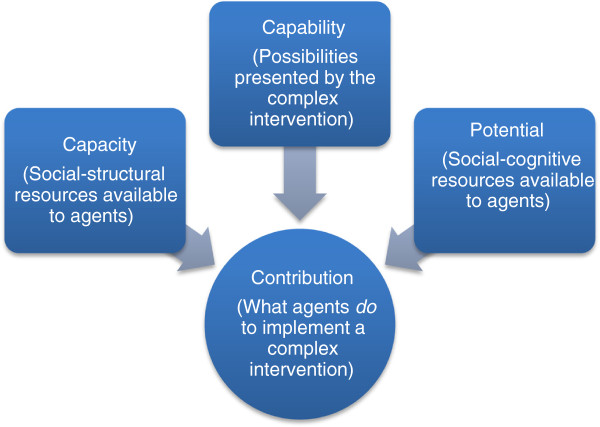
“This model is similar to that suggested by May (2013) in which agents’ contributions to the change process are shaped by social-structural resources (capacity) and social-cognitive resources (potential).”
BackgroundMethodPonsford, R., Bragg, S., Allen, E., Tilouche, N., Meiksin, R., Emmerson, L., Dyck, L. V., Opondo, C., Stephen Morris, A., Sturgess, J., et al. (2021) · Public Health Research · doi:10.3310/phr09010 · Cited by 16
Dunn, B. D., O’Mahen, H., Wright, K. A., & Brown, G. P. (2019) · Behaviour Research and Therapy · doi:10.1016/j.brat.2019.103417 · Cited by 15
Latif, A., Waring, J. J., Pollock, K., Solomon, J., Gulzar, N., Choudhary, S., & Anderson, C. (2019) · International Journal for Equity in Health · doi:10.1186/s12939-019-1069-0 · Cited by 16
Theories on Implementation of Change in Healthcare
Wensing, M., & Grol, R. P. T. M. (2020) · Wiley eBooks · doi:10.1002/9781119488620.ch2 · Cited by 20
Goldthorpe, J., Epton, T., Keyworth, C., Calam, R. M., Brooks, J. M., & Armitage, C. J. (2020) · BMJ Open · doi:10.1136/bmjopen-2020-038625 · Cited by 15
Effectiveness of implementing a preventive urinary catheter care bundle in hip fracture patients
Frödin, M., Åhlström, L., Gillespie, B. M., Rogmark, C., Nellgård, B., Wikström, E., & Andersson, A. E. (2022) · Journal of Infection Prevention · doi:10.1177/17571774211060417 · Cited by 14
“As a result, the implementation strategy appears to be promising when it comes to creating a collective action and normalising routines to improve hand hygiene and aseptic techniques in preventable infection-prone invasive procedures (May, 2013).”
BackgroundEngström, M. S., Johansson, U., Leksell, J. K., Linder, E., & Eeg‐Olofsson, K. (2022) · JMIR Diabetes · doi:10.2196/34561 · Cited by 14
Badía, J. M., Casey, A. L., Perez, I. R., Arroyo-García, N., Espín, E., Biondo, S., & Balibrea, J. M. (2020) · Surgical Infections · doi:10.1089/sur.2019.203 · Cited by 15
“According to the Normalization Process Theory [22], patients, professionals, managers, and policy-makers face two relevant types of difficulties as they attempt to get advancements into practice: Process issues (about the utilization of novel perspectives, acting and organizing in healthcare) and organizational issues…”
MethodInfluentialTeeling, S. P., Davies, C., Barnard, M., O’Connor, L., Coffey, A., Lambert, V., McNamara, M. S., Tuohy, D., Frawley, T., Redmond, C., et al. (2021) · International Journal of Environmental Research and Public Health · doi:10.3390/ijerph182211932 · Cited by 16
Ponsford, R., Meiksin, R., Allen, E., Meléndez‐Torres, G. J., Morris, S., Mercer, C. H., Campbell, R. M., Young, H., Lohan, M., Coyle, K. K., et al. (2021) · Trials · doi:10.1186/s13063-021-05793-6 · Cited by 15
Ponsford, R., Bragg, S., Meiksin, R., Tilouche, N., Dyck, L. V., Sturgess, J., Allen, E., Elbourne, D. R., Hadley, A., Lohan, M., et al. (2022) · Pilot and Feasibility Studies · doi:10.1186/s40814-022-00971-y · Cited by 17
Sundaram, N., Abramsky, T., Oswald, W. E., Cook, S., Halliday, K. E., Nguipdop‐Djomo, P., Sturgess, J., Ireland, G., Ladhani, S. N., Mangtani, P., et al. (2022) · Journal of School Health · doi:10.1111/josh.13264 · Cited by 14
Implementing a Systematic Voiding Program for Patients With Urinary Incontinence After Stroke
French, B., Thomas, L. H., Harrison, J., Burton, C. R., Forshaw, D., Booth, J., Britt, D. P., Cheater, F., Roe, B. H., Watkins, C. L., et al. (2016) · Qualitative Health Research · doi:10.1177/1049732316630975 · Cited by 14
Practice change in chronic conditions care: an appraisal of theories
Harris, M., Lawn, S., Morello, A., Battersby, M., Ratcliffe, J., McEvoy, R. D., & Tieman, J. (2017) · BMC Health Services Research · doi:10.1186/s12913-017-2102-x · Cited by 17
“These included NPT [33] and the linked General Theory of Implementation [34], PARIHS [26] and Sticky Knowledge [36].”
BackgroundMethodInfluentialHazell, C. M., Strauss, C., Hayward, M., & Cavanagh, K. (2017) · BMC Health Services Research · doi:10.1186/s12913-017-2449-z · Cited by 15
Autonomy-Supportive Interventions
Reeve, J., & Cheon, S. H. (2020) · Cambridge University Press eBooks · doi:10.1017/9781108677318.035 · Cited by 15
Terminology for Dissemination and Implementation Research
Rabin, B. A., Viglione, C., & Brownson, R. C. (2023) · Oxford University Press eBooks · doi:10.1093/oso/9780197660690.003.0002 · Cited by 18
O’Donnell, D., Davies, C., Devaney, C., Radomska, A., O’Shea, M., O’Donoghue, G., De Brún, A., Donnelly, S., Whitty, H., Harnett, P., et al. (2025) · Systematic Reviews · doi:10.1186/s13643-025-02862-8 · Cited by 13
“The conditions of context directly influence how an intervention works and the effectiveness of implementation efforts [16, 17].”
Kinney, M. V., Bergh, A., Rhoda, N. R., Pattinson, R., & George, A. S. (2022) · BMJ Global Health · doi:10.1136/bmjgh-2022-009242 · Cited by 15
“Through case study research in four subdistricts of the Western Cape, South Africa, this study reveals the importance of contextual and local adaptation.”
Factors Influencing the Implementation of Digital Advance Care Planning: Qualitative Interview Study
Bradshaw, A., Birtwistle, J. C., Evans, C., Sleeman, K. E., Richards, S. H., Foy, R., Martin, P. M., Carder, P., Allsop, M. J., & Twiddy, M. (2024) · Journal of Medical Internet Research · doi:10.2196/50217 · Cited by 13
“Normalization Process Theory (NPT) is an implementation theory that is used to explain how complex interventions are normalized (ie, deeply embedded into, and used as part of, routine practice) [43-45].”
Using Implementation Science as the Core of the Doctor of Nursing Practice Inquiry Project
Riner, M. E. (2014) · Journal of Professional Nursing · doi:10.1016/j.profnurs.2014.11.002 · Cited by 13
Peirce, S., Faulkner, A., Ulucanlar, S., & Elwyn, G. J. (2014) · Health Policy and Technology · doi:10.1016/j.hlpt.2014.10.014 · Cited by 16
“Our focus was adoption-relevant decision-making as distinct from implementation which involves institutional sanctioning, some system-level change [23] and a long-term perspective.”
BackgroundSmith, J. A., van der Groen, O., & Learmonth, Y. C. (2023) · International Journal of Qualitative Methods · doi:10.1177/16094069231180162 · Cited by 14
“Theories therefore, describe aspects that might be important to evaluate (May, 2013; Nilsen, 2015).”
BackgroundDavidsen, A. S., & Fosgerau, C. F. (2015) · European Journal of Psychotherapy & Counselling · doi:10.1080/13642537.2015.1027785 · Cited by 17
“Initiatives are already in place where professionals from the two sectors are expected to cooperate on the treatment of patients with depression in general practice (May, 2013; Richards et al., 2013).”
BackgroundShared Decision Making in Residential Aged Care: A Framework Synthesis
Ervin, K. E., Blackberry, I., & Haines, H. M. (2017) · Open Journal of Nursing · doi:10.4236/ojn.2017.77062 · Cited by 13
“How the theoretical framework of implementation [18] was applied to the components of SDM is shown in Figure 2.”
BackgroundMethodInfluentialPromoting assisted decision-making in acute care settings for care planning purposes: Study protocol
O’Donnell, D., Shé, É. N., Davies, C., Donnelly, S., Cooney, T., O'Coimín, D., O’Shea, D., Kyne, L., O'Sullivan, D., Rock, B., et al. (2018) · HRB Open Research · doi:10.12688/hrbopenres.12797.1 · Cited by 13
“Multiple sources of contingency and a wide variety of confounding factors influence implementation such as organisational structures, culture, policy, economics, and individual and organisational behaviours (Damschroder et al., 2009; May, 2013).”
BackgroundCritical and Qualitative Approaches to Behavior Change
Chamberlain, K., & Lyons, A. C. (2020) · Cambridge University Press eBooks · doi:10.1017/9781108677318.030 · Cited by 16
Horton, S., Barnston, D., Barnston, J., Bell, C., Bell, J. M., Coath, C., Duffy, I., Isaksen, J., & Watson, L. (2021) · Aphasiology · doi:10.1080/02687038.2021.1907296 · Cited by 13
“May’s (2013) theory of implementation proposes four context-dependent constructs: capability; capacity; potential ; and contribution , which we have used to examine the success or otherwise of the CP scheme and CP training, educational, research and other PPI initiatives in terms of: how well these…”
InfluentialTransformation of health visiting services in England using an Online Community of Practice
Ikioda, F., & Kendall, S. A. (2016) · Health Policy and Technology · doi:10.1016/j.hlpt.2016.02.006 · Cited by 14
“Normalisation Process Theories [41] explore the wider contexts of the implementation integration, and sustenance of complex technological interventions and may prove more useful in complementing evaluation studies of this nature and possibly be able to define more predictive models about the relationships between CoPs…”
BackgroundUsing implementation science to improve urologic oncology care
Skolarus, T. A., & Sales, A. E. (2016) · Urologic Oncology Seminars and Original Investigations · doi:10.1016/j.urolonc.2016.05.022 · Cited by 13
The Science of Behavior Change: The Road Ahead
Hagger, M. S., Cameron, L. D., Hamilton, K., Hankonen, N. E., & Lintunen, T. (2020) · Cambridge University Press eBooks · doi:10.1017/9781108677318.046 · Cited by 16
Carter, H. M., Beard, D. J., Harvey, A., Leighton, P. A., Moffatt, F., Smith, B. E., Webster, K. E., & Logan, P. (2023) · Implementation Science Communications · doi:10.1186/s43058-023-00499-z · Cited by 13
“ENPT aims to provide a more detailed explanation of the implementation process by describing interactions between (1) agency (i.e., the work people do and the ways they work with components of the complex intervention) and (2) context (the resources people draw on to realise agency) [16].”
BackgroundMethodInfluentialLewis, C., Beecham, E., Boardman, F., Brady, G., Buchanan, J. P., Clark, S. E., Gilchrist, K., Hardelid, P., Hunter, A., Jones, J., et al. (2026) · Yearbook of pediatric endocrinology · doi:10.1530/ey.23.15.1 · Cited by 11
Using Implementation Science in Surgical Care: A Scoping Review
Lambert‐Kerzner, A., Myers, Q. W. O., Mucharsky, E., Henderson, W. G., Harnke, B., Stuart, C. M., Dyas, A. R., Bronsert, M. R., Colborn, K., Velopulos, C. G., et al. (2024) · Annals of Surgery · doi:10.1097/sla.0000000000006518 · Cited by 12
Metadata
- Authors
- May, C.
- Affiliations
- University of Southampton (GB)
- Corresponding author
- May, Carl
- ORCID
- May, Carl
- Venue
- Implementation Science
- Published
- 2013-02-13
- Volume
- 8
- Issue
- 1
- Pages
- 18-18
- ISSN
- 1748-5908 (ISSN-L)
- PMC
- PMC3602092
- OpenAlex
- W2152345693
- Cited by
- 656
- References
- 98
- Citations by year
- 2026: 28 · 2025: 36 · 2024: 39 · 2023: 57 · 2022: 72 · 2021: 60 · 2020: 105 · 2019: 54 · 2018: 45 · 2017: 47 · 2016: 42 · 2015: 43 · 2014: 20 · 2013: 8
- FWCI
- 68.22
- Type
- journal article
- Language
- en
- Open access
- gold
- doi.org
- Licence
- Locations
- Implementation Science (publishedVersion, cc-by)
- Europe PMC (PubMed Central) (publishedVersion, cc-by)
- PubMed Central (publishedVersion, cc-by)
- PubMed (publishedVersion)
- ePrints Soton (University of Southampton) (acceptedVersion)
- LSHTM Research Online (London School of Hygiene and Tropical Medicine) (acceptedVersion)
- Funders
- National Institute for Health and Care Research (NF-SI-0509-10017)
- Economic and Social Research Council (ES/I037342/1, ES-062-23-3274)
- Topics
- Health Sciences › Health Professions › General Health Professions › Health Policy Implementation Science
- Health Sciences › Medicine › Public Health, Environmental and Occupational Health › Clinical practice guidelines implementation
- Health Sciences › Health Professions › General Health Professions › Health Sciences Research and Education
- Keywords
- implementation theory, complex interventions, Normalization Process Theory, agency, social mechanisms, cognitive mechanisms, collective action, healthcare implementation, organizational change
- MeSH terms
- Delivery of Health Care, Diffusion of Innovation, United Kingdom, Health Policy, Humans, Organizational Innovation, State Medicine, Process Assessment, Health Care, Qualitative Research
About these checks
Registry, retraction, Cites and statistics results are computed, not judged, with one exception: a printed reference that no index lists is read once by a model before it counts as a citation error. Claims are extracted by a model and kept only when their quote appears verbatim in the text; each cited source is then checked, with a model’s help, for whether it says what the claim relies on. Those verdicts can be wrong — read the claim’s quote and the cited source before relying on one.
Statistics and arithmetic are recomputed, not judged.
Confidence bands are shown only for fields calibrated on our annotated test set. None is calibrated yet, so no band is shown.
What counts as a claim ›How we measure confidence ›How we check this ›
Are you an author, or do you see a problem with this page? Request a review
Data sources
Bibliographic data: Semantic Scholar, OpenAlex, Crossref.
Contains information from the Semantic Scholar Academic Graph Datasets, made available under the ODC Attribution License (ODC-BY 1.0).
Semantic Scholar’s data is described in: Kinney, R., et al. (2023). The Semantic Scholar Open Data Platform. arXiv:2301.10140.
