

Towards a general theory of implementation
Open accessThe DOI matches its Crossref record; 97 of the 98 references it cites were found in a registry or an index.
Abstract
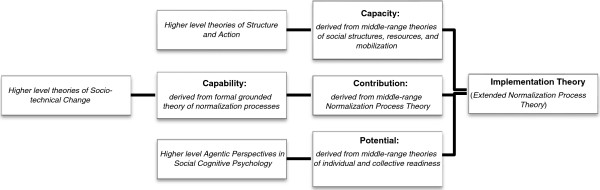
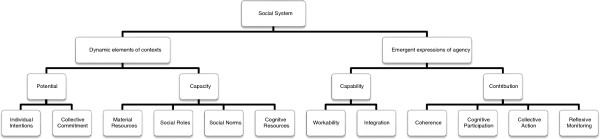
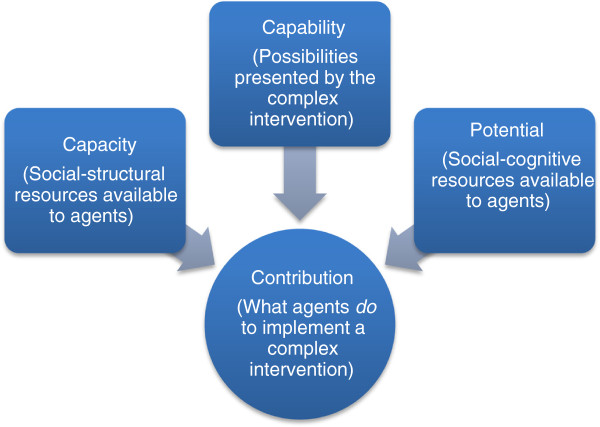
Understanding and evaluating the implementation of complex interventions in practice is an important problem for healthcare managers and policy makers, and for patients and others who must operationalize them beyond formal clinical settings. It has been argued that this work should be founded on theory that provides a foundation for understanding, designing, predicting, and evaluating dynamic implementation processes. This paper sets out core constituents of a general theory of implementation, building on Normalization Process Theory and linking it to key constructs from recent work in sociology and psychology. These are informed by ideas about agency and its expression within social systems and fields, social and cognitive mechanisms, and collective action. This approach unites a number of contending perspectives in a way that makes possible a more comprehensive explanation of the implementation and embedding of new ways of thinking, enacting and organizing practice.
Overview
The claims and statistics of this paper haven’t been checked yet.
Free: it reads the open-access text and checks the first 5 claims that cite a source we can check. Create a free account to check every claim.
Integrity signals
Registry
Cites
Statistics
Figures
Verification
Claims the paper makes
The claims and statistics of this paper haven’t been checked yet.
Free: it reads the open-access text and checks the first 5 claims that cite a source we can check. Create a free account to check every claim.
Claims other papers make about this one
Each is checked against this paper’s own text: does it say what the citing paper says it does?
The source backs part of the claim, not all of it — or backs it for a different population, condition or comparison.
In the citing paper
“The development of NPT first involved the iterative development of a robust generic theory of implementation [5–9, 11, 12].”
From Using Normalization Process Theory in feasibility studies and process evaluations of complex healthcare interventions: a systematic review (2018) · cites this paper as [9]
Experimental — accuracy not yet measuredThe source backs part of the claim, not all of it — or backs it for a different population, condition or comparison.
In the citing paper
“NPT is a theory of implementation that focuses on what people—both individuals and groups—do rather than what they believe or intend, and it has been built up from studies of practice in many different healthcare systems.”
From Using Normalization Process Theory in feasibility studies and process evaluations of complex healthcare interventions: a systematic review (2018) · cites this paper as [9]
Experimental — accuracy not yet measuredThe cited source says what the claim attributes to it.
In the citing paper
“For example, eight frameworks did not explicitly mention stages [13,15,42,44,46,49,50,64,74]”
From A systematic review of implementation frameworks of innovations in healthcare and resulting generic implementation framework (2015) · cites this paper as [49]
The cited source says what the claim attributes to it.
In the citing paper
“May’s [49] framework described only two domains (agency and context)”
From A systematic review of implementation frameworks of innovations in healthcare and resulting generic implementation framework (2015) · cites this paper as [49]
10 more claims about this paper
Create a free account to see every claim other papers make about this one.
Self-check
Percentages, sums and reported differences re-computed from the paper’s own numbers.
The self-check needs the paper’s full text.
Citations
Cites
The theory of planned behavior
Ajzen, I. (1991) · Organizational Behavior and Human Decision Processes · doi:10.1016/0749-5978(91)90020-t · Cited by 90,587
User Acceptance of Information Technology: Toward A Unified View1
Venkatesh, V., Morris, M. G., Davis, G. B., & Davis, F. D. (2003) · MIS Quarterly · doi:10.2307/30036540 · Cited by 45,035 · cited 1×
“[22] also added a group of ‘diffusion’ constructs to those proposed by the Theory of Planned Behavior [23].”
BackgroundSelf-efficacy: Toward a unifying theory of behavioral change
Bandura, A. (1977) · Psychological Review · doi:10.1037/0033-295x.84.2.191 · Cited by 43,925
Reassembling the Social: An Introduction to Actor-Network-Theory
Latour, B. (2005) · doi:10.1093/oso/9780199256044.001.0001 · Cited by 16,778
(1990) · Choice Reviews Online · doi:10.5860/choice.27-6637 · Cited by 16,594
Social Cognitive Theory: An Agentic Perspective
Bandura, A. (2001) · Annual Review of Psychology · doi:10.1146/annurev.psych.52.1.1 · Cited by 15,510
Damschroder, L. J., Aron, D. C., Keith, R. E., Kirsh, S. R., Alexander, J. A., & Lowery, J. C. (2009) · Implementation Science · doi:10.1186/1748-5908-4-50 · Cited by 14,496 · cited 2×
“Some existing frameworks have uti lized workability constructs from diffusion of innovations theory [20,24,53], setting out, for exa mple, ideas about ‘trialability’ and ‘ease of use’ as being important component s of such models.”
BackgroundSelf-efficacy: Toward a unifying theory of behavioral change
Bandura, A. (1978) · Advances in Behaviour Research and Therapy · doi:10.1016/0146-6402(78)90002-4 · Cited by 10,586
Reassembling the social: An introduction to actor‐network‐theory
Turnbull, J. (2008) · New Zealand Geographer · doi:10.1111/j.1745-7939.2008.00151_4.x · Cited by 7,617
Motivational beliefs, values, and goals
Eccles, J. S., & Wigfield, A. (2002) · Annual Review of Psychology · doi:10.1146/annurev.psych.53.100901.135153 · Cited by 7,587 · cited 1×
“Here, potential agency [14] and motivation [68] are themselves necessary antecedents for the dynamic and emergent conditions that follow.”
Background
Research works printed but not linked: 5
- Mingers J Explanatory Mechanisms: The contribution of Critical Realism and Systems Thinking/Cybernetics 2011 Working paper. University of Kent: Canterbury
- Smith A Pope C Goodwin D Mort M 'Contested conversations': an observational study of patient handovers in the recovery room Acta Anaesth Scand 2007 51 18 19
- Winner L Autonomous technologies 1977 Cambridge: MIT Press
- Fishbein M Bandura A Triandis H Kanfer F Becker M Middlestadt S Eichler A Factors influencing behavior and behavior change: Final report-Theorist's Workshop 1992 Rockville (MD): National Institute of Mental Health
- Bandura A Marsh H, Craven RG, McInerney DM Toward an Agentic Theory of the Self., Advances in Self Research, Vol. 3: Self-processes, learning, and enabling human potential (pp. 15-49) 2008 Charlotte, NC: Information Age Publishing
Cited by
Items 301–400 of 723
Conte, K. P., & Hawe, P. (2018) · Frontiers in Public Health · doi:10.3389/fpubh.2018.00243 · Cited by 14
Kosse, R. C., Murray, E., Bouvy, M. L., de Vries, T. W., Stevenson, F. A., & Koster, E. S. (2019) · Research in Social and Administrative Pharmacy · doi:10.1016/j.sapharm.2019.05.004 · Cited by 13
“, the study of human social relationships, institutions, and society) is important when focussing on the implementation of new interventions in a complex and dynamic everyday healthcare setting.(35) It is now time to start implementing mHealth,(36) and the Normalization Process Theory is an action theory proposing tha…”
BackgroundGilbert, A. W., Jones, J., Stokes, M. J., & May, C. R. (2022) · Health Expectations · doi:10.1111/hex.13425 · Cited by 14
Self-citationUnderstanding How Newly Implemented Rehabilitation Best Practices Are Sustained: A Realist Review
Ataman, R., Ahmed, S., Zidan, A., & Thomas, A. (2022) · Archives of Physical Medicine and Rehabilitation · doi:10.1016/j.apmr.2022.05.016 · Cited by 12
Fowles, T. R., Knighton, A. J., Carmichael, H. L., Bledsoe, J. R., Wolfe, D., & Srivastava, R. (2023) · Quality Management in Health Care · doi:10.1097/qmh.0000000000000430 · Cited by 12
“For example, patient age at which providers introduce the vaccine invokes differing sets of social norms—a key implementation science construct.(8) Introducing the vaccine when patients are younger (eg, 9 years old) invokes a different set of social norms—those around routine childhood vaccines rather than norms aroun…”
BackgroundChange agent’s role in facilitating use of technology in residential aged care: A systematic review
Rigby, K., Redley, B., & Hutchinson, A. M. (2023) · International Journal of Medical Informatics · doi:10.1016/j.ijmedinf.2023.105216 · Cited by 13
Ponsford, R., Allen, E., Campbell, R. M., Elbourne, D. R., Hadley, A., Lohan, M., Meléndez‐Torres, G. J., Mercer, C. H., Stephen Morris, A., Young, H., et al. (2018) · Pilot and Feasibility Studies · doi:10.1186/s40814-018-0279-3 · Cited by 12
Implementing research findings into practice: frameworks and guidance
Kent, B. (2019) · International Journal of Evidence-Based Healthcare · doi:10.1097/xeb.0000000000000195 · Cited by 16
Motivational Interviewing Interventions
Berman, A. H., Beckman, M., & Lindqvist, H. (2020) · Cambridge University Press eBooks · doi:10.1017/9781108677318.045 · Cited by 14
Implementasi Kebijakan Pengembangan Kawasan EKonomi Khusus Tanjung Kelayang
Chaniago, A. R., & Juwono, V. (2020) · Jurnal Borneo Administrator · doi:10.24258/jba.v16i2.676 · Cited by 12
Zelm, R. V., Coeckelberghs, E., Sermeus, W., Wolthuis, A. M., Bruyneel, L., Panella, M., & Vanhaecht, K. (2021) · BMC Health Services Research · doi:10.1186/s12913-020-06011-w · Cited by 13
Processes for Implementing Community Health Worker Workforce Development Initiatives
Barbero, C., Mason, T., Rush, C. H., Sugarman, M., Bhuiya, A. R., Fulmer, E. B., Feldstein, J., Cottoms, N., & Wennerstrom, A. (2021) · Frontiers in Public Health · doi:10.3389/fpubh.2021.659017 · Cited by 12
Engeltjes, B., Rosman, A. N., Scheele, F., Vis, C., & Wouters, E. (2022) · JMIR Formative Research · doi:10.2196/33709 · Cited by 13
“The NPT characterizes implementation as a social process of collective action [15-18].”
BackgroundInfluentialBeckett, K., Goodenough, T., Deave, T., Jaeckle, S., McDaid, L., Benford, P., Hayes, M., Towner, E., Kendrick, D., & Keeping Children Safe Programme study group (2014) · BMC Public Health · doi:10.1186/1471-2458-14-1256 · Cited by 14
“Despite an expanding body of robust scientific evidence and political enthusiasm for best practice in health promotion, the uptake of evidence into practice is rarely straightforward [1-5].”
BackgroundAnku, P. J., Amo‐Adjei, J., Doku, D. T., & Kumi-Kyereme, A. (2017) · Global Public Health · doi:10.1080/17441692.2017.1385823 · Cited by 12
“The main tenet of the NPT is on collective, coordinated and cooperative social activities to understand the agents (in this case, TB–HIV co-infected patients) within the implementation process (May, 2013).”
BackgroundMaximizing User Engagement with Behavior Change Interventions
Yardley, L., Morrison, L. G., Müller, I., & Bradbury, K. J. (2020) · Cambridge University Press eBooks · doi:10.1017/9781108677318.025 · Cited by 13
Changing Behavior Using Control Theory
Mansell, W. (2020) · Cambridge University Press eBooks · doi:10.1017/9781108677318.009 · Cited by 13
A realist evaluation of a multifactorial falls prevention programme in care homes
Leighton, P. A., Darby, J., Allen, F. A., Cook, M., Evley, R., Fox, C., Godfrey, M., Gordon, A. L., Gladman, J. R. F., Horne, J. C., et al. (2022) · Age and Ageing · doi:10.1093/ageing/afac263 · Cited by 13
“Comparison with existing literature Normalisation Process Theory (NPT) (25,26) can help us to make sense of these findings, and help us to understand those factors and mechanisms which enable, or prevent, the active elements of the GtACH programme becoming normal practice.”
BackgroundInfluentialBoman, C., Bernhardsson, S., Lauruschkus, K., Lundqvist, S., & Melin, K. (2023) · Frontiers in Health Services · doi:10.3389/frhs.2022.1102328 · Cited by 12
“The constructs/domains can be described as a set of mechanisms that energise and shape implementation processes, with a focus on how an intervention can become part of everyday practice (43), making them relevant to assess before implementing a new intervention.”
BackgroundLeresche, E., Hossain, M., de Rubeis, M. L., Hermans, V., Burtscher, D., Rossi, R., Lonsdale, C., & Singh, N. (2023) · Conflict and Health · doi:10.1186/s13031-023-00534-9 · Cited by 12
“We chose the Extended Normalization Process Theory (ENPT) because it focuses on implementing actors’ agency and questions the capacities and the potential of actors [18, 31].”
MethodMejía, A., Emsley, R., Fichera, E., Maalouf, W. E., Segrott, J., & Calam, R. M. (2018) · Trials · doi:10.1186/s13063-018-2698-0 · Cited by 11
“We will use May ’ s [34] Extended Normalisation Process Theory (ENPT) [34] as a framework to understand the role of practitioner agency, organisational readiness and social systems/ structures in shaping implementation processes (both in terms of barriers and facilitators), and to explain key…”
MethodWolfe, D. L., Hsieh, J., Kras‐Dupuis, A., Riopelle, R. J., Walia, S., Guy, S. D., & Gillis, K. (2018) · Journal of Evaluation in Clinical Practice · doi:10.1111/jep.13040 · Cited by 13
Exploring barriers to and enablers of antimicrobial stewardship in rural health services
Ervin, K. E., Tse, K. C., Reid, C. J., & Smith, E. (2020) · Infection Disease & Health · doi:10.1016/j.idh.2020.08.003 · Cited by 11
Improving cross-sector collaborations in place-based population health projects
Lo, K., & Lockwood, C. S. (2022) · Public Health in Practice · doi:10.1016/j.puhip.2022.100285 · Cited by 13
Czosnek, L., Rosenbaum, S., Rankin, N. M., Zopf, E. M., Cormie, P., Herbert, B., & Richards, J. A. (2022) · Early Intervention in Psychiatry · doi:10.1111/eip.13324 · Cited by 11
Huybrechts, I., Boeykens, D., Grudniewicz, A., Gray, C. S., Sutter, A. D., Pype, P. F., VELDE, D. V. D., Boeckxstaens, P., & Anthierens, S. (2023) · Primary Health Care Research & Development · doi:10.1017/s1463423622000767 · Cited by 11
“…process theory (NPT) has been specifically developed to help understand and explain the processes of implementation and normalization of complex interventions, such as GOC (May and Finch, 2009; May, 2013; May et al ., 2018; McEvoy et al ., 2014; Murray et al ., 2010; De Brún et al ., 2016).”
Gooberman‐Hill, R., Wylde, V., Bertram, W., Moore, A. J., Pinedo‐Villanueva, R., Sanderson, E., Dennis, J. A., Harris, S. R. S., Judge, A., Noble, S., et al. (2023) · Programme Grants for Applied Research · doi:10.3310/watm4500 · Cited by 12
Hall, A., Finch, T. L., Kolehmainen, N., & James, D. M. (2016) · BMC Health Services Research · doi:10.1186/s12913-016-1820-9 · Cited by 11
“Watson R, Parr JR, Joyce C, May C, Le Couteur AS. Models of transitional care for young people with complex health needs: A scoping review.”
ResultInfluentialPerceived barriers to multiprofessional team briefings in operating theatres: a qualitative study
Fruhen, L. S., Carpini, J. A., Parker, S. K., Leung, Y. C., & Flemming, A. F. S. (2020) · BMJ Open · doi:10.1136/bmjopen-2019-032351 · Cited by 14
Horton, S., Humby, K., & Jerosch‐Herold, C. (2020) · Aphasiology · doi:10.1080/02687038.2020.1738160 · Cited by 12
Porroche‐Escudero, A., Popay, J., Ward, F., Ahmed, S., Akeju, D., Cloke, J., Gabbay, M., Hassan, S. M., Khan, K., & Morasae, E. K. (2021) · Health Research Policy and Systems · doi:10.1186/s12961-020-00648-z · Cited by 11
Gordon, K., Dainty, K. N., Gray, C. S., DeLacy, J., Shah, A., & Seto, E. (2022) · JMIR Nursing · doi:10.2196/36346 · Cited by 12
“NPT is a theory of implementation that focuses on the work involved to embed new interventions in their social context, detailing the mechanisms of coherence, cognitive participation, collective action, and reflexive monitoring [38-41].”
BackgroundPonsford, R., Meiksin, R., Meléndez‐Torres, G. J., Hadley, A., Lohan, M., & Bonell, C. P. (2024) · Sex Education · doi:10.1080/14681811.2024.2372355 · Cited by 10
“Axial coding then identified inter-relationships between open and in vivo codes, and data were organised into higher-order and sub-themes informed by the general theory of implementation (May 2013).”
Stone, T. J., Brangan, E., Chappell, A., Harrison, V., & Horwood, J. P. (2019) · Journal of Public Health · doi:10.1093/pubmed/fdz063 · Cited by 10
Slowther, A., Harlock, J., Bernstein, C. J., Bruce, K., Eli, K., Huxley, C., Lovell, J. M., Mann, C., Noufaily, A., Rees, S., et al. (2024) · Health and Social Care Delivery Research · doi:10.3310/nvtf7521 · Cited by 11
Hoben, M., Berendonk, C., Buscher, I., Quasdorf, T., Riesner, C., Wilborn, D., & Behrens, J. (2014) · International Journal of Health Professions · doi:10.2478/ijhp-2014-0002 · Cited by 15
Using systems thinking in patient safety: a case study on medicines management
Brimble, M. J., & Jones, A. (2017) · Nursing Management · doi:10.7748/nm.2017.e1621 · Cited by 10
Allan, L. M., Wheatley, A., Flynn, E., Smith, A. M., Fox, C., Howel, D., Barber, R., Homer, T. M., Robinson, L. A., Parry, S. W., et al. (2018) · Pilot and Feasibility Studies · doi:10.1186/s40814-018-0364-7 · Cited by 10
“Normalisation process theory (NPT) [33] will inform both data collection and analysis.”
BackgroundLundquist, C. B., Pallesen, H., Tjørnhøj‐Thomsen, T., & Brunner, I. C. (2021) · BMJ Open · doi:10.1136/bmjopen-2020-038880 · Cited by 10
Gadappa, S. N., Prabhu, P. M., Deshpande, S. S., Gaikwad, N. B., Arora, S., Rege, S., Meyer, S. R., García‐Moreno, C., & Amin, A. (2022) · Implementation Research and Practice · doi:10.1177/26334895211067988 · Cited by 11
“Health system response to VAW is a complex intervention, introducing “ a new way of thinking, acting, or organizing … into a social system of any kind ” (May, 2013).”
Leppin, A. L., Boehmer, K. R., Branda, M. E., Shah, N. D., Hargraves, I. G., Dick, S. R., Elwyn, G. J., Ting, H. H., Ye, S., Gilles, R., et al. (2019) · BMC Health Services Research · doi:10.1186/s12913-019-4055-8 · Cited by 10
“prove the potential and capacity for implementation [34, 35] would involve changing the intervention and environment to optimize these outcome domains [35–37].”
BackgroundImplementation Science and Translation in Behavior Change
Łuszczyńska, A., Łobczowska, K., & Horodyska, K. (2020) · Cambridge University Press eBooks · doi:10.1017/9781108677318.023 · Cited by 13
Nielsen, A. S., Appel, C., Larsen, B. F., Hanna, L., & Kayser, L. (2022) · Journal of Patient-Reported Outcomes · doi:10.1186/s41687-022-00462-x · Cited by 10
“Clinicians’ reasoning and justification for using digital PRO assessments may affect patients’ attitude to and uptake of the service [19].”
BackgroundPalm, K., Kronlid, C., Elf, M., & Brantnell, A. (2025) · JMIR Human Factors · doi:10.2196/71546 · Cited by 10
“…occurs when an individual or organization actively begins using an innovation [7] and can be understood as “a deliberately initiated process, in which agents aim to bring into operation new or modified practices that are institutionally sanctioned and performed by themselves and other agents” [34].”
May, C. R., Albers, B., Desveaux, L., Finch, T. L., Gilbert, A. W., Hillis, A., Girling, M., Kislov, R., MacFarlane, A. E., Mair, F. S., et al. (2022) · NIHR Open Research · doi:10.3310/nihropenres.13269.1 · Cited by 13
Self-citationStakeholder perceptions affecting the implementation of teleophthalmology
Snider, M. J. E., Maa, A. Y., Guyton, A. C., Park, H., Hunt, K. J., & Pope, C. A. (2022) · BMC Health Services Research · doi:10.1186/s12913-022-08386-4 · Cited by 11
Horgan, S., Drennan, J., Andrews, E. J., Saab, M. M., & Hegarty, J. M. (2023) · Nursing Open · doi:10.1002/nop2.2048 · Cited by 9
Deason, J. P., Adams, S., Khan, A. S., Lovo, S., & Mendez, I. M. (2024) · Journal of Telemedicine and Telecare · doi:10.1177/1357633x241293854 · Cited by 10
Gilbert, A. W., Jones, J., Stokes, M. J., Mentzakis, E., & May, C. R. (2019) · BMJ Open · doi:10.1136/bmjopen-2019-035210 · Cited by 9
Self-citationInterventional STS: A Framework for Developing Workable Technologies
Lyle, K. (2020) · Sociological Research Online · doi:10.1177/1360780420915723 · Cited by 10
“NPT is an STS theory that functions at the middle range to offer an understanding of the work that is done to integrate new practices and technologies within organisational settings (May, 2013a, 2013b; May et al., 2016; May and Finch, 2009).”
BackgroundWalker, A., Dale, C., Curran, N., Boaz, A., & Hurley, M. (2020) · BMJ Leader · doi:10.1136/leader-2020-000252 · Cited by 10
Gilbert, A. W., Davies, L., Doyle, J., Patel, S. K., Martin, L., Jagpal, D., Billany, J. C. T., & Bateson, J. (2021) · BMJ Leader · doi:10.1136/leader-2020-000363 · Cited by 9
Barriers to social impact bond implementation: a review of evidence from the UK and US
Munksgaard, M. (2023) · International Journal of Public Sector Management · doi:10.1108/ijpsm-05-2022-0134 · Cited by 11
Ehrlich, C., & Kendall, E. A. (2015) · International Journal of Integrated Care · doi:10.5334/ijic.2012 · Cited by 10
“capacity) to act collectively are more likely to successfully embed complex interventions [16].”
BackgroundMethodInfluentialClasen, L., & de López, K. M. J. (2016) · Journal of Early Childhood Literacy · doi:10.1177/1468798416638405 · Cited by 9
“The social mechanisms involved in the process of implementation are contextualised in social systems (May, 2013).”
BackgroundMethodLisle, J. D. (2016) · Studies In Educational Evaluation · doi:10.1016/j.stueduc.2016.06.004 · Cited by 9
Riordan, F., McGrath, N., Dinneen, S. F., Kearney, P. M., & McHugh, S. (2019) · International Journal of Integrated Care · doi:10.5334/ijic.4215 · Cited by 10
Zwilling, J. G., & Fiandt, K. (2020) · Journal of the American Association of Nurse Practitioners · doi:10.1097/jxx.0000000000000270 · Cited by 10
de Ridder, D. T. D., Gillebaart, M., & Friese, M. (2020) · Cambridge University Press eBooks · doi:10.1017/9781108677318.040 · Cited by 11
Ingemann, C., Kuhn, R. L., Kvernmo, S. E., Tjørnhøj‐Thomsen, T., & Larsen, C. V. L. (2021) · International Journal of Circumpolar Health · doi:10.1080/22423982.2021.1938443 · Cited by 9
“The implementation process is largely decisive for whether or not an intervention creates the intended change [18,21,22].”
BackgroundNeal, M., & Fixsen, A. A. M. (2019) · Journal of Nursing Scholarship · doi:10.1111/jnu.12506 · Cited by 9
“It has been widely discussed that the collection of what we know about implementation science from a variety of fields can be synthesized and thus can be applicable to all fields (Fixsen, Boothroyd, Blase, Fixsen, & Metz, 2018; May, 2013; Meyers, Durlak, & Wandersman, 2012).”
Sutton, E. J., Herbert, G., Burden, S. T., Lewis, S., Thomas, S. J., Ness, A., & Atkinson, C. (2018) · PLoS ONE · doi:10.1371/journal.pone.0197790 · Cited by 9
Gritzka, S., Angerer, P., Pietrowsky, R., & Diebig, M. (2022) · International Journal of Environmental Research and Public Health · doi:10.3390/ijerph19031739 · Cited by 9
Martens, M., Wouters, E., van Olmen, J., Klemenc–Ketiš, Z., Chhim, S., Chham, S., Buffel, V., Danhieux, K., Stojnić, N., Zavrnik, Č., et al. (2022) · BMJ Open · doi:10.1136/bmjopen-2022-062151 · Cited by 8
Hugh‐Jones, S., Butcher, I., & Bhui, K. S. (2024) · BMJ Open · doi:10.1136/bmjopen-2023-078545 · Cited by 11
Diabetes prevention after gestational diabetes: challenges and opportunities
Dunne, P., Sherry, D., & O'Reilly, S. L. (2024) · Proceedings of The Nutrition Society · doi:10.1017/s0029665124007456 · Cited by 9
Sundaram, N., Lloyd-Houldey, O., Michalopoulou, S., Hope, S., Sturgess, J., Allen, E., Legood, R., Scott, S., Hudson, L. D., Nicholls, D., et al. (2024) · Pilot and Feasibility Studies · doi:10.1186/s40814-024-01563-8 · Cited by 8
“Orientated towards the above areas of concern and informed by the GTI [18], this study explores processes of LTMH implementation to address the following research questions: Quantitative results on intervention fidelity, reach and acceptability, including progression criteria, are reported…”
InfluentialTobiano, G., Carlini, J., Chaboyer, W. P., Liang, R., Addy, K., Sung, L., & Gillespie, B. M. (2025) · Health Expectations · doi:10.1111/hex.70254 · Cited by 8
“Contribution is derived from Normalisation Process Theory which comprises four elements: coherence, cognitive participation, collective action and reflexive monitoring [16].”
InfluentialRoberti, J. E., Morelli, D., Vidrio, O. A. A., Suyanto, A. A., Carmiol-Rodríguez, P., Tolentino, A., Chan-Liang, E., Sprecher, J., Rubinstein, F., & Iribarren, S. (2025) · BMJ Open · doi:10.1136/bmjopen-2024-095878 · Cited by 8
Evaluation of Behavior Change Interventions
Matthews, L., & Simpson, S. A. (2020) · Cambridge University Press eBooks · doi:10.1017/9781108677318.022 · Cited by 10
Badía, J. M., Batlle, M., Juvany, M., de Leon, P. R., Sagalés, M., Pulido, M. Á., Molist, G., & Cuquet, J. (2020) · Antibiotics · doi:10.3390/antibiotics10010011 · Cited by 8
Halliday, K. E., Nguipdop‐Djomo, P., Oswald, W. E., Sturgess, J., Allen, E., Sundaram, N., Ireland, G., Poh, J., Ijaz, S., Shute, J., et al. (2022) · JMIR Research Protocols · doi:10.2196/34075 · Cited by 8
Krug, K., Bossert, J., Möllinger, S., Deis, N., Unsöld, L., Siegle, A., Villalobos, M., Hagelskamp, L., Jung, C., Thomas, M., et al. (2022) · BMC Palliative Care · doi:10.1186/s12904-022-00977-6 · Cited by 8
Vis, C., Kleiboer, A. M., Mol, M., Pedersen, C. D., Finch, T. L., Smit, J. H., Riper, H. M., Albaina, O., Cavallo, M., Dozeman, E., et al. (2022) · BMC Health Services Research · doi:10.1186/s12913-022-08041-y · Cited by 9
“Furthermore, the organisational context in which the service delivery and implementation takes place, is of particular relevance as it forms the ‘ecosystem’ in which patients and service deliverers act and interact to create health and healthcare [20, 21].”
BackgroundThorndike, A. L., Peterson, L., Spitzer, S., Patel, S., Smithey, A., Moore, J. E., Cook, S. C., & Chin, M. H. (2023) · Frontiers in Public Health · doi:10.3389/fpubh.2023.1104843 · Cited by 8
“Implementation themes included: (1) tailor preexisting care delivery and payment structures to focus on health equity, (2) partner with Medicaid members and individual providers, and (3) support and incentivize equitable care and outcomes with payment.”
MethodImplementing a tobacco-free workplace program at a substance use treatment center: a case study
Rogova, A., Leal, I. M., Britton, M., Chen, T. A., Lowenstein, L. M., Kyburz, B., Casey, K., Skeene, K., Williams, T., & Reitzel, L. R. (2024) · BMC Health Services Research · doi:10.1186/s12913-024-10629-5 · Cited by 8
“For this analysis, we followed the extended Normalization Process Theory (eNPT) [46, 47], which is a sociological theory that informs the implementation of innovations in healthcare practice, focusing on bridging the translational gap between evidence-based practices and their implementation [50].”
BackgroundMethodInfluentialA comprehensive theoretical framework for the implementation and evaluation of opt‐out HIV testing
Leidel, S., Leslie, G. D., Boldy, D. P., & Girdler, S. J. (2016) · Journal of Evaluation in Clinical Practice · doi:10.1111/jep.12602 · Cited by 9
“Normalisation Process Theory addresses this complexity by bridging social science with health care in a way that considers both human agency (the ability to make changes in health care practice) and the social context of the health service (the collective action of a team of health care providers toward a common goal)…”
BackgroundEpton, T., & Armitage, C. J. (2020) · Cambridge University Press eBooks · doi:10.1017/9781108677318.038 · Cited by 8
Grealish, L. A., Todd, J., Teodorczuk, A., Krug, M., Simpson, T., Jenkinson, K., Soltau, D., & Stockwell‐Smith, G. (2021) · International Journal of Nursing Studies Advances · doi:10.1016/j.ijnsa.2021.100040 · Cited by 10
“There were three elements to the plan: capacity, capability and potential (May, 2013).”
BackgroundMethodInfluentialKrone-Hjertstrøm, H., Norbye, B., Abelsen, B., & Obstfelder, A. U. (2021) · BMC Health Services Research · doi:10.1186/s12913-021-06869-4 · Cited by 9
Wake, E., Walters, K., Winearls, J., & Marshall, A. P. (2022) · Australian Critical Care · doi:10.1016/j.aucc.2022.03.001 · Cited by 8
CHOICE: Choosing Health Options In Chronic Care Emergencies
Guthrie, E., Afzal, C., Blakeley, C., Blakemore, A., Byford, R. C., Camacho, E. M., Chan, T., Chew-Graham, C. A., Davies, L. M., de Lusignan, S., et al. (2017) · Programme Grants for Applied Research · doi:10.3310/pgfar05130 · Cited by 9
“Our reasons for this approach were drawn from the principles of normalisation process theory.(311,312) This approach focuses on the things people do when they implement a new or modified way of conceptualising, enacting or organising practice including changes and reorganisation of social relations and interactions, a…”
MethodMcKinney, A., Fitzsimons, D., Blackwood, B., White, M., & McGaughey, J. (2020) · Journal of Advanced Nursing · doi:10.1111/jan.14365 · Cited by 10
“An implementation strategy will also be developed to deliver the intervention based on implementation science models (Damschroder et al., 2009; May, 2013).”
MethodGreen public procurement implementation: a case-study analysis to overcome the intention-action gap
Kozuch, A., von Deimling, C., Eßig, M., & Glas, A. H. (2026) · Journal of Public Procurement · doi:10.1108/jopp-03-2025-0022 · Cited by 8
Jones, W. D., Rodts, M. F., & Merz, J. C. (2022) · Professional Case Management · doi:10.1097/ncm.0000000000000549 · Cited by 7
“The GTI is, “one that emphasizes agentic contributions and capability, and the potential and capacity for resource mobilization” (May, 2013, p. 1).”
BackgroundMethodMarch, M. K., Judd, B. K., Harmer, A. R., Eyles, J. P., & Dennis, S. M. (2023) · Musculoskeletal Science and Practice · doi:10.1016/j.msksp.2023.102891 · Cited by 7
Jeffries, M., Abuzour, A. S., Ashcroft, D. M., Avery, A. J., Langridge, M., Francis, G., O'Brien, A., Millington, T., & Keers, R. N. (2025) · BMJ Open · doi:10.1136/bmjopen-2024-086309 · Cited by 7
Mira-Martínez, S., Malih, N., Angullo-Martínez, E., Zamanillo‐Campos, R., Yáñez, A. M., Bennasar‐Veny, M., Gómez-Juanes, R., Konieczna, J., Jiménez, R., Serrano-Ripoll, M. J., et al. (2025) · Journal of Medical Internet Research · doi:10.2196/70981 · Cited by 7
“It was developed in accordance with the Medical Research Council guidelines for complex interventions [17] and was informed by the extended normalization process theory [18] based on the findings of a formative qualitative study involving both patients and primary care providers [19].”
Economic and Behavioral Economic Approaches to Behavior Change
Brown, P. M., Cameron, L. D., Wilkinson, M., & Taylor, D. (2020) · Cambridge University Press eBooks · doi:10.1017/9781108677318.042 · Cited by 10
Ackerman, S., Wing, H. E., Aceves, B., Pisciotta, M., Hessler, D., & Gottlieb, L. M. (2023) · SSM - Qualitative Research in Health · doi:10.1016/j.ssmqr.2023.100267 · Cited by 9
Butler, K., Bartlett, Y. K., Newhouse, N., Farmer, A. A., French, D., Kenning, C., Locock, L., Rea, R. D., Williams, V., & McSharry, J. (2023) · BMC Health Services Research · doi:10.1186/s12913-023-09571-9 · Cited by 9
“These conflicting agendas are a significant factor impeding collaboration across disciplines [27], resulting in a lack of shared commitments [28].”
BackgroundNicoll, A., Roulstone, S., Williams, B., & Maxwell, M. (2023) · International Journal of Language & Communication Disorders · doi:10.1111/1460-6984.12979 · Cited by 8
“NPT was developed out of secondary analysis of qualitative data from healthcare settings (May & Finch, 2009) to fill a sociological gap by making visible the individual and collective work that people do in different contexts to accomplish implementation (May, 2013).”
BackgroundMethodEvaluation of a national surveillance system for mortality alerts: a mixed-methods study
Aylin, P. P., Bottle, A., Burnett, S. J., Cecil, E. V., Charles, K., Dawson, P., D’Lima, D., Esmail, A., Vincent, C. A., Wilkinson, S., et al. (2018) · Health Services and Delivery Research · doi:10.3310/hsdr06070 · Cited by 9
“Normalisation process theory Normalisation process theory examines how new technology and routines become ‘normalised’ into the routine processes within an organisation.(88,119) It uses neo-institutional theory to explain how individuals in an organisation react to macro influences.”
BackgroundSavic, M., & Lubman, D. I. (2018) · Drug and Alcohol Review · doi:10.1111/dar.12704 · Cited by 7
Tiem, J. M. V., Steffensmeier, K. S., Wakefield, B. J., Stewart, G. L., Zemblidge, N., Steffen, M. J. A., & Moeckli, J. K. (2019) · BMC Health Services Research · doi:10.1186/s12913-019-4355-z · Cited by 7
Hargreaves, S. C., Ure, C., Burns, E. J., Coffey, M., Audrey, S., Ardern, K., & Cook, P. A. (2022) · Health & Social Care in the Community · doi:10.1111/hsc.13717 · Cited by 7
“The early implementation of an intervention with multiple components is a changing process involving other influences (May, 2013).”
BackgroundMutebi, H., Muhwezi, M., Ntayi, J. M., & Munene, J. C. K. (2022) · Journal of International Humanitarian Action · doi:10.1186/s41018-021-00110-x · Cited by 8
“Inter‐organisational group mechanism This refers to the structural overlays that operating partners use to accomplish their collectivities (Schopler 1987; May 2013; Ryu and Moon 2011).”
BackgroundRoulette, J. W., Hill, L. G., Diversi, M., & Overath, R. (2016) · Health Education Journal · doi:10.1177/0017896916654726 · Cited by 7
Changing Behavior Using Integrative Self-Control Theory
Hofmann, W., Dohle, S., & Diel, K. (2020) · Cambridge University Press eBooks · doi:10.1017/9781108677318.011 · Cited by 8
Nelson, P. A., Bradley, F., Ullah, A., William, W., Brunton, L., Calovski, V., Money, A., Dowding, D., Cullum, N. A., & Wilson, P. M. (2023) · Implementation Science Communications · doi:10.1186/s43058-022-00387-y · Cited by 8
Metadata
- Authors
- May, C.
- Affiliations
- University of Southampton (GB)
- Corresponding author
- May, Carl
- ORCID
- May, Carl
- Venue
- Implementation Science
- Published
- 2013-02-13
- Volume
- 8
- Issue
- 1
- Pages
- 18-18
- ISSN
- 1748-5908 (ISSN-L)
- PMC
- PMC3602092
- OpenAlex
- W2152345693
- Cited by
- 656
- References
- 98
- Citations by year
- 2026: 28 · 2025: 36 · 2024: 39 · 2023: 57 · 2022: 72 · 2021: 60 · 2020: 105 · 2019: 54 · 2018: 45 · 2017: 47 · 2016: 42 · 2015: 43 · 2014: 20 · 2013: 8
- FWCI
- 68.22
- Type
- journal article
- Language
- en
- Open access
- gold
- doi.org
- Licence
- Locations
- Implementation Science (publishedVersion, cc-by)
- Europe PMC (PubMed Central) (publishedVersion, cc-by)
- PubMed Central (publishedVersion, cc-by)
- PubMed (publishedVersion)
- ePrints Soton (University of Southampton) (acceptedVersion)
- LSHTM Research Online (London School of Hygiene and Tropical Medicine) (acceptedVersion)
- Funders
- National Institute for Health and Care Research (NF-SI-0509-10017)
- Economic and Social Research Council (ES/I037342/1, ES-062-23-3274)
- Topics
- Health Sciences › Health Professions › General Health Professions › Health Policy Implementation Science
- Health Sciences › Medicine › Public Health, Environmental and Occupational Health › Clinical practice guidelines implementation
- Health Sciences › Health Professions › General Health Professions › Health Sciences Research and Education
- Keywords
- implementation theory, complex interventions, Normalization Process Theory, agency, social mechanisms, cognitive mechanisms, collective action, healthcare implementation, organizational change
- MeSH terms
- Delivery of Health Care, Diffusion of Innovation, United Kingdom, Health Policy, Humans, Organizational Innovation, State Medicine, Process Assessment, Health Care, Qualitative Research
About these checks
Registry, retraction, Cites and statistics results are computed, not judged, with one exception: a printed reference that no index lists is read once by a model before it counts as a citation error. Claims are extracted by a model and kept only when their quote appears verbatim in the text; each cited source is then checked, with a model’s help, for whether it says what the claim relies on. Those verdicts can be wrong — read the claim’s quote and the cited source before relying on one.
Statistics and arithmetic are recomputed, not judged.
Confidence bands are shown only for fields calibrated on our annotated test set. None is calibrated yet, so no band is shown.
What counts as a claim ›How we measure confidence ›How we check this ›
Are you an author, or do you see a problem with this page? Request a review
Data sources
Bibliographic data: Semantic Scholar, OpenAlex, Crossref.
Contains information from the Semantic Scholar Academic Graph Datasets, made available under the ODC Attribution License (ODC-BY 1.0).
Semantic Scholar’s data is described in: Kinney, R., et al. (2023). The Semantic Scholar Open Data Platform. arXiv:2301.10140.
