

Towards a general theory of implementation
Open accessThe DOI matches its Crossref record; 97 of the 98 references it cites were found in a registry or an index.
Abstract
Understanding and evaluating the implementation of complex interventions in practice is an important problem for healthcare managers and policy makers, and for patients and others who must operationalize them beyond formal clinical settings. It has been argued that this work should be founded on theory that provides a foundation for understanding, designing, predicting, and evaluating dynamic implementation processes. This paper sets out core constituents of a general theory of implementation, building on Normalization Process Theory and linking it to key constructs from recent work in sociology and psychology. These are informed by ideas about agency and its expression within social systems and fields, social and cognitive mechanisms, and collective action. This approach unites a number of contending perspectives in a way that makes possible a more comprehensive explanation of the implementation and embedding of new ways of thinking, enacting and organizing practice.
Overview
The claims and statistics of this paper haven’t been checked yet.
Free: it reads the open-access text and checks the first 5 claims that cite a source we can check. Create a free account to check every claim.
Integrity signals
Registry
Cites
Statistics
Figures
Verification
Claims the paper makes
The claims and statistics of this paper haven’t been checked yet.
Free: it reads the open-access text and checks the first 5 claims that cite a source we can check. Create a free account to check every claim.
Claims other papers make about this one
Each is checked against this paper’s own text: does it say what the citing paper says it does?
The source backs part of the claim, not all of it — or backs it for a different population, condition or comparison.
In the citing paper
“The development of NPT first involved the iterative development of a robust generic theory of implementation [5–9, 11, 12].”
From Using Normalization Process Theory in feasibility studies and process evaluations of complex healthcare interventions: a systematic review (2018) · cites this paper as [9]
Experimental — accuracy not yet measuredThe source backs part of the claim, not all of it — or backs it for a different population, condition or comparison.
In the citing paper
“NPT is a theory of implementation that focuses on what people—both individuals and groups—do rather than what they believe or intend, and it has been built up from studies of practice in many different healthcare systems.”
From Using Normalization Process Theory in feasibility studies and process evaluations of complex healthcare interventions: a systematic review (2018) · cites this paper as [9]
Experimental — accuracy not yet measuredThe cited source says what the claim attributes to it.
In the citing paper
“For example, eight frameworks did not explicitly mention stages [13,15,42,44,46,49,50,64,74]”
From A systematic review of implementation frameworks of innovations in healthcare and resulting generic implementation framework (2015) · cites this paper as [49]
The cited source says what the claim attributes to it.
In the citing paper
“May’s [49] framework described only two domains (agency and context)”
From A systematic review of implementation frameworks of innovations in healthcare and resulting generic implementation framework (2015) · cites this paper as [49]
10 more claims about this paper
Create a free account to see every claim other papers make about this one.
Self-check
Percentages, sums and reported differences re-computed from the paper’s own numbers.
The self-check needs the paper’s full text.
Citations
Cites
The theory of planned behavior
Ajzen, I. (1991) · Organizational Behavior and Human Decision Processes · doi:10.1016/0749-5978(91)90020-t · Cited by 90,587
User Acceptance of Information Technology: Toward A Unified View1
Venkatesh, V., Morris, M. G., Davis, G. B., & Davis, F. D. (2003) · MIS Quarterly · doi:10.2307/30036540 · Cited by 45,035 · cited 1×
“[22] also added a group of ‘diffusion’ constructs to those proposed by the Theory of Planned Behavior [23].”
BackgroundSelf-efficacy: Toward a unifying theory of behavioral change
Bandura, A. (1977) · Psychological Review · doi:10.1037/0033-295x.84.2.191 · Cited by 43,925
Reassembling the Social: An Introduction to Actor-Network-Theory
Latour, B. (2005) · doi:10.1093/oso/9780199256044.001.0001 · Cited by 16,778
(1990) · Choice Reviews Online · doi:10.5860/choice.27-6637 · Cited by 16,594
Social Cognitive Theory: An Agentic Perspective
Bandura, A. (2001) · Annual Review of Psychology · doi:10.1146/annurev.psych.52.1.1 · Cited by 15,510
Damschroder, L. J., Aron, D. C., Keith, R. E., Kirsh, S. R., Alexander, J. A., & Lowery, J. C. (2009) · Implementation Science · doi:10.1186/1748-5908-4-50 · Cited by 14,496 · cited 2×
“Some existing frameworks have uti lized workability constructs from diffusion of innovations theory [20,24,53], setting out, for exa mple, ideas about ‘trialability’ and ‘ease of use’ as being important component s of such models.”
BackgroundSelf-efficacy: Toward a unifying theory of behavioral change
Bandura, A. (1978) · Advances in Behaviour Research and Therapy · doi:10.1016/0146-6402(78)90002-4 · Cited by 10,586
Reassembling the social: An introduction to actor‐network‐theory
Turnbull, J. (2008) · New Zealand Geographer · doi:10.1111/j.1745-7939.2008.00151_4.x · Cited by 7,617
Motivational beliefs, values, and goals
Eccles, J. S., & Wigfield, A. (2002) · Annual Review of Psychology · doi:10.1146/annurev.psych.53.100901.135153 · Cited by 7,587 · cited 1×
“Here, potential agency [14] and motivation [68] are themselves necessary antecedents for the dynamic and emergent conditions that follow.”
Background
Research works printed but not linked: 5
- Mingers J Explanatory Mechanisms: The contribution of Critical Realism and Systems Thinking/Cybernetics 2011 Working paper. University of Kent: Canterbury
- Smith A Pope C Goodwin D Mort M 'Contested conversations': an observational study of patient handovers in the recovery room Acta Anaesth Scand 2007 51 18 19
- Winner L Autonomous technologies 1977 Cambridge: MIT Press
- Fishbein M Bandura A Triandis H Kanfer F Becker M Middlestadt S Eichler A Factors influencing behavior and behavior change: Final report-Theorist's Workshop 1992 Rockville (MD): National Institute of Mental Health
- Bandura A Marsh H, Craven RG, McInerney DM Toward an Agentic Theory of the Self., Advances in Self Research, Vol. 3: Self-processes, learning, and enabling human potential (pp. 15-49) 2008 Charlotte, NC: Information Age Publishing
Cited by
Items 501–600 of 723
Andriana, D. (2021) · International Journal of Scientific Research and Management (IJSRM) · doi:10.18535/ijsrm/v9i04.em03 · Cited by 2
New Horizons in Systemic Practice with Children and Families
Myra, S. M., Grøver, T., & Axberg, U. (2023) · Palgrave texts in counselling and psychotherapy · doi:10.1007/978-3-031-38111-9 · Cited by 2
McCormack, H., Wand, H. C., Newman, C. E., Bourne, C., Kennedy, C. M., & Guy, R. (2023) · JMIR Medical Informatics · doi:10.2196/51387 · Cited by 2
“Through this lens, implementation is characterized as an inherently social process involving collective action from human actors within dynamic contexts [30].”
BackgroundMethodMirbeth, C. (2023) · Zeitschrift für Gerontologie und Geriatrie · doi:10.1007/s00391-023-02266-0 · Cited by 2
“Sie sollten über ausrei-chend Motivation verfügen, die komplexe Intervention im Alltag anzuwenden und umzusetzen [12].”
BackgroundInfluentialMartens, N., Haverkate, T. M. I., Hindori‐Mohangoo, A. D., Hindori, M. P., Aantjes, C., Beeckman, K., Damme, A. V., Reis, R., Rijnders, M. E. B., van der Kleij, R., et al. (2024) · BMC Pregnancy and Childbirth · doi:10.1186/s12884-024-06720-8 · Cited by 5
“Context in implementation has been defined as the complex adaptive systems that form the dynamic environment(s) in which implementation processes are situated [17].”
BackgroundLeresche, E., Singh, N., May, C. R., de Rubeis, M. L., Pellecchia, U., Kazmi, S. Y., Albertini, M., Suleiman, B. A., & Hossain, M. (2024) · Social Sciences & Humanities Open · doi:10.1016/j.ssaho.2024.101064 · Cited by 2
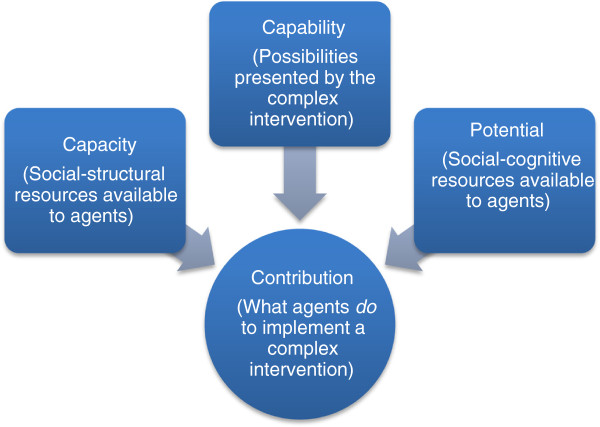
“…how frontline actors integrate complex interventions in routine practices collectively, considering their structural capacity, the capabilities offered by the intervention itself, and the potential of actors to act: the Extended Normalization Process Theory (ENPT)(May 2013; May et al., 2016, 2018).”
BackgroundMethodInfluentialSelf-citationCoetzer-Liversage, A., Stein, L. A. R., Stephens, M., Jefferis, E. S., Step, M. M., Crowe, A. R., & Sloboda, Z. (2024) · Health Behavior Research · doi:10.4148/2572-1836.1265 · Cited by 2
Herlitz, L., & Bonell, C. P. (2025) · Frontiers in Public Health · doi:10.3389/fpubh.2025.1559954 · Cited by 3
“We applied the General Theory of Implementation (GTI) to inform our research questions and guide the process of data collection and analysis (57).”
A Qualitative Study of the Implementation of an Evidence-Based Program in a K-12 Setting
McCarthy, T. J. (2017) · Fisher Digital Publications (St. John Fisher College) · Cited by 6
The Woes of Implementation Practice: Getting Caught by the “Program of the Month”
Briody, E. K. (2018) · Journal of Business Anthropology · doi:10.22439/jba.v7i1.5494 · Cited by 2
Policy implementation deficiencies: Ghana’s microfinance sector failures
Quao, K. H. (2019) · International Journal of Ethics and Systems · doi:10.1108/ijoes-08-2018-0119 · Cited by 2
Desirable Features of a Successful Entrepreneur: The Perspective of Family and Non-Family Firms
Żukowska, B. A., Domańska, A., & Zajkowski, R. (2019) · Annales Universitatis Mariae Curie-Skłodowska sectio H Oeconomia · doi:10.17951/h.2018.52.6.141-151 · Cited by 2
Shearn, K., Piercy, H., Allmark, P., & Hirst, J. (2019) · BMC Health Services Research · doi:10.1186/s12913-019-4298-4 · Cited by 2
“A scaffold of existing middle-range theories (MRT), the Morphogenetic Approach [45], Normalisation Process Theory (NPT)(1) [51, 52] and COM-B from Michie’s Behaviour Change Wheel [53], was built to provide a broad conceptual framework within which to situate theories specific to the research aim (full details of this…”
BackgroundBridges, J., Frankland, J., Griffiths, P., Libberton, P., & May, C. R. (2020) · Organizational behaviour in health care · doi:10.1007/978-3-030-26684-4_2 · Cited by 3
Self-citationBehavior Change in Community Contexts
Trickett, E. J., & Paterson, S. E. (2020) · Cambridge University Press eBooks · doi:10.1017/9781108677318.028 · Cited by 2
Bachmann, K. E., Nerland, S. M., Skrove, G. K., Hungnes, T., & Groven, G. (2020) · Tidsskrift for velferdsforskning · doi:10.18261/issn.0809-2052-2020-03-04 · Cited by 2
Lindholm, L. H., Laitila, M., Lassila, A., & Kampman, O. (2020) · Implementation Science Communications · doi:10.1186/s43058-020-00090-w · Cited by 2
Kaehne, A. (2021) · Emerald Group Publishing Limited eBooks · doi:10.1108/978-1-83867-527-120211014 · Cited by 2
How Contexts and Mechanisms Influence Telehealth Services
Taylor, A. (2021) · Springer eBooks · doi:10.1007/978-981-16-4075-9_12 · Cited by 2
Hill, M. K., Ellard, S., Fisher, J., Fulop, N., Knight, M., Kroese, M., Ledger, J., Leeson‐Beevers, K., McEwan, A., McMullan, D. J., et al. (2022) · NIHR Open Research · doi:10.3310/nihropenres.13247.1 · Cited by 6
Perspectives on geographical profiling in the United Kingdom
Halford, E. (2023) · Police Practice and Research · doi:10.1080/15614263.2023.2214285 · Cited by 2
“…focus of crime prevention awareness campaigns, narrowing the potential suspect pool, and even informing intelligence collection plans and the deployment of undercover officers or police informants, could all be considered successful contributions in the context of implementation theory (May, 2013).”
BackgroundInfluentialHalford, E. (2023) · International Journal of Police Science & Management · doi:10.1177/14613557231178152 · Cited by 2
“This is important because the literature on implementation indicates that any new intervention, particularly ones that transition theory into evidence-based practice, needs to be done carefully to realise their full potential (May, 2013).”
BackgroundProfessional Values: The Use of Technology and the New Generation of Clinicians
Wouters, E., Weijers, T. C. M., & Nieboer, M. E. (2015) · Springer eBooks · doi:10.1007/978-3-319-01904-8_51-1 · Cited by 2
Carswell, C. (2026) · Research Portal (Queen's University Belfast) · doi:10.17034/32629830 · Cited by 2
Herlitz, L. (2021) · LSHTM Research Online (London School of Hygiene and Tropical Medicine) · doi:10.17037/pubs.04659904 · Cited by 3
Aiafi, M. A. P. R. (2016) · Open Access Victoria University of Wellington | Te Herenga Waka (Figshare) · doi:10.26686/wgtn.17014388 · Cited by 2
Cost-Effectiveness Evaluations of Behavior Change Interventions
Wang, T., Downes, M., Byrnes, J., & Scuffham, P. (2020) · Cambridge University Press eBooks · doi:10.1017/9781108677318.026 · Cited by 1
Implementation Considerations and Key Challenges
Evans, M. (2023) · Springer eBooks · doi:10.1007/978-3-031-29042-8_8 · Cited by 1
Andison, M. (2024) · Studies in health technology and informatics · doi:10.3233/shti230982 · Cited by 2
Lander, N., Hoban, V., Barnett, L. M., Ma, J., Carl, J., Verswijveren, S. J. J. M., & Salmon, J. (2025) · Physical Education and Sport Pedagogy · doi:10.1080/17408989.2025.2524823 · Cited by 1
Krishnamoorthy, S., Armstrong, G., Mathieu, S. L., Ross, V. L., & Kõlves, K. (2025) · Frontiers in Health Services · doi:10.3389/frhs.2025.1473682 · Cited by 1
“Through these interactions, information and other resources are exchanged between stakeholders (44).”
Knighton, A. J., Kean, J. T., Peltan, I. D., Lisonbee, D., Krueger, A., Wolfe, D., Winberg, C., Sillito, C. W., Jones, C. B., Carpenter, L., et al. (2025) · Implementation Science Communications · doi:10.1186/s43058-025-00770-5 · Cited by 1
“NPT is a middle-range sociologic theory [38] with roots in complex adaptive systems theory [39, 40].”
Howells, I. J., Fowles, T. R., Roberts, R. L., Groat, D., Scott, G., Bledsoe, J. R., & Srivastava, R. (2025) · Quality Management in Health Care · doi:10.1097/qmh.0000000000000553 · Cited by 1
Chau, S. H., Elders, P. J. M., Domić, J., Nelissen-Vrancken, H. J. M. G., Schellevis, F., & Hugtenburg, J. G. (2025) · International Journal of Clinical Pharmacy · doi:10.1007/s11096-025-01992-2 · Cited by 1
“The final construct indicates what HCPs do to implement Opti-Med2, i.e. contribution [26].”
InfluentialRoberge, E. M., Bennett, D. C., & Weinstein, H. R. (2025) · Cognitive and Behavioral Practice · doi:10.1016/j.cbpra.2025.09.004 · Cited by 1
Karin, B., Ylva, N., Maria, H.-N., Lars, W., & Strid, E. N. (2026) · BMC Family Practice · doi:10.1186/s12875-026-03181-0 · Cited by 2
“NPT describes the nature of implementation as a social process of collective actions and social mechanisms to explain the different parts of the implementation process [27].”
Connor, J., Bergen, P., McDermott, V., & Mayo, L. (2026) · Palliative Care and Social Practice · doi:10.1177/26323524261419513 · Cited by 1
Integrating systems thinking and implementation science in biomedical informatics research
Kuziemsky, C. E., Ozkaynak, M., Unertl, K. M., & Haque, S. N. (2026) · JAMIA Open · doi:10.1093/jamiaopen/ooag023 · Cited by 1
“11 While several implementation science theories and frameworks exist [eg, 12 ], they do not adapt well to dynamic or non-linear systems, resulting in broad solutions that do not always scale down to the diverse contexts where HIT is used.”
Pope, N. E., Greenfield, E. A., & Cao, Q. (2026) · Ageing and Society · doi:10.1017/s0144686x26100737 · Cited by 1
“…as the multi-level processes of human influence operating through implementation, spanning micro-social changes ( e.g. learning, reflecting or sharing) to meso/macro contextual changes ( e.g. engaging, restructuring or adopting at organizational or community levels) (May 2013; Lewis et al. 2018).”
Rattray, N. A., Miech, E. J., Bravata, D. M., Story, K. M., Myers, L. J., Koo, B. B., Burrone, L., Sexson, A. E., Taylor, S., Perkins, A. J., et al. (2026) · Implementation Science Communications · doi:10.1186/s43058-026-00944-9 · Cited by 1
“May and colleagues’ Normalization Process Theory (NPT) proposes that successful implementation occurs when innovations become embedded into routine practice through collective action by human agents within specific contexts [19, 20].”
Hearing, F., Hayes, R. A., Berry, V., Young, H., Emmerson, L., Stubbs, V., Rigby, E., Meléndez‐Torres, G. J., & Bonell, C. P. (2026) · Health Education Journal · doi:10.1177/00178969261433392 · Cited by 1
“Below, we describe the processes underlying THINK AGAIN implementation and the factors affecting these, structured according to the general theory of implementation (italicising terms to highlight where these align with constructs from this theory) (May, 2013).”
Brik, A. B. (2026) · Public Administration and Development · doi:10.1002/pad.70094 · Cited by 1
May, C. R., Finch, T. L., & Rapley, T. (2026) · NIHR Open Research · doi:10.3310/nihropenres.14315.1 · Cited by 3
Self-citationSquire, B., Jefford, T., & Swenson, C. C. (2015) · Palgrave Macmillan UK eBooks · doi:10.1057/9781137359803_6 · Cited by 1
Practice versus politics in Danish day-care centres: how to bridge the gap in early learning?
Clasen, L., & de López, K. M. J. (2016) · European Early Childhood Education Research Journal · doi:10.1080/1350293x.2016.1189721 · Cited by 1
“A successful implementation process is crucial for the survival of any new programme and it relies on whether it can be made workable and integrated into the everyday practice by the agents employing the intervention (May 2013).”
BackgroundCummins, S., Ogilvie, D., White, M., Petticrew, M. P., Jones, A., Goodwin, D., Сауткина, Е., & Mapp, F. (2016) · LSHTM Research Online (London School of Hygiene and Tropical Medicine) · doi:10.17037/pubs.03163750 · Cited by 3
Supporting Prevention Science and Prevention Research Internationally
Segrott, J. (2019) · Advances in prevention science · doi:10.1007/978-3-030-00627-3_24 · Cited by 2
Quao, K. H. (2019) · International Journal of R&D Innovation Strategy · doi:10.4018/ijrdis.2019010103 · Cited by 1
“ ForMFpeculiarnature,theneedforregulatorstoadjusttheirpoliciessothattheMFIsfitintothese riskmanagementpractices(Magali,2014;Wilkinson&Frost,2015;May,2013,pp.1-14;Geyer, 2012)hasbecomemoreimperative.”
InfluentialAn Exploration of Interprofessional Education in Four Canadian Undergraduate Nursing Programs
Donato, E., Lightfoot, N., Carter, L., & MacEwan, L. (2020) · Quality Advancement in Nursing Education - Avancées en formation infirmière · doi:10.17483/2368-6669.1201 · Cited by 2
Clark, M., Jolley, D. J., Benbow, S., Greaves, N., & Greaves, I. (2020) · Journal of Integrated Care · doi:10.1108/jica-11-2018-0072 · Cited by 2
Care Integration as a Liminal Moment
Kaehne, A. (2022) · Emerald Group Publishing Limited eBooks · doi:10.1108/978-1-80117-978-220221006 · Cited by 1
Oni-Eseleh, O., Paul, M. S., Pereira, L., Macaluso, A. K., & Louis, D. (2023) · Journal of Community Practice · doi:10.1080/10705422.2023.2213229 · Cited by 3
“The theory focuses primarily on the development of an established set of conceptual tools for researchers and practitioners to identify, describe and explain important characteristics of policy or program implementation and outcomes (May, 2013; Oni-Eseleh, 2021).”
Background(2024) · Frontiers research topics · doi:10.3389/978-2-8325-4357-3 · Cited by 2
Greenwood, K., Jones, C. I., Yaziji, N., Healey, A., May, C. R., Bremner, S. A., Hooper, R., Rathod, S., Phiri, P., de Visser, R. O., et al. (2025) · Health and Social Care Delivery Research · doi:10.3310/wdwg4102 · Cited by 1
Self-citationLloyd-Houldey, O., Sundaram, N., Michalopoulou, S., Sturgess, J., Legood, R., Carlile, O., Allen, E., Scott, S., Nicholls, D., Hope, S., et al. (2025) · Public Health Research · doi:10.3310/pfhr4141 · Cited by 2
Vassilakopoulou, P., & Grisot, M. (2014) · Lecture notes in business information processing · doi:10.1007/978-3-319-09546-2_9 · Cited by 2
Bleijenberg, N., de Jonge, A., Brand, M. P., O’Flynn, C., Schuurmans, M. J., & de Wit, N. J. (2016) · Tijdschrift voor Gerontologie en Geriatrie · doi:10.1007/s12439-016-0200-6 · Cited by 1
“Daarnaast is gebruik gemaakt van procesevaluatie en implementatie literatuur om de verschillende componenten van het zorgprogramma te evalueren [10, 12, 30].”
BackgroundDietrick, B. E. (2014) · ScholarWorks - UA (University of Alaska System) · Cited by 1
Ross, J. (2016) · UCL Discovery (University College London) · Cited by 2
Ewalds, A.-P. (2016) · doi:10.71781/819 · Cited by 1
Davies, F. (2019) · ORCA Online Research @Cardiff (Cardiff University) · Cited by 2
Moulton, S., Collins, J. M., & Kondratjeva, O. (2018) · SSRN Electronic Journal · doi:10.2139/ssrn.3194814 · Cited by 1
Allan, S. (2023) · Enlighten: Theses (The University of Glasgow) · doi:10.5525/gla.thesis.83714 · Cited by 1
Langendoen‐Gort, M., Bhattacharya, D., Al‐Jabr, H., de Wit, M., Hugtenburg, J. G., Farmer, A. A., Elders, P. J. M., & Rutters, F. (2026) · medRxiv · doi:10.64898/2026.10.28.26366708 · Cited by 1
Implementation of coordinated healthy lifestyle promotion in primary care : Process and outcomes
Thomas, K. (2015) · Linköping University medical dissertations · doi:10.3384/diss.diva-121492
McKenna, D. (2015) · ScholarWorks (Walden University)
Williams, D. M., Tsan, J. Y., & System, C. T. V. H. C. (2016) · The International Journal of Social Sciences and Humanities Invention · doi:10.18535/ijsshi/v3i4.01
The successful implementation of electronic health records at small rural hospitals
Richardson, D. (2016) · ScholarWorks (Walden University) · Cited by 1
Brown, L. (2016) · ThinkIR: The University of Louisville's Institutional Repository (University of Louisville) · doi:10.18297/etd/2394
“Yet, implementation theory, focusing on uncovering relevant components of the implementation process as well as outcomes (May, 2013), influenced which outcomes were included as dependent variables.”
BackgroundMethodZilkha, S. (2016) · CUNY Academic Works (City University of New York)
Murphy, G. K. (2016) · Summit (Simon Fraser University)
A Case Study of a Medication Reconciliation Process: The Health Care Providers’ Perspective
Jeffery, C. (2016) · University Library - University of Saskatchewan (University of Saskatchewan)
Evidence based recommendations for national healthcare-associated infection surveillance
Russo, P. L. (2016) · Queensland University of Technology · doi:10.5204/thesis.eprints.100034
Linkage to treatment following RR-TB diagnosis in the Western Cape
Tomlinson, C. R. (2015) · Open University of Cape Town (University of Cape Town)
Dougherty, J. (2017) · RIT Scholar Works (Rochester Institute of Technology)
Technologieacceptatie en -implementatie
Wouters, E., van der Zijpp, T. J., & Nieboer, M. E. (2017) · Bohn Stafleu van Loghum eBooks · doi:10.1007/978-90-368-1073-9_8
Predictive Relationships Between Electronic Health Records Attributes and Meaningful Use Objectives
Koppoe, S. N. (2018) · ScholarWorks (Walden University) · Cited by 3
Rasekaba, T. M. (2017) · Minerva Access (University of Melbourne)
Abdallah, B. (2018) · Discovery Research Portal (University of Dundee) · Cited by 2
Klausen, J. L. (2018) · NVA (Nasjonalt vitenarkiv)
Setting up Living Labs : expectations, possibilities and interests
Carolas, D., & Ricardo, J. A. R. (2018) · Anglia Ruskin Research Online (Anglia Ruskin University)
Melville, J. K. (2019) · HARVEST (University of Saskatchewan) · Cited by 1
Prudente, D. (2018) · Digital Repository Service (Northeastern University) · doi:10.17760/d20315080
Walden, P. R. (2015) · Advances in higher education and professional development book series · doi:10.4018/978-1-4666-8265-8.ch017
Gnaly, C. K. (2018) · NORA - Norwegian Open Research Archives
Policy Knowledge Communication in Nursing
Vavra, C. J. (2019) · ScholarWorks (Walden University)
Venkataramanan, V. (2017) · Carolina Digital Repository (University of North Carolina at Chapel Hill) · doi:10.17615/qnx9-sc52 · Cited by 1
Pedersen, H. S., & Davidsen, A. S. (2019) · Tidsskrift for Forskning i Sygdom og Samfund · doi:10.7146/tfss.v16i31.116959
Havers, S. M. (2019) · Queensland University of Technology · doi:10.5204/thesis.eprints.134261
A process for supporting children’s nurses after medication errors
Coulson, S. (2020) · Nursing Children and Young People · doi:10.7748/ncyp.2020.e1230
Disaster Preparedness: Rescue Planning for People with Disabilities
Coulibaly, A. (2019) · ScholarWorks (Walden University) · Cited by 4
Utilization of Nurse Practitioners in states with full practice authority: Does Geography Matter?
Zwilling, J. G. (2020) · DigitalCommons@UNMC
dos Santos, I., & Fernando, L. (2020)
Culph, J. (2020) · The Sydney eScholarship Repository (The University of Sydney)
Cassetti, V. (2020) · White Rose eTheses Online (University of Leeds, The University of Sheffield, University of York) · Cited by 1
Ilenkov, V. (2020) · NORA - Norwegian Open Research Archives
Muhajarine, N., Fick, F., & McRae, D. N. (2021) · Research Square · doi:10.21203/rs.3.rs-267547/v1
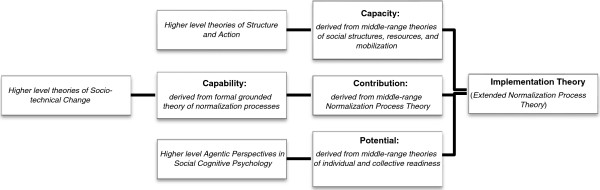
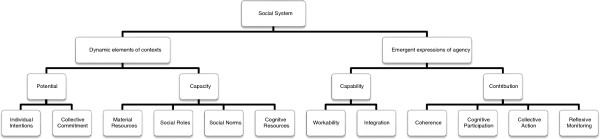
“Four constructs form the basis of the ENPT: capacity, potential, capability and contribution.”
BackgroundInfluentialTelemonitoring for Patients with Complex Chronic Conditions in Nurse-led Integrated Care
Gordon, K. (2021) · TSpace (University of Toronto) · Cited by 1
Le patient traumatisé crânien et son parcours de vie
de Keranflec’h, C. G., & Décaillet, F. (2017) · La Revue de l Infirmière · doi:10.1016/j.revinf.2016.12.029
Metadata
- Authors
- May, C.
- Affiliations
- University of Southampton (GB)
- Corresponding author
- May, Carl
- ORCID
- May, Carl
- Venue
- Implementation Science
- Published
- 2013-02-13
- Volume
- 8
- Issue
- 1
- Pages
- 18-18
- ISSN
- 1748-5908 (ISSN-L)
- PMC
- PMC3602092
- OpenAlex
- W2152345693
- Cited by
- 656
- References
- 98
- Citations by year
- 2026: 28 · 2025: 36 · 2024: 39 · 2023: 57 · 2022: 72 · 2021: 60 · 2020: 105 · 2019: 54 · 2018: 45 · 2017: 47 · 2016: 42 · 2015: 43 · 2014: 20 · 2013: 8
- FWCI
- 68.22
- Type
- journal article
- Language
- en
- Open access
- gold
- doi.org
- Licence
- Locations
- Implementation Science (publishedVersion, cc-by)
- Europe PMC (PubMed Central) (publishedVersion, cc-by)
- PubMed Central (publishedVersion, cc-by)
- PubMed (publishedVersion)
- ePrints Soton (University of Southampton) (acceptedVersion)
- LSHTM Research Online (London School of Hygiene and Tropical Medicine) (acceptedVersion)
- Funders
- National Institute for Health and Care Research (NF-SI-0509-10017)
- Economic and Social Research Council (ES/I037342/1, ES-062-23-3274)
- Topics
- Health Sciences › Health Professions › General Health Professions › Health Policy Implementation Science
- Health Sciences › Medicine › Public Health, Environmental and Occupational Health › Clinical practice guidelines implementation
- Health Sciences › Health Professions › General Health Professions › Health Sciences Research and Education
- Keywords
- implementation theory, complex interventions, Normalization Process Theory, agency, social mechanisms, cognitive mechanisms, collective action, healthcare implementation, organizational change
- MeSH terms
- Delivery of Health Care, Diffusion of Innovation, United Kingdom, Health Policy, Humans, Organizational Innovation, State Medicine, Process Assessment, Health Care, Qualitative Research
About these checks
Registry, retraction, Cites and statistics results are computed, not judged, with one exception: a printed reference that no index lists is read once by a model before it counts as a citation error. Claims are extracted by a model and kept only when their quote appears verbatim in the text; each cited source is then checked, with a model’s help, for whether it says what the claim relies on. Those verdicts can be wrong — read the claim’s quote and the cited source before relying on one.
Statistics and arithmetic are recomputed, not judged.
Confidence bands are shown only for fields calibrated on our annotated test set. None is calibrated yet, so no band is shown.
What counts as a claim ›How we measure confidence ›How we check this ›
Are you an author, or do you see a problem with this page? Request a review
Data sources
Bibliographic data: Semantic Scholar, OpenAlex, Crossref.
Contains information from the Semantic Scholar Academic Graph Datasets, made available under the ODC Attribution License (ODC-BY 1.0).
Semantic Scholar’s data is described in: Kinney, R., et al. (2023). The Semantic Scholar Open Data Platform. arXiv:2301.10140.
