

Development of a framework and coding system for modifications and adaptations of evidence-based interventions
Open accessThe DOI matches its Crossref record; 59 of the 60 references it cites were found in a registry or an index.
Abstract
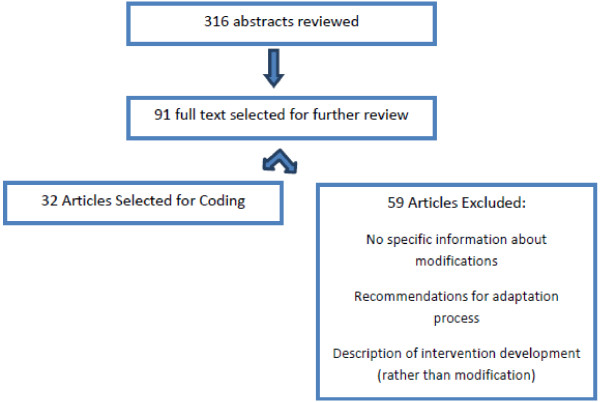
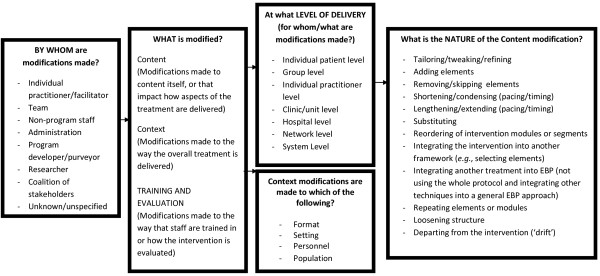
BACKGROUND: Evidence-based interventions are frequently modified or adapted during the implementation process. Changes may be made to protocols to meet the needs of the target population or address differences between the context in which the intervention was originally designed and the one into which it is implemented [Addict Behav 2011, 36(6):630-635]. However, whether modification compromises or enhances the desired benefits of the intervention is not well understood. A challenge to understanding the impact of specific types of modifications is a lack of attention to characterizing the different types of changes that may occur. A system for classifying the types of modifications that are made when interventions and programs are implemented can facilitate efforts to understand the nature of modifications that are made in particular contexts as well as the impact of these modifications on outcomes of interest. METHODS: We developed a system for classifying modifications made to interventions and programs across a variety of fields and settings. We then coded 258 modifications identified in 32 published articles that described interventions implemented in routine care or community settings. RESULTS: We identified modifications made to the content of interventions, as well as to the context in which interventions are delivered. We identified 12 different types of content modifications, and our coding scheme also included ratings for the level at which these modifications were made (ranging from the individual patient level up to a hospital network or community). We identified five types of contextual modifications (changes to the format, setting, or patient population that do not in and of themselves alter the actual content of the intervention). We also developed codes to indicate who made the modifications and identified a smaller subset of modifications made to the ways that training or evaluations occur when evidence-based interventions are implemented. Rater agreement analyses indicated that the coding scheme can be used to reliably classify modifications described in research articles without overly burdensome training. CONCLUSIONS: This coding system can complement research on fidelity and may advance research with the goal of understanding the impact of modifications made when evidence-based interventions are implemented. Such findings can further inform efforts to implement such interventions while preserving desired levels of program or intervention effectiveness.
Overview
The claims and statistics of this paper haven’t been checked yet.
Free: it reads the open-access text and checks the first 5 claims that cite a source we can check. Create a free account to check every claim.
Integrity signals
Registry
Cites
Statistics
Figures
Verification
Claims the paper makes
The claims and statistics of this paper haven’t been checked yet.
Free: it reads the open-access text and checks the first 5 claims that cite a source we can check. Create a free account to check every claim.
Claims other papers make about this one
Each is checked against this paper’s own text: does it say what the citing paper says it does?
The source backs part of the claim, not all of it — or backs it for a different population, condition or comparison.
In the citing paper
“which commonly involve a series of non-systematic adaptations (Stirman, Miller, Toder, & Calloway, 2013).”
From User‐centered design for psychosocial intervention development and implementation. (2016) · cites this paper as Stirman, Miller, Toder, & Calloway, 2013
Experimental — accuracy not yet measuredThe source backs part of the claim, not all of it — or backs it for a different population, condition or comparison.
In the citing paper
“Reported influences on sustainability include characteristics of the innovation and the individuals involved, leadership, capacity, processes, and context [2, 9, 13, 14].”
From Factors influencing sustainability and scale-up of rural primary healthcare memory clinics: perspectives of clinic team members (2022) · cites this paper as [2]
Experimental — accuracy not yet measuredThe source backs part of the claim, not all of it — or backs it for a different population, condition or comparison.
In the citing paper
“For example, while the 2013 and 2017 frameworks [15, 16] laid out distinct forms of modification that could be made to the content or mode of delivery, they did not specify when those modifications were designed to address important differences between the original population and the stakeholders in the current implementation effort (i.e., cultural adaptations).”
From The FRAME: an expanded framework for reporting adaptations and modifications to evidence-based interventions (2019) · cites this paper as [16]
Experimental — accuracy not yet measuredThe cited source says what the claim attributes to it.
In the citing paper
“More work is needed to determine what types of adaptation may specifically enhance sustainability and what types may erode the benefits or delivery of the intervention over time (135, 137).”
From The Sustainability of Evidence-Based Interventions and Practices in Public Health and Health Care (2018) · cites this paper as [137]
The cited source says what the claim attributes to it.
In the citing paper
“However, new approaches to identifying and coding EBI modifications and adaptations are promising in regard to rigorous study of adaptations and their impacts [63].”
From “Scaling-out” evidence-based interventions to new populations or new health care delivery systems (2017) · cites this paper as [63]
4 more claims about this paper
Create a free account to see every claim other papers make about this one.
Self-check
Percentages, sums and reported differences re-computed from the paper’s own numbers.
The self-check needs the paper’s full text.
Citations
Cites
The Measurement of Observer Agreement for Categorical Data
Landis, J. R., & Koch, G. G. (1977) · Biometrics · doi:10.2307/2529310 · Cited by 81,148 · cited 2×
“stantial agreement’ and ‘almost perfect’ agreement for the level and nature of modifications, respectively [52].”
BackgroundThe Discovery of Grounded Theory: Strategies for Qualitative Research.
Wagner, H. R., Glaser, B. G., & Strauss, A. L. (1968) · Social Forces · doi:10.2307/2575405 · Cited by 46,361
The Discovery of Grounded Theory; Strategies for Qualitative Research
Glaser, B. G., Strauss, A. L., & Strutzel, E. (1968) · Nursing Research · doi:10.1097/00006199-196807000-00014 · Cited by 39,449
(1998) · Sage eBooks · Cited by 38,631
(1990) · Cited by 11,110
Weighted kappa: nominal scale agreement provision for scaled disagreement or partial credit
Cohen, J. (1968) · Psychological Bulletin · doi:10.1037/h0026256 · Cited by 8,736 · cited 1×
“The two raters overlapped on 20% of the identified segments, and we computed Cohen’s kappa coefficients [31] to determine interrater reliability for each rating category.”
MethodDusenbury, L. (2003) · Health Education Research · doi:10.1093/her/18.2.237 · Cited by 1,671 · cited 1×
“cessary [4,6-10], few studies have examined the impact”
BackgroundWiltsey Stirman, S., Kimberly, J., Cook, N., Calloway, A., Castro, F., & Charns, M. (2012) · Implementation Science · doi:10.1186/1748-5908-7-17 · Cited by 1,355 · cited 3×
“The tension between modification and fidelity is a critical issue in implementation science [4,54,55].”
BackgroundSelf-citationThe Cultural Adaptation of Prevention Interventions: Resolving Tensions Between Fidelity and Fit
Castro, F. G., Barrera, M., & Martinez, C. R. (2004) · Prevention Science · doi:10.1023/b:prev.0000013980.12412.cd · Cited by 1,228 · cited 4×
“terms of their complexity and comprehensiveness [27].”
BackgroundInfluentialShediac-Rizkallah, M. C., & Bone, L. R. (1998) · Health Education Research · doi:10.1093/her/13.1.87 · Cited by 1,129
Research works printed but not linked: 1
- Schoenwald SK GA Chapman JE Frazier SL Sheidow AJ Southam-Gerow MA Toward the effective and efficient measurement of implementation fidelity Administration Policy Mental Health and Mental Health Serv Res 2011 38 1 32 43 10.1007/s10488-010-0321-0 PMC3045964 20957425 · DOI · Paper page
Cited by
Items 301–400 of 743
Nisar, A., Yin, J., Nan, Y., Luo, H., Han, D., Yang, L., Li, J., Wang, D., Rahman, A., & Li, X. (2022) · International Journal of Environmental Research and Public Health · doi:10.3390/ijerph19074094 · Cited by 13
Brunner, J., Farmer, M. M., Bean‐Mayberry, B., Coffinier, C., Than, C. T., Hamilton, A. B., & Finley, E. P. (2022) · Frontiers in Health Services · doi:10.3389/frhs.2022.946802 · Cited by 13
Yous, M., Ploeg, J., Kaasalainen, S., McAiney, C. A., & Fisher, K. (2022) · BMC Geriatrics · doi:10.1186/s12877-022-03483-9 · Cited by 15
“The System for Classifying Modifications to Evidence-Based Programs or Interventions [44] was used to guide the adaptation process of Namaste Care, document changes made to the original Namaste Care program to assess fidelity, and as a coding framework for qualitative analysis.”
MethodGusmões, J. D., García-Cerde, R., Valente, J. Y., Pinsky, I., & Sanchez, Z. M. (2022) · Substance Abuse Treatment Prevention and Policy · doi:10.1186/s13011-022-00496-w · Cited by 15
“Such adaptation of evidence-based programs, that is, modifying the design or delivery of an intervention to address cultural and contextual specificities, can impact their results [32].”
BackgroundPickard, K. E., Hendrix, N. M., Guerra, K. A. S., Brane, N., & Islam, N. (2023) · Autism · doi:10.1177/13623613231162149 · Cited by 13
Adaptation in Dissemination and Implementation Science
Baumann, A. A., Stirman, S. W., & Cabassa, L. J. (2023) · Oxford University Press eBooks · doi:10.1093/oso/9780197660690.003.0008 · Cited by 14
Self-citationSustainability of short stay after breast cancer surgery in early adopter hospitals
Ament, S. M. C., Gillissen, F., Maessen, J. M. C., Dirksen, C. D., Bell, A. V. R. J., Vissers, Y. L. J., van der Weijden, T., & MEYENFELDT, M. F. V. (2014) · The Breast · doi:10.1016/j.breast.2014.02.010 · Cited by 13
“This may be explained by the type of surgery at hospital level and by possible modifications of the application of short stay admission on centre level over a longer period of time [19].”
BackgroundHoltrop, K., Canto, A. I., Schelbe, L. A., McWey, L. M., Radey, M., & Montgomery, J. E. (2018) · American Journal of Orthopsychiatry · doi:10.1037/ort0000308 · Cited by 13
Aschbrenner, K. A., Bond, G. R., Pratt, S. I., Jue, K., Williams, G. M., Banerjee, S., & Bartels, S. J. (2020) · Implementation Research and Practice · doi:10.1177/2633489520943200 · Cited by 14
“Stirman et al. (2013) developed a system for classifying the types of modifications made to interventions and programs implemented in routine care settings.”
BackgroundMethodFields, B., Yanes, C., Ennis, M., & Toto, P. E. (2021) · Health & Social Care in the Community · doi:10.1111/hsc.13529 · Cited by 13
Cruz, C. M., Giri, P., Vanderburg, J. L., Ferrarone, P., Bhattarai, S., Giardina, A. A., Gaynes, B. N., Hampanda, K., Lamb, M. M., & Matergia, M. (2021) · Frontiers in Psychiatry · doi:10.3389/fpsyt.2021.790536 · Cited by 13
“Fidelity is viewed as a marker of high quality implementation and is often in opposition to choice and adaptation (48).”
BackgroundSong, M., Ward, S. E., Hepburn, K. W., Paul, S., Shah, R. C., & Morhardt, D. (2018) · Contemporary Clinical Trials · doi:10.1016/j.cct.2018.06.005 · Cited by 15
“Guided by Stirman’s framework for adaptations of evidence-based interventions [28], we have identified modifications that are needed to target persons with mild dementia (See Table 1).”
MethodStandiford, T. C., Conte, M. L., Billi, J. E., Sales, A. E., & Barnes, G. D. (2019) · American Journal of Medical Quality · doi:10.1177/1062860619879746 · Cited by 14
“Adherence to fidelity often is seen as the obverse of adaptation, where there is a concern that the way a process or program is used does not capture the essence that makes the process or program work.(32) Fidelity includes not only preserving the core or essence that is the “active ingredient,” but also deep understa…”
BackgroundClassifying Changes to Preventive Interventions: Applying Adaptation Taxonomies
Roscoe, J. N., Shapiro, V. B., Whitaker, K., & Kim, B. K. E. (2019) · The Journal of Primary Prevention · doi:10.1007/s10935-018-00531-2 · Cited by 12
Adaptation for sustainability in an implementation trial of team-based collaborative care
Miller, C. J., Sullivan, J. L., Connolly, S. L., Richardson, E. J., Stolzmann, K. L., Brown, M. B., Bailey, H. M., Weaver, K. R., Sippel, L. M., & Kim, B. (2024) · Implementation Research and Practice · doi:10.1177/26334895231226197 · Cited by 12
“This is an important gap, as adaptations to implementation strategies are common — but have not been studied as comprehensively as adaptations to EBPs.”
BackgroundInfluentialSelf-citationStahmer, A. C., Dufek, S., Rogers, S. J., & Iosif, A. (2024) · BMC Psychology · doi:10.1186/s40359-024-02020-0 · Cited by 12
Integrating “Exercise Is Medicine” into primary care workflow: a study protocol
Linke, S., Kallenberg, G., Kronick, R. G., Tai‐Seale, M., Guzman, K. R. D., & Rabin, B. A. (2020) · Translational Behavioral Medicine · doi:10.1093/tbm/ibaa088 · Cited by 14
“Specifically, we use the Practical, Robust Implementation and Sustainability Model (PRISM) [26] and the adapted and expanded Stirman framework [27] (IS models) combined with the learning evaluation model [28] (QI).”
MethodYous, M., Ploeg, J., Kaasalainen, S., & McAiney, C. A. (2020) · Journal of Advanced Nursing · doi:10.1111/jan.14623 · Cited by 12
Treichler, E. B. H., Rabin, B. A., Spaulding, W. D., Thomas, M. L., Salyers, M. P., Granholm, E. L., Cohen, A. N., & Light, G. A. (2021) · Pilot and Feasibility Studies · doi:10.1186/s40814-021-00820-4 · Cited by 14
“Manualized or structured interventions are frequently modified to increase relevance for different patient populations and to increase feasibility and fit for new settings [37, 38].”
BackgroundStefančić, A., Rogers, R. T., Styke, S., Xu, X., Buchsbaum, R., Nossel, I. R., Cabassa, L. J., Stroup, T. S., & Kimhy, D. (2022) · JMIR Mental Health · doi:10.2196/41482 · Cited by 14
“This study illustrates the use of the FRAME, along with methods and tools for rapid qualitative analysis, to systematically track adaptations to the app as part of its development process.”
InfluentialZavala, G. A., Afaq, S., Anas, A., Ahmed, N., Aslam, F., Benkalkar, S., Coales, K., Jennings, H. M., Kellar, I., Nabi, M., et al. (2023) · Global Implementation Research and Applications · doi:10.1007/s43477-023-00072-9 · Cited by 14
“Using the information gathered, we planned a list of changes to be made to the original intervention using the Stirman adaptation classification to map the changes made to the original intervention (Stirman et al., 2013).”
MethodAdaptation of a trauma-informed intervention for youth involved in the legal system
Razuri, E. B., Yang, Y., Tinius, E., & Knight, D. K. (2023) · Journal of Substance Use and Addiction Treatment · doi:10.1016/j.josat.2024.209294 · Cited by 12
Perspectives: answering questions about quality improvement: suggestions for investigators
Øvretveit, J. (2016) · International Journal for Quality in Health Care · doi:10.1093/intqhc/mzw136 · Cited by 12
Beck, J. E., Zaugg, T. L., Egge, J. L. M., Lima, E. N., & Thielman, E. J. (2019) · American Journal of Audiology · doi:10.1044/2018_aja-ttr17-18-0040 · Cited by 12
Ferretti, L. A., & McCallion, P. (2019) · Journal of Aging and Health · doi:10.1177/0898264318822363 · Cited by 12
“Finally, using the content section of the Stirman et al. (2013) framework and coding system for modifications and adaptions of evidence-based interventions, modifications to the CDSMP delivery were categorized and assessed.”
MethodBerry, C. A., Nguyen, A. M., Cuthel, A. M., Cleland, C. M., Siman, N., Pham-Singer, H., & Shelley, D. (2020) · American Journal of Medical Quality · doi:10.1177/1062860620959450 · Cited by 13
Eboreime, E., Olawepo, J. O., Banke-Thomas, A. O., & Ramaswamy, R. (2020) · Evaluation and Program Planning · doi:10.1016/j.evalprogplan.2020.101876 · Cited by 13
Cultural Adaptation and Social Media Promotion of Healthy Eating Guides for Spanish Speakers
Maafs-Rodríguez, A. G., Otis, B. O., & Mattei, J. (2022) · Journal of Nutrition Education and Behavior · doi:10.1016/j.jneb.2022.03.008 · Cited by 13
“Hence, the level of delivery was for an entire group or community (Spanish-speaking Latinos) and not to specific ethnic groups (each culture individually).(6,11) After translating to Latin American Spanish, the following modifications took place:”
BackgroundIshikawa, S.-I., Romano, M., & Hudson, J. L. (2022) · Behavior Therapy · doi:10.1016/j.beth.2021.05.008 · Cited by 11
Clinician-Reported Modification to a CBT Approach in Children’s Mental Health
Meza, R. D., Jungbluth, N., Sedlar, G., Martin, P., Berliner, L., Wiltsey-Stirman, S., & Dorsey, S. (2020) · Journal of Emotional and Behavioral Disorders · doi:10.1177/1063426619828369 · Cited by 11
“While some studies have described specific content modifications, most have not used a systematic approach to categorizing modifications (Stirman et al., 2013).”
BackgroundMethodInfluentialAdams, D. R., ALLEN, H. L., Nicol, G. E., & Cabassa, L. J. (2024) · Translational Behavioral Medicine · doi:10.1093/tbm/ibae053 · Cited by 11
Raghuram, H., Rajguru, A. J., Pathiyil, M. M., Brahmbhatt, A., Bhan, A., Spagnolo, J., & Naslund, J. A. (2025) · International Journal of Mental Health Systems · doi:10.1186/s13033-025-00671-z · Cited by 11
“They can be planned and proactive; or unplanned and reactive [9].”
Mark, M. M. (2021) · Prevention Science · doi:10.1007/s11121-021-01248-1 · Cited by 12
“Alternative frameworks have been developed for classifying the attributes of adaptations and modifications (Hill et al., 2007; Moore et al., 2013; Stirman et al., 2013).”
BackgroundMethodStoa, M., Frail, C. K., Farley, J. F., Pestka, D. L., & Blanchard, C. (2021) · Exploratory Research in Clinical and Social Pharmacy · doi:10.1016/j.rcsop.2021.100089 · Cited by 11
“According to the FRAME, the following eight aspects should be reported, (1) when in the implementation process the modification was made, (2) whether the modification was planned/proactive or unplanned/reactive, (3) who determined that the modification should be made, (4) what is modified, (5) at what level of care de…”
MethodCollins, V. K., Corbin, C. M., Locke, J. J., Cook, C. R., Ehrhart, M. G., Hatch, K., & Lyon, A. R. (2024) · School Mental Health · doi:10.1007/s12310-024-09635-z · Cited by 12
“In real-world settings, implementation of EBP is frequently suboptimal, omitting active ingredients like reviewing student responsiveness data and canceling coaching sessions or including reactive adaptations that may detract from core components (Dusenbury et al., 2005; Stirman et al., 2013).”
Sommerfeld, D. H., Aarons, G. A., Naqvi, J. B., Holden, J. L., Perivoliotis, D., Mueser, K. T., & Granholm, E. L. (2018) · Administration and Policy in Mental Health and Mental Health Services Research · doi:10.1007/s10488-018-0904-8 · Cited by 11
Riordan, F., Racine, E., Smith, S. M., Murphy, A., Browne, J. P., Kearney, P. M., Bradley, C., James, M., Murphy, M. E., & McHugh, S. (2020) · Pilot and Feasibility Studies · doi:10.1186/s40814-020-00608-y · Cited by 15
“Quantitative and qualitative data collected on intervention delivery will be classified according to existing frameworks for coding adaptation and modifications to interventions [65, 66].”
MethodImplementer-initiated adaptation of evidence-based interventions: kids remember the blue wig
Gibbs, D. A., Krieger, K. E., Cutbush, S. L., Clinton‐Sherrod, A. M., & Miller, S. (2016) · Health Education Research · doi:10.1093/her/cyw017 · Cited by 13
Corbie-Smith, G. M., Wiley-Cene, C., Bess, K., Young, T. L., Dave, G., Ellis, K. R., Hoover, S., Lin, F., Wynn, M. R., McFarlin, S., et al. (2018) · BMC Public Health · doi:10.1186/s12889-018-5802-1 · Cited by 11
de Menezes, J. C. L., & Murta, S. G. (2020) · Trends in Psychology · doi:10.1007/s43076-020-00053-z · Cited by 14
Harvey, A. G., Lammers, H. S., Dolsen, E. A., Mullin, A. C., Hilmoe, H. E., Tran, M., Portnova, V., Tuck, A. B., Mallidi, A., Fang, A., et al. (2020) · Evidence-Based Mental Health · doi:10.1136/ebmental-2020-300225 · Cited by 12
Allen, C. G., Hunt, K. J., McMahon, L. L., Thornhill, C., Jackson, A., Clark, J. T., Kirchoff, K., Garrison, K. L., Foil, K. E., Malphrus, L., et al. (2024) · The American Journal of Human Genetics · doi:10.1016/j.ajhg.2024.01.004 · Cited by 10
Adaptation of complex interventions for people with long-term conditions: a scoping review
Uddin, J., Joshi, V. L., Wells, V., Faruque, M., Mashreky, S. R., Movsisyan, A., Evans, R., Moore, G. F., & Taylor, R. S. (2024) · Translational Behavioral Medicine · doi:10.1093/tbm/ibae031 · Cited by 12
“Given the likely growing importance and utilization of intervention adaptation approaches [8, 25, 56], there is a need for the adoption of rigorous methodology approaches across the research community.”
Lyon, A. R., Munson, S. A., Pullmann, M. D., Mosser, B., Aung, T., Fortney, J. C., Dopp, A. R., Osterhage, K. P., Haile, H. G., Bruzios, K. E., et al. (2025) · JMIR Research Protocols · doi:10.2196/65446 · Cited by 13
Studts, C. R., Merritt, A., Pilar, M. R., Bundy, H. E., Bardach, S., Jacobs, J. A., & Feltner, F. J. (2020) · Journal of Health Care for the Poor and Underserved · doi:10.1353/hpu.2020.0102 · Cited by 11
McCarthy, C., Moriarty, F., Wallace, E., Smith, S. M., & Clyne, B. (2020) · Journal of Comorbidity · doi:10.1177/2235042x20946243 · Cited by 11
“Adapted framework used to describe modifications to OPTI-SCRIPT intervention.(10) 4 Journal of Comorbidity”
MethodSanchez, B. E. L., Klein, C. C., Corcoran, F., & Barnett, M. L. (2022) · Evidence-Based Practice in Child and Adolescent Mental Health · doi:10.1080/23794925.2022.2070883 · Cited by 11
“Community clinicians may adapt interventions to meet clients’ needs or to improve client engagement (Gibbs et al., 2016; Ramos et al., 2021; Stirman et al., 2013).”
BackgroundYang, E., Dornisch, A. M., Nerb, L., Helsten, T. L., Kaiser, B. N., Aristizabal, P., Armenian, S. H., Torno, L. R., Baca, N. M., Genensen, M. C., et al. (2023) · Journal of Adolescent and Young Adult Oncology · doi:10.1089/jayao.2021.0224 · Cited by 11
O’Neill, K., Riordan, F., Racine, E., Tracey, M., Papoutsi, C., Kearney, P. M., & McHugh, S. (2022) · International Journal of Integrated Care · doi:10.5334/ijic.5815 · Cited by 13
McLaughlin, M. J., Campbell, E. M., Sutherland, R., McKenzie, T., Davies, L. J., Wiggers, J., & Wolfenden, L. (2021) · Frontiers in Health Services · doi:10.3389/frhs.2021.719194 · Cited by 10
“Proposed impact on the project? Positive Negative Null Not applicable 2 (67) 1 (33) 0 (0) 0 (0) 13 (81) 3 (19) 0 (0) 0 (0) 0 (0) 0 (0) 0 (0) 1 (100) 15 (79) 4 (21) 0 (0) 1”
BackgroundMethodInfluentialGlasgow, R. E., & Rabin, B. A. (2014) · Journal of Comparative Effectiveness Research · doi:10.2217/cer.14.9 · Cited by 11
Wang, B., STANTON, B. F., Lunn, S., Rolle, G., Poitier, M., Adderley, R., Li, X., Koci, V., & Deveaux, L. (2015) · Prevention Science · doi:10.1007/s11121-015-0592-5 · Cited by 11
“A few studies described types and frequencies of modifications that occur during the implementation process (Lundgren et al. 2011; Stirman et al. 2013) and explored factors influencing program adaptations (Hill et al. 2007).”
BackgroundSickle cell disease and implementation science: A partnership to accelerate advances
King, A. A., & Baumann, A. A. (2017) · Pediatric Blood & Cancer · doi:10.1002/pbc.26649 · Cited by 11
Sustainability of Evidence-Based Acute Pain Management Practices for Hospitalized Older Adults
Shuman, C. J., Xie, X., Herr, K., & Titler, M. G. (2017) · Western Journal of Nursing Research · doi:10.1177/0193945917738781 · Cited by 10
Mui, H. Z., Brown‐Johnson, C. G., Saliba‐Gustafsson, E. A., Lessios, A. S., Verano, M., Siden, R., & Holdsworth, L. M. (2023) · Learning Health Systems · doi:10.1002/lrh2.10364 · Cited by 10
““ Modifications can include adaptations, which are planned or purposeful changes to the design or delivery of an intervention, but they can also include unintentional deviations from the interventions as originally designed ” (Wiltsey-Stirman et al, 2013, p. 2) 5 .”
BackgroundMendenhall, A. N., & Grube, W. A. (2016) · Child and Adolescent Social Work Journal · doi:10.1007/s10560-016-0467-z · Cited by 10
Hoekstra, F., Hettinga, F. J., den Breejen, M., Duijf, M., van der Woude, L. H. V., Dekker, R., & van der Schans, C. P. (2017) · Journal of Rehabilitation Medicine · doi:10.2340/16501977-2220 · Cited by 10
“Based on literature from other settings [33,36], this variation may be used to further optimize the procedure of embedding physical activities into rehabilitation care.”
BackgroundEvidence-Based Program Implementation Variability in New Contexts: The Head Start REDI Program
Welsh, J. A., Chilenski, S. M., Daniels, A. M., Letcher, A., & Garcia, A. S. (2024) · Early Childhood Education Journal · doi:10.1007/s10643-024-01648-2 · Cited by 9
“Wiltsey Stirman et al. ( 2013) reviewed 32 studies reporting EBP adaptations and coded changes into several categories, including who made modification decisions, which aspects of the intervention were modified, the level of inter - vention delivery changed, and the nature of the change.”
Zhai, S., Yuwen, W., Zyniewicz, T. L., Sonney, J., Hash, J. B., Chen, M., & Ward, T. M. (2025) · Digital Health · doi:10.1177/20552076251348579 · Cited by 9
“39,40,42 We brie fl y summarized the past work on the framework of IS outcomes.”
Parekh, J., Stuart, E. A., Blum, R. W., Caldas, V., Whitfield, B., & Jennings, J. M. (2019) · Prevention Science · doi:10.1007/s11121-019-01032-2 · Cited by 10
Bahar, O. S., Byansi, W., Nabayinda, J., Kiyingi, J., Namatovu, P., Embaye, F., McKay, M. M., Hoagwood, K., & Ssewamala, F. M. (2023) · International Journal of Mental Health Systems · doi:10.1186/s13033-023-00593-8 · Cited by 9
“Working closely with community stakeholders, we drew upon the Theory of Triadic Influence [TTI; 28] and the adaptation coding framework developed by Stirman, Miller, Toder, and Calloway [29] to guide the cultural and contextual adaptation process.”
MethodFidelity-consistency and deliberateness of modifications in parenting programs
Pettersson, K., Liedgren, P., Lyon, A. R., Hasson, H., & Schwarz, U. V. T. (2024) · Implementation Science Communications · doi:10.1186/s43058-024-00545-4 · Cited by 9
“Specifically, according to Stirman et al. [35], adding elements and tailoring/tweaking/refining should be used for modifications that keep intervention mechanisms unchanged (i.e., that are fidelity-consistent).”
BackgroundMethodInfluentialLandais, L. L., van Wijk, E. C., & Harting, J. (2021) · BioMed Research International · doi:10.1155/2021/8830912 · Cited by 12
“Such adaptations may concern the content, the delivery mode, and the conditions for implementation of an intervention [21, 22].”
BackgroundBailin, A., Burton, S., Rego, S. A., Alpert, J. E., & Pimentel, S. S. (2021) · Cognitive and Behavioral Practice · doi:10.1016/j.cbpra.2021.04.004 · Cited by 9
Mayberry, L. S., Felix, H. C., Hudson, J. S., Curran, G. M., Long, C. R., Selig, J. P., Carleton, A., Baig, A. A., Warshaw, H. S., Peyrot, M. F., et al. (2022) · Contemporary Clinical Trials · doi:10.1016/j.cct.2022.106921 · Cited by 10
Riordan, F., McGrath, N., Dinneen, S. F., Kearney, P. M., & McHugh, S. (2019) · International Journal of Integrated Care · doi:10.5334/ijic.4215 · Cited by 10
An Evaluation of the Implementation of a UK School-Based Running Program
Chalkley, A. E., Routen, A. C., Harris, J., Cale, L., Gorely, T., & Sherar, L. B. (2020) · Children · doi:10.3390/children7100151 · Cited by 10
“, issuing of rewards and certificates and logging of laps); however, it is important that the underlying features of the program are maintained [37].”
Ibañez, L. V., Scott, S., & Stone, W. L. (2021) · Autism Research · doi:10.1002/aur.2522 · Cited by 11
“Using deductive qualitative coding, providers’ descriptions of RIT modifications were classified into categories adapted from Stirman’s framework (Stirman et al., 2013, 2019).”
BackgroundMethodViljoen, M., Seris, N., Shabalala, N., Ndlovu, M., de Vries, P. J., & Franz, L. (2024) · Autism · doi:10.1177/13623613241300774 · Cited by 9
“The Framework for Modification and Adaptations (FRAME) (Stirman et al., 2013, 2019) was used to document adaptations (the ‘what’) and the EPIS was used to describe reasons for adaptation (the ‘why’).”
InfluentialSabot, K., Marchant, T., Spicer, N., Berhanu, D., Gautham, M., Umar, N., & Schellenberg, J. (2018) · Emerging Themes in Epidemiology · doi:10.1186/s12982-018-0071-0 · Cited by 9
“[38] developed a framework and coding system for documenting how programmes evolve during adaptation to new contexts.”
BackgroundSIPsmartER delivered through rural, local health districts: adoption and implementation outcomes
Porter, K., Brock, D. P., Estabrooks, P. A., Perzynski, K. M., Hecht, E. R., Ray, P., Kruzliakova, N. A., Cantrell, E. S., & Zoellner, J. (2019) · BMC Public Health · doi:10.1186/s12889-019-7567-6 · Cited by 9
Fortinsky, R. H., Kuchel, G. A., Steffens, D. C., Grady, J. J., Smith, M., & Robison, J. T. (2020) · Contemporary Clinical Trials · doi:10.1016/j.cct.2020.105992 · Cited by 8
Rhodes, E., LaPlant, H. W., Zahid, M., Abuwala, N., Damio, G., Crummett, C., Surprenant, R., & Pérez‐Escamilla, R. (2022) · Frontiers in Health Services · doi:10.3389/frhs.2022.1020326 · Cited by 8
“procedures, materials, or delivery), contextual (defined as changes made to delivery of the same program content, but with modifications to the format or channel, the setting or location in which the overall intervention is delivered, or the personnel who deliver the intervention), and training and supportive supervis…”
BackgroundLebow, J. R., Sim, L. A., Redmond, S. A., Billings, M. L., Mattke, A. C., O’Brien, J. R. G., Partain, P. I., Narr, C., Breland, R., Soma, D. B., et al. (2023) · Academic Pediatrics · doi:10.1016/j.acap.2023.08.004 · Cited by 8
Sustaining health obesity prevention programs: Lessons from real-world population settings
Crane, M. A., Lee, K., Bohn-Goldbaum, E. E., Nathan, N., & Bauman, A. E. (2024) · Evaluation and Program Planning · doi:10.1016/j.evalprogplan.2024.102404 · Cited by 9
Blok, A. C., Drake, C., Decosimo, K. P., Zullig, L. L., Hughes, J. M., Sperber, N. R., Kota, S., Franzosa, E. C., Coffman, C. J., Shepherd‐Banigan, M. E., et al. (2024) · Health Services Research · doi:10.1111/1475-6773.14360 · Cited by 8
Bah, A. J., Wurie, H. R., Samai, M. H., Horn, R., & Ager, A. (2025) · Frontiers in Psychiatry · doi:10.3389/fpsyt.2025.1441936 · Cited by 8
Parental support for teenage pregnancy prevention programmes in South Carolina public middle schools
Rose, I. D., Prince, M. S., Flynn, S., Kershner, S. H., & Taylor, D. (2014) · Sex Education · doi:10.1080/14681811.2014.918032 · Cited by 8
King, D. K., Neander, L. L., Edwards, A. E., Barnett, J. D., Zöld, A. L., & Hanson, B. L. (2018) · Pedagogy in Health Promotion · doi:10.1177/2373379918785924 · Cited by 8
Lengnick‐Hall, R., Fenwick, K. M., Hurlburt, M. S., Green, A. C., Askew, R. A., & Aarons, G. A. (2019) · Journal of Children s Services · doi:10.1108/jcs-05-2018-0010 · Cited by 9
Blair, C. K., Harding, E. M., Adsul, P., Moran, S., Guest, D. D., Clough, K., Sussman, A. L., Duff, D., Cook, L. S., Rodman, J., et al. (2021) · Contemporary Clinical Trials Communications · doi:10.1016/j.conctc.2021.100741 · Cited by 8
“Answering the call for a proactive, systematic approach to adaptation [40,42,43], we used the Framework for Reporting Adaptations and Modifications to Evidence-based interventions (FRAME) by Stirman and colleagues to guide the adaptation process, including detailed documentation of adaptations.”
MethodSchwarz, U. V. T., Lyon, A. R., Pettersson, K., Giannotta, F., Liedgren, P., & Hasson, H. (2021) · Implementation Science Communications · doi:10.1186/s43058-021-00187-w · Cited by 9
“, meeting patient needs [18], appropriateness [23], and patient retention [24]), they have not addressed the relationship between options and outcomes, the way in which outcomes are combined to make an option attractive, or the way in which trade-offs between conflicting outcomes are negotiated.”
BackgroundMichaud, T. L., Hill, J. L., Heelan, K. A., Bartee, R. T., Abbey, B. M., Malmkar, A., Masker, J., Golden, C. A., Porter, G. C., Glasgow, R. E., et al. (2022) · Implementation Science Communications · doi:10.1186/s43058-022-00287-1 · Cited by 9
“It is critical to systematically document the adaptation made during the implementation of the programs [44], using the wellknown Stirman framework [45], the LISTS approach proposed by Smith et al.”
Smith, M. J., Sherwood, K. L., Sung, C. Y. Y., Williams, E. G., Ross, B., sharma, S., Sharma, A., Harrington, M. M., Brown, C., Telfer, D., et al. (2023) · Contemporary Clinical Trials Communications · doi:10.1016/j.conctc.2023.101153 · Cited by 8
“Additionally, career readiness counselors will complete surveys evaluating the context and adaptation to the collaboratively developed initial WorkChat implementation plan (items based on Stirman’s FRAME adaptation coding taxonomy) [63,64].”
MethodApplying Implementation Science in the Field of Transplant and Cellular Therapy
DeSalvo, A. M., Spellman, S. R., Sees, J. A., Robb, D., McCann, M., Yusuf, R. A., Hengen, M., & Auletta, J. J. (2024) · Transplantation and Cellular Therapy · doi:10.1016/j.jtct.2024.06.018 · Cited by 8
Lui, F., Chen, Z., Niu, Y., BREITBART, W. S., Gany, F. M., & Leng, J. C. F. (2024) · Asian American Journal of Psychology · doi:10.1037/aap0000318 · Cited by 8
Yous, M., Ploeg, J., Kaasalainen, S., & McAiney, C. A. (2022) · Canadian Journal on Aging / La Revue canadienne du vieillissement · doi:10.1017/s0714980822000174 · Cited by 8
“The System for Classifying Modifications to Evidence-Based Programs or Interventions framework (Stirman et al., 2013) 5) What is the nature of the content modification?”
InfluentialProgram adaptation by health departments
Saliba, L. F., Allen, P. M., Mazzucca, S., Weno, E. R., Moreland‐Russell, S., Padek, M. M., & Brownson, R. C. (2022) · Frontiers in Public Health · doi:10.3389/fpubh.2022.892258 · Cited by 8
Berg, K. L., Mihaila, I., Feinstein, R. T., Shiu, C. A., Gussin, H. A., Acharya, K., Gladstone, T. R. G., Bernard, L., Best, M., Renz, E., et al. (2023) · Contemporary Clinical Trials · doi:10.1016/j.cct.2023.107374 · Cited by 7
Chhun, N., Oketch, D., Agot, K. E., Mangale, D. I., Badia, J., Kibugi, J., Jiang, W., Kirk, M., Richardson, B. A., Kohler, P. K., et al. (2024) · Journal of the International AIDS Society · doi:10.1002/jia2.26261 · Cited by 8
Salazar, A. S., Sekhon, S., Rohatgi, K. W., Nuako, A. A., Liu, J., Harriss, C., Brennan, E., LaBeau, D., Abdalla, I., Schulze, C., et al. (2020) · Contemporary Clinical Trials · doi:10.1016/j.cct.2020.105991 · Cited by 7
Dickson, K. S., & Suhrheinrich, J. (2021) · Journal of Child and Family Studies · doi:10.1007/s10826-020-01877-0 · Cited by 7
Kerns, S. E. U., Perrine, C. M., Sedlar, G. R., Peterson, R. S., & Monroe‐DeVita, M. (2021) · Global Implementation Research and Applications · doi:10.1007/s43477-021-00012-5 · Cited by 7
Rogal, S. S., Chinman, M., Demonte, W., Gibson, S. P., Hoyt-Trapp, S., Klima, G. J., Jonassaint, N. L., Liebschutz, J. M., Kraemer, K. L., & Merlin, J. S. (2022) · Digestive Diseases and Sciences · doi:10.1007/s10620-022-07380-4 · Cited by 8
“The health coach will track the fidelity and adaptations to the LEAP intervention using a checklist that we have developed for the intervention and the FRAME to track adaptations [50].”
MethodShepherd‐Banigan, M. E., Wells, S. Y., Falkovic, M., Ackland, P. E., Swinkels, C. M., Dedert, E. A., Ruffin, R. A., Houtven, C. H. V., Calhoun, P. S., Edelman, D. E., et al. (2022) · SSM - Mental Health · doi:10.1016/j.ssmmh.2022.100114 · Cited by 7
Implementation and modification of an organizational-level intervention: a prospective analysis
Gordon, E. J., Uriarte, J. J., Anderson, N., Romo, E., Caicedo, J. C., & Shumate, M. (2022) · Implementation Science Communications · doi:10.1186/s43058-022-00296-0 · Cited by 7
Aslam, F., Afaq, S., Siddiqui, F., Zavala, G. A., Ahmed, N., Walker, S., Jennings, H. M., Fottrell, E. F., Haq, Z. U., Siddiqi, N., et al. (2022) · F1000Research · doi:10.12688/f1000research.121895.1 · Cited by 9
Sofouli, E., Stirman, S. W., Groleau, D., Perreault, M., & Piat, M. (2022) · Global Implementation Research and Applications · doi:10.1007/s43477-022-00052-5 · Cited by 7
Self-citationRoulette, J. W., Hill, L. G., Diversi, M., & Overath, R. (2016) · Health Education Journal · doi:10.1177/0017896916654726 · Cited by 7
Martens, K. M., Barry, T. J., Takano, K., & Raes, F. (2019) · BMC Psychology · doi:10.1186/s40359-019-0279-y · Cited by 7
“As possible modifications to interventions during implementation can vary in many ways, Stirman and colleagues [23] designed a system for classifying such modifications, based on five questions: (a) by whom are modifications made; (b) what is modified (content, context or training and evaluation); (c) at what level of…”
Method
Metadata
- Authors
- Stirman, S. W., Miller, C. J., Toder, K., & Calloway, A.
- Affiliations
- National Center for PTSD (US)
- VA Boston Healthcare System (US)
- University of Pennsylvania (US)
- University of Massachusetts Boston (US)
- Corresponding author
- Stirman, Shannon Wiltsey
- Venue
- Implementation Science
- Published
- 2013-06-10
- Volume
- 8
- Issue
- 1
- Pages
- 65-65
- ISSN
- 1748-5908 (ISSN-L)
- PMC
- PMC3686699
- OpenAlex
- W2109880945
- Cited by
- 691
- References
- 59
- Citations by year
- 2026: 49 · 2025: 50 · 2024: 61 · 2023: 79 · 2022: 76 · 2021: 97 · 2020: 72 · 2019: 69 · 2018: 40 · 2017: 40 · 2016: 19 · 2015: 22 · 2014: 12 · 2013: 3
- FWCI
- 33.81
- Type
- journal article
- Language
- en
- Open access
- gold
- doi.org
- Licence
- Locations
- Implementation Science (publishedVersion, cc-by)
- Europe PMC (PubMed Central) (publishedVersion, cc-by)
- PubMed Central (publishedVersion, cc-by)
- PubMed (publishedVersion)
- Funders
- U.S. Department of Veterans Affairs (R25 MH080916-01A2)
- Washington University in St. Louis (R25 MH080916-01A2)
- National Institutes of Health
- Quality Enhancement Research Initiative (R25 MH080916-01A2)
- National Institute of Mental Health (MH080916, R00 MH 01800, R00MH080100, R25MH080916)
- Topics
- Health Sciences › Health Professions › General Health Professions › Health Policy Implementation Science
- Health Sciences › Health Professions › General Health Professions › Health Sciences Research and Education
- Social Sciences › Public Administration › Evaluation and Performance Assessment
- Keywords
- evidence-based interventions, intervention adaptation, coding scheme, implementation fidelity, community settings, rater agreement, intervention effectiveness
- MeSH terms
- Mental Disorders, Behavioral Medicine, Community Mental Health Services, Decision Making, Delivery of Health Care, Humans, Evidence-Based Medicine, Clinical Coding
About these checks
Registry, retraction, Cites and statistics results are computed, not judged, with one exception: a printed reference that no index lists is read once by a model before it counts as a citation error. Claims are extracted by a model and kept only when their quote appears verbatim in the text; each cited source is then checked, with a model’s help, for whether it says what the claim relies on. Those verdicts can be wrong — read the claim’s quote and the cited source before relying on one.
Statistics and arithmetic are recomputed, not judged.
Confidence bands are shown only for fields calibrated on our annotated test set. None is calibrated yet, so no band is shown.
What counts as a claim ›How we measure confidence ›How we check this ›
Are you an author, or do you see a problem with this page? Request a review
Data sources
Bibliographic data: Semantic Scholar, OpenAlex, Crossref.
Contains information from the Semantic Scholar Academic Graph Datasets, made available under the ODC Attribution License (ODC-BY 1.0).
Semantic Scholar’s data is described in: Kinney, R., et al. (2023). The Semantic Scholar Open Data Platform. arXiv:2301.10140.
