

Development of a framework and coding system for modifications and adaptations of evidence-based interventions
Open accessThe DOI matches its Crossref record; 59 of the 60 references it cites were found in a registry or an index.
Abstract
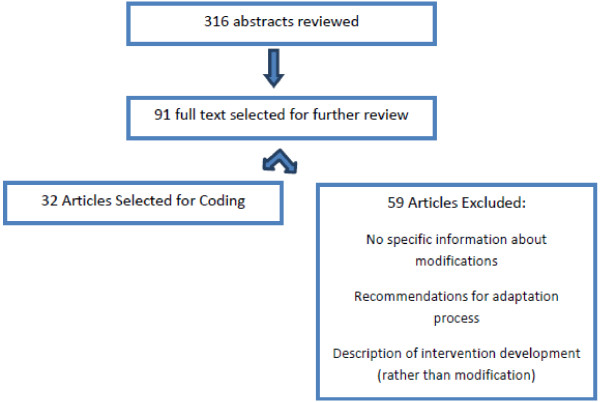
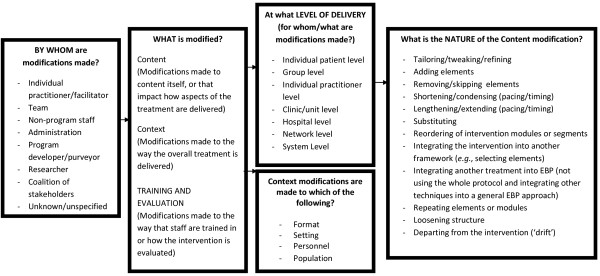
BACKGROUND: Evidence-based interventions are frequently modified or adapted during the implementation process. Changes may be made to protocols to meet the needs of the target population or address differences between the context in which the intervention was originally designed and the one into which it is implemented [Addict Behav 2011, 36(6):630-635]. However, whether modification compromises or enhances the desired benefits of the intervention is not well understood. A challenge to understanding the impact of specific types of modifications is a lack of attention to characterizing the different types of changes that may occur. A system for classifying the types of modifications that are made when interventions and programs are implemented can facilitate efforts to understand the nature of modifications that are made in particular contexts as well as the impact of these modifications on outcomes of interest. METHODS: We developed a system for classifying modifications made to interventions and programs across a variety of fields and settings. We then coded 258 modifications identified in 32 published articles that described interventions implemented in routine care or community settings. RESULTS: We identified modifications made to the content of interventions, as well as to the context in which interventions are delivered. We identified 12 different types of content modifications, and our coding scheme also included ratings for the level at which these modifications were made (ranging from the individual patient level up to a hospital network or community). We identified five types of contextual modifications (changes to the format, setting, or patient population that do not in and of themselves alter the actual content of the intervention). We also developed codes to indicate who made the modifications and identified a smaller subset of modifications made to the ways that training or evaluations occur when evidence-based interventions are implemented. Rater agreement analyses indicated that the coding scheme can be used to reliably classify modifications described in research articles without overly burdensome training. CONCLUSIONS: This coding system can complement research on fidelity and may advance research with the goal of understanding the impact of modifications made when evidence-based interventions are implemented. Such findings can further inform efforts to implement such interventions while preserving desired levels of program or intervention effectiveness.
Overview
The claims and statistics of this paper haven’t been checked yet.
Free: it reads the open-access text and checks the first 5 claims that cite a source we can check. Create a free account to check every claim.
Integrity signals
Registry
Cites
Statistics
Figures
Verification
Claims the paper makes
The claims and statistics of this paper haven’t been checked yet.
Free: it reads the open-access text and checks the first 5 claims that cite a source we can check. Create a free account to check every claim.
Claims other papers make about this one
Each is checked against this paper’s own text: does it say what the citing paper says it does?
The source backs part of the claim, not all of it — or backs it for a different population, condition or comparison.
In the citing paper
“which commonly involve a series of non-systematic adaptations (Stirman, Miller, Toder, & Calloway, 2013).”
From User‐centered design for psychosocial intervention development and implementation. (2016) · cites this paper as Stirman, Miller, Toder, & Calloway, 2013
Experimental — accuracy not yet measuredThe source backs part of the claim, not all of it — or backs it for a different population, condition or comparison.
In the citing paper
“Reported influences on sustainability include characteristics of the innovation and the individuals involved, leadership, capacity, processes, and context [2, 9, 13, 14].”
From Factors influencing sustainability and scale-up of rural primary healthcare memory clinics: perspectives of clinic team members (2022) · cites this paper as [2]
Experimental — accuracy not yet measuredThe source backs part of the claim, not all of it — or backs it for a different population, condition or comparison.
In the citing paper
“For example, while the 2013 and 2017 frameworks [15, 16] laid out distinct forms of modification that could be made to the content or mode of delivery, they did not specify when those modifications were designed to address important differences between the original population and the stakeholders in the current implementation effort (i.e., cultural adaptations).”
From The FRAME: an expanded framework for reporting adaptations and modifications to evidence-based interventions (2019) · cites this paper as [16]
Experimental — accuracy not yet measuredThe cited source says what the claim attributes to it.
In the citing paper
“More work is needed to determine what types of adaptation may specifically enhance sustainability and what types may erode the benefits or delivery of the intervention over time (135, 137).”
From The Sustainability of Evidence-Based Interventions and Practices in Public Health and Health Care (2018) · cites this paper as [137]
The cited source says what the claim attributes to it.
In the citing paper
“However, new approaches to identifying and coding EBI modifications and adaptations are promising in regard to rigorous study of adaptations and their impacts [63].”
From “Scaling-out” evidence-based interventions to new populations or new health care delivery systems (2017) · cites this paper as [63]
4 more claims about this paper
Create a free account to see every claim other papers make about this one.
Self-check
Percentages, sums and reported differences re-computed from the paper’s own numbers.
The self-check needs the paper’s full text.
Citations
Cites
The Measurement of Observer Agreement for Categorical Data
Landis, J. R., & Koch, G. G. (1977) · Biometrics · doi:10.2307/2529310 · Cited by 81,148 · cited 2×
“stantial agreement’ and ‘almost perfect’ agreement for the level and nature of modifications, respectively [52].”
BackgroundThe Discovery of Grounded Theory: Strategies for Qualitative Research.
Wagner, H. R., Glaser, B. G., & Strauss, A. L. (1968) · Social Forces · doi:10.2307/2575405 · Cited by 46,361
The Discovery of Grounded Theory; Strategies for Qualitative Research
Glaser, B. G., Strauss, A. L., & Strutzel, E. (1968) · Nursing Research · doi:10.1097/00006199-196807000-00014 · Cited by 39,449
(1998) · Sage eBooks · Cited by 38,631
(1990) · Cited by 11,110
Weighted kappa: nominal scale agreement provision for scaled disagreement or partial credit
Cohen, J. (1968) · Psychological Bulletin · doi:10.1037/h0026256 · Cited by 8,736 · cited 1×
“The two raters overlapped on 20% of the identified segments, and we computed Cohen’s kappa coefficients [31] to determine interrater reliability for each rating category.”
MethodDusenbury, L. (2003) · Health Education Research · doi:10.1093/her/18.2.237 · Cited by 1,671 · cited 1×
“cessary [4,6-10], few studies have examined the impact”
BackgroundWiltsey Stirman, S., Kimberly, J., Cook, N., Calloway, A., Castro, F., & Charns, M. (2012) · Implementation Science · doi:10.1186/1748-5908-7-17 · Cited by 1,355 · cited 3×
“The tension between modification and fidelity is a critical issue in implementation science [4,54,55].”
BackgroundSelf-citationThe Cultural Adaptation of Prevention Interventions: Resolving Tensions Between Fidelity and Fit
Castro, F. G., Barrera, M., & Martinez, C. R. (2004) · Prevention Science · doi:10.1023/b:prev.0000013980.12412.cd · Cited by 1,228 · cited 4×
“terms of their complexity and comprehensiveness [27].”
BackgroundInfluentialShediac-Rizkallah, M. C., & Bone, L. R. (1998) · Health Education Research · doi:10.1093/her/13.1.87 · Cited by 1,129
Research works printed but not linked: 1
- Schoenwald SK GA Chapman JE Frazier SL Sheidow AJ Southam-Gerow MA Toward the effective and efficient measurement of implementation fidelity Administration Policy Mental Health and Mental Health Serv Res 2011 38 1 32 43 10.1007/s10488-010-0321-0 PMC3045964 20957425 · DOI · Paper page
Cited by
Items 401–500 of 743
Implementation case study: Multifamily group intervention in first‐episode psychosis programs
Browne, J., Sanders, A. S., Friedman‐Yakoobian, M. S., Guyer, M. E., Keshavan, M. S., Kim, B., & Kline, E. R. (2020) · Early Intervention in Psychiatry · doi:10.1111/eip.13066 · Cited by 7
“The use of modifications and adaptations (i.e., planned modifications) to interventions can support implementation of evidence-based treatments (Stirman, Baumann, & Miller, 2019; Stirman et al., 2012; Stirman, Gamarra, Bartlett, Calloway, & Gutner, 2017; Stirman et al., 2013).”
Criando Niños Con Cariño: Primary Care-Based Group Parenting Program Adaptation and Pilot
Schilling, S., Romero-Cely, D., Mebane, A., & Perreira, K. M. (2022) · Journal of Developmental & Behavioral Pediatrics · doi:10.1097/dbp.0000000000001066 · Cited by 7
“During each step of the adaptation process (a priori expert changes, translation, focus groups, and initial test), all changes were tracked and coded using the system developed by Stirman et al.(34) We recorded and characterized each adaptation with a change code (what was modified) and a cultural code (nature of the…”
MethodInfluentialFrom protocol to practice: Enhancing fidelity, supporting adaptation, and advancing science
Regan, C. (2025) · Translational Behavioral Medicine · doi:10.1093/tbm/ibaf084 · Cited by 8
Yount, K. M., Whitaker, D. J., Fang, X., Trang, Q. T., Macaulay, M. K., & Minh, T. (2024) · Trials · doi:10.1186/s13063-024-08401-5 · Cited by 6
“This check-list will be based on the Modifications and Adaptations Checklist [59, 60], a coding scheme for recording modifications to evidence-based interventions.”
Schinckus, L., den Broucke, S. V., van der Zanden, G., Levin‐Zamir, D., Mueller, G., Riemenschneider, H., Hayter, V., Yardley, L., Schillinger, D., Doyle, G., et al. (2021) · International Journal of Environmental Research and Public Health · doi:10.3390/ijerph18084095 · Cited by 7
“Adaptations may also address provider’s needs [19], and some interventions are even designed inten- 110 tionally to allow certain adaptations [23].”
Rogal, S. S., Jonassaint, C. R., Ashcraft, L. E., Freburger, J. K., Yakovchenko, V., Kislovskiy, Y., Phares, A. D., Hershberger, G., Goodrich, D. E., & Chinman, M. (2022) · Journal of Clinical and Translational Science · doi:10.1017/cts.2022.420 · Cited by 6
“Done to address Adaptation type [40] Supportive quote or data Operationalization”
MethodGómez‐Trillos, S., Graves, K. D., Fiallos, K., Schwartz, M. D., Peshkin, B. N., Hamilton, H. E., Sheppard, V. B., Vadaparampil, S. T., Campos, C., Cupertino, A. P., et al. (2023) · Translational Behavioral Medicine · doi:10.1093/tbm/ibac106 · Cited by 7
Banerjee, S. C., Malling, C. D., Shen, M. J., Williamson, T. J., Bylund, C. L., Studts, J. L., Mullett, T. W., Carter‐Harris, L., Hamann, H. A., Parker, P. A., et al. (2023) · Translational Behavioral Medicine · doi:10.1093/tbm/ibad048 · Cited by 6
Adaptation to Telehealth of Personalized Group Visits for Late Stage Diabetic Kidney Disease
Drake, C., Rader, A., Clipper, C., Haney, M., Bulgin, D., Cameron, B., Kinard, T., Sangvai, D. G., Tomso, S., & Snyderman, R. (2023) · Kidney360 · doi:10.34067/kid.0000000000000301 · Cited by 6
“27 Adaptation of more complex self-Group”
BackgroundWilliamson, T. J., Brymwitt, W. M., Gilliland, J. L., Carter‐Harris, L., Mao, J. J. J., Lynch, K. A., Emard, N., Omachi, S., Jacobs, R. L., Tefera, M. Y., et al. (2025) · Translational Behavioral Medicine · doi:10.1093/tbm/ibae074 · Cited by 6
The Role of Implementation Science in Behavioral Health
Massey, O. T., & Vroom, E. B. (2019) · Springer eBooks · doi:10.1007/978-3-030-18435-3_5 · Cited by 8
Heerman, W. J., Elsakary, Y., Sommer, E. C., Escarfuller, J., & Barkin, S. L. (2020) · Public Health Nutrition · doi:10.1017/s1368980020004206 · Cited by 6
“Adaptations to the study curriculum were evaluated using a structured categorisation process and recorded by facilitators as a part of a REDCap(14) electronic survey following each session.(15)”
MethodStudts, C. R., Tillson, M. D., Pike, E., & Staton, M. (2021) · Implementation Research and Practice · doi:10.1177/26334895211014123 · Cited by 6
“In the field of implementation science, it is widely recognized that EBIs are rarely, if ever, delivered as originally designed in “real world” settings (Baumann et al., 2017; Castro et al., 2004; Chambers & Norton, 2016; Stirman et al., 2013).”
BackgroundStudts, C. R., Jacobs, J. A., Bush, M. L., Lowman, J., Creel, L., & Westgate, P. M. (2022) · American Journal of Speech-Language Pathology · doi:10.1044/2022_ajslp-21-00186 · Cited by 6
“These five adaptations to the original intervention’s context and content (Stirman et al., 2013) resulted in the FCU-DHH.”
BackgroundHurtado‐de‐Mendoza, A., Reyna, V. F., Wolfe, C. R., Gómez‐Trillos, S., Sutton, A. L., Brennan, A., & Sheppard, V. B. (2022) · Preventive Medicine Reports · doi:10.1016/j.pmedr.2022.101887 · Cited by 6
“This study uses Stirman and colleagues FRAME (Stirman et al., 2019) to inform the adaptation of BRCA-Gist.”
BackgroundMethodInfluentialArnold, T. L., Gaudiano, B. A., Barnett, A. P., Elwy, A. R., Whiteley, L., Giorlando, K. K., Rogers, B. G., Ward, L. M., Leigland, A., & Brown, L. K. (2023) · Journal of Contextual Behavioral Science · doi:10.1016/j.jcbs.2023.03.009 · Cited by 6
Allen, C. G., Judge, D. P., Nietert, P. J., Hunt, K. J., Jackson, A., Gallegos, S., Sterba, K. R., Ramos, P. S., Melvin, C. L., Wager, K. A., et al. (2023) · Translational Behavioral Medicine · doi:10.1093/tbm/ibad006 · Cited by 6
Adaptations of an Effective Evidence-Based Pediatric Weight Management Intervention
Bartee, R. T., Heelan, K. A., Golden, C. A., Hill, J. L., Porter, G. C., Abbey, B. M., George, K., Foster, N. E., & Estabrooks, P. A. (2023) · Prevention Science · doi:10.1007/s11121-023-01557-7 · Cited by 7
“This approach is also characterized by the availability of coding tools to allow for specification and categorization of adaptations (Stirman et al., 2013).”
BackgroundMethodKaiser, B. N., Kaufman, J., Wall, J. T., Friis-Healy, E. A., Ayuku, D., Aarons, G. A., & Puffer, E. S. (2023) · Implementation Science Communications · doi:10.1186/s43058-023-00477-5 · Cited by 7
“Increasingly, theories, frameworks, and processes are being articulated to guide processes of cultural and contextual adaptation to help fill this gap [2, 21, 22, 26, 32, 38, 51, 53].”
BackgroundHernandez-Ramos, R., Schueller, S. M., Borghouts, J. W., Palomares, K., Eikey, E. V., Schneider, M. L., Stadnick, N. A., Zheng, K., Mukamel, D. B., & Sorkin, D. H. (2024) · Implementation Research and Practice · doi:10.1177/26334895241288571 · Cited by 7
Manual development: A strategy for identifying core components of integrated health programs
Mooss, A. D., Hartman, M., & Ibañez, G. E. (2015) · Evaluation and Program Planning · doi:10.1016/j.evalprogplan.2015.08.004 · Cited by 6
Zullig, L. L., McCant, F., Silberberg, M., Johnson, F., Granger, B. B., & Bosworth, H. B. (2018) · Translational Behavioral Medicine · doi:10.1093/tbm/ibx030 · Cited by 6
“These adaptations may be purposeful and planned or unintentional deviations from the intervention as it was designed [6].”
BackgroundEdwards, C., Wittenborn, A. K., & Allan, R. (2025) · Journal of Marital and Family Therapy · doi:10.1111/jmft.70037 · Cited by 6
Janevic, M. R., STOLL, S. C., Lara, M., Ramos-Valencia, G., Bryant-Stephens, T. C., Persky, V., Uyeda, K. E., Lesch, J. K., & Malveaux, F. J. (2016) · Preventing Chronic Disease · doi:10.5888/pcd13.160129 · Cited by 5
Drake, C., Abadi, M. H., Batchelder, H. R., Richard, B. O., Balis, L. E., & Rychener, D. L. (2022) · International Journal of Environmental Research and Public Health · doi:10.3390/ijerph19148333 · Cited by 6
“’s framework [44,46] for classifying “contextual modifications” (e.”
Translating evidence-based knowledge objects into practice
Scheuer, J. D. (2023) · Frontiers in Health Services · doi:10.3389/frhs.2023.1107096 · Cited by 5
Characteristics of Successful Innovations
Grol, R. P. T. M., & Wensing, M. (2020) · Wiley eBooks · doi:10.1002/9781119488620.ch5 · Cited by 5
Implementation Science for Managers and Healthcare Organizations Responding to Emergencies
Øvretveit, J., & Ohrling, M. (2021) · Global Implementation Research and Applications · doi:10.1007/s43477-021-00025-0 · Cited by 6
Cassarino, M., Cronin, U. M., Robinson, K., Quinn, R., Boland, F., Ward, M. E., McNamara, R., O’Connor, M., McCarthy, G., Ryan, D., et al. (2022) · PLoS ONE · doi:10.1371/journal.pone.0269117 · Cited by 6
“Describe and analyse implementation Process Activities, inputs, structures, and resources needed to develop and deliver the intervention Fidelity and adaptations • Adherence to the intervention protocol and to evidence on national and international practice [18], • Intervention adaptations based on Stirman’s framework…”
BackgroundWang, V., Dadolf, J., Decosimo, K. P., Robinson, K., Choate, A., Bruening, R., Sperber, N. R., Mahanna, E., Houtven, C. H. V., Allen, K. D., et al. (2022) · BMC Health Services Research · doi:10.1186/s12913-022-08270-1 · Cited by 5
“Stirman Wiltsey and colleagues’ FRAME provided a structure for documenting both planned and unplanned intervention adaptations.”
BackgroundMethodInfluentialCloutier-Bergeron, A., Samson, A., Provencher, V., Mongeau, L., Paquette, M.-C., Turcotte, M., & Bégin, C. (2022) · Health Psychology and Behavioral Medicine · doi:10.1080/21642850.2022.2128357 · Cited by 5
“Stirman et al. (2013) have thus highlighted the relevance of determining empirically core components of an intervention and coding adaptations in addition to fidelity monitoring.”
BackgroundTempelaar, W. M., Kozloff, N., Crawford, A. S., Voineskos, A. N., Addington, D. E., Alexander, T., Baluyut, C., Bromley, S., Brooks, S., de Freitas, L., et al. (2023) · Frontiers in Health Services · doi:10.3389/frhs.2022.995392 · Cited by 6
“The Framework for Reporting Adaptations and Modifications for Evidence-Based Interventions (FRAME) was used to describe modifications.”
BackgroundInfluentialCook, C. R., Larson, M. F., & Zhang, Y. (2023) · Issues in clinical child psychology · doi:10.1007/978-3-031-20006-9_26 · Cited by 6
Documenting the Implementation Gap: Pre-implementation Supports
Kerns, S. E. U., Mitchell, C., Rolls-Reutz, J., & Sedivy, J. A. (2023) · Global Implementation Research and Applications · doi:10.1007/s43477-023-00081-8 · Cited by 7
“Considering the results of studies examining the ubiquitous nature of adaptations that happen at the agency or organization level (Stirman et al., 2013), it is surprising that more readiness documents did not directly address this issue.”
BackgroundInitial development and psychometric properties of the Therapist Quality Scale.
Day, M. A., Ward, L. C., Ehde, D. M., Mendoza, M. E., Reindel, K. M. P., Thorn, B. E., Bindicsova, I., & Jensen, M. P. (2024) · Rehabilitation Psychology · doi:10.1037/rep0000550 · Cited by 5
Dillon, L. L., Clemson, L. M., Nguyen, H., Jakobsen, K. B., Martin, J., Tinsley, F., & Keay, L. J. (2020) · BMJ Open · doi:10.1136/bmjopen-2020-038386 · Cited by 6
Holmes, J. A., Fletcher-Smith, J. C., Merchán-Baeza, J. A., Phillips, J. S., & Radford, K. (2022) · Pilot and Feasibility Studies · doi:10.1186/s40814-022-01111-2 · Cited by 5
“Understanding variations in intervention implementation during trials and potential effects on patient outcomes is important [47].”
BackgroundParent-Child Interaction Therapy with Children on the Autism Spectrum: A Narrative Review
Owen, C. K., Stokes, J. O., Travers, R. M., Ruckle, M. M., & Lieneman, C. C. (2018) · Springer eBooks · doi:10.1007/978-3-030-03213-5_16 · Cited by 5
Cassarino, M., Cronin, U. M., Robinson, K., Quinn, R., Boland, F., Ward, M. E., MacNamara, R., O’Connor, M., McCarthy, G., Ryan, D., et al. (2019) · BMJ Open · doi:10.1136/bmjopen-2019-032645 · Cited by 7
Weybright, E. H., Hampilos, K. E., Pascoe, K. M., Cooper, B. R., & Grinstead, C. (2025) · Global Implementation Research and Applications · doi:10.1007/s43477-025-00158-6 · Cited by 5
Quique, Y. M., Pais, A. M., Isaksen, J., & Jagoe, C. (2026) · Aphasiology · doi:10.1080/02687038.2026.2627323 · Cited by 4
“It considers the level at which treatment modifications are made and the type and nature of such modifications (Stirman et al., 2013).”
A Framework for Applying Global Learning to Improve Primary Health Care in the United States
Sugarman, J. R., & Reed, A. K. (2023) · Annals of Global Health · doi:10.5334/aogh.3741 · Cited by 4
Ike, B. R., Keppel, G. A., Osterhage, K. P., Ko, L. K., & Cole, A. (2024) · Journal of Primary Care & Community Health · doi:10.1177/21501319241288025 · Cited by 4
“28,29 outlines the FRAME application in this study.”
BackgroundMethodInfluentialBao, L., Kristen, A., Liu, H., Dys, S. P., Gao, Y., Wu, Q., Xiao, B., Xu, J.-J., Zhang, H., Zhang, W., et al. (2025) · Family Process · doi:10.1111/famp.70040 · Cited by 4
“…frameworks (Asiimwe et al. 2023; Schilling et al. 2021) and assessed through instruments used to quantify program adaptations (Miller et al. 2021; Stirman et al. 2013), program modifications focused on language and the use of cultural metaphors, identification of common parenting challenges and…”
Preliminary Cross-Sectional Validation of the CROPS 14-Item for Juvenile Offenders
Edner, B. J., Piegore, A. L., Glaser, B. A., & Calhoun, G. B. (2020) · International Journal of Offender Therapy and Comparative Criminology · doi:10.1177/0306624x20904703 · Cited by 4
“…psychological measures help identify characteristics and symptomology of juveniles, which allows for both accurate selection of evidence-based treatments for trauma (Chorpita et al., 2004) and the tailoring or modifying of treatments to match client idiosyncrasies (Stirman et al., 2013, 2017).”
BackgroundImplementation Design of a Complex Nursing Intervention in Dutch Hospitals: A Methods Paper
Jordens, Y. J., Ettema, R. G. A., Bleijenberg, N., Schuurmans, M. J., & Schoonhoven, L. (2022) · Global Implementation Research and Applications · doi:10.1007/s43477-021-00031-2 · Cited by 4
“During an implementation process, modifications may be made to the content of interventions, as well as to the context in which interventions are delivered (Stirman et al., 2013).”
BackgroundEisman, A. B., Palinkas, L. A., Koffkey, C., Herrenkohl, T. I., Abbasi, U., Fridline, J., Lundahl, L. H., & Kilbourne, A. M. (2022) · Pilot and Feasibility Studies · doi:10.1186/s40814-022-01145-6 · Cited by 4
King, P. R., Beehler, G. P., Donnelly, K. T., Funderburk, J. S., Pengelly, C., Wade, M., Kretzmer, T. S., & Wray, L. O. (2023) · Rehabilitation Psychology · doi:10.1037/rep0000486 · Cited by 4
Salloum, R. G., Romani, M., Bteddini, D. S., El‐Jardali, F., Lee, J., Theis, R. P., LeLaurin, J. H., Hamadeh, R. R., Osman, M. H., Abla, R., et al. (2023) · Implementation Science Communications · doi:10.1186/s43058-023-00456-w · Cited by 4
Jones, W., Sobers, N., Brown-Perry, A., Bristol, L., & Samuels, T. A. (2023) · Revista Panamericana de Salud Pública · doi:10.26633/rpsp.2023.97 · Cited by 4
“The level of content modification considers for whom and for what reasons the modification is made (24).”
BackgroundRangel, E., Rieth, S. R., Mejia, Y., Cervantes, L., Vazquez, B. B., & Brookman-Frazee, L. I. (2024) · Journal of Child and Family Studies · doi:10.1007/s10826-024-02816-z · Cited by 5
“The AES was created in line with the Framework for Modi fi cation and Adaptations outlined by Stirman and colleagues in the literature (Stirman et al., 2013), the precursor to the FRAME (Stirman et al., 2019).”
InfluentialAlahmari, A., Tabche, C., Adawi, A., Alanazi, S., Alfallaj, L., Aljumah, M., Alkahtani, H., Atwan, Z., Shami, S., Sulaimani, G. H., et al. (2025) · Disaster Medicine and Public Health Preparedness · doi:10.1017/dmp.2025.27 · Cited by 4
“40 This is consistent with Stirman et al. (2013), which revealed various adaptations, including modifying training materials to fit political and social contexts.”
Zetterlund, J., Hasson, H., Schwarz, U. V. T., Neher, M., & Wahlström, E. (2025) · Implementation Research and Practice · doi:10.1177/26334895251334552 · Cited by 4
“A central aspect of this need is to understand why, when, and how professionals make different types of adaptations, as such knowledge might guide how to support professionals in balancing fi delity and adaptations (Aarons et al., 2012; Moore et al., 2013; Stirman et al., 2013).”
Heeding the Call: Advances in Social Work Intervention Research
DePanfilis, D., & Herman, D. B. (2015) · Journal of the Society for Social Work and Research · doi:10.1086/684140 · Cited by 4
McDonnell, J., Williams, S., Ryan, D. P., Pinnock, H., & de Sousa, J. C. (2018) · Journal of Global Health Reports · doi:10.29392//001c.11925 · Cited by 4
Swindle, T., Zhang, D., Johnson, S. L., Whiteside-Mansell, L., Curran, G. M., Martin, J., Selig, J. P., & Bellows, L. L. (2021) · Implementation Science Communications · doi:10.1186/s43058-021-00108-x · Cited by 5
Kathuria, H., Herbst, N. P., Seth, B., Clark, K. P., Helm, E. D., Zhang, M. H., O’Donnell, C., Fitzgerald, C. A., Itchapurapu, I. S., Waite, M., et al. (2021) · Implementation Research and Practice · doi:10.1177/26334895211041295 · Cited by 4
“…conducted two rapid-cycle evaluations to identify modifiable barriers to implementation, which informed adaptation and selection of ERIC strategies to overcome barriers in real-time, while maintaining fidelity to the core components of the intervention (Aarons et al., 2012; Stirman et al., 2013).”
BackgroundPotter, J. S., Finley, E. P., King, V. L., Lanham, H. J., Schmidt, S., Schneegans, S., & Rosen, K. D. (2021) · Journal of Substance Abuse Treatment · doi:10.1016/j.jsat.2021.108688 · Cited by 4
Walsh, R. J., McKay, V., Hansen, P., Barco, P. P., Jones, K. D., Lee, Y., Patel, R. D., Chen, D., Heinemann, A. W., Lenze, E. J., et al. (2022) · Archives of Physical Medicine and Rehabilitation · doi:10.1016/j.apmr.2022.04.010 · Cited by 4
Eleven Reasons for Adaptation of Swedish Parenting Programs
Pettersson, K., Liedgren, P., Giannotta, F., & Schwarz, U. V. T. (2022) · Frontiers in Health Services · doi:10.3389/frhs.2022.923504 · Cited by 5
“In recent years, implementation researchers have developed frameworks to support consistent reporting of adaptations and modifications (1, 5, 16, 17), and when needed, use them to make better adaptation decisions (9).”
BackgroundPickard, K. E., Burrell, T. L., Brasher, S. N., Buckley, D., Gillespie, S. E., Sharp, W. G., & Scahill, L. D. (2023) · Autism · doi:10.1177/13623613231166181 · Cited by 4
Hanskamp‐Sebregts, M., van Gurp, P. J. M., & Braspenning, J. C. C. (2023) · Journal of Continuing Education in the Health Professions · doi:10.1097/ceh.0000000000000544 · Cited by 4
Xu, Y., Xiao, Z., & Vanegas, S. B. (2024) · Journal of Developmental and Physical Disabilities · doi:10.1007/s10882-024-09948-6 · Cited by 4
“We present how we have adapted PTA into microlearning eHealth learning modules using Stirman et al. (2013)’s framework for reporting adaptations and modifications to evidence-based interventions.”
Dissemination and Implementation Research
Barnett, M. L., Dickson, K. S., Becker‐Haimes, E. M., & Stadnick, N. A. (2021) · Elsevier eBooks · doi:10.1016/b978-0-12-818697-8.00170-9 · Cited by 4
Shelley, D., Kyriakos, C. N., Campo, A., Li, Y., Khalife, D., & Ostroff, J. S. (2018) · Contemporary Clinical Trials Communications · doi:10.1016/j.conctc.2018.07.003 · Cited by 5
“We identified examples of six of Stirman's twelve content modification categories, including: (a) Tailoring/tweaking/refining, (b) Adding elements, (c) Substituting elements, (d) Departing from the intervention (“drift”), (e) Loosening structure, and (f) Repeating elements [2].”
BackgroundMethodInfluentialBarriers to Implementing Evidence-Based Treatments for Anxiety Disorders in Community Settings
Youn, S. J., Silvan, Y. A., Bartuska, A. D., & Marques, L. M. (2019) · Current clinical psychiatry · doi:10.1007/978-3-030-30687-8_18 · Cited by 6
Rapkin, B. D. (2019) · Progress in community health partnerships · doi:10.1353/cpr.2019.0068 · Cited by 4
Reback, C. J., Lin, C., Larkins, S., Tuong, V. T., Diệp, N. T. N., Lai, N. L., & Dung, D. V. (2023) · International Journal of Transgender Health · doi:10.1080/26895269.2023.2169217 · Cited by 3
Kenney, R. R., Klocko, R. P., Manheim, C. E., Mog, A. C., & Young, J. P. (2023) · Frontiers in Health Services · doi:10.3389/frhs.2023.1209600 · Cited by 4
Zetterlund, J., Hasson, H., Neher, M., & Schwarz, U. V. T. (2024) · Global Implementation Research and Applications · doi:10.1007/s43477-024-00120-y · Cited by 3
“This challenge is commonly referred to as the fidelity-adaptation dilemma (Castro et al., 2010; Chambers et al., 2013; Durlak & DuPre, 2008; Moore et al., 2013; Stirman et al., 2013).”
Corke, L., Langelier, D. M., Gupta, A. A., Capozza, S. J., Антонен, Е. Г., Trépanier, G., Avery, L. M., Lopez, C. J., Edwards, B. Q., & Jones, J. M. (2025) · Cancers · doi:10.3390/cancers17071066 · Cited by 3
Understanding adaptations in a community-vetted COVID-19 testing program
Reyes, B. J., Calvillo, S. T., Lomeli, A., Escoto, A. A., Burola, M. L., Cain, K. L., Salgin, L., Balbuena-Bojorquez, M., Engler, A.-M., Seifert, M., et al. (2025) · Frontiers in Health Services · doi:10.3389/frhs.2025.1408940 · Cited by 3
Prager, G., Hayek, H., Fawad, M., Nyakoojo, R., Kasozi, J., Khalifa, A. M., Spiegel, P. B., & Altare, C. (2025) · PLOS Global Public Health · doi:10.1371/journal.pgph.0004484 · Cited by 3
Shenderovich, Y., Martin, M., Lachman, J. M., Mgunga, S., Ndyetabura, E., & Wamoyi, J. (2025) · Prevention Science · doi:10.1007/s11121-025-01852-5 · Cited by 3
“We draw on the Framework for Reporting Adaptations and Modifications-Expanded, or FRAME (Stirman et al., 2013, 2019).”
InfluentialAdapting Lifestyle Redesign ® : Navigating Fidelity and Contextual Fit Across Four Case Examples
Niemiec, S. L. S., Styer, L., Chapman, J., Pyatak, E. A., Levasseur, M., Granados, G., Tapia, V. A., Collins, C. R., Martínez, R., & Tan, T. (2025) · Canadian Journal of Occupational Therapy · doi:10.1177/00084174251397723 · Cited by 3
“Adaptation is the process of making changes, planned or unplanned, to an intervention or programme design (e.g., content, dosage, procedure) to fi t the needs of a population or context (Stirman et al., 2013).”
Boakye, D. S., Deegbe, D. A., Dzansi, G., Anum, A., & Adjorlolo, S. (2026) · BMJ Open · doi:10.1136/bmjopen-2026-118909 · Cited by 3
“37 The framework categorises changes as content (traditional proverbs integration and cultural healing practices), contextual (expanded group size and community health worker facilitators) or implementation modifications (bilingual materials and cultural advisory groups).”
InfluentialWilliston, S. K., Kruepke, M., Grossman, D., Litwack, S. D., & Niles, B. L. (2021) · Cognitive and Behavioral Practice · doi:10.1016/j.cbpra.2021.06.002 · Cited by 4
Engaging With Program Adaptations in Evaluation: A Range of Existing Options and a New Opportunity
Mark, M. M. (2021) · American Journal of Evaluation · doi:10.1177/10982140211031657 · Cited by 4
“A growing body of evidence supports this assertion (e.g., Hansen et al., 2013; Miller-Day et al., 2013; Stirman et al., 2013, 2019).”
ResultSykes, M. J., O’Mahony, L., Wiggin, D. A., & Timmons, S. (2023) · BMC Health Services Research · doi:10.1186/s12913-023-10019-3 · Cited by 3
“We also classified the proposed adaptations [17].”
BackgroundInfluentialHerbst, A. N., McCullough, M. B., Wiener, R. S., Barker, A. M., Maguire, E. M., & Fix, G. M. (2023) · BMC Health Services Research · doi:10.1186/s12913-023-10245-9 · Cited by 3
“Much work has been devoted to how to design and document modifications [31–33], but more attention to the nature and extent of modifications is needed [30, 34].”
BackgroundPark, S., Bakko, M., & Pinto, R. M. (2025) · Human Services Organizations Management Leadership & Governance · doi:10.1080/23303131.2025.2471533 · Cited by 3
Faiza, A., Zavala, G. A., Mazumdar, P., Reddy, S., Thomson, H., Muliyala, K. P., Jennings, H. M., Kellar, I., Nizami, A. T., Siddiqi, N., et al. (2025) · Nicotine & Tobacco Research · doi:10.1093/ntr/ntaf191 · Cited by 4
Classifying intervention modifications in the community pharmacy context: A demonstration study
Teeter, B. S., Thomas, J. L., Curran, G. M., & Balamurugan, A. (2020) · Journal of the American Pharmacists Association · doi:10.1016/j.japh.2020.07.023 · Cited by 3
“This framework can be applied to idenitfy if (1) the source, (2) the context, or (3) the content was the focus of the modification.”
BackgroundLegenza, L. M., Coetzee, R., Rose, W. E., Esack, T., Crombie, K., Mina, M., Safdar, N., & Barnett, S. G. (2022) · Research in Social and Administrative Pharmacy · doi:10.1016/j.sapharm.2022.07.046 · Cited by 4
Ishikawa, S. (2023) · Elsevier eBooks · doi:10.1016/b978-0-323-85757-4.00017-1 · Cited by 3
Fritz, J. M., Greene, T., Brennan, G. P., Minick, K. I., Lane, E., Wegener, S. T., & Skolasky, R. L. (2023) · Trials · doi:10.1186/s13063-023-07150-1 · Cited by 3
“Prior to the COVID pandemic, there was a considerable discussion around standards for transparent reporting of modifications of study interventions due to anticipated or unanticipated factors for CER and pragmatic studies [11, 12, 30].”
BackgroundWong, V., Franke, T., McKay, H. A., Tong, C., MACDONALD, H. M., & Sims‐Gould, J. (2023) · Journal of Aging and Physical Activity · doi:10.1123/japa.2023-0064 · Cited by 3
Conley, C. C., Ryba, M. M., Brothers, B. M., Lo, S. B., & Andersen, B. L. (2023) · Psycho-Oncology · doi:10.1002/pon.6272 · Cited by 3
Trinkley, K. E., McNeal, D. M., Fort, M. P., Green, L. W., & Huebschmann, A. G. (2023) · Oxford University Press eBooks · doi:10.1093/oso/9780197660690.003.0016 · Cited by 4
Boykin, D. M., Smith, T. L., Rakel, B. A., Rodrigues, M. M., Embree, J. L., Woods, K., Chaison, A. D., & Dindo, L. N. (2024) · Translational Behavioral Medicine · doi:10.1093/tbm/ibae027 · Cited by 3
Platt, R. E., Polk, S., Barrera, A. Z., Lara-Cinisomo, S., Hirschhorn, L. R., Graham, A. K., Musci, R. J., Hamil, J. L., Echavarria, D. M., Cooper, L., et al. (2024) · Trials · doi:10.1186/s13063-024-08423-z · Cited by 4
“Adaptations will be assessed by asking facilitators to complete the Modified Adaptation Checklist (MAC) [81, 82] after each cohort they lead; the MAC will assess adaptation in 14 different ways (e.g., skipped topics, modified activities) and for each adaptation reported, whether the adaptation was…”
MethodSchwartz, A., Eisman, A. B., Gagliardi, L. J., & Hasson, R. E. (2024) · Journal of School Health · doi:10.1111/josh.13525 · Cited by 3
Quesada-Stoner, A. C., Islam, M. S., Siječić, A., Malone, S. M., Puerto‐Torres, M., Cárdenas, A., Prewitt, K., Carreras, Y. A., Alvarez-Arellano, S. Y., Vargas, D. A., et al. (2024) · Implementation Science Communications · doi:10.1186/s43058-024-00664-y · Cited by 3
“Our methodology adds further real-world evidence for how to leverage FRAME as a foundation to systematically analyze adaptations to diverse EBIs [23, 24, 43, 51].”
MethodCross, W. F., McCarten, J. M., Funderburk, J. S., Crean, H. F., Lockman, J. D., Titus, C. E., & Pigeon, W. R. (2024) · Evaluation and Program Planning · doi:10.1016/j.evalprogplan.2024.102531 · Cited by 4
Kallemeyn, L. M., Evenson, A. L., Heller, S. S., Taylor, C. A., Gilkerson, L., & Moran, T. E. (2017) · Early Childhood Research Quarterly · doi:10.1016/j.ecresq.2017.08.007 · Cited by 4
Group PCIT: Increasing Access and Leveraging Positive Parent Pressure
Barnett, M. L., & Niec, L. N. (2018) · Springer eBooks · doi:10.1007/978-3-319-97698-3_10 · Cited by 4
Strategies for Expanding Learning Opportunities for NESB Adult Literacy Learners.
Radó, M. K., & Foster, L. (1995) · Cited by 3
Richard, B. O., Abadi, M. H., Drake, C. D., Rychener, D. L., & Bauer, R. (2023) · Frontiers in Public Health · doi:10.3389/fpubh.2022.968281 · Cited by 3
Morgan, R. M., Trejo, C., Trager, B. M., Boyle, S. C., Koning, I. M., & LaBrie, J. W. (2024) · Journal of Prevention · doi:10.1007/s10935-024-00781-3 · Cited by 3
“According to Durlak and Dupre (2008) and Stirman et al. (2013), to ensure the successful transferability of an intervention, there should be content modifications to improve the cultural fit and respond to the local value systems, as well as contextual modifications that do not alter the core…”
Caplan, B., Chlebowski, C., Lind, T., Rangel, E., & Brookman-Frazee, L. I. (2024) · Journal of Autism and Developmental Disorders · doi:10.1007/s10803-024-06603-z · Cited by 2
“Adaptions to EBIs may be necessary to meet the needs of the target population or to address differences between ser - vice delivery contexts (Stirman et al., 2013).”
Metadata
- Authors
- Stirman, S. W., Miller, C. J., Toder, K., & Calloway, A.
- Affiliations
- National Center for PTSD (US)
- VA Boston Healthcare System (US)
- University of Pennsylvania (US)
- University of Massachusetts Boston (US)
- Corresponding author
- Stirman, Shannon Wiltsey
- Venue
- Implementation Science
- Published
- 2013-06-10
- Volume
- 8
- Issue
- 1
- Pages
- 65-65
- ISSN
- 1748-5908 (ISSN-L)
- PMC
- PMC3686699
- OpenAlex
- W2109880945
- Cited by
- 691
- References
- 59
- Citations by year
- 2026: 49 · 2025: 50 · 2024: 61 · 2023: 79 · 2022: 76 · 2021: 97 · 2020: 72 · 2019: 69 · 2018: 40 · 2017: 40 · 2016: 19 · 2015: 22 · 2014: 12 · 2013: 3
- FWCI
- 33.81
- Type
- journal article
- Language
- en
- Open access
- gold
- doi.org
- Licence
- Locations
- Implementation Science (publishedVersion, cc-by)
- Europe PMC (PubMed Central) (publishedVersion, cc-by)
- PubMed Central (publishedVersion, cc-by)
- PubMed (publishedVersion)
- Funders
- U.S. Department of Veterans Affairs (R25 MH080916-01A2)
- Washington University in St. Louis (R25 MH080916-01A2)
- National Institutes of Health
- Quality Enhancement Research Initiative (R25 MH080916-01A2)
- National Institute of Mental Health (MH080916, R00 MH 01800, R00MH080100, R25MH080916)
- Topics
- Health Sciences › Health Professions › General Health Professions › Health Policy Implementation Science
- Health Sciences › Health Professions › General Health Professions › Health Sciences Research and Education
- Social Sciences › Public Administration › Evaluation and Performance Assessment
- Keywords
- evidence-based interventions, intervention adaptation, coding scheme, implementation fidelity, community settings, rater agreement, intervention effectiveness
- MeSH terms
- Mental Disorders, Behavioral Medicine, Community Mental Health Services, Decision Making, Delivery of Health Care, Humans, Evidence-Based Medicine, Clinical Coding
About these checks
Registry, retraction, Cites and statistics results are computed, not judged, with one exception: a printed reference that no index lists is read once by a model before it counts as a citation error. Claims are extracted by a model and kept only when their quote appears verbatim in the text; each cited source is then checked, with a model’s help, for whether it says what the claim relies on. Those verdicts can be wrong — read the claim’s quote and the cited source before relying on one.
Statistics and arithmetic are recomputed, not judged.
Confidence bands are shown only for fields calibrated on our annotated test set. None is calibrated yet, so no band is shown.
What counts as a claim ›How we measure confidence ›How we check this ›
Are you an author, or do you see a problem with this page? Request a review
Data sources
Bibliographic data: Semantic Scholar, OpenAlex, Crossref.
Contains information from the Semantic Scholar Academic Graph Datasets, made available under the ODC Attribution License (ODC-BY 1.0).
Semantic Scholar’s data is described in: Kinney, R., et al. (2023). The Semantic Scholar Open Data Platform. arXiv:2301.10140.
