

The Alzheimer's disease Beta-secretase enzyme, BACE1
Open accessThe DOI matches its Crossref record; 253 of the 254 references it cites were found in a registry or an index.
Abstract
The pathogenesis of Alzheimer's disease is highly complex. While several pathologies characterize this disease, amyloid plaques, composed of the beta-amyloid peptide are hallmark neuropathological lesions in Alzheimer's disease brain. Indeed, a wealth of evidence suggests that beta-amyloid is central to the pathophysiology of AD and is likely to play an early role in this intractable neurodegenerative disorder. The BACE1 enzyme is essential for the generation of beta-amyloid. BACE1 knockout mice do not produce beta-amyloid and are free from Alzheimer's associated pathologies including neuronal loss and certain memory deficits. The fact that BACE1 initiates the formation of beta-amyloid, and the observation that BACE1 levels are elevated in this disease provide direct and compelling reasons to develop therapies directed at BACE1 inhibition thus reducing beta-amyloid and its associated toxicities. However, new data indicates that complete abolishment of BACE1 may be associated with specific behavioral and physiological alterations. Recently a number of non-APP BACE1 substrates have been identified. It is plausible that failure to process certain BACE1 substrates may underlie some of the reported abnormalities in the BACE1-deficient mice. Here we review BACE1 biology, covering aspects ranging from the initial identification and characterization of this enzyme to recent data detailing the apparent dysregulation of BACE1 in Alzheimer's disease. We pay special attention to the putative function of BACE1 during healthy conditions and discuss in detail the relationship that exists between key risk factors for AD, such as vascular disease (and downstream cellular consequences), and the pathogenic alterations in BACE1 that are observed in the diseased state.
Overview
The claims and statistics of this paper haven’t been checked yet.
Free: it reads the open-access text and checks the first 5 claims that cite a source we can check. Create a free account to check every claim.
Integrity signals
Registry
Cites
Statistics
Figures
Verification
Claims the paper makes
The claims and statistics of this paper haven’t been checked yet.
Free: it reads the open-access text and checks the first 5 claims that cite a source we can check. Create a free account to check every claim.
Claims other papers make about this one
Each is checked against this paper’s own text: does it say what the citing paper says it does?
The source backs part of the claim, not all of it — or backs it for a different population, condition or comparison.
In the citing paper
“Abnormal activation of microglia and astrocytes is observed in the brains of AD patients15 and APPPS1–21 transgenic model mice13.”
From Deletion of SPI1 in microglia exacerbates amyloid pathology by impairing microglial response in Alzheimer’s disease models (2026) · cites this paper as [15]
Experimental — accuracy not yet measuredThe check wasn’t confident either way, so it gives no verdict — never disputed.
In the citing paper
“Activated microglia surround amyloid plaques in the brains of both human patients with AD and mouse models of Aβ amyloidosis13,15,21,22.”
From Deletion of SPI1 in microglia exacerbates amyloid pathology by impairing microglial response in Alzheimer’s disease models (2026) · cites this paper as [15]
Experimental — accuracy not yet measured
Self-check
Percentages, sums and reported differences re-computed from the paper’s own numbers.
The self-check needs the paper’s full text.
Citations
Cites
Part of this paper’s reference list could not be split into single entries.
2 retracted
Puglielli, L., Ellis, B. C., Saunders, A. J., & Kovacs, D. M. (2003) · Journal of Biological Chemistry · doi:10.1074/jbc.m300466200 · Cited by 265
RetractedGhribi, O., Larsen, B., Schrag, M., & Herman, M. M. (2006) · Experimental Neurology · doi:10.1016/j.expneurol.2006.03.019 · Cited by 151 · cited 3×
“BACE1 levels are elevated under a variety of conditions, including those cellular changes evoked under the stressful conditions of cardio- and cerebrovascular disease ([97,166,173,209-215]).”
RetractedCorder, E. H., Saunders, A. M., Strittmatter, W. J., Schmechel, D. E., Gaskell, P. C., Small, G. W., Roses, A. D., Haines, J. L., & Pericak-Vance, M. A. (1993) · Science · doi:10.1126/science.8346443 · Cited by 9,429 · cited 1×
“However, specific risk factors for AD have been recently identified and include aging, the presence of the apolipoprotein E4 (ApoE4) allele [5] and vascular diseases such as stroke and heart disease [6-10].”
Alzheimer's Disease: Genes, Proteins, and Therapy
Selkoe, D. J. (2001) · Physiological Reviews · doi:10.1152/physrev.2001.81.2.741 · Cited by 6,063 · cited 1×
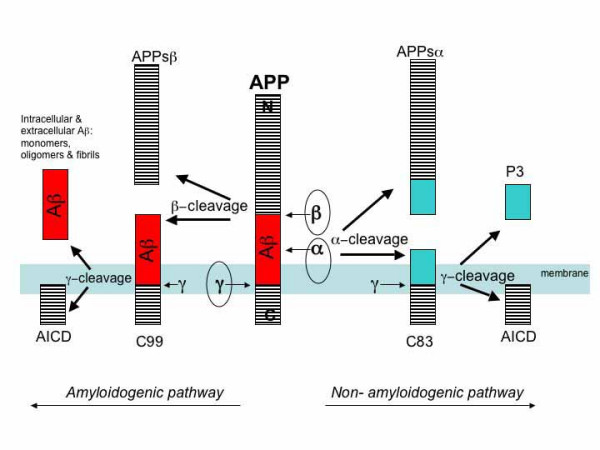
“Aβ genesis Aβ peptide is generated following the sequential cleavage of APP by β- and γ-secretase in the amyloidogenic pathway (reviewed in [19,20]).”
Goate, A., Chartier-Harlin, M.-C., Mullan, M., Brown, J., Crawford, F., Fidani, L., Giuffra, L., Haynes, A., Irving, N., James, L., et al. (1991) · Nature · doi:10.1038/349704a0 · Cited by 4,659 · cited 1×
“While familial AD (FAD) is caused by autosomal dominant mutations in either amyloid precursor protein (APP) [1,2] or the presenilin (PS1, PS2) [3,4] genes, the underlying cause (s) of the remaining ~98% of so-called sporadic AD (SAD) cases remain elusive.”
Inflammation and Alzheimer’s disease
Akiyama, H. (2000) · Neurobiology of Aging · doi:10.1016/s0197-4580(00)00124-x · Cited by 4,514
Correlative Memory Deficits, Aβ Elevation, and Amyloid Plaques in Transgenic Mice
Hsiao, K., Chapman, P., Nilsen, S., Eckman, C., Harigaya, Y., Younkin, S., Yang, F., & Cole, G. (1996) · Science · doi:10.1126/science.274.5284.99 · Cited by 4,210 · cited 2×
“To address this, we recently examined BACE1 levels in two Tg models of AD [97], namely the 5XFAD mouse [60] that develops amyloid plaques at young ages and exhibits significant neuronal loss, and the Tg2576 mouse [56], which develops plaques at older ages and does not show neuronal death.”
Vassar, R., Bennett, B. D., Babu-Khan, S., Kahn, S., Mendiaz, E. A., Denis, P., Teplow, D. B., Ross, S., Amarante, P., Loeloff, R., et al. (1999) · Science · doi:10.1126/science.286.5440.735 · Cited by 3,876 · cited 9×
“However, unlike BACE1, which is enriched in neuronal populations [23], human adult and fetal whole brain express very low or undetectable levels of BACE2 mRNA [50,74].”
InfluentialSelf-citationOakley, H., Cole, S. L., Logan, S., Maus, E., Shao, P., Craft, J., Guillozet-Bongaarts, A., Ohno, M., Disterhoft, J., Van Eldik, L., et al. (2006) · The Journal of Neuroscience · doi:10.1523/jneurosci.1202-06.2006 · Cited by 3,530 · cited 3×
“5XFAD mice exhibit aggressive pathology with plaque deposition occurring at 2 months and exhibit significant neuronal loss in AD-sensitive brain regions [60].”
Self-citationCandidate gene for the chromosome 1 familial Alzheimer’s disease locus
Levy-Lahad, E., Wasco, W., Poorkaj, P., Romano, D. M., Oshima, J., Pettingell, W. H., Yu, C.-E., Jondro, P. D., Schmidt, S. D., Wang, K., et al. (1995) · Science · doi:10.1126/science.7638622 · Cited by 2,577 · cited 2×
“While familial AD (FAD) is caused by autosomal dominant mutations in either amyloid precursor protein (APP) [1,2] or the presenilin (PS1, PS2) [3,4] genes, the underlying cause (s) of the remaining ~98% of so-called sporadic AD (SAD) cases remain elusive.”
Research works printed but not linked: 2
- Golde TE, Dickson D, Hutton M: Filling the gaps in the abeta cas- cade hypothesis of Alzheimer's disease. Curr Alzheimer Res 2006, 3(5):421-430.
- Hong HS, Hwang EM, Sim HJ, Cho HJ, Boo JH, Oh SS, Kim SU, Mook- Jung I: Interferon gamma stimulates beta-secretase expres- sion and sAPPbeta production in astrocytes. Biochem Biophys Res Commun 2003, 307(4):922-927.
Cited by
Items 201–300 of 590
Syeda, T., & Cannon, J. R. (2021) · Journal of Biochemical and Molecular Toxicology · doi:10.1002/jbt.22694 · Cited by 32
Zhao, J., Wang, M., Liu, W., Ma, Z., & Wu, J. (2020) · Neuroscience Letters · doi:10.1016/j.neulet.2020.135207 · Cited by 31
Curcumin as a potential therapeutic agent for treating neurodegenerative diseases
Perales-Salinas, V., Purushotham, S. S., & Buskila, Y. (2024) · Neurochemistry International · doi:10.1016/j.neuint.2024.105790 · Cited by 34
Yavari, M., Kalupahana, N. S., Harris, B. N., Ramalingam, L., Zu, Y., Kahathuduwa, C. N., & Moustaïd‐Moussa, N. (2025) · Nutrients · doi:10.3390/nu17071203 · Cited by 31
Salcedo, C., Wagner, A., Andersen, J. V., Vinten, K. T., Waagepetersen, H. S., Schousboe, A., Freude, K., & Aldana, B. I. (2021) · Neurochemical Research · doi:10.1007/s11064-021-03276-3 · Cited by 30
A Dichotomous Role for FABP7 in Sleep and Alzheimer’s Disease Pathogenesis: A Hypothesis
Needham, H., Torpey, G., Flores, C. C., Davis, C. J., Vanderheyden, W. M., & Gerstner, J. R. (2022) · Frontiers in Neuroscience · doi:10.3389/fnins.2022.798994 · Cited by 29
Is It the Twilight of BACE1 Inhibitors?
Hrabinova, M., Pejchal, J., Kucera, T., Jun, D., Schmidt, M., & Soukup, O. (2020) · Current Neuropharmacology · doi:10.2174/1570159x18666200503023323 · Cited by 28
Ettcheto, M., Abad, S., Petrov, D., Pedrós, I., Busquets, O., Sánchez‐López, E., Casadesús, G., Beas‐Zárate, C., Carro, E., Auladell, C., et al. (2017) · Molecular Neurobiology · doi:10.1007/s12035-017-0690-4 · Cited by 28
Zhumanova, K., Lee, G., Baiseitova, A., Shah, A. B., Kim, J. H., Kim, J. Y., Lee, K. W., & Park, K. H. (2021) · Journal of Ethnopharmacology · doi:10.1016/j.jep.2021.113935 · Cited by 31
Effect of β-amyloid on blood-brain barrier properties and function
Petrushanko, I. Y., Mitkevich, V. A., & Makarov, A. А. (2023) · Biophysical Reviews · doi:10.1007/s12551-023-01052-x · Cited by 29
“…of Beta-secretase 1 (BACE1), which is a responsible for the N-terminal cleavage of amyloid precursor protein (APP) in the amyloidogenic processing of APP (Cole & Vassar, 2007; Zhang & Xu, 2007), upon treatment of primary neurons with NO donors leads to a decrease of the enzyme activity (Kwak et al.”
InfluentialChon, S.-H., Yang, E. J., Lee, T., & Song, K. (2016) · Food & Function · doi:10.1039/c6fo00538a · Cited by 29
Kumar, V., Ojha, P. K., Saha, A., & Roy, K. (2019) · SAR and QSAR in environmental research · doi:10.1080/1062936x.2019.1695226 · Cited by 28
Devi, L., & Ohno, M. (2015) · Neuroscience · doi:10.1016/j.neuroscience.2015.08.037 · Cited by 30
Improving molecular docking through eHiTS’ tunable scoring function
Ravitz, O., Zsoldos, Z., & Simon, A. (2011) · Journal of Computer-Aided Molecular Design · doi:10.1007/s10822-011-9482-5 · Cited by 27
Andy, S. N., Pandy, V., Alias, Z., & Kadir, H. A. (2018) · Life Sciences · doi:10.1016/j.lfs.2018.05.035 · Cited by 28
Dyne, E. D., Prakash, P. S., Li, J., Yu, B., Schmidt, T. L., Huang, S. D., & Kim, M. (2021) · Nanomedicine Nanotechnology Biology and Medicine · doi:10.1016/j.nano.2021.102397 · Cited by 27
Shandilya, S., Kesari, K. K., & Ruokolainen, J. (2021) · Antioxidants · doi:10.3390/antiox10060983 · Cited by 26
Bhatnagar, D., Ladhe, S., & Kumar, D. (2023) · Molecular Neurobiology · doi:10.1007/s12035-023-03446-0 · Cited by 27
AβPP-Selective BACE Inhibitors (ASBI): Novel Class of Therapeutic Agents for Alzheimer's Disease
Descamps, O., Spilman, P. R., Zhang, Q., Libeu, C. P., Poksay, K. S., Gorostiza, O. F., Campagna, J. J., Jagodzinska, B. M., Bredesen, D. E., & John, V. (2013) · Journal of Alzheimer s Disease · doi:10.3233/jad-130578 · Cited by 31
Pinsetta, F. R., Taft, C. A., & da Silva, C. H. T. D. P. (2013) · Journal of Biomolecular Structure and Dynamics · doi:10.1080/07391102.2013.803441 · Cited by 26
New sesquiterpenoids from the rhizomes of Acorus tatarinowii
Feng, X., Yu, Y., Gao, H., Mu, Z., Cheng, X., Zhou, W., & Yao, X. (2014) · RSC Advances · doi:10.1039/c4ra06481j · Cited by 26
Amino Acid Sequence and Structural Comparison of BACE1 and BACE2 Using Evolutionary Trace Method
Mirsafian, H., Ripen, A. M., Merican, A. F., & Mohamad, S. B. (2014) · The Scientific World JOURNAL · doi:10.1155/2014/482463 · Cited by 29
Molecular drug targets and therapies for Alzheimer’s disease
Singh, D. B., Gupta, M., Kesharwani, R. K., Sagar, M., Dwivedi, S., & Misra, K. (2014) · Translational Neuroscience · doi:10.2478/s13380-014-0222-x · Cited by 31
Waiker, D. K., Verma, A., Saraf, P., Gajendra, T. A., Krishnamurthy, S., Chaurasia, R. N., & Shrivastava, S. K. (2023) · ACS Omega · doi:10.1021/acsomega.2c08061 · Cited by 27
Nuzzo, D., Inguglia, L., Walters, J., Picone, P., & Carlo, M. D. (2017) · Journal of Proteome Research · doi:10.1021/acs.jproteome.6b00925 · Cited by 26
DrosophilaNeprilysin 1 Rescues Memory Deficits Caused by Amyloid-β Peptide
Turrel, O., Goguel, V., & Préat, T. (2017) · Journal of Neuroscience · doi:10.1523/jneurosci.1634-17.2017 · Cited by 25
Hassan, M., Abbas, Q., Seo, S., Shahzadi, S., Alashwal, H., Zaki, N., Iqbal, Z., & Moustafa, A. A. (2018) · Molecular Medicine Reports · doi:10.3892/mmr.2018.9044 · Cited by 29
Min, K. C., Dockendorf, M. F., Palcza, J. S., Tseng, J., Ma, L., Stone, J. A., Kleijn, H. J., Hodsman, P., Masuo, K., Tanen, M., et al. (2019) · Clinical Pharmacology & Therapeutics · doi:10.1002/cpt.1258 · Cited by 26
Shalaby, M. A., Nounou, H. A., & Deif, M. M. (2019) · The Egyptian Journal of Neurology Psychiatry and Neurosurgery · doi:10.1186/s41983-019-0094-7 · Cited by 27
Sabbah, D. A., & Zhong, H. A. (2016) · Journal of Molecular Graphics and Modelling · doi:10.1016/j.jmgm.2016.07.005 · Cited by 25
Mass spectrometry methods for analysis of extracellular matrix components in neurological diseases
Downs, M. J., Zaia, J., & Sethi, M. K. (2022) · Mass Spectrometry Reviews · doi:10.1002/mas.21792 · Cited by 28
Park, J., Kim, D. Y., Hwang, G., & Han, I. (2023) · Journal of Neuroinflammation · doi:10.1186/s12974-023-02944-1 · Cited by 24
Li, J., Zhang, Y.-R., Wang, H.-F., Guo, Y., Shen, X., Li, M., Song, J., Tan, L., Xie, A., & Yu, J. (2023) · Alzheimer s & Dementia Diagnosis Assessment & Disease Monitoring · doi:10.1002/dad2.12517 · Cited by 30
Gunawan, C., Fleming, C. L., Irga, P. J., Wong, R. J., Amal, R., Torpy, F. R., Golzan, M., & McGrath, K. C. Y. (2024) · Environment International · doi:10.1016/j.envint.2024.108512 · Cited by 26
The Valsalva Maneuver and Alzheimers Disease: Is there a link?
Wostyn, P., Audenaert, K., & Deyn, P. P. D. (2009) · Current Alzheimer Research · doi:10.2174/156720509787313943 · Cited by 26
Protein structures in Alzheimer's disease: The basis for rationale therapeutic design
Montoliu‐Gaya, L., & Villegas, S. (2015) · Archives of Biochemistry and Biophysics · doi:10.1016/j.abb.2015.10.005 · Cited by 29
Chandrasekaran, S., & Bonchev, D. (2016) · PLoS ONE · doi:10.1371/journal.pone.0144052 · Cited by 25
Bouza, A. A., Philippe, J. M., Edokobi, N., Pinsky, A. M., Offord, J., Calhoun, J. D., Lopez-Florán, M., Lopez‐Santiago, L. F., Jenkins, P. M., & Isom, L. L. (2020) · Journal of Biological Chemistry · doi:10.1074/jbc.ra120.013978 · Cited by 23
Abdollahi, Z., Nejabat, M., Abnous, K., & Hadizadeh, F. (2024) · Research in Pharmaceutical Sciences · doi:10.4103/1735-5362.394816 · Cited by 23
Mulumba, J., Duan, R., Luo, B., Wu, J., Sulaiman, M., Wang, F., & Yang, Y. (2025) · Exploration of neuroscience · doi:10.37349/en.2025.100675 · Cited by 25
Dakterzada, F., Benitez, I. D., Targa, A., Lladó, A., Torres, G., Romero, L., de Gonzalo‐Calvo, D., Moncusí‐Moix, A., Tort‐Merino, A., Huerto, R. P., et al. (2021) · Frontiers in Aging Neuroscience · doi:10.3389/fnagi.2021.705989 · Cited by 26
Delta- and beta- secretases crosstalk amplifies the amyloidogenic pathway in Alzheimer’s disease
Xia, Y., Wang, Z.-H., Zhang, Z., Liu, X., Yu, S. P., Wang, J., Wang, X., & Ye, K. (2021) · Progress in Neurobiology · doi:10.1016/j.pneurobio.2021.102113 · Cited by 22
Panda, S. P., & Soni, U. (2022) · Ageing Research Reviews · doi:10.1016/j.arr.2022.101560 · Cited by 22
Amyloidogenesis: What Do We Know So Far?
Alraawi, Z., Banerjee, N., Mohanty, S., & Kumar, T. K. S. (2022) · International Journal of Molecular Sciences · doi:10.3390/ijms232213970 · Cited by 23
Kedia, S., Ramakrishna, P., Netrakanti, P. R., Singh, N., Sisodia, S. S., Jose, M., Kumar, S., Mahadevan, A., Ramanan, N., Nadkarni, S., et al. (2020) · iScience · doi:10.1016/j.isci.2020.101924 · Cited by 25
Armbrust, F., Bickenbach, K., Marengo, L., Pietrzik, C. U., & Becker‐Pauly, C. (2021) · Biochimica et Biophysica Acta (BBA) - Molecular Cell Research · doi:10.1016/j.bbamcr.2021.119164 · Cited by 22
SEPT8 modulates β-amyloidogenic processing of APP by affecting the sorting and accumulation of BACE1
Kurkinen, K. M. A., Marttinen, M., Turner, L. J., Natunen, T., Mäkinen, P. M., Haapalinna, F., Sarajärvi, T., Gabbouj, S., Kurki, M., Paananen, J., et al. (2016) · Journal of Cell Science · doi:10.1242/jcs.185215 · Cited by 26
Machálková, M., Schejbal, J., Glatz, Z., & Preisler, J. (2018) · Analytical and Bioanalytical Chemistry · doi:10.1007/s00216-018-1354-6 · Cited by 22
Neuronal KCNQ2/3 channels are recruited to lipid raft microdomains by palmitoylation of BACE1
Dai, G. (2022) · The Journal of General Physiology · doi:10.1085/jgp.202112888 · Cited by 23
Bajda, M., Jończyk, J., Malawska, B., & Filipek, S. (2014) · International Journal of Molecular Sciences · doi:10.3390/ijms15035128 · Cited by 21
Ogunruku, O. O., Oboh, G., Passamonti, S., Tramer, F., & Boligon, A. A. (2017) · Journal of Medicinal Food · doi:10.1089/jmf.2016.0077 · Cited by 23
Zhao, H., Huang, X., & Tong, Z. (2021) · ChemMedChem · doi:10.1002/cmdc.202100428 · Cited by 23
Bao, J., Liang, Z., Gong, X., Yu, J., Xiao, Y., Liu, W. D., Wang, X., Wang, J., & Shu, X. (2021) · Journal of Alzheimer s Disease · doi:10.3233/jad-215299 · Cited by 20
Iram, F., Shahid, M., Ansari, J., Ashraf, G. M., Hassan, M. I., & Islam, A. (2024) · Ageing Research Reviews · doi:10.1016/j.arr.2024.102342 · Cited by 22
Mancini, F., & Andrisano, V. (2009) · Journal of Pharmaceutical and Biomedical Analysis · doi:10.1016/j.jpba.2009.07.012 · Cited by 20
Dynamics in the Active Site of β-Secretase: A Network Analysis of Atomistic Simulations
Mishra, S., & Caflisch, A. (2011) · Biochemistry · doi:10.1021/bi2011948 · Cited by 21
Lim, S., Tran, D. N., Zumkehr, J., Chen, C., Ghiaar, S., Kieu, Z., Villanueva, E., Gallup, V., Rodríguez‐Ortiz, C. J., & Kitazawa, M. (2018) · Glia · doi:10.1002/glia.23522 · Cited by 21
Singh, R., Ganeshpurkar, A., Ghosh, P., Pokle, A. V., Kumar, D., Singh, R. B., Singh, S. K., & Kumar, A. (2021) · Chemical Biology & Drug Design · doi:10.1111/cbdd.13965 · Cited by 20
Sun, X., Chen, R., Zhang, T., Sun, Y., Sun, Y., Chen, W., Shi, N., Shen, F., Zhang, Y., & Liu, K. (2015) · Neural Regeneration Research · doi:10.4103/1673-5374.165511 · Cited by 20
“…results showed that Aβ expression increased after cerebral ischemia (Zhang et al., 2011) and many studies have reported that BACE1 activity may affect Aβ generation (Sun et al., 2006; Cole and Vassar, 2007; Gravenfors et al., 2012; Obregon et al., 2012; Zhu et al., 2012; Yun et al., 2013).”
Lessons from genome‐wide association studies findings in Alzheimer's disease
Moraes, C. F., Lins, T. C. D. L., CARMARGOS, E. F., Naves, J. O. S., Pereira, R. W., & Nóbrega, O. D. T. (2011) · Psychogeriatrics · doi:10.1111/j.1479-8301.2011.00378.x · Cited by 22
Ashwini, P., Bodhankar, S. L., Muthal, A., Kumar, D., Pawar, A., & Kulkarni, R. (2024) · Acta Pharmaceutica Sinica B · doi:10.1016/j.apsb.2024.11.016 · Cited by 19
Inclusion Body Myositis: A View from the Caenorhabditis elegans Muscle
Rebolledo, D. L., Minniti, A. N., Grez, P. M., Fadić, R., Kohn, R. E., & Inestrosa, N. C. (2008) · Molecular Neurobiology · doi:10.1007/s12035-008-8041-0 · Cited by 19
Effect of sampling on BACE-1 ligands binding free energy predictions via MM-PBSA calculations
Chéron, N., & Shakhnovich, E. I. (2017) · Journal of Computational Chemistry · doi:10.1002/jcc.24839 · Cited by 19
Safar, M. M., Shahin, N. N., Mohamed, A. F., & Abdelkader, N. F. (2020) · Chemico-Biological Interactions · doi:10.1016/j.cbi.2020.109144 · Cited by 21
Zhang, Y., Xie, X., Chen, B., Pan, L., Li, J., Wang, W., Wang, J., Tang, R., Huang, Q., Chen, X., et al. (2023) · Genes & Diseases · doi:10.1016/j.gendis.2023.02.051 · Cited by 20
pH ‐dependent conformational dynamics of beta‐secretase 1: A molecular dynamics study
Mermelstein, D. J., McCammon, J. A., & Walker, R. C. (2018) · Journal of Molecular Recognition · doi:10.1002/jmr.2765 · Cited by 19
Liu, X., Lv, M., Huang, M., Yu-qiu, S., Gao, P., & Li, D. (2019) · Journal of Food Biochemistry · doi:10.1111/jfbc.12955 · Cited by 23
Zhang, S., Lin, Z., Pu, Y., Zhang, Y., Zhang, L., & Zuo, Z. (2016) · Computational Biology and Chemistry · doi:10.1016/j.compbiolchem.2016.12.008 · Cited by 20
Uddin, M. S., & Haque, A. (2016) · Journal of Neurology & Neurophysiology · doi:10.4172/2155-9562.1000397 · Cited by 21
Dallé, E., Mabandla, M. V., & Daniels, W. M. U. (2020) · Oxidative Medicine and Cellular Longevity · doi:10.1155/2020/5756382 · Cited by 19
MicroRNAs in Age-Related Proteostasis and Stress Responses
Matai, L., & Slack, F. J. (2023) · Non-Coding RNA · doi:10.3390/ncrna9020026 · Cited by 19
11C-Labeling of a potent hydroxyethylamine BACE-1 inhibitor and evaluation in vitro and in vivo
Nordeman, P., Estrada, S., Odell, L. R., Larhed, M., & Antoni, G. (2014) · Nuclear Medicine and Biology · doi:10.1016/j.nucmedbio.2014.03.024 · Cited by 18
Tagad, H. D., Hamada, Y., Nguyen, J., Hidaka, K., Hamada, T., Sohma, Y., Kimura, T., & Kiso, Y. (2011) · Bioorganic & Medicinal Chemistry · doi:10.1016/j.bmc.2011.07.002 · Cited by 18
Hwang, C. J., Park, M. H., Choi, M. K., Choi, J. S., Oh, K. W., Hwang, D. Y., Han, S., & Hong, J. T. (2015) · Brain Behavior and Immunity · doi:10.1016/j.bbi.2015.11.013 · Cited by 19
Meng, Y., Xu, B.-Q., Fu, Z., Wu, B., Xu, B., Chen, Z., & Li, L. (2015) · PubMed · Cited by 18
Iyappan, A., Bagewadi, S., Raschka, T., Hofmann‐Apitius, M., & Senger, P. (2016) · Journal of Biomedical Semantics · doi:10.1186/s13326-016-0079-8 · Cited by 21
Jiang-Li, T., Li, Q., Ciccotosto, G. D., Crouch, P. J., Culvenor, J. G., White, A. R., & Evin, G. M. (2013) · PLoS ONE · doi:10.1371/annotation/da7ad86d-a5dc-4b03-981b-e44a2392c67b · Cited by 18
Hippman, R. S., Snead, A. M., Petros, Z. A., Korkmaz, M. A., Patel, S., Sotelo, D., Dobria, A., Salkovski, M., Nguyen, T. T. A., Linares-Saldana, R., et al. (2023) · ACS Chemical Neuroscience · doi:10.1021/acschemneuro.3c00573 · Cited by 17
Liu, L., Liang, J., Liu, Y.-H., Liu, B., Dong, X., Cai, W.-H., & Zhang, N. (2024) · Heliyon · doi:10.1016/j.heliyon.2024.e30523 · Cited by 17
RetractedKaur, S., Sharma, K., Sharma, A., Sandha, K. K., Ali, S. M., Ahmed, R., Ramajayan, P., Singh, P. P., Ahmed, Z., & Kumar, A. (2024) · Frontiers in Immunology · doi:10.3389/fimmu.2024.1418422 · Cited by 18
“NF-ĸ B can also increase the activity of BACE1 to enhance the production of A b (12).”
Quantum mechanics study of the hydroxyethylamines–BACE-1 active site interaction energies
Gueto-Tettay, C. A., Drosos, J. C., & Vivas‐Reyes, R. (2011) · Journal of Computer-Aided Molecular Design · doi:10.1007/s10822-011-9443-z · Cited by 17
Methyl B12 protects PC12 cells against cytotoxicity induced by Aβ25−35
Wang, M., & Xu, T. (2019) · Journal of Cellular Biochemistry · doi:10.1002/jcb.28475 · Cited by 19
Mujawah, A., Rauf, A., Bawazeer, S., Wadood, A., Hemeg, H. A., & Bawazeer, S. S. (2023) · Processes · doi:10.3390/pr11030880 · Cited by 17
Niu, M., Hu, J., Wu, S., Zhang, X., Xu, H., Zhang, Y., Zhang, J., & Yang, Y. (2013) · Chemical Biology & Drug Design · doi:10.1111/cbdd.12200 · Cited by 17
Escalona-Rayo, O., Fuentes-Vázquez, P., Leyva‐Gómez, G., Cisneros, B., Villalobos, R., Magaña, J. J., & Quintanar‐Guerrero, D. (2017) · Drug Development and Industrial Pharmacy · doi:10.1080/03639045.2017.1281949 · Cited by 17
Ye, N., Monk, S. A., Daga, P., Bender, D. M., Rosen, L. B., Mullen, J., Minkwitz, M. C., & Kugler, A. R. (2018) · Clinical Pharmacology in Drug Development · doi:10.1002/cpdd.422 · Cited by 19
Salivary Exosomes in Health and Disease: Future Prospects in the Eye
Liu, A., Hefley, B. S., Escandon, P., Nicholas, S. E., & Karamichos, D. (2023) · International Journal of Molecular Sciences · doi:10.3390/ijms24076363 · Cited by 16
Pleiotropic and sex-specific genetic mechanisms of circulating metabolic markers
van der Meer, D., Rahman, Z., Ottas, A., Parekh, P., Kutrolli, G., Stinson, S. E., Koromina, M., Rokicki, J., Sønderby, I. E., Parker, N., et al. (2025) · Nature Communications · doi:10.1038/s41467-025-60058-z · Cited by 17
Whitehouse, I. J., Brown, D., Baybutt, H. N., Diack, A. B., Kellett, K. A. B., Piccardo, P., Manson, J. C., & Hooper, N. M. (2016) · PLoS ONE · doi:10.1371/journal.pone.0159119 · Cited by 16
Manzine, P. R., Souza, M. S., & Cominetti, M. R. (2016) · Personalized Medicine · doi:10.2217/pme-2016-0033 · Cited by 16
Kim, M., Youn, K., Yun, E., Hwang, J., Ahn, M., Jeong, W., & Jun, M. (2014) · Entomological Research · doi:10.1111/1748-5967.12046 · Cited by 17
Design, Synthesis, and Biological Evaluation of Novel Fluorinated Ethanolamines
Fustero, S., Cuñat, A. C., Flores, S., Báez, C., Oliver–Meseguer, J., Cynamon, M. H., Gütschow, M., Mertens, M. D., Delgado, Ó., Tresadern, G., et al. (2011) · Chemistry - A European Journal · doi:10.1002/chem.201102078 · Cited by 19
Mellado-López, M., Cuartero, Y., Brugada, R., & Vergés, M. (2014) · Biology of the Cell · doi:10.1111/boc.201400011 · Cited by 17
Caffeine as Treatment for Alzheimer's Disease: A Review
Mohan, A., Roberto, A. J., Mohan, A., Liogier-Weyback, L., Guha, R., Ravishankar, N., Rebello, C., Kumar, A., & Mohan, R. (2015) · Journal of Caffeine Research · doi:10.1089/jcr.2014.0027 · Cited by 16
Kumar, M., Swanson, N., Ray, S., Buch, S. J., Saraswathi, V., & Sil, S. (2024) · Cells · doi:10.3390/cells13141173 · Cited by 15
Lehmann, S., Schraen‐Maschke, S., Buée, L., Vidal, J., Delaby, C., Hirtz, C., Blanc, F., Paquet, C., Allinquant, B., Bombois, S., et al. (2024) · Molecular Neurodegeneration · doi:10.1186/s13024-024-00755-3 · Cited by 16
Biase, E. D., Connolly, K. J., Crumpton, I. S., Cooper, O., Hallett, P. J., & Isacson, O. (2025) · Scientific Reports · doi:10.1038/s41598-025-96531-4 · Cited by 16
Iqbal, S., Raju, P., S, N. S., Lokanath, N. K., Mohanakrishnan, A. K., & Gunasekaran, K. (2021) · Journal of Biomolecular Structure and Dynamics · doi:10.1080/07391102.2021.1877197 · Cited by 15
Mechanisms of amyloid-β34 generation indicate a pivotal role for BACE1 in amyloid homeostasis
Ulku, I., Liebsch, F., Åkerman, S., Schulz, J. F., Kulic, L., Höck, C., Pietrzik, C. U., Spiezio, A. D., Thinakaran, G., Säftig, P., et al. (2023) · Scientific Reports · doi:10.1038/s41598-023-28846-z · Cited by 16
Use of Statins and Risk of Dementia in Heart Failure: A Retrospective Cohort Study
Chitnis, A. S., Aparasu, R. R., Chen, H., Kunik, M. E., Schulz, P. E., & Johnson, M. L. (2015) · Drugs & Aging · doi:10.1007/s40266-015-0295-4 · Cited by 15
Metadata
- Authors
- Cole, S. L., & Vassar, R.
- Affiliations
- Northwestern University (US)
- Corresponding author
- Vassar, Robert
- ORCID
- Vassar, Robert
- Venue
- Molecular Neurodegeneration
- Published
- 2007
- Volume
- 2
- Issue
- 1
- Pages
- 22
- ISSN
- 1750-1326 (ISSN-L)
- PMC
- PMC2211305
- OpenAlex
- W2129495914
- Cited by
- 550
- References
- 254
- Citations by year
- 2026: 27 · 2025: 53 · 2024: 45 · 2023: 46 · 2022: 27 · 2021: 40 · 2020: 32 · 2019: 30 · 2018: 20 · 2017: 25 · 2016: 31 · 2015: 25 · 2014: 27 · 2013: 27 · 2012: 23
- FWCI
- 10.06
- Type
- journal article
- Language
- en
- Open access
- gold
- doi.org
- Licence
- cc-by
- Locations
- Molecular Neurodegeneration (publishedVersion, cc-by)
- PubMed Central (publishedVersion, cc-by)
- PubMed (publishedVersion)
- DOAJ (DOAJ: Directory of Open Access Journals) (submittedVersion, cc-by-sa)
- Funders
- John Douglas French Alzheimer's Foundation
- National Institute on Aging (P01AG021184)
- Topics
- Life Sciences › Neuroscience › Cellular and Molecular Neuroscience › Alzheimer's disease research and treatments
- Health Sciences › Medicine › Psychiatry and Mental health › Dementia and Cognitive Impairment Research
- Health Sciences › Medicine › Pharmacology (medical) › Cholinesterase and Neurodegenerative Diseases
- Keywords
- Alzheimer's disease, BACE1, beta-secretase, amyloid-beta, amyloid plaques, BACE1 inhibition, vascular disease, Alzheimer's disease risk factors, neurodegeneration, memory impairment
About these checks
Registry, retraction, Cites and statistics results are computed, not judged, with one exception: a printed reference that no index lists is read once by a model before it counts as a citation error. Claims are extracted by a model and kept only when their quote appears verbatim in the text; each cited source is then checked, with a model’s help, for whether it says what the claim relies on. Those verdicts can be wrong — read the claim’s quote and the cited source before relying on one.
Statistics and arithmetic are recomputed, not judged.
Confidence bands are shown only for fields calibrated on our annotated test set. None is calibrated yet, so no band is shown.
What counts as a claim ›How we measure confidence ›How we check this ›
Are you an author, or do you see a problem with this page? Request a review
Data sources
Bibliographic data: Semantic Scholar, OpenAlex, Crossref.
Contains information from the Semantic Scholar Academic Graph Datasets, made available under the ODC Attribution License (ODC-BY 1.0).
Semantic Scholar’s data is described in: Kinney, R., et al. (2023). The Semantic Scholar Open Data Platform. arXiv:2301.10140.
