

The Alzheimer's disease Beta-secretase enzyme, BACE1
Open accessThe DOI matches its Crossref record; 253 of the 254 references it cites were found in a registry or an index.
Abstract
The pathogenesis of Alzheimer's disease is highly complex. While several pathologies characterize this disease, amyloid plaques, composed of the beta-amyloid peptide are hallmark neuropathological lesions in Alzheimer's disease brain. Indeed, a wealth of evidence suggests that beta-amyloid is central to the pathophysiology of AD and is likely to play an early role in this intractable neurodegenerative disorder. The BACE1 enzyme is essential for the generation of beta-amyloid. BACE1 knockout mice do not produce beta-amyloid and are free from Alzheimer's associated pathologies including neuronal loss and certain memory deficits. The fact that BACE1 initiates the formation of beta-amyloid, and the observation that BACE1 levels are elevated in this disease provide direct and compelling reasons to develop therapies directed at BACE1 inhibition thus reducing beta-amyloid and its associated toxicities. However, new data indicates that complete abolishment of BACE1 may be associated with specific behavioral and physiological alterations. Recently a number of non-APP BACE1 substrates have been identified. It is plausible that failure to process certain BACE1 substrates may underlie some of the reported abnormalities in the BACE1-deficient mice. Here we review BACE1 biology, covering aspects ranging from the initial identification and characterization of this enzyme to recent data detailing the apparent dysregulation of BACE1 in Alzheimer's disease. We pay special attention to the putative function of BACE1 during healthy conditions and discuss in detail the relationship that exists between key risk factors for AD, such as vascular disease (and downstream cellular consequences), and the pathogenic alterations in BACE1 that are observed in the diseased state.
Overview
The claims and statistics of this paper haven’t been checked yet.
Free: it reads the open-access text and checks the first 5 claims that cite a source we can check. Create a free account to check every claim.
Integrity signals
Registry
Cites
Statistics
Figures
Verification
Claims the paper makes
The claims and statistics of this paper haven’t been checked yet.
Free: it reads the open-access text and checks the first 5 claims that cite a source we can check. Create a free account to check every claim.
Claims other papers make about this one
Each is checked against this paper’s own text: does it say what the citing paper says it does?
The source backs part of the claim, not all of it — or backs it for a different population, condition or comparison.
In the citing paper
“Abnormal activation of microglia and astrocytes is observed in the brains of AD patients15 and APPPS1–21 transgenic model mice13.”
From Deletion of SPI1 in microglia exacerbates amyloid pathology by impairing microglial response in Alzheimer’s disease models (2026) · cites this paper as [15]
Experimental — accuracy not yet measuredThe check wasn’t confident either way, so it gives no verdict — never disputed.
In the citing paper
“Activated microglia surround amyloid plaques in the brains of both human patients with AD and mouse models of Aβ amyloidosis13,15,21,22.”
From Deletion of SPI1 in microglia exacerbates amyloid pathology by impairing microglial response in Alzheimer’s disease models (2026) · cites this paper as [15]
Experimental — accuracy not yet measured
Self-check
Percentages, sums and reported differences re-computed from the paper’s own numbers.
The self-check needs the paper’s full text.
Citations
Cites
Part of this paper’s reference list could not be split into single entries.
2 retracted
Puglielli, L., Ellis, B. C., Saunders, A. J., & Kovacs, D. M. (2003) · Journal of Biological Chemistry · doi:10.1074/jbc.m300466200 · Cited by 265
RetractedGhribi, O., Larsen, B., Schrag, M., & Herman, M. M. (2006) · Experimental Neurology · doi:10.1016/j.expneurol.2006.03.019 · Cited by 151 · cited 3×
“BACE1 levels are elevated under a variety of conditions, including those cellular changes evoked under the stressful conditions of cardio- and cerebrovascular disease ([97,166,173,209-215]).”
RetractedCorder, E. H., Saunders, A. M., Strittmatter, W. J., Schmechel, D. E., Gaskell, P. C., Small, G. W., Roses, A. D., Haines, J. L., & Pericak-Vance, M. A. (1993) · Science · doi:10.1126/science.8346443 · Cited by 9,429 · cited 1×
“However, specific risk factors for AD have been recently identified and include aging, the presence of the apolipoprotein E4 (ApoE4) allele [5] and vascular diseases such as stroke and heart disease [6-10].”
Alzheimer's Disease: Genes, Proteins, and Therapy
Selkoe, D. J. (2001) · Physiological Reviews · doi:10.1152/physrev.2001.81.2.741 · Cited by 6,063 · cited 1×
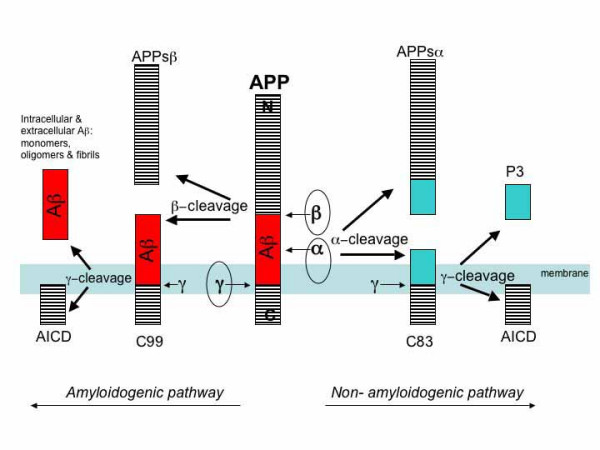
“Aβ genesis Aβ peptide is generated following the sequential cleavage of APP by β- and γ-secretase in the amyloidogenic pathway (reviewed in [19,20]).”
Goate, A., Chartier-Harlin, M.-C., Mullan, M., Brown, J., Crawford, F., Fidani, L., Giuffra, L., Haynes, A., Irving, N., James, L., et al. (1991) · Nature · doi:10.1038/349704a0 · Cited by 4,659 · cited 1×
“While familial AD (FAD) is caused by autosomal dominant mutations in either amyloid precursor protein (APP) [1,2] or the presenilin (PS1, PS2) [3,4] genes, the underlying cause (s) of the remaining ~98% of so-called sporadic AD (SAD) cases remain elusive.”
Inflammation and Alzheimer’s disease
Akiyama, H. (2000) · Neurobiology of Aging · doi:10.1016/s0197-4580(00)00124-x · Cited by 4,514
Correlative Memory Deficits, Aβ Elevation, and Amyloid Plaques in Transgenic Mice
Hsiao, K., Chapman, P., Nilsen, S., Eckman, C., Harigaya, Y., Younkin, S., Yang, F., & Cole, G. (1996) · Science · doi:10.1126/science.274.5284.99 · Cited by 4,210 · cited 2×
“To address this, we recently examined BACE1 levels in two Tg models of AD [97], namely the 5XFAD mouse [60] that develops amyloid plaques at young ages and exhibits significant neuronal loss, and the Tg2576 mouse [56], which develops plaques at older ages and does not show neuronal death.”
Vassar, R., Bennett, B. D., Babu-Khan, S., Kahn, S., Mendiaz, E. A., Denis, P., Teplow, D. B., Ross, S., Amarante, P., Loeloff, R., et al. (1999) · Science · doi:10.1126/science.286.5440.735 · Cited by 3,876 · cited 9×
“However, unlike BACE1, which is enriched in neuronal populations [23], human adult and fetal whole brain express very low or undetectable levels of BACE2 mRNA [50,74].”
InfluentialSelf-citationOakley, H., Cole, S. L., Logan, S., Maus, E., Shao, P., Craft, J., Guillozet-Bongaarts, A., Ohno, M., Disterhoft, J., Van Eldik, L., et al. (2006) · The Journal of Neuroscience · doi:10.1523/jneurosci.1202-06.2006 · Cited by 3,530 · cited 3×
“5XFAD mice exhibit aggressive pathology with plaque deposition occurring at 2 months and exhibit significant neuronal loss in AD-sensitive brain regions [60].”
Self-citationCandidate gene for the chromosome 1 familial Alzheimer’s disease locus
Levy-Lahad, E., Wasco, W., Poorkaj, P., Romano, D. M., Oshima, J., Pettingell, W. H., Yu, C.-E., Jondro, P. D., Schmidt, S. D., Wang, K., et al. (1995) · Science · doi:10.1126/science.7638622 · Cited by 2,577 · cited 2×
“While familial AD (FAD) is caused by autosomal dominant mutations in either amyloid precursor protein (APP) [1,2] or the presenilin (PS1, PS2) [3,4] genes, the underlying cause (s) of the remaining ~98% of so-called sporadic AD (SAD) cases remain elusive.”
Research works printed but not linked: 2
- Golde TE, Dickson D, Hutton M: Filling the gaps in the abeta cas- cade hypothesis of Alzheimer's disease. Curr Alzheimer Res 2006, 3(5):421-430.
- Hong HS, Hwang EM, Sim HJ, Cho HJ, Boo JH, Oh SS, Kim SU, Mook- Jung I: Interferon gamma stimulates beta-secretase expres- sion and sAPPbeta production in astrocytes. Biochem Biophys Res Commun 2003, 307(4):922-927.
Cited by
Items 501–590 of 590
Aggregation of alpha-synuclein using single-molecule spectroscopy
Iljina, M. (2017) · Apollo (University of Cambridge) · doi:10.17863/cam.8525
de dans la maladie d'Alzheimer
Sévalle, J. (2009)
Bram, J. M. D. F. (2017) · Digital Library of Theses and Dissertations (Universidade de São Paulo) · doi:10.11606/d.5.2017.tde-28072017-134924
Alzheimer’s Disease: Have We Been Focusing on the Wrong Proteins?
Gotesman, R. D. (2017) · Cited by 1
Cam, M. (2017) · theses.fr (ABES) · doi:10.70675/9cfadbadz6a4ez4260z8fe4z5caafc03a3fb
Análisis de la memoria visual y verbal en la demencia tipo Alzheimer leve
Pereira, G. E. P. (2016) · Gredos (University of Salamanca) · doi:10.14201/gredos.132819
Effects and Possible Mechanisms of Some Phytochemicals on Drosophila Models of Alzheimer’s Disease
왕설 (2016) · Seoul National University Open Repository (Seoul National University)
Lukka, P. B., Wagh, S., & Meibohm, B. (2019) · Wiley eBooks · doi:10.1002/9781119289234.ch9
Multimodal Chemical Imaging of Amyloid Plaque Pathology in Alzheimer’s Disease
Michno, W. (2019) · Gothenburg University Publications Electronic Archive (Gothenburg University)
Louadi, S. (2019) · cIRcle (University of British Columbia) · doi:10.14288/1.0369271
Magnolia officinalis Rehder & E.H.Wilson
Süntar, I. P., & Bosdancı, G. (2020) · Elsevier eBooks · doi:10.1016/b978-0-12-819212-2.00030-x
AKSOY, G., Lüleyap, H. Ü., Evyapan, G., Pazarcı, P., Alptekın, D., Pazarbaşı, A., & Yılmaz, M. B. (2021) · Çukurova medical journal (Online)/Çukurova medical journal · doi:10.17826/cumj.870361
Cerebrovascular Dysfunction and Degeneration in Alzheimer’s Disease Pathophysiology
Quintana, D. D. (2020) · The Research Repository @ WVU (West Virginia University) · doi:10.33915/etd.7941
Activation of Astrocytes in Neurodegenerative Diseases
Li, J., & Qin, S. (2021) · Neuromethods · doi:10.1007/978-1-0716-1712-0_3
Heparan sulphate compounds regulate cholesterol metabolism in neurodegenerative disease models
Heathcott, R. W. (2015) · Open Access Victoria University of Wellington | Te Herenga Waka (Figshare) · doi:10.26686/wgtn.17148107
Progress of Nanotechnology-Based Detection and Treatment of Alzheimer’s Disease Biomarkers
Singh, Y. R., Shukla, A., & Pattanayek, S. K. (2022) · Springer eBooks · doi:10.1007/978-981-16-3667-7_3 · Cited by 2
(2015) · Elsevier eBooks · doi:10.1016/b978-3-437-31618-0.16001-8
BAŞOL, C., Kerry, Z., & Yetik-Anacak, G. (2022) · Journal of Literature Pharmacy Sciences · doi:10.5336/pharmsci.2021-87228
Effect of sodium channels in Alzheimer’s disease
Li, M. (2023) · Highlights in Science Engineering and Technology · doi:10.54097/hset.v36i.5677
Yousefi, R., Mokarmian, R., & jamshidi, A. (2023) · Journal of Advanced Pharmacy Research · doi:10.21608/aprh.2023.219909.1223
Trisubstituted 1,3,5-Triazines and Their Effect on BACE1
Majerová, P., Gerhardtová, I., Havránková, E., Jankech, T., Kováč, A., & Jampílek, J. (2023) · doi:10.3390/ecsoc-27-16111
“BACE1 (otherwise known as β -secretase) [20,21] is an enzyme that, in its subsequent interaction with γ -secretase, cleaves the amyloid precursor protein into the insoluble A β 42 isoform of the amyloid-β (A β ) protein (the so-called “amyloidogenic pathway”) [22].”
PLASMA β-SECRETASE1 (BACE1) LEVELS AS MARKER OF COGNITIVE FUNCTION DECLINE IN ELDERLY
Syahna, S. A., Ichwan, M., Meutia, N., Siregar, J., Yamamoto, Z., & Yamamoto, Z. (2023) · International Journal of Ecophysiology · doi:10.32734/ijoep.v5i2.14129
Kushwah, S., & Mani, A. (2024) · Current Alzheimer Research · doi:10.2174/0115672050323622240705043337
FRCP, C. G. N. M., & FRCP, K. J. W. M. (2012) · Wiley eBooks · doi:10.1002/9781394321995.ch4
Introduction to Enzymes in Neurodegeneration
Ratan, C., Marathakam, A., & Mazhuvanchery, M. K. U. (2024) · Springer eBooks · doi:10.1007/978-981-97-6822-6_1
Nicholl, C. G., Wilson, K. J., & D'Souza, S. (2025) · Wiley eBooks · doi:10.1002/9781394397976.ch8
In silico evaluation of ginsenoside analogs as β and γ-secretase inhibitors in Alzheimer’s disease
Contreras‐Puentes, N., Manzur-Villalobos, I., Vargas-Chico, S., & Amador, A. A. (2025) · Journal of Pharmacy & Pharmacognosy Research · doi:10.56499/jppres24.2229_13.s1.190
Biswas, P., Shanbhog, S., Sudha, M., & Desai, B. M. A. (2025) · Advanced Neurology · doi:10.36922/an025190052
The Role of c-Abl in Alzheimer’s Disease: Guilty or not Guilty?
Li, W., Wang, X., Liu, J., & Chen, Y. (2025) · Cellular and Molecular Neurobiology · doi:10.1007/s10571-025-01650-1
“In normal brains, BACE1 is highly expressed at both the mRNA and protein levels, and its absence leads to cognitive impairment in young adult mouse models of traumatic brain injury(Cole and Vassar 2007; Mannix et al. 2011).”
REGULATION OF LOW DENSITY LIPOPROTEIN RECEPTOR SPLICING EFFICIENCY
Ling, I. (2009) · UKnowledge (University of Kentucky)
Zakaria, J. A. D. (2013) · Open Scholarship Institutional Repository (Washington University in St. Louis) · doi:10.7936/k7125qnb
Benchekroun, M. (2014) · theses.fr (ABES) · doi:10.70675/984b3e87z767cz4b9fzabfaz31b1bdf47bf7 · Cited by 1
Zhang, Q., Zhang, J., Ye, J., Li, X., Liu, H., Ma, X., Wang, C., He, K., Zhang, W., Yuan, J., et al. (2021) · Figshare · doi:10.6084/m9.figshare.16664627
Park, J. ‐., Kim, D. Y., Hwang, G. S., & Han, I.-O. (2024) · Figshare · doi:10.6084/m9.figshare.24540863
Soelter, T. M., Howton, T. C., Clark, A. D., Oza, V. H., & Lasseigne, B. N. (2024) · Figshare · doi:10.6084/m9.figshare.26730970
Soelter, T. M., Howton, T. C., Clark, A. D., Oza, V. H., & Lasseigne, B. N. (2024) · Figshare · doi:10.6084/m9.figshare.26730961
Park, J. ‐., Kim, D. Y., Hwang, G. S., & Han, I.-O. (2024) · Figshare · doi:10.6084/m9.figshare.26637738
Park, J. ‐., Kim, D. Y., Hwang, G. S., & Han, I.-O. (2024) · Figshare · doi:10.6084/m9.figshare.26637741
Park, J. ‐., Kim, D. Y., Hwang, G. S., & Han, I.-O. (2024) · Figshare · doi:10.6084/m9.figshare.26637744
Soelter, T. M., Howton, T. C., Clark, A. D., Oza, V. H., & Lasseigne, B. N. (2024) · Figshare · doi:10.6084/m9.figshare.26730964
Park, J. ‐., Kim, D. Y., Hwang, G. S., & Han, I.-O. (2023) · Figshare · doi:10.6084/m9.figshare.24540682
Soelter, T. M., Howton, T. C., Clark, A. D., Oza, V. H., & Lasseigne, B. N. (2024) · Figshare · doi:10.6084/m9.figshare.26730967
Whelan, J. (2021) · Otago University Research Archive (University of Otago)
Lathifah Halim Purnama Sari (2023) · Repository at Universitas Pendidikan Indonesia (Universitas Pendidikan Indonesia)
Rastija, A. (2023) · Institutional Repository of the Ruđer Bošković Institute (Ruđer Bošković Institute)
Quijano-Guerrero, D. P. (2021) · El Repositorio Academico Digital de la UANL (Universidad Autónoma de Nuevo León) · Cited by 1
APOE, Biomarkers, and Proteogenomics in Alzheimer’s Disease
Pereira, J. D., Tosatti, J. A. G., & Gomes, K. B. (2026) · Springer eBooks · doi:10.1007/978-3-031-52641-1_66-1
Hamdani, S. (2024) · Dépôt Institutionnel de lUniversité de Tlemcen
Peng, W., Chung, K. B., Al-Qazzaz, A., Straut, A., O’Banion, M. K., Lawrence, B. P., Dirksen, R. T., & Onukwufor, J. O. (2026) · bioRxiv (Cold Spring Harbor Laboratory) · doi:10.64898/2026.03.25.714217
Rôle de la protéine prion dans les neurones : de la physiologie à la pathologie
Hernandez-Rapp, J. (2013) · theses.fr (ABES) · doi:10.70675/6075d99ezdfa9z40fezbaa1z2bfde1fe5be9
Régulation de la métalloprotéase ADAM10 par les tétraspanines
Ottavi, J. (2013) · theses.fr (ABES) · doi:10.70675/a4ae1eb7ze0b5z4c18z8fa2z198a029815db
Ceyzériat, K. (2017) · theses.fr (ABES) · doi:10.70675/ab03c3a1z5d4cz4adfz8b9dzf5a6b4dae610 · Cited by 2
Alleaume‐Butaux, A. (2015) · theses.fr (ABES) · doi:10.70675/151e3908zf14cz455ez9a00za04aa5dbd674
Afram, E. (2023) · theses.fr (ABES) · doi:10.70675/18140819z9a0az4ca9zac25zf4dd73d45c70 · Cited by 2
Effets de PCSK9 sur l'allergie
Lorant, V. (2023) · theses.fr (ABES) · doi:10.70675/167b7030z0433z4ddaz899bz309566978a8a · Cited by 1
Al-Shujairi, A. A. D. (2026) · Dijlah Journal of Medical Sciences · doi:10.65204/djms-hda-a
Chen, L., Zhang, J., Zhifu, W. A. N. G., Yu-heng, M., Yingqi, L., Song, X., Xiaopeng, L., Kecheng, C., Lu, W., Hao, X., et al. (2026) · 动物学研究 · doi:10.24272/j.issn.2095-8137.2025.615
APOE, Biomarkers, and Proteogenomics in Alzheimer’s Disease
Pereira, J. D., Tosatti, J. A. G., & Gomes, K. B. (2026) · Springer eBooks · doi:10.1007/978-3-031-96089-5_66
Kordi, M. R., Kooshan, A. R., Jafari-Hokmabadi, S. P., Gaeini, A. A., & Zobeydi, A. M. (2026) · Current Journal of Neurology · doi:10.18502/cjn.v24i3.21601
M, S. V., R, M. K., & Jolitha, A. B. (2026) · International Journal of Drug Delivery Technology · doi:10.25258/ijddt.16.44s.49
“The incorporation of linolenoyl chloride into synthetic pathways can enhance the bioavailability and efficacy of lipid-based drugs, making it a significant compound in pharmaceutical research and development 24-27 .”
Katti, V. B., Kolusu, A. S., Madhana, R. M., Pindiprolu, S. K. S. S., Thummala, U., & Samudrala, P. K. (2026) · Molecular Pharmaceutics · doi:10.1021/acs.molpharmaceut.5c01768
Rewiring mTOR signaling in Alzheimer’s disease: emerging mTOR modulators beyond oncology
Lohnes, B. J., Myšková, A., Tyagi, A., Hartwig, U. F., & Poddar, N. K. (2026) · Bioscience Reports · doi:10.1042/bsr20260203
“While BACE-1 initiates the production of A β peptides by cleavage of APP, elevated levels in AD patients are associated with increased amyloidogenesis and disease progression [40], with BACE-1 expression highly dysregulated by both hyperactive mTORC1 and hyperactive GSK-3 β [19,41].”
Jain, S., Kaur, R., & Singh, S. (2025) · Neurophysiology · doi:10.1007/s11062-026-10022-4
“A β oligomers can, in turn, trigger the initiation of NF-κ B activation in both neurons and glial cells [59].”
Li, Q., Liu, X., Xing, R., Qi, F., Li, X., Wang, K., & Chen, L. (2026) · Biochemical Pharmacology · doi:10.1016/j.bcp.2026.118188
Nguyen, T. H., Nguyen, H. N. T., Pham, M. Q., & Phùng, H. T. T. (2026) · Molecular Diversity · doi:10.1007/s11030-026-11653-9
Khan, S. F., Shahid, M., & Sımjee, S. U. (2026) · Cell Biochemistry and Function · doi:10.1002/cbf.70269
“Significantly high expression of Aβ in the PHA‐induced cellular model compared to the LPS‐induced model evidently confirms that PHA mitogen is a strong pro‐inflammatory inducer and a better option to mimic the AD‐like pathology at the cellular level [31].”
Shrinking of Extracellular Space During Metabolic Stress Accelerates Amyloid-β Aggregation
Oliveira, L. F. D., Karunarathne, K., Zona, D., Muschol, M., & Ullah, G. (2026) · Biomolecules · doi:10.3390/biom16071053
“Critically, the expression and activity of β -secretase BACE1—the rate-limiting enzyme in this cleavage process [4]—are upregulated 2–3-fold under hypoxic and ischemic conditions [29,31,38], providing a direct mechanistic link between metabolic stress and increased A β production.”
Shitrit, A., Khattib, A., & Khatib, S. (2026) · Journal of Cannabis Research · doi:10.1186/s42238-026-00479-9
PrPC limits APP delivery to the plasma membrane and alters its processing to facilitate Aβ release
Mehta, N. A., Jo, S., Smirnou, S., Thinakaran, G., & Mastrianni, J. A. (2026) · Neurobiology of Disease · doi:10.1016/j.nbd.2026.107576
DNA- and aptamer-based biosensors for Alzheimer's disease biomarkers toward clinical translation
Pahlavan, Y., Nozari-Asbemarz, M., Amani, M., Hasani, E., Aliakbari, M., Khaleghinejad, S. H., Pahlavan, F., Emami, A., & Imanzadeh, H. (2026) · Talanta · doi:10.1016/j.talanta.2026.130583
Das neue Interaktionsmodell von BACE1, KCNE1 und KCNQ1
Martin, A. (2025) · doi:10.25593/open-fau-2223
Bioprinting of a human neuron model for quantifying pollutant toxicity
Yao, E. J., Chen, S., Lu, G., Sun, C., & Nguyen, Q. T. (2026) · International Journal of Bioprinting · doi:10.36922/ijb026320343
Potential uses of Ginkgo biloba in the treatment of Alzheimer's disease
Oktay, Y., Ayvaz, S., İnan, C., & Batan, N. (2026) · Journal of Apitherapy and Nature · doi:10.35206/jan.1960510
Zrineh, A., Akwan, R., Darawsheh, R., Nasser, A., & Elsharkawy, M. M. (2026) · Clinical Interventions in Aging · doi:10.2147/cia.s639690
Implications of GPCRs in Alzheimer's
Simmons, K. (2023) · Illinois Digital Environment for Access to Learning and Scholarship (University of Illinois at Urbana-Champaign)
Validation of p75ECD and Edaravone as neuroprotective drug candidates for neurodegenerative diseases
Kelliny, S. (2021) · Adelaide Research & Scholarship (AR&S) (University of Adelaide)
Dong, M., Wang, C., Chen, Z., Ding, S., Peng, L., & Jiang, H. F. (2026) · Neuroscience Bulletin · doi:10.1007/s12264-026-01726-y
Guerrero, D. P. Q. (2026) · El Repositorio Academico Digital de la UANL (Universidad Autónoma de Nuevo León)
Keller, C. W. (2012) · eDiss (Georg-August-Universität Göttingen) · doi:10.53846/goediss-1166 · Cited by 1
The molecular basis of the interactions of copper metallochaperones
Aggarwal, S. (2011)
Metadata
- Authors
- Cole, S. L., & Vassar, R.
- Affiliations
- Northwestern University (US)
- Corresponding author
- Vassar, Robert
- ORCID
- Vassar, Robert
- Venue
- Molecular Neurodegeneration
- Published
- 2007
- Volume
- 2
- Issue
- 1
- Pages
- 22
- ISSN
- 1750-1326 (ISSN-L)
- PMC
- PMC2211305
- OpenAlex
- W2129495914
- Cited by
- 550
- References
- 254
- Citations by year
- 2026: 27 · 2025: 53 · 2024: 45 · 2023: 46 · 2022: 27 · 2021: 40 · 2020: 32 · 2019: 30 · 2018: 20 · 2017: 25 · 2016: 31 · 2015: 25 · 2014: 27 · 2013: 27 · 2012: 23
- FWCI
- 10.06
- Type
- journal article
- Language
- en
- Open access
- gold
- doi.org
- Licence
- cc-by
- Locations
- Molecular Neurodegeneration (publishedVersion, cc-by)
- PubMed Central (publishedVersion, cc-by)
- PubMed (publishedVersion)
- DOAJ (DOAJ: Directory of Open Access Journals) (submittedVersion, cc-by-sa)
- Funders
- John Douglas French Alzheimer's Foundation
- National Institute on Aging (P01AG021184)
- Topics
- Life Sciences › Neuroscience › Cellular and Molecular Neuroscience › Alzheimer's disease research and treatments
- Health Sciences › Medicine › Psychiatry and Mental health › Dementia and Cognitive Impairment Research
- Health Sciences › Medicine › Pharmacology (medical) › Cholinesterase and Neurodegenerative Diseases
- Keywords
- Alzheimer's disease, BACE1, beta-secretase, amyloid-beta, amyloid plaques, BACE1 inhibition, vascular disease, Alzheimer's disease risk factors, neurodegeneration, memory impairment
About these checks
Registry, retraction, Cites and statistics results are computed, not judged, with one exception: a printed reference that no index lists is read once by a model before it counts as a citation error. Claims are extracted by a model and kept only when their quote appears verbatim in the text; each cited source is then checked, with a model’s help, for whether it says what the claim relies on. Those verdicts can be wrong — read the claim’s quote and the cited source before relying on one.
Statistics and arithmetic are recomputed, not judged.
Confidence bands are shown only for fields calibrated on our annotated test set. None is calibrated yet, so no band is shown.
What counts as a claim ›How we measure confidence ›How we check this ›
Are you an author, or do you see a problem with this page? Request a review
Data sources
Bibliographic data: Semantic Scholar, OpenAlex, Crossref.
Contains information from the Semantic Scholar Academic Graph Datasets, made available under the ODC Attribution License (ODC-BY 1.0).
Semantic Scholar’s data is described in: Kinney, R., et al. (2023). The Semantic Scholar Open Data Platform. arXiv:2301.10140.
