

The Alzheimer's disease Beta-secretase enzyme, BACE1
Open accessThe DOI matches its Crossref record; 253 of the 254 references it cites were found in a registry or an index.
Abstract
The pathogenesis of Alzheimer's disease is highly complex. While several pathologies characterize this disease, amyloid plaques, composed of the beta-amyloid peptide are hallmark neuropathological lesions in Alzheimer's disease brain. Indeed, a wealth of evidence suggests that beta-amyloid is central to the pathophysiology of AD and is likely to play an early role in this intractable neurodegenerative disorder. The BACE1 enzyme is essential for the generation of beta-amyloid. BACE1 knockout mice do not produce beta-amyloid and are free from Alzheimer's associated pathologies including neuronal loss and certain memory deficits. The fact that BACE1 initiates the formation of beta-amyloid, and the observation that BACE1 levels are elevated in this disease provide direct and compelling reasons to develop therapies directed at BACE1 inhibition thus reducing beta-amyloid and its associated toxicities. However, new data indicates that complete abolishment of BACE1 may be associated with specific behavioral and physiological alterations. Recently a number of non-APP BACE1 substrates have been identified. It is plausible that failure to process certain BACE1 substrates may underlie some of the reported abnormalities in the BACE1-deficient mice. Here we review BACE1 biology, covering aspects ranging from the initial identification and characterization of this enzyme to recent data detailing the apparent dysregulation of BACE1 in Alzheimer's disease. We pay special attention to the putative function of BACE1 during healthy conditions and discuss in detail the relationship that exists between key risk factors for AD, such as vascular disease (and downstream cellular consequences), and the pathogenic alterations in BACE1 that are observed in the diseased state.
Overview
The claims and statistics of this paper haven’t been checked yet.
Free: it reads the open-access text and checks the first 5 claims that cite a source we can check. Create a free account to check every claim.
Integrity signals
Registry
Cites
Statistics
Figures
Verification
Claims the paper makes
The claims and statistics of this paper haven’t been checked yet.
Free: it reads the open-access text and checks the first 5 claims that cite a source we can check. Create a free account to check every claim.
Claims other papers make about this one
Each is checked against this paper’s own text: does it say what the citing paper says it does?
The source backs part of the claim, not all of it — or backs it for a different population, condition or comparison.
In the citing paper
“Abnormal activation of microglia and astrocytes is observed in the brains of AD patients15 and APPPS1–21 transgenic model mice13.”
From Deletion of SPI1 in microglia exacerbates amyloid pathology by impairing microglial response in Alzheimer’s disease models (2026) · cites this paper as [15]
Experimental — accuracy not yet measuredThe check wasn’t confident either way, so it gives no verdict — never disputed.
In the citing paper
“Activated microglia surround amyloid plaques in the brains of both human patients with AD and mouse models of Aβ amyloidosis13,15,21,22.”
From Deletion of SPI1 in microglia exacerbates amyloid pathology by impairing microglial response in Alzheimer’s disease models (2026) · cites this paper as [15]
Experimental — accuracy not yet measured
Self-check
Percentages, sums and reported differences re-computed from the paper’s own numbers.
The self-check needs the paper’s full text.
Citations
Cites
Part of this paper’s reference list could not be split into single entries.
2 retracted
Puglielli, L., Ellis, B. C., Saunders, A. J., & Kovacs, D. M. (2003) · Journal of Biological Chemistry · doi:10.1074/jbc.m300466200 · Cited by 265
RetractedGhribi, O., Larsen, B., Schrag, M., & Herman, M. M. (2006) · Experimental Neurology · doi:10.1016/j.expneurol.2006.03.019 · Cited by 151 · cited 3×
“BACE1 levels are elevated under a variety of conditions, including those cellular changes evoked under the stressful conditions of cardio- and cerebrovascular disease ([97,166,173,209-215]).”
RetractedCorder, E. H., Saunders, A. M., Strittmatter, W. J., Schmechel, D. E., Gaskell, P. C., Small, G. W., Roses, A. D., Haines, J. L., & Pericak-Vance, M. A. (1993) · Science · doi:10.1126/science.8346443 · Cited by 9,429 · cited 1×
“However, specific risk factors for AD have been recently identified and include aging, the presence of the apolipoprotein E4 (ApoE4) allele [5] and vascular diseases such as stroke and heart disease [6-10].”
Alzheimer's Disease: Genes, Proteins, and Therapy
Selkoe, D. J. (2001) · Physiological Reviews · doi:10.1152/physrev.2001.81.2.741 · Cited by 6,063 · cited 1×
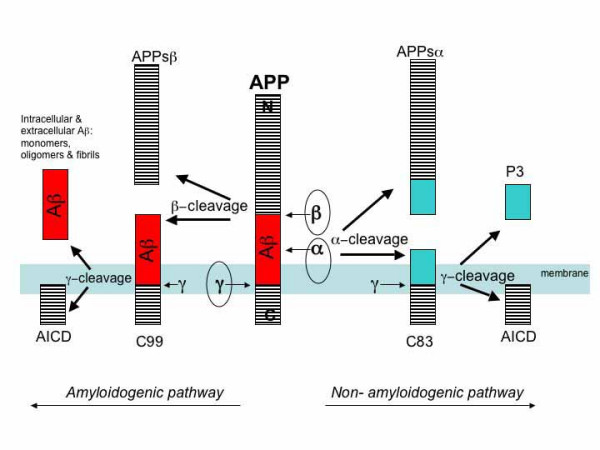
“Aβ genesis Aβ peptide is generated following the sequential cleavage of APP by β- and γ-secretase in the amyloidogenic pathway (reviewed in [19,20]).”
Goate, A., Chartier-Harlin, M.-C., Mullan, M., Brown, J., Crawford, F., Fidani, L., Giuffra, L., Haynes, A., Irving, N., James, L., et al. (1991) · Nature · doi:10.1038/349704a0 · Cited by 4,659 · cited 1×
“While familial AD (FAD) is caused by autosomal dominant mutations in either amyloid precursor protein (APP) [1,2] or the presenilin (PS1, PS2) [3,4] genes, the underlying cause (s) of the remaining ~98% of so-called sporadic AD (SAD) cases remain elusive.”
Inflammation and Alzheimer’s disease
Akiyama, H. (2000) · Neurobiology of Aging · doi:10.1016/s0197-4580(00)00124-x · Cited by 4,514
Correlative Memory Deficits, Aβ Elevation, and Amyloid Plaques in Transgenic Mice
Hsiao, K., Chapman, P., Nilsen, S., Eckman, C., Harigaya, Y., Younkin, S., Yang, F., & Cole, G. (1996) · Science · doi:10.1126/science.274.5284.99 · Cited by 4,210 · cited 2×
“To address this, we recently examined BACE1 levels in two Tg models of AD [97], namely the 5XFAD mouse [60] that develops amyloid plaques at young ages and exhibits significant neuronal loss, and the Tg2576 mouse [56], which develops plaques at older ages and does not show neuronal death.”
Vassar, R., Bennett, B. D., Babu-Khan, S., Kahn, S., Mendiaz, E. A., Denis, P., Teplow, D. B., Ross, S., Amarante, P., Loeloff, R., et al. (1999) · Science · doi:10.1126/science.286.5440.735 · Cited by 3,876 · cited 9×
“However, unlike BACE1, which is enriched in neuronal populations [23], human adult and fetal whole brain express very low or undetectable levels of BACE2 mRNA [50,74].”
InfluentialSelf-citationOakley, H., Cole, S. L., Logan, S., Maus, E., Shao, P., Craft, J., Guillozet-Bongaarts, A., Ohno, M., Disterhoft, J., Van Eldik, L., et al. (2006) · The Journal of Neuroscience · doi:10.1523/jneurosci.1202-06.2006 · Cited by 3,530 · cited 3×
“5XFAD mice exhibit aggressive pathology with plaque deposition occurring at 2 months and exhibit significant neuronal loss in AD-sensitive brain regions [60].”
Self-citationCandidate gene for the chromosome 1 familial Alzheimer’s disease locus
Levy-Lahad, E., Wasco, W., Poorkaj, P., Romano, D. M., Oshima, J., Pettingell, W. H., Yu, C.-E., Jondro, P. D., Schmidt, S. D., Wang, K., et al. (1995) · Science · doi:10.1126/science.7638622 · Cited by 2,577 · cited 2×
“While familial AD (FAD) is caused by autosomal dominant mutations in either amyloid precursor protein (APP) [1,2] or the presenilin (PS1, PS2) [3,4] genes, the underlying cause (s) of the remaining ~98% of so-called sporadic AD (SAD) cases remain elusive.”
Research works printed but not linked: 2
- Golde TE, Dickson D, Hutton M: Filling the gaps in the abeta cas- cade hypothesis of Alzheimer's disease. Curr Alzheimer Res 2006, 3(5):421-430.
- Hong HS, Hwang EM, Sim HJ, Cho HJ, Boo JH, Oh SS, Kim SU, Mook- Jung I: Interferon gamma stimulates beta-secretase expres- sion and sAPPbeta production in astrocytes. Biochem Biophys Res Commun 2003, 307(4):922-927.
Cited by
Items 401–500 of 590
β-Secretase as a Primary Drug Target of Alzheimer Disease: Function, Structure, and Inhibition
Verma, S. K., & Paramanick, D. (2023) · Springer eBooks · doi:10.1007/978-981-99-2657-2_5 · Cited by 5
Olasehinde, T. A., Olisah, C., & Olaniran, A. O. (2024) · Studies in natural products chemistry · doi:10.1016/b978-0-443-15628-1.00004-0 · Cited by 8
Metabolic Syndrome as a Risk Factor for Alzheimer Disease
Farooqui, A. A. (2013) · Springer eBooks · doi:10.1007/978-1-4614-7318-3_8 · Cited by 5
Ramazi, S., آرانی, ف., Safaei, A., Abbasi, Z., Heidari, Z., Nafchi, H. G., Mohammadsadeghi, H., & Karimzadeh, F. (2021) · The Neuroscience Journal of Shefaye Khatam · doi:10.52547/shefa.9.2.119 · Cited by 5
Cleavage and cell adhesion properties of human epithelial cell adhesion molecule (HEPCAM).
Tsaktanis, T., Kremling, H., Pavšič, M., von Stackelberg, R., Mack, B., Fukumori, A., Steiner, H., Vielmuth, F., Spindler, V., Huang, Z. R., et al. (2016) · Journal of Biological Chemistry · doi:10.1074/jbc.a115.662700 · Cited by 5
Proteomics: taking over where genomics leaves off
Mahajan, R., & Gupta, P. (2010) · Czech Journal of Genetics and Plant Breeding · doi:10.17221/34/2009-cjgpb · Cited by 5
Košiček, M., Wunderlich, P., Walter, J., & Hecimovic, S. K. (2014) · Biochemical and Biophysical Research Communications · doi:10.1016/j.bbrc.2014.05.083 · Cited by 5
Computational Insights into the Development of Novel Therapeutic Strategies for Alzheimer’s Disease
Prabhakar, R. S. (2009) · Future Medicinal Chemistry · doi:10.4155/fmc.09.10 · Cited by 5
Barczánfalvi, G., Nyári, T., Tolnai, J., Tiszlavicz, L., Gulyás, B. Z., & Gulya, K. (2025) · International Journal of Molecular Sciences · doi:10.3390/ijms26157134 · Cited by 5
Xu, L., Jiang, Q., Jin, Y., Lin, T., Cao, R., Xu, H., Liu, X., Yang, Z., Zhan, W., & Liang, G. (2026) · Angewandte Chemie International Edition · doi:10.1002/anie.1325073 · Cited by 4
Blood proteomics of menopause map to brain aging and dementia risk
Alexander, M. W., Rabin, J. S., Caunca, M. R., Iadipaolo, A. S., Cornelis, L., Warrier, R., Walker, K. A., Miolane, N., Bot, V. A., Wood, B., et al. (2026) · Nature Medicine · doi:10.1038/s41591-026-04648-4 · Cited by 6
Hsu, K., Huang, S.-M., Shen, J.-Y., Chan, L. Y., Lai, P.-Y., & Lin, C. (2025) · International Journal of Biological Macromolecules · doi:10.1016/j.ijbiomac.2025.141932 · Cited by 4
Parker, S., James, A. F., & Mastitskaya, S. (2025) · The Journal of Physiology · doi:10.1113/jp286599 · Cited by 4
“…protein (APP), undergoes proteolytic cleavage via two pathways: an amyloidogenic pathway producing A β through the action of β -site APP-cleaving enzyme 1 (BACE1), and a non-amyloidogenic pathway that prevents A β accumulation (Cole & Vassar, 2007; Yubolphan et al., 2024), as shown in Fig.”
Proposed Therapeutic Strategy to Combat Alzheimer’s Disease by Targeting Beta and Gamma Secretases
Kumar, D., Anand, P., & Singh, S. K. (2025) · Current Alzheimer Research · doi:10.2174/0115672050380899250602042028 · Cited by 6
RAGE-Mediated Effects of Formaldehyde in Alzheimer’s Disease
Mikhailov, I. G., Mikhailova, M. S., Shuvaev, А. N., Gorina, Y. V., & Belozor, О. S. (2025) · Biochemistry (Moscow) · doi:10.1134/s0006297924604593 · Cited by 4
Medicinal Chemistry and Ligand Profiling for Evaluation of Promising Marine Bioactive Molecules
Croft, A. K., Groenewald, W., & Tierney, M. S. (2011) · Springer eBooks · doi:10.1007/978-1-4614-1247-2_7 · Cited by 5
2,2,2-Trifluoroethyl-thiadiazines: a patent evaluation of WO2016023927
Dotsenko, V. V., Chigorina, E. A., & Krivokolysko, S. G. (2016) · Expert Opinion on Therapeutic Patents · doi:10.1080/13543776.2016.1254193 · Cited by 4
Clinical trials of promising apoptosis modulating drugs
Sharma, N., Kumari, R. M., Arya, G., Gupta, N., Chandra, R., & Nimesh, S. (2020) · Elsevier eBooks · doi:10.1016/b978-0-12-815762-6.00010-x · Cited by 5
Hajdú, I., Végh, B. M., Szilágyi, A., & Závodszky, P. (2023) · International Journal of Molecular Sciences · doi:10.3390/ijms241310416 · Cited by 6
Sulodexide and Alzheimer’s Disease: A Preliminary Prospective Study
Lasierra-Cirujeda, J., Pascual-Salcedo, M. J. A., & Aza‐Pascual‐Salcedo, M. (2016) · World Journal of Cardiovascular Diseases · doi:10.4236/wjcd.2016.62007 · Cited by 4
Atypical PKC: therapeutic target for Alzheimer’s?
Farese, R. V., & Sajan, M. P. (2018) · Aging · doi:10.18632/aging.101730 · Cited by 4
The role of PrPc in Alzheimer's disease related Amyloid-β hypothesis: a systematic review
Gomes, T. A. M., Silva, M. P. D. S., Gomes, M. P. S. M., Barh, D., Azevedo, V., & Dutra, J. D. C. F. (2023) · Brain Disorders · doi:10.1016/j.dscb.2023.100098 · Cited by 3
Zondagh, L. S., Malan, S. F., & Joubert, J. (2024) · European Journal of Pharmaceutical Sciences · doi:10.1016/j.ejps.2024.106869 · Cited by 3
Amrutha, S., Prasad, T. S. K., & Modi, P. K. (2026) · Cells · doi:10.3390/cells15050436 · Cited by 3
“The A β overproduction, resulting from the proteolytic cleavage of APP by BACE1, is a well-known initiator of the Alzheimer’s disease cascade [70].”
Recent Advances in Computational Modeling of BACE1 Inhibitors as Anti-Alzheimer Agents
Papavasileiou, K. D., Dondero, F., Melagraki, G., & Afantitis, A. (2023) · Neuromethods · doi:10.1007/978-1-0716-3311-3_3 · Cited by 4
Feizolahi, F., Arabzadeh, E., Sarshin, A., Falahi, F., Dehghannayeri, Z., Askari, A. A., Wong, A., Aghaei, F., & Zargani, M. (2024) · Neurotoxicity Research · doi:10.1007/s12640-024-00699-y · Cited by 3
“In addition to these symptoms, an increase in the activity of the β-secretase enzyme in the brain, cerebrospinal fluid, and the hippocampus is also observed (Cole and Vassar 2007; Panahi et al. 2013 ).”
InfluentialTalaat, A. N., Ibrahim, N., Ayoub, I. M., Labib, R. M., & Singab, A. N. B. (2025) · Chemistry & Biodiversity · doi:10.1002/cbdv.202402770 · Cited by 3
Ongtanasup, T., Jampa, O., Suwannakul, N., & Eawsakul, K. (2025) · Advances in Pharmacological and Pharmaceutical Sciences · doi:10.1155/adpp/6634761 · Cited by 4
Statin Therapy and Cognitive Impairment: Benefit or Harm?
Ostroumova, O., Chikh, E. V., Rebrova, E., & Ryazanova, A. (2018) · Rational Pharmacotherapy in Cardiology · doi:10.20996/1819-6446-2018-14-4-529-536 · Cited by 2
Krasnobaev, V. D., & Batishchev, O. V. (2022) · Biochemistry (Moscow) Supplement Series A Membrane and Cell Biology · doi:10.1134/s199074782209001x · Cited by 3
Joshi, N., & Alavala, R. R. (2024) · Molecular Diversity · doi:10.1007/s11030-023-10792-7 · Cited by 3
Singh, A., Singh, D., Tiwari, N. K., Mittal, P., Siddiqui, M. H., & Mittal, N. (2024) · In Silico Pharmacology · doi:10.1007/s40203-024-00238-9 · Cited by 5
“Previous research on AD has defined that elevated levels of ACE, BACE1, GSK-3, and TACE are involved in AD progression, and these are also reported as drug targets (Cole and Vassar 2007 ; Llorens-Marítin et al. 2014 ).”
Integrating Data for Modeling Biological Complexity
Hunter, S., & Brayne, C. (2013) · Springer eBooks · doi:10.1007/978-3-642-30574-0_52 · Cited by 3
Therapeutics of Alzheimer’s Disease
Herrera-Rivero, M., & Emiliano, G. (2011) · InTech eBooks · doi:10.5772/27990 · Cited by 3
“This enzyme has a 501 amino acids sequence containing two aspartil protease active sites and is located within cholesterol rich lipid rafts; it is believed BACE1 plays a role in synaptic function and the myelination process (Riddell et al., 2001; Ma et al., 2007; Cole & Vassar, 2007).”
Gies, J., & Landry, Y. (2008) · Elsevier eBooks · doi:10.1016/b978-0-12-374194-3.00004-4 · Cited by 4
Neurochemical Aspects of Alzheimer Disease
Farooqui, A. A. (2016) · Springer eBooks · doi:10.1007/978-3-319-15889-1_1 · Cited by 11
Neuroprotective Effect of Natural Product in Alzheimer’s Disease
Kim, J.-S., & Cho, H. (2024) · Journal of Experimental & Biomedical Sciences/Biomedical Science Letters · doi:10.15616/bsl.2024.30.4.189 · Cited by 2
Pea Peptide Modulates Abnormal Aβ Production in PC12 Cells Induced by Lead Exposure
Li, N., Cui, N., Bakry, I. A., Ma, Y., Cheng, Y., Zhao, G., Yang, H., Song, L., Qiao, M., Hai, D., et al. (2025) · Plant Foods for Human Nutrition · doi:10.1007/s11130-025-01296-w · Cited by 2
“The upregulation of BACE1 suggests that Pb exposure may enhance Aβ production, potentially contribut - ing to neurodegeneration-related amyloid plaque formation [27, 28].”
Elsadek, L. A., Seabra, G. D. M., Paul, V. J., & Luesch, H. (2025) · RSC Medicinal Chemistry · doi:10.1039/d5md00017c · Cited by 2
Computer-aided Drug Design for Alzheimer's Disease: Recent Advancements and Future Perspectives
Rohilla, S., & Goyal, G. (2025) · Current Topics in Medicinal Chemistry · doi:10.2174/0115680266343814250713100224 · Cited by 2
Liu, Y.-C., Hsu, W.-L., Ma, Y., Yin, C.-Y., Cheng, K.-M., & Lee, E. H. Y. (2025) · Molecular Medicine · doi:10.1186/s10020-025-01354-8 · Cited by 2
“Because BACE1 is essential for generation of the Aβ peptides, BACE1 plays a critical role in Aβ toxicity and AD pathology (Cole and Vassar 2007; Hampel et al., 2021; Sathya et al. 2012).”
Natural Products Targeting Alzheimer’s Disease via NF-κB Pathway: A Review
Hasan, F., Thippamma, K., Kumar, V., Baiseitova, A., Ikram, M. A., & Shah, A. B. (2025) · CNS & Neurological Disorders - Drug Targets · doi:10.2174/0118715273397045250922054643 · Cited by 2
A Covalent Protein Painting Assay Differentiates Amyloid-β Polymorphs in Alzheimer Disease
Bamberger, C., Diedrich, J. K., Jung, T., Lane, J. B., Schäfer, J.-H., Lander, G. C., Galasko, D. R., & Yates, J. R. (2025) · Journal of Proteome Research · doi:10.1021/acs.jproteome.5c00735 · Cited by 3
Convergence and divergence of molecular mechanisms in Hebbian and homeostatic plasticity
Feighan, K. M., Thakare, H. K., Glasgow, S. D., & Kennedy, T. E. (2026) · Frontiers in Synaptic Neuroscience · doi:10.3389/fnsyn.2026.1761008 · Cited by 2
“BACE1 ( β -secretase, beta site APP cleaving enzyme 1) is necessary for the production of the amyloid-β peptide (Cole and Vassar, 2007).”
Zhao, M., Qu, Y., Zhang, S., Zhang, M., Wang, H. H., Yang, Y., Gu, X. F., Hou, X., & Yan, X. (2026) · Frontiers in Pharmacology · doi:10.3389/fphar.2026.1707688 · Cited by 3
“BACE1 is considered a significant drug target due to its critical involvement in A β formation (Cai et al., 2001; Cole and Vassar, 2007).”
Amyloid-β and Mitochondrial Membranes: A Missing Link in Alzheimer’s Pathogenesis
Houfkova, A., & Schmidt, M. (2026) · Molecular Neurobiology · doi:10.1007/s12035-026-05786-z · Cited by 2
Protein–Protein Interactions in Neurodegenerative Diseases
Poluri, K. M., Gulati, K., Tripathi, D. K., & Nagar, N. (2023) · Springer eBooks · doi:10.1007/978-981-99-2423-3_3 · Cited by 5
Bauer, C., Duplan, E., George‐Hyslop, P. S., & Checler, F. (2023) · Cells · doi:10.3390/cells12242802 · Cited by 2
Iida-Adachi, A., & Nabika, H. (2025) · Langmuir · doi:10.1021/acs.langmuir.4c03663 · Cited by 2
Role of Galangin for the Treatment of Alzheimer’s Disease: Journey So Far and Road Ahead
Sharma, P., Sharma, T., Bashir, B., andotra, N., Awasthi, A., Patel, P. V., Subramaniyan, V., Chellappan, D. K., Gupta, G., Vishwas, S., et al. (2025) · Current Nutrition Reports · doi:10.1007/s13668-025-00669-6 · Cited by 3
Çimen, Y. A., Elibol, B., Korkmaz, N. D., Yüzgüleç, M., Kinsiz, B., Kutlu, S., & Üstünova, S. (2025) · Journal of Neuroscience Research · doi:10.1002/jnr.70070 · Cited by 2
Advances in Nanotechnology for Targeted Drug Delivery in Alzheimer's Disease
Maheshwari, S., Kumar, P., Dwivedi, V., Mishra, A., Singh, V. K., & Singh, A. V. (2025) · Current Aging Science · doi:10.2174/0118746098359258250727103551 · Cited by 2
Rozpędek‐Kamińska, W., Nowak, A., Pytel, D., Lewko, D., Diehl, J. A., & Majsterek, I. (2016) · Acta Universitatis Lodziensis Folia Biologica et Oecologica · doi:10.1515/fobio-2016-0005 · Cited by 3
Neuro-pathological Implications of β-Amyloid Protein: An Update
Maurya, N., & Agarwal, N. R. (2018) · Proceedings of the Nature Research Society · doi:10.11605/j.pnrs.2018020061 · Cited by 2
Abuine, R., Rathnayake, A. U., & Byun, H. (2020) · International Journal of Peptide Research and Therapeutics · doi:10.1007/s10989-020-10113-8 · Cited by 2
Amyloid in the ageing brain: New frameworks and perspectives
Hunter, S., & Brayne, C. (2021) · Aging Brain · doi:10.1016/j.nbas.2021.100008 · Cited by 2
Heale, K. A., Nath, S. C., & Rancourt, D. E. (2021) · Current Protocols · doi:10.1002/cpz1.230 · Cited by 2
Mitochondria in Alzheimer disease : regulatory mechanisms and cell death
Hedskog, L. (2012) · Figshare · Cited by 2
Imbimbo, B. P., & Pomara, N. (2019) · Neurodegenerative Disease Management · doi:10.2217/nmt-2019-0013 · Cited by 2
Shalev, I., Somekh, J., & Eran, A. (2021) · Journal of Medical Genetics · doi:10.1136/jmedgenet-2021-108193 · Cited by 1
Benaicha, B., Rouabhi, R., Gasmi, S., Menaceur, F., Mennai, I., Lakroun, Z., Fetoui, H., Kebieche, M., & Soulimani, R. (2024) · Molecular & cellular biomechanics · doi:10.62617/mcb.v21.145 · Cited by 1
Zhang, Y., Wang, Y., & Zhao, F. (2025) · Molecular Neurobiology · doi:10.1007/s12035-025-04743-6 · Cited by 1
β-Amyloid Pathways in Alzheimer's Disease: Mechanisms and Therapeutic Targets
Bansal, S., Yadav, M., Bisht, P., Bansal, D., Tushir, S., & Rathore, D. (2025) · CNS & Neurological Disorders - Drug Targets · doi:10.2174/0118715273382447250526062100 · Cited by 1
Sandrine, M. N. Y., Owona, P. E., Ella, F. A., Bilanda, D. C., Julie, A. O. J., Cynthia, B. Y. P., Michel, B. G., Dzeufiet, P. D. D., Binsaleh, A. Y., Alwethaynani, M. S., et al. (2025) · Journal of Computational Biophysics and Chemistry · doi:10.1142/s2737416525501248 · Cited by 1
Dendrimers: Advancing Therapeutic Strategies for Dementia
Singh, A., Maheshwari, S., Ansari, V. A., Verma, A., Mahmood, T., Akhtar, J., Ahsan, F., Vishwakarma, V. K., & Wasim, R. (2025) · Current Aging Science · doi:10.2174/0118746098343913250818112618 · Cited by 1
Eunice, E., Anuradha, A., & Prasana, J. C. (2025) · Journal of Molecular Structure · doi:10.1016/j.molstruc.2025.145040 · Cited by 1
Dreschnack, I., & Dreschnack, P. A. (2025) · Medical Research Archives · doi:10.18103/mra.v14i1.7229 · Cited by 1
Parutto, P., Yuan, Y., Davì, V., Pons-Lanau, R., Ebeling, S., Gupta, K., Bottanelli, F., Parajo, M. F. G., Campelo, F., Kaminski, C. F., et al. (2026) · Nature Communications · doi:10.1038/s41467-026-69067-y · Cited by 2
APP E590D mutation increases generation of Aβ and Aη peptides and exacerbates tauopathy
Liu, T., Wetzel, L., Roy, D., Zhang, K., Zhu, Z., Kumaraguru, P., Gorthi, V., Jeon, H., Woo, J. A., & Kang, D. E. (2026) · npj Dementia · doi:10.1038/s44400-026-00069-9 · Cited by 1
Belavadi, S., & Kadiri, S. K. (2026) · European Journal of Pharmacology · doi:10.1016/j.ejphar.2026.178913 · Cited by 1
Extrication of the Neuroimmune Pathways Linking Chronic Stress to Alzheimer’s Disease
Kavitha, M., & Ronald Darwin, C. (2026) · SN Comprehensive Clinical Medicine · doi:10.1007/s42399-026-02417-5 · Cited by 1
“This stimulation stimulated amyloidogenic processing of APP, and hence, increasing Aβ generation [ 29].”
Xu, L., Jiang, Q., Jin, Y., Lin, T., Cao, R., Xu, H., Liu, X., Yang, Z., Zhan, W., & Liang, G. (2026) · Angewandte Chemie · doi:10.1002/ange.1325073 · Cited by 1
Sarti, G., Tognozzi, G., Magni, G., Lana, D., Rossi, F., Traini, C., & Vannucchi, M. G. (2026) · Nutrients · doi:10.3390/nu18121883 · Cited by 1
“Two distinct enzymes called β -secretase and γ -secretase (presenilin 1), which act sequentially, cleave APP at two different sites, producing a 37–49-amino-acid-long A β peptide [4].”
Kumar, N., Mir, P. A., Bhutia, G. T., Chaudhary, P., Kaur, G., Alam, Q., Pawar, S. D., & Gupta, S. K. (2026) · Molecular Neurobiology · doi:10.1007/s12035-026-05983-w · Cited by 1
Ford, G. D., McGinley, C., Oyolola, O., Adeyemi, O., Surles-Zeigler, M. C., Rahimpour, S., & Ford, B. D. (2026) · Cells · doi:10.3390/cells15181705 · Cited by 2
“Dysregulation of these proteolytic pathways has been implicated in neurodevelopmental disorders, Alzheimer’s disease, schizophrenia, and demyelinating diseases, highlighting the importance of ligand processing as a determinant of biological activity [49].”
Amyloidogenic Processing of APP in Lipid Rafts
Lakshmana, M. K., Roy, S., Mi, K., & Kang, D. E. (2010) · The Open Biology Journal · doi:10.2174/18741967010030100021 · Cited by 1
Chakraborty, S., & Basu, S. (2017) · Springer eBooks · doi:10.1007/978-981-10-3162-5_9 · Cited by 1
Fantini, J., & Yahi, N. (2015) · Elsevier eBooks · doi:10.1016/b978-0-12-800111-0.00011-4 · Cited by 1
Farese, R. V., Kindy, M. S., & Sajan, M. P. (2020) · Exon Publications eBooks · doi:10.36255/exonpublications.alzheimersdisease.2020.ch6 · Cited by 4
Neuroprotection induced by sulphoraphane in central nervous system disorders
Sharma, P., Luhach, K., Dhiman, N., Awasthi, R., Kharkwal, H., Kulkarni, G. T., & Sharma, B. (2024) · Elsevier eBooks · doi:10.1016/b978-0-443-23763-8.00053-1 · Cited by 1
Krasnobaev, V. D., & Batishchev, O. V. (2023) · Биологические мембраны Журнал мембранной и клеточной биологии · doi:10.31857/s023347552301005x · Cited by 1
Virtual High Throughput Screening of Marine Bacterial Metabolites for BACE1 Inhibition
Grewal, A., Sheokand, D., Chauhan, R., Saini, V., & Kumar, A. (2024) · Biosciences Biotechnology Research Asia · doi:10.13005/bbra/3260 · Cited by 1
Fatima, A., & Daou, A. (2024) · Journal of Student Research · doi:10.47611/jsrhs.v13i1.6191 · Cited by 1
A computational study of buckyballs as potential inhibitors of BACE1 in Alzheimer’s treatment
Le, T.-T.-H., Pham, M. Q., Tam, N. M., Phùng, H. T. T., & Ngô, S. T. (2024) · Chemical Physics Letters · doi:10.1016/j.cplett.2024.141553 · Cited by 1
Quinase p38 alfa como alvo para o planejamento de fármacos em Mal de Alzheimer
Pinsetta, F. R. (2013) · Digital Library of Theses and Dissertations (Universidade de São Paulo) · doi:10.11606/t.60.2013.tde-06092013-104102 · Cited by 1
Shi, Y. (2016) · Deep Blue (University of Michigan) · Cited by 2
Tachibana, T., & Kuwabara, T. (2019) · Drug Metabolism and Pharmacokinetics · doi:10.1016/j.dmpk.2019.01.006 · Cited by 1
The Role of Apolipoprotein E Concentration and Isoform in Amyloid-beta Metabolism In Vivo
Castellano, J. M. (2011) · Open Scholarship Institutional Repository (Washington University in St. Louis) · doi:10.7936/k7416v3s
Ożarowski, M., Mikołajczak, P. Ł., Bogacz, A., Kujawski, R., & Mrozikiewicz, P. M. (2010) · Herba Polonica · Cited by 1
Antibody Based Therapeutics for Alzheimer's Disease
Boddapati, S. P. (2011)
Characterisation of transgenic mouse models of Alzheimer's disease
Graham, L. (2011) · OpenGrey (Institut de l'Information Scientifique et Technique) · Cited by 1
Mills, R. L. (2011) · SHAREOK (University of Oklahoma; Oklahoma State University; Central Oklahoma University)
Evaluating a new drug to combat alzheimer's disease.
Sibiya, S. G. (2014) · ResearchSpace (University of KwaZulu-Natal)
Biomarkers and Neurodegenerative Diseases: Promising Inroads Toward a Distant Goal
Rubenstein, R. (2014) · CRC Press eBooks · doi:10.1201/b17644-19
Nitrosative Stress in Diverse Multisystem Diseases
Freye, E. C. K. (2011) · Springer eBooks · doi:10.1007/978-94-007-2036-7_7
N-terminal beta amyloid fragments regulate nicotinic acetylcholine receptors
Lawrence, J. L. M. (2014) · ScholarSpace (University of Hawaii at Manoa)
Identifying the mechanism of Aβ42 inhibition of PDGF-BB signalling
Saffi, G. T. (2014) · UWSpace (University of Waterloo) · Cited by 1
The Roles of Presenilin and FKBP14 in Drosophila Development and Notch Signalling
van de Hoef, D. L. (2009) · TSpace (University of Toronto)
Metadata
- Authors
- Cole, S. L., & Vassar, R.
- Affiliations
- Northwestern University (US)
- Corresponding author
- Vassar, Robert
- ORCID
- Vassar, Robert
- Venue
- Molecular Neurodegeneration
- Published
- 2007
- Volume
- 2
- Issue
- 1
- Pages
- 22
- ISSN
- 1750-1326 (ISSN-L)
- PMC
- PMC2211305
- OpenAlex
- W2129495914
- Cited by
- 550
- References
- 254
- Citations by year
- 2026: 27 · 2025: 53 · 2024: 45 · 2023: 46 · 2022: 27 · 2021: 40 · 2020: 32 · 2019: 30 · 2018: 20 · 2017: 25 · 2016: 31 · 2015: 25 · 2014: 27 · 2013: 27 · 2012: 23
- FWCI
- 10.06
- Type
- journal article
- Language
- en
- Open access
- gold
- doi.org
- Licence
- cc-by
- Locations
- Molecular Neurodegeneration (publishedVersion, cc-by)
- PubMed Central (publishedVersion, cc-by)
- PubMed (publishedVersion)
- DOAJ (DOAJ: Directory of Open Access Journals) (submittedVersion, cc-by-sa)
- Funders
- John Douglas French Alzheimer's Foundation
- National Institute on Aging (P01AG021184)
- Topics
- Life Sciences › Neuroscience › Cellular and Molecular Neuroscience › Alzheimer's disease research and treatments
- Health Sciences › Medicine › Psychiatry and Mental health › Dementia and Cognitive Impairment Research
- Health Sciences › Medicine › Pharmacology (medical) › Cholinesterase and Neurodegenerative Diseases
- Keywords
- Alzheimer's disease, BACE1, beta-secretase, amyloid-beta, amyloid plaques, BACE1 inhibition, vascular disease, Alzheimer's disease risk factors, neurodegeneration, memory impairment
About these checks
Registry, retraction, Cites and statistics results are computed, not judged, with one exception: a printed reference that no index lists is read once by a model before it counts as a citation error. Claims are extracted by a model and kept only when their quote appears verbatim in the text; each cited source is then checked, with a model’s help, for whether it says what the claim relies on. Those verdicts can be wrong — read the claim’s quote and the cited source before relying on one.
Statistics and arithmetic are recomputed, not judged.
Confidence bands are shown only for fields calibrated on our annotated test set. None is calibrated yet, so no band is shown.
What counts as a claim ›How we measure confidence ›How we check this ›
Are you an author, or do you see a problem with this page? Request a review
Data sources
Bibliographic data: Semantic Scholar, OpenAlex, Crossref.
Contains information from the Semantic Scholar Academic Graph Datasets, made available under the ODC Attribution License (ODC-BY 1.0).
Semantic Scholar’s data is described in: Kinney, R., et al. (2023). The Semantic Scholar Open Data Platform. arXiv:2301.10140.
