

The DOI matches its Crossref record; 30 of the 30 references it cites were found in a registry or an index.
On a Cercopithifilaria sp. transmitted by Rhipicephalus sanguineus: a neglected, but widespread filarioid of dogs
Open accessAbstract
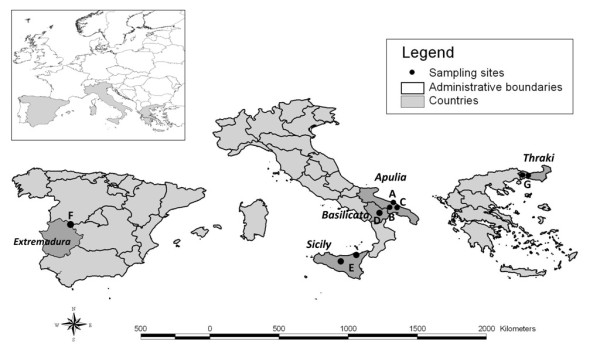
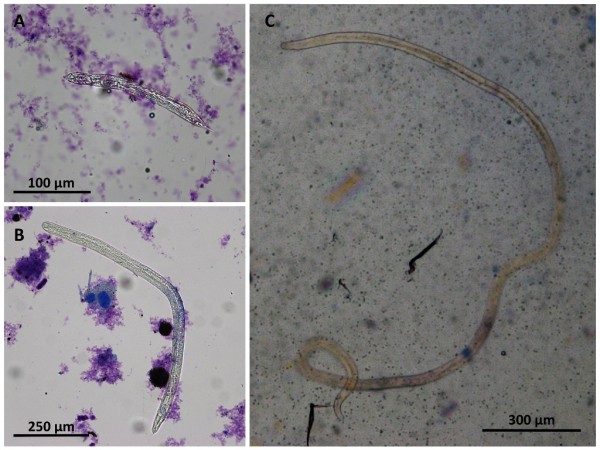
BACKGROUND: This study was aimed at investigating the distribution of a Cercopithifilaria sp. sensu Otranto et al., 2011 with dermal microfilariae recently identified in a dog from Sicily (Italy). A large epidemiological survey was conducted by examining skin samples (n = 917) and ticks (n = 890) collected from dogs at different time points in Italy, central Spain and eastern Greece. RESULTS: The overall prevalence of Cercopithifilaria sp. in the sampled animal populations was 13.9% and 10.5% by microscopy of skin sediments and by PCR on skin samples, respectively. Up to 21.6% and 45.5% of dogs in Spain were positive by microscopical examination and by PCR. Cumulative incidence rates ranging from 7.7% to 13.9% were estimated in dogs from two sites in Italy. A low level of agreement between the two diagnostic tests (microscopical examination and PCR) was recorded in sites where samples were processed in parallel. Infestation rate as determined by tick dissection (from 5.2% to 16.7%) was higher than that detected by PCR (from 0% to 3.9%); tick infestation was significantly associated with Cercopithifilaria sp. infestation in dogs from two out of four sites. Developing larvae found in ticks were morphometrically studied and as many as 1469 larvae were found in a single tick. CONCLUSIONS: Our data suggest that, in addition to the most common species of filarioids known to infest dogs (i.e., Dirofilaria immitis, Dirofilaria repens and Acanthocheilonema reconditum), Cercopithifilaria sp. with dermal microfilariae should be considered due to its widespread distribution in southern Europe and high frequency in tick-exposed dogs.
Overview
The claims and statistics of this paper haven’t been checked yet.
Run the check — free, no account needed. It reads the open-access text and checks the sources it cites.
Integrity signals
Registry
Cites
Statistics
Figures
Verification
Claims the paper makes
The claims and statistics of this paper haven’t been checked yet.
Run the check — free, no account needed. It reads the open-access text and checks the sources it cites.
Claims other papers make about this one
Each is checked against this paper’s own text: does it say what the citing paper says it does?
In the citing paper
“Similarly, tick-transmitted filarioids of the genus Cercopithifilaria infesting the skin of dogs were recently shown to be widespread in Europe.”
From Vector-borne helminths of dogs and humans in Europe (2013) · cites this paper as [6]
Self-check
Percentages, sums and reported differences re-computed from the paper’s own numbers.
The self-check needs the paper’s full text.
Citations
Cites
Clustal W and Clustal X version 2.0
Larkin, M., Blackshields, G., Brown, N. P., Chenna, R., McGettigan, P., McWilliam, H., Valentin, F., Wallace, I. M., Wilm, A., López, R., et al. (2007) · Bioinformatics · doi:10.1093/bioinformatics/btm404 · Cited by 28,598
Biology and ecology of the brown dog tick, Rhipicephalus sanguineus
Dantas‐Torres, F. (2010) · Parasites & Vectors · doi:10.1186/1756-3305-3-26 · Cited by 695
Self-citationHugh‐Jones, M. (1996) · Preventive Veterinary Medicine · doi:10.1016/0167-5877(96)85060-4 · Cited by 680
Dantas‐Torres, F. (2008) · Veterinary Parasitology · doi:10.1016/j.vetpar.2007.12.030 · Cited by 580
Self-citationRickettsial Infection in Animals and Brazilian Spotted Fever Endemicity
Sangioni, L. A., Horta, M. C., Vianna, M. C. B., Gennari, S. M., Soares, R. M., Galvão, M. A. M., Schumaker, T. T. S., Ferreira, F., Vidotto, O., & Labruna, M. B. (2005) · Emerging infectious diseases · doi:10.3201/eid1102.040656 · Cited by 418
Zoonotic helminths affecting the human eye
Otranto, D., & Eberhard, M. L. (2011) · Parasites & Vectors · doi:10.1186/1756-3305-4-41 · Cited by 203
Self-citationTrotz‐William, L. A., & Trees, A. J. (2003) · Veterinary Record · doi:10.1136/vr.152.4.97 · Cited by 129
Bremer, W. G., Schaefer, J. J., Wagner, E. R., Ewing, S. A., Rikihisa, Y., Needham, G. R., Jittapalapong, S., Moore, D. L., & Stich, R. W. (2005) · Veterinary Parasitology · doi:10.1016/j.vetpar.2005.04.030 · Cited by 122
Diagnosis of Canine Vector-Borne Diseases in Young Dogs: a Longitudinal Study
Otranto, D., Testini, G., Dantas‐Torres, F., Latrofa, M. S., Diniz, P. P. V. D. P., de Caprariis, D., Lia, R. P., Mencke, N., Stanneck, D., Capelli, G., et al. (2010) · Journal of Clinical Microbiology · doi:10.1128/jcm.00379-10 · Cited by 120
Self-citationFirst Evidence of Human Zoonotic Infection by Onchocerca lupi (Spirurida, Onchocercidae)
Otranto, D., Sakru, N., Testini, G., Gürlü, V. P., Yakar, K., Lia, R. P., Dantas-Torres, F., & Bain, O. (2011) · The American Society of Tropical Medicine and Hygiene · doi:10.4269/ajtmh.2011.10-0465 · Cited by 110
Self-citation
Research works printed but not linked: 4
- Bain O, Uni S, Takaoka H: A synthetic look at a twenty years old taxon, Cercopithifilaria its probable evolution. Proceedings of the 10th International Congress of Parasitology (ICOPA): 4-9 August 2002; Vancouver (Canada). Edited by: Monduzzi Editore. 2002, 365-368.
- Noè G: Contribuzioni alla Sistematica e alla Anatomia del Genere Filaria. La Filaria grassii. 1907, Roma, Istituto di Anatomia Comparata della Regia Università di Roma, 236-252.
- Pampiglione S, Canestri Trotti G, Marchetti S: Ritrovamento di Diptalonema grassii (Noè, 1907) in Rhipicephalus sanguineus su cane in Italia e descrizione di alcuni suoi stadi larvali. Parassitologia. 1983, 25: 316-
- Giannetto S, Poglayen G, Gaglio G, Brianti E: Prevalence and epidemiological aspects of microfilaraemia in dogs in Sicily. Abstract book of the 1st European Dirofilaria days. 2007, 5-22-25 February 2007; Zagreb, Croatia. Edit by Albert Marinculic
Cited by
Sorted by citations
Items 201–300 of 457
Gruntmeir, J. M., Kelly, M., Ramos, R. A. N., & Verocai, G. G. (2023) · Frontiers in Veterinary Science · doi:10.3389/fvets.2023.1128611 · Cited by 21
Padzik, M., Chomicz, L., Szaflik, J. P., Chruścikowska, A., Perkowski, K., & Szaflik, J. (2014) · Experimental Parasitology · doi:10.1016/j.exppara.2014.06.014 · Cited by 21
In vitro activity and mode of action of distamycin analogues against African trypanosomes
Franco, J., Medeiros, A., Benítez, D., Perelmuter, K., Serra, G. L., Comini, M. A., & Scarone, L. (2016) · European Journal of Medicinal Chemistry · doi:10.1016/j.ejmech.2016.12.002 · Cited by 21
Koosha, M., Oshaghi, M. A., Sedaghat, M. M., Vatandoost, H., Azari-Hamidian, S., Abai, M. R., Hanafi‐Bojd, A. A., & Mohtarami, F. (2017) · Experimental Parasitology · doi:10.1016/j.exppara.2017.08.003 · Cited by 21
Shitie, D., Zewde, T., & Molla, Y. (2018) · BMC Research Notes · doi:10.1186/s13104-018-3805-8 · Cited by 21
Wagoner, K., Lehmann, T., Huestis, D. L., Ehrmann, B. M., Cech, N. B., & Wasserberg, G. (2014) · Parasites & Vectors · doi:10.1186/1756-3305-7-294 · Cited by 21
Diversity of Cercopithifilaria species in dogs from Portugal
Cortes, H. C. E., Cardoso, L., Giannelli, A., Latrofa, M. S., Dantas‐Torres, F., & Otranto, D. (2014) · Parasites & Vectors · doi:10.1186/1756-3305-7-261 · Cited by 20
Self-citationAnalysis of Pesticides and Toxic Heavy Metals Contained in Mosquito Coils
Kasumba, J., Hettick, B. E., French, A. D., Wickliffe, J. K., Lichtveld, M. Y., Hawkins, W. B., van Sauers-Muller, A., & Klein, D. (2016) · Bulletin of Environmental Contamination and Toxicology · doi:10.1007/s00128-016-1938-9 · Cited by 20
Rojo‐Arreola, L., García-Carreño, F. L., Romero, R., & Dominguez, L. D. (2020) · PLoS ONE · doi:10.1371/journal.pone.0239413 · Cited by 20
Zhao, M., Dong, Y.-D., Ran, X., Wu, Z., Guo, X., Zhang, Y., Xing, D., Yan, T., Wang, G., Zhu, X., et al. (2014) · PLoS ONE · doi:10.1371/journal.pone.0095260 · Cited by 20
Chagas disease vector control and Taylor's law
Cohen, J. E., Rodríguez‐Planes, L. I., Gaspe, M. S., Cecere, M. C., Cardinal, M. V., & Gürtler, R. E. (2017) · PLoS neglected tropical diseases · doi:10.1371/journal.pntd.0006092 · Cited by 20
Diversity of trypanosomes in wildlife of the Kafue ecosystem, Zambia
Squarre, D., Hayashida, K., Gaithuma, A. K., Chambaro, H. M., Kawai, N., Moonga, L., Namangala, B., Sugimoto, C., & Yamagishi, J. (2020) · International Journal for Parasitology Parasites and Wildlife · doi:10.1016/j.ijppaw.2020.04.005 · Cited by 20
Meyers, A. C., Edwards, E. E., Sanders, J. P., Saunders, A. B., & Hamer, S. A. (2021) · Veterinary Parasitology Regional Studies and Reports · doi:10.1016/j.vprsr.2021.100545 · Cited by 20
Subussa, B. W., Eshetu, T., Degefa, T., & Ali, M. M. (2021) · PLoS ONE · doi:10.1371/journal.pone.0248074 · Cited by 21
Mahende, M. K., Huber, E., Kourany-Lefoll, E., Ali, A., Hayward, B., Bezuidenhout, D., Bagchus, W., & Kabanywanyi, A. M. (2021) · PLoS neglected tropical diseases · doi:10.1371/journal.pntd.0007370 · Cited by 21
Fagbohun, I. K., Idowu, E. T., Otubanjo, O. A., & Awolola, T. S. (2020) · Scientific Reports · doi:10.1038/s41598-020-64412-7 · Cited by 20
Longo-Pendy, N. M., Fossog, B. T., Tawedi, R. E., Akone‐Ella, O., Toty, C., Rahola, N., Braun, J., Berthet, N., Kengne, P., Costantini, C., et al. (2021) · Scientific Reports · doi:10.1038/s41598-021-94258-6 · Cited by 22
Successful capture of Toxocara canis larva antigens from human serum samples
Rodríguez-Caballero, A., Martínez‐Gordillo, M. N., Medina-Flores, Y., Medina-Escutia, M. E., Meza‐Lucas, A., Correa, D., Caballero-Salazar, S., & Ponce‐Macotela, M. (2015) · Parasites & Vectors · doi:10.1186/s13071-015-0875-5 · Cited by 19
Arcobacter butzleri survives within trophozoite of Acanthamoeba castellanii
Villanueva, M. P., Medina, G. A., & Heriberto Fernández, J. (2016) · Revista Argentina de Microbiología · doi:10.1016/j.ram.2015.12.003 · Cited by 19
Moustafa, M. A., Salamah, M. M. I., Thabet, H. S., Tawfik, R. A., Mehrez, M. M., & Hamdy, D. M. (2017) · European Journal of Clinical Microbiology & Infectious Diseases · doi:10.1007/s10096-017-2901-3 · Cited by 19
Dai, S.-M., Edwards, J. K., Guan, Z., Lv, S., Li, S., Zhang, L., Feng, J., Feng, N., Zhou, X., & Xu, J. (2019) · Infectious Diseases of Poverty · doi:10.1186/s40249-019-0562-4 · Cited by 19
Mota, T. F., de Sousa, O. M. F., Silva, Y. D. J., Borja, L. S., Leite, B. M. M., Solcà, M. D. S., de Melo, D. A., Brodskyn, C., Dias, E. S., Veras, P. S. T., et al. (2019) · PLoS neglected tropical diseases · doi:10.1371/journal.pntd.0007626 · Cited by 19
Minetti, C., Pilotte, N., Zulch, M. F., Canelas, T., Tettevi, E. J., Veriegh, F. B. D., Osei-Atweneboana, M. Y., Williams, S. A., & Reimer, L. J. (2020) · PLoS neglected tropical diseases · doi:10.1371/journal.pntd.0008175 · Cited by 19
Majid, A., Ahmad, N., Haleem, S., Akbar, N. U., Zareen, S., Taib, M. F. M., Khan, S., Hussain, R., & Sohail, S. (2021) · BMC Veterinary Research · doi:10.1186/s12917-021-03064-9 · Cited by 19
Ramos, R. A. N., Giannelli, A., Lia, R. P., Brianti, E., Tarallo, V. D., Breitschwerdt, E. B., Dantas‐Torres, F., Stanneck, D., & Otranto, D. (2014) · PLoS ONE · doi:10.1371/journal.pone.0088198 · Cited by 19
Self-citationPossamai, C. O., Loss, A. C., Costa, A. O., Falqueto, A., & Furst, C. (2018) · Parasitology Research · doi:10.1007/s00436-018-5824-8 · Cited by 19
A Seasonal Model for West Nile Virus
Moschini, P. M., Bisanzio, D., & Pugliese, A. (2017) · Mathematical Modelling of Natural Phenomena · doi:10.1051/mmnp/201712205 · Cited by 18
Opiro, R., Opoke, R., Angwech, H., Nakafu, E., Oloya, F. A., Openy, G., Njahira, M. N., Macharia, M. W., Echodu, R., Malinga, G. M., et al. (2021) · BMC Veterinary Research · doi:10.1186/s12917-021-03071-w · Cited by 18
Nzelu, I. N., Kwaga, J. K. P., Kabir, J., Lawal, I. A., Beazley, C., Evans, L., & Blake, D. P. (2021) · PLoS neglected tropical diseases · doi:10.1371/journal.pntd.0009458 · Cited by 18
Otranto, D., Latrofa, M. S., Brianti, E., Annoscia, G., Parisi, A., Dantas‐Torres, F., Bain, O., & Gasser, R. B. (2011) · Molecular and Cellular Probes · doi:10.1016/j.mcp.2011.12.002 · Cited by 18
Self-citationCercopithifilaria spp. in dogs in Sardinia Island (Italy)
Solinas, C., Varcasia, A., Brianti, E., Giannetto, S., Pipia, A. P., Columbano, N., Tosciri, G., Dantas‐Torres, F., Garippa, G., Otranto, D., et al. (2013) · Parasitology Research · doi:10.1007/s00436-013-3695-6 · Cited by 18
Self-citationGoethert, H. K., & Telford, S. R. (2014) · Parasites & Vectors · doi:10.1186/s13071-014-0546-y · Cited by 18
Jumba, H., Teufel, N., Baltenweck, I., de Haan, N., Kiara, H., & Owuor, G. (2020) · Gender Technology and Development · doi:10.1080/09718524.2020.1829359 · Cited by 18
Grochowska, A., Dunaj, J., Pancewicz, S. A., Czupryna, P., Majewski, P., Wondim, M. A., Tryniszewska, E. A., & Moniuszko-Malinowska, A. M. (2021) · Experimental and Applied Acarology · doi:10.1007/s10493-021-00655-x · Cited by 18
Marteis, L. S., Natal, D., Sallum, M. A. M., Medeiros‐Sousa, A. R., & Corte, R. L. (2017) · Acta Tropica · doi:10.1016/j.actatropica.2017.03.031 · Cited by 18
Nepomichene, T., Élissa, N., Cardinale, É., & Boyer, S. (2015) · Journal of Medical Entomology · doi:10.1093/jme/tjv120 · Cited by 17
Cercopithifilaria bainae in Rhipicephalus sanguineus sensu lato ticks from dogs in Brazil
Bezerra‐Santos, M. A., de Souza, I. B., de Macedo, L. O., Ramos, C. A. D. N., do Rêgo, A. G. D. O., Alves, L. C., Ramos, R. A. N., & de Carvalho, G. A. (2017) · Ticks and Tick-borne Diseases · doi:10.1016/j.ttbdis.2017.04.007 · Cited by 17
Vivero, R. J., Mesa, G. B., Robledo, S. M., Herrera, C. X. M., & Cadavid-Restrepo, G. (2019) · Biotechnology Reports · doi:10.1016/j.btre.2019.e00379 · Cited by 18
Soma, D. D., Zogo, B., Taconet, P., Somé, A. F., Coulibaly, S., Baba‐Moussa, L., Ouédraogo, G. A., Koffi, A. A., Pennetier, C., Dabiré, R. K., et al. (2021) · BMC Public Health · doi:10.1186/s12889-021-10304-y · Cited by 17
Aedes aegypti Toll pathway is induced through dsRNA sensing in endosomes
Angleró-Rodríguez, Y., Tikhe, C. V., Kang, S., & Dimopoulos, G. (2021) · Developmental & Comparative Immunology · doi:10.1016/j.dci.2021.104138 · Cited by 17
Seroprevalence screening for the West Nile virus in Malaysia’s Orang Asli population
Marlina, S., Radzi, S. F. M., Lani, R., Sieng, K. C., Rahim, N. F. A., Hassan, H., Chang, L., AbuBakar, S., & Zandi, K. (2014) · Parasites & Vectors · doi:10.1186/s13071-014-0597-0 · Cited by 17
Acanthamoeba mauritaniensis genotype T4D: An environmental isolate displays pathogenic behavior
Coronado‐Velázquez, D., Silva-Olivares, A., Castro‐Muñozledo, F., Lares‐Jiménez, L. F., Rodríguez-Anaya, L. Z., Shibayama, M., & Serrano‐Luna, J. (2019) · Parasitology International · doi:10.1016/j.parint.2019.102002 · Cited by 17
Urban farms in Miami-Dade county, Florida have favorable environments for vector mosquitoes
Wilke, A. B. B., Carvajal, A., Vasquez, C., Petrie, W. D., & Beier, J. C. (2020) · PLoS ONE · doi:10.1371/journal.pone.0230825 · Cited by 17
Detection of Cercopithifilaria bainae infection in shelter dogs and ticks in Oklahoma, USA
Lineberry, M. W., Sundstrom, K. D., Little, S. E., Stayton, E., & Allen, K. E. (2020) · Parasites & Vectors · doi:10.1186/s13071-020-04089-z · Cited by 17
The role of chemokines and their receptors during protist parasite infections
Menzies, F. M., MACPHAIL, D., & Henriquez, F. L. (2016) · Parasitology · doi:10.1017/s0031182016001694 · Cited by 17
Molecular evidence of Anaplasma phagocytophilum in wild boar (Sus scrofa) in Belgium
Nahayo, A., Bardiau, M., Volpe, R., Pirson, J., Paternostre, J., Fett, T., & Linden, A. S. (2014) · BMC Veterinary Research · doi:10.1186/1746-6148-10-80 · Cited by 16
Townroe, S., & Callaghan, A. (2015) · Bulletin of Entomological Research · doi:10.1017/s000748531500053x · Cited by 16
Martins, T. V. F., de Carvalho, T. V., de Oliveira, C. V. M., de Paula, S. O., Cardoso, S. A., de Oliveira, L. L., & da Silva, E. D. A. M. (2015) · Molecular and Biochemical Parasitology · doi:10.1016/j.molbiopara.2015.12.005 · Cited by 16
Lilly, D. G., Dang, K., Webb, C. E., & Doggett, S. L. (2017) · Austral Entomology · doi:10.1111/aen.12268 · Cited by 16
Molecular detection of Acanthamoeba spp. in Seven Crater Lakes of Laguna, Philippines
Ballares, L. D., Masangkay, F. R., Dionisio, J. D., Villaflores, O. B., Pineda-Cortel, M. R., & Milanez, G. D. J. (2020) · Journal of Water and Health · doi:10.2166/wh.2020.146 · Cited by 16
Selection of water source for water transfer based on algal growth potential to prevent algal blooms
Song, Y., Qi, J. Y., Deng, L., Bai, Y., Liu, H., & Qu, J. (2020) · Journal of Environmental Sciences · doi:10.1016/j.jes.2020.10.020 · Cited by 16
Host infection and community composition predict vector burden
Salomon, J., Lawrence, A. C., Crews, A., Sambado, S., & Swei, A. (2021) · Oecologia · doi:10.1007/s00442-021-04851-9 · Cited by 16
Liberska, J., Michalik, J., Pers‐Kamczyc, E., Wierzbicka, A., Lane, R. S., Rączka, G., Opalińska, P., Skorupski, M., & Dabert, M. (2021) · Ticks and Tick-borne Diseases · doi:10.1016/j.ttbdis.2021.101786 · Cited by 16
Guan, Z., Chen, C., Huang, C., Zhang, H., Zhou, Y., Zhou, Y., Wu, J., Zhou, Z., Yang, S., & Li, L. (2021) · Parasites & Vectors · doi:10.1186/s13071-021-05002-y · Cited by 16
Oloo, F., Sciarretta, A., Mohamed‐Ahmed, M. M., Kröber, T., McMullin, A., Mihok, S., & Guérin, P. M. (2014) · PLoS neglected tropical diseases · doi:10.1371/journal.pntd.0003334 · Cited by 16
Molecular Approach for the Diagnosis of Blood and Skin Canine Filarioids
Laidoudi, Y., Bedjaoui, S., Medkour, H., Latrofa, M. S., Mekroud, A., Bitam, I., Davoust, B., Otranto, D., & Mediannikov, O. (2020) · Microorganisms · doi:10.3390/microorganisms8111671 · Cited by 15
Self-citationGuedes, L., Borba, V. H., Camacho, M., Neto, J., Dias, O. F., & Iñiguez, A. M. (2020) · Acta Tropica · doi:10.1016/j.actatropica.2020.105399 · Cited by 17
Zouré, A. A., Noël, G., Sombié, A., Somda, Z., Badolo, A., & Francis, F. (2020) · Infection Genetics and Evolution · doi:10.1016/j.meegid.2020.104261 · Cited by 16
The evolutionary divergence of STAT transcription factor in different Anopheles species
Gupta, K., Dhawan, R., Kajla, M., Misra, T., Kumar, S., & Gupta, L. (2016) · Gene · doi:10.1016/j.gene.2016.09.022 · Cited by 15
Sormunen, J. J., Sippola, E., Kaunisto, K., Vesterinen, E. J., & Sääksjärvi, I. E. (2019) · Experimental and Applied Acarology · doi:10.1007/s10493-019-00437-6 · Cited by 15
Cercopithifilaria spp. in ticks of companion animals from Asia: new putative hosts and vectors
Bezerra‐Santos, M. A., de Macedo, L. O., Nguyen, V., Manoj, R. R. S., Laidoudi, Y., Latrofa, M. S., Beugnet, F., & Otranto, D. (2022) · Ticks and Tick-borne Diseases · doi:10.1016/j.ttbdis.2022.101957 · Cited by 15
Self-citationNandi, A., Manisha, Solanki, V., Tiwari, V., Sajjanar, B., Sankar, M., Saini, M., Shrivastava, S., Bhure, S. K., & Ghosh, S. (2023) · Vaccines · doi:10.3390/vaccines11040881 · Cited by 14
Varloud, M., & Hodgkins, E. (2014) · Parasitology Research · doi:10.1007/s00436-014-4262-5 · Cited by 14
Cercopithifilaria rugosicauda (Spirurida, Onchocercidae) in a roe deer and ticks from southern Italy
Ramos, R. A. N., Giannelli, A., Dantas‐Torres, F., Mallìa, E., Passantino, G., Lia, R. P., Latrofa, M. S., Mutafchiev, Y., & Otranto, D. (2013) · International Journal for Parasitology Parasites and Wildlife · doi:10.1016/j.ijppaw.2013.09.009 · Cited by 14
Self-citationZhang, Q. Y., Shang, M.-M., Ling, Q., Wu, X., & Liu, C. (2014) · Archives of Pharmacal Research · doi:10.1007/s12272-014-0445-y · Cited by 14
Infection levels of the cestodeHymenolepis diminutain rat populations from Buenos Aires, Argentina
Hancke, D., & Suárez, O. V. (2015) · Journal of Helminthology · doi:10.1017/s0022149x15000164 · Cited by 14
Discovery of filarial nematode DNA in Amblyomma americanum in Northern Virginia
Henning, T. C., Orr, J. M., Smith, J. D., Arias, J. R., Rasgon, J. L., & Norris, D. E. (2015) · Ticks and Tick-borne Diseases · doi:10.1016/j.ttbdis.2015.11.007 · Cited by 14
Martín-Park, A., Govea, M. A. G., López-Monroy, B., Treviño, V., Torres-Sepúlveda, M. D. R., López-Uriarte, G. A., Villanueva‐Segura, O. K., Ruiz-Herrera, M. D. C., Martínez‐Fierro, M. L., Delgado‐Enciso, I., et al. (2017) · PLoS ONE · doi:10.1371/journal.pone.0169514 · Cited by 14
Tobias, Z. J. C., Jorge, F., & Poulin, R. (2017) · Biological Journal of the Linnean Society · doi:10.1093/biolinnean/blx046 · Cited by 14
MicroRNA-1 Expression and Function in Hyalomma Anatolicum anatolicum (Acari: Ixodidae) Ticks
Luo, J., Ren, Q., Liu, W., Qiu, X., Zhang, G., Tan, Y., Cao, R., Yin, H., Luo, J., Li, X., et al. (2021) · Frontiers in Physiology · doi:10.3389/fphys.2021.596289 · Cited by 14
Serological evidence of Ehrlichia minasensis infection in Brazilian dogs
Melo, A. L. T., Luo, T., Zhang, X., Muraro, L. S., Pereira, N. D. A., Cabezas‐Cruz, A., Dantas‐Torres, F., McBride, J. W., & de Aguiar, D. M. (2021) · Acta Tropica · doi:10.1016/j.actatropica.2021.105931 · Cited by 14
Self-citationIdowu, E. T., Adeogun, A. O., Adams, L. A., Yusuf, M. A., Salami, W. O., Olakiigbe, A. K., Bello, J. A., Fagbohun, I. K., Otubanjo, O. A., & Awolola, T. S. (2021) · The Journal of Basic and Applied Zoology · doi:10.1186/s41936-020-00204-9 · Cited by 14
Case report: first symptomatic Candidatus Neoehrlichia mikurensis infection in Slovenia
Lenart, M., Simoniti, M., Smrdel, K. S., Špik, V. C., Selič-Kurinčič, T., & Avšič‐Županc, T. (2021) · BMC Infectious Diseases · doi:10.1186/s12879-021-06297-z · Cited by 14
Möhlmann, T. W. R., ter Braak, C. J. F., Beest, D. E. T., Hendriks, M., Nijhuis, E. H., Warris, S., Drolet, B. S., van Overbeek, L. S., & Koenraadt, C. J. M. (2021) · Microbial Ecology · doi:10.1007/s00248-021-01822-8 · Cited by 14
Rocha, R., Gonçalves, L. A. P., Conceição, C., Andrade, P., Cristóvão, J. M., Condeço, J., Delgado, B., Caeiro, C., Kuzmenko, T., Vasconcelos, E., et al. (2023) · Parasites & Vectors · doi:10.1186/s13071-023-05980-1 · Cited by 14
Experimental infection of T4 Acanthamoeba genotype determines the pathogenic potential
Alves, D. D. S. M. M., Moraes, A. S., Alves, L. M., Gurgel‐Gonçalves, R., Lino, R. D. S., Cuba-Cuba, C. A., & Vinaud, M. C. (2016) · Parasitology Research · doi:10.1007/s00436-016-5105-3 · Cited by 14
Murthy, G. S. S., & Panda, R. (2015) · Journal of Parasitic Diseases · doi:10.1007/s12639-015-0693-x · Cited by 14
Gebrezgabiher, G., Mekonnen, Z., Yewhalaw, D., & Hailu, A. (2020) · BMC Public Health · doi:10.1186/s12889-020-09344-7 · Cited by 14
Marcelo Mieres, L., Gómez, M. A., Lillo, C., Rojas, M. A., Moroni, M., Muñoz, P., Acosta‐Jamett, G., & Wiegand, R. (2013) · Veterinary Radiology & Ultrasound · doi:10.1111/vru.12026 · Cited by 14
Possamai, C. O., Loss, A. C., Costa, A. O., Falqueto, A., & Furst, C. (2018) · Parasitology Research · doi:10.1007/s00436-018-5884-9 · Cited by 14
Egg hatching success is influenced by the time of thermal stress in four hard tick species
Ajayi, O. M., Oyen, K., Davies, B., Finch, G., Piller, B. D., Harmeyer, A. A., Wendeln, K., Perretta, C., Rosendale, A. J., & Benoit, J. B. (2023) · Journal of Medical Entomology · doi:10.1093/jme/tjad142 · Cited by 13
Detección de Toxoplasma gondii por amplificación del gen B1 en carnes de consumo humano
Campo-Portacio, D. M., Discuviche-Rebolledo, M. A., Blanco-Tuirán, P. J., P., Y., Orozco-Méndez, K. E., & Assia, Y. M. (2014) · Infectio · doi:10.1016/j.infect.2014.05.001 · Cited by 13
6. The role of large herbivores in Ixodes ricinus and Borrelia burgdorferi s.l. dynamics
van Wieren, S. E., & Hofmeester, T. R. (2016) · Wageningen Academic Publishers eBooks · doi:10.3920/978-90-8686-838-4_6 · Cited by 13
Helminth Diversity in Synanthropic Rodents from an Urban Ecosystem
Hancke, D., & Suárez, O. V. (2017) · EcoHealth · doi:10.1007/s10393-017-1239-8 · Cited by 13
Malahlela, O. E., Olwoch, J. M., & Adjorlolo, C. (2018) · EcoHealth · doi:10.1007/s10393-017-1307-0 · Cited by 13
Tesfaye, T., Olbamo, T., Dikaso, U., & Jorga, B. (2021) · Preventive Veterinary Medicine · doi:10.1016/j.prevetmed.2021.105340 · Cited by 13
Poague, K. I. H. M., Mingoti, S. A., & Heller, L. (2021) · Archives of Public Health · doi:10.1186/s13690-021-00602-7 · Cited by 13
Feng, W., Niu, S., Chang, Y., Jia, X., Huang, S., & Yang, P. (2021) · Infection and Drug Resistance · doi:10.2147/idr.s301757 · Cited by 13
Emiru, A. Y., Makonnen, E., Regassa, F., Regassa, F. G., & Tufa, T. B. (2021) · BMC Complementary Medicine and Therapies · doi:10.1186/s12906-021-03449-1 · Cited by 13
Taghipour, A., Ghaffarifar, F., Horton, J. D., Dalimi, A., & Sharifi, Z. (2021) · Tropical Medicine and Health · doi:10.1186/s41182-021-00363-7 · Cited by 13
Allan, F. K., Sindoya, E., Adam, K. E., Byamungu, M., Lea, R. S., Lord, J., Mbata, G., Paxton, E. A., Mramba, F., Torr, S. J., et al. (2021) · Preventive Veterinary Medicine · doi:10.1016/j.prevetmed.2021.105491 · Cited by 13
Swan, T., Ritmejerytė, E., Sebayang, B. F., Jones, R. E., Devine, G. J., Graham, M. C., Zich, F., Staunton, K. M., Russell, T. L., & Burkot, T. R. (2021) · Parasites & Vectors · doi:10.1186/s13071-021-05020-w · Cited by 13
Endale, H. T., Mengstie, T. A., Dessie, D., Mohammed, R., Dessie, G., & Tesfa, K. H. (2021) · PLoS ONE · doi:10.1371/journal.pone.0260022 · Cited by 13
Adult of Dirofilaria repens in a dog with recurrent multiple subcutaneous nodular lesions
Giudice, E., Pietro, S. D., Gaglio, G., Giacomo, L. D., Bazzano, M., & Mazzullo, G. (2013) · Parasitology Research · doi:10.1007/s00436-013-3699-2 · Cited by 13
Self-citationShen, N., He, R., Liang, Y., Xu, J., He, M., Ren, Y., Gu, X., Lai, W., Xie, Y., Peng, X., et al. (2017) · Scientific Reports · doi:10.1038/s41598-017-10326-w · Cited by 13
Fitte, B., Robles, M. R., Dellarupe, A., Unzaga, J. M., & Navone, G. T. (2017) · Journal of Helminthology · doi:10.1017/s0022149x17000864 · Cited by 13
Zhou, N., Fu, H., Wang, Z., Shi, H., Yu, Y., Qu, T., Wang, L., Zhang, X., & Wang, L. (2019) · PeerJ · doi:10.7717/peerj.6604 · Cited by 13
Mosquito larvae can detect water vibration patterns from a nearby predator
Roberts, D. M. (2017) · Bulletin of Entomological Research · doi:10.1017/s0007485316001140 · Cited by 13
Iacob, O. C., & Iftinca, A. (2018) · Revista Brasileira de Parasitologia Veterinária/Brazilian Journal of Veterinary Parasitology · doi:10.1590/s1984-296120180053 · Cited by 12
Figueredo, L. A., de Luna, R. L. N., Miranda, D. E. D. O., Silva, F. J., Otranto, D., Cafarchia, C., de Figueiredo, R. C. B. Q., Dantas‐Torres, F., & Brandão-Filho, S. P. (2020) · Journal of Medical Entomology · doi:10.1093/jme/tjaa131 · Cited by 12
Self-citation
Metadata
- Authors
- Otranto, D., Brianti, E., Latrofa, M. S., Annoscia, G., Weigl, S., Lia, R. P., Gaglio, G., Napoli, E., Giannetto, S., Papadopoulos, E., Mirò, G., Dantas-Torres, F., & Bain, O.
- Affiliations
- University of Bari Aldo Moro (IT)
- University of Messina (IT)
- Aristotle University of Thessaloniki (GR)
- Centre National de la Recherche Scientifique (FR)
- Corresponding author
- Otranto, Domenico
- ORCID
- Venue
- Parasites & Vectors
- Published
- 2012-01-03
- Volume
- 5
- Issue
- 1
- Pages
- 1-1
- ISSN
- 1756-3305 (ISSN-L)
- PMC
- PMC3259067
- OpenAlex
- W2163909168
- Cited by
- 456
- References
- 30
- Citations by year
- 2026: 6 · 2025: 13 · 2024: 14 · 2023: 13 · 2022: 12 · 2021: 89 · 2020: 47 · 2019: 25 · 2018: 25 · 2017: 55 · 2016: 51 · 2015: 37 · 2014: 39 · 2013: 24 · 2012: 5
- FWCI
- 23.19
- Type
- journal article
- Language
- en
- Open access
- gold
- doi.org
- Licence
- Locations
- Parasites & Vectors (publishedVersion, cc-by)
- Europe PMC (PubMed Central) (publishedVersion, cc-by)
- PubMed Central (publishedVersion, cc-by)
- PubMed (publishedVersion)
- DOAJ (DOAJ: Directory of Open Access Journals) (submittedVersion)
- CINECA IRIS Institutional Research Information System (University of Bari Aldo Moro) (submittedVersion)
- Topics
- Health Sciences › Medicine › Infectious Diseases › Parasitic Diseases Research and Treatment
- Life Sciences › Immunology and Microbiology › Parasitology › Helminth infection and control
- Life Sciences › Immunology and Microbiology › Parasitology › Vector-borne infectious diseases
- Keywords
- filarioid nematodes, dogs, Rhipicephalus sanguineus, tick-borne transmission, prevalence, tick infestation, diagnostic test agreement, Southern Europe, Sicily
- MeSH terms
- Animals, Arachnid Vectors, Dog Diseases, Dogs, Female, Filariasis, Filarioidea, Male, Rhipicephalus sanguineus, Neglected Diseases
About these checks
Registry, retraction, Cites and statistics results are computed, not judged, with one exception: a printed reference that no index lists is read once by a model before it counts as a citation error. Claims are extracted by a model and kept only when their quote appears verbatim in the text; each cited source is then checked, with a model’s help, for whether it says what the claim relies on. Those verdicts can be wrong — read the claim’s quote and the cited source before relying on one.
Statistics and arithmetic are recomputed, not judged.
Confidence bands are shown only for fields calibrated on our annotated test set. None is calibrated yet, so no band is shown.
What counts as a claim ›How we measure confidence ›How we check this ›
Are you an author, or do you see a problem with this page? Request a review
