

Direct cardiovascular effects of glucagon like peptide-1
Open accessThe DOI matches its Crossref record; 145 of the 145 references it cites were found in a registry or an index.
Abstract
Current gold standard therapeutic strategies for T2DM target insulin resistance or β cell dysfunction as their core mechanisms of action. However, the use of traditional anti-diabetic drugs, in most cases, does not significantly reduce macrovascular morbidity and mortality. Among emerging anti-diabetic candidates, glucagon like peptide-1 (GLP-1) based therapies carry special cardiovascular implications, exerting both direct as well as indirect effects. The direct cardiovascular effects of GLP-1 and its analogs remain the focus of this review.
Overview
The claims and statistics of this paper haven’t been checked yet.
Free: it reads the open-access text and checks the first 5 claims that cite a source we can check. Create a free account to check every claim.
Integrity signals
Registry
Cites
Statistics
Figures
Verification
Claims the paper makes
The claims and statistics of this paper haven’t been checked yet.
Free: it reads the open-access text and checks the first 5 claims that cite a source we can check. Create a free account to check every claim.
Claims other papers make about this one
Each is checked against this paper’s own text: does it say what the citing paper says it does?
The cited source says what the claim attributes to it.
In the citing paper
“GLP-1R is expressed in the cardiovascular system, and its knockout has implications for cardiovascular function.43,44”
From Glucagon-like peptide-1 receptor: mechanisms and advances in therapy (2024) · cites this paper as [44]
Self-check
Percentages, sums and reported differences re-computed from the paper’s own numbers.
The self-check needs the paper’s full text.
Citations
Cites
Effects of Intensive Glucose Lowering in Type 2 Diabetes
(2008) · New England Journal of Medicine · doi:10.1056/nejmoa0802743 · Cited by 7,888
Intensive blood glucose control and vascular outcomes in patients with type 2 diabetes
(2008) · New England Journal of Medicine · doi:10.1056/nejmoa0802987 · Cited by 7,397 · cited 1×
“The robust relationship between these two entities has been largely attributed to oxidative stress caused by hyperglycemia, although a few studies have failed to demonstrate a significant reduction in cardiovascular risk as a result of intense glycemic control [84-86].”
BackgroundInternational Union of Pharmacology: Approaches to the Nomenclature of Voltage-Gated Ion Channels
Catterall, W. A., Chandy, K. G., Clapham, D. E., Gutman, G. A., Hofmann, F., Harmar, A. J., Abernethy, D. R., & Spedding, M. (2003) · Pharmacological Reviews · doi:10.1124/pr.55.4.5 · Cited by 7,126
The American Journal of Physiology
(1899) · The American Naturalist · doi:10.1086/277182 · Cited by 5,654
Glucose control and vascular complications in veterans with type 2 diabetes
Duckworth, W., Abraira, C., Moritz, T., Reda, D., Emanuele, N., Reaven, P. D., Zieve, F. J., Marks, J., Davis, S. N., Hayward, R., et al. (2009) · New England Journal of Medicine · doi:10.1056/nejmoa0808431 · Cited by 4,762 · cited 1×
“The robust relationship between these two entities has been largely attributed to oxidative stress caused by hyperglycemia, although a few studies have failed to demonstrate a significant reduction in cardiovascular risk as a result of intense glycemic control [84-86].”
BackgroundIndian Journal of Experimental Biology
(2022) · Indian Journal of Experimental Biology · doi:10.56042/ijeb · Cited by 3,392
Heidenreich, P. A., Trogdon, J. G., Khavjou, O. A., Butler, J., Dracup, K., Ezekowitz, M. D., Finkelstein, E. A., Hong, Y., Johnston, S. C., Khera, A., et al. (2011) · Circulation · doi:10.1161/cir.0b013e31820a55f5 · Cited by 3,208
Grundy, S. M., Benjamin, I. J., Burke, G. L., Chait, A., Eckel, R. H., Howard, B. V., Mitch, W., Smith, S. C., & Sowers, J. R. (1999) · Circulation · doi:10.1161/01.cir.100.10.1134 · Cited by 2,698 · cited 1×
“Most of these risk factors overlap with those of type 2 diabetes mellitus (T2DM) and past studies have demonstrated such a strong relationship between these two entities that AHA has declared “diabetes is a cardiovascular disease” [3].”
BackgroundRole of Endothelial Dysfunction in Atherosclerosis
Davignon, J., & Ganz, P. (2004) · Circulation · doi:10.1161/01.cir.0000131515.03336.f8 · Cited by 2,513 · cited 1×
“Since reduced anti-coagulant properties and increased pro-inflammatory mediators and reactive oxygen species play important roles in the development of both endothelial dysfunction and atherosclerosis, the association between the two is almost ubiquitous [88].”
BackgroundGlucagon-like peptide-1 7–36: a physiological incretin in man
Kreymann, B., Ghatei, M. A., Williams, G., & Bloom, S. R. (1987) · The Lancet · doi:10.1016/s0140-6736(87)91194-9 · Cited by 1,928 · cited 1×
“However, removal of the first 6 amino acids yields shorter compounds (7–37 and 7–36) that have enhanced biological activity [14].”
BackgroundKieffer, T. J., & Francis Habener, J. (1999) · Endocrine Reviews · doi:10.1210/edrv.20.6.0385 · Cited by 1,062 · cited 1×
“However, unlike GIPR, GLP-1R are present in several other tissues such as peripheral nervous system, lung and heart (Figure 2) [19].”
BackgroundBan, K., Noyan-Ashraf, M. H., Hoefer, J., Bolz, S.-S., Drucker, D. J., & Husain, M. (2008) · Circulation · doi:10.1161/circulationaha.107.739938 · Cited by 1,057 · cited 1×
“to cardiomyocytes, endothelium, and vascular smooth muscle cells [28-31].”
BackgroundInhibition of gastric inhibitory polypeptide signaling prevents obesity
Miyawaki, K., Yamada, Y., Ban, N., Ihara, Y., Tsukiyama, K., Zhou, H., Fujimoto, S., Oku, A., Tsuda, K., Toyokuni, S., et al. (2002) · Nature Medicine · doi:10.1038/nm727 · Cited by 963 · cited 1×
“Although the main action of GIP is to provide a stimulus for the release of insulin after an oral glucose challenge, the hormone has also been reported to promote lipid uptake in adipocytes [12].”
BackgroundNikolaidis, L. A., Mankad, S., Sokos, G. G., Miske, G., Shah, A., Elahi, D., & Shannon, R. P. (2004) · Circulation · doi:10.1161/01.cir.0000120505.91348.58 · Cited by 901 · cited 2×
“These effects were independent of location of infarct or diabetic status of the patients [66].”
BackgroundMethodPlasma Insulin Response to Oral and Intravenous Glucose Administration1
ELRICK, H., STIMMLER, L., HLAD, C. J., & ARAI, Y. (1964) · The Journal of Clinical Endocrinology & Metabolism · doi:10.1210/jcem-24-10-1076 · Cited by 857 · cited 1×
“It is a well-known fact that oral administration of glucose is a more potent stimulus for insulin secretion than parenteral infusion [8].”
BackgroundGIP and GLP-1, the two incretin hormones: Similarities and differences
Seino, Y., Fukushima, M., & Yabe, D. (2010) · Journal of Diabetes Investigation · doi:10.1111/j.2040-1124.2010.00022.x · Cited by 746 · cited 1×
“motes bone formation while GLP-1 inhibits it [20].”
BackgroundMcClean, P. L., Parthsarathy, V., Faivre, E., & Hölscher, C. (2011) · The Journal of Neuroscience · doi:10.1523/jneurosci.0529-11.2011 · Cited by 698
Nyström, T., Gutniak, M. K., Zhang, Q., Zhang, F., Holst, J. J., Ahrén, B., & Sjöholm, Å. (2004) · American Journal of Physiology-Endocrinology and Metabolism · doi:10.1152/ajpendo.00237.2004 · Cited by 680 · cited 1×
“In the study conducted by Nystrom, GLP-1 was found to be associated with improvement in endothelial dysfunction without improvements in insulin resistance in T2DM patients with coronary heart disease [118].”
BackgroundSokos, G. G., Nikolaidis, L. A., Mankad, S., Elahi, D., & Shannon, R. P. (2006) · Journal of Cardiac Failure · doi:10.1016/j.cardfail.2006.08.211 · Cited by 656 · cited 1×
“reported improved left ventricular ejection fraction, myocardial ventilation oxygen consumption, 6-minute walk distance and quality of life in both diabetic and non-diabetic, class II/IV heart failure patients infused with GLP-1 [79].”
BackgroundIncretin-based therapies for type 2 diabetes mellitus
Lovshin, J. A., & Drucker, D. J. (2009) · Nature Reviews Endocrinology · doi:10.1038/nrendo.2009.48 · Cited by 649 · cited 1×
“going trials [26].”
Glucagon-like Peptide 1 Can Directly Protect the Heart Against Ischemia/Reperfusion Injury
Bose, A. K., Mocanu, M. M., Carr, R. D., Brand, C. L., & Yellon, D. M. (2005) · Diabetes · doi:10.2337/diabetes.54.1.146 · Cited by 638 · cited 1×
“This effect was abrogated in the hearts in vitro by GLP-1 receptor antagonist, cAMP inhibitor and PI-3 K inhibitor [55].”
BackgroundTissue distribution of messenger ribonucleic acid encoding the rat glucagon-like peptide-1 receptor
Bullock, B. P., Heller, R. S., & Habener, J. F. (1996) · Endocrinology · doi:10.1210/en.137.7.2968 · Cited by 618 · cited 1×
“to cardiomyocytes, endothelium, and vascular smooth muscle cells [28-31].”
BackgroundNoyan-Ashraf, M. H., Momen, M. A., Ban, K., Sadi, A.-M., Zhou, Y.-Q., Riazi, A. M., Baggio, L. L., Henkelman, R. M., Husain, M., & Drucker, D. J. (2009) · Diabetes · doi:10.2337/db08-1193 · Cited by 575 · cited 2×
“This effect was also found to be superior to metformin’s in diabetic mice hearts [56].”
BackgroundInsulin Resistance and Risk of Congestive Heart Failure
Ingelsson, E., Sundström, J., Ärnlöv, J., Zethelius, B., & Lind, L. (2005) · JAMA · doi:10.1001/jama.294.3.334 · Cited by 573 · cited 1×
“the primary mechanism of action [72].”
Exenatide reduces reperfusion injury in patients with ST-segment elevation myocardial infarction
Lønborg, J., Vejlstrup, N., Kelbæk, H., Bøtker, H. E., Kim, W. Y., Mathiasen, A. B., Jørgensen, E., Helqvist, S., Saunamäki, K., Clemmensen, P., et al. (2012) · European Heart Journal · doi:10.1093/eurheartj/ehr309 · Cited by 550 · cited 1×
“Lonborg and colleagues demonstrated a reduction in infarct size and increased myocardial salvage on exenatide administration in a randomized, placebo-controlled trial in human subjects with ST elevation myocardial infarction undergoing primary percutaneous coronary intervention [65].”
BackgroundArakawa, M., Mita, T., Azuma, K., Ebato, C., Goto, H., Nomiyama, T., Fujitani, Y., Hirose, T., Kawamori, R., & Watada, H. (2010) · Diabetes · doi:10.2337/db09-1694 · Cited by 548
Nikolaidis, L. A., Elahi, D., Hentosz, T., Doverspike, A., Huerbin, R., Zourelias, L., Stolarski, C., Shen, Y.-T., & Shannon, R. P. (2004) · Circulation · doi:10.1161/01.cir.0000139339.85840.dd · Cited by 514 · cited 1×
“plays a favorable role in cardioprotection [50].”
International Union of Pharmacology. XXXV. The Glucagon Receptor Family
Mayo, K. E., Miller, L. J., Bataille, D., Dalle, S., Göke, B., Thorens, B., & Drucker, D. J. (2003) · Pharmacological Reviews · doi:10.1124/pr.55.1.6 · Cited by 506 · cited 6×
“In contrast, Dong et al. concluded that GLP-1 had a role in expanding microvascular volume via a PKA/NOdependent pathway in the vascular endothelium [114].”
BackgroundInfluentialEndothelium-Derived Hyperpolarizing Factor: Where Are We Now?
Félétou, M., & Vanhoutte, P. M. (2006) · Arteriosclerosis, Thrombosis, and Vascular Biology · doi:10.1161/01.atv.0000217611.81085.c5 · Cited by 488 · cited 1×
“inflammatory mediators, is a key feature of T2DM [83].”
BackgroundYamamoto, H., Lee, C. E., Marcus, J., Williams, T. D., Overton, J. M., Lopez, M. E., Hollenberg, A. N., Baggio, L. L., Saper, C. B., Drucker, D. J., et al. (2002) · Journal of Clinical Investigation · doi:10.1172/jci15595 · Cited by 473 · cited 4×
“demonstrated similar effects that were not suppressed by reserpine, propranolol, or phentolamine, thereby suggesting a direct mode of action [32-34].”
BackgroundInfluentialTimmers, L., Henriques, J. P. S., de Kleijn, D. P. V., DeVries, J. H., Kemperman, H., Steendijk, P., Verlaan, C. W. J., Kerver, M., Piek, J. J., Doevendans, P. A., et al. (2009) · Journal of the American College of Cardiology · doi:10.1016/j.jacc.2008.10.033 · Cited by 470 · cited 1×
“reported reduction in myocardial infarct size and prevention of deteriorated cardiac function on exanatide treatment in porcine model of ischemia/reperfusion [58].”
BackgroundWei, Y., & Mojsov, S. (1995) · FEBS Letters · doi:10.1016/0014-5793(94)01430-9 · Cited by 450
Glucagon-Like Peptide 1 Induces Natriuresis in Healthy Subjects and in Insulin-Resistant Obese Men
Gutzwiller, J.-P., Tschopp, S., Bock, A., Zehnder, C. E., Huber, A. R., Kreyenbuehl, M., Gutmann, H., Drewe, J., Henzen, C., Goeke, B., et al. (2004) · The Journal of Clinical Endocrinology & Metabolism · doi:10.1210/jc.2003-031403 · Cited by 442
Yamamoto, H., Lee, C. E., Marcus, J. N., Williams, T. D., Overton, J. M., Lopez, M. E., Hollenberg, A. N., Baggio, L., Saper, C. B., Drucker, D. J., et al. (2002) · Journal of Clinical Investigation · doi:10.1172/jci0215595 · Cited by 429
Endothelial Dysfunction in Obesity and Insulin Resistance: A Road to Diabetes and Heart Disease
Caballero, A. E. (2003) · Obesity Research · doi:10.1038/oby.2003.174 · Cited by 416 · cited 1×
“A strong association also exists with obesity and insulin resistance [87].”
BackgroundIntestinal Factors in the Control of Insulin Secretion
McINTYRE, N., HOLDSWORTH, C. D., & TURNER, D. S. (1965) · The Journal of Clinical Endocrinology & Metabolism · doi:10.1210/jcem-25-10-1317 · Cited by 381 · cited 1×
“an insulin response before a rise in blood glucose levels [9].”
BackgroundPanjwani, N., Mulvihill, E. E., Longuet, C., Yusta, B., Campbell, J. E., Brown, T. J., Streutker, C., Holland, D., Cao, X., Baggio, L. L., et al. (2013) · Endocrinology · doi:10.1210/en.2012-1937 · Cited by 346 · cited 1×
“Taspoglutide (a long acting GLP-1 agonist) was not found to have significant anti-atheromatous effects, although it did reduce hepatic triglyceride levels, suggesting an indirect mode of action [97].”
BackgroundGallwitz, B., Rosenstock, J., Rauch, T., Bhattacharya, S., Patel, S., von Eynatten, M., Dugi, K. A., & Woerle, H.-J. (2012) · The Lancet · doi:10.1016/s0140-6736(12)60691-6 · Cited by 343 · cited 1×
“Its safety has been confirmed by a recent study published in Lancet, whereby liraglutide had an efficacy comparable to that of glimepiride, but was associated with fewer cardiovascular events [140].”
ResultCardiac fatty acid uptake and transport in health and disease
van der Vusse, G. (2000) · Cardiovascular Research · doi:10.1016/s0008-6363(99)00263-1 · Cited by 318
Meier, J. J., Gallwitz, B., Siepmann, N., Holst, J. J., Deacon, C. F., Schmidt, W. E., & Nauck, M. A. (2003) · Diabetologia · doi:10.1007/s00125-003-1103-y · Cited by 314 · cited 1×
“response, GLP-1 extenuates it [17-19].”
Glucagon-like peptide 1 undergoes differential tissue-specific metabolism in the anesthetized pig
Deacon, C. F., Pridal, L., Klarskov, L., Olesen, M., & Holst, J. J. (1996) · American Journal of Physiology-Endocrinology and Metabolism · doi:10.1152/ajpendo.1996.271.3.e458 · Cited by 299 · cited 1×
“reported negative inotropic effects in rat myocyte cultures [36,37].”
BackgroundCirculation and Degradation of GIP and GLP-1
Deacon, C. F. (2004) · Hormone and Metabolic Research · doi:10.1055/s-2004-826160 · Cited by 299 · cited 1×
“(9–36) which is the major circulating form [15].”
BackgroundSonne, D. P., Engstrøm, T., & Treiman, M. (2008) · Regulatory Peptides · doi:10.1016/j.regpep.2007.10.001 · Cited by 294 · cited 1×
“Exenatide, another GLP-1 analog, has also been shown to provide cardioprotection via similar mechanisms [57].”
Yamamoto, H., Kishi, T., Lee, C. E., Choi, B. J., Fang, H., Hollenberg, A. N., Drucker, D. J., & Elmquist, J. K. (2003) · The Journal of Neuroscience · doi:10.1523/jneurosci.23-07-02939.2003 · Cited by 294 · cited 3×
“GLP-1 has also been shown to regulate peripheral arterial blood flow via signals from the CNS [33,120].”
BackgroundCrajoinas, R. O., Oricchio, F. T., Pessoa, T. D., Pacheco, B. P. M., Lessa, L. M. A., Malnic, G., & Girardi, A. C. C. (2011) · American Journal of Physiology-Renal Physiology · doi:10.1152/ajprenal.00729.2010 · Cited by 278
Weighing Risks and Benefits of Liraglutide — The FDA's Review of a New Antidiabetic Therapy
Parks, M., & Rosebraugh, C. (2010) · New England Journal of Medicine · doi:10.1056/nejmp1001578 · Cited by 275 · cited 1×
“Similarly, liraglutide has not been found to be associated with an increase in MACE in FDA’s review as well as in a pooled analysis of phase 2 and 3 clinical trials [138,139].”
BackgroundAntihypertensive effect of glucagon-like peptide 1 in Dahl salt-sensitive rats
Yu, M., Moreno, C., Hoagland, K. M., Dahly, A., Ditter, K., Mistry, M., & Roman, R. J. (2003) · Journal of Hypertension · doi:10.1097/00004872-200306000-00012 · Cited by 273 · cited 2×
“to have an antihypertensive effect in Dahl Sensitive rats fed with a high salt diet, in addition to cardioprotective and renoprotective effects [127].”
BackgroundOeseburg, H., de Boer, R. A., Buikema, H., van der Harst, P., van Gilst, W. H., & Silljé, H. H. W. (2010) · Arteriosclerosis, Thrombosis, and Vascular Biology · doi:10.1161/atvbaha.110.206425 · Cited by 267
Noyan-Ashraf, M. H., Shikatani, E. A., Schuiki, I., Mukovozov, I., Wu, J., Li, R.-K., Volchuk, A., Robinson, L. A., Billia, F., Drucker, D. J., et al. (2013) · Circulation · doi:10.1161/circulationaha.112.091215 · Cited by 259 · cited 1×
“insulin resistance and inflammation in previous studies [49].”
ResultNagashima, M., Watanabe, T., Terasaki, M., Tomoyasu, M., Nohtomi, K., Kim-Kaneyama, J., Miyazaki, A., & Hirano, T. (2011) · Diabetologia · doi:10.1007/s00125-011-2241-2 · Cited by 259 · cited 2×
“These effects were found to be associated with downregulation of CD36 and ACAT-1 [93].”
BackgroundSokos, G. G., Bolukoglu, H., German, J., Hentosz, T., Magovern, G. J., Maher, T. D., Dean, D. A., Bailey, S. H., Marrone, G., Benckart, D. H., et al. (2007) · The American Journal of Cardiology · doi:10.1016/j.amjcard.2007.05.022 · Cited by 252 · cited 1×
“A study conducted on patients scheduled to undergo coronary artery bypass graft demonstrated reduced occurrence of arrhythmias in those infused with GLP-1 compared with controls [45].”
Best, J. H., Hoogwerf, B. J., Herman, W. H., Pelletier, E. M., Smith, D. B., Wenten, M., & Hussein, M. A. (2011) · Diabetes Care · doi:10.2337/dc10-1393 · Cited by 251
Sitagliptin Exerts an Antinflammatory Action
Makdissi, A., Ghanim, H., Vora, M., Green, K., Abuaysheh, S., Chaudhuri, A., Dhindsa, S., & Dandona, P. (2012) · The Journal of Clinical Endocrinology & Metabolism · doi:10.1210/jc.2012-1544 · Cited by 241
Erdogdu, Ö., Nathanson, D., Sjöholm, Å., Nyström, T., & Zhang, Q. (2010) · Molecular and Cellular Endocrinology · doi:10.1016/j.mce.2010.04.022 · Cited by 229
Read, P. A., Khan, F. Z., Heck, P. M., Hoole, S. P., & Dutka, D. P. (2010) · Circulation: Cardiovascular Imaging · doi:10.1161/circimaging.109.899377 · Cited by 224
Ban, K., Kim, K.-H., Cho, C.-K., Sauvé, M., Diamandis, E. P., Backx, P. H., Drucker, D. J., & Husain, M. (2010) · Endocrinology · doi:10.1210/en.2009-1197 · Cited by 224 · cited 1×
“Similarly, cardiovascular benefits independent of GLP1R activation have also been demonstrated [38].”
BackgroundKieffer, T. J. (1999) · Endocrine Reviews · doi:10.1210/er.20.6.876 · Cited by 219
Cardiovascular effects of DPP-4 inhibition: Beyond GLP-1
Fadini, G. P., & Avogaro, A. (2011) · Vascular Pharmacology · doi:10.1016/j.vph.2011.05.001 · Cited by 213 · cited 1×
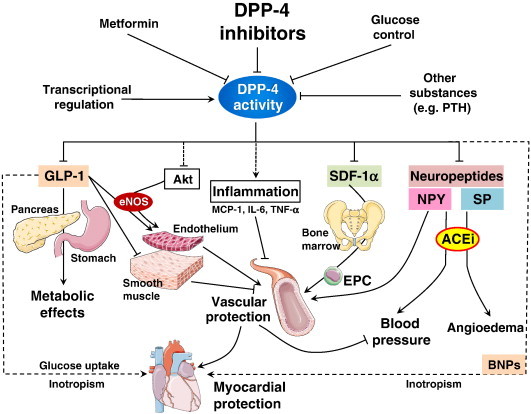
“Figure 3 Cardiovascular effects of DPP-4 inhibitors [27].”
BackgroundGlucagon-like peptide-1 (GLP-1) induces M2 polarization of human macrophages via STAT3 activation
Shiraishi, D., Fujiwara, Y., Komohara, Y., Mizuta, H., & Takeya, M. (2012) · Biochemical and Biophysical Research Communications · doi:10.1016/j.bbrc.2012.07.086 · Cited by 208 · cited 1×
“STAT3 in a GLP-1R dependent manner [95].”
Verspohl, E. J. (2009) · Pharmacology & Therapeutics · doi:10.1016/j.pharmthera.2009.06.002 · Cited by 196 · cited 1×
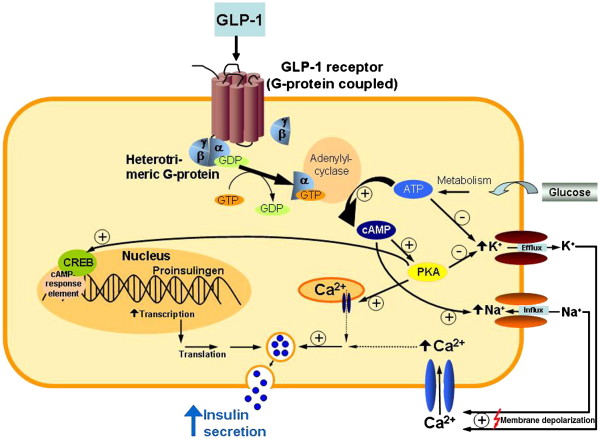
“Figure 2 Mechanism of action of GLP-1 [25].”
BackgroundCardiac Function in Mice Lacking the Glucagon-Like Peptide-1 Receptor
Gros, R., You, X., Baggio, L. L., Kabir, M. G., Sadi, A. M., Mungrue, I. N., Parker, T. G., Huang, Q., Drucker, D. J., & Husain, M. (2003) · Endocrinology · doi:10.1210/en.2003-0007 · Cited by 193 · cited 1×
“who demonstrated a diminished basal heart rate and diastolic dysfunction after insulin administration in GLP-1R knockout mice [35].”
BackgroundCourrèges, J. ‐., Vilsbøll, T., Zdravkovic, M., Le‐Thi, T., Krarup, T., Schmitz, O., Verhoeven, R., Bugáñová, I., & Madsbad, S. (2008) · Diabetic Medicine · doi:10.1111/j.1464-5491.2008.02484.x · Cited by 191
Glucagon-like peptide-1 relaxes rat conduit arteries via an endothelium-independent mechanism
Nyström, T., Gonon, A. T., Sjöholm, Å., & Pernow, J. (2005) · Regulatory Peptides · doi:10.1016/j.regpep.2004.08.024 · Cited by 188
Liu, H., Dear, A. E., Knudsen, L. B., & Simpson, R. W. (2009) · Journal of Endocrinology · doi:10.1677/joe-08-0468 · Cited by 187 · cited 6×
“In vitro studies in HUVECs have further demonstrated these effects.”
BackgroundInfluentialEffects of Exenatide on Systolic Blood Pressure in Subjects With Type 2 Diabetes
Okerson, T., Yan, P., Stonehouse, A., & Brodows, R. (2010) · American Journal of Hypertension · doi:10.1038/ajh.2009.245 · Cited by 186
Asmar, M., Simonsen, L., Madsbad, S., Stallknecht, B., Holst, J. J., & Bülow, J. (2010) · Diabetes · doi:10.2337/db10-0098 · Cited by 184
Poornima, I., Brown, S. B., Bhashyam, S., Parikh, P., Bolukoglu, H., & Shannon, R. P. (2008) · Circulation: Heart Failure · doi:10.1161/circheartfailure.108.766402 · Cited by 182
Vila Petroff, M. G., Egan, J. M., Wang, X., & Sollott, S. J. (2001) · Circulation Research · doi:10.1161/hh1701.095716 · Cited by 180 · cited 1×
“reported negative inotropic effects in rat myocyte cultures [36,37].”
BackgroundLiu, L., Liu, J., Wong, W. T., Tian, X. Y., Lau, C. W., Wang, Y.-X., Xu, G., Pu, Y., Zhu, Z., Xu, A., et al. (2012) · Hypertension · doi:10.1161/hypertensionaha.112.195115 · Cited by 179 · cited 5×
“Liu and colleagues showed that GLP-1 suppressed the oxidized low-density-lipoproteininduced apoptosis of MILE SVEN 1 cells by inactivating the PARP-1/iNOS/NO pathway [105].”
BackgroundInfluentialCardiac Metabolism as a Target for the Treatment of Heart Failure
Taegtmeyer, H. (2004) · Circulation · doi:10.1161/01.cir.0000139340.88769.d5 · Cited by 178 · cited 1×
“upheld revolves around cardiac metabolism [47].”
Barragan, J. M., Rodriguez, R. E., & Blazquez, E. (1994) · American Journal of Physiology-Endocrinology and Metabolism · doi:10.1152/ajpendo.1994.266.3.e459 · Cited by 176
Hyperglycemia and Endothelial Dysfunction in Atherosclerosis: Lessons from Type 1 Diabetes
Funk, S. D., Yurdagul, A., & Orr, A. W. (2012) · International Journal of Vascular Medicine · doi:10.1155/2012/569654 · Cited by 176 · cited 1×
“The robust relationship between these two entities has been largely attributed to oxidative stress caused by hyperglycemia, although a few studies have failed to demonstrate a significant reduction in cardiovascular risk as a result of intense glycemic control [84-86].”
BackgroundChia, C. W., Carlson, O. D., Kim, W., Shin, Y.-K., Charles, C. P., Kim, H. S., Melvin, D. L., & Egan, J. M. (2009) · Diabetes · doi:10.2337/db08-0958 · Cited by 176 · cited 1×
“response, GLP-1 extenuates it [17-19].”
Ishibashi, Y., Matsui, T., Takeuchi, M., & Yamagishi, S.-I. (2010) · Biochemical and Biophysical Research Communications · doi:10.1016/j.bbrc.2009.12.075 · Cited by 173 · cited 7×
“These findings was further supported by the study of Gros et al. who demonstrated a diminished basal heart rate and diastolic dysfunction after insulin administration in GLP-1R knockout mice [35].”
BackgroundInfluentialHalbirk, M., Nørrelund, H., Møller, N., Holst, J. J., Schmitz, O., Nielsen, R., Nielsen-Kudsk, J. E., Nielsen, S. S., Nielsen, T. T., Eiskjær, H., et al. (2010) · American Journal of Physiology-Heart and Circulatory Physiology · doi:10.1152/ajpheart.00930.2009 · Cited by 165 · cited 1×
“reported only minor cardiovascular effects despite increased insulin levels and reduced plasma glucose concentration, in patients without diabetes but with compensated heart failure [80].”
BackgroundLind, M., Garcia-Rodriguez, L. A., Booth, G. L., Cea-Soriano, L., Shah, B. R., Ekeroth, G., & Lipscombe, L. L. (2013) · Diabetologia · doi:10.1007/s00125-013-3063-1 · Cited by 164 · cited 1×
“Recent advancements in healthcare have witnessed an improvement in the prognosis of T2DM patients due to earlier detection and improvements in diabetes care [4].”
BackgroundShigeta, T., Aoyama, M., Bando, Y. K., Monji, A., Mitsui, T., Takatsu, M., Cheng, X.-W., Okumura, T., Hirashiki, A., Nagata, K., et al. (2012) · Circulation · doi:10.1161/circulationaha.112.096479 · Cited by 163 · cited 1×
“observed reversal of diastolic ventricular dysfunction in a rat model due DPP4 inhibition, via local actions on angiogenesis and inotropic effects [76].”
BackgroundExendin-4 has an anti-hypertensive effect in salt-sensitive mice model
Hirata, K., Kume, S., Araki, S.-I., Sakaguchi, M., Chin-Kanasaki, M., Isshiki, K., Sugimoto, T., Nishiyama, A., Koya, D., Haneda, M., et al. (2009) · Biochemical and Biophysical Research Communications · doi:10.1016/j.bbrc.2009.01.003 · Cited by 163
Patil, H. R., Al Badarin, F. J., Al Shami, H. A., Bhatti, S. K., Lavie, C. J., Bell, D. S. H., & O'Keefe, J. H. (2012) · The American Journal of Cardiology · doi:10.1016/j.amjcard.2012.04.061 · Cited by 160 · cited 1×
“DPP-4 inhibitors also have a favorable cardiovascular safety profile [141].”
BackgroundGolpon, H. A., Puechner, A., Welte, T., Wichert, P. V., & Feddersen, C. O. (2001) · Regulatory Peptides · doi:10.1016/s0167-0115(01)00300-7 · Cited by 158 · cited 1×
“Similarly, Golpon also showed the role of GLP-1 in the modulation of pulmonary vascular tone [112].”
BackgroundRatner, R., Han, J., Nicewarner, D., Yushmanova, I., Hoogwerf, B. J., & Shen, L. (2011) · Cardiovascular Diabetology · doi:10.1186/1475-2840-10-22 · Cited by 153
Green, B. D., Hand, K. V., Dougan, J. E., McDonnell, B. M., Cassidy, R. S., & Grieve, D. J. (2008) · Archives of Biochemistry and Biophysics · doi:10.1016/j.abb.2008.08.001 · Cited by 151
Ding, L., & Zhang, J. (2012) · Acta Pharmacologica Sinica · doi:10.1038/aps.2011.149 · Cited by 147 · cited 1×
“on human umbilical vein endothelial cells (HUVEC) has demonstrated upregulation of eNOS expression via GLP-1R dependent pathways [92].”
BackgroundGLP-1 stimulates secretion of macromolecules from airways and relaxes pulmonary artery
Richter, G., Feddersen, O., Wagner, U., Barth, P., Goke, R., & Goke, B. (1993) · American Journal of Physiology-Lung Cellular and Molecular Physiology · doi:10.1152/ajplung.1993.265.4.l374 · Cited by 146
Exenatide Therapy in Obese Patients With Type 2 Diabetes Mellitus Treated with Insulin
Viswanathan, P., Chaudhuri, A., Bhatia, R., Al-Atrash, F., Mohanty, P., & Dandona, P. (2007) · Endocrine Practice · doi:10.4158/ep.13.5.444 · Cited by 142
Ceriello, A., Esposito, K., Testa, R., Bonfigli, A. R., Marra, M., & Giugliano, D. (2011) · Diabetes Care · doi:10.2337/dc10-1949 · Cited by 134
Younce, C. W., Burmeister, M. A., & Ayala, J. E. (2013) · American Journal of Physiology-Cell Physiology · doi:10.1152/ajpcell.00248.2012 · Cited by 134 · cited 1×
“lation of phospholamban [59].”
Gill, A., Hoogwerf, B. J., Burger, J., Bruce, S., MacConell, L., Yan, P., Braun, D., Giaconia, J., & Malone, J. (2010) · Cardiovascular Diabetology · doi:10.1186/1475-2840-9-6 · Cited by 133 · cited 1×
“In a placebo-controlled trial conducted on subjects with T2DM already receiving anti-diabetic therapy, exenatide administered subcutaneously demonstrated no clinically significant effects on heart rate [39].”
Goto, H., Nomiyama, T., Mita, T., Yasunari, E., Azuma, K., Komiya, K., Arakawa, M., Jin, W. L., Kanazawa, A., Kawamori, R., et al. (2011) · Biochemical and Biophysical Research Communications · doi:10.1016/j.bbrc.2010.12.131 · Cited by 127
Pacheco, B. P., Crajoinas, R. O., Couto, G. K., Davel, A. P. C., Lessa, L. M., Rossoni, L. V., & Girardi, A. C. (2011) · Journal of Hypertension · doi:10.1097/hjh.0b013e328341939d · Cited by 125 · cited 1×
“This effect was further shown to be partially due to inhibition of NHE3 activity in renal proximal tubule [131].”
BackgroundLiu, Q., Anderson, C., Broyde, A., Polizzi, C., Fernandez, R., Baron, A., & Parkes, D. G. (2010) · Cardiovascular Diabetology · doi:10.1186/1475-2840-9-76 · Cited by 124
Brain Glucagon-Like Peptide-1 Regulates Arterial Blood Flow, Heart Rate, and Insulin Sensitivity
Cabou, C., Campistron, G., Marsollier, N., Leloup, C., Cruciani-Guglielmacci, C., Pénicaud, L., Drucker, D. J., Magnan, C., & Burcelin, R. (2008) · Diabetes · doi:10.2337/db08-0121 · Cited by 121 · cited 1×
“arterial blood flow, heart rate, and insulin sensitivity [121].”
BackgroundThrainsdottir, I., Malmberg, K., Olsson, A., Gutniak, M., & Rydén, L. (2004) · Diabetes and Vascular Disease Research · doi:10.3132/dvdr.2004.005 · Cited by 120 · cited 1×
“Earlier studies have hinted towards improved myocardial function with reasonable tolerability in heart failure patients infused with GLP-1 [78].”
BackgroundRead, P. A., Hoole, S. P., White, P. A., Khan, F. Z., O'Sullivan, M., West, N. E. J., & Dutka, D. P. (2011) · Circulation: Cardiovascular Interventions · doi:10.1161/circinterventions.110.960476 · Cited by 119
Yin, M., Silljé, H. H., Meissner, M., van Gilst, W. H., & de Boer, R. A. (2011) · Cardiovascular Diabetology · doi:10.1186/1475-2840-10-85 · Cited by 118 · cited 1×
“have also been shown to reduce infarct size in various animal studies [60-62].”
BackgroundRead, P. A., Khan, F. Z., & Dutka, D. P. (2012) · Heart · doi:10.1136/hrt.2010.219345 · Cited by 113 · cited 1×
“Similar effects were demonstrated by investigators, both before and after revascularization procedures [67,68].”
Ogawa, S., Ishiki, M., Nako, K., Okamura, M., Senda, M., Mori, T., & Ito, S. (2011) · The Tohoku Journal of Experimental Medicine · doi:10.1620/tjem.223.133 · Cited by 107
The potential effects of anti-diabetic medications on myocardial ischemia–reperfusion injury
Ye, Y., Perez-Polo, J. R., Aguilar, D. A., & Birnbaum, Y. (2011) · Basic Research in Cardiology · doi:10.1007/s00395-011-0216-6 · Cited by 106 · cited 1×
“have also been shown to reduce infarct size in various animal studies [60-62].”
BackgroundDipeptidyl Peptidase IV Inhibition Improves Cardiorenal Function in Overpacing-Induced Heart Failure
Gomez, N., Touihri, K., Matheeussen, V., Da Costa, A. M., Mahmoudabady, M., Mathieu, M., Baerts, L., Peace, A., Lybaert, P., Scharpé, S., et al. (2012) · European Journal of Heart Failure · doi:10.1093/eurjhf/hfr146 · Cited by 106 · cited 1×
“who observed preservation of glomerular filtration rate, increase in stroke volume, and enhancement of the inotropic effect of exogenous brain natriuretic peptide due to DPP-4 inhibition [77].”
BackgroundEffect of GLP-1 Treatment on GLUT2 and GLUT4 Expression in Type 1 and Type 2 Rat Diabetic Models
Villanueva‐Peñacarrillo, M. L., Puente, J., Redondo, A., Clemente, F., & Valverde, I. (2001) · Endocrine · doi:10.1385/endo:15:2:241 · Cited by 104 · cited 1×
“proposed mechanism that involves improved glucose uptake is related to the increase in glucose transport proteins (GLUT-2 and GLUT-4) by GLP-1 [51].”
BackgroundBhashyam, S., Fields, A. V., Patterson, B., Testani, J. M., Chen, L., Shen, Y.-T., & Shannon, R. P. (2010) · Circulation: Heart Failure · doi:10.1161/circheartfailure.109.900282 · Cited by 104
Nathanson, D., Ullman, B., Löfström, U., HEDMAN, A. G., Frick, M., Sjöholm, Å., & Nyström, T. (2012) · Diabetologia · doi:10.1007/s00125-011-2440-x · Cited by 103 · cited 1×
“, infusion of exenatide in male type 2 diabetic patients with chronic heart failure exhibited positive chronotropism and favorable effects on the cardiac index and hemodynamics; however, the definitive effects of exenatide in such patients were still inconclusive [81].”
BackgroundMarso, S. P., Lindsey, J. B., Stolker, J. M., House, J. A., Martinez Ravn, G., Kennedy, K. F., Jensen, T. M., & Buse, J. B. (2011) · Diabetes and Vascular Disease Research · doi:10.1177/1479164111408937 · Cited by 103
Kelly, A. S., Bergenstal, R. M., Gonzalez-Campoy, J., Katz, H., & Bank, A. J. (2012) · Cardiovascular Diabetology · doi:10.1186/1475-2840-11-64 · Cited by 98 · cited 1×
“Exenatide has also exhibited similar effects, with efficacy comparable to that of metformin [110].”
BackgroundVittone, F., Liberman, A., Vasic, D., Ostertag, R., Esser, M., Walcher, D., Ludwig, A., Marx, N., & Burgmaier, M. (2012) · Diabetologia · doi:10.1007/s00125-012-2582-5 · Cited by 97 · cited 1×
“Recent studies have demonstrated direct suppression of aortic atherosclerosis by both PKF275-055 and sitagliptin [98-100].”
BackgroundKavianipour, M., Ehlers, M. R., Malmberg, K., Ronquist, G., Rydén, L., Wikström, G., & Gutniak, M. (2003) · Peptides · doi:10.1016/s0196-9781(03)00108-6 · Cited by 96 · cited 1×
“GLP-1 has also been demonstrated to decrease lactate and pyruvate concentrations, thereby providing another mechanism for cardioprotection via improvement in metabolism [53].”
BackgroundPorter, D. W., Irwin, N., Flatt, P. R., Hölscher, C., & Gault, V. A. (2010) · European Journal of Pharmacology · doi:10.1016/j.ejphar.2010.10.059 · Cited by 93 · cited 1×
“Both have been found to be associated with improved cognitive function due to their expression in brain tissue [22-24].”
BackgroundYang, W., Chen, L., Ji, Q., Liu, X., Ma, J., Tandon, N., Bhattacharyya, A., Kumar, A., Kim, K. ‐., Yoon, K. ‐., et al. (2011) · Diabetes, Obesity and Metabolism · doi:10.1111/j.1463-1326.2010.01323.x · Cited by 91
Theiss, H. D., Brenner, C., Engelmann, M. G., Zaruba, M., Huber, B., Henschel, V., Mansmann, U., Wintersperger, B. J., Reiser, M., Steinbeck, G., et al. (2010) · International Journal of Cardiology · doi:10.1016/j.ijcard.2009.09.555 · Cited by 90
Schisano, B., Harte, A. L., Lois, K. B., Saravanan, P., Al‐Daghri, N. M., Al-Attas, O. S., Knudsen, L. B., McTernan, P. G., Ceriello, A., & Tripathi, G. (2011) · Regulatory Peptides · doi:10.1016/j.regpep.2011.11.008 · Cited by 90 · cited 1×
“In another study, liraglutide was shown to prevent the onset of endoplasmic reticulum stress in HUVECs exposed to high glucose via dose dependent induction of mitochondrial fusion marker, OPA1, thereby inhibiting mitochondrial fragmentation and apoptosis [104].”
BackgroundPortha, B., Tourrel-Cuzin, C., & Movassat, J. (2011) · Experimental Diabetes Research · doi:10.1155/2011/376509 · Cited by 85
Nyström, T. (2008) · Hormone and Metabolic Research · doi:10.1055/s-0028-1082326 · Cited by 76
Dokken, B. B., La Bonte, L. R., Davis-Gorman, G., Teachey, M. K., Seaver, N., & McDonagh, P. F. (2011) · Hormone and Metabolic Research · doi:10.1055/s-0031-1271777 · Cited by 71
Dong, Z., Chai, W., Wang, W., Zhao, L., Fu, Z., Cao, W., & Liu, Z. (2013) · American Journal of Physiology-Endocrinology and Metabolism · doi:10.1152/ajpendo.00473.2012 · Cited by 71 · cited 1×
“concluded that GLP-1 had a role in expanding microvascular volume via a PKA/NOdependent pathway in the vascular endothelium [114].”
BackgroundTerasaki, M., Nagashima, M., Watanabe, T., Nohtomi, K., Mori, Y., Miyazaki, A., & Hirano, T. (2012) · Metabolism · doi:10.1016/j.metabol.2011.11.011 · Cited by 69 · cited 1×
“Recent studies have demonstrated direct suppression of aortic atherosclerosis by both PKF275-055 and sitagliptin [98-100].”
BackgroundAhrén, B. (2004) · Hormone and Metabolic Research · doi:10.1055/s-2004-826173 · Cited by 68 · cited 1×
“demonstrated similar effects that were not suppressed by reserpine, propranolol, or phentolamine, thereby suggesting a direct mode of action [32-34].”
BackgroundVyas, A. K., Yang, K.-C., Woo, D., Tzekov, A., Kovacs, A., Jay, P. Y., & Hruz, P. W. (2011) · PLoS ONE · doi:10.1371/journal.pone.0017178 · Cited by 57 · cited 4×
“Another important finding of this study was that exenatide was also found to abolish the harmful effects of ritonavir (GLUT4 antagonist) on survival [52].”
BackgroundInfluentialÖzyazgan, S., Kutluata, N., Afşar, S., Özdaş, Ş. B., & Akkan, A. G. (2005) · Pharmacology · doi:10.1159/000084277 · Cited by 55 · cited 1×
“In another study, GLP-1 and exendin-4 treatment was shown to normalize the altered vascular tone in type 2 diabetic rats, with the latter being less effective [115].”
BackgroundIşbil-Büyükcoşkun, N., & Süyen, G. G. (2003) · Regulatory Peptides · doi:10.1016/j.regpep.2003.10.025 · Cited by 55 · cited 2×
“The former was mediated by stimulation of central nicotinic and partially muscarinic receptors and vasopressinergic system, while the latter was mediated by stimulation of central nicotinic receptors [123].”
BackgroundNathanson, D., Erdogdu, Ö., Pernow, J., Zhang, Q., & Nyström, T. (2009) · Regulatory Peptides · doi:10.1016/j.regpep.2009.07.003 · Cited by 54
Chatterjee, D. J., Khutoryansky, N., Zdravkovic, M., Sprenger, C. R., & Litwin, J. S. (2009) · The Journal of Clinical Pharmacology · doi:10.1177/0091270009339189 · Cited by 54 · cited 1×
“Exenatide and liraglutide have been found to have no significant effect on QT interval in trials using moxifloxacin as a positive control [40].”
BackgroundTesauro, M., Schinzari, F., Adamo, A., Rovella, V., Martini, F., Mores, N., Barini, A., Pitocco, D., Ghirlanda, G., Lauro, D., et al. (2013) · Diabetes Care · doi:10.2337/dc12-0763 · Cited by 54 · cited 1×
“Human studies have also pointed towards amelioration of endothelial dysfunction and modulation of vascular reactivity [117].”
Background寺﨑, 道. (2012) · Medical Entomology and Zoology · Cited by 54
Clinical use of liraglutide in type 2 diabetes and its effects on cardiovascular risk factors
Varanasi, A., Patel, P., Makdissi, A., Dhindsa, S., Chaudhuri, A., & Dandona, P. (2012) · Endocrine Practice · doi:10.4158/ep11169.or · Cited by 50
Dokken, B. B., Hilwig, W. R., Teachey, M. K., Panchal, A. R., Hubner, K., Allen, D., Rogers, D. C., & Kern, K. B. (2010) · Resuscitation · doi:10.1016/j.resuscitation.2010.01.031 · Cited by 47 · cited 2×
“observed an amelioration of coronary flow reserve on administration of GLP-1 in pigs with a few minutes of untreated ventricular fibrillation followed by resuscitation [43].”
BackgroundBernink, F. J. P., Timmers, L., Diamant, M., Scholte, M., Beek, A. M., Kamp, O., Marques, K. M. J., Denham, R. N., Chen, W. J. Y., Doevendans, P. A., et al. (2013) · International Journal of Cardiology · doi:10.1016/j.ijcard.2012.09.204 · Cited by 46 · cited 1×
“demonstrated that although high dose exenatide treatment did not exercise a significant effect on left ventricular function or area at risk, a trend was observed towards a smaller infarct size as percentage of the area at risk in patients with first acute myocardial infarction who were to be treated with primary percu…”
BackgroundExenatide Improves Hypertension in a Rat Model of the Metabolic Syndrome
Laugero, K. D., Stonehouse, A. H., Guss, S., Landry, J., Vu, C., & Parkes, D. G. (2009) · Metabolic Syndrome and Related Disorders · doi:10.1089/met.2008.0095 · Cited by 45 · cited 2×
“This effect occurred independently of changes in body weight [129].”
BackgroundExperimental Diabetes Research
(2008) · Experimental Diabetes Research · doi:10.1155/edr · Cited by 44
Cabou, C., Vachoux, C., Campistron, G., Drucker, D. J., & Burcelin, R. (2011) · Diabetes · doi:10.2337/db11-0464 · Cited by 43 · cited 1×
“hypothalamic glucose-dependent PKC-δ to regulate femoral artery blood flow and insulin sensitivity [122].”
BackgroundParatore, S., Teresa Ciotti, M., Basille, M., Vaudry, D., Gentile, A., Parenti, R., Calissano, P., & Cavallaro, S. (2011) · Central Nervous System Agents in Medicinal Chemistry · doi:10.2174/187152411798047771 · Cited by 41
Incretin Therapies: Effects Beyond Glycemic Control
Mudaliar, S. R. D., & Henry, R. R. (2009) · The American Journal of Medicine · doi:10.1016/j.amjmed.2009.03.014 · Cited by 38 · cited 1×
“However, the term is somewhat vague, given the fact that incretins have been increasingly reported to have certain non-glucose-lowering functions such as the expansion and preservation of pancreatic β cell mass, bone metabolism, neuroprotection and cardioprotection [10,11].”
BackgroundA gut-heart connection in cardiometabolic regulation
Buglioni, A., & Burnett, J. C. (2013) · Nature Medicine · doi:10.1038/nm.3196 · Cited by 36 · cited 1×
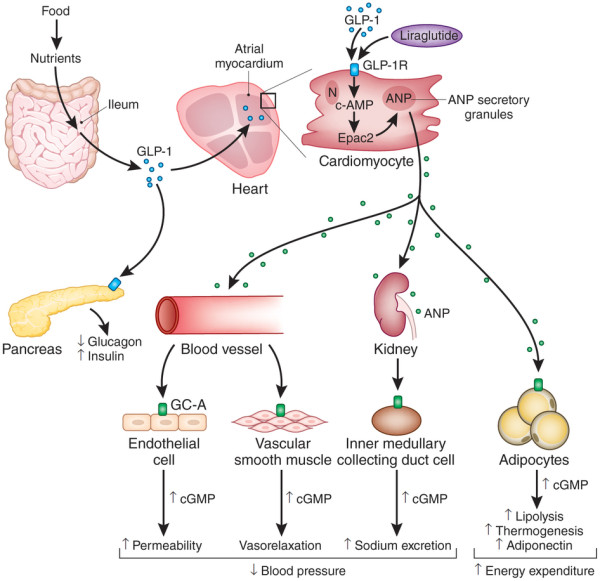
“Figure 1 Cardiometabolic actions of GLP-1 and GLP-1 agonists [7].”
BackgroundLiu, F., Zhang, X., Gong, L., Wang, X.-P., Wang, J., Hou, X., Sun, Y., Qin, W., Wei, S., Zhang, Y., et al. (2011) · Molecular and Cellular Endocrinology · doi:10.1016/j.mce.2011.03.007 · Cited by 36
Murthy, S. N., Hilaire, R. S., Casey, D. B., Badejo, A. M., McGee, J., McNamara, D. B., Kadowitz, P. J., & Fonseca, V. A. (2010) · Diabetes and Vascular Disease Research · doi:10.1177/1479164109360269 · Cited by 33 · cited 1×
“who found no significant changes in eNOS and NFkappaB-p65 expression in exenatide treated non-diabetic rats [91].”
BackgroundWu, L., Olverling, A., Huang, Z., Jansson, L. E., Chao, H., Gao, X., & Sjöholm, Å. (2011) · Clinical Science · doi:10.1042/cs20090464 · Cited by 33 · cited 1×
“She showed that infusion of both GLP-1 and exendin-4 prevented glucose-induced pancreatic blood flow redistribution into the islets, an effect that was not abolished by blocking NO formation [116].”
BackgroundBloomfield, D. M., Krishna, R., Hreniuk, D., Hickey, L., Ghosh, K., Bergman, A. J., Miller, J., Gutierrez, M. J., Stoltz, R. R., Gottesdiener, K. M., et al. (2009) · The Journal of Clinical Pharmacology · doi:10.1177/0091270009337511 · Cited by 31 · cited 1×
“Similar effects have been noted with DPP-4 inhibitors such as sitagliptin and vildagliptin, whereby supratherapeutic doses have succeeded in producing only a minor increase in the QT intervals [41,42].”
ResultDokken, B. B., Piermarini, C. V., Teachey, M. K., Gura, M., Dameff, C. J., Heller, B., Krate, J., Asghar, A. M., Querin, L., Mitchell, J., et al. (2012) · American Journal of Physiology-Heart and Circulatory Physiology · doi:10.1152/ajpheart.00282.2012 · Cited by 31
A Meta-Analysis of the Therapeutic Effects of Glucagon-Like Peptide-1 Agonist in Heart Failure
Munaf, M., Pellicori, P., Allgar, V., & Wong, K. (2012) · International Journal of Peptides · doi:10.1155/2012/249827 · Cited by 30 · cited 1×
“effects of GLP-1 in heart failure patients [82].”
BackgroundYanai, H. (2012) · Journal of Clinical Medicine Research · doi:10.4021/jocmr975w · Cited by 25 · cited 1×
“[135].”
Impact of glucagon‐like peptide‐1 on endothelial function
Sjöholm, Å. (2009) · Diabetes, Obesity and Metabolism · doi:10.1111/j.1463-1326.2009.01074.x · Cited by 22 · cited 1×
“also serve as potential prospects in addressing cardiovascular risks in T2DM patients [119].”
BackgroundRole of glucagon-like peptide- 1 in vascular endothelial dysfunction.
Goyal, S., Kumar, S., Bijjem, K. R. V., & Singh, M. (2010) · PubMed · Cited by 18
GIP: No Longer the Neglected Incretin Twin?
Kulkarni, R. (2010) · Science Translational Medicine · doi:10.1126/scitranslmed.3001027 · Cited by 17 · cited 1×
“GIP has also been found to exert influence over other tissues such as bone, although its extraglycemic profile is quite limited and largely preclinical in nature compared to its much celebrated partner GLP-1 [13].”
BackgroundHe, Y., Zhang, Y., Serra, D. B., Wang, Y., Ligueros‐Saylan, M., & Dole, W. P. (2011) · Current Medical Research and Opinion · doi:10.1185/03007995.2011.585395 · Cited by 16
FC1 Dipeptidyl peptidase IV inhibitors limit myocardial infarct size in a glucose-sensitive manner
Hausenloy, D. J., Wynne, A. M., Theodorou, L., Mocanu, M. M., & Yellon, D. M. (2010) · Heart · doi:10.1136/hrt.2010.205781.7 · Cited by 3
Multidimensional effects of glucagon-like peptide-1
Haseeb, A. (2013) · El Mednifico Journal · doi:10.18035/emj.v1i1.8 · Cited by 1 · cited 1×
“However, the term is somewhat vague, given the fact that incretins have been increasingly reported to have certain non-glucose-lowering functions such as the expansion and preservation of pancreatic β cell mass, bone metabolism, neuroprotection and cardioprotection [10,11].”
Background
Cited by
Glucagon-like peptide-1 receptor: mechanisms and advances in therapy
Zheng, Z., Zong, Y., Ma, Y., Tian, Y., Pang, Y., Zhang, C., & Gao, J. (2024) · Signal Transduction and Targeted Therapy · doi:10.1038/s41392-024-01931-z · Cited by 1,036
“43,44 GLP-1R is present in the CNS, and its absence might contribute to alterations in behavior, mood, or cognitive function.”
BackgroundThe Role of the Autonomic Nervous System in the Pathophysiology of Obesity
Guarino, D., Nannipieri, M., Iervasi, G., Taddei, S., & Bruno, R. M. (2017) · Frontiers in Physiology · doi:10.3389/fphys.2017.00665 · Cited by 242
“Furthermore, it inhibits gastric acid secretion and gastric emptying (Imeryuz et al., 1997; Edvell and Lindstrom, 1999; Sheikh, 2013).”
BackgroundKhan, M. S., Fonarow, G. C., McGuire, D. K., Hernandez, A. F., Vaduganathan, M., Rosenstock, J., Handelsman, Y., Verma, S., Anker, S. D., McMurray, J. J. V., et al. (2020) · Circulation · doi:10.1161/circulationaha.120.045888 · Cited by 139
Kanie, T., Mizuno, A., Takaoka, Y., Suzuki, T., Yoneoka, D., Nishikawa, Y., Tam, W., Morze, J., Rynkiewicz, A., Xin, Y., et al. (2021) · UCL Discovery (University College London) · Cited by 71
Ishii, M., Shibata, R., Kondo, K., Kambara, T., Shimizu, Y., Tanigawa, T., Bando, Y. K., Nishimura, M., Ouchi, N., & Murohara, T. (2014) · Journal of Biological Chemistry · doi:10.1074/jbc.m114.557835 · Cited by 61
“A number of studies have shown that GLP-1 attenuates ischemia-induced myocardial damage and atherosclerotic lesion formation (3) and promotes angiogenesis in endothelial cells through the Akt, PKC, and Src pathways (29).”
Background
Metadata
- Authors
- Sheikh, A.
- Affiliations
- Dow University of Health Sciences (PK)
- Corresponding author
- Sheikh, Asfandyar
- ORCID
- Sheikh, Asfandyar
- Venue
- Diabetology & Metabolic Syndrome
- Published
- 2013-08-29
- Volume
- 5
- Issue
- 1
- Pages
- 47-47
- ISSN
- 1758-5996 (ISSN-L)
- PMC
- PMC3765965
- OpenAlex
- W2120864714
- Cited by
- 45
- References
- 145
- Citations by year
- 2026: 4 · 2025: 2 · 2024: 5 · 2023: 1 · 2022: 3 · 2021: 3 · 2020: 6 · 2019: 1 · 2018: 1 · 2017: 7 · 2016: 7 · 2015: 2 · 2014: 3
- FWCI
- 3.42
- Type
- journal article
- Language
- en
- Open access
- gold
- doi.org
- Licence
- cc-by
- creativecommons.org/licenses/by/2.0 (tdm)
- Locations
- Diabetology & Metabolic Syndrome (publishedVersion, cc-by)
- Europe PMC (PubMed Central) (publishedVersion, cc-by)
- PubMed Central (publishedVersion, cc-by)
- PubMed (publishedVersion)
- Greater South Information System
- Topics
- Health Sciences › Medicine › Endocrinology, Diabetes and Metabolism › Diabetes Treatment and Management
- Health Sciences › Medicine › Cardiology and Cardiovascular Medicine › Cardiovascular Function and Risk Factors
- Health Sciences › Medicine › Endocrinology, Diabetes and Metabolism › Diabetes, Cardiovascular Risks, and Lipoproteins
- Keywords
- glucagon-like peptide-1, GLP-1 receptor agonists, cardiovascular effects, type 2 diabetes, macrovascular complications, insulin resistance, beta-cell dysfunction, antidiabetic drugs
About these checks
Registry, retraction, Cites and statistics results are computed, not judged, with one exception: a printed reference that no index lists is read once by a model before it counts as a citation error. Claims are extracted by a model and kept only when their quote appears verbatim in the text; each cited source is then checked, with a model’s help, for whether it says what the claim relies on. Those verdicts can be wrong — read the claim’s quote and the cited source before relying on one.
Statistics and arithmetic are recomputed, not judged.
Confidence bands are shown only for fields calibrated on our annotated test set. None is calibrated yet, so no band is shown.
What counts as a claim ›How we measure confidence ›How we check this ›
Are you an author, or do you see a problem with this page? Request a review
Data sources
Bibliographic data: Semantic Scholar, OpenAlex, Crossref.
Contains information from the Semantic Scholar Academic Graph Datasets, made available under the ODC Attribution License (ODC-BY 1.0).
Semantic Scholar’s data is described in: Kinney, R., et al. (2023). The Semantic Scholar Open Data Platform. arXiv:2301.10140.
