

Uncovering steroidopathy in women with autism: a latent class analysis
Open accessThe DOI matches its Crossref record; 90 of the 90 references it cites were found in a registry or an index.
Abstract
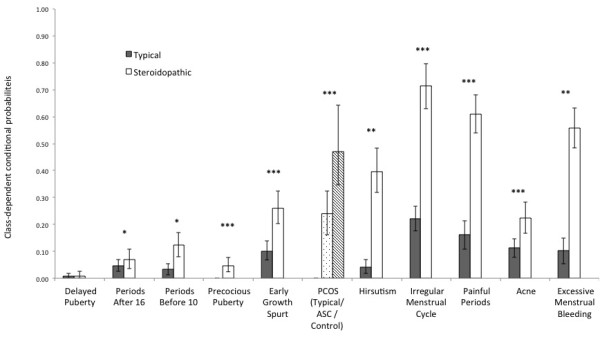
BACKGROUND: Prenatal exposure to increased androgens has been implicated in both polycystic ovary syndrome (PCOS) and autism spectrum conditions (ASC), suggesting that PCOS may be increased among women with ASC. One study suggested elevated steroidopathic symptoms ('steroidopathy') in women with ASC. As the symptoms are not independent, we conducted a latent class analysis (LCA). The objectives of the current study are: (1) to test if these findings replicate in a larger sample; and (2) to use LCA to uncover affected clusters of women with ASC. METHODS: We tested two groups of women, screened using the Autism Spectrum Quotient - Group 1: n = 415 women with ASC (mean age 36.39 ± 11.98 years); and Group 2: n = 415 controls (mean age 39.96 ± 11.92 years). All participants completed the Testosterone-related Medical Questionnaire online. A multiple-group LCA was used to identify differences in latent class structure between women with ASC and controls. RESULTS: There were significant differences in frequency of steroid-related conditions and symptoms between women with ASC and controls. A two-class semi-constrained model best fit the data. Based on response patterns, we identified the classes as 'Typical' and 'Steroidopathic'. The prevalence of the 'Steroidopathic' class was significantly increased within the ASC group (ΔG (2) = 15, df =1, P = 0.0001). In particular, we confirmed higher frequencies of epilepsy, amenorrhea, dysmenorrhea, severe acne, gender dysphoria, and transsexualism, and differences in sexual preference in women with ASC. CONCLUSIONS: Women with ASC are at increased risk for symptoms and conditions linked to steroids. LCA revealed this steroidopathy despite the apparent underdiagnosis of PCOS.
Overview
The claims and statistics of this paper haven’t been checked yet.
Free: it reads the open-access text and checks the first 5 claims that cite a source we can check. Create a free account to check every claim.
Integrity signals
Registry
Cites
Statistics
Figures
Verification
Claims the paper makes
The claims and statistics of this paper haven’t been checked yet.
Free: it reads the open-access text and checks the first 5 claims that cite a source we can check. Create a free account to check every claim.
Claims other papers make about this one
Each is checked against this paper’s own text: does it say what the citing paper says it does?
The source backs part of the claim, not all of it — or backs it for a different population, condition or comparison.
In the citing paper
“For example, elevated prenatal androgens have been strongly associated with ASD risk for more than a decade (26–35) leading some to hypothesize that EDCs that alter androgen action may be contributory.”
From Endocrine Disruption of Vasopressin Systems and Related Behaviors (2017) · cites this paper as [35]
Experimental — accuracy not yet measuredIn the citing paper
“and that women with ASD are at risk for disorders related to steroids [82].”
From The contribution of environmental exposure to the etiology of autism spectrum disorder (2019) · cites this paper as [82]
Self-check
Percentages, sums and reported differences re-computed from the paper’s own numbers.
The self-check needs the paper’s full text.
Citations
Cites
Nylund, K. L., Asparouhov, T., & Muthén, B. O. (2007) · Structural Equation Modeling: A Multidisciplinary Journal · doi:10.1080/10705510701575396 · Cited by 11,415
Baron-Cohen, S., Wheelwright, S., Skinner, R., Martin, J., & Clubley, E. (2001) · Journal of Autism and Developmental Disorders · doi:10.1023/a:1005653411471 · Cited by 6,450
Self-citationPathogenesis and pathophysiology of endometriosis
Burney, R. O., & Giudice, L. C. (2012) · Fertility and Sterility · doi:10.1016/j.fertnstert.2012.06.029 · Cited by 1,590 · cited 1×
“Consequently, variation in the steroidogenic pathway in females with ASC would be expected to also result in symptoms or conditions related to abnormal levels of progesterone and/ or estradiol, such as endometriosis [41] or steroid-sensitive cancers.”
Sex differences in the brain: implications for explaining autism
Baron-Cohen, S., Knickmeyer, R. C., & Belmonte, M. K. (2005) · Science · doi:10.1126/science.1115455 · Cited by 1,145 · cited 1×
“Elevated levels of prenatal androgens such as fetal testosterone (FT) during a critical period are hypothesized to contribute to the etiology of ASC [10] as FT shapes neurological development [11-13].”
Self-citationWhy are autism spectrum conditions more prevalent in males?
Baron-Cohen, S., Lombardo, M. V., Auyeung, B., Ashwin, E., Chakrabarti, B., & Knickmeyer, R. (2011) · PLoS Biology · doi:10.1371/journal.pbio.1001081 · Cited by 754 · cited 1×
“Elevated levels of prenatal androgens such as fetal testosterone (FT) during a critical period are hypothesized to contribute to the etiology of ASC [10] as FT shapes neurological development [11-13].”
Self-citationTuchman, R., & Rapin, I. (2002) · The Lancet Neurology · doi:10.1016/s1474-4422(02)00160-6 · Cited by 706 · cited 1×
“While the co-morbidity of epilepsy and autism is well established [73], few efforts have been made to explain the increased risk for epilepsy among females with autism [74] and the peak prevalence of epilepsy at adolescence [73] among individuals with ASC.”
Autistic-like behaviour in Scn1a+/− mice and rescue by enhanced GABA-mediated neurotransmission
Han, S., Tai, C., Westenbroek, R. E., Yu, F. H., Cheah, C. S., Potter, G. B., Rubenstein, J. L., Scheuer, T., de la Iglesia, H. O., & Catterall, W. A. (2012) · Nature · doi:10.1038/nature11356 · Cited by 643 · cited 2×
“Furthermore, this phenotype can be rescued with clonazepam, a positive allosteric modulator of the GABAA receptor that shares a binding site with allopregnanolone [75,76].”
Suppression of TH17 differentiation and autoimmunity by a synthetic ROR ligand
Solt, L. A., Kumar, N., Nuhant, P., Wang, Y., Lauer, J. L., Liu, J., Istrate, M. A., Kamenecka, T. M., Roush, W. R., Vidović, D., et al. (2011) · Nature · doi:10.1038/nature10075 · Cited by 508 · cited 1×
“Additionally, CYP19A1 has been identified as a target of transcriptional regulators such as RORA, which is associated with autism [2], autoimmunity [22] and early age at menarche [23].”
Amiet, C., Gourfinkel-An, I., Bouzamondo, A., Tordjman, S., Baulac, M., Lechat, P., Mottron, L., & Cohen, D. (2008) · Biological Psychiatry · doi:10.1016/j.biopsych.2008.04.030 · Cited by 499 · cited 1×
“While the co-morbidity of epilepsy and autism is well established [73], few efforts have been made to explain the increased risk for epilepsy among females with autism [74] and the peak prevalence of epilepsy at adolescence [73] among individuals with ASC.”
Premature Adrenarche - A Common Condition with Variable Presentation
Utriainen, P., Laakso, S., Liimatta, J., Jääskeläinen, J., & Voutilainen, R. (2015) · Hormone Research in Paediatrics · doi:10.1159/000369458 · Cited by 473
Fetal testosterone and autistic traits
Auyeung, B., Baron‐Cohen, S., Ashwin, E., Knickmeyer, R., Taylor, K., & Hackett, G. (2009) · British Journal of Psychology · doi:10.1348/000712608x311731 · Cited by 462
Self-citationCarmina, E., Rosato, F., Jannì, A., Rizzo, M., & Longo, R. A. (2006) · The Journal of Clinical Endocrinology & Metabolism · doi:10.1210/jc.2005-1457 · Cited by 420 · cited 1×
“PCOS only accounts for 85% of cases of clinical hyperandrogenemia within the general population, and the different conditional probabilities for PCOS diagnosis between the two steroidopathic groups could also reflect an increase in difficult-to-detect hyperandrogenic conditions such as non-classical congenital adrenal…”
Nelson, V. L., Qin, K.-N., Rosenfield, R. L., Wood, J. R., Penning, T. M., Legro, R. S., Strauss, J. F., & McAllister, J. M. (2001) · The Journal of Clinical Endocrinology & Metabolism · doi:10.1210/jcem.86.12.8088 · Cited by 405 · cited 1×
“CYP17A1 is overexpressed in theca cells of women with PCOS [25], and its overexpression is driven by increased insulin receptor signaling, [26] such that hyperinsulinemia can eventually cause hyperandrogenemia [27].”
Circulating Levels of Allopregnanolone in Humans: Gender, Age, and Endocrine Influences
Genazzani, A. R., Petraglia, F., Bernardi, F., Casarosa, E., Salvestroni, C., Tonetti, A., Nappi, R. E., Luisi, S. V., Palumbo, M. A., Purdy, R. H., et al. (1998) · The Journal of Clinical Endocrinology & Metabolism · doi:10.1210/jc.83.6.2099 · Cited by 393 · cited 6×
“PNA increases connectivity between GABAergic and GnRH neurons, and dysregulates AMPK-mediated glucose sensing in GnRH neurons, causing elevated GnRH pulse frequency and amplitude throughout the lifespan [67,68].”
InfluentialIbañez, L., Potau, N., Virdis, R., Zampolli, M., Terzi, C., Gussinyé, M., Carrascosa, A., & Vicens-Calvet, E. (1993) · The Journal of Clinical Endocrinology & Metabolism · doi:10.1210/jcem.76.6.8501168 · Cited by 341
Power, R. A., Kyaga, S., Uher, R., MacCabe, J. H., Långström, N., Landen, M., McGuffin, P., Lewis, C. M., Lichtenstein, P., & Svensson, A. C. (2013) · JAMA Psychiatry · doi:10.1001/jamapsychiatry.2013.268 · Cited by 336 · cited 1×
“It is possible that the reduced marriage rate and fecundity among women with ASC [51,52] make them less likely to have a diagnosis of PCOS as they may be less likely to have sought infertility treatment, contributing to possible under-detection of PCOS within this population.”
Anticonvulsant profile of the progesterone metabolite 5α-pregnan-3α-ol-20-one
Belelli, D., Bolger, M. B., & Gee, K. W. (1989) · European Journal of Pharmacology · doi:10.1016/0014-2999(89)90077-0 · Cited by 323 · cited 1×
“Furthermore, this phenotype can be rescued with clonazepam, a positive allosteric modulator of the GABAA receptor that shares a binding site with allopregnanolone [75,76].”
Sullivan, S. D., & Moenter, S. M. (2004) · Proceedings of the National Academy of Sciences · doi:10.1073/pnas.0308058101 · Cited by 308 · cited 2×
“PNA increases connectivity between GABAergic and GnRH neurons, and dysregulates AMPK-mediated glucose sensing in GnRH neurons, causing elevated GnRH pulse frequency and amplitude throughout the lifespan [67,68].”
Wheelwright, S., Auyeung, B., Allison, C., & Baron-Cohen, S. (2010) · Molecular Autism · doi:10.1186/2040-2392-1-10 · Cited by 308 · cited 2×
“We also excluded participants who reported having a relative with an ASC to minimize the likelihood that the control group might have a Broader Autism Phenotype [47].”
Self-citationFetal Testosterone Influences Sexually Dimorphic Gray Matter in the Human Brain
Lombardo, M. V., Ashwin, E., Auyeung, B., Chakrabarti, B., Taylor, K., Hackett, G., Bullmore, E. T., & Baron-Cohen, S. (2012) · The Journal of Neuroscience · doi:10.1523/jneurosci.4389-11.2012 · Cited by 302 · cited 1×
“Elevated levels of prenatal androgens such as fetal testosterone (FT) during a critical period are hypothesized to contribute to the etiology of ASC [10] as FT shapes neurological development [11-13].”
Self-citationThe origins and sequelae of abnormal neuroendocrine function in polycystic ovary syndrome
Blank, S. K., McCartney, C. R., & Marshall, J. C. (2006) · Human Reproduction Update · doi:10.1093/humupd/dml017 · Cited by 301 · cited 1×
“In hyperinsulinemic hyperandrogenemia, androgens accelerate desensitization of GnRH neurons to negative feedback by progesterone, causing LH-producing high frequency GnRH pulses to occur earlier in life [63,64].”
Chakrabarti, B., Dudbridge, F., Kent, L., Wheelwright, S., Hill‐Cawthorne, G., Allison, C., Banerjee‐Basu, S., & Baron‐Cohen, S. (2009) · Autism Research · doi:10.1002/aur.80 · Cited by 295 · cited 4×
“Another gene of interest in both autism [1] and female reproductive disorders [24] is CYP17A1, whose product 17α-hydroxylase/17,20 lysase/ 17,20-desmolase catalyzes several steroidogenic reactions.”
InfluentialSelf-citationPolycystic ovary syndrome and its developmental origins
Dumesic, D. A., Abbott, D. H., & Padmanabhan, V. (2007) · Reviews in Endocrine and Metabolic Disorders · doi:10.1007/s11154-007-9046-0 · Cited by 283 · cited 2×
“; licensee BioMed Central Lt Commons Attribution License (http://creativec reproduction in any medium, provided the or (PCOS) [16].”
Beilin, J., Ball, E., Favaloro, J., & Zajac, J. (2000) · Journal of Molecular Endocrinology · doi:10.1677/jme.0.0250085 · Cited by 265 · cited 1×
“For example, a shorter CAG variable number tandem repeat associated with hypersensitivity of the androgen receptor [17] has been linked to ASC [3], precocious puberty, and PCOS [18].”
Elevated rates of testosterone-related disorders in women with autism spectrum conditions
Ingudomnukul, E., Baron-Cohen, S., Wheelwright, S., & Knickmeyer, R. (2007) · Hormones and Behavior · doi:10.1016/j.yhbeh.2007.02.001 · Cited by 259 · cited 5×
“Previous studies report a delay in menarche among women with ASC [45,59]; however, the current study found an early growth spurt and accelerated menarche in women with ASC, consistent with findings of both early [55] and delayed [40] menarche in PCOS.”
InfluentialSelf-citationOpposing Influences of Prenatal and Postnatal Weight Gain on Adrenarche in Normal Boys and Girls
Ong, K. K., Potau, N., Petry, C. J., Jones, R., Ness, A. R., Honour, J. W., de Zegher, F., Ibáñez, L., & Dunger, D. B. (2004) · The Journal of Clinical Endocrinology & Metabolism · doi:10.1210/jc.2003-031848 · Cited by 254 · cited 1×
“mediated by birth weight, and catch-up growth [54,55], which responds to insulin-like growth factors [56,57].”
Sarachana, T., Xu, M., Wu, R.-C., & Hu, V. W. (2011) · PLoS ONE · doi:10.1371/journal.pone.0017116 · Cited by 227 · cited 2×
“Additionally, CYP19A1 has been identified as a target of transcriptional regulators such as RORA, which is associated with autism [2], autoimmunity [22] and early age at menarche [23].”
Hines, M. (2011) · Frontiers in Neuroendocrinology · doi:10.1016/j.yfrne.2011.02.006 · Cited by 219 · cited 1×
“Women with ASC reported masculine sex-typical childhood behaviors (‘tomboyism’), gender dysphoria, and non-heterosexual orientations significantly more frequently than controls, consistent with the organizational effects of prenatal testosterone on sexually dimorphic brain structures, and sexual behaviors [87].”
Hu, V. W., Frank, B. C., Heine, S., Lee, N. H., & Quackenbush, J. (2006) · BMC Genomics · doi:10.1186/1471-2164-7-118 · Cited by 200 · cited 1×
“Background Atypical levels of sex steroid hormones and their biosynthetic pathway have been associated with autism spectrum conditions (ASC) or associated with autistic traits in genetic [1-3], gene expression [4,5], serum [6,7], amniotic fluid [8] and 2D:4D ratio of 2nd digit to 4th digit [9] studies.”
Gonadal steroid regulation of mood: The lessons of premenstrual syndrome☆
Rubinow, D. R., & SCHMIDT, P. (2006) · Frontiers in Neuroendocrinology · doi:10.1016/j.yfrne.2006.02.003 · Cited by 195 · cited 4×
“Similar to epilepsy, the increased prevalence of PMS (PMDD) and anorexia in women with ASC may represent shared psychiatric susceptibilities to hormones rather than shared alterations in sex steroids per se.”
InfluentialAndrogens and autistic traits: A study of individuals with congenital adrenal hyperplasia
Knickmeyer, R., Baron-Cohen, S., Fane, B. A., Wheelwright, S., Mathews, G. A., Conway, G. S., Brook, C. G. D., & Hines, M. (2006) · Hormones and Behavior · doi:10.1016/j.yhbeh.2006.02.006 · Cited by 187 · cited 1×
“Consistent with the hypothesized programming effects of prenatal androgens, females with CAH score significantly higher than their unaffected sisters on the Autism Spectrum Quotient (AQ), a self-report measure of autistic traits [29].”
Self-citationAndrogen Receptor Gene CAG Repeat Polymorphism in the Development of Ovarian Hyperandrogenism
Ibáñez, L., Ong, K. K., Mongan, N., Jääskeläinen, J., Marcos, M. V., Hughes, I. A., de Zegher, F., & Dunger, D. B. (2003) · The Journal of Clinical Endocrinology & Metabolism · doi:10.1210/jc.2002-021791 · Cited by 181 · cited 1×
“For example, a shorter CAG variable number tandem repeat associated with hypersensitivity of the androgen receptor [17] has been linked to ASC [3], precocious puberty, and PCOS [18].”
Update on Research and Treatment of Premenstrual Dysphoric Disorder
Cunningham, J., Yonkers, K. A., O'Brien, S., & Eriksson, E. (2009) · Harvard Review of Psychiatry · doi:10.1080/10673220902891836 · Cited by 180 · cited 4×
“Similar to epilepsy, the increased prevalence of PMS (PMDD) and anorexia in women with ASC may represent shared psychiatric susceptibilities to hormones rather than shared alterations in sex steroids per se.”
InfluentialSex-specific serum biomarker patterns in adults with Asperger's syndrome
Schwarz, E., Guest, P. C., Rahmoune, H., Wang, L., Levin, Y., Ingudomnukul, E., Ruta, L., Kent, L., Spain, M., Baron-Cohen, S., et al. (2011) · Molecular Psychiatry · doi:10.1038/mp.2010.102 · Cited by 171 · cited 3×
“Testosterone, luteinizing hormone (LH) [7] and androstenedione [6] are all elevated in women with ASC, but of these only androstenedione is also elevated in men with ASC [6,7].”
Self-citationIs anorexia nervosa a version of autism spectrum disorders?
Oldershaw, A., Treasure, J., Hambrook, D., Tchanturia, K., & Schmidt, U. (2011) · European Eating Disorders Review · doi:10.1002/erv.1069 · Cited by 170 · cited 1×
“Individuals with anorexia score significantly higher than controls on the AQ [83,84], have similar deficits to individuals with ASC in executive function and central coherence [85], and firstdegree family members of anorexic individuals report a higher number of DSM-IV pervasive developmental delay symptoms [86].”
The role of neurosteroids in the pathophysiology and treatment of catamenial epilepsy
Reddy, D. S. (2009) · Epilepsy Research · doi:10.1016/j.eplepsyres.2009.02.017 · Cited by 167 · cited 1×
“Additionally, women with ASC would be expected to have increased susceptibility to psychiatric and neurological conditions mediated by gonadal hormones, such as premenstrual dysphoric disorder (PMDD) [42], anorexia [43], or epilepsy [44].”
Munir, I., Yen, H.-W., Geller, D. H., Torbati, D., Bierden, R. M., Weitsman, S. R., Agarwal, S. K., & Magoffin, D. A. (2004) · Endocrinology · doi:10.1210/en.2003-0329 · Cited by 160 · cited 1×
“CYP17A1 is overexpressed in theca cells of women with PCOS [25], and its overexpression is driven by increased insulin receptor signaling, [26] such that hyperinsulinemia can eventually cause hyperandrogenemia [27].”
Frequency of catamenial seizure exacerbation in women with localization‐related epilepsy
Herzog, A. G., Harden, C. L., Liporace, J., Pennell, P., Schomer, D. L., Sperling, M., Fowler, K., Nikolov, B., Shuman, S., & Newman, M. (2004) · Annals of Neurology · doi:10.1002/ana.20214 · Cited by 159 · cited 1×
“Seizure activity is exacerbated by menstrual cycle phase in approximately 40% of women with epilepsy [69].”
Getting excited about GABA and sex differences in the brain
McCarthy, M. (2002) · Trends in Neurosciences · doi:10.1016/s0166-2236(02)02182-3 · Cited by 158 · cited 1×
“The convergence between ASC, sex steroid metabolism, epilepsy, and GABAA could be a target for future research, especially given findings that prenatal testosterone programs GABAergic signaling [80], particularly in sexually dimorphic areas that control reproductive function [67].”
Hu, V. W., Nguyen, A., Kim, K. S., Steinberg, M. E., Sarachana, T., Scully, M. A., Soldin, S. J., Luu, T., & Lee, N. H. (2009) · PLoS ONE · doi:10.1371/journal.pone.0005775 · Cited by 158 · cited 1×
“Background Atypical levels of sex steroid hormones and their biosynthetic pathway have been associated with autism spectrum conditions (ASC) or associated with autistic traits in genetic [1-3], gene expression [4,5], serum [6,7], amniotic fluid [8] and 2D:4D ratio of 2nd digit to 4th digit [9] studies.”
Xu, N., Kwon, S., Abbott, D. H., Geller, D. H., Dumesic, D. A., Azziz, R., Guo, X., & Goodarzi, M. O. (2011) · PLoS ONE · doi:10.1371/journal.pone.0027286 · Cited by 155 · cited 1×
“Animal models of prenatal androgenization (PNA) consistently produce a hyperandrogenic, anovulatory, insulinresistant, viscerally obese phenotype [16], with epigenetic changes in genes involved in ovarian folliculogenesis, insulin signaling, and the HPG axis [35].”
Interictal EEG discharges, reproductive hormones, and menstrual disorders in epilepsy
Herzog, A. G., Coleman, A. E., Jacobs, A. R., Klein, P., Friedman, M., Drislane, F. W., Ransil, B. J., & Schomer, D. L. (2003) · Annals of Neurology · doi:10.1002/ana.10732 · Cited by 140 · cited 1×
“However, the relationship between female reproductive disorders and epilepsy is complex, as both seizure activity [72] and valproate use [71] can disrupt the HPG axis.”
Elevated levels of growth‐related hormones in autism and autism spectrum disorder
Mills, J. L., Hediger, M. L., Molloy, C. A., Chrousos, G. P., Manning‐Courtney, P., Yu, K. F., Brasington, M., & England, L. J. (2007) · Clinical Endocrinology · doi:10.1111/j.1365-2265.2007.02868.x · Cited by 138 · cited 2×
“Adrenarche, or adrenal puberty, is marked by an increase in the adrenal androgens DHEA and androstenedione; elevation of adrenal androgens is een H0 and H1 models G2 df P value Null hypothesis (H0) .309 22 0.0625 Latent class characteristics equal between groups 73 2 0.0178 Constraining the PCOS parameter does not aff…”
InfluentialExploring autistic traits in anorexia: a clinical study
Tchanturia, K., Smith, E., Weineck, F., Fidanboylu, E., Kern, N., Treasure, J., & Baron Cohen, S. (2013) · Molecular Autism · doi:10.1186/2040-2392-4-44 · Cited by 137
Self-citationAndrogen circle of polycystic ovary syndrome
Homburg, R. (2009) · Human Reproduction · doi:10.1093/humrep/dep049 · Cited by 134 · cited 1×
“For example, the likelihood of a participant reporting amenorrhea is linked to her likelihood of reporting hirsutism, as both symptoms are associated with an increased free androgen index [48].”
Gargus, J. J. (2009) · Annals of the New York Academy of Sciences · doi:10.1111/j.1749-6632.2008.03572.x · Cited by 132 · cited 1×
“The increased frequency of cardiac conditions among women with ASC may reflect abnormalities in calcium channels that could affect both neurological and cardiac development, as seen in Timothy Syndrome [88].”
Organized for sex – steroid hormones and the developing hypothalamus
Lenz, K. M., & McCarthy, M. M. (2010) · European Journal of Neuroscience · doi:10.1111/j.1460-9568.2010.07511.x · Cited by 127 · cited 1×
“Elevated levels of prenatal androgens such as fetal testosterone (FT) during a critical period are hypothesized to contribute to the etiology of ASC [10] as FT shapes neurological development [11-13].”
Pielecka, J., Quaynor, S. D., & Moenter, S. M. (2006) · Endocrinology · doi:10.1210/en.2005-1029 · Cited by 123
Maliqueo, M. A., Sun, M., Johansson, J., Benrick, A., Labrie, F., Svensson, H. G., Lönn, M., Dulęba, A. J., & Stener‐Victorin, E. (2012) · Endocrinology · doi:10.1210/en.2012-1693 · Cited by 115
Adipose tissue and reproduction in women
BOHLER, H. C. L., Mokshagundam, S. L., & Winters, S. J. (2009) · Fertility and Sterility · doi:10.1016/j.fertnstert.2009.03.079 · Cited by 115 · cited 1×
“We entered body mass index (BMI) and contraceptive use as covariates, as both adiposity [49] and contraceptive use affect hormonal levels.”
Larsen, F. W., & Mouridsen, S. E. (1997) · European Child & Adolescent Psychiatry · doi:10.1007/bf00539924 · Cited by 111 · cited 1×
“It is possible that the reduced marriage rate and fecundity among women with ASC [51,52] make them less likely to have a diagnosis of PCOS as they may be less likely to have sought infertility treatment, contributing to possible under-detection of PCOS within this population.”
Increased serum androstenedione in adults with autism spectrum conditions
Ruta, L., Ingudomnukul, E., Taylor, K., Chakrabarti, B., & Baron-Cohen, S. (2011) · Psychoneuroendocrinology · doi:10.1016/j.psyneuen.2011.02.007 · Cited by 110 · cited 3×
“Testosterone, luteinizing hormone (LH) [7] and androstenedione [6] are all elevated in women with ASC, but of these only androstenedione is also elevated in men with ASC [6,7].”
Self-citationSullivan, S. D., & Moenter, S. M. (2005) · Biology of Reproduction · doi:10.1095/biolreprod.104.033126 · Cited by 100
Thankamony, A., Ong, K. K., Ahmed, M. L., Ness, A. R., Holly, J. M. P., & Dunger, D. B. (2012) · The Journal of Clinical Endocrinology & Metabolism · doi:10.1210/jc.2011-3261 · Cited by 99
Petry, C. J., Ong, K. K., Michelmore, K. F., Artigas, S., Wingate, D. L., Balen, A. H., de Zegher, F., Ibáñez, L., & Dunger, D. B. (2005) · Human Reproduction · doi:10.1093/humrep/deh900 · Cited by 99 · cited 1×
“CYP19A1, whose product aromatase converts testosterone to estradiol and androstenedione to estrone, has been related to ASC [1], PCOS [19,20], and female hyperandrogenism [21].”
Empathy, systemizing, and autistic traits in anorexia nervosa: A pilot study
Hambrook, D., Tchanturia, K., Schmidt, U., Russell, T., & Treasure, J. (2008) · British Journal of Clinical Psychology · doi:10.1348/014466507x272475 · Cited by 91 · cited 1×
“Individuals with anorexia score significantly higher than controls on the AQ [83,84], have similar deficits to individuals with ASC in executive function and central coherence [85], and firstdegree family members of anorexic individuals report a higher number of DSM-IV pervasive developmental delay symptoms [86].”
Pusalkar, M., Meherji, P. K., Gokral, J., Chinnaraj, S., & Maitra, A. (2008) · Fertility and Sterility · doi:10.1016/j.fertnstert.2008.07.016 · Cited by 91 · cited 1×
“Another gene of interest in both autism [1] and female reproductive disorders [24] is CYP17A1, whose product 17α-hydroxylase/17,20 lysase/ 17,20-desmolase catalyzes several steroidogenic reactions.”
Eating disturbances in autism spectrum disorders with focus on adolescent and adult years.
Råstam, M. (2008) · Cited by 90
Sadrzadeh, S. (2003) · Human Reproduction · doi:10.1093/humrep/deg409 · Cited by 89
de Zegher, F., & Ibáñez, L. (2006) · Fertility and Sterility · doi:10.1016/j.fertnstert.2006.03.013 · Cited by 83 · cited 1×
“Decreased 2D:4D ratio is associated with delayed menarche in the general population [60,61], but adiposity and low birth weight - which can both be induced by maternal hyperandrogenemia - tend to accelerate puberty, and this pattern is more frequently observed in clinical PCOS populations [62].”
Wang, L., Li, S., Zhao, A., Tao, T., Mao, X., Zhang, P., & Liu, W. (2012) · The Journal of Steroid Biochemistry and Molecular Biology · doi:10.1016/j.jsbmb.2012.02.003 · Cited by 82 · cited 1×
“CYP19A1, whose product aromatase converts testosterone to estradiol and androstenedione to estrone, has been related to ASC [1], PCOS [19,20], and female hyperandrogenism [21].”
Age of menarche in females with autism spectrum conditions
Knickmeyer, R. C., Wheelwright, S. J., Hoekstra, R. A., & Baron‐Cohen, S. (2006) · Developmental Medicine & Child Neurology · doi:10.1017/s0012162206222229 · Cited by 77
Self-citationPossible association between the androgen receptor gene and autism spectrum disorder
Henningsson, S., Jönsson, L., Ljunggren, E., Westberg, L., Gillberg, C. I., Råstam, M., Anckarsäter, H. S., Nygren, G., Landén, M., Thuresson, K., et al. (2009) · Psychoneuroendocrinology · doi:10.1016/j.psyneuen.2008.12.007 · Cited by 73 · cited 2×
“For example, a shorter CAG variable number tandem repeat associated with hypersensitivity of the androgen receptor [17] has been linked to ASC [3], precocious puberty, and PCOS [18].”
Adrenal Function during Childhood and Puberty in Daughters of Women with Polycystic Ovary Syndrome
Maliqueo, M., Sir-Petermann, T., Pérez, V., Echiburú, B., Ladrón de Guevara, A., Gálvez, C., Crisosto, N., & Azziz, R. (2009) · The Journal of Clinical Endocrinology & Metabolism · doi:10.1210/jc.2009-0427 · Cited by 73 · cited 2×
“Similarly, PCOS is associated with both early puberty [38,39] and delayed menarche [40].”
Physical Growth and Endocrinal Disorders during Pubertal Maturation in Girls with Epilepsy
El‐Khayat, H. A., El‐Basset, F. Z. A., Tomoum, H. Y., Tohamy, S. M., Zaky, A. A., Mohamed, M. S., Hakky, S. M., Elbarbary, N. S., & Nassef, N. M. (2004) · Epilepsia · doi:10.1111/j.0013-9580.2004.66303.x · Cited by 70 · cited 2×
“However, the relationship between female reproductive disorders and epilepsy is complex, as both seizure activity [72] and valproate use [71] can disrupt the HPG axis.”
Roland, A. V., & Moenter, S. M. (2011) · Molecular Endocrinology · doi:10.1210/me.2010-0508 · Cited by 67
Genome-wide association study of age at menarche in African-American women
Demerath, E. W., Liu, C., Franceschini, N., Chen, G., Palmer, J. R., Smith, E. N., Chen, C. T. L., Ambrosone, C. B., Arnold, A. M., Bandera, E. V., et al. (2013) · Human Molecular Genetics · doi:10.1093/hmg/ddt181 · Cited by 67 · cited 1×
“Additionally, CYP19A1 has been identified as a target of transcriptional regulators such as RORA, which is associated with autism [2], autoimmunity [22] and early age at menarche [23].”
Terasawa, E., Kurian, J. R., Keen, K. L., Shiel, N. A., Colman, R. J., & Capuano, S. (2012) · Endocrinology · doi:10.1210/en.2011-1970 · Cited by 66 · cited 1×
“For example, rhesus macaques with PNA exhibit delayed puberty, but mice with PNA exhibit early puberty [36]; additionally, pubertal androgen levels and nutrition affect the timing of menarche as well [37].”
Witham, E. A., Meadows, J. D., Shojaei, S., Kauffman, A. S., & Mellon, P. L. (2012) · Endocrinology · doi:10.1210/en.2012-1283 · Cited by 62 · cited 1×
“For example, rhesus macaques with PNA exhibit delayed puberty, but mice with PNA exhibit early puberty [36]; additionally, pubertal androgen levels and nutrition affect the timing of menarche as well [37].”
Tordjman, S., Anderson, G. M., McBride, P., Hertzig, M. E., Snow, M. E., Hall, L. M., Ferrari, P., & Cohen, D. J. (1995) · Journal of Autism and Developmental Disorders · doi:10.1007/bf02179290 · Cited by 61 · cited 1×
“DHEA-S, DHEA [30] and testosterone [31] are elevated in pre-pubertal or pubertal ASC males, but are decreased or unchanged relative to controls in adolescent and adult ASC males [6,32-34].”
Manikkam, M., Thompson, R. C., Herkimer, C., Welch, K. B., Flak, J., Karsch, F. J., & Padmanabhan, V. (2008) · Biology of Reproduction · doi:10.1095/biolreprod.107.063347 · Cited by 61 · cited 1×
“Prenatal androgens also contribute to the programming of the hypothalamic-pituitary-gonadal (HPG) axis [14,15], and elevated levels of prenatal androgens also contribute to the etiology of polycystic ovary syndrome”
Fadalti, M., Petraglia, F., Luisi, S. V., Bernardi, F., Casarosa, E., Ferrari, E., Luisi, M., Saggese, G., Genazzani, A. R., & Bernasconi, S. (1999) · Pediatric Research · doi:10.1203/00006450-199909000-00013 · Cited by 60 · cited 1×
“As the most neurosteroidsensitive GABAA subunit, δ, is downregulated in response to chronic elevations of progesterone and/or allopregnanolone, changes in circulating neurosteroids during puberty [77] and during the menstrual cycle could increase risk of GABAA-dependent epilepsy among women and adolescents with ASC.”
Lowered DHEA-S plasma levels in adult individuals with autistic disorder
Strous, R. D., Golubchik, P., Maayan, R., Mozes, T., Tuati-Werner, D., Weizman, A., & Spivak, B. (2005) · European Neuropsychopharmacology · doi:10.1016/j.euroneuro.2004.12.004 · Cited by 59 · cited 1×
“DHEA-S, DHEA [30] and testosterone [31] are elevated in pre-pubertal or pubertal ASC males, but are decreased or unchanged relative to controls in adolescent and adult ASC males [6,32-34].”
Low digit ratio (2D:4D) is associated with delayed menarche
Matchock, R. L. (2008) · American Journal of Human Biology · doi:10.1002/ajhb.20763 · Cited by 57
Hyperandrogenaemia in adolescent girls: origins of abnormal gonadotropin‐releasing hormone secretion
Burt Solorzano, C., McCartney, C., Blank, S., Knudsen, K., & Marshall, J. (2010) · BJOG: An International Journal of Obstetrics & Gynaecology · doi:10.1111/j.1471-0528.2009.02383.x · Cited by 56
Fottner, C., Engelhardt, D., & Weber, M. (1998) · Journal of Endocrinology · doi:10.1677/joe.0.1580409 · Cited by 56 · cited 1×
“mediated by birth weight, and catch-up growth [54,55], which responds to insulin-like growth factors [56,57].”
Li, H., Chen, Y., Yan, L., & Qiao, J. (2012) · Endocrine · doi:10.1007/s12020-012-9739-3 · Cited by 54 · cited 1×
“CYP17A1 is overexpressed in theca cells of women with PCOS [25], and its overexpression is driven by increased insulin receptor signaling, [26] such that hyperinsulinemia can eventually cause hyperandrogenemia [27].”
Guille, C., Spencer, S. S., Çavuş, I., & Epperson, C. N. (2008) · Epilepsy & Behavior · doi:10.1016/j.yebeh.2008.02.004 · Cited by 46 · cited 1×
“As progesterone, estradiol, and the sex steroid metabolites allopregnanolone and androstenedione modulate neuronal excitation, fluctuations between pro- and anti-convulsant neurosteroids during the menstrual cycle contribute to epileptogenesis [70].”
The radiological approach to precocious puberty.
Fahmy, J. L., Kaminsky, C. K., KAUFMAN, F. R., Nelson, M. D., & Parisi, M. T. (2000) · British Journal of Radiology · doi:10.1259/bjr.73.869.10884758 · Cited by 45 · cited 1×
“Unfortunately, the questionnaire did not distinguish between central, or HPGdependent precocious puberty, and pseudo-precocious puberty, typically due to adrenal androgen secretion [58].”
Is low digit ratio linked with late menarche? Evidence from the BBC internet study
Manning, J. T., & Fink, B. (2011) · American Journal of Human Biology · doi:10.1002/ajhb.21186 · Cited by 42 · cited 1×
“Decreased 2D:4D ratio is associated with delayed menarche in the general population [60,61], but adiposity and low birth weight - which can both be induced by maternal hyperandrogenemia - tend to accelerate puberty, and this pattern is more frequently observed in clinical PCOS populations [62].”
Familial factors in anorexia nervosa: A community-based study
Nilsson, E. W., Gillberg, C., & Råstam, M. (1998) · Comprehensive Psychiatry · doi:10.1016/s0010-440x(98)90053-0 · Cited by 40 · cited 1×
“Individuals with anorexia score significantly higher than controls on the AQ [83,84], have similar deficits to individuals with ASC in executive function and central coherence [85], and firstdegree family members of anorexic individuals report a higher number of DSM-IV pervasive developmental delay symptoms [86].”
Anorexia nervosa and estrogen: Current status of the hypothesis
Young, J. K. (2010) · Neuroscience & Biobehavioral Reviews · doi:10.1016/j.neubiorev.2010.01.015 · Cited by 33 · cited 1×
“Additionally, women with ASC would be expected to have increased susceptibility to psychiatric and neurological conditions mediated by gonadal hormones, such as premenstrual dysphoric disorder (PMDD) [42], anorexia [43], or epilepsy [44].”
Autistic features in girls from a psychiatric sample are strongly associated with a low 2D:4D ratio
de Bruin, E. I., de Nijs, P. F. A., Verheij, F., Verhagen, D. H., & Ferdinand, R. F. (2009) · Autism · doi:10.1177/1362361309335720 · Cited by 33 · cited 1×
“Background Atypical levels of sex steroid hormones and their biosynthetic pathway have been associated with autism spectrum conditions (ASC) or associated with autistic traits in genetic [1-3], gene expression [4,5], serum [6,7], amniotic fluid [8] and 2D:4D ratio of 2nd digit to 4th digit [9] studies.”
Serum testosterone concentration in male autistic youngsters.
Croonenberghs, J., Grieken, S. V., Wauters, A., West, D. V., Brouw, L., Maes, M. H. J., & Deboutte, D. (2010) · PubMed · Cited by 33
Zhao, L.-Q., Su, H., & Tian, H. (2008) · World Journal of Pediatrics · doi:10.1007/s12519-008-0016-8 · Cited by 32 · cited 1×
“Inactivating mutations in 11β-HSD-1 cause androgenic precursors to accumulate in the adrenal gland, resulting in congenital adrenal hyperplasia (CAH), a condition that can virilize females in utero [28].”
Polymorphisms in Genes Involved in Testosterone Metabolism in Slovak Autistic Boys
Schmidtova, E., Kelemenova, S., Celec, P., Ficek, A., & Ostatnikova, D. (2010) · The Endocrinologist · doi:10.1097/ten.0b013e3181f661d2 · Cited by 32 · cited 1×
“DHEA-S, DHEA [30] and testosterone [31] are elevated in pre-pubertal or pubertal ASC males, but are decreased or unchanged relative to controls in adolescent and adult ASC males [6,32-34].”
Genazzani, A. D., Chierchia, E., Rattighieri, E., Santagni, S., Casarosa, E., Luisi, M., & Genazzani, A. R. (2010) · Gynecological Endocrinology · doi:10.3109/09513590.2010.500818 · Cited by 26 · cited 1×
“Interestingly, allopregnanolone increases in response to both adrenocorticotropic hormone and GnRH [78], implicating both the adrenals and ovaries in its production; however, adrenocorticotropic hormonestimulated allopregnanolone levels are decreased in women with PCOS [79], suggesting dysregulation of allopregnanolon…”
Jansen, H. T., Hershey, J. D., Mytinger, A., Foster, D. L., & Padmanabhan, V. (2011) · Endocrinology · doi:10.1210/en.2011-0117 · Cited by 20 · cited 1×
“Prenatal androgens also contribute to the programming of the hypothalamic-pituitary-gonadal (HPG) axis [14,15], and elevated levels of prenatal androgens also contribute to the etiology of polycystic ovary syndrome”
Serum hormone levels and anthropometric characteristics in girls with hyperandrogenism.
Žukauskaitė, S., Šeibokaitė, A., Lašas, L., Lašienė, D. T., Urbonaitė, B., & Kiesylyte, J. (2005) · PubMed · Cited by 12
Rose, S. L. (2010) · Obstetrics and Gynecology · doi:10.1097/aog.0b013e318202addf · Cited by 1
Cited by
Sex/Gender Differences and Autism: Setting the Scene for Future Research
Lai, M.-C., Lombardo, M. V., Auyeung, B., Chakrabarti, B., & Baron-Cohen, S. (2015) · Journal of the American Academy of Child & Adolescent Psychiatry · doi:10.1016/j.jaac.2014.10.003 · Cited by 1,120
Self-citationThe contribution of environmental exposure to the etiology of autism spectrum disorder
Bölte, S., Girdler, S., & Marschik, P. B. (2019) · Cellular and Molecular Life Sciences · doi:10.1007/s00018-018-2988-4 · Cited by 509
Greenberg, D. M., Warrier, V., Allison, C., & Baron-Cohen, S. (2018) · Proceedings of the National Academy of Sciences · doi:10.1073/pnas.1811032115 · Cited by 416
Self-citationSex differences in autism spectrum disorder: a review
Ferri, S. L., Abel, T., & Brodkin, E. S. (2018) · Current Psychiatry Reports · doi:10.1007/s11920-018-0874-2 · Cited by 392
Gender dysphoria and autism spectrum disorder: A narrative review
Van Der Miesen, A. I. R., Hurley, H., & De Vries, A. L. C. (2016) · International Review of Psychiatry · doi:10.3109/09540261.2015.1111199 · Cited by 223
“Eight original data studies reported on co-occurrence rates (de Vries et al., 2010; Jones et al., 2012; Pasterski et al., 2014; Pohl et al., 2014; Skagerberg et al., 2015; Strang et al., 2014; van der Miesen et al., in preparation a, b).”
Metadata
- Authors
- Pohl, A., Cassidy, S., Auyeung, B., & Baron-Cohen, S.
- Affiliations
- University of Cambridge (GB)
- Corresponding author
- Pohl, Alexa
- Venue
- Molecular Autism
- Published
- 2014
- Volume
- 5
- Issue
- 1
- Pages
- 27
- ISSN
- 2040-2392 (ISSN-L)
- PMC
- PMC4022124
- OpenAlex
- W2108214864
- Cited by
- 97
- References
- 90
- Citations by year
- 2026: 4 · 2025: 9 · 2024: 4 · 2023: 15 · 2022: 9 · 2021: 12 · 2020: 13 · 2019: 4 · 2018: 8 · 2017: 2 · 2016: 7 · 2015: 6 · 2014: 4
- FWCI
- 3.53
- Type
- journal article
- Language
- en
- Open access
- gold
- doi.org
- Licence
- cc-by
- Locations
- Molecular Autism (publishedVersion, cc-by)
- Europe PMC (PubMed Central) (publishedVersion, cc-by)
- PubMed Central (publishedVersion, cc-by)
- PubMed (publishedVersion)
- Pure (Coventry University) (publishedVersion, other-oa)
- Coventry University Open Collections (Coventry university) (submittedVersion)
- Edinburgh Research Explorer (University of Edinburgh) (submittedVersion, other-oa)
- The Open Collections (Coventry University) (submittedVersion)
- Funders
- Wellcome Trust
- National Institute for Health and Care Research
- Medical Research Council
- Trinity College, University of Cambridge
- Topics
- Life Sciences › Neuroscience › Cognitive Neuroscience › Autism Spectrum Disorder Research
- Health Sciences › Medicine › Endocrinology, Diabetes and Metabolism › Sexual Differentiation and Disorders
- Health Sciences › Medicine › Reproductive Medicine › Ovarian function and disorders
- Keywords
- autism spectrum disorder, autistic women, polycystic ovary syndrome, prenatal androgen exposure, epilepsy, amenorrhea, dysmenorrhea, acne, gender dysphoria, transsexualism, sexual preference, latent class structure
About these checks
Registry, retraction, Cites and statistics results are computed, not judged, with one exception: a printed reference that no index lists is read once by a model before it counts as a citation error. Claims are extracted by a model and kept only when their quote appears verbatim in the text; each cited source is then checked, with a model’s help, for whether it says what the claim relies on. Those verdicts can be wrong — read the claim’s quote and the cited source before relying on one.
Statistics and arithmetic are recomputed, not judged.
Confidence bands are shown only for fields calibrated on our annotated test set. None is calibrated yet, so no band is shown.
What counts as a claim ›How we measure confidence ›How we check this ›
Are you an author, or do you see a problem with this page? Request a review
Data sources
Bibliographic data: Semantic Scholar, OpenAlex, Crossref.
Contains information from the Semantic Scholar Academic Graph Datasets, made available under the ODC Attribution License (ODC-BY 1.0).
Semantic Scholar’s data is described in: Kinney, R., et al. (2023). The Semantic Scholar Open Data Platform. arXiv:2301.10140.
