

Structure of the gut microbiome following colonization with human feces determines colonic tumor burden
Open accessThe DOI matches its Crossref record; 46 of the 47 references it cites were found in a registry or an index.
Abstract
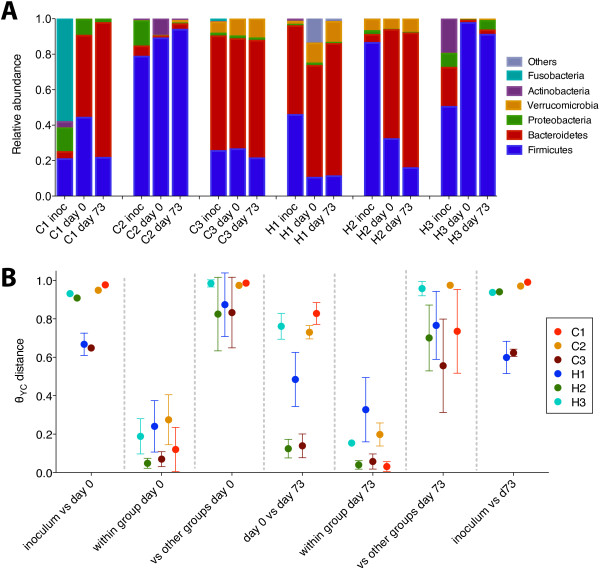
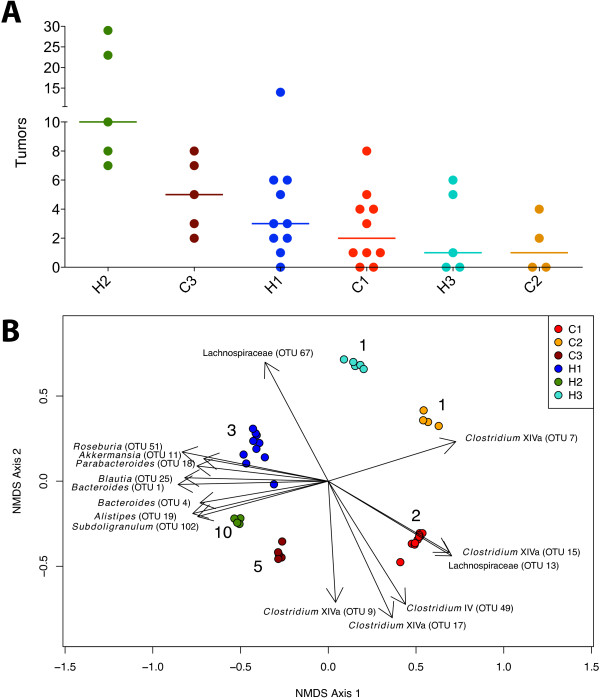
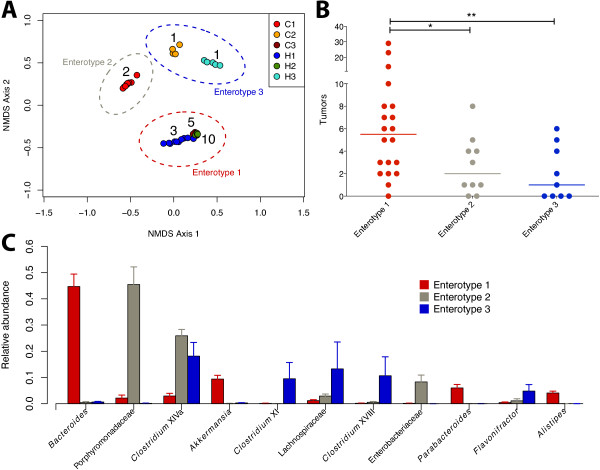
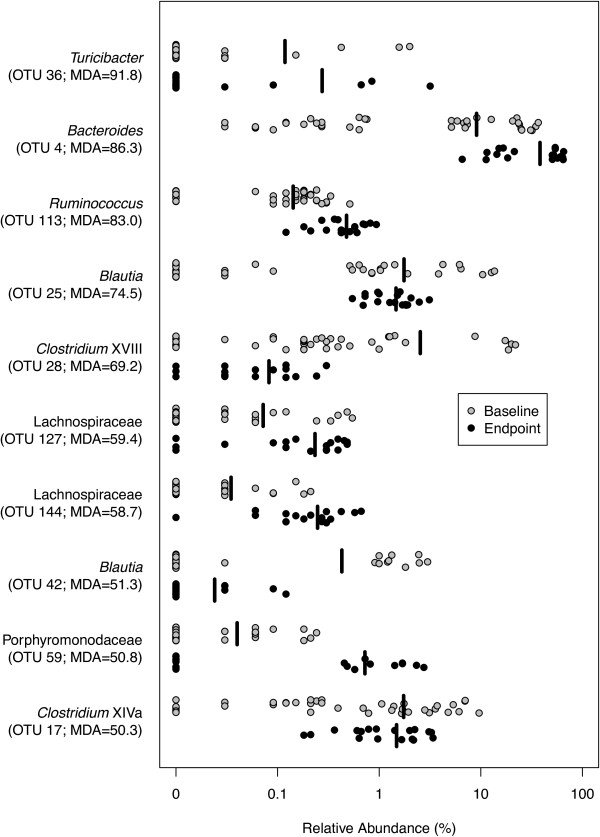
BACKGROUND: A growing body of evidence indicates that the gut microbiome plays a role in the development of colorectal cancer (CRC). Patients with CRC harbor gut microbiomes that are structurally distinct from those of healthy individuals; however, without the ability to track individuals during disease progression, it has not been possible to observe changes in the microbiome over the course of tumorigenesis. Mouse models have demonstrated that these changes can further promote colonic tumorigenesis. However, these models have relied upon mouse-adapted bacterial populations and so it remains unclear which human-adapted bacterial populations are responsible for modulating tumorigenesis. RESULTS: We transplanted fecal microbiota from three CRC patients and three healthy individuals into germ-free mice, resulting in six structurally distinct microbial communities. Subjecting these mice to a chemically induced model of CRC resulted in different levels of tumorigenesis between mice. Differences in the number of tumors were strongly associated with the baseline microbiome structure in mice, but not with the cancer status of the human donors. Partitioning of baseline communities into enterotypes by Dirichlet multinomial mixture modeling resulted in three enterotypes that corresponded with tumor burden. The taxa most strongly positively correlated with increased tumor burden were members of the Bacteroides, Parabacteroides, Alistipes, and Akkermansia, all of which are Gram-negative. Members of the Gram-positive Clostridiales, including multiple members of Clostridium Group XIVa, were strongly negatively correlated with tumors. Analysis of the inferred metagenome of each community revealed a negative correlation between tumor count and the potential for butyrate production, and a positive correlation between tumor count and the capacity for host glycan degradation. Despite harboring distinct gut communities, all mice underwent conserved structural changes over the course of the model. The extent of these changes was also correlated with tumor incidence. CONCLUSION: Our results suggest that the initial structure of the microbiome determines susceptibility to colonic tumorigenesis. There appear to be opposing roles for certain Gram-negative (Bacteroidales and Verrucomicrobia) and Gram-positive (Clostridiales) bacteria in tumor susceptibility. Thus, the impact of community structure is potentially mediated by the balance between protective, butyrate-producing populations and inflammatory, mucin-degrading populations.
Overview
The claims and statistics of this paper haven’t been checked yet.
Free: it reads the open-access text and checks the first 5 claims that cite a source we can check. Create a free account to check every claim.
Integrity signals
Registry
Cites
Statistics
Figures

Verification
Claims the paper makes
The claims and statistics of this paper haven’t been checked yet.
Free: it reads the open-access text and checks the first 5 claims that cite a source we can check. Create a free account to check every claim.
Claims other papers make about this one
Each is checked against this paper’s own text: does it say what the citing paper says it does?
In the citing paper
“Nevertheless, A. muciniphila has previously been linked to an increased burden of CRC in human and mice,25–27”
Self-check
Percentages, sums and reported differences re-computed from the paper’s own numbers.
The self-check needs the paper’s full text.
Citations
Cites
Breiman, L. (2001) · Machine Learning · doi:10.1023/a:1010933404324 · Cited by 133,538
Naïve Bayesian Classifier for Rapid Assignment of rRNA Sequences into the New Bacterial Taxonomy
Wang, Q., Garrity, G. M., Tiedje, J. M., & Cole, J. R. (2007) · Applied and Environmental Microbiology · doi:10.1128/aem.00062-07 · Cited by 19,885 · cited 1×
“Each sequence was classified using a naive Bayesian classifier trained against a 16S rRNA gene training set provided by the Ribosomal Database Project [30,31].”
MethodSchloss, P. D., Westcott, S. L., Ryabin, T., Hall, J. R., Hartmann, M., Hollister, E. B., Lesniewski, R. A., Oakley, B. B., Parks, D. H., Robinson, C. J., et al. (2009) · Applied and Environmental Microbiology · doi:10.1128/aem.01541-09 · Cited by 19,549
Self-citationClassification and Regression by randomForest
Liaw, A. I., & Wiener, M. C. (2007) · Cited by 18,594
UCHIME improves sensitivity and speed of chimera detection
Edgar, R. C., Haas, B. J., Clemente, J. C., Quince, C., & Knight, R. (2011) · Bioinformatics · doi:10.1093/bioinformatics/btr381 · Cited by 15,114
Excoffier, L., Smouse, P. E., & Quattro, J. M. (1992) · Genetics · doi:10.1093/genetics/131.2.479 · Cited by 13,929
An obesity-associated gut microbiome with increased capacity for energy harvest
Turnbaugh, P. J., Ley, R. E., Mahowald, M. A., Magrini, V., Mardis, E. R., & Gordon, J. I. (2006) · Nature · doi:10.1038/nature05414 · Cited by 12,444 · cited 1×
“In studies of diabetes, obesity, and malnutrition, colonization with human feces has been reported to recapitulate the phenotype of the human donors in the recipient mice [18-21].”
BackgroundPredictive functional profiling of microbial communities using 16S rRNA marker gene sequences
Langille, M. G. I., Zaneveld, J., Caporaso, J. G., McDonald, D., Knights, D., Reyes, J. A., Clemente, J. C., Burkepile, D. E., Vega Thurber, R. L., Knight, R., et al. (2013) · Nature Biotechnology · doi:10.1038/nbt.2676 · Cited by 9,116
Kozich, J. J., Westcott, S. L., Baxter, N. T., Highlander, S. K., & Schloss, P. D. (2013) · Applied and Environmental Microbiology · doi:10.1128/aem.01043-13 · Cited by 7,112
Self-citationPruesse, E., Quast, C., Knittel, K., Fuchs, B. M., Ludwig, W., Peplies, J., & Glockner, F. O. (2007) · Nucleic Acids Research · doi:10.1093/nar/gkm864 · Cited by 6,668 · cited 1×
“Briefly, paired end reads were assembled into contigs and aligned to the SILVA 16S rRNA sequence database [28].”
Method
Research works printed but not linked: 2
- American Cancer Society Colorectal Cancer Facts & Figures 2011-2013 2013 Atlanta
- Schloss P Data File Repository for the Manuscript, ‘Structure of the Gut Microbiome Following Colonization with Human Feces Determines Colonic Tumor Burden’ by Niel Baxter, Joseph Zackular and Colleagues http://www.mothur.org/human_mouse_aomdss PMC4070349 24967088
Cited by
Gut microbiome development along the colorectal adenoma-carcinoma sequence
Feng, Q., Liang, S., Jia, H., Stadlmayr, A., Tang, L., Lan, Z., Zhang, D., Xia, H., Xu, X., Jie, Z., et al. (2015) · Nature Communications · doi:10.1038/ncomms7528 · Cited by 1,506
Garrett, W. S. (2015) · Science · doi:10.1126/science.aaa4972 · Cited by 1,404
Diet, microorganisms and their metabolites, and colon cancer
O'Keefe, S. J. D. (2016) · Nature Reviews Gastroenterology & Hepatology · doi:10.1038/nrgastro.2016.165 · Cited by 1,100
Microbiota: a key orchestrator of cancer therapy
Roy, S., & Trinchieri, G. (2017) · Nature Reviews Cancer · doi:10.1038/nrc.2017.13 · Cited by 883
Akkermansia muciniphila is a promising probiotic
Zhang, T., Li, Q., Cheng, L., Buch, H., & Zhang, F. (2019) · Microbial Biotechnology · doi:10.1111/1751-7915.13410 · Cited by 708
An insider's perspective: Bacteroides as a window into the microbiome
Wexler, A. G., & Goodman, A. L. (2017) · Nature Microbiology · doi:10.1038/nmicrobiol.2017.26 · Cited by 641
Wong, S. H., Zhao, L., Zhang, X., Nakatsu, G., Han, J., Xu, W., Xiao, X., Kwong, T. N. Y., Tsoi, H., Wu, W. K. K., et al. (2017) · Gastroenterology · doi:10.1053/j.gastro.2017.08.022 · Cited by 634
Wang, L., Tang, L., Feng, Y., Zhao, S., Han, M., Zhang, C., Yuan, G., Zhu, J., Cao, S., Wu, Q., et al. (2020) · Gut · doi:10.1136/gutjnl-2019-320105 · Cited by 630
“Nevertheless, A. muciniphila has previously been linked to an increased burden of CRC in human and mice, 25–27 and it was decreased during the progression of CAC in mice and in patients with CRC in this study.”
Walter, J., Armet, A. M., Finlay, B. B., & Shanahan, F. (2020) · Cell · doi:10.1016/j.cell.2019.12.025 · Cited by 596
High-Fat Diet Promotes Colorectal Tumorigenesis Through Modulating Gut Microbiota and Metabolites
Yang, J., Wei, H., Zhou, Y., Szeto, C.-H., Li, C., Lin, Y., Coker, O. O., Lau, H. C. H., Chan, A. W. H., Sung, J. J. Y., et al. (2022) · Gastroenterology · doi:10.1053/j.gastro.2021.08.041 · Cited by 536
Bian, X., Wu, W., Yang, L., Lv, L., Wang, Q., Li, Y., Ye, J., Fang, D., Wu, J., Jiang, X., et al. (2019) · Frontiers in Microbiology · doi:10.3389/fmicb.2019.02259 · Cited by 530
“muciniphila was strongly associated with higher rates of tumorigenesis in colorectal cancer, and some mucin-degradation genes were positively correlated with cancer incidence (Baxter et al., 2014).”
BackgroundInterpreting prevotella and bacteroides as biomarkers of diet and lifestyle
Gorvitovskaia, A., Holmes, S. P., & Huse, S. M. (2016) · Microbiome · doi:10.1186/s40168-016-0160-7 · Cited by 461
“[23] found correlations between Bacteroides, Parabacteroides, Alistipes, and Akkermansia with increased tumor burden and Clostridiales Cluster XIVa (which includes Roseburia and Faecalibacterium) with decreased tumor burden.”
BackgroundGuo, C., Guo, D., Fang, L., Sang, T., Wu, J., Guo, C., Wang, Y., Wang, Y., Chen, C., Chen, J., et al. (2021) · Carbohydrate Polymers · doi:10.1016/j.carbpol.2021.118231 · Cited by 458
NLRP6 Protects Il10 Mice from Colitis by Limiting Colonization of Akkermansia muciniphila
Seregin, S. S., Golovchenko, N., Schaf, B., Chen, J., Pudlo, N. A., Mitchell, J., Baxter, N. T., Zhao, L., Schloss, P. D., Martens, E. C., et al. (2017) · Cell Reports · doi:10.1016/j.celrep.2017.03.080 · Cited by 386
“A potentially negative role for A. muciniphila within the intestine is also supported by studies demonstrating its increased abundance in mice that develop higher tumor burdens in a model of colitis-associated tumorigenesis (Baxter et al., 2014).”
BackgroundSelf-citationTong, X., Xu, J., Lian, F., Yu, X., Zhao, Y., Xu, L., Zhang, M., Zhao, X., Shen, J., Wu, S., et al. (2018) · mBio · doi:10.1128/mbio.02392-17 · Cited by 378
Microbiome and colorectal cancer: Roles in carcinogenesis and clinical potential
Saus, E., Iraola-Guzmán, S., Willis, J. R., Brunet-Vega, A., & Gabaldón, T. (2019) · Molecular Aspects of Medicine · doi:10.1016/j.mam.2019.05.001 · Cited by 350
Diagnostic potential and interactive dynamics of the colorectal cancer virome
Hannigan, G. D., Duhaime, M. B., Ruffin, M. T., Koumpouras, C. C., & Schloss, P. D. (2018) · mBio · doi:10.1128/mbio.02248-18 · Cited by 298
Self-citationDysbiosis of gut microbiota in promoting the development of colorectal cancer
Zou, S., Fang, L., & Lee, M.-H. (2018) · Gastroenterology Report · doi:10.1093/gastro/gox031 · Cited by 280
“And it seems that Gram-positive Clostridiales, including multiple members of Clostridium Group XIVa, are negatively correlated with tumors [28].”
BackgroundMicrobiome, inflammation and colorectal cancer
Chen, J., Pitmon, E., & Wang, K. (2017) · Seminars in Immunology · doi:10.1016/j.smim.2017.09.006 · Cited by 265
Dietary fat, bile acid metabolism and colorectal cancer
Ocvirk, S., & O’Keefe, S. J. D. (2021) · Seminars in Cancer Biology · doi:10.1016/j.semcancer.2020.10.003 · Cited by 262
Locoregional Effects of Microbiota in a Preclinical Model of Colon Carcinogenesis
Tomkovich, S., Yang, Y., Winglee, K., Gauthier, J., Mühlbauer, M., Sun, X., Mohamadzadeh, M., Liu, X., Martin, P., Wang, G. P., et al. (2017) · Cancer Research · doi:10.1158/0008-5472.can-16-3472 · Cited by 252
The gut microbiota in conventional and serrated precursors of colorectal cancer
Peters, B. A., Dominianni, C., Shapiro, J. A., Church, T. R., Wu, J., Miller, G., Yuen, E., Freiman, H., Lustbader, I., Salik, J., et al. (2016) · Microbiome · doi:10.1186/s40168-016-0218-6 · Cited by 230
Intestinal microbiota and chronic constipation
Zhao, Y., & Yu, Y.-B. (2016) · SpringerPlus · doi:10.1186/s40064-016-2821-1 · Cited by 209
“High concentration of butyrate may inhibit mucin secretion by intestinal goblet cells (Baxter et al.”
BackgroundHuman colon mucosal biofilms from healthy or colon cancer hosts are carcinogenic
Tomkovich, S., Dejea, C. M., Winglee, K., Drewes, J. L., Chung, L., Housseau, F., Pope, J. L., Gauthier, J., Sun, X., Mühlbauer, M., et al. (2019) · Journal of Clinical Investigation · doi:10.1172/jci124196 · Cited by 209
Gut microbiota and colorectal cancer
Gao, R., Gao, Z., Huang, L., & Qin, H. (2017) · European Journal of Clinical Microbiology & Infectious Diseases · doi:10.1007/s10096-016-2881-8 · Cited by 205
The gastrointestinal microbiota and colorectal cancer
Keku, T. O., Dulal, S., Deveaux, A., Jovov, B., & Han, X. (2015) · American Journal of Physiology-Gastrointestinal and Liver Physiology · doi:10.1152/ajpgi.00360.2012 · Cited by 205
“Animal Background and Model Experimental Design Findings Baxter et al. 2014 (14) GF C57BL/6 mice, AOM/DSS Fecal microbiota from CRC patients’/control healthy human transplated into GF mice Gram-negative Bacteroides, Parabacteroides, Alistipes, Akkermansia and mucin-degrading bacteria increase tumor…”
BackgroundAllen, J., & Sears, C. L. (2019) · Genome Medicine · doi:10.1186/s13073-019-0621-2 · Cited by 204
The Impact of Environmental Chemicals on the Gut Microbiome
Chiu, K., Warner, G., Nowak, R. A., Flaws, J. A., & Mei, W. (2020) · Toxicological Sciences · doi:10.1093/toxsci/kfaa065 · Cited by 198
Verbeke, F., De Craemer, S., Debunne, N., Janssens, Y., Wynendaele, E., Van de Wiele, C., & De Spiegeleer, B. (2017) · Frontiers in Neuroscience · doi:10.3389/fnins.2017.00183 · Cited by 197
“Strong indications have been found that changes in the microbiome are not only associated with tumorigenesis, but also directly contribute to tumorigenesis (Zackular et al., 2013; Baxter et al., 2014).”
BackgroundMucosal adherent bacterial dysbiosis in patients with colorectal adenomas
Lu, Y., Chen, J., Zheng, J., Hu, G., Wang, J., Huang, C., Lou, L., Wang, X., & Zeng, Y. (2016) · Scientific Reports · doi:10.1038/srep26337 · Cited by 199
“In contrast, we observed no differences in the abundance of Akkermansia , or Fusobacterium which have been reported to correlate with CRC between healthy controls and advanced adenoma samples 9,21,22 .”
Role of colonic microbiota in colorectal carcinogenesis: A systematic review
Borges Canha, M. (2015) · Revista Española de Enfermedades Digestivas · doi:10.17235/reed.2015.3830/2015 · Cited by 193
Recurrent Clostridium difficile infection associates with distinct bile acid and microbiome profiles
Allegretti, J. R., Kearney, S., Li, N., Bogart, E., Bullock, K., Gerber, G. K., Bry, L., Clish, C. B., Alm, E., & Korzenik, J. R. (2016) · Alimentary Pharmacology & Therapeutics · doi:10.1111/apt.13616 · Cited by 193
Gut Microbiota Modulate CD8 T Cell Responses to Influence Colitis-Associated Tumorigenesis
Yu, A. I., Zhao, L., Eaton, K. A., Ho, S., Chen, J., Poe, S., Becker, J., Gonzalez, A., McKinstry, D., Hasso, M., et al. (2020) · Cell Reports · doi:10.1016/j.celrep.2020.03.035 · Cited by 173
“CRC patients exhibit altered gut microbiomes typically characterized by decreased Firmicutes and increased Bacteroidetes bacteria compared with healthy controls (Ahn et al., 2013; Baxter et al., 2014; Wang et al., 2012; Zackular et al., 2014).”
BackgroundSelf-citationDrago, L. (2019) · Microorganisms · doi:10.3390/microorganisms7030066 · Cited by 171
González, N., Diabetes Cancer Connect Consortium, Prieto, I., del Puerto-Nevado, L., Portal-Nuñez, S., Ardura, J. A., Corton, M., Fernández-Fernández, B., Aguilera, O., Gomez-Guerrero, C., et al. (2017) · Oncotarget · doi:10.18632/oncotarget.14472 · Cited by 168
“In mice, the microbiota potential for butyrate production negatively correlated with tumor count [133].”
BackgroundGut Microbiota Dysbiosis Drives the Development of Colorectal Cancer
Fan, X., Jin, Y., Chen, G., Ma, X., & Zhang, L. (2021) · Digestion · doi:10.1159/000508328 · Cited by 166
Self-citationPriya, S., Burns, M. B., Ward, T., Mars, R. A. T., Adamowicz, B., Lock, E. F., Kashyap, P. C., Knights, D., & Blekhman, R. (2022) · Nature Microbiology · doi:10.1038/s41564-022-01121-z · Cited by 165
Gaines, S., Shao, C., Hyman, N., & Alverdy, J. C. (2018) · British Journal of Surgery · doi:10.1002/bjs.10760 · Cited by 163
Yang, Y., Li, L., Xu, C., Wang, Y., Wang, Z., Chen, M., Jiang, Z., Pan, J., Yang, C., Li, X., et al. (2021) · Gut · doi:10.1136/gutjnl-2020-320777 · Cited by 161
“29 Therefore, we first determined the temporal changes in the microbial structure and their roles in oncogenesis.”
Javurek, A. B., Spollen, W. G., Johnson, S. A., Bivens, N. J., Bromert, K. H., Givan, S. A., & Rosenfeld, C. S. (2016) · Gut Microbes · doi:10.1080/19490976.2016.1234657 · Cited by 160
Microbiota regulate innate immune signaling and protective immunity against cancer
Xing, C., Wang, M., Ajibade, A. A., Tan, P., Fu, C., Chen, L., Zhu, M., Hao, Z.-Z., Chu, J., Yu, X., et al. (2021) · Cell Host & Microbe · doi:10.1016/j.chom.2021.03.016 · Cited by 157
Metabolic and Community Synergy of Oral Bacteria in Colorectal Cancer
Flynn, K. J., Baxter, N. T., & Schloss, P. D. (2016) · mSphere · doi:10.1128/msphere.00102-16 · Cited by 149
Self-citationGheorghe, C. E., Ritz, N. L., Martin, J. A., Wardill, H. R., Cryan, J. F., & Clarke, G. (2021) · Gut Microbes · doi:10.1080/19490976.2021.1941711 · Cited by 148
Akkermansia muciniphila : A promising probiotic against inflammation and metabolic disorders
Zhao, Y., Yang, H., Wu, P., Yang, S., Xue, W., Xu, B., Zhang, S., Tang, B., & Xu, D. (2024) · Virulence · doi:10.1080/21505594.2024.2375555 · Cited by 165
“Another study conducted by Baxter et al. reported that mice with colorectal cancer (CRC) received fecal microbiota from CRC patients exhibited a direct relationship between the presence of A. muci-niphila and an elevated tumor burden [82].”
BackgroundCarcinogenesis and therapeutics: the microbiota perspective
Tsilimigras, M. C. B., Fodor, A., & Jobin, C. (2017) · Nature Microbiology · doi:10.1038/nmicrobiol.2017.8 · Cited by 144
Koh, G. Y., Kane, A., Lee, K., Xu, Q., Wu, X., Roper, J., Mason, J. B., & Crott, J. W. (2018) · International Journal of Cancer · doi:10.1002/ijc.31559 · Cited by 139
Qiu, X., Zhang, F., Yang, X., Wu, N., Jiang, W., Li, X., Li, X., & Liu, Y. (2015) · Scientific Reports · doi:10.1038/srep10416 · Cited by 137
Human Colon Cancer–Derived Clostridioides difficile Strains Drive Colonic Tumorigenesis in Mice
Drewes, J. L., Chen, J., Markham, N. O., Knippel, R. J., Domingue, J. C., Tam, A. J., Chan, J. L., Kim, L., McMann, M., Stevens, C. M., et al. (2022) · Cancer Discovery · doi:10.1158/2159-8290.cd-21-1273 · Cited by 153
“Colorectal cancer is associated with marked fecal and mucosal dysbiosis (1–3), and colonic tumors can be induced in susceptible mouse models by gavage with fecal or colonic mucosal slurries from patients with colorectal cancer and even some healthy individuals (4–6).”
Interplay between bile acids and the gut microbiota promotes intestinal carcinogenesis
Wang, S., Dong, W., Liu, L., Xu, M., Wang, Y., Liu, T., Zhang, Y., Wang, B., & Cao, H. (2019) · Molecular Carcinogenesis · doi:10.1002/mc.22999 · Cited by 139
Rezasoltani, S., Aghdaei, H. A., Dabiri, H., Sepahi, A. A., Modarressi, M. H., & Mojarad, E. N. (2018) · Microbial Pathogenesis · doi:10.1016/j.micpath.2018.08.035 · Cited by 149
Ma, J., Liu, Z., Gao, X., Bao, Y., Hong, Y., He, X., Zhu, W., Li, Y., Huang, W., Zheng, N., et al. (2023) · Pharmacological Research · doi:10.1016/j.phrs.2023.106687 · Cited by 141
Koh, G. Y., Kane, A. V., Wu, X., & Crott, J. W. (2020) · Carcinogenesis · doi:10.1093/carcin/bgaa018 · Cited by 150
Akkermansia muciniphila: a novel functional microbe with probiotic properties
Gómez-Gallego, C., Pohl, S., Salminen, S., De Vos, W. M., & Kneifel, W. (2016) · Beneficial Microbes · doi:10.3920/bm2016.0009 · Cited by 130
The role of gut microbiota in T cell immunity and immune mediated disorders
Shim, J. A., Ryu, J. H., Jo, Y., & Hong, C. (2023) · International Journal of Biological Sciences · doi:10.7150/ijbs.79430 · Cited by 155
Interaction between Host MicroRNAs and the Gut Microbiota in Colorectal Cancer
Yuan, C., Burns, M. B., Subramanian, S., & Blekhman, R. (2018) · mSystems · doi:10.1128/msystems.00205-17 · Cited by 143
Bladder cancer-related microbiota: examining differences in urine and tissue samples
Mansour, B., Monyók, Á., Makra, N., Gajdács, M., Vadnay, I., Ligeti, B., Juhász, J., Szabó, D., & Ostorházi, E. (2020) · Scientific Reports · doi:10.1038/s41598-020-67443-2 · Cited by 135
Akkermansia muciniphila and Helicobacter typhlonius modulate intestinal tumor development in mice
Dingemanse, C., Belzer, C., van Hijum, S. A. F. T., Günthel, M., Salvatori, D., Dunnen, J. T. D., Kuijper, E. J., Devilee, P., de Vos, W. M., van Ommen, G. B., et al. (2015) · Carcinogenesis · doi:10.1093/carcin/bgv120 · Cited by 126
Manipulation of the Gut Microbiota Reveals Role in Colon Tumorigenesis
Zackular, J. P., Baxter, N. T., Chen, G. Y., & Schloss, P. D. (2016) · mSphere · doi:10.1128/msphere.00001-15 · Cited by 126
Self-citationEndocrine Disruptors in Food: Impact on Gut Microbiota and Metabolic Diseases
Gálvez-Ontiveros, Y., Páez, S., Monteagudo, C., & Rivas, A. (2020) · Nutrients · doi:10.3390/nu12041158 · Cited by 140
“These species have been associated to inflammatory bowel disease, obesity and metabolic disorders [93,94], autism spectrum disorders [95], colon cancer [96], and other conditions.”
BackgroundLuo, Y., Lan, C., Li, H., Ouyang, Q., Kong, F., Wu, A., Ren, Z., Tian, G., Cai, J., Yu, B., et al. (2022) · npj Biofilms and Microbiomes · doi:10.1038/s41522-022-00338-4 · Cited by 138
Guo, M., & Li, Z. (2019) · Food & Function · doi:10.1039/c9fo00296k · Cited by 129
Safety of pasteurised Akkermansia muciniphila as a novel food pursuant to Regulation (EU) 2015/2283
EFSA Panel on Nutrition, N. F. A. F. A. (., Turck, D., Bohn, T., Castenmiller, J., De Henauw, S., Hirsch‐Ernst, K. I., Maciuk, A., Mangelsdorf, I., McArdle, H. J., Naska, A., et al. (2021) · EFSA Journal · doi:10.2903/j.efsa.2021.6780 · Cited by 110
The Microbiome and Cancer: Is the ‘Oncobiome’ Mirage Real?
Thomas, R. M., & Jobin, C. (2015) · Trends in Cancer · doi:10.1016/j.trecan.2015.07.005 · Cited by 110
“This is especially important given that studies using stools from either healthy subjects or CRC patients have provided surprising results on the relationship between luminal bacteria and CRC, such that CRC development was more prominent in GF mice transplanted with stools from healthy subjects than those from CRC pat…”
BackgroundThe Dynamic Changes of Gut Microbiota in Muc2 Deficient Mice
Wu, M., Wu, Y., Li, J., Bao, Y., Guo, Y., & Yang, W. (2018) · International Journal of Molecular Sciences · doi:10.3390/ijms19092809 · Cited by 116
“Akkermansia (×10−3) [23,24] Desulfovibrio (×10−3) [12,14] Enterococcus (×10−24) [13,25] Escherichia (×10−4) [9,14,26] Turicibacter (×10−2) [27]”
BackgroundCueva, C., Silva, M., Pinillos, I., Bartolomé, B., & Moreno-Arribas, M. V. (2020) · Nutrients · doi:10.3390/nu12030625 · Cited by 128
“In line with this, studies using mice with colon tumor‐bearing and germ‐free received stool transplants from human CRC patients have demonstrated the crucial role of the intestinal microbiota in the CRC development and adenoma [51,52].”
ResultZhang, Z., Cao, H., Song, N., Zhang, L., Cao, Y., & Tai, J. (2020) · Food and Chemical Toxicology · doi:10.1016/j.fct.2020.111237 · Cited by 109
Metwaly, A., Kriaa, A., Hassani, Z., Carraturo, F., Druart, C., Trebicka, J., Godoy, Y., Schierwagen, R., Bork, P., Iyappan, A., et al. (2025) · Nature Reviews Gastroenterology & Hepatology · doi:10.1038/s41575-025-01041-3 · Cited by 140
“Furthermore, the necessity for documenting model strengths and limitations achieved full consensus (100%), emphasizing the importance of transparency in research to improve rigour and reproducibility.”
Factors Determining Colorectal Cancer: The Role of the Intestinal Microbiota
Nistal, E., Fernández-Fernández, N., Vivas, S., & Olcoz, J. L. (2015) · Frontiers in Oncology · doi:10.3389/fonc.2015.00220 · Cited by 107
“Whereas colonization of germ-free mice with human microbiota (CRC patients and healthy individuals) suggests that the initial structure of the microbiome determines susceptibility to tumorigenesis in the colon (88).”
BackgroundWu, M., Wu, Y., Deng, B., Li, J., Cao, H., Qu, Y., Qian, X., & Zhong, G. (2016) · Oncotarget · doi:10.18632/oncotarget.13347 · Cited by 109
“Previous studies have indicated that the abundance of Akkermansia was positively correlated with colonic tumor multiplicity and size [37, 46], and that the abundance of Akkermansia in the gut was significantly increased in CRC patients [39, 47] Akkermansia municiphila is a component of the healthy gut microbiome and a…”
BackgroundFunctional Genomics of Host–Microbiome Interactions in Humans
Luca, F., Kupfer, S. S., Knights, D., Khoruts, A., & Blekhman, R. (2018) · Trends in Genetics · doi:10.1016/j.tig.2017.10.001 · Cited by 100
Space-type radiation induces multimodal responses in the mouse gut microbiome and metabolome
Casero, D., Gill, K., Sridharan, V., Koturbash, I., Nelson, G., Hauer-Jensen, M., Boerma, M., Braun, J., & Cheema, A. K. (2017) · Microbiome · doi:10.1186/s40168-017-0325-z · Cited by 99
“as a colitogenic and pro-inflammatory species in specific models of colitis [63, 64] through its ability to degrade”
BackgroundWang, Y., Guo, Y., Chen, H., Wei, H., & Wan, C. (2018) · Canadian Journal of Microbiology · doi:10.1139/cjm-2017-0716 · Cited by 105
Systemic effects of gut microbiota and its relationship with disease and modulation
Ho, J. T., Chan, G. C., & Li, J. C. (2015) · BMC Immunology · doi:10.1186/s12865-015-0083-2 · Cited by 93
“The study concluded that the initial structure of gut microbiota affects susceptibility to colonic tumorigenesis [23].”
BackgroundXu, R., Zhang, Y., Chen, S., Zeng, Y., Fu, X., Chen, T., Luo, S., & Zhang, X. (2022) · Critical Reviews in Microbiology · doi:10.1080/1040841x.2022.2044286 · Cited by 103
“A. muciniphila also showed increased in mice that with higher rates of colitis-associated tumorigenesis, simultaneously, genes linked to mucin degradation were also positively correlated with tumour incidence (Baxter et al. 2014).”
BackgroundChen, B., Luo, J., Han, Y., Du, H., Liu, J., He, W., Zhu, J., Xiao, J., Wang, J., Cao, Y., et al. (2021) · Journal of Agricultural and Food Chemistry · doi:10.1021/acs.jafc.1c03046 · Cited by 98
Shifts of Faecal Microbiota During Sporadic Colorectal Carcinogenesis
Mori, G., Rampelli, S., Orena, B. S., Rengucci, C., Maio, G. D., Barbieri, G., Passardi, A., Gardini, A. C., Frassineti, G. L., Gaiarsa, S., et al. (2018) · Scientific Reports · doi:10.1038/s41598-018-28671-9 · Cited by 96
Changes in the gut microbial communities following addition of walnuts to the diet
Byerley, L. O., Samuelson, D. R., Blanchard, E., Luo, M., Lorenzen, B., Banks, S., Ponder, M. A., Welsh, D. A., & Taylor, C. M. (2017) · The Journal of Nutritional Biochemistry · doi:10.1016/j.jnutbio.2017.07.001 · Cited by 97
“because changes have been reported by others studying colon carcinogenesis [32].”
BackgroundOcvirk, S., Wilson, A. S., Posma, J. M., Li, J. V., Koller, K. R., Day, G. M., Flanagan, C. A., Otto, E., Sacco, P. E., Sacco, F. D., et al. (2019) · American Journal of Clinical Nutrition · doi:10.1093/ajcn/nqz301 · Cited by 88
“Though at a low relative abundance level, the genus Blautia was also found to be enriched in the fecal microbiota of CRC patients (49), suggesting a potential contribution of Blautia species to colonic tumorigenesis in terms of bile acid metabolism, in particular”
BackgroundXiang, Y., Zhang, C., Wang, J., Cheng, Y., Wang, L., Tong, Y., & Yan, D. (2023) · Journal of Translational Medicine · doi:10.1186/s12967-023-04335-9 · Cited by 93
“The results showed a positive correlation between the genus Parabacteroides (belonging to family Porphyromonadaceae ) and the incidence of CRC in the experimental group in contrast to the control group [41].”
ResultWang, K., Wu, W., Wang, Q., Yang, L., Bian, X., Jiang, X., Lv, L., Yan, R., Xia, J., Han, S., et al. (2022) · Frontiers in Microbiology · doi:10.3389/fmicb.2022.932047 · Cited by 96
“muciniphila with increased tumor burden, and even the harmful effects of this bacterium on the progression of colonic tumorigenesis (Weir et al., 2013; Baxter et al., 2014; Wang et al., 2022), while some studies reported a protective potential of A.”
BackgroundWang, X., Wang, J. P., Rao, B., & Deng, L. (2017) · Experimental and Therapeutic Medicine · doi:10.3892/etm.2017.4367 · Cited by 81
“Possible reasons for this may be: Inflammation reduces nutrient absorption in patients with cancer; the accumulation of free amino acids in the metabolic pool of cancer cells resulting from cancer cell autophagy; dietary protein degradation by some specific bacteria in the distal colon of patients with colorectal canc…”
RetractedThe Association of Microbiome Dysbiosis With Colorectal Cancer
Artemev, A., Naik, S., Pougno, A., Honnavar, P., & Shanbhag, N. M. (2022) · Cureus · doi:10.7759/cureus.22156 · Cited by 108
Geographic Differences in Gut Microbiota Composition Impact Susceptibility to Enteric Infection
Porras, A. M., Shi, Q., Zhou, H., Callahan, R., Montenegro-Bethancourt, G., Solomons, N., & Brito, I. L. (2021) · Cell Reports · doi:10.1016/j.celrep.2021.109457 · Cited by 74
“Humanized GFmice have been used extensively to study the causal relationship between gut microbiota and disease state (Baxter et al., 2014; Berer et al., 2017; Chiu et al., 2017; De Palma et al., 2017; Ridaura et al., 2013; Turnbaugh et al., 2006).”
MethodLu, L., Dong, J., Liu, Y., Qian, Y., Zhang, G., Zhou, W., Zhao, A., Ji, G., & Xu, H. (2022) · Frontiers in Pharmacology · doi:10.3389/fphar.2022.964793 · Cited by 76
“…and Akkermansia, was strongly positively correlated with increased tumour burden, while the abundance of members of the Gram-positive Clostridiales, including multiple members of Clostridium Group XIVa, was strongly negatively correlated with the formation of tumours (Baxter et al., 2014).”
BackgroundWang, C., Yu, C., Wen, X.-D., Chen, L., Zhang, C.-F., Calway, T., Qiu, Y., Wang, Y., Zhang, Z., Anderson, S. L. C., et al. (2016) · Cancer Prevention Research · doi:10.1158/1940-6207.capr-15-0372 · Cited by 76
“, Firmicutes) have antiinflammatory and antitumorigenic properties (18, 39).”
BackgroundDiabetes-induced mechanophysiological changes in the small intestine and colon
Zhao, M., Liao, D., & Zhao, J. (2017) · World Journal of Diabetes · doi:10.4239/wjd.v8.i6.249 · Cited by 74
Martin, O. C. B., Olier, M., Ellero‐Simatos, S., Naud, N., Dupuy, J., Laurence Therese, H. U. C., Taché, S., Graillot, V., Levêque, M., Bézirard, V., et al. (2019) · Microbiome · doi:10.1186/s40168-019-0685-7 · Cited by 76
Prizment, A. E., Staley, C. M., Onyeaghala, G. C., Vivek, S., Thyagarajan, B., Straka, R. J., Demmer, R. T., Knights, D., Meyer, K. A., Shaukat, A., et al. (2020) · Alimentary Pharmacology & Therapeutics · doi:10.1111/apt.16013 · Cited by 78
Gut microbiome profiling and colorectal cancer in African Americans and Caucasian Americans
Farhana, L., Antaki, F., Murshed, F., Mahmud, H., Judd, S. L., Nangia‐Makker, P., Levi, E., Yu, Y., & Majumdar, A. P. N. (2018) · World Journal of Gastrointestinal Pathophysiology · doi:10.4291/wjgp.v9.i2.47 · Cited by 78
Ji, X., Hou, C., Zhang, X., Han, L., Yin, S., Peng, Q., & Wang, M. (2019) · International Journal of Biological Macromolecules · doi:10.1016/j.ijbiomac.2019.03.175 · Cited by 76
Chu, J. R., Kang, S.-Y., Kim, S.-E., Lee, S.-J., Lee, Y.-C., & Sung, M.-K. (2019) · World Journal of Gastroenterology · doi:10.3748/wjg.v25.i40.6129 · Cited by 69
Gut microbiota and colorectal cancer
Yamamoto, M., & Matsumoto, S. (2016) · Genes and Environment · doi:10.1186/s41021-016-0038-8 · Cited by 80
“with colorectal cancer developed unexpectedly fewer tumors than those that received bacteria from healthy human donors [19].”
BackgroundAutologous fecal microbiota transplantation for the treatment of inflammatory bowel disease
Basson, A. R., Zhou, Y., Seo, B., Rodriguez-Palacios, A., & Cominelli, F. (2020) · Translational Research · doi:10.1016/j.trsl.2020.05.008 · Cited by 68
“In this context, our studies with germ-free animals transplanted with hGM experimentally demonstrated that the effect of FMT response in mice varies across donors, and it is person-specific, and not IBDspecific.(22,23) Since FMT response variability is presumed due to factors intrinsic to the person as a donor (geneti…”
Bergsten, E., Mestivier, D., Donnadieu, F., Pédron, T., Barau, C., Tsoumtsa, L. L., Mettouchi, A., Lemichez, E., Gorgette, O., Chamaillard, M., et al. (2023) · Gut Microbes · doi:10.1080/19490976.2023.2265138 · Cited by 79
“Recently, we and others observed an epidemiological association between CRC and several oral bacteria detected in feces using 16S rDNA sequencing 21,34 or metagenome analysis.”
BackgroundNormalization of the microbiota in patients after treatment for colonic lesions
Sze, M. A., Baxter, N. T., Ruffin, M. T., Rogers, M. A. M., & Schloss, P. D. (2017) · Microbiome · doi:10.1186/s40168-017-0366-3 · Cited by 69
Self-citationFecal microbiome in dogs with inflammatory bowel disease and intestinal lymphoma
OMORI, M., Maeda, S., Igarashi, H., Koichi, O. H. N. O., Sakai, K., Yonezawa, T., Horigome, A., Odamaki, T., & Matsuki, N. (2017) · Journal of Veterinary Medical Science · doi:10.1292/jvms.17-0045 · Cited by 77
The Effects of Berberine on the Gut Microbiota in Apc min/+ Mice Fed with a High Fat Diet
Wang, H., Guan, L., Li, J., Lai, M., & Wen, X. (2018) · Molecules · doi:10.3390/molecules23092298 · Cited by 58
“It is also known to be a mucin degrader that is associated with intestinal inflammation and is positively correlated with tumor incidence [29].”
BackgroundEstimation and Inference for High-Dimensional Generalized Linear Models with Knowledge Transfer
Li, S., Zhang, L., Cai, T., & Li, H. (2023) · Journal of the American Statistical Association · doi:10.1080/01621459.2023.2184373 · Cited by 146
“For example, BMI has been shown to be positively correlated with the risk of CRC in multiple studies (Zheng et al. 2018; Campbell et al. 2021).”
BackgroundInfluentialBacterial‐Mediated Tumor Therapy: Old Treatment in a New Context
Liu, Y., Niu, L., Li, N., Wang, Y., Liu, M., Su, X., Bao, X., Yin, B., & Shen, S. (2023) · Advanced Science · doi:10.1002/advs.202205641 · Cited by 60
Sze, M. A., & Schloss, P. D. (2018) · mBio · doi:10.1128/mbio.00630-18 · Cited by 55
Self-citation
Metadata
- Authors
- Baxter, N. T., Zackular, J. P., Chen, G. Y., & Schloss, P. D.
- Affiliations
- University of Michigan (US)
- Corresponding author
- Schloss, Patrick D
- Venue
- Microbiome
- Published
- 2014-06-17
- Volume
- 2
- Issue
- 1
- Pages
- 20-20
- ISSN
- 2049-2618 (ISSN-L)
- PMC
- PMC4070349
- OpenAlex
- W2125932918
- Cited by
- 299
- References
- 47
- Citations by year
- 2026: 9 · 2025: 26 · 2024: 25 · 2023: 28 · 2022: 30 · 2021: 28 · 2020: 32 · 2019: 25 · 2018: 30 · 2017: 31 · 2016: 17 · 2015: 16 · 2014: 2
- FWCI
- 9.03
- Type
- journal article
- Language
- en
- Open access
- gold
- doi.org
- Licence
- cc-by
- Locations
- Microbiome (publishedVersion, cc-by)
- PubMed Central (publishedVersion, cc-by)
- PubMed (publishedVersion)
- Deep Blue (University of Michigan) (submittedVersion)
- Funders
- National Cancer Institute (R01CA166879, P50CA130810)
- National Institute of General Medical Sciences (R01GM099514)
- Topics
- Life Sciences › Biochemistry, Genetics and Molecular Biology › Molecular Biology › Gut microbiota and health
- Health Sciences › Medicine › Infectious Diseases › Clostridium difficile and Clostridium perfringens research
- Health Sciences › Dentistry › Periodontics › Oral microbiology and periodontitis research
- Keywords
- gut microbiota, colorectal cancer, colon carcinogenesis, fecal microbiota transplantation, germ-free mice, enterotypes, tumor burden, Bacteroides, Parabacteroides, Alistipes, Akkermansia, butyrate production, Verrucomicrobia, Gram-negative bacteria, Gram-positive bacteria
About these checks
Registry, retraction, Cites and statistics results are computed, not judged, with one exception: a printed reference that no index lists is read once by a model before it counts as a citation error. Claims are extracted by a model and kept only when their quote appears verbatim in the text; each cited source is then checked, with a model’s help, for whether it says what the claim relies on. Those verdicts can be wrong — read the claim’s quote and the cited source before relying on one.
Statistics and arithmetic are recomputed, not judged.
Confidence bands are shown only for fields calibrated on our annotated test set. None is calibrated yet, so no band is shown.
What counts as a claim ›How we measure confidence ›How we check this ›
Are you an author, or do you see a problem with this page? Request a review
Data sources
Bibliographic data: Semantic Scholar, OpenAlex, Crossref.
Contains information from the Semantic Scholar Academic Graph Datasets, made available under the ODC Attribution License (ODC-BY 1.0).
Semantic Scholar’s data is described in: Kinney, R., et al. (2023). The Semantic Scholar Open Data Platform. arXiv:2301.10140.
