

Structure of the gut microbiome following colonization with human feces determines colonic tumor burden
Open accessThe DOI matches its Crossref record; 46 of the 47 references it cites were found in a registry or an index.
Abstract
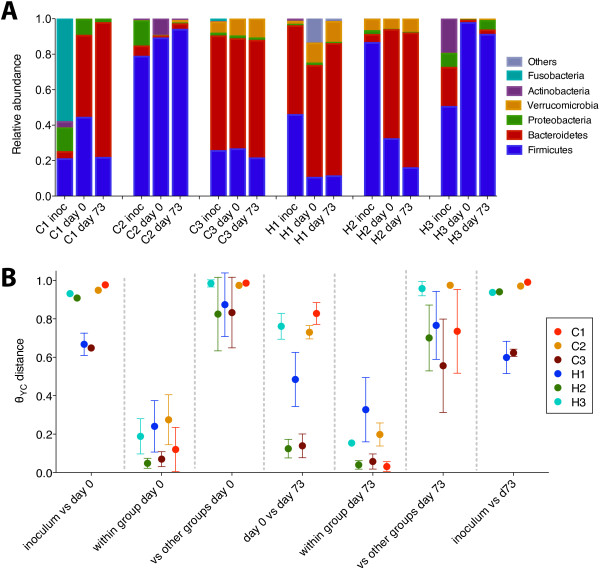
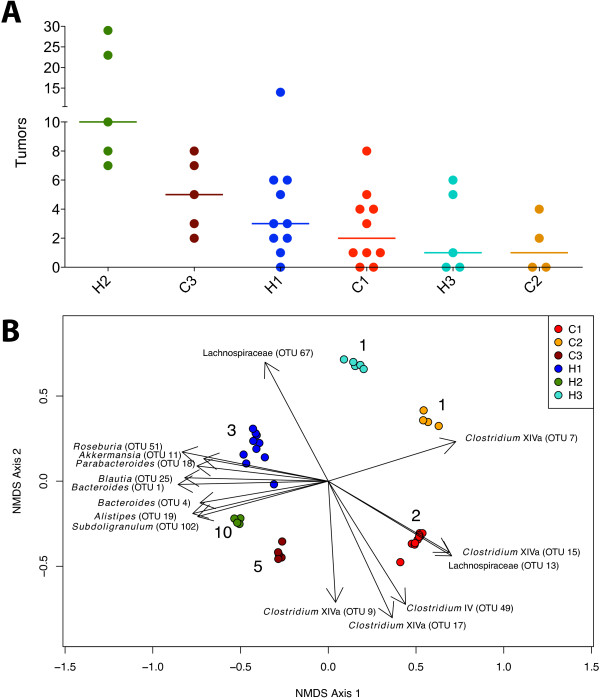
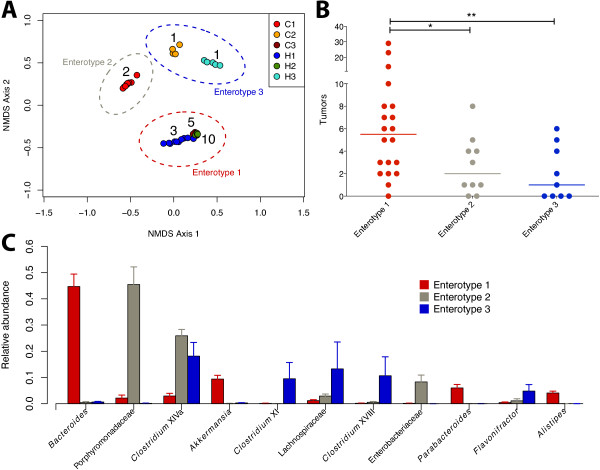
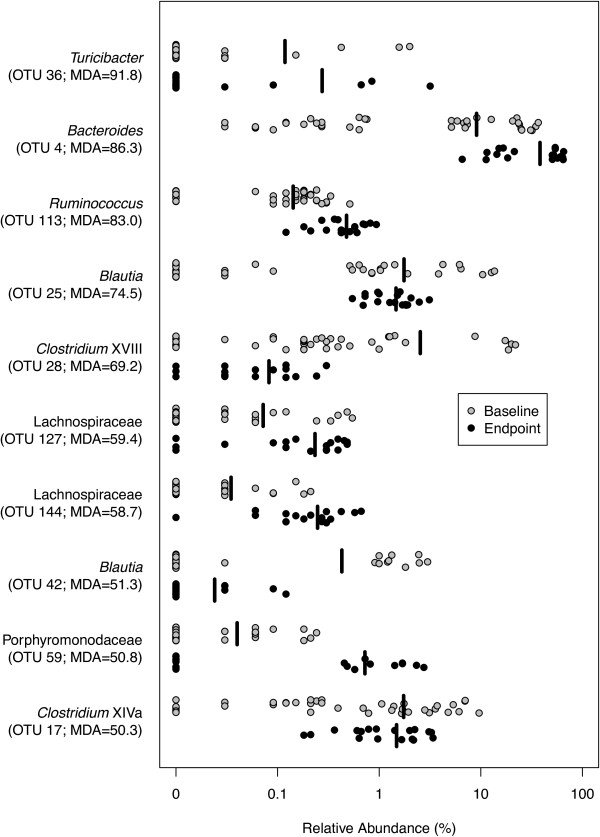
BACKGROUND: A growing body of evidence indicates that the gut microbiome plays a role in the development of colorectal cancer (CRC). Patients with CRC harbor gut microbiomes that are structurally distinct from those of healthy individuals; however, without the ability to track individuals during disease progression, it has not been possible to observe changes in the microbiome over the course of tumorigenesis. Mouse models have demonstrated that these changes can further promote colonic tumorigenesis. However, these models have relied upon mouse-adapted bacterial populations and so it remains unclear which human-adapted bacterial populations are responsible for modulating tumorigenesis. RESULTS: We transplanted fecal microbiota from three CRC patients and three healthy individuals into germ-free mice, resulting in six structurally distinct microbial communities. Subjecting these mice to a chemically induced model of CRC resulted in different levels of tumorigenesis between mice. Differences in the number of tumors were strongly associated with the baseline microbiome structure in mice, but not with the cancer status of the human donors. Partitioning of baseline communities into enterotypes by Dirichlet multinomial mixture modeling resulted in three enterotypes that corresponded with tumor burden. The taxa most strongly positively correlated with increased tumor burden were members of the Bacteroides, Parabacteroides, Alistipes, and Akkermansia, all of which are Gram-negative. Members of the Gram-positive Clostridiales, including multiple members of Clostridium Group XIVa, were strongly negatively correlated with tumors. Analysis of the inferred metagenome of each community revealed a negative correlation between tumor count and the potential for butyrate production, and a positive correlation between tumor count and the capacity for host glycan degradation. Despite harboring distinct gut communities, all mice underwent conserved structural changes over the course of the model. The extent of these changes was also correlated with tumor incidence. CONCLUSION: Our results suggest that the initial structure of the microbiome determines susceptibility to colonic tumorigenesis. There appear to be opposing roles for certain Gram-negative (Bacteroidales and Verrucomicrobia) and Gram-positive (Clostridiales) bacteria in tumor susceptibility. Thus, the impact of community structure is potentially mediated by the balance between protective, butyrate-producing populations and inflammatory, mucin-degrading populations.
Overview
The claims and statistics of this paper haven’t been checked yet.
Free: it reads the open-access text and checks the first 5 claims that cite a source we can check. Create a free account to check every claim.
Integrity signals
Registry
Cites
Statistics
Figures

Verification
Claims the paper makes
The claims and statistics of this paper haven’t been checked yet.
Free: it reads the open-access text and checks the first 5 claims that cite a source we can check. Create a free account to check every claim.
Claims other papers make about this one
Each is checked against this paper’s own text: does it say what the citing paper says it does?
In the citing paper
“Nevertheless, A. muciniphila has previously been linked to an increased burden of CRC in human and mice,25–27”
Self-check
Percentages, sums and reported differences re-computed from the paper’s own numbers.
The self-check needs the paper’s full text.
Citations
Cites
Breiman, L. (2001) · Machine Learning · doi:10.1023/a:1010933404324 · Cited by 133,538
Naïve Bayesian Classifier for Rapid Assignment of rRNA Sequences into the New Bacterial Taxonomy
Wang, Q., Garrity, G. M., Tiedje, J. M., & Cole, J. R. (2007) · Applied and Environmental Microbiology · doi:10.1128/aem.00062-07 · Cited by 19,885 · cited 1×
“Each sequence was classified using a naive Bayesian classifier trained against a 16S rRNA gene training set provided by the Ribosomal Database Project [30,31].”
MethodSchloss, P. D., Westcott, S. L., Ryabin, T., Hall, J. R., Hartmann, M., Hollister, E. B., Lesniewski, R. A., Oakley, B. B., Parks, D. H., Robinson, C. J., et al. (2009) · Applied and Environmental Microbiology · doi:10.1128/aem.01541-09 · Cited by 19,549
Self-citationClassification and Regression by randomForest
Liaw, A. I., & Wiener, M. C. (2007) · Cited by 18,594
UCHIME improves sensitivity and speed of chimera detection
Edgar, R. C., Haas, B. J., Clemente, J. C., Quince, C., & Knight, R. (2011) · Bioinformatics · doi:10.1093/bioinformatics/btr381 · Cited by 15,114
Excoffier, L., Smouse, P. E., & Quattro, J. M. (1992) · Genetics · doi:10.1093/genetics/131.2.479 · Cited by 13,929
An obesity-associated gut microbiome with increased capacity for energy harvest
Turnbaugh, P. J., Ley, R. E., Mahowald, M. A., Magrini, V., Mardis, E. R., & Gordon, J. I. (2006) · Nature · doi:10.1038/nature05414 · Cited by 12,444 · cited 1×
“In studies of diabetes, obesity, and malnutrition, colonization with human feces has been reported to recapitulate the phenotype of the human donors in the recipient mice [18-21].”
BackgroundPredictive functional profiling of microbial communities using 16S rRNA marker gene sequences
Langille, M. G. I., Zaneveld, J., Caporaso, J. G., McDonald, D., Knights, D., Reyes, J. A., Clemente, J. C., Burkepile, D. E., Vega Thurber, R. L., Knight, R., et al. (2013) · Nature Biotechnology · doi:10.1038/nbt.2676 · Cited by 9,116
Kozich, J. J., Westcott, S. L., Baxter, N. T., Highlander, S. K., & Schloss, P. D. (2013) · Applied and Environmental Microbiology · doi:10.1128/aem.01043-13 · Cited by 7,112
Self-citationPruesse, E., Quast, C., Knittel, K., Fuchs, B. M., Ludwig, W., Peplies, J., & Glockner, F. O. (2007) · Nucleic Acids Research · doi:10.1093/nar/gkm864 · Cited by 6,668 · cited 1×
“Briefly, paired end reads were assembled into contigs and aligned to the SILVA 16S rRNA sequence database [28].”
MethodKostic, A. D., Chun, E., Robertson, L., Glickman, J. N., Gallini, C. A., Michaud, M., Clancy, T. E., Chung, D. C., Lochhead, P., Hold, G. L., et al. (2013) · Cell Host & Microbe · doi:10.1016/j.chom.2013.07.007 · Cited by 2,718 · cited 4×
“Recent evidence suggests that the community of microbes inhabiting the gastrointestinal tract plays an important role in the development and progression of CRC [2-4].”
BackgroundInfluentialRubinstein, M. R., Wang, X., Liu, W., Hao, Y., Cai, G., & Han, Y. W. (2013) · Cell Host & Microbe · doi:10.1016/j.chom.2013.07.012 · Cited by 2,476
Intestinal inflammation targets cancer-inducing activity of the microbiota
Arthur, J. C., Perez-Chanona, E., Mühlbauer, M., Tomkovich, S., Uronis, J. M., Fan, T.-J., Campbell, B. J., Abujamel, T., Dogan, B., Rogers, A. B., et al. (2012) · Science · doi:10.1126/science.1224820 · Cited by 2,263 · cited 3×
“Recent evidence suggests that the community of microbes inhabiting the gastrointestinal tract plays an important role in the development and progression of CRC [2-4].”
BackgroundHost Remodeling of the Gut Microbiome and Metabolic Changes during Pregnancy
Koren, O., Goodrich, J. K., Cullender, T. C., Spor, A., Laitinen, K., Kling Bäckhed, H., Gonzalez, A., Werner, J. J., Angenent, L. T., Knight, R., et al. (2012) · Cell · doi:10.1016/j.cell.2012.07.008 · Cited by 2,165
Genomic analysis identifies association of Fusobacterium with colorectal carcinoma
Kostic, A. D., Gevers, D., Pedamallu, C. S., Michaud, M., Duke, F., Earl, A. M., Ojesina, A. I., Jung, J., Bass, A. J., Tabernero, J., et al. (2012) · Genome Research · doi:10.1101/gr.126573.111 · Cited by 1,960 · cited 2×
“Fusobacterium was also found to be enriched in a subset of human colon adenomas [15].”
BackgroundWu, S., Rhee, K.-J., Albesiano, E., Rabizadeh, S., Wu, X., Yen, H.-R., Huso, D. L., Brancati, F. L., Wick, E., McAllister, F., et al. (2009) · Nature Medicine · doi:10.1038/nm.2015 · Cited by 1,812 · cited 2×
“Recent evidence suggests that the community of microbes inhabiting the gastrointestinal tract plays an important role in the development and progression of CRC [2-4].”
BackgroundButyrate inhibits inflammatory responses through NFκB inhibition: implications for Crohn's disease
Segain, J.-P., de la Blétière, D. R., Bourreille, A., Leray, V, Gervois, N., Rosales, C., Ferrier, L., Bonnet, C., Blottière, H. M., & Galmiche, J.-P. (2000) · Gut · doi:10.1136/gut.47.3.397 · Cited by 1,321
The microbiology of butyrate formation in the human colon
Pryde, S. E., Duncan, S. H., Hold, G. L., Stewart, C. S., & Flint, H. J. (2002) · FEMS Microbiology Letters · doi:10.1111/j.1574-6968.2002.tb11467.x · Cited by 1,320 · cited 2×
“Members of Clostridium Group XIVa are the predominant producers of butyrate in the gut [38].”
BackgroundOral multispecies biofilm development and the key role of cell–cell distance
Kolenbrander, P. E., Palmer, R. J., Periasamy, S., & Jakubovics, N. S. (2010) · Nature Reviews Microbiology · doi:10.1038/nrmicro2381 · Cited by 1,309
Structural segregation of gut microbiota between colorectal cancer patients and healthy volunteers
Wang, T., Cai, G., Qiu, Y., Fei, N., Zhang, M., Pang, X., Jia, W., Cai, S., & Zhao, L. (2012) · The ISME Journal · doi:10.1038/ismej.2011.109 · Cited by 1,287 · cited 1×
“Several survey-based studies have shown that CRC patients harbor microbial communities that are structurally distinct from those of healthy individuals [11-15].”
BackgroundGut immune maturation depends on colonization with a host-specific microbiota
Chung, H., Pamp, S. J., Hill, J. A., Surana, N. K., Edelman, S. M., Troy, E. B., Reading, N. C., Villablanca, E. J., Wang, S., Mora, J. R., et al. (2012) · Cell · doi:10.1016/j.cell.2012.04.037 · Cited by 1,241 · cited 1×
“The mouse host certainly selects for specific populations of bacteria based on its immune system and metabolic profile [48,49].”
BackgroundGut Microbiomes of Malawian Twin Pairs Discordant for Kwashiorkor
Smith, M. I., Yatsunenko, T., Manary, M. J., Trehan, I., Mkakosya, R., Cheng, J., Kau, A. L., Rich, S. S., Concannon, P., Mychaleckyj, J. C., et al. (2013) · Science · doi:10.1126/science.1229000 · Cited by 1,173
Developmental regulation of intestinal angiogenesis by indigenous microbes via Paneth cells
Stappenbeck, T. S., Hooper, L. V., & Gordon, J. I. (2002) · Proceedings of the National Academy of Sciences · doi:10.1073/pnas.202604299 · Cited by 1,095 · cited 1×
“This community, termed the gut microbiome, is known to influence cancer-related functions, including cell proliferation, angiogenesis, and apoptosis, and it is strongly linked to diet, obesity, and inflammation, which are known risk factors of CRC [5-9].”
Microbiota-liberated host sugars facilitate post-antibiotic expansion of enteric pathogens
Ng, K. M., Ferreyra, J. A., Higginbottom, S. K., Lynch, J. B., Kashyap, P. C., Gopinath, S., Naidu, N., Choudhury, B., Weimer, B. C., Monack, D. M., et al. (2013) · Nature · doi:10.1038/nature12503 · Cited by 1,035 · cited 2×
“Additionally, previous studies have linked mucin degradation by Bacteroides and Akkermansia with intestinal inflammation [45-47].”
BackgroundHuman Intestinal Lumen and Mucosa-Associated Microbiota in Patients with Colorectal Cancer
Chen, W., Liu, F., Ling, Z., Tong, X., & Xiang, C. (2012) · PLoS ONE · doi:10.1371/journal.pone.0039743 · Cited by 1,034 · cited 1×
“Several survey-based studies have shown that CRC patients harbor microbial communities that are structurally distinct from those of healthy individuals [11-15].”
BackgroundRawls, J. F., Mahowald, M. A., Ley, R. E., & Gordon, J. I. (2006) · Cell · doi:10.1016/j.cell.2006.08.043 · Cited by 958 · cited 1×
“The mouse host certainly selects for specific populations of bacteria based on its immune system and metabolic profile [48,49].”
BackgroundMartens, E. C., Chiang, H. C., & Gordon, J. I. (2008) · Cell Host & Microbe · doi:10.1016/j.chom.2008.09.007 · Cited by 937 · cited 2×
“To choose markers for glycan degradation, we found all of the KEGG orthologs annotated as sialidases, fucosidases, sulfatases, or members of the glycoside hydrolase family 18, as these classes of enzymes are necessary, and moderately specific for host glycan degradation [39,40].”
BackgroundDirichlet Multinomial Mixtures: Generative Models for Microbial Metagenomics
Holmes, I., Harris, K., & Quince, C. (2012) · PLoS ONE · doi:10.1371/journal.pone.0030126 · Cited by 857 · cited 1×
“Dirichlet multinomial mixture models were generated to group samples into enterotypes based on the abundance of bacterial genera in each sample [33].”
MethodTanaka, T., Kohno, H., Suzuki, R., Yamada, Y., Sugie, S., & Mori, H. (2003) · Cancer Science · doi:10.1111/j.1349-7006.2003.tb01386.x · Cited by 729 · cited 1×
“With this model, mice consistently develop noninvasive adenomas with dysplastic changes [23,24].”
BackgroundHuxley, R. R., Ansary‐Moghaddam, A., Clifton, P., Czernichow, S., Parr, C. L., & Woodward, M. (2009) · International Journal of Cancer · doi:10.1002/ijc.24343 · Cited by 652 · cited 1×
“This community, termed the gut microbiome, is known to influence cancer-related functions, including cell proliferation, angiogenesis, and apoptosis, and it is strongly linked to diet, obesity, and inflammation, which are known risk factors of CRC [5-9].”
BackgroundThe Gut Microbiome Modulates Colon Tumorigenesis
Zackular, J. P., Baxter, N. T., Iverson, K. D., Sadler, W. D., Petrosino, J. F., Chen, G. Y., & Schloss, P. D. (2013) · mBio · doi:10.1128/mbio.00692-13 · Cited by 629 · cited 2×
“Using a mouse model of CRC, we have shown that structural changes to the microbiome occur during tumorigenesis and result in a gut microbiome with an increased tumorigenic capacity [10].”
BackgroundResultSelf-citationFazio, V., Robertis, M., Massi, E., Poeta, M., Carotti, S., Morini, S., Cecchetelli, L., & Signori, E. (2011) · Journal of Carcinogenesis · doi:10.4103/1477-3163.78279 · Cited by 579
Ganesh, B. P., Klopfleisch, R., Loh, G., & Blaut, M. (2013) · PLoS ONE · doi:10.1371/journal.pone.0074963 · Cited by 522
Bloom, S. M., Bijanki, V. N., Nava, G. M., Sun, L., Malvin, N. P., Donermeyer, D. L., Dunne, W. M., Allen, P. M., & Stappenbeck, T. S. (2011) · Cell Host & Microbe · doi:10.1016/j.chom.2011.04.009 · Cited by 488 · cited 2×
“Additionally, previous studies have linked mucin degradation by Bacteroides and Akkermansia with intestinal inflammation [45-47].”
BackgroundA Similarity Measure Based on Species Proportions
Yue, J. C., & Clayton, M. K. (2005) · Communications in Statistics - Theory and Methods · doi:10.1080/sta-200066418 · Cited by 482 · cited 2×
“The dissimilarity in community structure between samples was calculated using the ΘYC metric [32].”
BackgroundMethodA possible role of Bacteroides fragilis enterotoxin in the aetiology of colorectal cancer
Ulger Toprak, N., Yagci, A., Gulluoglu, B. M., Akin, M. L., Demirkalem, P., Celenk, T., & Soyletir, G. (2006) · Clinical Microbiology and Infection · doi:10.1111/j.1469-0691.2006.01494.x · Cited by 454 · cited 1×
“While individual bacterial species have been associated with some human CRC cases, in other cases the capacity of the microbiome to modulate tumorigenesis could be determined by the structure of the community as a whole rather than the presence or absence of individual populations [4,17].”
BackgroundMolecular characterization of mucosal adherent bacteria and associations with colorectal adenomas
Shen, X. J., Rawls, J. F., Randall, T. A., Burcall, L., Mpande, C., Jenkins, N., Jovov, B., Abdo, Z., Sandler, R. S., & Keku, T. O. (2010) · Gut Microbes · doi:10.4161/gmic.1.3.12360 · Cited by 418 · cited 1×
“Several survey-based studies have shown that CRC patients harbor microbial communities that are structurally distinct from those of healthy individuals [11-15].”
BackgroundHague, A., Elder, D. J. E., Hicks, D. J., & Paraskeva, C. (1995) · International Journal of Cancer · doi:10.1002/ijc.2910600322 · Cited by 412 · cited 2×
“Members of the Clostridiales, especially Clostridium Group XIVa, are the predominate producers of intestinal butyrate, an important anti-inflammatory and anti-tumorigenic metabolite in the gut [38,43,44].”
BackgroundChen, H.-M., Yu, Y.-N., Wang, J.-L., Lin, Y.-W., Kong, X., Yang, C.-Q., Yang, L., Liu, Z.-J., Yuan, Y.-Z., Liu, F., et al. (2013) · The American Journal of Clinical Nutrition · doi:10.3945/ajcn.112.046607 · Cited by 321 · cited 1×
“Several survey-based studies have shown that CRC patients harbor microbial communities that are structurally distinct from those of healthy individuals [11-15].”
BackgroundCorfield, A. P., Wagner, S. A., Clamp, J. R., Kriaris, M. S., & Hoskins, L. C. (1992) · Infection and Immunity · doi:10.1128/iai.60.10.3971-3978.1992 · Cited by 266 · cited 2×
“To choose markers for glycan degradation, we found all of the KEGG orthologs annotated as sialidases, fucosidases, sulfatases, or members of the glycoside hydrolase family 18, as these classes of enzymes are necessary, and moderately specific for host glycan degradation [39,40].”
BackgroundThe innate immune receptor Nod1 protects the intestine from inflammation-induced tumorigenesis
Chen, G. Y., Shaw, M. H., Redondo, G., & Núñez, G. (2008) · Cancer Research · doi:10.1158/0008-5472.can-08-2061 · Cited by 261 · cited 1×
“With this model, mice consistently develop noninvasive adenomas with dysplastic changes [23,24].”
BackgroundSelf-citationCheesman, S. E., Neal, J. T., Mittge, E., Seredick, B. M., & Guillemin, K. (2011) · Proceedings of the National Academy of Sciences · doi:10.1073/pnas.1000072107 · Cited by 258 · cited 1×
“This community, termed the gut microbiome, is known to influence cancer-related functions, including cell proliferation, angiogenesis, and apoptosis, and it is strongly linked to diet, obesity, and inflammation, which are known risk factors of CRC [5-9].”
BackgroundCancer surveillance in ulcerative colitis
Chambers, W. M., Warren, B. F., Jewell, D. P., & McC. Mortensen, N. J. (2005) · British Journal of Surgery · doi:10.1002/bjs.5106 · Cited by 86
Franco, A. A., Cheng, R. K., Goodman, A. G., & Sears, C. L. (2002) · Molecular Microbiology · doi:10.1046/j.1365-2958.2002.03077.x · Cited by 37 · cited 1×
“coli pks island [4,22].”
Long-term Stability of the Human Gut Microbiota in Two Different Rat Strains
(2008) · Current Issues in Molecular Biology · doi:10.21775/cimb.010.017 · Cited by 37 · cited 1×
“In studies of diabetes, obesity, and malnutrition, colonization with human feces has been reported to recapitulate the phenotype of the human donors in the recipient mice [18-21].”
BackgroundDolara, P., Caderni, G., Salvadori, M., Morozzi, G., Fabiani, R., Cresci, A., Orpianesi, C., Trallori, G., Russo, A., & Palli, D. (2002) · Nutrition and Cancer · doi:10.1207/s15327914nc422_6 · Cited by 23 · cited 1×
“This community, termed the gut microbiome, is known to influence cancer-related functions, including cell proliferation, angiogenesis, and apoptosis, and it is strongly linked to diet, obesity, and inflammation, which are known risk factors of CRC [5-9].”
Background
Research works printed but not linked: 2
- American Cancer Society Colorectal Cancer Facts & Figures 2011-2013 2013 Atlanta
- Schloss P Data File Repository for the Manuscript, ‘Structure of the Gut Microbiome Following Colonization with Human Feces Determines Colonic Tumor Burden’ by Niel Baxter, Joseph Zackular and Colleagues http://www.mothur.org/human_mouse_aomdss PMC4070349 24967088
Cited by
Gut microbiome development along the colorectal adenoma-carcinoma sequence
Feng, Q., Liang, S., Jia, H., Stadlmayr, A., Tang, L., Lan, Z., Zhang, D., Xia, H., Xu, X., Jie, Z., et al. (2015) · Nature Communications · doi:10.1038/ncomms7528 · Cited by 1,506
Garrett, W. S. (2015) · Science · doi:10.1126/science.aaa4972 · Cited by 1,404
Diet, microorganisms and their metabolites, and colon cancer
O'Keefe, S. J. D. (2016) · Nature Reviews Gastroenterology & Hepatology · doi:10.1038/nrgastro.2016.165 · Cited by 1,100
Microbiota: a key orchestrator of cancer therapy
Roy, S., & Trinchieri, G. (2017) · Nature Reviews Cancer · doi:10.1038/nrc.2017.13 · Cited by 883
Akkermansia muciniphila is a promising probiotic
Zhang, T., Li, Q., Cheng, L., Buch, H., & Zhang, F. (2019) · Microbial Biotechnology · doi:10.1111/1751-7915.13410 · Cited by 708
Metadata
- Authors
- Baxter, N. T., Zackular, J. P., Chen, G. Y., & Schloss, P. D.
- Affiliations
- University of Michigan (US)
- Corresponding author
- Schloss, Patrick D
- Venue
- Microbiome
- Published
- 2014-06-17
- Volume
- 2
- Issue
- 1
- Pages
- 20-20
- ISSN
- 2049-2618 (ISSN-L)
- PMC
- PMC4070349
- OpenAlex
- W2125932918
- Cited by
- 299
- References
- 47
- Citations by year
- 2026: 9 · 2025: 26 · 2024: 25 · 2023: 28 · 2022: 30 · 2021: 28 · 2020: 32 · 2019: 25 · 2018: 30 · 2017: 31 · 2016: 17 · 2015: 16 · 2014: 2
- FWCI
- 9.03
- Type
- journal article
- Language
- en
- Open access
- gold
- doi.org
- Licence
- cc-by
- Locations
- Microbiome (publishedVersion, cc-by)
- PubMed Central (publishedVersion, cc-by)
- PubMed (publishedVersion)
- Deep Blue (University of Michigan) (submittedVersion)
- Funders
- National Cancer Institute (R01CA166879, P50CA130810)
- National Institute of General Medical Sciences (R01GM099514)
- Topics
- Life Sciences › Biochemistry, Genetics and Molecular Biology › Molecular Biology › Gut microbiota and health
- Health Sciences › Medicine › Infectious Diseases › Clostridium difficile and Clostridium perfringens research
- Health Sciences › Dentistry › Periodontics › Oral microbiology and periodontitis research
- Keywords
- gut microbiota, colorectal cancer, colon carcinogenesis, fecal microbiota transplantation, germ-free mice, enterotypes, tumor burden, Bacteroides, Parabacteroides, Alistipes, Akkermansia, butyrate production, Verrucomicrobia, Gram-negative bacteria, Gram-positive bacteria
About these checks
Registry, retraction, Cites and statistics results are computed, not judged, with one exception: a printed reference that no index lists is read once by a model before it counts as a citation error. Claims are extracted by a model and kept only when their quote appears verbatim in the text; each cited source is then checked, with a model’s help, for whether it says what the claim relies on. Those verdicts can be wrong — read the claim’s quote and the cited source before relying on one.
Statistics and arithmetic are recomputed, not judged.
Confidence bands are shown only for fields calibrated on our annotated test set. None is calibrated yet, so no band is shown.
What counts as a claim ›How we measure confidence ›How we check this ›
Are you an author, or do you see a problem with this page? Request a review
Data sources
Bibliographic data: Semantic Scholar, OpenAlex, Crossref.
Contains information from the Semantic Scholar Academic Graph Datasets, made available under the ODC Attribution License (ODC-BY 1.0).
Semantic Scholar’s data is described in: Kinney, R., et al. (2023). The Semantic Scholar Open Data Platform. arXiv:2301.10140.
