

Mechanism of tumor rejection with doublets of CTLA-4, PD-1/PD-L1, or IDO blockade involves restored IL-2 production and proliferation of CD8(+) T cells directly within the tumor microenvironment
Open accessThe DOI matches its Crossref record; 55 of the 55 references it cites were found in a registry or an index.
Abstract
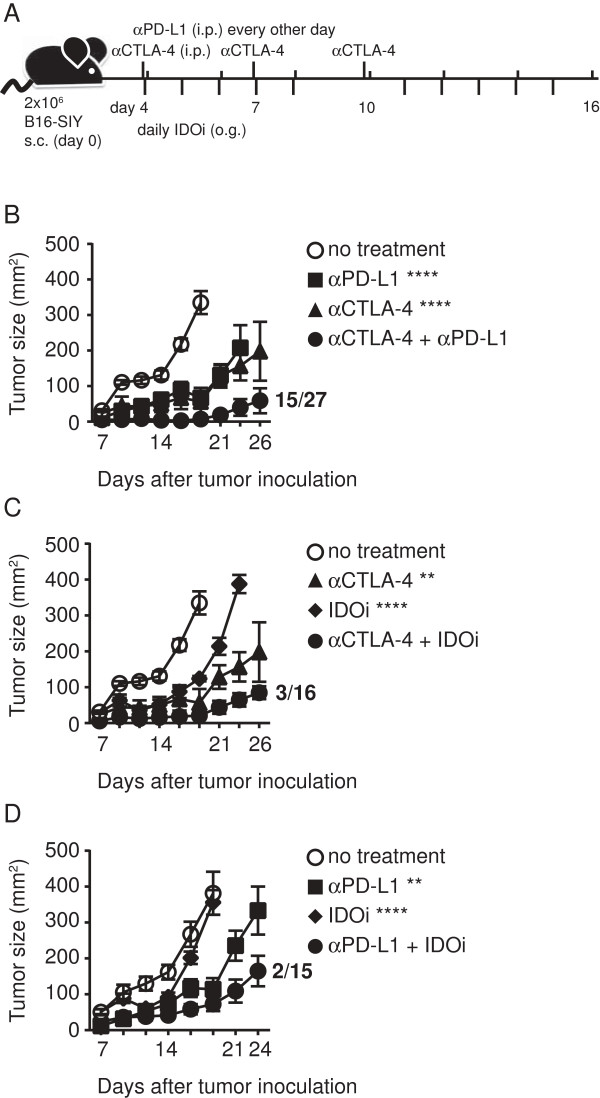
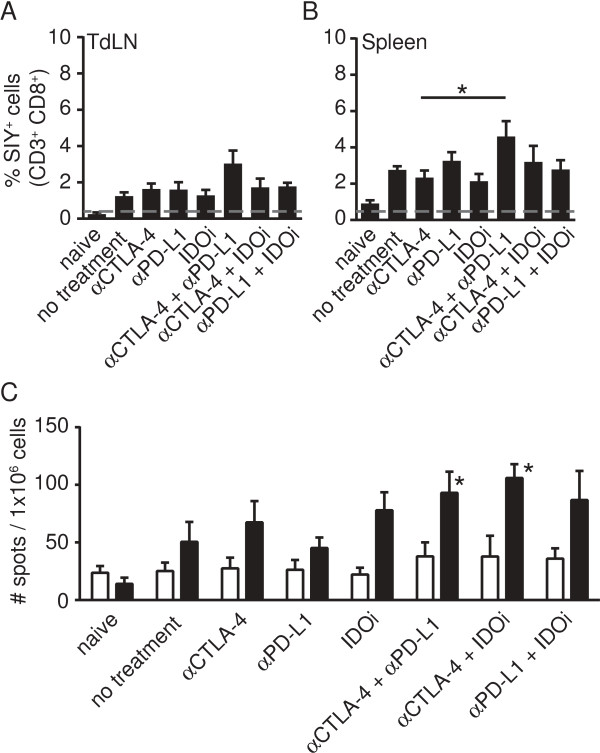
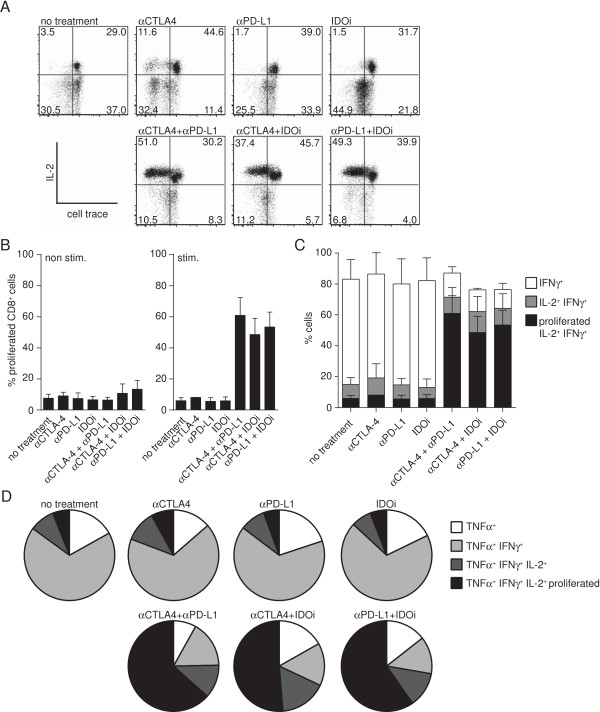
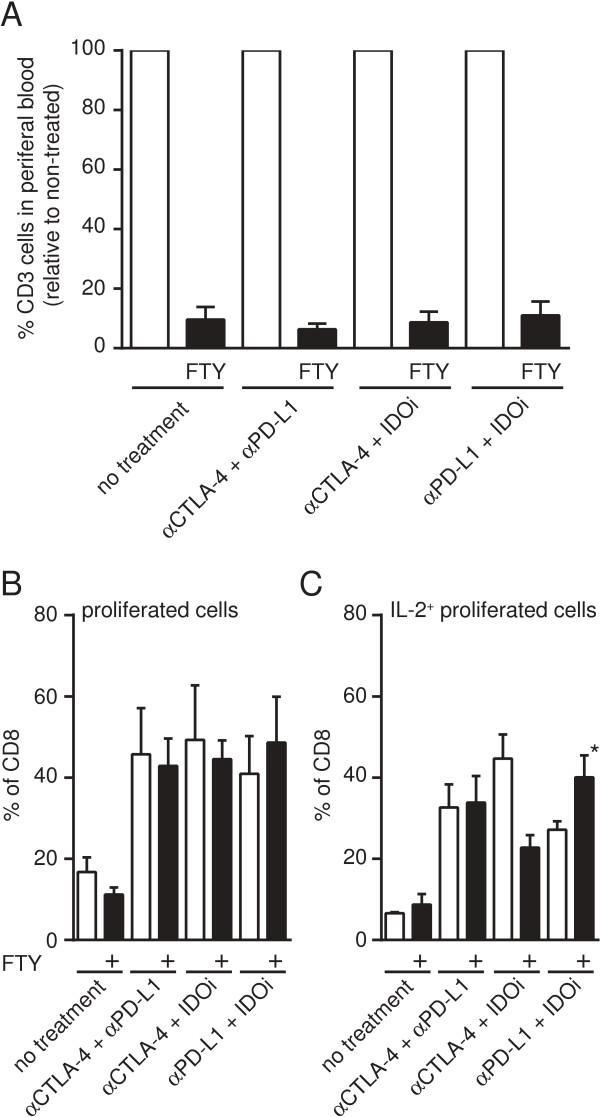
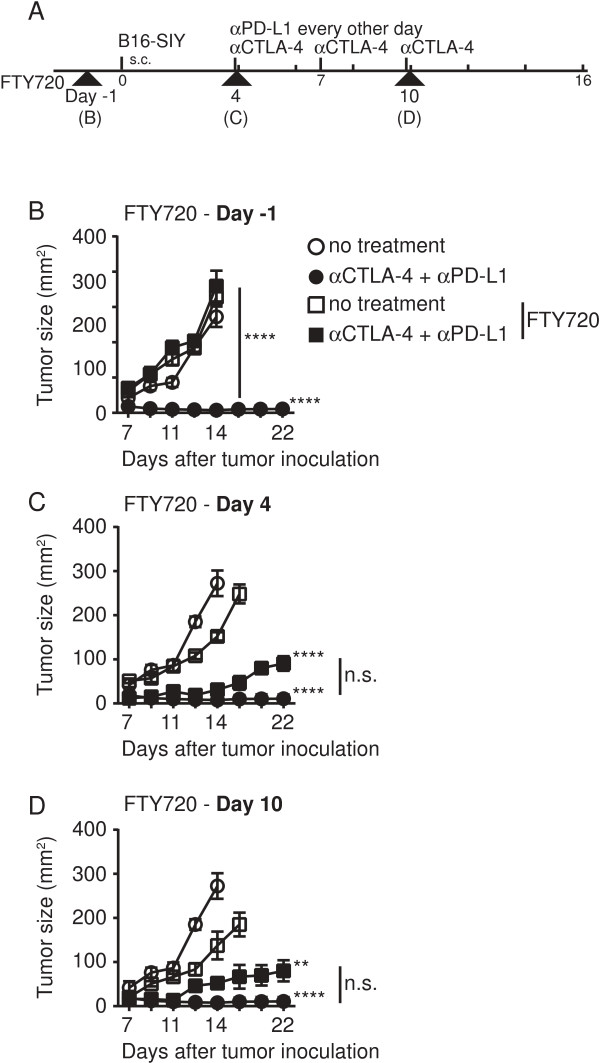
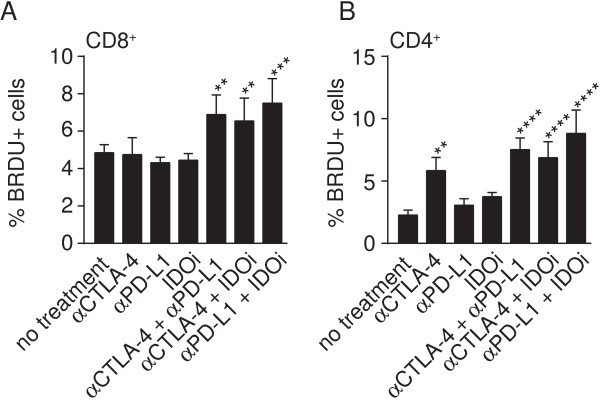
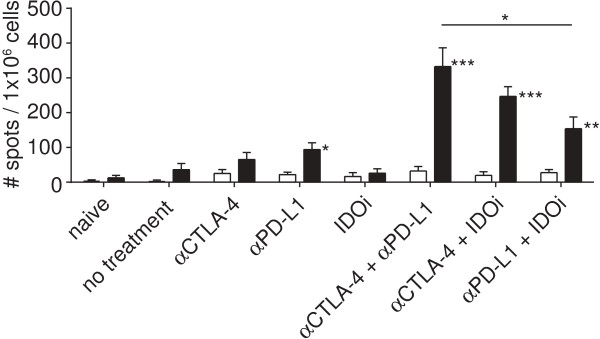
BACKGROUND: Blockade of immune inhibitory pathways is emerging as an important therapeutic modality for the treatment of cancer. Single agent treatments have partial anti-tumor activity in preclinical models and in human cancer patients. Inasmuch as the tumor microenvironment shows evidence of multiple immune inhibitory mechanisms present concurrently, it has been reasoned that combination therapies may be required for optimal therapeutic effect. METHODS: To test this notion, we utilized permutations of anti-CTLA-4 mAb, anti-PD-L1 mAb, and/or the IDO inhibitor INCB23843 in the murine B16.SIY melanoma model. RESULTS: All three combinations showed markedly improved tumor control over single treatments, with many mice achieving complete tumor rejection. This effect was seen in the absence of vaccination or adoptive T cell therapy. The mechanism of synergy was investigated to examine the priming versus effector phase of the anti-tumor immune response. Only a minimal increase in priming of anti-tumor T cells was observed at early time points in the tumor-draining lymph nodes (TdLN). In contrast, as early as three days after therapy initiation, a marked increase in the capacity of tumor-infiltrating CD8(+) T cells to produce IL-2 and to proliferate was found in all groups treated with the effective combinations. Treatment of mice with FTY720 to block new T cell trafficking from secondary lymphoid structures still enabled restoration of IL-2 production and proliferation by intratumoral T cells, and also retained most of the tumor growth control. CONCLUSIONS: Our data suggest that the therapeutic effect of these immunotherapies was mainly mediated through direct reactivation of T cells in situ. These three combinations are attractive to pursue clinically, and the ability of intratumoral CD8(+) T cells to produce IL-2 and to proliferate could be an important biomarker to integrate into clinical studies.
Overview
The claims and statistics of this paper haven’t been checked yet.
Free: it reads the open-access text and checks the first 5 claims that cite a source we can check. Create a free account to check every claim.
Integrity signals
Registry
Cites
Statistics
Figures
Verification
Claims the paper makes
The claims and statistics of this paper haven’t been checked yet.
Free: it reads the open-access text and checks the first 5 claims that cite a source we can check. Create a free account to check every claim.
Claims other papers make about this one
Each is checked against this paper’s own text: does it say what the citing paper says it does?
The source backs part of the claim, not all of it — or backs it for a different population, condition or comparison.
In the citing paper
“the endogenous AhR ligand Kyn displays pro-cancerogenic properties in a model of pre-clinical melanoma59”
From Dietary tryptophan metabolite released by intratumoral Lactobacillus reuteri facilitates immune checkpoint inhibitor treatment (2023) · cites this paper as [59]
Experimental — accuracy not yet measuredThe source backs part of the claim, not all of it — or backs it for a different population, condition or comparison.
In the citing paper
“recent studies demonstrated that DCs can be found in tumors, where they recruit T cells and stimulate tumor-reactive T cell responses locally (Spranger et al., 2014; de Mingo Pulido et al., 2018)”
From Successful Anti-PD-1 Cancer Immunotherapy Requires T Cell-Dendritic Cell Crosstalk Involving the Cytokines IFN-γ and IL-12 (2018) · cites this paper as Spranger et al., 2014
Experimental — accuracy not yet measuredIn the citing paper
“The tryptophan-metabolizing enzyme IDO inhibits T cell function, and combining IDO-blocking agents together with immune checkpoint inhibitors has shown promising results in mice and is also currently undergoing clinical trials in humans (105, 118).”
From Anti-PD-1 and Anti-CTLA-4 Therapies in Cancer: Mechanisms of Action, Efficacy, and Limitations (2018) · cites this paper as [118]
In the citing paper
“The tryptophan-metabolizing enzyme IDO inhibits T cell function, and combining IDO-blocking agents together with immune checkpoint inhibitors has shown promising results in mice and is also currently undergoing clinical trials in humans (105, 118).”
From Anti-PD-1 and Anti-CTLA-4 Therapies in Cancer: Mechanisms of Action, Efficacy, and Limitations (2018) · cites this paper as [118]
Self-check
Percentages, sums and reported differences re-computed from the paper’s own numbers.
The self-check needs the paper’s full text.
Citations
Cites
PD-1 and PD-L1 Immune Checkpoint Blockade to Treat Breast Cancer
Hartkopf, A. D., Taran, F.-A., Wallwiener, M., Walter, C. B., Krämer, B., Grischke, E.-M., & Brucker, S. Y. (2016) · Breast Care · doi:10.1159/000453569 · Cited by 30,845
Adverse Renal Effects of Immune Checkpoint Inhibitors: A Narrative Review
Wanchoo, R., Karam, S., Uppal, N. N., Barta, V. S., Deray, G., Devoe, C., Launay-Vacher, V., Jhaveri, K. D., & on behalf of Cancer and Kidney International Network Workgroup on Immune Checkpoint Inhibitors (2017) · American Journal of Nephrology · doi:10.1159/000455014 · Cited by 15,256
Improved Survival with Ipilimumab in Patients with Metastatic Melanoma
Hodi, F. S., O'Day, S. J., McDermott, D. F., Weber, R. W., Sosman, J. A., Haanen, J. B., Gonzalez, R., Robert, C., Schadendorf, D., Hassel, J. C., et al. (2010) · New England Journal of Medicine · doi:10.1056/nejmoa1003466 · Cited by 15,155 · cited 1×
“The first successful immunotherapy aiming to block a negative regulatory pathway on T cells is the anti-CTLA-4 (Cytotoxic T-Lymphocyte Antigen-4) mAb ipilimumab, which was approved by the FDA (Food and Drug Administration) in 2011 for treatment of patients with advanced melanoma [13].”
BackgroundSafety, activity, and immune correlates of anti–PD-1 antibody in cancer
Topalian, S. L., Hodi, F. S., Brahmer, J. R., Gettinger, S. N., Smith, D. C., McDermott, D. F., Powderly, J. D., Carvajal, R. D., Sosman, J. A., Atkins, M. B., et al. (2012) · New England Journal of Medicine · doi:10.1056/nejmoa1200690 · Cited by 12,628 · cited 1×
“Early clinical results have been reported with anti-PD-1 and anti-PD-L1 mAbs [14], IDO inhibitors [15], and Treg depletion targeting surface CD25 [16,17].”
BackgroundCuriel, T. J., Coukos, G., Zou, L., Alvarez, X., Cheng, P., Mottram, P., Evdemon-Hogan, M., Conejo-Garcia, J. R., Zhang, L., Burow, M., et al. (2004) · Nature Medicine · doi:10.1038/nm1093 · Cited by 5,151 · cited 1×
“These are expression of the ligand PD-L1 (programmed death-ligand 1), which can engage the inhibitory receptor PD-1 (programmed death-receptor 1) on activated T cells; presence of the tryptophan-catabolizing enzyme indoleamine-2,3dioxygenase (IDO), which exploits the exquisite sensitivity of T cells to tryptophan depl…”
BackgroundTumor-associated B7-H1 promotes T-cell apoptosis: A potential mechanism of immune evasion
Dong, H., Strome, S. E., Salomao, D. R., Tamura, H., Hirano, F., Flies, D. B., Roche, P. C., Lu, J., Zhu, G., Tamada, K., et al. (2002) · Nature Medicine · doi:10.1038/nm730 · Cited by 5,025
The immune contexture in human tumours: impact on clinical outcome
Fridman, W. H., Pagès, F., Sautès-Fridman, C., & Galon, J. (2012) · Nature reviews. Cancer · doi:10.1038/nrc3245 · Cited by 4,981 · cited 1×
“While most of these analyses have been carried out on biopsy material from patients with advanced melanoma, similar results are emerging in other solid tumors, including lung cancer, ovarian cancer, colorectal cancer, breast cancer, and head and neck cancer [3-6].”
ResultNivolumab plus Ipilimumab in Advanced Melanoma
Wolchok, J. D., Kluger, H., Callahan, M. K., Postow, M. A., Rizvi, N. A., Lesokhin, A. M., Segal, N. H., Ariyan, C. E., Gordon, R.-A., Reed, K., et al. (2013) · New England Journal of Medicine · doi:10.1056/nejmoa1302369 · Cited by 4,230 · cited 1×
“Phase I clinical trial development of the anti-CTLA-4 + anti-PD-1 combination has already been pursued in advanced melanoma, with profound clinical response rates observed that appear superior to single agent activity based on historical controls [47,49].”
BackgroundInnate and adaptive immune cells in the tumor microenvironment
Gajewski, T. F., Schreiber, H., & Fu, Y.-X. (2013) · Nature Immunology · doi:10.1038/ni.2703 · Cited by 4,148
Self-citationIwai, Y., Ishida, M., Tanaka, Y., Okazaki, T., Honjo, T., & Minato, N. (2002) · Proceedings of the National Academy of Sciences · doi:10.1073/pnas.192461099 · Cited by 3,203 · cited 2×
“yet significant impact on tumor growth kinetics and to improve tumor-specific immune responses in various mouse models in vivo [28-33].”
Background
Cited by
Items 101–200 of 562
Clinical treatment of cholangiocarcinoma: an updated comprehensive review
Elvevi, A., Laffusa, A., Scaravaglio, M., Rossi, R. E., Longarini, R., Stagno, A. M., Cristoferi, L., Ciaccio, A., Cortinovis, D. L., Invernizzi, P., et al. (2022) · Annals of Hepatology · doi:10.1016/j.aohep.2022.100737 · Cited by 160
“…combinations of PD-1 and CTLA-4 blockade have shown good results in several tumor types [118,149,150] due to synergistic effects resulting in increased numbers of Tumor-in fi ltrating lymphocytes (TILs), decreased regulatory T (Tregs) cells, and overall improved inhibition of tumor growth [151,152].”
Horton, B. L., Williams, J. B., Cabanov, A., Spranger, S., & Gajewski, T. F. (2018) · Cancer Immunology Research · doi:10.1158/2326-6066.cir-17-0249 · Cited by 168
“In mouse models, efficacy of anti–CTLA-4 and anti–PD-L1 combination therapies did not require new migration of T cells to the tumor from lymphoid tissues (7).”
BackgroundResultSelf-citationNayak-Kapoor, A., Hao, Z., Sadek, R., Dobbins, R., Marshall, L., Vahanian, N. N., Jay Ramsey, W., Kennedy, E., Mautino, M. R., Link, C. J., et al. (2018) · Journal for ImmunoTherapy of Cancer · doi:10.1186/s40425-018-0351-9 · Cited by 160
Danilova, L., Wang, H., Sunshine, J., Kaunitz, G. J., Cottrell, T. R., Xu, H., Esandrio, J., Anders, R. A., Cope, L., Pardoll, D. M., et al. (2016) · Proceedings of the National Academy of Sciences · doi:10.1073/pnas.1607836113 · Cited by 161
Exercise and cancer: from “healthy” to “therapeutic”?
Idorn, M., & thor Straten, P. (2017) · Cancer Immunology, Immunotherapy · doi:10.1007/s00262-017-1985-z · Cited by 158
“Importantly, data are accumulating to suggest that patients whose tumors are characterized by a brisk infiltration of immune cells are more prone to respond to treatment [23].”
BackgroundAdvances in immunotherapy for melanoma
Redman, J. M., Gibney, G. T., & Atkins, M. B. (2016) · BMC Medicine · doi:10.1186/s12916-016-0571-0 · Cited by 160
“have also demonstrated a synergistic effect when combining IDO1 inhibition with PD-1 blockade [65].”
BackgroundRejection versus escape: the tumor MHC dilemma
Garrido, F., Ruiz-Cabello, F., & Aptsiauri, N. (2017) · Cancer Immunology, Immunotherapy · doi:10.1007/s00262-016-1947-x · Cited by 158
“The use of monoclonal antibodies that target molecules involved in the regulation of tumor recognition by T lymphocytes and in T-cell cytotoxicity directed against metastatic cells has provided a new tool for increasing anti-tumor immune responses [14, 15].”
Matrix-binding checkpoint immunotherapies enhance antitumor efficacy and reduce adverse events
Ishihara, J., Fukunaga, K., Ishihara, A., Larsson, H. M., Potin, L., Hosseinchi, P., Galliverti, G., Swartz, M. A., & Hubbell, J. A. (2017) · Science Translational Medicine · doi:10.1126/scitranslmed.aan0401 · Cited by 157
“To test whether tumor-infiltrating CD8 T cells produced more effector cytokines and higher levels of cytotoxicity, CD8 T cells were extracted and stimulated ex vivo using aCD3 and aCD28 (13).”
BackgroundMethodInfluentialAntigen Dominance Hierarchies Shape TCF1+ Progenitor CD8 T Cell Phenotypes in Tumors
Burger, M. L., Cruz, A. M., Crossland, G. E., Gaglia, G., Ritch, C. C., Blatt, S. E., Bhutkar, A. J., Canner, D. A., Kienka, T., Tavana, S. Z., et al. (2021) · Cell · doi:10.1016/j.cell.2021.08.020 · Cited by 169
The Influence of Tumor Microenvironment on Immune Escape of Melanoma
Simiczyjew, A., Dratkiewicz, E., Mazurkiewicz, J., Ziętek, M., Matkowski, R., & Nowak, D. (2020) · International Journal of Molecular Sciences · doi:10.3390/ijms21218359 · Cited by 176
Epi-drugs in combination with immunotherapy: a new avenue to improve anticancer efficacy
Mazzone, R., Zwergel, C., Mai, A., & Valente, S. (2017) · Clinical Epigenetics · doi:10.1186/s13148-017-0358-y · Cited by 149
“Preclinical studies have demonstrated that blocking the PD-L1/ PD-1 interaction augments antitumour T cell responses [20].”
BackgroundHou, A., Hou, K., Huang, Q., Lei, Y., & Chen, W. (2020) · Frontiers in Immunology · doi:10.3389/fimmu.2020.00783 · Cited by 145
Aspirin prevents metastasis by limiting platelet TXA2 suppression of T cell immunity
Yang, J., Yamashita-Kanemaru, Y., Morris, B. I., Contursi, A., Trajkovski, D., Xu, J., Patrascan, I., Benson, J., Evans, A. C., Conti, A. G., et al. (2025) · Nature · doi:10.1038/s41586-025-08626-7 · Cited by 175
“Cytokine polyfunctionality is a hallmark of effective anti-viral and anti-tumour immune responses 20,21 .”
Tumor-intrinsic oncogene pathways mediating immune avoidance
Spranger, S., & Gajewski, T. F. (2016) · OncoImmunology · doi:10.1080/2162402x.2015.1086862 · Cited by 145
Self-citationBevers, S., Kooijmans, S. A. A., van de Velde, E., Evers, M. J. W., Seghers, S., Gitz-Francois, J. J., van Kronenburg, N. C. H., Fens, M. H. A. M., Mastrobattista, E., Hassler, L., et al. (2022) · Molecular Therapy · doi:10.1016/j.ymthe.2022.07.007 · Cited by 161
A phase I study of indoximod in patients with advanced malignancies
Soliman, H. H., Minton, S. E., Han, H. S., Ismail-Khan, R., Neuger, A., Khambati, F., Noyes, D., Lush, R., Chiappori, A. A., Roberts, J. D., et al. (2016) · Oncotarget · doi:10.18632/oncotarget.8216 · Cited by 145
Primary and acquired resistance to PD-1/PD-L1 blockade in cancer treatment
Wang, Q., & Wu, X. (2017) · International Immunopharmacology · doi:10.1016/j.intimp.2017.03.015 · Cited by 154
A new paradigm for tumor immune escape: β-catenin-driven immune exclusion
Spranger, S., & Gajewski, T. F. (2015) · Journal for ImmunoTherapy of Cancer · doi:10.1186/s40425-015-0089-6 · Cited by 139
“These data are consistent with preclinical data demonstrating that most of the therapeutic effect of checkpoint blockade can be attributed to reactivation of CD8 T cells already present within the tumor [5].”
ResultSelf-citationJochéms, C., Fantini, M. C., Fernando, R. I., Kwilas, A. R., Donahue, R. N., Lepone, L. M., Grenga, I., Kim, Y., Brechbiel, M. W., Gulley, J. L., et al. (2016) · Oncotarget · doi:10.18632/oncotarget.9326 · Cited by 148
“Preclinically, combination therapy with epacadostat and anti-CTLA-4 or anti-PD-1/PD-L1 improved tumor control and increased IL-2 production and CD8 T-cell proliferation in murine melanoma better than single agent therapy [29].”
BackgroundSelf-citationCombination Approaches with Immune-Checkpoint Blockade in Cancer Therapy
Swart, M., Verbrugge, I., & Beltman, J. B. (2016) · Frontiers in Oncology · doi:10.3389/fonc.2016.00233 · Cited by 139
Nanoparticles-encapsulated polymeric microneedles for transdermal drug delivery
Chen, M., Quan, G., Sun, Y. H., Yang, D., Pan, X., & Wu, C. (2020) · Journal of Controlled Release · doi:10.1016/j.jconrel.2020.06.039 · Cited by 137
Kumar, S., Chatterjee, M., Ghosh, P., Ganguly, K. K., Basu, M., & Ghosh, M. K. (2022) · Genes & Diseases · doi:10.1016/j.gendis.2022.07.024 · Cited by 144
“This strategy may also work to prevent the resistance and improve the efficacy of anti-PD-1/PD-L1 immunotherapy.(125) However, the adenosine is a metabolite of adenosinergic pathway which has important role in TME, but its accumulation reduces the anti-tumor immunity.”
BackgroundTargeting Tryptophan Catabolism in Cancer Immunotherapy Era: Challenges and Perspectives
Peyraud, F., Guegan, J.-P., Bodet, D., Cousin, S., Bessede, A., & Italiano, A. (2022) · Frontiers in Immunology · doi:10.3389/fimmu.2022.807271 · Cited by 126
“Indeed, the combination of IDO1 inhibitor with CTLA-4 and PD-1/L1 antibodies demonstrated synergistic antitumor activity in glioma and melanoma mice models (17, 73, 74).”
BackgroundInfluentialRashidian, M., LaFleur, M. W., Verschoor, V. L., Dongre, A., Zhang, Y., Nguyen, T. H., Kolifrath, S., Aref, A. R., Lau, C. J., Paweletz, C. P., et al. (2019) · Proceedings of the National Academy of Sciences · doi:10.1073/pnas.1905005116 · Cited by 129
“As reported by others, administration of FTY720 yields a decrease of up to 90% of circulating T cells (16).”
BackgroundMethodFerrarotto, R., Bell, D., Rubin, M. L., Hutcheson, K. A., Johnson, J. M., Goepfert, R. P., Phan, J., Elamin, Y. Y., Torman, D., Warneke, C. L., et al. (2020) · Clinical Cancer Research · doi:10.1158/1078-0432.ccr-19-3977 · Cited by 135
Coombs, M. R. P., Harrison, M. E., & Hoskin, D. W. (2016) · Cancer Letters · doi:10.1016/j.canlet.2016.06.023 · Cited by 126
Robust Antitumor Responses Result from Local Chemotherapy and CTLA-4 Blockade
Ariyan, C. E., Brady, M. S., Siegelbaum, R. H., Hu, J., Bello, D. M., Rand, J. G., Fisher, C., Lefkowitz, R. A., Panageas, K. S., Pulitzer, M. P., et al. (2018) · Cancer Immunology Research · doi:10.1158/2326-6066.cir-17-0356 · Cited by 133
Metabolic Switch in the Tumor Microenvironment Determines Immune Responses to Anti-cancer Therapy
Wegiel, B., Vuerich, M., Daneshmandi, S., & Seth, P. (2018) · Frontiers in Oncology · doi:10.3389/fonc.2018.00284 · Cited by 133
“Many preclinical studies have proposed and demonstrated enhance anti-immune response to a combination of anti PD-1 therapy with IDO inhibitors (98).”
BackgroundCancer Immunotherapy: Selected Targets and Small‐Molecule Modulators
Weinmann, H. (2016) · ChemMedChem · doi:10.1002/cmdc.201500566 · Cited by 122
Belmontes, B., Sawant, D. V., Zhong, W., Tan, H. L. E., Kaul, A. M., Aeffner, F., O’Brien, S. A., Chun, M. G. H., Noubade, R., Eng, J. S., et al. (2021) · Science Translational Medicine · doi:10.1126/scitranslmed.abd1524 · Cited by 126
“Consistent with these data, efficacy of both BiTE monotherapy and combination therapy with anti–4-1BB was not affected by concurrent treatment with FTY720, which sequesters T cells in secondary lymphoid organs and reduces recruitment of T cells from circulation into the tumor (38, 39).”
MethodRepurposing Drugs in Oncology (ReDO)—diclofenac as an anti-cancer agent
Pantziarka, P., Sukhatme, V., Bouche, G., Melhuis, L., & Sukhatme, V. P. (2016) · ecancermedicalscience · doi:10.3332/ecancer.2016.610 · Cited by 118
“Oral DCF is rapidly absorbed and almost completely distributed to plasma and tissues with little evidence of drug accumulation after repeated dosing within the normal therapeutic range [4–6].”
BackgroundBrown, Z. J., Yu, S. J., Heinrich, B., Ma, C., Fu, Q., Sandhu, M., Agdashian, D., Zhang, Q., Korangy, F., & Greten, T. F. (2018) · Cancer Immunology Immunotherapy · doi:10.1007/s00262-018-2190-4 · Cited by 122
Joshi, S., & Durden, D. L. (2019) · Journal of Oncology · doi:10.1155/2019/5245034 · Cited by 130
“Based on the impressive preclinical data in melanomamodel, several IDO inhibitors are explored in combination with CTLA-4 and PD-1 inhibition [139].”
BackgroundB cell–Derived IL35 Drives STAT3-Dependent CD8+ T-cell Exclusion in Pancreatic Cancer
Mirlekar, B., Michaud, D. E., Lee, S. J., Kren, N. P., Harris, C., Greene, K. G., Goldman, E. C., Gupta, G. P., Fields, R. C., Hawkins, W. G., et al. (2020) · Cancer Immunology Research · doi:10.1158/2326-6066.cir-19-0349 · Cited by 131
Chen, B., Alvarado, D. M., Iticovici, M. S., Kau, N. S., Park, H., Parikh, P. J., Thotala, D. K., & Ciorba, M. A. (2020) · Cancer Immunology Research · doi:10.1158/2326-6066.cir-19-0282 · Cited by 124
“5% methylcellulose) as previously published (27).”
Therapeutic use of anti-CTLA-4 antibodies
Blank, C. U., & Enk, A. (2015) · International Immunology · doi:10.1093/intimm/dxu076 · Cited by 115
CTLA-4 correlates with immune and clinical characteristics of glioma
Liu, F., Huang, J., Liu, X., Cheng, Q., Luo, C., & Liu, Z. (2020) · Cancer Cell International · doi:10.1186/s12935-019-1085-6 · Cited by 132
“SIY melanoma model showed markedly improved tumor control over single-drug treatment [26].”
BackgroundMethodResultInfluentialWisdom, A. J., Mowery, Y. M., Hong, C. S., Himes, J. E., Nabet, B. Y., Qin, X., Zhang, D., Chen, L., Fradin, H., Patel, R., et al. (2020) · Nature Communications · doi:10.1038/s41467-020-19917-0 · Cited by 120
An in situ hydrogel-mediated chemo-immunometabolic cancer therapy
Wang, B., Chen, J., Caserto, J. S., Wang, X., & Ma, M. (2022) · Nature Communications · doi:10.1038/s41467-022-31579-8 · Cited by 118
Monjazeb, A. M., Kent, M. S., Grossenbacher, S. K., Mall, C., Zamora, A. E., Mirsoian, A., Chen, M., Kol, A., Shiao, S. L., Reddy, A., et al. (2016) · Clinical Cancer Research · doi:10.1158/1078-0432.ccr-15-3026 · Cited by 107
“checkpoint inhibition or IDO blockade little effect is seen in the dLNs but there are marked effects on CD8+ T cells in the tumor (40).”
BackgroundMyeloid-Derived Suppressor Cells in Colorectal Cancer
Siemińska, I., & Baran, J. (2020) · Frontiers in Immunology · doi:10.3389/fimmu.2020.01526 · Cited by 125
“Moreover, HIF-1α can also enhance the suppressive nature of MDSCs by inducing expression of programmed death-ligand 1 (PD-L1) (56), a ligand for PD-1, leading to inhibition of IL-2 production and decreased proliferation of cytotoxic T cells (56, 57).”
BackgroundMechanisms of Tumor Cell–Intrinsic Immune Evasion
Spranger, S., & Gajewski, T. F. (2018) · Annual Review of Cancer Biology · doi:10.1146/annurev-cancerbio-030617-050606 · Cited by 108
“…studies using FTY720 to block the egress of new T cells from lymph nodes have revealed that the efficacy of checkpoint blockade antibodies is preserved, indicating that the majority of the therapeutic activity depends on T cells already in the tumor microenvironment (Spranger et al. 2014).”
BackgroundSelf-citationHait, N. C., Avni, D., Yamada, A., Nagahashi, M., Aoyagi, T., Aoki, H., Dumur, C. I., Zelenko, Z., Gallagher, E. J., LeRoith, D., et al. (2015) · Oncogenesis · doi:10.1038/oncsis.2015.16 · Cited by 110
A patent review of IDO1 inhibitors for cancer
Cheong, J. E., Ekkati, A. R., & Sun, L. (2018) · Expert Opinion on Therapeutic Patents · doi:10.1080/13543776.2018.1441290 · Cited by 108
Tumor cure by radiation therapy and checkpoint inhibitors depends on pre-existing immunity
Crittenden, M. R., Zebertavage, L., Kramer, G. F., Bambina, S., Friedman, D. J., Troesch, V., Blair, T. C., Baird, J. R., Alice, A. F., & Gough, M. J. (2018) · Scientific Reports · doi:10.1038/s41598-018-25482-w · Cited by 110
Tryptophan and its metabolites in normal physiology and cancer etiology
Perez‐Castro, L., Garcia, R., Venkateswaran, N., Barnes, S. D., & Conacci‐Sorrell, M. (2021) · FEBS Journal · doi:10.1111/febs.16245 · Cited by 122
Turning cold tumors into hot tumors to ignite immunotherapy
Liu, Y., Wang, Y., Wang, S., Li, J., He, W. A., Fan, X.-J., & Wan, X. (2025) · Molecular Cancer · doi:10.1186/s12943-025-02477-6 · Cited by 136
Zakharia, Y., McWilliams, R. R., Rixe, O., Drabick, J. J., Shaheen, M. F., Grossmann, K. F., Kolhe, R. B., Pacholczyk, R., Sadek, R., Tennant, L., et al. (2021) · Journal for ImmunoTherapy of Cancer · doi:10.1136/jitc-2020-002057 · Cited by 109
Chen, M., Quan, G., Wen, T., Yang, P., Qin, W., Mai, H., Sun, Y. H., Lu, C. T., Pan, X., & Wu, C. (2020) · ACS Applied Materials & Interfaces · doi:10.1021/acsami.0c05090 · Cited by 99
Xu, Y., Carrascosa, L. C., Yeung, Y. A., Chu, M. L.-H., Yang, W., Djuretic, I. M., Pappas, D. C., Zeytounian, J. L., Ge, Z., de Ruiter, V., et al. (2021) · Cancer Immunology Research · doi:10.1158/2326-6066.cir-21-0058 · Cited by 102
Wang, Y., Zhao, N., Wu, Z., Pan, N., Shen, X., Liu, T., Wei, F., You, J., Xu, W., & Ren, X. (2019) · European Journal of Nuclear Medicine and Molecular Imaging · doi:10.1007/s00259-019-04500-7 · Cited by 107
Varayathu, H., Sarathy, V., Thomas, B. E., Mufti, S. S., & Naik, R. (2021) · Frontiers in Oncology · doi:10.3389/fonc.2021.559161 · Cited by 104
Kleponis, J., Skelton, R. A., & Zheng, L. (2015) · PubMed Central · doi:10.7497/j.issn.2095-3941.2015.0046 · Cited by 126
Perea, F., Bernal, M., Sánchez‐Palencia, A., Carretero, J., Torres, C. M., Bayarri, C., Gómez‐Morales, M., Garrido, F., & Ruiz‐Cabello, F. (2016) · International Journal of Cancer · doi:10.1002/ijc.30489 · Cited by 103
Tryptophan: A Rheostat of Cancer Immune Escape Mediated by Immunosuppressive Enzymes IDO1 and TDO
Kim, M., & Tomek, P. (2021) · Frontiers in Immunology · doi:10.3389/fimmu.2021.636081 · Cited by 101
Tumor immunogenicity dictates reliance on TCF1 in CD8+ T cells for response to immunotherapy
Escobar, G., Tooley, K., Oliveras, J. P., Huang, L., Cheng, H., Bookstaver, M. L., Edwards, C., Froimchuk, E., Xue, C., Mangani, D., et al. (2023) · Cancer Cell · doi:10.1016/j.ccell.2023.08.001 · Cited by 99
Kiyozumi, Y., Baba, Y., Okadome, K., Yagi, T., Ishimoto, T., Iwatsuki, M., Miyamoto, Y., Yoshida, N., Watanabe, M., Komohara, Y., et al. (2018) · Annals of Surgery · doi:10.1097/sla.0000000000002754 · Cited by 105
Eosinophil accumulation predicts response to melanoma treatment with immune checkpoint inhibitors
Simon, S. C. S., Hu, X., Panten, J., Grees, M., Renders, S., Thomas, D., Weber, R., Schulze, T. J., Utikal, J. S., & Umansky, V. (2020) · OncoImmunology · doi:10.1080/2162402x.2020.1727116 · Cited by 101
The Resistance Mechanisms of Lung Cancer Immunotherapy
Wang, F., Wang, S., & Zhou, Q. H. (2020) · Frontiers in Oncology · doi:10.3389/fonc.2020.568059 · Cited by 99
“Correspondingly, IDO-knockout mice exhibited improved OS with ICI compared with wild-type mice, and ICI therapy combined with IDO inhibitors showed both increased numbers and functions of TILs in the TME in an experimental setting (230, 231).”
BackgroundTumor and Host Factors Controlling Antitumor Immunity and Efficacy of Cancer Immunotherapy
Spranger, S., Sivan, A., Corrales, L., & Gajewski, T. F. (2016) · Advances in Immunology · doi:10.1016/bs.ai.2015.12.003 · Cited by 85
Self-citationEmerging biomarkers for immune checkpoint inhibition in lung cancer
Cyriac, G., & Gandhi, L. (2018) · Seminars in Cancer Biology · doi:10.1016/j.semcancer.2018.05.006 · Cited by 90
Current status and perspectives in immunotherapy for metastatic melanoma
Marconcini, R., (IMI), F. T. I. M. I., Spagnolo, F., Stucci, L. S., Ribero, S., Marra, E., Rosa, F. D., Picasso, V., Guardo, L. D., Cimminiello, C., et al. (2018) · Oncotarget · doi:10.18632/oncotarget.23746 · Cited by 91
“Talimogene laherparepvec (T-VEC), a herpes simplex virus type 1–derived oncolytic immunotherapy designed to selectively replicate within tumors and produce granulocyte macrophage colony-stimulating factor (GM-CSF) to enhance systemic antitumor immune responses, produced durable responses and a therapeutic benefit agai…”
BackgroundGomes, B., Driessens, G., Bartlett, D., Cai, D., Cauwenberghs, S., Crosignani, S., Dalvie, D., Denies, S., Dillon, C. P., Fantin, V. R., et al. (2018) · Molecular Cancer Therapeutics · doi:10.1158/1535-7163.mct-17-1104 · Cited by 83
“The therapeutic benefit of combining anti–PD-(L)1 therapy with IDO1 inhibitionwas already shown in previous publications (26, 28).”
BackgroundGibney, G. T., Hamid, O., Lutzky, J., Olszanski, A. J., Mitchell, T. C., Gajewski, T. F., Chmielowski, B., Hanks, B. A., Zhao, Y., Newton, R. C., et al. (2019) · Journal for ImmunoTherapy of Cancer · doi:10.1186/s40425-019-0562-8 · Cited by 83
Self-citationInteraction Between MDSC and NK Cells in Solid and Hematological Malignancies: Impact on HSCT
Tumino, N., Pace, A. L. D., Besi, F., Quatrini, L., Vacca, P., & Moretta, L. (2021) · Frontiers in Immunology · doi:10.3389/fimmu.2021.638841 · Cited by 90
“In addition, other factor such as HIF-1α increases the immunosuppressive activity of MDSC by inducing Programmed Cell Death 1 (PD-1) expression and by upregulating the V-domain of Ig suppressor of T-cell activation (VISTA) (64, 65).”
BackgroundCellular and molecular waypoints along the path of T cell exhaustion
Lan, X., Zebley, C. C., & Youngblood, B. (2023) · Science Immunology · doi:10.1126/sciimmunol.adg3868 · Cited by 95
Schafer, C. C., Wang, Y., Hough, K. P., Sawant, A., Grant, S. C., Thannickal, V. J., Zmijewski, J. W., Ponnazhagan, S., & Deshane, J. S. (2016) · Oncotarget · doi:10.18632/oncotarget.12249 · Cited by 86
“Checkpoint blockade agents have been ineffective as single agents in IDO-overexpressing cancer models because they require a functional immune response to be elicited from tumor-residing CD8+ T cells [39, 48].”
BackgroundImmune checkpoint modulation: Rational design of combination strategies
Zamarin, D., & Postow, M. A. (2015) · Pharmacology & Therapeutics · doi:10.1016/j.pharmthera.2015.01.003 · Cited by 91
Exhaustion of CD4+ T-cells mediated by the Kynurenine Pathway in Melanoma
Pour, S. R., Morikawa, H., Kiani, N. A., Yang, M., Azimi, A., Shafi, G., Shang, M.-M., Baumgartner, R., Ketelhuth, D. F. J., Kamleh, M. A., et al. (2019) · Scientific Reports · doi:10.1038/s41598-019-48635-x · Cited by 89
Giglio, A. D., Federico, A. D., Nuvola, G., Deiana, C., & Gelsomino, F. (2021) · Current Oncology Reports · doi:10.1007/s11912-021-01124-9 · Cited by 95
Wu, W., Chia, T., Lu, J., Li, X., Guan, J., Li, Y., Fu, F., Zhou, S., Feng, Y., Deng, J., et al. (2023) · Nature Cancer · doi:10.1038/s43018-023-00612-0 · Cited by 94
Tumor immune response and immunotherapy in gastric cancer
Kwak, Y., Seo, A. N., Lee, H. E., & Lee, H. S. (2019) · Journal of Pathology and Translational Medicine · doi:10.4132/jptm.2019.10.08 · Cited by 93
Vijayakumar, G., McCroskery, S., & Palese, P. (2019) · Journal of Virology · doi:10.1128/jvi.01677-19 · Cited by 85
Fighting in a wasteland: deleterious metabolites and antitumor immunity
Watson, M. J., & Delgoffe, G. M. (2022) · Journal of Clinical Investigation · doi:10.1172/jci148549 · Cited by 87
“Indeed, preclinical models targeting IDO1 strongly enhanced B16 and 4T1 tumor response to both anti-CTLA4 and anti–PD-1 therapy, and demonstrated efficacy regardless of tumor IDO1 expression (129, 130).”
BackgroundCariani, E., & Missale, G. (2019) · Liver International · doi:10.1111/liv.14192 · Cited by 91
Metabolic checkpoints in immune cell reprogramming: rewiring immunometabolism for cancer therapy
Lv, Y., Li, Z., Liu, S., Zhou, Z., Jinling, S., Ba, Y., Weng, S., Zuo, A., Xu, H. W., Luo, P., et al. (2025) · Molecular Cancer · doi:10.1186/s12943-025-02407-6 · Cited by 98
Multi-scale modeling of macrophage—T cell interactions within the tumor microenvironment
Cess, C. G., & Finley, S. D. (2020) · PLoS Computational Biology · doi:10.1371/journal.pcbi.1008519 · Cited by 93
Newton, J. M., Hanoteau, A., Liu, H., Gaspero, A., Parikh, F., Gartrell, R. D., Hart, T. D., Laoui, D., Ginderachter, J. A. V., Dharmaraj, N., et al. (2019) · Journal for ImmunoTherapy of Cancer · doi:10.1186/s40425-019-0698-6 · Cited by 86
“This has been further suggested by various reports which show enhanced ICI efficacy when combined with myeloid-focused therapies including combinations of GM-CSF activated DCs loaded with tumor-antigen [44, 68] stimulator of interferon genes (STING) vaccine strategies [69], and indolamine 2,3 dioxygenase inhibitors [2…”
BackgroundDruggable genome and precision medicine in cancer: current challenges
Dupont, C., Riegel, K., Pompaiah, M., Juhl, H. H., & Rajalingam, K. (2021) · FEBS Journal · doi:10.1111/febs.15788 · Cited by 86
Regulatory B cells preferentially accumulate in tumor-draining lymph nodes and promote tumor growth
Ganti, S. N., Albershardt, T. C., Iritani, B. M., & Ruddell, A. (2015) · Scientific Reports · doi:10.1038/srep12255 · Cited by 90
Zhang, B., Liu, J., Mo, Y., Zhang, K., Huang, B., & Shang, D. (2024) · Frontiers in Immunology · doi:10.3389/fimmu.2024.1476904 · Cited by 111
News on immune checkpoint inhibitors as immunotherapy strategies in adult and pediatric solid tumors
Melaiu, O., Lucarini, V., Giovannoni, R., Fruci, D., & Gemignani, F. (2020) · Seminars in Cancer Biology · doi:10.1016/j.semcancer.2020.07.001 · Cited by 79
Seeber, A., Klinglmair, G., Fritz, J., Steinkohl, F., Zimmer, K., Aigner, F., Horninger, W., Gastl, G., Zelger, B., Brunner, A., et al. (2018) · Cancer Science · doi:10.1111/cas.13560 · Cited by 71
“Several in vivo and in vitro studies as well as clinical trials indicate that targeting and blocking more than one negative immune-regulatory mechanism may mediate better therapeutic effects by reducing the suppressive activity of T regulatory cells (Treg) and restoring the activity of effector T cells.(15,18) Indolea…”
BackgroundCell and tissue engineering in lymph nodes for cancer immunotherapy
Najibi, A. J., & Mooney, D. J. (2020) · Advanced Drug Delivery Reviews · doi:10.1016/j.addr.2020.07.023 · Cited by 80
A Phase II Study of Epacadostat and Pembrolizumab in Patients with Advanced Sarcoma
Kelly, C. M., Qin, L., Whiting, K. A., Richards, A. L., Avutu, V., Chan, J. E., Chi, P., Dickson, M. A., Gounder, M. M., Keohan, M. L., et al. (2023) · Clinical Cancer Research · doi:10.1158/1078-0432.ccr-22-3911 · Cited by 79
Schramme, F., Crosignani, S., Frederix, K., Hoffmann, D., Pilotte, L., Stroobant, V., Preillon, J., Driessens, G., & den Eynde, B. J. V. (2020) · Cancer Immunology Research · doi:10.1158/2326-6066.cir-19-0041 · Cited by 80
Indoleamine 2,3-Dioxygenase (IDO) Inhibition as a Strategy to Augment Cancer Immunotherapy
Yentz, S. E., & Smith, D. C. (2018) · BioDrugs · doi:10.1007/s40259-018-0291-4 · Cited by 70
Zhu, G.-X., Gao, D., Shao, Z., Chen, L., Ding, W., & Yu, Q. (2020) · Molecular Medicine Reports · doi:10.3892/mmr.2020.11744 · Cited by 78
Liu, Z., Yu, Z., Chen, D., Verma, V., Yuan, C., Wang, M., Wang, F., Fan, Q., Wang, X., Li, Y., et al. (2022) · 癌症:英文版 · doi:10.1002/cac2.12348 · Cited by 74
“day thereafter with a lavage needle as described previously [32].”
MethodBeavis, P. A., Henderson, M. A., Giuffrida, L., Davenport, A. J., Petley, E. V., House, I. G., Lai, J., Sek, K., Milenkovski, N., John, L. B., et al. (2018) · Cancer Immunology Research · doi:10.1158/2326-6066.cir-18-0291 · Cited by 68
“Although CD4þ T cells can recognize neoantigens expressed by cancers (20–23) and it has been reported that anti–PD-1/anti– CTLA-4 combination therapy activates CD4þFoxp3– cells (24, 25), little is known of the mechanism and consequence of this activation.”
BackgroundKreidieh, M., Mukherji, D., Temraz, S. N., & Shamseddine, A. I. (2020) · BioMed Research International · doi:10.1155/2020/9037217 · Cited by 81
Emerging roles of regulatory T cells in tumour progression and metastasis
Halvorsen, E. C., Mahmoud, S., & Bennewith, K. L. (2014) · Cancer and Metastasis Reviews · doi:10.1007/s10555-014-9529-x · Cited by 83
PARP mediated DNA damage response, genomic stability and immune responses
Zong, C., Zhu, T., He, J., Huang, R., Jia, R., & Shen, J. (2022) · International Journal of Cancer · doi:10.1002/ijc.33918 · Cited by 74
Srinivasan, P., Wu, X., Basu, M., Rossi, C., & Sandler, A. D. (2018) · PLoS Medicine · doi:10.1371/journal.pmed.1002497 · Cited by 73
Zhang, Y., Li, Y., Chen, K., Qian, L. M., & Wang, P. (2021) · Cancer Cell International · doi:10.1186/s12935-021-01972-2 · Cited by 68
Tumor-induced metabolic immunosuppression: Mechanisms and therapeutic targets
Ricci, J. (2025) · Cell Reports · doi:10.1016/j.celrep.2024.115206 · Cited by 79
Inhibiting tryptophan metabolism enhances interferon therapy in kidney cancer
Trott, J. F., Kim, J. J., Aboud, O. A., Wettersten, H. I., Stewart, B. J., Berryhill, G. E., Uzal, F. A., Hovey, R. C., Chen, C., Anderson, K., et al. (2016) · Oncotarget · doi:10.18632/oncotarget.11658 · Cited by 67
“Previous work has shown that inhibition of IDO-1 restores activity of T cells in the tumor environment [24], but the potential of IDO inhibition to alter the overall tumor immune landscape has not been determined.”
BackgroundMirlekar, B., Michaud, D. E., Searcy, R., Greene, K., & Pylayeva‐Gupta, Y. (2018) · Cancer Immunology Research · doi:10.1158/2326-6066.cir-17-0710 · Cited by 70
“Effective response to immunotherapeutics, such as inhibition of checkpointmechanisms on T cells, has been shown to correlate with preexisting intratumoral effector T-cell infiltration (39, 40).”
Jennings, M. R., Munn, D. H., & Blazeck, J. (2021) · Journal for ImmunoTherapy of Cancer · doi:10.1136/jitc-2021-003013 · Cited by 69
Mechanisms of CD8+ T cell exclusion and dysfunction in cancer resistance to anti-PD-(L)1
Mortezaee, K., & Majidpoor, J. (2023) · Biomedicine & Pharmacotherapy · doi:10.1016/j.biopha.2023.114824 · Cited by 73
Metadata
- Authors
- Spranger, S., Koblish, H. K., Horton, B., Scherle, P. A., Newton, R., & Gajewski, T. F.
- Affiliations
- University of Chicago (US)
- Incyte (United States) (US)
- Corresponding author
- Gajewski, Thomas F
- ORCID
- Venue
- Journal for ImmunoTherapy of Cancer
- Publisher
- BMJ
- Published
- 2014
- Volume
- 2
- Issue
- 1
- Pages
- 3
- ISSN
- 2051-1426 (ISSN-L)
- PMC
- PMC4019906
- OpenAlex
- W2113906692
- Cited by
- 552
- References
- 55
- Citations by year
- 2026: 17 · 2025: 23 · 2024: 32 · 2023: 34 · 2022: 46 · 2021: 63 · 2020: 68 · 2019: 54 · 2018: 64 · 2017: 56 · 2016: 54 · 2015: 33 · 2014: 7
- FWCI
- 24.15
- Type
- journal article
- Language
- en
- Open access
- gold
- doi.org
- Locations
- Journal for ImmunoTherapy of Cancer (publishedVersion)
- Europe PMC (PubMed Central) (publishedVersion, cc-by)
- PubMed Central (publishedVersion, cc-by)
- PubMed (publishedVersion)
- Funders
- Incyte
- Deutsche Forschungsgemeinschaft
- Topics
- Health Sciences › Medicine › Oncology › Cancer Immunotherapy and Biomarkers
- Life Sciences › Immunology and Microbiology › Immunology › Immunotherapy and Immune Responses
- Life Sciences › Immunology and Microbiology › Immunology › T-cell and B-cell Immunology
- Keywords
- tumor rejection, CTLA-4 blockade, PD-1/PD-L1 blockade, IDO inhibition, combination immunotherapy, IL-2 production, CD8+ T cell proliferation, tumor-infiltrating T cells, tumor microenvironment, fingolimod, T cell migration, tumor-draining lymph nodes, antitumor immunity
About these checks
Registry, retraction, Cites and statistics results are computed, not judged, with one exception: a printed reference that no index lists is read once by a model before it counts as a citation error. Claims are extracted by a model and kept only when their quote appears verbatim in the text; each cited source is then checked, with a model’s help, for whether it says what the claim relies on. Those verdicts can be wrong — read the claim’s quote and the cited source before relying on one.
Statistics and arithmetic are recomputed, not judged.
Confidence bands are shown only for fields calibrated on our annotated test set. None is calibrated yet, so no band is shown.
What counts as a claim ›How we measure confidence ›How we check this ›
Are you an author, or do you see a problem with this page? Request a review
Data sources
Bibliographic data: Semantic Scholar, OpenAlex, Crossref.
Contains information from the Semantic Scholar Academic Graph Datasets, made available under the ODC Attribution License (ODC-BY 1.0).
Semantic Scholar’s data is described in: Kinney, R., et al. (2023). The Semantic Scholar Open Data Platform. arXiv:2301.10140.
