

Mechanism of tumor rejection with doublets of CTLA-4, PD-1/PD-L1, or IDO blockade involves restored IL-2 production and proliferation of CD8(+) T cells directly within the tumor microenvironment
Open accessThe DOI matches its Crossref record; 55 of the 55 references it cites were found in a registry or an index.
Abstract
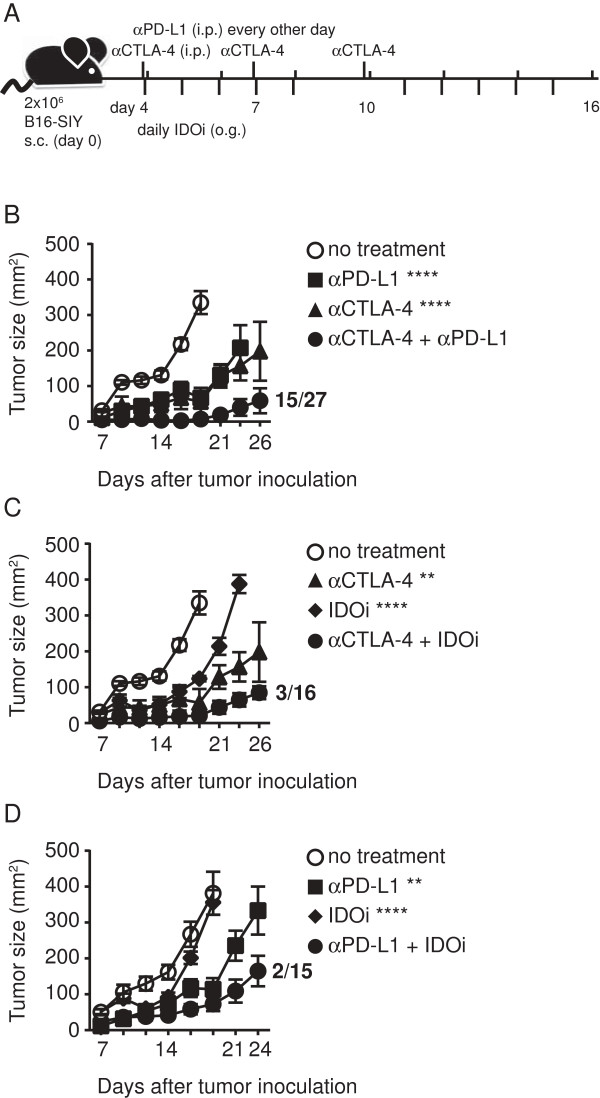
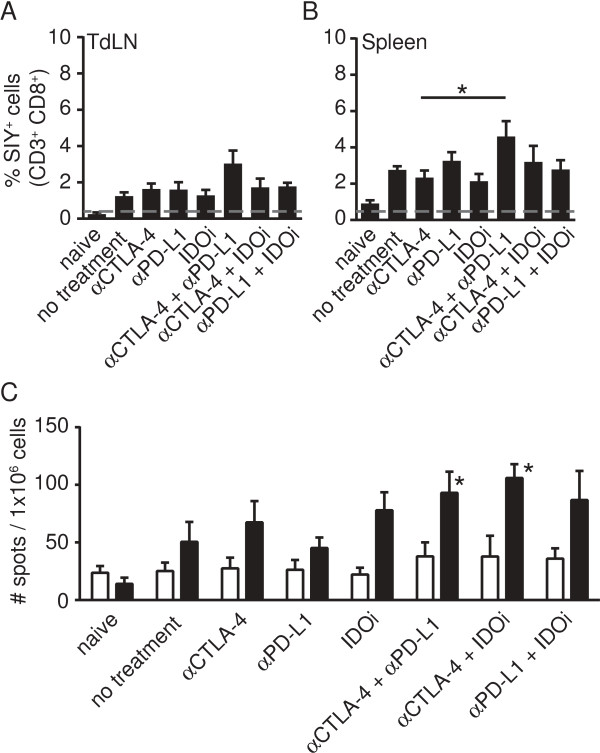
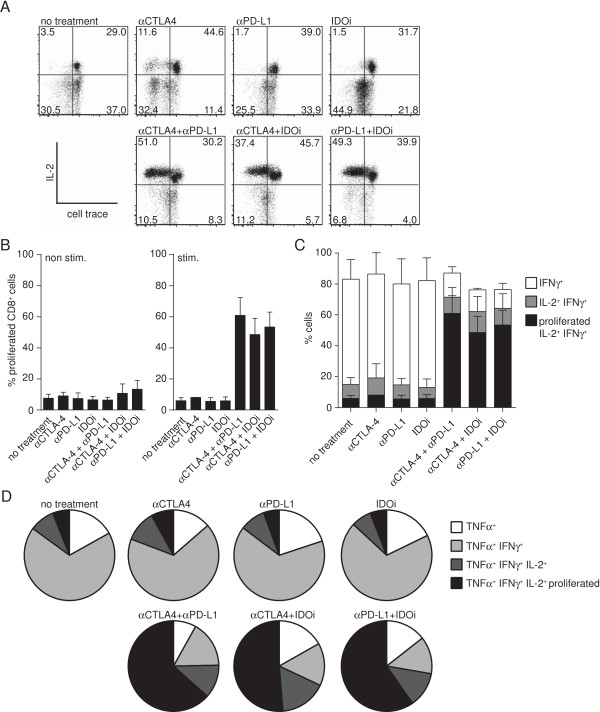
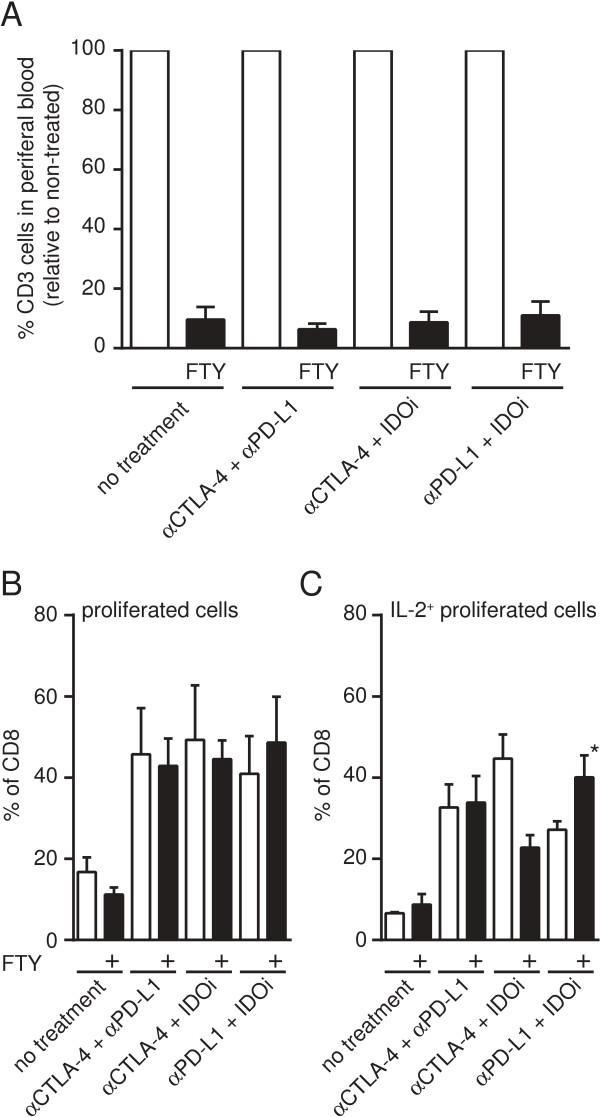
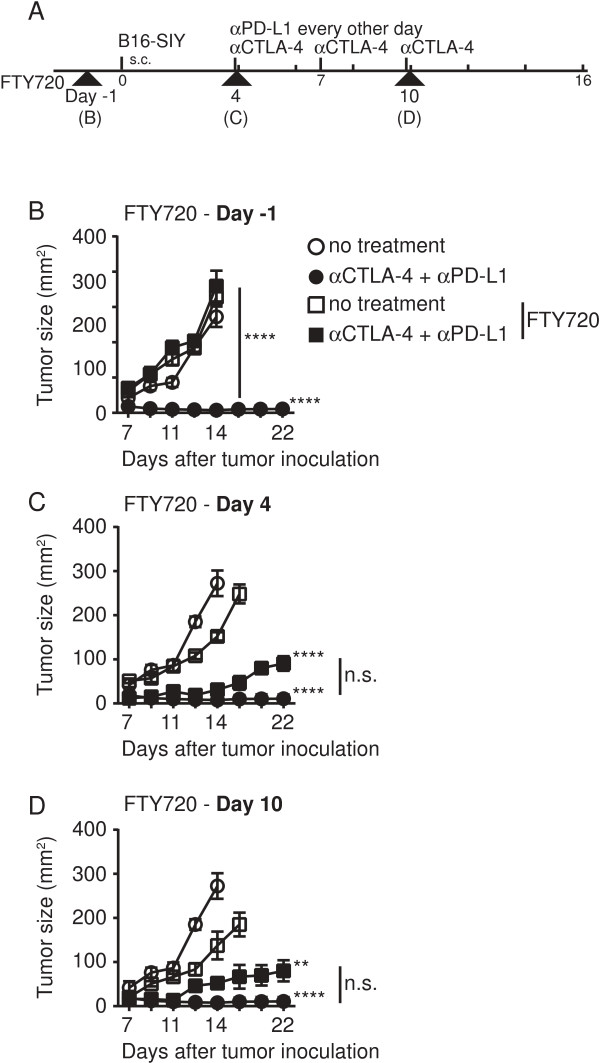
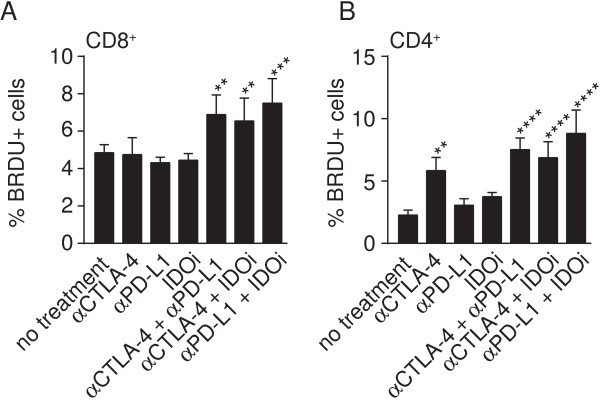
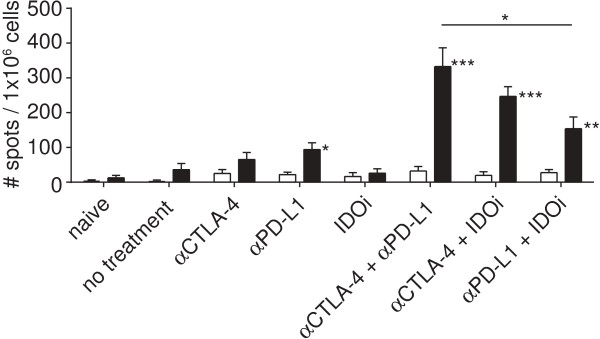
BACKGROUND: Blockade of immune inhibitory pathways is emerging as an important therapeutic modality for the treatment of cancer. Single agent treatments have partial anti-tumor activity in preclinical models and in human cancer patients. Inasmuch as the tumor microenvironment shows evidence of multiple immune inhibitory mechanisms present concurrently, it has been reasoned that combination therapies may be required for optimal therapeutic effect. METHODS: To test this notion, we utilized permutations of anti-CTLA-4 mAb, anti-PD-L1 mAb, and/or the IDO inhibitor INCB23843 in the murine B16.SIY melanoma model. RESULTS: All three combinations showed markedly improved tumor control over single treatments, with many mice achieving complete tumor rejection. This effect was seen in the absence of vaccination or adoptive T cell therapy. The mechanism of synergy was investigated to examine the priming versus effector phase of the anti-tumor immune response. Only a minimal increase in priming of anti-tumor T cells was observed at early time points in the tumor-draining lymph nodes (TdLN). In contrast, as early as three days after therapy initiation, a marked increase in the capacity of tumor-infiltrating CD8(+) T cells to produce IL-2 and to proliferate was found in all groups treated with the effective combinations. Treatment of mice with FTY720 to block new T cell trafficking from secondary lymphoid structures still enabled restoration of IL-2 production and proliferation by intratumoral T cells, and also retained most of the tumor growth control. CONCLUSIONS: Our data suggest that the therapeutic effect of these immunotherapies was mainly mediated through direct reactivation of T cells in situ. These three combinations are attractive to pursue clinically, and the ability of intratumoral CD8(+) T cells to produce IL-2 and to proliferate could be an important biomarker to integrate into clinical studies.
Overview
The claims and statistics of this paper haven’t been checked yet.
Free: it reads the open-access text and checks the first 5 claims that cite a source we can check. Create a free account to check every claim.
Integrity signals
Registry
Cites
Statistics
Figures
Verification
Claims the paper makes
The claims and statistics of this paper haven’t been checked yet.
Free: it reads the open-access text and checks the first 5 claims that cite a source we can check. Create a free account to check every claim.
Claims other papers make about this one
Each is checked against this paper’s own text: does it say what the citing paper says it does?
The source backs part of the claim, not all of it — or backs it for a different population, condition or comparison.
In the citing paper
“the endogenous AhR ligand Kyn displays pro-cancerogenic properties in a model of pre-clinical melanoma59”
From Dietary tryptophan metabolite released by intratumoral Lactobacillus reuteri facilitates immune checkpoint inhibitor treatment (2023) · cites this paper as [59]
Experimental — accuracy not yet measuredThe source backs part of the claim, not all of it — or backs it for a different population, condition or comparison.
In the citing paper
“recent studies demonstrated that DCs can be found in tumors, where they recruit T cells and stimulate tumor-reactive T cell responses locally (Spranger et al., 2014; de Mingo Pulido et al., 2018)”
From Successful Anti-PD-1 Cancer Immunotherapy Requires T Cell-Dendritic Cell Crosstalk Involving the Cytokines IFN-γ and IL-12 (2018) · cites this paper as Spranger et al., 2014
Experimental — accuracy not yet measuredIn the citing paper
“The tryptophan-metabolizing enzyme IDO inhibits T cell function, and combining IDO-blocking agents together with immune checkpoint inhibitors has shown promising results in mice and is also currently undergoing clinical trials in humans (105, 118).”
From Anti-PD-1 and Anti-CTLA-4 Therapies in Cancer: Mechanisms of Action, Efficacy, and Limitations (2018) · cites this paper as [118]
In the citing paper
“The tryptophan-metabolizing enzyme IDO inhibits T cell function, and combining IDO-blocking agents together with immune checkpoint inhibitors has shown promising results in mice and is also currently undergoing clinical trials in humans (105, 118).”
From Anti-PD-1 and Anti-CTLA-4 Therapies in Cancer: Mechanisms of Action, Efficacy, and Limitations (2018) · cites this paper as [118]
Self-check
Percentages, sums and reported differences re-computed from the paper’s own numbers.
The self-check needs the paper’s full text.
Citations
Cites
PD-1 and PD-L1 Immune Checkpoint Blockade to Treat Breast Cancer
Hartkopf, A. D., Taran, F.-A., Wallwiener, M., Walter, C. B., Krämer, B., Grischke, E.-M., & Brucker, S. Y. (2016) · Breast Care · doi:10.1159/000453569 · Cited by 30,845
Adverse Renal Effects of Immune Checkpoint Inhibitors: A Narrative Review
Wanchoo, R., Karam, S., Uppal, N. N., Barta, V. S., Deray, G., Devoe, C., Launay-Vacher, V., Jhaveri, K. D., & on behalf of Cancer and Kidney International Network Workgroup on Immune Checkpoint Inhibitors (2017) · American Journal of Nephrology · doi:10.1159/000455014 · Cited by 15,256
Improved Survival with Ipilimumab in Patients with Metastatic Melanoma
Hodi, F. S., O'Day, S. J., McDermott, D. F., Weber, R. W., Sosman, J. A., Haanen, J. B., Gonzalez, R., Robert, C., Schadendorf, D., Hassel, J. C., et al. (2010) · New England Journal of Medicine · doi:10.1056/nejmoa1003466 · Cited by 15,155 · cited 1×
“The first successful immunotherapy aiming to block a negative regulatory pathway on T cells is the anti-CTLA-4 (Cytotoxic T-Lymphocyte Antigen-4) mAb ipilimumab, which was approved by the FDA (Food and Drug Administration) in 2011 for treatment of patients with advanced melanoma [13].”
BackgroundSafety, activity, and immune correlates of anti–PD-1 antibody in cancer
Topalian, S. L., Hodi, F. S., Brahmer, J. R., Gettinger, S. N., Smith, D. C., McDermott, D. F., Powderly, J. D., Carvajal, R. D., Sosman, J. A., Atkins, M. B., et al. (2012) · New England Journal of Medicine · doi:10.1056/nejmoa1200690 · Cited by 12,628 · cited 1×
“Early clinical results have been reported with anti-PD-1 and anti-PD-L1 mAbs [14], IDO inhibitors [15], and Treg depletion targeting surface CD25 [16,17].”
BackgroundCuriel, T. J., Coukos, G., Zou, L., Alvarez, X., Cheng, P., Mottram, P., Evdemon-Hogan, M., Conejo-Garcia, J. R., Zhang, L., Burow, M., et al. (2004) · Nature Medicine · doi:10.1038/nm1093 · Cited by 5,151 · cited 1×
“These are expression of the ligand PD-L1 (programmed death-ligand 1), which can engage the inhibitory receptor PD-1 (programmed death-receptor 1) on activated T cells; presence of the tryptophan-catabolizing enzyme indoleamine-2,3dioxygenase (IDO), which exploits the exquisite sensitivity of T cells to tryptophan depl…”
BackgroundTumor-associated B7-H1 promotes T-cell apoptosis: A potential mechanism of immune evasion
Dong, H., Strome, S. E., Salomao, D. R., Tamura, H., Hirano, F., Flies, D. B., Roche, P. C., Lu, J., Zhu, G., Tamada, K., et al. (2002) · Nature Medicine · doi:10.1038/nm730 · Cited by 5,025
The immune contexture in human tumours: impact on clinical outcome
Fridman, W. H., Pagès, F., Sautès-Fridman, C., & Galon, J. (2012) · Nature reviews. Cancer · doi:10.1038/nrc3245 · Cited by 4,981 · cited 1×
“While most of these analyses have been carried out on biopsy material from patients with advanced melanoma, similar results are emerging in other solid tumors, including lung cancer, ovarian cancer, colorectal cancer, breast cancer, and head and neck cancer [3-6].”
ResultNivolumab plus Ipilimumab in Advanced Melanoma
Wolchok, J. D., Kluger, H., Callahan, M. K., Postow, M. A., Rizvi, N. A., Lesokhin, A. M., Segal, N. H., Ariyan, C. E., Gordon, R.-A., Reed, K., et al. (2013) · New England Journal of Medicine · doi:10.1056/nejmoa1302369 · Cited by 4,230 · cited 1×
“Phase I clinical trial development of the anti-CTLA-4 + anti-PD-1 combination has already been pursued in advanced melanoma, with profound clinical response rates observed that appear superior to single agent activity based on historical controls [47,49].”
BackgroundInnate and adaptive immune cells in the tumor microenvironment
Gajewski, T. F., Schreiber, H., & Fu, Y.-X. (2013) · Nature Immunology · doi:10.1038/ni.2703 · Cited by 4,148
Self-citationIwai, Y., Ishida, M., Tanaka, Y., Okazaki, T., Honjo, T., & Minato, N. (2002) · Proceedings of the National Academy of Sciences · doi:10.1073/pnas.192461099 · Cited by 3,203 · cited 2×
“yet significant impact on tumor growth kinetics and to improve tumor-specific immune responses in various mouse models in vivo [28-33].”
Background
Cited by
Items 401–500 of 562
Chu, C. E., & Pietzak, E. J. (2022) · Urologic Oncology Seminars and Original Investigations · doi:10.1016/j.urolonc.2022.05.013 · Cited by 15
Montagna, D. R., Duarte, A., Chiarella, P., Rearte, B., Bustuoabad, O. D., Vermeulen, M. E., & Ruggiero, R. A. (2022) · BMC Cancer · doi:10.1186/s12885-022-09941-2 · Cited by 13
The Emerging Role of IL-9 in the Anticancer Effects of Anti-PD-1 Therapy
Vinokurova, D., & Apétoh, L. (2023) · Biomolecules · doi:10.3390/biom13040670 · Cited by 14
“PD-1/PD-L1 blockade (alone and in combination therapies) restored IL-2 production by tumor-infiltrating T cells which was associated with tumor inhibition [8,9].”
BackgroundShiba, H., Nishio, M., Sawada, M., Tamaki, M., Michigami, M., Nakai, S., Nakase, I., Fujii, I., Matsumoto, A., & Kojima, C. (2021) · Journal of Materials Chemistry B · doi:10.1039/d1tb01980e · Cited by 12
The interplay of exercise and green tea: a new road in cancer therapy
Liu, B., Tian, H., & Momeni, M. R. (2025) · Cancer Cell International · doi:10.1186/s12935-024-03632-7 · Cited by 13
Rational design and identification of immuno-oncology drug combinations
Iafolla, M. A. J., Selby, H. M., Warner, K., Ohashi, P. S., Haibe‐Kains, B., & Siu, L. L. (2018) · European Journal of Cancer · doi:10.1016/j.ejca.2018.02.027 · Cited by 12
Explant Modeling of the Immune Environment of Head and Neck Cancer
Sharon, S., Duhen, T. M., Bambina, S., Baird, J. R., Leidner, R. S., Bell, B., Casap, N., Crittenden, M. R., Vasudevan, S., Jubran, M. R., et al. (2021) · Frontiers in Oncology · doi:10.3389/fonc.2021.611365 · Cited by 14
“Several reports using preclinical models have shown that successful responses to checkpoint inhibitor-based immunotherapies were observed even when immune cell recirculation was blocked, indicating that circulating immune cells are not always necessary to induce tumor regression (5, 6).”
BackgroundClinical, Genetic and Innate Immunity Characteristics of Melanoma in Organ Transplant Recipients
Brocard, A., Knol, A., Bossard, C., Denis, M. G., Quereux, G., Saint-Jean, M., Peuvrel, L., Khammari, A., Blancho, G., Dantal, J., et al. (2017) · Acta Dermato Venereologica · doi:10.2340/00015555-2568 · Cited by 12
Challenges faced when identifying patients for combination immunotherapy
Ernstoff, M. S., Gandhi, S., Pandey, M. R., Puzanov, I. J., Grivas, P. D., Montero, A. J., Velcheti, V., Turk, M. J., Diaz-Montero, C. M., Lewis, L. D., et al. (2017) · Future Oncology · doi:10.2217/fon-2017-0218 · Cited by 15
Eguren‐Santamaría, I., Melero, I., Rodríguez, I., Ortego, I., Armero, M., Gálvez‐Cancino, F., López‐Janeiro, Á., de Andrea, C. E., & Sanmamed, M. F. (2025) · Journal for ImmunoTherapy of Cancer · doi:10.1136/jitc-2024-011279 · Cited by 18
Qiao, X., Yang, H., Gao, J., Cai, S., Shi, N., Wang, M., Wang, Y., & Yu, H. (2019) · Future Medicinal Chemistry · doi:10.4155/fmc-2019-0100 · Cited by 11
Zou, R., Wang, Y., Ye, F., Zhang, X., Wang, M., & Cui, S. (2021) · Clinical & Translational Oncology · doi:10.1007/s12094-021-02637-2 · Cited by 12
“1 3 combined with PD-1/PD-L1 blockade may be more effective than single application of the agent [72, 73].”
BackgroundEngineering Platforms for T Cell Modulation
Hickey, J. W., Kosmides, A. K., & Schneck, J. P. (2018) · International review of cytology · doi:10.1016/bs.ircmb.2018.06.003 · Cited by 17
Mechanisms of Resistance to PD-1 Checkpoint Blockade
Moser, J. C., & Hu‐Lieskovan, S. (2020) · Drugs · doi:10.1007/s40265-020-01270-7 · Cited by 11
Qian, F., & Han, B. (2020) · Chinese Medical Journal · doi:10.1097/cm9.0000000000001124 · Cited by 13
Targeted Therapies in Combination With Immune Therapies for the Treatment of Metastatic Melanoma
Christiansen, S. A., Khan, S. A., & Gibney, G. T. (2017) · The Cancer Journal · doi:10.1097/ppo.0000000000000245 · Cited by 16
“These include the use of histone deacetylase inhibitors as epigenetic regulators that increase antigen (and PD-L1) expression on tumor cells and selective IDO1 inhibitors to reactivate TILs and decrease suppressive regulatory T cells, both of which have shown synergy with anti–PD-1/PD-L1 agents in in vivo melanoma mod…”
BackgroundDoi, T., Fujiwara, Y., Shitara, K., Shimizu, T., Yonemori, K., Matsubara, N., Ohno, I., Kogawa, T., Naito, Y., Leopold, L. H., et al. (2020) · Investigational New Drugs · doi:10.1007/s10637-020-00942-1 · Cited by 12
Cationic nanogel–based nasal therapeutic HPV vaccine prevents the development of cervical cancer
Nakahashi-Ouchida, R., Mori, H., Yuki, Y., Machita, T., Katakai, Y., Umemoto, S., Uchida, Y., Yamanoue, T., Sawada, S., Ishige, K., et al. (2025) · Science Translational Medicine · doi:10.1126/scitranslmed.ado8840 · Cited by 12
Yang, Z., Li, F., Huang, Y., Yin, N., Chu, J., Ma, Y., Pettigrew, R. I., Hamilton, D. J., Martin, D., & Li, Z. (2022) · Journal of Nuclear Medicine · doi:10.2967/jnumed.121.263151 · Cited by 10
“We geared the effort to develop PET imaging for noninvasive assessment of tsMHC-II expression and validate its predicative value to immune responses (14,20,21).”
BackgroundMethodIntegration of transcriptomics data into agent-based models of solid tumor metastasis
Retzlaff, J., Lai, X., Berking, C., & Vera, J. (2023) · Computational and Structural Biotechnology Journal · doi:10.1016/j.csbj.2023.02.014 · Cited by 12
“We do not model CTL proliferation in the TME, although it has been reported in cases of combination therapy [36].”
Kwok, H., Yang, J., & Lam, D. C.-L. (2023) · Cancers · doi:10.3390/cancers15102749 · Cited by 11
“This phenotype can result from several factors, including a low gradient of chemokines required for dendritic cell recruitment [85].”
BackgroundKhoshkhabar, R., Yazdani, M., Alavizadeh, S. H., Saberi, Z., Arabi, L., & Jaafari, M. R. (2024) · International Immunopharmacology · doi:10.1016/j.intimp.2024.112437 · Cited by 10
Kim, J. H., Lee, W. S., Lee, H. J., Yang, H., Lee, S. J., Kong, S. J., Je, S., Yang, H., Jung, J., Cheon, J., et al. (2021) · OncoImmunology · doi:10.1080/2162402x.2021.2005280 · Cited by 11
Immunoregulatory functions of PD-1/PD-L1 inhibitors and development of resistance to them
Sayapina, M. S. (2017) · Malignant tumours · doi:10.18027/2224-5057-2017-2-94-99 · Cited by 12
Wan, N., Ji, B., Li, J., Jiang, J., Chen, Y., Zhang, T., & Huang, W. (2019) · OncoTargets and Therapy · doi:10.2147/ott.s200615 · Cited by 10
Klar, R., Michel, S., Schell, M., Hinterwimmer, L., Zippelius, A., & Jaschinski, F. (2019) · Cancer Immunology Immunotherapy · doi:10.1007/s00262-019-02438-1 · Cited by 9
Molecular Analysis of Elements of Melanoma Insensitivity to TCR-Engineered Adoptive Cell Therapy
Jazirehi, A. R. (2021) · International Journal of Molecular Sciences · doi:10.3390/ijms222111726 · Cited by 9
“Therefore, it is possible that a combination of various ICI immunotherapies can restore the negative (inhibitory) effects of tumor microenvironment on T cells [63], resulting in more favorable clinical responses.”
BackgroundTriple Immunotherapy Overcomes Immune Evasion by Tumor in a Melanoma Mouse Model
Jallad, M.-A., Jurjus, A. R., Rahal, E. A., & Abdelnoor, A. M. (2020) · Frontiers in Oncology · doi:10.3389/fonc.2020.00839 · Cited by 9
“Another studied combination is that of anti-CTLA-4 with anti-PD1, which was approved for the treatment of melanomas that do not express PD-1 (2, 6, 31, 32).”
BackgroundImmune Therapies in Non-Muscle Invasive Bladder Cancer
Ho, P. L., Williams, S. B., & Kamat, A. M. (2015) · Current Treatment Options in Oncology · doi:10.1007/s11864-014-0315-3 · Cited by 13
Langhammer, S., & Scheerer, J. (2017) · Oncotarget · doi:10.18632/oncotarget.16674 · Cited by 9
“In T-cell infiltrated tumors with a signature indicative of active Th1-type response tumor escape is characterized by PD-L1 upregulation, by induction of and infiltration with CD25+FOXP3+Tregs and by T-cell anergy characterized by defective IL-2 secretion upon antigen stimulation [114].”
BackgroundInfluentialImmune-checkpoint inhibitors in melanoma and kidney cancer: from sequencing to rational selection
Flynn, M., Pickering, L. M., Larkin, J., & Turajlic, S. (2018) · Therapeutic Advances in Medical Oncology · doi:10.1177/1758835918777427 · Cited by 9
Chu, C. E., Porten, S. P., Grossfeld, G. D., & Meng, M. V. (2019) · Urologic Clinics of North America · doi:10.1016/j.ucl.2019.09.013 · Cited by 8
Park, J., Kim, J. C., Lee, M., Lee, J., Kim, Y., Lee, Y. J., Kim, S. W., Kim, S. W., Park, S., & Lee, J. (2023) · British Journal of Cancer · doi:10.1038/s41416-023-02455-z · Cited by 8
Physiologically driven nanodrug delivery system for targeted lung cancer treatment
Zhang, S., Li, X., Liu, Y., Li, H., & Zhang, Z. (2024) · Exploration of Medicine · doi:10.37349/emed.2024.00221 · Cited by 10
Immunotherapy in Non-Small-Cell Lung Cancer: A Bridge Between Research and Clinical Practice
Passiglia, F., Commendatore, O., Vitali, M., & Conca, R. (2018) · Future Oncology · doi:10.2217/fon-2018-0098 · Cited by 10
“Combination of systemic inhibition of IDO and PD-1/PD-L1 blockade showed promising activity in early clinical trials in melanoma [120,121] and is currently under investigation also in lung cancer.”
BackgroundDevelopment of a novel formulation method to prepare liposomal Epacadostat
Tahaghoghi-Hajghorbani, S., Khoshkhabar, R., Rafiei, A., Ajami, A., Nikpoor, A. R., Jaafari, M. R., & Badiee, A. (2021) · European Journal of Pharmaceutical Sciences · doi:10.1016/j.ejps.2021.105954 · Cited by 8
Preclinical Data Supporting Antitumor Activity of PD-1 Blockade
Curran, M. A. (2018) · The Cancer Journal · doi:10.1097/ppo.0000000000000298 · Cited by 9
“In the B16 murinemelanomamodel, indoleamine-pyrrole 2,3-dioxygenase inhibition or genetic knockout synergizes with PD-1 or PD-L1 antibody blockade to promote tumor rejection.(49,50) In murine syngeneic tumor models, such as 4T1, which respond poorly to PD-1 antibody therapy alone, combination therapy with inhibitors o…”
BackgroundAcharya, N., & Anderson, A. C. (2019) · Immunity · doi:10.1016/j.immuni.2019.09.018 · Cited by 10
Stimulator of Interferon Genes Signaling Pathway and its Role in Anti-tumor Immune Therapy
Gong, Y., Chang, C., Liu, X., He, Y., Wu, Y., Wang, S., & Zhang, C. (2020) · Current Pharmaceutical Design · doi:10.2174/1381612826666200610183048 · Cited by 8
The Interplay between Metabolic Adaptations and Diet in Cancer Immunotherapy
Espelage, L., Wagner, N., Placke, J., Ugurel, S., & Tasdogan, A. (2024) · Clinical Cancer Research · doi:10.1158/1078-0432.ccr-22-3468 · Cited by 7
Yang, G., Yang, W., & Kiarasi, F. (2025) · Food Science & Nutrition · doi:10.1002/fsn3.70758 · Cited by 9
The evolving immunotherapeutic landscape in advanced oesophagogastric cancer
Flynn, M., Young, K., Cunningham, D., & Starling, N. (2018) · Therapeutic Advances in Medical Oncology · doi:10.1177/1758835918786228 · Cited by 7
The exploitation of enzyme-based cancer immunotherapy
Chandan, G., Saini, A. K., Kumari, R., Chakrabarti, S., Mittal, A., Sharma, A. K., & Saini, R. V. (2022) · Human Cell · doi:10.1007/s13577-022-00821-2 · Cited by 8
“SIY melanoma model, combinations of anti-CTLA-4 mAb, anti-PD-L1 mAb, and/or the IDO inhibitor (INCB23843) restored IL-2 production and proliferation by intratumoral CD8+ T cells leading to the tumor rejection [65].”
BackgroundSmits, N. C., Coupet, T. A., Godbersen, C., & Sentman, C. L. (2016) · Expert Opinion on Biological Therapy · doi:10.1080/14712598.2016.1195364 · Cited by 10
Single-cell level temporal profiling of tumour-reactive T cells under immune checkpoint blockadePreprint
Hassan, J., Appleton, E. S., Kalfaoglu, B., Pedersen, M., Almeida‐Santos, J., Kanemaru, H., Irie, N., Foo, S., Reda, O., Tan, B. J. Y., et al. (2022) · bioRxiv (Cold Spring Harbor Laboratory) · doi:10.1101/2022.07.19.500582 · Cited by 9
Immunotherapy in gastrointestinal stromal tumors: Current landscape and future horizons
Papadakos, S. P., Argyrou, A., Karniadakis, I., Vogli, S., & Theocharis, S. E. (2025) · World Journal of Clinical Oncology · doi:10.5306/wjco.v16.i6.104314 · Cited by 10
Sheinin, M., Mondal, S., & Pahan, K. (2023) · Cancers · doi:10.3390/cancers15245796 · Cited by 7
“Accordingly, although multiple immunotherapies such as anti-CTLA-4, or anti-PD-1 [45] are being used for PDAC treatment, there is an urgent need for the development of effective therapeutic strategies for PDAC.”
BackgroundPharmacokinetics, pharmacodynamics, and toxicity of a PD-1-targeted IL-15 in cynomolgus monkeys
Ji, C., Kuang, B., Buetow, B. S., Vitsky, A., Xu, Y., Huang, T.-H., Chaparro‐Riggers, J. F., Kraynov, E. A., & Matsumoto, D. (2024) · PLoS ONE · doi:10.1371/journal.pone.0298240 · Cited by 6
Chen, C., Li, Y., Liu, H., Liao, M., Yang, J., & Liu, J. (2024) · Heliyon · doi:10.1016/j.heliyon.2024.e28356 · Cited by 9
“The tumor immune microenvironment was critical to the efficacy of ICI therapy [22,41 – 44].”
BackgroundTaylor, J. L., Kokolus, K. M., Basse, P. H., Filderman, J. N., Cosgrove, C. E., Watkins, S. C., Gambotto, A. A., Lowe, D. B., Edwards, R. P., Kaliński, P., et al. (2024) · Vaccines · doi:10.3390/vaccines12070777 · Cited by 8
Quintarelli, C., Camera, A., Ciccone, R., Alessi, I., Bufalo, F. D., Carai, A., Baldo, G. D., Mastronuzzi, A., & Angelis, B. D. (2021) · Frontiers in Immunology · doi:10.3389/fimmu.2021.634031 · Cited by 6
Duhen, T. M., Gough, M. J., Leidner, R. S., & Stanton, S. E. (2022) · Frontiers in Oral Health · doi:10.3389/froh.2022.902160 · Cited by 6
Signaling new therapeutic opportunities: cytokines in prostate cancer
Chandran, E. B. A., Meininger, L., Karzai, F. H., & Madan, R. A. (2022) · Expert Opinion on Biological Therapy · doi:10.1080/14712598.2022.2108701 · Cited by 7
“L1 or anti-TGF-β [74], and separate mice experiments in which epacadostat was shown to enhance checkpoint inhibitor activity [75].”
BackgroundProcess Safety Considerations for the Supply of a High-Energy Oxadiazole IDO1-Selective Inhibitor
Martinot, T. A., Ardolino, M. J., Chen, L., Lam, Y., Li, C., Maddess, M. L., Muzzio, D. J., Qi, J., Saurí, J., Song, Z. J., et al. (2019) · Organic Process Research & Development · doi:10.1021/acs.oprd.9b00105 · Cited by 6
Scientifically based combination therapies with immuno‐oncology checkpoint inhibitors
Chew, H. Y., Dolcetti, R., & Simpson, F. (2020) · British Journal of Clinical Pharmacology · doi:10.1111/bcp.14338 · Cited by 6
“This combination also increased the ratio of intratumoural CD8 T cells and restored IL-2 production [162].”
BackgroundNanomedicines as Multifunctional Modulators of Melanoma Immune Microenvironment
Carreira, B., Acúrcio, R. C., Matos, A. I., Peres, C., Pozzi, S., Vaskovich‐Koubi, D., Kleiner, R., Bento, M., Satchi‐Fainaro, R., & Florindo, H. F. (2020) · Advanced Therapeutics · doi:10.1002/adtp.202000147 · Cited by 7
Podder, V., Coleman, R. L., Eskander, R. N., Flint, M., Monk, B. J., & Slomovitz, B. M. (2025) · International Journal of Gynecological Cancer · doi:10.1016/j.ijgc.2025.102124 · Cited by 6
Coletti, A., Bianconi, E., Rossini, S., Altomare, A., Butticè, A., Mazzoletti, D., Mondanelli, G., Carotti, A., Aldini, G., Miggiano, R., et al. (2025) · Communications Chemistry · doi:10.1038/s42004-025-01648-2 · Cited by 5
“In another study, epacadostat ( 2 ) was found to enhancetheantitumoreffectsofanti-CTLA4oranti-PDL1antibodiesusing apreclinicalmurinemodelofmelanoma 20 .”
Osei-Hwedieh, D. O., He, L., Wang, K., Fan, S., Ferrone, S., Wang, X., & Schwab, J. H. (2025) · Translational Oncology · doi:10.1016/j.tranon.2025.102538 · Cited by 7
“Another limitation of this study is the use of a xenograft mouse model, which is known to overestimate CAR-T and radiation therapy efficacy rates, which warrants further investigation into transplant and autochthonous models [47 – 50”
Fan, G., Yan, Q., Chen, Y., Han, M., Wu, Z., Ruan, S., Zhuang, H., Gou, Q., & Hou, B. (2024) · American Journal of Cancer Research · doi:10.62347/nuxc8231 · Cited by 9
Sequential JAK inhibition enhances antitumor immunity after combined anti–PD-1 and anti-CTLA4
Arias-Badia, M., Chen, P., Lwin, Y. M., Srinath, A., Lyu, A., Fan, Z., Kwek, S. S., Luong, D., Setayesh, A., Sakamoto, M., et al. (2025) · JCI Insight · doi:10.1172/jci.insight.187921 · Cited by 7
“Interferon signaling is an essential feature of successful antitumor immune responses(1,37), with particular relevance in immunotherapies targeting solid tumors(2).”
Hendriks, L. E. L., Remón, J., Menis, J., & Besse, B. (2021) · Translational Lung Cancer Research · doi:10.21037/tlcr-20-343 · Cited by 7
“T-cells can cross the blood-brain and blood tumor barrier, and can interact with brain metastases (14-16).”
Sharon, S., Baird, J. R., Bambina, S., Kramer, G. F., Blair, T. C., Jensen, S. M., Leidner, R. S., Bell, R. B., Casap, N., Crittenden, M. R., et al. (2021) · Oncotarget · doi:10.18632/oncotarget.27982 · Cited by 6
“74 days, respectively), consistent with data showing that preexisting immune responses in tumors are essential to the success of checkpoint inhibitors [20, 21].”
BackgroundStructural Basis of Selective Human Indoleamine‐2,3‐dioxygenase 1 (hIDO1) Inhibition
Kassab, S. E., & Mowafy, S. (2021) · ChemMedChem · doi:10.1002/cmdc.202100253 · Cited by 5
Regulation of the Immune Checkpoint Indoleamine 2,3-Dioxygenase Expression by Epstein–Barr Virus
Sawada, L., Vallinoto, A. C. R., & Costa, I. B. (2021) · Biomolecules · doi:10.3390/biom11121792 · Cited by 6
Exercise: A new role for an old tool
Idorn, M., & Straten, P. T. (2016) · Molecular & Cellular Oncology · doi:10.1080/23723556.2016.1163005 · Cited by 5
“Importantly, several lines of data suggest that patients harboring tumors with a brisk infiltration of immune cells are more likely to respond to treatment.(7) Thus, exercise could represent a tool to condition patients to respond to immunotherapy by increasing the immune infiltrate in the tumor.”
BackgroundInhibitors of the Kynurenine Pathway
Röhrig, U. F., Zoete, V., & Michielin, O. A. (2017) · Topics in medicinal chemistry · doi:10.1007/7355_2017_22 · Cited by 7
Chiarella, P., Vermeulen, M. E., Montagna, D. R., Vallecorsa, P., Strazza, A. R., Meiss, R. P., Bustuoabad, O. D., Ruggiero, R. A., & Prehn, R. T. (2018) · Frontiers in Oncology · doi:10.3389/fonc.2018.00006 · Cited by 5
Albendazole induces an anti-tumor effect and potentiates PD-L1 blockade immunotherapy
Zhang, W., He, Z., Liang, F., Gong, J., Tan, L., Yang, J., Song, S., Xie, L., & Lu, Y. (2023) · Journal of Cancer Research and Clinical Oncology · doi:10.1007/s00432-023-05415-5 · Cited by 4
“Tumor immunotherapy aims to increase the number and quality of anti-tumor immune responses by regulating the immune system (Duraiswamy et al. 2013; Spranger et al. 2014; Wei et al. 2017).”
BackgroundStructure-based optimization of type III indoleamine 2,3-dioxygenase 1 (IDO1) inhibitors
Röhrig, U. F., Majjigapu, S. R., Vogel, P., Reynaud, A., Pojer, F., Dilek, N., Reichenbach, P., Ascenção, K., Irving, M. B., Coukos, G., et al. (2022) · Journal of Enzyme Inhibition and Medicinal Chemistry · doi:10.1080/14756366.2022.2089665 · Cited by 5
Nanotechnology and Immunomodulators in Cancer
Volovat, C. D., Volovăț, S. R., & Agop, M. (2022) · Springer eBooks · doi:10.1007/978-981-16-6379-6_5 · Cited by 5
Combination Treatments with Immunotherapy in Brain Metastases Patients
Henon, C., Remón, J., & Hendriks, L. E. L. (2020) · Future Oncology · doi:10.2217/fon-2020-0156 · Cited by 4
Engin, A. B., & Engin, A. (2021) · Advances in experimental medicine and biology · doi:10.1007/978-3-030-49844-3_13 · Cited by 4
Zhao, X., Hu, J., Li, J., Gu, L., Chen, J., Othmane, B., Gong, G., Yuan, J., & Deng, H. (2022) · Disease Markers · doi:10.1155/2022/7147279 · Cited by 4
“A recent significant breakthrough in tumor immunotherapy is the discovery of adaptive mechanisms of tumor resistance in TME, which may prevent the implementation of tumor immunity [7, 8].”
BackgroundAbdesheikhi, J., Sedghy, F., Mahmoodi, M., Fallah, H., & Ranjkesh, M. (2023) · Iranian Biomedical Journal · doi:10.52547/ibj.3811 · Cited by 5
Xu, M., Chen, J.-Y., Peng, C., & Mo, L. (2024) · Translational Cancer Research · doi:10.21037/tcr-23-1236 · Cited by 5
“Large molecule biological agents such as antibodies have been applied in clinical research and in clinical settings (7), while small molecule inhibitors have gradually become an important research focus in tumor immunotherapy due to their relatively simple administration and lower development costs.”
Hao, Y., Xiao, Y., Yan, J., Yang, R., Huang, R., Zheng, C., Huang, C., Chen, X., Xiao, W., Lei, J., et al. (2021) · Phytomedicine Plus · doi:10.1016/j.phyplu.2021.100204 · Cited by 3
Chen, Z., Ding, Y.-H., Shao, L., Ji, X., Xiang, Q., & Zhang, A. (2024) · Heliyon · doi:10.1016/j.heliyon.2024.e32260 · Cited by 4
Checkpoint Blockade Immunotherapy for Glioblastoma
Riccione, K. A., Gedeon, P. C., Sanchez-Perez, L., & Sampson, J. H. (2017) · Elsevier eBooks · doi:10.1016/b978-0-12-802420-1.00011-9 · Cited by 3
The future of radiotherapy and immunotherapy concomitantly in cancer management
Sekarutami, S. M., & Handoko, H. (2019) · Medical Journal of Indonesia · doi:10.13181/mji.v28i4.3211 · Cited by 3
Vila-Leahey, A., MacKay, A., Portales‐Cervantes, L., Weir, G. M., Merkx-Jacques, A., & Stanford, M. M. (2020) · OncoImmunology · doi:10.1080/2162402x.2020.1782574 · Cited by 3
Non‑coding RNAs in epithelial‑mesenchymal transition of renal cell carcinoma (Review)
Liu, Z., Zhou, H., Shen, J., Qi, Y., Gong, X., & Zhang, C. L. (2025) · Molecular Medicine Reports · doi:10.3892/mmr.2025.13761 · Cited by 2
Albán, A. G. A., Naveda, F. D. L. M. L., Chavez, I. T. G., Ayala, A. C. A., & Bonifaz, C. N. S. (2024) · Ibero-American Journal of Health Science Research · doi:10.56183/iberojhr.v4i2.663 · Cited by 4
“More pre-clinical investigations revealed that anti-CTLA-4 and anti-PD-1 treatments may work together to increase TILs, reduce T-reg, and slow tumor progression (Spranger et al., 2014).”
Background[First-line Combination Immunotherapy in Advanced Non-small Cell Lung Cancer].
Peng, X., & Zhou, Q. H. (2018) · PubMed Central · doi:10.3779/j.issn.1009-3419.2018.12.11 · Cited by 2
Understanding the Crosstalk Between Epigenetics and Immunometabolism to Combat Cancer
Seth, A., & Kar, S. (2022) · Sub-cellular biochemistry/Subcellular biochemistry · doi:10.1007/978-3-031-07634-3_18 · Cited by 3
Systemic immunotherapy for BCG unresponsive nonmuscle-invasive bladder cancer
Oualla, K., Alem, M., & Teoh, J. Y. (2025) · Current Opinion in Urology · doi:10.1097/mou.0000000000001334 · Cited by 2
Recent Progress of Doxorubicin Nanomedicine in Hematologic Malignancies
Qu, Y., Niu, T., Liu, Z., Chu, B., Zhang, L., & Qian, Z. (2017) · Nanoscience and Nanotechnology Letters · doi:10.1166/nnl.2017.2589 · Cited by 2
[Developments in Immunotherapy for Advanced Non-small Cell Lung Cancer].
Li, H., & Wang, J. (2021) · PubMed Central · doi:10.3779/j.issn.1009-3419.2021.102.06 · Cited by 3
Zhang, G., Xu, M., Zhang, X., Ma, L., & Zhang, H. (2021) · Toxicology and Applied Pharmacology · doi:10.1016/j.taap.2021.115656 · Cited by 5
Detection of indoleamine 2,3-dioxygenase 1-expressing cells in canine normal and tumor tissues
Ikeda, N., Kato, D., Tsuboi, M., Yoshitake, R., Eto, S., Yoshimoto, S., Shinada, M., Kamoto, S., Hashimoto, Y., TAKAHASHI, Y., et al. (2021) · Journal of Veterinary Medical Science · doi:10.1292/jvms.21-0217 · Cited by 3
“In preclinical studies, combination therapy comprising IDO1 inhibitor and immune checkpoint inhibitors, such as antibodies targeting programmed cell death 1 (PD-1), programmed cell death ligand 1 (PD-L1), and cytotoxic T-lymphocyte-associated protein 4 (CTLA4) synergistically suppressed tumor growth [25].”
BackgroundLi, L., Zhao, C., Kong, F., Li, Y., Wang, C., Chen, S., Tan, H., Liu, Y., & Wang, D. (2022) · Frontiers in Pharmacology · doi:10.3389/fphar.2022.898906 · Cited by 3
Immune Evasion of Helicobacter pylori and Extra‐Gastric Cancer Risk
Engin, D., Engin, A. B., & Engin, A. (2026) · Journal of Gastroenterology and Hepatology · doi:10.1111/jgh.70376 · Cited by 4
“Checkpoint blocking agents have been ineffective as monotherapeutic options in IDO1-overexpressing cancers [232].”
Current Roles of Neoadjuvant and Perioperative Immunotherapy in Non–Small Cell Lung Cancer
Fankuchen, O., Punekar, S. R., & Velcheti, V. (2026) · JCO Oncology Practice · doi:10.1200/op-25-01265 · Cited by 1
Vaccination-enabled immune readiness for checkpoint blockade
Bautista, J., & López-Cortés, A. (2026) · Frontiers in Immunology · doi:10.3389/fimmu.2026.1790344 · Cited by 1
“Tumors that respond to checkpoint blockade are not de fi ned solely by antigenicity or mutational burden, but by pre-existing or inducible immune con fi gurations characterised by innate activation, interferon signalling, APC competence, and permissive T cell priming environments (12, 157).”
Immunogenicity of neoantigens: From CAR-T cell to various vaccines
Davodabadi, F., Arabpour, J., Goleij, P., Mohammadi, E., Taheri, M., Sethi, G., Dua, K., & Sarhadi, M. (2025) · International Journal of Pharmaceutics · doi:10.1016/j.ijpharm.2025.125924 · Cited by 1
Mohanty, R. P., Pan, Y., Lewis, M. M., Soto, M. R., Maier, E. Y., Alzhrani, R. F., & Ghosh, D. (2025) · Bioconjugate Chemistry · doi:10.1021/acs.bioconjchem.5c00257 · Cited by 2
Unveiling the myxofibrosarcoma tumor microenvironment: implications for immunotherapy
Profumo, C., Grassi, M., Rigo, V., Mascherini, M., Monti, P., Arcovito, G., Anselmi, G., Damele, L., Timon, G., Comandini, D., et al. (2026) · Frontiers in Immunology · doi:10.3389/fimmu.2025.1717541 · Cited by 1
Targeting tryptophan metabolism in breast cancer immunotherapy: Recent advances and future prospects
Li, G., Zhou, H., Shen, X., Ying, P., & Lu, H. (2026) · Translational Oncology · doi:10.1016/j.tranon.2026.102838 · Cited by 1
Lehrer, S. P., & Rheinstein, P. H. (2026) · Cancer Diagnosis & Prognosis · doi:10.21873/cdp.10564 · Cited by 1
Blagosklonny, M. V., & Gudkov, A. V. (2010) · Oncotarget · doi:10.18632/oncotarget.24001 · Cited by 1
Metadata
- Authors
- Spranger, S., Koblish, H. K., Horton, B., Scherle, P. A., Newton, R., & Gajewski, T. F.
- Affiliations
- University of Chicago (US)
- Incyte (United States) (US)
- Corresponding author
- Gajewski, Thomas F
- ORCID
- Venue
- Journal for ImmunoTherapy of Cancer
- Publisher
- BMJ
- Published
- 2014
- Volume
- 2
- Issue
- 1
- Pages
- 3
- ISSN
- 2051-1426 (ISSN-L)
- PMC
- PMC4019906
- OpenAlex
- W2113906692
- Cited by
- 552
- References
- 55
- Citations by year
- 2026: 17 · 2025: 23 · 2024: 32 · 2023: 34 · 2022: 46 · 2021: 63 · 2020: 68 · 2019: 54 · 2018: 64 · 2017: 56 · 2016: 54 · 2015: 33 · 2014: 7
- FWCI
- 24.15
- Type
- journal article
- Language
- en
- Open access
- gold
- doi.org
- Locations
- Journal for ImmunoTherapy of Cancer (publishedVersion)
- Europe PMC (PubMed Central) (publishedVersion, cc-by)
- PubMed Central (publishedVersion, cc-by)
- PubMed (publishedVersion)
- Funders
- Incyte
- Deutsche Forschungsgemeinschaft
- Topics
- Health Sciences › Medicine › Oncology › Cancer Immunotherapy and Biomarkers
- Life Sciences › Immunology and Microbiology › Immunology › Immunotherapy and Immune Responses
- Life Sciences › Immunology and Microbiology › Immunology › T-cell and B-cell Immunology
- Keywords
- tumor rejection, CTLA-4 blockade, PD-1/PD-L1 blockade, IDO inhibition, combination immunotherapy, IL-2 production, CD8+ T cell proliferation, tumor-infiltrating T cells, tumor microenvironment, fingolimod, T cell migration, tumor-draining lymph nodes, antitumor immunity
About these checks
Registry, retraction, Cites and statistics results are computed, not judged, with one exception: a printed reference that no index lists is read once by a model before it counts as a citation error. Claims are extracted by a model and kept only when their quote appears verbatim in the text; each cited source is then checked, with a model’s help, for whether it says what the claim relies on. Those verdicts can be wrong — read the claim’s quote and the cited source before relying on one.
Statistics and arithmetic are recomputed, not judged.
Confidence bands are shown only for fields calibrated on our annotated test set. None is calibrated yet, so no band is shown.
What counts as a claim ›How we measure confidence ›How we check this ›
Are you an author, or do you see a problem with this page? Request a review
Data sources
Bibliographic data: Semantic Scholar, OpenAlex, Crossref.
Contains information from the Semantic Scholar Academic Graph Datasets, made available under the ODC Attribution License (ODC-BY 1.0).
Semantic Scholar’s data is described in: Kinney, R., et al. (2023). The Semantic Scholar Open Data Platform. arXiv:2301.10140.
